
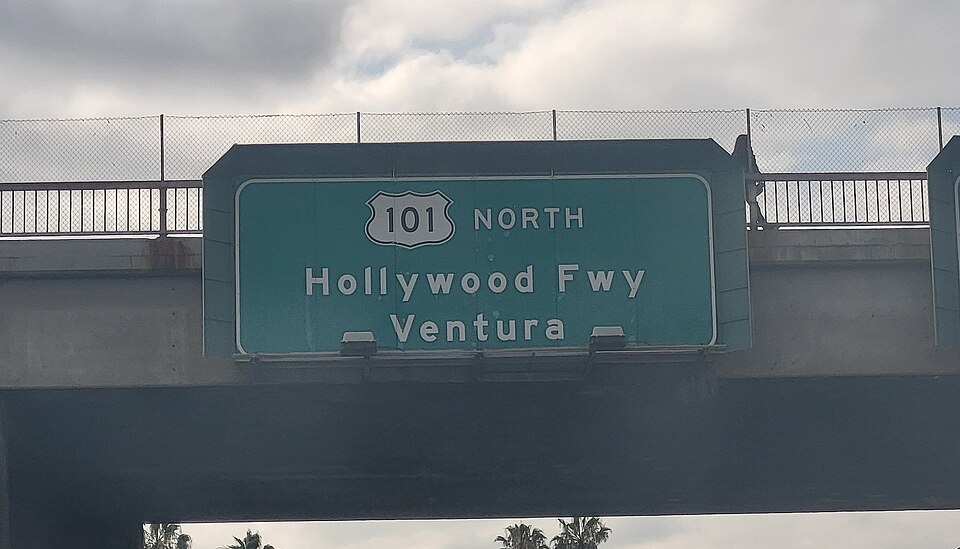
Photo: Gb321, CC BY 4.0, via Wikimedia Commons
This free California permit practice test has 60 original multiple-choice questions on road signs, curb colors, right of way, speed limits, alcohol laws and California’s provisional license rules. Every answer comes with a one-line explanation and the section of the California Driver’s Handbook it comes from. The real DMV knowledge test is multiple choice on the same handbook, and you need 80% to pass.
These are unofficial practice questions written by Get Driving Test Ready. They test the same knowledge as the DMV test, but they are not the DMV’s questions and not copied from it.
Key facts about the real California knowledge test
- Pass mark: 80%. Ask the DMV for the current question count.
- Attempts: three per application. Minors wait 7 days after a fail, not counting the day of the fail.
- Office cutoff: in-office tests must be started before 4:30 p.m.
- Source: all questions come from the California Driver’s Handbook. The DMV also offers its own practice tests.
More on format and booking: California DMV knowledge test and California fees and booking.
How to use this practice test
- Cover the answers. Write down A, B, C or D for each question in a section.
- Check your answers. Aim for at least 90%, so a few unfamiliar questions on the day don’t sink you.
- For every miss, read the handbook section named in the explanation, not just the answer.
- Repeat the sections you scored lowest on two days later.
Road signs and traffic signals
1. You reach a traffic light that is flashing red. What must you do?
- A. Slow down and go through without stopping
- B. Stop only if traffic is coming from the right
- C. Wait until the light turns green
- D. Stop, then go when it is safe
Answer: D. A flashing red light works like a STOP sign: stop completely, then go when it is safe. (Handbook Section 7: Laws and Rules of the Road)
2. A flashing yellow arrow is pointing left. What does it mean?
- A. You may turn left after yielding to oncoming traffic, because the turn is not protected
- B. Left turns are not allowed
- C. You have a protected left turn
- D. Stop and wait for a green arrow
Answer: A. A flashing yellow arrow allows a left turn, but oncoming traffic may have a green light, so you must yield. (Handbook Section 7: Laws and Rules of the Road)
3. The light is solid red and there is no sign at the corner. You want to turn right. What is correct?
- A. Right turns on red are never allowed in California
- B. Turn without stopping if no one is coming
- C. Stop at the limit line, yield to pedestrians and traffic, then turn when safe
- D. Sound your horn and turn
Answer: C. Right on red is allowed in California after a full stop unless a NO TURN ON RED sign is posted. (Handbook Section 7: Laws and Rules of the Road)
4. The signal shows a red arrow pointing right. What should you do?
- A. Turn right after a full stop
- B. Turn right if the crosswalk is empty
- C. Stop and do not turn until a green light or green arrow appears
- D. Treat it like a flashing red light
Answer: C. A red arrow means you may not make that turn, even after stopping, until the signal changes. (Handbook Section 7: Laws and Rules of the Road)
5. A solid yellow light appears as you approach an intersection. What does it tell you?
- A. The light is about to turn red: stop if you can do so safely
- B. Speed up to beat the red light
- C. Pedestrians have a WALK signal
- D. You have a protected turn
Answer: A. A steady yellow warns that red is coming. Stop if you can do it safely; if you are too close to stop safely, cross with caution. (Handbook Section 7: Laws and Rules of the Road)
6. What does a five-sided (pentagon) sign warn you about?
- A. A railroad crossing
- B. A hospital
- C. A no-passing zone
- D. A school zone or school crossing
Answer: D. Pentagon signs mark school zones and crossings. Drive slowly and stop for children in crosswalks. (Handbook Section 7: Laws and Rules of the Road)
7. A round yellow sign with a black X and two letters R means:
- A. Road work ahead
- B. A railroad crossing is ahead
- C. A rest area
- D. A roundabout
Answer: B. Round yellow and black signs warn of a railroad crossing ahead. (Handbook Section 7: Laws and Rules of the Road)
8. Diamond-shaped signs are used to:
- A. Give directions to cities
- B. Warn of road conditions or hazards ahead
- C. Mark parking areas
- D. Show the speed limit
Answer: B. Diamond-shaped signs are warning signs. (Handbook Section 7: Laws and Rules of the Road)
9. A sign shows a U-turn arrow inside a red circle with a red line through it. What does it mean?
- A. U-turns are allowed
- B. U-turn lane ahead
- C. U-turns only for buses
- D. No U-turn
Answer: D. A red circle with a red slash shows an action you may not take. (Handbook Section 7: Laws and Rules of the Road)
10. The pedestrian signal is flashing DON’T WALK, but a person is still in the crosswalk in front of your car. What do you do?
- A. Yield and let them finish crossing
- B. Sound your horn to hurry them
- C. Go, because their signal has ended
- D. Drive around them
Answer: A. A flashing DON’T WALK tells pedestrians not to start crossing. Drivers must still yield to anyone already crossing. (Handbook Section 7: Laws and Rules of the Road)
Curb colors and parking
11. What does a red curb mean in California?
- A. Park for a limited time
- B. Loading only
- C. No stopping, standing or parking
- D. Disabled parking only
Answer: C. Red means no stopping, standing or parking. (Handbook Section 6: Navigating the Roads)
12. What may you do at a white curb?
- A. Park for up to 30 minutes
- B. Load freight only
- C. Stop only long enough to pick up or drop off passengers
- D. Nothing: it is the same as red
Answer: C. White curbs are for picking up or dropping off passengers. (Handbook Section 6: Navigating the Roads)
13. A yellow curb means:
- A. Stop only to load or unload, for the time posted
- B. No parking at any time
- C. Parking for disabled persons
- D. Emergency vehicles only
Answer: A. Yellow curbs are loading zones, limited to the posted time. (Handbook Section 6: Navigating the Roads)
14. Who may park at a blue curb?
- A. Anyone for 10 minutes
- B. Electric cars charging
- C. Delivery vehicles
- D. Only drivers with a disabled person placard or special plate
Answer: D. Blue curbs are reserved for disabled persons with a placard or special plate. (Handbook Section 6: Navigating the Roads)
15. How close to a fire hydrant may you park?
- A. No closer than 5 feet
- B. No closer than 15 feet
- C. No closer than 10 feet
- D. Any distance if you stay in the car
Answer: B. California bars parking within 15 feet of a fire hydrant or fire station driveway. (Handbook Section 6: Navigating the Roads)
16. How far from a crosswalk must you park?
- A. At least 10 feet
- B. At least 20 feet
- C. At least 50 feet
- D. There is no limit
Answer: B. Don’t park within 20 feet of a marked or unmarked crosswalk (15 feet where there is a curb extension). (Handbook Section 6: Navigating the Roads)
17. After parallel parking, your car should be within how many inches of the curb?
- A. 6 inches
- B. 12 inches
- C. 24 inches
- D. 18 inches
Answer: D. Finish parallel and within 18 inches of the curb. (Handbook Section 6: Navigating the Roads)
18. You park facing downhill next to a curb. Which way do you turn your front wheels?
- A. Into the curb
- B. Away from the curb
- C. Straight ahead
- D. It does not matter if the parking brake is set
Answer: A. Downhill, turn the wheels into the curb so the car rolls into it, not into traffic. (Handbook Section 6: Navigating the Roads)
19. You park facing uphill next to a curb. Which way do you turn your front wheels?
- A. Into the curb
- B. Straight ahead
- C. Away from the curb, then let the car roll back so a wheel gently touches the curb
- D. Toward the center of the road and leave a gap
Answer: C. Uphill with a curb, turn away from the curb and roll back a few inches until the wheel rests against it. (Handbook Section 6: Navigating the Roads)
20. You park on a hill with no curb. Which way do you turn the wheels?
- A. Left, toward the road
- B. Straight
- C. Right, toward the side of the road
- D. Left if uphill, right if downhill
Answer: C. With no curb, uphill or downhill, turn the wheels to the right. (Handbook Section 6: Navigating the Roads)
Right of way, turns and intersections
21. You and another car reach an intersection with no signs or signals at the same time. The other car is on your right. Who goes first?
- A. The car on your right
- B. You, because you are on the left
- C. Whoever is going faster
- D. Whoever signals first
Answer: A. At an uncontrolled intersection, the first to arrive goes first. If you arrive together, yield to the vehicle on your right. (Handbook Section 7: Laws and Rules of the Road)
22. At a T-intersection with no STOP or YIELD sign, who has the right of way?
- A. Traffic on the road that ends
- B. Whoever reaches it first
- C. The vehicle turning left
- D. Traffic on the through road
Answer: D. Vehicles, cyclists and pedestrians on the through road have the right of way. Traffic on the ending road waits. (Handbook Section 7: Laws and Rules of the Road)
23. You are pulling out of a parking lot onto a busy street. What must you do?
- A. Merge and expect traffic to slow for you
- B. Yield to the traffic already in the lanes
- C. Use your horn to warn drivers
- D. Pull out quickly to avoid blocking the lot
Answer: B. When entering traffic, proceed with caution and yield to vehicles already occupying the lanes. (Handbook Section 7: Laws and Rules of the Road)
24. You are entering a roundabout. What should you do?
- A. Stop inside the roundabout to let others in
- B. Yield to traffic already in the roundabout and enter when there is a safe gap
- C. Enter first, because you are on the right
- D. Travel clockwise
Answer: B. Slow down, yield to traffic already in the roundabout, enter to the right and travel counterclockwise. (Handbook Section 7: Laws and Rules of the Road)
25. You miss your exit in a roundabout. What should you do?
- A. Stop and reverse
- B. Cut across the center island
- C. Exit at the next street and make a U-turn
- D. Keep going around and exit next time
Answer: D. If you miss your exit, continue around until you reach it again. (Handbook Section 7: Laws and Rules of the Road)
26. How far before a turn should you signal?
- A. About 100 feet
- B. About 50 feet
- C. About 20 feet
- D. Only when you start turning
Answer: A. Signal about 100 feet before you turn. (Handbook Section 6: Navigating the Roads)
27. What is the most you may drive in a two-way center left turn lane before turning?
- A. 50 feet
- B. 100 feet
- C. 200 feet
- D. As far as you need
Answer: C. You may use a center left turn lane only within 200 feet of the turn. (Handbook Section 6: Navigating the Roads)
28. When may you enter a bike lane to make a right turn?
- A. Never
- B. Anywhere on the block
- C. Within 200 feet of the turn, after checking for bicyclists
- D. Only at a red light
Answer: C. You may enter the bike lane no more than 200 feet before the turn. Check your mirror and blind spot first. (Handbook Section 6: Navigating the Roads)
29. In a residential district, when may you make a U-turn?
- A. When no vehicles are approaching within 200 feet
- B. Whenever there is a gap
- C. Only at an intersection with a signal
- D. Never
Answer: A. A residential U-turn is allowed only if no vehicle is approaching within 200 feet. (Handbook Section 6: Navigating the Roads)
30. On a freeway, which lane is the Number 1 lane?
- A. The far right lane
- B. The exit lane
- C. The carpool lane
- D. The far left (fast) lane
Answer: D. California numbers lanes from the left, so the leftmost lane is the Number 1 lane. (Handbook Section 6: Navigating the Roads)
Speed limits and space
31. Unless signs say otherwise, what is the speed limit in a California residential or business district?
- A. 15 mph
- B. 25 mph
- C. 35 mph
- D. 45 mph
Answer: B. The limit is 25 mph in business and residential districts unless posted otherwise. (Handbook Section 7: Laws and Rules of the Road)
32. Near a school, when children are outside or crossing, the limit within 500 feet is usually:
- A. 15 mph
- B. 25 mph
- C. 30 mph
- D. 35 mph
Answer: B. The school zone limit is 25 mph within 500 feet of a school while children are outside or crossing. Some zones are as low as 15 mph. (Handbook Section 7: Laws and Rules of the Road)
33. What is the speed limit at a blind intersection with no STOP signs at any corner?
- A. 10 mph
- B. 25 mph
- C. 20 mph
- D. 15 mph
Answer: D. The limit at a blind intersection is 15 mph. (Handbook Section 7: Laws and Rules of the Road)
34. What is the speed limit in an alley?
- A. 15 mph
- B. 20 mph
- C. 25 mph
- D. No limit is set
Answer: A. Alleys have a 15 mph limit. (Handbook Section 7: Laws and Rules of the Road)
35. You approach a railroad crossing with no gates, signals or flagger, and you can’t see the tracks for 400 feet in both directions. What is your limit within 100 feet of the crossing?
- A. 10 mph
- B. 25 mph
- C. 15 mph
- D. Whatever is posted for the road
Answer: C. The limit is 15 mph within 100 feet of such a crossing. (Handbook Section 7: Laws and Rules of the Road)
36. What following distance does the handbook recommend in normal conditions?
- A. One second
- B. Two car lengths
- C. At least three seconds
- D. Ten seconds
Answer: C. Use the three-second rule to keep a safe following distance. (Handbook Section 8: Safe Driving)
37. Heavy rain means you can’t see farther than 100 feet. What is the safe top speed?
- A. 30 mph
- B. 20 mph
- C. 40 mph
- D. The posted limit
Answer: A. If you can’t see farther than 100 feet, it is not safe to drive faster than 30 mph. (Handbook Section 8: Safe Driving)
38. On an icy road, the handbook says to drive no faster than:
- A. Half the posted limit
- B. 15 mph
- C. 25 mph
- D. 5 mph
Answer: D. On ice, slow to no more than 5 mph. (Handbook Section 8: Safe Driving)
39. When you pass a bicyclist going your way, how much space must you leave?
- A. At least 1 foot
- B. At least 3 feet
- C. At least 2 feet
- D. One full lane always
Answer: B. Leave at least 3 feet. If you can’t, wait until you can pass safely. (Handbook Section 7: Laws and Rules of the Road)
40. On a two-lane road, you must use a turnout when how many vehicles are lined up behind you?
- A. Two or more
- B. Five or more
- C. Three or more
- D. Ten or more
Answer: B. If five or more vehicles are following you, pull into a turnout to let them pass. (Handbook Section 6: Navigating the Roads)
Sharing the road
41. A school bus stopped on your side of a two-lane road has its red lights flashing. What do you do?
- A. Pass slowly
- B. Sound your horn and pass
- C. Stop, then go when children are on the sidewalk
- D. Stop and stay stopped until the red lights stop flashing
Answer: D. Stop from either direction and stay stopped while the red lights flash. Failing to stop can mean a fine of up to $1,000 and a one-year suspension. (Handbook Section 7: Laws and Rules of the Road)
42. When must you NOT stop for a school bus with flashing red lights?
- A. When it is on the other side of a divided highway with two or more lanes each way
- B. When you are running late
- C. When no children are visible
- D. When the bus is behind you
Answer: A. You don’t need to stop for a bus on the other side of a divided highway with two or more lanes in each direction. (Handbook Section 7: Laws and Rules of the Road)
43. How close may you follow a fire engine with its siren on?
- A. No closer than 100 feet
- B. No closer than 500 feet
- C. No closer than 300 feet
- D. Any distance if you stay in your lane
Answer: C. Don’t follow within 300 feet of an emergency vehicle with its siren or lights on. (Handbook Section 7: Laws and Rules of the Road)
44. A train is coming and the crossing signals are flashing. Where do you stop?
- A. On the tracks, if the gate is up
- B. Right at the first rail
- C. At least 15 feet from the nearest track
- D. 5 feet from the gate arm
Answer: C. Stop at least 15 feet from the nearest track when a warning device or flagger signals a train. (Handbook Section 7: Laws and Rules of the Road)
45. How fast may you pass a streetcar or bus stopped at a safety zone?
- A. No faster than 10 mph
- B. No faster than 5 mph
- C. No faster than 25 mph
- D. You may never pass it
Answer: A. Passing a stopped bus, streetcar or trolley at a safety zone or traffic light is limited to 10 mph. (Handbook Section 7: Laws and Rules of the Road)
Alcohol and drugs
46. You are under 21. At what blood alcohol concentration is it illegal for you to drive in California?
- A. Only if you are visibly impaired
- B. 0.05% or more
- C. 0.08% or more
- D. 0.01% or more
Answer: D. Drivers under 21 may not drive with a BAC of 0.01% or more. The adult limit is 0.08%. (Handbook Section 9: Alcohol and Drugs)
47. What happens if you refuse a breath, blood or urine test after a DUI arrest?
- A. Nothing, if you were not drunk
- B. DMV suspends or revokes your driving privilege for one year
- C. A warning letter
- D. A fine only
Answer: B. Driving in California means you have agreed to chemical testing. Refusing brings a one-year suspension or revocation. (Handbook Section 9: Alcohol and Drugs)
48. You are 19 and carrying a closed bottle of alcohol, with no adult aged 21 or older in the car. What can happen?
- A. Nothing, because the bottle is sealed
- B. Your vehicle can be impounded for up to 30 days
- C. A parking ticket
- D. Only a verbal warning
Answer: B. Under 21s carrying alcohol without a parent or other person 21 or older present face vehicle impound of up to 30 days and possible license suspension. (Handbook Section 9: Alcohol and Drugs)
49. Where should an opened container of alcohol be carried in a car?
- A. In the glove box
- B. Under the driver’s seat
- C. In a passenger’s bag
- D. In the trunk or an area where passengers don’t sit
Answer: D. Opened containers belong in the trunk or a space where passengers don’t sit, never the glove box. (Handbook Section 9: Alcohol and Drugs)
Permits, provisional licenses and California rules
50. You are 17 with a permit. Who may supervise your practice driving?
- A. A California-licensed driver aged 25 or older
- B. Any licensed driver aged 18 or older
- C. A friend with a provisional license
- D. Anyone with a permit for over a year
Answer: A. Minors practice with a California-licensed driver who is at least 25. (Handbook Section 2: Getting an Instruction Permit and Driver’s License)
51. During the first 12 months of a provisional license, when are you not allowed to drive (without an exception)?
- A. Between 10 p.m. and 6 a.m.
- B. Between midnight and 5 a.m.
- C. Between 11 p.m. and 5 a.m.
- D. After sunset
Answer: C. Provisional drivers may not drive from 11 p.m. to 5 a.m. in the first 12 months, unless an exception such as school, work or medical need applies. (Handbook Section 2: Getting an Instruction Permit and Driver’s License)
52. In your first year on a provisional license, can you drive your 17-year-old friend to school alone?
- A. Yes, if they are a licensed driver
- B. Yes, during daylight
- C. No, not with passengers under 20 unless a parent, guardian or licensed driver 25 or older is with you
- D. Yes, with a note from the school
Answer: C. No passengers under 20 in the first 12 months unless a parent, guardian or California-licensed driver aged 25 or older rides along. (Handbook Section 2: Getting an Instruction Permit and Driver’s License)
53. You are 17 and driving. May you use a phone in hands-free mode?
- A. No, minors may not use a phone while driving except to call for emergency help
- B. Yes, for calls but not texts
- C. Yes, hands-free is legal for everyone
- D. Only at red lights
Answer: A. California law bars minors from using a phone or wireless device while driving, even hands-free, except for emergency calls. (Handbook Section 8: Safe Driving)
54. What are California’s minimum liability insurance limits?
- A. $15,000 / $30,000 / $5,000
- B. $100,000 / $300,000 / $50,000
- C. $50,000 / $100,000 / $25,000
- D. $30,000 / $60,000 / $15,000
Answer: D. Minimums are $30,000 for injury or death of one person, $60,000 for more than one person, and $15,000 for property damage. (Handbook Section 10: Financial Responsibility)
55. After a collision with more than $1,000 of property damage, how long do you have to file an SR 1 report with the DMV?
- A. 24 hours
- B. 10 days
- C. 5 days
- D. 30 days
Answer: B. File the SR 1 within 10 days if damage exceeds $1,000 or anyone was injured or killed. (Handbook Section 10: Financial Responsibility)
56. As an adult driver, how many points in 12 months can lead to a license suspension?
- A. 2
- B. 4
- C. 6
- D. 8
Answer: B. DMV can suspend at 4 points in 12 months, 6 in 24 months or 8 in 36 months. (Handbook Section 7: Laws and Rules of the Road)
57. In your first 12 months on a provisional license, you get two convictions. What happens?
- A. Nothing until you get three
- B. You retake the knowledge test
- C. Your license is revoked permanently
- D. For 30 days you may drive only with a licensed adult aged 25 or older
Answer: D. Two at-fault collisions or convictions (or one of each) bring a 30-day restriction to driving with a licensed adult 25 or older. (Handbook Section 7: Laws and Rules of the Road)
Emergencies and freeway driving
58. A front tire blows out at speed. What should you do first?
- A. Hold the wheel firmly and ease off the accelerator gradually
- B. Brake hard immediately
- C. Steer quickly onto the shoulder
- D. Turn on cruise control
Answer: A. Don’t panic. Hold the wheel with both hands, keep your speed if safe, release the gas gradually, then pull off when stable. (Handbook Section 8: Safe Driving)
59. How early should you signal before a freeway exit?
- A. About 1 second
- B. Only once you are on the ramp
- C. About 5 seconds
- D. At least one mile
Answer: C. Signal about 5 seconds (around 400 feet) before you exit. (Handbook Section 6: Navigating the Roads)
60. When merging onto a freeway, how much following distance should you aim to leave?
- A. At least 1 second
- B. Half a car length
- C. At least 3 seconds
- D. None until you are in the lane
Answer: C. Leave at least a 3-second gap when you merge. (Handbook Section 6: Navigating the Roads)
How did you score?
| Your score | What it means |
|---|---|
| 90% or more | You are ready. Book the test and do one more run the night before. |
| 80% to 89% | Pass level, but no margin. Reread the sections you missed. |
| Under 80% | Read the whole handbook, then retry in a few days. |
Topics to study most
- The numbers: 25 mph residential, 15 mph blind intersections and alleys, 100 feet to signal, 200 feet for center lanes and bike lanes, 15 feet from hydrants and tracks, 18 inches from the curb.
- Curb colors and hill parking. See California curb colors and hill parking.
- Provisional rules for under 18s. See California provisional license rules.
- Phone rules. See California phone laws for new drivers.
- Points and insurance. See California DMV points and insurance minimums and SR 1.
- Signs and signals in general: US road signs by shape and color, traffic signals and right of way at uncontrolled intersections.
Common questions
How many questions are on the California permit test?
The DMV’s permit and handbook pages state the 80% pass mark but not a question count. Counts quoted on other websites are not official.
Are these the real DMV questions?
No. They are original practice questions based on the handbook. The DMV publishes its own sample tests on its website, and it is worth doing those too.
What if I fail the real test?
You get three attempts per application. Under 18s wait 7 days before retrying. After three fails, you reapply and pay the $46 application fee again.
Can I take the test in another language?
California offers the test in many languages. See permit tests in Spanish and other languages.
Is the test harder for adults?
The rules are the same handbook for everyone. Adults skip driver education, but still need 80%.
Where are practice tests for other states?
See US permit practice tests for every state. For the full licensing route, start at learning to drive in California.
Sources
- California DMV, “California Driver’s Handbook”, Sections 2, 3, 6, 7, 8, 9 and 10 (dmv.ca.gov)
- California DMV, “Instruction Permits” (dmv.ca.gov)
- California DMV, “Licensing Fees” (dmv.ca.gov)
