Category: Texas

  • Texas Provisional License Restrictions: GDL Rules for Teens

    Texas Provisional License Restrictions: GDL Rules for Teens

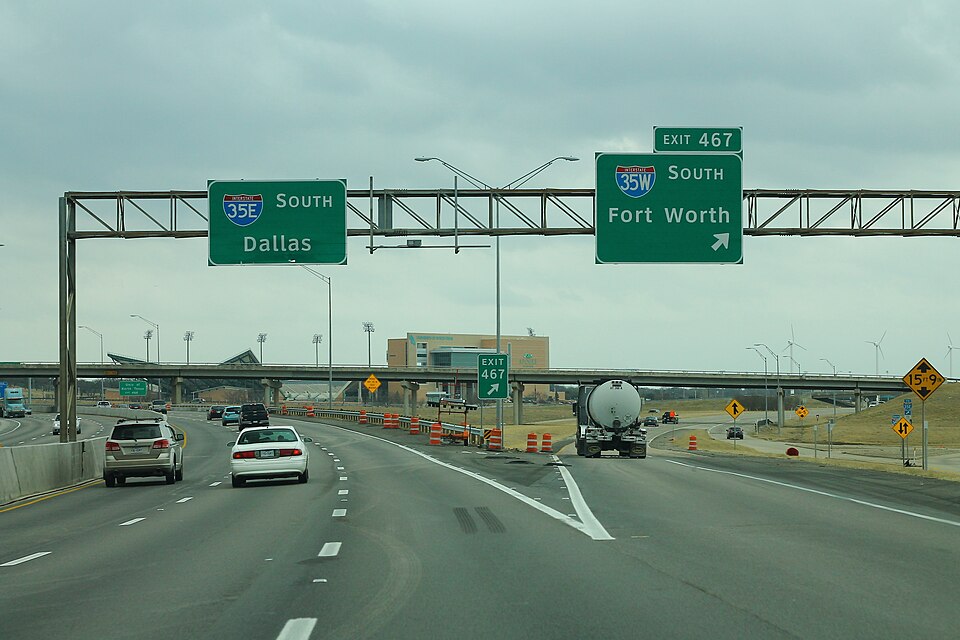
    Photo: Nine-Twenty, CC BY-SA 2.0, via Wikimedia Commons

    Under Texas’s Graduated Driver License (GDL) rules, a driver under 18 on a provisional license may not carry more than one passenger under 21 who is not a family member. They may not drive between midnight and 5 a.m. except for work, school activities or a medical emergency, and may not use a phone at all, even hands-free, except in an emergency. The provisional license expires on your 18th birthday. This guide explains both Texas GDL phases, the exceptions and the hardship license.

    The two Texas GDL phases

    Phase 1: learner license Phase 2: provisional license
    Age 15 to 17 16 to 17
    How to get it Driver ed classroom phase, plus the vision, sign and law tests At least 6 months on a learner (or hardship) license, full driver ed, 30-hour log, ITTD, driving test
    Supervision Licensed driver aged 21 or over, with at least 1 year of experience, in the front passenger seat None needed
    Phone use None, including hands-free, except in an emergency None, including hands-free, except in an emergency
    Passengers and night Supervised at all times One passenger under 21 who is not family; no driving midnight to 5 a.m. (with exceptions)
    Ends 18th birthday 18th birthday

    Texas provisional license restrictions in detail

    Passenger limit

    You may not drive with more than one passenger under 21 who is not a family member. Passengers aged 21 or over, and family members of any age, do not count toward the limit.

    Midnight to 5 a.m. curfew

    You may not drive after midnight and before 5 a.m. unless you need to:

    • go to or take part in work (including work on your family’s farm)
    • attend or take part in a school-related activity
    • deal with a medical emergency

    No phones, including hands-free

    Drivers under 18 may not drive while using a wireless communication device, handheld or hands-free, except in an emergency. A first offense carries a fine of $25 to $99. After a previous conviction the fine rises to $100 to $200 (Transportation Code section 545.424, as of November 2026). The statewide texting ban applies on top of this. See Texas phone and texting laws.

    When the passenger and curfew limits do not apply

    The passenger limit and the curfew do not apply while you drive with a supervisor who meets the learner license rules: a licensed driver aged 21 or over with at least one year of experience in the front passenger seat. The phone ban still applies in that case.

    Police may not stop a vehicle only to check whether a teen driver is breaking these GDL rules. You can still be cited if you are stopped for something else.

    Learner license rules worth knowing

    Your supervisor may not be intoxicated, asleep or doing anything that stops them watching and responding to your driving. If your license is suspended during Phase One, your six-month holding period grows by the days of the suspension. The parent or guardian who signed your application can ask DPS in a sworn writing to cancel your license at any time before you turn 18. Two or more traffic convictions within 12 months can lead to a suspension after a hearing if you are under 18.

    What happens at 18?

    Your provisional license expires on your 18th birthday. DPS’s current renewal page lists an online route for eligible provisional-license holders approaching 18; its eligibility list says you will be 18 within 30 days. Other conditions apply, including citizenship/SSN, license status and the previous renewal method. Use the DPS eligibility process before relying on online renewal, because an office visit may still be required. If you renew in person before 18, a parent or legal guardian must come with you.

    Texas hardship license at 15

    A hardship license lets a 15-year-old drive in limited situations. DPS can issue one if:

    • not having a license would cause unusual economic hardship for the family
    • it is needed because of a family member’s illness, disability or death
    • you need it for a vocational education program you are enrolled in
    • a court orders it

    A parent, guardian or custodian applies with you in person on form DL-77; if there is none, an employer or county judge can. You must still pass a driver education course and the license exam. You can take the training course from 14. If DPS refuses, you can appeal to the county court in your county. A hardship license is suspended if you are convicted of two or more moving violations within 12 months. Time on a hardship license counts toward the six months you must hold a license before a provisional license.

    Scenario check

    • You are 17 and drive two friends aged 16 and 17 home from practice. Not allowed: two non-family passengers under 21.
    • You drive your 15-year-old brother and one friend. Allowed: your brother is family, so only one passenger counts.
    • You drive home from a closing shift at 12:40 a.m. Allowed: driving for work is an exception.
    • You answer a call on a hands-free car system. Not allowed under 18, unless it is an emergency.

    Common questions

    Does a provisional license in Texas mean I need an adult with me?

    No. A provisional license lets you drive alone, within the restrictions above.

    Can I drive at night on a learner license?

    Yes, with a qualifying supervisor. Your 30-hour log must include at least 10 hours at night.

    Can I use GPS on my phone under 18?

    The under-18 rule bans using a wireless device while driving, except in an emergency. Set your route before you move off, and pull over safely to change it.

    Do the rules change if I move to Texas at 17?

    Under 18s must take the Texas driving test, and the Texas under-18 driving rules apply to anyone under 18 driving in Texas. See moving to Texas.

    How do Texas GDL rules compare with other states?

    See GDL laws by state.

    Related Texas guides

    Sources

    • Texas Department of Public Safety, “Texas Driver Handbook” (DL-7, revised January 2026), chapter 1, Hardship License, Graduated Driver License, Renewing a License, and Suspensions (dps.texas.gov)
    • Texas Legislature, “Transportation Code Chapter 545, Operation and Movement of Vehicles”, section 545.424 (statutes.capitol.texas.gov)
    • Texas Legislature, “Transportation Code Chapter 521, Driver’s Licenses and Certificates”, sections 521.204, 521.222 and 521.223 (statutes.capitol.texas.gov)
    • Texas Department of Licensing and Regulation, “Getting a Provisional Driver’s License” (tdlr.texas.gov)
    • Texas Department of Licensing and Regulation, “Getting the Learner License” (tdlr.texas.gov)
    • Texas Department of Licensing and Regulation, “Parent Taught Driver Education Program: Step-by-Step Guide” (tdlr.texas.gov)
    • DPS, current renewal eligibility (dps.texas.gov)
  • How to Get a Driver’s License in Texas: Learner to Full License

    How to Get a Driver’s License in Texas: Learner to Full License

    Photo: Farragutful, CC BY-SA 4.0, via Wikimedia Commons

    To get a driver’s license in Texas before age 25, you complete a driver education course, pass the vision, sign and traffic law tests, and then pass a driving test. Teens start with a learner license at 15, hold it for at least six months, and move to a provisional license at 16 that carries restrictions until 18. This guide sets out the whole Texas route for teens, adults 18 to 24 and drivers 25 and over, with links to a detailed guide for each step.

    Key facts: Texas driver licensing at a glance

    • Driver education: required for everyone under 25. You can start the classroom part at 14.
    • Learner license: from age 15 to 17, after the classroom phase and the knowledge tests.
    • Holding period: under 18s must hold a learner (or hardship) license for at least six months before a provisional license.
    • Supervised practice: 30 hours of behind-the-wheel practice, at least 10 at night, as part of teen driver education.
    • Provisional license: from 16. Passenger, midnight to 5 a.m. and phone limits apply until 18.
    • Impact Texas Drivers: a free DPS video course that every driving test applicant must finish within 90 days before the test.
    • Agencies: the Texas Department of Public Safety (DPS) issues licenses. The Texas Department of Licensing and Regulation (TDLR) regulates driver education.

    Which route applies to you?

    Your age Driver education Learner stage Impact Texas course
    14 You may start the classroom part Not yet. Learner license from 15 No
    15 to 17 Full teen course: 24 hours classroom plus 44 hours in-car Learner license, held at least 6 months Impact Texas Teen Drivers (ITTD), 2 hours
    18 to 24 6-hour adult course, 24-hour minor course, or parent-taught The six-month holding rule applies only under 18 ITAD (1 hour) or ITTD
    25 and over Not required The six-month holding rule does not apply An Impact Texas Drivers program is still required before the driving test

    If you already hold a valid license from another state, the driver education rule does not apply to you. See moving to Texas with an out-of-state or foreign license.

    Step by step: the Texas teen route (15 to 17)

    1. Choose a driver education option. A public high school course (if offered), a licensed driver education school, or parent-taught driver education.
    2. Complete enough classroom hours. Your provider issues the DE-964 certificate of completion when you are ready to apply.
    3. Get a Verification of Enrollment and Attendance (VOE) form from your school, unless you already have a diploma or GED. It is valid for 30 days, or 90 days between June and August.
    4. Pass the knowledge tests (vision, highway signs, traffic laws), either with your provider or at a DPS office. See the Texas learner license test.
    5. Get your learner license at DPS. From then on you can drive with a licensed adult aged 21 or over in the front passenger seat.
    6. Finish the in-car phase: 7 hours observation, 7 hours behind-the-wheel instruction and 30 hours of logged practice, including 10 at night. See the Texas 30-hour driving log.
    7. Complete Impact Texas Teen Drivers after your behind-the-wheel training and within 90 days before your test. See ITTD explained.
    8. Pass the driving test at DPS or at an authorized driving school. See Texas road test maneuvers and taking the road test at a driving school.
    9. Drive on a provisional license until 18. See Texas provisional license and GDL rules.

    Adults 18 to 24 and drivers 25 and over

    Texas law says DPS may not issue a license to anyone under 25 without a driver education certificate. At 18 to 24 the quickest option is usually the 6-hour adult driver education course, followed by an Impact Texas Drivers program and the driving test. Teen classroom hours cannot be counted toward the 6-hour adult course. The details are in ITAD and the 6-hour adult driver ed course.

    At 25 and over, driver education is not required. You still apply at DPS, pass the required tests and complete an Impact Texas Drivers program before the driving test.

    What does a Texas license cost?

    The DL-7 fee table (January 2026) lists a learner license or an under-18 license at $15 plus a $1 administrative fee, so $16. A license at 18 to 84 is $32 plus $1, so $33, and generally lasts eight years. At 85 or older it is $9 and lasts two years. A hardship license is $5 plus $1. A replacement card, a change of address or name, or a test to add or remove a restriction is $11, and adding a motorcycle to a license is $16. The $1 fee is charged once when you do several transactions together, and not at all by mail. Veterans with a service-related disability of at least 60 percent pay nothing, except for a CDL or if required to register as a sex offender. Check the current figure with Texas DPS before your appointment. The parent-taught instructor authorization from TDLR costs $20 and is non-refundable.

    Hardship license at 15

    Texas can issue a hardship license from age 15 if not having one would cause unusual economic hardship for the family, if it is needed because of a family member’s illness, disability or death, if you need it for a vocational education program, or if a court orders it. A parent, guardian or custodian applies with you in person on form DL-77, and DPS may ask for supporting documents. You still need to pass driver education and the license exam. Two or more moving violations within 12 months lead to suspension. More in the Texas GDL rules guide.

    Texas road rules the knowledge test asks about

    • Right-of-way: after stopping at a stop sign, yield to traffic already in the intersection or close enough to be a hazard. Treat a dark traffic signal as a stop sign. Coming out of a driveway or alley, yield to traffic on the road. On a one- or two-lane road meeting a divided highway or a road with three or more lanes, with no sign or signal, stop and yield. With no signs or signals, yield to a vehicle that has entered or is approaching from your right. Turning left, yield to oncoming traffic. An unpaved road yields to a paved road. On a street that ends at a T-intersection, stop and yield to through traffic. From a driveway or private road, stop before the sidewalk and yield to vehicles and pedestrians. On a frontage road, yield to vehicles entering or leaving the highway. Where three or more lanes run the same way, a vehicle moving into a lane from the right yields to one moving in from the left. Causing injury by failing to yield brings a fine of $500 to $2,000, or $1,000 to $4,000 for serious injury.
    • Emergency vehicles: for a siren or flashing lights, pull to the right edge clear of any intersection and stop until it passes. Do not follow within 500 feet of a fire truck or ambulance with its red lights on. If you cannot pull right, slow down and leave a clear path. Do not drive or park on a street where a fire truck has answered an alarm, or park where you block an ambulance. In a roundabout, leave the circle first and then pull over.
    • Slow Down or Move Over: for a stopped emergency vehicle, tow truck, TxDOT, utility or similar vehicle with lights on, leave the lane next to it if there are two or more lanes your way. Otherwise slow to 20 mph below the posted limit (5 mph where the limit is under 25 mph). Fines start at $500. The mandatory move-over or slow-down rule also covers a stationary municipal garbage or recycling vehicle while collecting or transporting waste from beside the highway. Qualifying toll, animal-control and parking-enforcement vehicles using the required warning lights are covered too. Pass mail and parcel delivery vehicles with care.
    • School buses: stop from either direction while the red lights flash. Only oncoming traffic on a road with separate roadways (a barrier or unpaved median, not a center turn lane) may keep going. Fines run from $500 to $1,250. You also need not stop for a bus on a different road, or on a controlled-access highway where the bus is in a loading zone and pedestrians may not cross. A second conviction within five years means $1,000 to $2,000 and a possible suspension of up to six months. Causing serious injury while passing a stopped bus is a Class A misdemeanor, and a state jail felony on a repeat.
    • Turn signals: signal for at least the last 100 feet before a turn, and also for lane changes and pulling away from the curb. Signal too when you slow down or stop, enter or leave a highway, or pull over. Hand and arm signals are legal but hard to see after dark. If you cannot reach the correct lane within half a block of your turn, go straight on.
    • Passing: never on the left within 100 feet of an intersection, railroad crossing, bridge, viaduct or tunnel, on a hill or curve with limited view, or where signs or solid lines forbid it. On a two-lane road, be back on the right before an oncoming car comes within 200 feet. You may pass on the right only where the road is clear with two or more lanes each way, on a one-way road, or on a paved shoulder when the vehicle ahead is slowing or stopped, disabled or about to turn left. Never leave the pavement to do it, and do not sit in another driver’s blind spot.
    • Being passed: stay right and do not speed up until the other driver is past.
    • Speed limits where no sign is posted: 30 mph in an urban district, 15 mph in an alley, 70 mph on numbered state and US highways outside urban districts, and 60 mph on other rural roads. Even below the limit, you must not drive faster than is safe for conditions. A county can set 15 mph on beaches and adjoining county roads. Many limited-access highways are posted from 75 up to 85 mph, and cities and counties can change limits, so obey the sign.
    • Following distance: the DL-7 sets at least 2 seconds at 30 mph or less and 4 seconds above 30 mph in good conditions, with more in poor conditions, and calls 4 seconds the best practice for beginners. Stopping takes about 63 feet from 20 mph, 164 from 40, 303 from 60 and 387 from 70. As speed rises your field of vision narrows, to about one-fifth at 60 mph.
    • Headlights: on from 30 minutes after sunset to 30 minutes before sunrise, and whenever you cannot see people or vehicles 1,000 feet ahead. Dim high beams within 500 feet of an oncoming vehicle and 300 feet of one you follow. Also use low beams on lighted roads and in fog, heavy rain, sleet, snow or dust. If you must park on an unlighted highway at night, leave parking lights or low beams on.
    • Parking: never on a sidewalk, crosswalk, intersection, bridge, railroad track or beside a parked car. Do not park within 15 feet of a fire hydrant, 20 feet of a crosswalk at an intersection, 30 feet before a stop sign, yield sign or signal, 20 feet of a fire station driveway, or 50 feet of a railroad crossing. Also keep 30 feet from the curb opposite the end of a safety zone, 75 feet from a fire station entrance on the opposite side of the street, and clear of any driveway or street excavation that you would block. Outside towns, park off the road if you can; if you cannot, leave room to pass and stay visible for 200 feet each way. On a two-way road your right wheels must be within 18 inches of the curb. Leaving a car, turn off the engine, remove the key and set the brake, and on a grade turn the front wheels to the curb or road side. Coasting downhill in neutral is illegal.
    • Disabled parking: you need a disabled plate or windshield card, and a card only counts when its holder is being carried. Fines start at $500 to $750 and reach $1,250 by a fifth offense, with community service for repeats. Do not block a curb ramp or park in the striped area beside a space, which wheelchair lifts need. See Texas disabled parking placards.
    • Railroad crossings: stop 15 to 50 feet from the nearest rail when a signal, lowered gate or flagger warns of a train, when a train within about 1,500 feet sounds its signal, or when a train is visible and close. Look for a second track before you go. Never stop on the tracks. If you stall and a train is coming, get out and move away beside the tracks toward the train, so debris flies past you. The blue and white Emergency Notification System sign gives the number to call and the crossing ID. The fine is $50 to $200.
    • Pedestrians: give way at an uncontrolled intersection, on a WALK signal, on green where there is no pedestrian signal, and if the light changes after someone has started across. Stop fully if that is the only way to avoid hurting a person with a white cane or assistance animal. At a pedestrian hybrid beacon, go when dark, slow on flashing yellow, prepare on steady yellow, stop on steady red, and on alternating flashing red stop and then go if clear. Lights set in the road warn of a crossing or other hazard ahead.
    • Signals: you may turn right on steady red after stopping, or left from one one-way street into another, unless a sign forbids it. A flashing yellow arrow lets you turn left after yielding to oncoming traffic. An officer directing traffic overrides signals. Over a lane, a red X means do not drive there, a yellow X means move out safely, and a green arrow means you may use it.
    • Signs: octagon is stop only, triangle yield only, pennant a no-passing zone ahead, diamond a hazard, pentagon a school, round a railroad ahead, vertical rectangle usually a rule and horizontal rectangle usually a guide. Yellow warns, orange marks work zones, blue shows services, brown shows recreation, green gives direction. Texas signs to know include left lane for passing only, wireless device use prohibited in a school zone, center two-way left turn lane, HOV lane hours, shoulder for emergencies only, and photo-enforced red lights.
    • Work zones and barricades: fines double where workers are present. Follow flaggers, stop in your lane when told, and read barricade stripes: sloping down to the right means bear right, down to the left means bear left. Driving around a barricade or ignoring a warning sign brings a fine of $1 to $200, and is a Class B misdemeanor, up to $2,000 and 180 days in jail, where water covers the road. An orange slow-moving vehicle emblem marks a vehicle designed for 25 mph or less.
    • Floods: 6 inches of water reaches the underside of most cars, 12 inches floats many, and 2 feet of moving water carries off pickups and SUVs. Water can also hide a missing road. Take another route, and if you stall, get out and go to higher ground.
    • Freeways: yield to traffic already on the highway, and use the speed change lane to match it. Keep right when slower, and be ready to move over for faster traffic. Move to the exit lane early; exit signs usually come at least 1,000 yards ahead. Against highway hypnosis, stop at least every two hours or 100 miles. If you break down, get off the pavement, turn on your hazard lights, and tie on a white cloth or raise the hood.
    • Sharing the road: a car at 55 mph stops in about 240 feet, a loaded tractor-trailer can need over 400. Do not pass a truck on the right near a turn, cross behind one backing up, or cut in front. Allow a motorcycle the full lane and 4 to 6 seconds of following distance. Before a right turn, merge with bicycle traffic instead of cutting across it. Light rail is quiet: never stop on the tracks or drive around gate arms.
    • Seat belts: everyone 15 and older must buckle up, and the driver must make sure passengers under 17 are belted. Children under 8 ride in a child safety seat unless they are taller than 4 feet 9 inches. Fines are $25 to $50 for your own belt, $100 to $200 to the driver for an unbelted passenger under 17, and $25 to $250 for an unsecured young child.
    • Open beds: it is an offense to drive a pickup or flatbed with anyone under 18 riding in the bed, apart from narrow exceptions such as parades and emergencies. The fine is $25 to $200. It is also an offense to tow a boat or watercraft with anyone under 18 riding on it, and a Class B misdemeanor to tow a trailer with a person riding in it, again with narrow defenses.
    • Alcohol: A BAC of 0.08 or more meets the legal definition of intoxication at any age, and impairment can make driving illegal below that figure. Drivers under 21 also commit a separate zero-tolerance offense with any detectable alcohol. Refusing a breath or blood test brings a 180-day suspension, or 2 years with a prior alcohol or drug contact in the last 10 years. An ordinary first DWI is a Class B misdemeanor, with 72 hours to 180 days in jail and a criminal fine of up to $2,000; an open container in the driver’s immediate possession raises the minimum confinement to six days. A BAC of 0.15 or more makes the offense Class A. Since September 1, 2025, DWI in a school crossing zone while its reduced speed limit applies is a state jail felony. Separate state traffic fines under section 709.001 are additional: $3,000 for a first conviction within 36 months, $4,500 for a second or subsequent conviction within that period, or $6,000 where the proven BAC is 0.15 or more. The court must waive those section 709.001 fines and costs if it finds the person indigent. Under 21 with any detectable alcohol below 0.08, the suspension is 60 days for a first offense, 120 for a second and 180 for a third or later, and you can ask for a hearing. A minor’s first DUI is a Class C misdemeanor with a fine of up to $500, 20 to 40 hours of community service and an alcohol awareness course. Adults who test at 0.08 or more face a 90-day suspension, up to 365 days for repeats. A second DWI means up to $4,000 and 30 days to 1 year in jail. A third means up to $10,000 and 2 to 10 years in prison, and a passenger under 15 makes it a state jail felony. An open container in the passenger area costs up to $500. Only time sobers you up, about an hour per drink. Any drug, including over-the-counter medicine, can impair you, so ask a doctor or pharmacist.
    • Street racing: any race, speed contest or drag race on a public road is an offense. It brings an automatic license suspension on conviction and penalties from a Class B misdemeanor up to a second-degree felony.
    • Low-speed vehicles: neighborhood electric vehicles may use only streets posted at 45 mph or less, and motor-assisted scooters only streets posted at 35 mph or less, unless a city or county bans them. Segway-type devices belong on sidewalks and bike paths, and on roads posted at 30 mph or less only to cross, where there is no sidewalk, or when directed. Expect slow traffic there.
    • Loads: nothing may stick out more than 3 inches past the left side or 6 inches past the right side of the car, and loose loads such as sand or gravel must be enclosed or covered so nothing blows or spills. A towed trailer behind a car or light truck needs safety chains, and a tow connection may not exceed 15 feet and needs a white flag at least 12 inches square.
    • Vehicle equipment: the foot brake must stop you within 25 feet from 20 mph. You need two headlights, two taillights and brake lights (all three if you have a high-mounted one), a plate light, turn signals, a horn heard at 200 feet, a mirror showing 200 feet behind, wipers, safety glass, tires with at least 2/32 inch of tread, and front and rear plates. A red front light, a siren or a radar jammer is not allowed.
    • Inspection and registration: since January 1, 2025, non-commercial vehicles no longer need a safety inspection before registration, and you pay a $7.50 inspection program replacement fee at registration instead. Commercial vehicles still need one, and some counties require emissions tests. Register a newly bought vehicle within 30 days. Since July 1, 2025, Texas dealers issue metal license plates at sale instead of the former paper buyer temporary tags. Keep the buyer’s receipt in the vehicle until registration is completed and the windshield sticker is fitted. Private sales and certain special permits have different rules.
    • Carbon monoxide: never run the motor in a garage, or sit in a parked car with the windows closed and the engine, heater or air conditioner on in an enclosed space. Move a victim to fresh air and call 911.
    • Police stops: giving a false name to an officer who has lawfully detained or arrested you is an offense. What to do when pulled over: pulled over by police. State law requires you to stop immediately for an authorized emergency vehicle. If the spot feels unsafe or you doubt the vehicle, turn on your hazard lights, drive slowly below the limit, call 911, and head for a well-lit, populated place. Keep your hands on the wheel and tell the officer if you carry a weapon. You must show your license on request, but you cannot be punished for refusing to answer questions, and you may refuse consent to a search, though you may not physically resist one. Signing a citation does not admit guilt. Intentionally fleeing an officer is an offense, with higher penalties in a vehicle or if someone is hurt, and evading arrest means automatic suspension on conviction.
    • Communication impediment: you can ask for an optional code on your license or ID that alerts officers to a communication challenge, using a doctor’s form DL-101. Form VTR-216 does the same through vehicle registration, placing a private note where an officer sees it before approaching.
    • Your license: carry it, and show it to an officer or anyone in a crash with you. Report a new address within 30 days; changing other details means an office visit. Driving with no license can cost up to $200 for a first conviction and $25 to $200 for a second within a year. With no insurance as well and a crash causing serious injury or death, it is a Class A misdemeanor, up to $4,000 and 365 days in jail.
    • Driving while license invalid: driving while suspended, revoked, denied or canceled is a Class C misdemeanor, up to $500. It rises to Class B, up to $2,000 and 180 days in jail, with a prior conviction, no insurance or a DWI-based suspension, and to Class A if you were uninsured and caused serious injury or death.
    • Occupational (essential need) license: a court may order one if you can prove an essential need to drive during a suspension, other than a medical or child support case. It costs $10 a year for up to two years. You must carry a certified copy of the order, and it never covers a commercial vehicle.

    License classes, renewals and suspensions

    • Classes: a Class C license covers ordinary cars and light trucks. Heavier vehicles need Class A or B, motorcycles need Class M, and commercial driving needs a separate CDL. Class C covers a single vehicle under 26,001 lbs gross weight rating, which may tow a trailer up to 10,000 lbs, and an autocycle. At 18 or older, a practice license is a Class C with the same restrictions as a learner license, at the usual $33. Under-21 cards are marked “Under 21”.
    • Restrictions and endorsements: conditions such as corrective lenses are printed on the card as restriction codes. An ID card is for identification only and does not let you drive. Code A means corrective lenses, B a licensed driver 21 or older in the front seat, and T automatic transmission only. Ask a driver license office about removing a restriction.
    • Organ donation: you can join the Donate Life Texas registry when you apply or renew. The application also offers voluntary donations to listed programs, emergency contacts, and voter registration if you are at least 17 years 10 months. Men 18 to 25 are registered for selective service. Medical answers on the form can send your case to the Medical Advisory Board. Qualifying veterans can add a Veteran designator.
    • Lost card or changed details: apply to DPS for a duplicate. A renewal notice may be mailed before your license expires, but renewing on time is your job; some drivers can renew online. Licenses renew every eight years, and you must visit an office at least every 16 years for a vision exam, photo and fingerprints. Under DPS rules, online, phone and mail renewal is not open to occupational license holders, anyone who will be 79 or older when the license expires, anyone suspended, revoked or denied renewal, or anyone whose lawful presence must be verified, and DPS can require an office visit in other cases. DPS’s renewal page allows a provisional license holder to renew online or by phone only if they will be 18 within 30 days and meet its other conditions, including having renewed in person last time; learner license holders cannot renew online, and commercial license holders should check with DPS.
    • Suspensions: conviction for DWI, certain drug offenses, failure to stop and render aid, racing, evading arrest, driving while license invalid, misuse of a license, or graffiti can trigger automatic suspension under the applicable law. Under section 521.372, the drug grounds distinguish federal Controlled Substances Act offenses, felony drug offenses, repeat misdemeanor drug offenses within the specified 36-month period, and certain other Chapter 481 felonies. For other misdemeanor drug convictions, suspension under that section requires a court determination in the interest of public safety; do not treat every first misdemeanor as automatically suspending a license. After a hearing, DPS can also suspend for causing a serious crash, or for four traffic convictions in 12 months or seven in 24. Under 18, two convictions in 12 months is enough. Courts can order action over child support or an ignition interlock. DPS can cancel a license for false information, incomplete driver education or when a parent withdraws consent, and can deny one for fuel theft, unpaid reinstatement fees or failure to appear. Reinstatement generally costs $100, or $125 after an administrative revocation, and some cases need an SR-22 insurance certificate.
    • Minors and alcohol away from the wheel: buying, trying to buy, having or drinking alcohol, or lying about age, costs up to $500, community service and a suspension of 30 days for a first offense and 60 for a second. A third means 180 days and a Class B misdemeanor from age 17, or 60 days under 17. Anyone who buys or supplies alcohol for a minor faces up to $4,000 and a year in jail.
    • Old surcharges: the Driver Responsibility Program ended on September 1, 2019, so older handbook pages about its surcharges no longer apply.

    What the Texas Driver Handbook covers

    The Texas Driver Handbook (form DL-7, Spanish DL-7S) is the official study guide. DPS now publishes it online only, and every driver education student must have access to the current edition. It covers the topics the knowledge test is built on. Our guides go deeper on each one:

    Handbook topic Where to read more
    Your license: types, GDL, tests, new residents This guide, plus GDL rules and moving to Texas
    Insurance, financial responsibility and crashes Texas insurance and crash reporting rules
    Signs, signals and pavement markings US road signs by shape and color, US pavement markings
    Right-of-way, turning and passing Four-way stops, school bus laws
    Parking, stopping and standing Texas parallel parking, US parking rules
    Speed and speed limits The basic speed law
    Alcohol and drugs Zero tolerance under 21, implied consent
    Pedestrians, bicycles and sharing the road Pedestrians and crosswalks, motorcycles, bikes and trucks
    Distracted driving and phones Texas phone and texting laws

    Download the current handbook from the Texas DPS website. If a rule here differs from the edition you are using, the newer official text wins.

    Common questions

    What is the youngest age to drive in Texas?

    15, with a learner license (or a hardship license). You can start the classroom part of driver education at 14.

    Do I need driver ed in Texas if I am 18?

    Yes, if you are under 25 and do not hold a valid license from another state. At 18 to 24 a 6-hour adult course meets the requirement.

    Can I drop out of school and still get a license before 18?

    No. Under 18s must be enrolled and attending school, or hold a diploma or GED, to be licensed. TDLR confirms this in its student FAQ.

    How long is the Texas learner license valid?

    It expires on your 18th birthday. You must hold it for at least six months before you can get a provisional license.

    Can I use driver ed hours from another state?

    No. TDLR says out-of-state hours do not transfer, so you enroll in a Texas program.

    Is there a driver ed course in American Sign Language?

    Yes. TDLR has an optional ASL classroom course, taken through a licensed driver education school. Ask your provider whether they offer it.

    How do the Texas rules compare with other states?

    See how to get a driver’s license in the US and GDL laws by state.

    Sources

    • Texas Department of Public Safety, “Vehicle Safety Inspection Program Changes Now in Effect” (dps.texas.gov)
    • Texas Department of Motor Vehicles, “House Bill 718 Implementation” (txdmv.gov)
    • Texas Legislature, Penal Code sections 49.01 and 49.04, and Transportation Code sections 521.371 to 521.374 and 709.001 (tcss.legis.texas.gov)
    • Texas Legislature, “Transportation Code Chapter 548, Compulsory Inspection of Vehicles”, sections 548.201 and 548.510 (statutes.capitol.texas.gov)
    • Texas Administrative Code, Title 37, section 15.29, “Alternative Methods for Driver License Transactions” (Texas Secretary of State)
    • Texas Department of Licensing and Regulation, “Do I Need to Take Driver Education in Texas?” (tdlr.texas.gov)
    • Texas Department of Licensing and Regulation, “Frequently Asked Questions for Students” (tdlr.texas.gov)
    • Texas Department of Licensing and Regulation, “Getting the Learner License” (tdlr.texas.gov)
    • Texas Department of Licensing and Regulation, “Behind the Wheel Instruction” (tdlr.texas.gov)
    • Texas Department of Licensing and Regulation, “Getting a Provisional Driver’s License” (tdlr.texas.gov)
    • Texas Department of Licensing and Regulation, “How to Become a Parent-Taught Driver Education Instructor” (tdlr.texas.gov)
    • Texas Legislature, “Transportation Code Chapter 521, Driver’s Licenses and Certificates”, sections 521.029, 521.1601, 521.204, 521.222, 521.223 and 521.421 (statutes.capitol.texas.gov)
    • Texas Department of Public Safety, “Impact Texas Teen Drivers: FAQs” (impacttexasdrivers.dps.texas.gov)
    • Texas Department of Public Safety, “Impact Texas Adult Drivers: FAQs” (impacttexasdrivers.dps.texas.gov)
    • Texas Department of Public Safety, “Texas Driver Handbook” (DL-7, revised January 2026), chapters 1 to 14 and appendices D and E (dps.texas.gov)
    • Texas Legislature, “Transportation Code Chapter 545, Operation and Movement of Vehicles”, sections 545.053, 545.066, 545.104, 545.151, 545.153, 545.155, 545.156, 545.157, 545.302, 545.352, 545.412, 545.413 and 545.414, Chapter 521, sections 521.054, 521.242 and 521.457, and Chapter 724, section 724.035 (statutes.capitol.texas.gov)
  • Texas Minimum Car Insurance, Crash Reporting and Safety Rules

    Texas Minimum Car Insurance, Crash Reporting and Safety Rules

    Photo: Jason Lawrence, CC BY 2.0, via Wikimedia Commons

    Texas requires every vehicle on the road to have liability insurance of at least $30,000 per injured person, $60,000 per crash for injuries and $25,000 for property damage. Known as 30/60/25, these limits are set in Texas law. This guide explains the minimums, what to show an officer, the penalties for driving uninsured, what to do and report after a crash, and Texas’s safety responsibility rules.

    Texas minimum car insurance (30/60/25)

    Coverage Minimum per crash
    Bodily injury or death, one person $30,000
    Bodily injury or death, two or more people $60,000
    Damage to other people’s property $25,000

    These limits have applied since January 1, 2011 (Transportation Code section 601.072). They pay for damage you cause to others, not your own car or injuries.

    PIP and uninsured motorist coverage

    Texas insurers must include personal injury protection (PIP) and uninsured or underinsured motorist coverage in an auto liability policy unless a named insured rejects it in writing (Insurance Code sections 1952.101 and 1952.152). PIP pays reasonable medical expenses and lost income from a crash, for you, your household and your passengers, whoever caused it. Think carefully before signing a rejection.

    Insurance is one way to meet the Texas “financial responsibility” rule. The law also allows a surety bond, a deposit or self-insurance, but nearly all new drivers use an insurance policy. For pricing and policy choices as a new driver, see car insurance for new drivers.

    Showing proof of insurance in Texas

    When a police officer asks, or when another driver involved in a crash asks, you must show proof. Accepted proof includes:

    • your insurance card (the standard Texas proof of insurance form)
    • an image of it on your phone, from your insurer
    • the policy or a photocopy, or an insurance binder

    Showing proof on your phone does not give the officer consent to look at anything else on it. Officers also check coverage through Texas’s insurance verification program, TexasSure. They may not ticket you for no insurance without first trying to verify it that way.

    Penalties for driving without insurance in Texas (as of November 2026)

    Offense Penalty
    First conviction Fine of $175 to $350 (a court can lower it if you cannot afford to pay)
    Second or later conviction Fine of $350 to $1,000
    Second conviction, license DPS suspends your license unless you file and keep proof of insurance with DPS for two years
    Second conviction, vehicle The court orders the vehicle impounded if you owned it at the time and still own it, for 180 days per the DL-7

    If you had valid insurance at the time but could not show it, take the proof to court. The charge must be dismissed once the court verifies it.

    The DL-7 (January 2026) also lists suspension of your license, driving privilege or registration if a crash judgment goes unpaid for 60 days, or if an installment agreement from a crash settlement goes into default.

    What to do after a crash in Texas

    1. Stop at the scene, or as close as you can without blocking traffic more than necessary. If you drove on, go back immediately.
    2. Check for injuries. Give reasonable help to anyone hurt, including arranging transport to a doctor or hospital if treatment is clearly needed or they ask.
    3. Move off the freeway if you can. In a metropolitan area, if the crash is on a freeway lane, ramp, shoulder or median and every vehicle can still be driven normally and safely, move to a frontage road, cross street or other safe spot to swap details.
    4. Exchange information: your name and address, the vehicle’s registration number and your insurer’s name. Show your driver’s license if asked.
    5. Call police immediately if anyone is hurt or killed, or a vehicle cannot be driven normally and safely. Call the city police inside a city, or the sheriff or DPS outside one. The DL-7 also says to notify police when a driver leaves the scene or you suspect a driver is intoxicated.

    Hitting a parked car or property

    • Unattended vehicle: stop, then find the owner or leave a note in a visible place with your name and address, the owner’s name and address and what happened.
    • Fence, sign, building or landscaping: take reasonable steps to find and tell the owner, with your name, address and vehicle registration number.

    Leaving the scene

    Failing to stop and give information after damaging a vehicle is a Class C misdemeanor if total damage is under $200, and Class B if it is $200 or more. Leaving a crash that injures someone can mean up to 5 years in prison or 1 year in county jail, a fine of up to $5,000, or both. Serious bodily injury makes it a third-degree felony, with 2 to 10 years and up to $10,000. A death makes it a second-degree felony, with 2 to 20 years and up to $10,000. The same Class C and Class B penalties apply to an unattended vehicle or damaged fixture.

    If someone hits you and drives off, report it to police. The Texas Department of Insurance advises that uninsured motorist coverage pays for hit-and-run damage reported to law enforcement.

    When helping the injured, give the location clearly and send for skilled help, even if people say they are fine. Do not move a victim unless you must. Press a clean, thick cloth on serious bleeding, and keep the person shaded or warm as needed.

    For a general checklist, see what to do after a car crash.

    Texas crash report thresholds

    • Police report: an officer who investigates a crash must file a written report if anyone was injured or killed, or if any one person’s property was damaged to an apparent $1,000 or more. It goes electronically to TxDOT within 10 days.
    • Driver reports: since September 1, 2017, Texas drivers no longer send their own crash report to the state. The Transportation Code section that required one was repealed under Senate Bill 312, and TxDOT no longer keeps the Driver’s Crash Report (Form CR-2). A city can still require drivers to file a report with a city department by ordinance, so ask local police whether one applies. Keep your own notes for your insurer.
    • Getting the police report: people involved in the crash, their insurers and others with a proper interest can buy a copy of the officer’s crash report (CR-3) through TxDOT’s Crash Report Online Purchase System.

    Texas safety responsibility rules: crashes without insurance

    Chapter 601’s security rules apply if you are involved in a Texas crash that causes injury, death, or at least $1,000 of damage to one person’s property, and you had no insurance covering it.

    • If DPS finds a reasonable probability that a court judgment will be made against you, it can suspend your driver’s license and vehicle registrations.
    • To avoid the suspension, you deposit security with DPS and file proof of financial responsibility. The amount is set by DPS, from $1,000 up to the 30/60/25 limits.
    • If you file proof using an insurance policy, it must run for at least six months with the full premium paid.
    • DPS waits until 21 days after receiving the crash report. In that time, you can show a release from liability, a court ruling that you are not liable, or a signed installment agreement to pay the claims.
    • The rules do not apply if you had insurance covering the vehicle, if your vehicle was legally parked or stopped at a signal, or if only you and your own property were hurt or damaged.

    Common questions

    What is the minimum car insurance in Texas?

    30/60/25: $30,000 per injured person, $60,000 per crash for injuries and $25,000 for property damage.

    Do I need my own policy on a learner license?

    The law requires the vehicle you drive to be covered. Learners usually practice in a family car, so ask the insurer how to add you to that policy.

    Is a photo of my insurance card on my phone valid in Texas?

    Yes. Texas law accepts an image on a phone that shows the required information from your insurer.

    Do I have to call the police after a minor crash in Texas?

    You must call immediately if anyone is hurt or a vehicle cannot be driven normally and safely. For minor damage with drivable cars, you still have to stop and exchange information.

    Do I file a crash report with the state myself?

    No, not with the state. Since September 1, 2017, Texas drivers do not file their own crash report with TxDOT, which no longer keeps CR-2 reports. Police file a report when one is required, and some cities require a local report by ordinance, so ask local police. Report the crash to your insurer.

    Can I lose my license for a crash if I was uninsured?

    Yes. Under the safety responsibility rules, DPS can suspend your license and registrations unless you post security and file proof of financial responsibility.

    Related guides

    Sources

    • Texas Department of Public Safety, “Texas Driver Handbook” (DL-7, revised January 2026), chapters 3 and 11 (dps.texas.gov)
    • Texas Legislature, “Transportation Code Chapter 601, Motor Vehicle Safety Responsibility Act”, sections 601.051, 601.053, 601.072, 601.151 to 601.154, 601.191, 601.193, 601.231 and 601.261 (statutes.capitol.texas.gov)
    • Texas Legislature, “Transportation Code Chapter 550, Accidents and Accident Reports”, sections 550.021 to 550.026, 550.062 and 550.067 (statutes.capitol.texas.gov)
    • Texas Legislature, “Insurance Code Chapter 1952, Policy Provisions and Forms for Automobile Insurance”, sections 1952.101, 1952.151 and 1952.152 (statutes.capitol.texas.gov)
    • Texas Department of Transportation, “Crash reports and records” (txdot.gov)
    • Texas Department of Motor Vehicles, “New to Texas” (txdmv.gov)
  • Texas Texting and Driving Law: Phone Rules for New Drivers

    Texas Texting and Driving Law: Phone Rules for New Drivers

    Photo: Jason Lawrence, CC BY 2.0, via Wikimedia Commons

    In Texas it is illegal for any driver to read, write or send a text or other electronic message on a handheld device unless the vehicle is stopped. Drivers under 18 may not use a phone at all while driving, even hands-free, except in an emergency. Extra hands-free-only rules apply in school crossing zones. This guide sets out each Texas rule, the fines and the exceptions.

    Texas phone laws at a glance

    Rule Who it covers What is banned Law
    Statewide texting ban All drivers Reading, writing or sending electronic messages on a portable device unless stopped Section 545.4251
    Under-18 phone ban Drivers under 18, including learner and provisional license holders Any wireless device use, handheld or hands-free, except in an emergency Section 545.424
    School crossing zones All drivers Using a phone unless stopped or hands-free Section 545.425
    School property All drivers Using a phone while the school zone’s reduced speed limit is in effect, unless stopped or hands-free Section 545.4252
    Bus with a minor on board School and passenger bus drivers Using a phone unless the bus is stopped Section 545.425

    The Texas texting while driving law (all ages)

    Under Transportation Code section 545.4251, you commit an offense if you use a portable wireless device to read, write or send an electronic message while driving, unless the vehicle is stopped. An electronic message means data you read from or enter into a device to communicate with another person.

    What the law allows

    It is a defense if you were using the device:

    • with a hands-free device, such as voice-to-text or a car’s built-in system
    • for GPS or navigation
    • to report illegal activity or call for emergency help
    • to enter information into an app that shares traffic and road conditions
    • to read a message you reasonably believed was about an emergency
    • to play music
    • mounted in the vehicle for work communication with a dispatcher or app service

    These defenses are for adults. A driver under 18 is still covered by the under-18 ban on any device use.

    Texting fines in Texas (as of November 2026)

    • First offense: $25 to $99
    • After a previous conviction: $100 to $200
    • If texting causes someone’s death or serious bodily injury: a Class A misdemeanor, with a fine of up to $4,000 and up to one year in jail

    An officer who stops you for texting may not take or search your phone unless other law allows it.

    Under 18 in Texas: no phone use at all

    Section 545.424 bans drivers under 18 from driving while using a wireless communication device, except in an emergency. The law defines the device as handheld or hands-free, so Bluetooth calls, speakerphone and voice commands are all covered. The ban applies on a learner license with a supervisor in the car and on a provisional license.

    • First offense: $25 to $99
    • After a previous conviction: $100 to $200

    Practical habits: set your GPS route and music before you move off. Put the phone out of reach or on do-not-disturb. If you must use it, pull over somewhere safe and stop first.

    The same section sets the passenger and midnight to 5 a.m. limits. See Texas provisional license and GDL rules.

    School zones: hands-free only

    In a school crossing zone, you may not use a wireless device while driving unless you are stopped or using a hands-free device (section 545.425). Cities that enforce the rule must post a sign at each entrance to the zone. The same rule applies on public school property while the school zone’s reduced speed limit is in effect (section 545.4252). Emergency calls to 911, a hospital, fire department, doctor or police are a defense.

    City-wide phone bans

    A Texas city or other local authority may ban handheld phone use throughout its area. If it does, it must post signs where state, US and interstate highways enter its area, saying whether hands-free use is allowed. Watch for these signs when you drive into a new city. Texting rules themselves are set statewide.

    Why this is on your Texas license test

    The Texas license exam must test your knowledge of how phones and other distractions affect safe driving (section 521.161). Teens also complete the Impact Texas Teen Drivers program, which focuses on distracted driving, before the road test. See ITTD explained and the Texas learner license test.

    Common questions

    Is it illegal to hold your phone while driving in Texas?

    Statewide, it is illegal to text on a handheld device unless you are stopped. Holding a phone for a call is not banned statewide for adults. It is banned in school crossing zones, in cities with their own bans, and for all drivers under 18.

    Can I use GPS on my phone in Texas?

    Adults can. Navigation is a defense under the texting law. Under 18s are banned from using a wireless device while driving, so set the route before you start.

    Does stopping at a red light count as stopped?

    The texting law says “unless the vehicle is stopped” but does not define the term further. The safe choice is to wait until you are parked.

    I have a learner license and my parent is in the car. Can I take a hands-free call?

    No. The under-18 ban applies whoever is supervising you, unless it is an emergency.

    Does a texting ticket go on my record?

    Texting while driving is a misdemeanor offense. For how convictions affect your license, see points systems and license suspensions.

    How does Texas compare with other states?

    Many states ban all handheld use. Texas’s statewide rule targets messaging. See hands-free and texting laws by state.

    Related Texas guides

    Sources

    • Texas Legislature, “Transportation Code Chapter 545, Operation and Movement of Vehicles”, sections 545.424, 545.425, 545.4251 and 545.4252 (statutes.capitol.texas.gov)
    • Texas Legislature, “Transportation Code Chapter 521, Driver’s Licenses and Certificates”, section 521.161 (statutes.capitol.texas.gov)
    • Texas Department of Public Safety, “Impact Texas Teen Drivers FAQ” (impacttexasdrivers.dps.texas.gov)
  • Texas Road Test at a Driving School: Third Party Testing

    Texas Road Test at a Driving School: Third Party Testing

    Photo: formulanone, CC BY-SA 2.0, via Wikimedia Commons

    Texas lets some driver education schools give the Class C road test for you instead of a DPS driver license office. This is the DPS Third Party Skills Testing (TPST) program. This guide covers who qualifies at each age, what to bring, what it costs and how your result reaches DPS.

    Key facts

    • Only driver education schools certified by the Texas Department of Public Safety (DPS) can give the test under TPST.
    • It covers the Class C (regular car) driving test.
    • Schools set their own prices. DPS does not regulate them.
    • Under 18s still need every normal requirement, including the Impact Texas Teen Drivers (ITTD) certificate.
    • Parent-taught students can test at a driver license office or with a third-party provider (TDLR).

    Is a driving school road test the same as the DPS test?

    It counts the same. Texas Transportation Code section 521.165 lets DPS authorize driver education providers to give the driving part of the license exam, and DPS sets the testing standards. For anyone under 18, DPS can never waive the driving test, so a school test has to be passed just like an office test. Prepare in the same way: see Texas road test maneuvers and how to pass the Texas parallel parking test.

    Who can take the Texas road test at a driving school?

    From DPS’s TPST eligibility list:

    Your age What you need before the test
    16 to 17 Proof you completed a minor driver education course; a learner license held for at least six months; an ITTD certificate dated within 90 days of the test
    18 to 24 A driver education certificate (DE-964, DEE-964, ADE-1317 or ADEE-1317); the license DPS lists as a “restricted license”; an Impact Texas Adult Drivers (ITAD) certificate
    25 and over The “restricted license” DPS lists. Driver education is not required but is recommended

    DPS does not explain on that page what it means by a restricted license for adults. Ask the school or DPS what you need to show before you book.

    For teens, the six-month learner license rule is in Transportation Code section 521.204. For the full teen route, see how to get a driver’s license in Texas.

    Step by step: booking a TPST road test

    1. Find a school. DPS publishes a county-by-county list of authorized TPST schools with addresses and phone numbers. Not every driving school is on it.
    2. Call the school. Ask about the price, available dates, where the test starts and whether you can use your own car.
    3. Finish ITTD or ITAD. For teens, ITTD is the last step after all classroom and behind-the-wheel training. Print the certificate. A TPST school does not accept the electronic copy.
    4. Take the test on the agreed date with your documents and a road-legal vehicle with current registration and insurance.
    5. Get your license. See the next section.

    What happens after you pass at a driving school?

    There are two possible routes, depending on the school:

    • School uses the TPST Submission Portal: the school sends your packet to DPS online. You may be able to pay online and get a temporary permit without going to an office.
    • School does not use the portal: the school gives you your results in a sealed envelope. Take it unopened to a driver license office when you apply.

    Under 18s still have to meet the other provisional license conditions, such as the school attendance verification. Ask DPS which documents to bring.

    Learner license tests at a driving school

    This is separate from TPST. A licensed in-person or online driver education provider may give its own students the vision, highway sign and traffic law tests for the learner license. A parent-taught provider may give the sign and law tests, but not the vision test (section 521.1655). See the Texas learner license test.

    Common questions

    How much does a Texas road test at a driving school cost?

    It depends on the school. DPS says it does not regulate the fees schools charge for a drive test. Ask for the full price, including any vehicle rental, before you book.

    Do I have to be a student at the school to test there?

    DPS does not say so on its TPST pages. Policies vary, so ask the school.

    Can parent-taught students use a third-party tester?

    Yes. TDLR says parent-taught students can take the driving test at a DPS office or through a third-party provider. See parent-taught driver education step by step.

    My ITTD certificate is older than 90 days. Can I still test?

    No. The certificate is only valid for 90 days. If you do not pass within that time, you must retake ITTD.

    Is a school test easier than a DPS office test?

    No. It is the same skills test, given to standards DPS sets. What usually differs is scheduling and how familiar you are with the area.

    Can I test at a school if I just moved to Texas at 17?

    Under 18s with an out-of-state license must take a Texas driving test. Ask DPS whether a TPST school can give it in your case. See moving to Texas.

    Related guides

    Sources

    • Texas Legislature, “Transportation Code Chapter 521, Driver’s Licenses and Certificates”, sections 521.165, 521.1655 and 521.204 (statutes.capitol.texas.gov)
    • Texas Department of Public Safety, “Third Party Skills Testing Program” (dps.texas.gov)
    • Texas Department of Public Safety, “Third Party Skills Testing Program: Non-Commercial Driver License” (dps.texas.gov)
    • Texas Department of Public Safety, “Schedule a drive test at an authorized Third Party Skills Testing (TPST)” (dps.texas.gov)
    • Texas Department of Public Safety, “Texas Provisional License as a Teen” (dps.texas.gov)
    • Texas Department of Public Safety, “Impact Texas Teen Drivers FAQ” (impacttexasdrivers.dps.texas.gov)
    • Texas Department of Licensing and Regulation, “Provisional Drivers License: Parent-Taught Driver Education” (tdlr.texas.gov)
  • Moving to Texas: Transfer an Out-of-State or Foreign License

    Moving to Texas: Transfer an Out-of-State or Foreign License

    Photo: Famartin, CC BY-SA 4.0, via Wikimedia Commons

    This guide is for anyone moving to Texas with a driver’s license from another US state, Canada or another country. As a new Texas resident you can drive on your old license for up to 90 days, and you must register your vehicle within 30 days. Most adults with a valid US or Canadian license swap it without retaking the knowledge or driving tests.

    Key deadlines for new Texas residents

    Task Deadline Where
    Register your vehicle Within 30 days of moving County tax assessor-collector office
    Get a Texas driver’s license Within 90 days of moving Texas Department of Public Safety (DPS) driver license office

    The 90-day rule is in Transportation Code section 521.029. It applies if you are 16 or older and carry the license issued by your previous state or country. If you are stopped after more than 90 days, you have to prove you have not lived in Texas longer than that.

    Transferring an out-of-state license to Texas

    If you hold a valid license from another US state, a US territory or Canada

    • Tests: DPS generally waives the knowledge and driving tests when you surrender a valid license. Texas law lets DPS issue the license after you pass the vision test and pay the fee (section 521.164).
    • Class: you get the Texas class that matches your current license.
    • Surrender: you hand in your old license.
    • Driver education: the Texas rule that under-25s need a driver ed certificate does not apply if you hold a valid license from another state (section 521.1601(b)).
    • Expired license: if your old license has expired, you may have to take the tests. Check with DPS before you book.

    What to bring

    • Your current out-of-state license
    • Proof of identity, and proof of US citizenship or lawful presence
    • Proof of Texas residency
    • Proof of Texas vehicle registration for any vehicle you own (DPS asks for this when you surrender an out-of-state license)
    • The fee

    DPS sets the exact document list and accepts only certain documents. Check the DPS “Moving to Texas” page before your appointment. See REAL ID and the documents to bring.

    Moving to Texas under 18

    Teens face extra steps. DPS says every applicant under 18 with a valid out-of-state license must take the Texas driving test. You also need to complete the free Impact Texas Teen Drivers (ITTD) course and bring a printed certificate dated within 90 days of the test. A parent or guardian must come with you to sign.

    The DL-7 handbook (January 2026) says a 15 to 17 year old with a valid out-of-state instruction permit and a VOE form is issued a Texas learner license, then holds it for six months. A 16 or 17 year old with a valid out-of-state license gets a provisional license after passing the driving exam.

    Driver education hours from another state do not transfer to a Texas course (TDLR). If you are under 18 and still on a permit, you will usually need to enroll in a Texas driver education course. Once licensed, Texas’s under-18 rules apply to you: the passenger limit, the midnight to 5 a.m. limit and the ban on phones. See Texas provisional license rules and ITTD explained.

    Moving to Texas with a foreign driver’s license

    Texas law lets DPS sign driver license agreements with foreign countries (section 521.0305). DPS lists agreements with France, Germany, South Korea, Taiwan and the United Arab Emirates. If you are 18 or older and hold a valid, unexpired license from one of these countries, DPS can waive the knowledge and driving tests. DPS can change this list, so check its current version before you apply.

    From any other country, expect to take the full process: vision test, knowledge test and driving test. You may also need an adult driver education course if you are 18 to 24 (see ITAD and the 6-hour adult course). DPS says a minor with a license from a country other than the US or Canada must take the knowledge test.

    Nonresidents 16 or older with a valid home license may drive vehicles covered by a Class C or M license. Nonresident active-duty military, their spouses and dependent children may drive on a valid home-state license. Someone returning from military service with a license issued abroad by the armed forces has 90 days.

    Visiting rather than moving? See driving in the US on a foreign license.

    Registering your vehicle in Texas within 30 days

    1. Emissions test (some counties only). Get a passing emissions inspection first if you live in Bexar, Brazoria, Collin, Dallas, Denton, El Paso, Ellis, Fort Bend, Galveston, Harris, Johnson, Kaufman, Montgomery, Parker, Rockwall, Tarrant, Travis or Williamson county. Use a DPS-certified inspection station.
    2. Texas-compliant insurance. You need at least $30,000 per injured person, $60,000 per crash for injuries and $25,000 for property damage. If your policy was issued in another state, bring the whole policy so the county office can check the limits.
    3. Register at the county tax office. Bring your insurance card and proof of ownership, such as your previous state’s title or registration. First-time Texas registrants fill in Form 130-U (Application for Texas Title and/or Registration).

    Safety inspection: no longer needed for most cars

    Since January 1, 2025, non-commercial vehicles do not need a safety inspection before registration. You pay an inspection program replacement fee at registration instead. Commercial vehicles still need a safety inspection. Ask your county tax office what else it needs to register a vehicle brought from another state.

    Registration costs (as of November 2026)

    Item Amount
    Base registration fee $50.75
    TexasSure and DPS initiatives $1
    Inspection program replacement fee (non-commercial, annual) $7.50
    New resident motor vehicle tax $90 for a qualifying vehicle previously registered in your name outside Texas. This is a separate tax, not a tax-difference calculation; other vehicles may instead owe motor vehicle use tax.
    Fully electric vehicle fee (10,000 lbs or less) $200 a year
    Emissions inspection (if required for your vehicle) Pay the testing station its portion when the inspection is performed. The state’s $2.75 emissions fee is collected at registration, in addition to the inspection program replacement fee.

    The Comptroller distinguishes the $90 new resident tax from motor vehicle use tax. The $90 treatment normally requires the vehicle to have been registered in your name outside Texas and brought into Texas within 30 days of becoming a resident. It does not receive credit for tax paid elsewhere. If that treatment does not apply, ask the county tax office which use-tax calculation and any permitted credit apply. Counties can add their own fees, so your registration total will be higher. Active-duty US military members and nonresident full-time students at a Texas college or university do not have to register or title their vehicles in Texas.

    Common questions

    How long can I drive in Texas on my out-of-state license?

    Up to 90 days after you move, if you are 16 or older and carry your previous license.

    Do I have to retake the driving test when I move to Texas?

    Not usually, if you are 18 or older with a valid license from another state, a US territory or Canada. Under 18s must take the Texas driving test.

    Can I keep my old license and get a Texas one?

    No, for a US or Canadian license. You surrender it when you get your Texas license.

    Do I need a safety inspection to register my car in Texas?

    No, not for a non-commercial vehicle since January 1, 2025. You may need an emissions test, depending on your county.

    Which do I do first, license or registration?

    Registration has the shorter deadline (30 days). DPS also asks for proof of Texas vehicle registration when you surrender an out-of-state license, so register first if you own a car.

    I am a college student from another state. Do I need a Texas license?

    Nonresident full-time students do not need to register their vehicles in Texas. Whether you need a Texas license depends on whether you count as a resident. Ask DPS if you are unsure.

    Related guides

    Sources

    • Texas Department of Public Safety, “Texas Driver Handbook” (DL-7, revised January 2026), chapter 1, Who May Drive and Out-of-State License Holders, and chapter 2 (dps.texas.gov)
    • Texas Legislature, “Transportation Code Chapter 521, Driver’s Licenses and Certificates”, sections 521.029, 521.0305, 521.1601 and 521.164 (statutes.capitol.texas.gov)
    • Texas Legislature, “Transportation Code Chapter 502, Registration of Vehicles”, section 502.040 (statutes.capitol.texas.gov)
    • Texas Legislature, “Transportation Code Chapter 548, Compulsory Inspection of Vehicles”, section 548.510 (statutes.capitol.texas.gov)
    • Texas Department of Motor Vehicles, “New to Texas” and “Register Your Vehicle” (txdmv.gov)
    • Texas Comptroller of Public Accounts, Motor Vehicle Tax Guide, “New Resident Tax” and “Motor Vehicle Use Tax” (comptroller.texas.gov)
    • Texas Department of Public Safety, “Moving to Texas: A Guide to Driver Licenses and IDs” (dps.texas.gov)
    • Texas Department of Public Safety, “Vehicle Safety Inspection Program Changes Now in Effect” (dps.texas.gov)
    • Texas Department of Licensing and Regulation, “Driver Education Student FAQ” (tdlr.texas.gov)
    • Texas Department of Public Safety, “Impact Texas Teen Drivers FAQ” (impacttexasdrivers.dps.texas.gov)
  • Texas 30-Hour Driving Log: Supervised Practice Rules

    Texas 30-Hour Driving Log: Supervised Practice Rules

    Photo: Tony Webster, CC BY 2.0, via Wikimedia Commons

    Texas teens must complete 30 hours of supervised behind-the-wheel practice, at least 10 of them at night, before they can get a provisional license. The hours are recorded on TDLR’s “Driver Education 30 Hour Behind the Wheel Log” (form DES150N). The supervising adult must be 21 or over, hold a license for the vehicle and have at least one year of driving experience. Use this checklist for who can supervise, how to fill in the log and what DPS expects.

    Key facts

    • Hours: 30 in total, with at least 20 in daytime and at least 10 at night.
    • Form: TDLR form DES150N, revised December 2024.
    • Daily cap: only 2 hours a day count toward the 30, however long you drive.
    • Who signs: a parent or guardian certifies the log. A student who is 18 or over signs it themselves.
    • When it is used: you bring it to DPS when you apply for the provisional license.

    Who can supervise a Texas learner driver?

    Under Transportation Code section 521.222(d), the person in the front passenger seat must:

    • hold a license for that type of vehicle
    • be 21 or over
    • have at least one year of driving experience

    It does not have to be a parent. TDLR says any adult who meets these rules can supervise the practice hours, but a parent or guardian certifies them. A supervisor commits an offense if they sleep, are intoxicated or are doing something that stops them watching and responding to the driver.

    What counts as night?

    TDLR’s 30-hour guide defines nighttime as the period from half an hour after sunset to half an hour before sunrise. Daytime is the rest.

    The 30-hour plan on the TDLR log

    The log splits the 30 hours into lessons. Follow the order: each lesson builds on the one before.

    Lesson Hours
    Getting ready, starting, placing the vehicle in motion, and stopping 2
    Moving, stopping, steering, knowing where you are 3
    Backing 1
    Turning, lane position and visual skills 4
    Searching the intended path of travel 3
    Parking 1
    Turnabouts 2
    Multiple lane roadways 4
    City driving 5
    Expressway and freeway driving 5
    Total 30 (20 day minimum, 10 night minimum)

    The free TDLR “Texas 30-Hour Behind-the-Wheel Instruction Guide” explains what to practice in each lesson. For example, the second lesson starts in a large, empty, level parking lot, circling at 10 and 15 mph.

    How to fill in the log correctly

    • Write the student’s name and driver license (learner license) number at the top.
    • For each session, record the date, the time (a.m. or p.m.) and whether the hours were day or night.
    • The supervising adult signs each entry and adds their driver license number.
    • Count no more than 2 hours for any one day.
    • At the end, a parent or guardian (or the student, if 18 or over) signs the certification that the 30 hours, including at least 10 at night, are true and correct.

    DPS may ask to see this log. Fill it in after every drive, not from memory at the end.

    Checklist before you take the log to DPS

    • All 30 hours entered, with at least 10 at night
    • Every entry signed with the supervisor’s license number
    • Final certification signed and dated
    • DE-964 driver education completion certificate
    • Printed ITTD certificate dated within 90 days
    • Learner license held for at least six months

    How the 30 hours fit into Texas driver ed

    For under 18s, the in-car phase of Texas driver education is 44 hours:

    • 7 hours of in-car observation
    • 7 hours of behind-the-wheel instruction
    • the 30 hours of logged practice

    The 14 hours of instruction are usually not logged by a parent-taught instructor. The 30 practice hours always are. See parent-taught driver education.

    Common questions

    Can I count 4 hours from a long road trip?

    No. Only 2 hours a day count toward the 30 on the current DES150N log.

    Can my older sister supervise?

    Yes, if she is 21 or over, holds a license for the car and has at least one year of driving experience. A parent or guardian still certifies the log.

    Do hours driven in another state count?

    TDLR says out-of-state driver education hours do not transfer to Texas. Ask TDLR before relying on practice logged elsewhere.

    Can I drive on the freeway with my learner license?

    Yes, with a qualifying supervisor. The log sets aside 5 hours for expressway and freeway driving. See freeway driving for new drivers.

    Where do I get the log?

    Download the log and the instruction guide from the TDLR driver education pages. Parent-taught courses may include their own copy.

    Related guides

    Sources

    • Texas Department of Licensing and Regulation, “Driver Education 30 Hour Behind the Wheel Log (DES150N, rev. December 2024)” (tdlr.texas.gov)
    • Texas Department of Licensing and Regulation, “Texas 30-Hour Behind-the-Wheel Instruction Guide” (tdlr.texas.gov)
    • Texas Department of Licensing and Regulation, “Behind the Wheel Instruction” (tdlr.texas.gov)
    • Texas Department of Licensing and Regulation, “Getting Started with Parent-Taught Driver Education” (tdlr.texas.gov)
    • Texas Department of Licensing and Regulation, “Getting a Provisional Driver’s License” (tdlr.texas.gov)
    • Texas Department of Licensing and Regulation, “Frequently Asked Questions for Students” (tdlr.texas.gov)
    • Texas Legislature, “Transportation Code Chapter 521, Driver’s Licenses and Certificates”, section 521.222 (statutes.capitol.texas.gov)
  • Texas Parent-Taught Driver Education: Step by Step

    Texas Parent-Taught Driver Education: Step by Step

    Photo: CupWithSoda19, CC BY-SA 4.0, via Wikimedia Commons

    Parent-taught driver education (PTDE) lets a parent, guardian or approved designee teach a Texas teen the full driver education course. That means 24 hours of classroom instruction, 7 hours of in-car observation, 7 hours of behind-the-wheel instruction and 30 hours of practice. You apply to TDLR for authorization ($20), buy a curriculum from a licensed parent-taught provider, then take your student to DPS twice. These are the steps in order, with the paperwork at each stage.

    Key facts

    • Regulator: Texas Department of Licensing and Regulation (TDLR).
    • Authorization fee: $20 per student, applied for online, non-refundable (as of November 2026).
    • Total course: 24 classroom hours plus 44 in-car hours (7 observation, 7 instruction, 30 practice with at least 10 at night).
    • Commitment: TDLR says plan for at least 7 weeks of daily instruction.
    • DPS visits: two (learner license, then provisional license). The parent instructor must attend both.

    Step 1: Check you and your student are eligible

    Instructor

    • You must have an excellent driving history and must not have been convicted of certain criminal offenses. Use TDLR’s eligibility check.
    • If your license carries the B restriction, you cannot be an instructor.
    • A parent, legal guardian or judge can designate an alternate instructor. The alternate must meet the same rules and may not charge a fee.
    • DPS checks the instructor’s driving record twice: at the learner license stage and again at the provisional license stage. If you become ineligible, DPS can deny the license and throw out the hours taught after that point. TDLR recommends buying a copy of your driving record first if you have had a moving violation or crash in the past three years.

    Student

    Under 18s without a diploma or GED must have been enrolled in public, private or home school for at least the past 80 days, or in a high school equivalency program for at least 45 days. They must also be meeting the school’s attendance and progress rules. The school confirms this on the VOE form.

    Step 2: Apply for instructor authorization

    • Apply online through TDLR. Paper applications are not accepted.
    • Fee: $20, non-refundable. One application covers one parent teaching one student.
    • Enter the student’s legal name exactly as it appears on the birth certificate and the documents you will take to DPS.
    • Add any alternate instructor on the same form.
    • Keep the receipt. DPS asks for it at both visits. The program guide arrives by email, and you can download it from the Parent Instructor Portal.

    Step 3: Buy a parent-taught curriculum

    Buy the course from a licensed driver education provider with the parent-taught endorsement. Use TDLR’s provider search. Prices vary and TDLR does not recommend specific courses. Start teaching only after TDLR confirms your designation and you have the materials.

    Hybrid option: your teen can do the classroom part at a licensed driving school (online or in person) or a public high school. The school then transfers the classroom hours to you, and you teach only the in-car part.

    Step 4: Classroom phase and the learner license

    • The learner license becomes possible once your student is 15 and has done enough classroom hours: the whole classroom phase under the block method, or the first 6 hours under the concurrent method. Most providers issue the learner certificate after Module One. Some wait for the full 24 hours.
    • The provider may give the sign and traffic law tests. If not, your student takes them at DPS. See the Texas learner license test.
    • DPS visit 1: book an appointment and bring the application, identity, citizenship or lawful presence, residency, Social Security, vehicle registration and insurance documents, the DE-964 certificate, the VOE (or diploma or GED), the TDLR receipt and the fee. A guardian who is the instructor brings a certified court order.

    No driving is allowed until the learner license is issued.

    Step 5: In-car phase (44 hours)

    Part Hours Who
    In-car observation 7 Parent instructor
    Behind-the-wheel instruction 7 Parent instructor
    Behind-the-wheel practice (at least 10 at night) 30 Any licensed adult 21 or over, licensed at least a year, certified by a parent or guardian

    TDLR limits in-car instruction to two hours a day and supervised practice to two hours a day. The in-car phase cannot be completed in less than 15 calendar days. Log the 30 practice hours on TDLR’s form. See the Texas 30-hour log.

    Step 6: ITTD, the driving test and the provisional license

    1. Complete Impact Texas Teen Drivers within 90 days before the test.
    2. Make sure your student has held the learner license for at least six months.
    3. Pass the driving test at DPS or with a third-party testing school.
    4. DPS visit 2: bring the same identity and vehicle documents, plus the completion certificate, a VOE dated within its validity window, the TDLR receipt, the completed 30-hour log and the fee.

    Your teen then drives on a provisional license until 18.

    Common questions

    Can grandparents teach parent-taught driver ed in Texas?

    Yes, if a parent, legal guardian or judge designates them as the alternate instructor and they meet the same requirements.

    Can I change instructor partway through?

    Yes. Contact TDLR customer service with the student’s full name and date of birth, the new instructor’s name and your designation receipt number.

    Do I log the 14 instruction hours?

    TDLR says the 14 in-car instruction hours are usually not logged by the parent, though some courses include a log. The 30 practice hours must be logged.

    I have two teens. Is one application enough?

    No. A separate application and fee are needed for each child.

    Can an 18 to 24 year old use parent-taught?

    Yes. TDLR lists it as an option for that age group. See adult driver ed in Texas.

    The provider has not sent the DE-964. What can I do?

    Email TDLR customer service with the student’s full name and the name of the parent-taught course.

    Related guide

    Sources

    • Texas Department of Licensing and Regulation, “Getting Started with Parent-Taught Driver Education” (tdlr.texas.gov)
    • Texas Department of Licensing and Regulation, “How to Become a Parent-Taught Driver Education Instructor” (tdlr.texas.gov)
    • Texas Department of Licensing and Regulation, “Classroom Instruction” (tdlr.texas.gov)
    • Texas Department of Licensing and Regulation, “Hybrid Parent-Taught Driver Education” (tdlr.texas.gov)
    • Texas Department of Licensing and Regulation, “Getting the Learner License” (tdlr.texas.gov)
    • Texas Department of Licensing and Regulation, “Behind the Wheel Instruction” (tdlr.texas.gov)
    • Texas Department of Licensing and Regulation, “Getting a Provisional Driver’s License” (tdlr.texas.gov)
    • Texas Department of Licensing and Regulation, “Parent Taught Driver Education Program: Step-by-Step Guide” (tdlr.texas.gov)
    • Texas Department of Licensing and Regulation, “Do I Need to Take Driver Education in Texas?” (tdlr.texas.gov)
  • Texas Adult Driver Ed: The 6-Hour Course and ITAD (18 to 24)

    Texas Adult Driver Ed: The 6-Hour Course and ITAD (18 to 24)

    Photo: formulanone, CC BY-SA 2.0, via Wikimedia Commons

    If you are 18 to 24 and getting your first Texas driver’s license, you must complete driver education. Most adults choose the 6-hour adult driver education course. Before the driving test you must also complete an Impact Texas Drivers program: the free one-hour Impact Texas Adult Drivers (ITAD) video, or the teen version. This guide sets out the adult route step by step, including what changes at 25.

    Key facts for Texas adult learners

    • Driver education is required under 25, unless you hold a valid license from another state.
    • Options at 18 to 24: a 6-hour adult course, the 24-hour minor course, or parent-taught driver education.
    • ITAD: free, about one hour, three modules, with a certificate valid for 90 days.
    • At 25 and over, driver education is not required, but an Impact Texas Drivers program is still needed before the driving test.

    Which driver ed option should an adult choose?

    Option Good for Note
    6-hour adult driver education course (licensed provider) Most 18 to 24 year olds who want the shortest route You get an ADE-1317 certificate. Expect to take the knowledge tests at DPS
    24-hour minor driver education course Adults who want more structured teaching TDLR says some testing may be done with the provider instead of at DPS
    Parent-taught driver education Adults with an eligible parent or guardian to teach them See parent-taught steps

    If you started a teen course and turned 18, those classroom hours do not count toward the 6-hour adult course. You either finish the full teen program or take the full adult course.

    Step by step: the adult route (18 to 24)

    1. Complete a TDLR-approved driver education course and get your certificate.
    2. Apply at a DPS driver license office and pass the vision, highway sign and traffic law tests (unless your course provider gave them). See the Texas knowledge test.
    3. Get driving practice. The six-month learner holding rule applies only to under 18s. Ask Texas DPS which permit you need before you practice on public roads.
    4. Complete ITAD (or ITTD) after your course, and no more than 90 days before your driving test.
    5. Print the certificate and pass the driving test at DPS or at an authorized driving school.

    ITAD in detail

    • Who must take it: anyone who took the 6-hour adult course and received an ADE-1317 certificate. More broadly, DPS says applicants 18 and over must complete an Impact Texas Drivers program before the skills test, and may choose ITAD or ITTD.
    • Length: about one hour, in three modules. You can stop between modules, but each module must be watched in full.
    • Cost: free.
    • Certificate: emailed to you and available to reprint from your account. Bring a printed copy; electronic copies are not accepted.
    • Expiry: 90 days. If you have not passed the driving test within 90 days of the certificate date, you must restart ITAD.
    • ITAD is separate from the 6 hours of driver education and does not count toward them.

    What if you are 25 or older?

    You do not need a driver education course. You still apply at DPS, pass the required tests and complete an Impact Texas Drivers program before the driving test.

    Moving to Texas with a license

    The driver education rule does not apply if you hold a valid license from another state. See moving to Texas with an out-of-state or foreign license.

    Common questions

    Can I take the 6-hour adult course online?

    TDLR licenses both in-person and online driver education providers. Check the provider is licensed using TDLR’s provider search.

    Do I need ITAD if I took the 24-hour course?

    At 18 or over you need an Impact Texas Drivers program either way. DPS lets adults choose ITAD or ITTD.

    How long is the adult driver ed certificate valid?

    Ask your provider or Texas DPS how long the certificate is valid before you book.

    I am 24. Should I just wait until 25?

    You can, since driver education is not required from 25. But a short adult course teaches the Texas rules the knowledge test is built on.

    Can someone help me pay for driver ed?

    The Texas Workforce Commission can pay driver education and licensing fees for some young people, including those who were in foster care and homeless youth under 26. TDLR also mentions help for victims or children of relationship violence. Ask TWC about its Driver Education Funding Program.

    Related Texas guides

    Sources

    • Texas Department of Public Safety, “Impact Texas Adult Drivers: FAQs” (impacttexasdrivers.dps.texas.gov)
    • Texas Department of Public Safety, “Impact Texas Teen Drivers: FAQs” (impacttexasdrivers.dps.texas.gov)
    • Texas Department of Licensing and Regulation, “Do I Need to Take Driver Education in Texas?” (tdlr.texas.gov)
    • Texas Department of Licensing and Regulation, “Frequently Asked Questions for Students” (tdlr.texas.gov)
    • Texas Legislature, “Transportation Code Chapter 521, Driver’s Licenses and Certificates”, sections 521.1601, 521.1655, 521.168 and 521.204 (statutes.capitol.texas.gov)
  • Impact Texas Teen Drivers (ITTD) Explained: Who, When, How

    Impact Texas Teen Drivers (ITTD) Explained: Who, When, How

    Photo: Nine-Twenty, CC BY-SA 2.0, via Wikimedia Commons

    Impact Texas Teen Drivers (ITTD) is a free, two-hour online video course from Texas DPS about the dangers of distracted driving. Teens in Texas must complete it after their behind-the-wheel training and within 90 days before their driving test. This guide covers who needs ITTD, when to take it, how the certificate works and the mistakes that cause a wasted test trip.

    ITTD key facts

    • Cost: free.
    • Length: about two hours, split into eight modules.
    • When: after your behind-the-wheel driver education, as the last step before the driving test.
    • Certificate: valid for 90 days, and you must bring a printed copy.
    • Run by: Texas Department of Public Safety.

    Who has to take ITTD?

    Every driving test applicant in Texas must complete the right Impact Texas Drivers program. ITTD is the teen version. DPS says it is required for:

    • applicants under 18 who took a parent-taught course or a minor and adult driver education course
    • anyone who took a teen driver education course (24 hours classroom, 44 hours behind the wheel) and received a DE-964 certificate

    Drivers 18 and over may take either ITTD or the one-hour adult version, ITAD. See ITAD and the 6-hour adult course.

    When should you take ITTD?

    Timing is the part people get wrong.

    1. Finish your 24 classroom hours.
    2. Finish all behind-the-wheel instruction and your 30-hour practice log.
    3. Then do ITTD.
    4. Take the driving test within 90 days of the date on your certificate.

    ITTD is separate from the 24 classroom hours. It does not count toward them.

    How the course works

    • Register for an account on the Impact Texas Drivers website. When you log in, you will be asked for an authorization code sent by email. If it is not in your inbox, check spam. DPS says it comes from “CRIME RECORDS”.
    • You do not have to watch it all at once. Each of the eight modules must be finished in full before the next one opens.
    • The video covers distracted driving, real stories of Texas teens killed in crashes, and a “GDL Made Simple” segment on Texas passenger and novice driver restrictions.

    Getting and using your certificate

    • The certificate is emailed to the address on your account. You can also log in later to retrieve and print it.
    • Print it. DPS and third-party testing schools do not accept the electronic copy. They need paper.
    • Hand it in before the driving test starts.
    • It expires 90 days after the date shown. If you have not passed the driving test by then, you must restart ITTD.

    Test-day checklist

    • Printed ITTD certificate, dated within the last 90 days
    • DE-964 driver education certificate
    • Completed 30-hour behind-the-wheel log
    • VOE form or diploma or GED (under 18)
    • Vehicle registration and insurance for the test car
    • Parent-taught students: the parent instructor comes with you

    Full document list: Texas road test guide.

    Common questions

    Is ITTD the same as driver ed?

    No. It is a separate DPS requirement on top of your driver education course.

    Can I take ITTD before I finish my driving hours?

    DPS says ITTD should be taken after all behind-the-wheel instruction. Taking it early also risks the certificate expiring before your test.

    My certificate expired. What now?

    Restart the ITTD program and get a new certificate. It costs nothing.

    Can I show the certificate on my phone?

    No. Bring a printed paper copy.

    Is there a Spanish version?

    The Impact Texas Drivers website has an “En Español” option.

    Why does Texas require it?

    DPS built ITTD to cut deaths from distracted and reckless driving. Its focus is phone use and multitasking behind the wheel. Under 18s in Texas may not use a phone while driving, even hands-free. See Texas phone and texting laws.

    Related Texas guides

    Sources

    • Texas Department of Public Safety, “Impact Texas Teen Drivers: FAQs” (impacttexasdrivers.dps.texas.gov)
    • Texas Department of Public Safety, “Impact Texas Teen Drivers: Course Overview” (impacttexasdrivers.dps.texas.gov)
    • Texas Department of Public Safety, “Impact Texas Adult Drivers: FAQs” (impacttexasdrivers.dps.texas.gov)
    • Texas Department of Licensing and Regulation, “Getting a Provisional Driver’s License” (tdlr.texas.gov)
    • Texas Department of Licensing and Regulation, “Parent Taught Driver Education Program: Step-by-Step Guide” (tdlr.texas.gov)