
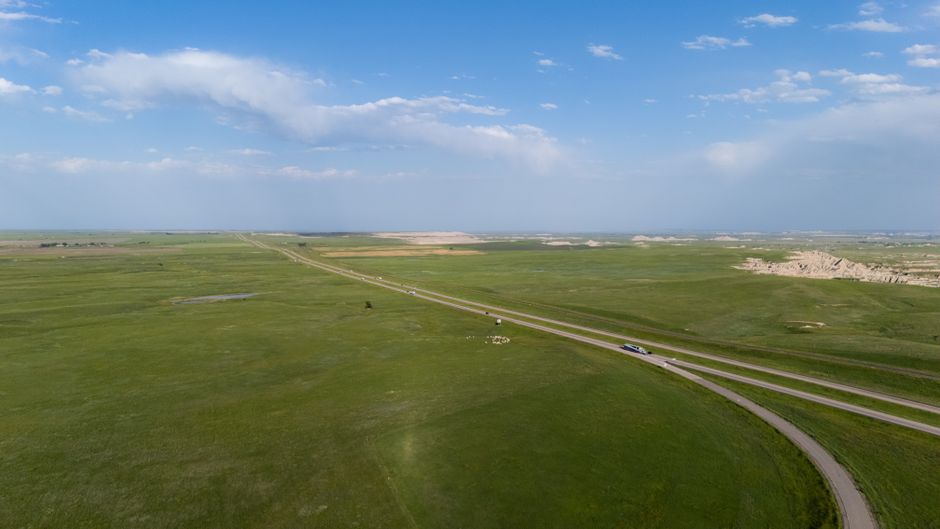
Photo: Sam McCool, Pexels
If you get your North Dakota instruction permit before you turn 16, you must log at least 50 hours of supervised driving before the road test. The hours must cover five conditions: rural, urban, gravel or dirt roads, night and winter driving. This checklist is for teens and the parents who sign off. It covers who can supervise, how to split the hours, and a practice plan built from the NDDOT manual’s coaching tips.
Key facts
- Who needs the log: instruction permit holders under 16.
- Minimum: 50 hours in total, with some driving in each of the five conditions.
- Driver’s ed: the 50 hours are on top of driver’s education, not part of it.
- Sign-off: a parent or legal guardian comes to the road test and signs that the hours are done.
- Supervisor: at least 18, licensed for the vehicle, with at least three years of driving experience, in the seat beside you.
Who can supervise a North Dakota permit driver?
- A licensed driver for that class of vehicle, at least 18, with at least three years of driving experience.
- They must sit in the seat beside you. Nobody else may be in the front seat, unless the vehicle has only a front seat.
- If you are 14 or 15, the vehicle must belong to a parent, guardian, grandparent, sibling, aunt or uncle. The exception is a dual-control car with a licensed driver trainer.
The supervisor does not have to be a parent. A parent or legal guardian must still sign for the hours at the road test.
The five driving conditions in the North Dakota log
The manual’s log has a row for each condition. You must drive in every one, and the rows must add up to at least 50 hours.
| Condition | What to practice (from the manual) |
|---|---|
| Rural areas | Two-lane highway speeds, passing rules, and watching for deer at dawn and dusk |
| Urban areas | Four-way stops, turn lanes, pedestrians in crosswalks, and the 25 mph default limit |
| Gravel, dirt or aggregate roads | Lower speeds, gentle steering, and easing back on after a wheel drops off the edge |
| Night driving | Dimming your high beams within 500 feet of oncoming traffic and 300 feet when following, and not overdriving your headlights |
| Winter driving | Testing your brakes at low speed, doubling your following distance, firm pressure on ABS brakes, and staying back from plows |
The manual does not set a minimum number of hours for each condition, only that each one is covered. For winter hours, plan your permit timing so that you drive through at least part of a winter.
Sample log layout
Copy this into a notebook, or use the log page at the back of the manual. A dated entry for every drive makes the parent sign-off easy to back up.
| Date | Condition | Hours | Skills practiced | Supervisor initials |
|---|---|---|---|---|
| Rural | ||||
| Urban | ||||
| Gravel or dirt | ||||
| Night | ||||
| Winter |
Parent and guardian coaching tips
These come from the manual’s parent section, cut down to what to do.
A practice order that works
- Where: start in an empty parking lot or on a remote road. Move to quiet neighborhood streets, then busier roads and highways.
- When: start in daylight and good weather. Add night, rain, snow and different roads as skills improve.
- What: start with turning, parking and backing. Move on to lane changes and merging.
- Who: only the two of you in the car. Other people and pets distract you both.
Every session
- Practice only when you are both rested, in a good mood and not rushed.
- Adjust the mirrors, seat, steering wheel and seat belts before starting.
- Wear seat belts and use headlights, day and night.
- Stop fully at stop signs, and before turning right on red.
- Look left, then straight ahead, then right before pulling away from a stop.
- Check the mirrors every 6 to 8 seconds, and keep a 3 to 4 second gap.
- Stay out of a truck’s no-zone, about 15 feet on all sides.
The blind-spot exercise
With the engine off, stand at the front bumper and walk backward until your teen can see your feet. Mark the spot with a cone or cup. Repeat behind the car and at both sides, then measure and write down how much of the road your teen cannot see.
Errors to watch for
The manual lists the top 11 teen driving errors. Among them:
- not watching the path of travel
- driving 5 mph or more too fast for conditions
- taking curves too fast
- poor searching at intersections
- following too closely
- being distracted.
Make these the focus of your later sessions.
Common questions
Do I need the 50 hours if I got my permit at 16?
The 50-hour rule in the manual applies to permit holders under 16. NDDOT’s rules for permit holders aged 16 and 17 do not include it. The manual’s coaching section still urges plenty of practice.
Do driver’s ed hours count toward the 50?
No. The manual says the 50 hours are in addition to the formal driver’s education requirement.
Do I hand in the log?
The manual says your parent or guardian goes with you to the road test and signs that you completed the hours. Bring your log anyway, in case the examiner asks to see it.
Can a grandparent supervise?
Yes, if they are at least 18, licensed for the vehicle and have at least three years of driving experience.
How many hours of night or winter driving do I need?
The manual does not set a number for each condition. You must drive in every condition, and the total must reach 50 hours.
Does the waiver course replace the 50 hours?
No. The road test waiver replaces only the road test. See the road test and waiver.
Related: the restricted license at 15, supervised hours in other states and winter driving tips. Overview: learning to drive in North Dakota.
Sources
- North Dakota Department of Transportation, “Noncommercial Driver License Manual, Class D, 2025 to 2027” (dot.nd.gov)
- North Dakota Department of Transportation, “How to Apply for a Learner’s Permit” (dot.nd.gov)