
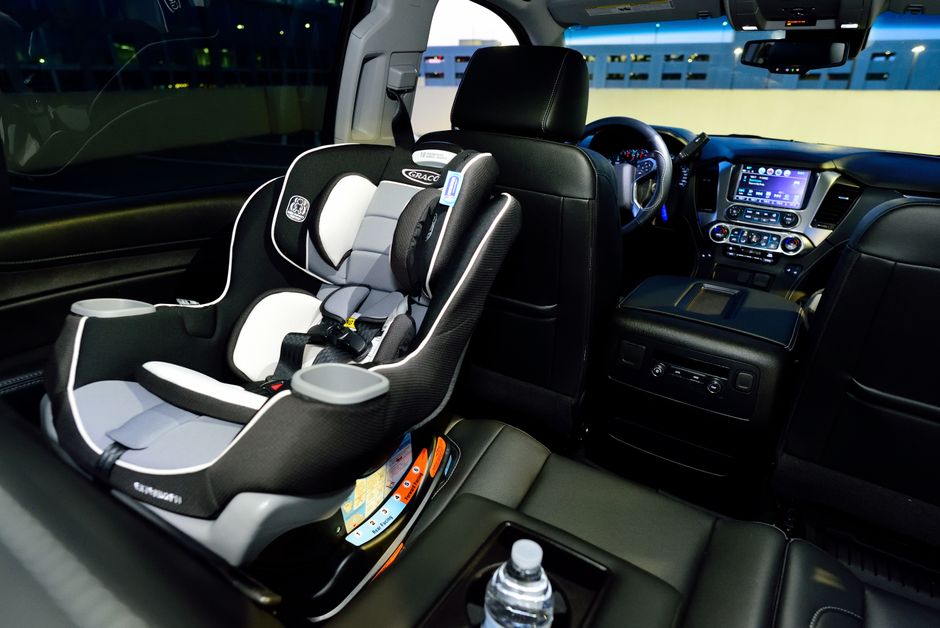
Photo: Lee Salem, Pexels
Every US state and DC has child car seat laws, and every state except New Hampshire has an adult seat belt law. What differs is the detail: the ages and sizes for rear-facing seats and boosters, whether back-seat passengers must buckle up, and whether police can stop you just for a seat belt violation. This guide explains how the laws work and shows California and New York as worked examples.
Key facts
- 35 states and DC have primary enforcement front-seat belt laws; 14 states have secondary enforcement; New Hampshire has no adult seat belt law but covers everyone under 18 (GHSA summary, laws last updated March 2025).
- 42 states and DC have rear-seat belt laws of some kind (GHSA).
- All states have child passenger safety laws, and most also require booster seats (GHSA).
- As the driver, you are usually responsible for making sure young passengers are buckled up. In New York and California you can be ticketed for an unbelted passenger under 16.
Primary vs secondary seat belt enforcement
| Type | What it means |
|---|---|
| Primary enforcement | Police can stop you and ticket you just for not wearing a seat belt. |
| Secondary enforcement | Police can only ticket a seat belt violation if they stopped you for something else first. |
| No adult law | New Hampshire only. Its child passenger law still covers everyone under 18. |
Either way, the belt is required by law in 49 states and DC. Some states also treat the rules differently for teens or for back-seat passengers. The Governors Highway Safety Association (GHSA), the association of state highway safety offices, keeps a state-by-state list.
Who must wear a seat belt?
California: you and your passengers must wear seat belts. You can get a ticket if you are not belted, and you can also be ticketed if a passenger under 16 is not properly restrained.
New York:
- The driver must wear a seat belt.
- Passengers 16 and older must wear a seat belt, one person per belt.
- The driver must make sure every passenger under 16 is in a seat belt or the right child restraint.
Child car seat rules: two state examples
| Stage | California | New York |
|---|---|---|
| Rear-facing | Under 2 years, unless the child weighs 40 lb or more or is 40 inches (3 ft 4 in) or taller | Until age 2 |
| Car seat or booster | Under 8 years old or under 4 ft 9 in: a child restraint in the back seat (limited exceptions) | Under 4: federally approved child safety seat. Ages 4 to 7: an appropriate federally approved child restraint |
| Seat belt | 8 or older, or at least 4 ft 9 in: may use a properly fitted seat belt | Ages 8 to 15: seat belt, one person per belt |
| Front seat | A rear-facing seat may not be placed in front of an active airbag | Never a rear-facing seat in front of a passenger air bag; sit at least 10 inches from the air bag (manual) |
Other states use different ages, weights and heights. Alabama, for example, requires rear-facing up to 1 year or 20 pounds, according to GHSA. State manuals give more examples: Maine requires a child seat under 55 lb, a child restraint from 55 to 79 lb and under 8, and the rear seat for under 12s under 100 lb. Montana requires a child restraint under 6 and under 60 lb, with a $20 seat belt fine. Rhode Island has a primary law ($40 per unbelted occupant) and requires a rear child restraint under 8, under 57 inches and under 80 lb ($85 fine). New Hampshire requires a child restraint under 7 and under 57 inches. Check your state’s law before you drive with a child, and always follow the car seat maker’s size limits.
Air bags and seating position
- Sit at least 10 inches from the air bag cover, measured from the center of the steering wheel to your breastbone (California).
- Passengers should also sit at least 10 inches from the passenger air bag.
- Never put a rear-facing child seat in front of an active front air bag.
- Children next to a side air bag may be at risk of serious injury (California).
Children left in cars
In California it is illegal to leave a child aged 6 or younger unattended in a vehicle unless someone at least 12 years old is supervising. California also says it is dangerous and illegal to leave children or animals in a hot vehicle, and cracking a window does not make it safe. Other states have their own laws.
Checklist before every drive
- Count passengers and seat belts. One person per belt.
- Check every child is in the right seat for their age and size under your state’s law.
- Pull belts snug: lap belt low across the hips, shoulder belt across the chest, never under the arm or behind the back.
- Check no rear-facing seat is in front of an active air bag.
- Check your own seat distance from the steering wheel.
Common questions
Can I be pulled over just for not wearing a seat belt?
In a primary enforcement state, yes. In a secondary enforcement state, only if you are stopped for another reason first. GHSA lists which is which.
Do back-seat passengers have to wear seat belts?
In most states, yes, at least for some ages. GHSA counts 42 states and DC with rear-seat belt laws.
Who gets the ticket if a passenger is not buckled?
In California and New York the driver is responsible for passengers under 16. For older passengers, check your state law.
When can my child sit in the front seat?
State laws differ. California requires children under 8 (or under 4 ft 9 in) to ride in the back seat except in limited cases, such as when there is no rear seat.
Does New Hampshire really have no seat belt law?
New Hampshire has no adult seat belt law, according to GHSA. Its law still requires everyone under 18 to be restrained.
Can I carry more passengers than there are seat belts?
Not in New York, which requires one person per belt for passengers 8 and older. Teen drivers may face extra passenger limits: see US graduated driver licensing compared.
Related: what to do after a car crash and car insurance for new drivers. All national guides: learning to drive in the USA.
Sources
- Governors Highway Safety Association, “Seat Belt Use” and “Child Passengers” state law summaries (ghsa.org)
- California DMV, “California Driver’s Handbook, Section 8: Safe Driving” (dmv.ca.gov)
- New York DMV, “Driver’s Manual”, Chapter 8 (dmv.ny.gov)
- Driver manuals for Maine (maine.gov), Montana (mvdmt.gov), Rhode Island (dmv.ri.gov) and New Hampshire (dmv.nh.gov)