
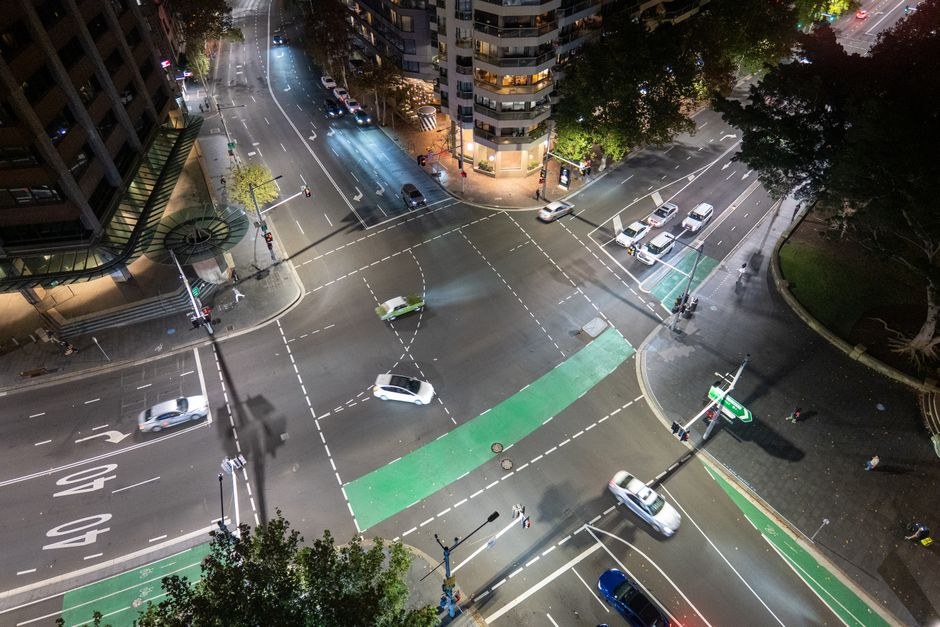
Photo: Mark Direen, Pexels
To supervise a learner driver in NSW, you need a current full (unrestricted) Australian driver licence, a blood alcohol concentration under 0.05 and no drugs in your system, and you must sit in the seat next to the learner. P1, P2, learner and overseas licence holders cannot supervise. This guide is for parents, relatives and friends who plan to teach a NSW learner, and for learners checking who can sit beside them.
Who can supervise a learner driver in NSW?
| Licence held | Can supervise? |
|---|---|
| Full (unrestricted) NSW licence | Yes |
| Full licence from another Australian state or territory | Yes (it is a full Australian licence) |
| Provisional P1 or P2 licence | No |
| Learner licence | No |
| Overseas licence, even a full one | No |
If the supervisor does not hold a full Australian licence, both the supervisor and the learner can be fined.
The Road User Handbook says the licence must be an “appropriate” full licence for the vehicle. If you are unsure whether yours qualifies, check with Service NSW on 13 22 13.
The supervisor’s legal duties
- Sit next to the learner. The supervisor must be in the front passenger seat, not the back.
- Alcohol under 0.05. The learner must be at zero, but the supervisor’s limit is under 0.05.
- No drugs. It is illegal to supervise with illegal drugs in your system or while under the influence of any drug, including prescription drugs.
- Testing. Police can breath-test a supervisor involved in a crash, and test a supervisor who shows signs of drug use. If a supervisor goes to hospital after a crash, doctors can take blood and urine samples.
- Same penalties as drivers. The severe alcohol and drug penalties for drivers also apply to supervisors.
- Sign off the log book. The supervisor marks off the learner’s progress in the paper log book or log book app.
What the learner must do while you supervise
A supervisor should know the learner’s own rules, because you are the one who will notice if they slip:
- never drive without the supervisor in the seat next to them (police can suspend a learner on the spot for this)
- maximum 90 km/h, and lower posted limits always apply
- zero alcohol
- no mobile phone at all, including hands-free and loudspeaker, unless the car is parked
- L plates on the front and back, or an L sign on the roof
- no towing
- passengers only in seats with seatbelts or suitable child restraints
- in Sydney, no driving in Parramatta Park, Centennial Park or Moore Park.
Full list: NSW learner, P1 and P2 restrictions.
Logging hours as a supervisor
Learners under 25 need at least 120 hours, including 20 hours at night, before the Driving Test. Every hour you supervise counts, and lessons with a licensed driving instructor count three for one. How to fill in and check the book: NSW learner log book guide.
How to run a good practice session
Transport for NSW suggests:
- Prepare yourself first. Reread the Road User Handbook, check your own habits (full stops, following distance, mirror and blind spot checks), and read the log book’s learning goals.
- Start easy. Quiet streets in daylight, short sessions, basic steering, accelerating and braking.
- Build up gradually. Move to busier roads and harder conditions only when the learner is ready. When you start night practice, use roads the learner knows well.
- Explain, show, then try. Discuss a new task, demonstrate it, then let the learner attempt it.
- Use commentary driving. Describe aloud what you see and what you are doing, then get the learner to do the same.
- Keep the car calm. No radio, phone calls or chatty passengers during practice. Reschedule if either of you is tired, upset or stressed.
- Coach, do not criticise. Praise what goes well. Talk mistakes through calmly and try again.
- Teach speed awareness. The faster the car goes, the harder it is to respond to hazards.
Free help for NSW supervisors
- Supervising Drivers: the fundamentals. A free online course of five modules, each about 15 to 20 minutes. It covers the log book goals, session planning and why on-road experience matters.
- Free supervisor workshops are run around NSW. Phone 13 22 13 for sessions near you.
Supervising other drivers
Overseas learner licence holders
A learner with an overseas learner licence can keep learning in NSW, but must be supervised at all times by someone with a full Australian (class C) licence. They must follow NSW learner conditions such as zero alcohol, L plates, no towing and no phone use, even if their home rules differ. See moving to NSW with an interstate or overseas licence.
P platers who passed in an automatic
A P1 or P2 driver who passed the Driving Test in an automatic can drive a manual only when supervised by someone with a full Australian licence.
Common questions
Can a P2 driver supervise a learner in NSW?
No. P1 and P2 drivers must not supervise or instruct a learner, and both people can be fined.
Can my parent supervise me on their UK or US licence?
No. An overseas licence cannot be used to supervise in NSW, even if it is a full licence. Your parent would first need to convert it to a NSW licence. Some countries’ licences convert without tests.
Can the supervisor have a drink before we go out?
The supervisor’s legal limit is under 0.05, but any alcohol slows reactions. If you have been drinking, it is safer to skip the session.
Can the supervisor sit in the back seat?
No. The supervisor must sit in the seat next to the learner.
Can the supervisor use their phone?
The phone ban applies to the learner. Transport for NSW advises supervisors to avoid phones and other distractions during practice, because your attention is part of the learner’s safety.
Can a supervisor take a learner on the motorway?
Yes, as long as the learner keeps to 90 km/h or the lower posted limit. See learners on motorways and freeways.
Back to the main guide: learning to drive in NSW.
Sources
- Transport for NSW, “Road User Handbook” (nsw.gov.au)
- NSW Government, “Supervising a learner driver” (nsw.gov.au)
- NSW Government, “Learner driver licence” (nsw.gov.au)
- NSW Government, “Learner and provisional licence holders visiting NSW” (nsw.gov.au)