
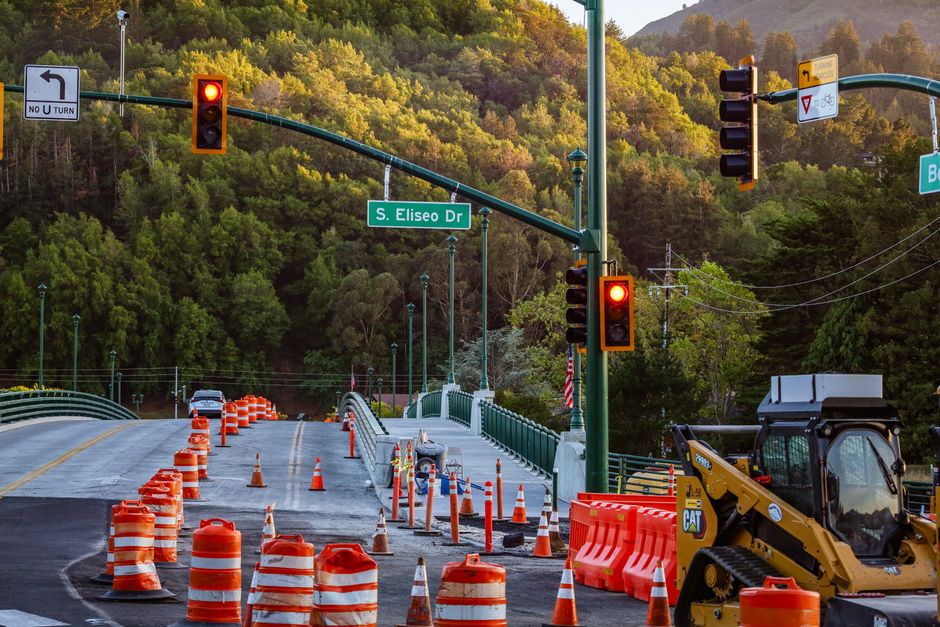
Photo: Robert So, Pexels
In a US work zone you must obey the posted work zone speed limit, follow flaggers and orange signs, merge where the signs tell you, and expect bigger penalties: many states double fines when workers are present, and some use speed cameras. This guide is for new drivers and permit test takers. It explains the signs, flaggers and merging, plus state fines, cameras and the work zone courses some states now require before a permit or license.
Key facts
- Orange means work zone. Work zone signs use the warning sign shapes, but in orange with black lettering.
- Flaggers’ signals are binding. Pennsylvania says a flagger’s authority overrides conventional traffic control devices.
- Fines often double. California, Arkansas, Oklahoma, Massachusetts, Kentucky and Pennsylvania all publish higher or doubled work zone fines, usually when workers are present.
- Speed cameras: Pennsylvania’s cameras ticket drivers going 11 mph or more over the work zone limit. PennDOT lists Maryland, Indiana, Washington and Illinois as other states with programs.
- Rear-end crashes are the classic work zone crash. Pennsylvania tells drivers to double their following distance.
Why work zones matter
Federal Highway Administration figures, based on national crash data, show that in 2022:
- 891 people died in work zone traffic crashes
- 742 of them were drivers and passengers, and 145 were people on foot or bicycles
- speeding was a factor in 34% of fatal work zone crashes, and rear-end collisions in 21%
- 94 highway workers died at road construction sites
Most of the people killed are drivers and passengers, not workers.
Work zone signs and devices
| What you see | What to do |
|---|---|
| ROAD WORK AHEAD (orange diamond) | Slow down and start scanning for workers, equipment and lane changes. Pennsylvania says warning signs or message boards may start at least 200 feet before the work zone. |
| LANE CLOSED AHEAD, RIGHT LANE CLOSED 1000 FT | Plan your merge early and signal |
| FLAGGER AHEAD | Be ready to stop for a person with a STOP/SLOW paddle or red flag |
| Flashing arrow panel | A lane closes in the arrow’s direction; begin merging well before it. A caution display without an arrow means work next to the travel lane. |
| Cones, drums, barrels, tubes | Stay inside the path they mark. Don’t cross them. |
| LANE SHIFT | Stay in your lane as it moves sideways |
| ACTIVE WORK ZONE WHEN FLASHING (Pennsylvania) | Workers are on or next to the road; higher penalties apply |
| ROAD CLOSED / ROAD CLOSED TO THRU TRAFFIC | Don’t enter, or enter only if you have business inside the closed section (Idaho) |
| END ROAD WORK | Return to the normal limit once you pass it |
The full sign system is in US road signs by shape and color.
Flaggers: what the paddle and flag mean
- STOP paddle or red flag held out: stop. Oklahoma says stop in your lane and don’t move until the flagger signals you to go.
- SLOW paddle: proceed slowly and carefully.
- Flagger’s word beats the signal. In Pennsylvania, flaggers’ authority overrides conventional traffic control devices.
- Flaggers can report you. Pennsylvania highway workers have forms to report speeding or unsafe drivers to police, who may issue a ticket.
How to drive through a work zone
California and Pennsylvania give the clearest checklists:
- Slow down to the posted work zone limit, and lower if the lanes are narrow or rough.
- Leave extra space. Pennsylvania says to double your following distance, because rear-end crashes are the most common work zone crash.
- Turn off cruise control (Pennsylvania).
- Merge as soon as it is safe without crossing the cones or drums (California), and change lanes as soon as you see a lane-closed message (Pennsylvania).
- Stay in your lane. Pennsylvania says not to cross a solid white line in a work zone.
- Expect sudden slowing and watch for drivers changing lanes late.
- Watch for bicycles if lanes are narrow or the shoulder is closed (California).
- Put the phone away. Several states ban hand-held phones in work zones (see below).
- Keep moving. Don’t slow to watch the work or stop to ask workers for directions (Pennsylvania).
- Don’t pass a moving operation, such as line painting or mowing with a shadow vehicle behind it, unless directed (Pennsylvania).
Early merge or zipper merge?
Follow the signs. California’s handbook says to merge as soon as it is safe. Some states post zipper merge signs in heavy traffic, telling drivers to use both lanes to the merge point and take turns. See freeway driving for new drivers.
Headlights in work zones
Pennsylvania requires headlights on in every posted work zone, day or night, not just active ones. Daytime running lights alone don’t count, and a driver stopped for another violation in a work zone without headlights pays an extra $25.
Night work
California notes that highway construction can take place at night, so slow down in construction zones after dark. See night driving and headlights.
Work zone fines and penalties by state
| State | Published work zone rule |
|---|---|
| California | Fines for violations in a work zone can be $1,000 or more; fines double in highway construction or maintenance zones when workers are present, and in Safety Enhanced-Double Fine Zones. Assaulting a highway worker: up to $2,000 and up to one year in jail. |
| Pennsylvania | Fines double for certain violations in active work zones, including speeding; certain violations bring a license suspension. |
| Arkansas | Fines double for any moving violation when workers are present; speed cameras are used in Interstate work zones. |
| Oklahoma | Speeding fines double in construction and maintenance zones when workers or equipment are present; disobeying work zone signs or markings is a misdemeanor with a $100 to $1,000 fine, up to 30 days in jail, or both. |
| Connecticut | Work zone violation fines up to $1,000, and doubled distracted-driving fines. |
| New York | Speeding fines double in work zones. |
| Massachusetts | Fines double in a posted work zone. |
| Kentucky | Fines can double where posted and a worker is present. |
| Idaho | Speeding fines are increased in work zones where signs say so. The rule letting you exceed the limit by up to 15 mph to pass on some two-lane roads does not apply in work zones. |
Other states have their own rules, so check your state handbook. How tickets affect a new license is covered in getting a traffic ticket as a new driver.
Work zone speed cameras
Pennsylvania’s program is the best documented:
- Cameras on vehicles or other mounts record drivers going 11 mph or more over the posted work zone limit.
- They run only in work zones with workers present (workers may be behind barriers and out of sight), with two “Active Speed Limit Photo Enforced” signs in advance.
- Enforcement began on March 9, 2020.
- Penalties go to the registered owner: a written warning for the first violation, $75 for the second and $150 for the third and later ones.
- These are civil penalties: no points and no effect on your driving record.
- Your cruise control setting is no defense; the driver must watch the speed.
PennDOT lists Maryland, Indiana, Washington and Illinois as states that also have work zone camera programs, and the FHWA has published a case study of New York State’s program. Arkansas uses cameras in Interstate work zones. Rules and fines differ in each state.
Phones in work zones
- Florida: no hand-held phone use in active work zones, when workers are present or operating equipment on or right next to the road. See Florida phone laws.
- Arkansas: no hand-held phone use in highway work zones for any driver. See Arkansas phone rules.
- Connecticut: distracted-driving fines double in work zones.
The national picture: hands-free and texting laws.
States that require a work zone course for new drivers
| State | Course and when it’s needed |
|---|---|
| Connecticut | Free online Work Zone Safety Course before the learner’s permit test, from January 1, 2026. See the Connecticut permit test guide. |
| Oklahoma | Free online Work Zone Safe course before the drive test if you are under 18. See the Oklahoma Work Zone Safe course. |
| North Carolina | Work Zone Safety Course before the driver education completion certificate (since December 1, 2025). See North Carolina driver ed. |
| Washington | Online course on work zone and first responder safety for anyone under 25 applying for a first license, since May 1, 2026. See Washington driver training rules. |
| Minnesota | Driver education must cover work zone safety from July 1, 2026, and the permit test adds work zone topics from January 1, 2027. See the Minnesota permit test guide. |
Work zones and emergency vehicles
Move over laws protect road crews too. California requires drivers to move over and slow down for road work vehicles as well as emergency vehicles. Pennsylvania requires you to move to a lane not next to an emergency scene, police stop or tow truck, or slow to at least 20 mph below the posted limit if you can’t. See move over laws in the US.
Permit test practice: work zones
These are unofficial practice questions, written for this guide.
- What color are work zone warning signs? A) Yellow B) Orange C) Green D) White. Answer: B. Work zone signs are orange with black lettering (handbook: work zone signs).
- A flagger holds up a STOP paddle, but your traffic light is green. What do you do? A) Go, the light controls traffic B) Slow down and go C) Stop and wait for the flagger’s signal D) Sound your horn. Answer: C. Flaggers’ authority overrides conventional traffic control devices (Pennsylvania manual: work zones).
- What is the most common crash type in work zones? A) Head-on B) Rear-end C) Rollover D) Side-swipe with a parked car. Answer: B. That is why you should double your following distance (Pennsylvania manual).
- A sign says RIGHT LANE CLOSED 1000 FT. When should you merge? A) At the cones B) As soon as it is safe C) Only when a worker waves you over D) Never; stay in your lane. Answer: B. Merge as soon as it is safe without crossing cones (California handbook), unless signs direct a zipper merge.
- In many states, fines in a work zone with workers present are: A) The same as elsewhere B) Halved C) Doubled D) Waived for first offenses. Answer: C. California, Arkansas, Oklahoma and others double fines when workers are present.
More practice: US permit practice tests.
Common questions
Do work zone speed limits apply when no one is working?
A posted regulatory speed limit applies whenever it is posted. Many higher penalties apply only when workers are present: California doubles fines then, and Pennsylvania’s cameras run only with workers present.
Are fines really doubled in work zones?
In many states, yes, usually when workers are present or where signs say so. California, Pennsylvania, Arkansas, Oklahoma, New York, Massachusetts and Kentucky publish doubled fines.
Do work zone camera tickets give points?
Not in Pennsylvania: camera violations are civil, with no points and no effect on your driving record. A ticket from a police officer in a work zone is different and can bring points.
Should I merge early or at the end of the lane?
Follow the signs. With no zipper merge signs, merge as soon as it is safe, as California’s handbook says.
Can I use my phone in a work zone?
Not hand-held in Florida’s active work zones or Arkansas’s highway work zones, and many states ban hand-held use everywhere. Teen drivers in many states can’t use a phone at all.
Do I need headlights in a work zone?
In Pennsylvania, yes, in every posted work zone. Elsewhere it’s a good habit that helps workers see you.
Back to learning to drive in the USA. Related: speed limits and the basic speed law.
Sources
- Federal Highway Administration, “FHWA Work Zone Facts and Statistics” (ops.fhwa.dot.gov)
- Federal Highway Administration, Work Zone Management Program news: case studies of Pennsylvania’s and New York State’s work zone speed safety camera programs (ops.fhwa.dot.gov)
- Pennsylvania Department of Transportation, “Pennsylvania Driver’s Manual” PUB 95, Chapters 2 and 3 (pa.gov)
- Pennsylvania Work Zone Speed Safety Cameras, “About” and “FAQs” (workzonecameras.penndot.gov)
- California DMV, “California Driver’s Handbook: Section 7, Laws and Rules of the Road (Continued); Section 8, Safe Driving” (dmv.ca.gov)
- Idaho Transportation Department, “Idaho Driver’s Manual” (July 2026), Work Zone Signs and Passing (itd.idaho.gov)
- Service Oklahoma, “Teen Driving” (oklahoma.gov)
- Service Oklahoma, “Intermediate License” (oklahoma.gov)
- Arkansas State Police, “Arkansas Driver License Study Guide, Volume 1, Edition 10”, Distracted Driving and Work Zone sections (October 2026) (media.ark.org/dps)
- Arkansas Department of Public Safety, “April Is Distracted Driving Prevention Month” (dps.arkansas.gov)
- Connecticut Department of Motor Vehicles, “State of Connecticut Driver’s Manual” (revised March 2023) (portal.ct.gov)
- Connecticut Department of Motor Vehicles, “Get a learner’s permit” (portal.ct.gov)
- Connecticut Department of Motor Vehicles, “Take the knowledge and vision tests” (portal.ct.gov)
- California DMV, “California Driver’s Handbook: Laws and Rules of the Road (Continued)” (dmv.ca.gov)
- California DMV, “California Driver’s Handbook: Safe Driving” (dmv.ca.gov)
- Massachusetts Registry of Motor Vehicles, Merit Rating Board, “Safe Driver Insurance Plan (SDIP)” (mass.gov)
- Massachusetts Registry of Motor Vehicles, Merit Rating Board, “Surchargeable incidents” (mass.gov)
- Kentucky State Police, “Kentucky Driver Manual” (updated July 2026) (kentuckystatepolice.ky.gov)
- Kentucky State Police, “Driver Testing” (kentuckystatepolice.ky.gov)
- Florida Legislature, “Florida Statutes s. 316.305, Wireless communications devices; prohibition” (leg.state.fl.us)
- Florida Legislature, “Florida Statutes s. 316.306, School and work zones; prohibition on the use of a wireless communications device in a handheld manner” (leg.state.fl.us)
- North Carolina Department of Public Instruction, “Driver Education” (dpi.nc.gov)
- North Carolina Department of Public Instruction, “Driver and Traffic Safety Education Program Administrative Policies & Procedures Manual”, revised November 1, 2026 (linked from dpi.nc.gov)
- Washington State Legislature, “RCW 46.20.1191 Driver training education course, motorcycle safety education course, driver work zone and first responder safety, exemption, waiver, report, safe driving course” (app.leg.wa.gov)
- Washington State Legislature, “RCW 46.20.100 Persons under 18” (app.leg.wa.gov)
- Minnesota Legislature, Office of the Revisor of Statutes, “Minnesota Statutes 2026, section 171.05 Instruction permit” (revisor.mn.gov)
- Minnesota Legislature, Office of the Revisor of Statutes, “Minnesota Statutes 2026, section 171.13 Examination” (revisor.mn.gov)