
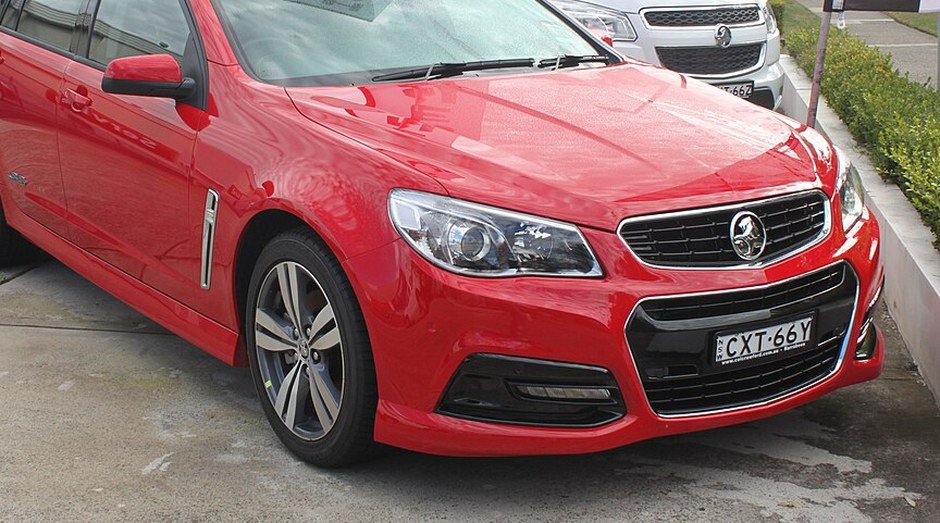
Photo: Jeremy from Sydney, CC BY 2.0, via Wikimedia Commons
In NSW, P1 and P2 drivers must not drive a high performance (prohibited) vehicle. A car is prohibited if its power to tare mass ratio is more than 130 kilowatts per tonne, if its engine has had a significant modification, or if Transport for NSW has listed it as high risk for novice drivers. Learners are not covered by the ban. This guide explains how the ratio works, how to check a car before you buy or borrow it, and when an exemption is possible.
Key facts
- Applies to: every NSW P1 (red P) and P2 (green P) licence holder, even when driving interstate.
- Does not apply to: learner drivers. You can learn in a high performance car with a supervisor.
- Three ways a car becomes prohibited: power to tare mass ratio (PMR) over 130 kW/t, a significant engine modification, or a place on the Transport for NSW list.
- Check any car with the P1 and P2 vehicle search on nsw.gov.au.
- Exemption letter fee: $41 (from 1 July 2026). Granted only for genuine work purposes or exceptional circumstances.
What counts as a high performance car for NSW P platers?
The ban comes from clause 36(2) of the Road Transport (Driver Licensing) Regulation 2017. It defines three types of high performance vehicle.
1. A power to tare mass ratio over 130 kW per tonne
PMR is the car’s power divided by its tare mass (its empty mass as specified by the manufacturer). Transport for NSW sets the rules for each figure:
- Power is in kilowatts, rounded to the nearest whole number.
- Petrol or diesel cars: net engine power at the flywheel, as the manufacturer specifies.
- Electric cars: the power the manufacturer specifies.
- Hybrids: the combined maximum power of the engine and all electric motors in the drive system.
- Mass is the manufacturer’s tare mass in tonnes, to three decimal places.
- No rounding of the result. A car at 130.01 kW/t is prohibited.
2. A significant engine modification
Any engine modification that counts as a “significant modification” under the vehicle registration rules makes the car prohibited, whatever its PMR. These are modifications that must be certified under the Vehicle Safety Compliance Certification Scheme. Transport for NSW lists them in its Vehicle Standards Information 6 (Light Vehicle Modifications) publication. The Road User Handbook puts it simply: P1 and P2 drivers must not drive cars with modifications that increase engine performance.
3. Cars on the Transport for NSW list
Some cars accelerate harder than their PMR suggests. Transport for NSW lists these in its “Novice Driver: High performance vehicle restrictions” publication, and they are banned even if they are under 130 kW/t.
Working out the PMR yourself
Divide power (kW) by tare mass (tonnes). These two cars are made-up examples to show the maths:
| Example car | Power | Tare mass | PMR | P plater? |
|---|---|---|---|---|
| Car A | 150 kW | 1.250 t | 120.0 kW/t | Allowed (unless modified or listed) |
| Car B | 200 kW | 1.450 t | 137.9 kW/t | Prohibited |
Your own sums are only a guide. Transport for NSW uses the manufacturer’s figures supplied for the car’s identification plate approval. If those are missing or doubtful, it uses other reliable data sources or asks for more information. Always confirm with the official vehicle search.
You cannot “fix” a prohibited car
Transport for NSW will not accept a modification that adds mass or cuts power to change a car’s status. For example:
- fitting a bull bar or tow bar does not let you claim a higher tare mass
- detuning the engine does not let you claim a lower power figure.
How to check a car before you buy or borrow it
- Use the P1 and P2 vehicle search on nsw.gov.au. Search by make and model.
- If the car is not listed or shows as “for review” (common for older, newly released or niche cars), phone Transport for NSW on 13 22 13.
- If you are unsure of the specifications, check the owner’s manual, or ask the manufacturer, dealer or a mechanic.
- Ask whether the engine has been modified. A modified engine can make an otherwise allowed model prohibited.
Can you get an exemption?
Only in limited cases. Transport for NSW grants exemptions only where a prohibited vehicle must be driven for genuine work purposes, or where exceptional circumstances apply.
- Complete the P1 and P2 passenger or vehicle exemption form.
- Take it to a service centre.
- Pay the exemption letter fee: $41 for the prohibited vehicle condition (as of 1 July 2026).
- If approved, carry the exemption letter every time you drive that vehicle.
- Tell Transport for NSW within 14 days if your circumstances change, including if you no longer need the exemption. A replacement letter costs $16 (as of 1 July 2026).
What happens if you drive one anyway?
Breaking a P licence condition means a fine, and you can also get demerit points or lose your licence. P1 drivers have a 4 point limit and P2 drivers a 7 point limit, so one offence can matter a lot. See NSW demerit points for learners and P platers. Insurance is also worth checking before you drive any modified or powerful car.
Common questions
Can I learn to drive in a prohibited car on my Ls?
Yes. The Road User Handbook says there is no restriction on learning to drive in a high performance car. The ban starts the day you get your P1 licence.
Does the ban still apply when I drive in another state?
Yes. Transport for NSW says the restriction applies to all NSW P1 and P2 licence holders, even when driving interstate. See driving interstate on L or P plates.
Are electric cars treated differently?
The same 130 kW/t test applies. For an electric car, the power figure is the one the manufacturer specifies. Some electric cars produce a lot of power, so check every model in the vehicle search.
My car is 129 kW/t. Is it definitely allowed?
Not necessarily. It may still be prohibited if its engine has been modified, or if it is on the Transport for NSW high performance list. The vehicle search is the safest check.
Is the rule the same once I get a full licence?
No. The prohibited vehicle condition applies only to P1 and P2 licences. See from P1 to P2 to a full NSW licence.
Can I drive a prohibited car for my job?
Only with an approved exemption letter, which is granted for genuine work purposes or exceptional circumstances. You must carry the letter while driving.
Related NSW guides
- Learning to drive in NSW: the full guide
- NSW learner, P1 and P2 restrictions
- NSW car registration, pink slips and roadworthiness
- P plate rules in every Australian state compared
Sources
- Transport for NSW, “Road User Handbook” (nsw.gov.au)
- NSW Government, “Prohibited vehicles for P plate drivers” (nsw.gov.au)
- NSW Government, “Prohibited vehicle definitions” (nsw.gov.au)
- NSW Government, “Driver and rider licence fees” (nsw.gov.au)
- NSW Legislation, “Road Transport (Driver Licensing) Regulation 2017” (legislation.nsw.gov.au)