
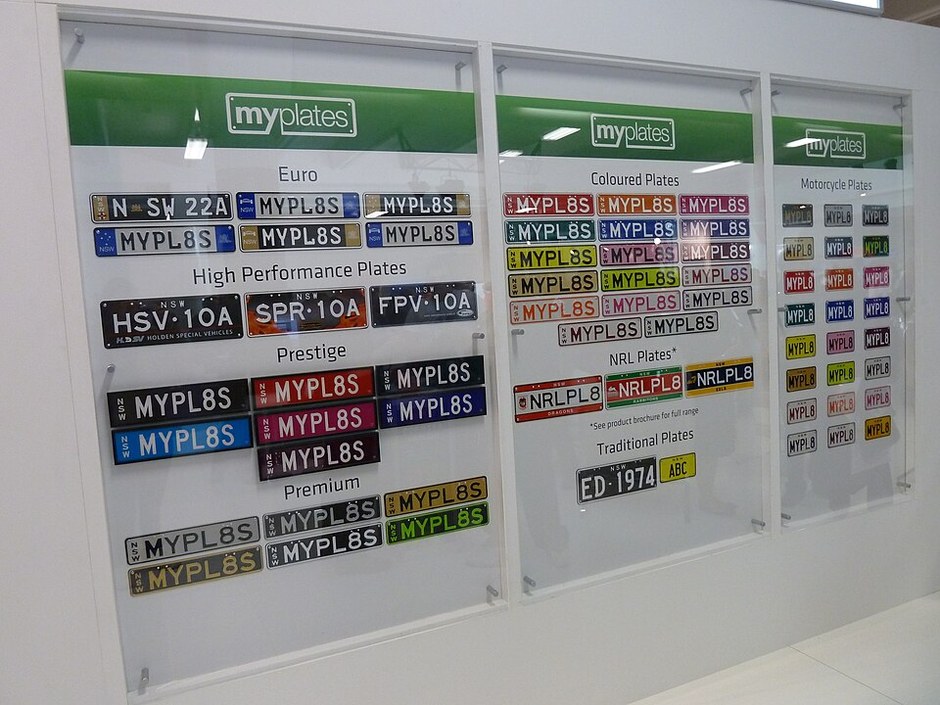
Photo: OSX, public domain, via Wikimedia Commons
Every vehicle driven on NSW roads must be registered, and every registered car needs CTP insurance (a green slip). Most cars more than 5 years old also need a yearly safety check (a pink slip) before you can renew. This guide is for new drivers buying or running their first car in NSW: what to check before you buy, the 14-day transfer deadline, pink and blue slips, number plates and the roadworthiness rules police can enforce.
Key facts
- Driving an unregistered, uninsured car is illegal. You face a fine and demerit points, and CTP insurance does not cover you in a crash.
- Bought a registered car? Transfer the registration into your name within 14 days.
- Renew on or before the due date. Registration not renewed within 3 months of expiry is cancelled.
- Pink slip: a yearly safety check for most light vehicles more than 5 years old. It is valid for 6 months.
- You must be at least 16 to be the registered operator of a car. You do not need a driver licence, but you do need a Transport for NSW customer number.
Before you buy a used car
- Run a free rego check through Service NSW with the number plate. It shows the expiry date, whether the registration is suspended or cancelled, any restrictions or concessions, and the CTP insurer and policy expiry.
- Check it is legal for your licence. P1 and P2 drivers cannot drive high performance or engine-modified cars. See banned high performance cars for NSW P platers.
- Look at safety ratings. The Road User Handbook suggests checking ANCAP ratings or the Used Car Safety Ratings Buyer’s Guide. Features like autonomous emergency braking, lane support and side curtain airbags cut crash risk or injury.
- Be wary of flood-damaged cars. Transport for NSW advises a thorough inspection and advice before buying, as some flood-damaged cars are sold privately or at auction.
- Use the green slip calculator on nsw.gov.au to compare CTP prices, and the registration calculator to estimate costs.
Registering a car in your name
| Situation | What you do |
|---|---|
| Used car, registration current or expired less than 3 months | Transfer the registration within 14 days to avoid a late fee and fines |
| Used car with cancelled or interstate registration | Re-register it: inspection, CTP and a service centre visit |
| Brand new car | The dealer usually arranges registration and CTP for you |
Transferring registration after you buy
- CTP insurance transfers to you automatically with the registration.
- You can transfer online if the seller has lodged a Notice of Disposal, you hold a NSW driver licence and the car is NSW-registered.
- Otherwise go to a service centre with an Application for Transfer of Registration form, proof of identity and proof you are entitled to register the car. You pay a transfer fee and stamp duty (unless exempt).
- If you have an eTag, add the new car to your account.
A car can only be registered in one name. The registered operator is responsible for it, even if they are not the owner.
CTP green slips
Compulsory third party (CTP) insurance, known as a green slip, is required to register every vehicle except trailers and caravans. You need it before each renewal. If you drive an unregistered car and crash, CTP does not cover you, and the penalties are severe.
Pink slips: the safety check for renewal
- Most light vehicles more than 5 years old need a yearly safety inspection report (pink slip) to renew. The 5 years counts from the month and year on the compliance plate (or the build date for imported vehicles).
- Your renewal notice tells you if you need one.
- Only an Authorised Inspection Scheme (AIS) station can do it. Look for the AIS sign out the front. Results go to Transport for NSW electronically.
- A NSW pink slip is valid for 6 months. Interstate reports are valid for 42 days or less.
- Mobile pink slip providers can come to you. The pink slip fee is the same, but a call-out fee may apply.
If your car fails
- Fix it before you renew. You must not drive it except to get it repaired or inspected.
- Repair it within 14 days and return to the same station: no extra inspection fee. After 14 days, you pay again.
Blue slips (AUVIS inspections)
An Authorised Unregistered Vehicle Inspection Scheme check, formerly called a blue slip, checks safety, design and identity. You need one if:
- the registration expired more than 3 months ago
- the car has come from another state, territory or country
- it has no number plates
- it is a write-off approved for re-registration.
An AUVIS report is valid for 42 days.
Renewing registration
- Renew online, by phone on 13 22 13 or at a service centre, up to 3 months before the due date.
- Once registration expires, the car is unregistered and you must not drive it. You can still renew within 3 months, but the expiry date stays the same, so you lose that time.
- After 3 months, the registration is cancelled. You must hand in the plates, get an inspection and CTP, and register it again.
- You can only drive an unregistered car to get or renew registration, or with an unregistered vehicle permit.
Number plate rules
- Plates must be fixed to the front and back, issued by Transport for NSW, and match the Certificate of Registration.
- They must be clean and undamaged, readable from at least 20 m, and visible within a 45 degree arc from the centre of the car.
- Do not cover them with L or P plates, a bike rack or a tow bar.
- Plate covers must be clear, clean, untinted, non-reflective and flat.
- The rear plate needs a light for night driving. A trailer needs its own rear plate.
- Never alter, deface or swap plates onto another vehicle. There are penalties for hiding any part of a plate.
Roadworthiness: what police check
Police can stop and inspect your car at any time. If it is unsafe, you can get a Defect Notice, for example if the car:
- is too noisy, drips oil or blows too much smoke
- has an unsafe or non-compliant bull bar
- has a badly fitted accessory, such as a spotlight mount or winch.
Repair it by the date on the notice, or your registration can be suspended.
Your own checks
- Tyres (including the spare): at least 1.5 mm tread, correct pressure, no cracks, bumps or uneven wear.
- Lights: headlights, brake lights and indicators. You must not drive at night without working lights.
- Wipers, washers, horn and seatbelts all working.
- Airbags: a faulty airbag makes the car unsafe.
Modifications
A significant modification must be certified by a licensed certifier under the Vehicle Safety Compliance Certification Scheme before the car can be registered. Modifications can also affect insurance and warranty. P1 and P2 drivers must not drive cars with engine modifications that increase performance.
Driving posture and towing basics
The handbook’s setup checklist:
- Sit upright with a clear view and easy reach of the controls.
- Set the steering wheel low and facing your chest. This also helps the airbag work best.
- Adjust the head restraint for your height.
- Wear the seatbelt low on your hips, with no twists.
- Set the mirrors.
- Keep your arms and knees slightly bent, with thumbs on the rim.
- Brace your body with your left foot.
Towing rules: tow only one trailer at a time, never carry people in a trailer or caravan, and secure and cover loads. Learners cannot tow, and P1 drivers are limited to light trailers. See towing on L or P plates.
Ecodriving and littering
- Do not overfill the fuel tank.
- Use air conditioning only when needed. It is most efficient above 60 km/h.
- Check tyre pressures regularly.
- Switch off for long stops.
- Remove roof and bike racks when you are not using them.
- Service the car regularly.
- Keep a steady speed and avoid over-revving.
- You must not throw rubbish or cigarette butts from a car. A lit cigarette brings a heavy fine and demerit points.
Common questions
Does my car need a pink slip to be registered in NSW?
Only if it needs one for renewal, which is most light vehicles more than 5 years old. Your renewal notice will say so.
Can I register a car if I am on my Ls?
Yes. You must be at least 16 to register a car. You do not need a licence at all, only a Transport for NSW customer number. A NSW licence lets you transfer online.
Can I drive my new car home before transferring the rego?
Yes, if its registration is current. You then have 14 days to transfer it into your name.
What happens if my rego expired last week?
The car is unregistered, so do not drive it. You can renew within 3 months of expiry, but the new period still ends on the original expiry date.
Does the car for my NSW Driving Test need to be registered?
Yes. The car you bring must be registered, safe for road use and ready to drive. See the NSW Driving Test.
Can I use tinted number plate covers?
No. Covers must be clear, clean, untinted, non-reflective and flat.
Back to the main guide: learning to drive in NSW. Study the full chapter with our NSW Road User Handbook study guide.
Sources
- Transport for NSW, “Road User Handbook” (nsw.gov.au)
- NSW Government, “Safety checks and vehicle inspections” (nsw.gov.au)
- NSW Government, “Buying and registering a vehicle” (nsw.gov.au)
- NSW Government, “Transferring registration when buying a vehicle” (nsw.gov.au)
- NSW Government, “Early or late registration renewal” (nsw.gov.au)
- NSW Government, “Vehicle number plates” (nsw.gov.au)
- NSW Government, “Unregistered vehicles” (nsw.gov.au)