Category: Alabama

  • What to Expect at an Alabama Traffic Stop: Steps and Documents

    What to Expect at an Alabama Traffic Stop: Steps and Documents

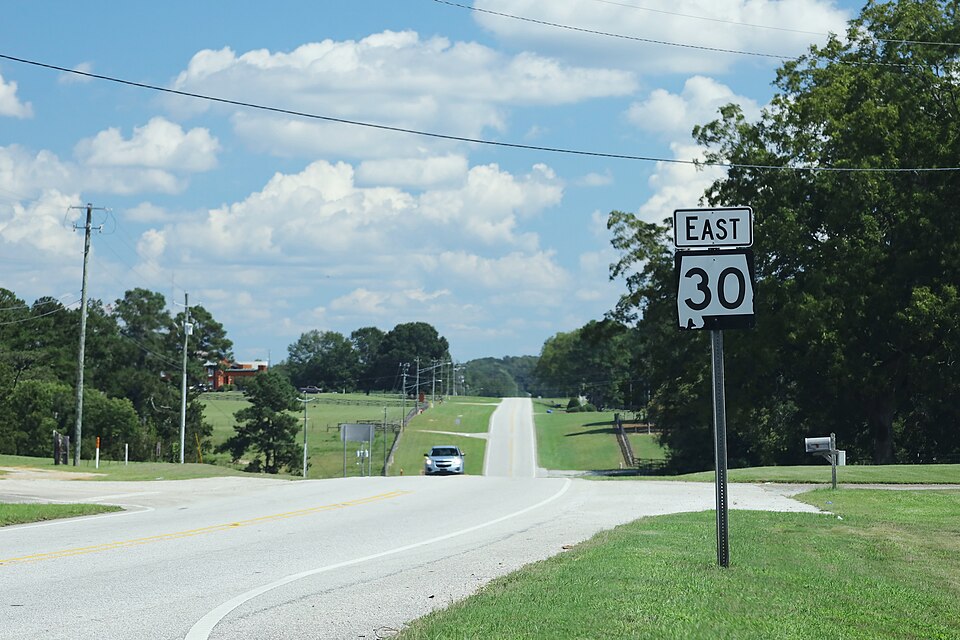
    Photo: S.MacMillen, Public domain, via Wikimedia Commons

    If you are pulled over in Alabama, signal, stop safely, turn off the engine and radio, and keep your hands on the wheel. Wait for the officer to ask before you reach for your driver license, proof of insurance and vehicle registration. This guide follows ALEA’s Alabama Driver Manual step by step. It also covers the documents, minimum insurance and window tint rules that often come up at a stop.

    Key facts

    • Documents an officer may ask for: driver license (or learner license), proof of insurance, vehicle registration.
    • You must carry your license whenever you drive and show it to an officer on request.
    • Alabama minimum liability insurance: $25,000 / $50,000 / $25,000.
    • No insurance: fine up to $500 (first violation), up to $1,000 (second or later), and/or a 6-month license suspension.
    • Tint: at least 32% light transmission on passenger car side and rear windows. Only the top 6 inches of the windshield may be tinted.

    What to do when you see lights behind you

    1. Stay calm and signal. Turn on your turn signal and pull off to the side of the road as soon as it is safe.
    2. Turn off the ignition and the radio.
    3. Stay in the car unless the officer tells you to get out.
    4. Hands on the steering wheel where they can be seen.
    5. Passengers stay calm, stay inside and keep their hands in plain view.
    6. Put down your phone and other devices, and give the officer your full attention.
    7. Tell the officer about any weapons in the vehicle at first contact.
    8. No sudden moves. Do not search for your license or papers until the officer asks.
    9. At night, turn on the interior light.

    What the officer will do

    • Identify themselves. An officer out of uniform will show credentials, and you may ask to see them.
    • Ask to see your driver license, proof of insurance and registration. If they are out of reach (glove box, bag, back seat), say where they are before you reach.
    • Ask basic questions about your trip.

    If you get a ticket

    • Do not argue at the roadside. You can contest the citation in court.
    • Signing a traffic citation is not an admission of guilt. Refusing to accept a citation may lead to your arrest.
    • If you feel the officer acted inappropriately, note the time, date, location and other details, and report it to the officer’s agency promptly.

    Points and suspensions that can follow a ticket: Alabama hands-free law and point system. GDL drivers face extra consequences: see Alabama GDL rules for 16 and 17 year olds.

    Documents required at an Alabama traffic stop

    Document Tip
    Driver license or learner license Must be in your possession every time you drive
    Proof of insurance Keep the current card with the registration
    Vehicle registration Keep it in the same place every time so you are not searching

    Alabama mandatory liability insurance minimums

    You may not drive, register or keep a vehicle registered in Alabama without liability insurance from an insurer licensed in the state, of at least:

    Coverage Minimum
    Death or bodily injury, one person $25,000
    Death or bodily injury, two or more people $50,000
    Property damage $25,000

    Penalties: a fine of up to $500 for a first violation, up to $1,000 for a second or later violation, and/or a 6-month driver license suspension. More: minimum car insurance for new drivers.

    Alabama window tinting limits

    Window Passenger cars (sedans, coupes, station wagons) SUVs, trucks, vans, RVs
    Windshield Top 6 inches only, transparent material Top 6 inches only, transparent material
    Front side windows At least 32% light transmission At least 32% light transmission
    Rear side and rear windows At least 32% light transmission Darker tint permitted (as allowed by the manufacturer under federal law). Outside mirrors on both sides required.

    ALEA’s tinting page adds a 3% tolerance on the 32% figure and says reflective material may not reflect more than 20% of light. Compliant tint must carry a compliance sticker fitted by a tinting dealer. A physician-certified medical waiver is available through ALEA’s Medical Records Unit. Separately, no sign, poster or other material may be placed on any window where it obstructs the view.

    Related rule: moving over for stopped vehicles

    When you pass a stopped emergency vehicle with flashing lights, or a wrecker with flashing amber lights, Alabama’s move-over law applies. On roads with 4 or more lanes, leave the lane closest to it. If you cannot, slow to at least 15 mph below the posted limit. On two-lane roads, move as far away as you can within your lane and slow to 15 mph below the limit when the limit is 25 mph or more. Where the limit is 20 mph or less, slow to 10 mph. See move over laws in the US and pulling over for emergency vehicles.

    Common questions

    Do I have to show my license to an Alabama police officer?

    Yes. You must have your license or learner license with you while driving and present it when an officer asks.

    Should I get out of the car?

    No. Stay inside unless the officer tells you to get out.

    What if my insurance card is in the glove box?

    Tell the officer where it is before you reach for it.

    What is the darkest legal tint in Alabama?

    On passenger cars, side and rear windows must let through at least 32% of light (with a 3% tolerance). SUVs, trucks and vans may have darker tint behind the driver.

    Is signing a ticket admitting guilt in Alabama?

    No. ALEA says signing a citation is not an admission of guilt. You can contest it in court.

    What if I am stopped on my learner license?

    The same steps apply. Your supervising driver should also stay calm and keep their hands visible.

    Back to the full guide: learning to drive in Alabama.

    Sources

    • Alabama Law Enforcement Agency, “Alabama Driver Manual” (November 2024), Chapters 1 and 6 (alea.gov)
    • Alabama Law Enforcement Agency, “Alabama Tinting Regulations” (alea.gov)
  • Alabama Hands-Free Law and Point System: Fines and Suspensions

    Alabama Hands-Free Law and Point System: Fines and Suspensions

    Photo: S.MacMillen, Public domain, via Wikimedia Commons

    Alabama’s hands-free law makes it an offense to hold a phone or other wireless device while driving in a distracted way. Fines are $50, $100 and $150 for the first, second and third conviction, adding 1, 2 and 3 points to your record. Points feed Alabama’s suspension system, where 12 points in 2 years costs you your license for 60 days. This explainer covers both, with what they mean for new drivers.

    Key facts (as of November 2026)

    • Hands-free law: SB301 of the 2023 Regular Session (the Representative K.L. Brown Act), which added section 32-5A-350.1 to the Code of Alabama. The manual dates the law June 2024.
    • Fines (within a 24-month period): $50 first, $100 second, $150 third or later conviction. No court costs.
    • Points: 1, 2 and 3 for the first, second and third conviction.
    • Suspension starts at 12 to 14 points in 2 years: 60 days.
    • GDL drivers (16, or 17 with a license under 6 months) may not use any handheld communication device.

    What does Alabama’s hands-free law ban?

    Under the act, you drive in a distracted manner if you are seen crossing in and out of a lane without signaling, swerving or otherwise driving in an impaired manner while doing any of these:

    • Physically holding a wireless telecommunications device (phone, tablet, GPS receiver and similar)
    • Holding or supporting a stand-alone electronic device (for example a media player) with any part of your body
    • Writing, sending or reading texts, instant messages, e-mail or internet data (voice-to-text and navigation excepted)
    • Watching a video other than navigation data
    • Recording or broadcasting video (continuous dash cameras excepted)
    • Using more than one button press or swipe to start or end a call
    • Reaching for a device in a way that takes you out of a seated, belted driving position

    The manual summarizes it the same way: holding a device is a violation when the driver is seen crossing lanes without a signal, swerving or otherwise driving improperly.

    What is still allowed

    • Calling for emergency help
    • Using a phone while parked on the shoulder
    • Following GPS directions (but typing in a destination while driving is a violation)
    • Earpieces, steering-wheel controls, speakerphone, voice commands, or a phone mounted on the dash, console or windshield for hands-free calls
    • Dash cameras and backup cameras
    • Drivers 18 or older only: one swipe or tap on a mounted phone that does not block the view, and does not open camera, video or games

    Hands-free law penalties in Alabama

    Conviction within 24 months Fine (maximum) Points
    First $50 1
    Second $100 2
    Third or later $150 3

    The act also says you cannot be taken into custody solely for this offense. On a first charge for holding a device, the charge is not a conviction if you show the court a hands-free device, or proof you bought one. You can use that only once.

    Note: the manual’s Chapter 4 still describes an older texting law ($25, $50, $75 and 2 points). SB301 repealed that section (32-5A-350), so the hands-free penalties above replace it. Check the current wording with ALEA.

    Stricter phone rule for GDL drivers

    If you are 16, or 17 with a license held under 6 months, the GDL law bans any handheld communication device while driving, with no one-tap exception. Breaking it extends your restricted period by 6 months or until 18. See Alabama GDL rules for 16 and 17 year olds.

    How the Alabama point system works

    Points are added for convictions in Alabama or elsewhere. A conviction stops counting toward suspension after 2 years, but it stays on your driving record.

    Offense Points
    Alcohol-related driving conviction not requiring mandatory revocation 6
    Reckless driving or reckless endangerment involving a vehicle 6
    Admin per se 6
    Speeding 26 mph or more over the limit 5
    Failure to yield right of way 5
    Passing a stopped school bus 5
    Wrong side of road or illegal passing 4
    Following too closely 3
    Disregarding a traffic control device (stop sign, traffic light) 3
    Ignoring construction or maintenance zone markers, flaggers or police 3
    Speeding 1 to 25 mph over the limit 2
    Improper lane, improper turn, failure to signal, inability to control vehicle, unsafe operation, emergency vehicle violation 2 each
    All other moving violations 2

    How many points before your license is suspended in Alabama?

    Points in a 2-year period Suspension
    12 to 14 60 days
    15 to 17 90 days
    18 to 20 120 days
    21 to 23 180 days
    24 or more 365 days

    When you are notified of a suspension, you can ask ALEA for a pre-suspension or administrative hearing in your county of residence. Requests can be made in writing or online.

    Other ways to lose your license

    • GDL drivers: a second moving violation, or any offense of 4 or more points, means an automatic 60-day suspension. The manual’s suspension list also cites “4 or more points” on a driving record.
    • Revocation is mandatory for offenses such as vehicular homicide, a second DUI, a felony using a vehicle, leaving the scene of an injury or fatal crash, or 3 reckless driving convictions in 12 months.
    • Reinstatement after any suspension, revocation or cancellation costs at least $100, plus $50 if you did not surrender your license on time.

    Common questions

    Can you hold your phone at a red light in Alabama?

    The act’s exception is for a vehicle parked on the shoulder. A red light is not listed. Use a mount and voice controls.

    Is texting while driving still illegal in Alabama?

    Writing, sending or reading texts is one of the actions the hands-free law covers, when you are seen driving in a distracted way while doing it. Voice-to-text and navigation are excepted. The old stand-alone texting section was repealed.

    Can I use Google Maps on my phone while driving?

    Yes, for directions, ideally mounted. Typing a destination in while driving is a violation.

    How long do points stay on your Alabama license?

    They count toward suspension for 2 years from the conviction date, then stop counting but stay on your record.

    How many points is a speeding ticket in Alabama?

    2 points for 1 to 25 mph over, 5 points for 26 mph or more over.

    Do GDL violations add points?

    No. Breaking a GDL restriction adds no points, but it extends your restricted period.

    Related: learning to drive in Alabama, hands-free and texting laws by state and US points systems explained.

    Sources

    • Alabama Law Enforcement Agency, “Alabama Driver Manual” (November 2024) (alea.gov)
    • Alabama Law Enforcement Agency, “Driver License Point System” (alea.gov)
    • Alabama Law Enforcement Agency, “Graduated Driver License” (alea.gov)
    • Alabama Legislature, “SB301 Enrolled, 2023 Regular Session” (legislature.state.al.us)
  • Alabama 50 Hours Driving: DL-31 Form or Driver Ed Explained

    Alabama 50 Hours Driving: DL-31 Form or Driver Ed Explained

    Photo: Formulanone, CC BY-SA 4.0, via Wikimedia Commons

    Before an Alabama teen under 18 can get a Stage II license, they need one of two things. Either a parent or another approved adult certifies at least 50 hours of behind-the-wheel practice on ALEA form DL-31, or the teen completes a driver education course approved by the Alabama State Department of Education (SDE). This checklist explains both routes, who can sign, and how to plan the hours.

    Key facts

    • Requirement: at least 50 hours of behind-the-wheel practice, or an SDE-approved driver education course.
    • Applies to: applicants under 18 (the GDL law does not apply at 18 or older).
    • Form: ALEA Graduated Driver License Form DL-31 (Rev 09/21), required by section 32-6-7.2 of the Code of Alabama 1975.
    • Who can verify the hours (ALEA GDL page): a parent, grandparent, legal guardian or certified driving instructor.
    • The minimum learner period still applies: 6 months on a learner license before the road test.

    Option 1: the 50-hour verification on form DL-31

    Form DL-31 has three parts on one page:

    Section What it says Who signs
    Permission to drive without supervision Consent to the teen’s license and permission to drive unsupervised Parent or legal guardian
    Behind the wheel verification The applicant has completed at least 50 hours of behind-the-wheel practice Parent or legal guardian
    Certificate of completion Box to tick if the applicant completed an Alabama Department of Education approved driver education course Used instead of the 50-hour section

    Note: the form’s signature lines say “Parent or Legal Guardian”. The GDL page says a parent, grandparent, legal guardian or certified driving instructor can verify the hours. If a grandparent or instructor will sign, confirm with your ALEA office first.

    Checklist for the 50-hour route

    • Learner license held for at least 6 months
    • 50 or more hours driven with a qualifying supervisor beside you (at 15: a parent, guardian or licensed driver 21+, or a licensed or certified instructor; from 16: any licensed driver)
    • Download DL-31 from ALEA’s driver license forms page
    • Permission and 50-hour sections signed
    • Bring the signed form to the road skills test

    The form asks only for a signature, not a log, and ALEA does not require a night-driving minimum. Keeping your own log is still the easiest way to be sure the 50 hours are real.

    A simple 6-month plan for 50 hours

    Months Hours Practice
    1 About 8 Parking lot: controls, smooth stops, backing about 50 feet in a straight line
    2 About 8 Quiet streets: stop signs, turns with signals 100 feet ahead, approach to corners
    3 About 8 Traffic lights, lane changes with blind-spot checks, two-second following
    4 About 9 Three-point turns, parking on hills, parallel parking
    5 About 9 Highways and freeways, night driving, rain
    6 About 8 Mock road tests using the Alabama road skills test checklist

    That is roughly 2 hours a week. The month-by-month split is a suggested plan, not an ALEA rule.

    Option 2: an SDE-approved driver education course

    Instead of the 50-hour verification, submit a completion form from the State Department of Education showing you completed an SDE-approved driver education course. ALEA’s page on the private high school Driver and Traffic Safety Education program describes how one approved program works:

    • At least 70 clock hours or one semester, offered as an elective mainly for tenth-grade students aged 15 or older who are eligible for a learner license.
    • At least 30 hours of classroom instruction, then behind-the-wheel driving with a certified driver education teacher in a dual-control car.
    • No fixed behind-the-wheel hours; about 6 hours per student is recommended for planning.
    • During the regular school day, a student may drive the driver education car with a certified instructor even without a learner license.
    • Where the school system offers it, Third-Party Testing lets approved driver education teachers give the driving part of the license exam.

    Public school and commercial courses may be set up differently. Ask the school or provider whether its course is SDE-approved and what completion form it issues.

    Which route should you choose?

    50 hours (DL-31) Driver education
    Cost Fuel and time Depends on the school or provider
    Who teaches Family and other licensed drivers Certified driver education teacher
    Road test At an ALEA office At an ALEA office, or through Third-Party Testing where offered
    Best for Families with time to supervise Teens whose school offers the course

    Many families do both: the course for structure, plus extra supervised hours.

    Common questions

    Do I need 50 hours of driving in Alabama if I am 18?

    No. The 50-hour or driver education requirement is part of the GDL law, which does not apply at 18 or older.

    Do I have to submit a driving log?

    Form DL-31 is a signed certification, not a log. Check with ALEA if your office asks for more.

    Are night hours required in Alabama?

    No night minimum appears in the ALEA GDL page, the manual or form DL-31.

    Can a grandparent sign?

    ALEA’s GDL page lists grandparents as allowed to verify the 50 hours, but the DL-31 signature lines say parent or legal guardian. Ask your ALEA office.

    Does driver ed let me skip the 6-month learner period?

    No. Under 18, you must still hold the learner license for at least 6 months before the road test.

    See also: learning to drive in Alabama, Alabama GDL rules for 16 and 17 year olds and supervised driving hours by state.

    Sources

    • Alabama Law Enforcement Agency, “Graduated Driver License Form DL-31” (alea.gov)
    • Alabama Law Enforcement Agency, “Graduated Driver License” (alea.gov)
    • Alabama Law Enforcement Agency, “Private High School Driver & Traffic Safety Education Program” (alea.gov)
    • Alabama Law Enforcement Agency, “Alabama Driver Manual” (November 2024) (alea.gov)
  • Alabama GDL Law: Passenger Limit, Curfew and Phone Rules

    Alabama GDL Law: Passenger Limit, Curfew and Phone Rules

    Photo: DXR, CC BY-SA 4.0, via Wikimedia Commons

    Under Alabama’s GDL law, a 16-year-old driver, or a 17-year-old who has held a license for less than 6 months, faces three limits. You may carry only 1 non-family passenger, you may not drive between midnight and 6 a.m. (with exceptions), and you may not use any handheld communication device. Breaking a rule extends the restricted period by 6 months. This explainer is for Alabama teens with a Stage II license and their parents.

    Key facts

    • Law: Graduated Driver License Act (Act 2002-408, amended by Act 2010-735 from July 2010).
    • Applies to: 16-year-olds, and 17-year-olds licensed for less than 6 months.
    • Does not apply to: anyone 18 or older; 17-year-olds licensed 6 months or more; 16+ who are married and considered the head of household (the manual says “married or the head of household”); anyone legally relieved of minority status.
    • Penalty for breaking a restriction: restricted period extended by 6 months or until 18. No points and no court costs.
    • Second moving violation, or any 4-point offense: automatic 60-day suspension.

    How many passengers can a 16-year-old have in Alabama?

    One. You may not have more than 1 passenger other than parents, legal guardians or family members. The manual’s GDL summary words the exception as the parent, guardian or a supervising licensed driver aged at least 21. The limit was reduced from four in 2010.

    Who is in the car Allowed on Stage II?
    Your brother, sister or other family members Yes, family members do not count toward the limit
    1 friend Yes
    2 friends No
    2 friends plus a parent or legal guardian Check with ALEA. The GDL page excludes parents, guardians and family members from the count, but does not say how many others you can then carry.

    What is the Alabama GDL curfew?

    You may not drive from 12 midnight to 6 a.m. unless a parent or legal guardian is with you, or one of these exceptions applies:

    • You are accompanied by a licensed driver aged 21 or older, with your parent or guardian’s consent.
    • You are driving to or from your regular place of work.
    • You are driving to or from an event sponsored by a school.
    • You are driving to or from an event sponsored by a religious organization.
    • You are driving because of a medical, fire or law-enforcement emergency.

    A late party, a movie or a friend’s house is not on the list.

    Phones: no handheld devices at all

    Stage II drivers must not use any handheld communication device while driving. That is stricter than the general hands-free law, which allows drivers 18 and older one swipe or tap on a mounted phone. Pull over and park before you touch your phone. Details of the adult law: Alabama hands-free law and point system.

    What happens if you break GDL rules in Alabama?

    1. Your restricted period is extended by 6 months, or until you turn 18.
    2. It counts as a traffic violation, but there are no criminal penalties, no court costs and no points for the GDL restriction itself.
    3. Secondary enforcement only. You will not be cited for a GDL restriction unless you are stopped for a separate violation and cited or charged for that.

    The 60-day automatic suspension

    Your license is automatically suspended for 60 days if, while on a GDL license, you are convicted of any of these:

    • A second moving traffic violation
    • Failure to give information or render aid
    • Racing
    • Fleeing or attempting to elude a law enforcement officer
    • Reckless driving
    • Illegal passing or driving on the wrong side of the road
    • Any other offense that carries 4 or more points

    Example: a speeding ticket of 26 mph or more over the limit carries 5 points, so one conviction is enough. A first ticket for 10 mph over (2 points) does not trigger it, but a second moving violation would.

    When do the restrictions end?

    Your situation When GDL limits stop
    Licensed at 16 with no violations At 17, once you have held the license 6 months (you can then apply for Stage III)
    Licensed at 17 After 6 months on the license
    Broke a restriction 6 months later than planned, or at 18
    Turned 18 Immediately

    For the Stage III license, the GDL page lists $31.25 for a restriction-free duplicate when you present your Stage II license, as of November 2026.

    Common questions

    Can I drive my siblings to school on a Stage II license?

    Yes. Family members are not counted in the 1-passenger limit.

    Can I drive home from work at 1 a.m.?

    Yes, if you are going to or from your regular place of employment.

    Will a GDL violation put points on my record?

    No. ALEA says no points are assessed for violating the GDL restrictions themselves. Any separate offense you are stopped for carries its own points.

    Can a police officer pull me over just for having two friends in the car?

    No. A GDL citation is only issued when you are stopped for a separate violation of the law.

    Do the GDL rules apply if I get my first license at 18?

    No. The GDL law does not apply to anyone 18 or older.

    Can I use GPS on my phone?

    The GDL rule bans using any handheld device. Set the route before you leave, mount the phone and do not touch it while driving.

    More: learning to drive in Alabama, Alabama road skills test checklist and GDL laws by state compared.

    Sources

    • Alabama Law Enforcement Agency, “Graduated Driver License” (alea.gov)
    • Alabama Law Enforcement Agency, “Alabama Driver Manual” (November 2024), GDL Summary (alea.gov)
    • Alabama Law Enforcement Agency, “Driver License Point System” (alea.gov)
    • Alabama Legislature, “SB301 Enrolled, 2023 Regular Session” (legislature.state.al.us)
  • Alabama Road Test Checklist: What the ALEA Examiner Checks

    Alabama Road Test Checklist: What the ALEA Examiner Checks

    Photo: Formulanone, CC BY-SA 2.0, via Wikimedia Commons

    The Alabama road test (ALEA calls it the road skills test) is the last step to a Stage II or regular license. An ALEA examiner inspects your car, checks your paperwork, then scores you on up to 18 driving skills from ALEA’s Road Test Study Guide. Use this checklist the week before and the morning of your test.

    Key facts

    • Under 18: you must be at least 16 and have held your learner license for 6 months.
    • A 16-year-old must be accompanied by a parent or guardian.
    • Bring proof of current insurance and the vehicle registration.
    • The examiner checks brake lights, left and right turn signals and the horn before the test.
    • Rental car: allowed only if your name is on the rental agreement as an additional driver.
    • You surrender your learner license at the road test.

    Paperwork checklist

    • Your learner license
    • Proof of current insurance for the test vehicle
    • Vehicle registration
    • Under 18: form DL-31 signed by a parent or legal guardian, giving permission to drive without supervision and certifying 50 hours of practice. Or a certificate of completion from a driver education course approved by the Alabama Department of Education. See the 50 hour verification guide.
    • Parent or guardian with you if you are 16
    • Glasses or contacts if your license requires them. You must wear them for the test.
    • Cash or money order for the license fee (ALEA does not accept checks). The GDL page lists $36.25 for a Stage II license as of November 2026.
    • Age 18 or older: a licensed driver to bring you, proof of insurance, and a vehicle that will pass inspection

    Vehicle checklist: what the examiner inspects

    Item Check before you leave home
    Brake lights Have someone stand behind the car while you press the brake
    Left and right turn signals Front and rear, both sides
    Horn Works
    Headlights Alabama law requires them on when wipers are in use because of rain
    Tires Penny test: if you can see all of Lincoln’s head, the tread is too worn. Less than 1/16 inch is illegal.
    Mirrors, wipers, seat belts, parking brake Required equipment under the manual’s Chapter 9

    Before you move off, adjust your seat and mirrors. Your heel should stay on the floor as your foot pivots from brake to gas, and the top of the wheel should be no higher than your shoulders.

    What the examiner scores on the Alabama road test

    ALEA’s Road Test Study Guide says you will be asked to do all or some of these:

    1. Location of controls: brake, parking brake, lights, dimmer, wipers, ignition, gear selector.
    2. Clutch (manual cars): pedal fully down when starting, shifting and below 10 mph when stopping.
    3. Posture: both hands on the wheel, sit up straight, no elbow in the window.
    4. Smooth stop: stop quickly and safely from low speed, checking your mirror.
    5. Backing: about 50 feet, slowly and straight, head turned to look through the rear window.
    6. Stop sign: signal, correct lane, stop before the crosswalk (or behind the stop line).
    7. Traffic lights: approach at a speed that lets you stop. On red, stop before the crosswalk.
    8. Turn about (three-point turn): turn around in a narrow street backing only once, without bumping the curb or using a driveway.
    9. Approach to corner: correct lane, slow down, look both ways.
    10. Right of way: let pedestrians cross, do not block intersections, pull over for sirens and red or blue lights.
    11. Stop on upgrade: park within 18 inches of the curb, wheels turned sharply left (right if no curb), roll back until the right front wheel rests on the curb, ignition off, parking brake on, in Park.
    12. Start on upgrade: look over your left shoulder, pull out without racing the engine or rolling back.
    13. Turns: signal at least 100 feet before the intersection, slow before the crosswalk, finish in the proper lane.
    14. Passing and merging: check the blind spot, pass on the left.
    15. Keeping in lane: stay right except to pass or turn left, signal and check blind spots for lane changes.
    16. Horn: only to warn. Never to hurry other drivers.
    17. Following: two-second rule.
    18. Speed: at or below the posted limit and reasonable for conditions.

    Automatic fails on the Alabama road test

    The study guide says you may fail for any of these:

    • Being involved in an accident
    • Breaking the law
    • Driving recklessly or dangerously
    • Failing to cooperate with the examiner
    • Making several errors in safe driving practice because of habit or lack of practice

    More on common mistakes: why people fail the driving test.

    Practice drills for the three-point turn and parallel parking

    Three-point turn

    1. Pick a quiet, narrow street with a long view. The manual bans these turns on interstates, on curves and near hilltops where other drivers cannot see you within 500 feet.
    2. Signal right, stop near the right curb, check mirrors and blind spots.
    3. Turn the wheel fully left and creep across to the far curb without touching it.
    4. Check both ways, turn the wheel fully right and back up once.
    5. Check again and drive off in the new direction.

    Parallel parking (manual Chapter 3)

    1. Pull even with the car in front of the space.
    2. Back gently toward the space.
    3. Turn the wheels sharply.
    4. Begin straightening the wheels.
    5. Finish with the wheels parallel to the curb.

    The Road Test Study Guide’s list does not name parallel parking as a scored item, but the manual covers it. Practice it anyway. Compare other states: US road tests by state.

    Common questions

    Can I book the Alabama road test online?

    Yes, at select locations. ALEA lets you schedule Stage II road skills appointments online up to 2 weeks ahead. Walk-ins are welcome at all testing sites.

    Can my driving instructor’s car be used?

    Any vehicle that passes the examiner’s inspection and has insurance and registration you can prove. Some school systems also run ALEA’s Third-Party Testing program, where approved private high school driver education teachers give the driving test.

    Does my parent have to come to the road test?

    Yes, if you are 16. The manual says a 16-year-old applicant must be accompanied by a parent or guardian.

    What happens when I pass?

    Under 18, you get a Stage II restricted license and must follow the Alabama GDL rules. From 18, you can go straight to an unrestricted license.

    Can I use a rental car?

    Only if your name is on the rental agreement as an additional driver.

    Back to the full guide: learning to drive in Alabama.

    Sources

    • Alabama Law Enforcement Agency, “Alabama Driver Manual” (November 2024) (alea.gov)
    • Alabama Law Enforcement Agency, “Road Test Study Guide” (alea.gov)
    • Alabama Law Enforcement Agency, “Graduated Driver License” (alea.gov)
    • Alabama Law Enforcement Agency, “Document Requirements and Fees” (alea.gov)
    • Alabama Law Enforcement Agency, “Graduated Driver License Form DL-31” (alea.gov)
    • Alabama Law Enforcement Agency, “Private High School Driver & Traffic Safety Education Program” (alea.gov)
  • Alabama Permit Test: Learner License Fee, Languages and Documents

    Alabama Permit Test: Learner License Fee, Languages and Documents

    Photo: Inester726, CC BY-SA 4.0, via Wikimedia Commons

    The Alabama permit test is the knowledge test you pass to get a learner license, the “Y”-restricted Class D license you can hold from age 15. It costs $5 per attempt and is taken at an ALEA driver license office. It is in English, 11 other languages or an oral format, and it comes with a vision screening. This guide covers what is tested, what to bring and what happens after you pass.

    Key facts (as of November 2026)

    • Fee: $5 for each knowledge test, no checks. The learner license itself is $36.25.
    • Content: Alabama traffic laws, road signs and safe driving rules, all taken from the Alabama Driver Manual.
    • Format: automated testing is available to all applicants.
    • Languages: Arabic, Chinese, Farsi, French, German, Japanese, Korean, Russian, Spanish, Thai and Vietnamese, plus English.
    • Oral exams: available if you cannot read and understand the written test.
    • The learner license is valid for 4 years.

    How many questions are on the Alabama permit test?

    Ask at your ALEA driver license office for the number of questions and the pass mark before the test, and treat any figure you see on a practice-test site as unofficial. For other states that do publish theirs, see US permit tests compared by state.

    What is on the test

    ALEA says the test contains questions on Alabama traffic laws, road signs and the rules of safe driving, taken from the manual. The chapters that carry the most testable facts:

    Manual chapter Facts worth memorizing
    Ch 1 Your License to Drive GDL stages, “Y” restriction, 4-year validity, hands-free law fines
    Ch 2 You May Lose Your License Point values (for example 5 points for passing a stopped school bus) and suspension bands
    Ch 3 The Driving Task Signal 100 feet before a turn; 3 feet to pass a bicycle; parking distances (15 feet from a hydrant, 50 feet from a railroad rail)
    Ch 4 The Driver 0.08% and 0.02% alcohol limits; two-second rule; implied consent; crash duties
    Ch 5 Signs, Signals and Road Markings Sign shapes and colors; railroad advance sign 750 feet before tracks; roundabouts
    Ch 6 Traffic Laws Statutory speed limits; school bus stop distance of 20 feet; right of way; move-over law
    Ch 7 Adjust to Driving Conditions Headlight times; dim within 500 feet oncoming and 200 feet following
    Ch 8 and 9 Freeway entry and exit; required equipment; 1/16 inch minimum tread

    Alabama’s statutory speed limits often come up: 30 mph urban district, 35 mph unpaved road, 45 mph county paved road unless posted, 55 mph elsewhere, 65 mph where posted, 70 mph where posted on interstates.

    Documents to bring for an Alabama learner license

    Age 15

    • Certified U.S. birth certificate issued by the Bureau of Vital Statistics (no photocopies)
    • Social Security card (original)
    • Proof of school enrollment or graduation: form DL-1/93 from your school, a graduation certificate or a GED certificate
    • 2 proofs of principal residence, for example a utility bill under 90 days old or a lease. If the bill is in a parent’s name, bring your birth certificate to show the link.
    • $5 test fee and $36.25 license fee, in cash or money order

    Age 16 and older

    • Two forms of ID, at least one with a photo, or three non-photo forms. One must come from ALEA’s “primary” list (for example a certified birth certificate or U.S. passport).
    • Social Security card
    • School enrollment form or proof of graduation if you are under 19
    • 2 proofs of principal residence

    Documents must be originals or copies certified by the issuing agency. ALEA rejects documents with white-out, erasures, alterations or missing information.

    The vision screening

    You take a vision check at the same visit. If it shows you need corrective lenses, your license will require you to wear them while driving. If you fail, you must have your eyes examined by a licensed eye specialist and bring the report back. If the report shows you can see well enough to drive safely, you can finish the test.

    Taking the test in another language or orally

    Written knowledge tests are available in Arabic, Chinese, Farsi, French, German, Japanese, Korean, Russian, Spanish, Thai and Vietnamese. Ask the Driver License District Office how these tests are run. If you cannot read and understand the knowledge test, you can take an oral exam on the automated testing equipment.

    After you pass: what your learner license allows

    • At 15: you may drive only with a parent, legal guardian or licensed driver aged 21 or older in the front seat beside you. A licensed or certified driving instructor beside you also counts.
    • From your 16th birthday: any licensed driver can sit beside you.
    • The license can be suspended or revoked like a full license, and also for breaking its conditions.
    • Carry it every time you drive.

    Next steps: log your practice hours (Alabama 50 hour verification and driver ed), then prepare for the Alabama road skills test. The full route is in learning to drive in Alabama.

    Common questions

    How much is the Alabama permit test?

    $5 per attempt as of November 2026, plus $36.25 for the learner license once you pass. ALEA does not accept checks.

    Can I take the Alabama permit test in Spanish?

    Yes. Spanish is one of the 11 foreign languages ALEA offers for the written test.

    What if I fail the knowledge test?

    You pay the $5 fee again for each test you take. The manual does not set a waiting period, so ask the office when you can retake it.

    Can I take the Alabama permit test online?

    The manual describes the test at a driver license office. ALEA’s online services let you pre-apply for a first-time license or permit and book an appointment.

    Do I need an appointment?

    ALEA offers online appointment booking at AlabamaDL.alea.gov. Check your local office’s options before you go.

    Is the permit called a learner license in Alabama?

    Yes. Alabama’s “permit” is officially a Class D learner license with a “Y” restriction, also called the Stage I license.

    Sources

    • Alabama Law Enforcement Agency, “Alabama Driver Manual” (November 2024) (alea.gov)
    • Alabama Law Enforcement Agency, “Document Requirements and Fees” (alea.gov)
    • Alabama Law Enforcement Agency, “Graduated Driver License” (alea.gov)
    • Alabama Law Enforcement Agency, “Driver License Information” (alea.gov)
  • How to Get a Driver’s License in Alabama: GDL Steps and Fees

    How to Get a Driver’s License in Alabama: GDL Steps and Fees

    Photo: K, Pexels

    In Alabama you can get a learner license at 15, a restricted license at 16 after holding the learner license for 6 months, and an unrestricted license at 17. This guide is for Alabama teens, their parents and adult first-time drivers. It walks through every stage of Alabama’s Graduated Driver License (GDL) law, the tests, the documents, the fees and what the Alabama Driver Manual covers.

    Key facts (as of November 2026)

    • Licensing agency: the Alabama Law Enforcement Agency (ALEA), Driver License Division.
    • Learner license (Stage I): age 15, after a knowledge test. It is a Class D license with a “Y” restriction, valid for 4 years.
    • Restricted license (Stage II): age 16, after holding the learner license for at least 6 months, plus a road skills test.
    • Unrestricted license (Stage III): age 17, after holding Stage II for at least 6 months.
    • Under 18: 50 hours of behind-the-wheel practice certified on form DL-31, or an approved driver education course.
    • Fees listed by ALEA: $5 per knowledge test and $36.25 for the license. No checks: cash or money order.
    • The GDL law does not apply once you are 18.

    How to get a driver’s license in Alabama: the three stages

    Stage Minimum age What you need Main rules
    Stage I: learner license 15 Pass the knowledge test and vision screening; documents; $5 test fee; $36.25 license fee At 15, drive only with a parent, legal guardian or licensed driver aged 21 or older (or a licensed or certified driving instructor) in the front seat beside you
    Stage II: restricted license 16 Learner license held at least 6 months (if under 18); parent, grandparent or guardian permission; 50 hours or driver ed; pass the road skills test 1 non-family passenger; no driving midnight to 6 a.m. (with exceptions); no handheld communication devices
    Stage III: unrestricted license 17 Stage II held at least 6 months (if 17) No GDL restrictions

    Full detail on the Stage II limits, exceptions and penalties: Alabama graduated license rules for 16 and 17 year olds.

    Step by step for an Alabama teen

    1. Study the Alabama Driver Manual. The knowledge test is taken from it. The current edition is dated November 2024.
    2. Gather documents. A 15-year-old needs a certified U.S. birth certificate (no photocopies), a Social Security card, proof of school enrollment or graduation (form DL-1/93) and 2 proofs of principal residence.
    3. Take the knowledge test and vision screening at an ALEA office. Pay the $5 test fee, then $36.25 for the learner license if you pass. See the Alabama learner license test guide.
    4. Practice for at least 6 months. Log 50 hours of behind-the-wheel practice for form DL-31, or complete an approved driver education course. See the Alabama 50 hour driving verification and driver ed guide.
    5. Take the road skills test at 16 or older. A 16-year-old must bring a parent or guardian. The car must pass the examiner’s inspection, and you need proof of insurance and registration. Use the Alabama road skills test checklist.
    6. Drive under Stage II rules until you are 17 and have held Stage II for 6 months, then apply for Stage III.

    Getting an Alabama license at 18 or older

    The GDL law does not apply to anyone aged 18 or older. You still pass the knowledge test to get a learner license, then the road skills test. ALEA says applicants 18 or older can apply for a Stage III license straight away once they pass the road skills exam. To complete all testing you need a licensed driver with you, proof of car insurance and a vehicle that will pass inspection. The manual’s 6-month learner holding period applies to applicants under 18. At 16 or older, a learner license holder may drive with any licensed driver in the seat beside them.

    Alabama license fees (as of November 2026)

    Item Fee listed by ALEA
    Knowledge test (each attempt) $5
    Learner license (Stage I) $36.25
    Restricted license (Stage II) $36.25
    Stage III, presenting a Stage II license (restriction-free duplicate) $31.25
    Stage III without a Stage II license before age 18 $36.25
    Out-of-state license transfer $5 transfer fee plus $36.25 for the license
    Standard license renewal (every 4 years) $36.25
    Duplicate of a lost, destroyed or unreadable license $31.25

    Renewing or replacing: an Alabama license expires 4 years after issue. You can renew up to 180 days before the expiry date, in person or online at AlabamaDL.alea.gov if eligible, and there is a 60-day grace period after it expires. A duplicate needs no test, only proof of identity, and can be bought online or at a probate judge or license commissioner office.

    ALEA says fees are subject to change and may be slightly higher in counties where local legislation allows. Check the current figure with ALEA before you go.

    What the Alabama Driver Manual covers

    The manual has nine chapters plus a parent-teen agreement and a GDL summary. Here is what each one means for a learner, with the Alabama-specific rules worth knowing.

    Chapter 1: Your license to drive

    Who needs a license, identification documents, the learner and restricted licenses, vision, knowledge and road tests, renewals (licenses expire after 4 years), address changes (notify within 30 days) and license classes. Ordinary cars need a Class D license. You must carry your license or learner license whenever you drive. The chapter ends with Alabama’s hands-free law: see Alabama hands-free law and point system.

    Chapter 2: You may lose your license

    Cancellation, revocation, suspension and the point system. 12 to 14 points in 2 years means a 60-day suspension. Reinstatement costs at least $100. Under 19, leaving school without meeting Alabama Act 93-368 can also stop you getting or keeping a license.

    Chapter 3: The driving task

    Turns (signal at least 100 feet before turning), three-point turns, sharing the road and parking. Pass a bicycle with at least 3 feet of clearance. Truck rear no-zones can extend 200 feet. You may not park within 15 feet of a fire hydrant, within 20 feet of a crosswalk at an uncontrolled intersection, or within 30 feet of a stop sign, flashing beacon or traffic signal at the roadside. Every occupant must wear a seat belt, whatever their age. More on parking: US parking rules for new drivers.

    Chapter 4: The driver

    Fatigue, alcohol, drugs, following distance and crashes. The adult limit is 0.08% blood alcohol. Under 21 it is 0.02%. A first DUI conviction brings a $600 to $2,100 fine and a 90-day suspension. Use the two-second rule, and stretch it to 4 or 5 seconds in poor conditions. The manual’s stopping-distance chart gives 228 feet at 55 mph. After a crash you must stop, help the injured and exchange details. See zero tolerance laws for drivers under 21 and what to do after a car crash.

    Chapter 5: Signs, signals and road markings

    Regulatory, warning and guide signs, pavement markings, traffic signals and roundabouts. The round yellow railroad advance warning sign stands 750 feet before the tracks. See how to drive a roundabout.

    Chapter 6: Traffic laws

    Alabama’s statutory speed limits are 30 mph in urban districts, 35 mph on unpaved roads, 45 mph on county paved roads (unless posted), 55 mph elsewhere, and 65 or 70 mph where posted. You may turn right on red after a full stop unless a sign prohibits it. Stop for a school bus or church bus with its stop arm out and red lights flashing, at least 20 feet from the bus, whether you are following it or meeting it, including on a 4 to 6 lane undivided highway. You need not stop when the bus is on the opposite side of a divided highway with at least two lanes each way, or when it is in a loading zone where pedestrians may not cross. Amber lights are the warning that a bus is about to stop. Under the move-over law, on roads with 4 or more lanes, leave the lane next to a stopped emergency vehicle or wrecker with flashing lights. If you cannot change lanes, slow to at least 15 mph below the limit. On a two-lane road, move as far from it as you can within your lane and slow to 15 mph below the limit (or to 10 mph where the limit is 20 mph or less). The chapter also covers traffic stops, insurance and window tint: see what to expect at an Alabama traffic stop, plus move over laws and school bus stopping laws.

    Chapter 7: Adjust to driving conditions

    Night, winter, rain, skids, hydroplaning, fog and emergencies. Headlights must be on from half an hour after sunset to half an hour before sunrise, and whenever you cannot see clearly for 500 feet. They must also be on when your wipers are in use because of rain, sleet or snow (intermittent wipers excepted). Dim your high beams within 500 feet of an oncoming vehicle and within 200 feet when following. See driving in snow, fog and rain.

    Chapter 8: Driving the freeways

    Entering, interchanges and leaving. Backing up on a freeway is prohibited, and three-point turns are not allowed on interstates. See freeway driving for new drivers.

    Chapter 9: Your vehicle

    Required equipment: foot and parking brakes, muffler, wipers, a mirror that shows 200 feet behind, headlights, brake light, taillight, horn. Tires are illegal with less than 1/16 inch of tread. The manual’s penny test: if you can see all of Lincoln’s head, replace the tire.

    Parent Teen Driving Agreement and GDL Summary

    The manual ends with a sample parent-teen contract (passenger limits set by parents, no phone use, no alcohol, check in on location) and a one-page GDL summary.

    Common questions

    How old do you have to be to get a learner license in Alabama?

    15. You can take the road skills test at 16 once you have held the learner license for 6 months.

    Can I get my Alabama license at 16 without driver’s ed?

    Yes. A parent, grandparent, legal guardian or certified driving instructor can certify 50 hours of behind-the-wheel practice on form DL-31 instead.

    When do the GDL restrictions end in Alabama?

    At 17, once you have held your license for 6 months. They also end at 18 regardless. If you break a GDL restriction, the restricted period is extended by 6 months or until you turn 18.

    Does ALEA take checks?

    No. ALEA accepts cash or money orders for driver license fees.

    Can I book the road test online?

    ALEA says Stage II road skills appointments can be scheduled online at select locations, up to 2 weeks ahead. Walk-ins are welcome at all testing sites.

    I have a license from another state. Do I retest?

    No. A license from another state that has not been expired for more than a year does not need a driver examination. New residents can drive on their old license for 30 days. See transferring your license when you move.

    Do I need a STAR ID?

    STAR ID is Alabama’s REAL ID-compliant license, described by ALEA as a step beyond an ordinary Alabama license. For domestic flights you need a STAR ID or another TSA-accepted ID. See REAL ID and your first US driver’s license.

    Compare Alabama with other states

    Sources

    • Alabama Law Enforcement Agency, “Alabama Driver Manual” (November 2024) (alea.gov)
    • Alabama Law Enforcement Agency, “Graduated Driver License” (alea.gov)
    • Alabama Law Enforcement Agency, “Document Requirements and Fees” (alea.gov)
    • Alabama Law Enforcement Agency, “Driver License Information” (alea.gov)
    • Alabama Law Enforcement Agency, “Graduated Driver License Form DL-31” (alea.gov)
    • Alabama Law Enforcement Agency, “Driver License Point System” (alea.gov)
    • Alabama Law Enforcement Agency, Driver License Division, “Duplicate/Renewal by mail” application form (alea.gov)
  • Alabama Permit Practice Test: 30 Free Questions With Answers

    Alabama Permit Practice Test: 30 Free Questions With Answers

    Photo: K, Pexels

    This free Alabama permit practice test has 30 original multiple-choice questions on the topics in the ALEA Alabama Driver Manual: road signs, traffic laws, school buses, Alabama’s graduated license and hands-free rules, and alcohol limits. The questions are unofficial: they test the same knowledge as the Alabama learner license knowledge test but are not ALEA’s questions. Each answer names the manual chapter to reread if you get it wrong.

    Alabama knowledge test: what we know

    Item Alabama rule (as of November 2026)
    Questions and pass mark Ask your driver license office
    Content Alabama traffic laws, road signs and safe driving, all from the Alabama Driver Manual
    Fee $5 per attempt
    Languages English plus Arabic, Chinese, Farsi, French, German, Japanese, Korean, Russian, Spanish, Thai and Vietnamese; oral exam if you can’t read the test
    Minimum age for the learner license 15

    Ask ALEA for the pass mark, and aim for at least 27 of 30 here before you book. Documents, fees and what happens on test day: Alabama learner license test guide.

    Signs, signals and markings (questions 1 to 10)

    1. A red, eight-sided sign means:

    • A. Come to a complete stop
    • B. No entry for trucks
    • C. Stop only if cars are coming
    • D. Slow down and yield

    Answer: A. The octagon is used only for STOP signs. Manual topic: Chapter 5, signs.

    2. A round yellow sign with a black X and the letters RR tells you:

    • A. Right turns are restricted
    • B. You are entering a rural route
    • C. A road is closed ahead
    • D. A railroad crossing is ahead

    Answer: D. The round warning sign stands about 750 feet before the tracks so you have time to slow down and look. Manual topic: Chapter 5, railroad crossings.

    3. A yellow, diamond-shaped sign is a:

    • A. Regulatory sign you must obey
    • B. Warning of a hazard or change ahead
    • C. Guide sign showing directions
    • D. Recreation area sign

    Answer: B. Yellow diamonds warn of curves, merges, intersections and similar conditions. Manual topic: Chapter 5, warning signs.

    4. A five-sided sign shaped like a house marks:

    • A. A rest area
    • B. A no passing zone
    • C. A hospital
    • D. A school zone or school crossing

    Answer: D. The pentagon is the school sign shape. Watch for children and lower speed limits. Manual topic: Chapter 5, sign shapes.

    5. A red and white triangle pointing down means:

    • A. Yield: slow down and give way, stopping if needed
    • B. No U-turns
    • C. The road narrows
    • D. Stop completely every time

    Answer: A. You must let traffic and pedestrians with the right of way go first, and stop if necessary. Manual topic: Chapter 5, regulatory signs.

    6. Orange diamond signs warn of:

    • A. Work zones, where workers and equipment may be on the road
    • B. Truck routes
    • C. Scenic routes
    • D. School zones

    Answer: A. Orange marks construction and maintenance areas. Slow down and follow the posted directions. Manual topic: Chapter 5, signs.

    7. A flashing red traffic light means:

    • A. Slow down and continue
    • B. Stop completely, then go when it is safe
    • C. Only emergency vehicles may enter
    • D. The light is about to turn green

    Answer: B. Treat a flashing red light exactly like a STOP sign. Manual topic: Chapter 5, signals.

    8. A flashing yellow arrow for a left turn means:

    • A. Left turns are not allowed
    • B. You have a protected left turn
    • C. Stop and wait for a green arrow
    • D. You may turn left after yielding to oncoming traffic and pedestrians

    Answer: D. Oncoming traffic may have a green light, so you must wait for a safe gap. Manual topic: Chapter 5, signals.

    9. You are passing on a two-lane road and a solid yellow line appears on your side of the center line. This means:

    • A. You may not cross it to pass
    • B. Passing is allowed only during the day
    • C. You may pass if no one is coming
    • D. The lane is ending

    Answer: A. A solid yellow line on your side marks a no passing zone. Manual topic: Chapter 5, road markings.

    10. Broken white lines between lanes show that:

    • A. Lane changes are illegal
    • B. The lane is reserved for buses
    • C. Traffic in the lanes goes in opposite directions
    • D. Traffic in both lanes goes the same way, and you may change lanes when safe

    Answer: D. White lines separate lanes moving in the same direction; yellow lines separate opposite directions. Manual topic: Chapter 5, road markings.

    Right of way, turns and speed (questions 11 to 17)

    11. You and another driver reach a four-way stop at the same time. The other car is on your right. You should:

    • A. Go first because you are on the left
    • B. Both go at once
    • C. Go first if you signal first
    • D. Let the car on your right go first

    Answer: D. When two drivers arrive together, the driver on the left yields to the driver on the right. Manual topic: Chapter 6, right of way.

    12. How far before a turn must you signal in Alabama?

    • A. 50 feet
    • B. 100 feet
    • C. 200 feet
    • D. 500 feet

    Answer: B. Give your turn signal at least 100 feet before you turn so others can react. Manual topic: Chapter 3, signaling.

    13. You are turning left on a green light (no arrow) and a car is coming toward you. You must:

    • A. Turn quickly before it arrives
    • B. Turn only after the light turns red
    • C. Yield to the oncoming car and turn when it is safe
    • D. Expect it to stop for you

    Answer: C. Left-turning drivers yield to oncoming traffic and pedestrians. Manual topic: Chapter 6, right of way.

    14. Unless another limit is posted, what is the top speed in an Alabama urban district?

    • A. 25 mph
    • B. 30 mph
    • C. 35 mph
    • D. 45 mph

    Answer: B. Alabama’s statutory limit in urban districts is 30 mph. The manual also lists 35 mph on unpaved roads and 45 mph on county paved roads. Manual topic: Chapter 6, speed limits.

    15. When you pass a bicycle going the same way, you must leave at least:

    • A. 1 foot
    • B. 2 feet
    • C. 3 feet
    • D. 6 feet

    Answer: C. Alabama requires at least three feet of space between your vehicle and the bicycle. Manual topic: Chapter 3, sharing the road.

    16. The two-second rule helps you to:

    • A. Judge when to signal
    • B. Check your mirrors
    • C. Keep a safe following distance behind the vehicle ahead
    • D. Time a yellow light

    Answer: C. Pick a fixed object; you should reach it no sooner than two seconds after the car ahead passes it. Leave more room in bad conditions. Manual topic: Chapter 4, following distance.

    17. You may not cross the center line to pass on a hill or curve unless you can see clearly ahead for at least:

    • A. 100 feet
    • B. 200 feet
    • C. 300 feet
    • D. 500 feet

    Answer: D. The manual sets a clear passing distance of at least 500 feet on curves and hills. Manual topic: Chapter 6, passing.

    School buses, emergency vehicles and railroads (questions 18 to 21)

    18. A school bus stops ahead with red lights flashing on a two-lane road. How close may you stop to it?

    • A. No closer than 5 feet
    • B. No closer than 20 feet
    • C. Stop only if children are visible
    • D. You may pass slowly instead

    Answer: B. Traffic from either direction must stop at least 20 feet from the bus on an undivided road. Manual topic: Chapter 6, school buses.

    19. Flashing amber lights on a school bus mean:

    • A. You may pass on the left
    • B. The bus is preparing to stop to load or unload children
    • C. The bus has broken down
    • D. The bus is about to pull away

    Answer: B. Amber lights are the pre-warning. In rural areas they come on at least 300 feet before the stop. Manual topic: Chapter 6, school buses.

    20. An ambulance with lights and siren is coming up behind you. You should:

    • A. Stop in your lane immediately
    • B. Speed up to stay ahead of it
    • C. Move into the left lane
    • D. Pull over to the right edge, clear of intersections, and stop until it passes

    Answer: D. Yield to emergency vehicles by moving right and stopping. Manual topic: Chapter 6, emergency vehicles.

    21. You may not park within how many feet of a railroad crossing in Alabama?

    • A. 15 feet
    • B. 20 feet
    • C. 30 feet
    • D. 50 feet

    Answer: D. The manual sets 50 feet from the nearest rail. The fire hydrant distance is 15 feet. Manual topic: Chapter 3, parking.

    Alcohol and drugs (questions 22 to 24)

    22. What is the alcohol limit for an Alabama driver under 21?

    • A. 0.02%
    • B. 0.05%
    • C. 0.08%
    • D. 0.10%

    Answer: A. Drivers under 21 face a 0.02% limit; the adult limit is 0.08%. Manual topic: Chapter 4, alcohol.

    23. Under Alabama’s implied consent law, by driving on Alabama roads you have agreed to:

    • A. Let police search your phone
    • B. Take a chemical test for alcohol or drugs if lawfully asked
    • C. Carry a breath tester in your car
    • D. Pay any ticket without a hearing

    Answer: B. Refusing a lawful chemical test has its own license penalties. Manual topic: Chapter 4, implied consent.

    24. Which is the only thing that sobers a person up?

    • A. A cold shower
    • B. Eating a meal
    • C. Time
    • D. Coffee

    Answer: C. The body removes alcohol at a fixed rate. Nothing speeds it up. Manual topic: Chapter 4, alcohol.

    Alabama license, GDL and phone rules (questions 25 to 28)

    25. At 15, an Alabama learner license holder may drive only with:

    • A. Any licensed driver of any age
    • B. A parent, legal guardian, or licensed driver 21 or older (or a licensed or certified driving instructor) in the front seat
    • C. Any passenger aged 16 or older
    • D. No one, during daylight

    Answer: B. From your 16th birthday any licensed driver may sit beside you. Manual topic: Chapter 1, learner license.

    26. A 16-year-old on an Alabama Stage II license may carry how many passengers who are not family?

    • A. None
    • B. 1
    • C. 2
    • D. 4

    Answer: B. The GDL limit is one passenger besides parents, legal guardians and family members. Manual topic: Chapter 1, graduated driver license.

    27. Without an allowed exception, an Alabama Stage II driver may not drive between:

    • A. Midnight and 6 a.m.
    • B. 10 p.m. and 5 a.m.
    • C. 11 p.m. and 5 a.m.
    • D. 1 a.m. and 5 a.m.

    Answer: A. Exceptions include a parent or guardian in the car, work, and school or religious events. Breaking a GDL rule extends the restricted period by 6 months. Manual topic: Chapter 1, graduated driver license.

    28. Under Alabama’s hands-free law, what is the fine for a first conviction?

    • A. $25
    • B. $50
    • C. $100
    • D. $150

    Answer: B. Fines are $50, $100 and $150 for first, second and third convictions within 24 months, with 1, 2 and 3 points. GDL drivers may not use any handheld device at all. Manual topic: Chapter 1, hands-free law.

    Points, night driving and equipment (questions 29 and 30)

    29. When must you dim your high beams?

    • A. Within 100 feet of any vehicle
    • B. Only when the other driver flashes you
    • C. Only in towns
    • D. Within 500 feet of an oncoming vehicle and within 200 feet when following another vehicle

    Answer: D. Headlights are also required from half an hour after sunset to half an hour before sunrise. Manual topic: Chapter 7, night driving.

    30. How many points does Alabama add for passing a stopped school bus?

    • A. 2
    • B. 3
    • C. 4
    • D. 5

    Answer: D. Passing a stopped school bus carries 5 points. Collecting 12 points in 2 years leads to a 60-day suspension. Manual topic: Chapter 2, point system.

    How did you do?

    • 27 to 30: you know the manual well. Reread any chapter you missed, then book your test.
    • 22 to 26: close. Focus on the chapters named in your wrong answers, especially Chapter 1 (GDL) and Chapter 6 (traffic laws).
    • Below 22: read the Alabama Driver Manual cover to cover before you try again.

    Next steps once you pass: Alabama 50-hour driving verification and driver ed and Alabama road skills test checklist.

    Common questions

    How many questions are on the Alabama permit test?

    Ask at your driver license office for the number of questions and the pass mark, and treat other figures you see online as unofficial.

    Can I take the Alabama permit test in Spanish?

    Yes. ALEA offers it in Spanish and ten other languages, plus English. See permit tests in other languages.

    Are these the real ALEA questions?

    No. These are original, unofficial practice questions based on the Alabama Driver Manual.

    What age can I take the Alabama permit test?

    15, for the learner license. Bring the documents and the $5 test fee listed in the learner license test guide.

    Is the hands-free law on the test?

    It is in the manual, so it can be. Learn the GDL handheld ban too: Alabama hands-free law and point system and Alabama GDL rules for 16 and 17 year olds.

    Where can I practice other states’ tests?

    See the US permit practice tests hub. The full Alabama route is in learning to drive in Alabama.

    Sources

    • Alabama Law Enforcement Agency, “Alabama Driver Manual” (November 2024 edition) (alea.gov)
    • Alabama Law Enforcement Agency, “Graduated Driver License” (alea.gov)
    • Alabama Law Enforcement Agency, “Document Requirements and Fees” and “Driver License Point System” (alea.gov)
    • Alabama Legislature, “SB301 (2023 Regular Session), hands-free driving” (alison.legislature.state.al.us)