Category: Colorado

  • How to Get a Colorado Driver’s License as an Adult (18+)

    How to Get a Colorado Driver’s License as an Adult (18+)

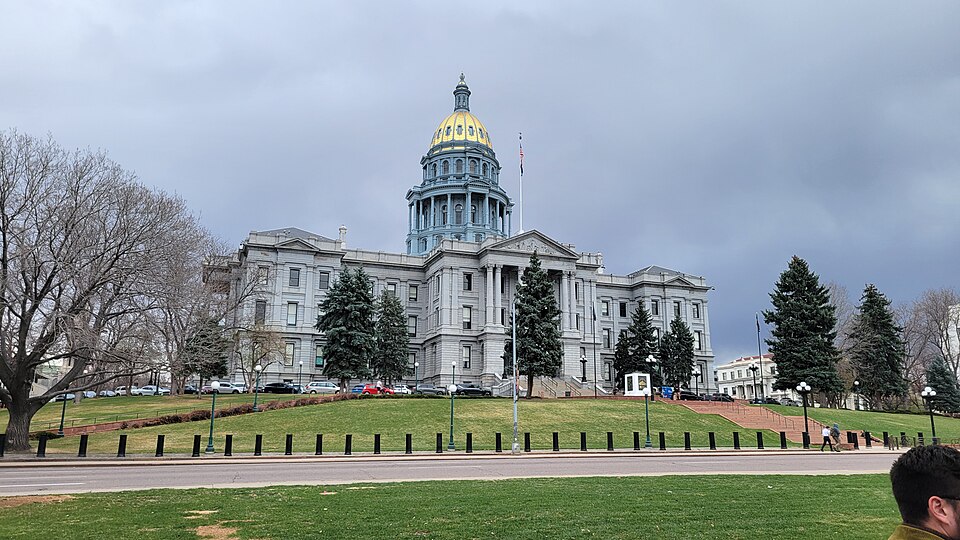
    Photo: Retaildesigner, public domain, via Wikimedia Commons

    If you are 18 or older and have never held a license, Colorado lets you move fast: pass the written test, get an instruction permit, and you can take the driving test any time after that. There is no minimum permit holding period and no driving log at 18 or older. The one big change to plan around is January 1, 2027, when 18 to 20 year olds start needing a course before the permit. This guide covers both age groups (18 to 20, and 21 and over) and what the driving test involves.

    Key facts

    • Permit hold at 18 or older: none. You can test any time after getting your permit (Colorado DMV).
    • Driving log at 18 or older: not required.
    • Course: none needed today. From January 1, 2027, 18 to 20 year olds applying for a permit need a 30-hour driver education course or a 4-hour in-person driver awareness program. At 21 or older, no course.
    • Written test: required at every age. Take it @Home online, in an office, or at an approved driving school.
    • Driving test: given by approved third-party testers, mostly driving schools. State driver license offices do not conduct it.
    • Fees (as of November 2026): $20 REAL ID-compliant permit, $11.50 per written retest, $15.40 per driving retest, $6.50 per @Home test attempt.

    Do you need driver’s ed as an adult in Colorado?

    It depends on your age and when you apply for the permit. The rule comes from House Bill 24-1021.

    Your age when you apply for the permit Until December 31, 2026 From January 1, 2027
    18 to 20 No course required 30-hour driver education course, or the 4-hour driver awareness program taken in person
    21 or older No course required No course required

    If you already hold your permit before January 1, 2027, the DMV says the new requirements do not apply to you. So if you are 18 to 20 and want to avoid the course, getting your permit in 2026 is the simplest way. The two course options are compared in Colorado 30-hour driver ed vs the 4-hour course.

    Step by step: your first Colorado license at 18 or older

    1. Pre-register on myDMV before your first visit.
    2. Pass the written test (Driving Knowledge Test). Online @Home tests take 60 minutes, need a desktop or laptop with a webcam, and cost $6.50 per attempt. You can take the test twice a day, on as many days as you need. Details: Colorado DMV written permit test guide.
    3. Book a driver license office appointment for the permit. Bring proof of identity, your test pass confirmation, any course completion (if your age needs one from 2027) and glasses or contacts. At the office you take a vision test, give fingerprints, have a photo taken and pay the fee. The card arrives by mail within 30 days; a temporary paper permit covers you until then.
    4. Practice with a supervisor. The supervisor must be 21 or older, sit in the front passenger seat and hold a valid Colorado license (or a military ID plus a valid out-of-state license).
    5. Book the driving test with an approved tester. Find one on the DMV’s Driver Education School Locations map. Testers set their own prices, so compare a few.
    6. Pass the test and upgrade. You can upgrade online if you have no name change and are not claiming the 30-mile exemption. Your receipt plus your old permit act as a temporary license until the card arrives.

    Is there a waiting period between the Colorado permit and the driving test?

    No, not at 18 or older. The 12-month hold and the 50-hour log (10 at night) apply only if you are under 18. In practice, the wait is the time you need to get good enough to pass, plus the tester’s booking queue. Adults who have never driven usually need many hours of practice before they are ready, even though the law sets no minimum. A structured plan is in the supervised practice plan, which works just as well for adult learners.

    What is on the Colorado driving test?

    Your tester picks the route. The handbook sets out what you are scored on:

    • left and right turns
    • stopping at and driving through intersections
    • lane changes in traffic
    • merging into and leaving traffic
    • general driving behavior

    The examiner grades lane selection, lane position, signals (on 100 feet before a turn in urban areas, 200 feet on four-lane highways), speed control, full stops behind the line, smooth acceleration and searching (mirrors, shoulder checks, left-right-left at intersections). The handbook’s scoring list does not name parallel parking, a three-point turn or backing, so ask your tester what their route includes. Backup cameras and blind spot alerts are allowed but do not replace physical checks.

    Only you and the examiner may be in the car. The car needs current insurance and registration, and the examiner checks brake lights, turn signals, seat belts, the windshield, tires, and that the doors and windows open from inside. Full walkthrough: the Colorado driving test explained.

    If you fail

    You can retake the test once per day, starting the day after you fail, according to the DMV. The handbook says to wait until the next business day. Each retake carries the $15.40 state fee on top of the tester’s charge.

    18 to 20 versus 21 and older: what still differs

    Rule 18 to 20 21 or older
    Course before the permit (from January 1, 2027) 30-hour course or 4-hour in-person program None
    Teen passenger and curfew limits Do not apply (they are for under 18s) Do not apply
    License expiry A license issued under 21 expires 20 days after your 21st birthday; renew on or after that birthday Standard adult license
    Alcohol License may be revoked at a BAC over 0.02% DUI per se above 0.08%; DWAI from 0.05%
    Points that require suspension 9 in 12 months, 12 in 24 months, or 14 at any point between 18 and 21 12 in 12 months or 18 in 24 months

    More on points: Colorado driver points and suspension rules. Phones: Colorado phone laws for new drivers.

    Fees for an adult first-time license in Colorado

    Item State fee (as of November 2026)
    Instruction permit (REAL ID compliant) $20.00
    Driver license (the DMV fee page lists it as “Driver License, renewal”) $34.00
    Standard (non-REAL ID) permit / license $23.00 / $36
    Written test retest $11.50 each
    Driving test retest $15.40 each
    @Home online written test $6.50 per attempt

    Driving schools charge separately for lessons, courses and the driving test. Check the DMV fees page before you go. National comparison: driver’s license costs by state.

    Common questions

    Can I skip the permit and go straight to the driving test at 18?

    No. You still pass the written test and get the permit first. What you skip is the waiting period: at 18 or older you can test any time after the permit is issued.

    I’m 19. Should I get my permit before 2027?

    If you want to avoid the course, yes. From January 1, 2027, 18 to 20 year olds need the 30-hour course or the 4-hour in-person program before the permit. A permit issued before that date is not affected.

    Can I take the driving test at a Colorado DMV office?

    No. State driver license offices do not conduct driving tests. Use an approved third-party tester. The handbook notes that some county offices may offer tests, so check your county’s website.

    Can I use my own car?

    Often, yes, if it is insured, registered and passes the examiner’s safety check. Some schools provide a car. See road test car rules.

    I have a license from another country. Do I start from scratch?

    See moving to Colorado and foreign license reciprocity by state. If you are applying under Colorado’s SB 251 program, see Colorado SB 251 driver’s licenses.

    How quickly can an adult get a Colorado license?

    Legally, as soon as you have a permit and pass the driving test. The real limits are your own readiness and how soon a tester can see you.

    Back to learning to drive in Colorado. Other states: learning to drive as an adult in the US.

    Sources

    • Colorado Division of Motor Vehicles, “Colorado Driver Handbook” DR 2337, January 2025 edition (dmv.colorado.gov)
    • Colorado Division of Motor Vehicles, “Get Your Colorado Permit and Driver License (Under 21)” (dmv.colorado.gov)
    • Colorado Division of Motor Vehicles, “Adult Permit” (dmv.colorado.gov)
    • Colorado Division of Motor Vehicles, “HB24-1021: Motor Vehicle Minor Driver Education” (dmv.colorado.gov)
    • Colorado Division of Motor Vehicles, “@Home Driving Knowledge Tests” (dmv.colorado.gov)
    • Colorado Division of Motor Vehicles, “State DMV Fees” (dmv.colorado.gov)
    • Colorado Division of Motor Vehicles, “Driver Education School Locations” (dmv.colorado.gov)
    • Colorado Department of Revenue, “Point Suspensions” (cdor.colorado.gov)
  • Colorado Traction Law and Mountain Winter Driving for New Drivers

    Colorado Traction Law and Mountain Winter Driving for New Drivers

    Photo: Jeffrey Beall, CC BY 4.0, via Wikimedia Commons

    Colorado’s Traction Law means that when CDOT activates it, your tires need at least 3/16 inch of tread and must be winter, all-weather or mud and snow rated, unless you carry chains or an approved traction device. AWD and 4WD vehicles comply if all four tires meet the tread depth. This guide covers the Traction and Chain Laws, I-70, and the mountain and winter rules in the Colorado Driver Handbook that new drivers need on the road and on the test.

    Colorado Traction Law: what your car needs

    CDOT can activate the Passenger Vehicle Traction Law on any state highway during winter storms or when conditions require it. When it is active, you need one of these:

    • tires with at least 3/16 inch of tread that are winter tires (mountain-snowflake icon) or all-weather tires, or marked M+S or M/S
    • chains or an approved alternative traction device
    • AWD or 4WD, which CDOT’s FAQ says complies as long as all tires have at least 3/16 inch of tread

    On I-70 between Morrison and Dotsero, CDOT says these rules apply from September 1 to May 31, or whenever conditions require.

    Quick tread check

    Measure with a tread depth gauge rather than guessing. CDOT advises against fitting just two winter tires: fit all four.

    Colorado Chain Law for passenger vehicles

    CDOT calls the Chain Law the final safety measure before a highway is closed. When it is active, every passenger vehicle must have chains or an approved alternative traction device, such as an approved cable chain or tire sock. AWD and good tires are not enough.

    Fines for breaking the Traction or Chain Law

    Situation Penalty (CDOT)
    Not complying $100 fine plus $33 surcharge
    Not complying and causing a lane closure in one or more directions $500 fine plus $157 surcharge

    CDOT’s FAQ says the Colorado State Patrol enforces these laws as secondary offenses, citing drivers who crash or cause traffic delays while not compliant.

    How to know if the Traction Law is active

    • highway signs
    • COtrip.org, or call 511 for road and weather information
    • CDOT text and email alerts (sign up through COtrip)

    Mountain driving rules from the Colorado handbook

    • Speed: unless posted otherwise, 20 mph on narrow, winding mountain highways and blind curves, and 40 mph on open mountain highways.
    • Going down: shift to lower gears to control your speed on steep descents.
    • Right of way: vehicles going uphill have the right of way over vehicles going downhill.
    • Narrow mountain roads: if two vehicles meet where there is not room for both, the downhill vehicle backs up to a wider place or stops and leaves room, unless it is easier for the uphill vehicle to return to a turnout.
    • Slow vehicles: if you struggle uphill, pull off at the first safe place or stay right so others can pass.
    • Passing: it is illegal to use the oncoming lane near the crest of a hill, on a curve, or anywhere your view of oncoming traffic is blocked.
    • Runaway truck ramps: never chain up, change a tire or park on the ramp or its entrance. Smoke from a truck’s brakes may mean it is out of control, so get out of its way.

    Snow and ice: what the handbook tells you

    • Roads are most hazardous when snow or ice begins to melt. Bridges, overpasses and shaded spots can be icy when other pavement is not.
    • If you start to skid, take your feet off both the brake and the accelerator, then steer the front wheels where you want the car to go.
    • With ABS, press the brake firmly and keep it pressed. Without ABS, use threshold braking, pressing just short of locking the wheels.
    • 4WD helps traction, but it does not help you stop any sooner.
    • Do not use cruise control on wet or icy roads.
    • Clear all ice, snow and frost from every window before you drive, even for a short trip.
    • Leave extra following distance and slow down.

    Snowplows

    • Plows and sanding trucks use flashing yellow and blue lights. Use extreme caution when approaching or passing them.
    • It is illegal to pass a state, county or city plow working in tandem (staggered) formation with its lights on.
    • Plows can create clouds of blowing snow that hide the plow itself.

    Wildlife on Colorado roads

    The handbook says about 90% of crashes with deer and elk happen between dusk and dawn. In marked animal crossings, slow down and scan. If an animal runs out, keep control of the car. Swerving hard can cause a worse crash than hitting the animal.

    Scenario: Denver to the mountains on a snowy Saturday

    1. The night before, check COtrip.org for Traction or Chain Law alerts and closures on I-70.
    2. Check that all four tires have 3/16 inch of tread and an M+S or snowflake marking. If not, carry approved chains or socks.
    3. Pack food, water, warm clothes and blankets, as CDOT advises for winter trips.
    4. On the descent, use a lower gear rather than riding the brakes.
    5. Keep well back from plows and never pass a tandem formation.

    Common questions

    Is my AWD car legal under the Colorado Traction Law?

    Yes, if all four tires have at least 3/16 inch of tread (CDOT FAQ). When the Chain Law is active, you need chains or an approved device anyway.

    Are all-season tires OK?

    Only if they are marked M+S or M/S, or are rated all-weather or winter, and have 3/16 inch of tread. Otherwise you need chains, an approved device, or AWD or 4WD with adequate tread.

    Where does the Traction Law apply?

    CDOT can apply it on any state highway. On I-70 from Morrison to Dotsero it applies from September 1 to May 31, or whenever conditions require.

    What is the fine for the Traction Law in Colorado?

    $100 plus a $33 surcharge, or $500 plus $157 if you cause a lane closure.

    Who has the right of way on a steep mountain road?

    The vehicle going uphill.

    Should a learner drive I-70 in winter?

    Practice on quieter snowy roads first with your supervisor. The Parent’s Supervised Driving Program encourages practice in rain, fog and snow.

    Back to the Colorado learning to drive guide. Related: driving in snow, fog and rain, Colorado 50-hour log, Colorado teen license restrictions.

    Sources

    • Colorado Department of Transportation, “Passenger Vehicle Traction and Chain Laws” (codot.gov)
    • Colorado Department of Transportation, “Winter Driving FAQs” (codot.gov)
    • Colorado Department of Transportation, “Winter Driving” (codot.gov)
    • Colorado Division of Motor Vehicles, “Colorado Driver Handbook” DR 2337 (12/05/24), Speed, Right-of-Way, Snow and Ice, Seasonal Driving, Mountain Driving, Emergencies (dmv.colorado.gov)
    • Colorado Division of Motor Vehicles, “Mountain Driving” (dmv.colorado.gov)
    • Colorado Division of Motor Vehicles, “Parent’s Supervised Driving Program” guide (dmv.colorado.gov)
  • Colorado 50-Hour Driving Log and Affidavit of Liability Checklist

    Colorado 50-Hour Driving Log and Affidavit of Liability Checklist

    Photo: RuralResurrection, CC BY 4.0, via Wikimedia Commons

    If you are under 18 when you apply for a Colorado driver license, you must submit a signed log of at least 50 hours of supervised driving, 10 of them at night. Someone must also have signed the Affidavit of Liability and Guardianship when you got your permit. This checklist covers both forms, who can supervise, and the mistakes that get a log rejected.

    Colorado driving log checklist

    • At least 50 hours total, with at least 10 at night.
    • 62 hours total if you are using the 30-mile exemption instead of 6 hours of driving school training.
    • Logged on the Drive Time Log Sheet (DR 2324) or in the RoadReady app. Either way, print it.
    • Your name clearly legible at the top.
    • Totals entered for day driving time, night driving time and grand total.
    • Signed and dated by a parent, guardian or other responsible adult.
    • Uploaded for an online upgrade, or brought to an in-person license appointment.

    The DMV says it will not accept a license application without the totals and the signature.

    How to fill in the Drive Time Log Sheet (DR 2324)

    1. After each drive, record the date, the verifier’s initials, the day driving time, the night driving time and the running grand total.
    2. The comments column is optional, but useful for noting skills you practiced.
    3. Photocopy blank pages if you need more rows.
    4. Once you reach the totals, check your math. Then enter total day time, total night time (at least 10) and grand total (at least 50) in the boxes on page 1.
    5. Have your parent, guardian or responsible adult sign and date the certification.

    The 50 hours may include your 6 hours of behind-the-wheel training with a driver education provider, if you took it. The 12 exemption hours are in addition to the 50.

    Who can supervise your Colorado practice driving?

    • Every supervisor must be 21 or older, sit in the front passenger seat, and hold a valid Colorado license (or military ID with a valid out-of-state license).
    • CDOT says logged hours are supervised by the Colorado-licensed parent or legal guardian who signed the Affidavit of Liability, or by a Colorado-licensed alternate permit supervisor they appoint.
    • A permit holder under 18 driving without an approved supervisor faces a minimum $70 fine and 3 points (CDOT).

    Alternate permit supervisor

    If the parent or guardian signing the affidavit does not hold a valid Colorado license, they can appoint an alternate permit supervisor on the DR 2460. The alternate signs to confirm they hold a valid Colorado license and are at least 21, and gives their Colorado customer identification (license) number.

    The Affidavit of Liability and Guardianship (DR 2460)

    Every permit applicant under 18 needs one. By signing, the adult:

    • accepts liability for the minor’s driving, including financial responsibility for any crash the minor causes
    • agrees to go with the minor to any hearing about their permit or license
    • confirms they are 21 or older and hold a valid Colorado license, or a valid out-of-state license with military ID, or are appointing an alternate supervisor

    Who can sign

    The handbook lists a parent, stepparent, grandparent with power of attorney, legal guardian, spouse older than 18, or any other responsible adult willing to accept legal liability. The DMV adds that the signer must be over 21.

    How it is signed

    • In front of a driver license office employee at your appointment, with the signer showing their license, or
    • In advance in front of a notary public. Forms signed at home without a notary are not accepted.

    Withdrawing a signature

    The signer can withdraw at any time using form DR 2464 at a driver license office. The minor’s permit or license is then canceled. A new signer must complete a new DR 2460 in person, and a new permit is issued for a fee. Minors in foster care can be exempt if certain conditions are met.

    When you do not need a log

    • You are 18 or older when you apply for the license.
    • You will turn 18 before you have held the permit for a year.

    Moving to Colorado mid-log

    Hours logged in your previous state count toward the 50. Time held on an out-of-state permit also counts toward the 12-month holding period. If you are under 21, apply for a Colorado permit within 30 days of moving.

    Common questions

    Can my grandparent supervise my Colorado practice hours?

    Your hours must be supervised by the person who signed the affidavit or by an appointed alternate permit supervisor (CDOT). A grandparent can be either, if they are 21 or older with a valid Colorado license.

    Does driving school time count toward the 50 hours?

    Yes. The 6 hours of behind-the-wheel training with a driver education provider may be included.

    What counts as night driving?

    The DR 2324 does not define it. Colorado requires headlights from sunset to sunrise, so log night hours after sunset.

    Can I use an app instead of the paper log?

    Yes, the RoadReady app is accepted, but you must print its log sheet for the license appointment.

    My parent cannot come to my permit appointment. What now?

    Bring a DR 2460 signed in front of a notary.

    What happens if the person who signed withdraws?

    Your permit or license is canceled until a new adult signs a new affidavit in person.

    Back to the Colorado learning to drive guide. Related: 30-hour vs 4-hour course, Colorado driving test, teen license restrictions, supervised driving hours by state.

    Sources

    • Colorado Division of Motor Vehicles, “Drive Time Log Sheet” DR 2324 (08/25/26) (dmv.colorado.gov)
    • Colorado Division of Motor Vehicles, “Affidavit of Liability and Guardianship” DR 2460 (06/26/23) (dmv.colorado.gov)
    • Colorado Division of Motor Vehicles, “Get Your Colorado Permit and Driver License (Under 21)” (dmv.colorado.gov)
    • Colorado Division of Motor Vehicles, “Colorado Driver Handbook” DR 2337 (12/05/24), Minor Drivers (dmv.colorado.gov)
    • Colorado Department of Transportation, “Colorado Graduated Driver Licensing Laws (GDL)” resource guide, 2025 (codot.gov)
  • Colorado 30-Hour Driver Ed vs 4-Hour Driver Awareness Course

    Colorado 30-Hour Driver Ed vs 4-Hour Driver Awareness Course

    Photo: Mineia Martins, Pexels

    Whether you need Colorado’s 30-hour driver education course or the 4-hour driver awareness program depends on your age when you apply for your permit, and the rules change on January 1, 2027. This guide gives both sets of rules side by side, explains the separate 6-hour behind-the-wheel requirement, and helps you pick the right course.

    Which course do you need for a Colorado permit?

    Age when applying for the permit Permit issued until December 31, 2026 Permit issued from January 1, 2027
    15 to 15 and a half 30-hour driver education course 30-hour driver education course
    15 and a half to 16 30-hour course or 4-hour driver awareness program 30-hour driver education course
    16 to 17 Nothing required (recommended) 30-hour driver education course
    18 to 20 Nothing required 30-hour course or 4-hour driver awareness program (must be in person)
    21 and over Nothing required Nothing required

    Source: Colorado DMV page on House Bill 24-1021. If you already hold your permit before January 1, 2027, the new requirements do not apply to you.

    What is the difference between the two courses?

    30-hour driver education 4-hour driver awareness program
    Format Classroom or internet-based Classroom (in person for 18 to 20 year olds from 2027)
    Content Covers all aspects of driving, as recommended by USDOT Safety and driver education
    Accepted for Every age group 15 and a half to 16 (until the end of 2026); 18 to 20 (from 2027)

    Descriptions are from the CDOT GDL resource guide. Courses are run by private, DMV-approved schools, which set their own prices.

    Course certificates expire

    Driver education and driver awareness completions are valid for 6 months from the date you finish. Book your permit appointment within that window, and bring your completion confirmation, printed or on your phone.

    The 6 hours of behind-the-wheel training: a separate rule

    Behind-the-wheel (BTW) training is 6 hours of driving in traffic with an instructor from an approved driver education school. Whether you need it depends on your age when you apply for the license, not the permit:

    • Under 16 and a half when applying for the license: 6 hours BTW is mandatory.
    • 16 and a half or older: optional, though CDOT strongly recommends it.

    The 6 hours can count toward your 50 logged hours. If you live more than 30 miles from an approved full-time driving school, you can substitute 12 extra hours of supervised driving (62 total). Bring a printed map of the route from your home to the nearest school, and upgrade to the license in person.

    Worked example

    Maya applies for her permit at 15 years 2 months in 2026, so she takes the 30-hour course. After holding the permit 12 months she is 16 years 2 months, under 16 and a half, so she also needs the 6 hours BTW. Her brother waits and applies at 16 years 7 months in 2026. He needs no course before the permit, and BTW is optional when he applies for his license at 17 years 7 months.

    How to choose

    • Want a license close to 16? Start at 15 with the 30-hour course and plan for the 6 hours BTW.
    • Turning 15 and a half before you start in 2026? Until December 31, 2026, the 4-hour program is enough for the permit. Make sure the permit is actually issued before January 1, 2027.
    • Applying from 2027 at 15 to 17? Only the 30-hour course counts.
    • 18 to 20 from 2027? The 4-hour in-person program is the shortest route.

    Other HB24-1021 changes

    • If you reapply for a permit on or after January 1, 2027 after a license or permit was surrendered, canceled, suspended or revoked, you must meet the new course requirement for your age.
    • Out-of-state permit holders applying for a Colorado permit from January 1, 2027 must meet the new Colorado requirements.
    • Colorado often accepts driver education certificates from other states. Bring yours so the DMV can check it.
    • Under 21s need a Colorado State Patrol approved motorcycle safety course before a motorcycle permit.
    • Behind-the-wheel instructors now need a fingerprint background check.

    Common questions

    Can I take the 4-hour course instead of the 30-hour course at 15?

    Only from 15 and a half, and only for permits issued before January 1, 2027. Under 15 and a half, the 30-hour course is required.

    Can the 30-hour course be done online?

    CDOT describes it as a classroom or internet-based course. Check that your provider is DMV-approved.

    Do I need driver’s ed at 16 in Colorado?

    Not if your permit is issued by December 31, 2026. From January 1, 2027, 16 and 17 year olds need the 30-hour course.

    Does the 4-hour course have to be in person?

    For 18 to 20 year olds under the 2027 rules, yes. The DMV says the awareness program must be in person.

    How long is my driver’s ed certificate good for?

    6 months from completion.

    Do adults over 21 need a course?

    No. Adults only pass the written test, get the permit and then take the driving test.

    Back to the Colorado learning to drive guide. Related: Colorado written permit test, 50-hour log and affidavit, GDL compared by state.

    Sources

    • Colorado Division of Motor Vehicles, “HB24-1021: Motor Vehicle Minor Driver Education” (dmv.colorado.gov)
    • Colorado Division of Motor Vehicles, “Get Your Colorado Permit and Driver License (Under 21)” (dmv.colorado.gov)
    • Colorado Department of Transportation, “Colorado Graduated Driver Licensing Laws (GDL)” resource guide, 2025 (codot.gov)
    • Colorado Division of Motor Vehicles, “Colorado Driver Handbook” DR 2337 (12/05/24), Minor Drivers (dmv.colorado.gov)
    • Colorado Division of Motor Vehicles, “Drive Time Log Sheet” DR 2324 (08/25/26) (dmv.colorado.gov)
  • Colorado Teen License Restrictions, Curfew and Penalties

    Colorado Teen License Restrictions, Curfew and Penalties

    Photo: Minime5468, CC BY-SA 4.0, via Wikimedia Commons

    In Colorado, a driver who gets a license before 18 holds a minor license with passenger and curfew restrictions for the first 12 months, or until turning 18 if that comes first. This guide sets out each rule, the exceptions, and the fines, community service and points for breaking them, using the Colorado DMV and CDOT figures and the current phone statute.

    Colorado minor license restrictions at a glance

    Rule When it applies What it means
    Passengers First 6 months No passengers under 21 unless a parent or another licensed adult driver is in the vehicle
    Passengers Months 7 to 12 No more than one passenger under 21 at a time
    Passengers After 1 year or at 18 No age limit, but no more passengers than seat belts
    Curfew First year No driving between midnight and 5 a.m.
    Cell phone All drivers Hands-free only, no texting (C.R.S. 42-4-239 from January 1, 2025). DMV guidance still says under-18s may not talk or text at all; see the note below
    Seat belts Until 18 You and every passenger must be belted

    CDOT’s penalty table also treats more than one passenger in the front seat as a violation.

    Exceptions to the passenger limit

    • Your siblings may ride with you at any time.
    • You may carry passengers under 21 during a medical emergency.

    Exceptions to the midnight to 5 a.m. curfew

    You may drive during curfew hours in your first year if you are:

    • accompanied by a parent or legal guardian (the handbook also lists an instructor)
    • driving to or from school or a school-authorized activity, with a signed statement from the school
    • driving to or from work, with a signed statement from your employer
    • dealing with a medical emergency
    • an emancipated minor

    Keep the signed statement in the car. The DMV’s Parent’s Supervised Driving Program suggests teens drive no later than 9 p.m., because research shows most teen crashes happen between 9 p.m. and midnight.

    Penalties for breaking Colorado teen license rules

    Minimum fines from the CDOT GDL resource guide (2025):

    Violation (minor license) Minimum fine Community service Points
    Unauthorized passenger $50 first, $100 second, $150 third offense 8 to 24 hours 2
    Seat belt violations: unbelted occupant, more than one front-seat passenger, more passengers than rear seat belts $65 first, $130 second, $195 third offense 8 to 40 hours 2
    Curfew $50 first, $100 second, $150 third offense 8 to 24 hours 2
    Violation (instruction permit) Minimum fine Points
    No approved supervisor $70 3
    Mobile device use (C.R.S. 42-4-239, all drivers) $75 first, $150 second, $250 third or later offense within 24 months, each plus a $10 surcharge 2 / 3 / 4

    The phone row comes from the 2025 statute, not the CDOT guide, which still shows the older $50/$100 and 1 point. CDOT warns that violations can lead to a revoked license.

    How many points before a Colorado teen loses their license?

    Age Suspension at
    17 and under 6 or more points in any 12 months, or 7 or more at any point while under 18
    18 to 21 9 or more in 12 months, 12 or more in 24 months, or 14 or more at any point between 18 and 21

    The Department of Revenue counts the dates of the violations, not the dates of conviction. A hearing officer must suspend once the threshold is reached, sets the length (up to one year) and may grant a probationary license for work or school.

    Worked example

    A 17-year-old gets a curfew ticket (2 points) and an unauthorized passenger ticket (2 points) within 12 months. That makes 4 points. A first phone ticket (2 points) inside the same 12 months takes the total to 6, which meets the 6-point limit, and the license is suspended.

    Alcohol and drugs for drivers under 21

    • For minors, even a trace of alcohol is punishable. A license may be revoked at a BAC over 0.02%.
    • You can lose your license for drinking under the legal age, or for buying or possessing alcohol, even when you are not driving.
    • Under 21 and convicted of DUI or DWAI: revocation on a first conviction if you fail to complete a court-ordered evaluation or program. A second or third conviction means mandatory revocation.

    More: zero tolerance laws for drivers under 21.

    When do the restrictions end?

    After 12 months of holding the minor license, or at 18, whichever comes first. The minor license itself stays valid until 20 days after your 21st birthday. Renew on or after your 21st birthday to convert to an adult license.

    Common questions

    Can I drive my friends in Colorado at 16?

    Not in your first 6 months unless a parent or other licensed adult driver is with you. In months 7 to 12 you may carry one passenger under 21.

    Can I drive my brother or sister?

    Yes. Siblings are exempt from the passenger limits at any time. They still each need a seat belt.

    What time is the curfew for 16 year olds in Colorado?

    No driving from midnight to 5 a.m. during your first year of licensed driving, unless an exception applies.

    Can I use my phone with Bluetooth as a teen driver in Colorado?

    The current statute, C.R.S. 42-4-239 as re-enacted from January 1, 2025, sets one hands-free rule for all drivers and no longer contains the separate under-18 ban. DMV guidance still tells drivers under 18 not to talk or text at all, except an emergency call. That stricter teen rule is DMV guidance rather than a rule in C.R.S. 42-4-239, so the safe choice is to keep the phone away while you drive and not rely on Bluetooth.

    Do the rules apply if I get my license at 17 and a half?

    Yes, but they end when you turn 18 even if you have not had the license for 12 months.

    Can I drive to a late shift at work?

    Yes, with a signed statement from your employer in the vehicle.

    Back to the Colorado learning to drive guide. Related: Colorado driving test, 50-hour log and affidavit, hands-free and texting laws, US points systems.

    Sources

    • Colorado Department of Transportation, “Colorado Graduated Driver Licensing Laws (GDL)” resource guide, 2025 (codot.gov)
    • Colorado Division of Motor Vehicles, “Get Your Colorado Permit and Driver License (Under 21)” (dmv.colorado.gov)
    • Colorado Division of Motor Vehicles, “Colorado Driver Handbook” DR 2337 (12/05/24), Minor Drivers and Driving Under the Influence (dmv.colorado.gov)
    • Colorado Division of Motor Vehicles, “Parent’s Supervised Driving Program” guide (dmv.colorado.gov)
    • Colorado Department of Revenue, “Point Suspensions” (cdor.colorado.gov)
    • Colorado General Assembly, Senate Bill 24-065 (signed act), re-enacting C.R.S. 42-4-239 and amending 42-2-127(5) (leg.colorado.gov)
  • Colorado Driving Test Explained: Third-Party Testers and Scoring

    Colorado Driving Test Explained: Third-Party Testers and Scoring

    Photo: thirdsphoto, CC BY 4.0, via Wikimedia Commons

    In Colorado, the driving test (driving skills test) is given by approved third-party testers, mostly certified driving schools. State driver license offices do not conduct it. This guide explains who can test, how to book, what the examiner scores, the vehicle checks and what to do if you fail.

    Key facts (Colorado DMV, checked November 2026)

    • Minimum age: 16.
    • Under 18: you must have held your permit for at least 12 full months and logged 50 hours (10 at night).
    • 18 or older: you can test any time after getting your permit.
    • Book directly with an approved school or testing location. The DMV does not book these appointments.
    • Failed? You can retake it once per day, starting the day after. The state retest fee is $15.40 on top of the tester’s fee.

    Who gives the Colorado driving test?

    The DMV’s Driver Education School Locations page lists the approved private providers on a map. They offer driver education, behind-the-wheel training and the official driving skills test. The handbook adds that some county-operated offices offer drive tests, so check your county’s website. Testers set their own prices, so compare a few.

    Are you eligible to take the test?

    Requirement 16 to 16 and a half 16 and a half to 18 18 to 21
    Permit held 12 months Yes Yes No
    50 logged hours, 10 at night Yes Yes No
    6 hours behind-the-wheel with a driving school Yes No No
    Driving test with a third party Yes Yes Yes

    Ages are your age when you apply for the license. If you live more than 30 miles from an approved full-time driving school, you can replace the 6 behind-the-wheel hours with 12 extra supervised hours (62 in total). Details: Colorado 50-hour driving log.

    Vehicle requirements for the Colorado driving test

    The school may provide a car, or ask you to bring one with current insurance and registration. Whichever car you use, the examiner checks:

    • brake lights and turn signals
    • seat belts
    • the windshield
    • tires
    • that the doors and windows open from inside

    Before you start

    • Only you and the examiner may be in the car. No interpreters, family, friends or pets.
    • Remove any weapons from the vehicle.
    • Turn off the radio, your phone and other electronic devices.
    • Clear objects from the dashboard and rearview mirror.

    What the examiner scores

    The test follows American Association of Motor Vehicle Administrators (AAMVA) guidelines. It assesses three things: perceptual skills (judging gaps, spotting hazards), motor skills (handling the controls) and attention (monitoring traffic while you merge, for example). You are scored on:

    • left and right turns
    • stopping at intersections
    • driving through intersections
    • lane changes in traffic
    • merging into and leaving traffic
    • general driving behavior

    The handbook’s scoring list does not name parallel parking, a three-point turn or backing as test maneuvers. Ask your tester what their route includes.

    Grading factors, and what passing looks like

    Factor What the examiner wants to see
    Lane selection Enter, approach and finish each maneuver in the proper lane
    Lane management Both hands on the wheel, hand-over-hand or push-pull-slide steering. Turn right from the right-most part of your lane and left from the left-most part. End centered without crossing lines or curbs
    Turn signals On continuously 100 feet before turning or changing lanes in urban areas, 200 feet on four-lane highways. Cancel within 3 seconds
    Speed control Smooth slowing, steady speed in lane changes, approach turns slowly enough that you do not brake mid-turn
    Stopping Full stop with no rolling, behind the stop line and crosswalk, wheels straight. Stop where you can see the rear tires of the car ahead touching the road
    Acceleration Smooth, with no jerking, lugging, coasting or stalling
    Searching Mirrors, shoulder checks before lane changes, left-right-left at intersections, look behind after each turn

    Back-up cameras, blind spot alerts and lane departure warnings are allowed, but they do not replace physical checks. You may ask questions before the test starts. After that, keep talking to a minimum, because you are scored the whole way.

    If you fail the Colorado driving test

    • You can retake it once per day, starting the day after you fail (DMV). The handbook says to wait until the next business day.
    • Each retake carries a $15.40 state fee in addition to the tester’s charge.
    • Out-of-state permit holders aged 16 to 17 may take the Colorado test once without a Colorado permit. If they fail, they must get a Colorado permit before testing again.

    Common mistakes: why people fail the US driving test.

    After you pass: getting the license

    1. Online upgrade if you have no name change and are not claiming the 30-mile exemption. Under 18s upload the signed driving log. Your receipt plus your old permit act as a temporary license.
    2. In person otherwise. Bring your permit, driving log, a printed route map if you are claiming the exemption, and the fee.
    3. Your card arrives by mail within 30 days. Carry the paper temporary license until then.
    4. If you are under 18, the minor license restrictions apply for the first year.

    Common questions

    Can I take my driving test at a Colorado DMV office?

    No. State driver license offices do not conduct driving tests. Use an approved third-party tester. Some county offices may offer tests.

    Can I use my own car for the Colorado road test?

    Often, yes. It must have current insurance and registration and pass the examiner’s safety check. Some schools provide a car.

    Can my parent ride along during the test?

    No. Only the driver and the examiner are allowed in the vehicle.

    How much does the Colorado driving test cost?

    Testers set their own fee. If you are retaking the test, add the $15.40 state retest fee (November 2026).

    Is parallel parking on the Colorado driving test?

    The handbook does not list it among the scored maneuvers. Practice it anyway and ask your tester.

    How soon after failing can I retest?

    From the day after you fail. You can test once per day.

    Back to the Colorado learning to drive guide. Compare states: US road test by state.

    Sources

    • Colorado Division of Motor Vehicles, “Colorado Driver Handbook” DR 2337 (12/05/24), Getting a Driver License (dmv.colorado.gov)
    • Colorado Division of Motor Vehicles, “Get Your Colorado Permit and Driver License (Under 21)” (dmv.colorado.gov)
    • Colorado Division of Motor Vehicles, “Adult Permit” (dmv.colorado.gov)
    • Colorado Division of Motor Vehicles, “Driver Education School Locations” (dmv.colorado.gov)
    • Colorado Division of Motor Vehicles, “State DMV Fees” (dmv.colorado.gov)
  • Colorado Permit Test: Online, In-Office, Fees and Retakes

    Colorado Permit Test: Online, In-Office, Fees and Retakes

    Photo: Jeffrey Beall, CC BY 4.0, via Wikimedia Commons

    Every new driver in Colorado, at any age, must pass the written test (the DMV calls it the Driving Knowledge Test) before getting an instruction permit. You can take it online at home, in a driver license office or at an approved driving school. This guide covers where to take it, what it costs, what is on it, and what happens after you pass.

    Key facts (Colorado DMV, checked November 2026)

    • Three ways to test: @Home online, in office, or at a third-party provider.
    • Online test: 60 minutes, $6.50 per attempt, webcam required.
    • Maximum two attempts per day, as many days as you need.
    • State retest fee: $11.50 for each retest.
    • Languages: English and Spanish.

    What is on the Colorado permit test?

    According to the Colorado Driver Handbook, the questions cover the contents of the handbook, including:

    • road signs
    • driving under the influence
    • driving rules
    • safety rules
    • legal items

    Check with the Colorado DMV for the number of questions and the pass mark, and do not trust unofficial numbers.

    Topics worth extra study

    • Default speed limits: 25 mph business districts, 30 mph residence districts, 20 mph narrow winding mountain highways, 40 mph open mountain highways.
    • Signal distances: 100 feet in urban areas, 200 feet on four-lane highways over 40 mph.
    • BAC limits: 0.08% (DUI per se), 0.05% (first DWAI in the penalty table), over 0.02% for drivers under 21.
    • School bus: stop at least 20 feet away when the red lights flash.
    • Parking: 15 feet from a fire hydrant, 30 feet from a signal, stop sign or railroad crossing.
    • Following distance: the three-second rule. Check your mirror every 5 to 8 seconds.
    • Headlights: on from sunset to sunrise or when visibility is under 1,000 feet. Dim high beams within 500 feet of an oncoming vehicle.
    • Teen license rules: passenger limits and the midnight to 5 a.m. curfew.

    The DMV’s Driver Education page has the handbook, an audiobook version and the official Driver Handbook Practice Quiz. Overview of the handbook: learning to drive in Colorado.

    Where can you take the Colorado written test?

    Option How it works Cost (November 2026)
    @Home online Pre-register on myDMV, then test on a desktop or laptop with a webcam. You have 60 minutes. Bring your Certificate of Completion to your permit appointment. $6.50 per attempt ($5 testing fee plus $1.50 card fee). The first attempt has no state test charge.
    In office Book a written test appointment. If you pass and bring your documents, the permit can be issued at the same visit. Permit fee; $11.50 state fee for each retest
    Third-party provider Approved driving schools can give the test. The business may charge its own fees

    Written tests are not given within 30 minutes of an office’s scheduled closing time.

    Rules for the @Home online test

    • Open to any Colorado resident old enough to test for a permit.
    • Works on desktop and laptop computers with a webcam, in any major browser.
    • Photos are taken at the start and at random during the test. Staff compare them with you at your appointment.
    • Test takers younger than 19 need an adult older than 19 to act as proxy. The results are emailed to the proxy too.
    • Questions can be read aloud in English or Spanish if your computer has speakers.

    If you fail the Colorado permit test

    • You can retake it as many times as needed, but only twice in one day.
    • Each retest carries a state DMV fee of $11.50 on top of any testing fee. The under-21 permit page says you can pay it online or at your appointment.

    Accommodations

    • Have the test read to you at the testing station (bring plug-in headphones).
    • Have it verbally translated into another spoken language (you provide the translator).
    • Have it translated into sign language (the DMV provides this).
    • Request other ADA accommodations through the DMV.

    What to bring to your permit appointment after passing

    1. Proof of identity, such as a passport or birth certificate. A school ID alone is not enough.
    2. Your online or third-party test pass confirmation.
    3. Your driver education or awareness course completion confirmation, if your age requires one.
    4. Under 21 with no government ID: a parent or legal guardian, their ID and certified proof of guardianship for the Affidavit of Identity.
    5. Under 18: an adult 21 or older with a valid Colorado license to sign the Affidavit of Liability (DR 2460). If they cannot come, bring a notarized copy.
    6. Glasses or contacts for the vision test.

    At the appointment you take a vision test, give fingerprints, have a photo taken and pay the fee ($20.00 for a REAL ID-compliant permit, as of November 2026). You leave with a temporary paper permit, and the card arrives by mail within 30 days.

    Common questions

    Can I take my Colorado permit test online?

    Yes. The @Home Driving Knowledge Test is taken on a computer with a webcam after you pre-register on myDMV. You still need an office appointment to get the permit.

    How long is the Colorado online permit test?

    You have 60 minutes to complete it.

    How many times can I take the Colorado written test in a day?

    Twice. There is no limit on the total number of attempts.

    Is the Colorado permit test in Spanish?

    Yes, in office and online. No other languages are offered at this time.

    I have a permit from another state. Do I retake the written test?

    No. With a valid out-of-state permit, you do not need to take the written test again. You still need a Colorado appointment.

    Do adults need to take the written test?

    Yes. The written test is required at all ages if you have never been licensed, or if your license has been expired or canceled for more than 12 months.

    Next: which Colorado course you need before the permit and the 50-hour log and Affidavit of Liability. Other states: US permit test by state.

    Sources

    • Colorado Division of Motor Vehicles, “Get Your Colorado Permit and Driver License (Under 21)” (dmv.colorado.gov)
    • Colorado Division of Motor Vehicles, “@Home Driving Knowledge Tests” (dmv.colorado.gov)
    • Colorado Division of Motor Vehicles, “Driver Education” (dmv.colorado.gov)
    • Colorado Division of Motor Vehicles, “State DMV Fees” (dmv.colorado.gov)
    • Colorado Division of Motor Vehicles, “Colorado Driver Handbook” DR 2337 (12/05/24) (dmv.colorado.gov)
  • How to Get a Driver’s License in Colorado: Teen Guide 2026

    How to Get a Driver’s License in Colorado: Teen Guide 2026

    Photo: Hollowayvideo, CC0, via Wikimedia Commons

    To get a driver license in Colorado as a teen, you pass the written test, hold an instruction permit for 12 months, log 50 supervised hours (10 at night) and pass a driving test with an approved third-party tester, usually a driving school. This guide is for Colorado learners under 21 and their parents. It covers each stage, what changes on January 1, 2027, the fees, and the rules you are tested on.

    Key facts (Colorado DMV and CDOT, checked November 2026)

    • Minimum permit age: 15.
    • Under 18: hold the permit at least 12 full months (or until your 18th birthday, if sooner) and log 50 hours, 10 at night.
    • Driving tests are given by approved third-party testers. State driver license offices do not conduct them.
    • Minor license restrictions last 12 months or until you turn 18, whichever comes first.
    • From January 1, 2027, everyone aged 15 to 17 needs a 30-hour driver education course before a permit, and 18 to 20 year olds need the 30-hour course or a 4-hour driver awareness program.

    How to get a driver license in Colorado: the steps

    1. Do any required course. What you need depends on your age when you apply for the permit (see the table below and the 30-hour vs 4-hour course guide).
    2. Pre-register online on myDMV before your first visit.
    3. Pass the written (driving knowledge) test at home online, in an office, or at a third-party school. See the Colorado written permit test guide.
    4. Book an appointment at a driver license office for the permit. You take a vision test, give fingerprints, have your photo taken and pay the fee. If you are under 18, an adult signs the Affidavit of Liability.
    5. Practice. Under 18, hold the permit for 12 months and log 50 hours. If you will be under 16 and a half when you apply for the license, also complete 6 hours of behind-the-wheel training with a driving school. See the 50-hour log and affidavit checklist.
    6. Pass the driving test with an approved tester (minimum age 16). See the Colorado driving test explained.
    7. Upgrade to a minor license online or in person, then follow the teen license restrictions for the first year.
    8. At 21, renew to an adult license. A minor license expires 20 days after your 21st birthday.

    What you need before a Colorado permit, by age

    Age when applying for the permit Until December 31, 2026 From January 1, 2027
    15 to 15 and a half 30-hour driver education course 30-hour driver education course
    15 and a half to 16 30-hour course or 4-hour driver awareness program 30-hour driver education course
    16 to 17 No course required (recommended) 30-hour driver education course
    18 to 20 No course required 30-hour course or 4-hour driver awareness program (in person)

    The new rules come from House Bill 24-1021. If you already hold your permit before January 1, 2027, the DMV says the new requirements do not apply to you.

    Colorado permit rules

    • Your supervisor must be 21 or older, sit in the front passenger seat and hold a valid Colorado license (or military ID plus a valid out-of-state license).
    • Your 50 logged hours must be supervised by the Colorado-licensed parent or guardian who signed the Affidavit of Liability, or by an alternate permit supervisor they appoint.
    • A permit is valid for three years or until your 21st birthday, whichever comes first.
    • Phones: all drivers must be hands-free and may not text (C.R.S. 42-4-239). DMV guidance also tells permit holders under 18 not to talk or text at all, so keep the phone away. Driving without an approved supervisor carries a minimum $70 fine and 3 points (CDOT).
    • Age 18 or older: there is no minimum permit holding period. You can take the driving test any time after getting the permit, and no driving log is needed.

    Colorado permit types and who can supervise

    Permit Age at application Before the permit (to December 31, 2026) Who can supervise
    Driver education permit 15 to 15 and a half 30-hour driver education course, finished within the last 6 months The parent, stepparent, grandparent with power of attorney, guardian or foster parent who signed, an alternate permit supervisor, or an approved driver education instructor in a marked training car
    Driver awareness permit 15 and a half to 16 4-hour driver awareness program (or the 30-hour course) The adult who signed, or an alternate permit supervisor
    Minor permit 16 to 18 Nothing required The adult who signed the Affidavit of Liability, or an alternate permit supervisor
    Adult permit 18 and older Nothing required (18 to 20 need a course from 2027) Any driver 21 or older with a valid Colorado license

    Under 16, extra practice with another licensed driver aged 21 or older is allowed, but those hours do not count toward the 50-hour log. Every supervisor sits in the front seat. From January 1, 2027, all 15 to 17 year olds take the 30-hour course, so the separate awareness permit route ends.

    How much does a Colorado permit and license cost?

    State DMV fees, as listed on the Colorado DMV fees page in November 2026:

    Item Fee
    Instruction permit (REAL ID compliant) $20.00
    Driver license (listed as “Driver License, renewal”) $34.00
    Instruction permit / driver license (Standard credential, CO-RCSA) $23.00 / $36
    Written test retest $11.50 each
    Driving test retest $15.40 each
    @Home online written test $6.50 per attempt ($5 testing fee plus $1.50 card fee)

    Driving schools set their own prices for courses and the driving test. Check the DMV fees page before you go, as fees change.

    Restrictions on a Colorado minor license

    • First 6 months: no passengers under 21 unless a parent or another licensed adult driver is in the car.
    • Next 6 months: no more than one passenger under 21.
    • Siblings and passengers with a medical emergency are exceptions.
    • First year: no driving between midnight and 5 a.m., with exceptions for school, work, medical emergencies and emancipated minors.
    • Phones: the DMV says no talking or texting under 18, except an emergency call. The 2025 statute sets one hands-free rule for all drivers, so following the DMV’s stricter advice is the safe choice.

    Full details and fines: Colorado teen license restrictions and penalties.

    Driver responsibilities and insurance

    • You must carry proof of insurance while driving. Failing to show valid evidence of insurance when an officer asks can cost you your license.
    • Colorado’s minimum liability cover is $25,000 per person and $50,000 per accident for bodily injury, plus $15,000 for property damage (Colorado Division of Insurance). Check the current limits with the Division before you buy.
    • Report a change of name or address to the DMV within 30 days.
    • New residents must get a Colorado license within 30 days of becoming a resident (with exceptions for active-duty military and students).

    More on cover for learners: car insurance for new drivers.

    Rules of the road the Colorado test asks about

    Topic Colorado rule (Driver Handbook)
    Default speed limits 20 mph narrow winding mountain highways; 25 mph business districts; 30 mph residence districts; 40 mph open mountain highways; 55 mph urban interstates and highways; 65 to 75 mph designated rural interstates and highways
    Signaling 100 feet before a turn or lane change in urban areas; 200 feet on four-lane highways over 40 mph
    Red light Right on red after stopping, unless a sign prohibits it. Left on red only from a one-way street onto another one-way street
    Four-way stop First to arrive goes first; if two arrive together, the driver on the left yields to the driver on the right
    Roundabouts Yield to traffic already in the roundabout and to large vehicles (trucks, buses, RVs, emergency vehicles)
    School bus Stop at least 20 feet away when red lights flash. On a divided highway of four or more lanes with a median, only traffic behind the bus stops
    Passing bicyclists At least 3 feet of space. You may briefly cross a solid yellow line to do it when the oncoming lane is clear
    Move Over Law For a stationary vehicle with hazards flashing, move over one lane. If you can’t, slow down: the handbook says to 25 mph where the limit is 45 mph or less, and to at least 20 mph below the limit on faster roads
    Parking Not within 30 feet of a signal, stop sign or railroad crossing, or within 15 feet of a fire hydrant; within 12 inches of the curb when parallel parked
    Phones All drivers: no mobile device use unless hands-free or an emergency

    For signs and markings, see US road signs by shape and color.

    More handbook rules learners miss

    • Seat belts: the driver, front-seat passengers and children under 16 must be belted. With a driver under 18, every passenger must be belted and there can be no more passengers than belts.
    • Child seats: under 2, a rear-facing seat in the back (a forward-facing seat is allowed from 40 pounds); 2 to 4, a rear- or forward-facing child seat in the back if there is one; 4 to 9 (40 pounds or more), a child seat or booster in the back; 9 to 18, a seat belt or child seat.
    • Earphones: you may not drive wearing earphones or a headset that covers any part of both ears. Hearing aids, a device in one ear and speakers built into a helmet are allowed.
    • Open containers: no open alcohol or open marijuana container in the passenger area on a public road.
    • Other ways to lose your license: leaving a crash scene, false information on your application, an unpaid crash judgment, lending your license, missing a DMV re-examination, unpaid child support, failing to show proof of insurance, or buying or possessing alcohol under 21.
    • Signals: treat a signal that is out or faulty as a four-way stop. At a HAWK pedestrian signal, the flashing yellow and red sequence means a pedestrian is crossing, so be ready to stop.
    • Lanes: never drive, idle or park in a bike lane; it continues through an intersection even where the paint stops. Use a two-way center turn lane only to turn left, never to pass or travel. HOV lanes are marked with a white diamond.
    • Crosswalks: never pass a vehicle stopped at a crosswalk; stop behind it.
    • Passing: pass on the right only on one-way streets or roads with two or more lanes each way, and never on the shoulder. Don’t pass within 100 feet of an intersection or railroad crossing, near a bridge or tunnel where your view is blocked, or if you can’t get back before coming within 200 feet of an oncoming vehicle.
    • Freeways: don’t merge until the solid white line ends, and don’t stop in the acceleration lane. Signal 200 feet before the deceleration lane. On a metered ramp, wait for the green light.
    • Night: use low beams within 200 feet of a vehicle you are following. A vehicle parked beside the road needs its parking lights on from sunset to sunrise.
    • Turnabouts: the handbook describes forward and reverse two-point turnabouts using a driveway or alley, and a three-point turnabout for narrow two-lane roads only.
    • Work zones and lane closures: fines double in work zones, as in school zones. At a lane closure, use both lanes until the merge point, then take turns (zipper merge).
    • Scanning: look at least 10 seconds ahead, about one block in town or half a mile on the open road.
    • Traffic stops: signal and pull to the right, turn off the engine and audio, stay inside, and turn on the interior light at night. Keep your hands visible, say at once if there is a weapon in the car without reaching for it, and wait to be told before reaching for documents. Signing a ticket is not an admission of guilt, but refusing to sign can lead to arrest.
    • Railroads and light rail: treat a crossbuck like a yield sign. “No Train Horn” signs mark quiet zones where trains don’t sound horns. If you stall on the tracks, get everyone out and away, then call the number on the blue Emergency Notification sign. Never turn in front of a light rail vehicle or drive around its gates.
    • Bicyclists: open your door with the hand farthest from it (the “Dutch Reach”) so you look back for riders.
    • Aggressive drivers: don’t engage. Report them by dialing *277 (*CSP).
    • Crashes: stop, help where you can, call police, exchange details and show proof of insurance. On a divided highway, move drivable cars off the road after a minor crash with no injuries, alcohol or drugs (Move It Law). If you hit a parked car and can’t find the owner, call police and leave a note. During Accident Alert, if no one is hurt, no alcohol or drugs are involved and the cars can be driven, exchange details and report to police within 24 hours.
    • Organ donation: say yes at the DMV and a heart with a “Y” appears on your license or permit.

    Safe driving: mountains, winter and wildlife

    Colorado’s handbook gives mountain and winter driving their own sections. Use lower gears on steep descents, and remember that vehicles going uphill have the right of way. When CDOT activates the Traction Law, your tires need at least 3/16 inch of tread and must meet its rules. Read Colorado mountain and winter driving for new drivers.

    Sharing the road

    • Two-wheeled motorcycles may lane filter between stopped vehicles at no more than 15 mph.
    • Bicyclists 15 and older may treat stop signs as yield signs and red lights as stop signs when the intersection is clear.
    • Pedestrians have the right of way at all intersections and crosswalks, marked or not.
    • Light rail vehicles in Denver weigh up to 40 tons and cannot stop quickly.

    More: sharing the road with motorcycles, bicycles and trucks.

    Alcohol, drugs, DUI and DWAI in Colorado

    • DWAI means impaired to the slightest degree. DUI means substantially incapable of safe driving. DUI per se applies above 0.08% BAC.
    • Under 21: your license may be revoked at a BAC over 0.02%.
    • A first DWAI (0.05%) carries 8 points for drivers 21 and older.
    • Blood with 5 nanograms of THC per milliliter allows a court to infer DUI. Medical use is no defense.
    • Refusing a chemical test: license revoked for one year and an ignition interlock required for two years.

    See also zero tolerance laws for drivers under 21 and drugged driving and cannabis.

    Points and penalties in Colorado

    Driver Points that require suspension
    17 and under 6 or more in any 12 months, or 7 or more while under 18
    18 to 21 9 in 12 months, 12 in 24 months, or 14 at any point between 18 and 21
    21 and over 12 in 12 months or 18 in 24 months

    Source: Colorado Department of Revenue Hearings Division. The maximum point suspension is one year. Passing a stopped school bus carries 6 points, and reckless driving up to 8 (Driver Handbook). National overview: points systems and license suspensions in the US.

    Common questions

    How old do you have to be to get a permit in Colorado?

    15. Under 16 you must finish a driver education or awareness course first. From January 1, 2027, all 15 to 17 year olds need the 30-hour course.

    How long do you have to hold a permit in Colorado?

    12 full months if you are under 18, or until your 18th birthday if that comes first. There is no minimum holding period at 18 or older.

    Can I take the Colorado driving test at the DMV?

    No. State driver license offices do not conduct driving tests. Book with an approved driving school or third-party tester. Some county offices may offer tests.

    When can I get my license on my 16th birthday?

    Only if you got your permit by your 15th birthday, because the permit must be held for 12 full months.

    Do I need driver’s ed at 18 in Colorado?

    Not if you apply for your permit before January 1, 2027. From that date, 18 to 20 year olds need the 30-hour course or the 4-hour in-person driver awareness program.

    Can I upgrade my permit to a license online?

    Yes, if you have no name change and are not claiming the 30-mile behind-the-wheel exemption. Under 18s upload a signed driving log.

    Comparing states? See how to get a driver’s license in the US, GDL compared by state and moving to a new state.

    Sources

    • Colorado Division of Motor Vehicles, “Colorado Driver Handbook” DR 2337 (12/05/24), January 2025 edition (dmv.colorado.gov)
    • Colorado Division of Motor Vehicles, “Get Your Colorado Permit and Driver License (Under 21)” (dmv.colorado.gov)
    • Colorado Division of Motor Vehicles, “HB24-1021: Motor Vehicle Minor Driver Education” (dmv.colorado.gov)
    • Colorado Division of Motor Vehicles, “State DMV Fees” (dmv.colorado.gov)
    • Colorado Division of Motor Vehicles, “@Home Driving Knowledge Tests” (dmv.colorado.gov)
    • Colorado Division of Motor Vehicles, “Driver Education” (dmv.colorado.gov)
    • Colorado Department of Transportation, “Colorado Graduated Driver Licensing Laws (GDL)” resource guide, 2025 (codot.gov)
    • Colorado Department of Revenue, “Point Suspensions” (cdor.colorado.gov)
    • Colorado Division of Insurance, “Auto Insurance” (doi.colorado.gov)
  • Colorado SB 251 Driver’s License: Eligibility and Documents

    Colorado SB 251 Driver’s License: Eligibility and Documents

    Photo: Mineia Martins, Pexels

    Colorado’s SB 251 license is a standard (non-REAL ID) driver’s license, permit or ID card for Colorado residents who are not lawfully present in the US, or who are only temporarily lawfully present. It was created by the Colorado Road and Community Safety Act (CO-RCSA, Senate Bill 13-251), and the DMV now calls it a “Standard” credential. This guide covers who qualifies, what to bring, which tests you take and what the card can’t be used for, as of November 2026.

    Key facts

    • Who it’s for: non-lawfully present (undocumented) and temporarily lawfully present Colorado residents. US citizens, permanent residents and citizens of the Freely Associated States can only get a REAL ID in Colorado.
    • Same driving rules: permits are available to non-lawfully present residents, and you go through the same permit, driver education, written test and drive test steps by age.
    • Affidavit: Colorado law requires a signed CO-RCSA affidavit (form DR 2212) confirming your Colorado address.
    • Fees (Standard credential, as of November 2026): driver license $36, instruction permit $23, ID card $14.
    • Marked as limited: the card says it is not valid for federal identification, voting or public benefit purposes.
    • Rules changed in 2025: Senate Bill 24-182 updated the issuing requirements from March 31, 2025. Many older guides are out of date.

    Who can get a Colorado SB 251 (standard) license?

    The Colorado DMV issues standard credentials to two groups:

    • Non-lawfully present residents (undocumented)
    • Temporarily lawfully present residents, for example people on certain visas. The DMV says these applicants can’t get a REAL ID in Colorado, even if a card from another state was REAL ID compliant.

    Everyone else (US citizens, permanent residents, Freely Associated States citizens and most CDL applicants) gets a REAL ID instead. More on the difference: REAL ID and your first US driver’s license.

    What to bring for a Colorado standard license

    For non-lawfully present applicants, the DMV’s Standard Licenses and IDs page lists these categories. Bring originals or certified copies with an official seal.

    What you prove What the DMV accepts
    Identity and date of birth A passport, consular card or military ID card from your home country, unexpired or expired for less than 10 years. Foreign driver’s licenses are not accepted as proof of identity
    Colorado address The signed CO-RCSA affidavit (DR 2212), which staff can give you at the appointment, plus one proof of Colorado address in your name, dated within the last year
    Minors’ address Applicants under 18 can use a parent’s or legal guardian’s proof of address
    Name changes Official documents linking any difference in names across your documents
    Tax ID and tax filing Not required by current law (C.R.S. 42-2-505) for undocumented applicants. The original program required an ITIN and proof of Colorado tax filing; SB 24-182 repealed those conditions from March 31, 2025. Temporarily lawfully present applicants follow a separate document list, so check the DMV’s Standard Licenses and IDs page for your route

    No backup documents for identity

    The DMV says undocumented applicants are not currently eligible for exceptions processing (the route that lets some people use alternative documents) and to check back on January 1, 2027. If your passport or consular card is expired by more than 10 years, contact the DMV before booking.

    Tests required for a Colorado SB 251 license

    A standard license is a normal Colorado license with the same steps. What you take depends on your age and history:

    • Never licensed, or license expired or cancelled for more than 12 months: you need a permit first, which means the written knowledge test. See the Colorado written permit test guide.
    • Under 18: driver education by age (30-hour course or 4-hour awareness program), the permit held for 12 months or until 18, the 50-hour log and the Affidavit of Liability. See 30-hour driver ed vs the 4-hour course.
    • 18 and over: see getting your first Colorado license as an adult.
    • Moving from another country: the DMV says new residents who are not US citizens or permanent residents must apply for a standard credential and complete all permit and license requirements. Foreign license reciprocity is only for citizens and permanent residents.

    Help with the written test

    The DMV offers two accommodations: having the test read aloud by the testing station (bring plug-in headphones) or having it verbally translated into another language, with a translator you provide.

    Step by step

    1. Book an appointment. The DMV requires one for permit issuance for all ages, and for standard credentials the program has its own appointment schedule.
    2. Gather documents from the table above. Under 21 with no government ID? Bring a parent or legal guardian to sign an Affidavit of Identity at the appointment.
    3. Pass the vision screening and written test (or bring proof you passed it at an approved testing location).
    4. Sign the DR 2212 affidavit and, if under 18, have an adult sign the DR 2460 Affidavit of Liability.
    5. Pay the fee: $23 for a standard permit, $36 for a standard license (as of November 2026). Retests cost $11.50 (written) and $15.40 (drive), plus any testing-site fee.
    6. Practice and take the drive test when you are eligible.

    What a Colorado SB 251 license can’t be used for

    • Federal identification: it is not a REAL ID, so it won’t get you through airport security or into secure federal buildings. Use your passport for flights.
    • Voting: the card is marked as not valid for voting.
    • Public benefits: the card is marked as not valid for public benefit purposes.
    • Some other states may not honor it. Florida law, for example, treats licenses that another state issues only to people who can’t prove lawful presence as invalid. Check before driving outside Colorado. National overview: driver’s licenses regardless of immigration status.

    Driving privileges inside Colorado are the same as any other license of that class.

    Common questions

    Do I still need an ITIN for a Colorado SB 251 license?

    Not for the undocumented route, as far as current law shows. The ITIN and Colorado tax-return rules were part of the original program, and SB 24-182 repealed them from March 31, 2025. C.R.S. 42-2-505 now asks for a residency affidavit with proof of Colorado address and a home-country passport, consular card or military ID. Some older DMV pages still mention an ITIN, so if you are temporarily lawfully present or unsure which list applies, check the DMV’s Standard Licenses and IDs page and checklist DR 2300C.

    Can a 15-year-old get a Colorado permit without lawful status?

    Yes. The DMV says permits are available to non-lawfully present residents, with the same age and driver education rules as everyone else.

    Does the DMV share my information with immigration authorities?

    Read the DMV’s Standard Licenses and IDs page or ask at your appointment.

    I’m on a visa. Will I get a REAL ID?

    No. The DMV says temporarily lawfully present residents get a standard credential, even if their card from another state was REAL ID compliant.

    How much does a Colorado standard license cost?

    $36 for the license and $23 for an instruction permit, according to the DMV fee page (as of November 2026). Testing sites may charge their own fees.

    Can I use my foreign driver’s license as ID?

    No. The DMV does not accept foreign driver’s licenses as proof of identity for a standard credential.

    Back to the full route: learning to drive in Colorado.

    Sources

    • Colorado Division of Motor Vehicles, “Standard Licenses and IDs” (dmv.colorado.gov)
    • Colorado Division of Motor Vehicles, “Adult Permit” and “Permits and First-Time Driver License” (dmv.colorado.gov)
    • Colorado Division of Motor Vehicles, “State DMV Fees” (dmv.colorado.gov)
    • Colorado Division of Motor Vehicles, “Required Documents” and “Applicants who cannot demonstrate Lawful Presence” (dmv.colorado.gov)
    • Colorado General Assembly, “SB24-182 Immigrant Identification Document Issuance” (leg.colorado.gov)
    • Colorado Revised Statutes 2026, section 42-2-505 (Office of Legislative Legal Services)
    • Florida Legislature, “Florida Statutes s. 322.033, Invalid out-of-state driver licenses” (leg.state.fl.us)
  • Colorado Hands-Free Law (2025): Rules for Teen and New Drivers

    Colorado Hands-Free Law (2025): Rules for Teen and New Drivers

    Photo: Minime5468, CC BY-SA 4.0, via Wikimedia Commons

    Since January 1, 2025, Colorado bans all drivers from using a mobile electronic device while driving unless they use a hands-free accessory. The DMV’s teen guidance still describes a stricter no-phone rule for drivers under 18, but the re-enacted statute no longer spells one out, so the safe choice for any new driver is to keep the phone away. This guide covers what changed in 2025, what the hands-free law allows, how a phone ticket hits a teen license, and the fines and points.

    Key facts (as of November 2026)

    • Law: C.R.S. 42-4-239, as changed by Senate Bill 24-065. The adult hands-free rule took effect January 1, 2025.
    • All drivers: no holding a phone to talk and no texting; device use only through a hands-free accessory. The statute has no separate under-18 section.
    • Under 18: the DMV still says no talking or texting at all, except emergency calls. Treat that as the rule to follow until the DMV updates its guidance.
    • Fines under the 2024 act: $75 and 2 points (first), $150 and 3 points (second within 24 months), $250 and 4 points (third or later within 24 months). Each fine also carries a $10 surcharge.
    • A charge can be dismissed once if you produce a hands-free accessory or proof you bought one and swear you have never had a charge dismissed this way before.

    What changed on January 1, 2025

    Before 2025 From January 1, 2025
    Drivers under 18 No wireless phone use while driving (separate statutory ban) Same statute as adults; the separate under-18 section was not carried into the re-enacted law. DMV guidance still describes a teen ban
    Drivers 18 and older Texting banned; no hands-free requirement for calls Hands-free accessory required; texting banned
    Devices covered “Wireless telephones” “Mobile electronic devices”, a wider term

    Drivers under 18: the teen phone rule

    The DMV’s under-21 permit guidance and its parent guide say teen drivers may not text or talk on a phone while driving, except emergency calls to the police or fire department, until they turn 18. The current Colorado Driver Handbook (DR 2337, 12/05/24) gives only the all-driver hands-free rule. The re-enacted C.R.S. 42-4-239 that took effect on January 1, 2025 sets one rule for all drivers and no longer includes the old under-18 section. Until the DMV and the statute line up, follow the stricter DMV advice: phone away, no calls, Bluetooth included.

    Colorado’s graduated licensing fact sheet still lists a cell phone violation by a permit holder at $50 for a first offense and $100 for a second, with 1 point. Those figures come from the old law. The current statute sets $75, $150 and $250 plus a $10 surcharge, with 2, 3 and 4 points. See how points add up on a teen license in Colorado teen license restrictions and penalties.

    What the hands-free law allows

    • Allowed: calls and voice commands through a hands-free accessory, such as a car’s built-in system or a mounted phone with Bluetooth.
    • Banned: holding and using a phone while driving, and texting.
    • Always allowed: contacting law enforcement or the fire department, and emergencies.
    • Also allowed: using the device while the vehicle is at rest on a shoulder or lawfully parked.

    C.R.S. 42-4-239(6) requires an officer to observe device use that caused careless and imprudent driving before issuing a citation under subsection (2). It does not require a separate careless-driving conviction first. This is a citation condition, not permission to hold or text on a phone; a separate careless-driving offence can still apply. See the current statute, section 42-4-239(6).

    Colorado phone fines and points

    Offense Fine License points
    First within 24 months $75 + $10 surcharge 2
    Second within 24 months $150 + $10 surcharge 3
    Third or later within 24 months $250 + $10 surcharge 4

    Getting a first ticket dismissed

    Under C.R.S. 42-4-239(4)(b) you are not convicted if you meet both conditions: you produce a hands-free accessory or proof that you bought one, and you swear under penalty of perjury that you have not had a charge dismissed this way before. The court clerk can dismiss the charge once both are checked. It works only once. It is relief from the hand-held charge under subsection (2) only: it does not make the phone use lawful, and it does not cancel a separate careless-driving charge.

    Worked example: why 2 points matter more at 17

    A Colorado driver aged 17 or under faces suspension at 6 or more points in any 12 months, or 7 or more at any time while under 18. Under the current statute, a first phone ticket at 2 points uses a third of that 12-month limit, and a second within 24 months adds 3 more. Two phone tickets plus one other 1-point ticket in a year would reach 6. More on this in Colorado points and teen suspension rules.

    Common questions

    When did Colorado’s hands-free law start?

    January 1, 2025. Before that, only drivers under 18 were banned from using a phone, under a separate section that the new law replaced.

    Can a Colorado teen use GPS on a phone?

    The statute treats navigation differently from calls and texts, so check with the DMV how its stricter teen guidance applies to it. Use the car’s built-in navigation if it has one, or have a passenger handle the route, and don’t touch a phone while moving. Handling the phone also risks a careless driving ticket.

    Can I use my phone at a red light in Colorado?

    No. The exception is for a vehicle at rest on a shoulder or lawfully parked, not one stopped in a traffic lane.

    Who is exempt from the Colorado hands-free law?

    The act lists emergencies, contacting a public safety entity, first responders, utility workers responding to a utility emergency, some code enforcement and animal protection officers on duty, and commercial drivers with a CDL operating a commercial vehicle.

    Is the phone law on the Colorado permit test?

    It can be. The Handbook covers phone use in its defensive driving section. Practice with the Colorado written permit test guide.

    Back to the complete Colorado learner guide. Other states: hands-free and texting laws.

    Sources

    • Colorado General Assembly, “SB24-065 Mobile Electronic Devices & Motor Vehicle Driving”, signed act and bill summary (leg.colorado.gov)
    • Colorado Revised Statutes 2026, sections 42-4-239 and 42-2-127(5) (Office of Legislative Legal Services)
    • Colorado Division of Motor Vehicles, “Colorado Driver Handbook” (DR 2337) (dmv.colorado.gov)
    • Colorado Division of Motor Vehicles, “Parent’s Supervised Driving Guide” (dmv.colorado.gov)
    • Colorado Department of Transportation, “Colorado Graduated Driver Licensing Laws” fact sheet (codot.gov)