
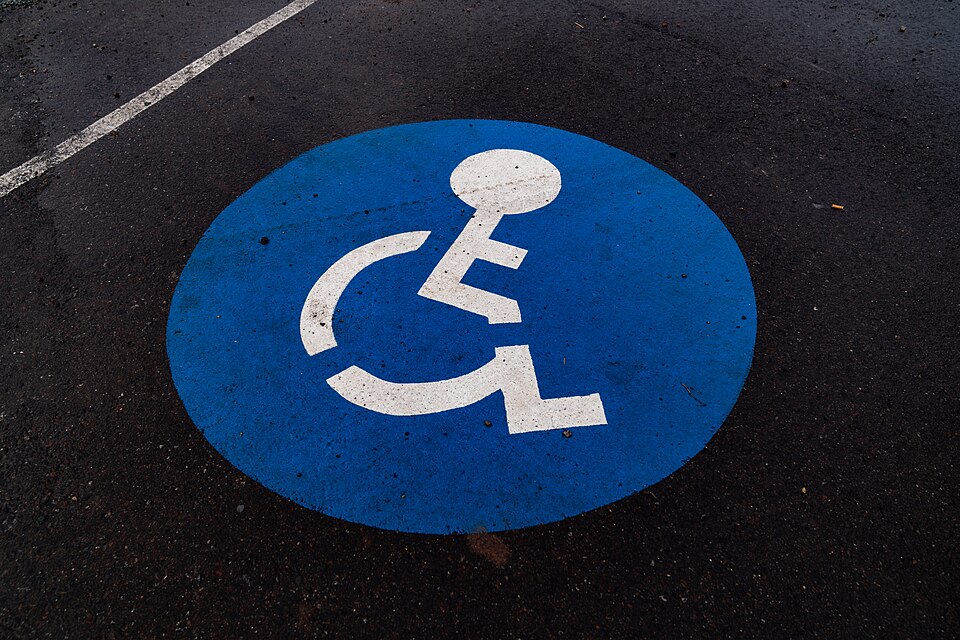
Photo: Tony Webster, CC BY-SA 2.0, via Wikimedia Commons
In the US, a medical condition or disability does not stop you getting a learner permit or driver’s license by itself. Each state decides, case by case, whether you can drive safely. You answer the health questions on your application honestly, your state’s medical review unit may ask your doctor for a report, and you may get a license with restrictions such as daylight-only driving or special equipment. There is no single national rule for regular (non-commercial) licenses, so the rules below are always state rules.
How medical review works in US states
- You tell the DMV. Permit and license applications ask health questions, usually about seizures, loss of consciousness, vision and conditions that affect control of a vehicle. Answer them truthfully: the form you sign is a statement to the state, and the DMV can act later if it learns of a condition you left out.
- The DMV asks for a medical report. If you answer “yes”, or a report about you reaches the DMV, a medical review unit sends a form for your doctor, eye doctor or specialist to complete. California, for example, uses the Driver Medical Evaluation (DS 326) and, for vision, the Report of Vision Examination (DL 62).
- A decision is made. Possible outcomes include no action, a license with conditions, a re-examination (vision, knowledge or driving test), suspension or denial. California lists no action, medical probation, suspension or revocation for lapse of consciousness disorders.
- You can ask for a review. States give you a way to challenge a decision, usually a hearing. Your notice letter explains how and by when.
Many states use a medical advisory board of doctors to advise on harder cases. Whether your state has one, and how it works, varies: check with your state DMV’s medical review unit. Oregon, for example, uses a Medical Determination Officer to decide whether a driver is medically eligible to test.
Does your doctor have to report you to the DMV?
In most states, no: reporting is voluntary. A 2024 study in JAMA Network Open found six states with a mandatory physician reporting duty: California, Delaware, Nevada, New Jersey, Oregon and Pennsylvania. Delaware ended its mandatory reporting in August 2024, per the July 2026 Delaware Driver Manual, and now encourages voluntary reports. The conditions covered differ. California’s duty covers disorders characterized by lapses of consciousness, and Oregon’s covers severe and uncontrollable impairments. See does your doctor have to report you to the DMV?, plus the state guides for California, Oregon and Pennsylvania.
Guides by condition
| Condition or need | What to read |
|---|---|
| Epilepsy and seizures | Seizure-free periods by state |
| Diabetes and insulin | Diabetes and your driver’s license |
| Deaf or hard of hearing | Deaf and hard of hearing drivers |
| Medicines, prescribed or bought over the counter | Prescription and OTC medicines and the law and drugged driving and cannabis |
| Physical disability, adapted cars | Learning to drive with a disability |
| Reading, hearing or anxiety at the permit test | Oral, audio and other test accommodations |
| Disabled parking | Placards for new drivers, with state guides for California, Florida, New York and Texas |
| License restrictions on your card | Restriction codes explained |
Vision, low vision and bioptic telescopes
Every state screens your eyesight at the permit stage. Most set 20/40 for a license with no vision restriction, and many allow lower acuity with restrictions. Start with the vision test by state, then the regional guides:
Some people with low vision drive with a bioptic telescope, a small telescope mounted on glasses. Most states that allow it do not let you use the telescope to pass the screening, and they add training, a road test and restrictions. The bioptic driving laws by state table covers all 50 states and DC. State guides:
- California, Illinois, Indiana, Kentucky, Louisiana
- Maryland, Massachusetts, Michigan, New York, North Carolina
- Ohio, Pennsylvania, Tennessee, Virginia
Learner permits and teen drivers
- The same medical standards apply to a permit as to a full license. If a condition needs review, it is usually cheaper and quicker to sort it out before your permit appointment.
- Bring any form your DMV sent, fully completed by your doctor or eye doctor, plus your glasses or contacts.
- Some reporting duties start young: the California and Oregon duties apply from age 14, according to the 2024 study above.
- If you are unsure whether a condition affects driving, ask your doctor. This guide explains licensing rules only, not medical questions.
Is there a licensing rule for pregnancy?
No US state has a licensing rule about pregnancy, and you do not need to tell the DMV. You can take your permit and road tests while pregnant. Seat belt laws still apply. Ask your doctor or midwife about anything health-related.
Commercial licenses are different
Commercial driver’s licenses (CDLs) for interstate driving follow federal medical standards set by the Federal Motor Carrier Safety Administration, with a separate medical certificate. This guide covers regular car licenses only.
Want to practise the eyesight check? Our sister site Driving Eyesight Test has a free US letter chart on drivingeyesighttest.com. It is a practice screen, not an eye test.
Sources
- California DMV, “Lapse of Consciousness Disorders” (dmv.ca.gov)
- California DMV, “Report of Vision Examination (DL 62), rev. 8/2024” (dmv.ca.gov)
- Oregon DMV, “At-Risk Driver Program for Medical Professionals” (oregon.gov)
- Tran and Lee, “Reporting Requirements, Confidentiality, and Legal Immunity for Physicians Who Report Medically Impaired Drivers”, JAMA Network Open, 2024 (jamanetwork.com)
- Pennsylvania DMV, “Driving with Bioptics” (pa.gov)
- Delaware DMV, “Delaware Driver Manual” (July 2026) (dmv.de.gov)