
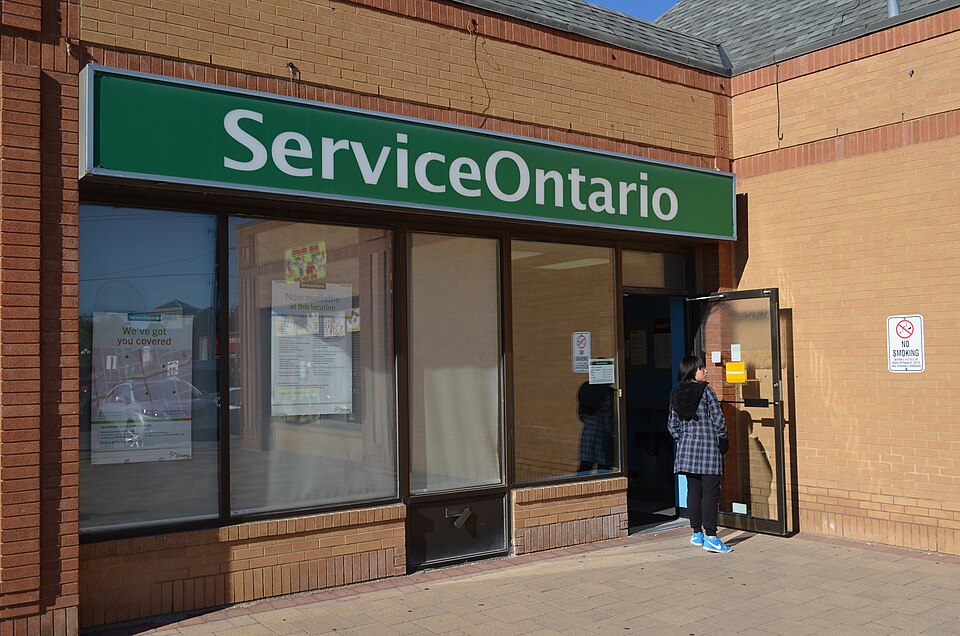
Photo: Raysonho, CC0, via Wikimedia Commons
If you move to a new Canadian province, you can usually swap your licence from another province or territory without tests. You have a limited time to do it: 60 days in Ontario, 90 in British Columbia and Saskatchewan. A licence from outside Canada can be exchanged without testing only if your new province has an agreement with the country that issued it. Otherwise you take tests, and you may get credit for past experience. This guide covers the rules for new residents, country by country where governments publish them.
Key facts
- A licence from another Canadian province or territory is usually exchanged for the equivalent class without a road test. Ontario has exchange agreements with every province and territory.
- Grace periods for new residents: Ontario 60 days, BC 90, Saskatchewan 90, Prince Edward Island up to 120, Quebec six consecutive months, Yukon 120, Northwest Territories 30, Nunavut 30.
- Since 1 July 2026, Ontario lets applicants from countries without an exchange agreement claim up to 12 months of foreign driving experience.
- Your old licence is surrendered when you get the new one. You cannot hold two valid licences.
How long can you drive on an out-of-province licence?
| Moving to | Grace period for new residents |
|---|---|
| Ontario | 60 days |
| Quebec | Up to six consecutive months (passenger vehicle, motorcycle, moped or scooter only), if your licence is valid |
| British Columbia | 90 days. ICBC advises applying well within that time. |
| Saskatchewan | 90 days |
| Prince Edward Island | Up to 120 days, if you are 16 or older and not prohibited from driving anywhere |
| Yukon | 120 days. A licence from elsewhere in Canada exchanges for the same class without testing, vision screening applies to everyone, and driving experience elsewhere may be credited with proof (Yukon Driver’s Basic Handbook, pp. 143 to 145) |
| Northwest Territories | 30 days. Canadians from other jurisdictions staying more than 90 days must get an NWT licence (students at NWT institutions are exempt). |
| Nunavut | 30 days. An outside licence that expired more than a year ago means re-examination. Temporary permits are not issued (Nunavut Driver’s Manual, p. 10) |
| Other provinces and territories | Check with the licensing office before your move |
Moving between provinces: Canadian licences
Your class carries over. What changes is how your graduated licensing stage is treated.
- Ontario: you get a full G if you hold the equivalent class. With under two years’ experience, you may get credit and enter Level Two (G2). You can take the Level Two road test once you reach two years’ total experience.
- British Columbia: for a full Class 5 you must prove you have held a non-learner licence for at least 24 months (under 25) or 12 months (25 and older). With less experience you get a Class 7 (N). If you hold only a learner’s licence from another province, you start with a BC Class 7L.
- Saskatchewan: a valid licence, or one expired less than five years ago, from another province or territory exchanges without tests. Once your Saskatchewan licence is validated, your old one is no longer valid.
- Prince Edward Island: licences from other provinces and territories, valid or expired less than five years ago, exchange without written, vision or road tests. Former Nova Scotia and New Brunswick residents with a valid Class 5 exchange at no charge. Only valid learner permits from Atlantic Canada exchange directly. Learners from elsewhere in Canada must pass the written and vision tests first.
- Northwest Territories: licences from elsewhere in Canada and the United States are accepted as the same class without testing.
- Quebec: licences from another province or territory, valid or expired less than three years ago, exchange without a driving course. Some cases need proficiency exams.
Exchanging a licence from outside Canada
Each province keeps its own list of countries it has exchange agreements with. These are the lists the official handbooks publish:
| Province | Countries with exchange agreements (as published) |
|---|---|
| Ontario | United States, Australia, Austria, Belgium, Croatia, Denmark, France, Germany, Great Britain, Hungary, Ireland, Isle of Man, Japan, Kosovo, New Zealand, Northern Ireland, Republic of Korea, Switzerland, Taiwan, Ukraine; also Canadian Forces Europe |
| British Columbia | Usually same-day exchange for licences from the United States, Australia, Austria, the Netherlands, France, Germany, Japan, New Zealand, South Korea, Switzerland and the United Kingdom |
| Saskatchewan | US licences may be honoured. Exchange for licences from Germany, Switzerland, South Korea, the United Kingdom, Ireland, Isle of Man, Australia, Austria, Belgium, France, Japan, Jersey, the Netherlands, New Zealand, Ukraine and Taiwan. Licences from other countries may also be accepted. |
| Northwest Territories | United States; Class 5 and 6 from the Isle of Man; Class 5 from Germany |
| Quebec | The United States and countries with an agreement with Quebec (the SAAQ keeps the current list) |
| Prince Edward Island | Most foreign licences cannot be exchanged. You pass the written, vision and road tests. International driving permits are not proof of licensing. |
Agreement lists change. Before you visit a licensing office, check the current list with your new province.
Ontario’s foreign experience rule from 1 July 2026
If your licence is from a country without an Ontario exchange agreement:
- You can claim up to 12 months of driving experience from the last three years. You need your original, valid foreign licence.
- With 12 months credited: you can take the G2 road test right away. You then wait at least 12 months before the G road test.
- With 6 months credited: you hold a G1 for another 6 months (12 in total) before the G2 road test. An approved beginner driver education course cuts the total to 8 months.
- If your licence was issued less than 6 months before you apply but you claim more experience, you need an authentication letter. It must come from your embassy, consulate or licensing agency, be in English or French, and be dated within the last 6 months.
More: new to Ontario: switching your licence.
Quebec: countries without an agreement
If you have held your licence for at least one year, you may still be able to exchange it, but you must pass the SAAQ knowledge and road tests first. Depending on the experience the SAAQ recognizes, you then get a probationary or regular licence. If you fail the road test, you can no longer drive on your foreign licence. If your licence expired three or more years ago, you take the driving course and start graduated licensing. Details: exchanging a foreign licence in Quebec.
Saskatchewan: experience can waive the learner period
SGI may waive the nine-month learning period and the driver training requirement if you prove past experience. You need a valid licence written in English or French, or one in another language with an acceptable translation, such as an International Driving Permit.
What to bring
- your current licence, which you will surrender
- proof of identity and residency. Applicants arriving from outside Canada need immigration documents (the Northwest Territories and Prince Edward Island say this specifically).
- for Ontario experience credit: your original foreign licence and, if needed, an authentication letter
- a driving record from your previous jurisdiction where asked (Saskatchewan requires one for honoured countries)
Province guides: moving to BC and the national overview, learning to drive in Canada.
Common questions
Do I have to retake my road test if I move from Alberta to Ontario?
No. Ontario has an exchange agreement with every province and territory. If you hold a full licence, you get a G. If you hold under two years’ experience, you may get credit into G2.
Can I use an International Driving Permit instead of exchanging?
Not if you live here. International Driving Permits are for non-residents (the NWT manual allows them for up to 12 months for non-residents). As a new resident, you must switch within your province’s grace period. Prince Edward Island says outright that international licences are not proof of previous licensing.
My country is not on the list. Do I start as a learner?
Usually you must pass the knowledge and road tests, but you may not have to repeat the full learner period. Ontario now credits up to 12 months of foreign experience. Saskatchewan may waive the nine-month learner period. Quebec issues a probationary or regular licence based on the experience it recognizes.
Can I exchange an Ontario G1 or BC L in another province?
It depends. BC issues a Class 7L to holders of an out-of-province learner’s licence. Prince Edward Island exchanges only Atlantic Canada learner permits directly. Learners from other provinces pass the written and vision tests first, and may have to do driver education or the Novice Driver Course.
Can I keep my old licence as a backup?
No. Your old licence is surrendered or becomes invalid. The Northwest Territories says it is illegal to hold more than one valid licence.
Does experience from a US licence count?
Yes. Ontario, the Northwest Territories, British Columbia and Quebec treat US licences as exchangeable, and Saskatchewan says US licences may be honoured.
Sources
- Government of Ontario, “The Official MTO Driver’s Handbook: Getting your driver’s licence” (ontario.ca)
- ICBC, “Learn to Drive Smart, Chapter 9: Your licence” (icbc.com)
- SGI, “Saskatchewan Driver’s Handbook”, section 2 (sgi.sk.ca)
- Government of Prince Edward Island, “Prince Edward Island Driver’s Handbook”, Chapter 1 (princeedwardisland.ca)
- Government of the Northwest Territories, “NWT Driver’s Manual”, Chapter 1 (inf.gov.nt.ca)
- Government of Yukon, “Driver’s Basic Handbook” (yukon.ca)
- Government of Nunavut, “Nunavut Driver’s Manual” (gov.nu.ca)
- SAAQ, “Canadian or Foreign Driver’s Licence” and “Your driver’s licence was issued in a jurisdiction that is not covered by an agreement” (saaq.gouv.qc.ca)