
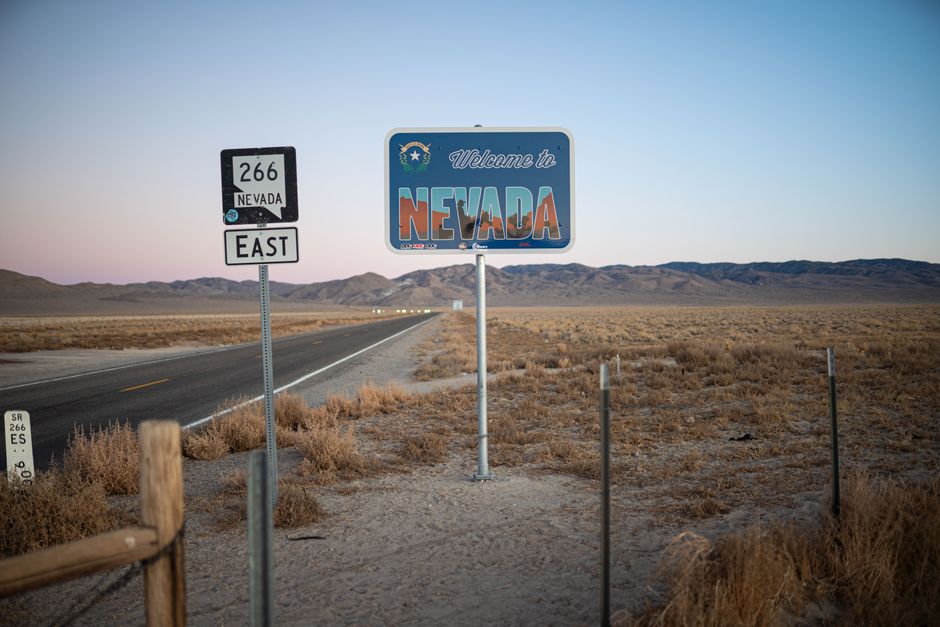
Photo: Stephan Müller, Pexels
The Nevada DMV knowledge test has 25 multiple-choice questions, and you need 20 correct (80%) to pass. This free practice test gives you 30 original questions: one full 25-question mock in the real format, plus 5 extra questions on the Nevada numbers learners most often miss. The questions are unofficial. They are written from the Nevada Driver’s Handbook (DMV 700) and are not the DMV’s own questions.
Nevada permit test: key facts
- 25 questions, multiple choice. Pass mark: 20 correct (80%), so you can miss 5.
- Online through KnowTo Drive Nevada (60-minute limit) or at a DMV office (no time limit).
- Fail? You can retake it the next day. Each retest costs $10 (as of November 2026).
- Minimum age for an instruction permit: 15½.
Booking, fees and documents are in the Nevada DMV permit test guide.
How to use this Nevada practice test
- Cover the answers and do questions 1 to 25 in one sitting. Give yourself 60 minutes, the same as the online test.
- Score yourself with the table after question 25.
- Do the 5 bonus questions, then reread the handbook chapter named in each explanation you got wrong.
Mock test: 25 questions in the Nevada format
Signs, signals and markings
1. A sign shaped like a pennant (a sideways triangle) on the left side of the road means:
- A. Railroad crossing ahead
- B. No passing zone
- C. School zone
- D. Yield to oncoming traffic
Answer: B. The pennant is used only for no-passing zones. Handbook topic: traffic signs.
2. A round yellow sign with an X and two Rs warns you of:
- A. A hospital
- B. A road closure
- C. A railroad crossing ahead
- D. A rest area
Answer: C. The circle shape is the advance railroad warning. The X-shaped crossbuck marks the crossing itself. Handbook topic: traffic signs.
3. An upside-down triangle sign tells you to:
- A. Yield the right of way
- B. Stop in every case
- C. Keep right of a divider
- D. Enter a one-way street
Answer: A. Slow down and stop if needed to let traffic and pedestrians go first. Handbook topic: traffic signs.
4. A flashing red traffic light means the same as:
- A. A yield sign
- B. A green light with caution
- C. A school zone sign
- D. A stop sign
Answer: D. Come to a full stop, then go only when the road is clear and you have the right of way. Handbook topic: traffic signals.
5. In Nevada, where no sign prohibits it, you may turn right on a red light:
- A. Without stopping if no cars are coming
- B. After a complete stop, signaling and waiting until traffic and pedestrians are clear
- C. Only when a green arrow is showing
- D. Never
Answer: B. Stop fully, signal and turn only when it is safe. Handbook topic: traffic signals.
6. When may you turn left on a red light in Nevada?
- A. Never
- B. From any street after a full stop
- C. From a one-way street onto another one-way street with traffic moving left, after a full stop
- D. Only at night
Answer: C. This is the only red-light left turn the handbook allows, and you must still stop and yield. Handbook topic: traffic signals.
7. A red curb in Nevada means:
- A. No stopping, standing or parking
- B. Parking for a limited time
- C. A short stop to load passengers
- D. Disabled parking
Answer: A. White is a short passenger or mail stop, green is limited-time parking, yellow is loading and blue is disabled parking. Handbook topic: colored curb markings.
Right of way, turns and lanes
8. You reach a four-way stop after another car is already stopped there. Who goes first?
- A. You, if you are going straight
- B. Whichever driver is larger
- C. The driver on the left
- D. The car that arrived first
Answer: D. The driver who reaches the intersection first goes first, after stopping completely. Handbook topic: right of way.
9. How far may you drive in a center two-way left-turn lane before turning left off the highway in Nevada?
- A. No more than 50 feet
- B. No more than 200 feet
- C. No more than 500 feet
- D. Any distance
Answer: B. 200 feet before a left turn, and no more than 50 feet after turning onto the highway before you merge. The lane is never for passing. Handbook topic: center turn lanes.
10. On a city street, you should signal a turn at least:
- A. 100 feet ahead
- B. 50 feet ahead
- C. 300 feet ahead
- D. As you begin turning
Answer: A. 100 feet (about 10 car lengths) in town and 300 feet on open highways. Handbook topic: signaling and turning.
11. When you enter a roundabout, you must:
- A. Stop inside the circle to let others in
- B. Yield to traffic already circulating, then travel counterclockwise
- C. Travel clockwise
- D. Always use the left lane
Answer: B. Traffic in the roundabout has the right of way, and all traffic moves counterclockwise. Signal right as you exit. Handbook topic: roundabouts.
12. A police car behind you turns on its siren and red lights. You should:
- A. Speed up to clear the road
- B. Stop where you are, even in an intersection
- C. Drive to the right edge of the road, clear of any intersection, and stop until it passes
- D. Move into the left lane
Answer: C. Pull right and stop, but never stop in an intersection. Handbook topic: right of way, emergency vehicles.
Speed, space and passing
13. What is the usual speed limit in a Nevada business or residential district?
- A. 15 mph
- B. 25 mph
- C. 35 mph
- D. 45 mph
Answer: B. The handbook lists 25 mph for business and residential areas. School zones are 15 or 25 mph. Handbook topic: speed limits.
14. The handbook’s minimum following distance behind the vehicle ahead is:
- A. 1 second
- B. 1 car length
- C. 2 seconds
- D. 10 feet
Answer: C. Two seconds is the minimum; most instructors recommend up to four. Count from a fixed point such as a sign. Handbook topic: following distance.
15. You are passing a cyclist on a Nevada road with one lane each way. You must:
- A. Honk and pass closely
- B. Drive in the bike lane
- C. Pass only at night
- D. Move into the left lane if one is available, or leave at least 3 feet
Answer: D. Leave at least three feet, or use the next lane, and do not move back until you are safely clear. Handbook topic: sharing the road, bicycles.
16. At night you are driving on high beams. You must switch to low beams when an oncoming vehicle is within:
- A. 100 feet
- B. 300 feet
- C. 500 feet
- D. 1,000 feet
Answer: C. Dip at least 500 feet before oncoming vehicles and 300 feet before a vehicle you are following. Handbook topic: night driving.
Sharing the road
17. A school bus stops ahead of you on a two-lane road with its red lights flashing. You must:
- A. Stop and stay stopped until the driver turns off the flashing red lights
- B. Slow to 15 mph and pass
- C. Stop only if you see children
- D. Pass on the right
Answer: A. Nevada law (NRS 484B.353) requires drivers to stop for a school bus displaying a flashing red signal. Handbook topic: school buses.
18. On a divided highway, a school bus on the other side of the median stops with red lights flashing. You:
- A. Must stop as well
- B. Must stop only if you are traveling in the same direction as the bus
- C. Must pull onto the shoulder
- D. Must stop and wait for a crossing guard
Answer: B. On divided highways only same-direction traffic must stop. Bus drivers can report violators to the school district and the DMV. Handbook topic: school buses.
19. You approach a tow truck stopped with its lights flashing on the shoulder. Nevada law requires you to:
- A. Keep your speed and lane
- B. Stop behind it
- C. Flash your high beams
- D. Slow below the posted limit, be ready to stop and, if possible, use a lane not next to it
Answer: D. This applies to police, tow trucks, NDOT vehicles, garbage trucks and others (NRS 484B.607). Handbook topic: approaching a stopped emergency vehicle.
Alcohol and implied consent
20. A Nevada driver under 21 has a test result of at least 0.02% alcohol but less than 0.08%. The license may be:
- A. Revoked for 185 days
- B. Left alone because it is under 0.08%
- C. Given a warning only
- D. Suspended for 7 days
Answer: A. The handbook lists revocation for 185 days for 0.02% to under 0.08%. See Nevada demerit points and suspensions. Handbook topic: teen drivers and alcohol.
21. Under Nevada’s Implied Consent Law, a first refusal to take the blood, breath or urine test means:
- A. A fine only
- B. Revocation, with no license, permit or privilege to drive for 1 year
- C. A 30-day suspension
- D. Nothing until a court case
Answer: B. One year for a first refusal, three years if your privilege was revoked for refusal in the prior seven years (NRS 484C.220). Handbook topic: implied consent.
Nevada permit and teen license rules
22. Who may supervise a Nevada instruction permit holder?
- A. Any licensed driver aged 18 or older
- B. A licensed driver aged 21 or older with at least 1 year of licensed experience, seated beside you
- C. Any adult in the back seat
- D. A licensed sibling aged 16 or older
Answer: B. The supervisor sits next to you and must be 21+ with a year of licensed driving. Handbook topic: instruction permits.
23. Nevada drivers under 18 may not drive between:
- A. 9 p.m. and 6 a.m.
- B. Midnight and 5 a.m.
- C. 11 p.m. and 5 a.m.
- D. 10 p.m. and 5 a.m., unless going to or from a scheduled event
Answer: D. The curfew lasts until 18. See Nevada teen curfew and passenger rules. Handbook topic: teen drivers.
24. Which phone use is legal for an adult Nevada driver?
- A. Texting at a red light
- B. A hand-held call on a quiet road
- C. A voice call using a hands-free accessory
- D. Reading email in traffic
Answer: C. Hand-held calls and all texting, messaging and internet use are banned. You may report an emergency if stopping would be unsafe. Handbook topic: cell phones and texting.
Emergencies and conditions
25. You are driving on packed snow or ice. What does the handbook tell you to do?
- A. Brake hard to test traction
- B. Use cruise control to keep speed steady
- C. Follow closely to use the tracks of the car ahead
- D. Reduce speed, keep a safe distance and avoid sudden changes in speed or direction
Answer: D. Stopping distances on ice are far longer, and no speed is completely safe. Handbook topic: winter driving.
Score your Nevada mock test
| Correct out of 25 | Result on the real 80% standard |
|---|---|
| 23 to 25 | Ready to book |
| 20 to 22 | A pass, but close. Review every miss. |
| Under 20 | A fail. Reread the handbook chapters behind your misses and try again in a few days. |
Bonus: 5 Nevada numbers worth memorizing
26. When you stop for a train at a crossing, stay at least how far from the tracks?
- A. 5 feet
- B. 10 feet
- C. 15 feet
- D. 50 feet
Answer: C. At least 15 feet. Handbook topic: railroad crossings.
27. Where parallel parking is allowed, you may not park within how many feet of a fire hydrant?
- A. 15 feet
- B. 10 feet
- C. 30 feet
- D. 5 feet
Answer: A. 15 feet for parallel parking, 20 feet where angle parking is allowed. You also may not park within 20 feet of a crosswalk. Handbook topic: parking.
28. Headlights are required in Nevada whenever people or vehicles cannot be clearly seen at a distance of:
- A. 200 feet
- B. 500 feet
- C. 1 mile
- D. 1,000 feet
Answer: D. Also from half an hour after sunset to half an hour before sunrise, and whenever there is not enough light. Handbook topic: night driving.
29. How many demerit points in a 12-month period lead to a Nevada license suspension?
- A. 6
- B. 8
- C. 12
- D. 15
Answer: C. 12 or more. A DMV-approved traffic safety course can remove up to 3 points, once in 12 months. Handbook topic: demerit points.
30. Children must ride in an approved child restraint in Nevada if they are under age 6 and also:
- A. Less than 57 inches tall
- B. Under 40 pounds only
- C. Seated in the front
- D. Riding more than 10 miles
Answer: A. Under 6 and under 57 inches tall (NRS 484B.157). Everyone 6 and older must wear a belt. Handbook topic: buckle up.
Topics that cost Nevada learners the most marks
| Topic | The rule to know |
|---|---|
| Curb colors | Red no stopping, white short stop, green time limit, yellow loading, blue disabled |
| Center turn lane | 200 feet before a left turn, 50 feet after |
| Signaling | 100 feet in town, 300 feet on highways |
| Low beams | 500 feet oncoming, 300 feet following |
| Teen limits | 10 p.m. to 5 a.m. curfew; no passengers under 18 (except immediate family) for the first 6 months |
| Under 21 alcohol | 0.02% or more can mean revocation for 185 days |
After the permit you need 50 hours of supervised practice, 10 at night: see Nevada driver’s ed and the 50 hour log.
Common questions
Are these the real Nevada DMV test questions?
No. They are original, unofficial practice questions written from the Nevada Driver’s Handbook. The DMV also publishes its own practice quiz in the same 25-question format.
How many questions can I miss on the Nevada permit test?
5. You need 20 of 25 correct.
Is the Nevada permit test hard?
Most misses come from Nevada-specific numbers (curb colors, feet and points) rather than common sense. Learn the table above and you remove most of the risk.
Can I take the Nevada permit test on my phone?
No. The online test needs a desktop or laptop with a front-facing camera. Touch-screen devices are not supported.
What happens if I fail?
You can retest the next day, and each retest costs $10 (as of November 2026).
Where can I find practice tests for other states?
See US permit practice tests for every state. The full Nevada route is in learning to drive in Nevada.
Sources
- Nevada Department of Motor Vehicles, “Nevada Driver’s Handbook, DMV 700” (dmv.nv.gov)
- Nevada Department of Motor Vehicles, “Written Knowledge Test” (dmv.nv.gov)
- Nevada Department of Motor Vehicles, “Practice Nevada Class C Driver’s License Quiz” (dmv.nv.gov)
- Nevada Department of Motor Vehicles, “Driver License/ID Fees and Exemptions” (dmv.nv.gov)