Category: Nevada

  • Moving to Nevada: Transferring Your License and the DAC

    Moving to Nevada: Transferring Your License and the DAC

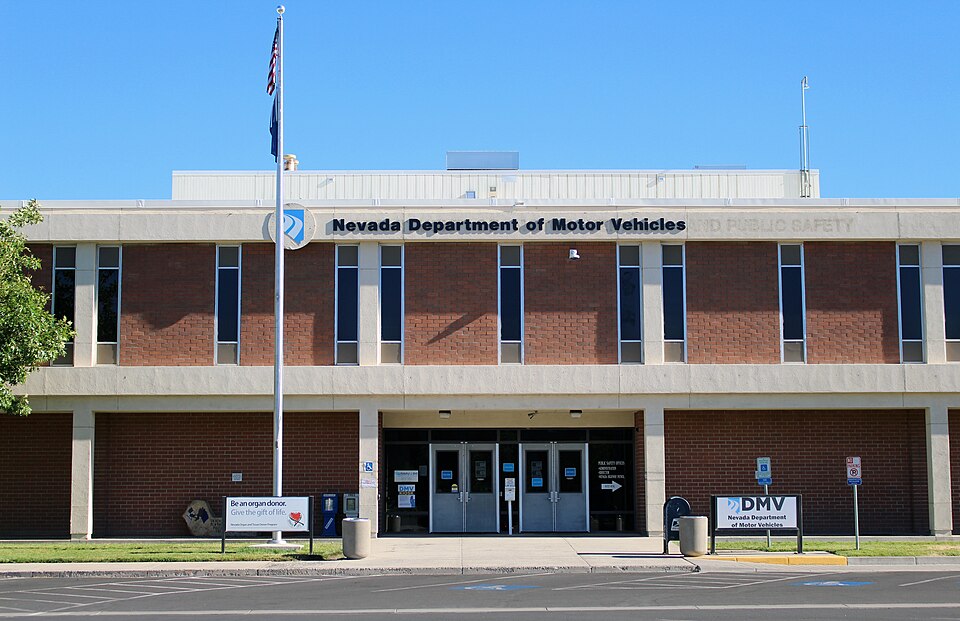
    Photo: Masood Aslami, Pexels

    If you move to Nevada, you must apply for a Nevada driver’s license within 30 days of becoming a resident, and register your vehicle within 30 days or when you get the license, whichever comes first. Drivers 21 or older with a valid US, US territory or Canadian license usually need only a vision test. If you cannot meet the identity or Social Security rules for a standard license, a Driver Authorization Card (DAC) lets you drive legally. This guide covers documents, tests, the DAC and vehicle registration.

    Which tests do new Nevada residents take?

    Your situation Tests
    Licensed in the US, a US territory or Canada, age 21 or older Vision
    Licensed in the US, a US territory or Canada, under 21 Vision and knowledge
    Licensed in the US but have lost the actual license Vision and knowledge
    3 or more moving violations in the last 4 years Vision and knowledge
    Any suspension, revocation, cancellation or disqualification in the last 4 years Vision and knowledge
    DUI conviction in the past 7 years Vision and knowledge
    Restrictions that need your driving skills reevaluated Vision, knowledge and skills
    Licensed in a foreign country other than Canada, or never licensed Vision, knowledge and skills

    Taiwan nationals may be granted a skills test waiver. If your old license expired or was surrendered more than 1 year ago you take the knowledge test, and more than 4 years ago the skills test as well. Every application is checked against the national Problem Driver Pointer System: a license suspended or revoked in another state must be cleared before Nevada will license you.

    Test details: the Nevada knowledge test and the Nevada road test.

    Documents to transfer your license to Nevada

    • Proof of identity (one): for example a state-issued birth certificate, a US passport or passport card, a Real ID-marked license or ID from another state, a Certificate of Naturalization or Citizenship, or a Permanent Resident Card.
    • Proof of every name change, if your name differs: marriage certificate, divorce decree that references the name change, adoption record or court order.
    • Proof of Social Security number (one): Social Security card, W-2 or 1099 with the full number, or a printed pay stub with your full legal name.
    • Two proofs of Nevada home address, such as a lease, utility bill or bank statement dated within 60 days. No PO boxes.
    • Your current out-of-state license, permit or ID. You surrender it; it is voided and handed back.
    • DMV-approved translations of any document not in English.

    Not accepted as proof of name and age: hospital birth certificates, foreign birth certificates, out-of-state licenses without a Real ID marking, border crossing cards and consular ID cards. A Nevada resident may hold only one license or ID card. See REAL ID documents.

    Fees for new residents (as of November 2026)

    Item Fee
    Standard license (8 years, under 65) $41.50
    License, age 65 and over (4 years) $17.50
    Out-of-state transfer with a motorcycle class or endorsement $46.50
    Driver Authorization Card (4 years) $22.50
    Testing fee, if tests are needed $25
    Each retest $10

    Who does not need a Nevada license?

    • Active-duty members of the US Armed Forces with a valid home-state license (and, per the DMV New Resident Guide, their spouses and dependents).
    • Out-of-state students, tourists and seasonal residents, if they are at least 16, hold a valid home-state license and follow Nevada traffic and insurance laws.

    Visitors cannot get a Nevada license. Foreign nationals may or may not be eligible for a license or a DAC depending on immigration status. See driving in the US on a foreign license.

    What is a Nevada Driver Authorization Card?

    A DAC lets eligible Nevada residents drive legally when they cannot meet the identity requirements for a standard license or ID. You do not need a Social Security number.

    A DAC lets you A DAC cannot be used for
    Drive on Nevada public roads ID to get benefits, licenses or services
    Register and insure a vehicle in Nevada Boarding aircraft or other federal purposes
    Entering federal buildings that require ID

    The card says Not Valid for ID at the top. The information you give will not be released or used to determine immigration status.

    DAC identity documents: three ways to qualify

    1. One standard identity document, from the same list as a license.
    2. Or one of: US military ID, US military dependent ID, DD-214 discharge document, or a Pyramid Lake Paiute Tribe ID card (tribe members). The handbook also lists a US Certificate of Degree of Indian Blood.
    3. Or two of: a license, ID or DAC from another US state, DC or US territory; a foreign passport; a foreign birth certificate; a Mexican Federal Electoral Card (handbook); a consular ID card; or another foreign government document the DMV accepts.

    You also need two proofs of Nevada address. All documents must be originals (no photocopies or scans) and unexpired if they carry an expiry date. Foreign-language documents need a full typed translation from a DMV-approved translator, including the translator’s signed certification and DMV translator number. Summaries are not accepted.

    DAC tests, renewal and rules

    • Vision test for everyone; 20/40 is the minimum for full driving privileges.
    • Knowledge test for everyone, in English or Spanish, online or at the DMV.
    • Drive test if you are not currently licensed in the US. First-time applicants for any US license take both the knowledge and drive tests.
    • Valid for 4 years, expiring on your birthday. Renew in person; a reminder is mailed 30 days before expiry.
    • Carry the DAC whenever you drive. All license and permit rules apply to DAC holders, including teen rules.
    • Without a Social Security number you can still use MyDMV online for a duplicate DAC or an address change.

    Registering your vehicle as a new Nevada resident

    Register within 30 days of becoming a resident or when you get your Nevada license, whichever is earlier. Bring:

    • your most recent registration certificate and your out-of-state plates
    • a Nevada Evidence of Insurance card (out-of-state insurance is not accepted)
    • a smog check (Emissions Vehicle Inspection Report) if required, which applies to most gasoline vehicles of model year 1968 and newer in parts of Clark and Washoe counties
    • a VIN inspection certificate, done at a DMV office, an authorized business or by a law enforcement officer
    • your title, unless a lender holds it. You can keep your out-of-state title if ownership is not changing.
    • your current odometer reading

    The name must match on the registration, title and insurance. Nevada minimum liability cover is $25,000 per person injured, $50,000 for two or more people and $20,000 for property damage. At the Carson City, Henderson, Las Vegas and Reno offices, drive to the VIN inspection station outside the main building first. More on cover: car insurance for new drivers.

    Common questions

    How long do I have to get a Nevada license after moving?

    30 days after becoming a resident.

    Do I have to retake the driving test in Nevada?

    Not usually, if you are 21 or older with a valid US, US territory or Canadian license and a clean recent record. Under 21, expect a knowledge test.

    Can I get a Nevada license without a Social Security number?

    You need one for a license if one has been issued to you. If you cannot meet the identity requirements, apply for a Driver Authorization Card, which does not need a Social Security number.

    Can I fly with a Nevada Driver Authorization Card?

    No. It is not valid for federal purposes such as boarding aircraft.

    Do I keep my old license?

    You surrender it. It is voided and returned to you.

    I moved to Nevada as a teen with a permit. What now?

    Nevada’s under-18 rules apply once you are a resident: the DMV 301 form, a parent’s co-signature, driver education and the logged hours. Ask the DMV how your existing permit time counts, and see Nevada driver’s ed and the 50 hour log.

    Back to the main guide: learning to drive in Nevada. General advice on moving states: transferring your license to a new state.

    Sources

    • Nevada Department of Motor Vehicles, “Nevada Driver’s Handbook, DMV 700 (March 2024)”, Chapters 1, 8 and 12 (dmv.nv.gov)
    • Nevada Department of Motor Vehicles, “New Resident Guide” (dmv.nv.gov)
    • Nevada Department of Motor Vehicles, “First Nevada License, ID or DAC” (dmv.nv.gov)
    • Nevada Department of Motor Vehicles, “Driver Authorization Cards” (dmv.nv.gov)
    • Nevada Department of Motor Vehicles, “Driver License/ID Fees and Exemptions” (dmv.nv.gov)
  • Nevada Demerit Points and License Suspensions for New Drivers

    Nevada Demerit Points and License Suspensions for New Drivers

    Photo: Giorgio Caso, Pexels

    Nevada gives demerit points for traffic convictions, and 12 or more points in any 12-month period means an automatic 6-month license suspension. Drivers under 21 also lose their license for 185 days if a test shows 0.02% blood alcohol or more, and minors can lose it for truancy, firearms, graffiti and alcohol or drug offenses that have nothing to do with driving. This explainer covers the points table, how to remove points, and every way a young Nevada driver can lose a license.

    Key facts (Nevada DMV, checked November 2026)

    • 12 or more points in 12 months: automatic 6-month suspension.
    • 3 to 11 points: a DMV-approved traffic safety course removes 3 points, once every 12 months.
    • Points expire 12 months after the conviction date, but the conviction stays on your record.
    • DUI and offenses causing serious injury or death carry no points; they lead straight to suspension or revocation.

    Nevada demerit points table

    Violation Points
    Reckless driving 8
    Careless driving 6
    Failure to give information or render aid at the scene of a crash 6
    Following too closely 4
    Failure to yield right-of-way 4
    Failure to yield to a pedestrian 4
    Disobeying a traffic signal or stop sign 4
    Speeding 41 mph or more over the limit 5
    Speeding 31 to 40 mph over 4
    Speeding 21 to 30 mph over 3
    Speeding 11 to 20 mph over 2
    Speeding 1 to 10 mph over 1
    Driving too fast for conditions (prima facie speed violation) 2
    Impeding traffic, driving too slowly 2
    Failure to dim headlights 2

    This is the partial list from the Nevada Driver’s Handbook. The DMV also lists hand-held phone use or texting (second and later offenses) and passing a school bus with flashing signals as point offenses. For every violation code and its points, sign in to MyDMV or see the DMV’s violation codes list. CDL holders can face extra points and penalties.

    How points work in Nevada

    1. You are convicted of a moving violation and the court notifies the DMV.
    2. The offense goes on your record with its points.
    3. At 3 or more points the DMV writes to you.
    4. At 12 or more within 12 months, your license is suspended for 6 months.

    Worked example

    A new driver is convicted of speeding 15 mph over the limit in March (2 points), following too closely in June (4 points) and failure to yield in September (4 points): 10 points, inside 12 months. One more stop-sign conviction (4 points) before the March points expire would take them to 14 and trigger a suspension. Taking a traffic safety course at 10 points would bring the total down to 7.

    Removing points with traffic school

    • Eligible with 3 to 11 points.
    • Removes up to 3 points, once in any 12-month period.
    • No credit if the course was part of a plea bargain with a court.
    • The school reports your completion to the DMV.

    Tickets in other states

    If you are a Nevada driver convicted in another state, the offense goes on your Nevada record, but out-of-state convictions do not add Nevada demerit points.

    How long violations stay on your Nevada record

    Most violations are reportable to your insurance company for 3 years. DUI convictions stay on your record for 7 years.

    DUI rules for young Nevada drivers

    Situation License penalty
    Under 21 with 0.02% to under 0.08% blood alcohol Revoked for 185 days (administrative)
    0.08% or more, or any detectable controlled substance (any age) Revoked for 185 days (administrative)
    Under 18, found by juvenile court to have driven under the influence 185 days
    Refusing a blood, breath or urine test Revoked; not eligible for 1 year (3 years if refused in the prior 7 years)
    First DUI conviction (criminal) Revoked for at least 185 days, plus a $400 to $1,000 fine and jail or community service

    Young first-time DUI offenders face the same penalties as drivers over 21. A driver under 18 found to have driven under the influence, or under 21 and convicted of DUI, must also undergo an alcohol or drug evaluation, and the judge may order treatment. Cannabis: driving with more than 2 nanograms per milliliter of marijuana in the blood (5 for marijuana metabolite) is unlawful. Background: zero tolerance laws, implied consent and DUI and drugged driving and cannabis.

    Non-driving offenses that suspend a minor’s Nevada license

    Under 18, you sign an affidavit that your license may be suspended, or its issue delayed, for these:

    Offense Suspension or delay
    Graffiti or defacing property Up to 2 years
    Criminal activity involving alcohol or a controlled substance Up to 2 years
    Using, possessing, selling or distributing a controlled substance Up to 2 years
    Buying, drinking or possessing alcohol Up to 2 years
    Firearm offense under NRS 202.300 Up to 1 year; 2 years for a second offense
    Habitual truancy, first offense 30 days to 6 months (or issue delayed 30 days)
    Habitual truancy, second or later 60 days to 1 year (or issue delayed 60 days)
    Street racing (unauthorized speed contest) 6 months to 2 years
    Trick driving display 6 months to 2 years

    After a truancy suspension you need a new DMV 301 school attendance form to reinstate.

    Other reasons for suspension or revocation in Nevada

    • Causing a collision with a pedestrian or cyclist
    • Failing to appear in court for a traffic ticket
    • An uninsured crash with more than $750 in damage (license and registration suspended)
    • Failing to keep insurance, including repeated lapses
    • Child support arrears

    An insurance lapse can also bring a reinstatement fee and fines starting at $250, up to $1,750, per vehicle, plus a possible SR-22 and a 30-day license suspension.

    Getting your Nevada license back

    Reinstatement is never automatic. You must reapply at a DMV office with your identity and Social Security documents, meet any other requirements (such as an SR-22) and pay the fees.

    Fee (as of November 2026) Amount
    Reinstatement, alcohol or controlled substance offense $120
    Victim impact fee, alcohol or controlled substance offense $35
    Reinstatement, any other offense $75

    You also pay the original license fee and any testing fees. A restricted license may be available once you have served half of the suspension or revocation, and DUI offenders may be reinstated straight away with an ignition interlock restriction and device. You can ask for a DMV administrative hearing whenever you lose your license.

    Common questions

    How many points before a suspension in Nevada?

    12 or more within 12 months.

    How long do points stay on a Nevada license?

    Points count for 12 months from the conviction date. The conviction itself stays on your record.

    Does a ticket on a permit count?

    Yes. The DMV can require retesting, cancel the permit or refuse renewal after violations. To take the road test you also need 6 months without moving violations or at-fault crashes.

    Can a teen lose their license for skipping school?

    Yes. A habitual truancy finding can suspend a minor’s license for 30 days to 6 months on a first offense.

    What is the alcohol limit for drivers under 21 in Nevada?

    0.02%. At or above it, your license is revoked for 185 days.

    I only have a Nevada ID card. Can I get points?

    Yes. Points go against your future driving privilege, and 12 or more in 12 months means reinstating before you can get a license.

    Back to the main guide: learning to drive in Nevada. Related: Nevada teen restrictions. How other states compare: points systems in the US.

    Sources

    • Nevada Department of Motor Vehicles, “Nevada Driver’s Handbook, DMV 700 (March 2024)”, Chapters 1, 8, 9, 10 and 11 (dmv.nv.gov)
    • Nevada Department of Motor Vehicles, “Demerit Point System” (dmv.nv.gov)
    • Nevada Department of Motor Vehicles, “Driver License/ID Fees and Exemptions” (dmv.nv.gov)
    • Nevada Department of Motor Vehicles, “Get Your Teen License” (dmv.nv.gov)
  • Nevada Driver’s Ed and the 50 Hour Driving Log (DLD-130)

    Nevada Driver’s Ed and the 50 Hour Driving Log (DLD-130)

    Photo: Quintin Soloviev, CC0, via Wikimedia Commons

    Nevada teens under 18 need two things before a driver’s license: a DMV-approved driver education course (30 hours of classroom or an approved online course) and at least 50 hours of supervised driving, 10 of them at night, logged on the RoadReady app or form DLD-130. If no course is offered within 30 miles of home and you cannot take one online, the practice requirement rises to 100 hours. Use this checklist to get both right first time.

    Nevada driver’s ed requirements: the three options

    Option Course Supervised driving
    Classroom 30 hours at a high school or DMV-licensed driving school 50 hours (40 day, 10 night)
    Online A DMV-approved online course 50 hours (40 day, 10 night)
    Driving experience only None. Only if no course is within 30 miles of home and you cannot access one online 100 hours (90 day, 10 night)
    • You can enroll from age 15½.
    • Driver ed is required for the license, not for the instruction permit.
    • Home-schooled students are not exempt.
    • Some private schools offer a DMV-approved option of 15 hours of classroom plus 5 hours behind the wheel.
    • The DMV licenses and monitors schools but does not set their schedules or prices.

    Proof of completion

    A professional driving school gives you a Certificate of Completion. A high school may give a certificate, report card or transcript. Bring it when you apply for the license, along with your log.

    Who can supervise your practice driving

    • A licensed driver aged 21 or older
    • With at least 1 year of driving experience
    • Seated next to you at all times

    Time with a professional driving instructor counts toward your hours.

    How to fill in the DLD-130 Beginning Driver Experience Log

    The DMV accepts only two logs: the RoadReady app or form DLD-130. Any other log is rejected. Even if you use the app, your parent or guardian must sign page 1 of the DLD-130.

    1. Use blue or black ink. No pencil and no colored gel pens.
    2. One session per line. Write the date, the start and end time with AM or PM, and the minutes driven.
    3. No military time. Write 8:00 pm, not 20:00. Logs in military time are not accepted.
    4. Use the right column. Column A is daytime driving, Column B is nighttime driving.
    5. Add it up in minutes. 50 hours is 3,000 minutes, including 600 minutes at night. The 100-hour route is 6,000 minutes, including 600 at night.
    6. Print extra sheets (page 2) when you run out of lines.
    7. Get the parent or guardian signature on page 1. Signatures must be originals, photocopies are not accepted, and nothing can be changed once it is signed.
    8. Finish it before test day. The log must be complete before you arrive for the drive test.

    Worked example

    Date Begin End Minutes Column
    01/17/23 6:00 am 8:00 am 120 A (day)
    01/17/23 8:00 pm 9:00 pm 60 B (night)

    This is the sample on the form itself.

    RoadReady app or paper?

    • RoadReady app: records dates, times and conditions on your phone, and produces a downloadable log the DMV accepts.
    • DLD-130 paper log: no phone needed, but every rule above applies and the form cannot be changed once signed.

    Either way, the parent signs page 1 of the DLD-130.

    A practice plan for 50 hours

    The DMV publishes a Parent’s Supervised Driving Guide with lessons for coaching a new driver. The order below is a suggestion, not a DMV rule, built around the skills the road test covers:

    1. Empty parking lot: controls, smooth starts and stops, turning, backing up.
    2. Quiet residential streets: stop signs, right-of-way, speed control.
    3. Busier roads: lane changes, left turns at signals, entering traffic.
    4. Night driving: spread the 10 night hours out rather than doing them in one week.
    5. Freeways and bad weather once the basics are solid.
    6. Test prep: parking, backing up, stopping on a hill.

    Common questions

    Is driver’s ed required in Nevada?

    Yes, for most first-time drivers under 18 who want a license. It is not needed for the permit.

    Can I take Nevada driver’s ed online?

    Yes, if the course is DMV-approved.

    How many night hours do I need in Nevada?

    10 hours, whether you are on the 50-hour or the 100-hour route. The night requirement does not apply to motorcycle licenses.

    Do lessons with a driving instructor count toward the 50 hours?

    Yes. Time with a professional driving instructor counts.

    Can I use a spreadsheet or another app for my log?

    No. Only the RoadReady app or the DLD-130 form is accepted.

    When do I hand in the log?

    At your driving skills test. Complete it before you arrive.

    Back to the main guide: learning to drive in Nevada. Next step: the Nevada road test. Before that: the instruction permit. Compare states: supervised driving hours by state.

    Sources

    • Nevada Department of Motor Vehicles, “Driver Education for Teens” (dmv.nv.gov)
    • Nevada Department of Motor Vehicles, “Beginning Driver Experience Log, DLD-130 (1/2023)” (dmv.nv.gov)
    • Nevada Department of Motor Vehicles, “Nevada Driver’s Handbook, DMV 700 (March 2024)” (dmv.nv.gov)
    • Nevada Department of Motor Vehicles, “Teen Road Test for Teens” (dmv.nv.gov)
  • Nevada Teen Driving Curfew and Passenger Rules Explained

    Nevada Teen Driving Curfew and Passenger Rules Explained

    Photo: Perry Z, Pexels

    In Nevada, drivers under 18 may not drive between 10 p.m. and 5 a.m. unless they are going to or from a scheduled event such as school or work. For the first 6 months with a license, 16 and 17 year olds also may not carry passengers under 18, except immediate family. This explainer covers both rules, the separate city curfews in Las Vegas and Reno, and the other limits that apply to Nevada teen drivers.

    Nevada teen driving restrictions at a glance

    Rule What it says How long it lasts
    Driving curfew No driving 10 p.m. to 5 a.m. unless driving to or from a scheduled event Until you turn 18, whenever your license was issued
    Passenger limit No passengers under 18, except immediate family First 6 months of your license (if licensed at 16 or 17)
    Alcohol 0.02% blood alcohol or more means license revocation Until 21
    Phones No hand-held calls, no texting All drivers, all ages

    What time is the Nevada teen driving curfew?

    10 p.m. to 5 a.m. The handbook allows driving to or from a scheduled event. The DMV teen page names travel to or from school or work as the exceptions and says proof may be required, so carry something that shows where you are going, such as a work schedule or an event notice.

    The curfew lasts until your 18th birthday. Getting your license at 17½ does not shorten it.

    Who counts as a passenger under the Nevada 6-month rule?

    • Not allowed: anyone under 18 who is not immediate family, such as friends or teammates.
    • Allowed: immediate family members of any age, and passengers aged 18 or older.
    • The rule comes from Nevada law (NRS 483.2523) and applies if you were 16 or 17 when the license was issued.
    • Breaking it can lead to fines and extended restrictions.

    The DMV pages do not define immediate family. If you are unsure whether someone counts, such as a step-sibling who lives with you, ask the DMV before you drive them.

    Las Vegas and Reno curfews (non-driving)

    These city curfews limit when minors can be out in public, whether driving or not. They are separate from the state driving curfew.

    Area Curfew for minors
    Las Vegas Strip and Downtown 9 p.m. unless with an adult
    Elsewhere in Las Vegas 10 p.m. Sunday to Thursday, midnight Friday and Saturday
    Reno Downtown Gaming District 9 p.m. unless with an adult
    Elsewhere in Reno 10 p.m. Sunday to Thursday, midnight Friday and Saturday

    Other cities may have their own curfews. Check with your local police.

    Scenario: Friday night in Las Vegas

    A 17 year old licensed for 8 months drives home from a Friday shift that ends at 11 p.m. The work exception covers the drive itself, so carrying a schedule is sensible. Stopping on the Strip on the way home would break the 9 p.m. city curfew unless an adult is present, and giving a 16-year-old coworker a ride is fine only because the 6-month passenger period has ended.

    Other rules that can cost a Nevada teen their license

    • Alcohol or drug offenses, even ones not connected with driving.
    • Firearms violations.
    • Habitual truancy.
    • Racing or trick driving.

    Details and penalty lengths: Nevada demerit points and license suspensions.

    Parents: your role and responsibilities

    • The parent or guardian who signed the Financial Responsibility Statement can cancel the teen’s license at any time before 18, using form DP-38 and surrendering the license at a DMV office.
    • Parents who knowingly let an unlicensed or non-compliant minor drive may be held responsible for fines and restitution after a citation or crash.
    • An adult who serves, sells or allows alcohol or drugs to a minor on their property may face civil liability for resulting damage.

    Common questions

    Can I drive at night with a parent in the car in Nevada?

    The DMV pages list only the scheduled-event, school and work exceptions. They do not mention an exception for driving with a parent, so check with the Nevada DMV before relying on one.

    Can my friends ride with me at 16 in Nevada?

    Not if they are under 18, for your first 6 months with a license. Immediate family members are the exception.

    When does the Nevada passenger restriction end?

    6 months after your license is issued. The 10 p.m. curfew carries on until 18.

    Do the curfew rules apply to permit holders?

    A permit holder always needs a licensed driver aged 21 or older beside them. The curfew and passenger rules on the DMV teen license page are listed for licensed minors.

    Can I drive to a school sports game after 10 p.m.?

    The handbook exception covers driving to or from a scheduled event. Carry proof of the event in case you are stopped.

    Back to the main guide: learning to drive in Nevada. Related: the Nevada road test. Compare states: US graduated driver licensing compared and zero tolerance laws for under 21s.

    Sources

    • Nevada Department of Motor Vehicles, “Get Your Teen License” (dmv.nv.gov)
    • Nevada Department of Motor Vehicles, “Nevada Driver’s Handbook, DMV 700 (March 2024)” (dmv.nv.gov)
  • Nevada DMV Road Test for Teens: Checklist and Automatic Fails

    Nevada DMV Road Test for Teens: Checklist and Automatic Fails

    Photo: Missvain, CC BY 4.0, via Wikimedia Commons

    To take the Nevada DMV road test as a teen you must be at least 16, have held your instruction permit for 6 months or more, have logged 50 hours of supervised driving and have no at-fault crashes, moving violations or drug or alcohol convictions in the past 6 months. Using a phone during the test is an automatic fail, and so is a serious violation such as speeding or failing to yield. This checklist covers booking, what to bring, the vehicle check and what the examiner scores.

    Are you eligible for the Nevada road test?

    • Age 16 or older.
    • Instruction permit held for at least 6 months.
    • No at-fault crashes, moving violations, or drug or alcohol convictions in the past 6 months.
    • At least 50 hours of supervised practice, 10 of them at night, logged on the RoadReady app or form DLD-130.
    • Driver education certificate. See driver’s ed and the 50 hour log.

    Booking and cancelling

    • Book the driving skills test online. If someone books for you, they need your permit number or Social Security number.
    • To cancel, call (775) 684-4368 for Reno, Sparks and Carson City, or (702) 486-4368 for the Las Vegas area.
    • The $25 testing fee you paid at the permit stage covers your first skills test. Each retest costs $10 (as of November 2026).

    What to bring to the Nevada road test

    • Your parent or guardian, to sign forms
    • Your instruction permit
    • Proof of identity and residency
    • Your completed driving log (RoadReady app or DLD-130, plus any extra sheets)
    • Application for Driving Privileges or ID Card (DMV 002)
    • A vehicle with valid registration and insurance. Rental cars are not allowed.

    The vehicle check: what the examiner inspects

    Before you drive, the examiner checks:

    • registration and license plates
    • Evidence of Insurance card
    • headlights, taillights, brake lights and turn signals
    • horn
    • seat belts
    • tires
    • windshield wipers

    Brakes, speedometer and muffler must also work, and the front passenger seat must be safe and clean for the examiner. Check every item on this list the evening before and fix anything that does not work.

    Rules during the test

    • No passengers or animals in the vehicle, apart from the examiner.
    • No phone use. Using a cell phone during the drive test is an automatic fail.
    • No driver aids such as parking assist or cruise control. The handbook says certain safety features are not allowed during the test.
    • No interpreters on the drive test.
    • You will never be asked to break a traffic law, and you are penalized if you do.

    What the examiner scores

    The Nevada Driver’s Handbook lists these skills:

    Skill (handbook) Practice tip
    Preparing to drive Seat, mirrors and seat belt set before you move
    Vehicle control Smooth steering, braking and acceleration
    Entering traffic Signal, mirror and over-the-shoulder check, safe gap
    Lane use Stay centered in the correct lane
    Speed control Keep to the limit and adjust for conditions
    Turns Signal early, turn into the correct lane
    Parking and backing up Control and observation while reversing
    Stopping Full stops at the right place
    Passing Only where legal and safe
    Attention to traffic Scanning, yielding and reacting to hazards

    You may also be asked to stop on a grade, so practice hill starts and stops. Parallel parking and parking on a hill are both explained in Chapter 3 of the handbook.

    What fails you on the Nevada driving test

    • Using a cell phone
    • Serious violations, for example speeding or failure to yield
    • Any traffic law violation is penalized

    The habits that cost points most often nationally are covered in common reasons people fail the US driving test.

    If you fail

    The examiner tells you what went wrong. You may have to wait up to 30 days before you can retest, and each retest costs $10.

    If you pass

    Go back into the DMV to process your license and pay the $22.50 fee. Your permit is hole-punched and returned, you get an interim paper license, and the card arrives by mail within 10 business days. Teen licenses are printed vertically, with the 18th birthday in red. Teen restrictions start now: see Nevada teen curfew and passenger rules. Call your insurance agent too, because all licensed drivers in the household must be disclosed.

    Common questions

    Can I use a rental car for the Nevada road test?

    No. The vehicle must have valid registration and insurance, and rentals are not allowed.

    Can my parent ride along during the test?

    No. Passengers and animals are not allowed in the vehicle. Your parent does need to come to the DMV to sign forms.

    Can I use my backup camera or parking sensors?

    The handbook says you will not be allowed to use certain safety features, such as parking assist and cruise control. Ask the examiner before the test what is allowed on your car, and practice backing up with mirrors and head checks.

    How long do I wait to retest in Nevada?

    Up to 30 days.

    Do I need 50 hours before booking?

    Yes. You must complete at least 50 hours of supervised practice before the skills test.

    Is there parallel parking on the Nevada road test?

    The handbook lists parking and backing up among the tested skills but does not say which parking maneuver you will be given. Practice parallel parking, parking on a hill and reversing. Compare other states in US road test by state.

    Back to the main guide: learning to drive in Nevada. Earlier step: the Nevada permit test.

    Sources

    • Nevada Department of Motor Vehicles, “Teen Road Test for Teens” (dmv.nv.gov)
    • Nevada Department of Motor Vehicles, “Nevada Driver’s Handbook, DMV 700 (March 2024)” (dmv.nv.gov)
    • Nevada Department of Motor Vehicles, “Get Your Teen License” (dmv.nv.gov)
    • Nevada Department of Motor Vehicles, “Written Knowledge Test” (dmv.nv.gov)
    • Nevada Department of Motor Vehicles, “Driver License/ID Fees and Exemptions” (dmv.nv.gov)
  • Nevada Permit Test: 25 Questions, Fees and the Instruction Permit

    Nevada Permit Test: 25 Questions, Fees and the Instruction Permit

    Photo: Famartin, CC BY-SA 4.0, via Wikimedia Commons

    The Nevada DMV knowledge test has 25 multiple-choice questions, and you need 80% (20 correct) to pass. You can take it at home online through KnowTo Drive Nevada or at a DMV office, then collect your instruction permit at the DMV from age 15½. This guide covers the test format, fees, what to bring and the rules once you hold a Nevada permit.

    Key facts (Nevada DMV, checked November 2026)

    • 25 questions, multiple choice, 80% pass mark.
    • Online: 60 minutes. In person: no time limit.
    • Languages: English and Spanish online; English, Spanish and audio in offices.
    • Fail? You can retake the test the next day ($10 retest fee).
    • Passing results stay valid for 1 year.
    • Minimum age for a permit: 15½.

    Nevada permit test format

    Online (KnowTo Drive Nevada) At a DMV office
    Questions 25 25
    Pass mark 80% (20 correct) 80% (20 correct)
    Time limit 60 minutes None
    Languages English, Spanish, audio playback English, Spanish, audio
    Equipment Desktop or laptop with a front-facing camera; no touch-screen devices DMV touch-screen computers
    Booking No appointment, available 24/7 Appointment; written testing closes 30 minutes to 1 hour before the office closes

    The questions come from the Nevada Driver’s Handbook: signs, pavement markings, traffic laws and safe driving practices. The handbook also says paper tests exist and you may ask for an oral exam if you have trouble reading the written test.

    How to prepare for the Nevada knowledge test

    1. Read the Nevada Driver’s Handbook. The test is based on it.
    2. Take the DMV’s official practice quiz. It uses the same format: 25 questions, 80% to pass, with answers shown at the end.
    3. Focus on Nevada-specific rules: the 10 p.m. to 5 a.m. teen curfew, the 0.02% under-21 alcohol limit, the 3-foot cyclist passing rule, curb colors and the demerit point system.
    4. Learn the shapes and colors of signs. See US road signs by shape and color.

    Retakes and disqualification

    • Failed: retake the next day.
    • Disqualified from the online test: retake after 24 hours.
    • Each retest costs $10.

    Interpreters

    If you lack English or Spanish skills, you may use an interpreter for the written test. The interpreter:

    • cannot be a family member
    • must bring a letter of approval from a government agency, court, school or non-profit advocacy group
    • must sign an attestation and an Affidavit of Oath (DLD 11) at each test

    You pay any interpreter fees. Interpreters are not allowed on the drive test.

    What to bring for a Nevada instruction permit

    • Proof of identity, for example a certified US birth certificate (not needed if you already hold a Nevada ID card).
    • Proof of your Social Security number.
    • Two documents showing your Nevada home address. A parent can instead sign a DMV form confirming you live at their address.
    • Certification of Attendance (DMV 301), signed by your school within the last 60 days, if you are under 18.
    • Application for Driving Privileges or ID Card (DMV 002), in English, Spanish or Tagalog.
    • A parent or guardian to co-sign and accept financial responsibility.

    Most applicants should choose a Real ID: see REAL ID documents.

    The DMV 301 school attendance form

    • At high school: the principal or another school official completes Section 1.
    • Home-schooled or excused for disability: a parent or guardian completes the first part of Section 2.
    • Already finished high school: a parent or guardian completes the first part of Section 2, you complete the second part, and you bring your diploma or equivalency certificate.

    Nevada permit fees (as of November 2026)

    Fee Amount
    Instruction permit (licensing fee) $22.50
    Testing fee (written test plus your first skills test) $25
    Each retest $10

    You also need 20/40 vision in at least one eye. If you need glasses or contacts to meet it, Restriction B goes on your permit. You leave with an interim paper permit, and the card arrives by mail within 10 business days.

    Nevada instruction permit rules

    • Carry the permit whenever you drive.
    • A licensed driver aged 21 or older, with at least 1 year of licensed driving experience, must sit beside you.
    • Start logging your 50 practice hours from day one. See driver’s ed and the 50 hour log.
    • Under 18, hold the permit for at least 6 months before the license.
    • No hand-held phone calls and no texting, for any driver.

    Expiry, renewal and cancellation

    • The permit is valid for 1 year. Renew in person; a parent or guardian signs a new Financial Responsibility Statement.
    • If your permit has been expired for more than 30 days, you must retake the knowledge test.
    • The parent or guardian who signed can cancel the permit at any time with form DP-38 at a DMV office, surrendering the permit.
    • The DMV can require retesting, cancel the permit or refuse renewal after traffic violations or other listed offenses.

    Common questions

    How many questions are on the Nevada permit test?

    25 multiple-choice questions. You need 20 correct (80%).

    Can I take the Nevada permit test online?

    Yes, through KnowTo Drive Nevada, using a computer with a front-facing camera. Results go to the DMV automatically, and you book an appointment to collect the permit.

    Can I take it on my phone or tablet?

    No. Touch-screen devices are not supported for the online test.

    Is the Nevada permit test available in Spanish?

    Yes, online and in DMV offices. Offices also offer an audio version.

    Do I need driver’s ed before the permit?

    No. Driver education is required for the license, not the permit.

    How long are my test results valid?

    1 year from the date you pass.

    Back to the main guide: learning to drive in Nevada. Comparing states: US permit test by state.

    Sources

    • Nevada Department of Motor Vehicles, “Written Knowledge Test” (dmv.nv.gov)
    • Nevada Department of Motor Vehicles, “Practice Nevada Class C Driver’s License Quiz” (dmv.nv.gov)
    • Nevada Department of Motor Vehicles, “Get a Teen Instruction Permit” (dmv.nv.gov)
    • Nevada Department of Motor Vehicles, “Nevada Driver’s Handbook, DMV 700 (March 2024)” (dmv.nv.gov)
    • Nevada Department of Motor Vehicles, “Driver License/ID Fees and Exemptions” (dmv.nv.gov)
    • KnowTo Drive, “Nevada: the official Nevada online driver exam” (knowtodrive.com)
  • Learning to Drive in Nevada: Permit to Driver’s License Guide

    Learning to Drive in Nevada: Permit to Driver’s License Guide

    Photo: Noah Wulf, CC BY-SA 3.0, via Wikimedia Commons

    In Nevada you can get an instruction permit at 15½, and a teen can get a driver’s license at 16 after holding the permit for 6 months, finishing driver education and logging 50 hours of supervised driving (10 at night). Curfew and passenger limits then apply until 18. This guide is for Nevada teens, their parents and new drivers of any age: it sets out the five DMV steps and the key Nevada rules from each chapter of the Nevada Driver’s Handbook (DMV 700, March 2024 edition), with links to the detailed Nevada guides.

    Key facts (Nevada DMV, checked November 2026)

    • Instruction permit: from age 15½. The permit is valid for 1 year.
    • Knowledge test: 25 multiple-choice questions, 80% to pass (20 correct). You can take it online at home or at a DMV office.
    • Teen license: at least 16, permit held 6 months or more, driver education certificate, 50 hours of logged practice including 10 at night.
    • Under 18: no driving 10 p.m. to 5 a.m. (with exceptions), and no passengers under 18 except immediate family for the first 6 months.
    • Fees as of November 2026: $22.50 instruction permit, $25 testing fee (knowledge plus first skills test), $10 per retest.

    The five steps to a Nevada teen driver’s license

    1. Pass the written knowledge test. Study the handbook, try the DMV practice quiz, then test online through KnowTo Drive Nevada or in person. See the Nevada permit test and instruction permit guide.
    2. Get your instruction permit. Bring proof of identity, Social Security number, two proofs of Nevada address and a Certification of Attendance (DMV 301) from your school. A parent or guardian co-signs.
    3. Do driver education and 50 hours of practice. A 30-hour classroom course or an approved online course, plus a log on the RoadReady app or form DLD-130. See Nevada driver’s ed and the 50 hour log.
    4. Take the road test. You must be 16, have held the permit for 6 months and have no at-fault crashes, moving violations or drug or alcohol convictions in the past 6 months. See the Nevada road test for teens.
    5. Get your license. Return to the DMV, pay the $22.50 fee and get an interim paper license. The card arrives by mail within 10 business days. Teen rules then apply: see Nevada teen curfew and passenger rules.

    Nevada license at a glance: teens vs adults

    Requirement Under 18 18 and over
    Parent or guardian co-signs Yes No
    DMV 301 school attendance form Yes No
    Hold permit 6 months first Yes The 6-month rule is for under 18
    Driver education Yes (home-schooled students too) The requirement is for under 18
    Knowledge, vision and road tests Yes Yes, for first-time drivers
    Curfew and passenger limits Yes No

    Under 18, a co-signing parent shares liability for damage caused by the minor’s negligence or willful misconduct while driving, and can cancel the permit or license at any time before you turn 18 using form DP-38.

    Nevada also issues restricted licenses in special cases to drivers aged 14 and 15 who show family hardship or need to drive to and from school. Ask a DMV office for details.

    Nevada licensing fees (as of November 2026)

    Item Fee
    Instruction permit $22.50
    Completion of instruction permit (getting the license) $22.50
    Original 8-year non-commercial license $41.50
    Driver Authorization Card or limited-term license (4 years) $22.50
    Initial knowledge and skills test $25
    Each retest $10

    The March 2024 handbook lists slightly lower figures. The DMV fees page is the current one, and fees are subject to change, so check it before your visit. A homeless youth fee waiver (form DMV 128) may apply to applicants under 25.

    Chapter 1: getting your Nevada driver’s license

    • Who needs one: anyone who lives or works in Nevada and drives there. New residents must apply within 30 days. See moving to Nevada and the Driver Authorization Card.
    • Vision: at least 20/40 in one eye. Needing glasses or contacts adds Restriction B.
    • Real ID or standard: Real ID cards carry a gold Nevada outline with a star; standard cards say NOT FOR REAL ID PURPOSES. See REAL ID and your first license.
    • Driver Authorization Card (DAC): lets you drive without a Social Security number. It is not valid as ID.
    • Classes: Class C covers cars, vans and pickups and may tow 10,000 pounds or less. Class M covers motorcycles and mopeds.
    • Validity: a first license is valid for 8 years under age 65.
    • Changes: tell the DMV about a new address or name within 30 days.

    Chapter 2: seat belts and children

    • The driver and every passenger aged 6 and older must wear a seat belt if one is fitted.
    • Children under 6 and under 57 inches tall must ride in an approved child restraint.
    • Children under 2 ride rear-facing in the back seat.
    • Never leave a child aged 7 or younger alone in a vehicle where conditions put them at significant risk, unless a person at least 12 years old is supervising within sight. Leaving a dog or cat in a vehicle in extreme heat or cold is also illegal.

    More detail: seat belt and child car seat laws.

    Chapter 3: Nevada rules of the road worth knowing for the test

    • Basic speed rule: drive at a reasonable and proper speed for traffic, weather, visibility and road surface, even below the limit. Example limits: 15 mph in school zones, 25 mph in business and residential areas, 65 mph on urban freeways and rural highways, 70 mph or more on rural interstates. See speed limits and the basic speed law.
    • Phones: no hand-held calls (hands-free accessory only) and no texting, messaging or internet use for any driver. Emergency calls are allowed when stopping would be unsafe.
    • Passing cyclists: move to the left lane if there is one and it is safe; otherwise leave at least 3 feet. Driving in a marked bike lane is prohibited.
    • Parking: wheels within 18 inches of the curb, facing the direction of traffic. Curb colors: white for a short passenger or mail stop, green for limited-time parking, yellow for loading, red for no stopping, standing or parking, blue for disabled parking.
    • Stopped by police: pull as far out of traffic as you can, stay in the car, keep your hands in view and wait for the officer to ask for your license, registration and insurance.
    • No parking: within 15 feet of a hydrant (20 feet where angle parking is allowed), on or within 20 feet of a crosswalk, within 30 feet of a roadside traffic signal, within 50 feet of the nearest rail, within 20 feet of a fire station driveway (75 feet on the opposite side), in a bike lane, or next to a highway construction zone. Parking in a disabled space without a placard or plate carries a minimum $250 fine.
    • Signals: at least 100 feet before a turn or lane change on city streets and 300 feet on open highways and freeways.
    • Center turn lanes: travel no more than 200 feet in one before a left turn, and no more than 50 feet after turning onto the road before merging.
    • U-turns: allowed where safe unless signs say otherwise, but not where you cannot see 200 feet each way, near a grade with less than 500 feet of view, or in an active school zone.
    • School zones: 15 or 25 mph as posted. Disobeying a school crossing guard is a misdemeanor.
    • Left lane: on a highway with two lanes in your direction, do not stay in the far left lane below the limit when a faster car is behind you (cities, left turns and passing are exceptions).
    • Passing: not within 100 feet of an intersection or railroad crossing, near a hill or curve, or across a double solid yellow line. Do not overtake a car that is slowing or stopped until you know why it stopped.
    • Railroad crossings: stop at least 15 feet from the tracks when a train is coming, and never go around a lowered gate.
    • Following distance: at least two seconds at 40 mph or less, more as speed rises.
    • Shoulders: since January 1, 2024, only authorized vehicles such as police, fire, ambulances, tow cars and transit buses may use a shoulder marked for emergency use.
    • Blind pedestrians: a person with a white cane or guide animal has the right of way at all times.
    • Truck beds: no one under 18 may ride in a pickup bed or on a flatbed on a paved highway.
    • The chapter also covers signs, signals, pavement markings, right-of-way, ramp meters, Active Traffic Management signs, HOV lanes, roundabouts, turns and U-turns, passing and parallel parking.

    Related: hands-free and texting laws, parking rules, freeway driving, roundabouts, road signs, pavement markings, traffic signals, HOV lanes, four-way stops, right on red.

    Chapter 4: driver assistance systems

    The handbook explains warning systems (such as back-up warning and blind spot monitors), cameras, detection technology and assistance systems. The key point: they assist you but do not drive the car. Keep checking mirrors and over your shoulder. Some features, such as parking assist and cruise control, are not allowed on the Nevada road test.

    Chapter 5: special driving conditions

    • Flash floods: never drive into a flooded road. Less than 1 inch of water can cause loss of control, and most vehicles can float in 2 feet of water or less. Turn around or wait. If your car stalls in rising water and you can get out safely, leave it and get to higher ground.
    • Running off the pavement: ease off the gas, grip the wheel, and stay on the shoulder until you have control before easing back on.
    • Blowout: grip the wheel and ease off the gas; do not brake hard.
    • Stopped emergency, utility or service vehicles: slow to below the posted limit, be ready to stop and, if you safely can, move out of the adjacent lane. This includes tow trucks, NDOT vehicles and garbage trucks. See move over laws.
    • Headlights: on from half an hour after sunset to half an hour before sunrise, and whenever you cannot see 1,000 feet ahead. Dim high beams 500 feet before an oncoming car and 300 feet behind a car you follow.
    • Work zones: penalties are doubled for violations.
    • Night driving, bad weather, skids and work zones are also covered. See driving in snow, fog and rain.

    Chapter 6: sharing the road

    • School buses: stop for a bus showing flashing red lights and wait until the lights go off. On a divided highway you only stop if you are traveling in the same direction as the bus. See school bus stopping laws.
    • Motorcycles: dim your headlights when approaching one, and leave more following distance on wet roads.
    • Mopeds: riders must stay in the far right lane except in set cases, and riders and passengers must wear helmets.
    • Also covered: trucks, bicycles, passengers in truck beds and pedestrians, including pedestrians who are blind or visually impaired. See sharing the road and pedestrians and crosswalks.

    Chapter 7: towing

    A non-commercial Class C driver may tow a vehicle or combination with a GVWR of 10,000 pounds or less and a total length of no more than 70 feet. Heavier towing needs a J endorsement. Inspect the trailer and load again within 50 miles of starting a long trip, then after 3 hours or 150 miles.

    Chapter 8: insurance and crashes

    • Minimum liability insurance: $25,000 for injury or death of one person, $50,000 for two or more people, $20,000 for property damage.
    • Carry your Evidence of Insurance card in the vehicle, or show it electronically.
    • If a crash is not investigated by police and causes $750 or more in damage or any injury, send a Report of Crash (SR-1) to the DMV within 10 days.

    See what to do after a crash and car insurance for new drivers.

    Chapters 9 to 11: points, DUI and suspensions

    Every moving violation carries demerit points, and 12 or more points in 12 months suspends your license. Drivers under 21 face revocation for a blood alcohol level of 0.02% or more. Minors can also lose their license for truancy, firearms, graffiti and alcohol or drug offenses. Full detail: Nevada demerit points and license suspensions.

    Chapters 12 and 13: registering a vehicle and DMV offices

    New residents must register their vehicle within 30 days of becoming a resident, or when they get a Nevada license if that comes first. Most Nevada DMV offices are open Monday to Friday, 8 a.m. to 5 p.m., and the non-commercial offices in Henderson, Las Vegas and Reno also open on Saturday, 8 a.m. to 4 p.m. Hours can change, so check the DMV website and book an appointment.

    Common questions

    Can I take the Nevada permit test online?

    Yes. KnowTo Drive Nevada is the DMV’s official online test. You need a desktop or laptop with a front-facing camera; touch-screen devices are not supported. You still visit a DMV office to get the permit.

    How long must I hold a Nevada permit?

    At least 6 months if you are under 18.

    Is driver’s ed required in Nevada?

    Yes, for a license if you are under 18, but not for the permit. Home-schooled students are not exempt.

    How many practice hours do I need?

    50 hours, including 10 at night. If no driver education course is available within 30 miles and you cannot take one online, you need 100 hours, including 10 at night.

    Who can supervise a Nevada permit driver?

    A licensed driver aged 21 or older with at least 1 year of driving experience, seated beside you.

    Can I drive in Nevada on another state’s license?

    Visitors, out-of-state students and seasonal residents can drive on a valid home-state license if they are at least 16. Anyone who becomes a Nevada resident must switch within 30 days. Teens with a permit should read driving with a permit in another state.

    Comparing states? See learning to drive in the USA, GDL compared, permit tests by state, road tests by state and practice hours by state.

    Sources

    • Nevada Department of Motor Vehicles, “Nevada Driver’s Handbook, DMV 700 (March 2024)” (dmv.nv.gov)
    • Nevada Department of Motor Vehicles, “Nevada Teen Driving” (dmv.nv.gov)
    • Nevada Department of Motor Vehicles, “Written Knowledge Test” (dmv.nv.gov)
    • Nevada Department of Motor Vehicles, “Get a Teen Instruction Permit” (dmv.nv.gov)
    • Nevada Department of Motor Vehicles, “Driver Education for Teens” (dmv.nv.gov)
    • Nevada Department of Motor Vehicles, “Teen Road Test for Teens” (dmv.nv.gov)
    • Nevada Department of Motor Vehicles, “Get Your Teen License” (dmv.nv.gov)
    • Nevada Department of Motor Vehicles, “Driver License/ID Fees and Exemptions” (dmv.nv.gov)
    • Nevada Department of Motor Vehicles, “New Resident Guide” (dmv.nv.gov)
  • Nevada Driver Authorization Card (DAC) Explained

    Nevada Driver Authorization Card (DAC) Explained

    Photo: Coolcaesar, CC BY-SA 4.0, via Wikimedia Commons

    The Nevada Driver Authorization Card (DAC) is a driving credential for Nevada residents who don’t have a Social Security number or can’t provide the documents needed for a regular license. It lets you drive legally in Nevada under the same rules as a license, but it is not valid for federal or state identification. This guide covers who it’s for, the exact documents the Nevada DMV accepts, the tests, the fees and what the card can’t do, based on the DMV’s Driver’s Handbook (DMV 700, March 2024).

    Key facts

    • No SSN needed: the handbook says a Social Security number is not necessary to get a DAC.
    • Valid four years, expiring on your birthday. Renewals and address changes must be done in person.
    • Fee: $22.25 for an original or renewal DAC, plus $25 for the initial knowledge and skills tests ($10 per retest), as listed in the March 2024 handbook.
    • Same tests and rules: vision, knowledge and drive tests, and all the teen requirements.
    • Not ID: not valid for federal or state identification, and can’t be used to decide eligibility for Nevada benefits, licenses or services.
    • Privacy: information used to get a DAC will not be released or used to determine legal presence or immigration status.

    Documents you need for a Nevada Driver Authorization Card

    Proof of name and date of birth: three ways to qualify

    Option What to bring
    A Any one document from the regular license list, such as a state-issued US birth certificate or a US passport
    B One of: a US military ID card, a US military dependent ID card, a US Armed Forces discharge document, or a US Certificate of Degree of Indian Blood
    C Any two of: a DAC, driver’s license or ID card from another state, DC or a US territory; a passport from a foreign government; a birth certificate from a foreign government; a Mexican Federal Electoral Card; a consular identification card; or another foreign-government document the DMV finds substantially similar to a consular ID

    Applicants without US documents typically rely on option C, for example a foreign passport plus a consular ID card. Documents must be originals or certified copies.

    Documents in another language

    Any document not in English must be translated by a DMV-approved translator. Short “abstract” translations are refused. The translation must include:

    • a typed or printed full translation of the whole document
    • the date it was completed
    • the translator’s DMV-approved translator number
    • the translator’s printed name and signature
    • a typed certification statement that it is complete and accurate

    Proof of Nevada residency

    For an original DAC you must prove your Nevada home address with two documents showing it. The handbook’s list includes, among others:

    • a lease or rent receipt for your home
    • a utility bill for the service address
    • a bank or credit card statement
    • an employment check stub
    • a document from a Nevada school showing enrollment
    • an insurance card, binder or bill
    • a record from a Nevada hotel, motel, RV park or campground showing at least 30 days in a row
    • a notarized statement from the owner of the home where you live
    • DMV forms such as DMV 005 (Certification of Nevada Residency)

    Some items must be dated within 60 days, so check the dates on the DMV’s current list. Parents of applicants under 18 can prove residence with their own documents or by signing a DMV form confirming the teen lives with them.

    Tests for the DAC

    • Vision test. If you need glasses or contacts, a restriction goes on the card.
    • Knowledge test on signs, markings, traffic laws and safe driving. It is available in Spanish for the basic Class C license, and you can ask for an oral exam if you have trouble reading the written test. See the Nevada permit test guide.
    • Drive (skills) test. The examiner checks your registration, insurance card, lights, horn, seat belts, tires and wipers first. See the Nevada road test guide.

    The handbook says all rules for a license or instruction permit also apply to a DAC, except where it says otherwise.

    Teens applying for a DAC

    • Parent co-signature: under 18, a parent or guardian must co-sign, and the co-signer shares liability for damage caused by your negligence or willful misconduct while driving.
    • Young driver affidavit: you sign that you understand the extra penalties, such as a 185-day revocation for a blood alcohol level of 0.02% or more.
    • School attendance: under-18 permit applicants need the DMV-301 Certification of Attendance signed within the previous 60 days.
    • Driver ed and log: at the license stage, bring a driver education Certificate of Completion and the Beginning Driver Experience Log (DLD-130). See Nevada driver’s ed and the 50-hour log.

    Nevada DAC fees (March 2024 handbook)

    Item Fee
    Driver Authorization Card, original or renewal $22.25
    Duplicate license or authorization card $17.25
    Initial knowledge and skills test $25.00
    Each retest $10.00
    Instruction permit $22.25

    The handbook says fees are set by state law and may change. Check the current figures on the Nevada DMV site before you go.

    What the Nevada DAC can’t be used for

    • Federal identification: it is not a REAL ID, so it can’t be used to board flights or enter federal buildings.
    • State identification: the handbook says the DAC is not valid for state identification purposes either.
    • Benefits and services: it can’t be used to determine eligibility for any benefits, licenses or services from the State of Nevada.
    • Other states: some states don’t recognize cards issued without proof of lawful presence. Florida, for example, treats them as invalid. Overview: driver’s licenses regardless of immigration status.

    Common questions

    Do I need a Social Security number for a Nevada DAC?

    No. The handbook says an SSN is not necessary for a Driver Authorization Card.

    Will the DMV share my DAC information with immigration?

    The handbook says information used to obtain a DAC will not be released or used to determine legal presence or immigration status.

    Can I renew my DAC online?

    No. The handbook says all DAC renewals and address changes must be done in person.

    Is my foreign passport enough on its own?

    No. A foreign passport counts as one document under option C, so you need a second one from that list, such as a consular ID or foreign birth certificate, plus two proofs of Nevada residency.

    I’m moving to Nevada with a license from another state. Do I need a DAC?

    Only if you can’t meet the regular license requirements. New residents must apply within 30 days and surrender other licenses. See moving to Nevada.

    How long is a Nevada DAC valid?

    Four years, expiring on your birthday. Always carry it while driving.

    Back to the full route: learning to drive in Nevada.

    Sources

    • Nevada Department of Motor Vehicles, “Nevada Driver’s Handbook (DMV 700, March 2024)”, Chapter 1 (dmv.nv.gov)
    • Florida Legislature, “Florida Statutes s. 322.033, Invalid out-of-state driver licenses” (leg.state.fl.us)
  • Nevada Permit Practice Test: 30 Free DMV Questions

    Nevada Permit Practice Test: 30 Free DMV Questions

    Photo: Stephan Müller, Pexels

    The Nevada DMV knowledge test has 25 multiple-choice questions, and you need 20 correct (80%) to pass. This free practice test gives you 30 original questions: one full 25-question mock in the real format, plus 5 extra questions on the Nevada numbers learners most often miss. The questions are unofficial. They are written from the Nevada Driver’s Handbook (DMV 700) and are not the DMV’s own questions.

    Nevada permit test: key facts

    • 25 questions, multiple choice. Pass mark: 20 correct (80%), so you can miss 5.
    • Online through KnowTo Drive Nevada (60-minute limit) or at a DMV office (no time limit).
    • Fail? You can retake it the next day. Each retest costs $10 (as of November 2026).
    • Minimum age for an instruction permit: 15½.

    Booking, fees and documents are in the Nevada DMV permit test guide.

    How to use this Nevada practice test

    1. Cover the answers and do questions 1 to 25 in one sitting. Give yourself 60 minutes, the same as the online test.
    2. Score yourself with the table after question 25.
    3. Do the 5 bonus questions, then reread the handbook chapter named in each explanation you got wrong.

    Mock test: 25 questions in the Nevada format

    Signs, signals and markings

    1. A sign shaped like a pennant (a sideways triangle) on the left side of the road means:

    • A. Railroad crossing ahead
    • B. No passing zone
    • C. School zone
    • D. Yield to oncoming traffic

    Answer: B. The pennant is used only for no-passing zones. Handbook topic: traffic signs.

    2. A round yellow sign with an X and two Rs warns you of:

    • A. A hospital
    • B. A road closure
    • C. A railroad crossing ahead
    • D. A rest area

    Answer: C. The circle shape is the advance railroad warning. The X-shaped crossbuck marks the crossing itself. Handbook topic: traffic signs.

    3. An upside-down triangle sign tells you to:

    • A. Yield the right of way
    • B. Stop in every case
    • C. Keep right of a divider
    • D. Enter a one-way street

    Answer: A. Slow down and stop if needed to let traffic and pedestrians go first. Handbook topic: traffic signs.

    4. A flashing red traffic light means the same as:

    • A. A yield sign
    • B. A green light with caution
    • C. A school zone sign
    • D. A stop sign

    Answer: D. Come to a full stop, then go only when the road is clear and you have the right of way. Handbook topic: traffic signals.

    5. In Nevada, where no sign prohibits it, you may turn right on a red light:

    • A. Without stopping if no cars are coming
    • B. After a complete stop, signaling and waiting until traffic and pedestrians are clear
    • C. Only when a green arrow is showing
    • D. Never

    Answer: B. Stop fully, signal and turn only when it is safe. Handbook topic: traffic signals.

    6. When may you turn left on a red light in Nevada?

    • A. Never
    • B. From any street after a full stop
    • C. From a one-way street onto another one-way street with traffic moving left, after a full stop
    • D. Only at night

    Answer: C. This is the only red-light left turn the handbook allows, and you must still stop and yield. Handbook topic: traffic signals.

    7. A red curb in Nevada means:

    • A. No stopping, standing or parking
    • B. Parking for a limited time
    • C. A short stop to load passengers
    • D. Disabled parking

    Answer: A. White is a short passenger or mail stop, green is limited-time parking, yellow is loading and blue is disabled parking. Handbook topic: colored curb markings.

    Right of way, turns and lanes

    8. You reach a four-way stop after another car is already stopped there. Who goes first?

    • A. You, if you are going straight
    • B. Whichever driver is larger
    • C. The driver on the left
    • D. The car that arrived first

    Answer: D. The driver who reaches the intersection first goes first, after stopping completely. Handbook topic: right of way.

    9. How far may you drive in a center two-way left-turn lane before turning left off the highway in Nevada?

    • A. No more than 50 feet
    • B. No more than 200 feet
    • C. No more than 500 feet
    • D. Any distance

    Answer: B. 200 feet before a left turn, and no more than 50 feet after turning onto the highway before you merge. The lane is never for passing. Handbook topic: center turn lanes.

    10. On a city street, you should signal a turn at least:

    • A. 100 feet ahead
    • B. 50 feet ahead
    • C. 300 feet ahead
    • D. As you begin turning

    Answer: A. 100 feet (about 10 car lengths) in town and 300 feet on open highways. Handbook topic: signaling and turning.

    11. When you enter a roundabout, you must:

    • A. Stop inside the circle to let others in
    • B. Yield to traffic already circulating, then travel counterclockwise
    • C. Travel clockwise
    • D. Always use the left lane

    Answer: B. Traffic in the roundabout has the right of way, and all traffic moves counterclockwise. Signal right as you exit. Handbook topic: roundabouts.

    12. A police car behind you turns on its siren and red lights. You should:

    • A. Speed up to clear the road
    • B. Stop where you are, even in an intersection
    • C. Drive to the right edge of the road, clear of any intersection, and stop until it passes
    • D. Move into the left lane

    Answer: C. Pull right and stop, but never stop in an intersection. Handbook topic: right of way, emergency vehicles.

    Speed, space and passing

    13. What is the usual speed limit in a Nevada business or residential district?

    • A. 15 mph
    • B. 25 mph
    • C. 35 mph
    • D. 45 mph

    Answer: B. The handbook lists 25 mph for business and residential areas. School zones are 15 or 25 mph. Handbook topic: speed limits.

    14. The handbook’s minimum following distance behind the vehicle ahead is:

    • A. 1 second
    • B. 1 car length
    • C. 2 seconds
    • D. 10 feet

    Answer: C. Two seconds is the minimum; most instructors recommend up to four. Count from a fixed point such as a sign. Handbook topic: following distance.

    15. You are passing a cyclist on a Nevada road with one lane each way. You must:

    • A. Honk and pass closely
    • B. Drive in the bike lane
    • C. Pass only at night
    • D. Move into the left lane if one is available, or leave at least 3 feet

    Answer: D. Leave at least three feet, or use the next lane, and do not move back until you are safely clear. Handbook topic: sharing the road, bicycles.

    16. At night you are driving on high beams. You must switch to low beams when an oncoming vehicle is within:

    • A. 100 feet
    • B. 300 feet
    • C. 500 feet
    • D. 1,000 feet

    Answer: C. Dip at least 500 feet before oncoming vehicles and 300 feet before a vehicle you are following. Handbook topic: night driving.

    Sharing the road

    17. A school bus stops ahead of you on a two-lane road with its red lights flashing. You must:

    • A. Stop and stay stopped until the driver turns off the flashing red lights
    • B. Slow to 15 mph and pass
    • C. Stop only if you see children
    • D. Pass on the right

    Answer: A. Nevada law (NRS 484B.353) requires drivers to stop for a school bus displaying a flashing red signal. Handbook topic: school buses.

    18. On a divided highway, a school bus on the other side of the median stops with red lights flashing. You:

    • A. Must stop as well
    • B. Must stop only if you are traveling in the same direction as the bus
    • C. Must pull onto the shoulder
    • D. Must stop and wait for a crossing guard

    Answer: B. On divided highways only same-direction traffic must stop. Bus drivers can report violators to the school district and the DMV. Handbook topic: school buses.

    19. You approach a tow truck stopped with its lights flashing on the shoulder. Nevada law requires you to:

    • A. Keep your speed and lane
    • B. Stop behind it
    • C. Flash your high beams
    • D. Slow below the posted limit, be ready to stop and, if possible, use a lane not next to it

    Answer: D. This applies to police, tow trucks, NDOT vehicles, garbage trucks and others (NRS 484B.607). Handbook topic: approaching a stopped emergency vehicle.

    Alcohol and implied consent

    20. A Nevada driver under 21 has a test result of at least 0.02% alcohol but less than 0.08%. The license may be:

    • A. Revoked for 185 days
    • B. Left alone because it is under 0.08%
    • C. Given a warning only
    • D. Suspended for 7 days

    Answer: A. The handbook lists revocation for 185 days for 0.02% to under 0.08%. See Nevada demerit points and suspensions. Handbook topic: teen drivers and alcohol.

    21. Under Nevada’s Implied Consent Law, a first refusal to take the blood, breath or urine test means:

    • A. A fine only
    • B. Revocation, with no license, permit or privilege to drive for 1 year
    • C. A 30-day suspension
    • D. Nothing until a court case

    Answer: B. One year for a first refusal, three years if your privilege was revoked for refusal in the prior seven years (NRS 484C.220). Handbook topic: implied consent.

    Nevada permit and teen license rules

    22. Who may supervise a Nevada instruction permit holder?

    • A. Any licensed driver aged 18 or older
    • B. A licensed driver aged 21 or older with at least 1 year of licensed experience, seated beside you
    • C. Any adult in the back seat
    • D. A licensed sibling aged 16 or older

    Answer: B. The supervisor sits next to you and must be 21+ with a year of licensed driving. Handbook topic: instruction permits.

    23. Nevada drivers under 18 may not drive between:

    • A. 9 p.m. and 6 a.m.
    • B. Midnight and 5 a.m.
    • C. 11 p.m. and 5 a.m.
    • D. 10 p.m. and 5 a.m., unless going to or from a scheduled event

    Answer: D. The curfew lasts until 18. See Nevada teen curfew and passenger rules. Handbook topic: teen drivers.

    24. Which phone use is legal for an adult Nevada driver?

    • A. Texting at a red light
    • B. A hand-held call on a quiet road
    • C. A voice call using a hands-free accessory
    • D. Reading email in traffic

    Answer: C. Hand-held calls and all texting, messaging and internet use are banned. You may report an emergency if stopping would be unsafe. Handbook topic: cell phones and texting.

    Emergencies and conditions

    25. You are driving on packed snow or ice. What does the handbook tell you to do?

    • A. Brake hard to test traction
    • B. Use cruise control to keep speed steady
    • C. Follow closely to use the tracks of the car ahead
    • D. Reduce speed, keep a safe distance and avoid sudden changes in speed or direction

    Answer: D. Stopping distances on ice are far longer, and no speed is completely safe. Handbook topic: winter driving.

    Score your Nevada mock test

    Correct out of 25 Result on the real 80% standard
    23 to 25 Ready to book
    20 to 22 A pass, but close. Review every miss.
    Under 20 A fail. Reread the handbook chapters behind your misses and try again in a few days.

    Bonus: 5 Nevada numbers worth memorizing

    26. When you stop for a train at a crossing, stay at least how far from the tracks?

    • A. 5 feet
    • B. 10 feet
    • C. 15 feet
    • D. 50 feet

    Answer: C. At least 15 feet. Handbook topic: railroad crossings.

    27. Where parallel parking is allowed, you may not park within how many feet of a fire hydrant?

    • A. 15 feet
    • B. 10 feet
    • C. 30 feet
    • D. 5 feet

    Answer: A. 15 feet for parallel parking, 20 feet where angle parking is allowed. You also may not park within 20 feet of a crosswalk. Handbook topic: parking.

    28. Headlights are required in Nevada whenever people or vehicles cannot be clearly seen at a distance of:

    • A. 200 feet
    • B. 500 feet
    • C. 1 mile
    • D. 1,000 feet

    Answer: D. Also from half an hour after sunset to half an hour before sunrise, and whenever there is not enough light. Handbook topic: night driving.

    29. How many demerit points in a 12-month period lead to a Nevada license suspension?

    • A. 6
    • B. 8
    • C. 12
    • D. 15

    Answer: C. 12 or more. A DMV-approved traffic safety course can remove up to 3 points, once in 12 months. Handbook topic: demerit points.

    30. Children must ride in an approved child restraint in Nevada if they are under age 6 and also:

    • A. Less than 57 inches tall
    • B. Under 40 pounds only
    • C. Seated in the front
    • D. Riding more than 10 miles

    Answer: A. Under 6 and under 57 inches tall (NRS 484B.157). Everyone 6 and older must wear a belt. Handbook topic: buckle up.

    Topics that cost Nevada learners the most marks

    Topic The rule to know
    Curb colors Red no stopping, white short stop, green time limit, yellow loading, blue disabled
    Center turn lane 200 feet before a left turn, 50 feet after
    Signaling 100 feet in town, 300 feet on highways
    Low beams 500 feet oncoming, 300 feet following
    Teen limits 10 p.m. to 5 a.m. curfew; no passengers under 18 (except immediate family) for the first 6 months
    Under 21 alcohol 0.02% or more can mean revocation for 185 days

    After the permit you need 50 hours of supervised practice, 10 at night: see Nevada driver’s ed and the 50 hour log.

    Common questions

    Are these the real Nevada DMV test questions?

    No. They are original, unofficial practice questions written from the Nevada Driver’s Handbook. The DMV also publishes its own practice quiz in the same 25-question format.

    How many questions can I miss on the Nevada permit test?

    5. You need 20 of 25 correct.

    Is the Nevada permit test hard?

    Most misses come from Nevada-specific numbers (curb colors, feet and points) rather than common sense. Learn the table above and you remove most of the risk.

    Can I take the Nevada permit test on my phone?

    No. The online test needs a desktop or laptop with a front-facing camera. Touch-screen devices are not supported.

    What happens if I fail?

    You can retest the next day, and each retest costs $10 (as of November 2026).

    Where can I find practice tests for other states?

    See US permit practice tests for every state. The full Nevada route is in learning to drive in Nevada.

    Sources

    • Nevada Department of Motor Vehicles, “Nevada Driver’s Handbook, DMV 700” (dmv.nv.gov)
    • Nevada Department of Motor Vehicles, “Written Knowledge Test” (dmv.nv.gov)
    • Nevada Department of Motor Vehicles, “Practice Nevada Class C Driver’s License Quiz” (dmv.nv.gov)
    • Nevada Department of Motor Vehicles, “Driver License/ID Fees and Exemptions” (dmv.nv.gov)