
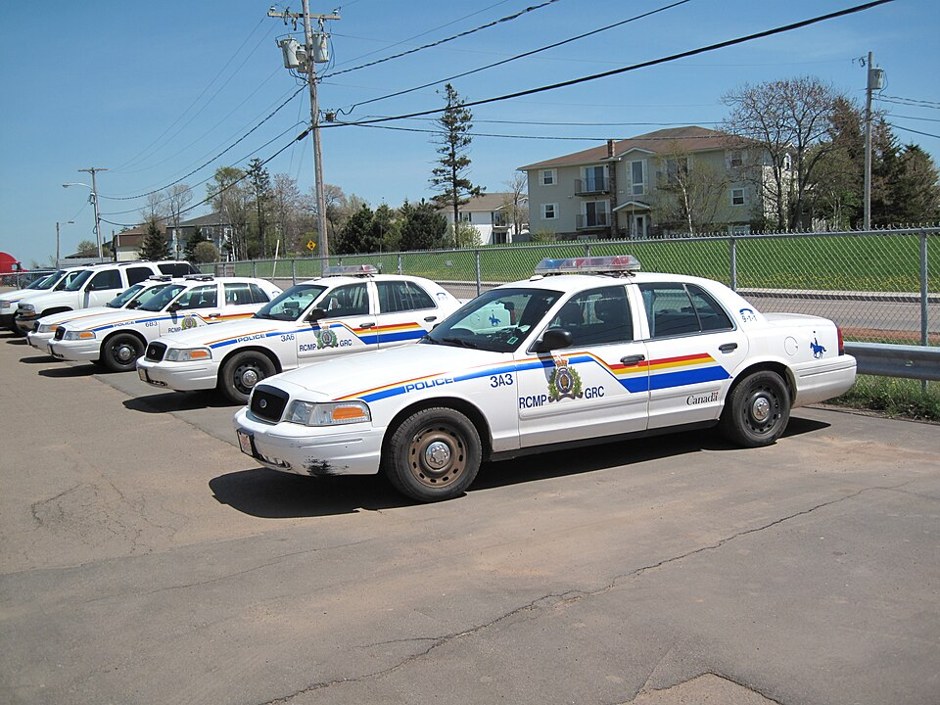
Photo: Dickelbers, CC BY-SA 3.0, via Wikimedia Commons
Canada has two separate emergency vehicle rules. When an emergency vehicle is approaching with siren and lights, pull to the right and stop. When one is stopped at the roadside with lights flashing, slow down and, if you safely can, move into the lane further away. The required speed differs by province: 60 km/h in Saskatchewan, 60 km/h or the lower posted limit in Nova Scotia, 70 or 40 km/h in British Columbia, half the posted limit in the Northwest Territories. Here are the rules, including tow trucks and snow plows.
Key facts
- British Columbia: passing a stopped vehicle with flashing lights, you must go no faster than 70 km/h if the limit is 80 km/h or more, or 40 km/h if the limit is under 80. Change lanes if you are in the lane next to it and it is safe.
- Saskatchewan: 60 km/h maximum when passing stopped tow trucks or emergency vehicles with lights flashing, and highway equipment with lights flashing.
- Ontario: failing to slow and pass carefully, or failing to move over where possible, for a stopped emergency vehicle is 3 demerit points each.
- Northwest Territories: slow to half the posted speed limit for emergency flashing lights.
- Don’t follow within 150 m of an emergency vehicle using its lights or siren (NWT). In BC, stay at least 150 m behind a fire truck.
When an emergency vehicle is coming up behind you
- Clear the intersection if you are in one. Don’t stop inside it.
- Signal and pull to the right edge of the road. On a one-way street or in the left lane of a divided highway, pull to the nearest side, which may be the left.
- Stop and stay stopped until it has passed. Check for a second emergency vehicle before moving.
- Saskatchewan: drive as close as possible to the right edge and do not enter the next intersection until the vehicle has passed. At an intersection, stop and let it through. On a one-way street, go to the nearest curb. Treat lights without a siren the same way.
- Ontario: stop immediately at the right-hand curb or edge. Don’t stop on the shoulder. First offence: a fine and 3 demerit points. Later offences bring higher fines and up to six months in jail.
- British Columbia: traffic in both directions must stop. Exception: on a divided highway with the emergency vehicle on the other side of the median, you may not need to. It is illegal to drive over a fire hose.
- Alberta: pull to the right edge (either curb on a one-way street) and stop. Treat a flashing green light (volunteer firefighter) the same way. Do not follow within 150 m.
- Nunavut: do not follow within 150 m behind a fire engine (Nunavut Driver’s Manual, p. 29).
- Yukon: check the emergency vehicle rules on pp. 89 to 90 of the Yukon Driver’s Basic Handbook.
- Prince Edward Island: yield by pulling to the curb or edge and stopping until the vehicles have passed. On one-way streets, go to the right or the left. When passing an emergency vehicle or tow truck stopped with its lights on, slow to no more than half the posted limit and, on a road with two or more lanes your way, move out of its lane and the next one if it is safe.
Passing a stopped emergency vehicle or tow truck: the rules by province
| Jurisdiction | Speed rule | Lane rule | Which vehicles |
|---|---|---|---|
| Ontario | Slow down and proceed with caution | Move over, away from the vehicle, on multi-lane roads if safe | Emergency vehicles with flashing lights; tow trucks with flashing amber lights |
| British Columbia | Maximum 70 km/h where the limit is 80+; maximum 40 km/h where it is under 80 | Change lanes if you are in the lane next to it and it is safe | Any vehicle allowed to show flashing yellow, red, white or blue lights: police, fire, paramedics, tow trucks, highway maintenance, utility workers, land surveyors, animal control, garbage collectors and more |
| Saskatchewan | Maximum 60 km/h | Leave room; check the Saskatchewan handbook for any lane rule | Stopped emergency vehicles and tow trucks with lights flashing; highway equipment with lights flashing |
| Alberta | In the lane next to a stopped vehicle with flashing lights, slow to 60 km/h or the posted limit, whichever is lower | Move to the far lane if you can do so safely; drivers in that lane must let you in | Police, fire, ambulance, tow trucks and highway maintenance vehicles with flashing lights. Fine $243 and 3 demerits; speeding fines double (alberta.ca Roadside worker safety; Driver’s Guide, pp. 85 to 86) |
| Nova Scotia | No faster than 60 km/h, or the posted limit if that is lower | If you can safely move to a lane going your way that is further from the vehicle, stay out of its lane and the lane next to it | Emergency and other vehicles showing permitted flashing red lights; recovery vehicles (tow trucks) and service trucks with flashing amber lights, stopped to help a broken-down vehicle or at an emergency |
| Newfoundland and Labrador | At least 30 km/h below the limit; no more than 30 km/h where the limit is under 60 km/h | Change lanes if another lane goes your way and it is safe; otherwise leave as much room as you can | Emergency vehicles, tow trucks and roadside assistance, search and rescue, utility, enforcement and service vehicles, and volunteer firefighter or medical responder vehicles, with lights flashing |
| Northwest Territories | Reduce to half the posted limit | Change lanes if necessary | Emergency vehicles with flashing lights; tow trucks and gas utility vehicles at incidents |
Divided highways: BC’s and Saskatchewan’s rules do not apply to traffic on the other side of a divided highway. On an undivided highway, the Saskatchewan rule does apply to oncoming traffic. Nova Scotia’s rule covers traffic in both directions on the same roadway. Where you cannot safely change lanes, the speed rule still applies.
Other provinces have their own versions of this rule. Check your provincial handbook for the exact speed and fine.
Snow plows and highway equipment
- Saskatchewan: slow to 60 km/h when passing a plow or other highway equipment stopped with blue and amber lights flashing. You may pass a moving plow if it is safe, and the 60 km/h limit does not apply then.
- Ontario: plows show flashing blue lights visible from 150 metres. Some have a wing extending up to 3 metres to the right. Never pass between staggered plows clearing a freeway.
- Northwest Territories: plows have flashing amber lights. Keep well back. Even where passing is allowed, it is safer to wait for the plow to pull over, which plows do regularly.
Work zones
- Saskatchewan: speeding fines triple when passing highway workers, or equipment occupied by a worker, in a work zone. Slow to the posted speed through the zone, and to 60 km/h or less when passing a worker, flag person or equipment occupied by a worker. Some zones use photo radar.
- Northwest Territories: obey the posted speed and the directions of flag persons.
Common questions
What does move over mean in Ontario?
When you pass a stopped emergency vehicle or a tow truck with amber lights, slow down and pass carefully. On a road with two or more lanes your way, move into a lane away from it if it is safe. Each failure is a 3-point offence.
How slow do I go past a tow truck in BC?
No faster than 70 km/h if the posted limit is 80 km/h or more, and no faster than 40 km/h if it is less than 80 km/h.
Does move over apply to garbage trucks?
In British Columbia, yes. The rule covers any vehicle authorized to show flashing lights, including garbage collectors, utility workers and animal control. Other provinces list fewer vehicle types.
Can I pass a moving snow plow?
Saskatchewan allows it when it is safe. Ontario says never pass between staggered plows. The NWT manual recommends waiting for the plow to pull over.
Do I stop for an ambulance on the other side of a divided highway?
BC says you may not need to, if the vehicle could not reach your side. Otherwise, pull over and stop.
Related: winter driving in Canada for new drivers, sharing BC roads, sharing Ontario roads, and the national overview, learning to drive in Canada.
Sources
- Government of Ontario, “The Official MTO Driver’s Handbook: Dealing with particular situations” (ontario.ca)
- Government of Ontario, “The Official MTO Driver’s Handbook: Keeping your driver’s licence” (ontario.ca)
- Government of Ontario, “The Official MTO Driver’s Handbook: Driving at night and in bad weather” (ontario.ca)
- ICBC, “Learn to Drive Smart, Chapter 6: Sharing the road” (icbc.com)
- SGI, “Saskatchewan Driver’s Handbook”, sections 3.1 and 3.4 (sgi.sk.ca)
- Government of Prince Edward Island, “Prince Edward Island Driver’s Handbook”, Chapter 2 (princeedwardisland.ca)
- Government of the Northwest Territories, “NWT Driver’s Manual”, Chapters 6 and 8 (inf.gov.nt.ca)
- Province of Nova Scotia, Using the Road Regulations, section 92 (novascotia.ca)
- Government of Prince Edward Island, “Highway Traffic Act” (princeedwardisland.ca)
- House of Assembly of Newfoundland and Labrador, “Highway Traffic Act” (assembly.nl.ca)
- Government of Alberta, “Roadside worker safety” and “Alberta Driver’s Guide”, Spring 2023 (alberta.ca)
- Government of Yukon, “Driver’s Basic Handbook” (yukon.ca)
- Government of Nunavut, “Nunavut Driver’s Manual” (gov.nu.ca)