
Photo: Ric Taylor, Pexels
Australian road signs fall into a few groups: regulatory signs you must obey, warning signs that tell you about a hazard, guide signs that show the way, and temporary signs at roadworks. The shapes and colours are much the same in every state. This explainer shows how to tell the groups apart, which signs are legally binding, and how roadwork and electronic signs work.
Key facts
- Regulatory signs are law. They are usually black on white, sometimes with red.
- Warning signs are usually black on a yellow diamond.
- Advisory speed signs (yellow, often under a warning sign) are a recommendation, not a limit.
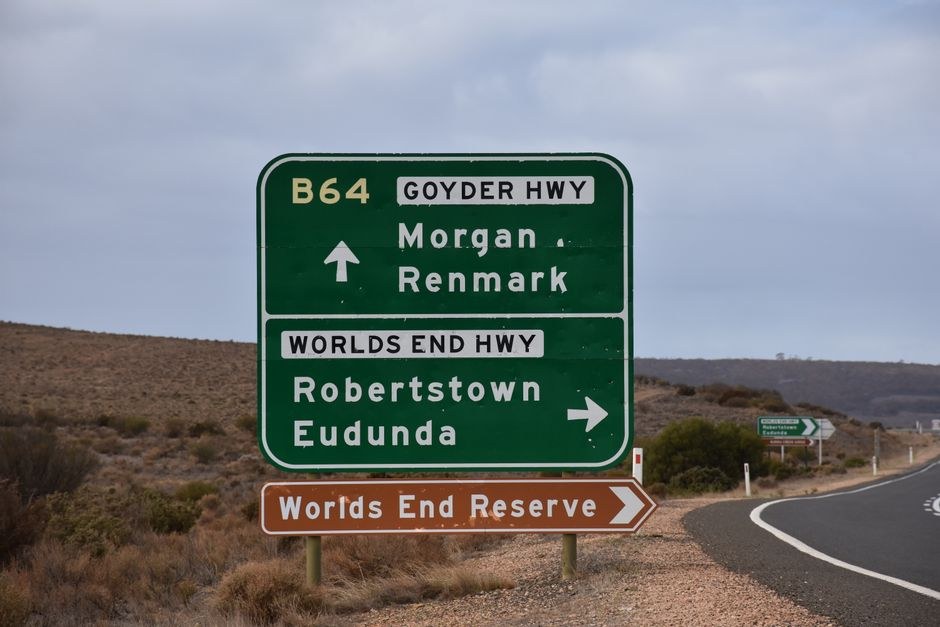
- Guide signs are green with white lettering and give directions and distances.
- Roadwork speed limits are enforceable even when you cannot see any workers.
- Electronic speed signs apply only while lit.
The sign groups at a glance
| Group | Usual look | Must you obey it? | Examples |
|---|---|---|---|
| Regulatory | Black on white, sometimes red. Mostly rectangles, except stop, give way and roundabout signs (NT) | Yes, by law | Stop, Give way, speed limit, No entry, Keep left, parking signs |
| Warning | Black on a yellow diamond. In WA, pedestrian warning signs are usually red-orange | Take the advice; it usually means slow down | Curve, T-junction, Steep descent, Stock crossing, Narrow bridge, Slippery road |
| Advisory speed | Black on yellow, usually with a warning sign | Not a legal limit, but drive at or below it | A speed shown under a curve sign |
| Guide and information | Green with white lettering | Information only | Road names, destinations, distances, exit numbers |
| Temporary and roadwork | Usually rectangular and reflective, black on yellow or red and black | Yes. Speed limits and traffic controllers must be obeyed | Roadwork ahead, Workers ahead, Prepare to stop, End roadwork |
The ACT handbook uses four headings: regulatory (mandatory), warning (advisory), information, and temporary. Victoria notes that a few regulatory signs are black and yellow, such as the Safety zone and Pedestrians crossing signs.
Regulatory signs you must obey
- Stop sign: stop completely before the line, as close to it as you can, then give way.
- Give way sign: the same rules, but you do not have to stop if the road is clear.
- Speed limit signs: the limit applies until another speed sign, the end of the road, or an End speed limit sign (Tasmania).
- Direction signs: No entry, No right turn, Left lane must turn left, Keep left, Wrong way go back.
- Keep left unless overtaking: stay out of the right lane unless overtaking or turning right.
- Hand-held Stop sign: held by traffic controllers at roadworks and children’s crossings. Stop and stay stopped until it is no longer shown or you are waved on (NSW).
- Parking signs: regulatory, often green or red on white. How to read them: parking rules in Australia.
Warning signs and advisory speeds
Warning signs tell you about a hazard ahead. Common ones:
- intersection types: crossroads, T-junction, side road, Y-junction, roundabout, signals ahead
- curves, hairpin bends and winding roads
- merging traffic, road narrows, narrow bridge
- steep descent and slippery road
- stock, truck and children crossing
- railway crossing ahead
- in the NT, a “causeway” sign, which marks a raised road across a low or wet place
An advisory speed sign shows the speed the average vehicle can safely take that curve or crest in good conditions. It is not a regulatory sign (NSW). WA Drive Safe says to slow to at least the speed on the sign, and further in the wet.
Guide signs and route numbers
Guide and direction signs give road names, destinations and distances. NSW explains the route letters:
- M: motorways of national significance, for example M2
- A: routes of national significance
- B: routes of state significance
Freeway exit number signs help you plan a route and give emergency services a location (VIC). Toll signs warn you before a tolled road. On NSW motorways, if you do not pay, you are sent a toll notice.
Roadwork signs and speed limits
Roadwork speed limits work like any other limit: you must not go faster than the sign shows (NSW, WA, NT). The NSW and NT handbooks illustrate them with a 40 km/h roadwork sign, but the limit is whatever the sign says.
- Workers may not be visible, but the limit still applies (VIC, WA). Some work moves along the road, such as line marking, patching and mowing (WA).
- Temporary limits are also used for poor road surfaces, changed layouts and events (WA).
- If there are no traffic controllers on site, you must still obey the roadwork and speed signs (NT).
- Obey any signal from a traffic controller and give way to any worker (NT).
Temporary traffic control: when to stop and go (WA)
| You must stop when | You may go, if safe, when |
|---|---|
| A traffic controller shows the STOP side of a STOP-SLOW bat | The traffic controller directs you |
| A boom barrier or gate is down | The boom or gate is fully up, unless a signal is still red or a controller holds up a Stop sign |
| A temporary traffic signal turns red | The temporary signal turns green |
Electronic and variable message signs
- Variable speed limit signs: used in tunnels and on motorways and bridges. The limit changes with conditions, and you must not exceed the one shown (NSW).
- Electronic speed signs: in Tasmania, the limit applies only while the sign is lit. If nothing is displayed, the default limit or the last sign you passed applies.
- Illuminated regulatory signs: in the NT, these apply only while lit, usually in peak periods.
- Variable message signs: large electronic signs beside the road. They warn of fog, crashes, roadworks, congestion and closures ahead (NT).
- Overhead lane signals: a red cross means do not drive in that lane. An arrow tells you to move over. More on learners on motorways and freeways.
- Wig wags (NT): flashing lights that warn you to prepare to stop at an intersection ahead.
- Bus priority signal (ACT): a white “B” lets a bus in a bus lane move off while other traffic is held on red. See traffic lights and arrows in Australia.
Speed signs that apply only at certain times
- School zone signs: apply on school days during the times shown. See school zones in every Australian state.
- School buses: in NSW, you must not pass a bus showing “40 when lights flash” at more than 40 km/h while the lights on top are flashing. In Tasmania, the limit is 40 km/h within 50 metres of a school bus with its warning sign and lights on.
- Shared zone signs: show a low limit, 10 km/h in NSW, and you must give way to pedestrians.
Common questions
Do I have to obey a yellow advisory speed sign?
It is not a legal limit, but it is the recommended maximum for that hazard in good conditions. Go slower if it is wet or dark. The posted speed limit is what police enforce.
Is a roadwork speed limit enforceable at night or on weekends?
Yes, while the signs are up. The law treats a temporary limit the same as a normal one, and workers may not be visible (WA).
What colour are warning signs in Australia?
Usually black on yellow, mostly diamond-shaped. WA notes that pedestrian warning signs are usually red-orange.
What does a blank electronic speed sign mean?
In Tasmania, the default limit or the last speed sign you passed applies. The electronic limit counts only while it is lit.
What do the M, A and B route numbers mean?
M marks motorways of national significance, A national routes, and B routes of state significance (NSW handbook).
Must I obey a traffic controller over a traffic light?
At roadworks, follow the controller. In WA, even if a boom is up, wait if a controller holds up a Stop sign.
Related: the Australian Road Rules explained and Australian road markings and lane lines.
Sources
- Transport for NSW, “Road User Handbook” (nsw.gov.au)
- Department of Transport and Planning Victoria, “Road to Solo Driving” (transport.vic.gov.au)
- Department of Transport and Major Infrastructure WA, “Drive Safe: A handbook for Western Australian road users” (transport.wa.gov.au)
- Department of State Growth Tasmania, “Tasmanian Road Rules, Version 2.1” (transport.tas.gov.au)
- Access Canberra, “ACT Road Rules Handbook” (accesscanberra.act.gov.au)
- Northern Territory Government, “NT Road Users’ Handbook” (nt.gov.au)