
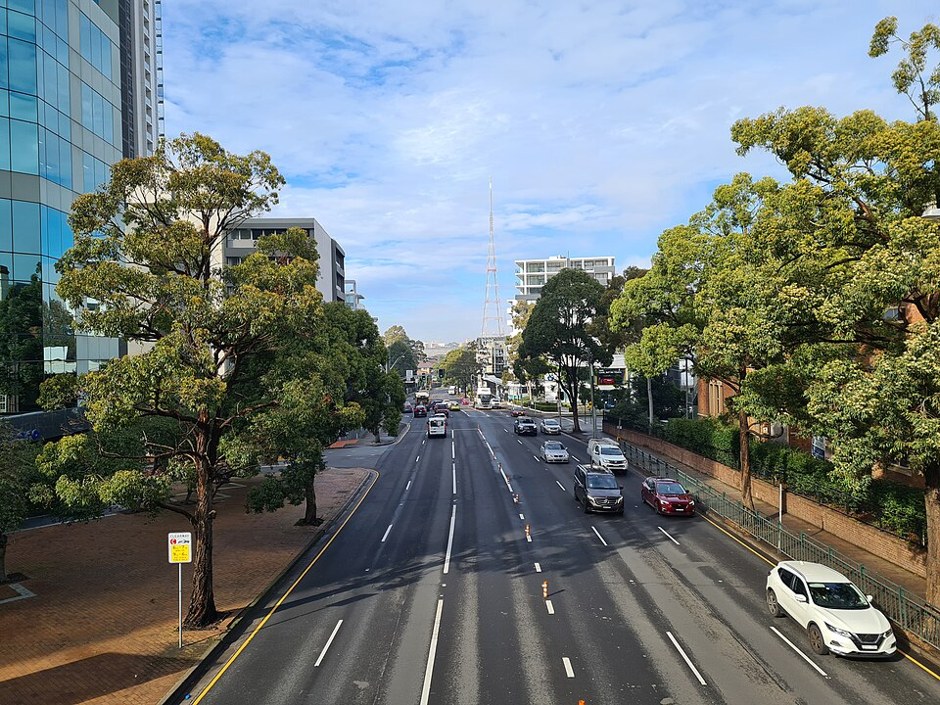
Photo: Andrew Harvey, CC BY 4.0, via Wikimedia Commons
The Australian Road Rules are a national model set of road rules. Each state and territory turns them into its own law and adds local rules on top. This guide explains which rules are the same wherever you drive, what each state changes, and which handbook a learner in each state should study.
Key facts
- The Australian Road Rules are a model law. The National Transport Commission (NTC) maintains them, and its Australian Road Rules Maintenance Group includes representatives from the state road authorities.
- A model law is not binding until a state or territory adopts it. Each one does this through its own legislation, so the binding text is always the local version.
- Core rules such as giving way, roundabouts, traffic lights, U-turns and parking work the same way in all eight jurisdictions.
- Licensing is entirely state law. Learner ages, logbook hours, tests, L and P plate conditions and demerit limits all differ.
- Some rules look national but are not: school zone times, how fast you pass emergency vehicles, speed caps for L and P platers, hook turns and phone rules for new drivers.
What are the Australian Road Rules?
The rules were written as one national template so that a driver crossing from Albury into Wodonga, or from Queanbeyan into Canberra, finds the same give way rules, the same signs and the same roundabout rules on both sides of the border.
Changes are made in numbered amendment packages. Earlier packages were made as Commonwealth instruments by the NTC and are on the Federal Register of Legislation. ACT legislation records that the 8th package was approved by transport ministers in February 2009 and the 9th in December 2011. The NTC website lists the current rules and any newer package. Check the NTC site for the latest amendment package.
A package only changes the model. Each state then has to change its own law. This is why a rule agreed nationally can start at different times, or with local differences, in different states.
Where the binding rules live in each state
Every official handbook says it is a plain-English guide, not the law. The law each handbook points to is listed below.
| Jurisdiction | Law the handbook points to | Learner handbook |
|---|---|---|
| New South Wales | NSW Road Rules (legislation.nsw.gov.au) | Road User Handbook (Transport for NSW) |
| Victoria | Road Safety Act 1986 and the Road Safety Road Rules (legislation.vic.gov.au) | Road to Solo Driving |
| Queensland | Queensland road rules legislation (legislation.qld.gov.au) | Your keys to driving in Queensland |
| Western Australia | Road Traffic Code 2000 and Road Traffic (Vehicles) Regulations 2014, including the Australian Road Rules as they apply in WA | Drive Safe |
| South Australia | Road Traffic Act 1961 and the Australian Road Rules as they apply in SA | The Driver’s Handbook (online at mylicence.sa.gov.au) |
| Tasmania | Road Rules 2019, Vehicle and Traffic Act 1999, Road Safety (Alcohol and Drugs) Act 1970, Traffic Act 1925 | Tasmanian Road Rules handbook |
| Australian Capital Territory | Australian Road Rules on the ACT Legislation Register | ACT Road Rules Handbook |
| Northern Territory | Traffic Act 1987 and Traffic Regulations, with the Australian Road Rules in Schedule 3 | NT Road Users’ Handbook |
Study the handbook for the state where you will sit your knowledge test. The test questions are based on it.
What is the same in every state?
These rules come from the national model. Each has its own guide on this site.
- Giving way. Stop and give way signs, T-intersections and intersections with no signs. See giving way in Australia.
- Roundabouts. Give way to vehicles already in the roundabout, the lane rules and indicating left to exit. See roundabout rules in Australia.
- Traffic lights and arrows. Red, yellow, green and arrows mean the same everywhere. See traffic lights and arrows.
- Signs and markings. See Australian road signs explained and Australian road markings and lane lines.
- Overtaking, merging and lanes. See overtaking, merging and changing lanes.
- Crossings. See pedestrian, school and wombat crossings and railway level crossings.
- Parking. See parking rules in Australia.
- Seatbelts and child restraints. Children under 7 must be in an approved child restraint. See seatbelts and child car seats.
- Lights and horn. See headlights, high beam and horn rules.
- Sharing the road. See trucks, buses and road trains and motorcyclists and lane filtering.
- Freeways and motorways. See learners on motorways and freeways.
What does each state change?
These are the rules learners most often get wrong when they assume one state’s rule is national.
Speed caps for L and P platers
The national rules set no learner speed cap. States add their own. A learner in New South Wales is capped at 90 km/h, in the Northern Territory at 80 km/h and in Western Australia at 100 km/h. Victorian and ACT learners can drive to the posted limit. The full table is in learner licence rules in every Australian state compared and P plate rules in every Australian state compared.
School zones
School zone hours are set locally. In New South Wales most zones run 8am to 9.30am and 2.30pm to 4pm. In Queensland most run 7am to 9am and 2pm to 4pm. ACT zones are enforced from 8am to 4pm on school days. In South Australia the limit is 25 km/h whenever children are present, and some main roads near schools have a 40 km/h limit from 8am to 9.30am and 2pm to 4pm on school days. See school zones in every Australian state.
Passing emergency vehicles
Most states use 40 km/h when you pass a stopped emergency vehicle with flashing lights. South Australia uses 25 km/h. Queensland requires a safe speed and distance and gives no fixed number. See emergency vehicles and slow down rules.
Flashing yellow lights at an intersection
Victoria and Tasmania treat the intersection as uncontrolled, so you give way to the right. Western Australia’s Drive Safe says to treat it as if you face a give way sign. In New South Wales, if there is a stop sign with three black dots at the lights, you follow the stop sign rules. See traffic lights and arrows.
Hook turns
Drivers make hook turns only at intersections with a Hook Turn sign. Road to Solo Driving says these signs are in central Melbourne and South Melbourne. See how to do a hook turn in Melbourne.
Phones for new drivers
Every state bans hand-held phone use while driving. The extra bans for new drivers differ.
- NSW: L, P1 and P2 drivers cannot use a phone at all, even hands-free.
- Victoria: L and P drivers must not touch a phone or use voice controls. Navigation or audio set up before the drive is allowed.
- Tasmania: learners and P1 drivers have a total ban, and P2 drivers follow the full licence rules.
- Western Australia: Drive Safe gives one phone rule for all drivers.
Places learners cannot drive
Learners in New South Wales must not drive in Parramatta Park, Centennial Park or Moore Park in Sydney. Western Australian learners must not drive in Kings Park.
Local road conditions
Some topics matter far more in some states: road trains and unsealed roads in the Northern Territory and Western Australia, and trams in Melbourne. See outback and remote driving, kangaroos and wildlife on Australian roads and driving with trams in Victoria.
Licensing is state law, not national law
Nothing about getting a licence is set by the Australian Road Rules. Each state runs its own:
- learner knowledge test
- hazard perception test (the Northern Territory has none in its car pathway)
- practical driving test
- logbook requirement, from none in the Northern Territory to 120 hours in New South Wales and Victoria
- L and P plate conditions
- demerit point limits
Alcohol is the one area where all eight agree: learners and P platers must have a zero blood alcohol concentration. See zero alcohol for learners and P platers.
Whose rules apply when you drive interstate?
Two different rule sets follow you across a border:
- Road rules: you follow the road rules of the state you are driving in.
- Licence conditions: the NSW Road User Handbook says NSW L and P restrictions still apply when you drive in another state or territory. The ACT Road Rules Handbook says ACT learner and provisional drivers must follow the alcohol limits of the state they are in, and should check that state’s speed rules.
The safest approach is to follow whichever rule is stricter. See driving interstate on L or P plates.
Start with your state’s guide
- Learning to drive in NSW
- Learning to drive in Victoria
- Learning to drive in Queensland
- Learning to drive in Western Australia
- Learning to drive in South Australia
- Learning to drive in Tasmania
- Learning to drive in the ACT
- Learning to drive in the Northern Territory
Every national road rules guide
Licences compared
- Learner licence rules in every Australian state compared
- P plate rules in every Australian state compared
- Driving interstate on L or P plates
- Double demerit points in Australia
- Towing a trailer or caravan on L or P plates
Intersections, signals and signs
- Giving way in Australia
- Roundabout rules in Australia
- Traffic lights and arrows in Australia
- Australian road signs explained
- Australian road markings and lane lines
- Pedestrian, school and wombat crossings
- Railway level crossings
Speed and safety zones
- School zones in every Australian state
- Emergency vehicles and slow down rules
- Minimum passing distance for cyclists
Driving on the road
- Overtaking, merging and changing lanes
- Learners on motorways and freeways
- Parking rules in Australia
- Sharing the road with trucks, buses and road trains
- Motorcyclists and lane filtering
- Headlights, high beam and horn rules
- Seatbelts and child car seats
Risk, conditions and emergencies
- Zero alcohol for learners and P platers
- Driver fatigue on Australian roads
- Kangaroos and wildlife on Australian roads
- Outback and remote driving
- Driving in rain, fog, smoke and floods
- Car emergencies: tyre blow outs, brake failure and skids
- What to do after a crash in Australia
Common questions
Are road rules the same in every Australian state?
Mostly. Giving way, roundabouts, traffic lights and most signs follow the national Australian Road Rules. Speed caps for new drivers, school zone times, emergency vehicle passing speeds and all licensing rules differ by state.
Who makes the Australian Road Rules?
The National Transport Commission maintains the model rules. Each state and territory parliament or government then adopts them into its own law, sometimes with changes.
Can I use another state’s handbook to study for my test?
No. Your knowledge test is based on your own state’s handbook. That handbook includes local rules and the licensing details for your state.
Is the T-intersection rule national?
Yes. On a road that ends at a T-intersection, you give way to vehicles on the continuing road unless a sign says otherwise. This is the same in every state.
Do hook turns apply everywhere in Australia?
No. Drivers make hook turns only where a Hook Turn sign is shown, and Road to Solo Driving says those signs are in central Melbourne and South Melbourne.
If I am on P plates from NSW, can I drive at 110 km/h in another state?
No. The NSW handbook says NSW P1 and P2 restrictions, including the 90 km/h and 100 km/h caps, also apply when you drive in another state or territory.
Is the official handbook the law?
No. Every handbook says it is a simplified guide. The legal text is in the state’s legislation, which the handbook names.
Sources
- Transport for NSW, “Road User Handbook” (nsw.gov.au)
- Department of Transport and Planning Victoria, “Road to Solo Driving” (transport.vic.gov.au)
- Department of Transport and Major Infrastructure WA, “Drive Safe: A handbook for Western Australian road users” (transport.wa.gov.au)
- Department of State Growth Tasmania, “Tasmanian Road Rules, Version 2.1” (transport.tas.gov.au)
- Access Canberra, “ACT Road Rules Handbook” (accesscanberra.act.gov.au)
- Northern Territory Government, “NT Road Users’ Handbook” (nt.gov.au)
- ACT Legislation Register, Road Transport amendment explanatory statement on Australian Road Rules amendment packages (legislation.act.gov.au)
- Federal Register of Legislation, “National Transport Commission (Model Amendments Regulations: Australian Road Rules Package No. 8) Regulations 2009” (legislation.gov.au)
- Transport for NSW, “School zones” (transport.nsw.gov.au)
- Department of Transport and Main Roads Queensland, “School zones” (tmr.qld.gov.au)
- ACT Policing, “Slow down in school zones” (policenews.act.gov.au)
- Department for Infrastructure and Transport SA, “Way2Go: School zones, signs and restrictions” (dit.sa.gov.au)
- Government of South Australia, “Drive 25” (mylicence.sa.gov.au)
- Queensland Government, “Move over, slow down” ministerial statement (statements.qld.gov.au)