
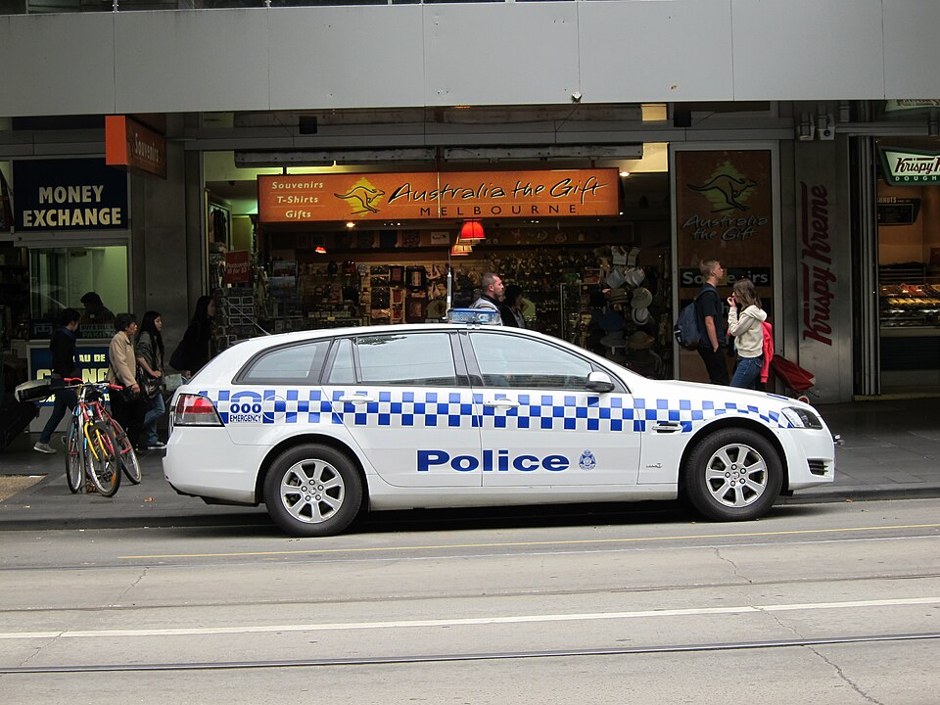
Photo: Mike, CC BY-SA 2.0, via Wikimedia Commons
Double demerit points apply in NSW, the ACT and Western Australia during public holiday periods and long weekends. Queensland uses a different system: points double for a repeat offence within 12 months, all year round. The Victorian, South Australian, Tasmanian and NT handbooks do not describe a double demerit scheme. For a learner or P plater on a 4-point limit, one doubled offence can be enough to lose your licence.
Which states have double demerits?
| State or territory | When points double | Offences covered |
|---|---|---|
| NSW | Holiday periods and long weekends | Speeding, seatbelt (including child restraints), motorcycle helmet and mobile phone offences. Can also apply in school zones during holiday periods |
| ACT | Public holiday periods, generally matching NSW | Speeding, seatbelt, motorcycle helmet and mobile phone offences doubled. Other demerit offences get one extra point |
| WA | Holiday periods and long weekends | Speeding, drink or drug driving, seatbelt or child restraint, running a red light, illegal mobile phone use, and devices or driving to evade speed cameras |
| Queensland | Any time, for a second offence within 12 months of an earlier one in the same group | Speeding more than 20 km/h over, mobile phone, driver seatbelt, not restraining a passenger under 16, motorcycle helmet |
| Victoria, SA, Tasmania, NT | No double demerit scheme described in the official handbooks | Normal demerit points apply |
Fines are not doubled in NSW or WA. Only the points are.
When are the double demerit periods?
Periods cover holidays such as Christmas and New Year, Australia Day, Easter, Anzac Day and the King’s Birthday long weekend. In WA they start on the Thursday or Friday before the holiday.
- NSW: dates are announced for each period on the Transport for NSW Centre for Road Safety website.
- ACT: where an ACT-only holiday does not line up with a NSW one, such as the Canberra Day weekend, double demerits have not applied.
- WA: the Road Safety Commission lists the 2026 periods. The Christmas and Boxing Day period runs from Friday 18 December 2026 to Sunday 3 January 2027. The Commission notes dates may change.
Check the current dates before any holiday drive.
What double demerits mean for L and P platers
Learner and provisional limits are low, so doubled points hit hard.
| State | Learner and P limit | What one doubled offence can do |
|---|---|---|
| NSW | Learner 4, P1 4, P2 7 (over 3 years) | Any doubled offence normally worth 2 points takes a learner or P1 driver to the 4-point limit |
| WA | 4 points for learners and in the first year of a licence. 8 points in the second year | The Drive Safe handbook warns it is “very easy” for a novice to exceed the limit and be disqualified on a double demerit weekend |
| ACT | Provisional: 4 points in 3 years (8 after 6 months and the Road Ready Plus course) | One doubled offence can reach the limit |
In WA, exceeding the novice limit means at least three months’ disqualification. P platers have their licence cancelled and may need to resit the theory test and driving assessment.
More on limits: NSW demerit points for learners and P platers, WA novice demerit points and ACT learner and P plate rules.
Queensland’s repeat-offence double demerits
Queensland does not double points on holidays. Instead, if you commit a second offence in the same group within 12 months of the first, you get double points for the second one. Example from the Queensland Government: a second mobile phone offence within a year gives the usual 4 points plus another 4. The offence groups are:
- speeding more than 20 km/h over the limit
- mobile phone offences
- driver seatbelt offences
- failing to make sure passengers under 16 are restrained
- motorcycle helmet offences
See Queensland demerit points and licence sanctions for learners.
Common questions
Do double demerits apply to fines too?
No. In NSW and WA only the points double.
Do double demerits apply to camera-detected offences?
Yes in the ACT, where the summer 2025 to 2026 period included offences detected by road safety cameras. Check your state for other camera rules.
I live in Victoria. Do NSW double demerits apply to me?
Points you get interstate are recorded against your home licence under the national demerit points exchange (ACT handbook). So an offence in NSW during a double demerit period can count against your Victorian licence. Check with your home state how it is applied.
Are double demerits applied to learners?
Yes. Nothing in the NSW, ACT or WA rules exempts learners or P platers, and the WA handbook specifically warns novice drivers about them.
How many points is speeding on a double demerit weekend?
It depends on how far over the limit you were. For Easter 2026, WA announced up to 14 points for speeding, 10 for drink driving and 8 for mobile phone and seatbelt offences.
Does Victoria have double demerits?
The Victorian handbook does not describe any. Normal points apply all year.
Related: the Australian Road Rules explained and P plate rules in every state compared.
Sources
- Transport for NSW, “Road User Handbook” and “How demerit points work” (nsw.gov.au)
- Access Canberra, “ACT Road Rules Handbook” (accesscanberra.act.gov.au)
- ACT Government, “Christmas Double Demerits” public notice (cmtedd.act.gov.au) and ACT Policing media releases (police.act.gov.au)
- Department of Transport and Major Infrastructure WA, “Drive Safe: A handbook for Western Australian road users” (transport.wa.gov.au)
- Road Safety Commission WA, “Double demerits” and “Easter double demerit reminder” (wa.gov.au)
- Queensland Government, “Double demerit points” (qld.gov.au)
- Department of Transport and Planning Victoria, “Road to Solo Driving” (transport.vic.gov.au)
- Government of South Australia, “The Driver’s Handbook”, February 2026 (mylicence.sa.gov.au)
- Department of State Growth Tasmania, “Tasmanian Road Rules, Version 2.1” (transport.tas.gov.au)
- Northern Territory Government, “NT Road Users’ Handbook” (nt.gov.au)