
Category: Nova Scotia

  • Nova Scotia road signs study guide for the learner’s test

    Nova Scotia road signs study guide for the learner’s test

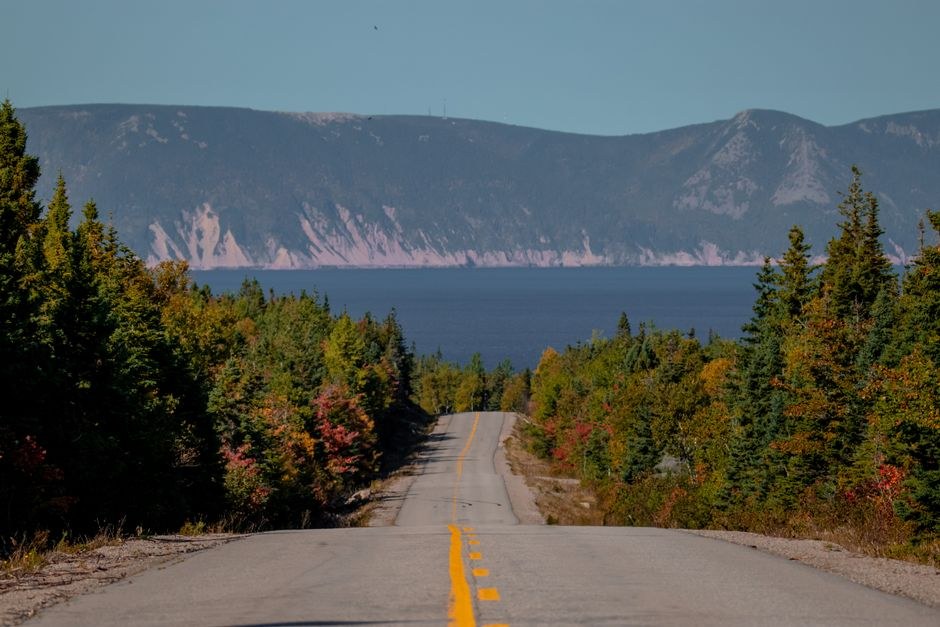
    Photo: Eric Van Lochem, CC BY-SA 4.0, via Wikimedia Commons

    Part 2 of the Nova Scotia learner’s test is 20 multiple-choice questions on Nova Scotia highway signs, and you need at least 16 correct. This study guide covers what that part tests, organized the way Chapter 3 of the Nova Scotia Driver’s Handbook groups it: sign shapes and colours, regulatory, warning, guide and work zone signs, railway crossings, signals and pavement markings. Learn the groups first, then the individual signs.

    Key facts

    • The signs part has 20 questions. You need 16 correct, and the rules part is marked separately.
    • Fail one part and you retake only that part (both, if you failed both), buying a new $15.03 receipt (as of November 2026).
    • Chapter 3, “Signs, Pavement Markings, and Work Zones”, is the chapter to study.
    • The handbook was printed before the Traffic Safety Act took effect on 19 October 2026. Several road rules changed then, so check them alongside this chapter. See what the Traffic Safety Act changed.

    Sign shapes and colours: learn these first

    Shape or colour Meaning in Nova Scotia
    Octagon, red with white STOP Stop sign. The octagon is used for nothing else
    Triangle, red and white Yield
    Five-sided, fluorescent yellow-green with two children School zone (the standard design across Nova Scotia since 1 June 2001)
    Rectangle or square, white with black or red Most regulatory signs: the law you must obey
    Diamond, black on yellow Most warning signs: conditions ahead
    Rectangle, green with white letters Guidance: routes, directions and distances
    Orange with black letters Work zone signs
    Green circle Permission (for example, passing permitted)
    Red circle with a slash Not permitted (for example, do not pass)
    White X-shaped crossbuck with a red border Railway crossing

    The handbook ends Chapter 3 with a “The Shape of a Sign Says What It Means” quiz. Do it until you get every shape right without the colours.

    Regulatory signs on the Nova Scotia test

    You must obey these unless a peace officer directs otherwise.

    • Stop: stop completely at the stop line or the nearest crosswalk line. With no lines, stop far enough back for a pedestrian to cross (an unmarked crosswalk).
    • Yield: slow down and give way to traffic in or close to the intersection, stopping if necessary.
    • School zone: when children are present, the limit is 30 km/h where the approach limit is 50 km/h, or 50 km/h where the approach limit is higher, at any time of day.
    • Turn and lane control: no left turn, no U-turn, no turns, through or right turn only, lane arrows, and the two-way left-turn lane sign.
    • Others the handbook shows: no litter, no right turn on red, one-way, do not enter, do not pass, passing permitted, no stopping, no parking either side of the sign, keep right of the island, maximum speed, truck route, accessible parking.

    Crosswalk and playground signs

    • Pedestrian crosswalk and school crosswalk signs mark where people cross.
    • A playground sign means slow down and watch for children.

    Warning signs

    Most are yellow diamonds. The handbook’s examples include:

    • stop sign ahead, traffic signal lights ahead, truck entering, fire truck entrance
    • slippery when wet, bump or rough road, steep decline (you may need a lower gear)
    • right curve with an advisory speed, sharp turn (checkerboard), chevrons on sharp curves
    • road narrows, narrow structure, low clearance, right lane ends, merge
    • divided highway ahead, divided highway ends, two-way traffic, bridge opening, hidden intersection
    • hazard markers: if the black stripes slope right, pass on the right; if they slope left, pass on the left
    • change in maximum speed ahead

    Merge tip from the handbook: drivers in both lanes share responsibility for a smooth merge. Be ready to yield.

    Guide signs and 100-series highways

    Green guide signs give route numbers, directions and distances. A sign such as Highway 102 marks a provincial 100-series highway: a controlled-access highway, entered only at interchanges. On these highways:

    • Use the acceleration lane to match speed, then merge. Yield to through traffic.
    • Keep right, and use the left lanes for passing.
    • Signal your exit early and slow down in the deceleration lane, not on the highway.

    Work zone signs

    Type What it tells you
    General signs Unusual conditions ahead. They stay up until the road is back to normal
    Signs with arrows (advance temporary condition) Time to prepare: for example, construction 1.5 km ahead, right lane ending, tar sprayed ahead
    Specific signs A particular hazard, such as uneven lanes, a rough surface or a narrowing lane
    Human activity signs (a person symbol) Only used when people are working there. Traffic control persons may use stop/slow paddles
    Flashing light unit, two arrow heads Lane closed or obstruction. You may pass on either side
    Flashing light unit, one arrow Pass only on the side the arrow shows
    Flashing light unit, straight bar (caution mode) A hazard. It does not tell you it is safe to pass

    A “Do Not Pass” sign in a work zone is regulatory, and ignoring it is a ticketable offence. Merge as soon as it is safe rather than at the last moment. The biggest causes of work zone collisions are vehicles at different speeds and inattention, so slow gradually, leave extra space and put your phone away. Blasting signs may tell you to turn off radio transmitters. Defacing or removing a sign is an offence.

    Railway crossing signs

    • A yellow and black advance warning sign shows the angle of the tracks ahead.
    • The crossbuck is at the crossing itself. A smaller sign below it gives the number of tracks.
    • Flashing red lights at a crossing mean stop, as for any flashing red signal. Never go through lowered gates. When you must stop, stop no closer than 5 metres from the nearest rail. Do not start across unless there is room for your car on the far side (Using the Road Regulations, section 19).
    • Already on the tracks when the lights start? Keep moving. The gates will not trap you.
    • After a train passes, check for a second train before you go.
    • Be ready to stop behind school buses, vehicles carrying passengers for hire and vehicles with hazardous material placards.
    • Stalled on the tracks? Get everyone out and well away, post lookouts both ways, and only with no train in sight try to push or restart the car.

    Traffic signals and pavement markings

    Signals

    • Amber: stop if you can do so safely.
    • Flashing red: treat it as a stop sign.
    • Flashing amber: slow down and proceed with caution.
    • Flashing green: you may turn left, go straight or turn right.
    • Green arrow: turn the way it points. Amber arrow: stop unless you are too close to stop safely.
    • Red X over a lane: never drive in that lane.
    • Signals not working: treat the intersection as a multi-way stop.
    • Right on red: allowed after stopping, unless a sign forbids it.
    • Left on red: allowed only from a one-way street onto another one-way street.

    Lines

    • Yellow lines separate opposite directions. White lines separate traffic going the same way.
    • A broken yellow line on your side means you may pass with care. A double solid yellow line means no passing either way.
    • A solid yellow left-edge line on a divided highway: if you see the reverse, you are going the wrong way.
    • A single solid yellow centre line allows passing either way only when traffic, sight distance and conditions are ideal.
    • Climbing lanes: keep right unless passing. Do not pass once you reach the solid line at the end of the lane. Use your flashers under 70 km/h where a sign says so.
    • A two-way left-turn lane is shared by both directions, only for turning left. Never pass in it or drive far along it. Signal, shoulder check, move in close to your turn, stop and yield.
    • White solid lines mark the right edge. The line rules do not apply when entering or leaving the highway away from an intersection, finishing a legal pass, or when the lines cannot be seen.
    • Continuity lines are the wider lines at entry and exit ramps.

    A strategy for scoring 16 out of 20

    1. Day 1: shapes and colours only, until you can name every one from its outline.
    2. Day 2: regulatory and crosswalk signs, plus the school zone speed rule.
    3. Day 3: warning signs. Group them as intersections, road surface, road shape and lanes.
    4. Day 4: work zone signs, flashing light units and railway crossings.
    5. Day 5: signals and lines, then the handbook’s shape quiz.

    On the test, read every option before you answer. Questions often offer two meanings that sound almost right. You can miss four at most, so treat the signs part as a separate exam.

    Common questions

    How many sign questions are on the Nova Scotia learner’s test?

    20, and you need at least 16 correct.

    If I pass signs but fail rules, do I redo signs?

    No. The current Class 7 knowledge test page says you retake only the part you failed. Older pages still say the entire test, so follow the current instructions when you book.

    What colour are construction signs in Nova Scotia?

    Orange with black lettering.

    What is the school zone speed limit in Nova Scotia?

    When children are present: 30 km/h where the normal limit is 50, or 50 km/h where it is higher.

    Is the handbook current?

    It is the official study book, but it was printed before the Traffic Safety Act changed some rules on 19 October 2026. Read the Traffic Safety Act changes as well.

    Related: learning to drive in Nova Scotia, Nova Scotia learner’s test, Nova Scotia rules of the road, railway crossings in Canada.

    Sources

    • Service Nova Scotia, “Nova Scotia Driver’s Handbook”, Chapter 2 “Rules of the Road” and Chapter 3 “Signs, Pavement Markings, and Work Zones” (novascotia.ca)
    • Service Nova Scotia, “Learner’s (Beginner’s) Licence” (novascotia.ca)
    • Government of Nova Scotia, “Changes to traffic safety legislation” (novascotia.ca)
  • Nova Scotia Demerit Points and Suspensions for New Drivers

    Nova Scotia Demerit Points and Suspensions for New Drivers

    Photo: Eric Van Lochem, CC BY-SA 4.0, via Wikimedia Commons

    New drivers in Nova Scotia are suspended for 6 months at far fewer demerit points than experienced drivers: 4 points for a learner (Class 7) and 6 points for a newly licensed driver (Class 5N), against the usual 10 for a fully licensed driver. A qualifying reinstatement can instead bring a 3-point threshold, and the effect on GDL time depends on the suspension ground. This page sets out the thresholds, the point values and what a suspension costs you in GDL time.

    Check first: the Traffic Safety Act replaced the Motor Vehicle Act on 19 October 2026. The suspension thresholds below match the new Driver’s Licence Regulations (N.S. Reg. 226/2026, section 21), and the speeding points match the new offence schedule (N.S. Reg. 223/2026, Schedule C). The warning-letter levels and the other point values come from the Nova Scotia Driver’s Handbook, which predates the new Act. Confirm anything critical with Service Nova Scotia (902-424-5851).

    Demerit thresholds by licence stage

    Licence Warning letter Interview 6-month suspension
    Learner (Class 7) 2 points none listed 4 points
    Newly licensed (Class 5N) 2 points 4 points 6 points
    Fully licensed driver, ordinary threshold 4 points 6 points 10 points
    Reinstated after a points or conditional-licence-restriction suspension, during the following 12 months Not specified here Not specified here 3 points

    If you are called to an interview with a Driver Enhancement Officer, you are fully retested, road test included. The fee for this meeting is $59.74 plus any applicable tax (N.S. Reg. 243/2026, Schedule A), paid in advance with an appointment booked. Miss it and your licence can be suspended.

    How many points for common offences?

    Offence Points
    Careless and imprudent driving 6
    Failing to stop at a collision 6
    Racing 6
    Driving contrary to a licence restriction: the specified offence under section 95(2) of the Traffic Safety Act 2
    Passing a stopped school bus 6
    Failing to obey a crossing guard 6
    Speeding more than 30 km/h over the limit, including in a school area or temporary work area 4
    Improper passing 4
    Failing to yield to a pedestrian 4
    Speeding more than 15 km/h (up to 30 km/h) over, including in a school area or work area 3
    Speeding up to 15 km/h over, including in a school area or work area 2
    Running a sign or signal, or failing to yield right of way 2
    Using, holding or manipulating a hand-held device while driving 4
    Driving left of centre 2
    Driver not wearing a seat belt, or a passenger under 16 unbelted (points go to the driver) 2

    Under the new schedule, speeding in a school area or temporary work area carries the same points as ordinary speeding (2, 3 or 4, depending on how far over you are), but the fine is doubled. Passing a stopped school bus with red lights flashing, failing to stop for a crossing guard’s stop paddle, careless driving and failing to stop at a collision each carry 6 points.

    The table gives conviction points for the specified offences, not an automatic points penalty for a roadside screening result.

    Points stay on your record for 2 years from the conviction date. You get them even if you had no licence at the time (they are added when you get one) or held an out-of-province licence. Convictions in other provinces that are reported to Nova Scotia count as if they happened here.

    Worked examples

    Learner: one bad afternoon

    A learner is convicted of speeding 20 km/h over (3 points) and, a month later, rolling a stop sign (2 points). Total: 5 points, which is past the learner limit of 4. Result: a 6-month suspension. After reinstatement, the full 12-month (or 9-month) learner waiting period starts again before a road test.

    5N driver: 1 year 11 months in

    A 5N driver close to the 2-year mark receives a suspension for reaching the demerit threshold. Earlier qualifying time is lost under section 15 of the Driver Licensing Requirements Regulations. Other grounds can preserve earlier time, and a rescinded suspension is treated differently; do not assume every suspension has this result.

    Other suspensions that hit new drivers

    • Restricted-driver alcohol rule: section 76 of the Traffic Safety Act provides a 24-hour roadside suspension for a breath result above zero and below 0.05 following the statutory demand, or a blood sample indicating alcohol. Conviction penalties and demerit-threshold suspensions are separate processes. A suspension under section 76 removes earlier qualifying time, subject to the rescission provision in section 15.
    • Over .05: the GDL pages warn of an immediate roadside suspension (they say 24 hours). Service Nova Scotia’s general Driver’s Licence page gives 7 days for a first .05 to .08 roadside suspension (15 for a second, 30 for a third) plus a reinstatement fee. For the suspension types listed in section 15(2)(b), earlier qualifying time is lost; a rescinded suspension is credited under section 15(2)(c).
    • Over .08: arrest, and for GDL drivers a one-year suspension. A first Criminal Code impaired conviction brings a 1-year suspension, a second 3 years and a third 10 years (N.S. Reg. 223/2026, Schedule C, Schedule A). Getting your licence back can also require the Driving While Impaired Program (N.S. Reg. 226/2026, section 32).
    • Speeding as a GDL driver: an ordinary speeding ticket carries the same 2, 3 or 4 points as for any driver (see the table above), which can still push a learner to the 4-point suspension quickly. Speeding more than 15 km/h over also brings a court-certified suspension of at least 7 days (see below), which is close to the handbook’s one-week loss for GDL speeding convictions. The handbook adds an interview with a Driver Enhancement Officer. Ask Service Nova Scotia how that now applies to you.

    More on alcohol and drugs: impaired driving in Canada for new drivers.

    After a points suspension

    • A 6-month points suspension normally starts 30 days after the conviction, unless you confirm you are not appealing (N.S. Reg. 226/2026, section 22).
    • You apply for reinstatement with the Notice of Application and fees, up to 30 days before the suspension ends. The reinstatement fee is $99.60 (N.S. Reg. 243/2026).
    • Points counted in the suspension come off when your licence is reinstated (section 24). Three new points in the next 12 months means a further 6-month suspension (section 21). The handbook calls this a probationary licence.
    • Learners cannot get a conditional licence (one that allows driving at limited times or places) during a points suspension.
    • Learners, 5N drivers and Class 8 holders cannot have points removed by taking a defensive driving course. Eligible fully licensed drivers can have up to 4 points removed in 24 months. Section 23 limits this to 2 where a 6-point offence remains recorded and excludes suspended drivers, pending points suspensions and points for offences committed after the course.

    After a qualifying reinstatement, two separate 2-point convictions can reach the 3-point threshold. Do not calculate your remaining allowance using the ordinary 4-, 6- or 10-point threshold during those 12 months.

    Other ways to lose your licence

    • Mandatory suspension after conviction: 2 years for Criminal Code dangerous driving or failing to stop after a collision, and for stealing or taking a car without consent. It is 5 years for fleeing police or where someone is hurt or killed, and longer for repeat offences (N.S. Reg. 223/2026, Schedule C, Schedule A).
    • Speeding more than 15 km/h over, racing, stunting and similar offences: 7 days for a first offence, 15 for a second and 30 for a third within 5 years, as certified by the court (item 9).
    • Driving without insurance: 2 years on conviction (item 10), or 1 year if you were in a reportable collision (N.S. Reg. 226/2026, section 26).
    • The handbook also warns that the Registrar can suspend you for lending your licence, using someone else’s, breaking licence restrictions, sitting a test for someone else, repeated dangerous driving, or refusing a required exam, course or medical report.
    • A court can add a suspension on top of a fine. A Criminal Code conviction also brings a driving prohibition across Canada.

    Common questions

    How many demerit points before a learner is suspended in Nova Scotia?

    4, which brings a 6-month suspension, per Service Nova Scotia.

    How many points can a newly licensed driver have?

    6 points brings a 6-month suspension. Expect a warning letter at 2 and an interview at 4.

    How long do demerit points last in Nova Scotia?

    2 years from the date of conviction.

    Can I take a course to remove points as a new driver?

    No. The course-based deduction requires an eligible fully licensed driver and is subject to section 23’s conditions.

    Do tickets from another province count?

    Yes, if that province reports the conviction to Nova Scotia.

    Have the demerit rules changed under the Traffic Safety Act?

    Yes. Since 19 October 2026 the thresholds come from N.S. Reg. 226/2026: 4 points for a Class 7 learner, 6 for a 5N driver and 10 for a fully licensed driver, each bringing a 6-month suspension. Speeding points are graded 2, 3 or 4 by how far over the limit you were (N.S. Reg. 223/2026). Fully licensed drivers may get a conditional licence for essential driving during a points suspension; learners cannot. See Traffic Safety Act changes.

    Related: learning to drive in Nova Scotia, learner rules, newly licensed rules.

    Sources

    • Province of Nova Scotia, Traffic Safety Act, sections 74, 76 and 95; Driver Licensing Requirements Regulations, section 15 (nslegislature.ca; novascotia.ca)
    • Province of Nova Scotia, N.S. Reg. 223/2026, Schedule C, Offences, Penalties and Mandatory Suspension Periods Regulations, Traffic Safety Act (novascotia.ca)
    • Province of Nova Scotia, N.S. Reg. 226/2026, Driver’s Licence Regulations, sections 20 to 26 and 32 (novascotia.ca)
    • Province of Nova Scotia, N.S. Reg. 243/2026, Traffic Safety Act Fees Regulations, Schedule A (novascotia.ca)
    • Service Nova Scotia, “Nova Scotia Driver’s Handbook” (novascotia.ca)
    • Service Nova Scotia, “Learner’s (Beginner’s) Licence” (novascotia.ca)
    • Service Nova Scotia, “Newly Licensed Driver’s Licence” (novascotia.ca)
    • Service Nova Scotia, “Driver’s Licence” (novascotia.ca)
    • Government of Nova Scotia, “Nova Scotians to Have Input on New Traffic Safety Act Drivers Regulations” (novascotia.ca)
  • Nova Scotia Rules of the Road: Roundabouts, Crosswalks, Buses

    Nova Scotia Rules of the Road: Roundabouts, Crosswalks, Buses

    Photo: Wladyslaw, CC BY-SA 3.0, via Wikimedia Commons

    The Nova Scotia rules learners get wrong most often are yielding in roundabouts, stopping for pedestrians at unmarked crosswalks, and when to stop for a school bus. This guide sets out each rule as the Nova Scotia Driver’s Handbook and the Traffic Safety Act (in force 19 October 2026) state it, with the speed limits and distances the learner’s test asks about.

    Roundabouts and rotaries in Nova Scotia

    1. Slow down on approach. Roundabouts are designed for 30 to 50 km/h.
    2. Choose your lane from the signs or pavement markings.
    3. Yield to traffic already in the circle. Drivers in the circle have the right of way.
    4. Always yield to pedestrians legally crossing, and be courteous to cyclists.
    5. Enter at a gap and travel counterclockwise, to the right of the central island.
    6. Follow lane markings. The usual exit is from the right lane; section 18 also permits a separately provided exit lane from another lane, or an impracticability exception. Do not cut across traffic.
    7. Signal right and exit to the right.

    Expect other drivers to signal wrongly or not at all. These rules apply unless signs or signals control the roundabout.

    Crosswalks: marked and unmarked

    Every intersection has a crosswalk, whether it is painted or not. You must yield to pedestrians at all intersections.

    • No traffic lights: yield to pedestrians lawfully in a crosswalk or waiting at its edge and lawfully permitted to cross. On divided roads, section 21 applies once they reach your roadway.
    • Traffic lights: pedestrians follow the same signals as traffic going their way, or the Walk / Don’t Walk signals where these exist. Crossing on green or Walk, they have the right of way over all vehicles, including turning vehicles.
    • Light changes mid-crossing: let the pedestrian finish.
    • Never pass a vehicle stopped at a crosswalk for a pedestrian.
    • Stop sign with no line or crosswalk: stop far enough back to leave room for a pedestrian to cross.
    • Crossing guards: obey their stop paddle. The handbook’s demerit table gives 6 points for failing to obey a crossing guard and 4 for failing to yield to a pedestrian.
    • Cyclists must walk their bike across a crosswalk, unless a disability prevents it.

    School buses and school zones

    You see You must
    Amber flashing lights Prepare to stop. Passing is allowed with extra caution
    Red warning lights activated on a stopped school bus Stop before passing any part of the bus; remain stopped until the red lights turn off
    Bus on the opposite side of a divided highway (physical median) No need to stop (Traffic Safety Act clarification)
    School zone with children present 30 km/h where the approach limit is 50 km/h, or 50 km/h where the approach limit is higher, at any time or day

    Passing a stopped school bus carries 6 demerit points in the handbook’s table. Compare provinces: school bus stopping rules across Canada.

    Speed limits

    • 80 km/h on any Nova Scotia highway unless posted otherwise.
    • Where no sign applies, 50 km/h in urban areas (the handbook says business and residential districts) and public parks, and near a place of worship while people are arriving or leaving (Using the Road Regulations, section 64).
    • The handbook also lists 50 km/h within 30 metres of a railway crossing and within 15 metres of an intersection where you can see less than 60 metres along the cross street. Section 64 names only the places above, but slow down at those spots anyway.
    • Your speed must always suit the traffic, road surface and conditions, even under the limit.
    • A school area limit applies when a child is outdoors on the road or on land within 30 metres of its centre line (section 66).
    • Stopping distance in ideal conditions, per the handbook: 63 m at 50 km/h, 140 m at 80 km/h, 205 m at 100 km/h and 246 m at 110 km/h.
    • Driving too slowly is also an offence if you hold up normal traffic. If you must go slowly, keep to the right edge and pull over regularly to let traffic by (section 61).
    • Curves: slow down before you enter, then ease back on the gas from the midpoint. Keep right on a right curve and mid-lane on a left curve. Never stop, park, U-turn, pass or back up on a curve.

    Traffic lights and turns

    • Right on red is allowed after a full stop unless a sign says no.
    • Left on red is illegal, except from a one-way street onto another one-way street.
    • A flashing green means you may turn left, go straight or turn right.
    • If signals are out, treat the intersection as a multi-way stop.
    • When two vehicles arrive at the same time, the car on the left yields.
    • Turning left on green, yield to oncoming traffic and keep your wheels straight until you can turn.

    Who goes first, signals and turning

    • Drive on the right. On a multi-lane road keep right, and use the left lane for passing rather than camping in it, even at the speed limit.
    • Steady amber: stop unless it is not safe to stop. Never speed up to beat the red. A green arrow lets you go the way it points. An amber arrow means stop unless you are too close.
    • A vehicle already in the intersection goes before one that has not entered. When two facing cars arrive together, the one turning left waits.
    • At a stop sign, stop at the stop line, or before a marked crosswalk. With neither, stop no more than 1.5 metres back from the road you are entering. Stopping behind another car does not count as your stop (section 40).
    • Leaving a driveway, alley or parking lot: stop before the sidewalk and yield to all pedestrians and vehicles.
    • Use your turn signal when pulling out, turning or changing lanes (section 31). A signal does not give you the right of way. If your signals fail, use your left arm: straight out for left, bent up for right, bent down to slow or stop.
    • Before a turn: choose your lane early, signal, slow down before the crosswalk, shoulder check and yield. Keep close to the curb on a right turn. With two turn lanes, finish in the lane matching the one you started from (section 26).
    • U-turns are banned where a sign says so, where they interfere with traffic, or where approaching drivers cannot see you in time (section 36).
    • Reversing: not into an intersection or crosswalk, or when traffic is close (section 37). Check for children first, look over your right shoulder and go slowly. You may take off your seat belt while lawfully reversing, then fasten it again (section 103).

    Emergency vehicles and transit buses

    • When an emergency vehicle approaches from either direction on the same roadway with lights and siren, yield, pull over close to the right edge or curb, clear of any intersection, and stop, unless a police officer directs otherwise. Stay stopped until it has passed and you have checked that no other emergency vehicle is coming.
    • Following an emergency vehicle that is using its lights and siren: keep a prudent distance and never overtake it.
    • Do not follow a fire vehicle responding to an emergency closer than 150 metres, or drive over a fire hose unless a fire official directs you (section 94). The handbook also says not to drive or park within 150 metres of an emergency vehicle stopped at a collision.
    • For a qualifying stopped emergency, recovery or service vehicle displaying its permitted flashing lights on your roadway, slow to 60 km/h (or the lower limit) and move over a lane if you can. See slow down, move over.
    • At 60 km/h or less, yield to a qualifying transit bus signalling out and displaying its rear yield sign, unless yielding creates an immediate hazard (section 95).

    Sharing the road with cyclists

    • Leave at least 1 metre when passing, including when the cyclist is in an unprotected bike lane.
    • Do not turn right after passing a cyclist who is coming up behind you.
    • Check before opening a door: stop, look, open, close.
    • A cyclist leaving a bike lane must yield to traffic.
    • Children under 14 may ride on the sidewalk.

    Parking distances to memorize

    Do not stop or park Distance
    From a crosswalk within 5 m
    From a fire hydrant or fire station entrance within 5 m
    From an intersection within 7.5 m
    Approaching a stop sign, yield sign, flashing beacon or signal at the roadside within 10 m
    From the nearest rail of a railway crossing within 15 m
    Curb-side wheels from the curb (maximum) 30 cm since 19 October 2026 (the handbook says 15 cm)

    Park parallel to the road edge and facing the same way as traffic on that side, unless signs or markings show angle parking. Before leaving the car, stop the engine and set the parking brake.

    Also never stop or park on a sidewalk or median, in an intersection, on or near the crest of a hill where the view is blocked, beside a car already parked at the curb (double parking), beside road works if that blocks traffic, or in a bike lane (section 147). Accessible spaces need a permit or special plate. The handbook adds a 24-hour limit for parking on a street or highway.

    Parallel parking, per the handbook: signal and stop about 1 metre out with your rear bumper level with the parked car’s. Scan, reverse slowly with the wheel sharply right until you reach about 40 degrees, straighten, then once your front bumper clears the other car turn sharply the other way and ease in. Centre the car. Angle parking: signal, slow, stay at least 1.5 metres out, turn in when your front end reaches the rear of the space, then straighten. Leave by reversing straight out with repeated shoulder checks until your front end is clear.

    The Traffic Safety Act added offences for parking on a sidewalk, on a median, in front of a driveway without permission or in front of a community mailbox. See all Traffic Safety Act changes.

    Parking on a hill

    Facing downhill, turn your wheels to the right, with or without a curb. Facing uphill with a curb, turn them left. Facing uphill without a curb, turn them right. The aim each time is that a rolling car would stop against the curb or run off the road, not into traffic. Stop the engine and set the parking brake every time.

    Following distance, lane changes and passing

    • Use at least the two-second rule: when the vehicle ahead passes a fixed point, count “one thousand and one, one thousand and two”. If you reach the point first, you are too close.
    • Leave more room on slippery roads, in fog, rain, snow or sun glare, and behind large trucks that block your view.
    • Before a lane change, do a safety scan of your blind spots, checking the lane you are moving into and the one beyond it.
    • Large commercial vehicles sometimes need wide right turns. Don’t squeeze in beside them.
    • In rain, leave 4 seconds or more. Leave extra room behind a motorcycle or when carrying a heavy load.
    • Lane change steps: mirrors, signal, shoulder check, check again behind, then steer gradually without slowing down.
    • Pass on the left. Pass on the right only in 2 or more continuous lines of traffic, or when the vehicle ahead is turning left (section 32).
    • Never cross the centre line to pass where it is a double solid line, or where the solid line of a solid-and-broken pair is on your side. The exceptions are a cyclist or a slow vehicle keeping to the right edge. Never pass where you cannot see far enough, such as a curve or hill with under 150 metres of view, an intersection or a railway crossing.
    • Signal before you pass, and do not cut back in if the other driver would have to slow. The handbook also tells you to sound your horn when you reach the rear of the vehicle, and its score sheet has a line for it. The regulations require a horn whenever reasonably necessary (section 80). Use low beams while passing at night.
    • Being passed: move right if you can and do not speed up (section 35).

    After a collision

    • Stop immediately. Leaving the scene is an offence. Give reasonable help to anyone injured.
    • A collision is reportable if it causes injury, death or property damage of $2,000 or more (N.S. Reg. 221/2026, section 14). The driver must report it to police (Traffic Safety Act, section 223). If the driver cannot, another occupant or the person in charge of the vehicle must. Halifax police and the handbook both give a 24-hour limit.
    • Show your insurance card to everyone involved and to police. Driving uninsured and being in a reportable collision means a 1-year suspension (N.S. Reg. 226/2026, section 26).
    • Give your name, contact information and plate number to anyone who suffers loss or injury, and to a peace officer (Collision Reporting Regulations, section 7).
    • If you damage an unattended vehicle or property, take reasonable steps to find and tell the owner. If you can’t, tell police.

    Other provinces’ rules: collision reporting rules by province.

    Phones, lights and a clear view

    • You must not use, hold or manipulate a hand-held device while driving (Traffic Safety Act, section 190). The offence carries 4 demerit points and a fine of up to $400 (N.S. Reg. 223/2026). That alone puts a learner at the suspension limit. The ban does not apply when you are lawfully parked or stopped at the side of the road (section 67).
    • Low beams and tail lights go on from half an hour after sunset to half an hour before sunrise, and whenever fog, rain, snow or poor light limits your view. Parking lights or daytime running lights do not count.
    • In daylight you must show daytime running lights or headlights (section 77). Dip high beams within 150 metres of an oncoming vehicle and 60 metres behind one (section 76).
    • Clear ice, snow and condensation off the windshield, side windows, rear window and mirrors, and clear snow that could slide off the car (sections 82 and 83). No ornament or sign may block your view or distract you.
    • Sound the horn only as a reasonable warning (section 80).
    • Studded tires are allowed only from 15 October to 31 May, later than the handbook’s 30 April (section 71).

    Seat belts and passengers

    • Everyone must wear a seat belt, and the driver answers for passengers under 16 (Traffic Safety Act, sections 210 and 211). Each carries 2 demerit points.
    • Wear the lap belt low on the hips, also under the abdomen during pregnancy, and keep the shoulder belt off your face and neck.
    • Airbags add to seat belts and do not replace them. Never put a rear-facing child seat where there is an active airbag. The handbook says children under 12 should not sit at an airbag position. Child seat stages: Traffic Safety Act changes.
    • Every passenger needs their own seat. Nobody rides in a trunk, a towed trailer or a truck’s cargo space without secured seating. People get in and out only when the car is stopped at the curb or roadside (sections 104 to 108).
    • Never let someone on a bike, skates, a sled or a toy hold onto your moving vehicle (section 111). Hitchhiking is illegal, per the handbook.

    Motorcycles, trucks, snow plows and slow vehicles

    • A motorcycle is entitled to a full lane. Leave extra space, because most fatal motorcycle crashes involve a car driver who did not see the rider.
    • Trucks have blind spots right in front of the cab, along both sides and far behind. If you cannot see the driver in the side mirror, the driver cannot see you. Allow extra room when passing.
    • Most bicycle crashes happen at intersections. Do not pass a cyclist and then turn right across them (the right hook), and wait for oncoming cyclists before turning left (the left cross).
    • Do not try to pass between staggered snow plows. A plow’s wing can reach 3 metres to its right.
    • A slow-moving vehicle sign marks a vehicle that cannot keep above 40 km/h. Slow down as soon as you see it (section 62).

    Rain, snow, ice and glare

    • Roads are slickest in the first 10 to 15 minutes of rain. Hydroplaning starts at about 55 km/h and can be total by 85 km/h, so slow down on wet roads and test your brakes.
    • Black ice: stopping from 30 km/h takes about 6 metres on dry pavement, 22 on packed snow and 52 on black ice. Bridges, overpasses and shaded spots freeze first. Roads are most slippery near 0°C. Cut your speed by more than half on packed snow and crawl on ice.
    • Four-wheel drive does not make you stop sooner. Gravel and dirt roads lengthen stopping distance a lot.
    • In rain, snow or fog use low beams, never parking lights. If you can hardly see, pull well off the road, secure the car, turn on the flashers, get out on the passenger side and stay away from the road.
    • For sun glare, use the visor and sunglasses. Entering a tunnel on a bright day, slow down, take the sunglasses off and turn on your headlights.
    • Winter kit, per the handbook: shovel, sand or kitty litter, booster cables, candles and matches, flares or warning lights, blankets, tow chain, washer fluid, tire chains and a phone. More: winter driving in Canada.

    If something goes wrong

    Provinces differ on some of these, so learn the Nova Scotia handbook’s version for the test.

    • Breakdown: flashers on, slow down and pull well off the road. Do not raise the hood. Call for help, or show a “Call Police” sign or a white cloth, and stay in the car with the doors locked.
    • Avoiding a collision: above 40 km/h, steering around an object needs less distance than stopping. With ABS, press firmly and steadily and do not pump. Without it, threshold brake: firm, steady pressure just short of locking the wheels.
    • Brake failure: pump the pedal several times. If that fails, apply the parking brake gently but firmly while holding the release button.
    • Blowout: do not brake. Hold the wheel firmly, ease off the gas and steer to a safe stop off the road.
    • Engine power failure: steering and brakes get heavy but still work. Press harder and move off the road.
    • Headlights fail: try the switch and the high and low beams, then use flashers and any other lights, and get off the road.
    • Stuck gas pedal: tap it or lift it with your foot, never your hand. Flashers on, shift to neutral, brake firmly without locking, pull off and turn off the engine.
    • Fire: stop safely, switch off and evacuate. Stay at least 100 feet (about 30 metres) away and clear of traffic; call 911. Do not open the hood or trunk, return to the vehicle or try to fight the fire.
    • Skid: come off the gas, steer to avoid a collision and threshold brake once you have slowed.
    • Wheels off the pavement: do not whip the wheel. When it is safe and you have control, steer smoothly back on, eyes on the centre of your lane.
    • Large animals: look well ahead, and use high beams at night when you can.
    • Into water: release seat belts, open windows and get out immediately, helping children first. Do not rely on a floating-time estimate or wait for the car to fill. Call 911 once safely out.
    • Downed wires: stay in the car. If fire forces you out, jump clear with both feet together, touch nothing else and shuffle at least 20 metres away.

    Alcohol, drugs and being fit to drive

    • You are legally impaired at a blood alcohol content of .08 or more, and you can be charged below that if you show signs of impairment. Novice drivers must have zero alcohol. Section 7 also restricts drugs, with an exception for legally permitted medical use; medication must not make you unsafe to drive.
    • A standard drink is a 340 ml beer, 43 ml of spirits or 142 ml of wine. Only time clears it, at more than an hour per drink. Coffee, cold showers and exercise do not help.
    • Prescription and over-the-counter medicines can impair too, including painkillers, antihistamines, sedatives, muscle relaxants and nausea pills. Read the label or ask your pharmacist.
    • Refusing a breath test is an offence. Penalties: Nova Scotia demerit points and suspensions.
    • Do not drive when angry, upset or overtired, and never use cruise control when tired. Highway hypnosis is a real risk on long drives: stop for a short walk every hour and avoid your normal sleeping hours. As a host, offer non-alcoholic drinks and food, close the bar an hour before people leave and arrange a designated driver.

    Back to learning to drive in Nova Scotia. Test prep: the learner’s test and the road test.

    Sources

    • RCMP Underwater Recovery Team, “Vehicle submersion survival tips”, 8 September 2025 (rcmp.ca)
    • U.S. Fire Administration, “Vehicle Fire Safety”, general emergency advice (usfa.fema.gov)
    • Service Nova Scotia, “Nova Scotia Driver’s Handbook” (novascotia.ca)
    • Government of Nova Scotia, “Changes to traffic safety legislation” (novascotia.ca)
    • Province of Nova Scotia, N.S. Reg. 230/2026, Using the Road Regulations (novascotia.ca)
    • Province of Nova Scotia, N.S. Reg. 223/2026, Schedule C, Offences, Penalties and Mandatory Suspension Periods Regulations (novascotia.ca)
    • Province of Nova Scotia, N.S. Reg. 226/2026, Driver’s Licence Regulations, sections 7 and 26 (novascotia.ca)
    • Halifax Regional Police, “Reporting a motor vehicle collision” (halifax.ca)
    • Province of Nova Scotia, N.S. Reg. 221/2026, Traffic Safety Act Interpretation Regulations, section 14 (novascotia.ca)
    • Province of Nova Scotia, N.S. Reg. 234/2026, Collision Reporting Regulations, section 7 (novascotia.ca)
  • Nova Scotia Traffic Safety Act: What Changed for New Drivers

    Nova Scotia Traffic Safety Act: What Changed for New Drivers

    Photo: Eric Van Lochem, CC BY-SA 4.0, via Wikimedia Commons

    Nova Scotia’s Traffic Safety Act came into effect on 19 October 2026 and replaced the Motor Vehicle Act. For learner and new drivers, the biggest changes are to rules of the road you will be tested on: curb parking distance, school buses on divided highways, cyclists, dooring and penalties when vulnerable road users are hurt. The Nova Scotia Driver’s Handbook was last revised before these changes, so study this list as well.

    Key facts

    • Passed by the Nova Scotia Legislature in October 2025. In force 19 October 2026.
    • Replaces the Motor Vehicle Act, which dates from the early 1900s.
    • Detail now sits in regulations, including the Driver’s Licence Regulations and Using the Road Regulations.
    • Questions go to the Department of Public Works TSA team, [email protected].

    Rule changes that matter for new drivers

    Topic What changed on 19 October 2026
    Parking at a curb Maximum distance from the curb rose from 15 cm to 30 cm
    New parking offences Parking on a sidewalk, alongside or on a median, in front of a driveway without the owner’s permission, or in front of a community mailbox unless collecting or delivering mail
    Divided highways You cannot park or drive the wrong way on a divided highway
    School buses Traffic in both directions stops for flashing red lights. You need not stop if the bus is on the opposite side of a divided highway, meaning a roadway with a physical median
    Dooring Before opening any door on a highway, the vehicle must be stopped and it must be safe. Do not leave the door open longer than needed: stop, look, open, close
    Passing cyclists Keep at least 1 metre, even when the cyclist is in an unprotected bike lane
    Right turns Do not turn right after passing a cyclist if the cyclist is approaching from behind
    Seating Every passenger needs their own designated seating position
    Child seats Rear-facing for an infant as legally defined; an approved child restraint for a young child; a booster or another approved child restraint for an older child. Use the age, weight and height tests below, rather than assuming a birthday alone changes the seat.
    Vulnerable road users Pedestrians, cyclists, motorcyclists, road workers, emergency workers and others are defined as vulnerable road users. Fines for careless driving, imprudent speed or dangerous speed are doubled if one is affected, and courts can suspend a licence for up to a year
    Recovery vehicles Tow trucks, including flatbeds, are now called “recovery vehicles” and can use flashing red lights at the roadside

    Child car seats under the new rules

    Check age, weight and height together. A birthday alone does not move a child up a stage.

    Child What the regulations require
    Infant: under 2, or any age under 10 kg Rear-facing seat, never in a seat with an active front airbag
    Young child: 2 or older and at least 10 kg, and either under 4 or under 18 kg An approved child seat (usually a harness seat)
    Older child: 4 to under 9, at least 18 kg and under 145 cm Booster seat, or another approved child seat
    At least 18 kg and at least 145 cm tall May use the seat belt
    • Use every seat as the manufacturer’s instructions say.
    • A child using a seat belt instead of a child seat must not sit in the front unless the vehicle has only front seats.
    • Separate rules cover medical exemptions, buses and out-of-province vehicles.

    Driver education changes

    Course names are now standardized:

    • Class 5 driver education course (25 hours theory, 10 hours practical). This is the course that shortens the learner wait.
    • Class 6 driver education course (motorcycle).
    • New driver theory education course, the course for exiting GDL.
    • Driver Improvement Program, when required by the Registrar or for point deduction.

    Course certificates must now show the instructor and school, your name, your driver’s licence client number, the course name, the completion date and a unique certificate number. Check that yours does before you hand it in.

    Already in the handbook’s update pages

    The handbook’s update pages flag several changes made after it was printed. They are still worth knowing:

    • Slow down, move over: for a stopped emergency vehicle with lights flashing, slow to 60 km/h (or the limit, if lower) and change lanes if you safely can on a road with 2 or more lanes your way. See slow down, move over laws in Canada.
    • Transit buses: yield to a stopped transit bus signalling to pull out when the limit is 60 km/h or less and it is safe. This does not apply to school buses.
    • Third GDL stage: since 1 April 2015 the restricted individual stage (Class 5R with condition 47) adds 2 years after the newly licensed stage.
    • Learner’s licence: valid for 2 years, up from 1.

    Handbook figures the 2026 regulations replace

    The handbook still prints these older figures. Learn the new ones.

    Topic Handbook Regulations in force 19 October 2026
    New residents driving on an outside licence 90 days 180 days from becoming resident (Reg. 226/2026, section 36)
    Car registered elsewhere, new resident 30 days Exempt for up to 180 days as a resident (Reg. 244/2026, section 13)
    Inspection of a private car Every year Every 2 years; a new car first at 3 years (Reg. 245/2026)
    Studded tires 15 October to 30 April 15 October to 31 May (Using the Road Regulations, section 71)
    Learner wait before the road test 6 months, or 3 with a course 12 months, or 9 with a Class 5 course (Reg. 236/2026, section 9)
    Supervising driver 2 years’ experience, out of GDL Holds the right licence and is not a learner, newly licensed or other novice driver (Reg. 226/2026, section 8)
    Point removal by course Up to 4 points in 5 years Up to 4 points in 24 months (Reg. 226/2026, section 23)
    Serious convictions Revocation Set suspension periods (Reg. 223/2026, Schedule C, Schedule A)

    What about GDL and demerit points?

    The GDL rules now sit in two regulations under the Act: the Driver’s Licence Regulations (N.S. Reg. 226/2026) and the Driver Licensing Requirements Regulations (N.S. Reg. 236/2026). They keep the same structure that Service Nova Scotia’s licence pages describe:

    • 12 months as a learner, or 9 with a Class 5 driver education course (Reg. 236/2026, section 9)
    • 24 months as a newly licensed driver plus a completed course before a full Class 5 (Reg. 236/2026, section 8)
    • the midnight to 5 a.m. curfew and the one-front-seat-passenger rule for 5N drivers (Reg. 226/2026, section 5)
    • zero alcohol, and no drugs you are not legally allowed to use for a medical purpose, for learners, newly licensed drivers and other novice drivers (Reg. 226/2026, section 7). A novice driver includes anyone in their first 2 years on a full licence after leaving the 5N (N.S. Reg. 221/2026, section 16)
    • the 4-point (learner) and 6-point (newly licensed) suspension thresholds

    The RMV pages still cite the Motor Vehicle Act. The Driver’s Licence Regulations (N.S. Reg. 226/2026) also keep the 4-point learner and 6-point 5N thresholds, set 10 points for fully licensed drivers, and fix a 6-month suspension. They still allow a conditional licence during a points suspension, but not for learners. Confirm current GDL conditions and demerit rules with Service Nova Scotia (902-424-5851) before relying on them. See demerit points for new drivers.

    Common questions

    When did the Nova Scotia Traffic Safety Act come into force?

    19 October 2026. The Act and its first regulations took effect the same day.

    Is the Nova Scotia Driver’s Handbook still valid?

    It is still the official study guide, but it predates the Act. Where the handbook and the new rules differ (for example the 15 cm curb rule), the new rules apply.

    Will the learner’s test include the new rules?

    Expect it to. Learn both the handbook and the changes above.

    Do I still need to stop for a school bus on the other side of the road?

    Yes on an undivided road. Only a physical median on a divided highway lets opposite-direction traffic keep going. See school bus rules across Canada.

    Does my licence change?

    Licences issued under the old Act that continue under the new one take on its terms for the equivalent licence (N.S. Reg. 231/2026, section 5). Ask Service Nova Scotia if you are unsure about your own card.

    Back to learning to drive in Nova Scotia, or read Nova Scotia rules of the road.

    Sources

    • Government of Nova Scotia, “Changes to traffic safety legislation” (novascotia.ca)
    • Government of Nova Scotia, “Changes to traffic safety legislation: Driving schools” (novascotia.ca)
    • Government of Nova Scotia, “Traffic Safety Act Interpretation Regulations, Order in Council 2026-343” (novascotia.ca)
    • Government of Nova Scotia, “Nova Scotians to Have Input on New Traffic Safety Act Drivers Regulations” (novascotia.ca)
    • Province of Nova Scotia, N.S. Reg. 226/2026, Driver’s Licence Regulations, sections 5, 7, 8, 21, 22, 23, 30 and 36 (novascotia.ca)
    • Province of Nova Scotia, N.S. Reg. 231/2026, Traffic Safety Act Transition Regulations, section 5; N.S. Reg. 244/2026, Vehicle Documents Regulations, section 13; N.S. Reg. 245/2026, Vehicle Equipment, Safety and Inspection Regulations (novascotia.ca)
    • Province of Nova Scotia, N.S. Reg. 236/2026, Driver Licensing Requirements Regulations, sections 8, 9, 36 and 38 (novascotia.ca)
    • Province of Nova Scotia, N.S. Reg. 221/2026, Traffic Safety Act Interpretation Regulations, sections 14 and 16 (novascotia.ca)
    • Province of Nova Scotia, Using the Road Regulations, sections 96 to 102 (novascotia.ca)
    • Service Nova Scotia, “Nova Scotia Driver’s Handbook” (novascotia.ca)
    • Service Nova Scotia, “Learner’s (Beginner’s) Licence” (novascotia.ca)
    • Service Nova Scotia, “Newly Licensed Driver’s Licence” (novascotia.ca)
  • Nova Scotia Newly Licensed Driver Rules: Curfew and Passengers

    Nova Scotia Newly Licensed Driver Rules: Curfew and Passengers

    Photo: Jeffrey Eisen, Pexels

    As a Class 5N newly licensed driver in Nova Scotia you must keep zero alcohol, carry only one front-seat passenger, have every passenger belted, and stay off the road from midnight to 5 a.m. unless a supervising driver is with you and nobody else is in the car, or you hold written Registrar authorisation (Form APP33) for work, school or emergency volunteer driving with no passengers. Six or more demerit points means a 6-month suspension. You stay on the 5N for at least 2 years and leave only after completing an approved course. Here are the rules and how to exit.

    Class 5N rules at a glance

    Rule Detail
    Alcohol and drugs Zero alcohol, and no drugs you are not legally allowed to use for a medical purpose
    Front seat Only 1 passenger
    Rear seat Every passenger seated and belted, and no more people than seat belts
    Curfew No driving midnight to 5 a.m. unless a supervising driver is with you and there is no other passenger, or you hold written Registrar authorisation and carry no passengers
    Upgrades No Class 1 to 4 licence while on a 5N
    Demerits 6 or more points means a 6-month suspension
    Minimum time 2 years
    Card Marked with a large “N”

    There is no highway restriction: 5N drivers may use 100-series highways.

    The midnight to 5 a.m. curfew

    You may drive during curfew hours only if:

    • a supervising driver is with you and there is no other passenger in the car. A supervising driver is a regular licence holder who is not in the GDL program, so a friend on a 5N or condition 47 does not count; or
    • all of these apply: you are driving for work (including to and from home), to attend an educational institution, or to respond as a volunteer firefighter or ground search and rescue worker; there is no passenger in the car; and you carry the Registrar’s written authorisation and can show it to police on demand.

    For example, a qualified supervisor beside you does not permit a friend to sit in the back during curfew hours. A work authorisation is also not permission to give colleagues a lift. These conditions are set out in section 5 of the Driver’s Licence Regulations made under the Traffic Safety Act (N.S. Reg. 226/2026).

    Getting a curfew exemption (APP33)

    1. Complete and sign Form APP33, “Application for Exemption from Nighttime Driving Curfew”.
    2. Submit it to an RMV office with the $33.10 fee (as of November 2026).
    3. Once exempt, keep the written authorisation with you, drive only for the approved purpose (the handbook says by the most direct route) and carry no passengers.

    Passenger limits, explained

    • One person beside you in the front. The handbook repeats this for trucks: one front-seat passenger only.
    • In the back, as many people as there are seat belts, all wearing them.
    • Other provinces set different limits. See GDL rules compared by province.

    Zero alcohol and impaired driving

    Breath result Consequence
    Restricted driver: breath result above zero but below 0.05 after the statutory demand A 24-hour roadside suspension under section 76 of the Traffic Safety Act. A blood sample indicating alcohol also engages that section. Do not confuse this with a conviction-based penalty or a points suspension.
    Over .05 Roadside suspension. Service Nova Scotia’s GDL page says 24 hours; the handbook gives 7 days for a first time, 15 for a second and 30 for a third. Check with Service Nova Scotia
    Over .08 Arrest, then at least a one-year suspension on a first conviction

    A suspension under the novice alcohol rule in section 76 removes earlier qualifying time under section 15(2)(b) of the Driver Licensing Requirements Regulations. Other suspension grounds can preserve earlier time. If the Registrar rescinds a suspension, section 15(2)(c) credits both the earlier time and the suspended period; the rule is not without exceptions. More: impaired driving in Canada for new drivers.

    Demerit points on a 5N

    The handbook’s table gives 5N drivers a warning letter at 2 points, an interview with a Driver Enhancement Officer at 4 and a 6-month suspension at 6. Under the 2026 regulations the suspension threshold for a 5N is 6 points (N.S. Reg. 226/2026, section 21), and a speeding ticket carries 2, 3 or 4 points depending on how far over the limit you were. A demerit-threshold suspension restarts the 2-year 5N clock from the date your licence is reinstated: hold a 5N for 1 year 11 months, get suspended, and you start over. 5N drivers cannot have points removed by taking a course. Details: demerit points and suspensions for new drivers.

    How to leave the 5N stage

    1. Hold your 5N for at least 2 full years.
    2. Complete an approved course. Service Nova Scotia’s GDL page accepts the 6-hour defensive driving course or a full driver education course (25 hours theory, 10 hours driving). If you took the full course as a learner, it already counts.
    3. Give a copy of the certificate to any RMV office in person or by mail. Courses completed under the old Act still count (N.S. Reg. 231/2026, section 7). Lost it? Ask the school for a replacement.
    4. You become a restricted individual (Class 5R with condition 47) for 2 more years: the same zero-alcohol and no-unauthorised-drugs condition, including the legal medical-use exception, and you cannot supervise another driver. If medication affects your ability to drive safely, do not drive.

    Skip the certificate and you stay on the 5N, with its curfew, indefinitely. Exchanging your card is optional and free with the same photo.

    Under the Traffic Safety Act, driver education course names were standardized, and the exit course is now called the “new driver theory education course”. The Driver Improvement Program name is kept for courses the Registrar orders or for point deduction. Under N.S. Reg. 236/2026, section 8, the exit requirement after 24 months on the 5N is any one of: the Class 5 driver education course, the Class 6 driver education course, the new driver theory education course (at least 6 hours), the driver improvement program, or a course the Registrar treats as equivalent.

    Common questions

    Can a newly licensed driver drive after midnight in Nova Scotia?

    Only with a supervising driver and no other passenger, or with written Registrar authorisation (APP33) for work, education or volunteer firefighting or search and rescue, with no passengers.

    How many passengers can a 5N driver carry?

    One in the front and as many in the back as there are seat belts.

    Do I have to take defensive driving to get my full licence?

    You must complete an approved course. The 6-hour defensive driving course is one option. A full driver education course taken earlier also qualifies.

    Can I carry passengers to work with a curfew exemption?

    No. During curfew hours an exempt 5N driver must have no passengers in the car.

    How long is a 5N licence valid?

    5 years. You can renew in the last 6 months before it expires, in person, for $80.15 (as of November 2026).

    What if I move to Nova Scotia partway through another province’s GDL?

    Ask Service Nova Scotia how your existing time counts. See exchanging an out-of-province licence.

    Back to learning to drive in Nova Scotia.

    Sources

    • Province of Nova Scotia, Traffic Safety Act, section 76, and Driver Licensing Requirements Regulations, section 15, effective 19 October 2026 (novascotia.ca; nslegislature.ca)
    • Province of Nova Scotia, N.S. Reg. 226/2026, Driver’s Licence Regulations, sections 5, 7 and 21 (novascotia.ca)
    • Province of Nova Scotia, N.S. Reg. 236/2026, Driver Licensing Requirements Regulations, sections 8, 9, 36 and 38 (novascotia.ca)
    • Province of Nova Scotia, N.S. Reg. 223/2026, Schedule C, Offences, Penalties and Mandatory Suspension Periods Regulations (novascotia.ca)
    • Service Nova Scotia, “Newly Licensed Driver’s Licence” (novascotia.ca)
    • Service Nova Scotia, “Registry of Motor Vehicles: Graduated Drivers Licence System” (novascotia.ca)
    • Service Nova Scotia, “Restricted Individuals with Condition 47” (novascotia.ca)
    • Service Nova Scotia, “Nova Scotia Driver’s Handbook” (novascotia.ca)
    • Government of Nova Scotia, “Changes to traffic safety legislation: Driving schools” (novascotia.ca)
  • Nova Scotia Road Test: Booking, Fees and the 9-Month Route

    Nova Scotia Road Test: Booking, Fees and the 9-Month Route

    Photo: Gaurav Singh, Pexels

    You can take the Nova Scotia road test after 12 full months on your learner’s licence, or 9 months if you finish an approved driver education course (25 hours in class plus 10 hours driving with an instructor). The test costs $52.54 including HST; online booking and telephone support are available. This guide covers booking, what to bring, what the Driver Enhancement Officer marks and what happens if you fail.

    Key facts

    • Road test receipt: $52.54, tax included (as of November 2026).
    • Book online, or call 902-424-5851 or 1-800-898-7668 for help.
    • After a fail, booking opens the next day; the published retest waiting period is at least 14 full days.
    • Bring a roadworthy vehicle, current licence, insurance and permit, plus proof of inspection and any applicable training certificate.
    • Pass and you become a Class 5N newly licensed driver.

    When can you take the road test?

    Your route Minimum time on the learner’s licence
    No approved course 12 full months
    Approved driver education course: at least 25 hours classroom and 10 hours driving with an instructor, at a school certified by Service Nova Scotia 9 months

    The course also counts towards the course you need later to leave the 5N stage, and the handbook says it may save you money on insurance. You need a valid learner’s licence for the test; renew it before expiry if necessary.

    How to book the Nova Scotia road test

    1. Pay. Pay online during booking, or pay first and use your receipt number.
    2. Book. Use the online booking service. Call the numbers above if you need help or adjustments.
    3. Book early. Keep your learner’s licence valid. If the Registry cannot give you a slot before then after a reasonable request, renewing the Class 7 is free (N.S. Reg. 243/2026, section 19).

    Tests are cancelled if road or weather conditions are hazardous at your appointment time. Arrive late and you will probably lose the slot.

    What to bring

    • Your current driver’s licence (learner’s licence)
    • The vehicle permit for the test vehicle
    • The insurance card for that vehicle
    • Proof of valid motor vehicle inspection
    • Your training certificate if applicable, and booking/payment confirmation
    • A supervising driver to drive there with you

    Check the required documents before leaving home. The booking service lists inspection proof and a training certificate where applicable; keep your payment confirmation too.

    Vehicle requirements

    • Good mechanical condition
    • A Class 5 vehicle, not 3-wheeled and not towing anything (N.S. Reg. 236/2026, section 9)
    • A valid Motor Vehicle Inspection (“safety”) sticker
    • Ideally the car you will drive after you pass. Driving schools usually supply a car for their students

    The examiner checks the vehicle first. The list of items checked is attached to your road test receipt.

    What happens on the test

    1. Read the instruction sheet the Driver Enhancement Officer gives you.
    2. Show your licence, vehicle permit and insurance card.
    3. Demonstrate signal lights, horn, brake lights, headlights, windshield wipers and hand signals.
    4. Listen to the route instructions. Avoid unnecessary talk during the drive.
    5. Drive the test. At the end you get a full report and are told whether you passed.

    What the examiner looks for

    • Control when starting, stopping, turning and parking
    • Observation: shoulder checks, mirror use and where you look
    • Response to traffic, pavement markings, signs and hazards
    • Space management, safe lane changes and following distance
    • Communication: signals, brake lights, eye contact with drivers and pedestrians
    • Good decisions, such as when to yield
    • Speed

    The handbook reproduces the score sheet. Faults it lists include rolling back one metre or more, an incomplete stop at a stop sign, speeding up to make an amber light, blocking a crosswalk, straddling lanes, more than three parking attempts, climbing the curb and failing to clear windows. Have your supervisor mark you against it.

    The score sheet in the handbook marks parking distance from the curb in centimetres. The Traffic Safety Act changed the legal curb parking distance from 15 to 30 centimetres on 19 October 2026, so practise parking close and ask your instructor how it is now marked.

    If you pass or fail

    • Pass: pay the 5N licence fee ($66.95, no tax) and get a 30-day temporary document. The card arrives within 14 days. The handbook says you must upgrade within 6 months of passing or take the test again.
    • Fail: you can book again from the next day, but booking is different from sitting the retest: the newly licensed service page specifies at least 14 full days before another test. Pay again and use the examiner’s report to plan practice.

    Then read Nova Scotia newly licensed driver rules.

    Related: learning to drive in Nova Scotia, learner rules, rules of the road.

    Sources

    • Government of Nova Scotia, “Book a Road Test”, current booking, payment and required-document instructions (novascotia.ca)
    • Service Nova Scotia, “Newly Licensed Driver’s Licence” (novascotia.ca)
    • Service Nova Scotia, “Learner’s (Beginner’s) Licence” (novascotia.ca)
    • Service Nova Scotia, “Nova Scotia Driver’s Handbook” (novascotia.ca)
    • Government of Nova Scotia, “Changes to traffic safety legislation” (novascotia.ca)
  • Nova Scotia Learner’s Licence Rules: Supervisor, No Passengers

    Nova Scotia Learner’s Licence Rules: Supervisor, No Passengers

    Photo: Jeffrey Eisen, Pexels

    On a Nova Scotia Class 7 learner’s licence you must have a supervising driver in the front seat, carry no other passengers and have zero alcohol in your blood. There is no night curfew for learners. Four or more demerit points brings a 6-month suspension. Here is each rule, the exceptions and what breaking it costs.

    Learner rules checklist

    Rule What Service Nova Scotia requires
    Supervising driver Sits in the front seat, holds the valid licence class and endorsements for the car, has no restriction preventing them driving it, is not in the GDL program and must be able to help you
    Passengers None, apart from the supervising driver
    Alcohol and drugs Zero alcohol, and no drugs you are not legally allowed to use for a medical purpose
    Supervisor’s licence The supervisor must carry it and show it to police on demand (N.S. Reg. 226/2026, section 8)
    Night driving No curfew for Class 7 car learners
    Demerit points 4 or more means a 6-month suspension
    Licence card Marked with a large “L”. Carry it whenever you drive
    Vehicles This guide covers supervised practice in an ordinary passenger car. Class 7 also authorizes Class 8 farm vehicles within the applicable 14,000 kg limit; those have separate rules.

    Who can supervise a learner in Nova Scotia?

    Someone counts as a supervising driver only if they hold a valid regular driver’s licence and are not in the Graduated Driver Licensing program. That rules out:

    • other learners
    • newly licensed (Class 5N) drivers
    • restricted individuals (Class 5R with condition 47), who are barred from supervising

    Someone who pretends to qualify can be fined, get demerit points and sometimes lose their licence, and the learner can lose theirs too. The supervisor must be in control of the situation and ready to help.

    The no-passenger rule and its two exceptions

    Besides the supervising driver, nobody else can be in the vehicle. The only exceptions:

    1. Road test: more than one examiner can ride along.
    2. Driving lessons: if the car has dual brake controls, dual clutch controls if it has a clutch, and a licensed instructor or licensed fleet driver trainer is in the front seat, up to 3 students may sit in the back, if there are enough seat belts.

    So a parent supervising with a younger sibling in the back breaks the rule.

    For example, an otherwise qualified parent may supervise a night practice drive, but a younger sibling cannot ride in the back. Choose a different arrangement rather than treating the family journey as an exception.

    Zero alcohol: what happens if you are caught

    Breath result Consequence for a learner
    Restricted driver: breath result above zero but below 0.05 after the statutory demand A 24-hour roadside suspension under section 76 of the Traffic Safety Act. A blood sample indicating alcohol also engages that section. Conviction-based penalties are a separate matter.
    Over .05 Roadside suspension. Service Nova Scotia’s GDL page says 24 hours; the handbook gives 7 days for a first time, 15 for a second and 30 for a third. Check with Service Nova Scotia
    Over .08 Arrest, then at least a one-year suspension on a first conviction

    Whether earlier learner time counts depends on the legal ground for suspension. Section 15 of the Driver Licensing Requirements Regulations preserves earlier time for specified grounds, removes it for others, and credits the suspended period as well if the Registrar rescinds the suspension. Do not assume every suspension restarts the clock. Criminal Code penalties can also apply. See impaired driving penalties for new drivers in Canada.

    Demerit points as a learner

    The handbook’s table gives learners a warning letter at 2 points and a 6-month suspension at 4. A suspension for reaching the demerit threshold removes the earlier time from the qualifying period. Other suspension grounds are treated differently under section 15; check the ground stated in the notice before calculating a new test date. Common offences such as failing to stop at a stop sign, not wearing a seat belt or speeding all add points. See Nova Scotia demerit points for new drivers.

    How long you stay a learner

    • At least 12 full months before the road test.
    • 9 months if you complete an approved driver education course with at least 25 hours of classroom teaching and 10 hours of driving with an instructor at a school certified by Service Nova Scotia.
    • The licence is valid for 2 years. Book your road test well before it expires.
    • Learners drive to the road test with a supervising driver. You cannot go alone.

    Common questions

    Can a learner drive at night in Nova Scotia?

    Yes. Class 7 car learners have no night restriction because a supervising driver is always beside them. The midnight to 5 a.m. curfew starts at the newly licensed stage. Motorcycle learners do have a daylight-only rule.

    Can my friend with an N licence supervise me?

    No. Anyone still in the GDL program, including 5N and condition 47 drivers, does not count as a supervising driver.

    Can I have a passenger if my supervisor is a driving instructor?

    Only other students, up to 3 in the back seat, in a car with dual brakes and, if it has a clutch, dual clutch controls, with a licensed instructor or licensed fleet driver trainer in the front.

    Can a learner drive on the highway in Nova Scotia?

    Service Nova Scotia’s learner rules do not include a highway ban. The supervising driver and no-passenger rules still apply.

    Does the Traffic Safety Act change learner rules?

    The conditions carry over. The Driver’s Licence Regulations made under the Act (N.S. Reg. 226/2026, sections 6 to 8) require a supervising driver in the front passenger seat, allow no other passenger except examiners or up to 3 students in the back of a properly equipped dual-control car with a licensed instructor or licensed fleet driver trainer, set zero alcohol and no non-medical drugs, and bar any learner, newly licensed or other novice driver from supervising. The 12-month (or 9 with a Class 5 driver education course) wait before the 5N is in N.S. Reg. 236/2026, section 9. More: Traffic Safety Act changes.

    Back to learning to drive in Nova Scotia, or go next to the road test.

    Sources

    • Province of Nova Scotia, Traffic Safety Act, section 76, effective 19 October 2026 (nslegislature.ca)
    • Service Nova Scotia, “Learner’s (Beginner’s) Licence” (novascotia.ca)
    • Service Nova Scotia, “Registry of Motor Vehicles: Graduated Drivers Licence System” (novascotia.ca)
    • Service Nova Scotia, “Nova Scotia Driver’s Handbook” (novascotia.ca)
    • Government of Nova Scotia, “Changes to traffic safety legislation” (novascotia.ca)
    • Province of Nova Scotia, N.S. Reg. 226/2026, Driver’s Licence Regulations, sections 3 and 5 to 8 (novascotia.ca)
    • Province of Nova Scotia, N.S. Reg. 236/2026, Driver Licensing Requirements Regulations, sections 9 and 15 (novascotia.ca)
  • Nova Scotia Learner’s Test: Two Parts of 20 Questions

    Nova Scotia Learner’s Test: Two Parts of 20 Questions

    Photo: Gaurav Singh, Pexels

    The Nova Scotia learner’s test has two written parts of 20 multiple-choice questions each: one on traffic laws and safe driving, one on Nova Scotia highway signs. You need at least 16 correct on each part, and if you fail one part you retake only that part. You can sit it online or in person. This page covers the format, the $15.03 test receipt, the vision test and what to bring on the day.

    Key facts

    • You must be at least 16 to apply. There are two parts: rules (20 questions) and signs (20 questions).
    • Pass mark: 16 out of 20 on each part, which is 80%. You get 30 minutes per part.
    • Fail one part and you retake only that part (both, if you failed both). Online, you can retake straight away; in person, you wait until the next day.
    • You can take it online or at a Registry of Motor Vehicles office. Passing does not give you a licence yet.
    • Test receipt: $15.03, tax included (as of November 2026).
    • No appointment needed, but not every RMV office tests every day.
    • Oral tests are available by special appointment.

    What is on the Nova Scotia knowledge test?

    Part Questions Pass Where to study in the handbook
    Rules test: traffic laws and safe driving 20 multiple choice 16 Chapter 1 (licensing, GDL, demerits), Chapter 2 (rules of the road), Chapters 4 to 6 (safety, adverse conditions, impaired and distracted driving)
    Road sign test: Nova Scotia highway signs 20 multiple choice 16 Chapter 3 (signs, pavement markings and work zones)

    Study the Nova Scotia Driver’s Handbook alongside the current Traffic Safety Act updates and testing instructions. Motorcycle learners take a different rules part.

    Online or in person?

    The order of steps depends on the route you choose, so follow the one for your route:

    • Online: use a desktop computer or laptop with a web camera; phones and tablets are not accepted. After you pass, visit a Registry of Motor Vehicles or Access Nova Scotia office to finish the rest: vision test, ID, parental consent if you are 16 or 17, licence fee and photo.
    • In person: do the vision test, ID check and consent before the test, then pay the licence fee and have your photo taken after you pass.

    Either way, a pass on its own is not a licence. Don’t drive yourself to the office after an online pass.

    How to book and pay

    1. Pay $15.03 through the online application if testing online, or arrange payment at RMV for an in-person test. Keep your payment confirmation.
    2. Phone ahead (902-424-5851, or 1-800-898-7668 toll-free) to find out when your nearest office runs the test. Testing is generally first come, first served.
    3. If you need the test read aloud, ask for an oral test appointment in advance.

    What to bring on test day

    • Your test receipt.
    • Proof of identification. Use the current RMV identification lists. Some documents meet all three identification requirements alone, such as a valid Canadian passport or permanent resident card; a birth certificate needs supporting documents. Check which combination fits your documents before travelling.
    • Name-change documents if your ID names do not match.
    • If you are 16 or 17: a consent form signed by one parent or legal guardian, or bring them to sign section 2A of the application. The handbook adds that a married applicant’s spouse over 18 may sign, or an employer if both parents have died and there is no guardian.
    • Proof of your Nova Scotia address and residency. You also declare that you have no medical condition that may affect safe driving (N.S. Reg. 236/2026, section 16).
    • Glasses or contacts if you need them to see clearly.

    The vision test

    Complete the vision screening before an in-person knowledge test, or after an online pass. For Class 7, the current standard includes:

    • colour perception
    • at least 120 continuous degrees horizontally and 15 continuous degrees above and below fixation, with both eyes open and examined together
    • visual acuity of at least 20/50 (6/15), with both eyes open and examined together, using correction if needed
    • distance judgment

    If you fail, you get a form for an optometrist or ophthalmologist to complete. If you pass only with corrective lenses, your licence carries a condition that you must wear them when driving.

    After you pass

    • Pay the learner’s licence fee of $25.10 (no tax) and have your photo taken.
    • You get a temporary document valid for 30 days, and your card arrives by mail within 14 days.
    • You cannot drive until you hold that temporary document.
    • You can pay the $52.54 road test receipt at the same time to save a trip.
    • The learner’s licence is valid for 2 years. Arrange renewal before expiry if you still need it; do not drive on an expired licence.

    Study tips that match the test

    • Learn sign shapes and colours first. The handbook has a full “shape of a sign says what it means” page.
    • Memorise numbers the rules test likes: 80 km/h default highway limit, 50 km/h in towns, school zone limits, parking distances and demerit thresholds.
    • Know the GDL rules for your own stage: the ordinary learner passenger limit has specific exceptions, alcohol must be zero, and the ordinary learner demerit suspension threshold is 4 points. Read the learner rules and the lower post-reinstatement threshold in the points guide.
    • Rules changed when the Traffic Safety Act took effect on 19 October 2026. Read what changed as well as the handbook.

    Next steps: the full Nova Scotia licensing guide, rules of the road and the road test.

    Sources

    • Government of Nova Scotia, “Health professionals”, current vision standards; “Identification Requirements”; Driver Licensing Requirements Regulations, section 21 (novascotia.ca)
    • Government of Nova Scotia, “Take a driver knowledge test: Learner’s Licence (class 7)” (novascotia.ca)
    • Service Nova Scotia, “Learner’s (Beginner’s) Licence” (novascotia.ca)
    • Service Nova Scotia, “Nova Scotia Driver’s Handbook” (novascotia.ca)
    • Government of Nova Scotia, “Changes to traffic safety legislation” (novascotia.ca)
  • How to Get a Driver’s Licence in Nova Scotia: GDL Guide

    How to Get a Driver’s Licence in Nova Scotia: GDL Guide

    Photo: Gaurav Singh, Pexels

    To get a driver’s licence in Nova Scotia you pass a vision test and a two-part knowledge test for a Class 7 learner’s licence, hold it for at least 12 months (9 with an approved driver education course), pass a road test for a Class 5N newly licensed licence, hold that for at least 2 years and complete an approved course, then spend 2 more years as a restricted individual (Class 5R with condition 47). This guide is for new drivers aged 16 and up, and their parents, who want the whole Nova Scotia route on one page.

    Key facts

    • Minimum age: 16. Under 18 needs written consent from one parent or legal guardian.
    • Graduated Driver Licensing (GDL) applies to every new driver in Nova Scotia, whatever their age.
    • Three stages: learner (Class 7), newly licensed (Class 5N), restricted individual (Class 5R, condition 47).
    • Zero alcohol at every stage.
    • The Traffic Safety Act replaced the Motor Vehicle Act on 19 October 2026. See what the Traffic Safety Act changed.

    The three GDL stages in Nova Scotia

    Stage How you get in Minimum time Main rules
    Learner (Class 7) Vision test and two knowledge tests 12 months, or 9 with an approved driver education course Supervising driver in front seat, no other passengers, zero alcohol
    Newly licensed (Class 5N) Pass the road test 2 years One front-seat passenger, everyone belted, no driving midnight to 5 a.m., zero alcohol
    Restricted individual (Class 5R, condition 47) 2 years on 5N plus an approved course certificate 2 years Zero alcohol and no drugs other than legally permitted medical use; cannot act as a supervising driver

    After the restricted individual stage ends, all GDL restrictions are removed and you are a fully licensed driver. Taken at the fastest pace (9 + 24 + 24 months), that is just under five years from learner to full licence.

    Step 1: Get your Class 7 learner’s licence

    1. Study the Nova Scotia Driver’s Handbook. It is free online, sold for $9.75 at RMV offices, and available at regional libraries.
    2. Pay the knowledge test fee of $15.03 (tax included) and keep the receipt. You cannot sit the test without it.
    3. Choose online or in-person knowledge testing. Online testing needs a computer with a webcam; after passing, visit the Registry of Motor Vehicles or Access Nova Scotia for the remaining licence requirements. For in-person testing, complete the required vision, identity and consent checks first.
    4. Bring identification and, if you are 16 or 17, a signed consent form (or bring your parent to sign).
    5. Complete the vision test and pass both knowledge tests: 20 questions on rules and safe driving and 20 on Nova Scotia highway signs, with at least 16 right on each.
    6. Pay the $25.10 learner’s licence fee. You get a 30-day temporary document and the card arrives by mail within 14 days.

    Full detail: the Nova Scotia learner’s test.

    Step 2: Practise under the learner rules

    You may drive only with a supervising driver in the front seat who holds a regular licence and is not in the GDL program. The ordinary rule allows no other passengers. There are limited examiner and instructor or fleet-trainer exceptions, described in the learner guide. The regulations set a minimum time on the licence rather than a number of supervised hours (N.S. Reg. 236/2026, section 9), so plan your own practice log. There is no night curfew for Class 7 drivers. Four or more demerit points means a 6-month suspension, and the waiting period starts again afterwards. See Nova Scotia learner’s licence rules.

    Your learner’s licence is valid for 2 years. Arrange renewal before expiry if you still need it. There is no Class 7 renewal fee when the Registrar cannot accommodate your reasonable request for a Class 5 road test before expiry, under section 19 of the Traffic Safety Act Fees Regulations. Do not drive on an expired licence.

    Step 3: Pass the road test

    After 12 full months (or 9 months with an approved driver education course of at least 25 hours in class and 10 hours in the car with an instructor), you can book the road test. The Class 5 road test costs $52.54 including HST. You can book and pay online, or obtain a receipt first and enter its number during online booking. Telephone help is also available. See the Nova Scotia road test guide.

    Step 4: Drive as a newly licensed (Class 5N) driver

    The initial 5N licence costs $66.95 (not taxed). For at least 2 years you have a midnight to 5 a.m. curfew, a limit of one front-seat passenger and zero alcohol. Six or more demerit points means a 6-month suspension and the 2-year clock restarts. See newly licensed driver rules.

    Step 5: Complete a course and move to the restricted individual stage

    To leave the 5N stage you need at least 24 months on the 5N and a completed course, with the certificate given to an RMV office in person or by mail. The Driver Licensing Requirements Regulations under the Traffic Safety Act (N.S. Reg. 236/2026, section 8) accept any one of: the Class 5 driver education course (25 hours theory, 10 hours practical), the Class 6 driver education course, the 6-hour new driver theory education course, the driver improvement program, or a course the Registrar treats as equivalent. If you never hand in a certificate, you stay a newly licensed driver indefinitely.

    You then hold Class 5R with condition 47 for 2 years: zero alcohol and no drugs other than legally permitted medical use, and you cannot supervise a learner or a 5N driver during curfew hours. Do not drive if medication makes you unsafe to drive. The new regulations call this the novice driver period: the first 2 years on a full licence after leaving the 5N (N.S. Reg. 221/2026, section 16). You do not have to swap your card at each stage. There is no fee to exchange it if you use the same photo.

    Already licensed elsewhere?

    Visitors aged 16 or older with a valid licence from elsewhere can drive in Nova Scotia within that licence’s classes and conditions. If it is not in English or French, also carry a certified translation or an international driving permit (N.S. Reg. 226/2026, section 35). After you move here, you have up to 180 days from becoming a resident (section 36; the handbook still says 90). If you held a Nova Scotia Class 5 or an equivalent within the last 5 years, you can get a licence back without retaking the GDL (N.S. Reg. 236/2026, section 8; the handbook says expired under 3 years). Licences from other provinces and US states can usually be exchanged without tests. Most other countries’ licences cannot, so you take the vision, rules, signs and road tests. See exchanging a foreign or out-of-province licence.

    Keeping your licence

    • Renew every 5 years. Your licence expires 5 years from the birthday closest to when it was issued, and a Class 7 lasts 2 years (N.S. Reg. 236/2026, section 21).
    • On a renewal or application you must declare any medical condition that may affect safe driving, and any suspension. The Registrar can ask for a medical report or a retest at any time.
    • Tell the Registry when your name or address changes (section 20).
    • Unpaid fines can block Registry services until they are paid.
    • A Class 5 or 5N covers one vehicle up to 14,000 kg, or one towing a light trailer of 4,500 kg or less, with a combined weight up to 14,000 kg. A 5N does not cover 3-wheeled motor vehicles (N.S. Reg. 226/2026, sections 2 and 3; N.S. Reg. 221/2026, section 3).

    Before you drive your own car

    • Registration, permit and plate: register a car you buy, and keep a valid permit, plate and validation sticker. Carry the permit when driving. Take your plates off when you sell, then complete the Notice of Sale and Transfer of Title on the certificate.
    • Inspection: a private car needs a safety inspection every 2 years, and a new car first needs one after 3 years (N.S. Reg. 245/2026). The handbook still says yearly. A car that fails gets a rejection sticker, and the handbook gives 10 days for a free reinspection. It also says a seller must have a valid inspection before selling.
    • Insurance: you must have liability insurance and carry the card. The handbook gives $500,000 as the minimum, so ask your insurer for the current figure. A conviction for driving uninsured means a 2-year suspension (N.S. Reg. 223/2026, Schedule C).
    • Upkeep: check tires, including the spare, when cold, and look for wear, bulges and tread under 1.5 mm. Also check wipers, fluids, lights, mirrors, seat belts, brakes, steering and the exhaust. Sit upright, adjust your head restraint, and hold the wheel at ten and two or nine and three. Do not keep driving a car with a defect. Police can order it off the road.
    • Moving here: a car registered elsewhere is exempt from Nova Scotia registration for up to 180 days after you become a resident (N.S. Reg. 244/2026, section 13).

    Fees at a glance (as of November 2026)

    Item Fee
    Driver’s Handbook (print) $9.75, tax included
    Knowledge test receipt $15.03, tax included
    Learner’s licence $25.10, no tax
    Road test receipt $52.54, tax included
    Newly licensed licence, initial $66.95, no tax
    Newly licensed licence, renewal $80.15, no tax
    Curfew exemption for work, education or volunteer emergency driving (Form APP33) $33.10

    Check the current figure with Service Nova Scotia before you pay, because fees can change after the Traffic Safety Act.

    More Nova Scotia guides

    Common questions

    Do I have to go to a driving school in Nova Scotia?

    Not to get your 5N. The handbook answers this directly: no. You do need an approved course before you can leave the newly licensed stage, and a full driver education course cuts the learner wait from 12 to 9 months.

    How old do I have to be to drive in Nova Scotia?

    16 for a learner’s licence, with written parental or guardian consent until you turn 18. A parent can withdraw consent in writing before you turn 18, and you could lose your licence.

    Does GDL apply if I start driving as an adult?

    Yes. Every new passenger-vehicle driver in Nova Scotia goes through all three stages, whatever their age.

    Can I drive on 100-series highways as a new driver?

    Yes. The handbook says there is no restriction on which highways a newly licensed driver may use.

    Can I upgrade to a truck or bus licence while in GDL?

    Not as a learner or 5N driver. You can upgrade to Classes 1 to 4 during the restricted individual stage.

    Is the handbook up to date?

    Partly. The handbook was last reprinted with revisions in 2017 and its own update pages flag later changes. Some body text still shows older waiting periods (6 and 3 months). The current figures are on Service Nova Scotia’s licence pages: 12 months, or 9 with driver education.

    Sources

    • Government of Nova Scotia, “Take a driver knowledge test: Learner’s Licence (class 7)” and “Book a Road Test”; Traffic Safety Act Fees Regulations, section 19 (novascotia.ca)
    • Service Nova Scotia, “Learner’s (Beginner’s) Licence” (novascotia.ca)
    • Service Nova Scotia, “Newly Licensed Driver’s Licence” (novascotia.ca)
    • Service Nova Scotia, “Restricted Individuals with Condition 47” (novascotia.ca)
    • Service Nova Scotia, “Registry of Motor Vehicles: Graduated Drivers Licence System” (novascotia.ca)
    • Service Nova Scotia, “Nova Scotia Driver’s Handbook” (novascotia.ca)
    • Government of Nova Scotia, “Changes to traffic safety legislation” (novascotia.ca)
    • Province of Nova Scotia, N.S. Reg. 236/2026, Driver Licensing Requirements Regulations, sections 8, 9, 20, 21, 36 and 38 (novascotia.ca)
    • Province of Nova Scotia, N.S. Reg. 221/2026, Traffic Safety Act Interpretation Regulations, sections 3, 14 and 16 (novascotia.ca)
    • Province of Nova Scotia, N.S. Reg. 226/2026, Driver’s Licence Regulations, sections 2, 3, 5 to 8, 35 and 36 (novascotia.ca)
    • Province of Nova Scotia, N.S. Reg. 223/2026, N.S. Reg. 244/2026 (Vehicle Documents, section 13) and N.S. Reg. 245/2026 (Vehicle Equipment, Safety and Inspection) (novascotia.ca)