Category: Maine

  • Maine Points System and the Driving Dynamics Course

    Maine Points System and the Driving Dynamics Course

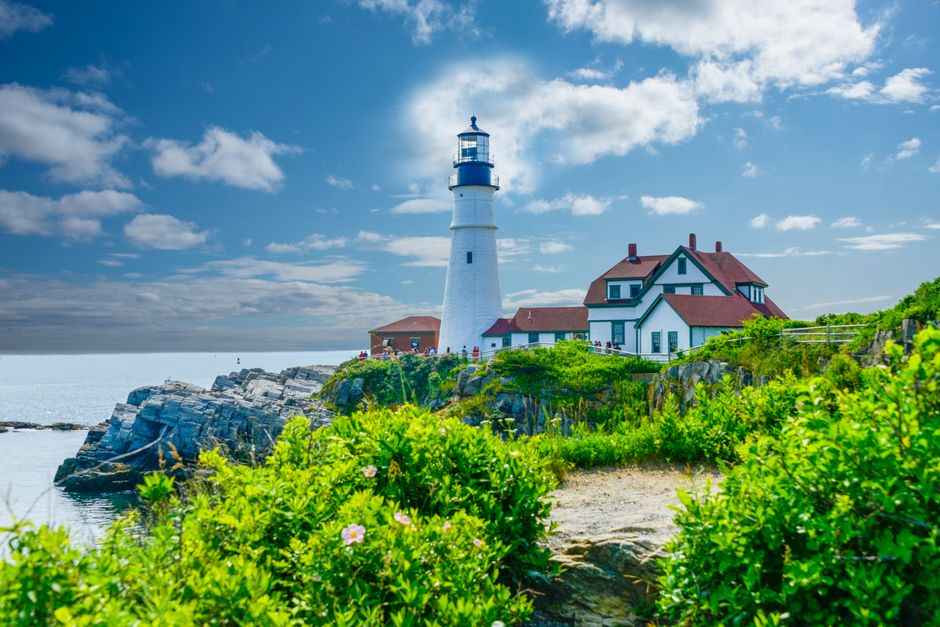
    Photo: Matthis Volquardsen, Pexels

    Maine gives demerit points for traffic convictions. You get a warning at 6 points, and 12 points can lead to a suspension. Points drop off once the conviction is one year old. Completing the Maine Driving Dynamics course, or another approved driver improvement course, takes 3 points off your total, once in any 12-month period. This guide explains how the system works for new and experienced Maine drivers.

    Key facts

    • Warning notice at 6 points.
    • Suspension possible at 12 points or more.
    • Points are erased when the conviction is one year old.
    • Driving Dynamics: 5-hour course, 3-point credit, once per 12 months.
    • Course fee: $70, as of November 2026. Some schools may charge extra.
    • Up to 4 violation-free credits, one for each clean calendar year.

    How many points for common Maine violations?

    From the Secretary of State’s demerit point rule (Chapter 1, 29-250), as linked from the BMV suspensions page. The rule says the list is not complete.

    Points Examples
    8 Operating after suspension (traffic infraction)
    6 Speeding 15 to 29 mph over the limit; driving on the wrong side or wrong way; improper passing; passing on the right; passing on a curve or hill; leaving the scene of a property damage crash; violation of instruction permit; operating without corrective lenses
    4 Speeding under 15 mph over the limit; failing to stop at a stop sign or red light; failing to yield to a pedestrian or emergency vehicle; imprudent driving or speed; operating without a license (traffic infraction)
    2 Failing to signal; following too close; illegal U-turn or other illegal turn; failure to obey a railroad crossing; failure to maintain control; operating without lights; littering; other moving violation

    Check your own record for exact points. The BMV sells driving records online or at branches: $5 for 3 years and $10 for 10 years, as of November 2026.

    What happens at 6 and 12 points?

    • 6 points: the Secretary of State sends a warning notice.
    • 12 points or more: your license can be suspended. The rule allows a suspension of up to 15 days for 12 points within one year.
    • Three suspensions in 3 years: you may face a further suspension of up to 120 days.

    When a suspension happens, you can ask for a hearing with the Secretary of State’s office. The suspension may stay in effect until the hearing. The decision can be appealed to Superior Court.

    Offenses that can bring a suspension without reaching 12 points

    Up to Offenses
    90 days Eluding a police officer, passing a roadblock, street racing (manual)
    60 days Operating after suspension
    30 days Failing to stop for police; leaving the scene of an injury crash; operating alone on a permit; operating without a license (crime); passing a stopped school bus; speeding 30 mph or more over the limit; loaning or altering a license; giving false information to police

    Other ways to lose a Maine license

    Some suspensions and revocations do not depend on points. The manual lists these among others:

    • Failing to appear in court or to pay a traffic fine: suspended until you appear or pay.
    • Driving to endanger: at least 30 days.
    • A minor illegally transporting, possessing or drinking alcohol in a vehicle, or transporting illegal drugs: at least 30 days.
    • Using a fake ID to buy alcohol or get into a bar under 21: up to 30 days for a first offense, 90 days for a second and one year after that, plus 6 demerit points.
    • Causing crash damage without liability insurance: license and registration suspended until proof of insurance is filed.
    • Vehicular manslaughter: revocation for at least 5 years, permanent if alcohol was involved. Habitual offender: revocation for at least one year.
    • A parent or guardian who signed a minor’s application can file a notarized request to have the permit or license suspended.

    The Secretary of State can also add license restrictions, call you in for a re-examination or a doctor’s statement, and suspend a license after a written adverse driving report from a police officer or a member of the public.

    New drivers: the provisional license matters more than points

    If your first Maine license was issued before 21, it is provisional for 2 years (1 year if first licensed at 21 or older). The BMV says a conviction for any moving violation in that period leads to a suspension: 30 days for a first, 180 days for a second and one year for a third. Under 18, breaking an intermediate license restriction brings 60 days, 180 days or one year. The BMV ties these to convictions, not to a point total. See Maine intermediate license rules for new drivers.

    The Maine Driving Dynamics course

    Driving Dynamics is a 5-hour driver improvement course run through the Maine Bureau of Highway Safety. It covers:

    • collision avoidance techniques
    • driving hazards and how to avoid them, including other drivers’ unsafe actions
    • driver habits and attitudes
    • the dangers of alcohol and other drugs with driving

    What the 3-point credit does

    • Three points come off your total after you complete the course.
    • You can get the credit only once in any 12-month period.
    • The rule says the credit is erased one year from the completion date.
    • Anyone can take it, even with a clean record.
    • Processing can take up to 2 weeks.
    • Completing it may also qualify you for an insurance discount.

    How to sign up

    1. Find a class on the Bureau of Highway Safety’s Driving Dynamics schedule. Classes are often run through local adult education programs.
    2. Call the number listed for the class, or use the registration link where one is given.
    3. Pay the course fee ($70 as of November 2026; some schools may charge more).
    4. If no class suits you, the Bureau has approved AAA online and classroom driver improvement courses for the same 3-point credit.

    Questions about how the credit shows on your license go to the BMV at 207-624-9000.

    Violation-free credits

    Each calendar year with no convictions, adjudications, suspensions or revocations earns one violation-free credit, up to 4. The Secretary of State may use them to offset an equal number of demerit points.

    Common questions

    How many points before a Maine license is suspended?

    12. You get a warning at 6.

    How long do points stay on a Maine record?

    Points are erased when the conviction is one year old.

    How much is the Maine Driving Dynamics course?

    $70 as of November 2026, according to the Bureau of Highway Safety. Some schools may add a fee.

    Can I take Driving Dynamics online?

    The Bureau has approved an AAA online driver improvement course that gives the same 3-point credit.

    Can I use the course to avoid a provisional suspension?

    The BMV ties provisional suspensions to a moving violation conviction, not to a point total. It does not say a course cancels them. Ask the BMV about your case.

    How many points is speeding in Maine?

    4 points under 15 mph over, 6 points for 15 to 29 mph over. At 30 mph or more over, you may face a suspension of up to 30 days.

    How do other states handle points?

    See points systems and license suspensions in the US.

    Main guide: learning to drive in Maine. Related: Maine permit test.

    Sources

    • Maine Department of the Secretary of State, Bureau of Motor Vehicles, “Maine Driver’s License Manual” Rev 11/23, Section 1 (www1.maine.gov)
    • Maine Secretary of State, “Chapter 1: Rules for Administrative Suspension Relating to Demerit Point Accumulation, Convictions and Adjudications” 29-250 (maine.gov)
    • Maine Bureau of Highway Safety, “Maine Driving Dynamics” (maine.gov)
    • Maine Bureau of Motor Vehicles, “License Suspensions & Revocations” (maine.gov)
    • Maine Bureau of Motor Vehicles, “Intermediate/Provisional License Suspensions” (maine.gov)
  • Avoiding Moose and Deer Collisions in Maine: Driver Guide

    Avoiding Moose and Deer Collisions in Maine: Driver Guide

    Photo: Nibman, Pexels

    The Maine Driver’s License Manual says cars and trucks hit moose and deer in Maine thousands of times every year. Moose crashes peak in May and June, and deer crashes peak in November. This guide covers when and where the risk is highest, what to do if you see a moose on the road, and how to brace if a crash cannot be avoided. Section 11 of the manual covers this, and it can come up on the permit test.

    When are moose and deer crashes most likely in Maine?

    Animal Peak time What the manual says
    Moose May and June Collisions increase dramatically. Autumn crashes are also common.
    Moose August to October Mating season. Use extreme caution if a moose is in or near the road.
    Deer Autumn, peaking in November Breeding season.
    Both Dusk to dawn Most active, as they tend to travel at night.

    Wildlife crashes can happen in all 12 months, at any time of day.

    Why moose are so hard to see at night

    Deer eyes reflect headlights well. Moose are so much taller that, as the manual puts it, drivers typically won’t see their eyes reflected in the headlights. Dark-colored animals are also very hard to see until they are right in front of you. That gives you less time to react.

    What to watch for:

    • Deer: eyes reflecting in your lights.
    • Moose: a large dark shape or silhouette, often higher than you expect.

    How to lower your risk on Maine roads

    • Take crossing signs seriously. Maine places moose and deer crossing signs where there are high numbers of animals and where collisions are a problem.
    • Expect more than one. Moose and deer often travel in small groups. If one crosses, others may follow.
    • Use high beams when you can. The manual says high beams let you see twice as far as low beams. Dim them for oncoming traffic and when following another vehicle.
    • Scan beyond your headlights. Look for dark shapes in or near the road, and glance at the road edges.
    • Slow down at night. The manual says headlights let you see clearly only about 250 feet ahead, so above about 50 mph on a dark road you are “driving blind”.
    • Leave more space. Add at least a second to your following distance at night, and at least two seconds on unfamiliar roads.
    • Skip tinted lenses after dark. No sunglasses or colored lenses at night or on cloudy days.

    What to do if a moose is standing in the road

    1. Slow down.
    2. Do not try to drive around it.
    3. Stay in your vehicle. Do not get out to watch it or chase it off the road.
    4. Give it plenty of room and time to wander off.

    The manual warns that moose can be unpredictable and may attack you or your vehicle.

    What if a crash is unavoidable?

    The manual gives this technique:

    1. Brake and steer straight.
    2. Let up on the brakes just before impact. This lets the front of the car rise slightly.
    3. Try to hit the tail end of the animal. This can lower the chance of it hitting the windshield area and may help you miss it.
    4. Duck down to protect yourself from windshield debris.

    After any crash, see what to do after a car accident.

    Rural road habits that help

    Night drives on rural Maine roads add other hazards the manual lists:

    • Gravel and dirt give less grip, so slow down and leave more space.
    • Narrow roads may have ditches or drop-offs instead of shoulders. Center your car in your lane.
    • Woods, crops and steep hills can block your view. Slow down and be ready to stop.
    • At a single-lane bridge, the first driver to reach it has the right of way.

    Scenario: a June evening drive

    You are driving home at dusk on a two-lane road through woods and pass a moose crossing sign. It is peak moose season and peak moose time of day. Drop your speed, use high beams if there is no oncoming traffic, and scan the road edges for a tall dark shape. If a moose steps out, brake and steer straight. Do not swerve around it.

    Common questions

    What are the two peak moose collision months in Maine?

    May and June. This is one of the practice questions in Section 11 of the manual.

    When are deer collisions highest in Maine?

    In autumn, peaking in November.

    Should I swerve to avoid a moose?

    The manual says brake and steer straight if a crash is imminent, and not to try to drive around a moose standing in the road.

    Can I get out to move a moose off the road?

    No. Stay in your car and give it time. Getting out puts you and other drivers at risk.

    What time of day is most dangerous?

    Dusk to dawn, when moose and deer are most active.

    Do high beams help?

    Yes, when there is no oncoming traffic. They let you see twice as far as low beams.

    Main guide: learning to drive in Maine. Related: Maine 70 hour driving log (plan your 10 night hours) and Maine permit test.

    Sources

    • Maine Department of the Secretary of State, Bureau of Motor Vehicles, “Maine Driver’s License Manual” Rev 11/23, Section 8 (Speed Limits) and Section 11 (Night Driving, Rural Roads, Wildlife Safety) (www1.maine.gov)
  • Maine 70 Hour Driving Log (MVE-21): Rules for Permit Holders

    Maine 70 Hour Driving Log (MVE-21): Rules for Permit Holders

    Photo: Phil Evenden, Pexels

    If you are under 21 in Maine, you must log at least 70 hours of supervised driving, including 10 after dark, before you can take the road test. The hours go on the BMV’s Permittee Driving Log, form MVE-21. This checklist covers who can supervise, who signs the log, what each entry needs and where to send it.

    Key facts

    • 70 hours total, at least 10 after dark.
    • Hours count only after your learner’s permit is issued.
    • You must also hold the permit for 6 months before applying for the road test.
    • Required for everyone under 21. Drivers 21 and older do not submit a log.
    • Falsifying the log is a Class E crime.

    Who can supervise your practice in Maine?

    Under Title 29-A, section 1304, the person beside you must:

    • hold a valid license and have held one for at least 2 years
    • be at least 20 years old
    • sit in the seat beside you
    • be licensed for the class of vehicle you are driving

    The supervisor must follow any restrictions on their own license. It is a Class E crime to supervise a permit driver while impaired by alcohol or drugs.

    Who signs the Maine driving log?

    Your situation Who certifies
    You have a parent, stepparent, guardian or spouse One of them
    You have none of those Your employer
    You are 18 or older and have none of the above, including no employer The Secretary of State may complete the certification if you give the name and address of the driver who supervised most of your 70 hours

    If the person certifying was not your main supervisor, they must give the name and address of the licensed driver who rode with you for most of the 70 hours.

    What goes on the MVE-21 form

    Your details

    • Name and date of birth
    • Mailing address and phone number
    • History number, found at the top left of your learner’s permit, above your date of birth

    Each drive

    • Date and time
    • Number of driving hours
    • Number of after-dark hours
    • Supervising driver’s name and age
    • Supervising driver’s license number

    The final page

    • Total hours of practice and total hours of night driving
    • The certifier’s printed name, relationship, signature and date, confirming 70 hours including 10 after dark

    The form has two pages of entry rows. The BMV says to duplicate pages as needed and keep a copy for your records.

    How to submit your log

    1. Check that you have held your permit for 6 months.
    2. Check that the totals reach 70 hours and 10 night hours.
    3. Have the certifier sign and date the log.
    4. Keep a copy.
    5. Mail it to: Secretary of State, Bureau of Motor Vehicles, Examination Section, 29 State House Station, Augusta, ME 04333-0029. Do not mail money or your permit with it.

    For drivers under 21, the log replaces the road test request card. Mailing it is how you get booked for the road test. Then read the Maine road test guide.

    Making your 70 hours count

    Use the practice to cover what the road test checks and what Maine drivers face:

    • Road test skills: parallel parking, straight-line backing, lane position, left and right turns.
    • Turnarounds: two-point and three-point turnarounds from Section 7 of the manual.
    • Night hours: high and low beams, and watching for moose and deer between dusk and dawn. See avoiding moose and deer collisions in Maine.
    • Winter: gentle braking and steering, longer following distances. See driving in snow, fog and rain.
    • Rural roads: gravel, narrow roads, single-lane bridges and uncontrolled intersections.

    Common questions

    How many hours do I need for a Maine license?

    70 hours, including 10 after dark, if you are under 21.

    Do driver ed hours count toward the 70?

    The BMV says the 70 hours must begin after your permit is issued. It does not say whether hours with a driver ed instructor count. Ask your driver education school or the BMV Examination Section.

    Can my older sibling supervise me?

    Yes, if they are at least 20, have held a license for 2 years and are licensed for the vehicle. A parent, stepparent, guardian or spouse still certifies the log.

    What if my permit expires before I finish?

    Your logged hours carry over to your next permit, and there is no extra wait before the road test.

    Is there an app for the Maine log?

    The BMV mentions that some parents track hours with the Road Ready app. The required form is still the MVE-21 log, so check with the BMV that what you submit meets the requirement.

    Do I need a log at 21 or older?

    No. Drivers 21 and older do not submit driving time and can take the road test without the 6-month wait.

    How do other states compare?

    See supervised driving hours by state.

    Main guide: learning to drive in Maine. Related: Maine permit test and Maine intermediate license rules.

    Sources

    • Maine Bureau of Motor Vehicles, “Driving Log” form MVE-21 Rev 5/22 (www1.maine.gov)
    • Maine Legislature, “Title 29-A, section 1304: Learner’s permits” (legislature.maine.gov)
    • Maine Bureau of Motor Vehicles, “License Age Restrictions” (maine.gov)
    • Maine Bureau of Motor Vehicles, “How to Obtain a License” (maine.gov)
    • Maine Bureau of Motor Vehicles, “Drivers License Exam” (maine.gov)
    • Maine Department of the Secretary of State, Bureau of Motor Vehicles, “Maine Driver’s License Manual” Rev 11/23 (www1.maine.gov)
  • Maine Intermediate License Rules: Curfew, Passengers, Phones

    Maine Intermediate License Rules: Curfew, Passengers, Phones

    Photo: Sinful, Pexels

    If you get your first Maine license before 18, it is an intermediate license. For 270 days you may not drive between 12 a.m. and 5 a.m., carry passengers other than immediate family without a qualified supervisor, or use a handheld phone or electronic device. This guide explains each rule, what breaking one costs, and how the separate 2-year provisional period works for every new driver under 21.

    Maine intermediate license at a glance

    Rule What Maine law says
    Who it applies to Licensed drivers under 18
    How long 270 days from the day you pass the road test. It can run past your 18th birthday.
    Night limit No driving between 12 a.m. and 5 a.m.
    Passengers Immediate family only, unless a qualified licensed driver is with you
    Phones and devices No handheld electronic device or mobile phone, even when stopped in traffic, at a light or at a stop sign
    Fine for a violation $250 to $500
    Suspension for a violation 60 days (1st), 180 days (2nd), 1 year (3rd or later)
    Extra restriction time Another 270 days per violation

    The 12 a.m. to 5 a.m. limit

    Title 29-A, section 1311 bans intermediate license holders from driving between 12 a.m. and 5 a.m. The statute lists no exceptions for work or school, and it does not lift the ban when a supervisor is in the car.

    Who counts as a passenger you can carry?

    Immediate family members are allowed. The BMV lists them as:

    • grandparent and step-grandparent
    • parent and stepparent
    • spouse
    • child and stepchild
    • brother, sister, stepbrother and stepsister

    When living with your immediate family, these also count:

    • a foreign exchange student
    • a person under court-appointed guardianship of an immediate family member
    • a child whose parent is deployed for military service and who is under the guardianship of an immediate family member

    The manual also includes analogous family members connected through a family foster home.

    The supervisor exception

    You can carry other passengers if a licensed driver is with you who:

    • has held a valid license for at least 2 years
    • is at least 20 years old
    • sits in the seat beside you
    • is licensed for the class of vehicle you are driving

    The phone and device ban

    You may not use, manipulate, talk into or otherwise interact with a handheld electronic device or mobile phone while driving on a public way. That includes being stopped in traffic, at a traffic light or at a stop sign. You may use one only after you pull over to the side of, or off, the road and stop where the car can safely stay. See hands-free and texting laws.

    What happens if you break an intermediate rule?

    1. A fine of $250 to $500.
    2. A suspension without a right to a hearing: 60 days for a first offense, 180 days for a second, one year for a third or later.
    3. Your restrictions are extended by another 270 days, which can run past 18. Each violation during an extension extends them again.

    Before your license is restored, the BMV may also require a $200 reinstatement fee, an approved driver traffic offender program, a road re-examination or court-ordered community service, depending on the violation.

    Restricted license decals

    Maine law requires the Secretary of State to offer intermediate license holders a set of 2 decals. One may go on the rear window and one in the upper left corner of the windshield, to show the driver may hold an intermediate license. The law says the car “may display” them, so they are optional.

    Provisional license: the 2-year rule for all new drivers under 21

    Separate from the intermediate rules, your first Maine license is provisional:

    • First license before 21: provisional for 2 years. It does not end when you turn 21.
    • First license at 21 or older: provisional for 1 year.

    During the provisional period, a conviction for any moving violation means a suspension: 30 days for a first violation, 180 days for a second and one year for a third or later. The BMV applies this to under-18 drivers too. Breaking an intermediate restriction carries the stricter 60-day, 180-day and one-year schedule above.

    Under 21, Maine also treats you as provisional for OUI purposes even after the 2 years. You may not drive after drinking any amount of alcohol. See zero tolerance laws for drivers under 21.

    Scenario: Saturday night at 16

    You got your license 3 months ago. A friend wants a ride home from a game at 10 p.m. Under the passenger rule, you cannot drive them unless a licensed driver 20 or older, licensed for 2 years, sits beside you. Even with that driver, you must be off the road by 12 a.m.

    Common questions

    How long is the Maine intermediate license?

    270 days from the day you pass the road test, longer if you break a restriction.

    Does the intermediate license end at 18 in Maine?

    Not automatically. The 270 days, and any extension, can run past your 18th birthday.

    Can I drive my siblings to school?

    Yes. Brothers, sisters, stepbrothers and stepsisters are immediate family.

    Can I drive my boyfriend or girlfriend?

    Not during the 270 days unless a qualified supervisor sits beside you, since they are not immediate family.

    Can I use GPS on my phone?

    You may not use, manipulate or interact with a handheld device while driving, even at a light. Set it up before you move, or stop safely off the road to change it.

    Does the curfew apply if my parent is in the car?

    The statute bans driving between 12 a.m. and 5 a.m. for under-18 license holders with no supervisor exception.

    How does Maine compare with other states?

    See GDL laws by state.

    Main guide: learning to drive in Maine. Related: Maine road test, Maine 70 hour driving log and Maine points system.

    Sources

    • Maine Legislature, “Title 29-A, section 1311: Intermediate license” (legislature.maine.gov)
    • Maine Legislature, “Title 29-A, section 1304: Learner’s permits” (legislature.maine.gov)
    • Maine Bureau of Motor Vehicles, “Graduated Drivers License” (maine.gov)
    • Maine Bureau of Motor Vehicles, “License Age Restrictions” (maine.gov)
    • Maine Bureau of Motor Vehicles, “Intermediate/Provisional License Suspensions” (maine.gov)
    • Maine Bureau of Motor Vehicles, “Family Resources” (maine.gov)
    • Maine Department of the Secretary of State, Bureau of Motor Vehicles, “Maine Driver’s License Manual” Rev 11/23 (www1.maine.gov)
  • Maine Road Test: What Is Tested and Why It Can Be Refused

    Maine Road Test: What Is Tested and Why It Can Be Refused

    Photo: Doug Kerr, CC BY-SA 2.0, via Wikimedia Commons

    The Maine road test checks that you can control your car forward and backward, keep your lane, turn and react to traffic. It includes parallel parking and straight-line backing. An examiner can also refuse to start the test if your car fails basic checks. This guide covers who can book, how to book, what to bring, what is tested and the refusal reasons listed by the Bureau of Motor Vehicles (BMV).

    Before you can book the Maine road test

    • You have passed the written test and vision screening. The road test is given only after all other tests and permit requirements are done.
    • You are at least 16 and have finished approved driver education, or you are 18 or older.
    • Under 21: you have held your learner’s permit for at least 6 months.
    • Under 21: you have logged 70 hours of practice, including 10 after dark, starting after your permit was issued.
    • 21 and older: no waiting period and no log.

    How to schedule the road test in Maine

    1. Under 21: mail your completed, certified driving log (MVE-21) to the BMV Examination Section, 29 State House Station, Augusta, ME 04333-0029. The log replaces the request card. Do not send money or your permit with it. See the Maine 70 hour driving log guide.
    2. 21 and older: mail the road test request card from the back of your learner’s permit to the same address.
    3. The BMV schedules you at the testing location nearest to you and mails an appointment notice.

    What to bring on test day

    • Your learner’s permit
    • Your exam appointment notice
    • Your own vehicle, registered (bring the registration) and inspected
    • A licensed driver with a valid license to come with you

    A car with an antique auto registration cannot be used for the test.

    Typical reasons the Maine road test is refused

    Appendix A of the Maine Driver’s License Manual lists these reasons the examiner may refuse the road test:

    Refusal reason How to avoid it
    Vehicle does not meet Maine inspection criteria (inspection sticker expired) Check the sticker date well before your test.
    Front seats not available for the examiner, or not properly secured to the floor Clear the passenger seat and make sure both front seats are firmly fixed.
    Vehicle not equipped for the weather, for example snow treads or chains In winter, test on suitable tires.
    Glove compartment not properly secured Make sure the glove box door latches shut.
    Applicant refuses to remove pets from the vehicle Leave pets at home.

    Section 2 of the manual adds that the driver exam includes a vehicle safety check. The test will not be given if any doors do not work, or if the vehicle fails the regular exam criteria.

    Quick pre-test vehicle check

    • Inspection sticker current
    • Registration in the car
    • All doors open and close from inside and out
    • Front seats secure, passenger seat empty
    • Glove box closes and stays shut
    • Lights, turn signals, brake lights, horn and wipers working
    • Windshield clear of cracks that block the view
    • No pets in the car

    What the examiner looks for

    The BMV and the manual say the examiner assesses whether you:

    • keep control of the vehicle at all times, driving forward and backward
    • keep proper lane position
    • turn left and right and drive straight ahead correctly
    • observe and react to other drivers, pedestrians, signs, signals and conditions
    • can parallel park and back up in a straight line

    You will not be asked to do anything extraordinary or illegal. Why a test is failed can depend on road conditions, traffic and how you cope with what happens on the drive.

    Practice these Maine manual maneuvers

    Parallel parking

    The manual’s method ends with you about 6 inches from the curb and not more than 18 inches away. Stop before touching the bumper of the car behind you. When pulling out, check traffic, signal and look over your shoulder.

    Two-point turnaround

    The manual describes using a driveway or alley to turn around when you cannot drive around the block. You can back into a driveway on your right, or pull forward into one on your left and then back out to the right.

    Three-point turnaround

    Use this only when the road is too narrow for a U-turn, and only on a two-lane road. Going around the block is better if you can.

    1. Check mirrors, signal right and stop on the right side.
    2. Signal left, check traffic and your left shoulder, turn hard left and stop at the other side.
    3. Shift to reverse, check traffic and both blind spots, turn hard right and back to the other side.
    4. Shift to drive, signal left, check traffic and drive forward into the right lane.

    For general backing, the manual says back slowly and do as little backing as possible.

    After the test

    • Pass: BMV staff issue a temporary license and explain how to get your photo license. Under 18, a parent or guardian signs for the license.
    • Fail: the examiner explains why and what to practice. You get a receipt to send in to request your next test.

    Snow, ice and cancellations

    If you are booked on a day with snow or icy conditions, you can choose to reschedule at no fee by calling 207-624-9000, ext. 52119. If state offices close for weather, exams are rescheduled automatically at no fee.

    Common questions

    Is parallel parking on the Maine road test?

    Yes. The BMV says the test includes parallel parking and straight-line backing.

    Can I use my parent’s car?

    Yes, as long as it is registered, inspected and passes the examiner’s checks. You must provide your own vehicle.

    Can I take the road test at 15 in Maine?

    No. You must be at least 16 with driver education, and under 21 you must have held your permit for 6 months.

    How much does the Maine road test cost?

    The BMV fee page does not list a separate road test fee. Ask the Examination Section before booking.

    How long until I can retake it?

    Ask the BMV how long the wait is. You send in the receipt you are given to request your next test.

    Can I use a backup camera?

    Ask the BMV before test day. Practice backing with mirrors and over-the-shoulder checks.

    Why do people fail road tests?

    See common US road test fails and road tests by state.

    Main guide: learning to drive in Maine. Related: Maine permit test and Maine intermediate license rules.

    Sources

    • Maine Department of the Secretary of State, Bureau of Motor Vehicles, “Maine Driver’s License Manual” Rev 11/23, Appendix A and Sections 1, 2, 5 and 7 (www1.maine.gov)
    • Maine Bureau of Motor Vehicles, “Drivers License Exam” (maine.gov)
    • Maine Bureau of Motor Vehicles, “License Age Restrictions” (maine.gov)
    • Maine Bureau of Motor Vehicles, “Permittee Driving Log MVE-21” Rev 5/22 (www1.maine.gov)
  • Maine Permit Test: 30 Questions, Pass Mark and How to Apply

    Maine Permit Test: 30 Questions, Pass Mark and How to Apply

    Photo: L'Mainerque, CC BY-SA 4.0, via Wikimedia Commons

    The Maine learner’s permit test has 30 questions, and you need at least 24 correct to pass. This guide covers who can apply, what to send the Bureau of Motor Vehicles (BMV), how the test is booked and what it covers. It is for first-time drivers in Maine, including teens finishing driver education.

    Key facts

    • Minimum age: 15.
    • Under 18: you must finish an approved driver education course before applying.
    • Test: 30 questions, pass with 24 correct, plus a free vision screening.
    • Fee: $35 for the Class C permit examination, as of November 2026.
    • The permit lasts 2 years and cannot be renewed.

    Who can get a Maine learner’s permit?

    Under Maine law (Title 29-A, section 1304), anyone 15 or older may apply. If you are 15 to 17, you must complete a driver education course first. At 18 or older, driver education is not required.

    What to send the BMV

    1. A completed Learner’s Permit application form (on the BMV Forms and Applications page).
    2. The $35 fee.
    3. Two forms of identification.
    4. Proof of Maine residency.
    5. Your driver education completion certificate, if you are under 18.
    6. A birth certificate, if you are under 23. A photocopy with the issuing agency’s embossed stamp is accepted. A notarized copy is not.

    Bring the documents to a BMV branch office or mail them to: Bureau of Motor Vehicles, Driver License Services Division, Examination Section, 29 State House Station, Augusta, ME 04333-0029. You can mail copies of identity documents, but you must show the originals at the exam.

    If you are under 18, a parent or legal guardian must sign your application.

    Applying through your driver ed school

    Maine law allows an approved driver education provider to collect your permit application and fee and to issue the permit. It also lets the Secretary of State waive the BMV-run exam when it receives a course completion certificate. Ask your school whether it handles any of this for you.

    How the Maine permit test is booked

    • Once your application is processed, the BMV schedules the written test at the location closest to your mailing address.
    • The appointment notice arrives by mail within three weeks.
    • You can reschedule with no penalty fee up to 48 hours before the test, using the contact details on your notice.
    • If state offices close for severe weather, your exam is rescheduled automatically at no fee.

    What is on the Maine written test?

    The BMV says the questions cover:

    • rules of the road
    • the meaning of road signs
    • pedestrian and bicycle safety
    • Maine’s operating under the influence (OUI) laws
    • the dangers of distracted driving

    The manual adds that the test places special emphasis on Maine’s drinking and driving laws. Study Section 3 (Ready to Drive) closely.

    How to study

    • Read the Maine Driver’s License Manual (Rev 11/23). The BMV says the practice questions at the end of each section will help you prepare.
    • Know the default speed limits: 45 mph outside built-up areas, 25 mph in business, residential and built-up areas, and 15 mph near schools at set times.
    • Learn the OUI rules. Under 21 you may not drive after drinking any amount. The adult limit is 0.08. A first OUI conviction at 0.08 to 0.14 means a fine of at least $500 ($600 with a test refusal) and at least 150 days without a license. At 0.15 or more, or with a refusal, speeding 30 mph or more over the limit, eluding police or a passenger under 21, add at least 48 hours in jail (96 hours with a refusal). A passenger under 21 in the car also adds 275 days to the OUI or refusal suspension. An open alcohol container in the passenger area is also illegal.
    • Learn sign shapes and colors. See US road signs by shape and color.

    Sample questions from the manual’s practice sections

    • How many days do you have to tell the BMV about a name or address change? (30)
    • What are the two peak moose collision months in Maine? (May and June)
    • On ice or snow, how much more distance does it take to stop than on dry pavement? (three to twelve times)
    • What color are construction warning signs? (orange, with black symbols or lettering)

    The vision screening

    You get a free vision screening when you arrive for the written exam. It checks how clearly you see and your side vision. You can instead ask your own doctor to do the exam and fill in the BMV eye examination form. Give the completed form to the examiner.

    Language help for the Maine permit test

    The BMV’s digital test is offered in Arabic, Canadian French, English, French, Lingala, Portuguese, Somali, Spanish and Swahili. Since February 1, 2026, the BMV also gives free professional interpreters for the written exam in other languages. Ask for this on the exam application form. Scheduling with an interpreter may take 4 weeks or more.

    Permit rules once you pass

    • Drive only with a licensed driver who is at least 20, has held a license for at least 2 years, sits beside you and is licensed for the vehicle class.
    • Carry your permit whenever you drive.
    • No handheld phone or electronic device, even when stopped in traffic, at a light or at a stop sign. You may use one only after pulling off the road and stopping safely.
    • Driving alone on a permit can lead to a suspension of up to 30 days.
    • If your permit expires, you reapply and retake the vision and written tests. Logged hours carry over.

    Next steps: log your hours with the Maine 70 hour driving log, then prepare for the Maine road test.

    Common questions

    How many questions are on the Maine permit test?

    30. You must answer at least 24 correctly.

    How much does the Maine permit test cost?

    $35 for the Class C permit examination, as of November 2026.

    Can I take the Maine permit test online?

    The BMV pages do not offer an online test. The BMV schedules you at a branch and mails you the appointment.

    Can I get my permit at 15 without driver’s ed?

    No. Under 18 you must finish an approved driver education course before applying.

    What if I fail the written test?

    Ask the Examination Section about any waiting period or retest fee at 207-624-9000, ext. 52119, or [email protected].

    Do I need a parent with me?

    If you are under 18, a parent or legal guardian must sign your application. A parent or guardian must also come with you when you sign for your license.

    How does Maine’s test compare with other states?

    See permit test questions by state.

    Main guide: learning to drive in Maine. Also see Maine intermediate license rules.

    Sources

    • Maine Bureau of Motor Vehicles, “How to Obtain a License” (maine.gov)
    • Maine Bureau of Motor Vehicles, “Drivers License Exam” (maine.gov)
    • Maine Bureau of Motor Vehicles, “Drivers License and Examination Fees” (maine.gov)
    • Maine Bureau of Motor Vehicles, “License Age Restrictions” (maine.gov)
    • Maine Department of the Secretary of State, Bureau of Motor Vehicles, “Maine Driver’s License Manual” Rev 11/23 (www1.maine.gov)
    • Maine Legislature, “Title 29-A, section 1304: Learner’s permits” (legislature.maine.gov)
  • Learning to Drive in Maine: Permit, Intermediate and Full License

    Learning to Drive in Maine: Permit, Intermediate and Full License

    Photo: Mohan Nannapaneni, Pexels

    This guide is for teens, parents and adults getting a first driver’s license in Maine. In Maine you can get a learner’s permit at 15 (after driver education if you are under 18), take the road test at 16 after 6 months and 70 logged hours, and drive on an intermediate license with curfew, passenger and phone limits for 270 days. Everything below comes from the Bureau of Motor Vehicles (BMV), the Maine Driver’s License Manual (Rev 11/23) and Maine law.

    Key facts

    • Permit age: 15. Under 18 you must finish an approved driver education course first.
    • Permit test: 30 questions, at least 24 correct to pass, plus a vision screening.
    • Permit lasts: 2 years and cannot be renewed.
    • Supervisor: licensed driver at least 20 years old, licensed for at least 2 years, in the seat beside you.
    • Before the road test (under 21): hold the permit 6 months and log 70 hours, 10 of them after dark.
    • License age: 16 with driver education, 18 without.
    • Under 18: intermediate license for 270 days: no driving 12 a.m. to 5 a.m., no non-family passengers without a qualified supervisor, no handheld phone or device.
    • Provisional period: 2 years if your first license comes before 21, 1 year at 21 or older.

    Maine licensing rules by age

    15 to 17 18 to 20 21 and older
    Driver education Required before the permit Not required Not required
    Permit hold before road test 6 months 6 months No wait
    Logged practice 70 hours, 10 after dark 70 hours, 10 after dark Not required
    Phone while on permit Banned Banned Banned
    First license Intermediate (270 days of restrictions), provisional for 2 years Provisional for 2 years Provisional for 1 year

    Step 1: get your Maine learner’s permit

    Send the BMV a learner’s permit application, the $35 fee, two forms of identification, proof of Maine residency, your driver education certificate (under 18) and a birth certificate (under 23). You can bring them to a branch or mail them to the BMV Examination Section in Augusta. The BMV then mails you a written test appointment. A free vision screening happens at the same visit.

    Full details, including how the test is scored and the interpreter program, are in the Maine learner’s permit test guide.

    Step 2: log 70 hours of supervised driving

    If you are under 21, your hours count only after your permit is issued. At least 10 of the 70 must be after dark. A parent, stepparent, guardian or spouse certifies the log (form MVE-21). An employer can certify it if you have none of those. See the Maine 70 hour driving log guide.

    Step 3: pass the Maine road test

    Under 21, you request the road test by mailing your completed driving log. At 21 or older, you mail the road test request card from the back of your permit. You bring your own registered and inspected vehicle. The test includes parallel parking and straight-line backing. An examiner can refuse to start the test if your car fails basic checks, for example an expired inspection sticker. See Maine road test and reasons it can be refused.

    Step 4: drive on an intermediate and provisional license

    Under 18, your first license is an intermediate license. For 270 days you may not drive between 12 a.m. and 5 a.m., carry passengers other than immediate family unless a qualified supervisor sits beside you, or use a handheld phone or device. Breaking these rules adds another 270 days and a suspension. Every new driver under 21 is also on a 2-year provisional license, so any moving violation conviction means a suspension. Read Maine intermediate license rules for new drivers.

    What the Maine Driver’s License Manual covers

    The written test is based on the manual. Each section ends with practice questions.

    Section Topics worth studying
    1. Your driver’s license Permit and license rules, tests, renewal, suspensions and demerit points
    2. State laws and rules Title, registration, insurance, annual inspection, sound system noise limit
    3. Ready to drive Vision, fatigue, distractions, aggressive driving, alcohol and drugs, OUI penalties
    4. Before you drive Seat and mirrors, safety belts, air bags, child seats
    5. Getting started Starting, stopping, steering, backing
    6. Rules of the road Right of way, signals, signs, pavement markings, lane use, crosswalks
    7. General driving Turns, intersections, roundabouts, passing, school buses, parking, turnarounds
    8. Managing time and space Speed, curves, slippery roads, stopping distance, speed limits, following distance
    9. Avoiding crashes Emergencies, skids, vehicle failures, stalls on railroad tracks
    10. Sharing the road Pedestrians, bicycles, motorcycles, trucks, emergency vehicles, police stops, move-over law
    11. Special driving challenges Night driving, work zones, rural roads, winter, fog, flooding, moose and deer
    12. Test your knowledge Review questions
    Appendix A Road test refusal reasons, road test information, residency and legal presence documents

    Maine driving laws new drivers often miss

    • Phones: the manual states that using a mobile phone or handheld electronic device while driving is prohibited in Maine. For permit holders and drivers under 18 the law also covers being stopped at a light or in traffic. See hands-free and texting laws.
    • Alcohol under 21: you may not drive after drinking any amount. Driving with any alcohol in your blood, or refusing a test, costs your license for at least one year, plus another 180 days if you had a passenger under 21 with you. See zero tolerance laws.
    • Annual inspection: every Maine-registered vehicle needs a current inspection sticker, renewed once a year at an official inspection station.
    • Default speed limits: unless posted otherwise, 45 mph outside built-up areas, 25 mph in business, residential and built-up areas, and 15 mph passing a school at recess or when children are arriving or leaving (from half an hour before the school day starts to half an hour after it ends). Speeding fines double in school zones.
    • School buses: stop for a bus with red lights flashing from either direction, unless a solid divider separates you from it on a divided highway. See school bus stopping laws.
    • Bicycles: leave at least 3 feet between your car and the bicycle when passing.
    • Move-over law: slow down and, if you safely can, change lanes away from an emergency vehicle stopped at the roadside. See move over laws.
    • Parking: no parking within 10 feet of a fire hydrant, within 15 feet of a crosswalk or within 15 feet of a fire station driveway. Park no more than 18 inches from the curb. Parking in a disability space without a placard or plates is a $100 fine, and parking in the striped access aisle beside one is at least $200.
    • Snow and ice: drivers of vehicles under 10,000 pounds must take reasonable measures to stop snow or ice falling off their vehicle.
    • Pickup trucks: passengers under 19 must ride inside the cab, with limited exceptions such as workers, licensed hunters and parade participants.
    • Car stereo: no sound system audible beyond 25 feet and over 85 decibels.
    • Wildlife: moose collisions peak in May and June, deer collisions in November. See avoiding moose and deer collisions in Maine.
    • Seat belts and child seats: everyone in the car must be belted. A child under 55 pounds rides in a child safety seat. A child of 55 to 79 pounds who is under 8 uses an approved child restraint. Children under 12 who weigh less than 100 pounds ride in the back seat when possible. See seat belt and child seat laws.
    • Headlights: required from sunset to sunrise, whenever your wipers are in constant use and whenever you cannot see 1,000 feet ahead. Dim your high beams within 500 feet of an oncoming vehicle and within 300 feet of a vehicle you are following.
    • Following distance: the manual teaches at least 4 seconds behind the vehicle in front, including motorcycles.
    • Fire trucks: do not follow within 500 feet of a fire truck answering an alarm.
    • Blind pedestrians: stop for anyone with a white cane or guide dog, at least 10 feet away. Failing to yield is a fine of $50 to $1,000.
    • Left turns: yield to oncoming bicycles and roller skiers, and turn only if you will not interfere with them.
    • Reading: reading printed material while driving is illegal.
    • Loads and pets: do not drive with more than 3 people in the front seat, or with a load, if it blocks your view or your controls. A dog in an open pickup bed or convertible must be secured so it cannot fall or jump out.
    • Crashes: report any crash with an injury or $1,000 or more in damage to the police or sheriff. If you hit a dog, cat or livestock, take reasonable steps to tell the owner, or police or animal control if you cannot find them. See what to do after a crash.

    Owning a car in Maine

    • Title: a vehicle 25 years old or newer needs a Maine title before its first registration. Keep the title somewhere safe, never in the car.
    • Registration: pay the excise tax at your town office first, then register. A passenger car costs $35 a year to register. New residents must apply within 30 days. Under 18, a parent or guardian also signs the registration.
    • Insurance: every owner and driver must carry liability insurance and show evidence when an officer asks, even in a car you do not own. Maine policies include uninsured motorist cover. See minimum car insurance by state.
    • Inspection standards: tires need at least 2/32 of an inch of tread, the horn must be heard from 200 feet, and the foot brake must stop the car within 30 feet from 20 mph. A gas car may not give off visible smoke for more than 5 seconds in a row.

    Maine license and test fees

    As of November 2026, from the BMV fee page:

    Item Fee
    Class C permit examination (written test) $35
    Class C license, under 65, 6 years $30
    REAL ID Class C license, under 65, 6 years $55
    Converting a Class C license from another state $35 application plus $30 license
    Reinstatement after a suspension $200 (intermediate and provisional suspensions)

    The BMV fee page does not list a separate road test fee. Check with the BMV Examination Section before booking. For REAL ID documents, see REAL ID and your first license.

    Keeping your Maine license

    Maine uses demerit points. The Secretary of State warns you at 6 points, and 12 points can lead to a suspension. A Maine Driving Dynamics course takes 3 points off your total. A parent or guardian who signed your application can ask the Secretary of State, by notarized request, to suspend your permit or license. See Maine points system and the Driving Dynamics course.

    Moving to Maine with a license or permit

    • New residents must get a Maine license within 30 days.
    • With a valid out-of-state license, the written and road tests may be waived.
    • At 16 or 17 you may need to show proof of an approved driver education course.
    • A 16-year-old visiting with a valid out-of-state permit may drive in Maine with a supervisor who is at least 20 and has held a license for 2 years.

    See moving to a new state and driving with a permit in another state.

    Common questions

    How old do you have to be to drive in Maine?

    15 for a learner’s permit and 16 for a license if you have completed driver education. Without driver education you must be 18 to get a license.

    Is driver’s ed required in Maine?

    Yes, if you are under 18. You need an approved course before you can apply for the permit. From 18, driver education is not required.

    How many hours of practice do you need in Maine?

    70 hours, including 10 after dark, if you are under 21. Drivers 21 and older do not need to log hours.

    Can I drive my friends at 16 in Maine?

    Not for the first 270 days of your intermediate license, unless a licensed driver at least 20 years old, licensed for 2 years, sits beside you. Immediate family members are allowed.

    What time is the Maine teen curfew?

    Drivers under 18 on an intermediate license may not drive between 12 a.m. and 5 a.m.

    What happens if my permit expires before I pass?

    You apply again and retake the vision screening and written test. Your logged hours carry over, and there is no extra wait before the road test.

    How does Maine compare with other states?

    See how to get a driver’s license in the US, GDL laws by state and supervised driving hours by state.

    Sources

    • Maine Department of the Secretary of State, Bureau of Motor Vehicles, “Maine Driver’s License Manual” Rev 11/23 (www1.maine.gov)
    • Maine Bureau of Motor Vehicles, “How to Obtain a License” (maine.gov)
    • Maine Bureau of Motor Vehicles, “License Age Restrictions” (maine.gov)
    • Maine Bureau of Motor Vehicles, “Graduated Drivers License” (maine.gov)
    • Maine Bureau of Motor Vehicles, “Drivers License Exam” (maine.gov)
    • Maine Bureau of Motor Vehicles, “Drivers License and Examination Fees” (maine.gov)
    • Maine Bureau of Motor Vehicles, “Intermediate/Provisional License Suspensions” (maine.gov)
    • Maine Legislature, “Title 29-A, section1304: Learner’s permits” (legislature.maine.gov)
    • Maine Legislature, “Title 29-A, section1311: Intermediate license” (legislature.maine.gov)
  • Maine Permit Practice Test: 30 Free Questions With Answers

    Maine Permit Practice Test: 30 Free Questions With Answers

    Photo: Jeremy Hardin, Pexels

    The Maine learner’s permit test has 30 questions, and you need 24 correct to pass. This practice test matches that length. The 30 questions are original and unofficial, written from the Maine Driver’s License Manual (Rev 11/23) and Maine law, and they are not the BMV’s questions.

    Maine written test: key facts

    • 30 questions. You pass with 24 correct, so you can miss 6.
    • Topics: rules of the road, road signs, pedestrian and bicycle safety, OUI laws and distracted driving.
    • The manual says the test puts special emphasis on Maine’s drinking and driving laws.
    • Minimum age 15. Under 18, you must finish approved driver education first.

    Booking, documents and fees: the Maine learner’s permit test guide. The full process is in learning to drive in Maine.

    Signs, signals and markings (questions 1 to 4)

    1. You can recognize a STOP sign from behind, or when it is covered in snow, because it is the only sign that is:

    • A. Triangular
    • B. Round
    • C. Eight-sided (an octagon)
    • D. Shaped like a pennant

    Answer: C. Only STOP signs use the octagon shape. Manual topic: signs.

    2. A round yellow sign with a black X and the letters RR means:

    • A. A rest area is ahead
    • B. Road repairs are ahead
    • C. The right lane ends
    • D. A railroad crossing is ahead

    Answer: D. The round shape is used only for railroad advance warning signs. Manual topic: signs.

    3. Orange signs with black letters or symbols tell you that:

    • A. A school is nearby
    • B. You are coming to a work zone
    • C. A hospital is nearby
    • D. A scenic area is ahead

    Answer: B. Orange is the color for work zone signs. Slow down and watch for workers and equipment. Manual topic: signs.

    4. The center line has a broken yellow line on your side and a solid yellow line on the other side. This means:

    • A. You may pass when it is safe, but traffic on the other side may not
    • B. Neither direction may pass
    • C. Only the other direction may pass
    • D. You must stay 10 mph below the limit

    Answer: A. You may pass when the broken line is on your side and the road ahead is clear. Manual topic: pavement markings.

    Right of way and roundabouts (questions 5 to 9)

    5. At an all-way stop, the first vehicle to come to a complete stop should:

    • A. Wait for every other car to go
    • B. Go only after sounding the horn
    • C. Wait for a pedestrian signal
    • D. Go first, after checking that the way is clear

    Answer: D. The first to stop is the first to go, once it is safe. Manual topic: right of way.

    6. An ambulance with its siren and lights on is coming up behind you. You must:

    • A. Speed up to stay ahead of it
    • B. Pull over to the right edge of the road and stop until it passes
    • C. Stop at once, even in the middle of an intersection
    • D. Move to the left lane and keep going

    Answer: B. Clear any intersection first, then pull to the right and stop. Manual topic: emergency vehicles.

    7. When you reach a traffic circle or roundabout in Maine, you must:

    • A. Expect vehicles in the circle to yield to you
    • B. Stop inside the circle before each exit
    • C. Yield to vehicles already in the circle
    • D. Use the left lane to leave

    Answer: C. Vehicles entering must yield to those already circulating, unless police or signals direct otherwise. Manual topic: traffic circles and roundabouts.

    8. It is unlawful in Maine to follow a fire truck that is answering an alarm within:

    • A. 100 feet
    • B. 200 feet
    • C. 300 feet
    • D. 500 feet

    Answer: D. Stay well back so crews have room to stop and work. Manual topic: emergency vehicles.

    9. Maine drivers should signal at least how far before turning or changing lanes?

    • A. 25 feet
    • B. 50 feet
    • C. 100 feet
    • D. 500 feet

    Answer: C. Signal as early as you can, and at least 100 feet before any change. Manual topic: turning.

    Speed limits and space (questions 10 to 16)

    10. Unless signs show otherwise, the speed limit outside any business, residential or built-up area of Maine is:

    • A. 35 mph
    • B. 45 mph
    • C. 55 mph
    • D. 65 mph

    Answer: B. This is Maine’s default limit for open roads that have no posted limit. Manual topic: speed limits.

    11. Unless posted otherwise, the speed limit in a Maine business district, residential district or built-up area is:

    • A. 15 mph
    • B. 25 mph
    • C. 30 mph
    • D. 35 mph

    Answer: B. Watch for children, parked cars and pedestrians in these areas. Manual topic: speed limits.

    12. When passing a school during recess, or while children are going to or from school, Maine’s limit is:

    • A. 10 mph
    • B. 15 mph
    • C. 20 mph
    • D. 25 mph

    Answer: B. Fines are higher for speeding in a school zone. Manual topic: speed limits.

    13. The manual says to keep at least how much time between your car and the vehicle in front?

    • A. 1 second
    • B. 2 seconds
    • C. 3 seconds
    • D. 4 seconds

    Answer: D. Add at least a second at night, and more in bad weather. Manual topic: following distance.

    14. At highway speeds of 50 to 55 mph, how long does a safe pass take?

    • A. 2 to 3 seconds
    • B. 4 to 5 seconds
    • C. 10 to 12 seconds
    • D. 20 to 25 seconds

    Answer: C. In that time you cover a long distance, so you need a lot of clear road ahead before you pull out. Manual topic: passing.

    15. On snow or ice, stopping takes how much more distance than on dry pavement?

    • A. 3 to 12 times as much
    • B. About the same
    • C. Up to twice as much
    • D. About 20 times as much

    Answer: A. Slow down well before intersections and curves in winter. Manual topic: winter driving.

    16. You must dim your headlights when you follow another vehicle within:

    • A. 100 feet
    • B. 300 feet
    • C. 500 feet
    • D. 1,000 feet

    Answer: B. Dim within 500 feet of an oncoming vehicle and within 300 feet of a vehicle you are following. Manual topic: night driving.

    Sharing the road, wildlife and parking (questions 17 to 20)

    17. You are approaching a stopped school bus with red lights flashing on an undivided Maine highway. You must:

    • A. Stop, from either direction, and wait until the bus moves or the driver signals you on
    • B. Stop only if you are behind the bus
    • C. Slow to 15 mph and pass carefully
    • D. Stop only when children are in the road

    Answer: A. Passing a stopped school bus with red lights flashing is illegal on school property, any undivided highway or a parking area. Manual topic: school buses.

    18. Collisions with moose in Maine rise sharply during which months?

    • A. May and June
    • B. January and February
    • C. March and April
    • D. August and September

    Answer: A. Moose are tall, so their eyes rarely reflect in your headlights. Slow down at dawn and dusk. See avoiding moose and deer collisions in Maine. Manual topic: moose and deer.

    19. You see a deer cross the road ahead. The manual says to:

    • A. Speed up to pass the spot quickly
    • B. Flash your high beams and keep going
    • C. Swerve hard into the other lane
    • D. Sound the horn and watch for more deer following

    Answer: D. Deer often travel in groups. Deer strikes are most common in October and November. Manual topic: moose and deer.

    20. Under the local parking rules listed in the Maine manual, you may not park within how far of a fire hydrant?

    • A. 5 feet
    • B. 10 feet
    • C. 15 feet
    • D. 25 feet

    Answer: B. The manual lists this with other places you may not park, such as within 15 feet of a crosswalk. Manual topic: parking.

    OUI and alcohol (questions 21 to 23)

    21. A Maine driver under 21 may drive after drinking:

    • A. No amount of alcohol at all
    • B. Up to a BAC of 0.02
    • C. Up to a BAC of 0.05
    • D. One drink per hour

    Answer: A. Under 21 you may not drive after consuming any amount of alcohol. Manual topic: alcohol and the law.

    22. For drivers 21 and older in Maine, operating under the influence includes driving with an alcohol level of:

    • A. 0.02 or more
    • B. 0.05 or more
    • C. 0.08 or more
    • D. 0.10 or more

    Answer: C. You can also be convicted of OUI on the officer’s evidence of impaired driving alone. Manual topic: alcohol and the law.

    23. If you refuse a chemical test after being stopped for OUI in Maine:

    • A. Nothing happens unless you are convicted
    • B. You pay a small fine only
    • C. You get a warning on a first refusal
    • D. Your license is suspended right away by the Secretary of State, without court action

    Answer: D. Driving in Maine means you have agreed to testing. A refusal also counts against you in court. Manual topic: implied consent.

    Maine permit and intermediate license rules (questions 24 to 30)

    24. Your permit supervisor in Maine must be a licensed driver who:

    • A. Is at least 20, has held a license for at least 2 years and sits beside you
    • B. Is at least 18 and sits anywhere in the car
    • C. Is any licensed adult, even in the back seat
    • D. Is a parent only

    Answer: A. The supervisor must also be licensed for the class of vehicle you are driving. Manual topic: learner’s permit.

    25. Before a Maine driver under 21 can take the road test, they must hold the permit 6 months and log at least:

    • A. 40 hours, including 5 at night
    • B. 50 hours, including 10 at night
    • C. 70 hours, including 10 at night
    • D. 100 hours, including 20 at night

    Answer: C. Log the hours with your supervisor. See the Maine 70 hour driving log. Manual topic: learner’s permit.

    26. On a Maine intermediate license you may not drive between:

    • A. 9 p.m. and 5 a.m.
    • B. 11 p.m. and 6 a.m.
    • C. 12 a.m. and 5 a.m.
    • D. 1 a.m. and 4 a.m.

    Answer: C. The law lists no work or school exception. See Maine intermediate license rules. Title 29-A §1311: intermediate license.

    27. For how long after you pass the road test do the Maine intermediate license restrictions apply?

    • A. 90 days
    • B. 180 days
    • C. 270 days
    • D. 365 days

    Answer: C. A violation adds another 270 days, which can run past your 18th birthday. Title 29-A §1311: intermediate license.

    28. An intermediate license holder wants to drive a friend home. This is allowed only if:

    • A. A qualified licensed driver aged 20 or older, licensed 2 years, sits beside them
    • B. The friend is under 16
    • C. It is daylight
    • D. The trip is less than 10 miles

    Answer: A. Without that supervisor you may carry immediate family members only. Title 29-A §1311: intermediate license.

    29. A permit or intermediate license holder may use a handheld phone:

    • A. At a red light
    • B. While stopped in traffic
    • C. At a stop sign
    • D. Only after pulling off the road and stopping where the car can safely stay

    Answer: D. Being stopped in traffic, at a light or at a stop sign does not count as safely pulled over. Manual topic: distracted driving.

    30. Your first Maine license, issued before age 21, is provisional for 2 years. A first moving violation conviction in that time brings a suspension of:

    • A. 7 days
    • B. 30 days
    • C. 60 days
    • D. 1 year

    Answer: B. Second and third offenses bring longer suspensions. Manual topic: provisional license.

    How to score yourself against the Maine standard

    Correct out of 30 What it means
    28 to 30 Ready for the BMV test.
    24 to 27 A pass at the BMV standard. Review what you missed, especially OUI.
    Under 24 A fail on the real test. Reread the manual and its section practice questions.

    The manual ends each section with practice questions. Work through those as well as this test, since the BMV says they help you prepare.

    Common questions

    Are these the real Maine BMV questions?

    No. They are original, unofficial practice questions written from the Maine Driver’s License Manual and Title 29-A.

    How many questions can I miss on the Maine permit test?

    Six. You need 24 of 30 correct.

    What does the Maine test focus on?

    Rules of the road, road signs, pedestrian and bicycle safety, OUI laws and distracted driving. The manual says drinking and driving laws get special emphasis.

    Can I take the test in another language?

    The BMV offers the digital test in several languages and free interpreters for others. See the Maine learner’s permit test guide.

    What happens after I pass?

    You drive with a qualified supervisor, log 70 hours (10 at night) over at least 6 months, then take the road test. See learning to drive in Maine.

    Are there practice tests for other states?

    Yes. See US permit practice tests by state.

    Sources

    • Maine Bureau of Motor Vehicles, “Maine Driver’s License Manual” (Rev 11/23) (maine.gov)
    • Maine Bureau of Motor Vehicles, “Drivers License Exam” (maine.gov)
    • Maine Legislature, “Title 29-A, §1304, Learner’s permit” (legislature.maine.gov)
    • Maine Legislature, “Title 29-A, §1311, Restricted licenses for minors” (legislature.maine.gov)