Category: Michigan

  • Michigan Graduated License: Levels 1, 2 and 3 Explained

    Michigan Graduated License: Levels 1, 2 and 3 Explained

    Photo: Provisionshots LLC, Pexels

    Michigan’s graduated driver licensing (GDL) has three license levels for drivers under 18: Level 1 learner’s license from 14 years 9 months, Level 2 intermediate license from 16 and Level 3 full license from 17. This page sets out what each level allows, how long you must hold it and the clean-record periods you need to move up, under MCL 257.310e and Secretary of State (SOS) guidance.

    Michigan GDL levels compared

    Level 1 learner’s license Level 2 intermediate license Level 3 full license
    Earliest age 14 years 9 months 16 17
    Before you get it Segment 1 finished, parent or guardian approval 6 months on Level 1, Segment 2, 50 supervised hours (10 at night), driving skills test passed, 90 clean days 6 months on Level 2, 12 clean consecutive months
    Supervision Always: licensed parent or guardian, or licensed driver 21+ designated by them Not needed in the day None
    Night limit Supervised at all times No driving 10 p.m. to 5 a.m., with exceptions None
    Passengers Supervisor present No more than one under 21, with exceptions No GDL limit
    Phone No cell phone use (Kelsey’s Law) No cell phone use (Kelsey’s Law) Hands-free law for all drivers

    Level 1: the Michigan learner’s license

    • Requires Segment 1 driver education, which you can start at 14 years 8 months with parent permission. See Michigan Segment 1 explained.
    • You may drive only with a licensed parent or legal guardian, or, with their permission, a licensed driver 21 or older.
    • After 3 continuous months and 30 logged hours (2 at night) you can take Segment 2.
    • You must hold Level 1 for at least 6 months before the driving skills test. The 3-month mark is only the gate for Segment 2.

    Level 2: the Michigan intermediate license

    Requirements

    • At least 16 years old.
    • Level 1 held for at least 6 months.
    • Segment 2 completed.
    • 50 supervised hours, 10 at night, certified by a parent or guardian. See the 50-hour log checklist.
    • Driving skills test passed. See the Michigan driving skills test.
    • No convictions, suspensions or at-fault crashes in the 90 days before you apply.

    If your Level 1 was issued as a photo hard card, you move to Level 2 automatically once you meet these rules and pass the skills test. With a paper Level 1, you visit an SOS office with your Level 1, Segment 2 certificate, skills test certificate and identity documents.

    Night rule: 10 p.m. to 5 a.m.

    You may not drive between 10 p.m. and 5 a.m. unless you are:

    • driving to or from work, or in the course of work
    • driving to or from an authorized activity, such as a school event
    • with a parent, legal guardian or licensed driver 21 or older designated by them

    Passenger rule: one under 21

    You may carry no more than one passenger under 21, unless the passengers are immediate family, you are going to or from work or an authorized activity, or a parent or designated adult 21+ is in the car.

    Phones

    Kelsey’s Law bans Level 1 and Level 2 drivers from making or taking non-emergency calls while driving, including hands-free calls. Official sources disagree about voice systems built into the car, so avoid them too. More detail: Kelsey’s Law and the hands-free law.

    Level 3: the Michigan full license

    • At least 17 years old.
    • At least 6 months on Level 2.
    • 12 consecutive months with no moving violations, at-fault crashes or suspensions.

    SOS issues Level 3 automatically, at no fee, once you qualify, unless a parent or guardian asks to delay it because they feel you are not ready. A ticket or at-fault crash restarts the clean-record clock, so it can delay Level 3. See Michigan points and young driver rules.

    Worked example

    A teen starts Segment 1 at 14 years 8 months and gets Level 1 at 14 years 9 months. Segment 2 can start after 3 months and 30 hours. The skills test can come once Level 1 has been held 6 months and the 50 hours are logged, but the Level 2 license itself still waits until the 16th birthday. Level 3 then follows at 17 at the earliest, after 6 months on Level 2 and a clean 12 months.

    Common questions

    Can a Level 2 driver drive at night for a job?

    Yes. Driving to or from work, or as part of the job, is an exception to the 10 p.m. to 5 a.m. rule.

    Can I drive my brother and sister on Level 2?

    Yes. Immediate family members do not count toward the one-passenger-under-21 limit.

    Who can supervise a Level 1 driver?

    A licensed parent or legal guardian, or a licensed driver 21 or older whom the parent or guardian designates.

    Can I use hands-free calling on Level 2?

    No. Kelsey’s Law covers hands-free use too. Emergency calls are allowed.

    Does a speeding ticket stop me getting Level 3?

    It can. Level 3 needs 12 consecutive months with no moving violations, at-fault crashes or suspensions.

    How does Michigan compare with other states?

    See US graduated licensing compared.

    Back to the main guide: learning to drive in Michigan.

    Sources

    • Michigan Legislature, “MCL 257.310e Graduated licensing” (legislature.mi.gov)
    • Michigan Department of State, “New drivers (under 18)” (michigan.gov)
    • Michigan Department of State, “Drivers under 18” FAQ (michigan.gov)
    • Michigan Department of State, “Michigan’s Graduated Driver Licensing: A Guide for Parents” (SOS-383) (michigan.gov)
    • Michigan State Police, “Kelsey’s Law” flyer (michigan.gov)
    • Michigan Department of State, “What Every Driver Must Know” (SOS-133, Rev. 03/24 edition read; current edition October 2025)
  • How to Get a Driver’s License in Michigan: Teens and Adults

    How to Get a Driver’s License in Michigan: Teens and Adults

    Photo: Hao Chen, Pexels

    This guide is for Michigan teens, parents and adults getting a first driver’s license. Teens go through graduated driver licensing (GDL): Segment 1 driver education from 14 years 8 months, a Level 1 learner’s license from 14 years 9 months, a Level 2 intermediate license from 16 and a Level 3 full license from 17. Adults 18 and older pass a knowledge test, hold a Temporary Instruction Permit (TIP) for at least 30 days, then take the driving skills test. The Michigan Department of State (Secretary of State, SOS) runs licensing; private testing businesses give the road test.

    Key facts

    • Handbook: “What Every Driver Must Know”, October 2025 edition.
    • Teens: Segment 1 at 14 years 8 months, Level 1 at 14 years 9 months, Level 2 at 16, Level 3 at 17.
    • Supervised driving: 50 hours, including 10 at night, before the driving skills test.
    • Adults 18+: knowledge test (online or at an SOS office), then at least 30 days on a TIP.
    • Road test: given by third-party driver testing businesses, not by SOS. They set their own fees.

    How to get a driver’s license in Michigan as a teen

    1. Segment 1 (14 years 8 months, parent permission). At least 24 hours of classroom, 6 hours behind the wheel and 4 hours of observation, ending in a state exam you pass with at least 70%. See Michigan Segment 1 explained.
    2. Level 1 learner’s license (14 years 9 months). Drive only with a licensed parent or guardian, or a licensed driver 21 or older the parent designates.
    3. Segment 2. After at least 3 continuous months on Level 1 and 30 logged hours, including 2 at night. At least 6 hours of classroom and a state exam (70% to pass). See Michigan Segment 2 and when to book it.
    4. Finish the log. 50 supervised hours in total, 10 at night, certified by a parent or guardian. See the Michigan 50-hour log checklist.
    5. Driving skills test. After at least 6 months on Level 1 and Segment 2. See the Michigan driving skills test guide.
    6. Level 2 intermediate license (16). Also needs 90 days with no convictions, at-fault crashes or suspensions before you apply.
    7. Level 3 full license (17). After at least 6 months on Level 2 and 12 consecutive months with no moving violations, at-fault crashes or suspensions.

    The full rules for each level, including night and passenger limits, are in Michigan graduated licensing Levels 1, 2 and 3.

    Michigan GDL at a glance

    Stage Earliest age Main rule
    Segment 1 14 years 8 months Classroom and behind-the-wheel training with an approved provider
    Level 1 14 years 9 months Always supervised by a parent, guardian or designated licensed adult 21+
    Segment 2 After 3 months on Level 1 30 hours logged first, 2 at night
    Level 2 16 No driving 10 p.m. to 5 a.m. and no more than one passenger under 21, with exceptions
    Level 3 17 Full license after a clean 12 months

    Getting a Michigan license at 18 or older

    • Pass the knowledge test, which includes a road sign test. Since July 2025 adults can take it online; it is the same test as in SOS offices. See the Michigan knowledge test guide for adults.
    • Visit an SOS office to get the TIP and practice with a licensed adult. See the Michigan TIP guide.
    • After 30 days on the TIP, book the driving skills test with a testing business. SOS staff may waive the 30 days if you were licensed before in Michigan, another state or another country.
    • Adults do not need driver education.

    Where you take the Michigan road test

    The state does not give driving skills tests. Driver testing businesses with written agreements with the Department of State do. Fees are set by each business and are not regulated by law, so compare before booking. See Michigan road test providers and fees.

    What the Michigan handbook covers

    Chapter Topics Go deeper
    1 Your Driver’s License License types, REAL ID, GDL, TIP, testing, renewal REAL ID for a first license
    2 Your Driving Record, Teens and Parents Points, drunk driving (OWI), Zero Tolerance, reexaminations Michigan points and young drivers
    3 Voter Registration and State IDs Registering to vote and state ID cards Covered in the handbook
    4 Traffic Laws Distracted driving, seat belts, work zones, school buses, right of way, parking Kelsey’s Law and the hands-free law
    5 Signs, Pavement Markings and Signals Sign shapes and colors, lane lines, signals US road signs by shape and color
    6 Sharing the Road Pedestrians, cyclists, motorcycles, trucks Sharing the road
    7 Emergencies and Special Situations Crashes, breakdowns, bad weather Driving in snow, fog and rain

    The handbook ends with a “Safe Driving Knowledge Test” of sample questions. Use it before the adult knowledge test.

    Michigan rules new drivers get caught by

    • Phones: all Michigan drivers must be hands-free. Under Kelsey’s Law, Level 1 and Level 2 drivers may not make or take non-emergency calls while driving, including hands-free calls. Official sources disagree about built-in car voice systems, so avoid them too.
    • Alcohol under 21: Zero Tolerance applies from a BAC of 0.02. The adult OWI limit is 0.08. See zero tolerance laws.
    • Points: 12 or more points in two years leads to a driver reexamination, where your license can be suspended.
    • Probation: every new driver, teens included, is on probation for at least 3 years. One or two violations can be enough for a driver reexamination.
    • Moving in: new residents should read moving to Michigan.

    Michigan traffic laws on the knowledge test

    • Seat belts: the driver and every front-seat passenger must be belted, and every passenger under 16 must be belted in any seat. Children under 8, or under 4 feet 9 inches, ride in a car seat or booster.
    • Children in cars: do not leave a child under 6 alone in a vehicle where the time or conditions put them at risk, unless someone aged 13 or older is supervising.
    • Default speed limits: 25 mph in subdivisions and condominium complexes, 55 mph on highways and non-freeway roads unless posted, 70 mph maximum and 55 mph minimum on freeways unless posted, and 45 mph in work zones where posted.
    • Stopped emergency vehicles: for a stopped vehicle with red, blue or amber lights, slow to 10 mph below the limit and move over a lane if you safely can. Failing to do so near an emergency vehicle is 2 points and a $400 fine.
    • School buses: when the red overhead lights flash, stop at least 20 feet away and stay stopped until the lights go off or the bus moves. You need not stop on the other side of a highway divided by a median or barrier. Fines are doubled.
    • Michigan lefts: on many divided roads you cannot turn left at the intersection. Go past the intersection (or turn right onto the main road) and turn left into the median crossover, then continue from there. Treat an unmarked crossover as one lane.
    • Cyclists: leave at least 3 feet when passing a bicycle, and do not use a bike lane as a right-turn lane.
    • Deer: Michigan has around 60,000 vehicle-deer crashes a year. If a crash cannot be avoided, brake firmly, hold the wheel with both hands, come to a controlled stop and steer well off the road, then report it to police or the DNR.

    Common questions

    How old do you have to be to drive in Michigan?

    You can start Segment 1 at 14 years 8 months and get a Level 1 learner’s license at 14 years 9 months. You can drive alone, with restrictions, on a Level 2 license from 16.

    Do teens take a knowledge test at an SOS office?

    No separate SOS test. Teens pass the Segment 1 and Segment 2 state exams in driver education instead.

    How many supervised hours do Michigan teens need?

    50 hours, including 10 at night, before the driving skills test. 30 of them, including 2 at night, come before Segment 2.

    Can I drive friends on a Level 2 license?

    Only one passenger under 21, unless they are immediate family, you are going to or from work or an authorized activity, or a parent or designated adult 21+ is with you.

    How much does the Michigan road test cost?

    It depends on the testing business. The state does not set the fee.

    Where can I compare Michigan with other states?

    See learning to drive in the USA, US graduated licensing compared and supervised driving hours by state.

    Sources

    • Michigan Department of State, “What Every Driver Must Know” (October 2025) (michigan.gov)
    • Michigan Department of State, “New drivers (under 18)” (michigan.gov)
    • Michigan Department of State, “New drivers (18 and older)” (michigan.gov)
    • Michigan Department of State, “Michigan’s Graduated Driver Licensing: A Guide for Parents” (SOS-383) (michigan.gov)
    • Michigan Department of State, “Driver testing businesses and examiners” (michigan.gov)
    • Michigan Legislature, “MCL 257.310e Graduated licensing” (legislature.mi.gov)
    • Michigan Legislature, “MCL 256.657 Driver Education Provider and Instructor Act” (legislature.mi.gov)
    • Michigan State Police, “Distracted Driving” (michigan.gov)
    • Michigan Department of State, “What Every Driver Must Know” (SOS-133, Rev. 03/24 edition read; current edition October 2025)
  • Michigan Bioptic Telescopic Lens License: 20/50 and Training

    Michigan Bioptic Telescopic Lens License: 20/50 and Training

    Photo: Destiny Photograph, Pexels

    Michigan issues a restricted driver’s license for bioptic or telescopic lens (BTL) use. Under the state’s visual standards rule (Mich. Admin. Code R 257.3, as amended in a rule set filed on May 12, 2025), you need at least 20/50 visual acuity in one eye and must complete behind-the-wheel training in using the bioptic with a qualified professional. You then take a road test with a Michigan Department of State Driver Assessment analyst. Every BTL driver must send an updated Vision Specialist’s Statement of Examination every year.

    This page explains the Secretary of State’s licensing rules. Your eye specialist or low-vision clinic can advise on your own vision and whether a bioptic suits you.

    Michigan BTL requirements at a glance

    Requirement Rule
    Visual acuity Not less than 20/50 in one eye, under the BTL provision of R 257.3
    Training Satisfactory behind-the-wheel training in using bioptic or telescopic lenses, from a qualified individual specified by the department
    Who can train you A Certified Driver Rehabilitation Specialist (CDRS), an occupational therapist or certified driving instructor, or another equivalent certified professional
    Road test A road test with a Driver Assessment analyst after a favorable evaluation
    Ongoing An updated Vision Specialist’s Statement of Examination every year
    Extra conditions The rule allows a restricted license to carry additional conditions and requirements

    Step by step: the Michigan BTL route

    1. Eye exam. Your vision specialist confirms your acuity and completes the Secretary of State’s vision statement.
    2. Driver Assessment review. The Michigan Department of State’s Driver Assessment section decides whether you are eligible for the BTL route.
    3. Training with a BTL. Train with a CDRS, an OT or certified driving instructor, or an equivalent certified professional.
    4. Restricted driving during training. Until you pass the road test, you may only drive with your CDRS, OT/CDI or equivalent.
    5. Road test. If the evaluation is favorable, a Driver Assessment analyst gives you a road test using the BTL. Passing removes the requirement to drive only with the trainer.
    6. Annual vision statement. Send an updated Vision Specialist’s Statement of Examination every year to keep the license.

    Teen learners still follow Michigan’s graduated licensing steps, including Segment 1 and Segment 2 driver education. See Michigan graduated licensing levels 1, 2 and 3.

    Daylight, freeway and other limits

    Michigan’s rule lets the department add conditions to a BTL restricted license. Some summaries describe daylight-only and no-freeway limits for at least the first year, with a petition to lift them later. Check the current restrictions with the Driver Assessment section before you plan your driving.

    How BTL fits with Michigan’s other vision rules

    • Daylight-only license: separate from the BTL route. It is available for lower acuity bands on a statement from an eye doctor: less than 20/50 to 20/70 with no recognizable progressive abnormality, or less than 20/50 to 20/60 with one.
    • Denial: R 257.4 lists vision levels at which a license is denied or suspended, including 20/100 or less in one eye with less than 20/50 in the other.

    Michigan vision screening in general is covered in driver’s license vision rules in the Midwest.

    Common questions

    Was the 2023 draft rule made final?

    The visual standards rule set (JCAR 2023-055) was filed with the Secretary of State on May 12, 2025, amending R 257.3 and R 257.4. Check the current Michigan Administrative Code text before relying on any figure.

    Is there a limit on telescope power?

    Ask Driver Assessment and your low-vision specialist.

    Can I train with my parent?

    Not for the BTL training. The rule requires a qualified professional, and until you pass the BTL road test you may only drive with your CDRS, OT/CDI or equivalent.

    Related guides

    Want to practise the eyesight check? Our sister site Driving Eyesight Test has a free US letter chart on drivingeyesighttest.com. It is a practice screen, not an eye test.

    Sources

    • Michigan Department of State, “Driver assessment” (michigan.gov)
    • Michigan Department of State, Visual Standards for Motor Vehicle Drivers’ Licenses, R 257.3 and R 257.4, final rule filed May 12, 2025 (ars.apps.lara.state.mi.us)
    • Michigan Legislature, Joint Committee on Administrative Rules, rule set 2023-055 ST, Visual Standards (legislature.mi.gov)
  • Michigan No-Fault Insurance for New Drivers: PIP Choices

    Michigan No-Fault Insurance for New Drivers: PIP Choices

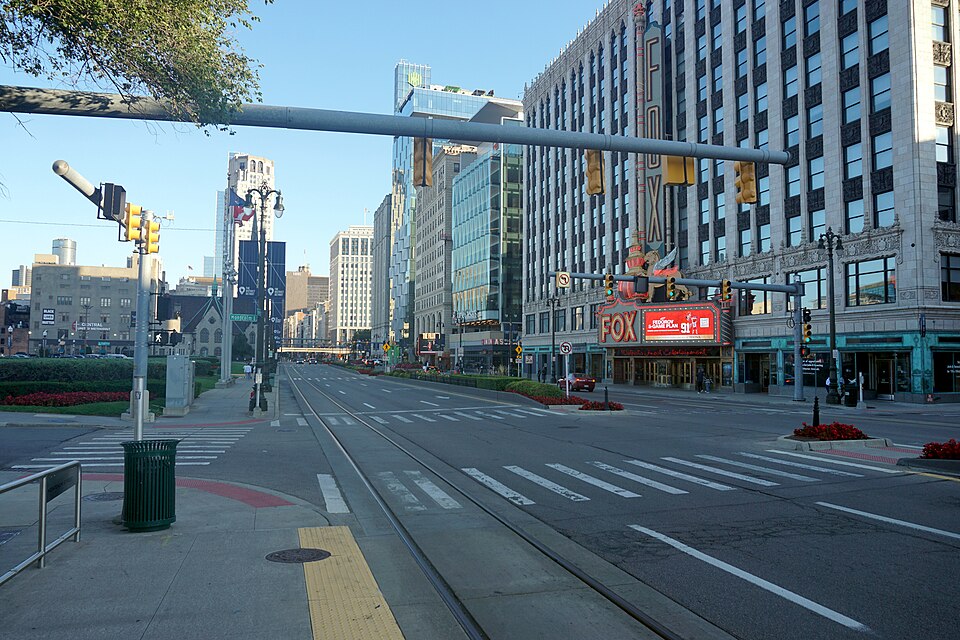
    Photo: Michael Barera, CC BY-SA 4.0, via Wikimedia Commons

    Michigan is a no-fault state. Your own policy’s personal injury protection (PIP) pays your medical bills after a crash, whoever caused it. Since the 2019 reform took effect in July 2020, each policy chooses its PIP medical level from six options, and liability limits default to $250,000 per person and $500,000 per crash. This guide explains each choice, the extra Michigan coverages, the crash reporting rule and what changes when a teen joins the household policy.

    Key facts (as of November 2026)

    • PIP medical options: unlimited, $500,000, $250,000, $250,000 with exclusions, $50,000 (Medicaid) and opt-out (Medicare). If you don’t choose, you get unlimited.
    • Bodily injury liability: default $250,000 / $500,000. The lowest you can choose is $50,000 / $100,000, and only by signing a state form.
    • Property protection insurance (PPI): required, up to $1 million for damage your car does to other people’s property in Michigan.
    • Mini-tort: if you are 50% or more at fault, you can be sued for up to $3,000 of the other car’s uninsured damage.
    • Report a crash to police immediately if anyone is hurt or killed, or damage is $1,000 or more.

    The six PIP medical choices

    PIP medical pays allowable expenses, such as medical care, after a crash. The choice is made on the state’s PIP selection form when you buy or renew a policy.

    Option PIP medical limit (per person, per crash) Who can choose it
    1 Unlimited Anyone (the default)
    2 $500,000 Anyone
    3 $250,000 Anyone
    4 $250,000 with exclusions Household members with qualified health coverage can be excluded from PIP medical
    5 $50,000 The named insured must be enrolled in Medicaid; others in the household need Medicaid, qualified health coverage or PIP medical from another auto policy
    6 Opt out of PIP medical The named insured must have Medicare Parts A and B (Medicare Advantage counts); others in the household need qualified health coverage or other PIP medical

    What counts as qualified health coverage?

    DIFS describes qualified health coverage as Medicare Parts A and B, or other health and accident coverage with an annual individual deductible at or below the limit set by state law. TRICARE and CHAMPVA count. VA health care does not. Check the current deductible limit with DIFS before relying on Option 4.

    How to think about the choice as a new driver

    • Lower PIP means lower premium, but more risk. If crash injuries cost more than your limit, health insurance or your own savings must cover the rest.
    • The choice covers the household. Options 4 to 6 depend on every household member having other coverage. A teen who joins the policy must fit the option you chose.
    • Read the form. The insurer must give you the state form. It explains each option and what you give up.

    Liability: what you owe other people

    Coverage Michigan requirement
    Bodily injury liability Default $250,000 per person / $500,000 per crash. You may choose less, down to $50,000 / $100,000, by signing the state’s choice form
    Property protection insurance (PPI) Up to $1 million for damage your car does in Michigan to other people’s property, such as buildings, fences and properly parked cars
    Property damage liability $10,000, for crashes in other states

    Before July 2020, the bodily injury minimum was $20,000 / $40,000. Compare other states in minimum car insurance by state.

    Damage to your own car: no-fault does not pay

    PPI generally does not pay for damage to moving cars, so damage to your car is your problem unless you buy collision coverage. The mini-tort rule helps a little. If the other driver was 50% or more at fault, you can claim up to $3,000 of your uncovered repair costs from them, for crashes after July 1, 2020. The same applies in reverse if you cause the crash.

    Michigan crash reporting duty

    1. Stop and check for injuries.
    2. Report to police immediately if anyone is injured or killed, or if property damage is $1,000 or more (MCL 257.622). Most crashes with real car damage reach $1,000.
    3. Swap details with the other driver: names, addresses and insurance.
    4. Let the officer file the report. Police complete the State of Michigan Traffic Crash Report (UD-10), which goes to the Michigan State Police. You can buy a copy later.
    5. Tell your insurer promptly. PIP claims go to your own insurer, even when the other driver was at fault.

    Full step-by-step guide: what to do after a car crash in the US.

    Teen drivers on a Michigan policy

    • Tell the insurer when your teen gets a Level 1 permit, and again before they drive alone on Level 2. Ask how they are rated at each stage.
    • Check the PIP option still fits. If you chose the $50,000, opt-out or exclusion options, your teen needs qualifying coverage of their own.
    • Keep the record clean. Tickets and at-fault crashes raise premiums and also count on Michigan’s young driver rules. See Michigan point system and young driver rules.
    • Know the levels. Supervision, night and passenger rules are in Michigan graduated licensing Levels 1, 2 and 3.

    More on rating, discounts and timing: adding a teen driver to your car insurance.

    Common questions

    What is the minimum car insurance in Michigan?

    PIP (at a level you choose), property protection insurance up to $1 million, bodily injury liability of at least $50,000 / $100,000 if you sign the form to go below the $250,000 / $500,000 default, and $10,000 property damage liability for out-of-state crashes.

    What happens if I don’t pick a PIP option?

    Your policy defaults to unlimited PIP medical coverage, and you pay the premium for it.

    Can a teen get the Medicare opt-out?

    No. The opt-out depends on the named insured having Medicare Parts A and B, and everyone else in the household needs other qualifying coverage.

    Does no-fault mean nobody is ever at fault in Michigan?

    No. Fault still matters for the mini-tort claim, for tickets and points, and for your premium.

    Do I need to report a minor fender bender?

    If no one is hurt and damage is under $1,000, the police reporting duty does not apply. Damage estimates often exceed $1,000, so when in doubt, report it.

    Who can I ask about a PIP question?

    The Michigan Department of Insurance and Financial Services (DIFS) answers consumer questions about auto insurance and the PIP forms.

    Back to the complete Michigan learner guide.

    Sources

    • Michigan Department of Insurance and Financial Services, “Choosing PIP Medical Coverage” and “Frequently Asked Questions” (michigan.gov/autoinsurance)
    • Michigan Department of Insurance and Financial Services, “Michigan Selection of Personal Injury Protection (PIP) Medical Coverage Level” and “Choice of Bodily Injury Liability Coverage Limits” forms (michigan.gov/difs)
    • Michigan Department of Insurance and Financial Services, “Michigan’s Auto Insurance Law Has Changed” and “Brief Explanation of Michigan No-Fault Insurance” (michigan.gov)
    • Michigan Legislature, “MCL 257.622, Accident reports” (legislature.mi.gov)
    • Michigan State Police, “Traffic Crash Reporting Unit: Frequently Asked Questions” (michigan.gov/msp)
  • Michigan Permit Documents Checklist: What to Bring to the SOS

    Michigan Permit Documents Checklist: What to Bring to the SOS

    Photo: Adrinil Dennis, Pexels

    To get a Michigan Level 1 learner’s license (teens) or a Temporary Instruction Permit (adults), you prove four things at a Secretary of State (SOS) office: your Social Security number, legal presence in the US, identity, and Michigan residency. Residency needs two documents dated within 90 days. Teens also bring a Segment 1 certificate and a parent or guardian. This checklist follows the SOS document rules so you don’t need a second trip.

    Key facts (as of November 2026)

    • Four things to prove: SSN, legal presence, identity, Michigan residency.
    • Residency: two documents, dated within the last 90 days, showing your name and Michigan home address. Electronic copies are accepted.
    • Teens: Segment 1 Certificate of Completion and a parent or guardian signature.
    • Your parent’s name on residency papers is fine if you prove the family link.
    • Bring originals. Photocopies and faxes aren’t accepted for legal presence or identity.

    The Michigan permit documents checklist

    1. Social Security number

    • Social Security card, or
    • A W-2 or other document on the SOS list showing your SSN

    The SOS checks your name, date of birth and SSN against Social Security Administration records. If they don’t match, your application is denied, so fix any mismatch with Social Security first. No SSN? See a US license on a student visa.

    2. Legal presence (one original document)

    • Valid US passport or passport card
    • Certified US birth certificate with a stamp or raised seal, issued by a US government unit or US territory office
    • Other documents on the SOS list, such as naturalization or permanent resident documents

    3. Identity

    A valid US passport covers identity as well as legal presence. Other options on the SOS list include an out-of-state driver’s license or ID, or a federal or Michigan government employee photo ID. If you use a birth certificate for legal presence, check the SOS list for a separate identity document you can add. Most teens bring a passport, or a birth certificate plus another listed item.

    4. Michigan residency (two documents)

    • Dated within the last 90 days
    • Showing your name and Michigan residential address. A Michigan P.O. box is not accepted.
    • Examples the SOS accepts: utility or credit card bills, bank statements, a lease, or Michigan vehicle title and registration
    • Electronic copies are accepted

    5. Teens only: Segment 1 certificate and a parent or guardian

    • Segment 1 Certificate of Completion from your driving school. See Segment 1 explained.
    • Parent or guardian signature on the application. Bring them with you.
    • Residency in a parent’s name works if you show the relationship with other proof, such as your birth certificate.

    6. Name change documents (if needed)

    If the name on your documents doesn’t match, bring the marriage certificate, divorce decree or court order linking them. Documents not in English need a translation.

    Adults: the Temporary Instruction Permit

    New drivers 18 and older bring the same SSN, legal presence, identity and residency documents. You must pass the knowledge test first, online or at an SOS office. Then book an SOS appointment to get the TIP. Steps: the Michigan TIP for adult learners.

    Standard, enhanced or REAL ID-compliant?

    Since 7 May 2025, you need a REAL ID-compliant card or another accepted ID, such as a passport, to board a domestic flight. Ask the SOS whether the card you are applying for is REAL ID-compliant. An enhanced license, which also works at land and sea border crossings with Canada, costs more and has its own document rules. Fees: Michigan license costs and test booking. Background: REAL ID and your first license.

    Common reasons a Michigan application is turned away

    • Residency documents older than 90 days.
    • Only one residency document instead of two.
    • A P.O. box instead of a street address.
    • A photocopy of the birth certificate.
    • Name or date of birth not matching Social Security records.
    • Teen without a parent or guardian to sign.
    • Teen without the Segment 1 certificate.

    The SOS notes that approval can take more than one day, so you may need to come back.

    Common questions

    What does a 15-year-old need for a Michigan Level 1 license?

    The Segment 1 certificate, an SSN document, a legal presence document, identity proof, two residency documents and a parent or guardian to sign.

    Can I use my mom’s utility bill as proof of residency?

    Yes, if you also prove the relationship, for example with your birth certificate showing her as your parent.

    Can I show bills on my phone?

    Yes. The SOS accepts electronic copies of residency documents.

    Will the SOS keep my documents?

    Possibly. The SOS says it may keep copies of any documents you present.

    I’m moving from another state with a permit. Same list?

    Same documents. How your out-of-state driver ed and permit time count: moving to Michigan.

    Do I need my 50-hour log for the Level 1 license?

    No. The log comes later, for the Level 2 license. See the Michigan 50-hour log.

    Main guide: learning to drive in Michigan. Other states: first permit documents by state.

    Sources

    • Michigan Department of State, “First-time license or ID” (michigan.gov), search-result extract only
    • Michigan Department of State, “License and ID document requirements” FAQ (michigan.gov), search-result extract only
    • Michigan Department of State, “SOS-428: Driver’s License or ID Requirements” (michigan.gov), search-result extract only
    • Michigan Department of State, “What documents will my child need when applying for their Graduated Driver’s License?” (michigan.gov), search-result extract only
    • Michigan Department of State, “New drivers (18 and older)” (michigan.gov), search-result extract only
  • Michigan Driver’s License Cost and How to Book SOS Tests

    Michigan Driver’s License Cost and How to Book SOS Tests

    Photo: Daoud Saeed, Pexels

    In Michigan, the Secretary of State (SOS) issues your permit and license, but it does not give the road test. Driving skills tests are run by private testing businesses, which set their own prices. So your total cost is a mix of fixed SOS fees and a market price for the skills test. This guide covers both, plus how to book SOS appointments and the online knowledge test for adults.

    Key facts (as of November 2026)

    • First standard license: $25. First enhanced license: $45.
    • Teen Level 1 learner’s license: $25.
    • Adult Temporary Instruction Permit (TIP): $25.
    • Adults can take the knowledge test online for a $6.50 convenience fee, or free at an SOS office.
    • Driving skills test: booked with and paid to a private testing business. The state does not set the fee.

    How much does a Michigan license cost?

    Item Fee Who pays it
    Level 1 learner’s license (teens) $25 Teens entering graduated licensing
    Temporary Instruction Permit (TIP) $25 New drivers 18 and older
    Knowledge test online $6.50 convenience fee Adults 18 and older testing from home
    Knowledge test at an SOS office Free Anyone testing in person
    First standard driver’s license $25 First Michigan license
    First enhanced driver’s license $45 US citizens who want a card for land and sea border crossings
    Driving skills test Set by the testing business Everyone. Not regulated by law.
    Segment 1 and Segment 2 driver education Set by the driving school Teens

    SOS pages don’t all show the same renewal and replacement amounts, so check the current “Driver’s License Fees” page before you pay. National comparison: US license costs by state.

    Teens: what you book and when

    1. Segment 1 driver education with a driving school. You book this with the school, not the SOS. Its final exam takes the place of the SOS knowledge test for teens. See Segment 1 explained.
    2. SOS office visit for the Level 1 license. Book online with the Michigan Secretary of State. Bring your Segment 1 certificate, documents and a parent or guardian. Checklist: Michigan permit documents.
    3. Segment 2 with a driving school, after at least 3 months on Level 1 with the required practice hours. See Segment 2 and when to book it.
    4. Driving skills test with a private testing business, once you meet the Level 2 rules. See Michigan Levels 1, 2 and 3.
    5. SOS visit for the Level 2 license, with your skills test certificate.

    Adults 18 and older: booking step by step

    1. Knowledge test. Take it online from home (convenience fee) or book a free test at an SOS office. Online testing needs a computer with a keyboard, mouse and webcam, not a touch screen. You get two online attempts per calendar day. A pass stays valid for one year. If you pass only one section online, you can finish the other at an SOS office at no charge. Details: Michigan knowledge test for new drivers 18+.
    2. Book an SOS office appointment to get your Temporary Instruction Permit. Pay the $25 fee and pass the vision test.
    3. Practice for at least 30 days. Adults must wait 30 days on the TIP before the skills test, unless they previously held a license in Michigan, another state or another country. See the Michigan TIP.
    4. Book the skills test with a testing business.
    5. Return to the SOS with your passing certificate to get your license.

    Booking the Michigan driving skills test

    • The SOS does not run skills tests. Approved driver testing businesses do, under written agreements with the state.
    • Fees are not regulated by law, so prices differ. Ask what the fee covers before you book: is a retest included, is there a cancellation charge, and can you use their car?
    • Lists of testing businesses are available at SOS branch offices.
    • The test has a vehicle inspection, basic control exercises and an on-road part.

    More: Michigan third-party road test providers and fees and the Michigan driving skills test.

    Canceling or changing a Michigan test

    • SOS appointments: change or cancel through the SOS online appointment system.
    • Skills tests: the testing business’s own policy applies, because the state doesn’t regulate fees. Get the cancellation terms in writing when you book.

    If you fail in Michigan

    Test Retest rule
    Knowledge test online Up to two attempts per calendar day
    Driving skills test One attempt per 24 hours, except when a test was stopped for faulty equipment or documents
    Skills test fee Set by the testing business. Ask whether retests cost the full fee.

    Waits in other states: retake waiting periods by state.

    Common questions

    How much does a Michigan driver’s license cost in total?

    For an adult: $25 TIP, $0 or $6.50 for the knowledge test, the testing business’s skills test fee and $25 for a first standard license. Teens add driving school fees for Segments 1 and 2.

    Why can’t I book my road test with the Secretary of State?

    Michigan moved skills testing to approved private testing businesses. The SOS issues the license once you have passed.

    Can teens take the knowledge test online?

    The online option is for adults 18 and older. Teens take the Segment 1 final exam through their driving school.

    Do I need an appointment at a Michigan SOS office?

    Book one. The SOS asks you to schedule online for in-office tests and to receive your permit.

    Is the enhanced license worth the extra $20?

    Only if you cross into Canada by land or sea and want to use your license instead of a passport. A standard license works for driving.

    What happens if I pass only one section of the online test?

    You can complete the other section at an SOS office, free of charge.

    Main guide: learning to drive in Michigan. Practice: Michigan permit practice test. Booking tips: how to book a DMV test appointment.

    Sources

    • Michigan Department of State, “Driver’s License Fees” (michigan.gov), search-result extract only
    • Michigan Department of State, “License and ID information” and “Licenses and ID” FAQ (michigan.gov), search-result extract only
    • Michigan Department of State, “New drivers (18 and older)” (michigan.gov), search-result extract only
    • Michigan Department of State, “Michigan Secretary of State now offers online driver’s license testing for adults” (July 2025) (michigan.gov), search-result extract only
    • Michigan Department of State, “Driver testing businesses and examiners” (michigan.gov), search-result extract only
    • Michigan Department of State, “What Every Driver Must Know” (October 2025) (michigan.gov), search-result extract only
  • Michigan Permit Practice Test: 40 Free Road Sign and Knowledge Qs

    Michigan Permit Practice Test: 40 Free Road Sign and Knowledge Qs

    Photo: Provisionshots LLC, Pexels

    In Michigan, adults 18 and over getting a first license take the Secretary of State knowledge test, which has an operator knowledge section and a road sign section, online or at an SOS office. Teens under 18 take the Segment 1 and Segment 2 driver education exams instead. This free practice test follows the adult layout with 40 original questions, and it also covers the rules teens are tested on in driver ed. The questions are unofficial, written from “What Every Driver Must Know” and Michigan law; they are not SOS questions.

    Who takes which Michigan test

    You are Test you take Format known
    18 or older, first license SOS knowledge test: operator knowledge plus road signs About 45 minutes for operator knowledge and 15 for signs online. Ask SOS for the question count and pass mark.
    Under 18 Segment 1 and Segment 2 driver education exams State exams, 70% to pass

    Adults can test online since July 2025, with up to two attempts per calendar day. Details: the Michigan knowledge test for new drivers 18 and over.

    Road sign section (questions 1 to 12)

    1. What shape is a STOP sign?

    • A. Pentagon
    • B. Triangle
    • C. Circle
    • D. Octagon

    Answer: D. The octagon is used only for STOP. Handbook: Chapter 5, signs.

    2. A yellow diamond sign means:

    • A. Service available
    • B. Direction to a city
    • C. Regulation you must obey
    • D. Warning of a condition or hazard ahead

    Answer: D. Diamonds warn of curves, intersections and other changes. Handbook: Chapter 5, warning signs.

    3. A downward-pointing red and white triangle means:

    • A. Stop
    • B. Yield
    • C. Do not enter
    • D. Merge ahead

    Answer: B. Slow down and give the right of way, stopping if necessary. Handbook: Chapter 5, regulatory signs.

    4. A five-sided sign warns you of:

    • A. A bridge
    • B. A school zone or crossing
    • C. A detour
    • D. A hospital

    Answer: B. The pentagon is the school sign shape. Handbook: Chapter 5.

    5. A round yellow sign with an X and RR means:

    • A. Reduced speed
    • B. Railroad crossing ahead
    • C. Road narrows
    • D. Roundabout ahead

    Answer: B. This is the railroad advance warning sign. Handbook: Chapter 5.

    6. Orange signs mean:

    • A. Work zone ahead
    • B. Deer area
    • C. Snowmobile crossing
    • D. Hospital route

    Answer: A. Orange marks work zones. Slow down and follow flaggers. Handbook: Chapter 4 and Chapter 5, work zones.

    7. A yellow pennant-shaped sign on the left side of the road marks:

    • A. A merge
    • B. A school bus stop
    • C. A bike lane
    • D. A no passing zone

    Answer: D. The pennant warns that a no passing zone begins. Handbook: Chapter 5.

    8. A green rectangular sign with white letters is a:

    • A. Speed limit sign
    • B. Warning sign
    • C. Construction sign
    • D. Guide sign showing directions and distances

    Answer: D. Green guide signs show routes and destinations. Blue shows services; brown shows recreation. Handbook: Chapter 5, guide signs.

    9. A flashing red signal means:

    • A. Proceed with caution
    • B. Stop, then go when safe, as at a STOP sign
    • C. Wait for green
    • D. Signal is broken; ignore it

    Answer: B. Flashing red is treated like a STOP sign. Handbook: Chapter 5, signals.

    10. A flashing yellow left-turn arrow means:

    • A. Left turn allowed after yielding to oncoming traffic and pedestrians
    • B. Protected left turn
    • C. No left turns
    • D. Left turn only after stopping for 3 seconds

    Answer: A. Oncoming traffic has a green light, so the turn is not protected. Handbook: Chapter 5, signals.

    11. A solid yellow line on your side of the center line means:

    • A. Shoulder
    • B. Do not pass
    • C. Bus lane
    • D. You may pass

    Answer: B. You may not pass when a solid yellow line is on your side. Handbook: Chapter 5, pavement markings.

    12. A red sign reading WRONG WAY means:

    • A. Railroad crossing
    • B. Detour ahead
    • C. Lane closed ahead
    • D. You are traveling against traffic and must turn around safely

    Answer: D. WRONG WAY and DO NOT ENTER signs mean you have entered a one-way road or ramp the wrong way. Handbook: Chapter 5, regulatory signs.

    Operator knowledge section (questions 13 to 40)

    Traffic laws and right of way

    13. Two cars arrive at a four-way stop at the same time. Who yields?

    • A. The car on the left
    • B. The car going straight
    • C. The larger car
    • D. The car on the right

    Answer: A. The driver on the left yields to the driver on the right. Handbook: Chapter 4, right of way.

    14. When turning left on a green light without an arrow, you must:

    • A. Yield to oncoming traffic and pedestrians
    • B. Stop in the crosswalk
    • C. Go first because you were waiting
    • D. Turn quickly before oncoming cars

    Answer: A. Left turns on a plain green are not protected. Handbook: Chapter 4, right of way.

    15. Unless a sign prohibits it, a right turn on red is allowed after:

    • A. A complete stop and yielding to traffic and pedestrians
    • B. Slowing to 5 mph
    • C. Waiting for a gap of 10 seconds
    • D. Honking

    Answer: A. Stop fully, yield, then turn. Handbook: Chapter 4, turning.

    16. At a roundabout you must:

    • A. Travel clockwise
    • B. Expect circulating traffic to stop for you
    • C. Yield to traffic already in the roundabout
    • D. Stop inside the circle

    Answer: C. Yield on entry and travel counterclockwise. Handbook: Chapter 4, right of way.

    17. An emergency vehicle with lights and siren is approaching. You should:

    • A. Stop in the intersection
    • B. Speed up to stay ahead
    • C. Change to the left lane
    • D. Pull to the right edge of the road and stop until it passes

    Answer: D. Yield by pulling right, clear of intersections, and stopping. Handbook: Chapter 4, emergency vehicles.

    18. You are behind a school bus that stops with red lights flashing. You must:

    • A. Stop and remain stopped until the lights stop flashing
    • B. Pass slowly on the left
    • C. Slow to 10 mph
    • D. Stop only if you see children

    Answer: A. Traffic behind a stopped school bus always stops. The handbook explains when oncoming traffic must stop too. Handbook: Chapter 4, school buses.

    19. A road crew is working in a lane ahead. You should:

    • A. Use your phone to report it while driving
    • B. Speed up to pass the zone quickly
    • C. Slow down, obey the signs and flaggers, and watch for workers
    • D. Drive on the shoulder

    Answer: C. Work zones change quickly. Lower your speed and follow the posted directions. Handbook: Chapter 4, work zones.

    20. A police car is stopped on the shoulder with its lights flashing. You should:

    • A. Stop behind it
    • B. Move over a lane if you safely can, or slow down
    • C. Flash your high beams
    • D. Keep your speed and lane

    Answer: B. Move over laws protect police, fire, EMS and roadside workers. Handbook: Chapter 4, traffic laws.

    21. The speed limit is 55 mph but snow is falling heavily. You should:

    • A. Drive 55 mph
    • B. Follow the car ahead closely to see its tracks
    • C. Drive faster to get home sooner
    • D. Drive slower, at a speed safe for the conditions

    Answer: D. Posted limits are for good conditions. Handbook: Chapter 4 and Chapter 7.

    22. Before changing lanes, you should check your mirrors and:

    • A. Honk
    • B. Look over your shoulder to check your blind spot
    • C. Nothing else
    • D. Brake

    Answer: B. Mirrors leave blind spots. Handbook: Chapter 4, lane changes.

    23. Who must wear a seat belt in Michigan?

    • A. The driver and every front-seat passenger, with additional rules for younger passengers
    • B. Only passengers under 8
    • C. Nobody on local roads
    • D. Only the driver

    Answer: A. Belts are required in the front seat, and Michigan adds rules for children and teens in any seat. Handbook: Chapter 4, seat belts.

    Sharing the road

    24. When following a motorcycle, you should:

    • A. Follow closely to stay visible
    • B. Pass it within its lane
    • C. Flash your lights to make it move over
    • D. Leave at least as much space as you would behind a car

    Answer: D. Motorcycles need a full lane and can stop quickly. Handbook: Chapter 6.

    25. If you cannot see a truck driver’s face in their side mirror:

    • A. The driver is not paying attention
    • B. The driver cannot see you
    • C. You should brake hard
    • D. You are in a safe position

    Answer: B. You are in a blind spot. Move ahead or drop back. Handbook: Chapter 6, large trucks.

    26. A pedestrian is crossing in a crosswalk as your light turns green. You should:

    • A. Go around them
    • B. Proceed, because the light is green
    • C. Wait until they have crossed
    • D. Honk

    Answer: C. Pedestrians in a crosswalk have the right of way. Handbook: Chapter 6, pedestrians.

    27. You want to pass a cyclist on a two-lane road. You should:

    • A. Wait for a safe gap and give the cyclist plenty of room
    • B. Pass on a curve
    • C. Honk until the cyclist moves onto the shoulder
    • D. Pass as close as possible to get by

    Answer: A. Cyclists have a right to the road. Pass only when you can do it safely with room to spare. Handbook: Chapter 6, bicyclists.

    Alcohol, drugs and phones

    28. Under Michigan’s Zero Tolerance law, a driver under 21 is in violation at a BAC of:

    • A. 0.02 or more
    • B. 0.05 or more
    • C. 0.08 or more only
    • D. 0.10 or more

    Answer: A. Zero Tolerance applies from 0.02 for drivers under 21. The adult OWI limit is 0.08. Handbook: Chapter 2, drunk driving.

    29. What does OWI stand for in Michigan?

    • A. Official warning issued
    • B. Out of state window inspection
    • C. Operating while intoxicated
    • D. Open wheel infraction

    Answer: C. OWI is Michigan’s term for drunk driving. Handbook: Chapter 2.

    30. The only way to remove alcohol from your body is:

    • A. Coffee
    • B. Time
    • C. Food
    • D. A shower

    Answer: B. Your liver works at a fixed rate. Handbook: Chapter 2.

    31. Under Michigan’s hands-free law, adult drivers may:

    • A. Watch a video if the phone is mounted
    • B. Hold a phone to make a call
    • C. Text at a red light
    • D. Use a phone only hands-free, without holding it

    Answer: D. All Michigan drivers must be hands-free while driving. Handbook: Chapter 4, distracted driving.

    32. Under Kelsey’s Law, a Level 1 or Level 2 driver may use a cell phone while driving:

    • A. Hands-free only
    • B. Only at red lights
    • C. Only for navigation
    • D. Not at all, including hands-free and built-in voice systems, except to report an emergency

    Answer: D. Kelsey’s Law bans all cell phone use by Level 1 and Level 2 drivers, except emergency reports. See Kelsey’s Law and the hands-free law. Handbook: Chapter 4.

    33. Michigan requires a driver reexamination, where your license may be suspended, when you collect how many points in two years?

    • A. 6
    • B. 8
    • C. 12 or more
    • D. 20

    Answer: C. 12 or more points in two years leads to a reexamination. Handbook: Chapter 2, driving record.

    Michigan license levels

    34. Who may supervise a Michigan Level 1 learner?

    • A. Any passenger 16 or older
    • B. Any licensed driver 18 or older
    • C. A licensed parent or guardian, or a licensed driver 21 or older designated by the parent or guardian
    • D. No one; Level 1 drivers can drive alone in daylight

    Answer: C. Level 1 drivers must always be supervised by one of those adults. Handbook: Chapter 1, GDL.

    35. What is the earliest age for a Michigan Level 1 learner’s license?

    • A. 14 years 8 months
    • B. 14 years 9 months
    • C. 15 years
    • D. 16 years

    Answer: B. Segment 1 can start at 14 years 8 months and Level 1 at 14 years 9 months. See Michigan graduated licensing Levels 1, 2 and 3. Handbook: Chapter 1.

    36. How many supervised hours must a Michigan teen log before the driving skills test?

    • A. 30, including 2 at night
    • B. 40, including 6 at night
    • C. 50, including 10 at night
    • D. 60, including 10 at night

    Answer: C. 50 hours in total, 10 at night, certified by a parent or guardian. You need 30 hours (2 at night) before Segment 2. Handbook: Chapter 1.

    37. A Level 2 driver may not drive alone during which hours (unless an exception applies)?

    • A. 9 p.m. to 5 a.m.
    • B. 10 p.m. to 5 a.m.
    • C. Midnight to 6 a.m.
    • D. 1 a.m. to 5 a.m.

    Answer: B. Level 2 drivers may not drive 10 p.m. to 5 a.m. without a qualifying adult, except for listed reasons such as work. Handbook: Chapter 1, Level 2 restrictions.

    38. A Level 2 driver may carry how many passengers under 21 (not counting the exceptions)?

    • A. None
    • B. One
    • C. Two
    • D. Three

    Answer: B. No more than one passenger under 21, with exceptions for family, work and authorized activities. Handbook: Chapter 1, Level 2 restrictions.

    39. An adult 18 or older with a Temporary Instruction Permit must hold it for at least how long before the driving skills test?

    • A. 7 days
    • B. 30 days
    • C. 90 days
    • D. 6 months

    Answer: B. Adults need at least 30 days on the TIP. SOS may waive this if you were licensed before. Handbook: Chapter 1, TIP.

    40. Your car starts to skid on ice. You should:

    • A. Ease off the gas and steer gently where you want to go
    • B. Slam on the brakes
    • C. Accelerate
    • D. Jerk the wheel the other way

    Answer: A. Smooth steering and no sudden braking give the tires the best chance to grip again. Handbook: Chapter 7, emergencies.

    Check your result

    Ask SOS for the pass mark for the adult test. Treat 36 of 40 as ready. If most of your misses are in questions 1 to 12, spend a session on signs before anything else; if they are in the license level questions, reread Chapter 1.

    Common questions

    Are these the real Michigan knowledge test questions?

    No. They are original, unofficial practice questions. The handbook ends with its own “Safe Driving Knowledge Test” sample questions, which are worth doing too.

    Do teens take the Michigan permit test?

    No. Teens pass the Segment 1 and Segment 2 driver education exams (70% to pass) instead. See Segment 1 explained.

    Can I take the Michigan knowledge test online?

    Yes, if you are 18 or older. You need a computer with a keyboard, mouse and webcam, and there is a convenience fee per attempt.

    How many questions are on the Michigan knowledge test?

    Ask your SOS office if you want the current figures.

    What happens after I pass?

    Visit an SOS office for your TIP, then book the road test with a testing business after 30 days. See learning to drive in Michigan and the Michigan driving skills test.

    Where are other states’ practice tests?

    See US permit practice tests by state.

    Sources

    • Michigan Department of State, “What Every Driver Must Know” (October 2025) (michigan.gov)
    • Michigan Department of State, “New drivers (18 and older)” (michigan.gov)
    • Michigan Department of State, “Teen drivers” (michigan.gov)
    • Michigan Legislature, “Michigan Vehicle Code, MCL 257.310e” (legislature.mi.gov)