Category: Minnesota

  • Minnesota Hands-Free Law for New Drivers: Teen vs Adult Rules

    Minnesota Hands-Free Law for New Drivers: Teen vs Adult Rules

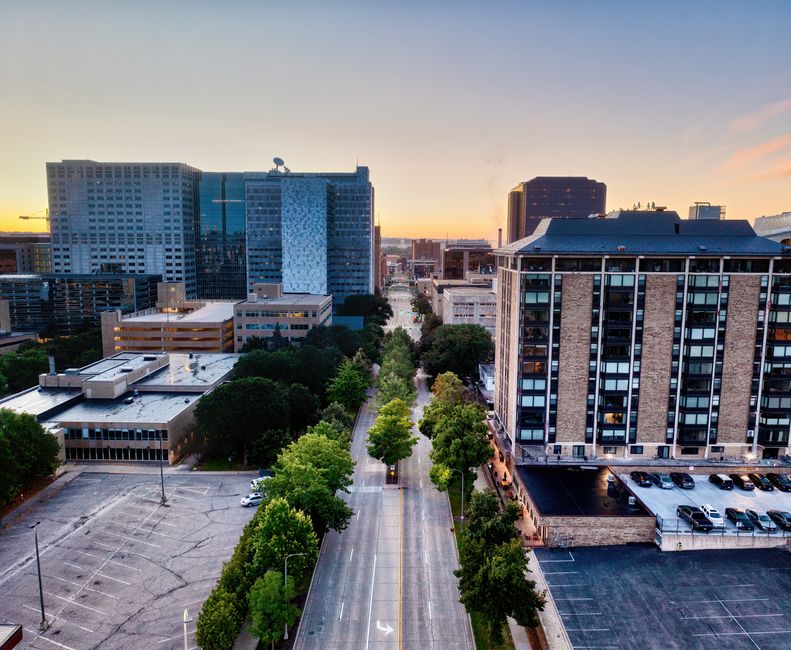
    Photo: Tom Fisk, Pexels

    Minnesota has two phone rules, and which one applies depends on your license. Permit and provisional drivers may not use a cell phone at all while the vehicle is moving, not even hands-free. Drivers with a full license fall under the Hands-Free law (Minnesota Statutes section 169.475), which bans holding a phone but allows voice-activated or one-touch use. This page sets out what each group can and cannot do, and the fines.

    Teen ban vs adult hands-free rule

    Action while moving or in traffic Permit or provisional driver Full license holder
    Holding the phone Banned Banned
    Hands-free call by voice or one touch Banned Allowed
    Dictating or listening to a text by voice Banned Allowed
    Reading a text on screen Banned Banned
    Video, video calls, live-streaming, games Banned Banned
    GPS without typing, phone not held Operating the phone is banned; set it before you move Allowed
    Calling for emergency help Allowed as a defense Allowed

    The rule for Minnesota permit and provisional drivers

    If you hold an instruction permit (under 18) or a provisional license, you may not talk on, text on or otherwise operate a cell or wireless phone while the vehicle is in motion, whether handheld or hands-free. The law gives two defenses: you were getting emergency help to prevent a crime, or you reasonably believed someone’s life or safety was in danger. A violation is a petty misdemeanor.

    A conviction can also cost you more than a fine: for permit holders, the commissioner can suspend or cancel the permit for moving violations, and a provisional driver with more than one moving violation has the full license delayed. See Minnesota provisional license rules.

    Minnesota’s Hands-Free law for all drivers

    When your vehicle is moving or is part of traffic, you may not:

    • hold a phone or other wireless device in one or both hands
    • start, write, send, retrieve or read an electronic message (texts, emails, instant messages, web pages)
    • make or take a phone call or video call, except in hands-free mode
    • watch video, view images, play games or use apps stored on the device

    “Part of traffic” includes waiting at a stop sign or red light, or sitting in a traffic jam. You are only clear when you are lawfully stopped somewhere not used for traffic and not blocking anyone.

    What adults may do:

    • calls and voice-to-text in voice-activated or hands-free mode, without holding the phone
    • GPS or navigation that does not need typing, without holding the phone
    • audio such as music or podcasts, as long as you do not scroll or type
    • calls to report a crash, medical emergency, serious road hazard or crime, or when someone’s life is in immediate danger

    Hands-free mode never covers reading messages, video calls, live-streaming, gaming or non-navigation video.

    Minnesota hands-free fines

    Offense Fine
    First $50, according to the Minnesota House Research Department (October 2019), plus surcharge and court costs
    Second or later $275, set in the statute, plus surcharge and court costs

    The House Research Department says the surcharge adds at least $75. Totals change, so check the current amount on your citation or with the court.

    If phone use leads to dangerous driving, prosecutors can bring careless or reckless driving charges instead, which are crimes.

    Scenarios for new Minnesota drivers

    • Provisional driver, mom calls through the car’s Bluetooth: do not answer while moving. Pull over somewhere safe and legal first.
    • Permit driver, phone in a mount playing a playlist: do not touch it while moving. Start the music before you set off.
    • Full-license driver, stopped at a red light, checks a text: illegal. Waiting at a light is still part of traffic.
    • Any driver, sees a crash on the freeway: calling for help is allowed.

    Common questions

    Can a Minnesota teen driver use hands-free calling?

    No. Permit and provisional drivers may not use a phone at all while moving, including hands-free.

    When does the teen phone ban end?

    When you move from a provisional license to a full driver’s license. After that, the adult Hands-Free law applies.

    Is it legal to hold my phone at a stop light in Minnesota?

    No. A vehicle stopped at a light or stop sign, or in a jam, is still part of traffic.

    Does the Hands-Free law apply to smartwatches?

    The law covers wireless communications devices. Treat a smartwatch the same way and do not use it by hand while driving.

    Can I use my phone as GPS?

    With a full license, yes, if you do not hold it or type while moving. On a permit or provisional license, set the route before you move and do not touch the phone.

    Does a hands-free ticket go on my record?

    Minnesota’s licensing law defines a “moving violation” as any traffic violation except parking, equipment violations and warnings. For permit and provisional drivers, that means a phone conviction can count against the clean record you need. Ask DVS how a specific ticket affects you.

    Other states’ rules: hands-free and texting laws for US drivers. Permit basics: Minnesota permit knowledge test guide. Full process: learning to drive in Minnesota.

    Sources

    • Minnesota Legislature, Office of the Revisor of Statutes, “Minnesota Statutes 2026, section 169.475 Use of wireless communications device” (revisor.mn.gov)
    • Minnesota Legislature, Office of the Revisor of Statutes, “Minnesota Statutes 2026, section 171.05 Instruction permit” (revisor.mn.gov)
    • Minnesota Legislature, Office of the Revisor of Statutes, “Minnesota Statutes 2026, section 171.055 Provisional license” (revisor.mn.gov)
    • Minnesota House Research Department, “Distracted Driving: Cell Phone Use While Driving”, October 2019 (house.mn.gov)
  • Minnesota Supervised Driving Log: 40 or 50 Hours and Parent Class

    Minnesota Supervised Driving Log: 40 or 50 Hours and Parent Class

    Photo: Tom Fisk, Pexels

    Minnesota teens need a signed supervised driving log to get a provisional license. The minimum is 40 hours with a licensed driver aged 21 or older, at least 15 of them at night. On top of that you either drive 10 more hours (50 in total) or your main supervisor takes the optional 90-minute supplemental parent class through your driver ed school. This checklist explains both routes and how to keep a log DVS will accept.

    Two ways to meet the Minnesota log requirement

    Route A: 50 hours Route B: parent class
    Supervised hours 50 40
    Night hours included At least 15 At least 15
    Extra step None Primary supervisor completes the supplemental parental curriculum
    When to arrange it Any time before the road test Certification goes in with the instruction permit application

    What the Minnesota parent class is

    • It is optional and offered by driver education programs (public, private and commercial schools must offer a schedule for it).
    • It lasts at least 90 minutes.
    • A driver education instructor runs it or is present.
    • It covers graduated licensing, the risks new drivers face, how adults influence teen driving and further resources.
    • A driver ed instructor certifies that the primary supervisor completed it. The certification is submitted with the instruction permit application.

    Because the certification is tied to the permit application, ask your driver ed school about class dates before you apply for the permit. If you miss it, Route A (50 hours) is still open.

    What a valid Minnesota driving log must show

    • Every trip was with a licensed driver at least 21 years old supervising.
    • The total hours (40 or 50), with at least 15 at night.
    • The date and length of each supervised trip.
    • The signature of the primary driving supervisor, confirming the hours were met.

    The law requires a log in a format the commissioner of public safety approves. Ask DVS or your driver ed school for the current form before you start.

    Checklist for parents

    1. Decide early: 50 hours, or 40 hours plus the parent class.
    2. Log every trip on the day: date, start and end time, night or day.
    3. Spread the 15 night hours across the months, not in one week.
    4. Mix conditions: city streets, highways, rain, snow and dark rural roads.
    5. Practice the road test skills: parallel parking, hill parking and 90-degree backing.
    6. Remember the permit rules: you (or another licensed adult 21+) sit in the front passenger seat, and your teen uses no phone at all.
    7. Sign the log only when the hours are really complete. You are attesting to it.

    The log continues after the road test

    To move from a provisional to a full license before 18, a parent or guardian must certify that the teen drove at least 10 more supervised hours (with a licensed driver 21 or older) during the provisional period. Keep logging. See Minnesota provisional license rules.

    Common questions

    Do I need 40 or 50 hours of supervised driving in Minnesota?

    50, unless your primary supervisor completed the parent class, in which case 40. Both include at least 15 night hours.

    Do driver ed behind-the-wheel lessons count toward the log?

    The law requires driving with a licensed driver aged 21 or older. Ask your driver ed school whether its lesson hours go on your log.

    Can a grandparent or older sibling supervise?

    For the log, any licensed driver aged 21 or older can supervise. The primary supervisor signs the log.

    What counts as night driving?

    The law does not define it in the log section. Check the definition on the DVS log form.

    Does the parent class cost money?

    The law does not set a price. Ask your driver ed school.

    What if we lose the log?

    You need a signed log showing dates and lengths of trips. Keep a photo or backup copy as you go.

    Compare other states in supervised driving hours by state. Next: Minnesota road test explained. Full process: learning to drive in Minnesota.

    Sources

    • Minnesota Legislature, Office of the Revisor of Statutes, “Minnesota Statutes 2026, section 171.055 Provisional license” (revisor.mn.gov)
    • Minnesota Legislature, Office of the Revisor of Statutes, “Minnesota Statutes 2026, section 171.05 Instruction permit” (revisor.mn.gov)
    • Minnesota Legislature, Office of the Revisor of Statutes, “Minnesota Statutes 2026, section 171.0701 Driver education content” (revisor.mn.gov)
    • Minnesota Legislature, Office of the Revisor of Statutes, “Minnesota Statutes 2026, section 171.04 Persons not eligible for drivers’ licenses” (revisor.mn.gov)
  • Minnesota Provisional License Rules: Passengers, Night, Phones

    Minnesota Provisional License Rules: Passengers, Night, Phones

    Photo: Wikideas1, CC0, via Wikimedia Commons

    This page is for Minnesota teens who have just passed the road test, and their parents. Under Minnesota Statutes section 171.055, a provisional license holder may not use a phone at all while driving, may carry only limited passengers under 20, and in the first six months may not drive between midnight and 5 a.m. except in set situations. Tickets during this stage can delay your full license by up to a year.

    Minnesota provisional license restrictions at a glance

    Rule First 6 months Months 7 to 12
    Passengers under 20 who are not immediate family No more than 1 No more than 3
    Driving midnight to 5 a.m. Only for the exceptions below No restriction in the law
    Cell phone use while moving, handheld or hands-free Banned Banned

    The passenger limits do not apply when a parent or guardian is in the car.

    Who can get a provisional license?

    You must:

    • be at least 16
    • have held an instruction permit for the previous six months with no convictions for alcohol or drug driving offenses, crash-related moving violations or other moving violations
    • have completed driver education
    • have parent or guardian approval on the application
    • submit a signed supervised driving log (see Minnesota supervised driving log and parent class option)
    • pass the road test (see Minnesota road test explained)
    • pay the fee: $14.25 plus a $2.25 surcharge and filing fee (as of November 2026)

    Passenger limits for Minnesota provisional drivers

    • Months 1 to 6: at most one passenger under 20 who is not in your immediate family.
    • Months 7 to 12: at most three passengers under 20 who are not in your immediate family.
    • Any time: the limits do not apply if your parent or guardian is with you.
    • Passengers 20 or older do not count toward the limit.

    Night driving: the midnight to 5 a.m. rule

    In the first six months, you may drive between midnight and 5 a.m. only when you are:

    1. driving between home and work
    2. driving between home and a school event the school has not provided transport for
    3. driving for your job
    4. with a licensed driver who is at least 25

    After six months, the law sets no curfew, but night driving is still harder. Your log already required at least 15 night hours for a reason.

    Phone use: a complete ban

    A provisional driver may not talk on, text on or otherwise operate a cell or wireless phone while the vehicle is moving, whether it is handheld or hands-free. The only defense is calling for emergency help to prevent a crime or because someone’s life or safety was in danger. A violation is a petty misdemeanor. Adults have a looser hands-free rule; the difference is in Minnesota hands-free law for new drivers.

    What happens if you get a ticket on a provisional license?

    Your full license is delayed until 12 months after the conviction, or until you turn 18 if that comes first, if during the provisional period you are convicted of:

    • an impaired driving offense, including the under-21 “any alcohol” offense, or a test refusal
    • a crash-related moving violation
    • more than one moving violation that is not crash related

    A “moving violation” is any traffic violation except parking, vehicle equipment violations and warnings.

    Worked example

    Sam gets a provisional license at 16 years and 2 months. At month 5 Sam is convicted of speeding, then at month 9 of running a stop sign. That is more than one non-crash moving violation, so Sam cannot get a full license until 12 months after the second conviction, or 18, whichever is sooner. One speeding ticket alone would not have delayed it.

    Vanessa’s Law: serious violations as a teen

    Vanessa’s Law applies to teens convicted of an impaired driving offense or a crash-related moving violation.

    • Driving without a license: you can’t get a permit or license until 18. Then you meet the reinstatement terms, pass the written test, get a permit and hold it six months (three if 19 or older) before the road test.
    • On a provisional license: if your license is revoked for one of these violations, you can’t get it back until 18 or the end of the revocation, whichever is later. You then usually pay the $680 reinstatement fee, pass the written test, take a 30-hour classroom course (online doesn’t count), get a permit, hold it 90 days and complete six hours of behind-the-wheel training.

    Moving up to a full Minnesota license

    After 12 months on a provisional license you can apply for a full under-21 Class D license if:

    • you had no alcohol or drug driving convictions and no crash-related moving violations
    • you had no more than one other moving violation
    • a parent or guardian approves the application and certifies you drove at least 10 supervised hours (with a licensed driver 21 or older) during the provisional period

    The fee is $27.75 plus surcharge and filing fee, with a $3.50 credit if your provisional record was completely clean (as of November 2026). From 18, you no longer need the 12 provisional months to qualify for a full license.

    Common questions

    Can I drive my siblings on a Minnesota provisional license?

    Yes. Immediate family members do not count toward the passenger limit.

    Can I drive home from a party after midnight in my first six months?

    No, unless a licensed driver 25 or older is with you. Only work trips, school events without school transport and job driving are exempt.

    Can I use GPS on my phone?

    The provisional rule bans operating a phone while moving, whether handheld or hands-free. Set the route before you move and do not touch the phone while driving.

    Does the passenger limit apply to friends who are 20?

    No. The limit is for passengers under 20.

    When can I get my full license?

    After 12 months on the provisional license with a clean enough record, or at 18.

    Do provisional rules apply if I moved from another state?

    A 16 or 17-year-old with a valid license from another state can apply for a full Minnesota license under the under-18 rules. Check with DVS how your record and dates carry over.

    National comparison: US graduated driver licensing compared. Full process: learning to drive in Minnesota.

    Sources

    • Minnesota Legislature, Office of the Revisor of Statutes, “Minnesota Statutes 2026, section 171.055 Provisional license” (revisor.mn.gov)
    • Minnesota Legislature, Office of the Revisor of Statutes, “Minnesota Statutes 2026, section 171.04 Persons not eligible for drivers’ licenses” (revisor.mn.gov)
    • Minnesota Legislature, Office of the Revisor of Statutes, “Minnesota Statutes 2026, section 171.06 Application for permit or license; fees” (revisor.mn.gov)
    • Minnesota Legislature, Office of the Revisor of Statutes, “Minnesota Statutes 2026, section 169A.33 Underage drinking and driving” (revisor.mn.gov)
  • Minnesota Road Test Explained: What to Bring and What Fails You

    Minnesota Road Test Explained: What to Bring and What Fails You

    Photo: Tom Fisk, Pexels

    This guide is for Minnesota learners booking the Class D road test, the driving test DVS examiners give before you get a provisional or full license. It covers who can book, what to bring, what the examiner checks and the mistakes that end a test. Minnesota does not run its test as a points tally: certain errors, such as breaking a traffic law or driving dangerously, fail you on the spot.

    Key facts

    • Who runs it: Minnesota DVS examiners at exam stations.
    • Booking: by law, DVS must offer an appointment within 14 days of your request once you are eligible, at a station in your county or a neighboring one.
    • What to bring: proof of insurance for the test vehicle; under 18, your driver ed completion card and signed driving log.
    • Skills: vary by station and examiner, and can include parallel parking, parking on a hill and a 90-degree backing maneuver.
    • Fees (as of November 2026): $20 for each attempt after two failures in a row; $40 for a no-show or a cancellation less than 24 hours before; $20 for a cancellation 24 to 72 hours before.

    When can you take the Minnesota road test?

    Applicant Minimum permit time Other requirements
    Under 18 6 months, with no moving violation, crash-related or alcohol convictions Age 16; driver ed complete; supervised driving log (40 hours incl. 15 at night, plus 10 more hours or the parent class)
    Age 18 6 months Never licensed before
    19 or older 3 months Never licensed before

    Time on a permit from another state counts. The log rules are in Minnesota supervised driving log and parent class option.

    How to book

    • DVS shows the next available road test dates and times for every exam station on its website, and you can search by address to find the nearest.
    • Driver ed schools cannot block-book recurring test slots, so everyone uses the same system.

    Checklist: what to bring

    • Your instruction permit
    • A vehicle for the test whose controls you can show the examiner (lights, signals, horn, mirrors, parking brake)
    • Proof the vehicle is insured
    • Under 18: your signed driver education completion card and the driving log signed by your parent or guardian
    • A licensed driver to come with you, or the test may be canceled
    • A vehicle with doors that open from inside and outside, working seat belts, headlights, taillights, brake lights and turn signals, and current registration or a 60-day permit. Neighborhood electric vehicles aren’t allowed. In a rental car, you must be listed on the rental agreement
    • The license fee: $14.25 for a provisional license, or the Class D fee if you are 18 or older, plus a $2.25 surcharge and filing fee (as of November 2026)

    What happens on the Minnesota road test

    1. Vehicle check

    Before you leave the lot, the examiner asks you to show features such as seat adjustment, seat belt, parking brake, headlights, hazard lights, turn signals, horn and mirrors.

    2. Skills

    DVS says the skills tested vary by location and examiner. The manual lists these among the areas evaluated:

    • Parallel parking: your curb-side wheels should end up no more than 12 inches from the curb. You cannot use a parking assist feature.
    • Parking on a hill.
    • 90-degree backing: reverse into a space at a right angle.

    3. On-road driving

    The examiner watches observation, signaling, speed, lane position, stops, right of way and how you deal with other road users. Other states’ formats are in US road test by state.

    4. Results

    The examiner discusses the result with you, including any errors and how to fix them.

    What fails you on the Minnesota road test

    The manual lists these as immediate failures:

    • disobeying a traffic law
    • driving dangerously, carelessly or recklessly, including anything that could cause a crash
    • being unable to control the vehicle, or to finish a maneuver without the examiner’s help
    • a crash you could have avoided, even if you were not legally at fault
    • not cooperating with the examiner
    • getting the vehicle stuck, for example in snow

    Practice mistakes many learners make nationally: common reasons people fail the US driving test.

    If you fail

    1. The examiner may assign practice time that you must complete before the next test.
    2. Book again. The first two attempts have no retest fee; after two failures in a row, each attempt costs $20.
    3. Avoid missing the appointment: a no-show costs $40.
    4. After four failed tests you must complete at least six hours of behind-the-wheel instruction with a licensed instructor before testing again.

    After you pass

    Under 18, you get a provisional license with phone, passenger and late-night limits. Read Minnesota provisional license rules before your first solo drive.

    Common questions

    Is parallel parking on the Minnesota road test?

    It can be. DVS says skills vary by station and examiner, and the manual lists parallel parking among the skills evaluated.

    Can I use a car with a backup camera?

    Yes, but the manual says the camera should not be your only way of looking when you back up. You also can’t use a parking assist feature for parallel parking. During the test there is no smoking, no phone or electronic device use and no passengers, pets or interpreters.

    Can I bring a rental car?

    You need proof the vehicle is insured. Check with DVS and the rental company that the vehicle and coverage are acceptable for testing.

    How soon can I get a Minnesota road test appointment?

    The law requires DVS to offer one within 14 days of your request once you are eligible.

    What does it cost to cancel?

    Nothing if you cancel more than 72 hours ahead. $20 between 24 and 72 hours, and $40 with less than 24 hours’ notice or if you do not show up.

    Is the test harder in winter?

    The test is the same, but if your vehicle gets stuck you fail. Practice in snow first: driving in snow, fog and rain.

    Full process: learning to drive in Minnesota.

    Sources

    • Minnesota Legislature, Office of the Revisor of Statutes, “Minnesota Statutes 2026, section 171.13 Examination” (revisor.mn.gov)
    • Minnesota Legislature, Office of the Revisor of Statutes, “Minnesota Statutes 2026, sections 171.04, 171.05 and 171.055” (revisor.mn.gov)
    • Minnesota Legislature, Office of the Revisor of Statutes, “Minnesota Statutes 2026, section 171.06 Application for permit or license; fees” (revisor.mn.gov)
    • Minnesota Department of Public Safety, Driver and Vehicle Services, “Get ready for your driver’s road test” (dps.mn.gov)
    • Minnesota Department of Public Safety, Driver and Vehicle Services, “Road Test Study Guide: How to Prepare for Your Road Test” (dps.mn.gov)
    • Minnesota Department of Public Safety, Driver and Vehicle Services, “Minnesota Driver’s Manual” (dps.mn.gov)
  • Minnesota Permit Test: Knowledge Test and Permit Guide

    Minnesota Permit Test: Knowledge Test and Permit Guide

    Photo: Tom Fisk, Pexels

    This guide is for Minnesota teens and adults preparing for the Class D knowledge test, the written test you pass to get an instruction permit. Teens can take it from age 15 once they have finished the classroom phase of driver education. The test uses multiple-choice and true-or-false questions on Minnesota traffic laws and road signs, and all the answers come from the Minnesota Driver’s Manual. You can take it at a DVS exam station or online with an approved, proctored provider.

    Key facts

    • Minimum age: 15 for a teen instruction permit. No driver ed is needed at 18 or older.
    • Format: multiple choice and true or false, on paper or computer at an exam station.
    • Where: a DVS exam station (appointment required) or a licensed driver ed program or authorized provider, online with a proctor present.
    • Permit fee: $11.25 plus a $2.25 surcharge and a filing fee (as of November 2026).
    • Retakes: after two failed attempts in a row, each further attempt costs $10.
    • Permit validity: two years.

    Who can take the Minnesota permit test?

    Teens aged 15 to 17

    Before DVS issues the permit, you must have one of these:

    • completed the classroom phase of an approved driver ed program and be enrolled in its behind-the-wheel training
    • completed 15 hours of classroom in a program that teaches classroom and behind-the-wheel at the same time, and be enrolled in its driving lessons
    • completed approved home-classroom driver training while home-schooled
    • completed an approved teleconference or online driver ed program
    • completed driver ed in another state, or hold a valid license from another state

    A parent, court-appointed guardian, county-appointed foster parent or the director of your transitional living program must sign the application. If no parent or guardian is available, or you are married or emancipated, a close family member, employer or spouse aged 18 or older may sign. Anyone with an alcohol or drug driving conviction, or a crash-related moving violation, cannot get a teen permit.

    Adults 18 and over

    No driver ed is required. You pass the same knowledge and vision tests to get a permit.

    What is on the Minnesota knowledge test?

    State law says the test must cover:

    • reading and understanding road signs that regulate, warn and direct traffic
    • Minnesota traffic laws
    • the effects of alcohol and drugs on driving, and the penalties for impaired driving
    • railroad crossing safety
    • slow-moving vehicles, including the slow-moving vehicle emblem
    • school bus lights, signals and stop arms, and passing a school bus
    • bicycle traffic laws
    • carbon monoxide poisoning
    • from January 1, 2027: work zones, including work zone speed limits and markings

    The written test was rewritten in plain language (deadline February 1, 2025), so questions use short sentences and talk to you directly.

    The Minnesota Driver’s Manual (June 2026) says you need 80 percent to pass and may take only one written test per day. It does not give the number of questions. At exam stations with computer testing you can test in English, several other languages or American Sign Language, with headphones to hear the questions. Other states are compared in US permit test by state.

    How to study for it

    1. Read the Minnesota Driver’s Manual, focusing on traffic laws, signs and the alcohol chapter.
    2. Take the DVS Class D Practice Knowledge Test. Its questions point back to manual chapters. They may or may not appear on the real test.
    3. Learn the numbers the law sets, for example: stop at least 20 feet from a school bus with flashing red lights; 30 mph in urban districts; 55 mph on other roads with no posted limit.
    4. Know the teen rules: permit drivers may not use a phone at all, even hands-free, while driving.

    National topics that also come up: US road signs by shape and color, railroad crossings and school bus stopping laws.

    Taking the test online

    • A DVS-licensed driver ed program, or another entity DVS approves, can give you the online test.
    • They provide the computer and a proctor who is physically present.
    • The proctor cannot be your relative (parent, sibling, guardian, grandparent and so on).
    • The provider can charge no more than $10 to give the test.

    On test day at a DVS exam station

    • Book an appointment first.
    • Bring identity documents, and a parent or guardian to approve the application if you are under 18.
    • You also take a vision screening: at least 20/40, with glasses or contacts if you wear them, and at least 105 degrees of side vision. If you fall short, DVS sends you to an eye doctor.
    • Pay the permit fee once you pass.

    Permit fees (as of November 2026)

    Item Fee
    Instruction permit (REAL ID or standard) $11.25
    Enhanced instruction permit $26.25
    Surcharge on each permit or license $2.25
    Third and later knowledge test after two consecutive fails $10
    Online test administration (charged by the provider) Up to $10

    A filing fee is added at the office. Check the current amount with DVS.

    After you pass: using your Minnesota permit

    • Drive only with a certified driver ed instructor, your parent or guardian, or another licensed driver 21 or older in the seat beside you.
    • Carry the permit with you.
    • Keep your record clean: any moving violation or alcohol offense can lead to suspension or cancellation of the permit.
    • Hold the permit at least six months before the road test (under 18).
    • Start your log: Minnesota supervised driving log and parent class option.

    Common questions

    Can I take the Minnesota permit test at 14?

    No. A teen permit is for applicants who are 15, 16 or 17.

    Do I need to finish driver’s ed before the permit test?

    You need the classroom phase (or 15 hours in a combined course) and to be enrolled in behind-the-wheel training. The full course is needed later, before the provisional license.

    How many times can I fail the Minnesota knowledge test?

    There is no limit in the law, but after two failures in a row each further attempt costs $10.

    Can my parent proctor my online test?

    No. The proctor must be from the driver ed program, an authorized provider, a government office, a license agent or a school, and cannot be a relative.

    How long is the Minnesota permit valid?

    Two years. You can renew it by paying the permit fee again.

    Is the permit test harder for adults?

    It is the same knowledge test. Adults just do not need driver ed first.

    Next steps: Minnesota road test explained and the full process in learning to drive in Minnesota.

    Sources

    • Minnesota Legislature, Office of the Revisor of Statutes, “Minnesota Statutes 2026, section 171.05 Instruction permit” (revisor.mn.gov)
    • Minnesota Legislature, Office of the Revisor of Statutes, “Minnesota Statutes 2026, section 171.13 Examination” (revisor.mn.gov)
    • Minnesota Legislature, Office of the Revisor of Statutes, “Minnesota Statutes 2026, section 171.06 Application for permit or license; fees” (revisor.mn.gov)
    • Minnesota Legislature, Office of the Revisor of Statutes, “Minnesota Statutes 2026, sections 169.14 and 169.444” (revisor.mn.gov)
    • Minnesota Department of Public Safety, Driver and Vehicle Services, “Class D Practice Knowledge Test” (dps.mn.gov)
    • Minnesota Department of Public Safety, Driver and Vehicle Services, “Class D (regular) driver’s license” and “Driver education” (dps.mn.gov)
  • Learning to Drive in Minnesota: Permit to Full License

    Learning to Drive in Minnesota: Permit to Full License

    Photo: Adriaan Greyling, Pexels

    This guide is for Minnesota teens, their parents and adults getting a first license. In Minnesota you can get an instruction permit at 15 once you finish the classroom part of driver education and pass a knowledge test. At 16, after six months on the permit, you can take the road test for a provisional license. A full license follows after 12 months of provisional driving with a clean record, or at 18. Each step links to a detailed guide below.

    Key facts

    • Agency: Minnesota Department of Public Safety, Driver and Vehicle Services (DVS).
    • Handbook: the Minnesota Driver’s Manual, published by DVS.
    • Permit: from 15, valid for two years. Fee $11.25 plus a $2.25 surcharge and a filing fee (as of November 2026).
    • Provisional license: from 16, after holding the permit for six months. Fee $14.25 plus surcharge and filing fee.
    • Practice log: 40 hours, including 15 at night, plus either 10 more hours or a parent class.
    • Full license: after 12 months on a provisional license with a clean enough record, or at 18.

    How to get a driver’s license in Minnesota, step by step

    Stage Age What you need Main limits
    Instruction permit 15 to 17 Driver ed classroom phase done and enrolled in behind-the-wheel training; vision and knowledge tests; parent or guardian approval Supervisor in the seat beside you; no phone use at all, even hands-free
    Provisional license 16 to 17 Permit held 6 months with no convictions; driver ed complete; signed driving log; road test No phones; passenger limits; midnight to 5 a.m. limit in the first 6 months
    Full Class D license 17 or 18 12 months provisional with no alcohol or crash-related convictions and no more than one other moving violation; 10 supervised hours during the provisional period Adult rules, including the hands-free law

    Step 1: Driver education and the instruction permit

    Before a permit, a teen must have completed the classroom phase of an approved driver education program (or 15 hours of classroom in a program that runs classroom and driving at the same time) and be enrolled in behind-the-wheel training. Home-school, teleconference and approved online driver ed programs also qualify. You then pass a vision test and the DVS knowledge test. Details: Minnesota permit knowledge test guide.

    With the permit you may drive with a certified driver education instructor, your parent or guardian, or another licensed driver 21 or older, sitting beside you.

    Step 2: Practice and the supervised driving log

    Your log must show at least 40 hours with a licensed driver 21 or older, including 15 at night. You then add either 10 more hours or have your main supervisor take the 90-minute supplemental parent class. Details: Minnesota supervised driving log and parent class option.

    Step 3: The road test and the provisional license

    At 16, with six conviction-free months on the permit, you take the DVS road test. Bring your vehicle’s proof of insurance, your driver ed completion card and your signed log. Details: Minnesota road test explained. The rules you drive under afterwards are in Minnesota provisional license rules.

    Step 4: The full license

    After 12 months on the provisional license you can apply for a full under-21 Class D license (fee $27.75 plus surcharge and filing fee, as of November 2026). You need parent or guardian approval and a certification that you drove at least 10 supervised hours during the provisional period. A clean provisional record also gives a $3.50 credit toward that fee.

    Adults 18 and over

    Adults do not need driver education. You still get an instruction permit first and must hold it for at least six months if you are 18, or three months if you are 19 or older, before you can get a license. At 18 or older, your supervising driver must be at least 18 and sit in the front passenger seat.

    Phone rules for Minnesota learners

    Permit and provisional drivers may not use a cell phone at all while the vehicle is moving, handheld or hands-free, except to get emergency help. Adults may use a phone only in voice-activated or hands-free mode. Full detail: Minnesota hands-free law for new drivers.

    Minnesota traffic laws to know for the test

    Speed limits

    Minnesota’s basic rule is that you must never drive faster than is reasonable for the conditions. Where no other limit is posted, state law sets:

    Road type Limit
    Alleys 10 mph
    Residential roadways (if the road authority adopts it) 25 mph
    Urban districts 30 mph
    Other roads 55 mph
    Non-interstate expressways and freeways 65 mph
    Interstates inside urbanized areas over 50,000 people 65 mph
    Interstates outside those areas 70 mph

    Driving over 100 mph means a six-month license revocation. General speed advice is in speed limits and the basic speed law.

    School buses

    When a school bus shows flashing red lights, stop at least 20 feet away and stay stopped until the red lights stop flashing. Flashing amber lights mean the bus is about to stop. You may never pass a school bus on its right, door side when the amber lights are on. Failing to stop is a misdemeanor with a fine of at least $500. See school bus stopping laws in the US.

    Move over for stopped vehicles

    When a stopped emergency vehicle, tow truck, road maintenance, utility, construction, postal or garbage vehicle has its lights flashing, move over a lane where possible. On roads with more than two lanes in your direction, leave a full lane empty. If you cannot change lanes, slow down until you have passed. See move over laws in the US.

    Seat belts

    The driver and every passenger must wear a properly adjusted seat belt. The fine is $25, and the driver is fined for each passenger under 15 who is not buckled. Car seat rules are in seat belt and child car seat laws.

    Signs, signals, markings and sharing the road

    The knowledge test checks that you can read regulatory, warning and guide signs, and it includes railroad crossings, slow-moving vehicles, school buses and bicycle laws. Learn the national basics in US road signs by shape and color, traffic signals in the US, US pavement markings, railroad crossings, pedestrians and crosswalks and sharing the road with motorcycles, bicycles and trucks. Minnesota driver education must also cover truck blind spots, vulnerable road users and, from July 1, 2026, work zone safety.

    Winter and safe driving in Minnesota

    DVS says you fail the road test if your vehicle gets stuck. Practice in snow with your supervisor before test day, and learn skid recovery and stopping distances in driving in snow, fog and rain. Driver ed in Minnesota must also teach carbon monoxide poisoning, including safe idling practices.

    Alcohol, drugs and implied consent in Minnesota

    • Adults: driving with an alcohol concentration of 0.08 or more, or while under the influence of alcohol, drugs or cannabis, is driving while impaired (DWI).
    • Under 21: it is a crime to drive after drinking any alcohol at all when there is evidence of it in your body. A first offense brings a 30-day license suspension, or 180 days for a repeat.
    • Teens: any DWI-type conviction during the permit or provisional stage blocks or delays your next license.
    • Implied consent: refusing a test is reported to DVS and leads to license revocation.

    More: implied consent and DUI in the US and drugged driving and cannabis.

    Insurance and crashes

    • Every Minnesota vehicle owner must carry no-fault insurance, which covers basic economic loss benefits and liability. See car insurance for new drivers.
    • After any collision, stop at or near the scene and check what you hit. If someone is hurt or another vehicle is damaged, give your name, date of birth, address and plate number, show your license if a police officer asks, and help anyone injured.
    • If you did not give your insurance details at the scene, you must give them within 72 hours when asked.

    Step-by-step: what to do after a car crash.

    Moving to Minnesota

    New residents have 60 days to get a Minnesota license. If you are 21 or older with a valid, unexpired license from another state, certain U.S. territories or Canada, you need only a vision test and an application. If that license expired less than a year ago you also take the written test; more than a year ago, the written and road tests. With a license from any other country, you take the written, vision and road tests. Under 21, check with DVS which tests apply. Teens with a valid license from another state can also qualify for the under-18 license route. General advice: moving to a new state.

    More rules from the Minnesota Driver’s Manual

    • Keep right: drive on the right half of the road except to pass, when the right side is closed, on a marked three-lane road, on a one-way road or to move over for a stopped authorized vehicle.
    • Speed: on a two-lane highway posted 55 mph or more you may go 10 mph over the limit while lawfully passing. Driving below a posted minimum is illegal in normal conditions, and speeding at an intersection costs you the right of way.
    • Turns and U-turns: signal at least 100 feet before turning. No U-turns on interstate freeways, or near hilltops and curves where drivers can’t see you from 1,000 feet away. At a J-turn on a divided highway, turn right, move into the left-turn lane at the median opening and make a U-turn, yielding to oncoming traffic.
    • Roundabouts: a vehicle longer than 40 feet or wider than 10 feet may use more than one lane, so give it room.
    • Passing: be back on the right before coming within 100 feet of an oncoming vehicle. Don’t pass on a hill or curve where you can’t see 700 feet ahead, or within 100 feet of an intersection, underpass, tunnel or railroad crossing. Never pass a vehicle stopped for a pedestrian.
    • Parking: no parking within 20 feet of a crosswalk at an intersection, 30 feet of a flashing light, stop sign or signal, 50 feet of the nearest rail of a crossing, or 10 feet of a fire hydrant. Also not on a bridge, in a tunnel, at the street end of a driveway, by a yellow curb or double parked. Check for traffic and bicyclists before you open a door.
    • Hill parking: downhill, turn the wheels toward the curb or shoulder; uphill with a curb, away from it; uphill without a curb, toward the shoulder.
    • Child passengers: children under 13 ride in the back seat when there is one. A child stays rear-facing until at least 2 (and longer while they fit the seat), then forward-facing, then a booster from about 4 until age 9 or until the booster no longer fits. Never put a rear-facing seat in front of an active airbag.
    • Crashes and insurance: stop, call 911 if anyone is hurt and give reasonable help. Keep proof of no-fault and liability insurance in the vehicle; driving uninsured can mean a fine of up to $1,000 and up to 90 days in jail.
    • Fleeing police: fleeing an officer in a motor vehicle is a felony, with up to three years and one day in prison, a fine of up to $5,000, or both. If the chase causes substantial bodily harm, it rises to 5 years and $10,000. Great bodily harm means 7 years and $14,000, and a death means 10 years and $20,000. A conviction can also cost you your license.
    • School buses and crossings: amber lights start at least 100 feet before a stop where the limit is 35 mph or less, and 300 feet on faster roads. Stop for school safety patrols, crossing guards showing a stop sign or flag, and school bus flaggers.
    • Right of way: stop before entering a road from an alley, driveway or parking lot. At an uncontrolled T-intersection the turning driver yields to all cross traffic. Yield to transit buses leaving a stop and to a funeral procession using headlights or hazard lights.
    • Emergency vehicles: pull to the right and stop for lights and a siren (on a one-way road, to the nearest side), but clear an intersection first. You may be arrested up to four hours later. Stay at least 500 feet behind a fire truck on an emergency run.
    • Motorcycles: since 2025 motorcyclists may lane split at up to 25 mph (no more than 15 mph faster than traffic) and lane filter through stopped traffic. Don’t block them, and never crowd a motorcycle in its lane.
    • Bike lanes: drive in one only to park where allowed, enter or leave the road, or prepare to turn, and yield to bicyclists. Give bicyclists at least 3 feet.
    • Trucks: a truck driver may not see you up to 20 feet in front, along either side or up to 200 feet behind. A loaded tractor-trailer can need more than 400 feet to stop.
    • Railroads: stop at least 10 feet from the nearest rail or gate, and cross only when you can clear the tracks by 10 feet without stopping. If you stall with a train coming, get out and walk away at an angle toward the train.
    • Work zones: speeding where workers are present adds a $300 fine. Use the zipper merge: both lanes up to the merge point, then take turns.
    • Lights: headlights from sunset to sunrise, in rain, snow, hail, sleet or fog, and whenever you can’t see 500 feet ahead. Dim to low beams within 1,000 feet of oncoming traffic and within 200 feet of a vehicle you are following.
    • Freeways: ramp meters allow one car per green. Never stop, back up or turn around on an interstate except in an emergency. Move a lane away from emergency vehicles on the shoulder.
    • Other illegal behavior: headphones or earphones in both ears, more than three people in the front seat, littering, and loads sticking out more than 3 feet in front. You must be 18 to drive a recreational vehicle combination, and a camper or trailer must stay 500 feet behind other vehicles.
    • Tires and windows: a tire with less than 1/16 inch of tread is illegal. Your view must be clear of frost, ice and snow.
    • Alcohol and cannabis: a driver can be arrested for DWI at 0.04 if alcohol caused driving errors. No open alcohol container in the vehicle, and no use of cannabis or open cannabis packages in the passenger area. A first alcohol-related revocation carries a $680 reinstatement fee.
    • Losing your license: besides tickets and DWI, you can lose it for letting someone else use your license, not appearing in court or paying a fine, using your license to buy tobacco for someone under 18 or alcohol for someone under 21, a bad check to DVS, or driving over 100 mph. A limited license may be possible after waiting periods.

    Licensing details from the manual

    • Documents: under the Driver’s License for All law (from October 1, 2023), you can get a standard license or permit regardless of immigration status. REAL ID needs proof of legal presence and two residency documents; an enhanced license needs U.S. citizenship and costs $15 extra.
    • Who signs for a teen: a parent, court-appointed guardian, county-appointed foster parent or the director of your transitional living program. If parents are divorced, the custodial parent or that parent’s spouse can sign. A foreign exchange student needs notarized parent signatures unless the host family has legal guardianship. The signer can withdraw approval.
    • Medical conditions: answer the medical questions honestly. If you are diagnosed with epilepsy or another condition that can cause loss of consciousness, send DVS a physician’s statement within 30 days.
    • Licenses at 15: after driver education and a road test you may qualify for a restricted farm work license (daylight farm work within 40 miles of the farmhouse) or a special medical license. A moped permit at 15 needs a safety course and tests.
    • Your under-21 license: it is marked “Under 21” and expires on your 21st birthday. After that, licenses are renewed every four years with a vision test. Report a name or address change within 30 days.

    Common questions

    How old do you have to be to drive in Minnesota?

    15 for an instruction permit, 16 for a provisional license, and usually 17 for a full license (after 12 months provisional) or 18.

    Do I need driver’s ed in Minnesota?

    Under 18, yes. You need the classroom phase before the permit and the full course before the provisional license. Adults do not.

    How long do I need to hold my Minnesota permit?

    Six months if you are under 18 or exactly 18, and three months if you are 19 or older.

    Can I drive alone at night on a Minnesota provisional license?

    In the first six months, not between midnight and 5 a.m. unless driving to or from work or a school event without school transport, driving for work, or with a licensed driver 25 or older.

    Can I take the Minnesota knowledge test online?

    Yes, through a licensed driver education program or another DVS-authorized provider, with a proctor physically present. The provider can charge up to $10.

    What if I get a ticket on my provisional license?

    A DWI-type or crash-related conviction, or more than one other moving violation, delays your full license by 12 months from the conviction or until 18.

    Comparing states? See learning to drive in the USA, US graduated licensing compared and REAL ID and your first license.

    Sources

    • Minnesota Legislature, Office of the Revisor of Statutes, “Minnesota Statutes 2026, section 171.05 Instruction permit” (revisor.mn.gov)
    • Minnesota Legislature, Office of the Revisor of Statutes, “Minnesota Statutes 2026, section 171.055 Provisional license” (revisor.mn.gov)
    • Minnesota Legislature, Office of the Revisor of Statutes, “Minnesota Statutes 2026, section 171.04 Persons not eligible for drivers’ licenses” (revisor.mn.gov)
    • Minnesota Legislature, Office of the Revisor of Statutes, “Minnesota Statutes 2026, section 171.06 Application for permit or license; fees” (revisor.mn.gov)
    • Minnesota Legislature, Office of the Revisor of Statutes, “Minnesota Statutes 2026, section 171.13 Examination” (revisor.mn.gov)
    • Minnesota Legislature, Office of the Revisor of Statutes, “Minnesota Statutes 2026, section 171.0701 Driver education content” (revisor.mn.gov)
    • Minnesota Legislature, Office of the Revisor of Statutes, “Minnesota Statutes 2026, sections 169.14, 169.18, 169.444, 169.475, 169.686 and 169.09” (revisor.mn.gov)
    • Minnesota Legislature, Office of the Revisor of Statutes, “Minnesota Statutes 2026, sections 169A.20, 169A.33 and 169A.52” (revisor.mn.gov)
    • Minnesota Legislature, Office of the Revisor of Statutes, “Minnesota Statutes 2026, section 65B.48 Reparation security compulsory” (revisor.mn.gov)
    • Minnesota Department of Public Safety, Driver and Vehicle Services, “Get ready for your driver’s road test” and “Minnesota Driver’s Manual” (June 2026; Fleeing a police officer, Revocation) (dps.mn.gov)
  • Minnesota Points System: Ticket Counts and Teen License Rules

    Minnesota Points System: Ticket Counts and Teen License Rules

    Photo: Thomas Parker, Pexels

    Minnesota has no driver points system. Driver and Vehicle Services (DVS) counts traffic convictions instead: after a warning letter, 4 convictions in 12 months or 5 in 24 months brings a 30-day suspension, and the suspensions get longer from there. For teens, the bigger risk is the provisional license rule: a crash-related moving violation, or more than one other moving violation, keeps you off a full license for 12 months or until you turn 18. This guide sets out the habitual violator ladder, the provisional rules, the under-21 alcohol rule and the speeding tickets that never reach your record.

    Key facts (Minnesota, as of November 2026)

    • No points: suspensions are based on the number of traffic convictions under Minnesota Rules 7409.2200 (“habitual violators”).
    • Warning letter: 2 misdemeanors, or 3 or more traffic offenses, within 24 months.
    • Provisional license holders: one crash-related moving violation, more than one other moving violation, or any alcohol offense delays the full license.
    • Under 21 and alcohol: driving after drinking any alcohol means a 30-day suspension, or 180 days for a repeat (Minn. Stat. 169A.33).
    • Over 100 mph: license revoked for six months (Minn. Stat. 169.14).

    Does Minnesota use a points system?

    No. Minnesota law lets the commissioner suspend a license for an “habitual violator of the traffic laws” (Minn. Stat. 171.18), and the DVS rules turn that into a count of convictions. Every conviction for a traffic law under chapters 169 or 171 counts, apart from those the law keeps off the driving record. DVS counts by the date of each driving incident, not the court date.

    Minnesota habitual violator suspensions

    Traffic convictions Suspension
    2 misdemeanors, or 3 or more traffic offenses, in 24 months Warning letter or preliminary hearing
    4 in 12 months, or 5 in 24 months (after a warning letter) 30 days
    5 in 12 months, or 6 in 24 months 90 days
    7 in 24 months 180 days
    8 or more in 24 months 1 year

    The warning letter lists the violations on your record and explains what further tickets will do. Under Minn. Stat. 171.18, DVS must give 14 days’ written notice before a suspension takes effect (unless the delay would threaten public safety), you can ask in writing for a hearing, and a suspension under that section cannot last more than one year.

    Separate permit and license violation rule

    Two or more convictions for driving without the right license or permit, or for breaking instruction permit rules (Minn. Stat. 171.02 and 171.05, among others), bring a 30-day suspension on their own.

    Which speeding tickets stay off a Minnesota record?

    Minn. Stat. 171.12 tells DVS not to record some lower-speed convictions:

    • In a 55 mph zone: a ticket for 10 mph over or less is not kept on your record.
    • In a 60 mph zone: a ticket for 5 mph over or less is not kept on your record.

    This does not apply to commercial vehicles or to anyone holding a commercial license or commercial learner’s permit. The fine still applies. Speeding in town, in school zones or on 65 and 70 mph roads is recorded as normal.

    At the other extreme, driving faster than 100 mph means a six-month revocation, or longer if an impaired driving penalty also applies.

    Extra rules for teen drivers

    On the instruction permit

    To get a provisional license, the six months before you apply must be free of alcohol and implied consent offenses, crash-related moving violations and any other moving violation. A “moving violation” is any traffic violation except parking, vehicle equipment violations and warnings.

    On the provisional license

    Under Minn. Stat. 171.055, any of these during the provisional period delays your full license:

    • a conviction for impaired driving, underage drinking and driving, or an implied consent violation
    • a conviction for a crash-related moving violation
    • more than one conviction for a moving violation that is not crash related

    The delay: no full license until 12 months in a row have passed since the conviction, or until you turn 18, whichever comes first. One ordinary speeding ticket does not trigger this. A second one does.

    Scenario

    Jordan, 16, has had a provisional license for 7 months. In month 3 there is a ticket for rolling a stop sign. In month 7 there is a speeding ticket in a 30 mph zone. That is a second non-crash moving violation, so Jordan cannot move to a full license until 12 months after the second conviction, or the 18th birthday if that is sooner. Two tickets are far below the habitual violator ladder, but they still cost months.

    Phone use

    Provisional license holders may not use a phone at all while the vehicle is moving, hands-free included, except to get emergency help. It is a petty misdemeanor. See Minnesota hands-free law for new drivers. Passenger and night limits are in Minnesota provisional license rules.

    Alcohol rules for drivers under 21

    It is a crime for a person under 21 to drive while drinking, or after drinking when there is physical evidence of it in their body (Minn. Stat. 169A.33). There is no “safe” small amount.

    Underage drinking and driving finding License result
    First 30-day suspension
    Previous violation on record 180-day suspension

    It is also a misdemeanor. If the facts amount to impaired driving (DWI), the tougher impaired driving penalties apply instead. More: zero tolerance laws for drivers under 21.

    Can a course remove points or tickets in Minnesota?

    There are no points to remove. Because suspensions depend on convictions, a course only helps if the court accepts it as part of an outcome that avoids a conviction. Ask the court how the case will be reported to DVS before you agree to anything. Minnesota’s driver education and supplemental parent class are licensing steps, not ways to clear a record.

    What to do after a ticket: getting a traffic ticket as a new driver.

    Common questions

    How many tickets can you get before your license is suspended in Minnesota?

    After a warning letter, 4 convictions in 12 months or 5 in 24 months means a 30-day suspension.

    Does one speeding ticket stop me getting a full license?

    Not on its own, unless it was crash related. More than one non-crash moving violation during the provisional period does.

    Is a seat belt ticket a moving violation?

    Minnesota defines a moving violation as any traffic violation except parking, vehicle equipment and warnings. Check with DVS how a particular ticket is classed on your record.

    Can I ask for a hearing?

    Yes. Under Minn. Stat. 171.18 you can request a hearing in writing, and DVS must offer one within 20 days of the request.

    How long can a habitual violator suspension last?

    Up to one year for 8 or more convictions in 24 months.

    How do other states compare?

    See points systems and license suspensions in the US.

    Main guide: learning to drive in Minnesota.

    Sources

    • Minnesota Office of the Revisor of Statutes, Minnesota Rules chapter 7409, “Driving Privileges; Loss, Reinstatement” (revisor.mn.gov)
    • Minnesota Office of the Revisor of Statutes, Minn. Stat. 171.18, “Suspension” (revisor.mn.gov)
    • Minnesota Office of the Revisor of Statutes, Minn. Stat. 171.055, “Provisional license” (revisor.mn.gov)
    • Minnesota Office of the Revisor of Statutes, Minn. Stat. 171.12, “Driving record; filing; private data” (revisor.mn.gov)
    • Minnesota Office of the Revisor of Statutes, Minn. Stat. 169A.33, “Underage drinking and driving” (revisor.mn.gov)
    • Minnesota Office of the Revisor of Statutes, Minn. Stat. 169.14, “Speed limits, zones; radar” (revisor.mn.gov)
    • Minnesota Office of the Revisor of Statutes, Minn. Stat. 171.04, “Persons not eligible for drivers’ licenses” (revisor.mn.gov)
  • Minnesota Permit Practice Test: 40 Free Questions With Answers

    Minnesota Permit Practice Test: 40 Free Questions With Answers

    Photo: Andrew Patrick Pho, Pexels

    This Minnesota permit practice test has 40 original questions on the subjects Minnesota law says the Class D knowledge test must cover: road signs, traffic laws, alcohol and drugs, railroad crossings, slow-moving vehicles, school buses, bicycle laws and carbon monoxide. The questions are unofficial. Minnesota-specific answers are based on Minnesota Statutes; none are taken from the DVS test.

    Minnesota knowledge test: key facts

    • Format: multiple-choice and true-or-false questions on the Minnesota Driver’s Manual.
    • Pass mark: 80 percent, one attempt per day (Minnesota Driver’s Manual, June 2026). The manual does not give the number of questions.
    • Teens can test from 15 after the classroom phase of driver education. No driver education is needed at 18 or older.
    • You can take it at a DVS exam station or online with an approved provider and a proctor who is not a relative.

    Who can test, fees and the online option: the Minnesota permit knowledge test guide. The full process: learning to drive in Minnesota.

    Road signs (questions 1 to 6)

    1. You can recognize a STOP sign from behind, or when it is covered in snow, because it is the only sign that is:

    • A. Triangular
    • B. Round
    • C. Eight-sided (an octagon)
    • D. Shaped like a pennant

    Answer: C. Only STOP signs use the octagon shape. Topic: signs.

    2. A red and white triangle pointing down tells you to:

    • A. Stop every time, even when the road is clear
    • B. Slow down and give the right of way, stopping if you need to
    • C. Merge without checking traffic
    • D. Watch for a railroad crossing

    Answer: B. A YIELD sign means cross traffic and pedestrians go first. You stop only when you have to. Topic: signs.

    3. A yellow diamond-shaped sign usually warns you about:

    • A. A hazard or change in the road ahead, such as a curve
    • B. A law you must obey
    • C. Gas, food and lodging
    • D. A route number

    Answer: A. Yellow diamonds are warning signs. Topic: signs.

    4. A round yellow sign with a black X and the letters RR means:

    • A. A rest area is ahead
    • B. Road repairs are ahead
    • C. The right lane ends
    • D. A railroad crossing is ahead

    Answer: D. The round shape is used only for railroad advance warning signs. Topic: signs.

    5. A yellow pennant-shaped sign on the left side of the road means:

    • A. You are entering a no-passing zone
    • B. A narrow bridge is ahead
    • C. The road is slippery when wet
    • D. Two-way traffic ends

    Answer: A. The pennant marks the start of a no-passing zone and is placed on the driver’s left. Topic: signs.

    6. Brown signs point you to:

    • A. Hospitals
    • B. Work zones
    • C. Detours
    • D. Parks, recreation areas and cultural sites

    Answer: D. Brown is for recreation and culture, blue is for motorist services and green is for directions. Topic: signs.

    Signals and pavement markings (questions 7 to 10)

    7. A steady yellow traffic light means:

    • A. Speed up to beat the red light
    • B. The light is about to turn red, so stop if you can do so safely
    • C. Stop even if you are already in the intersection
    • D. Pedestrians have the right of way

    Answer: B. Steady yellow warns that red is next. If you are too close to stop safely, go through with care. Topic: signals.

    8. A flashing red traffic light means:

    • A. Slow down and go ahead with caution
    • B. The signal is broken, so you may ignore it
    • C. Come to a complete stop, then go when it is safe, as at a STOP sign
    • D. Stop only if other cars are there

    Answer: C. Treat a flashing red light exactly like a STOP sign. Topic: signals.

    9. A flashing yellow left-turn arrow means you may turn left:

    • A. Without stopping, because oncoming traffic must stop
    • B. Only after waiting three seconds
    • C. After yielding to oncoming traffic and pedestrians
    • D. Only if a police officer waves you on

    Answer: C. This is a permissive turn. Oncoming traffic may have a green light, so wait for a safe gap. Topic: signals.

    10. Two solid yellow lines down the center of a two-lane road mean:

    • A. Passing is allowed in both directions
    • B. No passing in either direction
    • C. Passing is allowed only in daylight
    • D. The road is one-way

    Answer: B. Double solid yellow lines mark a no-passing area for traffic both ways. Topic: pavement markings.

    Right of way, roundabouts and pedestrians (questions 11 to 16)

    11. You and another car reach a four-way stop at the same time. The other car is on your right. Who goes first?

    • A. You do, because you are on the left
    • B. Whoever is driving the larger vehicle
    • C. Whoever signals first
    • D. The car on your right

    Answer: D. When drivers arrive together, the driver on the left yields to the driver on the right. Topic: right of way.

    12. At an intersection with no signs or signals, two cars arrive at about the same time. Which driver must yield?

    • A. The driver on the left
    • B. The driver on the right
    • C. The driver going straight
    • D. Neither, both may go

    Answer: A. At an uncontrolled intersection, yield to the vehicle on your right and to any vehicle already in the intersection. Topic: right of way.

    13. When you enter a roundabout, you should:

    • A. Expect traffic in the roundabout to yield to you
    • B. Travel clockwise
    • C. Stop inside the roundabout to let others in
    • D. Yield to traffic already in the roundabout and travel counterclockwise

    Answer: D. Traffic in the circle has the right of way. Enter when there is a gap and keep the center island on your left. Topic: roundabouts.

    14. A pedestrian is crossing in a marked crosswalk ahead of you and there is no signal. You must:

    • A. Sound your horn so the pedestrian hurries
    • B. Drive around the pedestrian
    • C. Yield and let the pedestrian cross
    • D. Go first because cars have the right of way

    Answer: C. Pedestrians in a crosswalk have the right of way. Topic: pedestrians.

    15. Bicycle riders on the road:

    • A. Have the same rights and duties as drivers of other vehicles
    • B. Must always ride on the sidewalk
    • C. Must yield to every car
    • D. May ride against traffic

    Answer: A. Treat a bicycle as a vehicle and give it room when you pass. Topic: sharing the road.

    16. What is the closest you may follow an authorized emergency vehicle that is traveling in response to an emergency in Minnesota?

    • A. 50 feet
    • B. 100 feet
    • C. 200 feet
    • D. 500 feet

    Answer: D. Stay at least 500 feet back so the vehicle can stop or turn without warning. Minn. Stat. 169.18: emergency vehicles.

    Minnesota speed limits (questions 17 to 22)

    17. Unless signs show otherwise, the Minnesota speed limit in an urban district is:

    • A. 20 mph
    • B. 25 mph
    • C. 30 mph
    • D. 35 mph

    Answer: C. Cities can adopt 25 mph on residential roadways, but 30 mph is the statutory urban limit. Minn. Stat. 169.14: speed limits.

    18. Where no other limit applies or is posted, the Minnesota speed limit is:

    • A. 45 mph
    • B. 55 mph
    • C. 60 mph
    • D. 65 mph

    Answer: B. Interstates outside large urbanized areas are 70 mph, noninterstate expressways 65 mph. Minn. Stat. 169.14: speed limits.

    19. The speed limit on interstate highways outside urbanized areas of more than 50,000 people is:

    • A. 55 mph
    • B. 65 mph
    • C. 70 mph
    • D. 75 mph

    Answer: C. Inside those urbanized areas, interstates are 65 mph. Minn. Stat. 169.14: speed limits.

    20. On a two-lane highway posted 55 mph or more, Minnesota lets you exceed the limit by 10 mph only when:

    • A. You are late
    • B. You are passing a vehicle going the same way
    • C. The road is empty
    • D. You are on a downhill grade

    Answer: B. Once the pass is complete, return to the posted limit. Minn. Stat. 169.14: passing.

    21. On a road normally posted 50 mph or higher, the limit drops to 45 mph in a work zone when:

    • A. A lane is closed and workers are present
    • B. Any orange sign is posted
    • C. It is a weekday
    • D. It is dark

    Answer: A. Work zones are being added to the knowledge test content from January 1, 2027. Minn. Stat. 169.14: work zones.

    22. Driving more than 100 mph in Minnesota brings:

    • A. A warning
    • B. A 6-month license revocation
    • C. A $50 fine only
    • D. Two points only

    Answer: B. Driving 20 mph or more over the limit also adds a surcharge equal to the fine. Minn. Stat. 169.14: speed limits.

    School buses, railroad crossings and slow vehicles (questions 23 to 28)

    23. A school bus is stopped with its red lights flashing and stop arm out. In Minnesota you must stop at least how far away?

    • A. 5 feet
    • B. 10 feet
    • C. 20 feet
    • D. 30 feet

    Answer: C. Stay stopped until the red lights go off and the stop arm is pulled in. Minn. Stat. 169.444: school buses.

    24. A school bus ahead turns on flashing amber lights. This means:

    • A. It is safe to pass quickly
    • B. It has finished unloading
    • C. It is broken down
    • D. It is about to stop, and soon you must not come within 20 feet of it

    Answer: D. Amber lights are the warning that red lights and a stop are coming. Minn. Stat. 169.444: school buses.

    25. An orange triangle with red reflective borders on the back of a vehicle means:

    • A. It is a slow-moving vehicle, such as farm equipment
    • B. It is carrying hazardous materials
    • C. It is a school vehicle
    • D. It is an emergency vehicle

    Answer: A. Slow down early when you see this emblem. The vehicle may be moving far below the speed of traffic. Topic: sharing the road.

    26. You are beside a large truck and cannot see the driver in the truck’s side mirror. This means:

    • A. You are at a safe distance
    • B. The truck driver probably cannot see you either
    • C. The truck is about to stop
    • D. The driver has seen you and will wait

    Answer: B. Trucks have large blind spots. Pass steadily or drop back until you can see the driver’s mirror. Topic: sharing the road.

    27. You get a headache and feel dizzy while driving with the windows closed and the heater on. The cause may be carbon monoxide. You should:

    • A. Open a window, get fresh air as soon as it is safe, and have the exhaust system checked
    • B. Turn the heater up
    • C. Keep driving and close the vents
    • D. Run the engine in a closed garage to test it

    Answer: A. Carbon monoxide has no smell or color. A leaking exhaust can let it into the car. Topic: vehicle safety.

    28. When you join a freeway from an on-ramp, you should:

    • A. Stop at the end of the ramp and wait
    • B. Enter well below the speed of traffic
    • C. Expect freeway traffic to move over for you
    • D. Use the acceleration lane to reach the speed of traffic and merge into a gap

    Answer: D. Freeway traffic has the right of way. Match its speed and find a safe gap. Topic: freeways.

    Alcohol and drugs (questions 29 to 32)

    29. What is the only thing that lowers your blood alcohol level?

    • A. Black coffee
    • B. A cold shower
    • C. Eating a large meal
    • D. Time

    Answer: D. Your body removes alcohol at a steady rate, and nothing speeds it up. Topic: alcohol.

    30. A cold medicine label warns that it may cause drowsiness. Before you drive, you should:

    • A. Drive, because over-the-counter medicine is always fine
    • B. Not drive until you know how it affects you
    • C. Drink coffee to cancel it out
    • D. Drive only on quiet roads

    Answer: B. Legal medicines can impair you, and impaired driving laws cover drugs as well as alcohol. Topic: drugs.

    31. For a Minnesota driver 21 or older, DWI includes driving with an alcohol concentration of:

    • A. 0.02 or more
    • B. 0.05 or more
    • C. 0.08 or more
    • D. 0.10 or more

    Answer: C. You can also be charged if you are under the influence at a lower level, or under the influence of drugs. Minn. Stat. 169A.20: impaired driving.

    32. A Minnesota driver under 21 may drive after drinking:

    • A. No alcohol at all
    • B. Up to 0.02
    • C. Up to 0.05
    • D. One drink

    Answer: A. It is a crime for a person under 21 to drive after consuming alcohol when there is physical evidence of it in the body. Minn. Stat. 169A.33: impaired driving.

    Minnesota permit, provisional license and phone rules (questions 33 to 39)

    33. A Minnesota permit holder may practice with:

    • A. Any licensed driver aged 18
    • B. A certified instructor, a parent or guardian, or another licensed driver 21 or older beside them
    • C. Anyone over 16
    • D. Nobody; permits are for the test only

    Answer: B. The supervisor must sit in the seat beside you. Minn. Stat. 171.05: instruction permit.

    34. How long must a driver under 18 hold an instruction permit before the road test?

    • A. 30 days
    • B. 3 months
    • C. 6 months
    • D. 12 months

    Answer: C. Drivers 19 and older need to hold it for 3 months. Minn. Stat. 171.05: instruction permit.

    35. How many night hours must a Minnesota teen’s supervised driving log show?

    • A. At least 5
    • B. At least 10
    • C. At least 25
    • D. At least 15

    Answer: D. The log needs 50 hours, or 40 if a parent completes the supplemental parent class. See the supervised driving log. Minn. Stat. 171.055: provisional license.

    36. A permit or provisional license holder may use a cell phone while driving:

    • A. Not at all, even hands-free, except to get emergency help
    • B. Hands-free at any time
    • C. At stop lights only
    • D. For music if the phone is mounted

    Answer: A. Full license holders may use voice or one-touch hands-free mode, but teens on a permit or provisional license may not. Minn. Stat. 171.055: phone use.

    37. A full-license driver stops at a red light and picks up the phone to read a text. Under Minnesota’s Hands-Free law this is:

    • A. Legal, because the car is stopped
    • B. Legal for less than 10 seconds
    • C. Illegal, because waiting at a light is still part of traffic
    • D. Legal outside cities

    Answer: C. You are only clear when lawfully parked out of traffic. See Minnesota hands-free law for new drivers. Minn. Stat. 169.475: phone use.

    38. In the first 6 months of a provisional license, how many passengers under 20 who are not immediate family may you carry without a parent or guardian?

    • A. 0
    • B. 1
    • C. 2
    • D. 3

    Answer: B. In months 7 to 12 the limit rises to 3. Minn. Stat. 171.055: provisional license.

    39. In the first 6 months, a provisional driver may drive between midnight and 5 a.m. only when:

    • A. Driving between home and work or a school event, driving for work, or with a licensed driver 25 or older
    • B. It is a weekend
    • C. A friend aged 18 is in the car
    • D. Never

    Answer: A. After 6 months the law sets no curfew. See Minnesota provisional license rules. Minn. Stat. 171.055: provisional license.

    Emergencies (question 40)

    40. Your rear wheels begin to skid. You should:

    • A. Slam on the brakes
    • B. Turn the wheel sharply the other way
    • C. Speed up
    • D. Ease off the gas and steer in the direction you want the car to go

    Answer: D. Look and steer where you want to go, and make small corrections. Topic: emergencies.

    How to score yourself

    Correct out of 40 What it means
    36 to 40 Strong. You know the Minnesota-specific numbers.
    32 to 35 About 80%. Close, but review the sections you missed.
    Under 32 Not ready. Reread the Driver’s Manual, especially the alcohol chapter and school bus rules.

    The 32-correct band matches the official 80 percent pass mark. DVS also publishes a Class D Practice Knowledge Test that points back to manual chapters. Use it with this set.

    Common questions

    Are these the real Minnesota DVS questions?

    No. They are original, unofficial practice questions based on Minnesota Statutes and the topics the law says the test covers.

    How many questions are on the Minnesota permit test, and what is the pass mark?

    The Driver’s Manual says you need 80 percent to pass, and you can take one written test per day. It does not state the number of questions, so check with DVS.

    Can I take the Minnesota permit test online?

    Yes, through a DVS-licensed driver education program or other approved provider, with a proctor who is physically present and not your relative. The provider can charge up to $10. See the knowledge test guide.

    What happens if I fail twice?

    After two failed attempts in a row, each further attempt costs $10.

    Do adults need driver’s ed in Minnesota?

    No. At 18 or older you pass the same knowledge and vision tests without a course.

    Are there practice tests for other states?

    Yes. See US permit practice tests by state.

    Sources

    • Minnesota Revisor of Statutes, “Minnesota Statutes 169.14, Speed limits” (revisor.mn.gov)
    • Minnesota Revisor of Statutes, “Minnesota Statutes 169.18, 169.444 and 169.475” (revisor.mn.gov)
    • Minnesota Revisor of Statutes, “Minnesota Statutes 169A.20 and 169A.33” (revisor.mn.gov)
    • Minnesota Revisor of Statutes, “Minnesota Statutes 171.05, 171.055 and 171.13” (revisor.mn.gov)