Category: Mississippi

  • Mississippi Squatted Truck Law and Window Tint Rules

    Mississippi Squatted Truck Law and Window Tint Rules

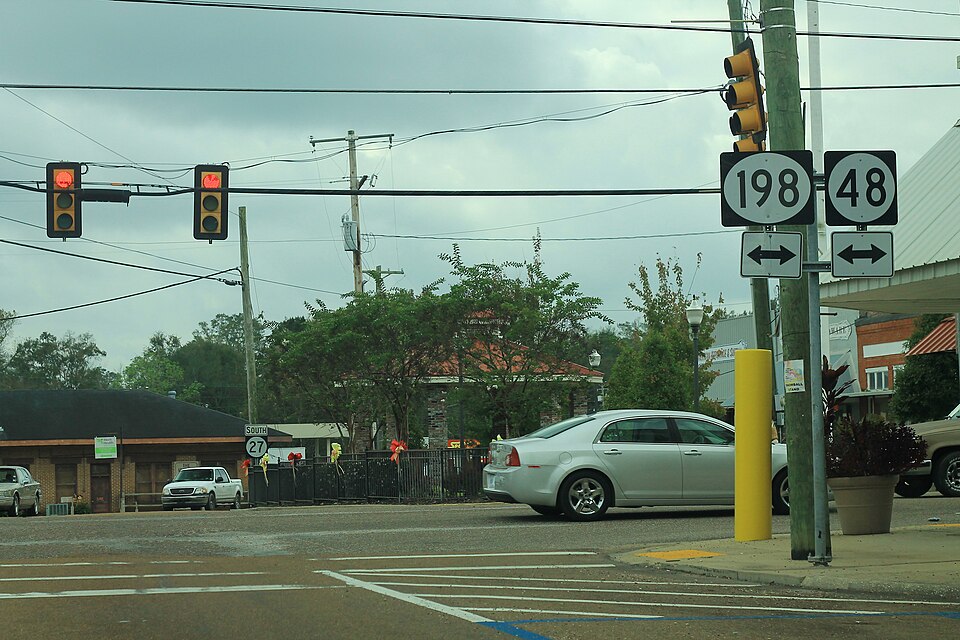
    Photo: formulanone from Huntsville, United States, CC BY-SA 2.0, via Wikimedia Commons

    This guide is for Mississippi drivers buying, modifying or inspecting a car or truck, especially a first vehicle. Mississippi bans “squatted” vehicles whose front fender has been raised 4 or more inches above the rear. Fines start at $100, and a third offense brings a 12-month license suspension. Aftermarket window tint needs an inspection certificate and decal showing every window lets through at least 28% of light.

    Key facts

    • Squatted vehicle ban: Section 63-7-105 of the Mississippi Code, created by House Bill 349 (2024).
    • Fines: $100 for a first offense, $200 for a second, and $300 plus a 12-month license suspension for a third or subsequent offense within 5 years.
    • Enforcement: penalty tickets from January 27, 2025, after a warning-only period.
    • Tint: all windows must have light transmittance of 28% or more, unless you hold a medical tint waiver.
    • Tint certificate and decal: $5 from an official Mississippi Window Tint Inspection Station (as of November 2026).

    What is the Mississippi squatted truck law?

    It is unlawful to drive a passenger motor vehicle on Mississippi streets or highways if the front fender height is raised 4 or more inches greater than the rear fender height by altering the suspension, frame or chassis. The look is often called the “Carolina squat”, because the vehicle appears to squat on its back tires.

    How the 4 inches is measured

    1. Measure each fender vertically from the ground, straight up through the centerline of the wheel, to the bottom of the fender.
    2. Do this at the front wheel and the rear wheel.
    3. If the front measurement is 4 or more inches greater than the rear, and that comes from a suspension, frame or chassis alteration, the vehicle is squatted.

    “Fender” means the pressed and formed part over the road wheels that reduces splashing of mud and water.

    Exemption

    Vehicles with high clearance fenders that allow more front suspension articulation are exempt.

    Squatted vehicle penalties in Mississippi

    Offense (within 5 years) Fine License
    First $100 No suspension
    Second $200 No suspension
    Third or subsequent $300 Suspended for 12 months from the date of conviction

    A violation is a misdemeanor. Only offenses within 5 years of each other count as prior offenses. The law took effect July 1, 2024, with warning tickets only for the first 180 days. Penalty tickets began January 27, 2025. Fines go to the state general fund to help pay for secondary school driver education.

    For a teen driver, a third conviction means losing your license for a year. Permit holders should also know that any moving violation conviction restarts the one-year permit clock. See the teen license rules.

    Mississippi window tint rules

    • Any Mississippi-registered vehicle with aftermarket tint film must be inspected at an official Mississippi Window Tint Inspection Station.
    • Passing gets you a window tint compliance certificate and decal. They cost $5 (as of November 2026).
    • Stick the decal on the lower left corner of the windshield.
    • Keep the compliance certificate on the dashboard or in the glove box (dash compartment).
    • The windshield must carry a label certifying that all windows have a light transmittance of 28% or more.
    • Windows may not have signs, posters, stickers or glass material that create a mirrored effect. The windshield must be free of unofficial stickers.

    To find an inspection station, the DSB’s Window Tint Compliance office lists locations and takes calls.

    Medical tint waiver

    If a physical condition or disease means you need tint darker than the legal 28%, you can apply for a waiver:

    1. Complete the Window Tint Waiver Affidavit. You sign it, and a physician signs and attests to the condition.
    2. Present it to your county tax collector’s office.
    3. You receive a tint waiver certificate free of charge. Display it prominently on the dashboard.

    Other Mississippi vehicle equipment rules

    Before you modify a first car, check these requirements from the Mississippi Driver’s License Manual:

    • Lights: two headlights and at least one red taillight visible 500 feet behind. You may add no more than one spotlight and three auxiliary lights, and none of them may be red or blue. No more than four lights, not counting headlights, may be on at once.
    • Exhaust: the muffler must work constantly. Cutouts and bypasses are illegal, and so are sirens and exhaust or spark whistles.
    • Brakes: the foot brake must stop you within 30 feet at 20 mph, and the parking brake within 55 feet at 20 mph.
    • Horn: audible 200 feet away.
    • Plate: mounted on the rear. Hitches and decorations must not hide any character, and the tag light must make the plate readable at 60 feet at night.
    • Tires: properly inflated with good tread, and free of breaks, cuts and decay.

    Changes can also affect your insurance. See car insurance for new drivers.

    Buying a used truck in Mississippi: quick checklist

    • Measure front and rear fender heights. A 4-inch or bigger difference from a lift or level kit means the truck is not legal to drive as is.
    • Look for a tint decal on the lower left of the windshield. If the windows are tinted with none, budget for an inspection or tint removal.
    • Check that there are no red or blue auxiliary lights and no muffler bypass.
    • Get the Certificate of Title, and buy a Mississippi tag in your county. New residents must get one within 30 days.

    Common questions

    Is the Carolina squat illegal in Mississippi?

    Yes, when the front fender has been raised 4 or more inches above the rear fender by altering the suspension, frame or chassis.

    Can you lose your license for a squatted truck in Mississippi?

    Yes, on a third or subsequent offense within 5 years. The suspension is 12 months.

    Does the squat law apply to lowered rear ends?

    The statute is written in terms of the front fender being 4 or more inches higher than the rear, as a result of altering the suspension, frame or chassis. What matters is the difference in measured height.

    How dark can window tint be in Mississippi?

    All windows must let through 28% of light or more, unless you hold a medical tint waiver.

    Where does the tint decal go?

    On the lower left corner of the windshield. Keep the certificate on the dashboard or in the dash compartment.

    More on the rules and tests in the guide to learning to drive in Mississippi, and on suspensions in points systems and license suspensions in the US.

    Sources

    • Mississippi Legislature, “House Bill 349, 2024 Regular Session (As Sent to Governor)” and bill history (billstatus.ls.state.ms.us)
    • Mississippi Department of Public Safety, “Driver’s License Manual” (revised December 2024) (driverservicebureau.dps.ms.gov)
    • Mississippi Department of Public Safety, Driver Service Bureau, “Tint Waiver” (driverservicebureau.dps.ms.gov)
    • Mississippi Department of Public Safety, Driver Service Bureau, “Window Tint Compliance” (driverservicebureau.dps.ms.gov)
  • Mississippi Driver’s Ed Requirement From July 2027

    Mississippi Driver’s Ed Requirement From July 2027

    Photo: Carol M. Highsmith, public domain, via Wikimedia Commons

    This guide is for anyone planning a first Mississippi driver’s license from mid-2027 onward, whether a teen, a home-schooled student or an adult. Under Senate Bill 2695 (2024), from July 1, 2027, Mississippi will not issue a driver’s license to anyone who has never held one unless they have completed a certified Driver Education and Training Program. Under-18s can still get a learner’s permit before finishing the course.

    Key facts

    • Start date: July 1, 2027.
    • Who it covers: any person who has not previously obtained a driver’s license, of any age.
    • Accepted courses: a Driver Education and Training Program certified by the State Board of Education or the Department of Public Safety (DPS).
    • Permit still allowed: under-18s can get a learner’s permit as usual.
    • School courses: from the 2026 to 2027 school year, every school district with grades 9 to 12 must run driver education.
    • DPS course: from July 1, 2026, the DPS must run a statewide course for home school students and adults.

    What the 2024 law changed

    SB 2695 was approved by the Governor on May 10, 2024, and amends several sections of the Mississippi Code:

    Change Mississippi Code section Date
    Driver’s ed required before a first license 63-1-9(1)(h) From July 1, 2027
    School districts with grades 9 to 12 must offer driver education 37-25-3 From the 2026 to 2027 school year
    DPS statewide course for home school students and adults 63-1-9(2)(f) From July 1, 2026
    Certificate of Completion sent to the Driver Service Bureau 37-25-8 On completion
    Commissioner may set rules for an under-18’s first 12 months with a license 63-1-9(2)(e) In force

    The Mississippi Driver’s License Manual (revised December 2024) reflects the same date. It lists completion of a certified course as a license requirement beginning July 1, 2027.

    Who must take driver’s ed in Mississippi from July 2027?

    • Teens getting a first license: yes. This sits alongside the one-year permit rule and the 50-hour Road Test Waiver affidavit for under-17s.
    • Adults who have never held a license: yes. The law says “any person”, with no age limit, and the DPS course is meant partly for adults.
    • Drivers who already hold a Mississippi license: no. The rule applies only to people who have not previously obtained one.
    • New residents with an out-of-state license: the wording covers people who have never obtained a license. Confirm with the DSB before you move.

    Do not wait if you are close to the date. Anyone without a license on July 1, 2027 will need the certificate.

    Which driver’s ed courses count?

    • High school programs: run by school districts under State Board of Education rules, with both classroom and behind-the-wheel instruction. Students must be 14 or older and enrolled full time in grades 9 to 12. While under an instructor’s direct supervision in an approved course, they do not need a permit.
    • DPS-certified instructors: the DSB publishes a Driver’s Education Instructor List. You contact an instructor directly to book.
    • The DPS statewide program: for home school students and adults who have not otherwise taken driver’s ed.

    The DSB hardship page states that, from July 1, 2026, it accepts driver’s ed certificates only from a Mississippi public school or a DPS-certified instructor, whenever the course was completed. Certificates from other providers may not be accepted. Check before you pay for a course.

    What a Mississippi course must cover

    The law requires the state program in secondary schools to include:

    • classroom and behind-the-wheel instruction
    • distracted driving, alcohol, drugs and safety education
    • organ and tissue donation
    • Mississippi litter laws and passengers’ duty to dispose of litter properly
    • how to respond when stopped by law enforcement
    • awareness of vulnerable road users, including pedestrians

    When you finish, you receive a Certificate of Completion, and a copy or record goes to the Driver Service Bureau.

    Driver’s ed and the hardship license now

    Even before 2027, driver’s ed matters for 15 to 17 year olds who want a hardship license. A certified course is one of the required conditions. Your instructor must submit your completion record (a public school certificate or the DPS instructor’s completion list) before the DSB can approve the request. Details: Mississippi teen license rules.

    Timeline for a teen turning 15 in 2026 or 2027

    1. At 15, get your learner’s permit. Driver’s ed is not needed for this step. See the permit test guide.
    2. Enroll in driver’s ed at school, with a DPS-certified instructor, or in the DPS program.
    3. Log at least 50 hours of supervised driving over the permit year.
    4. If you apply for your license on or after July 1, 2027, bring your permit, school attendance form, waiver affidavit and driver’s ed proof.

    Common questions

    Is driver’s ed required in Mississippi right now?

    Not for a regular license until July 1, 2027. It is already required for a hardship license.

    Do adults have to take driver’s ed in Mississippi?

    From July 1, 2027, yes, if you have never held a driver’s license. The DPS must offer a course for adults.

    Can I take driver’s ed online?

    The law requires a certified program with classroom and behind-the-wheel parts in schools. The DSB accepts certificates only from public schools or DPS-certified instructors. Ask the provider whether the DSB will accept its certificate.

    How much does driver’s ed cost?

    Contact your school or a certified instructor.

    Does driver’s ed replace the 50-hour affidavit?

    Nothing in the 2024 law or the current manual says so. From July 1, 2027, the manual lists both as requirements.

    Back to the guide to learning to drive in Mississippi. For how other states handle driver’s ed, see learning to drive in the USA.

    Sources

    • Mississippi Legislature, “Senate Bill 2695, 2024 Regular Session (As Sent to Governor)” and bill history (billstatus.ls.state.ms.us)
    • Mississippi Department of Public Safety, “Driver’s License Manual” (revised December 2024) (driverservicebureau.dps.ms.gov)
    • Mississippi Department of Public Safety, Driver Service Bureau, “Hardship License” (driverservicebureau.dps.ms.gov)
    • Mississippi Department of Public Safety, Driver Service Bureau, “Certified Driver’s Education Instructors” (driverservicebureau.dps.ms.gov)
  • Mississippi Teen Driver License Rules and Age Requirements

    Mississippi Teen Driver License Rules and Age Requirements

    Photo: Tony Webster from Minneapolis, Minnesota, United States, CC BY-SA 2.0, via Wikimedia Commons

    This guide is for Mississippi teens and parents who want to know when you can drive, and what rules apply at 15, 16 and 17. You can get a learner’s permit at 15 and a regular Class R license at 16 after 12 months on the permit. At 17 you can skip the waiting period entirely. The current DSB pages and the December 2024 manual describe no separate intermediate license, curfew or passenger limit.

    Key facts

    • 15: learner’s permit. You drive with a licensed driver aged 21 or older in the seat next to you.
    • 15 to 17: an optional hardship license after 30 days on the permit, if you qualify.
    • 16: Class R license after holding the permit 12 months (or until your 17th birthday, if sooner), with the 50-hour Road Test Waiver affidavit.
    • 17 and older: permit and license on the same day, with no holding period and no affidavit.
    • Under 18: school attendance proof is required at every stage.
    • All drivers: no texting, and no reading or posting to social media on a hand-held phone.

    Mississippi license ages at a glance

    If you first apply at What you get When you can get a Class R license
    15 Learner’s permit 12 months later (so a permit at 15 and a half means a license at 16 and a half)
    16 Learner’s permit At 17, or after 12 months if sooner
    17 or older Permit and license the same day Immediately, after passing the knowledge and vision exams

    The one-year permit rule

    Under Section 63-1-9 of the Mississippi Code, as amended in 2024, an under-18 can get a driver’s license at 16 or older after holding a learner’s permit for at least one year with no DUI conviction or moving violation. Any such conviction restarts the one-year clock. Other rules:

    • Months held on a valid out-of-state learner’s permit count toward the 12 months.
    • An applicant aged 16 or over who has held a valid out-of-state license for at least 6 months does not need a Mississippi permit first.
    • If a hardship stopped you applying for a permit on time, the DPS may credit that period. This is at its discretion, and only if you have completed certified driver’s education.

    Is there still an intermediate (Class Y) license in Mississippi?

    Not on the current official pages. The DSB site once had a separate intermediate license page, but today:

    • the December 2024 manual lists only the learner’s permit and the regular Class R license under “Types of Licenses & Permits”
    • the DSB’s Class R page describes moving straight from permit to Class R
    • the old intermediate license page now returns “Access denied”

    The 2024 law lets the Commissioner of Public Safety set rules and restrictions for the first 12 months that an under-18 holds a license. Check the current DSB pages, or ask at your station, for any restrictions before you drive solo. For other states’ curfews and passenger limits, see US graduated driver licensing compared.

    The Mississippi hardship license (15 to 17)

    This is the one route to limited solo driving before the year is up. A parent or legal guardian applies on your behalf.

    Eligibility (all required)

    • You are a Mississippi resident aged 15 to 17.
    • You have held a learner’s permit for 30 days without any traffic infractions.
    • You have completed a certified driver’s education course.
    • You have no prior traffic citations and you meet the school attendance policy.
    • You have no DUI. Hardship licenses are not available after one.

    From July 1, 2026, the DSB accepts driver’s ed certificates only from a Mississippi public school or a DPS-certified instructor, whenever the course was taken. Your instructor must send the completion record before the request can be approved.

    Accepted reasons

    • school transportation
    • a death-related emergency
    • helping transport siblings
    • medical needs
    • a work requirement
    • family business needs, including farms

    Restrictions

    • You may drive unsupervised only to school or school functions, to take siblings to school or school functions, to work, and for medical needs.
    • At all other times, a parent, guardian or licensed driver aged 21 or older must sit beside you.
    • You may carry immediate family only: siblings, parents or grandparents.
    • No phone use of any kind while driving, including hands-free.

    The Commissioner can revoke the hardship license for any reason. Examples include a parent’s request, a citation, a police report of dangerous driving, or school attendance violations. Apply through the DSB’s online hardship submission portal.

    Phone and distracted driving rules in Mississippi

    • Writing, sending or reading text messages while driving is not allowed for any driver. This covers instant messages and email.
    • Reading or posting to social networking sites on a hand-held phone is not allowed.
    • Emergency, traffic and weather alerts, and navigation messages, are not counted as text messages.
    • The manual recommends a hands-free device if you must make a call. Hardship license holders may not use a phone at all.

    National comparison: hands-free and texting laws for US drivers.

    Other rules that hit teen drivers

    • Zero tolerance: under 21, a BAC of 0.02% or more is a DUI. A first offense brings a $250 fine and a 120-day suspension. See zero tolerance laws for drivers under 21.
    • School attendance: under-18s who drop out or fail to meet attendance rules are not eligible for a license.
    • Parental cancellation: any adult who signed your application can later ask in writing for your permit or license to be cancelled.
    • License fee: drivers under 21 get the 4-year Class R license at $24 (as of November 2026).

    Common questions

    Can I get my license at 16 in Mississippi?

    Yes, if you got your permit at 15 and have held it for 12 months with no DUI or moving violation convictions.

    Is there a curfew for teen drivers in Mississippi?

    The current manual and DSB license pages describe no curfew for Class R holders. Hardship licenses have trip-purpose limits instead. Because the law lets the Commissioner set first-year rules for under-18s, confirm with the DSB.

    How many passengers can a 16-year-old carry in Mississippi?

    No passenger limit is listed for a regular Class R license. A hardship license holder can carry only immediate family.

    Can a 15-year-old drive alone in Mississippi?

    Only with an approved hardship license, and only for its listed trips.

    What if I move to Mississippi with an out-of-state permit?

    The months you held it count toward the 12-month requirement.

    See also the guide to learning to drive in Mississippi, the permit test guide, the 50-hour affidavit and the driver’s ed requirement.

    Sources

    • Mississippi Department of Public Safety, Driver Service Bureau, “Regular Driver License, Light Commercial, Class D” (Class R page) (driverservicebureau.dps.ms.gov)
    • Mississippi Department of Public Safety, Driver Service Bureau, “Hardship License” (driverservicebureau.dps.ms.gov)
    • Mississippi Department of Public Safety, Driver Service Bureau, “Regular Learner’s Permit” (driverservicebureau.dps.ms.gov)
    • Mississippi Department of Public Safety, “Driver’s License Manual” (revised December 2024) (driverservicebureau.dps.ms.gov)
    • Mississippi Legislature, “Senate Bill 2695, 2024 Regular Session (As Sent to Governor)” (billstatus.ls.state.ms.us)
  • Mississippi Road Test Waiver: The 50 Hour Affidavit Explained

    Mississippi Road Test Waiver: The 50 Hour Affidavit Explained

    Photo: Kaotate, CC BY-SA 4.0, via Wikimedia Commons

    This guide is for Mississippi permit holders under 17 and the parents, teachers or guardians who supervise them. Mississippi does not currently give a road test for a regular Class R license. Instead, an adult signs the Affidavit for Road Test Waiver. It swears that you have held your permit for at least a year, have had at least 50 hours of driving instruction, and can drive safely.

    Key facts

    • No road test at this time: the Driver Service Bureau (DSB) says no skills (road) test is required of any applicant for a regular license at present.
    • Who needs the affidavit: applicants under 17. It is not required at 17 or older.
    • Who can sign: a parent, teacher or guardian.
    • What they swear: the permit has been held at least one year, you have had a minimum of 50 hours of driving instruction, and you are proficient in safe driving.
    • Legal basis: the form cites Section 63-1-33 of the Mississippi Code.

    Do you have to take a driving test in Mississippi?

    Not at the moment. The DSB’s Class R page says that, at this time, no skills test is required of any applicant for a regular driver’s license. The manual says an original license needs three things: a passed vision exam, a passed computerized exam, and the 50-hour affidavit. From July 1, 2027, proof of certified driver’s education is added.

    Because no examiner checks your driving, the person who signs is taking real responsibility. Practice as if a road test were coming. For what other states test, see US road test by state.

    What the Mississippi road test waiver affidavit says

    The DSB form is titled “Affidavit for Road Test Waiver”. It records:

    • your name, address, date of birth, age and Social Security number
    • the name of the parent, teacher or guardian giving the attestation
    • their statement that you have held the permit for at least one year
    • their statement that you have had at least 50 hours of driving instruction
    • their statement that they gave you the training and guidance, and that you can drive safely and properly
    • their signature, the date and their title, under a sworn declaration that the information is true

    The form does not ask for a log or for night hours. The DPS Model Mentor Guide includes an optional driving log you can use to track your hours.

    When you hand in the affidavit

    At 16, once you have held your learner’s permit for 12 months (or reached your 17th birthday, if that comes first), bring:

    1. your valid learner’s permit
    2. an up-to-date school attendance form (valid for only 30 days)
    3. the signed Waiver of Road Testing Affidavit
    4. the license fee: $24 for 4 years (as of November 2026)

    Your knowledge exam score is valid for 2 years. Hand in the affidavit within that time and you do not need to retake the exam.

    Who does not need the affidavit?

    • Applicants 17 and older. The DSB says the affidavit is not required. You pass the knowledge and eye exams and can get the permit and license on the same day.
    • Drivers with an out-of-state license held 6 months or more, aged 16 and over. You do not need to hold a Mississippi permit first.

    Planning the 50 hours: a practical plan

    The Model Mentor Guide on the DSB site is written for the adults teaching new drivers. Its sample plan runs to about 60 hours, more than the 50 the affidavit requires, and it suggests covering:

    Experience Sample hours in the guide
    Basic driving actions (empty lot) 3
    Light and moderate traffic, daylight 11
    Light and moderate traffic, night 10
    Expressway driving, day and night 6
    Complex environments, day and night 8
    Adverse conditions, day and night 6
    Typical first-months situations 8
    Summation and evaluation 8

    Tips from the guide:

    • Start in an empty parking lot, and keep early sessions short.
    • Give directions early: say where the action happens first, then the action, as in “at the next intersection, turn left”.
    • Say “that’s correct”, not “right”.
    • Turn off phones and avoid passengers at first.
    • Use commentary driving: the learner says out loud what they see and plan to do.

    For how Mississippi’s 50 hours compare, see supervised driving hours by state.

    What to practice before the adult signs

    With no examiner, use this checklist drawn from the Mississippi manual:

    • Parallel parking with the tires within 12 inches of the curb, and hill parking with the wheels turned correctly.
    • Turning around in a confined space (a three-point turn).
    • Signaling at least 100 feet before a turn and turning into the correct lane.
    • Four-way and two-way stops: who goes first.
    • Right on red only after a complete stop.
    • Stopping at least 10 feet from a school bus with its lights flashing.
    • Merging onto and leaving an interstate, and keeping 7 car lengths at 70 mph.
    • Night driving: dimming within 500 feet of other vehicles.
    • Passing cyclists with at least 3 feet of space.
    • What to do when pulled over by law enforcement.

    Learners in other states often fail on the same skills. See common reasons people fail the US driving test.

    Common questions

    Can a grandparent or older sibling sign the Mississippi road test waiver?

    The form names a parent, teacher or guardian. If the adult supervising you is someone else, ask the DSB before relying on their signature.

    Does the affidavit need to be notarized?

    The waiver form itself has a sworn declaration and signature line, but no notary block. Your license application, however, must carry a notarized parent or guardian signature if you are under 17.

    Do I need a driving log in Mississippi?

    The affidavit does not ask for one. The Model Mentor Guide’s log is a good way to show the 50 hours were real.

    Is the road test coming back?

    As of November 2026, the DSB says no road test is required at this time. Driver’s ed becomes required from July 1, 2027. Check the DSB Class R page before applying in case the testing rules change.

    I am 17. Do I need 50 hours?

    No affidavit is required at 17 or older. Practice is still worth doing before you drive alone.

    See the full guide to learning to drive in Mississippi, the teen license rules and the driver’s ed requirement.

    Sources

    • Mississippi Department of Public Safety, Driver Service Bureau, “Regular Driver License, Light Commercial, Class D” (Class R page) (driverservicebureau.dps.ms.gov)
    • Mississippi Department of Public Safety, Driver Service Bureau, “Affidavit for Road Test Waiver” form (driverservicebureau.dps.ms.gov)
    • Mississippi Department of Public Safety, Driver Service Bureau, “Regular Learner’s Permit” (driverservicebureau.dps.ms.gov)
    • Mississippi Department of Public Safety, “Driver’s License Manual” (revised December 2024) (driverservicebureau.dps.ms.gov)
    • Mississippi Department of Public Safety, “Model Mentor Guide” (revised October 2025) (driverservicebureau.dps.ms.gov)
  • Mississippi Permit Test: Getting Your Learner’s Permit at 15

    Mississippi Permit Test: Getting Your Learner’s Permit at 15

    Photo: TBKS1, CC BY-SA 4.0, via Wikimedia Commons

    This guide is for Mississippi teens aged 15 and up, and their parents, getting ready for the learner’s permit visit. To get a Mississippi regular learner’s permit, you pass a computerized knowledge exam and a vision exam in person at a Driver Service Bureau (DSB) station. You also bring your documents, a recent school attendance form and $7. The permit lasts 2 years.

    Key facts

    • Minimum age: 15, with proof of school enrollment.
    • Fee: $7, valid for 2 years (as of November 2026).
    • Tests: a computerized multiple-choice knowledge exam based on the Mississippi Driver’s License Manual, plus a vision exam. Both must be passed in person.
    • Score validity: your knowledge exam score is valid for 2 years.
    • Audio option: a headset can read the questions and answers aloud.
    • Supervision: you may drive only with a licensed driver aged 21 or older in the seat next to you.

    What to bring for a Mississippi learner’s permit

    • Application: completed and signed. Under 17, both parents sign (if both are living and have custody), or a guardian, employer or responsible adult does. The signature must be notarized.
    • Proof of date of birth: an original or certified birth certificate with a state seal and certificate number. No photocopies.
    • Social Security number: your SSN card, or official government correspondence showing all 9 digits.
    • Two proofs of residency: with a physical address (no P.O. boxes). Under 21, documents for a parent’s or guardian’s home are accepted.
    • School attendance form: the Certification of School Attendance Status. See the next section.
    • Name-change documents if your name differs from your birth certificate.
    • Payment: cash, debit or credit card. No personal checks.

    The DSB recommends making an appointment before you go.

    The school attendance form (certification of attendance)

    Every applicant under 18 must show they are in school or an accepted alternative. The form is valid for only 30 days, so get it close to your appointment. It certifies one of the following:

    • you are enrolled in school in Mississippi or another state
    • you are enrolled in a nonpublic school, which includes private, church and home instruction programs
    • you are enrolled and making satisfactory progress toward a GED
    • you cannot attend school for an accepted reason (suspension, expulsion or incarceration do not count)

    Home-schooled students use the blank form from the DPS website, signed by a parent. If you are under 18 and married, a marriage license replaces the form. Graduates show a diploma or GED certificate.

    What is on the Mississippi permit test?

    The manual says the computerized exam is based on its contents. It focuses especially on:

    • Mississippi traffic laws
    • safe driving rules
    • driver’s license requirements

    The exam checks whether you:

    • know the traffic laws
    • can read and follow signs and signals
    • understand the rights of pedestrians and other drivers
    • know how to keep a vehicle in safe condition

    Topics worth knowing cold, because the manual states them as hard numbers:

    Topic Mississippi figure
    School zone speed 15 mph
    Interstate maximum and minimum 70 mph and 40 mph
    Two-lane highway maximum 55 mph
    Following distance One car length per 10 mph
    Dim headlights Within 500 feet of an oncoming vehicle or one you are following
    Stopping for a school bus At least 10 feet away
    Parking from a fire hydrant At least 10 feet
    Parallel parking Tires within 12 inches of the curb
    Passing a cyclist At least 3 feet
    BAC limit 0.08% (21 and over), 0.02% (under 21)
    Crash you must report Injury, death or damage over $500

    Check the number of questions and the pass mark with your local station if you want to know before test day. Study from the manual, which you can download free or buy at a station for $3. For other states’ formats, see US permit test by state.

    Test-day rules at the Driver Service Bureau

    • All knowledge exams are taken in person.
    • No cell phones, earbuds, smart watches or other electronics are allowed in the testing area. Leave them outside.
    • If you are caught with banned items or cheating, the test is cancelled immediately, a note goes on your record, and you cannot test again for 6 months.
    • You can appeal in writing to the DPS Driver’s Education Program Coordinator within 30 days.
    • If you need an interpreter, complete the Mississippi Interpreter Oath form and bring it and your interpreter with you.

    The vision exam

    Your eyes are checked to make sure you see well enough to drive. If the result suggests you need glasses, you get a vision form (DE26) for an eye specialist or optometrist to complete. If you need glasses or another aid to pass, your permit and license will carry that restriction. If you are under a doctor’s care, you may be asked for a certificate about your condition before testing.

    If you have difficulty reading

    The manual suggests having someone teach you its contents. On the exam itself, a headset lets the machine read each question and answer aloud.

    What the permit lets you do

    • Drive any time, as long as a licensed driver aged 21 or older is in the seat next to you.
    • Carry the permit whenever you drive.
    • Practice toward the 50 hours your parent, teacher or guardian must certify. See the road test waiver guide.
    • Apply for a hardship license after 30 days if you qualify. See the teen license rules.

    A conviction for DUI or a moving violation while on the permit restarts the one-year holding period. Texting and posting to social media while driving are banned for everyone. Planning to drive out of state? See driving with a learner’s permit in another state.

    Common questions

    How old do you have to be to get a permit in Mississippi?

    15. You also need proof that you are enrolled in school.

    How much is a Mississippi learner’s permit?

    $7 as of November 2026. It is valid for 2 years.

    Can I take the Mississippi permit test online?

    No. The DSB says all knowledge exams must be taken in person.

    Do I have to retake the test when I get my license?

    Not if you apply within 2 years. Your exam score is valid for 2 years, so if you wait longer you retake it.

    What happens if I fail the vision test?

    You get a DE26 form for an eye specialist or optometrist to fill in. Then you return with it.

    Does driver’s ed affect getting a permit?

    No. Under the 2024 law, under-18s can still get a learner’s permit. Driver’s ed becomes a condition of the first license from July 1, 2027. See the driver’s ed guide.

    Back to the full guide to learning to drive in Mississippi.

    Sources

    • Mississippi Department of Public Safety, Driver Service Bureau, “Regular Learner’s Permit” (driverservicebureau.dps.ms.gov)
    • Mississippi Department of Public Safety, “Driver’s License Manual” (revised December 2024) (driverservicebureau.dps.ms.gov)
    • Mississippi Department of Public Safety, Driver Service Bureau, “Knowledge Testing” policy (driverservicebureau.dps.ms.gov)
    • Mississippi Department of Public Safety, Driver Service Bureau, “Certification of School Attendance Status” form (driverservicebureau.dps.ms.gov)
    • Mississippi Department of Public Safety, Driver Service Bureau, “Required Documents” (driverservicebureau.dps.ms.gov)
    • Mississippi Department of Public Safety, Driver Service Bureau, “Driver Service Fees” (driverservicebureau.dps.ms.gov)
    • Mississippi Legislature, “Senate Bill 2695, 2024 Regular Session (As Sent to Governor)” (billstatus.ls.state.ms.us)
  • Learning to Drive in Mississippi: Permit, License and Road Rules

    Learning to Drive in Mississippi: Permit, License and Road Rules

    Photo: Ryan Stephens, Pexels

    This guide is for Mississippi teens, their parents and adults getting a first license. In Mississippi you can get a learner’s permit at 15, and a regular Class R driver’s license at 16 once you have held the permit for a year. There is currently no road test: a parent, teacher or guardian signs an affidavit for at least 50 hours of driving instead. From July 1, 2027, first-time applicants must also complete certified driver’s education.

    Key facts

    • Agency: Mississippi Department of Public Safety (MDPS), Driver Service Bureau (DSB).
    • Handbook: the Mississippi Driver’s License Manual, revised December 2024. Free to download, or $3 at a driver license station.
    • Learner’s permit: from 15, $7, valid for 2 years. You need to pass a computerized knowledge exam and a vision exam.
    • Class R license: from 16, after holding the permit 12 months (or until your 17th birthday, whichever comes first). $24 for 4 years or $47 for 8 years (as of November 2026).
    • No road test at this time: under-17s submit a Waiver of Road Testing Affidavit certifying at least 50 hours of driving instead.
    • Driver’s ed: required for anyone who has never held a driver’s license, from July 1, 2027.
    • 17 or older: you can get the permit and the license on the same day.

    How to get a driver’s license in Mississippi: the stages

    Stage Minimum age What you need Rules
    Regular learner’s permit 15 Documents, school attendance form, knowledge and vision exams, $7 Drive only with a licensed driver 21 or older in the seat next to you
    Hardship license (optional) 15 to 17 Permit held 30 days with no infractions, certified driver’s ed, approved hardship request Unsupervised only to school, work, medical needs and taking siblings to school; no phone use at all
    Regular license, Class R 16 Permit held 12 months (or until 17), school attendance form, Road Test Waiver affidavit Full license; the texting and social media ban applies to every driver

    Each stage has its own guide:

    For how Mississippi compares with other states, see learning to drive in the USA and US graduated driver licensing compared.

    Who needs a Mississippi license, and who doesn’t

    You need a valid driver’s license or learner’s permit to drive any motor vehicle on Mississippi streets or highways. Driving without one is illegal even with a parent beside you. The manual lists these exemptions:

    • driving a vehicle that belongs to a branch of the US Armed Services
    • non-residents over 16 with a valid license from their home state or country
    • operating road machinery, farm tractors or farm equipment

    You cannot be licensed if, among other things, your license is suspended or revoked, you are under 18 without proof of school enrollment, or you have a physical or mental condition incompatible with safe driving.

    Military personnel and college students

    • Non-resident military personnel and their families can drive in Mississippi on a valid license from another state.
    • Out-of-state college students can drive on their home state’s license.
    • Mississippi residents away for military service or college can renew by mail. The DSB lists the documents on its Military Personnel and College Students pages.
    • If your license expires while you are out of state on military service, you can renew within 90 days of discharge or of returning to the state. There is no late fee.
    • Any license can be renewed up to six months before it expires.
    • Non-citizens with a Permanent Resident Card or valid immigration papers can get a regular license. It is valid for four years, or until your legal stay ends if sooner, at the standard fee. No Social Security card is needed.

    Moving to Mississippi

    • Get a Mississippi driver’s license within 60 days and a Mississippi license plate within 30 days.
    • Surrender your out-of-state license, or sign a notarized Affidavit of Inability to Surrender if it is lost.
    • With a valid out-of-state license, the knowledge exam is waived but you take a vision screening. If your license has expired, you must take the knowledge exam. The manual says this applies once it has been expired over 30 days.
    • If you have held an out-of-state license for at least six months, you can qualify for a Class R license without the one-year permit wait.

    More: moving to a new state.

    Application requirements

    • A completed and signed application.
    • An original or certified birth certificate (no photocopies), or another accepted proof of date of birth.
    • A Social Security card, or official government correspondence showing all 9 digits (a returned W-2, for example).
    • Two proofs of Mississippi residency with a physical address, no more than 60 days old. Under-21s can use documents for a parent’s or guardian’s home.
    • Legal name-change documents (marriage license, divorce decree, adoption or court order) if your name has changed.
    • Under 18: a Certification of School Attendance form no more than 30 days old. If you are married you show a marriage license instead; graduates show a diploma or GED certificate.
    • Under 17: the application must be signed by both parents (if both are living and have custody), or by a guardian, employer or responsible adult. The signature must be notarized, and whoever signs is liable for your negligence or willful misconduct. A signer can later file a written request to have your permit or license cancelled.

    Fees are cash, debit or credit card only, with no personal checks. The DSB recommends booking an appointment.

    The examination

    • Vision exam. If it shows you may need glasses, you get a form (DE26) for an eye specialist or optometrist to complete. If you need glasses to pass, your license is restricted to wearing them.
    • Computerized exam. This is a multiple-choice test based on the manual, focused on Mississippi traffic laws, safe driving rules and license requirements. A headset can read the questions and answers aloud. Your score is valid for 2 years.
    • Road test. The DSB says no skills (road) test is required at this time for a regular license.

    Test format, documents and test-day rules are covered in the Mississippi permit test guide.

    Common terms in the Mississippi manual

    • Highway: every roadway or place of travel, including city streets.
    • Intersection: where roads come together or cross. Crosswalks count as part of the intersection.
    • Motor vehicle: a vehicle run by its own engine or motor. Vehicles on rails, electric bicycles, golf carts and low-speed vehicles are excluded.
    • Right of way: the privilege of the immediate use of the highway.
    • Stop: complete cessation of movement.

    Vehicle equipment you must have in Mississippi

    Item Mississippi requirement
    Foot brake Must stop the vehicle within 30 feet at 20 mph
    Parking brake Must stop the vehicle within 55 feet at 20 mph
    Horn Audible 200 feet away; sirens and noise-making devices are illegal
    Headlights and taillight Two headlights and at least one red taillight visible 500 feet behind
    Extra lights No more than one spotlight and three auxiliary lights, none red or blue
    Muffler Working at all times; no cutouts or bypasses
    Mirrors Rearview mirror recommended; side mirror required if a truck body blocks your view behind
    Wipers and tires Wipers must work; tires properly inflated with good tread
    Tag light Must make the plate readable at 60 feet at night

    Mississippi also bans “squatted” vehicles and regulates window tint. See the squatted truck and tint guide.

    Safe driving basics and before you drive

    • Carry your license. State law requires you to show it on request.
    • Adjust your seat and mirrors and fasten your seat belt before moving off.
    • Hold the wheel at 3 and 9 o’clock. The manual says 10 and 2 is no longer recommended in cars with airbags.
    • On long trips, plan a stop about every 100 miles or 2 hours.
    • Check tread with the penny test: if part of Lincoln’s head is covered by the tread, you have a safe amount.

    Phones and distractions

    In Mississippi, writing, sending or reading text messages while driving is not allowed. Neither is reading or posting to social media on a hand-held phone. The manual recommends a hands-free device if you must make a call. Hardship license holders may not use a phone at all, even hands-free. Windshields must be free of unofficial stickers, and window materials that create a mirrored effect are not allowed. More: hands-free and texting laws for US drivers.

    Pavement markings, signs and signals

    • Broken yellow line: you may cross it to pass when safe. Double solid yellow: no passing from either side. With solid and broken lines together, only the driver next to the broken line may pass.
    • Double solid white: do not cross. Single solid white: crossing is discouraged.
    • Center turn lane: only for preparing to turn left or right, never for passing.
    • Crosswalks: never stop on one. Yield to pedestrians in a crosswalk, marked or not.
    • Sign shapes: octagon = stop, triangle = yield, pennant = no passing zone, diamond = hazard warning, pentagon = school, round = railroad crossing ahead.
    • Slow-moving vehicle emblem: an orange and red triangle on vehicles traveling 25 mph or less.

    Signals:

    • You may turn right on red after a complete stop unless a sign prohibits it. Yielding without stopping is illegal.
    • A flashing yellow arrow means you may turn but must yield to oncoming traffic.
    • If a signal is dark, stop completely, then proceed with caution.

    National guides: US pavement markings, US road signs by shape and color and traffic signals in the US.

    Railroad crossings in Mississippi

    • Stop no closer than 10 feet and no farther than 50 feet from the nearest rail when you see any of these: a lowered gate, a flashing signal, a stop sign, a flagger signaling you, or a train approaching fast.
    • Do not drive around lowered gates. Do not shift gears while crossing, and check for a second train.
    • School buses carrying children, vehicles for hire carrying passengers, and vehicles carrying explosives or flammable liquids must stop at every crossing.
    • If you are stuck on the tracks, get out right away. A train can arrive about 20 seconds after the lights start. Move away at a 45-degree angle toward the direction the train is coming from. Then call 911 and the number on the blue Emergency Notification System sign.

    More: railroad crossings for US drivers.

    Mississippi speed limits and following distance

    Road Maximum Minimum
    Interstates 70 mph 40 mph
    Four-lane state and US highways 65 mph 40 mph
    Two-lane state and US highways 55 mph None listed
    Natchez Trace Parkway 50 mph None listed
    School zone 15 mph None listed

    Posted limits are for ideal conditions. Leave at least one car length for every 10 mph of speed, so 7 car lengths at 70 mph on the interstate. More: speed limits and the basic speed law.

    Rules of the road

    Signals, lanes and passing

    • Signal at least 100 feet before a turn. With arm signals, signal continuously for at least 100 feet.
    • On multi-lane roads, keep to the right lane except to pass or turn left.
    • Do not pass on hills, on curves, or within 100 feet of a bridge, viaduct, overpass, railroad crossing, crosswalk or intersection.
    • You may pass on the right only in certain cases: a vehicle turning left, a multi-lane interstate, a wide four-lane highway, or a wide one-way road. Never pass on the shoulder.

    Right of way

    • At a four-way stop, the first vehicle to arrive goes first. If you arrive together, yield to the vehicle on your right.
    • At a two-way stop, cross traffic has the right of way.
    • When pulling out of a driveway, stop and yield even if there is no sign.
    • At a roundabout, yield to traffic already circulating, travel counterclockwise and signal your exit.

    More: four-way stops explained and how to drive a roundabout.

    School buses and pedestrians

    • When a school bus shows flashing red lights or an extended stop sign, stop at least 10 feet away, whichever direction you are traveling. Stay stopped until the children have crossed and the bus moves off.
    • Exception: on a divided highway of four or more lanes, traffic going the opposite way does not have to stop.
    • You also do not have to stop when the bus is in a loading zone beside the highway where pedestrians may not cross the road.
    • Pedestrians in a crosswalk, marked or unmarked, always have the right of way. Take extra care around anyone carrying a white cane.

    More: school bus stopping laws.

    Parking

    • Do not park within 10 feet of a fire hydrant, within 20 feet of a crosswalk at an intersection, or within 30 feet of a traffic control device.
    • Do not park within 15 feet of the nearest rail of a railroad crossing, or within 20 feet of a fire station driveway (75 feet if posted).
    • When parallel parking, your tires must be within 12 inches of the curb.
    • On a hill, turn your wheels to the right, except when parked uphill against a curb: then turn them left.

    More: US parking rules for new drivers.

    Driving at night

    • Use headlights between sunset and sunrise, and any time you cannot see clearly 500 feet ahead. Never drive on parking lights alone.
    • Dim to low beams within 500 feet of an oncoming vehicle or one you are following. Use low beams in fog.
    • If oncoming lights dazzle you, look toward the right side of the road. Never wear tinted glasses at night.

    Seat belts and child restraints

    • The driver and every passenger, front and back, must wear a seat belt.
    • Children under 4 must ride in a child safety seat.
    • Children aged 4 to under 7 who are under 4 feet 9 inches tall or weigh less than 65 pounds must use a belt-positioning booster seat.
    • The manual advises that children under 13 ride in the back seat.

    More: seat belt and child car seat laws.

    Hazardous conditions, crashes and emergencies

    • Rain: the first minutes of rain are the slickest. Slow down to avoid hydroplaning, and never drive through flooded roads.
    • Skids: steer in the direction of the skid and avoid sudden braking.
    • Blowouts: ease off the gas and brake gently.
    • Breakdowns: pull onto the far right shoulder. On the interstate, stay in your locked vehicle and never walk across it.
    • Crashes: stop, help the injured and call 911. You must report a crash involving injury, death or apparent property damage over $500. Exchange your name, address, plate and insurance details, and show proof of insurance to the officer.
    • Highway emergencies: dial *HP (*47) to reach a Mississippi Highway Patrol dispatcher.
    • Emergency vehicles: pull to the far right and stop until an ambulance, fire engine or police car using lights or siren has passed. If one is stopped on a four-lane highway, move to the far lane or slow down.

    More: what to do after a car crash, move over laws and driving in snow, fog and rain.

    If you are pulled over by law enforcement

    1. Signal and pull over as soon as it is safe, then turn off the engine and audio.
    2. Stay in the car, turn on the interior light at night and keep your hands visible.
    3. Lower your window. Tell the officer at first contact if there is a weapon in the vehicle.
    4. Wait for instructions before reaching for your license, insurance or registration.
    5. Signing a ticket is not an admission of guilt. Contest it in court, not at the roadside.

    Interstate driving, large vehicles and bicycles

    • Match traffic speed in the acceleration lane before merging. Be in the correct lane at least a quarter mile before your exit.
    • Never stop, back up or turn around on a ramp. If you miss your exit, go on to the next one.
    • If you cannot see a truck’s side mirrors, the driver cannot see you. Do not pass a truck on the right when it may be turning right.
    • Bicycles are vehicles under Mississippi law. Leave at least 3 feet when passing a cyclist.

    More: freeway driving for new drivers and sharing the road with motorcycles, bicycles and trucks.

    Required vehicle documents and insurance

    • Every vehicle needs a Certificate of Title and a Mississippi plate bought in your county of residence. If you move to Mississippi, get a Mississippi tag within 30 days.
    • Liability insurance is compulsory. The minimums are $25,000 for one person, $50,000 for two or more people in one crash, and $25,000 for property damage.
    • Keep a current insurance card in the vehicle. An electronic image on your phone is accepted.
    • If you cause a crash without insurance, your license can be suspended. You must then buy liability cover and file proof of it for three years from the crash.
    • Aftermarket window tint needs an inspection certificate and decal.

    More: car insurance for new drivers.

    DUI and implied consent in Mississippi

    • The legal limit is 0.08% BAC at 21 and over, and 0.02% under 21 (zero tolerance).
    • Driving under the influence of marijuana, medical cannabis or other drugs is illegal.
    • Refusing a breath or chemical test brings a 90-day administrative suspension for a Class R license. The officer takes your license and gives you a receipt that works as a temporary permit for 45 days (30 days if you test over the limit).
    • If you refuse the test and are then convicted of a first DUI or zero tolerance DUI, another 90 days is added to the suspension.
    • A first-offense DUI brings a 120-day suspension unless a court orders an ignition interlock-restricted license.
    • A second DUI within five years: $600 to $1,500, 5 days to 6 months in jail and a one-year suspension. A third within five years is a felony.
    • Zero tolerance DUI (under 21, 0.02% to under 0.08%): first offense $250 and 120 days; second within five years up to $500 and one year; third within five years up to $1,000 and two years or until 21, whichever is longer. Under 21 at 0.08% or more is charged as a regular DUI.

    More: implied consent and DUI in the US and zero tolerance laws for drivers under 21.

    Suspension, revocation and reinstatement

    The Commissioner of Public Safety can suspend your license for a range of reasons, including:

    • being a habitually reckless driver
    • frequent serious violations
    • a fatal or injury crash
    • a DUI in another state
    • unpaid child support

    Revocation for one year is mandatory for offenses such as vehicular manslaughter, failing to stop and render aid, or three reckless driving convictions in 12 months. Reinstatement fees (as of November 2026):

    • DUI or drugs: $175
    • Child support: $25
    • Most other suspensions: $100

    More: points systems and license suspensions in the US.

    Littering, Class D and the appendices

    • Littering: throwing or spilling waste on any public road or right of way is unlawful and can be fined. When trash comes from a vehicle, the driver, the owner or both are in violation.
    • Class D: needed to drive commercially in a vehicle under 26,000 pounds, such as a logoed vehicle, taxi or limousine. It is $29 for 4 years or $57 for 8 years. You do not need one to drive a pickup unless it carries placarded hazardous materials.
    • Organ donation: Mississippians aged 15 and up can register as donors when applying for a permit or ID. Next-of-kin consent is still needed at the time of donation for anyone under 18.
    • Natchez Trace Parkway: run by the National Park Service. The top speed is 50 mph and commercial vehicles are excluded. Violations are tried in federal court, and you can report emergencies on 1-800-300-PARK.
    • Share the Road: the manual includes the American Trucking Associations’ truck safety program.

    Common questions

    Do you have to take a driving test in Mississippi?

    Not at present. The DSB says no road test is required for a regular license at this time. Under-17s submit the 50-hour Road Test Waiver affidavit instead.

    How old do you have to be to drive alone in Mississippi?

    16, once you have held a learner’s permit for 12 months. A hardship license can allow limited solo driving earlier, from 15.

    Can I get my license at 16 if I got my permit at 15 and a half?

    No. You must hold the permit for a year, so you become eligible at 16 and a half.

    Is driver’s ed required in Mississippi?

    From July 1, 2027, anyone who has never held a driver’s license must complete a certified course before getting one. Under-18s can still get a learner’s permit first.

    Can an adult get a license on the first visit?

    Yes. At 17 or older you can get the permit and the license on the same day once you pass the knowledge and vision exams. No waiver affidavit is needed.

    Who can supervise a Mississippi permit driver?

    A licensed driver aged 21 or older sitting in the seat next to you.

    Sources

    • Mississippi Department of Public Safety, “Driver’s License Manual” (revised December 2024) (driverservicebureau.dps.ms.gov)
    • Mississippi Department of Public Safety, Driver Service Bureau, “Regular Learner’s Permit” (driverservicebureau.dps.ms.gov)
    • Mississippi Department of Public Safety, Driver Service Bureau, “Regular Driver License, Light Commercial, Class D” (driverservicebureau.dps.ms.gov)
    • Mississippi Department of Public Safety, Driver Service Bureau, “Driver Service Fees” (driverservicebureau.dps.ms.gov)
    • Mississippi Department of Public Safety, Driver Service Bureau, “Hardship License” (driverservicebureau.dps.ms.gov)
    • Mississippi Department of Public Safety, Driver Service Bureau, “Required Documents” (driverservicebureau.dps.ms.gov)
    • Mississippi Department of Public Safety, Driver Service Bureau, “Military Personnel” and “College Students” (driverservicebureau.dps.ms.gov)
    • Mississippi Department of Public Safety, Driver Service Bureau, “Reinstatement” and “DUI Department” (driverservicebureau.dps.ms.gov)
    • Mississippi Legislature, “Senate Bill 2695, 2024 Regular Session (As Sent to Governor)” (billstatus.ls.state.ms.us)
  • Mississippi Permit Practice Test: 30 Free Questions With Answers

    Mississippi Permit Practice Test: 30 Free Questions With Answers

    Photo: Michael Barera, CC BY-SA 4.0, via Wikimedia Commons

    This Mississippi permit practice test has 30 original questions written from the MDPS Driver’s License Manual (revised December 2024), the same manual the computerized knowledge exam is based on. The questions are unofficial and are not the Driver Service Bureau’s. The manual focuses on Mississippi traffic laws, safe driving rules and license requirements, so this set does too.

    Mississippi knowledge exam: key facts

    • A computerized multiple-choice exam, taken in person at a Driver Service Bureau (DSB) station, plus a vision exam.
    • Ask your station for the number of questions and the pass mark if you want to know before test day.
    • A headset can read the questions and answers aloud.
    • No phones, earbuds or smart watches in the testing area. Cheating cancels the test and bars you from retesting for 6 months.

    Documents, the school attendance form and the $7 fee: the Mississippi permit test guide. The full process: learning to drive in Mississippi.

    Signs, signals and markings (questions 1 to 6)

    1. You can recognize a STOP sign from behind, or when it is covered in snow, because it is the only sign that is:

    • A. Triangular
    • B. Round
    • C. Eight-sided (an octagon)
    • D. Shaped like a pennant

    Answer: C. Only STOP signs use the octagon shape. Manual topic: signs.

    2. A yellow diamond-shaped sign usually warns you about:

    • A. A law you must obey
    • B. A hazard or change in the road ahead, such as a curve
    • C. Gas, food and lodging
    • D. A route number

    Answer: B. Yellow diamonds are warning signs. Manual topic: signs.

    3. A round yellow sign with a black X and the letters RR means:

    • A. A railroad crossing is ahead
    • B. A rest area is ahead
    • C. Road repairs are ahead
    • D. The right lane ends

    Answer: A. The round shape is used only for railroad advance warning signs. Manual topic: signs.

    4. A flashing yellow traffic light means:

    • A. Stop and wait for green
    • B. The light is about to turn red
    • C. Only turning traffic may go
    • D. Slow down and go ahead with caution

    Answer: D. Flashing yellow is a caution signal. You do not have to stop, but watch for cross traffic. Manual topic: signals.

    5. The main light is red, but a green arrow pointing right is lit beside it. You may:

    • A. Go straight ahead
    • B. Turn left
    • C. Not move until the red light goes off
    • D. Turn right in the direction of the arrow, yielding to anyone still in the intersection

    Answer: D. A green arrow allows a protected movement in the direction it points, and only that direction. Manual topic: signals.

    6. Two solid yellow lines down the center of a two-lane road mean:

    • A. Passing is allowed in both directions
    • B. No passing in either direction
    • C. Passing is allowed only in daylight
    • D. The road is one-way

    Answer: B. Double solid yellow lines mark a no-passing area for traffic both ways. Manual topic: pavement markings.

    Right of way and emergency vehicles (questions 7 to 12)

    7. At an all-way stop, the first vehicle to come to a complete stop should:

    • A. Wait for every other car to go
    • B. Go only after sounding the horn
    • C. Go first, after checking that the way is clear
    • D. Wait for a pedestrian signal

    Answer: C. The first to stop is the first to go, once it is safe. Manual topic: right of way.

    8. You are turning left on a solid green light with no arrow. You must:

    • A. Yield to oncoming traffic and pedestrians before you turn
    • B. Go first, because you have a green light
    • C. Turn quickly before oncoming cars reach you
    • D. Wait for the light to turn yellow

    Answer: A. A plain green light lets you turn left only when there is a safe gap. Manual topic: right of way.

    9. When you enter a roundabout in Mississippi, you travel:

    • A. Counterclockwise, after yielding to traffic already in the circle
    • B. Clockwise
    • C. Straight across the center island
    • D. In either direction

    Answer: A. Slow down, yield to circulating traffic and enter counterclockwise. Manual topic: roundabouts.

    10. An ambulance with lights and siren comes up behind you just as you enter an intersection. You should:

    • A. Stop in the middle of the intersection
    • B. Back up out of the intersection
    • C. Go through the intersection, then pull over to the far right and stop
    • D. Speed up and stay ahead of it

    Answer: C. Emergency vehicles with red or blue lights, a bell or a siren always have the right of way. Manual topic: emergency vehicles.

    11. An emergency vehicle with its lights on is parked on the side of a four-lane highway. You should:

    • A. Keep your speed and lane
    • B. Stop in your lane
    • C. Sound your horn as you pass
    • D. Merge into the lane away from it if safe, or slow down and be ready to stop

    Answer: D. You must yield the right of way. Manual topic: emergency vehicles.

    12. You should signal continuously for at least how far before you slow down, turn, stop or change lanes?

    • A. 25 feet
    • B. 50 feet
    • C. 100 feet
    • D. 500 feet

    Answer: C. Give other drivers time to see your signal. Manual topic: signals.

    Mississippi speed limits and following distance (questions 13 to 19)

    13. The maximum speed for any vehicle in a Mississippi school zone is:

    • A. 10 mph
    • B. 15 mph
    • C. 20 mph
    • D. 25 mph

    Answer: B. Watch for children before and after school hours. Manual topic: speed limits.

    14. The minimum speed on a Mississippi interstate is:

    • A. 30 mph
    • B. 40 mph
    • C. 45 mph
    • D. 50 mph

    Answer: B. The interstate maximum is 70 mph. Driving too slowly can be as dangerous as speeding. Manual topic: speed limits.

    15. The maximum speed on a two-lane state or U.S. highway in Mississippi is:

    • A. 45 mph
    • B. 55 mph
    • C. 60 mph
    • D. 65 mph

    Answer: B. Four-lane state and U.S. highways can be up to 65 mph. Manual topic: speed limits.

    16. The Mississippi manual’s following-distance rule is:

    • A. At least one car length for every 10 mph of speed
    • B. One car length at any speed
    • C. Two feet for every 10 mph
    • D. Ten car lengths at any speed

    Answer: A. At 50 mph, that means at least five car lengths. Manual topic: following distance.

    17. You must use low beams when you come within how far of an oncoming vehicle, or of a vehicle you are following?

    • A. 100 feet
    • B. 200 feet
    • C. 500 feet
    • D. 1,000 feet

    Answer: C. Also use headlights from sunset to sunrise and whenever you cannot see 500 feet ahead. Manual topic: headlights.

    18. An oncoming driver keeps high beams on at night. You should:

    • A. Switch your high beams on too
    • B. Look straight at the headlights
    • C. Close one eye
    • D. Look toward the right edge of your lane until the car passes

    Answer: D. Glancing at the right edge keeps you on course without being blinded. Manual topic: night driving.

    19. You are beside a large truck and cannot see the driver in the truck’s side mirror. This means:

    • A. You are at a safe distance
    • B. The truck is about to stop
    • C. The driver has seen you and will wait
    • D. The truck driver probably cannot see you either

    Answer: D. Trucks have large blind spots. Pass steadily or drop back until you can see the driver’s mirror. Manual topic: sharing the road.

    School buses, bicycles and parking (questions 20 to 24)

    20. A school bus has its red lights flashing and stop sign out. Mississippi law says you must stop at least how far from it?

    • A. 5 feet
    • B. 10 feet
    • C. 20 feet
    • D. 30 feet

    Answer: B. Stay stopped until the children have crossed and the bus has moved on, its lights off and stop sign retracted. Manual topic: school buses.

    21. You are on a highway with four or more lanes, two going each way, and a school bus stops on the opposite side. You:

    • A. May continue on your side without stopping
    • B. Must stop 10 feet from the bus
    • C. Must stop only if children are visible
    • D. Must stop and wait 30 seconds

    Answer: A. Drivers going the same direction as the bus must still stop. Manual topic: school buses.

    22. When passing a bicycle, leave at least:

    • A. 1 foot
    • B. 2 feet
    • C. 3 feet
    • D. 10 feet

    Answer: C. Yield to oncoming bicyclists just as you would to oncoming cars. Manual topic: bicycles.

    23. You may not park within how many feet of a fire hydrant in Mississippi?

    • A. 5 feet
    • B. 10 feet
    • C. 15 feet
    • D. 25 feet

    Answer: B. You also may not park within 20 feet of a crosswalk at an intersection. Manual topic: parking.

    24. You may not park within how many feet of the nearest rail of a railroad crossing?

    • A. 5 feet
    • B. 10 feet
    • C. 15 feet
    • D. 50 feet

    Answer: C. You also may not park within 30 feet of the approach to a traffic control device. Manual topic: parking.

    Alcohol, phones and permit rules (questions 25 to 30)

    25. What is the only thing that lowers your blood alcohol level?

    • A. Black coffee
    • B. A cold shower
    • C. Eating a large meal
    • D. Time

    Answer: D. Your body removes alcohol at a steady rate, and nothing speeds it up. Manual topic: alcohol.

    26. A driver under 21 has a BAC of 0.02% or more but less than 0.08%. A first Zero Tolerance DUI conviction in Mississippi brings:

    • A. A $250 fine and a 120-day license suspension
    • B. A warning only
    • C. A $50 fine
    • D. A 2-year suspension

    Answer: A. Under 21 at 0.08% or more is a regular DUI, not Zero Tolerance. Manual topic: zero tolerance DUI.

    27. If you refuse a breath or chemical test in Mississippi, your license is administratively suspended for:

    • A. 30 days
    • B. 45 days
    • C. 90 days
    • D. 1 year

    Answer: C. The officer’s receipt works as a temporary permit for 45 days. Later refusals bring longer suspensions. Manual topic: implied consent.

    28. Which phone use is banned for every Mississippi driver?

    • A. Writing, sending or reading text messages while driving
    • B. Any hands-free call
    • C. Using a GPS voice app
    • D. Listening to the radio

    Answer: A. Reading or posting to social media on a hand-held phone is also banned. Manual topic: distracted driving.

    29. A Mississippi learner’s permit holder may drive only with:

    • A. Any passenger 16 or older
    • B. A licensed driver aged 18 or older in the back seat
    • C. No one, during daylight
    • D. A licensed driver aged 21 or older in the seat next to them

    Answer: D. Carry your permit whenever you drive. Manual topic: learner’s permit.

    30. An under-18 driver who got a permit at 15 can apply for a Class R license after holding the permit for:

    • A. 30 days
    • B. 6 months
    • C. 12 months
    • D. 2 years

    Answer: C. A DUI or moving violation conviction restarts the year. At 17 or older there is no holding period. See Mississippi teen license rules. Manual topic: license requirements.

    How to score yourself

    Correct out of 30 What it means
    27 to 30 Strong. You know the manual’s numbers.
    24 to 26 About 80%. Review what you missed before test day.
    Under 24 Not ready yet. Reread the manual, starting with speed limits and school buses.

    These bands are a guide only, so check the pass mark with the DSB. The manual costs $3 at a station, or you can download it free.

    Common questions

    Are these the real Mississippi DSB questions?

    No. They are original, unofficial practice questions written from the MDPS Driver’s License Manual.

    How many questions are on the Mississippi permit test?

    Ask your local station for the number and the pass mark. See the permit test guide.

    Can I take the Mississippi permit test online?

    No. All knowledge exams are taken in person at a DSB station.

    How long is my exam score valid?

    Two years.

    Can I have the test read to me?

    Yes. A headset can read each question and answer aloud. If you need an interpreter, bring the Mississippi Interpreter Oath form and your interpreter.

    Are there practice tests for other states?

    Yes. See US permit practice tests by state.

    Sources

    • Mississippi Department of Public Safety, “Mississippi Driver’s License Manual” (revised December 2024) (driverservicebureau.dps.ms.gov)
    • Mississippi Driver Service Bureau, “Learner’s Permit” (driverservicebureau.dps.ms.gov)
    • Mississippi Driver Service Bureau, “Website Testing Policy” (driverservicebureau.dps.ms.gov)
    • Mississippi Legislature, “Senate Bill 2695 (2024 Regular Session)” (legislature.ms.gov)