Category: Oregon

  • Driving Near Light Rail and Streetcars in Oregon

    Driving Near Light Rail and Streetcars in Oregon

    Photo: Brett Sayles, Pexels

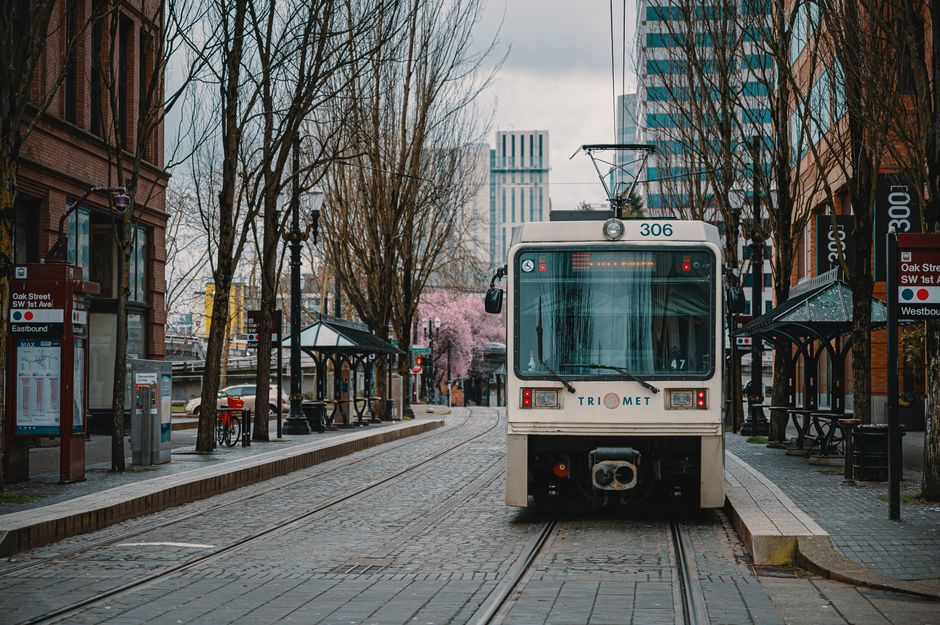
    Streetcars and light rail trains run on tracks set into some Oregon streets, often in the same lanes as cars, and they stop often to pick up and drop off passengers. The Oregon Driver Manual has a dedicated section on driving around them, and its rules come up on the knowledge test. This guide is for Oregon learners and new drivers, especially anyone driving downtown.

    The core rules

    • Let streetcars and trains go first. Do not pass one unless it is safe.
    • Stay behind a stopped streetcar or train while passengers get on or off, until it moves or the people are safely away.
    • Never turn in front of one. This applies when it is coming toward you, unless it is safe, and when it is in the next lane going your way, even if it is stopped.
    • Never block or park on the tracks.
    • Don’t brake suddenly or make unpredictable moves near them. They cannot stop quickly.

    Turning across tracks

    Turns are where drivers most often get into trouble around rail vehicles. Step by step:

    1. Before you turn, look both ways along the tracks for streetcars or trains, including any coming up behind you in the next lane.
    2. Signal your turn. In Oregon you signal at least 100 feet before turning when moving in traffic.
    3. If there is a left turn signal, wait for the proper signal before turning left over the tracks.
    4. Check for people walking. Riders often run across lanes to catch a streetcar or train.
    5. Turn only when you are sure it is safe. Never cut in front of a streetcar or train in the lane beside you.

    Passing a stopped streetcar or light rail train

    The manual’s own sample question asks what to do when passing a stopped streetcar or light rail train. Its answer: watch for pedestrians and pass with caution. Do not keep your speed up. If the vehicle is stopped in your lane for passengers, stay behind it until it moves or the people are clear.

    Intersections and lane changes

    • When approaching tracks at an intersection, stay behind any stop line until you can cross.
    • Slow down and look both ways before you cross tracks at an intersection.
    • Follow pedestrian signals and let people cross.
    • Check for streetcars and trains before changing lanes. One may be close behind you without you realizing.

    Transit-only lanes

    Some streets have lanes reserved for transit, marked in red or with signs.

    • Solid red lane: transit only, not for cars. It may be marked “BUS ONLY”, “BUS BIKE ONLY” or “LRT” (light rail train).
    • Striped red lines: you may enter the transit lane here to turn, park or get into a driveway.
    • Signs: “Right Lane Transit Only” signs mean only transit vehicles (and bikes, if shown) may go straight through the intersection. Where a sign allows it, you may briefly use the lane to turn, or to pull over and park where that is allowed. Yield to transit vehicles and people riding bikes, and merge in behind them once they pass.

    Not every transit-only lane is red, so read the signs and markings. More on markings in US pavement markings.

    Parking near tracks

    • Park behind the solid white line that separates the parking area from the track.
    • If there is no white line, park as close to the curb as you can, away from the rails.
    • Make sure the car is clear of the tracks so a streetcar or train can pass.
    • Check for streetcars or trains before opening a door.
    • Oregon law bans parking on railroad or light rail tracks. It also bans parking within 50 feet of the nearest rail of a crossing, and within 7 1/2 feet of tracks where it interferes with the train.

    Light rail crossings outside the street

    Where tracks cross a road at a signed crossing, use the railroad crossing rules:

    • Stop when the red lights flash or a stop sign is posted.
    • If there is no stop line, stop at least 15 feet from the nearest rail.
    • Never drive around or under a gate.
    • Never stop on the tracks.

    If your car gets stuck on the tracks, get out and away from them. Look for the Emergency Notification System sign posted at the crossing. If a train is coming, move away at a 45 degree angle toward the train, so you are not hit by debris. The national picture is in railroad crossings: what US drivers must do.

    If you hit a streetcar or train

    Wait for the operator or police to tell you what to do. Then follow Oregon’s normal collision duties: exchange information, and file a DMV report within 72 hours if any of these apply:

    • damage is over $2,500
    • someone is injured
    • someone is killed

    See what to do after a car crash.

    Common questions

    Can I drive on streetcar tracks in Oregon?

    Streetcars sometimes share the travel lane with cars, so driving along the lane is normal. You must not stop or park on the tracks, block them, or turn in front of a streetcar.

    Do I have to stop behind a streetcar that is loading passengers?

    Stay behind it until it moves again or the people are safely away. If you are passing in another lane, watch for pedestrians and pass with caution.

    Can I drive in a red lane?

    Only where striped red lines or signs allow you to enter briefly to turn, park or reach a driveway. A solid red lane is transit only.

    Who has the right of way, me or the light rail train?

    The manual says to always let streetcars and trains go first.

    How far from the tracks must I stop at a crossing?

    At least 15 feet from the nearest rail if there is no stop line.

    Where can I learn the rest of Oregon’s rules?

    Start with learning to drive in Oregon and the Oregon permit test guide.

    Sources

    • Oregon DMV, “Oregon Driver Manual: Railroad Crossings, Light Rail and Street Cars” (oregon.gov)
    • Oregon DMV, “Oregon Driver Manual: Signs and Traffic Signals” (oregon.gov)
    • Oregon DMV, “Oregon Driver Manual: Lane Travel” (oregon.gov)
    • Oregon DMV, “Oregon Driver Manual: Turns and Intersections” (oregon.gov)
    • Oregon DMV, “Oregon Driver Manual: Parking and Stopping” (oregon.gov)
    • Oregon DMV, “Oregon Driver Manual: Other Important Information” (oregon.gov)
  • Oregon 50 or 100 Hours of Supervised Driving: Checklist

    Oregon 50 or 100 Hours of Supervised Driving: Checklist

    Photo: Brian Hackworth, Pexels

    Before an Oregon teen can get a provisional driver license, they need 100 hours of supervised driving. The figure drops to 50 hours if they take and pass an ODOT-approved driver education (traffic safety education) course. This checklist is for Oregon permit holders and the adults who ride with them. It covers who can supervise, how to log the hours and how to choose a route.

    Key facts

    • Without driver ed: at least 100 hours of supervised driving.
    • With ODOT-approved driver ed: at least 50 hours.
    • Supervisor: at least 21, with a valid license held for at least 3 years.
    • Minimum time on the permit: 6 months, and you must be at least 16 to get the license.
    • Who it applies to: applicants under 18.

    50 or 100 hours: which route?

    100-hour route 50-hour route
    Supervised hours 100 50
    Driver education Not required ODOT-approved traffic safety education course, passed
    Drive test Required (DMV or Class C testing business) Can be waived if you passed the course within the past 2 years
    Proof DMV pages do not name a set form; keep a log Course completion. Since October 14, 2024 the provider notifies DMV electronically. For earlier courses, bring the original completion card.

    The drive test waiver is explained in the Oregon drive test and driver ed waiver guide.

    Who can supervise an Oregon permit driver?

    On a provisional instruction permit you may drive only with a person who:

    • has a valid driver license
    • is at least 21 years old
    • is sitting beside you

    For the time to count toward your 50 or 100 hours, the supervisor must also have held their license for at least 3 years. Any adult who meets these rules can supervise; it does not have to be a parent. Practice with a 21-year-old who has been licensed for only 2 years is legal, but those hours do not count.

    The permit holder may not use a mobile device at all while driving, even hands-free.

    Logging your hours

    ODOT DMV publishes a free Practice Driving Log (on the DMV Teen Drivers page). Keep it in the car and fill in a line every session:

    • date
    • topic or focus
    • time, in hours and minutes
    • running total
    • teen’s initials and adult’s initials

    DMV pages do not set a separate night-driving hour requirement. Check with DMV if you are unsure what record to bring when you apply.

    A practice plan that builds up

    ODOT’s parent guide recommends this order:

    1. Start easy: in daylight and good weather, in empty parking lots or on remote roads. Practice turning, parking and backing up.
    2. Quiet streets: neighborhood roads, stop signs, right turns on red after a full stop, and scanning left, front, then right before moving off.
    3. Busier roads: changing lanes and merging. Check your mirrors every 6 to 8 seconds and keep a 2 to 4 second following distance.
    4. Highways and freeways: entering, exiting and keeping out of trucks’ blind spots. See freeway driving for new drivers.
    5. Harder conditions: night, rain and other weather, once the basics are solid. See driving in snow, fog and rain.

    The guide also advises practicing with only the teen and the supervisor in the car, and wearing safety belts and using headlights day and night.

    Checklist before you apply for the license

    • You are 16 or 17.
    • You have held the permit for 6 months or more. An out-of-state permit counts toward this.
    • You have 100 logged hours, or 50 plus a passed ODOT-approved course.
    • Every counted hour was with a supervisor aged 21 or older, licensed 3 years or more.
    • Your permit is still valid. It lasts 2 years, and DMV does not send a reminder.
    • You have booked a drive test, or confirmed your waiver.

    Once licensed, see Oregon provisional license rules for the first-year limits.

    Common questions

    Do I need 50 or 100 hours in Oregon?

    You need 100 without driver education and 50 if you take and pass an ODOT-approved course.

    Can my older sibling supervise me?

    Yes, legally, if they are 21 or older, have a valid license and sit beside you. The hours count only if they have been licensed for at least 3 years.

    Do driver ed behind-the-wheel lessons count?

    DMV’s pages do not say. Ask your course provider or DMV before you rely on lesson time for your total.

    Do I need the hours if I am 18 or older?

    The 50 or 100 hour rule applies to applicants under 18. Adults follow a separate permit process on DMV’s “Over 18” page.

    How do Oregon’s hours compare with other states?

    See supervised driving hours by state. The full Oregon process is in learning to drive in Oregon.

    Sources

    • Oregon DMV, “Get an Instruction Permit: Under 18” (oregon.gov)
    • Oregon DMV, “Get a Driver License: Under 18” (oregon.gov)
    • Oregon DMV, “Oregon Driver Manual: Other Important Information” (oregon.gov)
    • Oregon DMV, “Practice Driving Log” (oregon.gov)
    • Oregon DMV, “Parent Guide to Teen Driving: Supervise Your Teen Driver” (oregon.gov)
    • Oregon DMV, “Parent Guide to Teen Driving: The Rules for Provisional Driver Licensing” (oregon.gov)
  • Oregon Provisional License Rules: Passengers, Night, Phone

    Oregon Provisional License Rules: Passengers, Night, Phone

    Photo: Oregon Department of Transportation, CC BY 2.0, via Wikimedia Commons

    An Oregon provisional driver license comes with three sets of limits. Passengers under 20 are limited for the first year. You cannot drive from midnight to 5 a.m. for the first year, with some exceptions. And until you turn 18 you cannot use a phone at all while driving, even hands-free. This guide sets out each rule, its exceptions and when it ends, for Oregon teen drivers and their parents.

    Oregon provisional license restrictions at a glance

    Period Passengers under 20 (not immediate family) Midnight to 5 a.m. Phone
    First 6 months None allowed No driving, except for the listed reasons No use, including hands-free
    Second 6 months No more than 3 No driving, except for the listed reasons No use, including hands-free
    After 1 year, still under 18 No limit No limit No use, including hands-free, until 18

    The passenger and night limits end after 1 year or at 18, whichever comes first. Get licensed at 17 and a half and they end at your 18th birthday, 6 months in.

    Passenger rules

    • First 6 months: no passengers under 20 unless they are members of your immediate family.
    • Second 6 months: no more than 3 passengers under 20 who are not immediate family.
    • Passengers 20 and older are not limited by these rules.

    When the passenger limits do not apply

    • When you drive with an instructor as part of a certified traffic safety education course.
    • When you drive with a parent, stepparent or legal guardian who has valid driving privileges.

    Night driving: midnight to 5 a.m.

    For your first year you cannot drive between midnight and 5:00 a.m. unless you are:

    • driving between home and work
    • driving between home and a school event for which there is no other transportation
    • driving for employment purposes
    • with a licensed driver who is at least 25 years old

    Scenario check

    • Driving home from a closing shift at 12:30 a.m.: allowed (home and work).
    • Driving a friend home from a party at 1 a.m., with your 21-year-old cousin beside you: not allowed. The night exception needs a licensed driver 25 or older.
    • Driving home from a late away game at 12:15 a.m., with no team bus: allowed (home and a school event with no other transportation).

    Phone rule: nothing until 18

    Until you are 18 you cannot drive while using a mobile communication device. That covers talking and texting, and hands-free accessories are not allowed. DMV’s parent guide also lists using an mp3 player or any other portable device.

    The same ban applies on your instruction permit. From 18, Oregon drivers may use a phone only with a hands-free accessory that needs minimal use of a finger to turn on or off. National context: hands-free and texting laws for US drivers.

    What happens if you break the rules?

    You can get a ticket and fines, your insurance rates can go up, and your license can be suspended. Under the Provisional Driver Improvement Program, breaking a provisional restriction is one of the behaviors DMV lists as leading to a driver improvement offense:

    On your record Result
    2 driver improvement offenses Restricted for 90 days, or until 18, to driving to, from or for school or work only
    3 driver improvement offenses 6-month suspension, which continues even if you turn 18
    Conviction for a serious offense (such as reckless driving or DUII) 1-year suspension

    Under 21, any amount of alcohol in your blood while driving can lead to a suspension. A parent or guardian who signed your application can also ask DMV to cancel your license at any time until you turn 18. More: zero tolerance laws for drivers under 21 and points and suspensions in the US.

    Common questions

    Can a 16-year-old in Oregon drive friends?

    Not in the first 6 months if the friends are under 20 and not immediate family, unless a parent, stepparent or legal guardian with valid driving privileges is in the car. In months 7 to 12 you can carry up to 3.

    Can I use a hands-free phone or car system at 16 or 17 in Oregon?

    Not for calls, texts or any other phone use. Hands-free accessories are not allowed for drivers under 18.

    Do siblings count toward the passenger limit?

    No. The limits apply to passengers under 20 who are not members of your immediate family.

    When do Oregon provisional restrictions end?

    The passenger and night limits end after 1 year or at 18, whichever comes first. The phone ban ends at 18.

    Is there a curfew on the Oregon instruction permit?

    DMV’s permit page lists no curfew. The permit rules are a licensed supervisor aged 21 or older beside you, and no phone use. See Oregon supervised driving rules.

    How do Oregon’s limits compare with other states?

    See US graduated licensing compared. Every step of the Oregon process is in learning to drive in Oregon.

    Sources

    • Oregon DMV, “Get a Driver License: Under 18” (oregon.gov)
    • Oregon DMV, “Parent Guide to Teen Driving: The Rules for Provisional Driver Licensing” (oregon.gov)
    • Oregon DMV, “Parent Guide to Teen Driving: Does DMV Monitor My Driving Record?” (oregon.gov)
    • Oregon DMV, “Oregon Driver Manual: Safe and Responsible Driving” (oregon.gov)
    • Oregon DMV, “Get an Instruction Permit: Under 18” (oregon.gov)
    • Oregon DMV, “Parent or Legal Guardian Signature” (oregon.gov)
  • Oregon Drive Test: What’s Tested and the Driver Ed Waiver

    Oregon Drive Test: What’s Tested and the Driver Ed Waiver

    Photo: Ian Poellet, CC BY-SA 4.0, via Wikimedia Commons

    For an Oregon teen, the drive test is the last step before a provisional driver license, unless you can skip it. DMV waives the test if you passed an ODOT-approved driver education course within the past 2 years. This guide covers both routes: what the Oregon drive test includes, the vehicle check, booking, fees and how the waiver works.

    Key facts

    • Who can test: drivers under 18 who have held a permit for at least 6 months.
    • Where: at DMV, or with a certified Class C testing business (a third-party tester). Appointment only.
    • DMV fee: $45 per test (as of November 2026). Third-party testers set their own prices, which can be higher.
    • If you fail: wait until the next business day to retest, and pay the fee again.
    • Waiver: an ODOT-approved driver education course passed within the past 2 years.

    Can I skip the Oregon drive test with driver’s ed?

    Yes, if the course is ODOT-approved and you passed it within the past 2 years. The course also lowers your supervised driving requirement from 100 hours to 50.

    • If you passed on or after October 14, 2024, the course provider notifies DMV electronically.
    • For older completions, the manual says to present your course completion card. The application rules say the original card.
    • With a waiver, make a DMV appointment to be issued your license. You still pass a vision test, show your documents, pay the fee and have your photo taken.

    New residents can usually skip the test too, by surrendering an out-of-state license that is valid or expired less than 1 year.

    What is on the Oregon drive test?

    The examiner sits in the front seat, gives you directions and checks your driving skills and your knowledge of traffic rules, highway signs and signals. The test includes:

    • turning
    • backing up
    • parking
    • lane changes
    • speed control
    • signaling
    • vehicle control
    • general driving ability

    The examiner discusses your results with you afterward. DMV’s teen page also links a “What to Expect on your Drive Test” video.

    Skills worth drilling, from the Oregon Driver Manual

    • Signal at least 100 feet before a turn or lane change.
    • Come to a complete stop at stop signs and red lights, before the stop line or crosswalk.
    • When parallel parking, stay no more than 12 inches from the curb.
    • Check your mirrors and blind spots, then yield, before pulling out from a parked position.
    • Keep at least a 2 to 4 second following distance.
    • Know the school zone and residential speed limits (20 and 25 mph).
    • Stop for pedestrians in crosswalks, and wait until they are clear of your turning lane.

    The most common ways to fail are covered in common reasons people fail the US driving test.

    Oregon drive test rules

    • Only you and the examiner in the car. No family, friends, translators or pets.
    • Remove any weapons from the vehicle.
    • Turn off all electronic devices, including the radio and your phone.
    • Clear objects off the dashboard and rearview mirror.
    • No smoking.

    Test vehicle checklist

    Bring a passenger vehicle with current registration and valid proof of insurance. The examiner checks the equipment first. If anything fails, you reschedule.

    • Starts under its own power
    • Front and back turn signals work
    • Brake lights and horn work
    • Passenger door opens and closes with the handle from inside and outside
    • Passenger seat is proper, secure and reasonably clean
    • Seatbelts work
    • Tires are not bald or damaged
    • Muffler has no excessive leaks or unreasonable noise
    • Valid registration is displayed
    • Side view or rearview mirrors are fitted
    • Nothing blocks the driver’s or examiner’s view to the front, side or rear

    If the weather calls for them, the vehicle also needs working:

    • traction tires or chains
    • wipers
    • headlights and taillights
    • a defroster

    DMV’s teen page adds windows that roll down and/or working air conditioning.

    Proof of insurance can be any of these:

    • a valid insurance card
    • a current liability policy or binder
    • a DMV Certificate of Self-Insurance naming you as the owner

    Booking: DMV or a testing business?

    DMV Class C testing business
    Booking Online through DMV2U, or call 503-945-5000. DMV suggests booking at least 3 weeks ahead. Contact the business directly. They can often test sooner and at times DMV does not offer.
    Cost $45 (as of November 2026) Set by the business; can be higher
    On the day Test, vision check, documents, fee and photo all at the same office Pass the test, then visit DMV to be issued the license

    Before you book: eligibility checklist

    • You are 16 or 17.
    • You have held a permit for 6 months or more.
    • You have 100 supervised hours, or 50 with approved driver education. See the Oregon 50 or 100 hour checklist.
    • You have identity and address documents, plus extra documents if you want a REAL ID.

    Once licensed, the first-year limits in Oregon provisional license rules apply.

    Common questions

    How much is the Oregon drive test?

    $45 at DMV as of November 2026. Third-party testers charge their own rates.

    How long do I wait to retake a failed drive test?

    Until the next business day. You pay the test fee again.

    Does my driver’s ed course have to be ODOT-approved?

    Yes. Only an ODOT-approved course waives the test and counts toward the 50-hour route, and you must have passed it within the past 2 years.

    Can my parent ride along during the test?

    No. Only you and the examiner may be in the vehicle.

    Can I use a car with a broken passenger door handle?

    No. The passenger door must open and close with the handle from inside and outside, or you will have to reschedule.

    How do other states’ road tests compare?

    See US road tests by state, or go back to learning to drive in Oregon.

    Sources

    • Oregon DMV, “Get a Driver License: Under 18” (oregon.gov)
    • Oregon DMV, “Oregon Driver Manual: Testing” (oregon.gov)
    • Oregon DMV, “Oregon Driver Manual: Other Important Information” (oregon.gov)
    • Oregon DMV, “Oregon Driver Manual: Lane Travel; Turns and Intersections; Sharing the Road; Parking and Stopping” (oregon.gov)
    • Oregon DMV, “Quick Tips for Teens” (oregon.gov)
    • Oregon DMV, “DMV Teen Drivers” (oregon.gov)
  • Oregon Permit Test: Knowledge Test Online or at DMV

    Oregon Permit Test: Knowledge Test Online or at DMV

    Photo: Brett Sayles, Pexels

    The Oregon permit test (the Class C knowledge test) has 35 multiple-choice questions. To pass you need 28 correct. It costs $7 per attempt (as of November 2026), and you can take it online with a webcam or at a DMV office. Below: the online rules for under-18s, retake limits, languages and what to bring afterward to collect your permit.

    Key facts

    • Questions: 35, multiple choice.
    • Pass mark: 28 correct.
    • Fee: $7 each time you take it, the same online or in an office. You pay again for each retake.
    • Content: road signs, traffic laws and other driving knowledge. All of it is in the Oregon Driver Manual.
    • Vision test: also required for the permit. It is free and done at the DMV office.

    Online or at a DMV office?

    Online DMV office
    When Any time Standby (walk-in) or by appointment. Testing stops 1 hour before closing.
    Device Desktop or laptop with keyboard, mouse and working webcam. No phones or tablets. Touch-screen computer at the office
    Under 18 An adult proctor aged 21 or older must register and watch you No proctor needed
    Social Security number Required for you and your proctor If you have no SSN, test here
    Retakes 2 attempts in 24 hours, 4 online attempts in total. After that, test in an office. Same-day retest may be possible, depending on the office

    How the online Oregon permit test works

    1. Start the test from DMV2U, which hands you to DMV’s testing partner.
    2. Register yourself and, if you are under 18, your proctor. The proctor does not have to be a parent.
    3. The webcam takes a photo of you at the start. It takes random photos during the test to confirm it is you.
    4. Answer the 35 questions without the manual, notes or any other device.
    5. Once you pass, go to a DMV office with a parent or legal guardian to finish your permit application.

    DMV’s pages differ on how many tests one proctor may supervise. The manual says two in 24 hours. The online testing FAQ says no more than five DMV tests in the past 12 months. Check DMV2U before you book a second learner with the same adult.

    Warning: letting someone else take your test is a Class C misdemeanor. DMV will also suspend your driving privileges, or your right to apply for them, for a year.

    Languages

    At DMV offices, the Class C test is offered in eight languages:

    • English
    • Spanish
    • Arabic
    • Chinese
    • Japanese
    • Korean
    • Russian
    • Vietnamese

    Audio help is available. You may bring your own earbuds or headphones, and with permission you may use a paper foreign-language translation dictionary.

    The online testing page says the same eight languages are available online. The teen permit page lists only English and Spanish online. Confirm on DMV2U before you start if you need another language.

    Test-day rules at a DMV office

    • No books, notes, phones or other electronic devices.
    • No talking or writing.
    • Only people taking a test, and authorized translators, may be in the testing area.
    • Cheating ends the test as a fail, and you cannot retest for 90 days.
    • Need an accommodation? Contact your local office before you go.

    How to prepare

    • Read every section of the Oregon Driver Manual. The study sections include sample test questions.
    • Take DMV’s free practice knowledge test, in English or Spanish. It does not affect your record.
    • Learn the numbers the manual gives:
      • speed limits set by law
      • signal at least 100 feet before a turn
      • stop at least 15 feet from the nearest rail
      • park no more than 12 inches from the curb
      • stay 500 feet behind an emergency vehicle

      These are summarized in learning to drive in Oregon.

    • Learn the sign shapes and colors in US road signs by shape and color.

    After you pass: getting the permit

    At the DMV office, bring:

    • proof of identity and date of birth
    • proof of your Oregon address
    • your Social Security number (you do not need the card), or certify that you have none
    • a parent or legal guardian to sign

    Then you pass the vision test, pay the issuance fee and have your photo taken. If you wear glasses or contacts for the vision test, your permit will require them for driving. If you do not pass the vision test, DMV gives you a form to take to a licensed vision specialist. Next, start your hours: see the Oregon 50 or 100 hour checklist.

    Common questions

    How many questions can you miss on the Oregon permit test?

    Seven. You need 28 of 35 correct.

    Can I take the Oregon permit test on my phone?

    No. The online test needs a desktop or laptop with a keyboard, mouse and webcam.

    Does my proctor have to be my parent?

    No. The proctor must be at least 21 and have a Social Security number.

    What happens if I fail?

    Pay the $7 fee again and retake. Online you get 2 tries per 24 hours and 4 online tries in total. In an office you may be able to retest the same day.

    I already have a license. Can I take the test to check myself?

    Do not take the real test. DMV warns that if you fail it, your driving privileges may be suspended. Use the practice test instead.

    How does Oregon compare with other states?

    See US permit tests by state.

    Sources

    • Oregon DMV, “Get an Instruction Permit: Under 18” (oregon.gov)
    • Oregon DMV, “Oregon Driver Manual: Testing” (oregon.gov)
    • Oregon DMV, “Online Knowledge Testing” (oregon.gov)

    • Oregon DMV, “Quick Tips for Teens” (oregon.gov)
  • How to Get a Driver’s License in Oregon: Learner Guide

    How to Get a Driver’s License in Oregon: Learner Guide

    Photo: Alex Kovshovik, Pexels

    In Oregon you can get a provisional instruction permit at 15 and a provisional driver license at 16, after holding the permit for 6 months and logging 100 hours of supervised driving (or 50 hours plus an ODOT-approved driver education course). This guide is for Oregon teens and their parents. It walks through each stage, the tests, the rules that apply until 18, and what the Oregon Driver Manual covers.

    Key facts

    • Agency: Oregon Department of Transportation, Driver and Motor Vehicle Services (ODOT DMV).
    • License class: Class C covers cars, vans, pickups, mopeds and autocycles up to 26,000 pounds that need no commercial license or motorcycle endorsement.
    • Permit: from age 15, valid for 2 years. Pass a 35-question knowledge test (28 correct to pass) and a vision test.
    • License: from age 16, after 6 months on the permit.
    • Practice: 100 supervised hours, or 50 hours with an ODOT-approved driver education course.
    • Drive test: can be waived if you passed an ODOT-approved driver education course within the past 2 years.
    • Fees (as of November 2026): knowledge test $7 per attempt; DMV drive test $45. Issuance fees are separate.

    The Oregon path from permit to full license

    Stage Minimum age Main rules
    Provisional instruction permit 15 Drive only with a licensed driver aged 21 or older sitting beside you. No phone use, not even hands-free.
    Provisional driver license 16 (after 6 months on the permit) Passenger limits and no driving midnight to 5 a.m. for the first year. No phone use until 18.
    Restrictions end 18, or after 1 year licensed Passenger and night limits end at whichever comes first. The phone ban lasts until 18.

    Step 1: Get your provisional instruction permit at 15

    1. Study the Oregon Driver Manual (the online version is free on the ODOT DMV site).
    2. Pass the Class C knowledge test online with a webcam or at a DMV office. See the Oregon permit test guide.
    3. Go to a DMV office with a parent or legal guardian, who signs your application. If they cannot come, they sign the parent/guardian certification form instead. If you are emancipated or married, bring proof and no parent signature is needed.
    4. Pass the vision test (free).
    5. Show proof of identity, date of birth and your Oregon address. Bring extra documents if you want a REAL ID. Common identity proofs are a US government-issued birth certificate (not a hospital certificate), a US passport or passport card, or a Permanent Resident Card. For your address, mail from a business, school or government agency works; personal or forwarded mail does not.
    6. Give your Social Security number, or certify that you do not have one.
    7. Pay the issuance fee and have your photo taken.

    Under 18, a parent or guardian also certifies that you are enrolled in or attending school. If you have left school, bring a high school diploma or GED certificate.

    You leave with an interim card. The permit arrives by mail and is not sent to a forwarding address, so give DMV your current address.

    Step 2: Practice with a supervisor

    For the hours to count, your supervisor must be at least 21, have a valid license and have been licensed for at least 3 years. Log every session. The Oregon 50 or 100 hour checklist covers who qualifies and how to plan the hours.

    Step 3: Driver education or the DMV drive test

    You have two routes:

    • ODOT-approved driver education: cuts your practice requirement to 50 hours. If you passed it within the past 2 years, DMV can waive the drive test.
    • Drive test: taken at DMV ($45, as of November 2026) or with a certified Class C testing business. Drive tests are by appointment only.

    The Oregon drive test and driver ed waiver guide covers what is tested, the vehicle check and the waiver rules.

    Step 4: Get your provisional driver license at 16 or 17

    Before you apply, you need all of these:

    • You are 16 or 17.
    • You have held a permit for 6 months. An out-of-state permit counts.
    • You have 100 supervised hours, or 50 hours plus approved driver education.
    • You have passed the drive test, or it has been waived.

    At DMV you pass a vision test, show your documents, pay the fee and have your photo taken.

    Rules once you are licensed

    For the first year (or until 18, whichever comes first) your passengers under 20 are limited and you cannot drive between midnight and 5 a.m. except for set reasons. Until 18 you cannot use a mobile device while driving, even hands-free. The details are in Oregon provisional license rules.

    DMV also watches the records of drivers under 18. Two driver improvement offenses (a traffic conviction or a preventable collision) bring a 90-day restriction, or one until you turn 18, to driving for school or work only. Three offenses mean a 6-month suspension. A parent or guardian who signed your application can cancel your permit or license at any time until you turn 18.

    What the Oregon Driver Manual covers

    The knowledge test draws on the whole manual. These are its sections and the Oregon rules within them most worth learning.

    Testing

    Covers the vision, knowledge and drive tests. All the knowledge test content is in the manual.

    Signs and Traffic Signals

    After a full stop on red you may turn right onto a two-way road. You may also turn right or left onto a one-way road, in the direction of traffic. A flashing red light, or a signal that is dark, is treated as a stop sign. On a flashing yellow arrow you may turn, but you must yield to pedestrians and oncoming traffic. A RIGHT TURN PERMITTED WITHOUT STOPPING sign under a stop sign lets right-turning traffic go without stopping; all other traffic must stop and yield. Green SAFETY CORRIDOR signs mark stretches of highway with more serious crashes than average, so turn your lights on. Transit-only lane signs and markings are also covered. More: US traffic signals and right on red.

    Lane Travel

    Speed limits set by law apply unless a different speed is posted:

    • 15 mph in alleys and narrow residential areas
    • 20 mph in business districts and school speed zones
    • 25 mph in residential districts and public parks
    • 55 mph on roads not covered by another limit

    The basic rule always applies: drive at a speed that is reasonable and cautious for conditions. The section also covers variable speed signs, pavement markings (including red transit-only lanes), a 2 to 4 second following distance (4 seconds or more above 30 mph), passing and freeway driving.

    A few Oregon rules from this section often catch learners out:

    • If you drive slower than normal traffic, use the right lane and pull off at the first safe place to let a line of cars pass.
    • Racing on any road is illegal.
    • Stopping takes longer than you think. At 60 mph, the distance from spotting a hazard to stopping is longer than a football field.
    • Do not drive in a painted median or across yellow diagonal stripes. Enter a two-way left turn lane just before your turn; traveling along it is illegal.
    • When someone passes you, do not wave them on or flash your lights. The law bans signaling other drivers to pass.
    • A dark ramp meter is off, so do not stop at it. At a working meter, one vehicle goes on each green.

    Turns and Intersections

    Signal at least 100 feet before you turn or change lanes. You may turn across a bike lane, but do not move into it to prepare for the turn, and yield to anyone riding in it or on the sidewalk. A left turn onto a two-way road against a red light is illegal. If you end up in the wrong lane, go on to the next intersection rather than turning from it. The section also covers turn positions, turning left on red onto a one-way road, and how to use single-lane and multi-lane roundabouts. See driving a roundabout.

    Sharing the Road

    Stop for pedestrians at any marked or unmarked crosswalk; every intersection has one, painted or not. Stop and stay stopped while a pedestrian is in your lane, the next lane (including a bike lane) or the lane you are turning into. Before you turn at a signal, the pedestrian must be at least 6 feet from the lane you are turning into. Without a signal, they must be past your lane and the next lane.

    School speed zones are 20 mph, and the sign tells you when. A flashing yellow light means children are arriving or leaving. A school hours sign means 7 a.m. to 5 p.m. on school days (if you are not sure it is a school day, slow to 20). A sign for when children are present means any time children are waiting at or using a crosswalk, or a crossing guard is there.

    Stop for a school bus with flashing red lights. Buses for places of worship and worker transport may use the same amber and red lights; treat them like a school bus. Yield to a public transit bus pulling back into traffic when the YIELD sign on its back is flashing.

    At speeds over 35 mph, pass a person on a bicycle in your lane only with enough room that you would not hit them if they fell. At a red light, stop behind a green bike box, never in it; no right turn on red is allowed there. Sharing a lane with a motorcycle or moped is illegal. Yield to funeral processions and never join or drive between their vehicles.

    Traffic fines are doubled in all Oregon work zones. A posted work zone speed applies at all times, even with no workers in sight, until an End Work Zone Speed Limit sign or another speed sign. Automated flagger devices work like flaggers: stop when the red light is on and the arm is down; go when the yellow light flashes and the arm is up. If an oncoming pilot vehicle is escorting a large load, slow down and keep as far right in your lane as you can.

    On your own car, a load may not stick out past the left fenders, more than 6 inches past the right fenders or more than 4 feet in front. A load that sticks out 4 feet or more behind needs a red flag at least 12 inches square, or a red light when visibility is poor.

    On a road with two or more lanes in your direction, move out of the lane next to any stopped vehicle that has flashing lights. After an emergency vehicle passes, stay at least 500 feet behind it, and never drive over a fire hose unless officials at the scene tell you to. See school bus laws and move over laws.

    Railroad Crossings, Light Rail and Street Cars

    If there is no stop line, stop at least 15 feet from the nearest rail. Never drive around a crossing gate. Portland-area drivers also need the streetcar and light rail rules in driving near light rail and street cars in Oregon.

    Parking and Stopping

    When parallel parking, stay no more than 12 inches from the curb. You may not park:

    • within 10 feet of a fire hydrant
    • within 20 feet of a crosswalk at an intersection
    • within 50 feet of the nearest rail of a railroad or light rail crossing

    Parking in a disabled space without a permit carries fines that start at $165.

    You also may not park on a bridge or in a tunnel, double park, stop on rail tracks, or park within 15 feet of a fire station driveway on the same side (75 feet on the opposite side). If your car breaks down and cannot be seen from 200 feet in each direction, warn traffic with flags, flares or signs placed at least 200 feet away, and turn on your hazard lights.

    Safe and Responsible Driving

    Everyone in every seat must wear a safety belt. Drivers under 21 fail an alcohol test at any blood alcohol level (zero tolerance). At 21 and over, the limit is 0.08 percent. By driving, you agree to take a breath, blood or urine test if police ask (implied consent). Oregon’s DUII law covers any substance that impairs you, including cannabis and medicines.

    • Children ride in an approved child seat until they are 8 or 4 feet 9 inches tall and the adult belt fits; infants ride rear-facing until age 2.
    • Open containers of alcohol are illegal in a vehicle on any road. Keep them in the trunk.
    • Do not wear headphones that reduce your hearing. You need to hear horns, sirens and changes in engine or tire noise.
    • It is illegal to have a video screen visible to the driver, or to play sound loud enough to be heard 50 feet from your car.
    • No one under 18 may ride in a pickup bed or on any outside part of a vehicle. A dog may ride there only if a carrier or framework stops it falling.
    • If you hit and injure a domestic animal, stop, check it if you safely can, and tell the owner. If you cannot find the owner, report it to police.
    • Stop if a horse rider raises a hand or an animal is clearly frightened, unless stopping would cause a crash. Do not honk near animals.

    See zero tolerance laws.

    Other Important Information

    Oregon minimum insurance is:

    • $25,000 per person and $50,000 per collision for bodily injury
    • $20,000 for property damage
    • $15,000 personal injury protection
    • Uninsured motorist cover of $25,000 per person and $50,000 per collision

    After a collision, you must file a DMV report within 72 hours if any of these apply:

    • damage to your vehicle or other property is over $2,500
    • a vehicle with over $2,500 of damage is towed away
    • anyone is injured or killed

    A police report does not replace the DMV report. If you hit an empty parked car and cannot find the owner, leave a note with your name, address and what happened. You can also lose your license for failing to report a collision, driving uninsured or not paying court fines.

    When your card is issued you can join the organ donor registry, add a veteran designation (bring a DD214 or DD215) or add a deaf or hard of hearing designation (no proof needed). You can also register emergency contacts on DMV2U so police can reach your family quickly.

    See car insurance for new drivers and what to do after a crash.

    Common questions

    How old do you have to be to drive in Oregon?

    You can get a provisional instruction permit at 15 and a provisional driver license at 16.

    Can I take the Oregon permit test online?

    Yes. You need a desktop or laptop with a webcam, and if you are under 18 an adult aged 21 or older must proctor the test.

    Do I have to take driver’s ed in Oregon?

    No. Without it, you need 100 supervised hours instead of 50, and you must take a drive test.

    How long is an Oregon instruction permit valid?

    Two years from issue. DMV does not send a reminder before it expires.

    I am new to Oregon. Do I take the drive test?

    Usually not if you surrender an out-of-state license that is valid or expired less than 1 year. See moving to a new state.

    Does Oregon’s process differ from other states?

    Every state sets its own ages and hours. Compare them in US graduated licensing compared or start at learning to drive in the USA.

    Sources

    • Oregon DMV, “Oregon Driver Manual: Table of Contents” (oregon.gov)
    • Oregon DMV, “Oregon Driver Manual: Testing” (oregon.gov)
    • Oregon DMV, “Oregon Driver Manual: Signs and Traffic Signals; Lane Travel; Turns and Intersections; Sharing the Road; Railroad Crossings, Light Rail and Street Cars; Parking and Stopping; Safe and Responsible Driving” (oregon.gov)
    • Oregon DMV, “Oregon Driver Manual: Other Important Information” (oregon.gov)
    • Oregon DMV, “Get an Instruction Permit: Under 18” (oregon.gov)
    • Oregon DMV, “Get a Driver License: Under 18” (oregon.gov)
    • Oregon DMV, “Parent or Legal Guardian Signature” (oregon.gov)
    • Oregon DMV, “Parent Guide to Teen Driving: Does DMV Monitor My Driving Record?” (oregon.gov)
  • Oregon Mandatory Medical Reporting: Severe Impairments Explained

    Oregon Mandatory Medical Reporting: Severe Impairments Explained

    Photo: OregonDOT, CC BY 2.0, via Wikimedia Commons

    Yes, Oregon requires doctors and many other health care providers to report drivers aged 14 and older whose impairment is both severe and uncontrollable. Under ORS 807.710 and the At-Risk Driver Program rules (OAR chapter 735, division 74), the provider sends DMV a Mandatory Impairment Referral (Form 7230). DMV then usually suspends driving privileges, with five days’ notice, until a medical review and any tests show you can drive safely.

    Who must report in Oregon?

    • Physicians (MD, DO, ND), including primary care providers, specialists on referral, emergency physicians and hospitalists.
    • Other licensed health care providers, including chiropractors, nurse practitioners, occupational and physical therapists, optometrists, physician associates, podiatrists and mental health providers.

    Any of them may also make a voluntary report at any time. Family members and others use a separate route: the Driver Evaluation Request (Form 6066), which must describe specific driving behaviors.

    What counts as “severe and uncontrollable”?

    Term Meaning under OAR 735-074-0080
    Severe The impairment substantially limits daily activities, including driving, and isn’t managed by medication, therapy, surgery or adaptive devices
    Uncontrollable The impairment persists despite efforts to control or compensate for it with medication, therapy, surgery or adaptive devices

    DMV frames impairments as cognitive or functional (functional includes motor and physical). The rules give loss of consciousness or control as an example, including seizure, syncope, narcolepsy, hypoglycemia, sleep apnea and blackouts. Vision problems can also be reported.

    What is not reportable as mandatory

    • a temporary impairment being treated and not expected to last more than six months
    • an impairment whose treatment is still being evaluated
    • a concern raised only by family, with no evidence the provider has observed
    • a person who is incapacitated and not expected to regain the ability to drive

    What happens after a mandatory report

    1. Screening. Driver Specialty Services checks that the report is complete, which can take several days. The provider is told by mail whether it was accepted.
    2. Suspension. If accepted, DMV issues an immediate suspension with five days’ notice.
    3. Driver Medical Report. It comes with the suspension notice, and the provider treating your condition completes it.
    4. Medical eligibility. A Medical Determination Officer reviews it and decides whether you can test, and may ask for more information.
    5. Testing. Once you are medically eligible, DMV schedules the tests you need.
    6. Getting privileges back. Pass the tests and your privileges return. You can keep trying unless DMV denies further testing for safety reasons.

    Non-mandatory reports are slower

    For a voluntary report, the suspension usually takes effect 60 days after notice, and you can ask for one 30-day extension. DMV suspends immediately only if there is reason to believe you may endanger others, such as several recent loss-of-consciousness events.

    Confidentiality and your rights

    • Reports are confidential and used only to decide whether a person can drive safely.
    • If you ask for a hearing or take DMV to court, the report becomes an exhibit and DMV must give you copies.
    • Providers who report in good faith, or who don’t report, are protected from civil liability.

    Teen and learner drivers

    The duty applies from age 14, so it can affect a permit applicant. If you have a condition that might be reported, talk to your doctor about driving before applying. Your doctor answers questions about your own health; this guide covers the licensing rules. Oregon’s permit steps are in learning to drive in Oregon.

    Oregon is one of five states with a mandatory reporting duty. A 2024 JAMA Network Open study counted six, but Delaware moved to voluntary reporting in August 2024 (July 2026 Delaware Driver Manual). Compare them in does your doctor have to report you?, with state guides for California and Pennsylvania. Seizure rules: seizure-free periods by state.

    All medical and disability topics: the US guide to driving with a medical condition or disability.

    Sources

    • Oregon DMV, “At-Risk Driver Program for Medical Professionals” (oregon.gov)
    • Oregon Secretary of State, “OAR chapter 735 division 74: At-Risk Driver Program” (secure.sos.state.or.us)
    • Tran and Lee, “Reporting Requirements, Confidentiality, and Legal Immunity for Physicians Who Report Medically Impaired Drivers”, JAMA Network Open, 2024 (jamanetwork.com)
  • Oregon Points System: Driver Improvement Rules for Teens

    Oregon Points System: Driver Improvement Rules for Teens

    Photo: Brett Sayles, Pexels

    Oregon does not use a points system. Oregon DMV runs a Driver Improvement Program that counts “driver improvement offenses”: traffic convictions and preventable crashes. For drivers under 18, two offenses bring a 90-day work-and-school-only restriction and three bring a 6-month suspension. Adults get a 30-day night restriction at three offenses in 24 months and a 30-day suspension at five. This guide explains both programs, the one-year suspension for serious offenses, and the under-21 alcohol rules.

    Key facts (Oregon, as of November 2026)

    • No points. Oregon DMV counts driver improvement offenses under OAR 735-072.
    • What counts: a conviction for an offense listed in OAR 735-064-0220 (Tables 1 and 2), or a preventable collision.
    • Two programs: the Provisional Driver Improvement Program (ages 14 to 17) and the Adult Driver Improvement Program (18 and over).
    • Serious offenses such as reckless driving or DUII mean a one-year suspension for a provisional driver, on top of any court penalty.
    • Under 21: any amount of alcohol in your blood while driving can lead to a suspension.

    What is a driver improvement offense in Oregon?

    DMV records one on your driving record when you are either:

    1. convicted of a traffic offense on the listed tables, or
    2. involved in a preventable collision.

    DMV’s teen driving guide names the common behaviors behind teen offenses: dangerous left turns, speeding, failing to stop and stay stopped at a red light, and breaking any provisional license restriction. DMV reviews your record automatically each time a new offense is recorded.

    Oregon rules for drivers under 18 (Provisional Driver Improvement Program)

    Driver improvement offenses What DMV does
    2 (convictions, preventable collisions, or one of each) 90-day restriction: you may drive only to, from or for school or work
    3 6-month suspension, which continues even if you turn 18 during it
    Each one after 3 A further 6-month suspension
    Conviction for a serious offense (any number) 1-year suspension

    Serious offenses include, among others, reckless driving, failure to perform the duties of a driver (such as leaving a crash scene), driving under the influence of intoxicants (DUII) and fleeing or attempting to elude a police officer.

    These restrictions and suspensions are separate from, and added to, any fine or other penalty from the court. Breaking a driver improvement restriction can itself lead to suspension or revocation.

    Scenario

    A 16-year-old with a provisional license gets a speeding conviction in May and causes a preventable fender-bender in August. That is two offenses, so DMV restricts driving to school and work for 90 days. A red-light conviction in December would be the third offense and bring a 6-month suspension, even if the driver turns 17 or 18 in the meantime.

    The provisional license’s own passenger and night limits are in Oregon provisional license rules.

    Oregon rules for drivers 18 and over (Adult Driver Improvement Program)

    Driver improvement offenses within 24 months What DMV does
    3 30-day restriction: no driving between midnight and 5 a.m., except to commute or for work
    5 30-day suspension
    Each one after 5 within two years A further 30-day suspension

    Turning 18 moves you to the adult program, but it does not end a provisional suspension that has already started.

    Alcohol and drug rules for young Oregon drivers

    • Under 21: under Oregon’s implied consent law, any amount of alcohol in your blood while driving may result in a suspension.
    • DUII arrest, failed breath test: 90-day suspension, or one year with a prior alcohol-related offense.
    • DUII arrest, refused breath test: one-year suspension, or three years with a prior alcohol-related offense.
    • Alcohol or drug offenses with no driving: a conviction for possessing, using or trying to buy alcohol, or for a controlled substance offense including marijuana, can lead a court to deny driving privileges for one year or more.

    More: zero tolerance laws for drivers under 21.

    Parents can end a teen’s license

    A parent who gave consent for a permit or license can withdraw it. DMV then cancels the license or permit and driving privileges end.

    Can a course keep an offense off an Oregon record?

    Ask the DMV whether any course removes a driver improvement offense once it is recorded. An offense depends on a conviction or a preventable collision. If a court offers a class or another outcome for a ticket, ask whether it results in a conviction being reported to DMV. More: getting a traffic ticket as a new driver.

    Common questions

    Does Oregon have a points system?

    No. It counts driver improvement offenses (convictions and preventable collisions) instead.

    How many tickets before a teen loses their license in Oregon?

    Two offenses bring a 90-day restriction. Three bring a 6-month suspension.

    Does a crash count if I didn’t get a ticket?

    It can. A preventable collision counts as a driver improvement offense.

    Does the suspension stop when I turn 18?

    No. DMV says a 6-month provisional suspension continues even if you turn 18 before it ends.

    What is the adult restriction?

    For 30 days you cannot drive between midnight and 5 a.m., except to commute or for work.

    How do other states compare?

    See points systems and license suspensions in the US.

    Main guide: learning to drive in Oregon.

    Sources

    • Oregon Driver & Motor Vehicle Services, “Suspensions, Revocations and Cancellations” (oregon.gov)
    • Oregon Driver & Motor Vehicle Services, “Does DMV Monitor My Driving Record?”, Online Parent Guide to Teen Driving (oregon.gov)
    • Oregon Secretary of State, Oregon Administrative Rules chapter 735, division 72, “Driver Improvement” (sos.oregon.gov)
  • Oregon Permit Practice Test: 35 Free DMV Knowledge Questions

    Oregon Permit Practice Test: 35 Free DMV Knowledge Questions

    Photo: Luis Erives, Pexels

    The Oregon DMV Class C knowledge test has 35 multiple-choice questions, and you need 28 correct to pass. This free practice test is the same length: 35 original questions written from the 2026 to 2027 Oregon Driver Manual, so you can time and score it like the real thing. The questions are unofficial, not DMV’s. Oregon’s own manual sample questions have three options; these have four, which makes them a little harder.

    Oregon permit test: key facts

    • 35 questions; 28 correct to pass (you can miss 7).
    • $7 per attempt, online or at a DMV office (as of November 2026).
    • Online through DMV2U with a webcam. Under 18, an adult proctor aged 21 or older must register and watch.
    • Online retakes: 2 attempts in 24 hours, 4 in total, then you test at an office.

    Proctor rules, languages and what to bring: the Oregon DMV knowledge test guide.

    Oregon practice test: 35 questions

    Signs and signals

    1. Regulatory prohibitive signs in Oregon are:

    • A. Yellow and black
    • B. Red and white, such as DO NOT ENTER
    • C. Green and white
    • D. Brown and white

    Answer: B. Manual topic: signs.

    2. A traffic signal is dark because of a power outage. You should:

    • A. Treat it as if there are stop signs in all directions
    • B. Treat it as a yield sign
    • C. Go if no police officer is there
    • D. Honk and continue

    Answer: A. A flashing red or dark signal is treated as a stop sign. Manual topic: signals.

    3. After a full stop at a steady red light, entering a two-way road, Oregon allows you to:

    • A. Turn left
    • B. Go straight if clear
    • C. Make a U-turn
    • D. Turn right, unless a sign or officer says otherwise

    Answer: D. Manual topic: signals.

    4. After a full stop at a red light, when may you turn left in Oregon?

    • A. Never
    • B. When entering a one-way road in the direction of its traffic
    • C. From any street at night
    • D. Only with a green arrow

    Answer: B. Turns on red are allowed into one-way roads in the direction of travel, unless prohibited. Manual topic: signals.

    5. A steady red arrow means:

    • A. Go in that direction
    • B. Yield, then turn
    • C. Stop and remain stopped until it changes, except for turns allowed on red
    • D. The lane is closed

    Answer: C. The same turns allowed on a steady red are allowed on a red arrow. Manual topic: signals.

    6. A flashing yellow arrow means you may turn, but first you must:

    • A. Stop completely
    • B. Wait for the car behind
    • C. Signal for 5 seconds
    • D. Yield to pedestrians and oncoming traffic, which has a green signal

    Answer: D. Manual topic: signals.

    7. A sign reading LEFT TURN YIELD ON GREEN means:

    • A. On a green circular signal, yield to oncoming traffic and pedestrians before turning left
    • B. Left turns are protected
    • C. Left turns are banned
    • D. Yield only to buses

    Answer: A. Manual topic: signs.

    8. Green guide signs tell you:

    • A. About hazards
    • B. Exit information and directions
    • C. About services
    • D. About parks

    Answer: B. Blue signs show services; brown signs show historic, cultural and recreation sites. Manual topic: signs.

    9. A SAFETY CORRIDOR sign means:

    • A. A highway stretch with more fatal and serious crashes than average: turn on your lights
    • B. A truck route
    • C. A bike path
    • D. A toll road

    Answer: A. Manual topic: signs.

    Lane use and markings

    10. A broken white line separates:

    • A. Traffic going opposite ways
    • B. Parking from travel lanes
    • C. Lanes going in the same direction; crossing is allowed with caution
    • D. Bus lanes

    Answer: C. A wide solid white line, used for turn lanes and bike lanes, may be crossed but crossing is discouraged. Manual topic: lane markings.

    11. Before turning or changing lanes in moving traffic, you must signal at least:

    • A. 50 feet ahead
    • B. 200 feet ahead
    • C. 300 feet ahead
    • D. 100 feet ahead

    Answer: D. Use signal lights at night or in poor visibility, not hand signals. Manual topic: signaling.

    12. Your road ends at a T intersection with no signs or signals. You must:

    • A. Yield to drivers on the through road
    • B. Go first because you are turning
    • C. Honk and go
    • D. Expect through traffic to stop

    Answer: A. Manual topic: intersections.

    13. In a roundabout, traffic moves:

    • A. Clockwise
    • B. Counterclockwise around the center island
    • C. Either way
    • D. Straight across the island

    Answer: B. Slow down as you approach and look for signs to your exit. Manual topic: roundabouts.

    14. An emergency vehicle approaches a roundabout you are about to enter. You should:

    • A. Enter quickly to clear the way
    • B. Stop inside the roundabout
    • C. Not enter: pull over to the right and let it through
    • D. Speed up

    Answer: C. If you are already inside, keep going, exit, then pull right. Manual topic: roundabouts.

    15. In a multi-lane roundabout, you may not:

    • A. Signal your exit
    • B. Slow down
    • C. Yield on entry
    • D. Pass or drive beside a truck

    Answer: D. Trucks may need to straddle both lanes. Manual topic: roundabouts.

    Speed and space

    16. Unless a different speed is posted, the Oregon limit in any business district is:

    • A. 15 mph
    • B. 20 mph
    • C. 25 mph
    • D. 30 mph

    Answer: B. Alleys and narrow residential areas are 15 mph; residential districts and public parks are 25 mph. Manual topic: speed limits.

    17. Unless posted, the speed limit in an Oregon residential district is:

    • A. 25 mph
    • B. 20 mph
    • C. 35 mph
    • D. 15 mph

    Answer: A. Manual topic: speed limits.

    18. What is the speed limit in an Oregon school speed zone?

    • A. 15 mph
    • B. 25 mph
    • C. 20 mph
    • D. 30 mph

    Answer: C. It runs from the SCHOOL SPEED LIMIT 20 sign to the END SCHOOL ZONE sign or the next speed sign, whenever the sign’s conditions apply. Manual topic: school zones.

    19. An advisory speed sign on a curve:

    • A. Has no legal effect
    • B. Is a recommended speed that police can enforce through the basic rule
    • C. Is a minimum speed
    • D. Applies only to trucks

    Answer: B. Variable speed limit signs, which say SPEED LIMIT, are enforced like any other limit. Manual topic: speed.

    20. The Oregon manual defines a safe following distance as:

    • A. 1 second
    • B. One car length
    • C. 10 feet per 10 mph
    • D. 2 to 4 seconds, and 4 seconds or more above 30 mph

    Answer: D. Count from when the vehicle ahead passes a fixed mark. Manual topic: following distance.

    21. You are on high beams. You must dim them when an oncoming vehicle is within:

    • A. 500 feet
    • B. 1,000 feet
    • C. 200 feet
    • D. 100 feet

    Answer: A. Dim within 350 feet when following another vehicle, and switch off fog lights when you dim. Manual topic: lights.

    22. When may you not make a U-turn inside city limits?

    • A. At any intersection with a signal
    • B. Where your vehicle cannot be seen by traffic coming from either direction within 500 feet
    • C. On a one-way street only
    • D. Only at night

    Answer: B. Outside city limits the distance is 1,000 feet. U-turns are also banned on railroad crossings and where signs prohibit them. Manual topic: turns.

    Sharing the road

    23. You are turning at an intersection with a traffic signal, and a pedestrian is crossing the road you are turning into. Before you begin the turn, the pedestrian must be:

    • A. Out of your lane only
    • B. On the far curb
    • C. Six feet or more from the lane you are turning into
    • D. Any distance, if you are careful

    Answer: C. At an intersection without a signal, wait until the pedestrian is past your lane plus the next lane. Manual topic: pedestrians.

    24. A car ahead in the next lane has stopped at a crosswalk. You should:

    • A. Not pass it: the driver may be stopped for a pedestrian
    • B. Pass it carefully
    • C. Honk
    • D. Change lanes and speed up

    Answer: A. Passing a vehicle stopped at a crosswalk is against the law. Manual topic: pedestrians.

    25. A school bus is stopped with red lights flashing on a road with a painted median and a center turn lane. Who must stop?

    • A. Only traffic behind the bus
    • B. Only oncoming traffic
    • C. Nobody
    • D. All lanes of traffic in both directions

    Answer: D. A painted median or turn lane does not create two separate roads. Manual topic: school buses.

    26. On a divided highway with an unpaved median strip or barrier, a school bus on the opposite side stops with red lights flashing. You:

    • A. Must stop
    • B. Must stop only if you are on the same side of the road as the bus
    • C. Must slow to 20 mph
    • D. Must pull off the road

    Answer: B. Flashing amber lights mean the bus is about to stop. Manual topic: school buses.

    27. After an emergency vehicle with lights or siren passes you, how far behind it must you stay?

    • A. 100 feet
    • B. 300 feet
    • C. At least 500 feet
    • D. 1,000 feet

    Answer: C. First pull as far right as you safely can and stop, never in an intersection. Manual topic: emergency vehicles.

    28. On a road with two or more lanes in your direction, you approach a vehicle stopped with lights flashing. Oregon requires you to:

    • A. Keep your lane and speed
    • B. Stop behind it
    • C. Flash your high beams
    • D. Change lanes so you are not next to it, and give it as much room as safely possible

    Answer: D. The manual also describes slowing to at least 5 mph under the posted limit. See move over laws. Manual topic: approaching stopped vehicles.

    29. When required to stop at a railroad crossing with no stop line, stop at least:

    • A. 15 feet from the nearest rail
    • B. 5 feet from the nearest rail
    • C. 50 feet from the nearest rail
    • D. Right at the gate

    Answer: A. Driving around or under a lowered gate is illegal. Manual topic: railroad crossings.

    30. You may not park within how many feet of a fire hydrant in Oregon?

    • A. 5 feet
    • B. 10 feet
    • C. 15 feet
    • D. 20 feet

    Answer: B. Also not within 20 feet of a crosswalk at an intersection or 50 feet of the nearest rail of a crossing. Manual topic: parking.

    Alcohol, phones and Oregon teen rules

    31. Under Oregon’s implied consent law, a driver under 21 fails the breath test with:

    • A. Any amount of alcohol
    • B. 0.08% or more
    • C. 0.05% or more
    • D. 0.02% or more

    Answer: A. Oregon has a zero tolerance law. Drivers 21 and over fail at 0.08% or more, and can still be arrested below that. Manual topic: alcohol and drugs.

    32. Which phone use is legal for a 17-year-old Oregon driver?

    • A. Hands-free calls
    • B. Texting at a stop light
    • C. None: drivers under 18 may not use a cell phone or other mobile electronic device while driving
    • D. Music apps only

    Answer: C. Drivers 18 and over may use a hands-free accessory that needs only minimal use of a finger. Manual topic: distractions.

    33. In the first 6 months on an Oregon provisional license, who may you carry as passengers under 20 without a parent, stepparent or guardian in the car?

    • A. Up to 3 friends
    • B. Only members of your immediate family
    • C. One friend
    • D. Anyone

    Answer: B. In months 7 to 12 you may carry up to 3 non-family passengers under 20. See Oregon provisional license rules. Topic: provisional license.

    34. During your first year on a provisional license, you may drive from midnight to 5 a.m. only:

    • A. On weekends
    • B. With a friend aged 18
    • C. Never
    • D. Between home and work, home and a school event with no other transportation, for work, or with a licensed driver 25 or older

    Answer: D. Topic: provisional license.

    35. With an Oregon instruction permit, you must drive with:

    • A. A licensed driver aged 21 or older sitting beside you
    • B. Any passenger aged 18 or older
    • C. A licensed sibling aged 16
    • D. No one, during daylight

    Answer: A. Log your supervised hours from the start: 50 with an approved traffic safety course or 100 without. See the 50 or 100 hour rule. Topic: instruction permit.

    Score yourself like the real Oregon test

    Correct out of 35 Result
    32 to 35 Ready to take it
    28 to 31 A pass. Review the questions you missed.
    27 or fewer A fail. Reread the manual sections named in your misses.

    DMV also has a free online practice knowledge test in English and Spanish that does not affect your record. Use it after this one.

    Common questions

    Are these the real Oregon DMV questions?

    No. They are original, unofficial questions written from the Oregon Driver Manual.

    How many questions can I miss on the Oregon permit test?

    7. You need 28 of 35 correct.

    Can I take the Oregon permit test online?

    Yes, through DMV2U on a desktop or laptop with a webcam. Under 18 you need a registered proctor aged 21 or older.

    What happens if I cheat or let someone else take it?

    At an office, cheating ends the test as a fail and you cannot retest for 90 days. Having someone else take your test is a Class C misdemeanor with a one-year suspension.

    Is the Oregon test in other languages?

    Yes, eight languages at DMV offices. Check DMV2U for which are available online.

    Where are practice tests for other states?

    See US permit practice tests. The whole Oregon route is in learning to drive in Oregon.

    Sources

    • Oregon Department of Transportation, Driver and Motor Vehicle Services, “Oregon Driver Manual 2026 to 2027” (form 37) (oregon.gov)
    • Oregon DMV, “Online Oregon Driver Manual: Testing” (oregon.gov)
    • Oregon DMV, “Teen Drivers: Instruction Permit” (oregon.gov)
    • Oregon DMV, “Teen Drivers: Provisional License” (oregon.gov)
    • Oregon DMV, “Online Knowledge Testing” (oregon.gov)
  • Moving to Oregon: Transferring an Out-of-State License

    Moving to Oregon: Transferring an Out-of-State License

    Photo: Brett Sayles, Pexels

    New to Oregon? Oregon DMV says new residents must get an Oregon driver’s license (if they want to drive) and title and register their vehicle within 30 days. Most people transfer without a knowledge or drive test if their license is from another US state, DC, a US territory, Canada, Japan, South Korea, Germany or Taiwan and is not expired more than a year. You still pass a vision test. This guide covers each step, what teens need and how to bring a car into Oregon.

    Key facts (Oregon DMV, as of November 2026)

    • Deadline: within 30 days of becoming a resident, for both your license and your vehicle title and registration.
    • No knowledge or drive test, in most cases, if you surrender a license from a US state, DC, a US territory, the US Department of State, Canada, Germany, Japan, South Korea or Taiwan.
    • Your old license can’t be expired more than 1 year, and you can’t be suspended, cancelled or revoked anywhere.
    • Vision test: required for everyone getting a license.
    • Vehicles: VIN inspection for out-of-state titles ($9 at an Oregon DMV office), and a DEQ emissions test in the Portland Metro and Medford areas where required.

    Resident or visitor?

    DMV treats you as a visitor, who can keep driving on a valid license from home, if you are any of these:

    • a permanent resident of somewhere outside Oregon
    • in the military and stationed in Oregon
    • attending school in Oregon and paying non-resident tuition
    • not planning to take any steps to become a resident

    Everyone else who has moved in should treat the 30 days as running.

    Getting an Oregon license with an out-of-state license (18 and over)

    1. Decide whether you want a REAL ID. It needs extra documents. See REAL ID and your first US license.
    2. Visit a DMV office for standby service or with an appointment.
    3. Show proof of your physical address and identity. DMV lists the accepted documents on its identity documentation page.
    4. Give your Social Security number, or certify electronically that you don’t have one.
    5. Turn in your out-of-state license (and any other license, permit or ID card you hold).
    6. Pass the vision test.
    7. Pay the fees and have your photo taken. Check the current amount on the DMV fee table.

    You leave with an interim card. Many agencies, including the TSA and the Social Security Administration, don’t accept it as ID. Your license is mailed to the address you give DMV and is not forwarded, so use an address where you will actually receive mail.

    When will you have to test?

    Situation Knowledge test Drive test
    Valid license from a listed state or country, surrendered Usually no Usually no
    Same, but expired more than 1 year Expect yes Expect yes
    License from a country not on the list Yes Yes
    Passed an ODOT-approved driver ed course in the past 2 years Depends on your license May be waived

    The knowledge test can be taken online or at a DMV office. See the Oregon knowledge test guide and Oregon drive test and driver ed waiver.

    Moving to Oregon under 18

    Teens get an Oregon provisional driver license. DMV’s teen page says you may not have to take a drive test if you are new to Oregon and give DMV your out-of-state license, as long as it is not expired more than 1 year. You still:

    • make an appointment or visit a DMV office
    • show proof of address and identity, and give your SSN or certify you don’t have one
    • pass a vision test, pay the fee and have your photo taken

    For a new teen applicant, Oregon’s standard route is a permit held for 6 months and 100 hours of supervised driving (or 50 hours with an approved driver ed course). If you arrive with only a permit, ask DMV how your out-of-state time and hours count. Once licensed, provisional passenger and night limits apply: see Oregon provisional license rules and Oregon’s 50 or 100 hour supervised driving requirement.

    Titling and registering your car in Oregon

    You must title a vehicle in Oregon to register it. DMV’s instructions for vehicles new to Oregon (form 735-6603) list the steps:

    1. Complete and sign an Application for Title and Registration (form 735-226), including the odometer reading and any lienholder.
    2. Submit the out-of-state title or other original ownership document. DMV returns applications mailed without it.
    3. Get a VIN inspection. It costs $9 at a DMV office in Oregon. If the car is still out of state, that state’s DMV or a law enforcement officer can do it.
    4. Prove Low Emission Vehicle compliance if your car is a 2009 or newer model with 7,500 miles or less. Electric, hybrid and government-owned vehicles are exempt.
    5. Bring a DEQ Certificate of Compliance if you live in the Portland Metro area or Medford and your vehicle must be tested.
    6. Pay title, registration and plate fees.

    Lender holding your title? Send the lender the completed documents, fees and DMV’s Security Interest Holder letter (form 735-6603L) so it forwards the title to DMV. Get Oregon insurance before you register: minimum car insurance by state. General background: title, registration and inspection in the US.

    Common questions

    How long do I have to get an Oregon license after moving?

    30 days from becoming a resident, according to Oregon DMV.

    Do I have to take the written test to transfer my license to Oregon?

    Usually not, if you surrender a license from a US state, DC, a US territory, Canada, Germany, Japan, South Korea or Taiwan that is not expired more than 1 year.

    Is there an eye test?

    Yes. Passing a vision test is one of DMV’s steps for every applicant.

    Can I use my interim card to fly?

    Don’t count on it. DMV says the TSA and many other agencies don’t accept it as identification.

    Where do I get a VIN inspection?

    At an Oregon DMV office ($9), or by that state’s DMV or a law enforcement officer if the car is still out of state.

    I’m a student from California at an Oregon university. Do I need an Oregon license?

    If you pay non-resident tuition, DMV counts you as a visitor, so you can drive on your valid California license.

    Moving between other states? See moving to a new state: transferring your license, or the full Oregon license guide.

    Sources

    • Oregon Driver & Motor Vehicle Services, “New to Oregon” (oregon.gov)
    • Oregon Driver & Motor Vehicle Services, “Get a Driver License: Over 18” (oregon.gov)
    • Oregon Driver & Motor Vehicle Services, “Get a Driver License: Under 18” (oregon.gov)
    • Oregon Driver & Motor Vehicle Services, “Title and Registration Instructions for Vehicles New to Oregon” form 735-6603 (oregon.gov)
    • Oregon Driver & Motor Vehicle Services, “Required Identity Documentation” (oregon.gov)