
Category: Pennsylvania

  • Pennsylvania Move Over Law and Steer Clear Rules Explained

    Pennsylvania Move Over Law and Steer Clear Rules Explained

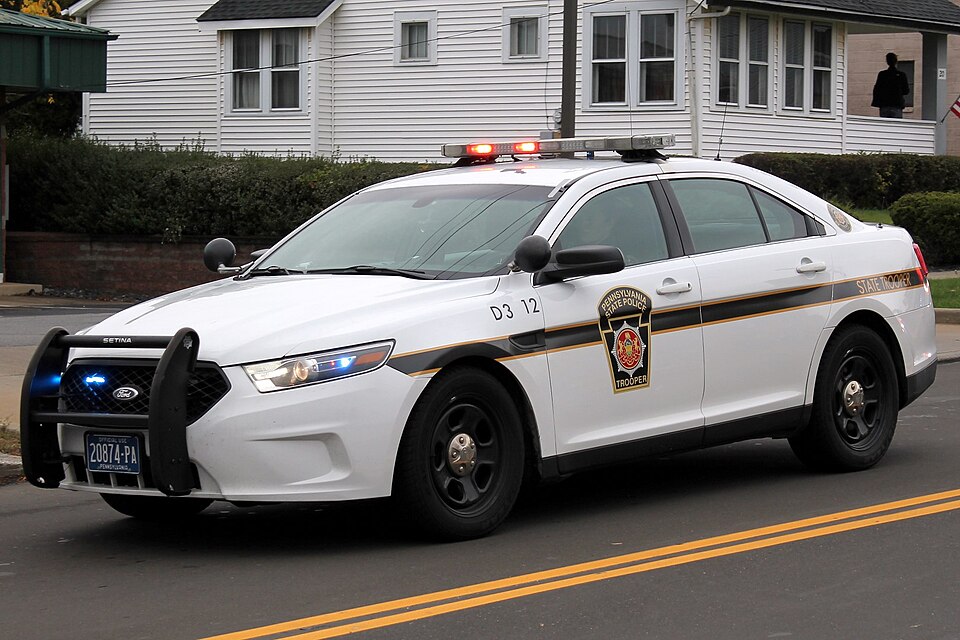
    Photo: Raymond Wambsgans, CC BY-SA 2.0, via Wikimedia Commons

    Pennsylvania’s move over law (first passed in 2006 as the Steer Clear law) requires you to move into a lane that is not next to an emergency response area or a marked disabled vehicle. If you cannot move over safely, you must slow down. Since April 27, 2021, breaking it brings 2 points and fines of $500, $1,000 and $2,000 for first, second and third offenses. This explainer covers that law plus the other Pennsylvania “stop, slow or stay back” rules learners are tested on: road-closed signs, school buses, emergency vehicles, work zones and snow plows.

    Key facts (as of November 2026)

    • Move over: 2 points; $500 first offense, $1,000 second, $2,000 third or later, plus a 90-day suspension for a third or later offense.
    • Driving around a road-closed sign for hazardous conditions: 2 points and up to $250, or up to $500 plus response costs if emergency responders are called out.
    • Not stopping for a school bus with red lights flashing and stop arm out: 5 points and a 60-day suspension.
    • Speeding 11 mph or more over in an active work zone: 15-day suspension on top of points.

    What the Pennsylvania move over law requires

    When you approach an emergency response area or a disabled vehicle, move into a lane that is not adjacent to it. If traffic or conditions stop you moving over, slow down. PUB 95 (4-21) says to reduce speed to at least 20 mph below the posted limit.

    • Emergency response area: where police, sheriffs, coroners or medical examiners, firefighters and fire police, fire marshals, rescue and EMS personnel, towing and recovery crews, hazmat teams, or highway construction and maintenance workers are working. Responders mark these with road flares, caution signs or other traffic control devices.
    • Disabled vehicle: covered when it shows at least two of: hazard warning lamps, caution signs or other traffic control devices, road flares.
    • Trash and recycling trucks: a similar law (Title 75, Section 4572.2) requires you to move over or slow down when approaching a stationary trash or recycling truck.

    Road workers and emergency responders can report drivers who fail to move over, and police can issue citations from those reports even if no officer saw it.

    Move over penalties in PA

    Situation Penalty (Act 105 of 2020, effective April 27, 2021)
    First offense $500 fine and 2 points
    Second offense $1,000 fine and 2 points
    Third or later offense $2,000 fine, 2 points and a 90-day suspension
    Seriously injuring or killing another person 90-day suspension and a fine of up to $1,000
    Seriously injuring an emergency responder or a person in or near a disabled vehicle Six-month suspension and a fine of up to $5,000
    Killing an emergency responder or a person in or near a disabled vehicle One-year suspension and a fine of up to $10,000

    Fines for several traffic violations are also doubled in an emergency response area when first responders are present.

    Is “Steer Clear” the same as move over?

    Yes. PennDOT’s online manual still calls the move over rule the Steer Clear law, which took effect September 8, 2006. Its fine figures ($250, $500, $1,000) are from that original law. The 2021 update replaced them with the higher figures above, so use PennDOT’s current move over page if you see the older numbers in study material.

    Road closed for flooding or hazards: do not drive around it

    Since September 6, 2012, it has been illegal in Pennsylvania to drive around or through signs or devices closing a road because of hazardous conditions, such as a flooded roadway.

    • 2 points and a fine of up to $250.
    • If emergency responders are called out because of you: a fine of up to $500, and you are liable for the cost of the emergency response.

    School buses: the 10-foot rule

    • Amber (yellow) lights flashing: the bus is preparing to stop.
    • Red lights flashing and stop arm out: stop at least 10 feet away, whether you are behind the bus, coming toward it on the same road, or approaching an intersection where it is stopped.
    • Stay stopped until the red lights stop flashing, the stop arm is withdrawn and the children are safe.
    • The only exception: you are on the opposite side of a divided highway separated by a barrier, guide rail or median such as grass, trees or a stream. Slow down and continue with caution.
    • Penalty: 60-day license suspension, 5 points and a fine.

    How this compares nationally: school bus stopping laws in the US.

    Emergency vehicles with sirens or lights

    When an emergency vehicle approaches from any direction with a siren or flashing red, or red and blue, lights:

    1. Pull over to the curb or side of the road and stop, as near and parallel to the curb as you can. On a one-way street, pull toward the nearest side.
    2. Stay clear of intersections.
    3. Check that no other emergency vehicle is coming.
    4. Move off again only after it passes, and keep at least 500 feet behind it.

    More detail: pulling over for ambulances, fire engines and police.

    Work zones in Pennsylvania

    • Turn on your headlights (not just daytime running lights) in posted work zones. PUB 95 (4-21) says this applies to all posted work zones, and police add a $25 fine if you are stopped for a violation in a work zone without them.
    • Fines are doubled for certain violations in active work zones, including speeding.
    • Speeding 11 mph or more over in an active work zone brings a 15-day suspension plus the usual points. Driving too fast for conditions in an active work zone in connection with a crash also brings a 15-day suspension.
    • Do not cross a solid white line in a work zone, do not use cruise control, double your following distance and obey flaggers, whose directions override signals and signs.
    • Flaggers can report unsafe drivers to police.

    Snow plows

    Plow drivers see little in their mirrors and often turn around. Follow at a safe distance, which also protects your car from salt and anti-skid material. Wing plows can stick out several feet on either side, so do not try to pass a plow on the left or the right. Winter driving tips: driving in snow, fog and rain.

    Scenario: a tow truck on the highway shoulder

    You are in the right lane of a two-lane highway. A tow truck is loading a car on the shoulder with flares out. Check mirrors and blind spot, signal and move into the left lane. If the left lane is full, stay in your lane and slow to at least 20 mph below the limit until you are past. Holding your speed and lane here risks a $500 fine and 2 points on a first offense, which for a junior driver also counts toward the 6-point suspension. See the Pennsylvania point system.

    Common questions

    What is the fine for not moving over in Pennsylvania?

    $500 for a first offense, $1,000 for a second and $2,000 for a third or later, plus 2 points each time.

    Does the PA move over law apply to a car with its hazard lights on?

    Only if it shows at least two of: hazard lamps, caution signs or other traffic control devices, road flares. Moving over or slowing for any stopped car is still sensible.

    What if I cannot move over safely?

    Slow down. PUB 95 (4-21) says to reduce speed to at least 20 mph below the posted limit.

    Do I stop for a school bus on the other side of a divided highway in PA?

    No, if a barrier, guide rail or median separates you. On any undivided road you stop in both directions.

    How far behind a fire truck must I stay?

    At least 500 feet once you move off after it passes.

    Is Pennsylvania’s move over law the same in other states?

    No. Scope and penalties differ by state. See move over laws in the US.

    Back to the main guide: how to get a driver’s license in Pennsylvania.

    Sources

    • PennDOT, “Move Over, Slow Down: Pennsylvania’s Move Over Law” (pa.gov)
    • PennDOT, “Online Driver’s Manual: Special Circumstances and Emergencies” (pa.gov)
    • PennDOT, “Online Driver’s Manual: Chapter 5, Laws and Related Issues” (pa.gov)
    • PennDOT, “Point System” fact sheet, March 2024 (pa.gov)
    • PennDOT, “Pennsylvania Driver’s Manual, PUB 95 (4-21)” (pa.gov)
  • PA Third-Party Driving Test: How Private Road Tests Work

    PA Third-Party Driving Test: How Private Road Tests Work

    Photo: Dough4872, CC BY-SA 4.0, via Wikimedia Commons

    In Pennsylvania you can take your non-commercial road test at a PennDOT-certified third-party business, usually a driving school, instead of a PennDOT Driver License Center. The test is identical, the examiners are PennDOT-certified, and each business sets its own “market-driven” fee. This explainer is for learners and parents deciding where to book, and covers how to find a tester, what to bring and what stays the same.

    Key facts (as of November 2026)

    • Same test as at a PennDOT Driver License Center, given by PennDOT-certified examiners.
    • Fees are set by each business, so ask the tester.
    • You book directly with the tester, not through PennDOT’s online scheduler.
    • PennDOT’s list of testers is form DL-105NCLF (latest edition 10-26), organized by county.
    • Under-18 rules still apply: six months on the permit, 65 practice hours and a signed DL-180C.

    Third-party vs PennDOT road test: what changes

    PennDOT Driver License Center Third-party tester
    Test content Standard non-commercial road test Identical
    Examiner PennDOT examiner PennDOT-certified examiner
    Booking Online through Driver and Vehicle Services, or by phone Contact the business directly
    Fee PennDOT’s own fees (check its fees page) Set by the business (“market-driven”)
    Getting your license Given to you at the center the day you pass Ask the tester how and where you receive it

    PennDOT’s manual says you receive your license on the spot only when you pass at a PennDOT Driver License Center. It does not spell out the next step after a third-party pass, so confirm it when you book.

    How to find a third-party road tester in PA

    1. Open PennDOT’s “Third-Party Non-Commercial Driver’s License Skills Testing Services” page on pa.gov, which has a county search, or the DL-105NCLF list.
    2. Look for your county. The 10-26 list is weighted toward southeastern counties (Philadelphia, Montgomery, Chester, Bucks, Delaware) but also includes places such as Allegheny, Erie, Lancaster, York and Venango.
    3. Call or check the business’s own site for dates, price and whether you can use its car or must bring your own.
    4. Ask what happens after you pass, and what they need you to bring.

    What you still need for a third-party road test

    The requirements come from PennDOT, not the business. Bring originals, not copies:

    • Your valid learner’s permit.
    • If you are under 18, a signed DL-180C certifying 65 hours of behind-the-wheel practice (see the 65-hour log guide).
    • Valid registration and proof of insurance for the test vehicle.
    • The valid license of the adult who brings you: a licensed driver at least 21, or a parent, guardian, person in loco parentis or spouse who is 18 or older.

    The vehicle must pass the pre-test safety check (lights, horn, brakes, signals, current inspection sticker and more) and you must operate the controls when asked. Details: PA road test vehicle check, controls and fail reasons.

    Rules that apply wherever you test

    • Six-month wait: under 18, you cannot take the road test until six months after your permit was issued.
    • Parallel parking: a 24 by 8 foot space, one attempt, no more than three adjustments. See the parallel parking test guide.
    • Retakes: under 18, you must wait seven days after a fail. PUB 95 (4-21) allows three tries per learner’s permit before you need to extend it with Form DL-31.
    • Three-year limit: if you have not passed within three years of your physical exam date, you start over with a new DL-180 and retake the knowledge test.

    Is a third-party test worth it?

    It can make sense if PennDOT appointments near you are hard to get, if you have taken lessons with a school that also tests, or if you want a time that suits your schedule. Weigh that against the business’s fee. The pass standard does not change, so choose on convenience and cost, not on any hope of an easier test.

    Common questions

    Is the third-party driving test in PA easier?

    No. PennDOT says the test is identical to the one at its Driver License Centers, and every examiner is PennDOT-certified.

    How much does a third-party road test cost in Pennsylvania?

    Each business sets its own price. Ask the tester directly.

    Can I book a third-party test on PennDOT’s website?

    No. PennDOT tells you to contact the third-party tester for information and scheduling.

    Can I use the driving school’s car?

    That depends on the business. Whatever car you use must have valid registration, insurance and a current inspection, and pass the examiner’s safety check.

    Do I still need the DL-180C at a third-party test?

    Yes, if you are under 18. It is a PennDOT requirement for the road test.

    How do road tests differ in other states?

    Each state sets its own test. See the US road test by state.

    Back to the main guide: how to get a driver’s license in Pennsylvania.

    Sources

    • PennDOT Driver and Vehicle Services, “Third-Party Non-Commercial Driver’s License Skills Testing Services” (pa.gov)
    • PennDOT, “Third Party Non-Commercial Driver’s License Skills Testing Services, DL-105NCLF (10-26)” (pa.gov)
    • PennDOT, “Online Driver’s Manual: Testing” and “Chapter 6, References” (pa.gov)
    • PennDOT, “Pennsylvania Driver’s Manual, PUB 95 (4-21)” (pa.gov)
  • Transfer a License to PA: Moving to Pennsylvania Guide

    Transfer a License to PA: Moving to Pennsylvania Guide

    Photo: Jay Brand, Pexels

    If you move to Pennsylvania with a driver’s license from another state or Canada, you must get a Pennsylvania license within 60 days of establishing residency. You apply in person at a PennDOT Driver License Center, pass a vision screening and surrender your old license, and there is no knowledge or road test if your license is valid or expired six months or less. This guide covers the steps, the fee, foreign licenses, and the other jobs a new resident has: vehicle title, inspection and address updates.

    Key facts (as of November 2026)

    • Out-of-state or Canadian license: switch within 60 days of becoming a Pennsylvania resident.
    • Form: DL-180R, plus proof of identity and residency and your Social Security card.
    • Out-of-state new driver four-year license fee: $39.50 (two-year license at 65 and over: $27.50).
    • Vehicle title and registration: apply within 20 days of establishing residency.
    • Out-of-state learner’s permits cannot be transferred.

    How to transfer an out-of-state license to PA: step by step

    1. Fill in Form DL-180R, “Application for Pennsylvania Non-Commercial Driver’s License By Out-of-State Non-CDL Driver”.
    2. Gather documents: proof of identification, proof of Pennsylvania residency, and your Social Security card. PennDOT has a separate process if you do not have the card. All documents must show the same name and date of birth, or link to each other (for example a marriage certificate or court order for a name change).
    3. Visit a Driver License Center in person. Some state-to-state services may not be available on Saturdays.
    4. Take the vision screening. If you do not meet the standard, the examiner gives you Form DL-102 for an eye doctor or family physician to complete.
    5. Surrender your out-of-state license and pay the fee.

    PennDOT issues temporary licenses valid for 15 days while it runs a facial recognition check on your photo. The temporary card can be used to prove your name, age and address like a permanent one.

    When you have to test again

    Your situation What PennDOT requires
    Out-of-state license, valid or expired six months or less Vision screening only; no knowledge or road test
    Out-of-state license expired more than six months Cannot be transferred. Apply for a learner’s permit (DL-180) and take all applicable knowledge and skills tests
    Out-of-state learner’s permit Cannot be transferred. Start with a Pennsylvania learner’s permit
    Commercial driver’s license Different rule: transfer within 30 days using Form DL-180RCD

    If you are starting over with a permit, see the Pennsylvania learner’s permit and DL-180 physical. Teens under 18 moving with an out-of-state license should ask PennDOT how junior license rules apply to them before visiting.

    Driving in Pennsylvania on a foreign license

    • Visitors who are at least 16, hold a valid license from their home country and can understand traffic control devices may drive in Pennsylvania. You may drive only the vehicle types your license covers, and must follow its restrictions.
    • An International Driving Permit (IDP) is not required. If you have one, carry it with your original license; it is not valid on its own.
    • PUB 95 (4-21) says a valid foreign license can be used for up to one year from your date of entry into the US, or until it expires, whichever comes first.

    Countries with a Pennsylvania license reciprocity agreement

    PUB 95 (4-21) lists reciprocity agreements with France, Germany, Korea and Taiwan. Holders of a valid non-commercial license from these countries can transfer it without a knowledge or road test, but a vision test is given. Transfers from Puerto Rico, France or Germany cannot be completed the same day. This list comes from the 2021 manual, so confirm it with PennDOT’s Customer Call Center (717-412-5300) before your visit. The manual gives no testing exemption for other countries’ licenses, so ask PennDOT what you need to take.

    More on foreign licenses across the US: driving in the US on a foreign license.

    Your vehicle: title, registration and inspection

    • Title and registration within 20 days of establishing residency. You need a valid Pennsylvania photo license or ID first, so it makes sense to get your license early rather than using the full 60 days.
    • Form MV-1 is completed by an authorized agent (most notaries, dealers and messenger services). Bring your out-of-state title, proof of Pennsylvania insurance, a VIN tracing or verification, and the fees and any sales tax.
    • Some counties add a $5 yearly local use fee per registered vehicle.
    • Safety inspection every 12 months at an authorized station. A vehicle can be inspected up to 90 days before the sticker expires. In many counties you also need an emissions inspection (cars, vans and light-duty trucks from model year 1975 or newer) before the safety inspection. Source: PUB 95 (4-21).

    A current inspection sticker also matters if you ever take a road test in the car: see the PA road test vehicle check.

    Changing your name or address later

    Pennsylvania Vehicle Code Section 1515 requires you to tell PennDOT within 15 days of a name or address change, even if you are moving out of state. Address changes can be made online or by calling 717-412-5300, and there is no fee for a non-commercial license. Name changes use Form DL-80. You get an update card that you must carry with your license.

    Common questions

    How long do I have to change my license after moving to PA?

    60 days from establishing Pennsylvania residency for a regular license; 30 days for a CDL.

    Do I have to take a test to transfer my license to Pennsylvania?

    Only a vision screening, if your out-of-state license is valid or expired six months or less.

    How much does it cost to transfer a license to PA?

    $39.50 for an out-of-state new driver four-year license as of November 2026 ($45.50 with motorcycle). Check the current figure on PennDOT’s fees page before your visit.

    Can I transfer my learner’s permit from another state?

    No. You need a Pennsylvania learner’s permit.

    Can I keep my old state’s license as well?

    No. You must surrender it before PennDOT issues a Pennsylvania license.

    Is REAL ID automatic when I transfer?

    REAL ID has its own document rules. See REAL ID and your first US driver’s license, and for moves between other states, transferring a license to another state.

    Back to the main guide: how to get a driver’s license in Pennsylvania.

    Sources

    • PennDOT Driver and Vehicle Services, “Moving to Pennsylvania” (pa.gov)
    • PennDOT Driver and Vehicle Services, “Motor Vehicle Information for New Residents” (pa.gov)
    • PennDOT Driver and Vehicle Services, “Driving in Pennsylvania with a Foreign Driver’s License” (pa.gov)
    • PennDOT Driver and Vehicle Services, “Payments and Fees” (pa.gov)
    • PennDOT, “Online Driver’s Manual: Applying for a Learner’s Permit” and “Chapter 5, Laws and Related Issues” (pa.gov)
    • PennDOT, “Pennsylvania Driver’s Manual, PUB 95 (4-21)” (pa.gov)
  • PA Hands-Free Law: Paul Miller’s Law and the Texting Ban

    PA Hands-Free Law: Paul Miller’s Law and the Texting Ban

    Photo: Jeffrey M. Vinocur, CC BY 2.5, via Wikimedia Commons

    Pennsylvania’s hands-free law, known as Paul Miller’s Law, bans every driver from holding or using a hand-held phone or other interactive mobile device while driving, including while stopped at a red light or in traffic. Fines started on June 5, 2026: $50 plus court costs and other fees. A separate texting ban, in force since 2012, also carries a $50 fine. This guide is for Pennsylvania permit holders, junior drivers and their parents, and covers what you can and cannot do with a phone behind the wheel.

    Key facts (as of November 2026)

    • Paul Miller’s Law took effect June 5, 2025. The first 12 months brought written warnings only.
    • From June 5, 2026: a summary offense with a $50 fine, plus court costs and other fees.
    • It is a primary offense. Police can stop you just for having a device in your hand.
    • It applies to any driver, so learner’s permit and junior license holders are covered.
    • The texting ban (since March 8, 2012) is also a $50 summary offense and carries no points on a non-commercial record.

    What Paul Miller’s Law bans in Pennsylvania

    PennDOT describes the law in three parts.

    Term What it means under the law
    Interactive mobile device A hand-held phone, smartphone, tablet, laptop or similar device that can be used for calls, texts, email, browsing, games, photos, video, social media or other data.
    Driving Operating a vehicle on a highway, including any time you are temporarily stopped because of traffic, a traffic light, a stop sign or another momentary delay.
    Using a device Holding it in at least one hand or supporting it with another part of your body; dialing or answering by pressing more than one button; or reaching for it in a way that takes you out of your seated, belted driving position.

    What you can still do with a phone while driving in PA

    • Hands-free calls, GPS and music. Pennsylvania State Police say drivers can still use hands-free technology for calls, navigation and listening to music.
    • A single tap. Pressing more than a single button to dial or answer counts as use. A single tap on a mounted phone or the car’s own controls falls outside that part of the definition, as long as you are not holding the phone.
    • Pull over and park. You may use the device once you move off or to the side of the highway and stop where the vehicle can safely stay stationary. A red light or a traffic jam does not count.
    • Emergencies. You may use it if you need to contact police or another emergency service to prevent injury to people or property.

    Pennsylvania texting-while-driving ban

    The older ban prohibits any driver from using a mobile device to send, read or write a text message, instant message, email or other written communication while the vehicle is in motion.

    • Penalty: summary offense, $50 fine plus court costs and other fees.
    • No points, and it is not recorded on a non-commercial driver record. Commercial drivers get it recorded as a non-sanction violation.
    • Not covered: a GPS device, systems built into the vehicle, and communication devices fixed to a transit bus or school bus.
    • It overrides any local ordinances on drivers’ device use, so the rule is the same across the state.
    • Police cannot seize your phone under this law.

    Penalties at a glance

    Offense Penalty
    Hand-held device use (Paul Miller’s Law), from June 5, 2026 $50 fine plus court costs and other fees
    Texting while the vehicle is moving $50 fine plus court costs and other fees; no points
    Homicide by vehicle while driving distracted Up to five extra years in prison

    PennDOT also warns that, depending on the circumstances, drivers who break either law may be convicted of homicide by vehicle or aggravated assault by vehicle and face longer sentences. PennDOT’s pages do not list points for the hand-held offense; check your record questions with PennDOT. Points for other violations are in the Pennsylvania point system guide.

    Does it apply on a learner’s permit or junior license?

    Yes. Both laws apply to “any driver”. On a permit you are driving, even with a supervisor beside you, so holding the phone to change a song or check a map at a light is an offense. A practical setup for new drivers:

    1. Mount the phone and set the route before you shift out of park.
    2. Turn on Do Not Disturb while driving.
    3. Let a passenger handle calls and messages, as PennDOT suggests.
    4. If something cannot wait, park somewhere safe off the road first.

    Junior license holders also have curfew and passenger limits: see Pennsylvania junior license rules. Distraction questions can also come up on the PA permit test.

    Other distractions the PA Driver’s Manual lists

    The manual defines a distraction as anything that takes your attention, eyes or hands from driving. Examples include eating and drinking, adjusting audio, talking with passengers (a particular risk for teens driving with other teens), reaching for objects, grooming, and rubbernecking at crashes or work zones. Headphones or earpieces may be worn in one ear only, for communication. PennDOT data counts 9,950 crashes involving a distracted driver in 2024, with more than 6,000 injuries and 49 deaths.

    Common questions

    Can I hold my phone at a red light in Pennsylvania?

    No. The law treats you as driving while temporarily stopped for traffic, a light, a stop sign or another momentary delay.

    Can I use GPS on my phone in PA?

    Yes, hands-free. Set it up before you drive and keep it mounted. Holding it, or tapping more than one button to operate it, falls under the ban.

    How much is the fine for Paul Miller’s Law?

    $50 plus court costs and other fees, from June 5, 2026. Between June 5, 2025 and June 2026, drivers got written warnings.

    Who was Paul Miller?

    Paul Miller Jr. was killed in 2010 in Monroe County in a crash with a tractor trailer whose driver reached for a phone. His mother, Eileen Miller, campaigned for the law.

    Can I make an emergency call while driving?

    Yes. The law allows device use when needed to contact police or other emergency services to prevent injury to people or property.

    Can local towns in PA set their own phone rules?

    No. The state texting law overrides local ordinances on drivers’ device use.

    How do other states compare?

    Rules vary widely. See hands-free and texting laws by state.

    Back to the main guide: how to get a driver’s license in Pennsylvania.

    Sources

    • PennDOT, “Distracted Driving” (pa.gov)
    • PennDOT, “Shapiro Administration Reminds Drivers to Put the Phone Away or Pay a Fine”, April 1, 2026 (pa.gov)
    • Pennsylvania State Police, “PSP Conducts Statewide Enforcement Initiative to Uphold Paul Miller’s Law”, June 12, 2026 (pa.gov)
    • PennDOT, “Online Driver’s Manual: Chapter 5, Laws and Related Issues” (pa.gov)
    • PennDOT, “Pennsylvania Driver’s Manual, PUB 95 (4-21)” (pa.gov)
  • Pennsylvania Point System, DUI and Underage Drinking Rules

    Pennsylvania Point System, DUI and Underage Drinking Rules

    Photo: Jay Brand, Pexels

    Under Pennsylvania’s point system, PennDOT adds points to your record for moving violations and starts taking action at 6 points: first a written special point exam or Driver Improvement School, then hearings and suspensions. Drivers under 18 are suspended for 90 days at 6 points or for driving 26 mph or more over the limit. For alcohol, the DUI limit is .08 at 21 and over but .02 under 21, and any refusal of a breath or blood test means a one-year suspension. This explainer covers points, DUI, underage drinking, traffic stops and crashes as set out in Chapter 4 of the Pennsylvania Driver’s Manual and PennDOT’s point system fact sheet.

    Key facts

    • 6 points: PennDOT corrective action begins.
    • 11 points: automatic suspension.
    • 3 points removed for every 12 months without a point violation, suspension or revocation.
    • Under 18: 6 points or 26 mph over means a 90-day suspension (120 days for later ones).
    • Under 21: BAC of .02 or more is DUI.
    • Refusing a chemical test: one-year suspension even if found not guilty of DUI.

    Points for common violations in Pennsylvania

    From PennDOT’s point system fact sheet (March 2024):

    Violation Points
    Speeding 6 to 10 mph over 2
    Speeding 11 to 15 mph over 3
    Speeding 16 to 25 mph over 4
    Speeding 26 to 30 mph over 5
    Speeding 31 mph or more over 5, plus a Departmental Hearing
    Speeding in a school zone 3
    Failure to stop for a red light or a stop sign 3
    Following too closely 3
    Careless driving 3
    Improper passing in a no-passing zone 3
    Failure to yield to a pedestrian in a crosswalk 2
    Driving too fast for conditions 2
    Driving around road-closed signs for hazardous conditions (Steer Clear) 2
    Failure to stop at a railroad crossing 4
    Failure to obey a railroad crossing gate or barrier 4, plus a 30-day suspension
    Failure to stop for a school bus with red lights flashing 5, plus a 60-day suspension
    Leaving the scene of a property-damage-only crash 4

    In an active work zone, speeding 11 mph or more over also brings a 15-day suspension. Phone rules are covered in the texting and hands-free law guide.

    What happens at 6 points in PA?

    Stage What PennDOT does
    First time at 6 or more Written notice. Within 30 days, pass a special written point exam (removes 2 points) or complete Driver Improvement School (removes 4 points). Otherwise, suspension until you do.
    Second time at 6 or more Departmental Hearing and Driver Improvement School. Possible on-road exam and/or suspension of up to 15 days.
    Third or later time Hearing and school again. Possible suspension of up to 30 days.
    11 or more points Automatic suspension: 5 days per point the first time, 10 days per point the second, 15 days per point the third, one year after that.

    After any suspension, your record shows 5 points when your privilege is restored, with limited exceptions. Points come off at 3 for every 12 consecutive months without a violation that brings points, a suspension or a revocation.

    Worked example: a 17-year-old junior driver

    A ticket for 16 to 25 mph over (4 points) plus a ticket for following too closely (3 points) totals 7 points. That triggers the under-18 90-day suspension and, separately, the first-accumulation exam or Driver Improvement School. One ticket for 26 mph or more over brings the 90-day suspension on its own. More on junior rules: Pennsylvania junior license rules.

    Offenses that suspend or revoke your license

    PUB 95 gives a partial list, including DUI, homicide by vehicle, reckless driving, racing, fleeing police, driving while suspended, hit-and-run, and a second offense of driving without a license within 5 years. Driving uninsured can also bring a three-month suspension of both your registration and your driving privilege. You can appeal a suspension to your county’s Court of Common Pleas within 30 days of the notice’s mailing date.

    Pennsylvania DUI: BAC limits and penalties

    • 21 and over: DUI at .08 or higher, or at a lower level if you are driving erratically.
    • Under 21: DUI at .02 or higher. An under-21 DUI is penalized at the “High Rate” level even if the BAC is lower than that tier.

    PUB 95 (4-21) summarizes first-offense penalties as follows. Check current penalties with PennDOT, as the manual edition is from 2021.

    Tier (first offense) Sentence Fine License
    General Impairment (.08 to .099) 6 months probation $300 No action
    High Rate (.10 to .159; also under 21 at .02 or more) 2 days to 6 months in prison $500 to $5,000 12-month suspension, 1 year ignition interlock
    Highest Rate (.16 and up; also test refusal and controlled substances) 3 days to 6 months in prison $1,000 to $5,000 12-month suspension, 1 year ignition interlock

    Alcohol highway safety school is required for first and second offenses. Penalties rise with repeat offenses and with crashes causing injury or damage. Some first offenders may be accepted into the Accelerated Rehabilitative Disposition (ARD) program.

    Implied consent: refusing a breath or blood test

    By driving in Pennsylvania you are treated as agreeing to chemical testing. Refuse after a DUI arrest and your license is suspended for one year, even if you are found not guilty of DUI. Refusal also carries a restoration fee: $500 for a first offense, $1,000 for a second, $2,000 for a third or later (per PUB 95). National background: implied consent and DUI in the US.

    Underage drinking in Pennsylvania

    • Under 21, it is illegal to buy, drink, possess or transport alcohol, including having it in the vehicle you drive.
    • If arrested and tested, parental consent is not needed, but police will notify your parents.
    • PUB 95 states the minimum penalty as a fine of up to $500 plus court costs, and courts may order an alcohol evaluation or education program.
    • Adults who knowingly supply alcohol to minors face a fine of at least $1,000 for a first offense and $2,500 for each further offense, and up to a year in jail.

    See also zero tolerance laws for drivers under 21.

    If police stop you in Pennsylvania

    1. Signal, pull as far right as is safe, stop and park away from traffic.
    2. Turn off the engine and radio and open your window. At night, turn on the interior light.
    3. Keep hands on the wheel, stay in the car with seat belt on, and do not reach for anything until asked.
    4. Tell the officer right away if you are carrying a firearm.
    5. Hand over only your license, registration and insurance card when asked.

    Police lights are red and blue, or red only on unmarked cars. Blue lights alone are not police. If unsure, turn on your flashers, slow down and drive to a well-lit, populated place.

    After a crash in Pennsylvania

    • Stop at or near the scene and move off the road if you can.
    • Call police if anyone is hurt or killed, or a vehicle needs towing.
    • Exchange names, addresses, phone numbers, registration numbers and insurance details. Get witness details too.
    • Hit a parked car or property? Try to find the owner. If you cannot, leave a note with the date, time, your name and phone number, and call police.
    • If police do not investigate a crash with injury, death or towing, send a Driver’s Accident Report (AA-600) to PennDOT within 5 days.

    Fleeing or eluding police brings a one-year suspension and a $500 fine, plus costs, and possibly prison. See also what to do after a car crash.

    Out-of-state offenses

    Pennsylvania belongs to the Driver’s License Compact. Serious offenses in other member states, such as DUI, vehicular manslaughter or failing to stop and render aid, are treated as if committed in Pennsylvania. Ignoring an out-of-state citation leads to an indefinite suspension of your Pennsylvania driving privilege until you respond.

    Common questions

    How many points before you lose your license in PA?

    At 11 points the suspension is automatic. Under 18, 6 points means a 90-day suspension.

    How long do points stay on a Pennsylvania record?

    3 points are removed for every 12 consecutive months without a point violation, suspension or revocation.

    How many points is a speeding ticket in PA?

    From 2 points for 6 to 10 mph over, up to 5 for 26 mph or more over.

    What is the legal limit for drivers under 21 in Pennsylvania?

    .02 BAC. At or above that, it is DUI.

    What happens if I refuse a breathalyzer in PA?

    A one-year suspension for a first refusal, plus a restoration fee, on top of any DUI penalties.

    How do other states handle points?

    See points systems and license suspensions in the US. For the full licensing route, see learning to drive in Pennsylvania.

    Sources

    • PennDOT, “Pennsylvania Driver’s Manual, PUB 95 (4-21)” (pa.gov)
    • PennDOT, “The Pennsylvania Point System” fact sheet, March 2024 (pa.gov)
    • PennDOT, “Chapter 4: Pennsylvania’s Point System”, Online Driver’s Manual (pa.gov)
  • Getting a Regular Pennsylvania License Before 18 (DL-59)

    Getting a Regular Pennsylvania License Before 18 (DL-59)

    Photo: Trev W. Adams, Pexels

    In Pennsylvania you can swap a junior driver’s license for a regular license before 18 by filing form DL-59, once you have held the junior license for one year, passed a driver training course approved by the PA Department of Education, had no at-fault crash or Vehicle Code conviction for a year, and have parental consent. Because the earliest junior license comes at about 16 and a half, the earliest regular license is about 17 and a half. Otherwise the junior license turns into a regular license automatically at 18.

    Key facts

    • Form: DL-59, Application for Change from a Junior Driver’s License to a Regular Non-Commercial Driver’s License.
    • Held the junior license for at least one year.
    • Approved driver training course passed.
    • One year with no crash you were partly or fully responsible for, and no Vehicle Code conviction.
    • Consent of a parent, guardian, person in loco parentis, or spouse at least 18.
    • No action needed at 18: the change is automatic.

    Eligibility checklist for an early regular license

    Condition What PennDOT requires Check
    Time on junior license At least one year Date on your junior license plus one year
    Driver training Passed a course approved by the PA Department of Education Ask the school or provider whether it is approved
    Crashes None for one year in which you were partly or fully responsible Your own record
    Convictions No Pennsylvania Vehicle Code violation conviction for one year Your driving record (available from PennDOT online)
    Consent Parent, guardian, person in loco parentis, or spouse at least 18 Signed on the DL-59

    How old do you have to be for a regular license in PA?

    • Permit: 16 at the earliest.
    • Junior license: six months after the permit, so about 16 and a half at the earliest.
    • Early regular license: one year after the junior license, so about 17 and a half at the earliest. PennDOT’s junior guide (PUB 178) states 17 and a half.
    • Automatic regular license: at 18.

    How to apply with form DL-59

    1. Finish an approved driver training course and keep proof of completion.
    2. Wait until you have held the junior license for one year with a clean record.
    3. Get form DL-59. PUB 178 says it is available on PennDOT’s website and from Driver License Centers, most notaries, tag services, automobile clubs, driver education teachers and some district justices.
    4. Have your parent or guardian give consent on the form.
    5. Submit it as the form instructs. Check the DL-59 for any fee and the current submission method.

    What changes with a regular license

    The 11 p.m. to 5 a.m. curfew and the passenger limits for passengers under 18 stop applying. Some under-18 rules come from other laws and stay until 18:

    • Under 18, the driving privilege is suspended at 6 points or for a conviction of 26 mph or more over the limit (90 days the first time). This rule is tied to age, not license type.
    • Seat belt law: drivers under 18 may not carry more passengers than seat belts.
    • Under 21: a blood alcohol level of .02 counts as DUI.

    Waiting until 18

    When you turn 18, your junior license automatically becomes a regular license. PUB 178 says the birth date on the card shows this, and you do not need a new license until the original one expires.

    Common questions

    Can you get a regular license at 17 in Pennsylvania?

    Yes, from about 17 and a half, if you meet all the DL-59 conditions. Without driver training you wait until 18.

    Does any ticket stop me getting an early regular license?

    Yes. The rule is no conviction of any Vehicle Code violation for one year.

    Is driver’s ed required for a junior license?

    No. It is only needed for the early regular license.

    Do I need to retake any test?

    PennDOT lists no test for the DL-59 change, only the conditions above.

    What are the junior license limits I would lose?

    See Pennsylvania junior license rules, and the point rules in the Pennsylvania point system guide.

    How does PA compare with other states?

    See GDL laws by state. The full route is in learning to drive in Pennsylvania.

    Sources

    • PennDOT, “Pennsylvania Driver’s Manual, PUB 95 (4-21)” (pa.gov)
    • PennDOT, “Chapter 1: Applying for a Learner’s Permit”, Online Driver’s Manual (pa.gov)
    • PennDOT, “A Guide to Obtaining a Pennsylvania Junior Learner’s Permit and Junior Driver’s License, PUB 178 (7-23)” (pa.gov)
    • PennDOT, “The Pennsylvania Point System” fact sheet, March 2024 (pa.gov)
  • Pennsylvania 65-Hour Driving Log (DL-180C) Explained

    Pennsylvania 65-Hour Driving Log (DL-180C) Explained

    Photo: Phil Evenden, Pexels

    If you are under 18 in Pennsylvania, you must complete at least 65 hours of supervised behind-the-wheel practice, including at least 10 hours at night and 5 hours in bad weather, before your road test. A parent or guardian certifies the hours on the Parent or Guardian Certification Form (DL-180C), which you hand to the examiner on test day. This checklist covers who can supervise, what the form says, and how to plan the hours across the six-month permit period.

    Key facts

    • 65 hours total, including at least 10 at night and 5 in bad weather.
    • Applies to learners under 18.
    • Certified on form DL-180C; bring the original to the road test.
    • The current DL-180C (6-25) also asks the parent to certify the learner has printed or viewed PennDOT’s distracted driving materials.
    • Minimum permit period before the road test: six months.

    The 65-hour requirement at a glance

    Type of driving Minimum hours
    Nighttime 10
    Bad (inclement) weather 5
    Other supervised driving 50
    Total 65

    Who can supervise a Pennsylvania learner?

    PUB 95 says the person in the front seat must be either:

    • a licensed driver aged 21 or older, or
    • a parent, guardian, person in loco parentis, or spouse aged 18 or older who holds a driver’s license.

    PUB 178 adds that the supervisor must be licensed for the same or a higher class of vehicle than your permit, and must sit in the seat beside you.

    Watch the form wording. The current DL-180C (6-25) certifies that the 65 hours were “given by a licensed driver(s) 21 years of age or older.” If a supervisor is under 21 (for example an 18-year-old spouse), check with PennDOT before counting those hours.

    What the DL-180C certifies

    1. The minor has completed at least 65 hours of supervised driving, including 10 at night and 5 in inclement weather.
    2. The minor has printed or viewed PennDOT’s educational materials on distracted driving.
    3. The signature is from a parent, guardian, person in loco parentis, or spouse at least 18.

    Signing: the form can be signed in front of a notary or a driver license examiner, among others listed on it, such as an end-of-course skill test teacher, a certified third-party examiner or a motorcycle safety instructor. A notarized signature is needed only if the parent or guardian is not coming to the road test.

    PennDOT does not require you to hand in a trip-by-trip log. Keeping one makes it easy for the parent to certify honestly. PUB 178 says new permit holders also receive the Parent’s Supervised Driving Program guidebook.

    Planning 65 hours over six months

    Six months is roughly 26 weeks, so 65 hours works out to about 2.5 hours a week. A simple plan:

    • Weeks 1 to 4: empty lots and quiet streets. Starting, stopping, steering, turns, the vehicle controls the examiner will check.
    • Weeks 5 to 12: residential and town roads, intersections, four-way stops, right on red, lane changes, parking.
    • Weeks 13 to 20: busier roads, highways and merging, work zones. Start the 10 night hours.
    • Weeks 21 to 26: mock road tests, parallel parking in a 24 by 8 foot box, and the 5 bad-weather hours whenever rain or snow arrives.

    Bad weather is unpredictable, so take the chance whenever it rains or snows rather than leaving those 5 hours to the final weeks.

    Sample log columns

    Date Start/end time Minutes Night? Bad weather? Skills practiced Supervisor
    (date) (times) (minutes) Y/N Y/N e.g. highway merge (initials)

    Rules while you log hours

    • Supervisor in the front seat at all times.
    • No more passengers than seat belts.
    • Planning to drive in another state? Check with your insurer and that state first. See driving with a permit in another state.

    Road test day checklist

    • Original signed DL-180C
    • Valid learner’s permit, at least six months old
    • Vehicle registration card and proof of insurance (originals)
    • Valid license of the adult who comes with you

    Details: the Pennsylvania road test guide.

    Common questions

    Does driver’s ed count toward the 65 hours in PA?

    Partly. PennDOT’s test scheduling FAQ says the 6 hours of driving with an instructor that many driver education courses include can be credited toward the 65. The other 59 hours still need a qualified supervisor.

    What counts as bad weather driving?

    The form says “inclement weather”. PennDOT does not list conditions, but rain, snow and fog are the obvious cases.

    Do I need the DL-180C if I am 18 or older?

    No. The 65 hours apply to applicants under 18.

    Can a grandparent or older sibling supervise?

    Yes, if they are a licensed driver aged 21 or older.

    Does PennDOT check my log?

    PennDOT asks for the signed certification, not the log itself. The parent is certifying the hours under their signature.

    How does PA compare with other states?

    See supervised driving hours by state. For every step, see learning to drive in Pennsylvania, and the DL-180 permit guide.

    Sources

    • PennDOT, “Pennsylvania Driver’s Manual, PUB 95 (4-21)” (pa.gov)
    • PennDOT, “Chapter 1: Applying for a Learner’s Permit”, Online Driver’s Manual (pa.gov)
    • PennDOT, “Parent or Guardian Certification Form, DL-180C (6-25)” (pa.gov)
    • PennDOT, “A Guide to Obtaining a Pennsylvania Junior Learner’s Permit and Junior Driver’s License, PUB 178 (7-23)” (pa.gov)
  • Pennsylvania Parallel Parking Test: The 24 by 8 Foot Space

    Pennsylvania Parallel Parking Test: The 24 by 8 Foot Space

    Photo: Tom Harpel, CC BY 2.0, via Wikimedia Commons

    On the Pennsylvania road test you parallel park midway between two uprights in a space 24 feet long and 8 feet wide. You get one attempt and no more than three adjustments, and the whole car must end up inside the space without touching an upright, crossing the painted line or going onto the curb. This guide sets out the exact rules, the five-step method from the Pennsylvania Driver’s Manual, and how to practice.

    Key facts

    • Space: 24 feet long, 8 feet wide, marked by uprights front and rear.
    • One attempt, maximum three adjustments.
    • Fail if you touch an upright, cross the painted line, or mount or go over the curb, or if any part of the car is outside the space.
    • Self-parking cars are allowed, but the feature must stay off.

    PA parallel parking test rules

    Rule What PennDOT requires
    Position Midway between the two uprights
    Space size 24 feet long by 8 feet wide
    Final position Entire vehicle completely inside the space
    Contact No contact with the uprights to the rear or front
    Lines and curb Do not cross the painted line or go up onto or over the curb
    Attempts One attempt, no more than three adjustments
    Driver aids Advanced Parking Guidance (self-parking) must be off for the whole test

    PennDOT does not define “adjustment” in the manual. A safe reading is to treat each change between forward and reverse as one and plan to finish in as few as possible.

    How to parallel park: the five steps in PUB 95

    The manual’s method for parking at a right-hand curb, written for a space between two parked cars. On the test, the front upright plays the role of the car ahead.

    1. Line up. Stop even with the vehicle ahead, about 2 feet away from it.
    2. Turn in. Turn the wheels sharply right and back slowly toward the vehicle behind.
    3. Straighten. As your front door passes the back bumper of the vehicle ahead, quickly straighten the wheels and keep backing straight.
    4. Swing in. When you are clear of the vehicle ahead, turn the wheels sharply left and back slowly toward the vehicle behind.
    5. Center. Turn the wheels sharply right and pull toward the center of the space.

    Finish no more than 12 inches from the curb. Before you leave a parked car, PUB 95 says to turn off the engine, remove the key, lock the doors and check for traffic behind before getting out. PennDOT also has a free parallel parking training video, linked from its Test Your Knowledge page.

    Practice plan

    • Build a test box. Mark out 24 by 8 feet in an empty parking lot with cones or soft markers at each end, so a touch costs nothing.
    • Use the test car. Reference points (where the upright appears in the rear window or mirror) change from car to car.
    • Count your adjustments. Practice finishing in three or fewer, then in one.
    • Check, then move. Look all around before every reverse, and signal as you would on the street.
    • Log it. Supervised parking practice is behind-the-wheel time, so record it with your 65 hours. See the 65-hour log guide.

    Parking rules that also appear on the knowledge test

    • Park in the direction traffic moves, no more than 12 inches from the curb. With no curb, pull as far off the road as possible.
    • Downhill, with or without a curb: turn the wheels fully to the right.
    • Set the parking brake and shift to Park (automatic) or Reverse or First (manual).
    • No parking within 15 feet of a fire hydrant, 20 feet of a crosswalk at an intersection, 30 feet of a roadside stop sign, yield sign or flashing signal, or 50 feet of the nearest rail at a railroad crossing.

    More national context: US parking rules for new drivers.

    Common questions

    How big is the parallel parking space on the PA road test?

    24 feet long and 8 feet wide.

    Is parallel parking still on the Pennsylvania road test?

    Yes. PennDOT’s current online manual lists it as something the examiner may ask you to do.

    Can I fail just for touching an upright?

    Yes. Contact with an upright, crossing the line, mounting the curb or ending outside the space all break the rules.

    Can I use my car’s parking camera?

    The manual only bans the self-parking feature. Do not depend on a camera; the examiner will be watching your mirror and over-the-shoulder checks.

    How many tries do I get?

    One attempt, using no more than three adjustments.

    What else is on the test?

    See the Pennsylvania road test guide and road tests by state. The full route is in learning to drive in Pennsylvania.

    Sources

    • PennDOT, “Pennsylvania Driver’s Manual, PUB 95 (4-21)” (pa.gov)
    • PennDOT, “Testing”, Online Driver’s Manual (pa.gov)
    • PennDOT, “Test Your Knowledge” (pa.gov)
  • Pennsylvania Junior License Rules: Curfew, Passengers and Points

    Pennsylvania Junior License Rules: Curfew, Passengers and Points

    Photo: Phil Evenden, Pexels

    A Pennsylvania junior driver’s license is the license you get if you pass the road test before 18. It bans driving from 11 p.m. to 5 a.m. unless a parent, guardian or spouse is with you or you have a notarized work or service affidavit. It also limits passengers under 18, and you face a 90-day suspension at 6 points or for driving 26 mph or more over the limit. This explainer sets out each rule, its exceptions and how the junior license ends.

    Key facts

    • Curfew: no driving 11 p.m. to 5 a.m., with set exceptions.
    • First six months: at most one passenger under 18 who is not immediate family, unless a parent or guardian is in the car.
    • After six months: up to three such passengers, unless you have caused a crash or been convicted of a driving violation.
    • Never more passengers than seat belts.
    • 6 points or 26 mph over: 90-day suspension the first time, 120 days after that.
    • Becomes a regular license automatically at 18.

    Pennsylvania junior license curfew: 11 p.m. to 5 a.m.

    You may not drive between 11 p.m. and 5 a.m. unless one of these applies:

    • An adult family member is with you: your parent, guardian, person in loco parentis, or spouse aged 18 or older. PennDOT’s junior guide (PUB 178) stresses this must be a parent, guardian or spouse, not an 18-year-old friend.
    • Work: you are employed during those hours.
    • Service: you are involved in public or charitable service, or you are a member of a volunteer fire company.

    For work or service, carry a notarized affidavit or certificate of authorization from your employer, supervisor or fire chief showing your probable schedule. Keep it with your license. PUB 178 says it covers driving to and from work or on work-related business.

    How many passengers can you have on a PA junior license?

    Time on junior license Passengers under 18 who are not immediate family
    First six months No more than 1, unless a parent, guardian, person in loco parentis, or spouse 18 or older is in the car
    After six months No more than 3, same exception
    After six months, if you were ever partly or fully responsible for a crash, or convicted of any driving violation The limit stays at 1

    On top of this, you may never carry more passengers than there are seat belts. Passengers 8 to 17 must wear a seat belt in any seat.

    Scenario

    Four months after passing, a junior driver wants to drive two friends (both 17) and a younger brother to school. The brother is immediate family, so he does not count toward the limit, but two non-family friends under 18 is one too many. With a parent in the car, all three can ride as long as there is a seat belt for everyone.

    Points and suspensions for junior drivers

    • 6 or more points, or a conviction for 26 mph or more over the limit: your license is suspended. The first suspension is 90 days. Any later one is 120 days.
    • This is in addition to the normal point system rules that apply to all drivers.
    • PUB 178 adds that a crash you are partly or fully responsible for, or certain moving violations, can bring a suspension until 18 or for up to 90 days.
    • You get the same fines, penalties and points as any other driver.

    Point values for common violations are in the Pennsylvania point system and DUI guide. One speeding ticket at 26 mph or more over is enough for a junior suspension on its own.

    Phones and the junior license

    Texting while driving is banned for all drivers, and since June 5, 2026 using a hand-held device while driving can bring a $50 fine plus costs. See the Pennsylvania texting and hands-free law.

    When does a junior license end?

    • At 18: it automatically becomes a regular license. You do not need a new card until it expires.
    • Earlier: after a year on the junior license, with an approved driver training course, a clean year and parental consent on form DL-59. See getting a regular license early.

    Common questions

    What time can a junior driver drive in PA?

    Between 5 a.m. and 11 p.m. without restriction. Outside that, only with a qualifying parent, guardian or spouse, or with a notarized work or service affidavit.

    Do siblings count toward the passenger limit?

    No. The limit applies to passengers under 18 who are not immediate family members. The seat belt limit still applies.

    Can I drive home from a late shift?

    Yes, if you carry a notarized affidavit or employer certificate showing your schedule.

    Can an 18-year-old friend supervise me after 11 p.m.?

    No. It must be your parent, guardian, person in loco parentis, or spouse.

    What gets a junior license suspended in Pennsylvania?

    Reaching 6 points, or a conviction for driving 26 mph or more over the limit. First time is 90 days.

    How do PA’s rules compare with other states?

    See GDL laws by state, or the full route in learning to drive in Pennsylvania.

    Sources

    • PennDOT, “Pennsylvania Driver’s Manual, PUB 95 (4-21)” (pa.gov)
    • PennDOT, “Chapter 1: Applying for a Learner’s Permit”, Online Driver’s Manual (pa.gov)
    • PennDOT, “A Guide to Obtaining a Pennsylvania Junior Learner’s Permit and Junior Driver’s License, PUB 178 (7-23)” (pa.gov)
    • PennDOT, “The Pennsylvania Point System” fact sheet, March 2024 (pa.gov)
    • Pennsylvania State Police, “Statewide Enforcement Initiative to Uphold Paul Miller’s Law” (pa.gov)
  • Pennsylvania Road Test: Vehicle Check, Controls and Fail Reasons

    Pennsylvania Road Test: Vehicle Check, Controls and Fail Reasons

    Photo: Ii2nmd, CC0, via Wikimedia Commons

    The Pennsylvania road test has three parts: a vehicle safety check, a vehicle controls check, and a drive that includes parallel parking. You can fail before you leave the lot, either because your car or paperwork does not pass or because you cannot operate a control such as the defroster. This guide covers booking, the documents to bring, each part of the test, the fail reasons PennDOT lists and the retest rules.

    Key facts

    • Appointment required. Book online, or call 1-800-423-5542.
    • Under 18: at least six months after the permit is issued, with 65 hours certified on DL-180C. You may book up to six months ahead.
    • Bring originals only. Missing documents mean no test.
    • Failing to operate any vehicle control fails the test.
    • Under 18 and failed: wait seven days. Three tries per permit.

    How to book the Pennsylvania road test

    Schedule online through PennDOT’s Driver and Vehicle Services website. Without internet access, call 1-800-423-5542 (8 a.m. to 5 p.m., Monday to Friday, except holidays). PennDOT recommends booking as soon as you get your permit, for a date on or after the eligibility date printed on it.

    PennDOT-certified third-party businesses also give the road test for a fee they set themselves. The test is identical to the one at a PennDOT center. See how third-party road testing works.

    Documents to bring to the PA road test

    All must be valid, original (not copies) and for the car you are testing in.

    • Your valid learner’s permit.
    • Under 18: the signed Parent or Guardian Certification Form (DL-180C) for the 65 hours.
    • The vehicle’s valid registration card.
    • Proof the vehicle is currently insured.
    • The valid license of the adult who comes with you: a licensed driver aged 21 or older, or a parent, guardian, person in loco parentis, or spouse aged 18 or older.

    The vehicle safety check

    Before the test, the examiner checks that the car has:

    • A valid registration card and current insurance.
    • A valid state inspection sticker and, if required, an emissions sticker.
    • Working lights, horn, brakes, windshield wipers, turn signals, mirrors, doors, seats and tires.
    • Clean seat belts ready for use. You and the examiner must wear them.

    If any part of the car is unsafe or does not meet inspection requirements, you will not be allowed to take the test.

    The vehicle controls check

    The examiner may ask you to operate:

    • Horn
    • Lights: parking lights, high and low beams, turn signals
    • Windshield wipers
    • Parking (emergency) brake
    • Four-way flashers (hazard lights)
    • Defroster

    Failing to operate any of these properly fails the road test. Practice every control in the exact car you will test in, especially if it is not your usual car.

    Parallel parking

    You park midway between two uprights in a space 24 feet long and 8 feet wide, with one attempt and no more than three adjustments. Self-parking features must be off. Full rules and technique: the Pennsylvania parallel parking test guide.

    The on-road drive

    The examiner is your only passenger and tells you where to drive and which maneuvers to make. They pay close attention to:

    • How you approach and obey warning signs, stop signs and traffic lights.
    • How you control the vehicle.
    • Your use of turn signals and any other controls needed during the drive.

    Reasons you fail the Pennsylvania road test

    PennDOT lists these as examples:

    • Inability to operate any vehicle control.
    • Violating any traffic law, such as failing to obey a stop sign.
    • Driving dangerously or recklessly.
    • Errors in safe driving practices.
    • Not following the examiner’s instructions.
    • Causing a crash.
    • Not using turn signals.

    You can also fail for making too many driving errors. For the mistakes that trip up learners in every state, see common reasons people fail the driving test.

    If you fail: retest rules

    Situation Rule
    Under 18, failed Wait seven days before retesting
    Attempts per permit Three, before the permit expires
    Third fail, or permit expired Apply to extend with form DL-31
    No pass within three years of the physical Start over with a new DL-180 and retake the knowledge test

    If you pass

    At a PennDOT Driver License Center you receive your license that day. Under 18, it is a junior license with a curfew and passenger limits. See Pennsylvania junior license rules.

    Common questions

    Can I use any car for the Pennsylvania road test?

    Any car that passes the safety check, with valid registration, insurance and inspection stickers. A self-parking car is fine if the feature stays off.

    Can you fail the PA road test for the defroster?

    Yes. Failing to operate any vehicle control properly fails the test.

    Who can be in the car during the test?

    Only the examiner.

    Do I need the 65-hour form if I am 18?

    No. The DL-180C is required if you are under 18.

    Can I bring photocopies of my registration and insurance?

    No. Without the original documents you will not be given the test.

    How does the PA test compare with other states?

    See road tests by state, or start from learning to drive in Pennsylvania.

    Sources

    • PennDOT, “Pennsylvania Driver’s Manual, PUB 95 (4-21)” (pa.gov)
    • PennDOT, “Testing”, Online Driver’s Manual (pa.gov)