
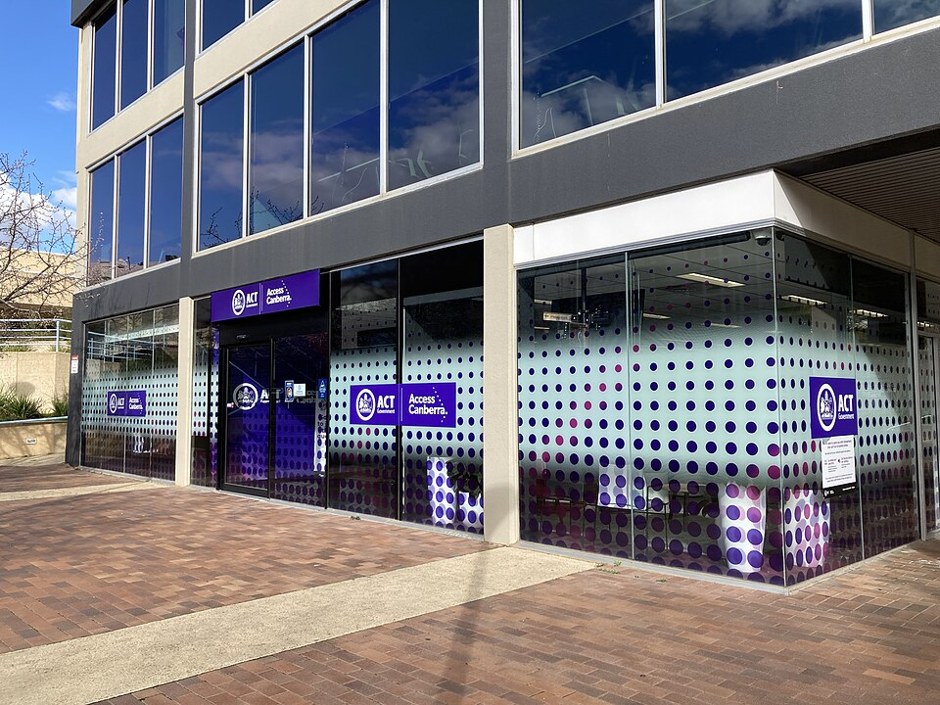
Photo: Nick-D, CC BY-SA 4.0, via Wikimedia Commons
In the ACT there are two ways to prove you are ready for your Ps: Competency Based Training and Assessment (CBT&A) with an ACT Accredited Driving Instructor, or a one-off practical driving assessment with an ACT Government Licence Examiner. This guide compares them, then covers the one-off assessment in detail: booking, car rules, the most common mistakes and what happens if you do not pass.
CBT&A vs the one-off assessment
| CBT&A (“logbook method”) | One-off practical assessment | |
|---|---|---|
| Who assesses you | ACT Accredited Driving Instructor | ACT Government Licence Examiner |
| How | Assessed against 23 competencies over a course of lessons, plus a final competency assessment | A single drive in your own car |
| Minimum | 7 lessons; most people need 10 to 15 | One booking |
| Cost | Set by the instructor (lessons) | $133.90 booking fee (as at 1 July 2026) |
| Hours and HPT still needed | Yes | Yes |
| Minimum age | 17 to be issued Ps | 17 on the day of the assessment |
| If not yet competent | Keep training until each competency is signed off | Wait 48 hours, rebook and pay again |
Which is easier? Neither is officially easier. CBT&A spreads assessment across lessons, which suits nervous learners and also gives you professional training. The one-off assessment is cheaper if you are already a confident driver. The one-off page warns that more than 50% of people fail their driving test.
The 23 ACT driving competencies
CBT&A instructors assess you against these tasks, set out in the “Road ready: towards your Ps in the ACT” learner driver guide. They are also a good checklist for one-off candidates.
- Understanding the controls
- Cabin drill
- Starting up procedure
- Moving off procedure
- Correct and smooth gear changes
- Steering control
- Turns, left and right
- Speed control
- Slowing procedures
- Stopping procedures
- Hill starts
- Give way rules
- Reversing
- Right angle parking
- Reverse parallel parking
- U-turns
- Turning around in the road (3-point turn)
- Lane changing, merging and entering freeways
- Overtaking
- Observation skills
- Compliance with the system of vehicle control
- Vulnerable road users
- Driving on busy and unfamiliar roads
The guide includes two revision points: one after task 17 and one before task 23, where you show you can do the earlier tasks without help.
The lane change action plan
Task 18 sets out the order examiners and instructors expect for every lane change, merge or freeway entry: decide on your course, check mirrors, indicate, head check, adjust speed while rechecking, change lanes smoothly, cancel the indicator, check mirrors again.
Booking the one-off practical driving assessment
- Call Access Canberra on 13 22 81 and pay by Visa or Mastercard.
- Book a date on or after your 17th birthday.
- Arrive 15 minutes early. If you are more than 5 minutes late, you must rebook and pay again.
What to bring
- Your ACT learner licence or other proof of identity
- Your completed logbook with all required hours
- Your Hazard Perception Test certificate
- Any checklist Access Canberra gave you
ACT driving test car requirements
You supply the car. It must:
- be registered (an unregistered vehicle permit is not accepted)
- be clean inside, with clean, unobstructed windows
- be roadworthy, with tyres, brakes, brake lights and indicators checked
- have working seatbelts
- have a working centre-mounted park brake (electric or manual) that the examiner can reach from the front passenger seat
- be clear of loose items in the cabin
- show L plates front and back
- have at least a quarter tank of fuel
- have working air-conditioning or heating
If the car was under the ACCC compulsory recall for Takata alpha airbags, bring a document from the manufacturer showing the airbag has been replaced. If the car does not meet the rules, the assessment does not go ahead and you must rebook and pay again.
Common reasons people fail the ACT driving assessment
Access Canberra lists these as the most common mistakes:
- Speed: not following speed signs or noticing speed changes, including in high pedestrian areas, school zones and roadwork zones.
- Blind spots: not doing head checks and mirror checks before changing lanes or merging.
- Stop and hold lines: rolling over the line at a stop or give way sign.
The examiner may give instructions, take the steering wheel or apply the handbrake to avoid a collision or danger. That is why the park brake must be within their reach.
The ACT Road Rules Handbook adds habits examiners do not want to see: steering one-handed, resting a hand on the gear lever, pressing the clutch too early when stopping or holding it down while cornering, braking late, and rolling through stop signs.
Rescheduling and cancelling
| Situation | What happens |
|---|---|
| Change date with at least 48 hours’ notice | $21.70 change fee |
| Cancel with at least 48 hours’ notice | Refund, less a $21.70 cancellation fee |
| Less than 48 hours’ notice, over 5 minutes late, or no-show | You lose the booking fee and pay $133.90 again |
Fees as at 1 July 2026; check Access Canberra before booking.
After the assessment
If you pass
The examiner updates the licence register and you get an email confirming the result. Visit an Access Canberra Service Centre with your learner licence, completed logbook, copies of any course certificates and a Visa or Mastercard for the fee. Under 25s are mailed a P1 licence; 25 and over get P2.
If you do not pass
The examiner tells you why and emails an assessment report showing where you were “not yet competent”. Practise those areas with your supervisor or an instructor. You must wait 48 hours before another assessment.
Automatic or manual?
Pass in an automatic and your licence carries an A condition. You can drive a manual only with a full licence holder beside you and L plates displayed, until you either pass in a manual or ask for the condition to be removed after 12 months on your Ps. It also comes off automatically when you renew to a full licence after 3 years.
Common questions
Can I use a car with an electric park brake for the ACT test?
Yes, if it is centre-mounted and the examiner can reach it from the front passenger seat.
How many lessons does CBT&A take?
At least 7. Access Canberra says most people need 10 to 15.
Can I switch from CBT&A to the one-off test?
The Road ready guide says you may choose the system that suits you and change your mind at any time.
Do I need the hours and HPT before CBT&A sign-off?
You need both before Access Canberra issues your Ps, whichever route you take. See ACT logbook hours and credits and the ACT Hazard Perception Test.
How soon can I retake the one-off assessment?
After 48 hours, with a new booking fee.
Related: driving in Canberra, roundabout rules in Australia. Back to the main guide: learning to drive in the ACT.
Sources
- Access Canberra, “One off practical driving assessment” (accesscanberra.act.gov.au)
- Access Canberra, “Get your provisional driver licence” (accesscanberra.act.gov.au)
- Access Canberra, “Driver licence fees” (accesscanberra.act.gov.au)
- Access Canberra, “Road ready: towards your Ps in the ACT, a learner driver guide” (accesscanberra.act.gov.au)
- Access Canberra, “ACT Road Rules Handbook” (accesscanberra.act.gov.au)
- City Services, “Learner and provisional driver safety” (cityservices.act.gov.au)