Category: Australian Capital Territory

  • ACT Road Rules Handbook Study Guide: Parts A to E

    ACT Road Rules Handbook Study Guide: Parts A to E

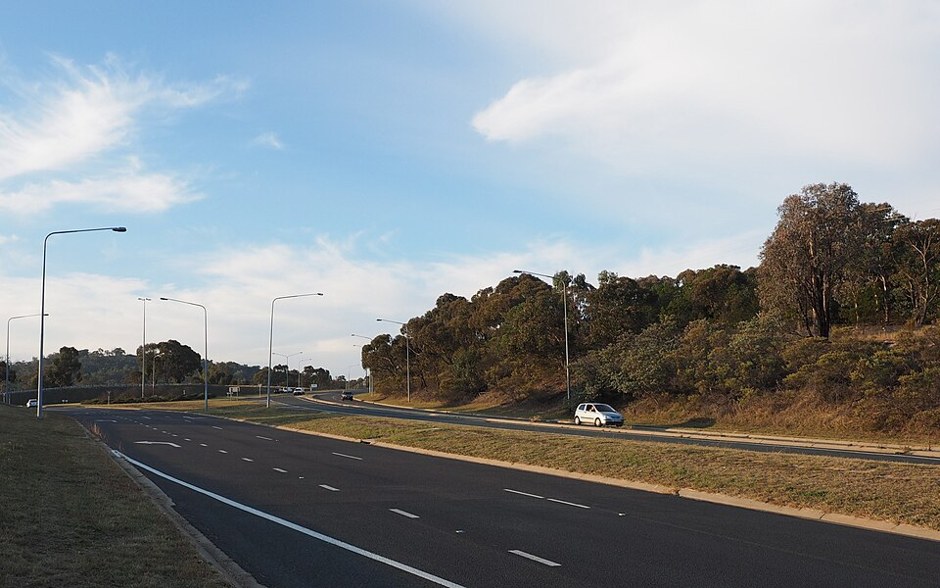
    Photo: Nick-D, CC BY-SA 4.0, via Wikimedia Commons

    The ACT Road Rules Handbook from Access Canberra is the book you study for the ACT Road Rules Knowledge Test. This guide walks through all five parts, A to E, in plain English, pulls out the numbers you need to remember and flags where the handbook is out of date.

    Which edition is current?

    The handbook Access Canberra links to today is the 2019 edition (the PDF is titled “2019 ACT Road Rules Handbook”, and the Word version is also named 2019). It runs to 120 pages and is free as a PDF or DOCX on accesscanberra.act.gov.au.

    Warning: the licensing rules changed on 1 January 2020, after the handbook was written. Where the handbook and Access Canberra’s web pages differ, the web pages are current:

    Topic 2019 handbook says Current rule
    Learner licence validity 24 months 5 years
    Minimum time on Ls 6 months, any age 12 months (6 months if 25 or older)
    Learner demerit limit 12 points 4 points
    Logbook hours 50 hours recommended 100 hours including 10 at night (50 including 5 if 25 or older) required
    P plates P plates for 3 years Red P1 for 12 months, then green P2 for 2 years
    Phones on Ls and Ps Describes full-licence rules Total ban for L and P drivers, including hands-free
    Hazard Perception Test Not mentioned Required before Ps

    The road rules themselves in Parts B to E (give way, signs, speed, crossings, parking) are largely the national Australian Road Rules and still apply.

    Part A: General information

    • Licence classes: C (car, up to 4.5 tonnes GVM and 12 seats including the driver, towing a single trailer up to 9 tonnes), R (motorcycle), and heavy classes LR, MR, HR, HC and MC.
    • Getting your Ls: 15 years 9 months, proof of identity (a primary and a secondary document, plus proof of residency), the course and knowledge test, and an eye test.
    • The knowledge test: 35 multiple-choice questions; some are mandatory and must be right, and you may get four of the rest wrong. See the ACT pre-learner course and road rules test.
    • Driving interstate: your ACT Ls are valid everywhere in Australia, but you must follow local learner rules.
    • The driving test and CBT&A: what the examiner expects (head checks, no rolling stops, no one-handed steering). See CBT&A or the one-off driving assessment.
    • Safe System and Vision Zero: safe speeds, roads, vehicles and people, built around the fact that people make mistakes.
    • Probationary licence: drivers returning after a court disqualification hold a probationary licence first, with a zero alcohol limit.
    • Remember: you must carry your licence whenever you drive.

    Part B: First steps to safe driving

    Seatbelts and child restraints

    • Under 6 months: rear-facing restraint or capsule.
    • 6 months to under 4 years: rear-facing or forward-facing restraint with inbuilt harness.
    • 4 to under 7 years: forward-facing restraint with harness, or approved booster seat and seatbelt.
    • 7 to under 16: approved restraint or a properly fastened seatbelt.
    • The driver is legally responsible for restraining children. See seatbelts and child car seats in Australia.

    Alcohol and drugs

    • Zero BAC for learner, provisional, probationary and restricted licence holders, among others.
    • Any trace of cannabis, methamphetamine or ecstasy while driving is an offence.
    • A big night out can leave you over the limit the next morning.
    • Standard drink examples: a middy (285 ml) of full-strength beer, a small glass (100 ml) of wine, a nip (30 ml) of spirits.
    • Mixing: sedatives, antihistamines and illegal drugs can affect driving for hours or days, and alcohol multiplies their effect. Check medicine labels for driving warnings and ask a pharmacist if unsure.
    • Your body clears about one standard drink an hour. Coffee, a cold shower or exercise do not lower your BAC.

    Phones, security, demerits, fatigue and distraction

    • Phones: the handbook covers full-licence rules. L and P drivers have a total ban. See ACT learner and P plate rules.
    • Leaving the car: engine off, park brake on, in gear or Park, and take the key unless someone 16 or older stays in the car.
    • Demerit schedule: 1 point for speeding by 15 km/h or less, up to 6 points for more than 45 km/h over; 3 points for failing to give way or running a red light.
    • Fatigue: fatal fatigue crash risk is four times greater between 10pm and 6am. Stop for 15 minutes every two hours. 24 hours without sleep affects driving like a BAC of 0.1.
    • Distraction: loud music, fiddling with the radio, phones and chatty passengers all take your mind off the road. Set things up before you move and keep your attention on driving.

    Part C: Knowing the road rules

    • Road markings: merging, form one lane, painted islands, turn arrows, hold and turn lines, coloured bicycle lanes. If your lane ends and you cross a line to merge, give way to traffic already in that lane; where the line simply ends and two lanes form one, the vehicle ahead goes first. Lane arrows (with or without “ONLY”) must be followed. Stop with your front at the hold line at a Stop sign, and stay left of turn lines when turning. A green coloured bicycle lane at an intersection is a cyclists’ travel lane: give way to any cyclist in it. See Australian road markings.
    • Traffic signals: when lights are flashing yellow or out, give way to the right (or use the T-intersection rule). Turning drivers give way to crossing pedestrians. See traffic lights and arrows.
    • Signs: regulatory, warning, information and temporary signs, plus bus priority signals. See Australian road signs explained.
    • Speed: 50 km/h default in built-up areas, 100 km/h in rural areas; ACT L and P drivers may drive to the posted limit. Speed, red light, point-to-point and mobile cameras are in use; radar detectors are illegal.
    • Intersections and giving way: T-intersections, crossroads, roundabouts, leaving driveways and car parks. See giving way in Australia and roundabout rules.
    • Turning: left and right turns, “do not overtake turning vehicle” signs, U-turns and three-point turns.
    • Crossings: give way to pedestrians and cyclists on pedestrian and wombat crossings; stop at school crossings when the flag is out; never overtake a car stopped at a crossing. School zones are 40 km/h when the sign is open. See pedestrian, school and wombat crossings.
    • Level crossings: few in the ACT, but the national rules apply, including tram crossings with overhead wires. See railway level crossings.
    • Two offences to know: it is illegal to throw anything at, or put anything in the path of, a car or bicycle. When police signal you to stop, pull over at the first safe place; failing to stop can mean prison, heavy fines, suspension and having the car seized.
    • Parking: where you cannot park, signs and minimum distances. See parking rules in Australia.

    Part D: Road craft

    • Preparing and moving off: mechanical and pre-drive checks, opening doors safely, mirrors and head checks.
    • Keeping your distance: at least a three-second gap; at least double it (six or seven seconds) on gravel, frost, wet roads, at night or when tired. If someone cuts in, ease back to rebuild the gap.
    • Space to the sides and behind: keep about 1 metre from parked cars, avoid sitting beside other vehicles, and keep left to stay clear of oncoming traffic. If you are tailgated, hold a steady speed, signal early, never brake suddenly, and let the driver pass.
    • Reversing: do not rely on mirrors alone. Turn your head and look over your shoulder.
    • Stopping: average reaction time is two seconds. At 60 km/h you travel 34 metres while reacting and 21 more while braking, 55 metres in total, on a good dry road.
    • Lanes: with no marked lanes, keep as far left as practical; with marked lanes, stay in the centre of yours. On roads over 80 km/h, or with a keep left unless overtaking sign, keep out of the right lane unless turning right, overtaking, avoiding an obstruction or in congested traffic. Never stop on a keep clear marking.
    • ACT bus lanes: buses, taxis, hire cars, demand responsive vehicles and motorcycles may use them. Other cars may drive in one for up to 100 metres only to enter or leave the road.
    • Signalling: about five seconds before turning is usually enough warning, and at least five seconds is required before pulling out from the kerb. Use the horn only to warn others of danger.
    • Major ACT arterial roads: no freeways in the ACT, but use freeway rules on roads like the Tuggeranong Parkway. See driving in Canberra.
    • Difficult conditions: night driving (dip within 200 metres), fog lights, winter, snow and ice, steep hills, towing and unsealed roads. See driving in rain, fog, smoke and floods.
    • Emergencies: skids, head-on threats, being forced onto gravel, windscreen, blow-outs, brake failure, fire, stuck accelerator. See car emergencies.
    • Towing another car: no more than 3.5 metres between vehicles, a white flag on the rope, a licensed driver in the towed car.
    • After a crash: stop, exchange details, and give your details to police if anyone is hurt or a vehicle is towed. See what to do after a crash.

    Part E: Vulnerable road users and sharing the road

    • Inattentional blindness: drivers often register only other cars, causing “looked but failed to see” crashes with pedestrians, cyclists and motorcyclists.
    • Pedestrians: give way when leaving driveways and car parks; shared zones are usually 10 or 20 km/h and pedestrians have priority.
    • Personal mobility devices: the handbook covers Segway-style self-balancing devices, treated generally as pedestrians. Riders must slow to 10 km/h approaching crossings. This section does not cover e-scooters, so check City Services for current e-scooter and personal mobility device rules.
    • Cyclists: pass with at least 1 metre at 60 km/h or less and 1.5 metres above 60 km/h. See minimum passing distance for cyclists.
    • Motorcyclists: fully licensed riders may lane filter up to 30 km/h, but not in 40 km/h zones, kerbside, in bicycle or breakdown lanes, or past heavy vehicles and buses. See motorcyclists and lane filtering.
    • Large vehicles: never pass a turning long vehicle showing a “do not overtake turning vehicle” sign. See sharing the road with trucks and buses.
    • Buses and transit lanes: T2 means 2 or more occupants, T3 means 3 or more, during signed hours.
    • Emergency vehicles: clear a path, and slow to 40 km/h (or a lower speed limit) passing a stationary or slow-moving police or emergency vehicle with flashing red or blue lights.

    Numbers to memorise

    Number What it is
    50 / 100 km/h ACT default limits, built-up / rural
    40 km/h School zone (sign open); passing emergency vehicles
    3 seconds Minimum following distance
    200 metres Dip high beam for oncoming or followed vehicles
    1 m / 1.5 m Passing a cyclist at 60 km/h or less / above 60 km/h
    750 kg Maximum trailer GVM for learners (and P1)
    Zero BAC for learners and P platers

    Common questions

    Is the ACT Road Rules Handbook free?

    Yes. Download the PDF or DOCX from Access Canberra.

    Is the handbook up to date?

    The road rules largely are, but the licensing details predate the 1 January 2020 reforms. Use the Access Canberra web pages for current licensing rules.

    Are knowledge test questions taken from the handbook?

    The handbook says the information needed to pass is in it, though many questions need common-sense answers.

    Where can I practise questions?

    The Licence Knowledge Trainer at safeplatestesting.act.gov.au has 377 practice questions.

    Do I need to read the whole handbook?

    Yes, ideally. Parts B and C carry most test content; Parts D and E are what your instructor and examiner will look for on the road.

    Back to the main guide: learning to drive in the ACT. National overview: the Australian Road Rules explained.

    Sources

    • Access Canberra, “ACT Road Rules Handbook” (accesscanberra.act.gov.au)
    • Access Canberra, “Get your learner driver licence” (accesscanberra.act.gov.au)
    • Access Canberra, “Get your provisional driver licence” (accesscanberra.act.gov.au)
    • Access Canberra, “Demerit points and suspensions” (accesscanberra.act.gov.au)
    • City Services, “Learner and provisional driver safety” (cityservices.act.gov.au)
    • Safe Plates Testing, “Licence Knowledge Questions” (safeplatestesting.act.gov.au)
    • ACT Government, “Road Transport (Road Rules) Regulation 2017”, section 300C (legislation.act.gov.au)
  • Driving in Canberra: Parkways, Roundabouts and Winter Roads

    Driving in Canberra: Parkways, Roundabouts and Winter Roads

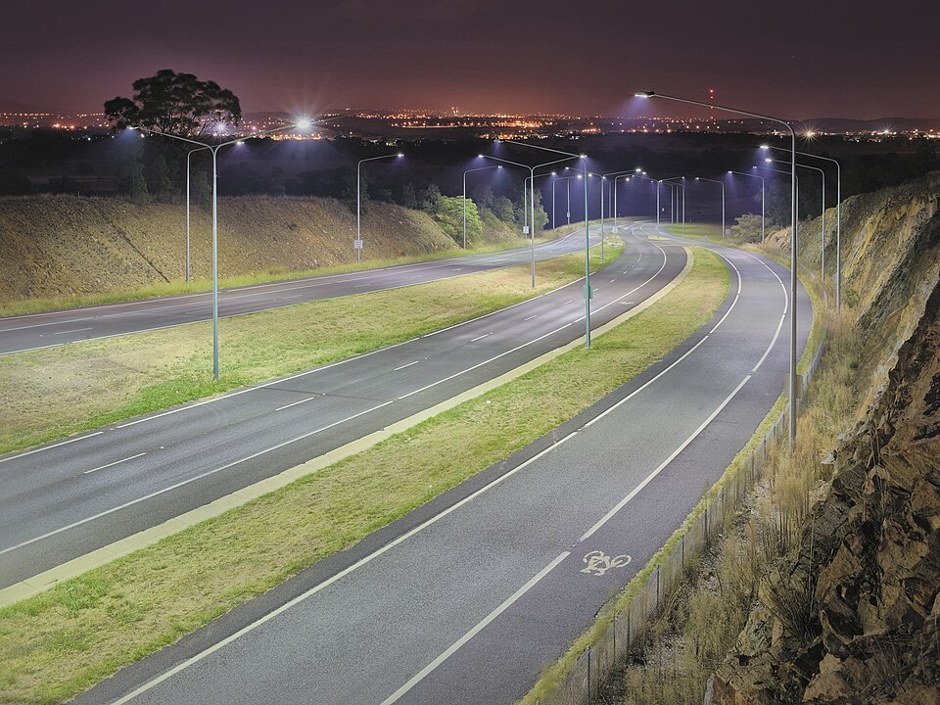
    Photo: Nbound, CC0, via Wikimedia Commons

    Canberra driving has its own feel: no freeways, fast parkways, lots of multi-lane roundabouts, cold winters and hills on the city edges. This guide is for ACT learners and new P platers, and covers the parkway and arterial road rules, roundabouts, speed limits and cameras, and driving in frost, ice and snow, based on the ACT Road Rules Handbook.

    Key facts

    • There are no freeways in the ACT, but roads such as the Tuggeranong Parkway use freeway-style rules.
    • Default speed limits: 50 km/h in built-up areas, 100 km/h in rural areas, unless signed otherwise.
    • ACT learners and P platers may drive up to the posted limit.
    • School zones: 40 km/h when the sign is open, at the times shown on it.
    • Slow to 40 km/h (or a lower speed limit) when passing a stationary or slow-moving police or emergency vehicle with flashing red or blue lights.

    Driving on Canberra’s parkways and arterial roads

    The handbook says that on major ACT roads such as the Tuggeranong Parkway you should drive as you would on an interstate freeway:

    • do not stop except in an emergency or breakdown, and then only in the emergency lane
    • do not drive in the emergency lane unless you are stopping
    • no U-turns and no reversing
    • signal well before changing lanes, allowing for the higher speed
    • get into the correct lane early for your exit; if you miss it, carry on to the next one
    • keep left unless overtaking

    Speed limits on arterial roads vary by road and section. Follow the signs rather than assuming a limit.

    Joining from an entry ramp

    1. Accelerate to near the speed limit of the road you are joining.
    2. Indicate along the ramp.
    3. Check mirrors and do a head check.
    4. Find a gap and merge smoothly.

    You must give way to vehicles already on the arterial road. If there is no gap, be ready to slow down.

    Leaving the road

    Exits are usually on the left. Move into the left lane in good time, indicate left and slow to any advisory speed on the ramp.

    Wrong way?

    If you see a “Wrong Way Go Back” sign as you enter a ramp, pull to the side, turn on your hazard lights and reverse slowly back. Do not try a U-turn or 3-point turn on the ramp.

    Keeping left on multi-lane roads

    Where the limit is over 80 km/h, or a “keep left unless overtaking” sign applies, do not use the right lane unless you are turning right or making a U-turn, overtaking, avoiding an obstruction, or traffic is congested. On three or more lanes, use the left lane and move back to it once you have passed.

    Canberra roundabouts

    Roundabouts follow the national Australian Road Rules. On multi-lane roundabouts:

    Where you are going Approach lane Indicating
    Left (less than halfway round) Left Left on approach and through the turn
    Straight ahead (halfway) Left or right No signal needed on entry; signal left to exit
    Right (more than halfway) Right Right on approach, then left before you exit
    U-turn (full circle) Right Right on approach, then left before you exit

    Give way to any vehicle already in the roundabout, obey any lane arrows and signal when changing lanes inside it. More detail: roundabout rules in Australia.

    Speed cameras in the ACT

    • Fixed red light and speed cameras at intersections. They can catch speeding on green, amber or red.
    • Fixed speed cameras on high-volume, higher-speed roads.
    • Point-to-point cameras, which measure your average speed over a stretch. The ACT’s first was on Hindmarsh Drive.
    • Mobile speed cameras, used anywhere, any time, including school zones.

    Radar detectors and jammers are illegal in the ACT, even fitted to a parked car.

    At amber, stop unless you are too close to stop safely. Do not panic brake and do not speed up.

    Cyclists, shared zones and buses

    • Passing cyclists: leave at least 1 metre at 60 km/h or less, and 1.5 metres above 60 km/h. You may cross centre lines or painted islands to do so if you have a clear view and it is safe. See minimum passing distance for cyclists.
    • Cycle paths are optional: Canberra has many, but cyclists may still use the road.
    • Shared zones: usually 10 or 20 km/h. Give way to pedestrians.
    • Transit lanes: T2 lanes allow 2 or more occupants, T3 lanes 3 or more, during the signed hours.

    Driving in a Canberra winter: frost, ice and wet roads

    The handbook’s winter advice:

    • check lights, brakes, tyres, wipers, steering, radiator and battery regularly
    • anti-freeze in the radiator is recommended for the ACT
    • do not drive with fogged or dirty windows (use the air-conditioning and fresh air setting to demist)
    • it takes at least twice the distance to stop on wet or icy roads, so leave more space
    • brake gently and test your brakes cautiously when the road may be icy
    • watch for ice in areas shaded by trees, on timber bridges and on exposed windy stretches

    Fog

    Use dipped headlights, not high beam. Front and rear fog lights may only be used when fog, rain, snow or similar reduce visibility, and must be turned off when it clears. If you have no rear fog light, the handbook says to use hazard lights instead.

    Heading to the snow

    If you drive to the Snowy Mountains in winter, the handbook advises:

    • carry warm clothing even if you do not plan to leave the car
    • check tyre tread, including the spare
    • carry a jack, wheel brace, strong tow rope and shovel
    • snow chains must be carried in certain areas, such as Kosciuszko National Park
    • fit chains before you get stuck, somewhere safe, never in the middle of the road

    Remember that NSW learner and provisional rules apply once you cross the border.

    Steep hills and unsealed roads

    • Going downhill: slow down and choose a low gear in good time (manual and automatic). Brake as little as possible, on straight sections.
    • Following downhill: allow about three times your normal gap, roughly six seconds.
    • Gravel: slow down, and slow further when another car approaches, as stones can crack windscreens. Avoid harsh braking (ABS can lengthen stopping distances on gravel), do not drift wide on corners where loose gravel builds up, and watch for corrugations and potholes.

    Night driving and kangaroos

    Headlights must be on from sunset to sunrise. Dip high beam at least 200 metres before an oncoming vehicle and when following within 200 metres. Watch for animals dazzled by your lights: brake carefully and sound your horn, and if you cannot stop safely, steer around. More: kangaroos and wildlife on Australian roads.

    Common questions

    Are there freeways in Canberra?

    No. The handbook says the ACT has no freeways, but parkways like the Tuggeranong Parkway use the same basic rules.

    Can learners drive on the Tuggeranong Parkway?

    Yes. ACT learners may drive up to the posted limit and there are no prohibited road users because there are no freeways. Build up to it once you are confident with merging.

    What is the following distance in the ACT?

    The handbook recommends at least three seconds, and more in poor conditions.

    How fast do I go past an emergency vehicle in the ACT?

    40 km/h, or a lower speed limit, when passing a stationary or slow-moving police or emergency vehicle with flashing red or blue lights. This does not apply on the other side of a road divided by a median strip. See emergency vehicle slow down rules in each state.

    What is the school zone speed in Canberra?

    40 km/h when the zone sign is open, at the days and times shown. When closed, the normal limit applies.

    Related: CBT&A or the one-off driving assessment, ACT Road Rules Handbook study guide. Back to the main guide: learning to drive in the ACT.

    Sources

    • Access Canberra, “ACT Road Rules Handbook” (accesscanberra.act.gov.au)
    • Access Canberra, “Road ready: towards your Ps in the ACT, a learner driver guide” (accesscanberra.act.gov.au)
    • ACT Government, “Road Transport (Road Rules) Regulation 2017”, section 300C (legislation.act.gov.au)
  • ACT Learner and P Plate Rules: Phones, Passengers and Towing

    ACT Learner and P Plate Rules: Phones, Passengers and Towing

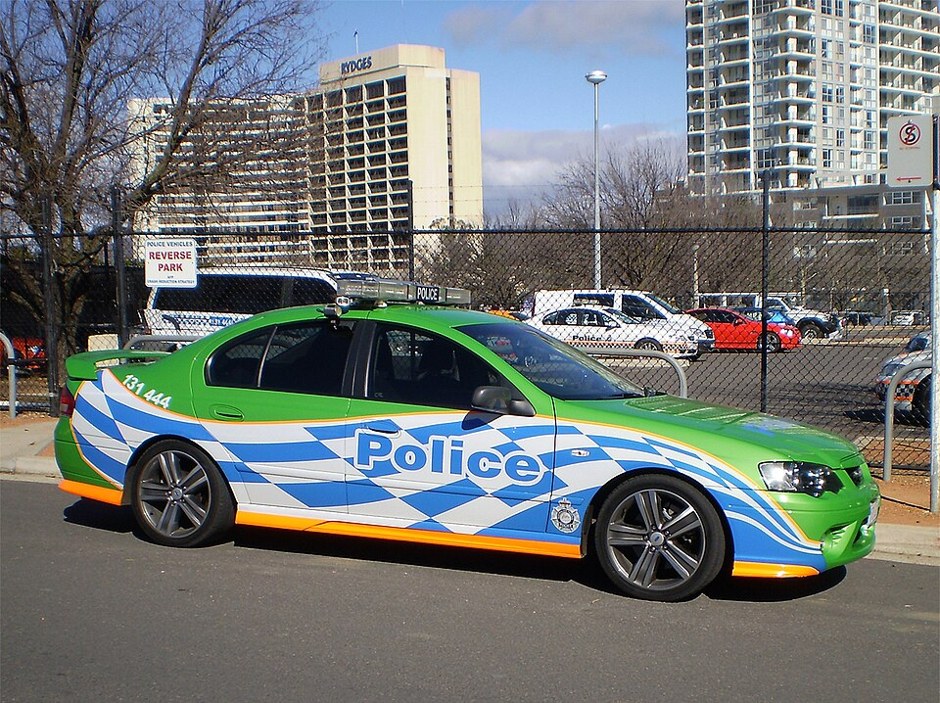
    Photo: Angelo Tsirekas, CC BY-SA 3.0, via Wikimedia Commons

    This is the full list of rules for ACT learner and provisional (P1 and P2) drivers: plates, alcohol, phones, speed, towing, the late-night passenger limit and demerit points. The ACT is stricter than many people expect on phones (a total ban, hands-free included) but has no special speed cap for L or P platers.

    ACT L and P rules at a glance

    Rule Learner P1 (red, first 12 months) P2 (green, last 2 years)
    Plates front and rear L Red P Green P
    Supervisor Full Australian licence holder in the front passenger seat Not needed Not needed
    Alcohol and drugs Zero Zero Zero
    Mobile phone Total ban, including hands-free and speaker Total ban Total ban
    Speed Up to the posted limit Up to the posted limit Up to the posted limit
    Trailer over 750 kg GVM Not allowed Not allowed Allowed (within licence class)
    Passengers No limit Max one peer aged 16 to 22, 11pm to 5am No limit
    Demerit limit 4 points = 3-month suspension 4 points = 3-month suspension 4 points = 3-month suspension

    If you get your Ps at 25 or older, you skip P1 and drive on green P2 plates for all 3 years, with no late-night passenger limit.

    Learner licence rules

    • Display L plates at the front and back. They must be clearly visible, so not behind wiper arms, rear louvres or tinted glass, and must not cover number plates.
    • Only drive with a person holding a valid full Australian licence in the front passenger seat. They must have zero alcohol and no drugs.
    • Zero blood or breath alcohol, and no drugs.
    • No trailer with a Gross Vehicle Mass over 750 kg.
    • Do not exceed posted speed limits.
    • No passenger restrictions.

    P1 and P2 rules

    • Display the correct colour P plates at the front and rear, the right way up. It is an offence to show the wrong letter or colour plates.
    • Zero alcohol and no drugs.
    • Fewer than 4 demerit points in a 3-year period.
    • P1 only: no trailer over 750 kg, and the late-night peer passenger limit.

    Do ACT P platers have a curfew?

    No full curfew, but P1 drivers have a late-night peer passenger restriction: between 11pm and 5am you may carry only one peer-aged passenger. A peer-aged passenger is someone aged 16 to 22 who is not a family member.

    Exemptions

    • Employment (paid or voluntary)
    • Education
    • Police trainees in recruit training or assessment, or driving a police vehicle

    There is no exemption for designated driving. Driving your mates home from a party at midnight is exactly what the rule targets.

    Penalty: 3 demerit points and a $514 infringement notice, or a court fine of up to 20 penalty units.

    Scenarios

    • 11.30pm, two friends aged 18 and 19: not allowed on P1.
    • 11.30pm, one friend aged 18 plus your sister aged 20: allowed. Family members do not count.
    • 10pm, three friends aged 17: allowed. The limit only applies from 11pm to 5am.
    • Midnight, two friends aged 24: allowed. They are outside the 16 to 22 age range.

    ACT phone rules for L and P platers

    Learner and provisional drivers have a full mobile device ban. While driving, or stopped but not parked (for example at traffic lights), you must not text, use social media, take or make calls by Bluetooth, hands-free or speaker, or touch the device at all, even to skip a song.

    Two narrow exceptions:

    • Music and podcasts: allowed if the device is not held and needs no interaction, including by voice. The ban covers wearables such as headphones too, so you cannot touch them.
    • GPS: allowed if the device is in a mount fixed to the car and needs no interaction, including by voice. Set the route before you drive.
    Offence Penalty
    Messaging, social media, apps or internet 4 demerit points and $632
    Other phone use, such as a call 3 demerit points and $514

    With a 4-point limit, one messaging offence suspends an L or P licence. Note the ACT Road Rules Handbook’s phone section describes the rules for full licence holders (mounted phones, calls allowed). Those do not apply to you on Ls or Ps.

    Speed limits for ACT learners and P platers

    ACT learner and provisional drivers may drive up to the posted speed limit in the ACT. Default limits are 50 km/h in built-up areas and 100 km/h in rural areas. Interstate, local rules apply: many states cap L and P platers at lower speeds, so check before you cross the border. See driving interstate on L or P plates.

    Demerit points on Ls and Ps

    Licence Points in 3 years Suspension
    Learner (issued or renewed after 1 January 2020) 4 or more 3 months
    Provisional (P1 or P2) 4 or more 3 months
    Full 12 to 15 3 months
    • Points reset to zero when you move from Ls to Ps, but carry over from Ps to a full licence.
    • Suspension time does not count towards your 3-year provisional period.
    • L and P drivers cannot choose a good behaviour period instead of a suspension. Only full licence holders can.
    • Examples: speeding by 15 km/h or less is 1 point; failing to give way or disobeying a traffic signal is 3 points.

    For which states use double demerits, see double demerit points in Australia.

    Common questions

    Can I use Apple CarPlay or Android Auto on my Ps in the ACT?

    Not for calls or messages: hands-free and Bluetooth are banned for L and P drivers. Audio and mounted GPS are allowed only if you do not interact with them at all while driving.

    What is the speed limit for P platers in the ACT?

    The posted limit. The ACT has no special L or P speed cap.

    Can learners carry passengers in the ACT?

    Yes. There are no passenger restrictions for learners, but the supervisor must sit in the front passenger seat.

    Can P1 drivers tow a trailer?

    Yes, up to 750 kg GVM. The limit lifts on P2. See towing a trailer or caravan on L or P plates.

    Do I need to display P plates on P2?

    Yes. Green P plates front and rear for the last 2 years of the provisional period.

    Does the ACT have a zero alcohol limit for P2 drivers?

    Yes. Zero applies to all learner and provisional drivers. See zero alcohol for learners and P platers.

    Back to the main guide: learning to drive in the ACT. Compare states: P plate rules in every Australian state.

    Sources

    • Access Canberra, “Licence classes and conditions” (accesscanberra.act.gov.au)
    • Access Canberra, “Get your learner driver licence” (accesscanberra.act.gov.au)
    • Access Canberra, “Demerit points and suspensions” (accesscanberra.act.gov.au)
    • Access Canberra, “ACT Road Rules Handbook” (accesscanberra.act.gov.au)
    • City Services, “Learner and provisional driver safety” (cityservices.act.gov.au)
    • City Services, “Safe plates frequently asked questions” (cityservices.act.gov.au)
  • CBT&A or One-Off Driving Assessment in the ACT: Which to Choose

    CBT&A or One-Off Driving Assessment in the ACT: Which to Choose

    Photo: Nick-D, CC BY-SA 4.0, via Wikimedia Commons

    In the ACT there are two ways to prove you are ready for your Ps: Competency Based Training and Assessment (CBT&A) with an ACT Accredited Driving Instructor, or a one-off practical driving assessment with an ACT Government Licence Examiner. This guide compares them, then covers the one-off assessment in detail: booking, car rules, the most common mistakes and what happens if you do not pass.

    CBT&A vs the one-off assessment

    CBT&A (“logbook method”) One-off practical assessment
    Who assesses you ACT Accredited Driving Instructor ACT Government Licence Examiner
    How Assessed against 23 competencies over a course of lessons, plus a final competency assessment A single drive in your own car
    Minimum 7 lessons; most people need 10 to 15 One booking
    Cost Set by the instructor (lessons) $133.90 booking fee (as at 1 July 2026)
    Hours and HPT still needed Yes Yes
    Minimum age 17 to be issued Ps 17 on the day of the assessment
    If not yet competent Keep training until each competency is signed off Wait 48 hours, rebook and pay again

    Which is easier? Neither is officially easier. CBT&A spreads assessment across lessons, which suits nervous learners and also gives you professional training. The one-off assessment is cheaper if you are already a confident driver. The one-off page warns that more than 50% of people fail their driving test.

    The 23 ACT driving competencies

    CBT&A instructors assess you against these tasks, set out in the “Road ready: towards your Ps in the ACT” learner driver guide. They are also a good checklist for one-off candidates.

    1. Understanding the controls
    2. Cabin drill
    3. Starting up procedure
    4. Moving off procedure
    5. Correct and smooth gear changes
    6. Steering control
    7. Turns, left and right
    8. Speed control
    9. Slowing procedures
    10. Stopping procedures
    11. Hill starts
    12. Give way rules
    13. Reversing
    14. Right angle parking
    15. Reverse parallel parking
    16. U-turns
    17. Turning around in the road (3-point turn)
    18. Lane changing, merging and entering freeways
    19. Overtaking
    20. Observation skills
    21. Compliance with the system of vehicle control
    22. Vulnerable road users
    23. Driving on busy and unfamiliar roads

    The guide includes two revision points: one after task 17 and one before task 23, where you show you can do the earlier tasks without help.

    The lane change action plan

    Task 18 sets out the order examiners and instructors expect for every lane change, merge or freeway entry: decide on your course, check mirrors, indicate, head check, adjust speed while rechecking, change lanes smoothly, cancel the indicator, check mirrors again.

    Booking the one-off practical driving assessment

    • Call Access Canberra on 13 22 81 and pay by Visa or Mastercard.
    • Book a date on or after your 17th birthday.
    • Arrive 15 minutes early. If you are more than 5 minutes late, you must rebook and pay again.

    What to bring

    • Your ACT learner licence or other proof of identity
    • Your completed logbook with all required hours
    • Your Hazard Perception Test certificate
    • Any checklist Access Canberra gave you

    ACT driving test car requirements

    You supply the car. It must:

    • be registered (an unregistered vehicle permit is not accepted)
    • be clean inside, with clean, unobstructed windows
    • be roadworthy, with tyres, brakes, brake lights and indicators checked
    • have working seatbelts
    • have a working centre-mounted park brake (electric or manual) that the examiner can reach from the front passenger seat
    • be clear of loose items in the cabin
    • show L plates front and back
    • have at least a quarter tank of fuel
    • have working air-conditioning or heating

    If the car was under the ACCC compulsory recall for Takata alpha airbags, bring a document from the manufacturer showing the airbag has been replaced. If the car does not meet the rules, the assessment does not go ahead and you must rebook and pay again.

    Common reasons people fail the ACT driving assessment

    Access Canberra lists these as the most common mistakes:

    • Speed: not following speed signs or noticing speed changes, including in high pedestrian areas, school zones and roadwork zones.
    • Blind spots: not doing head checks and mirror checks before changing lanes or merging.
    • Stop and hold lines: rolling over the line at a stop or give way sign.

    The examiner may give instructions, take the steering wheel or apply the handbrake to avoid a collision or danger. That is why the park brake must be within their reach.

    The ACT Road Rules Handbook adds habits examiners do not want to see: steering one-handed, resting a hand on the gear lever, pressing the clutch too early when stopping or holding it down while cornering, braking late, and rolling through stop signs.

    Rescheduling and cancelling

    Situation What happens
    Change date with at least 48 hours’ notice $21.70 change fee
    Cancel with at least 48 hours’ notice Refund, less a $21.70 cancellation fee
    Less than 48 hours’ notice, over 5 minutes late, or no-show You lose the booking fee and pay $133.90 again

    Fees as at 1 July 2026; check Access Canberra before booking.

    After the assessment

    If you pass

    The examiner updates the licence register and you get an email confirming the result. Visit an Access Canberra Service Centre with your learner licence, completed logbook, copies of any course certificates and a Visa or Mastercard for the fee. Under 25s are mailed a P1 licence; 25 and over get P2.

    If you do not pass

    The examiner tells you why and emails an assessment report showing where you were “not yet competent”. Practise those areas with your supervisor or an instructor. You must wait 48 hours before another assessment.

    Automatic or manual?

    Pass in an automatic and your licence carries an A condition. You can drive a manual only with a full licence holder beside you and L plates displayed, until you either pass in a manual or ask for the condition to be removed after 12 months on your Ps. It also comes off automatically when you renew to a full licence after 3 years.

    Common questions

    Can I use a car with an electric park brake for the ACT test?

    Yes, if it is centre-mounted and the examiner can reach it from the front passenger seat.

    How many lessons does CBT&A take?

    At least 7. Access Canberra says most people need 10 to 15.

    Can I switch from CBT&A to the one-off test?

    The Road ready guide says you may choose the system that suits you and change your mind at any time.

    Do I need the hours and HPT before CBT&A sign-off?

    You need both before Access Canberra issues your Ps, whichever route you take. See ACT logbook hours and credits and the ACT Hazard Perception Test.

    How soon can I retake the one-off assessment?

    After 48 hours, with a new booking fee.

    Related: driving in Canberra, roundabout rules in Australia. Back to the main guide: learning to drive in the ACT.

    Sources

    • Access Canberra, “One off practical driving assessment” (accesscanberra.act.gov.au)
    • Access Canberra, “Get your provisional driver licence” (accesscanberra.act.gov.au)
    • Access Canberra, “Driver licence fees” (accesscanberra.act.gov.au)
    • Access Canberra, “Road ready: towards your Ps in the ACT, a learner driver guide” (accesscanberra.act.gov.au)
    • Access Canberra, “ACT Road Rules Handbook” (accesscanberra.act.gov.au)
    • City Services, “Learner and provisional driver safety” (cityservices.act.gov.au)
  • ACT Hazard Perception Test: Free First Try After 3 Months on Ls

    ACT Hazard Perception Test: Free First Try After 3 Months on Ls

    Photo: Nick-D, CC BY-SA 4.0, via Wikimedia Commons

    Every ACT learner whose licence was issued or renewed after 1 January 2020 must pass the Hazard Perception Test (HPT) before getting their Ps. You take it online, at home, any time after 3 months on your Ls, and your first attempt is free. This guide covers the format, what happens if you fail and how to prepare.

    ACT Hazard Perception Test at a glance

    Item Detail
    Where Online at safeplatestesting.act.gov.au
    When After you have held your ACT learner licence for at least 3 months
    Format 25 videos of about 15 seconds each
    Time About 20 to 30 minutes
    Cost First attempt free; $30.00 for each later attempt (from 1 July 2026)
    After a first fail 24-hour lockout
    After a second fail 3-day lockout
    Expiry A pass does not expire

    What you need to take the test

    • Your name and ACT learner licence number.
    • A stable internet connection.
    • 20 to 30 uninterrupted minutes. The test times out after 10 minutes of inactivity, and a time-out counts as a failed attempt.
    • The biggest screen you can use. A phone works, but hazards are easier to spot on a larger screen. If you start and cannot see properly, you can switch to another device within 10 minutes and carry on.

    How to prepare for the ACT HPT

    1. Do the official practice test first. It uses examples like the real test and also checks the test runs on your device.
    2. Practise spotting hazards on real drives. Ask your supervisor to call out hazards with you: a car edging out of a driveway, a cyclist ahead, a bus pulling out, pedestrians near shops.
    3. Know what a hazard looks like on Canberra roads. Roundabouts, merging lanes and school zones all feature in everyday ACT driving. See driving in Canberra.
    4. Pick a quiet time. No notifications, no one walking in, device charged.

    What happens if you fail the HPT in the ACT?

    • First fail: you are locked out for 24 hours and must pay for your next attempt.
    • Second fail: you are locked out for three days and must pay again.

    Safe Plates Testing suggests using the gap to redo the practice scenarios, do more supervised drives or book a professional lesson. The ACT Government notes research that drivers who failed the HPT at least twice were more likely to crash than those who passed first time, so treat a fail as a sign you need more practice, not just another try.

    After you pass

    You get a completion certificate you can print. Safe Plates Testing says you do not need to bring it when applying for your Ps. However, Access Canberra’s one-off assessment page lists the HPT certificate among the things to bring on assessment day, so print a copy and take it.

    Then you still need to finish your time on Ls and your logbook hours, and pass either CBT&A or the one-off practical assessment. See ACT logbook hours and credits and CBT&A or the one-off driving assessment.

    Common questions

    When can I do the HPT in the ACT?

    Any time after you have held your ACT learner licence for 3 months. You do not have to finish your hours first.

    Is the ACT Hazard Perception Test free?

    Your first attempt is free. Each further attempt costs $30.00 (the fee from 1 July 2026), paid before the test.

    How many clips are in the test?

    25 videos, each about 15 seconds long.

    Does my HPT pass expire?

    No. Once you pass, it does not expire.

    Can I do the HPT on my phone?

    Yes, but a bigger screen makes hazards easier to see. Run the practice test on your device first.

    What if the test crashes partway through?

    Call Access Canberra on 13 22 81 about technical problems. Inactivity for 10 minutes counts as a fail, so contact them straight away.

    Do I need to do the HPT if I am over 25?

    Yes. It applies to all ACT learners issued or renewed after 1 January 2020, whatever their age, and cannot be exempted.

    Related: ACT pre-learner course and road rules test. Back to the main guide: learning to drive in the ACT.

    Sources

    • Safe Plates Testing, “Hazard Perception Test” (safeplatestesting.act.gov.au)
    • Access Canberra, “Get your provisional driver licence” (accesscanberra.act.gov.au)
    • Access Canberra, “One off practical driving assessment” (accesscanberra.act.gov.au)
    • City Services, “Safe plates frequently asked questions” (cityservices.act.gov.au)
    • ACT Government, “Road Transport (General) (Driver Licence and Related Fees) Determination 2026 (No 1)”, DI2026-44, Schedule 1 item 18 (legislation.act.gov.au)
  • ACT Logbook Hours: 100 Hours, 10 at Night and Bonus Credits

    ACT Logbook Hours: 100 Hours, 10 at Night and Bonus Credits

    Photo: Thennicke, CC BY-SA 4.0, via Wikimedia Commons

    Before you can get your Ps in the ACT, your logbook must show 100 supervised driving hours, including 10 at night, if your learner licence was issued before you turned 25. If you were 25 or older, it is 50 hours including 5 at night. Instructor lessons and three optional courses can cut the real driving time a lot. Here is exactly how the credits work.

    How many hours do you need for your ACT Ps?

    Your age when your Ls were issued Total hours Of which at night
    Under 25 100 10
    25 or older 50 5

    Access Canberra gives you a logbook with your learner licence. Record every drive in it. You bring the completed logbook to your assessment and to Access Canberra when you apply for your Ps.

    Who can supervise you?

    • Anyone with a valid full Australian driver licence: a parent, family member or friend, or an ACT Accredited Driving Instructor.
    • They must sit in the front passenger seat.
    • They must have zero alcohol and no drugs in their system.

    How do the 3 for 1 instructor hours work in the ACT?

    Each hour with an ACT Accredited Driving Instructor counts as 3 hours, for your first 10 instructor hours. That is 30 logbook hours from 10 lessons. After 10 hours, instructor time counts one for one. Hours with non-accredited instructors always count one for one.

    Optional courses that earn credit

    Course Credit Who can do it Format
    Safer Driver Course 20 hours Learners under 25 when their Ls were issued, after at least 3 months on Ls 2.5-hour theory workshop plus a 1-hour practical drive with an accredited instructor, usually 2 learners per car
    Vulnerable Road User Program 10 hours All learners, after 3 months on Ls Self-directed learning, then a 2-hour workshop on sharing the road with cyclists, motorcyclists and pedestrians
    Learner Driver First Aid Program 5 hours Learners who have held their Ls at least 3 months One approved first aid course completed after 22 November 2023; some are free, formats vary

    For the Safer Driver Course, you must already have done either 10 hours with an accredited instructor or 30 hours with a supervisor before the practical component.

    For first aid credit, take a printed certificate or the original electronic copy to Access Canberra. Photographs of the certificate are not accepted.

    Worked example: the fewest real hours for an under-25

    Source Real time Logbook credit
    10 lessons with an accredited instructor 10 hours 30 hours
    Safer Driver Course 3.5 hours 20 hours
    Vulnerable Road User Program About 2 hours plus self-study 10 hours
    Learner Driver First Aid Course length varies 5 hours
    Supervised driving with family or friends (include all 10 night hours) 35 hours 35 hours
    Total 100 hours

    Credits are a way to reach the minimum, not a target. The one-off assessment page notes that more than half of people fail their driving test, and most learners need 10 to 15 lessons for CBT&A. Real practice in rain, at night and on busy roads is what gets you through.

    Bringing hours from another state

    If you transfer an interstate learner licence to the ACT, City Services says your previous driving hours and education are recognised. Bring the logbook issued by the other state or territory when you apply for your Ps.

    Exemptions from the hours requirement

    In exceptional cases you can apply to Access Canberra for an exemption from the required hours, but only if all of these apply:

    • you were under 25 when your Ls were issued
    • you have held your Ls for at least 6 months
    • you have done at least 50 supervised hours

    Grounds are serious impairment to your career, education or family business, or other exceptional circumstances, and you must show you have no other suitable transport. You cannot be exempted from the Hazard Perception Test or the driving assessment. If granted, your licence may carry restrictions, for example no unsupervised night driving if you lack night hours.

    Common questions

    Do night hours with an instructor count 3 for 1?

    The official pages say each hour supervised by an ACT Accredited Driving Instructor gets 3 hours credit up to 10 hours, without separating day and night. Ask Access Canberra how credited hours count towards the night minimum before relying on it.

    Does the pre-learner course give logbook credit?

    No. Only instructor hours and the three optional courses above are listed as credit.

    Can I do the Safer Driver Course if I am 25 or older?

    No. It is limited to learners who were under 25 when their learner licence was issued. Older learners need only 50 hours anyway.

    Do I still need the hours if I choose CBT&A?

    Yes. CBT&A replaces the government test, not the hours or the Hazard Perception Test. See CBT&A or the one-off driving assessment.

    What counts as night driving?

    The Access Canberra pages do not define it. Check the instructions printed in your ACT logbook.

    Related: ACT Hazard Perception Test, ACT learner and P plate rules. Back to the main guide: learning to drive in the ACT.

    Sources

    • Access Canberra, “Get your provisional driver licence” (accesscanberra.act.gov.au)
    • Access Canberra, “One off practical driving assessment” (accesscanberra.act.gov.au)
    • City Services, “Learner and provisional driver safety” (cityservices.act.gov.au)
    • City Services, “Safe plates frequently asked questions” (cityservices.act.gov.au)
  • ACT Pre-Learner Course and Road Rules Test: Getting Your Ls

    ACT Pre-Learner Course and Road Rules Test: Getting Your Ls

    Photo: Nick-D, CC BY-SA 4.0, via Wikimedia Commons

    To get your Ls in the ACT you must finish the Pre-Learner Licence Course and pass the ACT Road Rules Knowledge Test. This guide covers what the 10-hour course involves, where to do it (including free options), how the test works and what to bring to Access Canberra afterwards.

    Who needs the pre-learner course?

    Every new ACT car learner. To get a learner licence you must:

    • be at least 15 years and 9 months old
    • complete the Pre-Learner Licence Course and pass the ACT Road Rules Knowledge Test
    • provide proof of identity and residency
    • pass an eye test at an Access Canberra Service Centre and pay the fee

    What is in the ACT Pre-Learner Licence Course?

    It is a 10-hour program in four modules:

    Module Length What it covers
    1. Drive to arrive 4 hours How risky decisions lead to crashes, speeding, alcohol and drugs, how your choices affect passengers and others
    2. Prepare to drive 1.5 hours Checking the car and yourself before a trip, tiredness and time pressure, emergencies, choosing a safe car
    3. Drive time 2.5 hours Keeping pedestrians and cyclists safe, spotting hazards early, phone distraction, seatbelts and airbags
    4. Drive rules and tools 1 hour The steps to Ls and Ps, common ACT road rules, building supervised hours

    To pass, you must attend every module, pass a 35-question multiple-choice course assessment and pass the ACT Road Rules Knowledge Test.

    Where can I do the pre-learner course in Canberra?

    Most high school and college students do it at school, and some ACT schools offer it free to Year 10 students as part of the curriculum. Otherwise, book with an approved provider. City Services lists them:

    • No fee: Belconnen Youth Centre, MARSS Australia, Multicultural Hub Canberra, Northside Community Service, Youth Engagement Team (Woden Community Service), YWCA Canberra.
    • Fee charged: ACT Driving Solutions, Canberra Institute of Technology, Fifth Gear Motoring, L2PP Driving Coaching School, Licence Factory, Lotus Driving School Canberra, Online Driving Courses, Pinnacle Driving School, Road Ready Centre.

    City Services notes some providers offer the course free or subsidised for eligible participants. The list can change, so check the current one on the City Services “Learner and provisional driver safety” page before booking.

    How does the ACT Road Rules Knowledge Test work?

    You sit it with your course provider (or at school). The ACT Road Rules Handbook (2019 edition) describes the knowledge test as 35 multiple-choice questions. Some are mandatory questions you must answer correctly, and on the rest you can get four wrong. Confirm the current format with your provider, because the handbook predates the current course.

    The handbook also warns that many questions need common-sense answers, so read each one carefully rather than rushing.

    How to prepare

    • Read the ACT Road Rules Handbook. City Services says this is what you should study for the test. Our ACT Road Rules Handbook study guide breaks it down part by part.
    • Practise on the Licence Knowledge Trainer at safeplatestesting.act.gov.au. It has 377 questions across car general, alcohol and drugs, intersections, seat belts, driving general and vulnerable road users.
    • Focus on give way rules, roundabouts and crossings. Intersections are one of the Knowledge Trainer categories, and give way rules are also a competency in your driving assessment. See giving way in Australia.

    After you pass: applying for your Ls

    Take these to an Access Canberra Service Centre:

    • the certificate showing you passed the ACT Road Rules Test (and course certificate)
    • proof of identity and residency documents
    • payment: the learner licence fee is $65.50 (as at 1 July 2026)

    You will do an eye test on the day. If you are under 18 and have no documents showing your address, a parent or legal guardian can come with you and sign a declaration that you live with them. You leave with a temporary licence, a logbook and L plates; the card is posted within about 21 business days.

    How long is the test result valid?

    Item Valid for
    ACT Road Rules Test result 2 years
    Learner licence 5 years

    If you need to renew your learner licence, you must pass a new ACT Road Rules Test first.

    Common questions

    Is the pre-learner course free in the ACT?

    It can be. Some schools run it free for Year 10 students, and several community providers on the City Services list charge no fee. Private driving schools set their own prices.

    Can I do the course before I turn 15 years and 9 months?

    The minimum age applies to the learner licence itself. Ask your provider about their own age entry rules, and remember the test result lasts 2 years, so timing it close to 15 years 9 months makes sense.

    Can I do the ACT pre-learner course online?

    One approved provider is called Online Driving Courses. Check each provider’s delivery format when you book, as the City Services list does not state it.

    What happens if I fail the knowledge test?

    Your provider handles resits. Contact them about their resit arrangements and any cost.

    Does the pre-learner course count towards my logbook hours?

    No. Access Canberra lists only instructor hours, the Safer Driver Course, the Vulnerable Road User Program and the Learner Driver First Aid Program as credit. See ACT logbook hours and credits.

    Can I drive straight after passing the test?

    Not until Access Canberra issues your learner licence. Once it does, you must display L plates and have a full Australian licence holder beside you. See ACT learner and P plate rules.

    Back to the main guide: learning to drive in the ACT.

    Sources

    • Access Canberra, “Get your learner driver licence” (accesscanberra.act.gov.au)
    • Access Canberra, “Driver licence fees” (accesscanberra.act.gov.au)
    • Access Canberra, “ACT Road Rules Handbook” (accesscanberra.act.gov.au)
    • City Services, “Learner and provisional driver safety” (cityservices.act.gov.au)
    • Safe Plates Testing, “Licence Knowledge Questions” (safeplatestesting.act.gov.au)
  • Learning to Drive in the ACT: Ls, Ps and a Full Canberra Licence

    Learning to Drive in the ACT: Ls, Ps and a Full Canberra Licence

    Photo: Thennicke, CC BY-SA 4.0, via Wikimedia Commons

    This guide is for anyone learning to drive a car in the Australian Capital Territory, and for parents helping them. In the ACT you can get your Ls at 15 years and 9 months, your Ps at 17, and a full licence after 3 years on Ps. Below is every step in order, with the current fees and links to a detailed guide for each stage.

    Key facts

    • Learner licence (Ls): from 15 years 9 months, after a Pre-Learner Licence Course and the ACT Road Rules Knowledge Test.
    • Time on Ls: at least 12 months, or 6 months if you were 25 or older when your learner licence was issued.
    • Hazard Perception Test: online, after 3 months on your Ls. First attempt free.
    • Logbook: 100 supervised hours including 10 at night if your Ls were issued before you turned 25; 50 hours including 5 at night if 25 or older.
    • Assessment: Competency Based Training and Assessment (CBT&A) with an ACT Accredited Driving Instructor, or a one-off practical driving assessment with a Government Licence Examiner.
    • Provisional licence (Ps): from 17, held for 3 years. Under 25: 12 months on red P1 plates, then 2 years on green P2 plates. 25 or older: green P2 for all 3 years.
    • Full licence: on renewal at the end of the 3-year provisional period.

    The ACT licence path step by step

    1. Do the Pre-Learner Licence Course and pass the Road Rules Knowledge Test. The course is a 10-hour program run in many high schools and colleges or by an approved provider. Some providers charge nothing. See the ACT pre-learner course and road rules test.
    2. Apply for your Ls at an Access Canberra Service Centre. Bring proof of identity and residency and your test certificate, do an eye test and pay the fee. You get a temporary licence, a logbook and L plates. The card is posted and can take up to 21 business days.
    3. Drive with a supervisor and log your hours. Your supervisor must hold a full Australian licence and sit in the front passenger seat. Instructor hours count 3 for 1 for the first 10 hours, and three optional courses add credit. See ACT logbook hours and credits.
    4. Pass the online Hazard Perception Test any time after 3 months on your Ls. See the ACT Hazard Perception Test.
    5. Get assessed. Choose CBT&A (assessed on 23 competencies over at least 7 lessons) or a one-off assessment in your own car. See CBT&A or the one-off driving assessment.
    6. Collect your Ps. Under 25s are mailed a P1 licence; 25 and over get P2. You must be at least 17.
    7. Move to P2 automatically after 12 months on P1. Access Canberra sends a letter telling you to switch to green plates.
    8. Get your full licence when you renew at the end of the 3-year provisional period. You can apply online.

    How long does it take to get a full licence in the ACT?

    For an under-25 learner, the minimum timeline looks like this:

    Stage Earliest point Minimum time in stage
    Learner licence 15 years 9 months 12 months
    Hazard Perception Test 3 months after your Ls One sitting
    P1 (red plates) 17 years 12 months
    P2 (green plates) After 12 months on P1 2 years
    Full licence 3 years after your Ps were issued Renew for up to 10 years

    So the earliest you can hold a full ACT licence is about age 20. Suspension periods do not count towards the provisional period, so demerit points can push that date back.

    ACT licence fees (as at 1 July 2026)

    Item Fee
    Issue or renewal of a learner driver licence $65.50
    Provisional licence (3 years) $165.90
    Practical driving assessment booking $133.90
    Hazard Perception Test, second and later attempts $30.00 from 1 July 2026 (first attempt free)
    Full licence, 5 years / 10 years $270.70 / $503.80

    Fees are subject to change without notice. Check Access Canberra’s driver licence fees page before you pay. The Pre-Learner Licence Course fee is set by each provider, not Access Canberra.

    Discounts for a clean record

    • No demerit points, traffic infringement notices or court-imposed traffic penalties during P1: you get back 50% of the P2 part of your provisional licence fee.
    • Clean on both P1 and P2: a further 30% off your full licence fee.

    Rules on your Ls and Ps

    The short version, with the detail in ACT learner and P plate rules:

    Rule Learner P1 P2
    Plates front and rear L Red P Green P
    Alcohol Zero Zero Zero
    Mobile phone, including hands-free Banned Banned Banned
    Speed Posted limit Posted limit Posted limit
    Trailer over 750 kg GVM Not allowed Not allowed Allowed
    Peer passengers 11pm to 5am Supervisor always required Max one aged 16 to 22 No limit
    Demerit limit (3 years) Fewer than 4 Fewer than 4 Fewer than 4

    Unlike most states, the ACT has no special speed cap for learners or P platers. If you drive interstate, that state’s learner and provisional rules apply. See driving interstate on L or P plates.

    Licence classes in the ACT

    A C class (car) licence covers vehicles other than motorbikes up to 4.5 tonnes GVM seating up to 12 adults including the driver, tractors and implements, and any of these towing a single trailer up to 9 tonnes GVM. R class is a motorcycle licence and has its own pathway. Heavy vehicle classes run LR, MR, HR, HC and MC, and each needs a car licence held for a set time first.

    If you pass your assessment in an automatic, your licence carries an A condition (automatic only). You can drive a manual only with a full licence holder in the seat beside you and L plates displayed front and rear (or on the roof). You can retake the assessment in a manual, ask for the condition to be removed after 12 months on your Ps, or it is removed automatically when you move to a full licence.

    Safe System and Vision Zero

    The ACT Road Rules Handbook explains that the ACT has adopted Vision Zero: the view that no one should be killed or seriously injured on the roads, and that the system should allow for human mistakes. The Safe System approach rests on safe speeds, safe roads and roadsides, safe vehicles and safe people. For you as a learner, that means three practical things: keep to safe speeds (the handbook notes a pedestrian or cyclist hit at over 30 km/h will be seriously injured and may die), learn to share the road with vulnerable road users, and drive the safest car you can afford.

    Study materials

    • ACT Road Rules Handbook (Access Canberra, 2019 edition): the road rules and road craft for the knowledge test. Some licensing details in it predate the 1 January 2020 reforms, so use the Access Canberra web pages for current licensing rules. See the ACT Road Rules Handbook study guide.
    • Road ready: towards your Ps in the ACT: the learner driver guide setting out the 23 driving competencies.
    • Safe Plates Testing (safeplatestesting.act.gov.au): the Licence Knowledge Trainer practice questions, practice hazard clips and the real Hazard Perception Test.
    • Local tips: driving in Canberra.

    Common questions

    How old do you have to be to get your Ls in the ACT?

    15 years and 9 months. You also need to have completed the Pre-Learner Licence Course and passed the ACT Road Rules Knowledge Test.

    Can I get my Ps at 16 in the ACT?

    No. You must be at least 17 to get your Ps and to sit the one-off practical assessment, and you must have held your Ls for 12 months (6 months if 25 or older).

    How long is a learner licence valid?

    5 years. Your Road Rules Knowledge Test result is valid for 2 years, so if you need to renew your Ls you must pass a new test.

    Do ACT P platers have a curfew?

    Not a full curfew. P1 drivers may carry only one peer-aged passenger (16 to 22, not family) between 11pm and 5am, with exemptions for work and education.

    Do I have to do 100 hours if I am over 25?

    No. If you were 25 or older when your learner licence was issued, you need 50 hours including 5 at night.

    I have an interstate learner licence. Do my hours count?

    Yes. City Services says previous driving hours and education are recognised. Bring your interstate logbook when you apply for your Ps. Extra requirements apply to interstate and overseas licence holders, so check with Access Canberra.

    Can I drive a manual if I passed in an automatic?

    Not on your own. With an A condition you may drive an automatic solo, but a manual needs a supervisor who holds a full licence for that car sitting beside you, and L plates on the car, until the condition is removed. This comes from section 10A of the ACT Driver Licensing Regulation. Removal after 12 months on your Ps only happens when you ask for it, so check your licence record before driving a manual alone. Being allowed to drive a manual is also not the same as being ready: get some lessons in one first.

    Can I practise with a driving instructor instead of a parent?

    Yes. Your supervisor can be a family member, a friend or an ACT Accredited Driving Instructor, as long as they hold a full Australian licence.

    Compare the ACT with other states: learner licence rules in every Australian state and P plate rules in every Australian state.

    Sources

    • Access Canberra, “Get your learner driver licence” (accesscanberra.act.gov.au)
    • Access Canberra, “Get your provisional driver licence” (accesscanberra.act.gov.au)
    • Access Canberra, “Licence classes and conditions” (accesscanberra.act.gov.au)
    • Access Canberra, “Driver licence fees” (accesscanberra.act.gov.au)
    • Access Canberra, “Demerit points and suspensions” (accesscanberra.act.gov.au)
    • Access Canberra, “ACT Road Rules Handbook” (accesscanberra.act.gov.au)
    • City Services, “Learner and provisional driver safety” (cityservices.act.gov.au)
    • City Services, “Safe plates frequently asked questions” (cityservices.act.gov.au)
    • Safe Plates Testing, “Hazard Perception Test” (safeplatestesting.act.gov.au)
    • ACT Government, “Road Transport (General) (Driver Licence and Related Fees) Determination 2026 (No 1)”, DI2026-44, Schedule 1 item 18 (legislation.act.gov.au)