
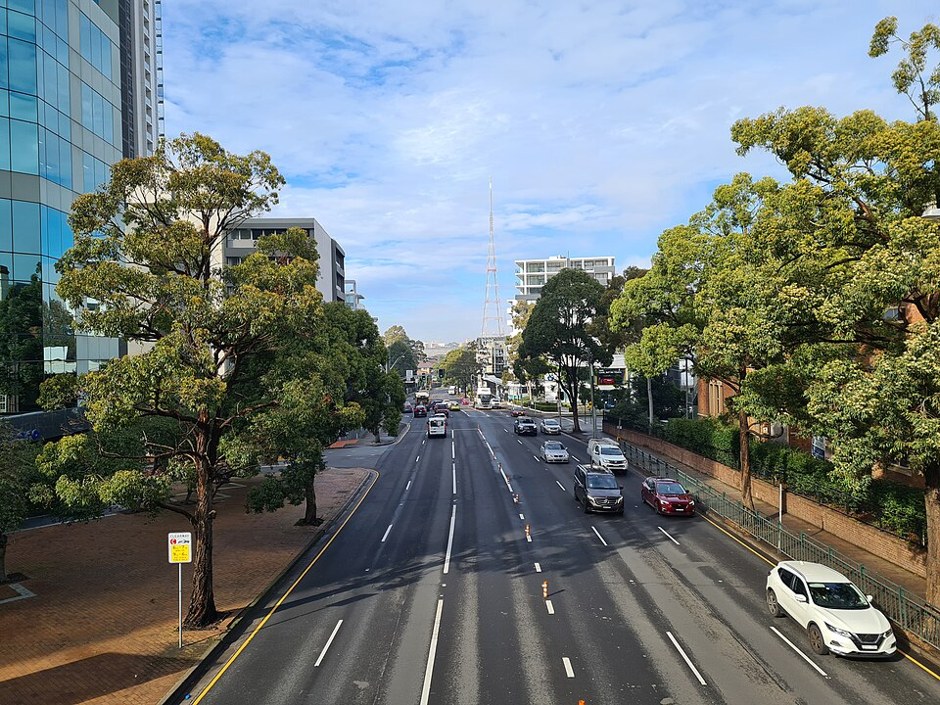
Photo: Andrew Harvey, CC BY 4.0, via Wikimedia Commons
The default speed limit in Australia is 50 km/h in a built-up area and 100 km/h outside one. WA and the NT are the exceptions: their rural default is 110 km/h, and the NT’s built-up default is 60 km/h unless the town sets a lower one. Learners and P platers in NSW, WA, SA, Tasmania and the NT also have a speed cap, which applies even when the sign shows more. This checklist sets out both, state by state, as of November 2026.
Key facts
- A default limit applies wherever there is no speed sign, or after an End speed limit sign.
- Lowest learner caps: 80 km/h in the NT, 90 km/h in NSW and Tasmania.
- No L or P speed cap in Victoria, Queensland or the ACT. You drive to the posted limit.
- In NSW, any speeding offence on Ls or red Ps means losing your licence for at least 3 months.
Default speed limits by state
| State | Built-up area | Outside a built-up area |
|---|---|---|
| NSW | 50 km/h | 100 km/h |
| VIC | 50 km/h | 100 km/h (also on freeways unless signed) |
| QLD | 50 km/h | 100 km/h |
| WA | 50 km/h | 110 km/h |
| SA | 50 km/h | 100 km/h (some roads signed 110 km/h) |
| TAS | 50 km/h | 100 km/h on sealed roads, 80 km/h on unsealed roads |
| ACT | 50 km/h | 100 km/h |
| NT | 60 km/h unless the town has gazetted a lower limit (many communities use 50 km/h or less) | 110 km/h; 130 km/h where signed on sections of the Stuart, Barkly, Arnhem and Victoria highways |
What counts as a built-up area?
A built-up area is a road with street lighting at intervals of no more than 100 metres for at least 500 metres, or with buildings next to the road at intervals of less than 100 metres for at least 500 metres (the Victorian and WA handbooks). In practice, if you see houses and street lights and no sign, assume 50 km/h. In the NT, check the sign on the way into each town.
L and P plate speed caps by state
| State | Learner | P1 (red) | P2 (green) |
|---|---|---|---|
| NSW | 90 km/h | 90 km/h | 100 km/h |
| VIC | Posted limit | Posted limit | Posted limit |
| QLD | Posted limit | Posted limit | Posted limit |
| WA | 100 km/h | Posted limit | Posted limit |
| SA | 100 km/h | 100 km/h | 100 km/h |
| TAS | 90 km/h (L1 and L2) | 100 km/h | Posted limit |
| ACT | Posted limit | Posted limit | Posted limit |
| NT | 80 km/h | 100 km/h (the NT has one P stage) | |
A cap is a maximum, not a target. If the posted limit is lower, the lower limit applies. The WA learner rules also say you must stay out of Kings Park.
Do caps apply when you drive interstate?
The NSW handbook says NSW L and P restrictions also apply when you drive in another state or territory. The rules on crossing borders are in driving interstate on L or P plates.
Worked example: a 110 km/h highway
| Driver | Top legal speed on a 110 km/h road |
|---|---|
| NSW learner or P1 | 90 km/h |
| NSW P2, SA learner or P plater, WA learner, Tasmanian P1 | 100 km/h |
| NT learner | 80 km/h |
| Tasmanian learner | 90 km/h |
| Victorian, Queensland or ACT learner | 110 km/h |
Drive at a steady capped speed in the left lane and let faster traffic overtake. Learner freeway rules are in learners on motorways and freeways.
What happens if you break the cap?
- NSW: learners and P drivers get at least 4 demerit points for any speeding offence. L and P1 drivers are suspended for at least 3 months.
- SA: speeding by 10 km/h or more breaks an L or P condition and leads to disqualification, normally for 6 months.
- Tasmania: going over the 90 km/h learner cap brings demerit points and a fine. On P1, speeding by 10 km/h or more restarts your 12-month P1 period.
- Elsewhere: speeding fines and points count against your low novice limit. See demerit limits for L and P platers.
Speed and safety cameras
NSW uses four types of speed camera: mobile cameras that can be anywhere at any time, red-light speed cameras at high-risk intersections, fixed cameras in places such as tunnels, and average speed cameras over long distances. Camera types and locations differ in other states, so check your transport department. School-zone times also differ: see school zones in each state.
Common questions
What is the speed limit when there is no sign in Australia?
50 km/h in a built-up area and 100 km/h outside one in NSW, Victoria, Queensland, SA, Tasmania and the ACT. WA and the NT use 110 km/h outside built-up areas. The NT’s built-up default is 60 km/h unless the town sets a lower limit.
Can learners drive at 100 km/h?
In Victoria, Queensland, the ACT, WA and SA, yes, where the limit allows. NSW and Tasmanian learners are capped at 90 km/h and NT learners at 80 km/h.
Is there a speed limit for P platers in Victoria?
No separate cap. Victorian P platers drive to the posted limit.
Are there roads with no speed limit in the NT?
No. The NT default outside towns is 110 km/h, and 130 km/h is allowed only where signed on sections of four highways.
Do P plate caps apply on 110 km/h roads in WA?
The WA cap of 100 km/h is for learners. P platers drive to the posted limit.
Does the cap apply when the sign is lower?
No. The lower posted limit always applies.
Related guides
- Learner licence rules in every Australian state compared
- P plate rules in every Australian state compared
- NSW speed limits for learners and P platers
- NT speed limits explained
- Double demerit points in Australia
Sources
- Transport for NSW, “Road User Handbook”, Speed limits and licence restrictions (nsw.gov.au)
- Department of Transport and Planning, “Road to Solo Driving” handbook, Speed limits (transport.vic.gov.au)
- Queensland Government, “Learner licence” and “Your keys to driving in Queensland” (qld.gov.au)
- Department of Transport and Major Infrastructure WA, “Drive Safe” handbook, 3.1 Speed limits (transport.wa.gov.au)
- Government of South Australia, “The Driver’s Handbook (MR200, February 2026)”, Speed limits (mylicence.sa.gov.au)
- Department of State Growth, “Tasmanian Road Rules” handbook, Default speed limits and licence speed limits (transport.tas.gov.au)
- Access Canberra, “ACT Road Rules Handbook”, ACT default speed limit (accesscanberra.act.gov.au)
- Northern Territory Government, “Road Users’ Handbook”, Speed limits and learner and provisional conditions (nt.gov.au)