Category: Canada

  • Alberta Road Test: How the Class 5 Test Is Scored and Booked

    Alberta Road Test: How the Class 5 Test Is Scored and Booked

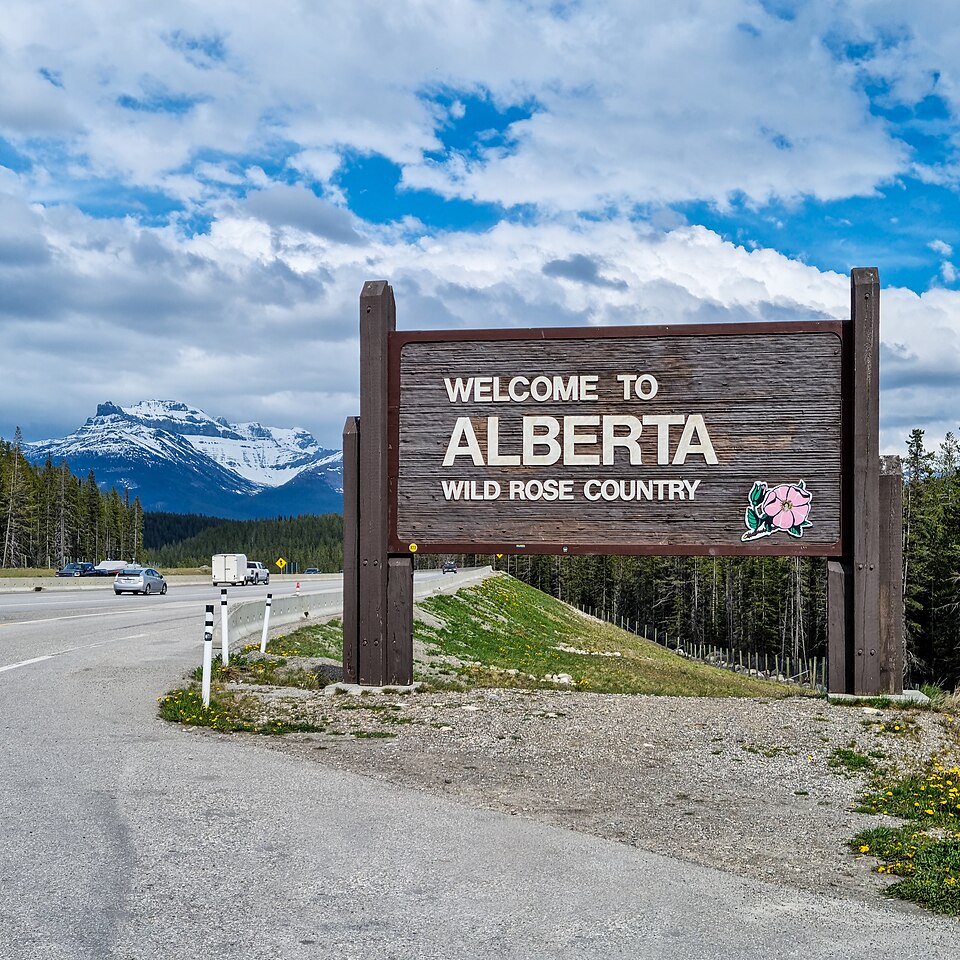
    Photo: Marek Slusarczyk, CC BY 2.5, via Wikimedia Commons

    The Alberta Class 5 road test is the test that moves you from a Class 7 learner’s licence to a probationary Class 5-GDL. You book it through a registry agent or the Alberta Road Test Scheduler, the examiner assigns points for errors, and you fail with more than 75 points or with any dangerous or illegal action. This guide covers eligibility, booking, fees, the vehicle check and what examiners mark.

    Can you take the Class 5 road test yet?

    • You are at least 16 (written parental or guardian consent if under 18).
    • You have held a Class 7 for at least 12 months.
    • All outstanding fines owed to the Government of Alberta are paid.
    • You live in Alberta and meet the residency and ID requirements.

    How to book an Alberta road test

    1. Find a registry agent that offers Class 5 road tests, or use the Alberta Road Test Scheduler online.
    2. Have your Motor Vehicle Identification (MVID) number ready. It is the 9-digit number near the barcode on your Alberta licence.
    3. Ask for the registry’s road test information sheet. It lists eligibility, vehicle requirements, documents, fees and the cancellation and no-show policy.

    How much does the Alberta road test cost?

    Class 5 and Class 6 road tests are delivered by driver examiners contracted or employed by registry agents, and each registry agent sets its own fee and must publish it online. Compare a few registries before booking. Maximum charges for tests are set in the Government of Alberta’s Registry Agent Product Catalogue. Check the current figure with your registry; you also pay for the GDL licence card after you pass.

    How the Alberta road test is scored

    The examiner adds points for errors. More than 75 points on a Class 5 test is a fail. Points come from three kinds of mistake:

    Type of error Examples given by Alberta
    Missing a driving skill Not checking mirrors or blind spots
    Breaking a rule of the road Not observing a road sign, making an incorrect turn
    Doing a manoeuvre poorly Signalling too soon or too late, being too aggressive or too hesitant

    Automatic fail (“F”): endangering a pedestrian or another driver, driving unsafely, or breaking traffic laws, for example speeding or not stopping at a stop sign.

    What is on the Alberta Class 5 road test?

    Alberta’s Driver’s Guide (Spring 2023) says the test takes about 45 minutes, including the examiner’s instructions and a summary of your results. You must show you can drive safely without supervision while dealing with other road users. The test includes:

    • identifying and operating your vehicle’s controls
    • handling the vehicle: steering, braking and speed control
    • choosing the right lane for turns
    • obeying speed zones, including school and playground zones
    • working out right of way at intersections and when changing lanes
    • intersections with and without signs or signals
    • moving with other traffic without obstructing it
    • parking: perpendicular, uphill or downhill, and parallel (drivers over 65 do not have to parallel park)

    No passengers or pets may ride along. Confirm the details on your registry’s road test information sheet.

    Automatic fails listed in the Driver’s Guide

    • speeding, or driving too fast for conditions
    • not stopping completely at a stop sign, or before turning right on a red light
    • not yielding at an intersection or during a lane change
    • obstructing traffic by driving too slowly or stopping when you do not need to
    • climbing the curb while parking, or not parking legally within three attempts
    • not slowing or looking properly at uncontrolled intersections, where you must be ready to yield to drivers on your right

    The vehicle check before you drive

    Your vehicle must be legal and in good working condition. The Driver’s Guide lists what it must have:

    • valid licence plate and insurance
    • brake lights and signal lights, horn, speedometer
    • brakes and parking brake
    • clear windshield and working wipers
    • tires in good condition
    • driver and passenger doors, seats and seat belts
    • exhaust and muffler, mirrors
    • enough fuel for the test

    You may be asked to help check lights, horn, brakes and steering, and to describe and demonstrate two controls, such as the hazard lights and wipers. A failed vehicle check can stop the test before it starts.

    What to bring

    • Your Class 7 learner’s licence (plus photo ID if you only have a temporary non-photo licence).
    • Clothing suitable for the weather.
    • A road-legal, insured vehicle that passes the checks above.
    • Payment.

    Skills to practise, in order of risk

    1. Observation: mirror checks and shoulder checks before every lane change, turn and pull-out. This is the most-cited point category.
    2. Full stops: behind the stop line or crosswalk, or within 3 metres of the intersecting road if neither is marked.
    3. Zone speeds: 30 km/h in school zones on school days at set times and in playground zones from 8:30 a.m. to one hour after sunset. See school and playground zones.
    4. Right of way: uncontrolled intersections and traffic circles. See Alberta intersections and traffic circles.
    5. Left turns: wait until the turn can be completed safely.
    6. Parking: parallel and hill parking with full observation.

    After the test

    Pass: pass a vision test at the registry, then buy your Class 5-GDL card. You get a 30-day temporary licence; the card should arrive within 21 business days. Your GDL rules are in Alberta Class 5 GDL probationary rules.

    Fail: the examiner explains where you lost points. Keep the checklist form for your next test, and ask your registry when you can book again.

    Common questions

    How many points can you get on the Alberta road test?

    Up to 75. More than 75 points is a fail on a Class 5 test.

    Can I use my own car?

    Yes, if it meets all legal and safety requirements. Driving schools may also provide a vehicle.

    Does driver training help me pass?

    Alberta encourages it. A licensed course includes at least 10 hours in the vehicle, and the instructor helps you judge when you are ready for the test.

    How do I complain about my road test?

    Alberta has an online Traffic Safety Services complaints form, or you can contact Examinations and Licensing.

    Is there a second road test later?

    No. The advanced road test was removed on 1 April 2023. See learning to drive in Alberta.

    Sources

    • Government of Alberta, “Driver’s Guide to Operation, Safety and Licensing: Cars and Light Trucks”, Spring 2023 edition (alberta.ca)
    • Government of Alberta, “Driver’s road test” (alberta.ca)
    • Government of Alberta, “Class 5 driver’s licence” (alberta.ca)
    • Government of Alberta, “Steps to getting your licence” (alberta.ca)
    • Government of Alberta, “Class 5 driver training” (alberta.ca)
    • Government of Alberta, “School and playground zones” (alberta.ca)
    • Alberta Transportation, “Information about the Class 5 Road Test for New Drivers” (transportation.alberta.ca)
    • Alberta King’s Printer, “Use of Highway and Rules of the Road Regulation, AR 304/2002” (kings-printer.alberta.ca)
  • Alberta Class 7 Restrictions: Supervisor, Curfew and Demerits

    Alberta Class 7 Restrictions: Supervisor, Curfew and Demerits

    Photo: Acefitt, CC BY-SA 4.0, via Wikimedia Commons

    With an Alberta Class 7 learner’s licence you may drive a car only with a supervisor aged 18 or older who holds a full Class 5 licence and sits in the front passenger seat. You cannot drive between 12 a.m. and 5 a.m., you must have zero alcohol, you cannot carry more people than there are seat belts, and your licence is suspended at 8 demerit points. Here is what each rule means in practice.

    Alberta Class 7 restrictions checklist

    • Supervisor: 18 or older, holding a full (non-GDL) Class 5 or higher, in the front passenger seat.
    • Curfew: no driving between 12:00 a.m. and 5:00 a.m.
    • Alcohol: 0 percent at all times. Under Alberta’s IRS ZERO: Novice program, the same zero tolerance applies to drugs.
    • Passengers: no more people than there are seat belts.
    • Demerits: suspension at 8 points.
    • Moped: you may ride a moped by yourself.

    Who can supervise a learner in Alberta?

    A fully licensed (non-GDL) driver aged 18 or older with a Class 5 or higher. A Class 5-GDL (probationary) driver cannot supervise, even a sibling or friend. The supervisor must sit beside you in the front passenger seat, not the back.

    Scenario: your older brother is 19 and got his Class 5-GDL last year. He cannot supervise you. Your parent with a full Class 5 can.

    The midnight to 5 a.m. rule

    A Class 7 driver cannot drive between 12:00 a.m. and 5:00 a.m., with or without a supervisor. Plan evening practice to finish before midnight.

    Zero alcohol and drugs

    Learners must have a 0 percent alcohol level whenever they drive. If police find any alcohol or drugs in a Class 7 or Class 5-GDL driver, the IRS ZERO: Novice penalties are:

    • an immediate 30-day licence suspension
    • a 7-day vehicle seizure
    • a $200 fine plus a 20 percent victim fine surcharge

    Criminal Code charges can apply on top. See Alberta demerits and Immediate Roadside Sanctions and impaired driving in Canada for new drivers.

    Passengers and seat belts

    There is no fixed passenger number for Alberta learners. The limit is the number of seat belts. Every occupant must wear one, and the driver is responsible for children aged 6 to 15 (and younger children over 18 kg) wearing a seat belt. Children under 6 who weigh 18 kg or less need a child restraint.

    Carrying more passengers than seat belts brings a $211 fine and, for learners and probationary drivers, 2 demerit points.

    Demerits as a learner

    Demerits within 2 years What happens (GDL drivers, including Class 7)
    4 to 7 Cautionary notice by mail
    8 or more 1-month suspension
    Second suspension within a year 3-month suspension
    Third suspension within 2 years 6-month suspension

    After a suspension your licence comes back with 3 demerit points, which stay for 2 years. Common learner tickets: distracted driving (3 points), speeding (2 to 6 points depending on speed), following too closely (4 points). Three offences carry 2 points only for GDL drivers: driving between midnight and 5 a.m. (learners), carrying more passengers than seat belts, and driving with a supervisor who is not fully qualified.

    Phones and devices

    Alberta’s distracted driving law applies to all drivers on all roads, even when stopped at a red light. You cannot hold a phone, text, enter GPS information or groom while driving. The penalty is a $390 fine and 3 demerit points. A GPS fixed to the vehicle and programmed before you set off is allowed, and anyone may call 911 on a hand-held phone.

    How long you stay a learner

    You must hold your Class 7 for at least 12 months and be at least 16 before you can take the Class 5 road test. Use that year for regular supervised practice in different conditions. A licensed driver training course requires at least 10 hours of in-vehicle instruction plus 15 hours of classroom.

    Common questions

    Can a Class 7 learner drive on the highway in Alberta?

    Alberta’s Class 7 rules list no highway ban. The supervisor, curfew, alcohol, seat belt and demerit rules apply on every road.

    Can I drive with friends as a learner?

    Yes, if your supervisor is in the front seat and there is a seat belt for every person.

    Can I drive alone on a Class 7?

    Only a moped. A car always needs a qualified supervisor.

    Does my supervisor need to hold the licence for a set number of years?

    Alberta’s rule is a fully licensed (non-GDL) driver aged 18 or older with a Class 5 or higher, sitting beside you. Choose someone experienced and calm.

    What licence comes next?

    The Class 5-GDL. See Alberta Class 5 GDL probationary rules and the overview in learning to drive in Alberta.

    Sources

    • Government of Alberta, “Driver’s Guide to Operation, Safety and Licensing: Cars and Light Trucks”, Spring 2023 edition (alberta.ca)
    • Government of Alberta, “Class 7 learner’s licence” (alberta.ca)
    • Alberta King’s Printer, “Operator Licensing and Vehicle Control Regulation, AR 320/2002”, current as of 1 October 2026, section 31 (kings-printer.alberta.ca)
    • Government of Alberta, “Steps to getting your licence” (alberta.ca)
    • Government of Alberta, “Impaired driving penalties” (alberta.ca)
    • Government of Alberta, “Occupant restraint laws” (alberta.ca)
    • Government of Alberta, “Demerit driving suspension” (alberta.ca)
    • Government of Alberta, “Distracted driving” (alberta.ca)
    • Government of Alberta, “Roadside worker safety” (alberta.ca)
    • Government of Alberta, “Driver error” (alberta.ca)
    • Government of Alberta, “Class 5 driver training” (alberta.ca)
  • Alberta Learner’s Test: 30 Questions, 25 to Pass, 25 Languages

    Alberta Learner’s Test: 30 Questions, 25 to Pass, 25 Languages

    Photo: Dietmar Rabich, CC BY-SA 4.0, via Wikimedia Commons

    The Alberta Class 7 knowledge test (the learner’s test) has 30 multiple-choice questions and you need 25 correct to pass. You take it at an Alberta registry agent, you can try once per day, and you pay a fee for each attempt. This page covers what to bring, the 25 languages, support options and how to prepare.

    Key facts

    • 30 multiple-choice questions; pass mark 25 out of 30 (about 83 percent).
    • One attempt per day; a fee every time.
    • Taken at Alberta registry agent offices, with a vision test on the same visit.
    • Minimum age 14; parental or guardian consent if you are under 18.
    • Available in 25 languages, plus audio and oral options.

    How many questions are on the Alberta learner’s test?

    Thirty. All are multiple choice and cover Alberta traffic laws, road signs and safe driving, taken from the Driver’s Guide for cars and light trucks. You can miss up to 5.

    What does the Alberta knowledge test cost?

    Registry agents charge for the test. The Government of Alberta sets the maximum charge in its Registry Agent Product Catalogue, so check the current figure with your registry agent before you go. Remember you pay again for each retake.

    What to bring

    • Acceptable ID (see the Government of Alberta’s ID requirements for licences).
    • Written consent from a parent or guardian if you are under 18.
    • Glasses or contact lenses if you need them, because the vision test happens at the registry too.
    • Payment for the test and, if you pass, the licence card.

    Phone ahead: not every registry office offers every service.

    Languages available for the Class 7 test

    The Class 7 test runs on computers at test stations and is offered in 25 languages:

    Amharic, Arabic (Modern Standard), Chinese (Simplified), Chinese (Traditional), Cree, Dutch, English, Farsi, French, German, Hindi, Italian, Korean, Oromo, Polish, Portuguese, Punjabi, Russian, Somali, Spanish, Tagalog, Thai, Ukrainian, Urdu, Vietnamese.

    If you have some difficulty with English, you may use a paper English conversion dictionary for the Class 7 test.

    Help if reading the test is hard

    You may qualify for support if you have difficulty reading or understanding English, hearing loss, or a learning or medical condition such as dyslexia.

    • Audio test: a narrated version through headphones. Some registries charge for disposable headphones.
    • Oral test: a registry employee or a professional sign language interpreter reads the questions and answers aloud. All oral tests are in English.
    • Translator: for the Class 7 test you must first try at least 3 times using the available options, then email Alberta’s driver examinations office to request one. If your language is not on the list above, you can bring a translator with a valid Translation Identification Number (TIN) to your first test without trying 3 times.

    How to study for the Alberta Class 7 test

    1. Read the current Driver’s Guide from alberta.ca. Follow the Alberta Driver’s Guide study plan.
    2. Learn sign shapes and colours first: regulatory, warning, school and playground, construction and guide signs.
    3. Memorize the numbers Alberta asks about: 30 km/h school and playground zones and their hours, the 150 m rule behind emergency vehicles, and demerit limits. See school and playground zones.
    4. Know right of way at uncontrolled intersections and traffic circles: Alberta intersections and traffic circles.
    5. Learn the learner rules you will live by: Alberta Class 7 learner rules.

    What happens after you pass

    1. The registry tests your vision. If you do not meet the standard, you are referred to an optometrist or ophthalmologist to complete a Vision Referral form.
    2. You buy a Class 7 learner’s licence card.
    3. You leave with a temporary licence valid for 30 days. The card should arrive within 21 business days. If it does not, call the number on the back of the temporary licence, and report it to a registry within 60 days of applying or you may pay for a replacement.

    Your 12-month learner period before the road test starts now. The full path is in learning to drive in Alberta.

    Common questions

    What if I fail the Alberta knowledge test?

    You can try again the next day. You pay the fee again each time.

    Can I take the Alberta learner’s test online?

    No. Alberta lists registry agent offices as the place to take the test.

    Can I take the test at 14?

    Yes. The minimum age for a Class 7 is 14, with parental or guardian consent.

    Is the Alberta test in French?

    Yes. French is one of the 25 languages, and a French edition of the Driver’s Guide is also available.

    Is there a time limit?

    Ask your registry agent before you start.

    Sources

    • Government of Alberta, “Driver’s Guide to Operation, Safety and Licensing: Cars and Light Trucks”, Spring 2023 edition (alberta.ca)
    • Government of Alberta, “Driver’s knowledge test” (alberta.ca)
    • Government of Alberta, “Class 7 learner’s licence” (alberta.ca)
    • Government of Alberta, “Steps to getting your licence” (alberta.ca)
    • Government of Alberta, “Class 5 driver’s licence” (alberta.ca)
    • Government of Alberta, “Driver’s road test” (alberta.ca)
    • Government of Alberta, “Driver guides” (alberta.ca)
    • Government of Alberta, “Reacting to emergency vehicles” (alberta.ca)
    • Government of Alberta, “Demerit driving suspension” (alberta.ca)
    • Government of Alberta, “School and playground zones” (alberta.ca)
  • How to Get a Driver’s Licence in Alberta: Class 7 to Full Class 5

    How to Get a Driver’s Licence in Alberta: Class 7 to Full Class 5

    Photo: Dietmar Rabich, CC BY-SA 4.0, via Wikimedia Commons

    To get a driver’s licence in Alberta you move through three stages: a Class 7 learner’s licence from age 14, a probationary Class 5-GDL licence after at least 12 months and a road test, and a full Class 5 licence after 24 months of probation with a clean record. The whole process takes at least 3 years. This guide is for new Alberta drivers and their parents, and it links to a detailed guide for every step.

    Key facts (Government of Alberta, checked November 2026)

    • Class 7 learner: age 14 or older, parental or guardian consent under 18, pass a knowledge test and a vision test.
    • Class 5-GDL: age 16 or older, at least 12 months on a Class 7, pass a road test.
    • Full Class 5: age 18 or older, 24 months of probation (up to 6 months off with licensed driver training), no suspensions or demerits in the last 12 months.
    • The advanced road test was removed on 1 April 2023. You no longer need a second road test to leave the GDL program.
    • Learners and GDL drivers have zero alcohol and drug tolerance and a lower demerit limit (8 points) than fully licensed drivers (15 points).

    The three stages at a glance

    Stage Minimum age How you get it Main restrictions
    Class 7 learner’s licence 14 Knowledge test and vision test at a registry agent Supervisor 18+ with a full Class 5 in the front seat; no driving 12 a.m. to 5 a.m.; zero alcohol; no more passengers than seat belts; suspended at 8 demerits
    Class 5-GDL (probationary) 16 At least 12 months on Class 7, then pass the Class 5 road test and a vision test Zero alcohol and drugs; no more passengers than seat belts; suspended at 8 demerits; cannot supervise a learner; no commercial upgrades
    Full Class 5 (non-GDL) 18 24 months as a GDL driver, no suspensions or demerits in the last 12 months Standard rules; demerit suspension at 15 points

    Step 1: Get your Class 7 learner’s licence

    1. Study the Alberta Driver’s Guide (cars and light trucks). Use the Alberta Driver’s Guide study plan to work through it.
    2. Go to a registry agent with acceptable ID and take the knowledge test: 30 multiple-choice questions, 25 correct to pass, once per day, with a fee each attempt. Full details are in the Alberta Class 7 knowledge test guide.
    3. Pass the vision test at the registry.
    4. Buy your Class 7 licence card. You get a temporary licence valid for 30 days; the card should arrive by mail within 21 business days.

    The rules you must follow as a learner are covered in Alberta Class 7 learner rules.

    Step 2: Practise for at least 12 months

    You must hold your Class 7 for at least 12 months before you can take the Class 5 road test, and you must be at least 16. Driver education is recommended but not mandatory. A licensed course in Alberta means at least 15 hours of classroom and 10 hours of in-vehicle instruction, and finishing one can later cut up to 6 months off your probation.

    Hours alone are not enough. To get the school’s Notice of Driver Education Course Completion you must attend all classes and pass the course’s knowledge and practical assessments. Keep the notice: it is what insurers ask for if they offer a discount. These course assessments are separate from the government knowledge and road tests.

    Use this time to cover the topics the road test checks:

    Step 3: Pass the Class 5 road test

    Book through a registry agent or online through the Alberta Road Test Scheduler. You need your 9-digit Motor Vehicle Identification (MVID) number from your licence, and any outstanding Government of Alberta fines must be paid first. Registry agents set their own Class 5 road test fees and must publish them online. You fail with more than 75 points, or automatically for dangerous or illegal driving. See the Alberta Class 5 road test guide.

    After you pass the road test and a vision test, you buy a Class 5-GDL licence card at the registry.

    Step 4: Complete 24 months of probation

    As a GDL driver you keep zero alcohol and drug tolerance, the seat belt passenger limit and the 8-point demerit limit. To exit you need to be at least 18, have completed 24 months of probation and have no suspensions or demerits in the last 12 months. The full rules, and how the 6-month driver training reduction works, are in Alberta Class 5 GDL probationary rules.

    Any demerits or an impaired driving sanction can delay your full licence. Read Alberta demerits and Immediate Roadside Sanctions before you start driving alone.

    What changed in Alberta driver licensing

    • 1 April 2023: the advanced road test was removed. GDL drivers no longer take a second road test to get a full Class 5.
    • Driver’s Guide: check that you are studying the current edition from alberta.ca (see the study plan for how to check).

    What a Class 5 licence lets you drive

    • A 2-axle single motor vehicle (car, SUV, pickup).
    • A recreational vehicle (motorhome) with up to 3 axles.
    • A 2-axle vehicle or 2-axle recreational vehicle towing a trailer with any number of axles, if the trailer has no air brakes.
    • A 3-axle recreational vehicle towing a trailer with 1 or 2 axles and no air brakes.
    • A moped.
    • Any vehicle with air brakes also needs an air brake (Q) endorsement.

    A Class 7 learner may ride a moped alone, but can drive Class 5 or Class 6 vehicles only with a qualified supervisor.

    Documents, medical rules and your licence card

    • Carry your licence whenever you drive. A peace officer can ask for your licence, vehicle registration and insurance card (the pink financial responsibility card).
    • A parent or guardian who signed consent for a minor can withdraw it in writing until the minor turns 18, and the licence is then suspended.
    • After passing a knowledge test or road test, take the permit you bought for the test to a registry agent so your licence record is updated. The road test permit is not a licence.
    • You must disclose any medical or physical condition that could affect your driving. You may be asked for a Medical Examination for Motor Vehicle Operators form, completed by a doctor or nurse practitioner. Drivers 75 and older need one when they apply or renew.
    • Condition codes on the card show requirements such as corrective lenses (A) or automatic transmission only (K); the U endorsement records a completed driver education course.
    • Report a lost, stolen or damaged licence to a registry agent straight away (a stolen licence to police too), and update your name or address there. Alberta no longer mails renewal reminders, so renewing on time is up to you.
    • Vehicles and trailers must be registered and insured. A vehicle owner moving to Alberta has three months to register the vehicle.

    Moving to Alberta with a licence

    New permanent residents must exchange their licence within 90 days. If you have held a Class 5 for less than 2 years, you may be placed in the GDL program. See exchanging a foreign or out of province licence in Canada. Temporary residents such as students and visitors cannot get an Alberta licence but may be able to keep using their home licence.

    • Visitors: a valid out-of-province licence lets you drive the same class of vehicle in Alberta for up to one year.
    • Full-time students: you may drive on your home licence if it is valid for that vehicle, you carry the documents your home jurisdiction requires, and you carry proof you are a full-time student in Alberta.
    • From elsewhere in Canada: surrender your old licence within 90 days. It is illegal to hold more than one licence.
    • Reciprocal countries (Class 5 exchange): the Spring 2023 guide lists Australia, Austria, Belgium, France, Germany, the Isle of Man, Japan, the Netherlands, the Republic of Ireland, the Republic of Korea, Switzerland, Taiwan and the United Kingdom. US Class 5 holders can also exchange. Confirm the current list with a registry agent.
    • Other countries: you can apply to have your previous driving history credited. If approved, you skip the GDL program and can road test for Class 5 without holding a Class 7 for a year.

    Common questions

    Can I get my learner’s licence at 14 in Alberta?

    Yes. The minimum age for a Class 7 is 14, with written parental or guardian consent if you are under 18.

    How long does it take to get a full licence in Alberta?

    At least 3 years: 12 months as a learner, then 24 months on a Class 5-GDL. Licensed driver training can cut the GDL period by up to 6 months.

    Do I still need the advanced road test?

    No. It was removed on 1 April 2023.

    Is driver education mandatory in Alberta?

    No, it is recommended. Completing a licensed Class 5 course can shorten your probation and may lower your insurance rate.

    Can a GDL driver supervise a learner?

    No. The supervisor must be 18 or older and hold a full (non-GDL) Class 5 or higher.

    How does Alberta compare with other provinces?

    Alberta has the youngest learner age in Canada. See Canadian graduated licensing compared and learning to drive in Canada.

    Sources

    • Government of Alberta, “Driver’s Guide to Operation, Safety and Licensing: Cars and Light Trucks”, Spring 2023 edition (alberta.ca)
    • Government of Alberta, “Steps to getting your licence” (alberta.ca)
    • Government of Alberta, “Class 7 learner’s licence” (alberta.ca)
    • Government of Alberta, “Class 5 driver’s licence” (alberta.ca)
    • Government of Alberta, “Driver’s knowledge test” (alberta.ca)
    • Government of Alberta, “Driver’s road test” (alberta.ca)
    • Government of Alberta, “Class 5 driver training” (alberta.ca)
    • Government of Alberta, “Demerit driving suspension” (alberta.ca)
    • Government of Alberta, “Exchange a licence from outside Alberta” (alberta.ca)