Category: Hawaii

  • Hawaii Safety Inspection and No-Fault Insurance Minimums

    Hawaii Safety Inspection and No-Fault Insurance Minimums

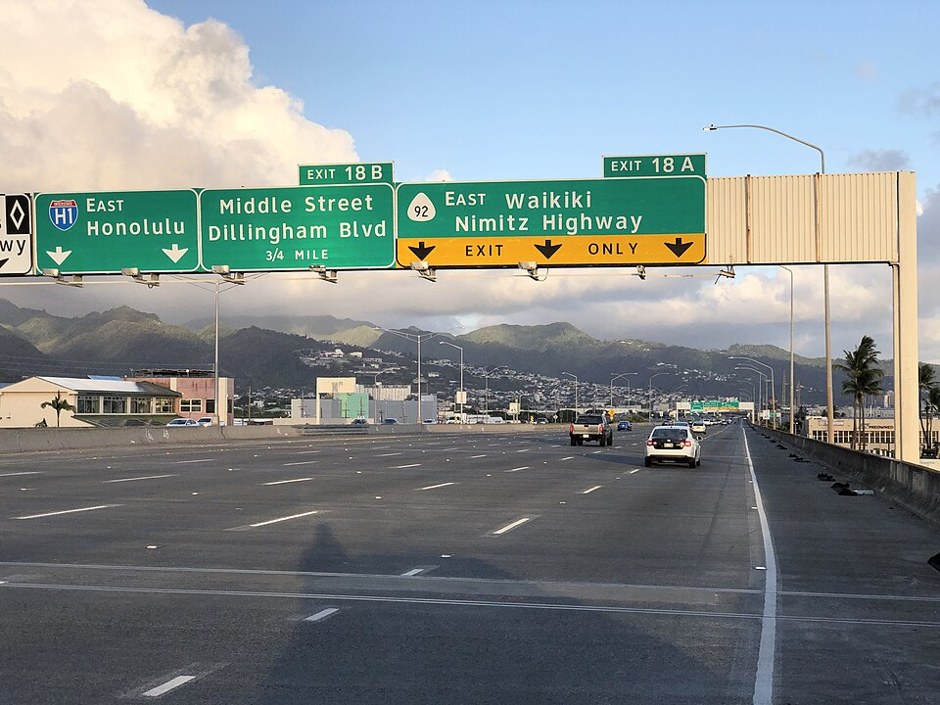
    Photo: Famartin, CC BY-SA 4.0, via Wikimedia Commons

    In Hawaii, most cars need a safety inspection at least once a year, and you cannot register a vehicle without a current inspection certificate. You also cannot pass the inspection without a Hawaii insurance card. Hawaii is a no-fault state. From January 1, 2026, the legal minimum is $10,000 of personal injury protection plus 40/80/20 liability. This guide covers both, in the order you will deal with them.

    Key facts (as of November 2026)

    • Safety inspection: at least once a year. A new vehicle’s next inspection is due two years after its first, made on the date it is first sold.
    • Inspection fee: $25.75 for cars and trucks, $17.75 for motorcycles and trailers (from July 1, 2025).
    • Inspections are done at permitted service stations and garages. HDOT counts about 500 statewide.
    • Minimum insurance: $10,000 personal injury protection (PIP) plus $40,000 / $80,000 / $20,000 liability, for policies new or renewed from January 1, 2026.
    • Registration: with your county, every year, after a current inspection.

    How the paperwork chain works in Hawaii

    1. Insure the car. You need a Hawaii motor vehicle insurance card.
    2. Get the safety inspection. The insurance card is required to pass.
    3. Register or renew with your county. A current inspection certificate is required first.
    4. Drive. Carry proof of insurance and keep the inspection certificate in the car.

    All three must be current for your road test car too, or the test will not go ahead.

    How often do you need a safety inspection in Hawaii?

    Vehicle Inspection
    Most motor vehicles At least once a year
    New vehicle Initial inspection on the date first sold; next one due two years later
    Ambulances Every six months

    The official name is Periodic Motor Vehicle Inspection (PMVI), usually called a safety check. When the vehicle passes, a sticker goes on it and you get a certificate that must stay in the vehicle. Results are sent electronically to the registration file. Mopeds must also be inspected, registered and licensed, with the plate and sticker on the rear.

    Safety inspection fees (from July 1, 2025)

    Item Fee
    Automobiles and trucks $25.75
    Motorcycles and trailers $17.75
    Replacement sticker or certificate $7.09

    The station list is on HDOT’s Motor Vehicle Safety Office page, under “Periodic Inspection of Motor Vehicles”. Questions go to the Motor Vehicle Safety Office.

    What equipment is checked?

    The manual lists the equipment every vehicle must have in working order: brakes, steering, horn, door handles, tires, exhaust, lights, glass, windshield wipers, odometer, speedometer, bumpers, wheels and lug nuts, fenders, floor pans, hood and hood catches, and gas tank. It also bans some equipment outright:

    • A red light showing to the front, or a blue light visible outside the vehicle (emergency vehicles excepted).
    • A bell, exhaust whistle or siren.
    • A muffler cut-out or bypass, or a muffler louder than the original.

    Quick checks before you go: replace tires with less than 1/16 inch of tread (the manual’s penny test: if you can see the top of Lincoln’s head, replace the tire). Check that all lights work and that the windshield has no cracks that block your view.

    Registering a vehicle in Hawaii

    • Register in the county where you operate the vehicle, and renew every year.
    • Registrations are staggered and expire at the end of the 12th month.
    • Renew by mail, in person or online through the state’s online renewal service, choosing your county.
    • Change of address: tell the county in writing within 30 days. Change of name: appear in person within 30 days.
    • Cars show plates on the front and rear. Motorcycles and trailers show a rear plate.
    • Coming from the mainland? A temporary permit can cover an out-of-state registered car for up to 12 months (moving to Hawaii).

    The amount due is printed on your renewal notice as the total fee. The manual mentions state and county weight taxes and a state registration fee. Check your county’s current figures.

    Hawaii no-fault insurance: the minimums

    Every owner of a car, bus or truck must have motor vehicle insurance to register or drive it. The Hawaii Insurance Division sets out the minimums:

    Coverage Minimum from January 1, 2026 Before 2026
    Personal injury protection (your own medical and rehabilitation costs, regardless of fault) $10,000 $10,000
    Bodily injury liability, per person $40,000 $20,000
    Bodily injury liability, per accident $80,000 $40,000
    Property damage liability, per accident $20,000 $10,000

    The new limits apply to personal auto policies new or renewed on or after January 1, 2026. The 2023 Hawaii Driver’s Manual still shows the old figures. Proof of coverage must be with you when you drive. The minimums do not pay to repair your own car. That needs optional cover such as collision.

    What “no-fault” means in Hawaii

    Your own PIP pays your medical costs after a crash, whoever caused it. According to the manual, you can always sue, or be sued, for property damage. For bodily injury, you can only sue if medical bills exceed $5,000, a body part or function is permanently lost or seriously disfigured, or the injury causes death.

    Penalties for driving uninsured

    The manual says each violation of the insurance law is a separate offense. The penalty can be a fine of up to $5,000, up to 30 days in jail, suspension of your license, forfeiture of your registration, or any combination.

    After a crash: SR-21 and SR-22

    • Report crashes with injury, death or property damage of $3,000 or more to the police immediately. Tell your insurer.
    • Drivers in a crash with death, injury or property damage over $3,000 file evidence of insurance on form SR-21.
    • After a conviction for certain vehicle offenses, you file an SR-22 and keep proof of financial responsibility for three years.
    • Failing to comply means your license is suspended.

    Step by step: what to do after a car crash in the US.

    Common questions

    How often is a safety check in Hawaii?

    At least once a year for most vehicles. A brand-new vehicle gets two years before its next one.

    How much is a Hawaii safety inspection?

    $25.75 for a car or truck since July 1, 2025.

    Can I register my car without a safety check?

    No. A current inspection certificate is required first.

    What is the minimum car insurance in Hawaii?

    $10,000 PIP plus 40/80/20 liability for policies new or renewed from January 1, 2026.

    Does minimum insurance cover my own car?

    No. Damage to your own car needs extra cover, such as collision.

    Will the higher minimums raise my premium?

    The Insurance Division says many drivers could see an average increase of about 25%, depending on their record, vehicle and claims. Compare quotes. See car insurance for new drivers in the US.

    Related guides

    Sources

    • Hawaii Department of Transportation, “Hawaii Driver’s Manual” (2023 edition), Chapters II, III, VII and VIII (hidot.hawaii.gov)
    • Hawaii Department of Transportation, “Updates to motor vehicle safety inspection fees for 2025” (hidot.hawaii.gov)
    • Hawaii Department of Transportation, “Hawaii drivers encouraged to get low risk safety checks” (hidot.hawaii.gov)
    • Hawaii Department of Commerce and Consumer Affairs, Insurance Division, “FAQ: Auto Insurance Minimum Limits” (cca.hawaii.gov)
    • City and County of Honolulu, Department of Customer Services, “Road Test” (honolulu.gov)
  • Driving in Hawaii on an Out-of-State or Foreign License

    Driving in Hawaii on an Out-of-State or Foreign License

    Photo: Famartin, CC BY-SA 4.0, via Wikimedia Commons

    You can drive in Hawaii on a valid license from another U.S. state, a U.S. territory or a Canadian province. A foreign license holder can drive for up to one year from arrival in the United States, and an International Driving Permit is strongly recommended. Moving to Hawaii? Most U.S. and Canadian license holders swap with a vision test. Japan, Korea and Taiwan have reciprocity deals, and everyone else takes the written and road tests.

    Key facts (as of November 2026)

    • Visitors with a valid U.S., U.S. territory or Canadian license need no Hawaii license.
    • Foreign license plus International Driving Permit: valid for one year from your first U.S. port of entry, the Hawaii Driver’s Manual says.
    • Honolulu: the foreign-license driver must be at least 18 and carry a passport showing the entry date.
    • Transfer from another state, territory or Canada: vision test, documents, surrender your old license. Written and road tests can be waived.
    • Reciprocity countries: Japan, Korea and Taiwan only.
    • An expired or lost license cannot be transferred: you take the written and road tests.

    Which licenses can you drive on in Hawaii?

    Your license Driving in Hawaii as a visitor Getting a Hawaii license
    Another U.S. state, DC, Puerto Rico, U.S. Virgin Islands, American Samoa, Guam or Northern Mariana Islands Allowed while valid (Class 1 to 3 equivalent or provisional) Vision test and documents; tests may be waived
    Canadian province Allowed while valid Vision test and documents; tests may be waived
    Japan, Korea or Taiwan Foreign license rules below Reciprocity: consulate letter, vision test, no written or road test
    Other country Up to 1 year from U.S. entry, with an IDP recommended Written test, permit, then road test

    Driving in Hawaii on a foreign license

    The manual says a foreign license with an International Driving Permit issued in your home country is valid for one year from the date you arrive (your first port of entry) in the United States.

    Honolulu’s FAQ gives the county’s practical version for Geneva Convention countries:

    • You must be at least 18.
    • Carry your foreign license and valid passport. The passport shows your U.S. entry date.
    • The license is usable for no longer than one year after entry.
    • An International Driving Permit is strongly recommended, to avoid language problems with police.

    The IDP must be issued in your home country, so get it before you travel. See also driving in the US on a foreign license.

    How to transfer an out-of-state license to Hawaii

    1. Book an appointment. On Oahu use AlohaQ. Other counties use their own systems.
    2. Fill in the Driver’s License Application Form.
    3. Bring REAL ID documents: proof of legal name, date of birth, legal presence and Social Security number, plus two proofs of Hawaii principal residence. Originals or certified copies only.
    4. Bring your valid license. It must not be expired.
    5. Pass the eye test, then give fingerprints, a photo and the fee.
    6. Surrender your old license. You leave with a temporary license. Honolulu mails the card in about 4 to 5 weeks.

    Honolulu’s procedures page says applicants must be 18 or older and that the road test may be waived. Under 18 and moving to Hawaii? Ask your county how your permit or provisional license maps onto Hawaii’s provisional license rules before you book.

    Hawaii checks the National Driver Register. If it shows a suspension or revocation in another state or DC, Hawaii will not issue a license, the manual says.

    Holding a motorcycle endorsement? Honolulu issues a temporary type 23 (motorcycle and car) license after the eye test.

    Transferring a license from Japan, Korea or Taiwan

    Honolulu says Hawaii has reciprocity agreements with only these three countries. If you qualify, you skip the written and road tests. You need:

    • An in-person appointment at a driver licensing center.
    • A completed application form.
    • A consulate verification letter, notarized, translated and sealed by your consulate.
    • Your valid foreign license.
    • Proof of legal name, birth date, legal presence and Social Security number, plus two proofs of Hawaii residence.
    • An eye test, fingerprints, photo and fees.

    You must be 18 or older. Your foreign license is surrendered, invalidated and returned to you. An expired foreign license does not qualify.

    Licenses from every other country

    You start like a new driver: the written test, the vision test, an instruction permit, then the road test (permit test and road test guides). Honolulu says a foreign national’s temporary permit expires on the same date as their authorized U.S. stay. For the road test, holders from countries in the 1943 and 1949 UN road traffic conventions must also bring a valid foreign license, an IDP and a passport with a U.S. entry date less than one year before the test.

    No Social Security number? Apply at a Social Security office first, Honolulu says. Or ask about a limited purpose license, valid for driving only.

    Bringing your car to Hawaii

    A vehicle registered in another state can get a temporary Hawaii permit (temporary registration) up to its home registration’s expiry, but never for more than 12 months. You need the registration certificate, shipping receipt and a current Hawaii safety inspection certificate. When the permit ends, you register in your county. Active-duty military who are legal residents of another state have extra options. See Hawaii inspection and insurance.

    Military drivers

    • A Hawaii license that expires while you are deployed outside the U.S. stays valid with your military ID while deployed and for 90 days after you return. Bring your deployment papers.
    • An out-of-state license that expired while you were deployed can be transferred within 90 days of return, but only from states with automatic military extensions.
    • Federal government drivers in federal vehicles that are not commercial vehicles, holding a valid federal license, are exempt from Hawaii licensing.

    Common questions

    Can I drive in Hawaii with a license from another state?

    Yes, as long as it is valid. New residents transfer it at a county licensing office.

    How long can I drive in Hawaii on a foreign license?

    Up to one year from your arrival in the United States.

    Do I need an International Driving Permit in Hawaii?

    The manual pairs the foreign license with an IDP. Honolulu strongly recommends one. Carry both.

    Do I have to retake the test to transfer my license?

    Not if your license is valid and from another state, a U.S. territory, Canada, or a reciprocity country. If it is expired or lost, yes.

    How long do new residents have to switch?

    Ask your county licensing office about any deadline when you register your car.

    Can my teen keep driving on their mainland permit?

    Permit rules across states vary. See driving with a learner’s permit in another state and confirm with your county.

    Related guides

    Sources

    • Hawaii Department of Transportation, “Hawaii Driver’s Manual” (2023 edition), Chapters I and III (hidot.hawaii.gov)
    • Hawaii Department of Transportation, “Driver’s License” (hidot.hawaii.gov)
    • City and County of Honolulu, Department of Customer Services, “Driver’s License FAQ” (honolulu.gov)
    • City and County of Honolulu, Department of Customer Services, “Driver’s License Procedures” (honolulu.gov)
    • City and County of Honolulu, Department of Customer Services, “Foreign Driver’s License” (honolulu.gov)
    • City and County of Honolulu, Department of Customer Services, “Road Test” (honolulu.gov)

  • Hawaii Driver’s Ed Requirement for Under 18s: Hours and Schools

    Hawaii Driver’s Ed Requirement for Under 18s: Hours and Schools

    Photo: Farragutful, CC BY-SA 4.0, via Wikimedia Commons

    In Hawaii, driver’s ed is required if you are under 18 and want a provisional license. You must finish a state-certified driver education course and bring both the classroom and the behind-the-wheel completion certificates to your road test. This page explains what the course involves, how to find an approved school and how it fits with the 180-day permit period.

    Key facts (as of November 2026)

    • Who: anyone under 18 applying for a Hawaii provisional license.
    • What: a state-certified course with two parts, classroom and behind-the-wheel. You get a certificate for each.
    • Hours: HDOT has described the course as 30 hours of classroom instruction spaced over a 6-week period plus 6 hours behind the wheel (2020 HDOT notice). Confirm with your school.
    • Providers: HDOT publishes a list of approved driving schools and virtual schools.
    • Legal basis: Hawaii Revised Statutes 286-108.4 and Hawaii Administrative Rules 19-139.
    • Adults 18 and over are not covered by the requirement, which is part of the under-18 graduated licensing program.

    Is driver’s ed mandatory in Hawaii?

    Yes, for under 18s. The Hawaii Driver’s Manual, HDOT’s GDL brochure and the City and County of Honolulu all list it as a condition of the provisional license. Honolulu’s road test page asks applicants under 18 for both a Driver Education Student Completion Certificate and a Behind-the-Wheel Student Completion Certificate. They must be originals.

    How many hours is Hawaii driver’s ed?

    Part Hours Notes from HDOT
    Classroom 30 Spread over a 6-week period; no class longer than 5 hours. Can be in person, virtual or a mix.
    Behind-the-wheel 6 Can be taught at the same time as the classroom part or after it

    These figures come from an HDOT notice issued when in-person classes resumed on August 1, 2020. HDOT’s current driver education page does not repeat them, so check the current requirement with your school or HDOT before you enroll.

    Supervised practice on top of driver’s ed

    Six instructor hours is not much driving. Hawaii’s manual sets no logged-hours total for parents. Honolulu says ample supervised practice is required, and advises applicants aged 16 to 17 to practice for six months, in the car they will test in and around the test site. Your supervisor must be licensed and at least 21. Between 11 p.m. and 5 a.m. it must be a parent or guardian. Compare states: supervised driving hours by state.

    How to find an approved Hawaii driving school

    • HDOT keeps a list of approved driver education providers by island (Hawaii Island, Kauai, Maui and Oahu) and a separate list of approved virtual driving schools. Being listed is not an HDOT endorsement.
    • Ask the school whether it covers both the classroom and behind-the-wheel parts, and which certificates it issues.
    • Students in public high schools can ask their school’s driver education coordinator, as the GDL brochure suggests.
    • Problems with an instructor or school certified through HDOT can be reported with HDOT’s online complaint form.

    Prices are set by each school, so ask the school for its fee.

    A sample timeline for a Hawaii teen

    1. 15 years 6 months: pass the written and vision tests and get your instruction permit (permit test guide).
    2. Months 1 to 2: classroom course. Keep practicing with a parent.
    3. Alongside or after: 6 hours behind the wheel with a certified instructor.
    4. Day 180 or later, and at least 16: road test with both certificates (road test guide).
    5. Pass: provisional license (provisional rules).

    Common questions

    Can I take Hawaii driver’s ed online?

    The classroom part can be taught virtually by approved instructors, and HDOT lists approved virtual schools. The behind-the-wheel part is in a car with an instructor.

    Do I need driver’s ed if I am 18?

    The requirement is part of the graduated licensing program for drivers under 18. At 18 you can test for a Class 3 license without the course certificates.

    Can I start driver’s ed before I have a permit?

    Ask your school. Each school sets its own enrollment rules, and HDOT’s pages do not set a starting age for the classroom part.

    What if I lose a certificate?

    Ask the school that issued it for a replacement. Honolulu wants original certificates at the road test.

    Does driver’s ed shorten the 180-day permit period?

    No. The 180-day holding period still applies.

    Does it lower insurance?

    Ask your insurer about any discount. See car insurance for new drivers in the US.

    Related guides

    Sources

    • Hawaii Department of Transportation, “Driver Education” (hidot.hawaii.gov)
    • Hawaii Department of Transportation, “In-person Driver’s Education classes approved to resume Aug. 1” (hidot.hawaii.gov)
    • Hawaii Department of Transportation, “What you need to know about Hawaii’s Graduated Licensing Program” (hidot.hawaii.gov)
    • Hawaii Department of Transportation, “Hawaii Driver’s Manual” (2023 edition), Driving by Minors (hidot.hawaii.gov)
    • City and County of Honolulu, Department of Customer Services, “Road Test” (honolulu.gov)
    • City and County of Honolulu, Department of Customer Services, “Graduated Driver Licensing Program (GDL)” (honolulu.gov)
  • Hawaii Provisional License Rules for Teens: Passengers and Curfew

    Hawaii Provisional License Rules for Teens: Passengers and Curfew

    Photo: Tony Webster, CC BY-SA 2.0, via Wikimedia Commons

    A Hawaii provisional license lets 16 and 17 year olds drive alone with two main limits: no more than one passenger under 18 who is not a household member, and no driving between 11 p.m. and 5 a.m. unless a licensed parent or guardian sits beside you. Exceptions cover work and school-authorized activities. This page sets out who qualifies, every restriction, the penalties and how to move up to a full license.

    Key facts (as of November 2026)

    • Eligible from 16 to under 18, after holding an instruction permit for at least 180 days.
    • Needs a state-certified driver education course (classroom and behind-the-wheel certificates) and a road test pass.
    • Passengers: no more than one person under 18 unless a licensed parent or guardian is with you or the passenger is a household member.
    • Night: no driving 11 p.m. to 5 a.m. without a licensed parent or guardian in the front passenger seat, except for work or a school-authorized activity.
    • Upgrade to a full license after 6 months, from age 17. The provisional license expires on your 19th birthday.
    • First violation of a provisional rule: 3-month suspension.

    The three stages of Hawaii’s graduated licensing program

    Stage Age How long Who must be with you
    Instruction permit 15½+ At least 180 days before a provisional license Always a licensed driver 21+; parent or guardian from 11 p.m. to 5 a.m.
    Provisional license 16 to 17 At least 6 months No one, within the passenger and night limits below
    Full Class 3 license 17+ Ongoing No one

    The program has applied since January 9, 2006, under Act 72. Parents compare Hawaii with other states here: US graduated driver licensing compared.

    Who can get a provisional license in Hawaii?

    You need all of these:

    • Age 16 or older, but under 18.
    • A Hawaii instruction permit held for at least 180 days.
    • No pending violation that could lead to suspension or revocation of the permit.
    • Classroom and behind-the-wheel certificates from a state-certified driver education course (driver’s ed requirement).
    • A road test pass (Hawaii road test guide).
    • Parental consent from each living parent or legal guardian, unless you are married or emancipated.

    Missed renewing your permit? If you renew more than 30 days after it expired, you wait 180 days before you can take the road test.

    Hawaii provisional license passenger rules

    You may not carry more than one person under 18 unless your licensed parent or guardian is in the car. Household members under 18 do not count toward the limit.

    Scenario Allowed?
    You drive one 16-year-old friend to the beach at 3 p.m. Yes
    You drive two 17-year-old friends to school No, unless your licensed parent or guardian is in the car
    You drive your two younger siblings who live with you Yes. Household members are exempt from the limit.
    You drive three 19-year-old friends Yes. The limit covers passengers under 18.

    Everyone in the car must be belted or in the right child restraint. Children under 4 must be in a child safety seat. Older young children may need a booster seat: see the seat belt section of the Hawaii Driver’s Manual.

    What time can a Hawaii provisional driver drive?

    You may not drive from 11 p.m. to 5 a.m. unless a parent or guardian, licensed for the same type of vehicle, sits in the front passenger seat. There are two exceptions:

    1. Work. Driving to or from your job, where you need the car to get there. Carry a signed statement from your employer with their name, address, phone number and confirmation of your employment and hours.
    2. School-authorized activity. Driving to or from it, where you need the car. Carry a signed statement from your parent or guardian with their name, address, phone number and confirmation that you need to drive for the activity.

    Even under an exception, you may not carry more than one person under 18 between 11 p.m. and 5 a.m. unless your licensed parent or guardian is with you.

    Phones on a provisional license

    HDOT says no one under 18 may use a hands-free mobile electronic device while driving. Hand-held use is banned for every driver, including when stopped at a red light or stop sign. More: hands-free and texting laws for US drivers.

    Alcohol: zero tolerance

    Drivers under 21 may not drive with a blood alcohol content of .02 or more. See zero tolerance laws for drivers under 21.

    Penalties for breaking provisional license rules

    Offense First time Second or later
    Breaking a provisional license rule (passengers, night, belts, carrying the license) 3-month suspension 6-month revocation
    Conviction for an offense relating to operating a motor vehicle 6-month suspension or revocation 1-year revocation

    A pending violation also blocks you from moving up a stage: no provisional or full license is issued while one is open.

    How to get your full Hawaii license

    1. Hold the provisional license for at least 6 months.
    2. Be at least 17.
    3. Have no pending violations.
    4. Book a licensing appointment (AlohaQ on Oahu), check the “Renewal” box on the application, hand in the provisional license, pass the eye test and pay. In Honolulu a 4-year license costs $20 (as of November 2026).

    Honolulu also allows conversion by mail if you meet its conditions, such as not having temporary lawful status and holding REAL ID documents still valid when issued after May 1, 2014.

    Do not leave it late. The provisional license expires on your 19th birthday. If its expiry falls on a weekend or county holiday, convert by the last working day before. If you miss it, you reapply as an adult applicant.

    Common questions

    Can I drive my friends on a Hawaii provisional license?

    One friend under 18, yes. Two or more under 18 only with your licensed parent or guardian in the car. Friends 18 or older do not count.

    Can I drive home from work after 11 p.m.?

    Yes, if you carry the signed employer statement. You still cannot carry more than one passenger under 18 during those hours.

    Does a sibling count as a passenger?

    Not if they are a household member.

    How long do I keep the provisional license?

    At least 6 months and until you are 17. It expires on your 19th birthday.

    Do the rules apply if I get my license at 18?

    No. The provisional stage is for applicants under 18.

    Can my older brother supervise me at night on a permit?

    Not between 11 p.m. and 5 a.m. Then it must be a parent or guardian. At other times any licensed driver 21 or older can supervise.

    Related guides

    Sources

    • Hawaii Department of Transportation, “What you need to know about Hawaii’s Graduated Licensing Program” (hidot.hawaii.gov)
    • Hawaii Department of Transportation, “Hawaii Driver’s Manual” (2023 edition), Driving by Minors and Chapter IX (hidot.hawaii.gov)
    • Hawaii Department of Transportation, “April is National Distracted Driving Awareness Month” (hidot.hawaii.gov)
    • City and County of Honolulu, Department of Customer Services, “Graduated Driver Licensing Program (GDL)” (honolulu.gov)
    • City and County of Honolulu, Department of Customer Services, “Driver’s License Procedures” (honolulu.gov)
    • City and County of Honolulu, Department of Customer Services, “Driver’s License FAQ” (honolulu.gov)
  • Hawaii Road Test for a Class 3 License: Skills and Car Check

    Hawaii Road Test for a Class 3 License: Skills and Car Check

    Photo: Thomas Woodtli, CC BY-SA 2.0, via Wikimedia Commons

    The Hawaii road test for a Class 3 license checks five things: driving through a business district, parallel parking, signaling, turning, starting and stopping, moving off on a slight grade without rolling back, and obeying traffic laws. Before you drive, the examiner inspects your car, and a failed vehicle check ends the test. This guide covers both parts, the documents, booking on Oahu and what catches people out.

    Key facts (as of November 2026)

    • Run by your county. On Oahu, book online with the City and County of Honolulu. Walk-ins are not accepted.
    • Honolulu road test fee: $8, non-refundable.
    • Bring a licensed driver aged 21 or older and a car with current registration, safety inspection and Hawaii insurance.
    • Under 18: permit held 180 days, plus driver ed classroom and behind-the-wheel certificates.
    • No passengers during the test. No phone, dashcam or self-parking feature.
    • Late by five minutes or more counts as a no-show: you lose the fee and cannot book again for 60 days (Honolulu).

    What is on the Hawaii road test?

    The Hawaii Driver’s Manual says you must show you can:

    1. Start your vehicle and drive through a business district.
    2. Parallel park.
    3. Signal, turn, start and stop correctly while driving.
    4. Put the vehicle in motion on a slight grade without rolling backwards.
    5. Show knowledge of and obedience to traffic laws, ordinances and safe driving practices.

    The manual says you will not be asked to break any law and no tricks will be used. Honolulu’s brochure also refers to a stall reversal maneuver: you must do a proper head check for it and for parallel parking, not just watch a backup camera.

    Parallel parking the way the manual teaches it

    1. Signal and stop beside the front car, about 18 inches away, with rear bumpers even.
    2. Back slowly, turning the wheel sharply right until you reach about a 45 degree angle. Straighten and keep backing slowly.
    3. When your front bumper is even with the other car’s back bumper, turn sharply left and back slowly toward the car behind without touching it.
    4. Turn the wheel right, pull forward slowly and center the car.

    Finish with your curbside wheels within 12 inches of the curb.

    The hill start

    Expect to move off on a slight slope without rolling back. Hold the brake, ease onto the gas, and release the brake as the car starts to pull. Rolling back toward the car or curb behind is the risk the examiner is watching for.

    The vehicle check before you drive (Honolulu)

    If your car fails, the test does not go ahead. Honolulu’s list:

    Item Requirement
    Fuel At least 1/4 tank, or 25% charge for an electric vehicle
    Lights and horn All turn signals and brake lamps work; lenses not cracked; horn works
    Tires and wheels All lug nuts in place; tread at least 2/32 inch
    Dashboard Gauges work; no warning lights on
    Plates Front and rear securely mounted and readable; no plate covers, even clear ones
    Windshield No crack or chip larger than a dime; stickers only in the lower right corner, up to 4 by 6 inches
    Tint Legal and noted on the inspection certificate; dark tint may be meter-checked
    Inside Seat belts clean and working; doors, windows and locks work; no clutter on seats or floor; no strong odors, insects or animal fur
    Convertibles and Jeep-type tops Closed and locked

    Documents to bring

    • Your current Hawaii instruction permit.
    • Current certificate of registration. Temporary dealer registration is not accepted.
    • Current Hawaii safety inspection certificate, with the decal on the car.
    • Hawaii motor vehicle insurance card. The name and VIN must match the registration. An electronic card from the insurer’s app or website is accepted if the app is downloaded before check-in.
    • Under 18: original state driver education completion certificates for classroom and behind-the-wheel.
    • New car: sales contract, inspection certificate and decal, insurance card, temporary plate fitted.
    • Rental car: original registration, inspection certificate and insurance card, with you named on the rental contract.
    • Company car: signed letter on company letterhead listing your name, plate, make, VIN and test date.

    Honolulu does not accept photocopies, faxes or computer-generated documents. You cannot use an autocycle for the Class 3 test, the manual says.

    Booking a road test on Oahu

    • Book online with your permit number, name and date of birth. Pay $8 by Visa, MasterCard or Discover.
    • Test sites: Kapahulu, Kapolei, Koolau, Wahiawa and Waianae.
    • A next-day standby list opens online by 4:30 p.m. (not at Waianae).
    • Arrive at least 30 minutes early. Allow up to an hour in total.
    • Cancel or reschedule before 6 a.m. on the test day.

    On Maui, Hawaii Island and Kauai, book through your county’s licensing office. Their fees and systems are set locally.

    After you pass

    Any outstanding traffic violations must be cleared first. Honolulu says road test scores are valid for 30 days. If your record is not cleared in that time, you retake the test. Once processed, you get a temporary paper license valid for 60 days. The card arrives by mail in about 4 to 5 weeks. In Honolulu a 4-year license for ages 17 to 24 costs $20. A provisional license costs $5 per year or part of a year.

    Common questions

    Do you have to parallel park on the Hawaii road test?

    Yes. Parallel parking is one of the listed skills in the manual.

    Can I use my backup camera?

    Honolulu says do not rely on it for the stall reversal or parallel parking. You must turn your head and look. Self-parking features are banned.

    Who has to come with me?

    A licensed driver aged 21 or older. They must be there when you are called and until the test ends. They cannot ride along during the test.

    What happens if my car fails the pre-check?

    The test is rejected. Fix the defect and book again.

    How long is the Hawaii road test?

    Honolulu says allow up to one hour, including document checks, the vehicle inspection and processing.

    Can a foreign license holder take the test?

    Yes. Honolulu also asks holders from countries in the 1943 and 1949 UN road traffic conventions to bring a valid foreign license, an International Driving Permit and a passport with a U.S. entry date less than a year before the test.

    Why do people fail?

    Practice each skill the manual lists, plus head checks when reversing, and use the 100-foot signal rule. See common reasons people fail the US driving test.

    Related guides

    Sources

    • Hawaii Department of Transportation, “Hawaii Driver’s Manual” (2023 edition), Chapter I and Chapter X (hidot.hawaii.gov)
    • City and County of Honolulu, Department of Customer Services, “Road Test” (honolulu.gov)
    • City and County of Honolulu, Department of Customer Services, “Preparing for your Driver’s License Road Test” brochure CS-L(DL)230 (honolulu.gov)
    • City and County of Honolulu, Department of Customer Services, “Fee Table” (honolulu.gov)
  • Hawaii Permit Test: Questions, Pass Mark, Fees and Permit Rules

    Hawaii Permit Test: Questions, Pass Mark, Fees and Permit Rules

    Photo: Famartin, CC BY-SA 4.0, via Wikimedia Commons

    The Hawaii permit test is a multiple-choice rules of the road test, which Honolulu and Maui counties describe as 30 questions. You need to be at least 15½, pass it plus a vision test, and then collect your instruction permit at a county licensing office. This page covers the online and in-person options, county fees, what to bring and the rules once you hold the permit.

    Key facts (as of November 2026)

    • Minimum age: 15 years and 6 months.
    • Questions: 30 multiple choice (Honolulu and Maui county pages). HDOT’s online test page says 25, so the count may differ by version.
    • Pass mark: Maui County says more than 6 errors is a fail. In other counties, check the pass mark with your county licensing office.
    • Time limit online: one hour.
    • Failed? Wait seven days before retaking.
    • Honolulu fees: $2 written test in person, $12 online, $5 instruction permit.

    How many questions are on the Hawaii permit test?

    Honolulu’s online test page and GDL page both say 30 multiple-choice questions, and Maui County’s permit page says the same. HDOT’s statewide online learner’s permit test page says 25 questions. Prepare for 30 and confirm with your county.

    The test covers rules of the road and recognition of traffic control devices (signs, signals and markings). All of it comes from the Hawaii Driver’s Manual. Its appendix has 177 numbered practice questions, each with a page reference so you can look up the answer.

    What score do you need to pass?

    Maui County says that if you get more than 6 errors you fail. On 30 questions, that means at least 24 correct. Honolulu’s pages do not state a pass mark. Aim well above 24 so one county’s rule never catches you out.

    Online test or in person?

    Online (Home Driving Knowledge Test) In person
    Where Home, on a desktop or laptop with a mouse, keyboard and webcam. No phones, tablets or touchscreens. County driver licensing center, by appointment, on set days
    Time limit One hour Ask your center
    Languages English and Spanish; questions can be read aloud Honolulu offers an oral test at Kapalama for $10
    Rules Two warnings for looking away or leaving the screen; the third ends the test as a fail. Photos are taken during the test. Standard exam room rules
    Under 18 An adult over 21 must be present at registration and stay out of the webcam view Parental consent required

    The online test launched statewide on December 11, 2024. Passing it does not give you a permit. You still book a county appointment for the eye test, photo, fingerprints and fee. Honolulu says to do this within 60 days of passing. HDOT’s page and Maui County say 30 days. Book quickly to be safe.

    Hawaii permit test fees by county (online)

    County Online test total Breakdown
    City and County of Honolulu $12 $2 county fee + $10 transaction and card fee
    Hawaii County $11 $1 county fee + $10
    Kauai County $20 $10 county fee + $10
    Maui County $25 $15 county fee + $10

    Figures from Honolulu’s online permit test page, as of November 2026. Each retake costs the full fee again, and there is no refund for failing. In Honolulu the permit itself costs $5 and the in-person written test $2. Other counties set their own permit fees, so check your county’s page.

    What to bring to get your Hawaii instruction permit

    • Completed Driver’s License Application Form.
    • Certificate of Completion, if you tested online.
    • Certified birth certificate (or other proof of legal name, birth date and legal presence).
    • Social Security number.
    • Two proofs of Hawaii address. Under 18s without two may use a parent’s.
    • Under 18: Parental Consent Form CS-L (DL) 239 (Honolulu). Both parents named on the birth certificate must sign it in person, or bring a notarized form for a parent who cannot attend. Faxes, photocopies and emails are refused.

    You will take an eye test, be photographed and fingerprinted, and pay the permit fee. Honolulu issues a temporary permit and mails the plastic card in about six to eight weeks.

    Rules while you hold a Hawaii instruction permit

    • Carry the permit whenever you drive.
    • A licensed driver at least 21, licensed for that type of vehicle, must sit in the right front seat.
    • Between 11 p.m. and 5 a.m., that person must be your parent or guardian.
    • Everyone in the vehicle must be belted or in the correct child restraint.
    • Under 18: hold the permit at least 180 days before the road test.
    • No phone use, including hands-free, if you are under 18.

    How long is a Hawaii permit valid?

    HDOT’s GDL brochure says one year from issue. You can renew from 30 days before expiry to 90 days after. Honolulu says renewing more than 90 days late means retaking the written test. For minors who renew 31 to 90 days late, road test eligibility restarts at 180 days from the renewed permit’s issue date.

    Common questions

    Can I take the Hawaii permit test on my phone?

    No. You need a desktop or laptop with a webcam. Phones, tablets and touchscreen devices are not allowed.

    How many times can I retake it?

    Honolulu allows retakes, but no more than twice in one day, and you must wait seven days after a knowledge-based fail. Each attempt costs the full fee.

    Do I need a parent with me for the online test?

    If you are under 18, an adult over 21 must be present to register and give their details, then stay out of the camera’s view.

    Is the test available in other languages?

    Online it is in English and Spanish. Honolulu offers an oral test at the Kapalama center for $10. HDOT offers a free interpreter service.

    Can I take the permit test at 15?

    Not before 15 years and 6 months.

    Is there an eye test?

    Yes. A vision screening is part of getting the permit, along with the rules of the road test.

    Related guides

    Sources

    • Hawaii Department of Transportation, “Hawaii Driver’s Manual” (2023 edition) (hidot.hawaii.gov)
    • Hawaii Department of Transportation, “Online Learner’s Permit Test” (hidot.hawaii.gov)
    • Hawaii Department of Transportation, “Written test for driver’s permit now available online statewide” (hidot.hawaii.gov)
    • Hawaii Department of Transportation, “What you need to know about Hawaii’s Graduated Licensing Program” (hidot.hawaii.gov)
    • City and County of Honolulu, Department of Customer Services, “Online Learner’s Permit Test” (honolulu.gov)
    • City and County of Honolulu, Department of Customer Services, “Driver’s License Procedures” (honolulu.gov)
    • City and County of Honolulu, Department of Customer Services, “Driver’s License FAQ” (honolulu.gov)
    • City and County of Honolulu, Department of Customer Services, “Fee Table” (honolulu.gov)
    • County of Maui, “Class 3 Instructional Permit” (mauicounty.gov)
  • Learning to Drive in Hawaii: Permit, Provisional and License

    Learning to Drive in Hawaii: Permit, Provisional and License

    Photo: Famartin, CC BY-SA 4.0, via Wikimedia Commons

    In Hawaii you can get an instruction permit at 15½, a provisional license at 16 after holding the permit for 180 days, and a full Class 3 license at 17 after 6 months on the provisional license. This guide is for Hawaii teens, their parents and adults getting a first license. It covers each stage, the tests, the county offices that run them, and what every chapter of the Hawaii Driver’s Manual expects you to know.

    Key facts (as of November 2026)

    • Handbook: the Hawaii Driver’s Manual, 2023 edition, published by the Hawaii Department of Transportation (HDOT).
    • Licenses and tests are handled by the four counties: City and County of Honolulu, Hawaii County, Maui County and Kauai County.
    • Instruction permit: minimum age 15½. A written rules of the road test and a vision test come first.
    • Provisional license: minimum age 16, permit held 180 days, state-certified driver education, road test.
    • Full Class 3 license: at least 17, after 6 months on a provisional license. A provisional license expires on your 19th birthday.
    • Supervising driver for a permit holder: licensed and at least 21. Between 11 p.m. and 5 a.m. it must be your parent or guardian.

    How to get a driver’s license in Hawaii: the three stages

    Stage Minimum age What you need Main limits
    Instruction permit 15½ Parental consent if under 18, vision test, written test, documents Licensed driver 21+ beside you; parent or guardian only between 11 p.m. and 5 a.m.; everyone belted
    Provisional license (under 18) 16 Permit held 180 days with no pending violations, driver ed classroom and behind-the-wheel certificates, road test One passenger under 18 who is not a household member unless a parent or guardian is with you; no driving 11 p.m. to 5 a.m. without a licensed parent or guardian, except for work or a school-authorized activity
    Class 3 driver’s license 17 Provisional license held 6 months, no pending violations, eye test No GDL limits

    If you are 18 or older, the graduated licensing stages do not apply: you get a permit, then take the road test for a Class 3 license.

    Full detail on each stage:

    Step by step for a Hawaii teen

    1. Study the Hawaii Driver’s Manual. The appendix has 177 numbered multiple-choice practice questions, each with a page reference back to the text.
    2. Take the written test. Online from home (computer with webcam, no phones or tablets) or in person at a county office by appointment.
    3. Go to your county licensing office. Bring documents, parental consent, pass the eye test and pay the permit fee.
    4. Start state-certified driver education and practice with a licensed driver 21 or older.
    5. After 180 days, book the road test. Bring both driver ed certificates, a test vehicle with current registration, safety inspection and insurance, and a licensed driver 21+.
    6. Drive on your provisional license for 6 months, then convert it to a full license from age 17. Do it before your 19th birthday.

    Who runs licensing in Hawaii?

    HDOT writes the manual and sets statewide rules. Each county issues permits and licenses and runs the tests. Written tests in person are given 8:00 a.m. to 3:30 p.m. in Honolulu, Kauai and Maui, and 8:00 a.m. to 3:00 p.m. in Hawaii County, according to the manual. Fees and booking systems differ by county, so always check your own county’s page. Honolulu uses AlohaQ for licensing appointments and a separate online system for road tests.

    License classes in Hawaii

    Class Vehicles
    1 Mopeds
    2 Motorcycles and motor scooters
    3 Cars and light trucks with a GVWR of 18,000 pounds or less, and buses designed for 15 or fewer occupants
    4 Single vehicles with a GVWR of 18,001 to 26,000 pounds (minimum age 21)
    A, B, C Commercial driver’s licenses (CDL), with a separate HDOT manual

    Documents and REAL ID

    For a first REAL ID permit or license you need original or certified documents showing your legal name, date of birth, legal presence, Social Security number and two proofs of your Hawaii principal residence. A birth certificate or valid U.S. passport covers name, birth date and legal presence. Applicants under 18 who lack two address documents may use a parent’s, according to Honolulu. Notarized copies and faxes are not accepted. If you cannot or choose not to give a Social Security number, you can get a limited purpose license, valid for driving only. See REAL ID and your first US driver’s license.

    What the Hawaii Driver’s Manual covers, chapter by chapter

    I Licensing of drivers

    Who is exempt, who cannot be licensed, license classes, the tests, driving by minors and renewal. A Hawaii license is void after its expiration date, the manual says, with no grace period to keep driving. You must carry your license whenever you drive and show it to a police officer on request.

    II Vehicle equipment and inspection

    Required equipment, banned equipment (red lights showing to the front, blue lights, sirens, loud muffler bypasses) and the annual safety inspection. Replace tires with less than 1/16 inch of tread. Details: Hawaii safety inspection and no-fault insurance.

    III Vehicle registration

    Register in the county where you operate the vehicle and renew every year. A current safety inspection certificate is needed before registration. Tell the county of an address change in writing within 30 days. Cars need plates front and rear.

    IV The driver

    Attitude, emotions and health. If you are upset, ill or angry, the manual says let someone else drive.

    V Traffic laws

    • Signal at least 100 feet before turning, changing lanes or stopping, even with no one around.
    • Stop at least 15 feet from the nearest rail when a train signal is on, a gate is down or a train is close.
    • Parallel park with your wheels within 12 inches of the curb. Do not park where less than 10 feet of street is left for traffic, or on a public street for more than 24 hours.
    • Do not drive on the left half of the road within 100 feet of an intersection, railroad crossing, or a bridge or tunnel where you cannot see oncoming traffic.
    • Leaving a car unattended: stop the engine, take the key, set the parking brake, and on a grade turn the wheels toward the curb.
    • No more than three people in the front seat.
    • For emergency vehicles with siren or lights: slow, move out of the path and stop. For a stopped emergency vehicle with flashing lights, slow down and leave an empty lane if you safely can.

    VI Signals, signs and lane markings

    Regulatory, warning and guide signs, plus centerlines. You may cross a double solid yellow line only to turn left into or out of an alley, private road or driveway. More: US road signs by shape and color.

    VII Crash procedures

    Report any crash with injury, death or property damage of $3,000 or more to the police immediately. Stop, help the injured, warn traffic and exchange name, address and registration details.

    VIII No-fault insurance

    Every owner of a car, bus or truck must be insured to register or drive it. The manual lists the old minimum limits. The Hawaii Insurance Division says the minimums went up to 40/80/20 for policies new or renewed from January 1, 2026, with at least $10,000 of personal injury protection.

    IX Alcohol and other drugs

    • A test result of .08 or more, or refusing the test, means your license is taken and you get a 30-day temporary permit.
    • Drivers under 21 may not drive with .02 or more (zero tolerance explained).
    • Refusing a test can cost your license for one, two or four years, depending on prior alcohol enforcement contacts.
    • No open alcohol containers in the passenger area on a public road.

    X Safe driving techniques

    A minimum two-second following gap, lane choice, passing, braking, parking and emergencies. Three Hawaii specifics worth knowing:

    • Hills: the manual says turn your wheels to the right whether you park uphill or downhill, set the parking brake and shift to Park.
    • Roundabouts: slow down, yield to pedestrians, bicyclists and traffic already circulating, go counterclockwise and signal right to exit (roundabouts in the US).
    • Rain: the main weather risk in Hawaii. Partial hydroplaning can start at 35 mph. Never drive through swiftly moving water more than a foot deep.

    XI Trucks, buses and motorcycles

    Large vehicles have blind spots and need more room to stop. A motorcyclist is entitled to the full width of the lane.

    XII Pedestrian safety

    Stop for any blind pedestrian with a white cane or guide dog. Never pass a vehicle stopped for a pedestrian. Stop for a school bus with flashing red lights if you are in its lane or an adjacent lane. Oncoming traffic on a divided highway does not have to stop. The manual says the fine can be $1,000.

    XIII Bicycle safety

    Leave at least 3 feet when passing a bicyclist, stay out of bike lanes when turning right, and look before opening your door.

    Phones and driving in Hawaii

    HDOT says hand-held use of a mobile electronic device is illegal while driving, including when stopped at a red light or stop sign. Drivers under 18 may not use even a hands-free device. Fines are higher in school zones and construction areas. Check the current amount with HDOT. Compare states: hands-free and texting laws.

    Moving to Hawaii or visiting

    Visitors with a valid license from another state, U.S. territory or Canadian province can drive without a Hawaii license. New residents from those places usually transfer with a vision test. Japan, Korea and Taiwan have reciprocity agreements. Full rules: driving in Hawaii on an out-of-state or foreign license.

    Common questions

    How old do you have to be to drive in Hawaii?

    15½ for an instruction permit, 16 for a provisional license and 17 for a full Class 3 license.

    Is driver’s ed required in Hawaii?

    Yes, if you are under 18 and want a provisional license. You need both the classroom and behind-the-wheel certificates.

    How many supervised hours do I need in Hawaii?

    The manual and Honolulu’s GDL page set no logged-hours total. You must hold the permit 180 days, and Honolulu advises 16 and 17 year olds to practice for six months.

    Can I take the Hawaii permit test online?

    Yes. The written test has been available online statewide since December 2024. You still visit a county office afterward for the eye test, photo and permit.

    Which county do I apply in?

    Use the licensing office in your own county. When you take the test online, pick the right county or you may lose your result, Honolulu warns.

    Does a Hawaii license have a grace period after it expires?

    The manual says no: the license is void after the expiration date. You may renew up to six months early. If you miss the renewal window, you go through the steps for an original license.

    Compare Hawaii with other states

    Sources

    • Hawaii Department of Transportation, “Hawaii Driver’s Manual” (2023 edition) (hidot.hawaii.gov)
    • Hawaii Department of Transportation, “What you need to know about Hawaii’s Graduated Licensing Program” (hidot.hawaii.gov)
    • Hawaii Department of Transportation, “Driver’s License” (hidot.hawaii.gov)
    • Hawaii Department of Transportation, “Written test for driver’s permit now available online statewide” (hidot.hawaii.gov)
    • Hawaii Department of Transportation, “April is National Distracted Driving Awareness Month” (hidot.hawaii.gov)
    • City and County of Honolulu, Department of Customer Services, “Graduated Driver Licensing Program (GDL)” (honolulu.gov)
    • City and County of Honolulu, Department of Customer Services, “Driver’s License Procedures” (honolulu.gov)
    • City and County of Honolulu, Department of Customer Services, “Road Test” (honolulu.gov)
    • Hawaii Department of Commerce and Consumer Affairs, Insurance Division, “FAQ: Auto Insurance Minimum Limits” (cca.hawaii.gov)
  • Hawaii Permit Practice Test: 30-Question Mock Exam, Free

    Hawaii Permit Practice Test: 30-Question Mock Exam, Free

    Photo: Famartin, CC BY-SA 4.0, via Wikimedia Commons

    Honolulu’s online permit test page describes the Hawaii written test as 30 multiple-choice questions on rules of the road and traffic control devices, with a one-hour limit online. This page gives you a 30-question mock in that format, then 10 bonus questions on the Hawaii rules that trip people up. All questions are original and unofficial, written from the 2023 Hawaii Driver’s Manual, not taken from the county tests.

    Hawaii written test at a glance

    Item Detail (as of November 2026)
    Questions 30 on Honolulu’s pages; HDOT’s statewide online page says 25. Prepare for 30.
    Pass mark Ask your county office. A Maui County page says more than 6 errors is a fail, which is 24 of 30.
    Time limit online One hour
    Fail? Wait seven days after a knowledge-based fail. Each attempt costs the full fee ($12 online in Honolulu).
    Minimum age 15 and a half

    How to book, county fees and what to bring: the Hawaii written test and instruction permit guide.

    Mock exam: 30 questions

    Set a one-hour timer and no notes, as on the online test.

    1. A triangular sign pointing down tells you to:

    • A. Yield to traffic and pedestrians, stopping if needed
    • B. Watch for falling rocks
    • C. Stop every time
    • D. Merge without looking

    Answer: A. YIELD means give way; you only have to stop if traffic or pedestrians require it. Manual topic: Chapter VI, signals, signs and lane markings.

    2. Which color is used for regulatory signs such as speed limits?

    • A. Yellow with black letters
    • B. Brown with white letters
    • C. White with black letters
    • D. Green with white letters

    Answer: C. Regulatory signs (laws you must obey) are mostly black on white. Yellow warns; green guides. See US road signs by shape and color.

    3. A yellow diamond sign with a picture of a person walking means:

    • A. Watch for pedestrians crossing
    • B. Pedestrians may not cross
    • C. Hiking trail ahead
    • D. Sidewalk closed

    Answer: A. Diamond warning signs alert you to conditions ahead, here a pedestrian crossing. Manual topic: Chapter VI.

    4. An orange triangle with a red border on the back of a slow vehicle means:

    • A. A vehicle carrying explosives
    • B. A tow truck
    • C. The vehicle is designed to go 25 mph or less
    • D. A school vehicle

    Answer: C. The manual says this emblem marks vehicles built for 25 mph or less. Slow down and approach with care.

    5. When may you cross a double solid yellow center line in Hawaii?

    • A. Never, even to turn
    • B. To pass a slow car
    • C. Whenever no traffic is coming
    • D. Only to turn left into or out of an alley, private road or driveway

    Answer: D. The Hawaii manual allows crossing a double solid yellow line only to turn left into or out of an alley, private road or driveway. See US pavement markings.

    6. A steady red light with a green arrow pointing right means:

    • A. You may turn right in the arrow’s direction, yielding to pedestrians still crossing
    • B. The light is broken
    • C. You must wait for the red to change
    • D. Only buses may turn

    Answer: A. A green arrow allows the movement shown even while the main light is red. See traffic signals in the US.

    7. How far before turning, changing lanes or stopping must you signal in Hawaii?

    • A. At least 300 feet
    • B. At least 50 feet
    • C. At least 100 feet
    • D. At least 200 feet

    Answer: C. At least 100 feet, even when no one seems to be around. Manual topic: Chapter V, traffic laws.

    8. A train signal is flashing at a crossing. How close to the nearest rail may you stop?

    • A. No closer than 10 feet
    • B. No closer than 15 feet
    • C. No closer than 5 feet
    • D. No closer than 50 feet

    Answer: B. Stop at least 15 feet from the nearest rail when a signal is on, a gate is down or a train is close. See railroad crossings.

    9. When parallel parking, your curbside wheels may be no more than how far from the curb?

    • A. 6 inches
    • B. 12 inches
    • C. 18 inches
    • D. 24 inches

    Answer: B. Parking more than 12 inches from the curb is prohibited. See how to parallel park.

    10. How many people may ride in the front seat of a car in Hawaii?

    • A. No more than three
    • B. Only the driver
    • C. Any number with belts
    • D. No more than two

    Answer: A. The manual warns that more than three persons in the front seat may be a violation, because it blocks your view and control. Manual topic: Chapter V.

    11. Which of these is a place where you may NOT pass another vehicle?

    • A. On a four-lane highway in the left lane
    • B. On a straight road with a broken yellow line and clear view
    • C. Within 100 feet of an intersection or railroad crossing
    • D. When the car ahead signals right

    Answer: C. The manual bans passing within 100 feet of an intersection, railroad crossing or posted narrow bridge, viaduct or tunnel. See passing on two-lane roads.

    12. The end of a “no passing zone” sign means:

    • A. You must pass now
    • B. The speed limit rises
    • C. The road becomes one way
    • D. You can see farther ahead, not that passing is automatically safe

    Answer: D. The manual points out the end of the zone only means improved visibility. Check before you pass.

    13. Two cars arrive at an uncontrolled intersection at about the same time. Who must yield?

    • A. The driver on the right yields
    • B. The car going straight always yields
    • C. The driver on the left yields to the driver on the right
    • D. The faster car goes first

    Answer: C. With no signs or signals, yield to the vehicle on your right. See right of way at uncontrolled intersections.

    14. At a roundabout in Hawaii you should:

    • A. Yield to traffic already circulating, travel counterclockwise and signal right to exit
    • B. Stop inside the circle
    • C. Travel clockwise
    • D. Signal left when leaving

    Answer: A. Slow down, yield to pedestrians, bicyclists and circulating traffic, go counterclockwise and signal right to exit. See how to drive a roundabout.

    15. An emergency vehicle is stopped on the shoulder with lights flashing. The manual says to:

    • A. Keep your speed
    • B. Stop next to it
    • C. Use your horn
    • D. Slow down and leave an empty lane next to it if you safely can

    Answer: D. Slow down and move over a lane when it is safe. See move over laws.

    16. A school bus is stopped with alternating red lights flashing. Which drivers must stop?

    • A. No one, if the bus is on the shoulder
    • B. Drivers in the bus’s lane and all lanes next to it
    • C. Only oncoming drivers
    • D. Only drivers directly behind the bus

    Answer: B. The manual says traffic in the bus’s lane and all adjacent lanes stops, and stays stopped until the bus moves or the lights go off. On a divided highway, oncoming traffic does not have to stop. See school bus stopping laws.

    17. A pedestrian with a white cane or guide dog is about to cross. You must:

    • A. Drive around them slowly
    • B. Continue if you have a green light
    • C. Honk so they know you are there
    • D. Stop and let them cross

    Answer: D. Always stop for a blind pedestrian. Manual topic: Chapter XII, pedestrian safety.

    18. A car ahead in the next lane has stopped at a crosswalk. You should:

    • A. Honk to warn the pedestrian
    • B. Change lanes and continue
    • C. Pass it carefully
    • D. Stop too; never pass a vehicle stopped for a pedestrian

    Answer: D. The stopped car may hide a person crossing. See pedestrians and crosswalks.

    19. What is the minimum following interval the Hawaii manual says you should never go below?

    • A. 1 second
    • B. 2 seconds
    • C. 4 seconds
    • D. 6 seconds

    Answer: B. At least two seconds behind the car ahead in good conditions, more in rain or at night. See following distance.

    20. When making a right turn at an intersection with a bike lane, you should:

    • A. Check for bicyclists and not drive in the bike lane
    • B. Use the bike lane as a turn lane
    • C. Turn from the left lane
    • D. Speed up to beat cyclists

    Answer: A. The manual says not to drive in a bike lane when turning right. Look over your shoulder for riders.

    21. When passing a bicyclist, leave at least:

    • A. 1 foot
    • B. 2 feet
    • C. 3 feet
    • D. 6 feet

    Answer: C. At least 3 feet. See sharing the road.

    22. A motorcyclist is riding in your lane. The motorcyclist is entitled to:

    • A. The shoulder only
    • B. The full width of the lane
    • C. Share the lane with you
    • D. Half the lane

    Answer: B. Never squeeze alongside a motorcycle in its lane. Manual topic: Chapter XI.

    23. In heavy rain, at what speed does the Hawaii manual say partial hydroplaning can start?

    • A. 25 mph
    • B. 35 mph
    • C. 50 mph
    • D. 65 mph

    Answer: B. Partial hydroplaning can start around 35 mph. Slow down in heavy rain. See driving in snow, fog and rain.

    24. Water is flowing fast across the road ahead. The manual says:

    • A. It is safe if you can see the road
    • B. Never drive through swiftly moving water more than a foot deep
    • C. Drive through quickly to avoid stalling
    • D. Follow a larger vehicle through

    Answer: B. Moving water can float a car. Turn around.

    25. You must report a crash to police immediately if it causes injury, death, or property damage of:

    • A. $500 or more
    • B. $1,000 or more
    • C. $3,000 or more
    • D. $5,000 or more

    Answer: C. The Hawaii threshold is $3,000. Stop, help the injured, warn traffic and exchange details. See what to do after a crash.

    26. A driver aged 21 or older tests at a BAC of .08 or refuses a test in Hawaii. What happens straight away?

    • A. A warning
    • B. A $50 fine
    • C. The license is taken and a 30-day temporary permit is issued
    • D. Nothing until a court date

    Answer: C. The manual says your license is taken and you get a 30-day temporary permit. A refusal can cost the license for one, two or four years depending on your record. See implied consent and DUI.

    27. Drivers under 21 in Hawaii may not drive with a BAC of:

    • A. .02 or more
    • B. .05 or more
    • C. .08 or more
    • D. .10 or more

    Answer: A. Zero tolerance applies at .02. See zero tolerance laws.

    28. Where may an open container of alcohol be kept in a car on a public road?

    • A. In the glove box
    • B. In a cup holder if the driver is not drinking
    • C. Anywhere, if the passenger is over 21
    • D. Not in the passenger area

    Answer: D. The manual bans open containers in the passenger area.

    29. Is it legal for an adult Hawaii driver to hold a phone while stopped at a red light?

    • A. Yes, the car is not moving
    • B. No. Hand-held use is banned while driving, including when stopped at a light or stop sign
    • C. Only on Oahu
    • D. Yes, for calls only

    Answer: B. HDOT says hand-held use is illegal, even when stopped. See hands-free and texting laws.

    30. Tires must be replaced when tread depth is less than:

    • A. 1/32 inch
    • B. 1/16 inch
    • C. 1/8 inch
    • D. 1/4 inch

    Answer: B. Replace tires with less than 1/16 inch of tread. They also have to pass the annual safety inspection. See Hawaii safety inspection.

    Score your mock exam

    Correct out of 30 Result
    27 to 30 Ready for the real test
    24 to 26 A pass on Maui’s 6-error rule. Review your misses.
    Under 24 A fail on that rule. Study the chapters named in your misses.

    Bonus: Hawaii permit and teen rules (questions 31 to 40)

    31. What is the youngest age for a Hawaii instruction permit?

    • A. 15
    • B. 15 and a half
    • C. 16
    • D. 17

    Answer: B. 15 years and 6 months. See the Hawaii learner driver guide.

    32. The licensed driver supervising a Hawaii permit holder must be at least:

    • A. 18
    • B. 19
    • C. 21
    • D. 25

    Answer: C. At least 21 and licensed for that type of vehicle, in the right front seat.

    33. Between 11 p.m. and 5 a.m., who must supervise a Hawaii permit holder?

    • A. No one; permit holders cannot drive then at all
    • B. A parent or guardian
    • C. A driving instructor only
    • D. Any licensed driver 21 or older

    Answer: B. At night the supervisor must be your parent or guardian. Other times, any licensed driver 21 or older.

    34. How long must a Hawaii permit holder under 18 hold the permit before the road test?

    • A. 90 days
    • B. 120 days
    • C. 180 days
    • D. 1 year

    Answer: C. At least 180 days. See the Hawaii road test guide.

    35. May a 16-year-old with a Hawaii permit use a hands-free phone while driving?

    • A. Only for GPS
    • B. Yes, with a parent in the car
    • C. Yes, hands-free is legal for all
    • D. No. Drivers under 18 may not use hands-free devices either

    Answer: D. HDOT says no one under 18 may use a hands-free mobile electronic device while driving.

    36. On a Hawaii provisional license, how many passengers under 18 who are not household members may you carry without a licensed parent or guardian?

    • A. 0
    • B. 1
    • C. 2
    • D. 3

    Answer: B. No more than one. Household members do not count. See Hawaii provisional license rules.

    37. A provisional driver may drive from 11 p.m. to 5 a.m. without a parent in which case?

    • A. Driving to or from work, carrying a signed employer statement
    • B. Driving friends home from a party
    • C. Never
    • D. Driving to the beach

    Answer: A. Work and school-authorized activities are the two exceptions. Carry the signed statement.

    38. What must a Hawaii provisional license applicant under 18 complete besides the road test?

    • A. State-certified driver education (classroom and behind-the-wheel)
    • B. Nothing else
    • C. 100 logged hours
    • D. A first aid course

    Answer: A. You need both certificates. See the Hawaii driver’s ed requirement.

    39. What is the penalty for a first violation of a Hawaii provisional license rule?

    • A. A $25 fine only
    • B. A 3-month suspension
    • C. A 1-year revocation
    • D. A written warning

    Answer: B. A first violation brings a 3-month suspension; a second, a 6-month revocation.

    40. When does a Hawaii provisional license expire?

    • A. On your 21st birthday
    • B. On your 19th birthday
    • C. It never expires
    • D. On your 18th birthday

    Answer: B. Convert to a full license from 17, after 6 months, and before your 19th birthday.

    Common questions

    Are these the real Hawaii test questions?

    No. They are original, unofficial practice. The Hawaii Driver’s Manual appendix has 177 numbered practice questions with page references, which is the best official extra practice.

    How many questions can I miss on the Hawaii permit test?

    Ask your county office for the pass mark. Maui County says more than 6 errors fails. Aim for at least 27 of 30 here.

    Can I take the Hawaii permit test online?

    Yes, statewide since December 2024, on a desktop or laptop with a webcam. Phones and tablets are not allowed. You still visit your county office afterward.

    What languages are available?

    Online, English and Spanish, and questions can be read aloud. Honolulu also offers an oral test at Kapalama. See oral and audio permit tests.

    I’m visiting from the mainland. Do I need this test?

    Not to drive on a valid US license as a visitor. See driving in Hawaii on an out-of-state license.

    Practice tests for other states?

    See US permit practice tests by state.

    Sources

    • Hawaii Department of Transportation, “Hawaii Driver’s Manual” (2023) (hidot.hawaii.gov)
    • City and County of Honolulu Customer Services, “Online Permit Test” (honolulu.gov)
    • City and County of Honolulu Customer Services, “Graduated Driver Licensing Program (GDL)” (honolulu.gov)
    • Hawaii Department of Transportation, “Graduated Driver Licensing” brochure (hidot.hawaii.gov)
    • Hawaii Department of Transportation, distracted driving news releases, 2021 and 2024 (hidot.hawaii.gov)