
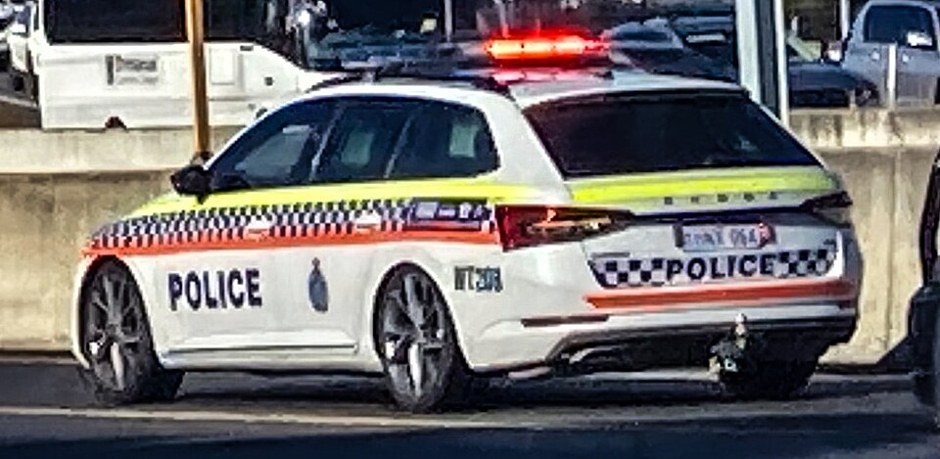
Photo: LuvsMG481, CC BY-SA 4.0, via Wikimedia Commons
To supervise a learner driver in Western Australia, you must have held a driver’s licence for the car being driven for at least 4 years, or be a licensed driving instructor. You follow the same alcohol and drug limits as if you were driving, and you sign off every Learn&Log trip or logbook entry. This guide is for WA parents, relatives and friends as of November 2026. It covers the 4-year rule, signing off hours, the 5 night hours and how to use the official practice exercises to get a learner PDA-ready.
Key facts
- Licence: held for at least 4 years (2 years for a moped), for the type of vehicle the learner is driving. A licensed driving instructor also qualifies.
- Manual or automatic: if your licence has an automatic condition (C-A), you cannot supervise a learner in a manual.
- Alcohol and drugs: the limits that would apply if you were driving. For most fully licensed drivers that is under 0.05, with no illicit drugs.
- Hours: learners under 25 need at least 50 supervised hours, including 5 at night (sunset to sunrise).
- Sign-off: on the learner’s own phone in Learn&Log, or in the paper Learner Log Book after each session.
- Form E49: a supervisor declaration of the 5 compulsory night hours.
Who can supervise a learner driver in WA?
Drive Safe sets out three groups of people who can teach a learner:
- a licensed driving instructor
- an instructor in an approved youth driver education course
- a licensed driver authorised for that kind of driving, who has held that authorisation for at least 4 years in total (2 years for a moped).
The 4 years can be made up of separate periods that add up to 4 years. Your licence must also cover the vehicle: a supervisor with a C-A (automatic only) licence can supervise only in an automatic car.
| Person | Can supervise in WA? |
|---|---|
| Parent licensed for 25 years | Yes |
| Cousin who has held a licence for 3 years | No, not until 4 years |
| Grandparent licensed for decades, but only for automatics, learner in a manual | No: only in an automatic |
| Licensed driving instructor | Yes |
DTMI also suggests choosing someone the learner feels comfortable with, who drives well, has a good record and knows the road rules.
Alcohol and drugs: the same limits as if you were driving
The learner must have zero alcohol. As the supervisor, Drive Safe says you are subject to the blood alcohol limits and the ban on illicit drugs that would apply if you were driving the car yourself. For a fully licensed driver that usually means under 0.05. If you are within your first 2 years of holding a licence, or another zero limit applies to you, it is zero. In practice: no drinking before or during a supervised drive. More: zero alcohol for learners and P platers.
Your role on every drive
DTMI lists what a supervising driver must do:
- make sure L plates are displayed at all times
- understand and follow the road rules and learner restrictions
- follow the alcohol and drug limits above
- make sure the car is licensed and roadworthy
- sign off the learner’s logbook after each session.
The learner’s own restrictions are a 100 km/h maximum (or the posted limit if lower), zero alcohol, L plates front and back, and no driving where learners are banned, such as Kings Park. If a learner reaches 4 demerit points, their learner’s permit is suspended or disqualified. Full list: WA learner rules and the 50 hour logbook.
Signing off hours in Learn&Log
Learn&Log is the digital learner log book in the ServiceWA app. Supervisors do not need an account. You sign on the learner’s phone.
- Before the first drive, the learner adds you under Profile, then Supervisors, using your first name, last name and driver’s licence number. An instructor gives their driving instructor number instead.
- At the start of each drive, the learner picks the permit, supervisor and vehicle.
- At the end, the learner finishes the trip and marks any night time in 15-minute steps.
- You sign the screen after “Sign & submit”. The trip cannot be edited afterwards.
Trips can be marked invalid if your licence details or the car’s registration do not check out, or if a trip overlaps another one. A trip shows as “logged” once DTMI accepts it. Missed logging a drive? The learner can use “Enter a past trip”, and you still sign it.
Using the paper Learner Log Book instead? Sign each entry after the session. The learner brings the signed book to the PDA. Both the printed book and the app are legal documents, and anyone who signs false or misleading information can be prosecuted.
The 5 night hours and Form E49
Of the 50 hours, at least 5 must be driven at night, between sunset and sunrise. Form E49, the “Declaration of Supervised Night Time Driving”, is a one-page declaration that the learner has done at least 5 hours of supervised night driving. It is completed by a current WA learner’s permit holder and their supervising driver:
- The learner fills in their name, address, learner’s permit number and expiry, logbook number and the total night hours, and signs.
- The supervisor declares the 5 hours were completed and signs, with their driver’s licence or driving instructor number.
- Learners aged 25 and over are exempt from the logbook, so they do not need the form (unless they hold an R-E motorcycle learner’s permit).
The form warns that getting a licence through a false statement is an offence under the Road Traffic (Administration) Act 2008. Ask DTMI whether your learner needs an E49 as well as their logbook or Learn&Log record before the PDA.
Night tips: start on familiar streets with street lighting, then progress to unlit roads and high beam use. See headlights and high beam rules.
Teaching in three steps
DTMI’s supervisor guidance breaks learning into three steps:
| Step | Your role | Skills to practise |
|---|---|---|
| 1. Learn the basics | Instructor | Starting, moving and stopping; controls and mirrors; setting up the car; driving forward, reversing and cornering smoothly. Use an empty car park or quiet street. |
| 2. On the road | Instructor moving to supervisor | Parking in the street, signs and lights, intersections and roundabouts, speed and following distance, hazards, mirrors |
| 3. Complex conditions | Supervisor | Busy traffic, freeways and country roads, lane changes and overtaking, blind spots, planning routes |
Fifty hours is the minimum. Drive Safe notes research suggesting 100 to 120 hours of supervised experience better prepares young drivers. It recommends freeways and major roads, night driving and speeds between 80 and 100 km/h on permitted roads.
Driving Techniques for Safer Drivers: the practice exercises
The PDA includes two exercises, each combining two low-speed manoeuvres from a set of ten. The official learner guide gives supervisors a way to score practice runs:
- Pick two manoeuvres, for example reversing into a driveway, then a U-turn at a roundabout (an “I’ve left something behind” exercise).
- Mark the learner on flow, movement and path for each manoeuvre: six ticks if both are done well.
- Also watch look behind and signal across the whole task.
- When the learner scores at least five ticks consistently, they are near the PDA standard.
Then check yourselves: could the learner do it without asking questions, while chatting? Did you feel comfortable staying quiet? The ten manoeuvres include reverse parallel parking, forward and reverse angle parking and U-turns. Full list and scoring: Driving Techniques for Safer Drivers.
Handling stress
- If either of you feels stressed or angry, stop safely and take a break.
- If conditions get worse and you are uncomfortable, end the session and drive yourself.
- Stay calm and talk the learner through difficult moments, then discuss them afterwards.
Professional lessons
DTMI suggests starting with a professional instructor if you can. Check that the instructor holds a current DTMI driving instructor’s licence, uses a dual-control car and, for a learner under 18, has a current WA Working with Children Check. Some older guides mention Keys2drive. That national program ended in 2023, so do not budget on receiving its free lesson. Ask local providers about any current support before paying.
Common questions
Can a P plater supervise in WA?
No. A supervisor needs at least 4 years of licence time, so no P plater qualifies.
Does my interstate or overseas licence count towards the 4 years?
Drive Safe counts periods of authorisation that add up to 4 years, but does not say how interstate or overseas time is treated. Ask DTMI on 13 11 56. See moving to WA.
Do I need to log in to Learn&Log?
No. Supervisors cannot log in. You sign on the learner’s device.
What is the alcohol limit for a supervisor?
Whatever limit would apply if you were driving: usually under 0.05 for a full licence holder, zero if you are a novice. No illicit drugs.
Can I supervise in my automatic-only car if the learner wants a manual licence?
You can supervise practice in an automatic if you meet WA’s supervisor requirements. That does not determine the learner’s eventual test car. A learner who wants a manual licence also needs manual practice with a suitably authorised supervisor and must pass the PDA in a manual. Passing the PDA in an automatic gives a C-A licence. See automatic licence conditions in each state.
Do I come to the PDA?
The learner needs a licensed driver to bring the car. Check the car meets the PDA standard, including a centrally mounted park brake and L plates removed for the test. See the WA PDA and the test day checklist.
Back to the main guide: learning to drive in WA. Other states: supervising in Queensland and supervising in NSW.
Sources
- Department of Transport and Major Infrastructure WA, “Drive Safe: A handbook for Western Australian road users”, sections 1.3.2 and 2 (transport.wa.gov.au)
- Department of Transport and Major Infrastructure WA, “Teach someone to drive” (transport.wa.gov.au)
- Department of Transport and Major Infrastructure WA, “Learn to drive and log your hours” (transport.wa.gov.au)
- Department of Transport and Major Infrastructure WA, “Learn&Log FAQs” (transport.wa.gov.au)
- Department of Transport and Major Infrastructure WA, “E49 Declaration of Supervised Night Time Driving”, last updated 31 March 2026 (transport.wa.gov.au)
- Department of Transport and Major Infrastructure WA, “Driving Techniques for Safer Drivers: A Guide for Learner Drivers” (transport.wa.gov.au)
- Department of Infrastructure, FOI-released 2023-24 supplementary estimates brief, Keys2drive funding ended 30 June 2023 (infrastructure.gov.au)
- Transport WA, current supervision and manual licence guidance (transport.wa.gov.au)