Category: United States

  • Transfer Your License to NY: Out-of-State and Foreign Licenses

    Transfer Your License to NY: Out-of-State and Foreign Licenses

    Photo: Bo Ponomari, Pexels

    If you move to New York, you must get a New York driver license within 30 days of becoming a resident. If you hold a license from another US state, a US territory or a Canadian province, you can usually swap it at a DMV office with only a vision test. If your license is from any other country, you take the written test, the 5-hour pre-licensing course and the road test. This guide covers both routes, the documents you need, when you cannot exchange, and registering and insuring your car.

    Key facts

    • Deadline: 30 days after you become a New York resident. Living in New York for 90 days is treated as presumptive evidence that you are a resident.
    • Licenses from US states, territories and Canada: exchange in person with a vision test, if the license meets the rules below.
    • Licenses from other countries: written test, 5-hour pre-licensing course and road test.
    • Your car: register it in New York within 30 days, with New York insurance.

    Do you need a New York license at all?

    Only if you become a New York resident. A visitor with a valid license from another state or country can drive legally in New York.

    Students from other states or countries who attend school in New York are normally not treated as residents, so they do not need to exchange their license.

    If you are under 18 and visiting on an out-of-state learner permit or junior license, you must follow New York’s junior restrictions as well as your home state’s. If you are under 16, you cannot drive in New York even with an out-of-state license.

    Exchanging an out-of-state or Canadian license

    Does your license qualify?

    Your current license, from another US state or territory, a federal district or a Canadian province, must:

    • have your photograph
    • be valid, or have expired less than 24 months ago (the DMV exchange page; the printed Driver’s Manual still says expired no more than one year, so if yours expired between one and two years ago, confirm with the DMV before your visit)
    • have been issued at least 6 months before you apply. The exception is a commercial license, which can have been valid for any length of time.

    If the license does not show its issue date, get a certified driving record or a letter from the issuing state that shows it. If you cannot, you must apply for a new, original New York license. If your license does not meet these rules, the manual says you must also pass the written and road tests and complete the pre-licensing (safe driving) course.

    When you cannot exchange

    Problem What to do
    License suspended or revoked Clear the suspension or revocation first, then bring a valid license.
    Hardship or employment-only license Cannot be exchanged.
    Marked “non-renewable” or “non-transferable” Cannot be exchanged.
    Lost or stolen Get a replacement photo license from your old state, or an original letter or certified driver abstract on its letterhead, issued within 30 days before you apply.

    The letter or abstract must show your name, address, date of birth, license number, license class, any restrictions, any convictions, suspensions or revocations, the issue date and the expiry date of your latest license. It does not count as proof of identity or date of birth.

    How to exchange, step by step

    1. Get pre-screened online. The DMV pre-screening tool tells you which forms and documents to bring and lets you fill out the application (MV-44). You can also send your documents for review before your visit.
    2. Choose a license type: Standard, REAL ID or Enhanced. See REAL ID and your first US driver’s license.
    3. Gather your proofs: proof of name and date of birth (the ID-44 form lists what counts), and your Social Security card.
    4. Go to a DMV office in person. The exchange cannot be done online or by mail.
    5. Pass the vision test, or bring a completed Eye Test Report (MV-619) from an authorized provider.
    6. Surrender your out-of-state license and pay the fee. Check the current fee on the DMV fees page before you go.
    7. Drive on the temporary document. You get a temporary non-photo license. Allow 2 weeks for the card to arrive by mail. It is valid for up to 5 years.

    You normally cannot hold a New York license and another state’s license at the same time.

    Moving to New York with a license from another country

    If your license is from a country other than Canada, you cannot simply swap it. To get a New York license you must:

    1. apply for a learner permit, pass the vision test and pass the written test (see New York DMV permit test)
    2. complete the 5-hour pre-licensing course
    3. pass the New York road test.

    The DMV pages on licenses from other countries and on moving to New York do not list any foreign license exchange agreements. If you have heard that your country has one, ask the DMV before you book anything.

    Driving on your foreign license while you wait

    • A valid foreign license lets you drive without a supervising driver on any road, bridge or tunnel, except inside a DMV road test area.
    • If you have a New York learner permit but no valid foreign license, the law requires a supervising driver who is 21 or older and licensed for the vehicle.
    • If your license is not in English, bring an International Driving Permit or a certified translation to the road test. The translation must be certified by a consulate, the US Department of State or another official government agency. It must show your name, date of birth, the license expiry date and the vehicle types you can drive.

    What happens to your foreign license

    When you pass the road test, you hand your foreign license to the examiner. It is destroyed unless you give the examiner a written request to keep it on file at a DMV office. If it is kept, you can have it back, but only after you return your New York license.

    Citizenship and license type

    • You do not need to be a US citizen to get a New York license.
    • Non-citizens can get a Standard license.
    • Non-citizens with proof of lawful presence can get a REAL ID.
    • Only US citizens can get an Enhanced license.
    • Temporary visitors with a REAL ID get a card marked “TEMPORARY VISITOR” that expires on their DHS document date.

    Registering and insuring your car in New York

    • Deadline: as a new resident, register your vehicle in New York within 30 days. You must be at least 16 to register a vehicle.
    • Application: complete form MV-82 and show proof of ownership, New York insurance and sales tax payment, plus proof of name and date of birth.
    • Insurance: a vehicle registered in New York must have New York insurance. The DMV never accepts out-of-state insurance for a New York-registered vehicle.
    • Minimum liability cover: $25,000 for injury to one person and $50,000 for injury to two or more, $50,000 for the death of one person and $100,000 for the death of two or more, and $10,000 for property damage.
    • Inspection: New York vehicles need an inspection at a state-licensed station. Ask the DMV how the rules apply to your out-of-state vehicle.

    Anyone driving in New York, residents and non-residents alike, must be able to prove the vehicle has acceptable liability insurance. Driving uninsured means revocation of your license or driving privilege for at least one year.

    Common questions

    How long do I have to transfer my license to New York?

    30 days from becoming a resident. The DMV treats living in New York for 90 days as presumptive evidence of residency.

    Do I have to take a road test to transfer my license to New York?

    Not if your US or Canadian license is a photo license that is valid (or expired less than 24 months ago) and was issued at least 6 months ago. The DMV’s licence exchange page allows a licence that expired less than 24 months ago, but the online Driver’s Manual says a licence that expired more than a year ago means sitting the tests, so check directly with the DMV before you apply. Licenses from other countries need the written test, course and road test.

    Can I exchange my license online?

    No. The exchange is in person at a DMV office, but you can get pre-screened online first.

    Can I keep my old state’s license?

    You must surrender it at the exchange. Normally you cannot hold licenses from New York and another state at the same time.

    I just got my license in another state. Can I exchange it?

    Only if it was issued at least 6 months before you apply. If it is newer, plan for the written test, the pre-licensing course and the road test.

    Can I drive in New York on my foreign license as a resident while I wait for my road test?

    The DMV says a valid foreign license lets you drive without a supervisor anywhere except a road test area, and that you do not need a New York license unless you become a resident. Once you are a resident, the 30-day rule applies, so start the process early.

    Related guides

    Sources

    • New York State DMV, “Exchange Out of State Driver License” (dmv.ny.gov)
    • New York State DMV, “Drivers from Other Countries” (dmv.ny.gov)
    • New York State DMV, “Moving to or from New York State” (dmv.ny.gov)
    • New York State DMV, “New York State Driver’s Manual, Chapter 1: Driver Licenses” (dmv.ny.gov)
    • New York State DMV, “New York State Driver’s Manual, Chapter 3: Owning a Vehicle” (dmv.ny.gov)
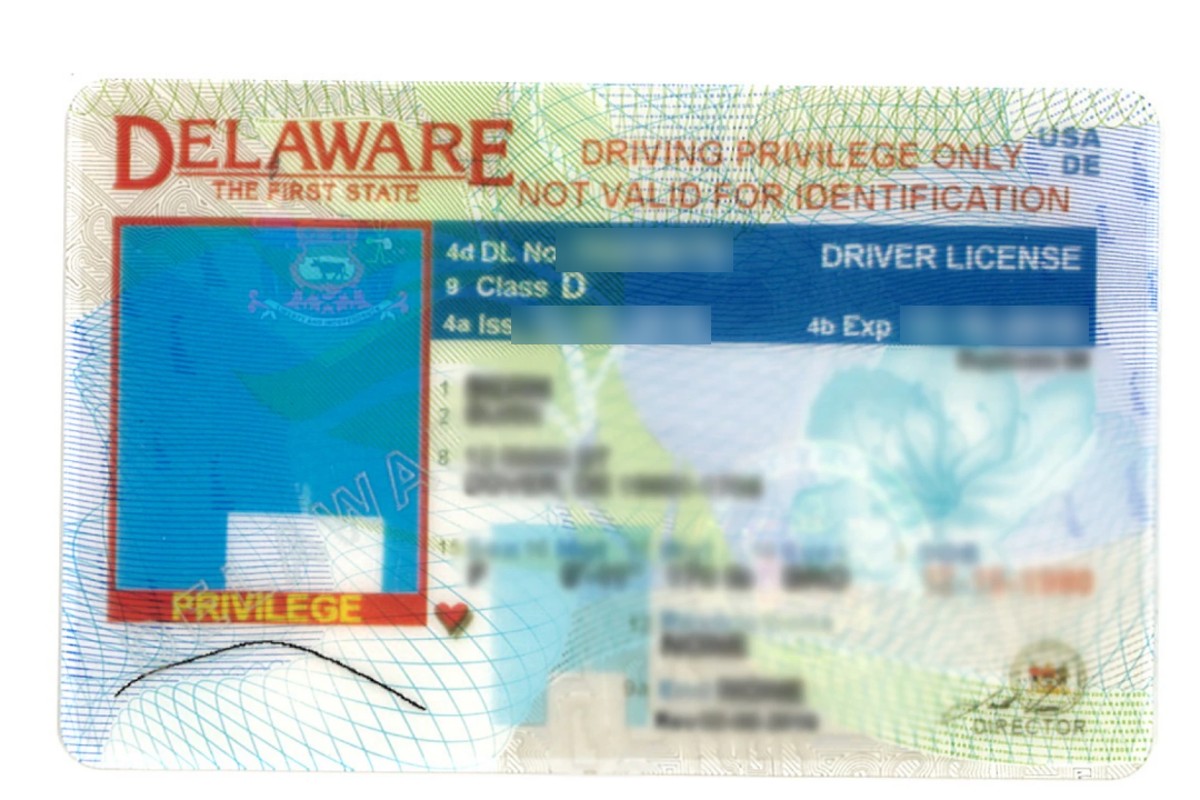
  • Delaware Driving Privilege Card (DPC) Explained

    Delaware Driving Privilege Card (DPC) Explained

    Photo: Quintin Soloviev, CC BY 4.0, via Wikimedia Commons

    The Delaware Driving Privilege Card (DPC) is a driver license for Delaware residents who can’t prove lawful presence in the United States. It lets you drive legally, but only in Delaware, and it is not valid as identification. To get one you need fingerprinting with the State Bureau of Identification, proof you filed Delaware taxes for the previous two years, the DMV tests, and a road exam after a waiting period on the DPC permit (at least 10 days on the DMV’s DPC page; the July 2026 manual sets 30 days for Class D road exams, so check with the DMV). This guide explains who qualifies and each step.

    Key facts (Delaware DMV, checked November 2026)

    • For foreign Delaware residents who can’t show legal presence in the U.S. U.S. citizens and anyone with valid legal presence documents can’t apply.
    • Driving in Delaware only. Not valid for identification.
    • The card says “Driving Privilege Only” and “Not Valid for Identification”.
    • Valid 4 years. The July 2026 manual lists a $20 fee.
    • Steps: State Bureau of Identification (SBI) fingerprinting, then a Division of Revenue tax filing certificate, then the DMV.
    • Hold the DPC permit for at least 10 days before the road exam (DMV DPC page). The July 2026 manual sets 30 days for Class D road exams, so confirm the wait when you book.
    • DMV DPC help line: 1-877-477-7117.

    Who can get a Delaware Driving Privilege Card?

    • You live in Delaware.
    • You are a foreign national who can’t produce documents proving legal presence in the U.S.
    • You have filed Delaware taxes for the previous two years.
    • You can pass the vision, knowledge and road exams.

    The DPC was created by Senate Bill 59 (2015) and the DMV began processing applications in January 2016. If you have lawful presence, apply for a standard license instead. See the Delaware learner driver guide.

    How to get a Driving Privilege Card in Delaware, step by step

    1. Book an SBI appointment online. Since September 11, 2023, you must schedule online before visiting the State Bureau of Identification. The DMV’s DPC page gives the booking site and the service code to enter. SBI collects fingerprints, checks your identification and gives you a receipt with a date to appear at the DMV on or after.
    2. Get a Certification of Filing Compliance from the Delaware Division of Revenue. It confirms you filed Delaware taxes for the previous two years. Get it on the Division of Revenue website, or call 302-577-8200 for an appointment. It shows your name, the tax years, your ITIN or SSN and a document locator code.
    3. Go to the DMV with all your documents, originals or certified copies (list below).
    4. Pass the vision screening and knowledge exam. These may be done on this first visit. See the Delaware knowledge test guide.
    5. Receive your DPC permit and practice with a properly licensed driver over 21.
    6. Take the road exam, no sooner than 10 days after getting the permit under the DMV’s DPC page. The July 2026 manual says 30 days for Class D road exams, so check with the DMV when you book. See the Delaware road test guide.

    Documents for a Delaware DPC

    What Accepted documents
    SBI receipt Receipt with your name, date of birth and SBI receipt number. The DMV verifies it with SBI.
    Tax filing proof Division of Revenue Certification of Filing Compliance covering the previous two years
    Name and date of birth (one) Valid, unexpired foreign passport; valid, unexpired consular ID card from your country; or, for Mexico, the IFE voter card (Credencial para Votar)
    Residency (two) From separate sources, showing your physical address, postmarked within 60 days. Examples: utility bill, bank record, rental agreement, insurance policy, employment record.
    Name change (if any) All marriage, court or divorce documents linking your names
    Under 18 Also an original birth certificate plus a translated copy

    Consular cards on the manual’s list include those from Brazil, Colombia, Ecuador, Guatemala and Mexico, and the DMV says the list can change. Foreign-language documents need a professional English translation attached to the original. Photocopied, altered or expired documents are refused.

    Driving on a DPC permit and card

    • DPC learner permit: you can drive a Class D vehicle only with a properly licensed driver over 21.
    • Teens 16 and 17: the GDL rules apply. That means driver education, a sponsor, and the Level One permit limits (see Delaware GDL rules). The GDL program accepts the DPC document list for DPC applicants.
    • All Delaware traffic laws apply to DPC holders, including insurance requirements and the phone ban.
    • Delaware only: the DPC is issued for driving in Delaware. Don’t assume another state will accept it.

    Common questions

    Can I use a Delaware DPC as ID?

    No. It is printed “Not Valid for Identification” and is for driving only.

    Can I drive in other states with a Delaware DPC?

    The DMV says the DPC is valid for driving purposes only within Delaware.

    Do I need a Social Security number?

    No. The tax certificate can show an ITIN instead. If you are eligible for an SSN, the DMV asks for proof.

    How long is a Driving Privilege Card valid?

    4 years. A standard Class D license lasts 8.

    I have a license from another state. Can I get a DPC?

    You must surrender your other state’s license when you apply, and you still go through every DPC step.

    Are there scams around the DPC?

    The DMV’s DPC page carries a scam warning. Apply only through SBI, the Division of Revenue and the DMV, and call 1-877-477-7117 with questions.

    Back to the Delaware learner driver guide.

    Sources

    • Delaware Division of Motor Vehicles, “Driving Privilege Card (DPC)” (dmv.de.gov)
    • Delaware Division of Motor Vehicles, “Delaware Driver Manual (July 2026)” (dmv.de.gov)
    • Delaware Division of Motor Vehicles, “Graduated Driver License” (dmv.de.gov)
  • Delaware Road Test: What You Must Demonstrate

    Delaware Road Test: What You Must Demonstrate

    Photo: Mark Stebnicki, Pexels

    The Delaware DMV road test takes about 30 minutes. You must show parallel parking, a three-point turn, backing 50 feet, merging, lane changes, turns and right-of-way, plus a vehicle safety check and knowing the controls. The July 2026 manual says you can take it 30 days after passing the knowledge exam (the DMV road test web page still says 10), on any weekday except Wednesday. This guide is for drivers testing at the DMV, mainly adults 18 and older. Teens on the GDL route usually take their road test with their driver education teacher.

    Key facts (Delaware DMV, checked November 2026)

    • Earliest test: 30 days after you pass the knowledge exam, per the July 2026 manual. The DMV road test page still says 10 days, so confirm when you book.
    • Test days: Monday, Tuesday, Thursday and Friday. No road tests on Wednesday.
    • Book online with My Road Test (under Online Services on the DMV website) or by phone.
    • You bring the car. It must be registered, insured, safe, clear of cargo and at least half full of gas.
    • Fail any part and you wait before retesting: at least 30 days in the July 2026 manual, 10 days on the DMV road test page. Check with the DMV when you rebook.
    • You must pass within the 12 months your learner’s permit is valid.

    What you must demonstrate on the Delaware road test

    The DMV says it won’t ask you to do anything illegal or unsafe, and won’t play tricks. You will be asked to:

    Skill What to get right
    Inspect vehicle for safety Check lights, signals, brakes, mirrors and wipers beforehand. The manual lists these as common inspection failures, and the examiner checks the car before you start.
    Know vehicle controls Be ready to use the headlights, wipers, hazards and horn without searching for them.
    Respond to signs, signals and markings Full stops at stop signs and red lights, behind the stop line or crosswalk.
    Parallel parking Finish no more than 12 inches from the curb, in park, with the brake set.
    Three-point turn Turn sharp left almost to the curb, back right almost to the other curb, then pull away in the opposite direction.
    Back 50 feet Look back over your shoulder, go slowly and stay straight.
    Right and left turns Signal 300 feet ahead, use the correct lane, and yield to pedestrians.
    Change lanes Mirror, signal, shoulder check for the blind spot, then move.
    Use right-of-way rules At intersections, crosswalks and four-way stops.
    Maintain proper speed At or under the limit, and slower in bad conditions.
    Merge with traffic Match the traffic speed and find a gap.
    Follow and overtake vehicles Keep at least a 3-second gap and pass only where it’s legal.
    Be overtaken Keep right and don’t speed up while someone passes you.
    Enter intersections Only enter if you can clear it without stopping inside.

    How to parallel park the Delaware manual way

    1. Check your mirror. If someone is close behind, don’t stop suddenly. Signal.
    2. Stop with your rear bumper level with the back of the car in front of the space.
    3. Back slowly, turning the wheel right to aim at the front of the car behind.
    4. When your front clears the car ahead, turn sharply left and keep backing slowly.
    5. Straighten up and pull forward to center the car, no more than 12 inches from the curb.
    6. Put it in park, set the brake and turn off the engine.

    To leave, signal, check traffic and steer toward the open lane.

    How to book the Delaware road test

    • Online: the DMV website, then Online Services, then My Road Test.
    • By phone: call the office where you want to test.
    DMV office Address Road test phone
    Wilmington 2230 Hessler Boulevard, New Castle, DE 19720 (302) 434-3220
    Delaware City 2101 Mid County Drive, New Castle, DE 19720 (302) 832-5176
    Dover 303 Transportation Circle, Dover, DE 19903 (302) 744-2515
    Georgetown 23737 DuPont Blvd., Georgetown, DE 19947 (302) 853-1003

    What to bring to the Delaware road test

    • Your valid learner’s permit.
    • A licensed driver aged 21 or older and their valid license. They must stay on site so they can drive the car home if you don’t pass.
    • The car’s valid registration card (and the trailer’s, if you’re towing one).
    • A valid insurance card for the car, original or electronic.

    Delaware rules for the road test car

    • It must be within the license class you’re applying for, registered, insured and able to pass the examiner’s safety check.
    • No debris or cargo inside.
    • At least half a tank of gas, or the test may be rescheduled.
    • Parking assist features must be turned off. Intelligent Parking Assist can’t be used.
    • No smoking, no cell phone use and no music during the test.

    Teen road tests in Delaware

    Under the GDL law, a teen’s written and road skills tests can be given by the DMV or by a driver education teacher. In practice the GDL handout says teens pass both with their driver education teacher, and the DMV examines minors with disabilities. The teacher then certifies you as qualified. Teens practice to the same skills list, so this checklist still applies. See Delaware driver’s ed and the Blue Certificate and Delaware GDL rules.

    If you fail the Delaware road test

    • Wait at least 30 days (July 2026 manual; the DMV web page says 10), then check with the DMV and book again.
    • Practice the parts you got wrong. The national list of common reasons people fail the driving test is a good checklist.
    • Keep track of your permit date. Miss the 12-month window and you reapply and redo every test.

    Common questions

    Can I take the Delaware road test on a Wednesday?

    No. Road exams run every weekday except Wednesday.

    How long is the Delaware road test?

    About 30 minutes of normal driving.

    Is parallel parking on the Delaware road test?

    Parallel parking is on the DMV road test page’s list, but the July 2026 manual’s list leaves it out. Practice it anyway. The three-point turn and backing 50 feet are on both lists.

    Can I use a backup camera or self-parking feature?

    Self-parking is not allowed. Intelligent Parking Assist must be switched off for the test. Ask your examiner whether you may use a backup camera. Being seen looking over your shoulder is the safe habit.

    Who has to come with me?

    A licensed driver aged 21 or older, unless you can already legally drive alone in Delaware. They must stay until the test is over.

    How soon after the permit can I take the road test?

    30 days after passing the knowledge exam under the July 2026 manual. The DMV road test page still says 10 days, so check when you book.

    How other states compare: US road test by state. Back to the Delaware learner driver guide, or prepare with the Delaware knowledge test guide.

    Sources

    • Delaware Division of Motor Vehicles, “Rules of the Road Test and Road Test” (dmv.de.gov)
    • Delaware Division of Motor Vehicles, “Delaware Driver Manual (July 2026)” (dmv.de.gov)
    • Delaware Division of Motor Vehicles, “Apply for License (Over 18)” (dmv.de.gov)
    • Delaware Division of Motor Vehicles, “Graduated Driver Licensing handout” (services.dmv.de.gov)
    • Delaware General Assembly, “Delaware Code Title 21, Section 2710” (delcode.delaware.gov)
  • Delaware Permit Test: Signs, Rules of the Road and Pass Mark

    Delaware Permit Test: Signs, Rules of the Road and Pass Mark

    Photo: Niagara, CC BY-SA 3.0, via Wikimedia Commons

    The Delaware DMV knowledge test has two parts: a highway sign and signal test, then a rules of the road test. Both come from the Delaware Driver Manual. You also need to pass a vision screening. Pass all three and you get a Class D learner’s permit. This guide is for adults and anyone else who tests at the DMV. Most teens under 18 take their written test with their driver education teacher instead.

    Key facts (Delaware DMV, checked November 2026)

    • Vision: 20/40 or better, with or without glasses. Between 20/40 and 20/50, you may be limited to daylight driving.
    • Questions: the DMV sample test page says 32 questions with 26 correct to pass. The DMV FAQ says 30 questions with 24 correct. Either way, you need about 80%.
    • Learner’s permit: valid 12 months, and you must pass all exams within that time.
    • Road test: no sooner than 30 days after passing the knowledge exam under the July 2026 manual (the DMV road test web page still says 10 days).
    • Fee: $50 for a Class D license, which includes the permit (from October 10, 2025).
    • Audio tests with headphones are available on request.

    Who takes the knowledge test at the Delaware DMV?

    • First-time drivers 18 or older who don’t use the GDL program.
    • Driving Privilege Card applicants.
    • Drivers licensed in another country or a U.S. territory. Germany, Taiwan and France are exempt for a Class D license.
    • Drivers whose Class D privileges have been cancelled, expired, suspended or revoked for over a year. Over 5 years, you also retake the road test.
    • Teens moving to Delaware with an out-of-state license.

    Teens under 18 on the GDL route: your driver education teacher gives the written and road tests. At the DMV you only need the eye screening. The DMV tests minors who need a specialized evaluation because of a disability. See Delaware driver’s ed and the Blue Certificate.

    How many questions are on the Delaware permit test?

    The two DMV pages give different numbers:

    DMV page Questions Correct answers to pass
    Sample Written Test page 32 26
    General FAQ page 30 24

    Prepare to get at least 26 right and you are covered either way. The DMV’s free sample test (10 questions) is on its website and the DelDOT mobile app. It shows the style of question, not every question you’ll get.

    Part 1: the highway sign and signal test

    You identify signs by shape, color or symbol alone, with the words removed. You also explain what signs, signals and pavement markings mean. The manual’s examples:

    • Shapes: the stop, yield and school sign shapes.
    • Signal colors: red means stop, yellow means prepare to stop, green means proceed with caution.
    • Symbols: keep right, no U-turn, no right turn.

    Also learn that work zone warning signs are usually orange, and that black-on-yellow speed signs are advisory, not legal limits. Speed limit signs are black on white. Full system: US road signs by shape and color.

    Part 2: the rules of the road test

    These questions cover Delaware traffic law and safe driving. The manual names these sample topics: the speed limit on two-lane roads, what to do at a flashing red signal, when not to pass, how to handle a skid, and how far from a fire hydrant you can park. These are the Delaware figures to know cold:

    Topic Delaware answer
    Two-lane road speed limit 50 mph unless posted
    Other default limits School zone 20, business or residential 25, divided or 4+ lane roads 55, Route 1 and I-495 65 mph
    Flashing red light Same as a stop sign: full stop, go when safe
    Flashing yellow light Slow down and proceed with caution
    Dark signal Slow down and prepare to yield to vehicles in or approaching the intersection
    Fire hydrant Don’t park within 15 feet
    Crosswalk at an intersection Don’t park within 20 feet
    Stop sign, signal or flashing beacon Don’t park within 30 feet
    Railroad crossing Don’t park within 50 feet
    Signal before turning 300 feet
    Passing a cyclist At least 3 feet
    Headlights On from sunset to sunrise, below 1,000 feet visibility, and with wipers on; dim within 500 feet of oncoming traffic, 200 feet behind another car
    Downhill parking Turn front wheels toward the curb or road edge
    Uphill parking with a curb Turn front wheels away from the curb
    Yellow center lines Solid line on your side means no passing; double solid means neither side passes
    Stopped school bus, red lights Stop from both directions unless you are across a road with 4 or more lanes
    Under-21 alcohol limit 0.02 BAC (adults 0.08)
    Crash reporting Report to police for any injury, or $500+ apparent damage on a public highway

    The 10 sample questions also cover yielding on left turns, four-way stops, bridges freezing first, making room for merging traffic, low beams in fog and following distance in bad weather. See four-way stops explained and speed limits and the basic speed law.

    Getting your Class D learner’s permit in Delaware

    1. Go to a DMV office (Delaware City, Dover, Georgetown or Wilmington) with your identity, Social Security and two Delaware residency documents.
    2. Pay the fee. Payment is due when you apply.
    3. Pass the eye screening and both knowledge tests.
    4. Get your learner’s permit, valid for 12 months.

    Permit rules (18 and older):

    • Drive only with a licensed driver aged 21 or older sitting beside you.
    • The DMV says no more than 2 other passengers.
    • Drive only the class of vehicle shown on the permit.
    • If you don’t pass the road test within the 12 months, you reapply and redo all the testing.

    Next step: what the Delaware road test checks.

    How to study for the Delaware knowledge test

    • Read Sections Two (license rules, DUI) and Four (rules of the road) of the manual closely. The DMV says you can’t pass unless you know the manual.
    • Learn every number in the table above. Delaware-specific figures are the easiest marks to lose.
    • Practice naming signs from their shape and color alone.
    • Take the DMV sample test, then check every answer against the manual.
    • If you have a disability and need an accommodation, call your DMV office to book before you go.

    Common questions

    How many questions do I need right on the Delaware permit test?

    The DMV sample test page says 26 of 32. The DMV FAQ says 24 of 30. Aim for 26 or more.

    Is the Delaware knowledge test available in other formats?

    The manual says audio tests with headphones are available on request. Ask your DMV office which test languages are available.

    Do 16-year-olds take the knowledge test at the DMV?

    Not usually. On the GDL route, your driver education teacher gives the written test as part of the course. At the DMV you bring the Blue Certificate and pass the eye screening.

    Is the sample test the real test?

    No. The DMV says the 10 sample questions don’t include every question on the actual exam.

    What if my eyesight is between 20/40 and 20/50?

    The DMV may let you drive in daylight only. If you need glasses to pass, your license will be marked so you can’t legally drive without them.

    How long is the Delaware learner’s permit valid?

    12 months from issue. You must pass the road test in that time or start again.

    Compare other states: US permit test by state. Back to the Delaware learner driver guide.

    Sources

    • Delaware Division of Motor Vehicles, “Delaware Driver Manual (July 2026)” (dmv.de.gov)
    • Delaware Division of Motor Vehicles, “Sample Written Test” (dmv.de.gov)
    • Delaware Division of Motor Vehicles, “Frequently Asked Questions: General” (dmv.de.gov)
    • Delaware Division of Motor Vehicles, “Drivers License Examination” (dmv.de.gov)
    • Delaware Division of Motor Vehicles, “Apply for License (Over 18)” (dmv.de.gov)
    • Delaware Division of Motor Vehicles, “Graduated Driver Licensing handout” (services.dmv.de.gov)
    • State of Delaware News, “DMV Fees Increase in October 2025” (news.delaware.gov)
  • Learning to Drive in Delaware: Permit, GDL and Road Test Guide

    Learning to Drive in Delaware: Permit, GDL and Road Test Guide

    Photo: Acroterion, CC BY-SA 4.0, via Wikimedia Commons

    In Delaware, teens can start driving at 16 on a Level One Learner’s Permit, but only after passing a Department of Education approved driver education course and earning the Blue Certificate. After 12 months of valid driving on that permit, it converts automatically to a full Class D license, at 17 at the earliest. Adults 18 and older can skip the teen program: pass the vision and knowledge tests at the DMV, then a road test after a waiting period (30 days in the July 2026 manual; the DMV road test web page still says 10). This guide sets out both routes, the fees, and what the Delaware Driver Manual (July 2026) covers.

    Key facts (Delaware DMV, checked November 2026)

    • Youngest age for a Level One Learner’s Permit: 16 (up to 22 for students with an active IEP).
    • Driver education is required for everyone under 18.
    • Teen permit: first 6 months fully supervised with 50 practice hours (10 at night), then solo driving from 6 a.m. to 10 p.m.
    • Full Class D license: automatic after 12 months on the permit, earliest at 17.
    • Adults: road test no sooner than 30 days after passing the knowledge exam, per the July 2026 manual. The DMV road test web page still says 10 days, so confirm when you book.
    • Fee: $50 for a Class D license, which includes the learner’s permit (new fee from October 10, 2025).
    • Road tests run every weekday except Wednesday.

    How teens get a driver’s license in Delaware

    1. Take driver education. Most students take it free at high school. The course is at least 44 class hours and ends with the Blue Certificate. Your driver education teacher gives you the written and road tests. See Delaware driver’s ed and the Blue Certificate.
    2. Go to the DMV with your sponsor. Bring the Blue Certificate, proof of identity, legal presence and Social Security number, and two proofs of Delaware residency. You can skip the residency proofs if your sponsor is a licensed Delaware driver living at your address. Your sponsor (usually a parent) signs the application in front of DMV staff.
    3. Pass the eye screening and pay the fee. You receive the Level One Learner’s Permit.
    4. Months 1 to 6: supervised at all times. Log 50 hours, including 10 at night. Your sponsor certifies the hours.
    5. Months 7 to 12: limited solo driving. You can drive alone from 6 a.m. to 10 p.m. with no more than one passenger.
    6. Month 12: automatic Class D license. The permit converts with no extra DMV test, as long as you are at least 17 and your sponsor has not withdrawn. Any suspension time is added on.

    Full rules, exceptions and penalties: Delaware graduated driver license rules for teens.

    How adults (18 and older) get a Delaware license

    1. Apply in person at a DMV office in Delaware City, Dover, Georgetown or Wilmington with your identity, Social Security and residency documents.
    2. Pass the eye screening and the knowledge exam (road signs and rules of the road). See the Delaware DMV knowledge test guide.
    3. Pay the fee. You get a learner’s permit valid for 12 months.
    4. Practice with a licensed driver who is at least 21 and sits beside you. The DMV says no more than 2 other passengers.
    5. Book and pass the road test, at least 30 days after the knowledge exam (July 2026 manual; the DMV web page still says 10) and within the 12 months. See the Delaware road test guide.

    If you are 18 or older you can still choose the GDL program instead of the DMV tests. Most adults don’t.

    Teen route vs adult route

    Step Age 16 or 17 (GDL) Age 18 or older
    Driver education Required (Blue Certificate) Not required
    Who tests you Driver education teacher (written and road) DMV (vision, knowledge, road)
    Sponsor signature Required Not needed
    Supervisor Parent, guardian or sponsor-approved driver, 25+, Class D held 5+ years Licensed driver aged 21+
    Practice hours 50, including 10 at night No set number
    Earliest unsupervised driving After 6 months, 6 a.m. to 10 p.m. only After passing the road test
    Full license Automatic after 12 months (age 17+) On passing the road test

    Delaware driver license fees (as of November 2026)

    Item Fee
    Class D license, 8 years (includes the learner’s permit) $50 (from October 10, 2025)
    Driving Privilege Card, 4 years $20 (July 2026 manual)
    Vehicle safety inspection, Delaware residents No charge
    Vehicle document fee when titling 5.25% of the price or NADA value (from October 1, 2025)

    The July 2026 manual lists $50, but some DMV web pages still show the old $40 figure. The DMV’s October 2025 fee notice raised it to $50. Check the DMV fees page before you go. The DMV takes cash, check, money order and major cards.

    Documents you need at the Delaware DMV

    • One proof of identity and legal presence: for example a certified U.S. birth certificate with a raised seal or a valid U.S. passport. If you are under 18, the document must show your parent’s name.
    • Proof of Social Security number if you are eligible: Social Security card, W-2, 1099 or a pay stub with the full number.
    • Two proofs of Delaware residency from separate sources, showing your physical address and postmarked within 60 days. Examples: utility bill, bank statement, rental agreement.

    No photocopies. A compliant (REAL ID) card has a gold star. More: REAL ID and your first US driver’s license.

    Other routes to a Delaware license

    What the Delaware Driver Manual covers

    Both permit tests come from the Delaware Driver Manual (July 2026). Here are its sections and the Delaware rules worth memorizing from each.

    Section Delaware points to know
    One: Introduction and fees Definitions (Blue Certificate, three-point turn), online services, fee table
    Two: Driver license information Documents, GDL, transfers, license classes, the driver examination (vision, signs, rules, road test), points, DUI and the 0.02 zero tolerance rule for under 21
    Three: Equipment, titles, registration and insurance Headlight rules, window tint, studded tires, insurance minimums, inspection
    Four: Rules of the road Signals, signs, work zones, phone law, move over, school buses, parking, speed limits, other road users
    Five: Driving skills and safety Following distance, night driving, defensive driving, emergencies, crashes

    Delaware rules of the road: the numbers in the manual

    Rule Delaware figure
    Speed limits (unless posted) School zones 20 mph; business and residential districts 25 mph; two-lane roads 50 mph; divided or 4+ lane roads 55 mph; Route 1 and I-495 65 mph
    Work zones Speeding fines are doubled
    Signaling Signal 300 feet before you turn, stop or change lanes
    Passing a bicycle At least 3 feet; change lanes on multi-lane roads when possible
    Headlights Sunset to sunrise, when you can’t see 1,000 feet, and whenever wipers are on; dim within 500 feet of oncoming traffic and 200 feet when following
    Following distance At least 3 seconds; 4 seconds on slippery roads and in other risky conditions
    Parallel parking Within 12 inches of the curb
    No parking within 15 feet of a hydrant; 20 feet of a crosswalk at an intersection; 30 feet of a stop sign, signal or flashing beacon; 50 feet of a railroad crossing
    Red light Right on red after a full stop unless a sign or red arrow prohibits it; left on red only from one-way into one-way
    School bus with red lights Both directions stop, unless you are on the opposite side of a road with 4 or more lanes
    Phones Hand-held use and texting banned for all drivers; GDL drivers can’t use any phone, even hands-free
    Alcohol 0.08 BAC for adults; 0.02 for drivers under 21
    Studded tires Legal October 15 to April 15 only
    Move over For a stopped emergency vehicle, DelDOT truck, tow truck, or any stopped vehicle showing hazard lights, flares or cones: change lanes away from it if you safely can, otherwise slow to a safe speed
    Roundabouts Slow to 10 to 15 mph on the approach, yield to pedestrians and to traffic already circling, and don’t stop or pass once inside
    Pedestrians Stop for anyone crossing in a marked or unmarked crosswalk, and never pass a car stopped to let someone cross
    Passing a stopped school bus $115 to $230 fine (or 30 to 60 days in jail) and a 1-month suspension for a first offense; 6 points
    Child seats Rear-facing seat under age 2 and 30 pounds; harnessed seat under age 4 and 40 pounds; booster until its maker’s limit; then a seat belt in every seat to age 16. Under 12 or under 5 feet 5 inches should not ride in front
    Reporting a crash to police Any injury or death, or apparent property damage of $500 or more on a public highway

    National explainers: school bus stopping laws, move over laws, zero tolerance laws for drivers under 21.

    Insuring and registering a car in Delaware

    • Minimum liability insurance: $25,000 for one person injured, $50,000 for two or more, $10,000 property damage, plus Personal Injury Protection of $15,000 per person and $30,000 per crash.
    • Driving uninsured: a fine of $1,500 to $2,000 and a 6-month license suspension for a first offense.
    • Inspection: done at the four DMV locations, free for residents. Lights, brakes, mirrors and wipers commonly fail.
    • Under 18: a title application needs a parent, guardian or court-appointed custodian to sign.
    • Change of address: tell the DMV within 30 days.

    Insurance basics: car insurance for new drivers.

    Common questions

    How old do you have to be to drive in Delaware?

    16 for a Level One Learner’s Permit, with driver education completed. You can drive unsupervised during the day from 6 months into the permit. You get the full Class D license at 17 at the earliest.

    Is driver’s ed required in Delaware?

    Yes, if you are under 18. The DMV can’t license anyone under 18 who hasn’t passed a Department of Education approved driver education course.

    Do Delaware teens take the road test at the DMV?

    Usually not. The driver education teacher gives the written and road tests. The DMV tests minors who need a specialized evaluation because of a disability.

    Do I have to go back to the DMV after 12 months on the GDL permit?

    No. The permit converts automatically to a Class D license after 12 months of valid driving, unless it was suspended or your sponsor withdrew.

    Can I take the Delaware road test on a Wednesday?

    No. The DMV gives road tests every weekday except Wednesday.

    How do Delaware license points work?

    Points count at full value for 12 months and half value for the next 12. Speeding 1 to 9 mph over costs 2 points, 10 to 14 mph 4 points, 15 mph or more 5 points; running a stop sign or red light 3; reckless or aggressive driving 6. At 8 points you get an advisory letter, at 12 you must take a behavior modification course (or take a 2-month suspension), and from 14 points suspensions start at 4 months. Speeding 25 mph or more over the limit brings a suspension of its own.

    Do I have to report a medical condition to the Delaware DMV?

    You must declare any condition that could affect safe driving when you apply or renew, and the DMV can ask for a favorable report from your doctor, in some cases every year. The July 2026 manual says doctors have not been required to report patients since August 2024, though they are encouraged to.

    How long is a Delaware license valid?

    New Class D licenses are issued for 8 years, unless your authorized stay in the U.S. is shorter.

    Can I drive in Delaware on a license from another state?

    Yes, as a visitor. Once you become a resident, you have 60 days to get a Delaware license.

    More on how US states compare: learning to drive in the USA and US graduated driver licensing compared.

    Sources

    • Delaware Division of Motor Vehicles, “Delaware Driver Manual (July 2026)” (dmv.de.gov)
    • Delaware Division of Motor Vehicles, “Graduated Driver License” (dmv.de.gov)
    • Delaware Division of Motor Vehicles, “Apply for License (Over 18)” (dmv.de.gov)
    • Delaware Division of Motor Vehicles, “Rules of the Road Test and Road Test” (dmv.de.gov)
    • Delaware Division of Motor Vehicles, “Guidelines for New Residents” (dmv.de.gov)
    • Delaware Division of Motor Vehicles, “Graduated Driver Licensing handout” (services.dmv.de.gov)
    • State of Delaware News, “DMV Fees Increase in October 2025” (news.delaware.gov)
    • Delaware General Assembly, “Delaware Code Title 21, Section 2710” (delcode.delaware.gov)
    • Delaware Department of Education, “14 DE Admin. Code 540 Driver Education” (regulations.delaware.gov)
  • How to Drive in Snow, Fog and Rain: US Guide for New Drivers

    How to Drive in Snow, Fog and Rain: US Guide for New Drivers

    Photo: Abdulvahap Demir, Pexels

    To drive in snow, slow right down, leave much more space, and brake, steer and accelerate gently. Use the same approach in rain, fog and on ice, with low-beam headlights so you can see and be seen. This guide covers headlight and high-beam rules, hydroplaning, skid recovery and winter driving, using the California, New York and Oregon handbooks. Headlight laws and distances are set by each state, so check your own handbook for the test.

    Key facts

    • California’s suggested speeds: 5 to 10 mph slower on wet roads, half your normal speed on packed snow, no more than 5 mph on ice.
    • Use low beams in fog, rain and snow. High beams reflect back and cause glare.
    • New York requires headlights when you use your wipers for rain, snow or sleet.
    • Dim high beams for oncoming cars within 500 feet (New York and Oregon). For cars ahead: 200 feet in New York, 350 feet in Oregon.
    • Bridges and shaded areas freeze first. Roads are most slippery near freezing (Oregon).

    When do you have to use headlights?

    Rule New York Oregon
    Time of day From half an hour after sunset to half an hour before sunrise From sunset to sunrise
    Poor visibility When visibility is less than 1,000 feet When you cannot see people or vehicles 1,000 feet ahead
    Wipers On whenever you use wipers for rain, snow or sleet Advised: headlights on whenever wipers are on
    Dim high beams: oncoming Within 500 feet Within 500 feet
    Dim high beams: following Within 200 feet of a vehicle ahead, even in another lane Within 350 feet

    California tells drivers to use low beams when it is raining. On the California drive test, not using wipers, defroster or headlights when the weather or darkness requires them is a critical error.

    Driving in rain

    • Wipers, low beams and defroster on (California).
    • Slow down 5 to 10 mph on wet roads (California), and brake earlier and more gently (Oregon).
    • Do not use cruise control on wet roads (Oregon).
    • Leave more following distance. Stopping takes longer on wet pavement.

    What is hydroplaning and what do you do?

    In heavy rain, your tires can begin to ride on the water on top of the pavement instead of the road. New York says it usually happens at higher speeds, but worn tires or the wrong tire pressure make it more likely. To prevent it and deal with it:

    • Slow down in heavy rain. If the car begins to lose traction, decrease your speed even more (New York).
    • Avoid hard braking, which makes a skid worse.
    • Keep tires properly inflated and replace worn tires.

    Flooded roads

    Do not drive through flooded areas. Oregon warns high water can cause loss of control or stalling. California notes you may not be able to tell how deep the water is by looking. Turn around.

    Driving in fog

    • Low beams, never high beams. In fog, high beams reflect back at you (California, Oregon).
    • Slow down so you can stop within the distance you can see.
    • Brake early and gently so drivers behind can react (New York).
    • Signal turns earlier than usual (New York).

    How to drive in snow and on ice

    1. Before you go: New York says not to drive in ice or snow storms unless you must. If you go, clear all windows, headlights and back lights, wipers, hood and roof, and use washer fluid that resists freezing. In snowy areas, carry snow chains (California).
    2. Speed: about half your normal speed on packed snow, no more than 5 mph on ice (California).
    3. Space: leave much more following distance and avoid cruise control (Oregon).
    4. Braking: brake gently. Oregon warns that if you slam on the brakes, your car will likely skid.
    5. Watch for ice: bridges and shaded areas freeze first, and the road is most slippery when the temperature is near freezing.

    Chains and studded tires are regulated by each state. Oregon, for example, generally allows studded tires only from November 1 to March 31. Check your state’s chain and tire rules before a winter trip. If road conditions call for it, Oregon requires traction tires or chains on a car used for the drive test.

    How to recover from a skid

    Skid What to do (New York’s guidance)
    Rear-wheel skid (back end slides) Turn the steering wheel in the direction the car is trying to go. If the rear slides the other way as you recover, steer that way too; you may need to turn back and forth several times
    Front-wheel skid (car keeps going straight) Take your foot off the gas, shift to neutral or push in the clutch, and do not try to steer right away. Once traction returns, turn the wheel where you want to go, shift back to drive and accelerate carefully
    Braking with ABS Keep steady, firm pressure on the pedal
    Braking without ABS Pump the brake pedal carefully; hard braking makes the skid worse

    Oregon puts it simply: ease off the brakes until the car slows, steer where you want to go, then steer back as the car straightens.

    State guides for tough conditions

    Related: the basic speed law, freeway driving and what to do after a crash. All US topics: learning to drive in the USA.

    Common questions

    Should I use high beams in snow or fog?

    No. Use low beams. High beams reflect off snow and fog and make it harder to see.

    What speed should I drive in snow?

    California suggests about half your normal speed on packed snow and no more than 5 mph on ice. Go slower if you need to.

    When do I have to dim my high beams?

    Within 500 feet of an oncoming car in New York and Oregon. For a car ahead, 200 feet in New York and 350 feet in Oregon. Check your state.

    Do I need my headlights on when it rains?

    In New York, yes, whenever your wipers are on for rain, snow or sleet. California also tells drivers to use low beams in rain.

    Which way do I steer in a skid?

    In a rear-wheel skid, New York says to turn the wheel in the direction the car is trying to go. Do not slam the brakes.

    Is it safe to use cruise control in the rain?

    No. Oregon advises against cruise control on wet roads and in snow.

    Sources

    • California DMV, “California Driver’s Handbook: Safe Driving” (dmv.ca.gov)
    • California DMV, “Driving Performance Evaluation (DPE) Scoring Criteria” (dmv.ca.gov)
    • New York State DMV, “New York State Driver’s Manual” (dmv.ny.gov)
    • Oregon DMV, “Oregon Driver Manual: Safe and Responsible Driving, Hazardous Conditions” (oregon.gov)
    • Oregon DMV, “Oregon Driver Manual: Testing” (oregon.gov)
    • Oregon DMV, “Oregon Driver Manual 2026-2027” (Form 735-37) (oregon.gov)
  • Car Seat and Seat Belt Laws in the US: How They Work

    Car Seat and Seat Belt Laws in the US: How They Work

    Photo: Lee Salem, Pexels

    Every US state and DC has child car seat laws, and every state except New Hampshire has an adult seat belt law. What differs is the detail: the ages and sizes for rear-facing seats and boosters, whether back-seat passengers must buckle up, and whether police can stop you just for a seat belt violation. This guide explains how the laws work and shows California and New York as worked examples.

    Key facts

    • 35 states and DC have primary enforcement front-seat belt laws; 14 states have secondary enforcement; New Hampshire has no adult seat belt law but covers everyone under 18 (GHSA summary, laws last updated March 2025).
    • 42 states and DC have rear-seat belt laws of some kind (GHSA).
    • All states have child passenger safety laws, and most also require booster seats (GHSA).
    • As the driver, you are usually responsible for making sure young passengers are buckled up. In New York and California you can be ticketed for an unbelted passenger under 16.

    Primary vs secondary seat belt enforcement

    Type What it means
    Primary enforcement Police can stop you and ticket you just for not wearing a seat belt.
    Secondary enforcement Police can only ticket a seat belt violation if they stopped you for something else first.
    No adult law New Hampshire only. Its child passenger law still covers everyone under 18.

    Either way, the belt is required by law in 49 states and DC. Some states also treat the rules differently for teens or for back-seat passengers. The Governors Highway Safety Association (GHSA), the association of state highway safety offices, keeps a state-by-state list.

    Who must wear a seat belt?

    California: you and your passengers must wear seat belts. You can get a ticket if you are not belted, and you can also be ticketed if a passenger under 16 is not properly restrained.

    New York:

    • The driver must wear a seat belt.
    • Passengers 16 and older must wear a seat belt, one person per belt.
    • The driver must make sure every passenger under 16 is in a seat belt or the right child restraint.

    Child car seat rules: two state examples

    Stage California New York
    Rear-facing Under 2 years, unless the child weighs 40 lb or more or is 40 inches (3 ft 4 in) or taller Until age 2
    Car seat or booster Under 8 years old or under 4 ft 9 in: a child restraint in the back seat (limited exceptions) Under 4: federally approved child safety seat. Ages 4 to 7: an appropriate federally approved child restraint
    Seat belt 8 or older, or at least 4 ft 9 in: may use a properly fitted seat belt Ages 8 to 15: seat belt, one person per belt
    Front seat A rear-facing seat may not be placed in front of an active airbag Never a rear-facing seat in front of a passenger air bag; sit at least 10 inches from the air bag (manual)

    Other states use different ages, weights and heights. Alabama, for example, requires rear-facing up to 1 year or 20 pounds, according to GHSA. State manuals give more examples: Maine requires a child seat under 55 lb, a child restraint from 55 to 79 lb and under 8, and the rear seat for under 12s under 100 lb. Montana requires a child restraint under 6 and under 60 lb, with a $20 seat belt fine. Rhode Island has a primary law ($40 per unbelted occupant) and requires a rear child restraint under 8, under 57 inches and under 80 lb ($85 fine). New Hampshire requires a child restraint under 7 and under 57 inches. Check your state’s law before you drive with a child, and always follow the car seat maker’s size limits.

    Air bags and seating position

    • Sit at least 10 inches from the air bag cover, measured from the center of the steering wheel to your breastbone (California).
    • Passengers should also sit at least 10 inches from the passenger air bag.
    • Never put a rear-facing child seat in front of an active front air bag.
    • Children next to a side air bag may be at risk of serious injury (California).

    Children left in cars

    In California it is illegal to leave a child aged 6 or younger unattended in a vehicle unless someone at least 12 years old is supervising. California also says it is dangerous and illegal to leave children or animals in a hot vehicle, and cracking a window does not make it safe. Other states have their own laws.

    Checklist before every drive

    1. Count passengers and seat belts. One person per belt.
    2. Check every child is in the right seat for their age and size under your state’s law.
    3. Pull belts snug: lap belt low across the hips, shoulder belt across the chest, never under the arm or behind the back.
    4. Check no rear-facing seat is in front of an active air bag.
    5. Check your own seat distance from the steering wheel.

    Common questions

    Can I be pulled over just for not wearing a seat belt?

    In a primary enforcement state, yes. In a secondary enforcement state, only if you are stopped for another reason first. GHSA lists which is which.

    Do back-seat passengers have to wear seat belts?

    In most states, yes, at least for some ages. GHSA counts 42 states and DC with rear-seat belt laws.

    Who gets the ticket if a passenger is not buckled?

    In California and New York the driver is responsible for passengers under 16. For older passengers, check your state law.

    When can my child sit in the front seat?

    State laws differ. California requires children under 8 (or under 4 ft 9 in) to ride in the back seat except in limited cases, such as when there is no rear seat.

    Does New Hampshire really have no seat belt law?

    New Hampshire has no adult seat belt law, according to GHSA. Its law still requires everyone under 18 to be restrained.

    Can I carry more passengers than there are seat belts?

    Not in New York, which requires one person per belt for passengers 8 and older. Teen drivers may face extra passenger limits: see US graduated driver licensing compared.

    Related: what to do after a car crash and car insurance for new drivers. All national guides: learning to drive in the USA.

    Sources

    • Governors Highway Safety Association, “Seat Belt Use” and “Child Passengers” state law summaries (ghsa.org)
    • California DMV, “California Driver’s Handbook, Section 8: Safe Driving” (dmv.ca.gov)
    • New York DMV, “Driver’s Manual”, Chapter 8 (dmv.ny.gov)
    • Driver manuals for Maine (maine.gov), Montana (mvdmt.gov), Rhode Island (dmv.ri.gov) and New Hampshire (dmv.nh.gov)
  • California DMV Pre-Drive Checklist: Car Check for Your Road Test

    California DMV Pre-Drive Checklist: Car Check for Your Road Test

    Photo: Mike Bird, Pexels

    Before your California drive test starts, the examiner runs a Pre-Drive Safety Check on your car and asks you to find and use its controls. A faulty car gets your test rescheduled; not knowing 4 or more of the controls fails you before you move. Run through this 17-item checklist the day before, and pack the documents listed at the end.

    How the California pre-drive check works

    • Items 1 to 8 and 15 to 17 (the car): if any doesn’t meet the standard, it counts as a mechanical failure and your test is rescheduled.
    • Items 9 to 14 (you): if you can’t locate or demonstrate 4 or more of them, the result is unsatisfactory: a fail.
    • Bad weather: wipers, defroster, emergency flashers and headlights (items 11 to 14) must work, or the test is rescheduled.

    The 17-item California pre-drive checklist

    # Item Standard Check at home
    1 Driver window Must open Roll it down and up
    2 Windshield Full unobstructed view for you and the examiner; cracks may postpone the test Remove phone mounts, stickers or items that block the view
    3 Rear-view mirrors At least 2: one outside left, plus inside center or outside right; secure, unbroken, clear Look for cracks and loose housings
    4 Turn signals Front and back, left and right, all working Have someone walk around the car
    5 Brake lights Left and right working (the center light does not count) Reverse up to a wall or ask a helper
    6 Tires At least 1/32 inch tread in any 2 adjacent grooves; no bald tires; no donut spare Inspect all four tires
    7 Foot brake At least 1 inch between pedal and floorboard when pressed Press hard and look
    8 Horn Made for the vehicle, working, audible from at least 200 feet; not a bicycle horn Give it a short press
    9 Parking brake You set and release it Practice on your test car
    10 Arm signals You show left turn, right turn and slow/stop Learn the three positions from the handbook’s Section 5 illustrations
    11 Windshield wipers You locate and work the control Find it without looking it up
    12 Defroster You locate the front defroster Know which button it is
    13 Emergency flashers You locate the switch (if fitted) Find the hazard light button
    14 Headlights You locate the headlight switch Practice switching them on
    15 Passenger door Front passenger door opens and closes properly Open it from inside and outside
    16 Glove box Door must close securely Make sure it latches
    17 Seat belts Working belts for you and the examiner, used by all occupants Test both buckles

    The handbook’s Section 5 (Signals, Horns and Headlights) shows the three arm signals in illustrations. You use them when signal lights fail or bright sun makes them hard to see.

    What to bring on test day

    • Your instruction permit (bring both expired and valid permits if you have more than one).
    • A California-licensed driver aged 18 or older, or 25 or older if you are under 18.
    • Valid proof of insurance and current vehicle registration for the test car. Minimum liability cover is $30,000 / $60,000 / $15,000: see California insurance minimums.
    • Under 18: your Certificate of Completion of Driver Training and your permit with the supervised practice statement signed. See the 50-hour requirement.
    • Rental car: your name must be on the rental contract, and the contract must not exclude drive tests.

    Car features that can cause problems

    • Driver-assist systems: automated parking, lane departure and adaptive cruise control are not permitted during the test.
    • Backup cameras and blind spot monitors: allowed, but you must still check mirrors and look over your shoulder.
    • Dash cams and recording devices: not allowed. Block any you can’t switch off.

    Common questions

    What happens if my car fails the pre-drive check?

    For a car problem (items 1 to 8 or 15 to 17), the test is rescheduled rather than failed.

    How many pre-drive items can I get wrong?

    Up to 3 of items 9 to 14. Four or more is a fail.

    Can I use a car with a donut spare?

    No. Donut tires are not allowed.

    Does the center brake light count?

    No. Both the left and right brake lights must work.

    Can my interpreter help?

    With the pre-drive check, yes. Interpreters cannot ride along for the drive.

    Can I use a cracked windshield?

    Cracks may postpone your test. The examiner needs an unobstructed view.

    Next: what the examiner scores on the drive, critical driving errors and learning to drive in California.

    Sources

    • California DMV, “Pre-Drive Checklist (Safety Criteria)” (dmv.ca.gov)
    • California DMV, “Section 3: The Testing Process” (dmv.ca.gov)
    • California DMV, “Instruction and Learner’s Permits” (dmv.ca.gov)
    • California DMV, “Driver Training Schools” (dmv.ca.gov)
    • California DMV, “Driving Performance Evaluation Score Sheet Sample” (dmv.ca.gov)
    • California DMV, “Parent-Teen Training Guide (DL 603)” (dmv.ca.gov)
  • Driving in Alaska: Winter Roads, Skids and Moose Country

    Driving in Alaska: Winter Roads, Skids and Moose Country

    Photo: Beeblebrox, CC BY-SA 3.0, via Wikimedia Commons

    Driving in Alaska means ice, long dark hours and large animals on the road. The Alaska Driver Manual says most vehicle and moose crashes happen at dawn and dusk. If you hit a moose or other big game animal, you must tell a State Trooper or Fish and Wildlife officer as soon as possible. This guide is for Alaska learners and new drivers. It covers the manual’s rules and advice on winter roads, skids, night driving and animal collisions, all of which can appear on the knowledge test.

    Key facts

    • If an animal runs out: brake firmly, do not swerve.
    • Big game killed or injured by a vehicle is state property. Notify a State Trooper or Fish and Wildlife officer as soon as possible.
    • Headlights: from half an hour after sunset to half an hour before sunrise, and whenever visibility is 1,000 feet or less.
    • Following distance: four seconds normally, six or more on wet or slippery roads.
    • Skid: turn the front wheels in the direction of the skid. Do not brake suddenly or overcorrect.

    Moose, caribou and other animals on Alaska roads

    The manual says moose, caribou, deer and other large animals are present in most areas of the state, and that moose are hard to see.

    How to avoid hitting a moose

    • Take extra care at dawn and dusk, when light is low and moose are most active. Scan the road and the roadsides ahead.
    • Slow down at night and use high beams when you can (dim them within 500 feet of oncoming traffic).
    • Keep headlights and windshield clean.
    • Slow down for any moose or deer near the roadside. They may bolt into the road.
    • Where one animal crosses, expect more. Deer and moose often travel in pairs or groups.
    • Briefly use flashers or a headlight signal to warn oncoming drivers when you see an animal near the highway.
    • Watch for drivers pulling over suddenly to look at wildlife.
    • Take extra care in signed crossing areas (moose, leaping deer and caribou signs).
    • Do not rely on deer whistles, extra lights or reflectors. The manual says your own behavior is the best defense.

    If an animal runs in front of you

    Brake firmly but do not swerve. The manual warns that swerving can cause a crash with another vehicle, or put you into a pedestrian, a tree or a utility pole.

    Reporting a struck animal in Alaska

    1. Pull off the road safely and turn on your hazard lights. If you are blocking traffic, move if you can.
    2. Contact the local police department or the Alaska State Troopers. Call 911 if anyone is hurt.
    3. If you killed or injured a big game animal, notify a State Trooper or a Fish and Wildlife officer as soon as possible. Big game killed or injured in a vehicle collision belongs to the state.
    4. Do the normal crash steps too. Report the crash to the DMV within 10 days unless a police officer investigated it. If anyone was hurt or property damage is $501 or more, send the DMV a certificate of insurance within 15 days.

    National crash steps: what to do after a car crash in the US.

    Driving on ice and snow in Alaska

    Before you set off

    • Clear frost and snow from all windows, including the rear window, so you can see behind you.
    • Clean ice and snow off your turn signals and lights so other drivers can see you.
    • Keep the fuel tank full in cold weather to prevent moisture condensing in the tank.
    • Use tires with good tread. Studded tires are allowed only where and when they are legal.
    • Never run the engine in a closed garage. Do not sit parked with the heater running and the windows closed. Carbon monoxide has no color or smell.

    On the road

    • Slow down well before your stopping point on ice or packed snow.
    • Bridges, shaded spots and sheltered areas get slippery before the rest of the road and stay slippery longer. Be extra alert when temperatures are around freezing and thawing.
    • Avoid sudden changes of speed or direction.
    • Do not lock the wheels. On a slippery surface, pump the brakes lightly. If your car has ABS, follow its owner’s manual instead.
    • Increase your following gap to six seconds or more.
    • To test for ice, brake gently where it is safe, after checking your mirror.
    • Drive at a speed that fits the road surface and visibility. The posted limit is for good conditions.

    How to recover from a skid

    1. Stay calm.
    2. Turn the front wheels in the direction of the skid.
    3. Do not brake suddenly.
    4. Do not oversteer or overcorrect. Overcorrecting just changes the direction of the skid.
    5. As you regain control, slow down by gently pressing and releasing the brake.

    Front-wheel drive and four-wheel drive vehicles need gentle acceleration to pull out of a skid. The manual recommends practicing stopping and skid recovery at slow speed on private property before you drive on ice or packed snow in traffic.

    Night driving and long dark hours

    • Headlights on from half an hour after sunset to half an hour before sunrise, and in daytime when fog, rain, snow, smoke or dust cut visibility to 1,000 feet or less.
    • Dim your lights within 500 feet of an oncoming vehicle and within 300 feet of a vehicle you are following.
    • Use low beams in rain, fog, snow or dust.
    • Glare: do not look straight into oncoming headlights. Use quick glances at the road edge and your lane position.
    • Do not overdrive your headlights. The four-second rule also works at night.
    • No off-road lights on the road. Any light marked “for off-road use only” must not be used.
    • Parking lights are for parked vehicles only, never for driving.

    Emergencies and breakdowns on remote roads

    • Disabled vehicle: get all four wheels off the traveled road if you can, use parking lights or 4-way flashers at night, and set out flares or triangles. If you cannot move off the road, raise the hood.
    • Parking outside city limits: get all four wheels off the pavement if you can. At night, leave parking lights or low beams on unless you are 8 feet from the pavement edge.
    • Blowout: do not brake hard. Steer, slow gradually and pull completely off the pavement.
    • Wheels off the road: ease off the gas, brake lightly, and return to the pavement slowly once no cars are close.
    • Drowsy: stop driving. The manual suggests a break every 100 miles.
    • Floods and snowmelt run-off: never drive through a flooded road. The manual says 6 inches of water reaches the bottom of most cars, and 2 feet of moving water can carry away most vehicles.

    Winter kit the manual suggests

    • Jumper cables, three flares and a flashlight
    • Windshield washer fluid and booted anti-ice wiper blades
    • Snow tires or chains, a frost scraper and snow brush, and a tow chain
    • An emergency kit with a first aid kit, extra clothes and boots, a blanket, sand, a shovel and food

    Common questions

    Should I swerve to miss a moose in Alaska?

    No. The Alaska Driver Manual says to brake firmly and not swerve.

    Who do I call after hitting a moose in Alaska?

    The local police or the Alaska State Troopers. If the animal was killed or injured, you must also notify a State Trooper or Fish and Wildlife officer as soon as possible.

    Can I keep the meat from a moose I hit?

    The manual says big game killed or injured in a vehicle collision is the property of the state. Do not take it. Ask the Trooper or Fish and Wildlife officer you report to.

    Do I need studded tires in Alaska?

    The manual lists snow tires or chains as suggested equipment, not required equipment. Studded tires may be used only where and when they are legal.

    What is the safe following distance on snow?

    The manual teaches four seconds in good conditions and six or more on wet or slippery roads.

    Do I need to pull over if traffic builds up behind me on a snowy highway?

    Yes. On a two-lane road outside an urban area, pull over safely when five or more vehicles are lined up behind you.

    Back to the full guide: learning to drive in Alaska. Practice these conditions as part of your 40 certified hours. More: driving in snow, fog and rain and the Alaska permit test.

    Sources

    • Alaska Division of Motor Vehicles, “Alaska Driver Manual” (Rev. 10/2025) (dmv.alaska.gov)
    • Alaska Division of Motor Vehicles, “Road Test Information” (dmv.alaska.gov)
  • Can You Take Your US Driving Test in a Manual Car?

    Can You Take Your US Driving Test in a Manual Car?

    Photo: Raduz, Pexels

    Yes, you can take your US road test in a manual (stick-shift) car, but you do not need one. Unlike in Great Britain or Ireland, the state license pages covered here do not split the regular car license by transmission or give you a restriction for passing in an automatic. This guide covers what changes on the test if you drive stick, how stalls are scored, and how to learn manual later.

    Key facts

    • Either transmission is allowed as long as the car meets the state’s road test vehicle rules.
    • No automatic-only car license appears on the state pages covered here. Georgia and Pennsylvania both have an “automatic transmission required” restriction code, but neither page says it is triggered by an automatic road test.
    • Commercial licenses are different: under federal rules, a CDL skills test in an automatic means a restriction from driving manual commercial vehicles.
    • California scores stalling as a critical driving error if it happens in an intersection, or 3 times due to poor clutch or gear use.
    • Georgia says a stick-shift driver must shift smoothly and correctly, and you need at least 75% to pass.

    Can you take your driving test in a manual?

    Yes. US road tests are about safe control, observation and following the law, not about which transmission you use. If you learned in a manual and you are comfortable in it, you can test in it. Just make sure the car meets the general test-car rules: valid registration, insurance, working lights, signals, brakes and horn. Those rules are in which car you can use for the road test.

    Is there an automatic-only license in the US?

    Not for regular car licenses in the states covered here:

    License type Does an automatic test restrict you? Source
    Regular car license (Class C or D, depending on state) No restriction for testing in an automatic in the states covered here State DMV pages, including Georgia and Pennsylvania
    Restriction code “automatic transmission required” Exists in some states: Georgia code J and Pennsylvania code 3. The pages do not say what triggers it Georgia DDS, PennDOT
    Commercial driver’s license (CDL) Yes. A skills test in an automatic means you may not drive a manual commercial vehicle 49 CFR 383.95

    If you have a medical or equipment-related restriction, an automatic-only code can apply. Check your license and see driver’s license restriction codes explained.

    This is a big difference from Great Britain, where passing in an automatic limits you to automatics. If you are coming from there, see moving to the US with a UK license.

    What happens if you stall on the road test?

    A single stall is usually a minor error, not an automatic fail, but it depends where and how often.

    California (Driving Performance Evaluation)

    • Stalling in an intersection is a critical driving error, which fails the test.
    • Stalling 3 times due to poor clutch or gear use is also a critical driving error.
    • Examiners also score clutch and gear use when you start, stop, turn and back up. Use the proper gear and the clutch smoothly, and keep the gear engaged when stopping and turning (no coasting).

    Georgia

    The Georgia manual says that in a manual car you must shift smoothly and correctly, and you need a minimum score of 75% to pass.

    Other states

    Most states score manual-transmission errors on the same sheet as everything else. Check your state’s road test guide, and read common reasons people fail the US driving test.

    Manual on test day: what to practice

    • Hill starts. Hold the car without rolling back, using the parking brake if needed.
    • Stopping at signs and lights. Clutch in before the car stalls, and never coast in neutral to a stop.
    • Turns. Pick the right gear before the turn, not halfway through it.
    • Parking and backing maneuvers. Slow clutch control matters more than speed. Practice them in the car you will test in.
    • Restarting after a stall. Stay calm: clutch in, neutral or gear as your car needs, restart, check mirrors, move off.

    Should you test in an automatic and learn stick later?

    Test in an automatic Test in a manual
    Test difficulty Fewer things to manage, no stalls Extra workload and the stall risk
    License you get Same regular license in the states covered here Same regular license
    Driving a manual afterward Allowed, but practice first Already comfortable
    Best if Your family car is an automatic or you are nervous You learned in a manual and drive it daily

    For most US learners, testing in an automatic is the simpler route. If you later need to drive stick, you do not need a new test in the states covered here. You do need practice.

    How to learn a manual after you pass

    1. Start in an empty parking lot with an experienced manual driver.
    2. Learn the friction point: release the clutch slowly with no gas until the car begins to creep.
    3. Practice starting and stopping until it is smooth, then first to second gear.
    4. Move to quiet streets, then hills.
    5. Only then try busy traffic.

    If you are on a teen license, your state’s passenger and curfew limits still apply during practice.

    Common questions

    Do I need a manual car for the road test?

    No. You can use an automatic or a manual, as long as the car meets your state’s test-car rules.

    If I pass in an automatic, can I drive a stick shift?

    Yes, for a regular car license in the states covered here. Their pages show no automatic-only car license. CDLs are different.

    Is stalling an automatic fail?

    Not usually. In California it becomes a critical error only in an intersection or after 3 stalls from poor clutch or gear use.

    Can I use a driving-school car?

    Often yes, if your state allows it. Ask the school which transmission its car has before you book.

    Can I use hill-start assist or other driver aids?

    Rules on driver-assist features vary. See backup cameras and parking assist on the road test.

    Does the examiner care if I ride the clutch?

    California scores proper clutch and gear use throughout the test, so poor clutch control can cost you points.

    Back to the main guide: learning to drive in the USA.

    Sources

    • California DMV, “Driving Performance Evaluation (DPE) Scoring Criteria” (dmv.ca.gov)
    • Georgia Department of Driver Services, “Section 3 Continued”, Georgia Drivers Manual (dds.georgia.gov)
    • Georgia Department of Driver Services, “License Restriction Codes” (dds.georgia.gov)
    • Pennsylvania DMV, “License Types & Restrictions” (pa.gov)
    • Code of Federal Regulations, “49 CFR 383.95” (CDL restrictions) (law.cornell.edu)