Category: Queensland

  • Supervising a Learner Driver in Queensland: Rules and Logbook

    Supervising a Learner Driver in Queensland: Rules and Logbook

    Photo: Andy Mabbett, CC BY-SA 4.0, via Wikimedia Commons

    To supervise a learner driver in Queensland, you need an open licence for the car and to have held it for at least 1 year, and you must sit next to the learner with a blood alcohol concentration under 0.05. If the learner is under 25, you must also verify every logbook entry and keep your phone off loudspeaker. This guide is for parents, relatives and friends who supervise, as of November 2026. It covers the legal rules, your logbook duties and how to get a learner ready for the Q-Safe test.

    Key facts

    • Licence: an open (not learner, P1 or P2) licence that covers the vehicle, held for at least 1 year.
    • Seat: next to the learner.
    • Alcohol: under 0.05. You must not drink alcohol at all while the learner drives under your direction.
    • Phones: if the learner is under 25, no passenger, including you, may use a phone on loudspeaker while the car is moving or stopped in traffic.
    • Logbook: check and verify each entry for drives you supervised. Verifying an entry you know is false carries a maximum penalty of 60 penalty units.
    • Free help: TMR’s PrepL Supervisor course (online) and Ready for the Road supervisor workshops.

    Who can supervise a learner in Queensland?

    Under the Driver Licensing Regulation, a supervisor must:

    • hold an open licence (Queensland calls it an O type licence) that authorises them to drive the vehicle
    • have held that kind of licence for at least 1 year
    • sit next to the learner (or near them if the vehicle has no seat beside the driver).
    Can this person supervise? Answer
    Parent with an open car licence for 20 years Yes
    Older sibling who got an open licence 8 months ago No, wait until it has been held for 1 year
    Friend on P2 plates No, provisional licences do not count
    Driving instructor Yes, and their hours count 3 for 1 in the logbook (up to 10 instructor hours)
    Supervisor with an automatic-only car licence (class CA), learner in a manual No: the licence must authorise them to drive that vehicle

    Both of you are responsible. Learning without a proper supervisor can bring a fine of up to 20 penalty units for the learner and 4 demerit points. Supervising when you are not eligible carries a maximum of 60 penalty units for the supervisor.

    If the learner holds an interstate learner licence, the regulation lets you follow the supervision rules of the state that issued it.

    Alcohol: under 0.05, and no drinking in the car

    The learner must have zero alcohol. You, as supervisor, must be under 0.05, the same limit as a fully licensed driver. Separately, the Road Rules Regulation says a supervisor must not drink liquor while the learner is driving under their direction (maximum 20 penalty units). The simplest rule: if you have had a drink, do not supervise. See zero alcohol for learners and P platers.

    Phone rules for supervisors and passengers

    When the learner is under 25, Queensland’s regulation stops any passenger from using a mobile phone in loudspeaker mode while the car is moving, or stopped but not parked (for example at traffic lights). That includes the supervisor. The maximum penalty is 30 penalty units.

    • Allowed: a call held to your ear, or a text, as long as it does not distract the learner.
    • Not allowed: a loudspeaker call while the learner drives.

    The learner (under 25) cannot use a phone at all while driving, not even hands-free or for maps. You navigate. Full learner rules: Queensland learner rules. Other states: phone rules for L and P platers in every state.

    A good habit is to put your own phone on silent in the glovebox, so you can watch the road.

    Your logbook duties

    Learners under 25 need 100 hours of supervised driving, at least 10 at night, recorded in a logbook that TMR approves before the test. As the supervisor, the regulation says you:

    1. Check that the details recorded for the drive are correct.
    2. Verify the entry: sign it in a paper logbook, or use the app’s method that identifies you and shows your approval.
    3. Verify only drives you supervised. Signing for someone else’s drive is an offence (maximum 60 penalty units).
    4. Never verify an entry you know is false (maximum 60 penalty units). If TMR rejects a logbook as false or misleading, the learner waits 6 weeks after meeting the logbook rules before they can take the practical test.

    Sign straight after each drive, while the times are fresh. Nights count from sunset to sunrise. Full detail on hours, credits and the app: the Queensland learner logbook.

    Plates and the car

    • L plates front and back: a black L on yellow, at least 146 mm square, legible from 20 m. You commit an offence too if they are missing.
    • Take the plates off when you drive the car yourself. Showing L plates when no learner is driving is an offence.
    • The car must be registered and roadworthy.

    Getting your learner ready to drive solo

    A learner must hold their Ls for at least 1 year and pass the hazard perception test before the Q-Safe practical test. Use that year in stages:

    Stage Where What to practise
    1. Car control Empty car park, quiet street Seat and mirror set-up, moving off, braking smoothly, steering, gears
    2. Quiet traffic Suburban streets Intersections, giving way, roundabouts, speed in 50 km/h zones
    3. Busier roads Multi-lane roads, highways Lane changes, merging, 100 km/h driving, following distance
    4. Harder conditions Night, rain, unfamiliar areas Night hours (at least 10), wet roads, finding the way without help
    5. Test readiness Around the test centre The two Q-Safe manoeuvres, driving 35 minutes without prompts

    The learner is ready when they can drive a whole session safely without you saying anything. Practise the manoeuvres the examiner may choose: Q-Safe manoeuvres and re-sit rules. Test day logistics: the driving test day checklist.

    Tips that make sessions work

    • Plan the route and goal before you start, and talk it through afterwards.
    • Give instructions early and clearly: “At the next lights, turn left.”
    • If either of you gets stressed, find a safe place to stop and swap or take a break.
    • Book a lesson with a driving instructor for skills you find hard to teach, such as reverse parking. Each instructor hour counts as 3 logbook hours, up to 10 instructor hours.

    Free help for Queensland supervisors

    • PrepL Supervisor: a free online TMR course on road rules and safe driving, recommended for supervising drivers. It does not count towards a licence. Enrol through TMR’s online services.
    • Ready for the Road: TMR’s free in-person workshops for supervisors, “Guiding your learner from L to P”. TMR lists more than 40 across Queensland from August 2026 to June 2027.
    • Your keys to driving in Queensland: the official handbook, which covers the road rules your learner is tested on. See the study guide.

    Common questions

    Can a P plater supervise a learner in Queensland?

    No. You need an open licence held for at least 1 year.

    Can I supervise on an overseas or interstate licence?

    The regulation requires an open licence that authorises you to drive the vehicle. Whether a particular overseas or interstate licence qualifies depends on your circumstances, so check with TMR on 13 23 80. See moving to Queensland.

    Do I need to do a course to supervise?

    No. The PrepL Supervisor course is recommended but optional.

    Can I take a call on speaker while my 17-year-old drives?

    No. Loudspeaker calls by any passenger are banned while an under-25 learner drives. Pull over, park and take the call.

    Does the learner have a speed limit?

    Queensland sets no separate learner speed cap. The learner drives to the posted limit, but you decide whether they are ready for 100 km/h roads.

    What if we forgot to log a drive?

    Record it as soon as possible with accurate times. Only verify it if you supervised it and the details are correct.

    Back to the main guide: learning to drive in Queensland. Supervising in other states: NSW and WA.

    Sources

    • Queensland Government, “Transport Operations (Road Use Management: Driver Licensing) Regulation 2021”, sections 66 to 68, 216, 218 and 229 (legislation.qld.gov.au)
    • Queensland Government, “Transport Operations (Road Use Management: Road Rules) Regulation 2009”, section 300A (legislation.qld.gov.au)
    • Department of Transport and Main Roads, “Your keys to driving in Queensland” (publications.qld.gov.au)
    • Department of Transport and Main Roads, “Enrol in PrepL Supervisor” (service.transport.qld.gov.au)
    • Department of Transport and Main Roads, “Ready for the Road program” and “Teach someone to drive” (tmr.qld.gov.au)
    • Queensland Government, “Learner logbook” (qld.gov.au)
    • Queensland Government, “Licence types, classes and conditions” (qld.gov.au)
  • Queensland P1 and P2 Rules: Peer Passengers and High-Powered Cars

    Queensland P1 and P2 Rules: Peer Passengers and High-Powered Cars

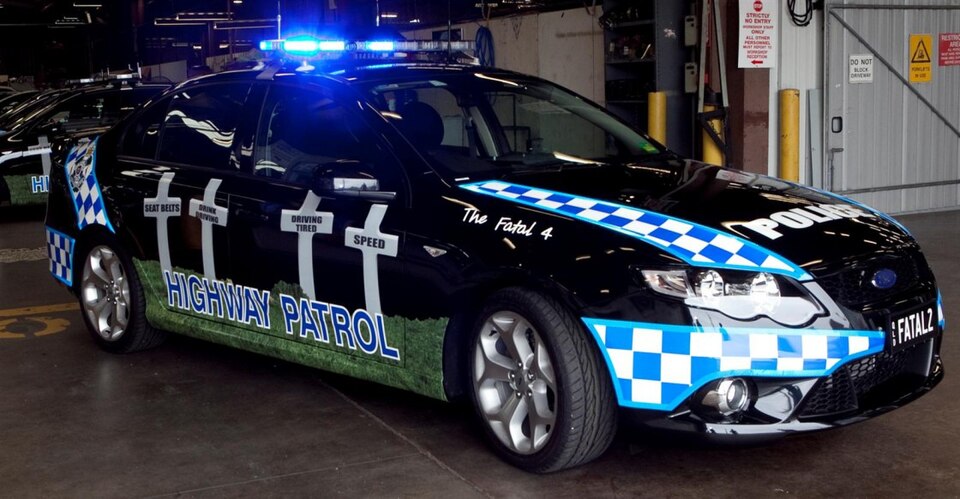
    Photo: Highway Patrol Image, CC BY 2.0, via Wikimedia Commons

    Queensland P1 (red P) and P2 (green P) drivers have zero alcohol, a 4 demerit point limit and, if under 25, a ban on high-powered cars. P1 drivers under 25 also cannot use a phone at all, and between 11pm and 5am can carry only one passenger under 21 who is not immediate family. This page sets out every P plate rule, how long each stage lasts and when you can get your open licence.

    Queensland P1 and P2 rules compared

    Rule P1 (red) P2 (green)
    Minimum age 17 18
    Minimum time 1 year 2 years if you got P1 under 23 and P2 under 25; otherwise 1 year
    Plates Red P on white, front and back Green P on white, front and back
    Alcohol Zero Zero
    Phone (under 25) No use at all, including hands-free; passengers no loudspeaker General driver rules (no hand-held use)
    Peer passengers 11pm to 5am (under 25) No more than 1 passenger under 21 who is not immediate family No limit
    High-powered vehicles (under 25) Banned without an exemption Banned without an exemption
    Demerit points 4 in a year 4 in a year

    P plates

    A red or green capital P on a white background, at least 146 mm square, clearly legible from 20 m in front and 20 m behind. Not displaying them is worth 2 demerit points. Do not leave them on when someone with a different licence drives.

    Peer passenger limit for P1 drivers under 25

    Between 11pm and 5am, a P1 driver under 25 must not carry more than one passenger who is both under 21 and not an immediate family member. Immediate family includes your spouse, children, siblings and step-siblings, step-parents, guardians and their children, and the spouse of a grandparent. If police reasonably believe a passenger is not family, it is up to you to prove they are. Breaking the rule carries 3 demerit points.

    Scenario

    You are 18 on red Ps and drive two friends aged 19 home from a party at 11.30pm. That is two passengers under 21 who are not family, so you are over the limit. Drop one before 11pm or have someone else drive one of them.

    Phones on P plates

    P1 drivers under 25 have the same total ban as learners: no operating any function (including maps, music and hands-free), no holding the phone, even when stopped in traffic. Passengers cannot use loudspeaker mode. Exceptions are narrow: phone in a pocket or pouch you cannot operate, or using it when stopped to show a digital licence or pay at a drive-through. P2 drivers, and P1 drivers aged 25 or over, follow the general rules for all Queensland drivers. See Queensland learner rules for the full definition of “use”.

    What counts as a high-powered vehicle in Queensland?

    If you are under 25 on a P1 or P2 licence, you cannot drive a high-powered car unless you hold a certificate of exemption. The Driver Licensing Regulation defines a high-powered car as one that is not on the permitted list and:

    Built High-powered if it has
    Before 1 January 2010 8 or more cylinders; a turbocharged or supercharged engine that is not diesel; more than 210 kW; or a rotary engine over 1,146 cc
    On or after 1 January 2010 A power-to-weight ratio of more than 130 kW per tonne
    Any year An engine modification that needs approval or certification under the vehicle standards rules

    So a 2015 turbo hatchback is not automatically banned; it depends on its power-to-weight ratio. A 2008 non-diesel turbo is banned. Driving a high-powered car without an exemption carries 3 demerit points.

    Exemptions

    You can apply to TMR for a certificate of exemption. The main grounds are:

    • you need the car to get to work, for work, to get to school or college, or for medical treatment, with no other transport reasonably available and severe hardship if refused (you need a supporting statement from your employer, school or doctor)
    • the high-powered car is the only car reasonably available to you, for example one owned or leased by a parent, grandparent or spouse, again with severe hardship if refused

    TMR also looks at your traffic history. If you get a certificate, you must produce it if police ask.

    Late-night driving restriction after a suspension

    There is no standing P plate curfew in Queensland. But if you were under 25 on Ps when you committed the offence and then either chose a good driving behaviour period or were suspended for demerit points or excessive speeding, you cannot drive between 11pm and 5am for 1 year. TMR can grant an exemption for work if refusal would cause severe hardship. Details: Queensland demerit points and licence sanctions.

    Moving from P1 to P2 to an open licence

    1. P1 to P2: hold P1 for at least 1 year, be at least 18, and have first got your P1 under 24. No further test is needed.
    2. P2 to open: hold P2 for 1 or 2 years (see the table) and be at least 20.
    3. Got your first P1 at 24? After 1 year you go straight to an open licence.
    4. 25 or older when you passed? You start on P2, not P1, and hold it for 1 year.

    Time must be within the last 5 years, and time while suspended or expired does not count.

    Common questions

    Can P1 drivers in Queensland have passengers at night?

    Yes, but between 11pm and 5am a P1 driver under 25 can carry only one passenger under 21 who is not immediate family. Passengers aged 21 or older, and family, do not count.

    Can I use hands-free on my green Ps?

    Yes. The total ban covers learners and P1 drivers under 25, not P2.

    Is there a P plate speed limit in Queensland?

    No separate one. Posted limits apply.

    Can a P plater drive a V8?

    Not if you are under 25 and the car is a pre-2010 V8, unless you have an exemption. For newer cars, check the power-to-weight ratio.

    Do Queensland P plate rules apply interstate?

    Your licence conditions go with you, and you must follow the road rules of the state you are in. See driving interstate on L or P plates.

    How do Queensland P plates compare with other states?

    See P plate rules compared and zero alcohol for P platers.

    Back to the main guide: learning to drive in Queensland.

    Sources

    • Queensland Government, “Transport Operations (Road Use Management: Driver Licensing) Regulation 2021”, current as at 21 September 2026 (legislation.qld.gov.au)
    • Department of Transport and Main Roads, “Your keys to driving in Queensland”, Queensland licensing section (publications.qld.gov.au)
    • Department of Transport and Main Roads, “Bookings online: book a driving test” (service.transport.qld.gov.au)
    • Street Smarts, Queensland Government, “Drink driving: Get the facts” (streetsmarts.initiatives.qld.gov.au)
  • Queensland Medical Certificate for Driving: When You Need One

    Queensland Medical Certificate for Driving: When You Need One

    Photo: Chris Olszewski, CC BY-SA 4.0, via Wikimedia Commons

    In Queensland, you need a Medical Certificate for Motor Vehicle Driver (form F3712) when you have a permanent or long-term medical condition that is likely to affect your driving, or when Transport and Main Roads (TMR) asks for one. Your doctor or other health professional completes it after assessing you and recommends whether you are fit to drive, including any conditions. You must tell TMR about the condition as soon as you become aware of it, and that applies to learners too. Most learners never need one: it is only for people with a condition that could affect safe driving.

    This page explains the licensing process. Whether your condition affects your driving is a question for your doctor.

    When a Queensland learner needs a medical certificate

    • You have a permanent or long-term condition that is likely to affect your ability to drive safely, and you are applying for your learner licence or already hold one.
    • An existing condition changes or gets worse. You must notify TMR of the change too.
    • TMR asks for one after you declare a condition or after a health professional notifies TMR.

    Temporary conditions generally don’t need to be reported unless they become long-term, but you must still not drive if you are unfit to.

    The duty applies to anyone driving in Queensland, including people with a licence from another state or country.

    Getting the F3712 completed: step by step

    1. Get the form. You can pick up a hard copy at a transport and motoring customer service centre.
    2. Book a medical assessment with your doctor, and take the form with you.
    3. Your health professional completes it. The certificate gives TMR a recommendation on your fitness to drive and can include conditions or restrictions for your licence.
    4. Lodge it with TMR as the form or TMR instructs.
    5. TMR decides whether you can hold your learner licence with no conditions, with conditions, or not yet.

    Conditional licences in Queensland

    The certificate can recommend conditions or restrictions, and TMR can put them on your licence. You must follow every condition on your licence, and if your licence needs a current medical certificate, keep it up to date.

    What if you don’t notify TMR?

    TMR says failing to notify it of a condition can lead to a maximum court-imposed penalty of more than $10,000 and your licence may be cancelled.

    Can health professionals tell TMR?

    Yes. Health professionals can notify TMR online about a patient’s condition. Unlike South Australia and the Northern Territory, though, Queensland places the main legal duty to report on the driver. Compare: South Australia health professional reporting and Northern Territory mandatory medical reporting.

    Common questions

    Do I need a medical certificate for ADHD or autism?

    Only if the condition is likely to affect your driving. TMR has clarified that autism alone does not trigger reporting. Ask your doctor and declare honestly if unsure.

    Does my supervisor need a medical certificate?

    Only if their own licence requires one. Drivers aged 75 and over in Queensland must carry a current medical certificate when they drive, so an older supervisor may need one.

    I’m on medication for a short illness. Do I report it?

    Generally no, as temporary conditions don’t need reporting unless they become long-term. Don’t drive if the medicine affects you. See drug driving and medicinal cannabis.

    Related guides

    Sources

    • Queensland Government, “When you must tell us about your medical condition”, Department of Transport and Main Roads, last updated 1 July 2025 (qld.gov.au)
    • Queensland Government, “Medical fitness to drive” (qld.gov.au)
    • Queensland Government, “Information for health professionals” (qld.gov.au)
    • Department of Transport and Main Roads, “Medical Certificate for Motor Vehicle Driver” (F3712) (support.transport.qld.gov.au)
    • Department of Transport and Main Roads, “Fitness to drive in Queensland” media statement (tmr.qld.gov.au)
  • Queensland Licence and Test Fees: PrepL, Q-Safe and P Plates

    Queensland Licence and Test Fees: PrepL, Q-Safe and P Plates

    Photo: John Robert McPherson, CC BY-SA 4.0, via Wikimedia Commons

    From 1 July 2026, the Queensland practical driving test costs $69.40 per attempt, PrepL and the written road rules test cost $29.70, the hazard perception test is $42.70 and a 3-year learner licence is $80.15. A learner who passes everything first time and takes a 1-year provisional licence pays $316.60 in official fees. This page sets out every TMR fee for car learners and P platers, how provisional licence terms are priced, and how to avoid paying twice.

    Key facts

    • Fees rose on 1 July 2026. TMR says its fees and charges increased by 3.4 per cent in line with indexation.
    • PrepL ($29.70) gives 12 months of access, and retakes within that time cost nothing extra.
    • The written road rules test ($29.70) and the practical driving test ($69.40) are charged every attempt.
    • The paper logbook is free. A logbook exemption application costs $51.45.
    • Give at least 2 working days’ notice to change or cancel a practical test.
    • All fees here are figures as of November 2026. Check the qld.gov.au licence fees page before you pay.

    Queensland car licence and test fees (from 1 July 2026)

    Item Fee Notes
    PrepL online learning and written road rules test $29.70 12 months of access; wait 24 hours between attempts
    Written road rules (knowledge) test, in person $29.70 Per attempt
    Learner licence (3 years) $80.15
    Replacement learner licence $37.40
    Hazard perception test (car) $42.70 Up to 12 months to use once paid
    Practical driving test $69.40 Per attempt
    Paper learner logbook Free Provided when you get or renew your learner licence
    Learner logbook exemption application $51.45 Only if you cannot get a car or supervisor

    Provisional and open licence fees by term

    Queensland charges by the length of licence you choose. The same table applies to provisional (P1 and P2) and open licences.

    Licence term Fee from 1 July 2026 Cost per year
    1 year $94.65 $94.65
    2 years $132.00 $66.00
    3 years $163.25 $54.42
    4 years $188.95 $47.24
    5 years $212.00 $42.40

    A longer term costs less per year. The term you can choose depends on your provisional stage, so ask TMR which terms are open to you when you collect your Ps. The renewal fee is set by the start date of the new licence period, not the date you pay. See Queensland P1 and P2 rules.

    What it costs to get your Ps in Queensland

    Step Fee
    PrepL (or written road rules test) $29.70
    Learner licence (3 years) $80.15
    Hazard perception test $42.70
    Practical driving test $69.40
    Provisional licence (1 year) $94.65
    Total, first-time passes $316.60

    With a 3-year provisional licence instead, the total is $385.20. With 5 years, it is $433.95. These are official fees only. Lessons, fuel, the car and insurance are extra.

    Retakes

    Scenario Extra cost
    Fail PrepL, retake within your 12 months $0 (wait 24 hours)
    Fail the in-person written test $29.70 per extra attempt
    Fail the practical test once $69.40 (earliest re-sit is the next day)
    Fail the practical test twice $138.80 extra (second re-sit from 8 days later)

    Example: PrepL first time, two practical tests and a 1-year provisional licence: $316.60 + $69.40 = $386.00. Re-sit waits: Q-Safe manoeuvres and re-sit rules.

    PrepL or the written test: which costs less?

    • PrepL ($29.70): an online course and test. One fee covers 12 months, and you can retry after 24 hours at no extra charge. TMR’s enrolment page says car learners now need PrepL before applying for a learner licence.
    • Written test ($29.70 each time): in person, one attempt a day, paid each time. Ask TMR whether it is still open to you.

    More: PrepL and the Queensland written road rules test.

    How not to lose a test fee

    • Get your logbook approved first. If you are under 25, TMR must approve your 100-hour logbook before you can book. Submit it at least 12 business days before the test. See the Queensland learner logbook.
    • Give at least 2 working days’ notice to change or cancel.
    • Arrive 20 minutes before your appointment with your learner licence. Turning up late is one of the reasons the fee is kept.
    • Bring a car that passes inspection, with the registered operator’s permission to use it.
    • Use your HPT within 12 months of paying.

    Test day checklist: what to bring and car rules in every state.

    Common questions

    How much is the Queensland driving test?

    $69.40 per attempt, from 1 July 2026. You pay again for each re-sit.

    How much does a learner licence cost in Queensland?

    $80.15 for 3 years, from 1 July 2026, plus $29.70 for PrepL or the written test.

    Is the hazard perception test refunded if I fail?

    No. Check retake fees when you enrol. You need to pass the HPT only once. See the Queensland hazard perception test.

    Do I pay for the logbook?

    No. TMR gives you a free paper logbook with your learner licence. Approved apps are an alternative.

    Are there concessions?

    TMR’s fees page lists standard fees. Ask TMR on 13 23 80 about any concession that applies to you.

    Should I take a 1-year or 5-year provisional licence?

    The 5-year licence costs less per year ($42.40 against $94.65). Ask TMR which terms apply to your stage before you choose.

    Back to the main guide: learning to drive in Queensland. Also see the Q-Safe practical driving test and licence costs in every state.

    Sources

    • Queensland Government, “Licence fees”, costs as at 1 July 2026 (qld.gov.au)
    • Department of Transport and Main Roads, “News and media frequently asked questions” (tmr.qld.gov.au)
    • Queensland Government, “Driver tests: written and online” and “PrepL online learning and assessment” (qld.gov.au)
    • Queensland Government, “Practical driving tests” (qld.gov.au)
    • Department of Transport and Main Roads, “Enrol in PrepL” and “Bookings online: book a driving test” (service.transport.qld.gov.au)
    • Queensland Government, “Transport Operations (Road Use Management: Driver Licensing) Regulation 2021”, section 67 (legislation.qld.gov.au)
    • Department of Transport and Main Roads, “Your keys to driving in Queensland” (publications.qld.gov.au)
    • Queensland Government, “Learner logbook” (qld.gov.au)
  • Queensland Learner Rules: Supervisors, L Plates, Phones, Points

    Queensland Learner Rules: Supervisors, L Plates, Phones, Points

    Photo: Chris Olszewski, CC BY-SA 4.0, via Wikimedia Commons

    On a Queensland learner licence you can only drive with a qualified supervisor beside you, L plates showing front and back, and zero alcohol. If you are under 25 you cannot touch a phone at all while driving, and your passengers cannot use one on loudspeaker. Four demerit points in a year suspends your licence. This page lists each rule with what it means in practice.

    Queensland learner conditions at a glance

    Rule What it means
    Supervisor Holds an open licence for the vehicle and has held it for at least 1 year; sits next to you
    L plates Black L on yellow, at least 146 mm square, clearly legible from 20 m in front and 20 m behind
    Alcohol Zero blood or breath alcohol for you; your supervisor must be under 0.05
    Phones (under 25) No use at all while moving or stopped in traffic, including hands-free, Bluetooth and maps
    Passengers’ phones (under 25) No passenger can use a phone on loudspeaker
    Demerit points 4 or more in any 1-year period means a 3-month suspension
    Speed Posted limits; Queensland sets no separate learner speed cap
    Towed vehicles You cannot steer a car that is being towed

    Who can supervise a learner driver in Queensland?

    Under the Driver Licensing Regulation, your supervisor must:

    • hold an open licence that covers the car (not a learner, P1 or P2 licence)
    • have held that open licence for at least 1 year
    • sit in the seat next to you
    • have a blood alcohol concentration under 0.05

    Breaking the supervision rule is an offence for both of you: up to 20 penalty units for the learner and 60 for the supervisor. Driving unsupervised also carries 4 demerit points. A driving instructor can supervise and earns you 3-for-1 logbook hours; see the Queensland learner logbook.

    If you are learning on an interstate learner licence, the regulation lets you follow your home state’s supervision rules instead.

    L plate rules

    • A black capital L on a yellow background, at least 146 mm by 146 mm.
    • Displayed so the L can be clearly read from 20 m in front of and 20 m behind the car.
    • The supervisor commits an offence too if the plates are missing.
    • Take them off when a fully licensed driver is driving: displaying L plates when you are not a learner or driving instructor is an offence.
    • Failing to display clear L plates carries 2 demerit points.

    Mobile phone rules for Queensland learners

    If you are under 25 and hold a learner licence, the regulation bans any “use” of a phone while the car is moving or stopped but not parked (for example at traffic lights). Use includes:

    • operating any function, including navigation, music and hands-free calls
    • holding the phone or resting it on your body, even if it is switched off

    Narrow exceptions apply: a phone in a pocket or pouch that you cannot operate, or, when stopped, using it as a digital licence, to pay at a drive-through or to open a gate or car park. Parked means pulled over out of the line of traffic with the intention of staying there; a red light or a queue does not count. If the route needs changing or a call needs answering, park first. Your passengers cannot use a phone in loudspeaker mode while you are driving. That includes your supervisor, so agree the route before you set off. Each offence can bring a fine and demerit points: 4 points for the learner phone offence.

    Learners aged 25 and over follow the general Queensland phone rules for all drivers.

    Alcohol and drugs

    Learners must have a zero blood alcohol concentration. That rules out a drink with dinner before a lesson, and some medicines and foods contain alcohol, so check labels. See zero alcohol for learners and P platers.

    Demerit points on your Ls

    If you get 4 or more demerit points in any 1-year period while on your Ls, TMR suspends your licence for 3 months. Unlike P platers, learners do not get the option of a good driving behaviour period. Details: Queensland demerit points and licence sanctions.

    Common questions

    Can my parent on P plates supervise me?

    No. Your supervisor needs an open licence held for at least 1 year.

    Can I use Google Maps on my Ls?

    Not if you are under 25, even mounted and hands-free. Get your supervisor to navigate.

    Is there a learner speed limit in Queensland?

    No separate one. You drive to the posted limit, and the default is 50 km/h in built-up areas and 100 km/h elsewhere. Some other states do cap learners, so check before driving interstate: driving interstate on L or P plates.

    Can I drive on motorways on my Ls?

    Queensland’s rules do not ban it. Build up to it with your supervisor. See learners on motorways and freeways and Brisbane tunnels.

    Can I have passengers on my Ls?

    The regulation does not set a learner passenger limit, but everyone must wear a seatbelt. See seatbelts and child car seats.

    How long do I stay on my Ls?

    At least 1 year before your practical test. See learning to drive in Queensland.

    Sources

    • Queensland Government, “Transport Operations (Road Use Management: Driver Licensing) Regulation 2021”, current as at 21 September 2026 (legislation.qld.gov.au)
    • Queensland Government, “Transport Operations (Road Use Management: Road Rules) Regulation 2009”, current as at 31 August 2026 (legislation.qld.gov.au)
    • Department of Transport and Main Roads, “Your keys to driving in Queensland”, Queensland licensing section (publications.qld.gov.au)
    • Street Smarts, Queensland Government, “Drink driving: Get the facts” (streetsmarts.initiatives.qld.gov.au)
  • Queensland Learner Logbook: 100 Hours, 10 at Night, Approval

    Queensland Learner Logbook: 100 Hours, 10 at Night, Approval

    Photo: Chris Olszewski, CC BY-SA 4.0, via Wikimedia Commons

    If you are under 25 and learning to drive a car in Queensland, you must log 100 hours of supervised driving, including at least 10 hours at night, and have the logbook approved by TMR before you can sit the Q-Safe practical driving test. This guide covers what counts, the 3-for-1 bonus for professional lessons, paper versus app, approval times and exemptions.

    Key facts

    • Who: class C learners under 25 (without a motorcycle P or open licence).
    • Hours: 100 supervised hours in a car on Australian roads, at least 10 at night (sunset to sunrise).
    • When: only hours driven while you hold your Queensland learner licence count, unless you get credit for interstate or overseas hours.
    • Bonus: each hour with a driver trainer counts as 3 hours, up to 10 trainer hours (30 logbook hours).
    • Approval: TMR asks you to submit at least 12 business days before your test. You cannot book or sit the test until it is approved.

    How the 3-for-1 driving instructor bonus works

    The Driver Licensing Regulation multiplies each hour, or part hour, of supervised driving with a driver trainer by 3, up to a cap of 10 hours.

    Hours with a driver trainer Counted in your logbook
    5 15
    7.5 22.5
    10 30
    11 31 (10 × 3, plus 1)

    So the fewest real hours you can do is 80: 10 with an instructor (counting as 30) plus 70 with other supervisors. You still need 10 night hours.

    A night trip with a driver trainer counts either as triple time or as night hours, not both. For example, a lesson from 7pm to 8pm can be logged as 3 hours of daytime driving or as 1 hour of night driving.

    Paper logbook or app?

    • Paper: TMR gives you a free paper logbook when you get your learner licence.
    • Queensland Learner Logbook app: TMR’s own app lets you record and submit your logbook electronically.
    • Third-party apps: TMR lists approved third-party apps on its learner logbook page. At the last check it named YLOODrive as the only approved one available for download; confirm the list before you rely on any other app.

    Whichever you use, your supervisor must check each entry and verify it: by signing a paper entry, or by an electronic method that identifies them. A supervisor can only verify drives they actually supervised.

    What to record for each drive

    Fill in every session straight after the drive, with the details your paper logbook or app asks for, and get your supervisor to verify it before you forget. Drives between sunset and sunrise count towards your night hours.

    Aim for variety. The Q-Safe examiner will test you on lane changes, giving way, speed control, scanning, following distance and two manoeuvres, so log drives on suburban streets, multi-lane roads, highways, roundabouts and in wet weather. See what the Q-Safe examiner checks.

    Submitting your logbook

    1. Complete and sign the declaration in the logbook.
    2. For a paper logbook, keep every page in hard copy and attached together.
    3. Submit through the app or, for a paper logbook, at an Australia Post office (as TMR’s logbook page describes).
    4. Submit at least 12 business days before your planned test date, and wait for the approval notice.

    Under the regulation, if TMR has not decided within 28 days of receiving your application, the logbook is taken to be approved.

    Switching between paper and the app

    If you change from a paper logbook to the app, TMR gives two options: use the app’s Change hours feature to reduce your target by the hours already in the paper logbook, or enter the paper trips into the app by hand. Going from the app to paper, use Change hours to set the app target to the hours already logged there. Count each trip once only. If you end up with both a paper part and an app part, submit both, because TMR starts the review once it has received both.

    False entries

    Do not pad the hours. A supervisor who verifies an entry they know is false faces a maximum penalty of 60 penalty units. If TMR rejects a logbook as false or misleading, you must wait 6 weeks after meeting the logbook rules before you can take the practical test.

    Credit for interstate or overseas driving

    • Hours on an interstate or New Zealand learner licence: apply for credit of up to 100 hours, with evidence.
    • Hours on a learner licence from a recognised country: up to 50 hours.
    • Instructor hours from those licences also get the 3-for-1 multiplier, but the 10 hour cap covers all your instructor hours combined.
    • Credit for driving outside Queensland is applied for, not self-entered. Send the application with your evidence and wait for TMR’s decision before counting those hours.

    Moving to Queensland mid-way? See moving to Queensland.

    Logbook exemptions

    You can apply for an exemption if you genuinely do not have a car or a supervisor available, or you live somewhere with a very limited road network, such as an island with one road. TMR also looks at your traffic history. If you are exempted, you must hold your learner licence for at least 2 years, not 1, before your P1.

    Common questions

    Do I need a logbook if I am 25 or older?

    No. The logbook only applies to learners under 25.

    What counts as a night hour?

    Any supervised driving between sunset and sunrise.

    Can my older sibling supervise?

    Yes, if they hold an open licence for a car and have held it for at least 1 year. See Queensland learner rules.

    How long does logbook approval take?

    TMR says it takes at least 12 business days to receive and process a logbook, so submit at least 12 business days before your test. Another TMR page says approval can take up to 12 working days, so treat 12 days as a minimum, not a promise, and leave extra time.

    Do hours from before I got my Ls count?

    No. Only hours on your learner licence count, plus any approved credit.

    What if I lose my paper logbook?

    Contact TMR on 13 23 80. To protect yourself, photograph each completed page as you go, or use the app.

    Back to the main guide: learning to drive in Queensland. Compare other states: learner licence rules compared.

    Sources

    • Queensland Government, “Transport Operations (Road Use Management: Driver Licensing) Regulation 2021”, current as at 21 September 2026 (legislation.qld.gov.au)
    • Department of Transport and Main Roads, “Bookings online: book a driving test” (service.transport.qld.gov.au)
    • Queensland Government, “Learner logbook” (qld.gov.au)
    • Department of Transport and Main Roads, “Your keys to driving in Queensland” (publications.qld.gov.au)
    • Queensland Government, “Learner logbook app: information for supervisors” (qld.gov.au)
  • Queensland Hazard Perception Test: Online, After 6 Months on Ls

    Queensland Hazard Perception Test: Online, After 6 Months on Ls

    Photo: Chris Olszewski, CC BY-SA 4.0, via Wikimedia Commons

    In Queensland you sit the car hazard perception test (HPT) online while you are still a learner, after holding your Ls for at least 6 months. You must pass it before you can book the Q-Safe practical driving test. This page explains when you can take it, how it works, the fee and how to prepare.

    Key facts

    • When: after at least 6 months on a car (class C) learner licence.
    • Where: normally online, through TMR’s “Enrol in hazard perception test” service. An offline version is delivered by the Indigenous Driver Licensing Unit during its community visits.
    • Format: 3D computer-generated driving clips.
    • Must pass before: booking your practical driving test.
    • Fee: $42.70 from 1 July 2026, with up to 12 months to use the test once paid.
    • Pass once: you only need to pass it one time.

    Can I do the Queensland hazard perception test before 6 months?

    No. The Driver Licensing Regulation says the test must be taken after you have held your class C learner licence for at least 6 months, and before your practical driving test. TMR’s booking system will not let you book a car driving test until you have passed it.

    Your licence also has to be current. If it has expired, renew it before you enrol.

    How to enrol

    1. Log in or sign up on TMR’s online services. If you did PrepL, use the same login.
    2. Enter your licence number (your customer reference number).
    3. Pay the fee by Visa or Mastercard, unless already paid.
    4. Sit the test on your own device.

    If you cannot do the test online, contact TMR on 13 23 80 to discuss your options.

    How the test works

    The test measures how well you recognise and respond to potentially dangerous situations while driving. You watch computer-generated clips from the driver’s seat and respond to what you see. Read the instructions on screen carefully before you start, and check TMR if you want to know more about how the test is run.

    How to prepare

    • Use your logbook hours. Ask your supervisor to talk through hazards as you drive: a car edging out of a driveway, a pedestrian near a bus, brake lights two cars ahead.
    • Scan far ahead and check mirrors often. Scanning and mirror use are also assessed in your Q-Safe test.
    • Know the gap rules. Queensland drivers must keep a safe distance behind the vehicle in front. The Q-Safe test checks for at least a 2-second following distance.
    • Practise night and wet-weather driving so the clips feel familiar. See driving in rain, fog, smoke and floods.

    Where the HPT fits in your Queensland licence path

    1. PrepL and learner licence. See PrepL and the road rules test.
    2. 6 months on Ls, then the HPT.
    3. Finish your logbook if under 25. See the Queensland learner logbook.
    4. Book and pass Q-Safe after 1 year on Ls. See the Q-Safe practical driving test.

    Full overview: learning to drive in Queensland.

    Common questions

    Do I have to do the HPT if I am over 25?

    Yes. The test applies to every class C learner applying for a provisional or open licence, whatever their age.

    Can I sit the HPT at a customer service centre?

    Usually not. The normal route is online, but the Indigenous Driver Licensing Unit delivers an offline version during visits to communities. If you cannot do the test online, contact TMR on 13 23 80 to discuss your options. There are no exemptions from passing it.

    What if I fail?

    You can sit it again. Check retake rules and any extra fee when you enrol, as TMR’s main HPT pages do not set them out.

    Does my HPT pass expire?

    You only need to pass it once for your car licence. If you are unsure whether an old pass still counts, call TMR.

    I am a P1 driver who never did the HPT. Do I need it?

    Some drivers who were mid-way through licensing when the rules changed in 2021 still have to pass it. TMR’s enrolment page lists P1 holders who have held their P1 for at least 12 months as eligible. Call TMR to check your record.

    Do other states use the same test?

    No. Each state runs its own. Compare at learner licence rules compared.

    Sources

    • Department of Transport and Main Roads, “Enrol in hazard perception test” (service.transport.qld.gov.au)
    • Department of Transport and Main Roads, “Bookings online: book a driving test” (service.transport.qld.gov.au)
    • Queensland Government, “Car hazard perception test” and “Hazard perception” (qld.gov.au)
    • Queensland Government, “Licence fees” (qld.gov.au)
    • Queensland Government, “Transport Operations (Road Use Management: Driver Licensing) Regulation 2021” (legislation.qld.gov.au)
    • Queensland Government, “Transport Operations (Road Use Management: Road Rules) Regulation 2009” (legislation.qld.gov.au)
    • Department of Transport and Main Roads, “Your keys to driving in Queensland” (publications.qld.gov.au)
    • Queensland Government, “Car hazard perception test” (qld.gov.au)
  • Queensland Demerit Points for Learners and P Platers

    Queensland Demerit Points for Learners and P Platers

    Photo: Q8682, CC BY 4.0, via Wikimedia Commons

    In Queensland, learner and P plate drivers can only have 4 demerit points in any 1-year period, compared with 12 in 3 years for open licence holders. Reach 4 and a learner’s licence is suspended for 3 months. A P plater gets a choice: 3 months off the road, or a 1-year good driving behaviour period where 2 more points doubles the suspension. This guide explains each sanction, the offences that trigger them and the extra rules for drivers under 25.

    Demerit point limits in Queensland

    Licence Limit What happens
    Learner 4 or more points in any 1 year 3-month suspension. No choice of good behaviour period.
    P1 or P2 provisional 4 or more points in any 1 year Notice to choose: 3-month suspension or a 1-year good driving behaviour period
    Open 12 or more points in any 3 years Notice to choose: suspension of 3 to 5 months, or good behaviour

    Points count from the date of the offence, and they appear on TMR’s free “Check my demerit points” service once the fine is paid, sent to the State Penalties Enforcement Registry or dealt with in court.

    Common offences and their points

    Offence Points
    Speeding less than 11 km/h over 1
    Speeding 11 to 20 km/h over 3
    Speeding more than 20, up to 30 km/h over 4
    Speeding more than 30, up to 40 km/h over 6
    Speeding more than 40 km/h over 8, plus a 6-month suspension
    Learner or P1 (under 25) using a phone 4
    Learner driving unsupervised 4
    Seatbelt offences 4
    Breaking the P1 peer passenger, late-night or high-powered vehicle rules 3 each
    Not displaying L or P plates 2

    A single speeding offence of more than 20 km/h over the limit, a phone offence or a seatbelt offence takes a learner or P plater straight to 4 points.

    Queensland also doubles the points for a repeat speeding (more than 20 km/h over), phone, seatbelt or helmet offence within 12 months of an earlier one. See double demerit points in Australia.

    Learners: automatic 3-month suspension

    If you hold only a learner licence and reach 4 points in a year, TMR sends a notice suspending your licence for 3 months, starting on a date at least 21 days after the notice. Time while suspended does not count towards your 1 year minimum on Ls, so your test date moves back.

    P platers: the notice to choose

    If you are on a P1 or P2 licence and reach 4 points in a year, TMR sends a notice to choose. You have at least 21 days to pick one option.

    1. Suspension: your licence is suspended for 3 months. If you do not reply, this is what happens.
    2. Good driving behaviour period: you keep driving for 1 year, but if you get 2 or more points in that year your licence is suspended for double the period, which is 6 months.

    Which option is better?

    Choose the good driving behaviour year only if you are confident of a clean year. One more 2-point offence (such as not displaying P plates) means 6 months off the road instead of 3.

    Extra rule for drivers under 25: the late-night ban

    If you were under 25 and on a P1, P2 or probationary licence when you committed the offence, then after choosing a good driving behaviour period, or after a demerit point or excessive speed suspension ends, you cannot drive between 11pm and 5am for 1 year. The year starts on the day your good behaviour period starts, or the day after your suspension ends. You can apply for an exemption to drive to, from or for work if refusing would cause you or your family severe hardship; you need your employer’s signed support. Breaking the ban carries 3 demerit points.

    Excessive speeding: more than 40 km/h over

    Any driver caught more than 40 km/h over the limit gets 8 points and a 6-month suspension, whatever their total. For a learner or P plater, that alone is well over the 4 point limit.

    Special hardship orders and restricted licences

    • Special hardship order: a court can let some drivers with a suspended provisional or open licence keep driving in stated circumstances. You are not eligible if you have had a suspension, cancellation or disqualification in the previous 5 years, and learner licences are not covered.
    • Restricted licence: often called a work licence. After a drink or drug driving conviction, a court can grant one if you need to drive to earn a living and are not a risk to others, but you must apply before the disqualification is imposed. You must have held a Queensland open licence when you offended, so learners and P platers cannot get one. Eligibility is narrow, so get legal advice (for example from Legal Aid Queensland) before assuming you qualify.

    How the rules are enforced

    Your keys to driving in Queensland and TMR’s current pages describe the main ways offences are detected:

    • Cameras: fixed and mobile speed cameras, point-to-point (average speed) cameras, red light cameras (some also detect speeding), and fixed or portable cameras that detect phone use and seatbelt offences.
    • Number plate recognition: cameras that check registration and licence records, helping police find unregistered vehicles and vehicles of interest.
    • Random breath tests: expect to be stopped at any time. Refusing the roadside test is an offence. Learners and P platers must have a zero alcohol reading.
    • Roadside drug tests: saliva tests for cannabis, methylamphetamine, ecstasy and cocaine. A positive second test means a 24-hour licence suspension while the sample goes to a laboratory.

    New laws start on 1 December 2026. The Queensland Government says drug driving penalties double, with higher fines and longer licence disqualifications, and combined drink and drug driving offences get stronger penalties. Changes to roadside drug testing and a mandatory drug driving education program follow in 2027. Check TMR’s Drugs and driving page for the penalties that apply on the day.

    A camera fine can be transferred if someone else was driving the vehicle registered to you. TMR says you must do this within 28 days of the issue date on the notice, online or by statutory declaration, or the fine and any demerit points stay with the person it was issued to. Never transfer a fine to someone who was not driving: a false nomination is a criminal offence.

    Disqualified and unlicensed driving

    After a court disqualification, you come back on a probationary licence for at least 1 year instead of a provisional one. If you held a P1 or P2 before, you get a P1 or P2 probationary licence and must keep following that licence’s conditions, including P plates and zero alcohol. If you were also under 25 when you offended, the high-powered vehicle restrictions apply for the whole probationary period whatever your age, and a late-night driving ban may apply too.

    Driving while disqualified by a court means a further disqualification of 2 to 5 years, a large fine and possible jail. If a court finds you guilty of driving while your licence is suspended, it will disqualify you and may fine or jail you. Check your licence status before driving if you are unsure.

    Common questions

    How many demerit points can a Queensland P plater have?

    Fewer than 4 in any 1-year period.

    What is a good driving behaviour period?

    A 1-year period you can choose instead of a 3-month suspension. Two or more points during it means a 6-month suspension.

    Do interstate points count in Queensland?

    Yes. Offences in other states that match Queensland demerit offences are recorded on your Queensland traffic history.

    Can I check my points online?

    Yes, free, through TMR’s “Check my demerit points” service, if you hold a Queensland licence and are not on a good behaviour period or special hardship order.

    Do my points reset when I move from P1 to P2?

    No. The limit is any 1-year period, so points from late in your P1 still count early in your P2.

    Related: Queensland learner rules, Queensland P1 and P2 rules and learning to drive in Queensland.

    Sources

    • Queensland Government, “Transport Operations (Road Use Management: Driver Licensing) Regulation 2021”, chapters 6 to 10 and schedule 5, current as at 21 September 2026 (legislation.qld.gov.au)
    • Department of Transport and Main Roads, “Check my demerit points” (service.transport.qld.gov.au)
    • Department of Transport and Main Roads, “Bookings online: book a driving test” (service.transport.qld.gov.au)
    • Department of Transport and Main Roads, “Your keys to driving in Queensland”, No. 19, November 2022, complete PDF: Probationary and restricted licences (pp. 40 to 41), Enforcement (pp. 161 to 164), Licence sanctions (pp. 165 to 171), Disqualified and unlicensed driving (pp. 172 to 173) (publications.qld.gov.au)
    • Queensland Government, “Double demerit points” (qld.gov.au)
    • Queensland Government, “Drugs and driving”, Department of Transport and Main Roads, last updated 31 August 2026 (qld.gov.au)
    • Queensland Government, “New laws passed to crack down on dangerous driving”, joint ministerial statement, 17 September 2026 (statements.qld.gov.au)
    • Queensland Government, “Transfer a fine”, Department of Transport and Main Roads, last updated 6 November 2026 (qld.gov.au, Fines and enforcement)
  • Q-Safe Driving Test: What the Queensland Examiner Checks

    Q-Safe Driving Test: What the Queensland Examiner Checks

    Photo: Chris Olszewski, CC BY-SA 4.0, via Wikimedia Commons

    The Q-Safe practical driving test is the on-road test you pass to move from a Queensland learner licence to your P plates. For a car (class C) it runs for no more than 35 minutes of driving (25 to 35 minutes on the road within a 45-minute test slot), but you should allow about an hour at the centre. This guide covers what you need before you book, the car you bring, what happens on the day and what the examiner assesses.

    Before you can book

    • You have held your learner licence for at least 1 year (TMR’s booking system only offers dates once you have).
    • You are at least 17 if you are applying for a P1.
    • You have passed the hazard perception test.
    • If you are under 25, TMR has approved your learner logbook. Submit it at least 12 business days before the test and wait for approval.

    Book online through TMR’s “Bookings online” service. You may not be able to book online if you hold an overseas licence, have ever held an interstate learner licence, are a returning driver, or have a logbook exemption. In those cases call 13 23 80. The booking is only confirmed once you have paid and received a booking reference. The test fee is $69.40 from 1 July 2026.

    The test car

    You supply the car. It must be:

    • registered and roadworthy
    • showing L plates correctly
    • a car you have the registered operator’s permission to use

    The examiner inspects the car just before the test. If it fails, the test does not go ahead and you lose the fee. If the car has a reversing camera, you must still use mirrors and look around physically when reversing. Read TMR’s driving test checklist and test vehicle requirements before the day.

    On the day

    1. Arrive 20 minutes before your appointment with your learner licence, and register at the counter.
    2. Vehicle safety check. The examiner checks the car.
    3. Pre-drive check of controls. Be ready to show you know where the car’s controls are and how they work.
    4. The drive. 25 to 35 minutes for a car test, on a range of roads, with two manoeuvres.
    5. Result. The examiner tells you whether you passed.

    What the Q-Safe examiner checks

    Skill What they look for
    Moving off and lane changes Mirrors, indicate, then a head check over your shoulder every time
    Stopping and giving way Correct stopping position; giving way at signs, lights, roundabouts and crossings
    Speed Never over the limit; adjusting for conditions
    Following distance At least 2 seconds behind the vehicle in front
    Scanning and mirrors Regular mirror checks and looking well ahead and to the sides
    Road position and lanes Keeping left, staying within lanes, correct lane for turns
    Signalling Indicating in good time and cancelling afterwards
    Car control Steering, braking, gear changes and clutch control (manual)
    Manoeuvres Two set manoeuvres, at least one with reversing

    The manoeuvres and their tolerances are explained in Q-Safe manoeuvres and re-sit rules.

    Why a test can be cancelled with no refund

    TMR keeps the fee if:

    • you arrive late or do not turn up
    • you do not meet the requirements, such as an unapproved logbook
    • you do not have the registered operator’s permission to use the car
    • the car fails the pre-test inspection

    To change or cancel a booking, give at least 2 working days’ notice.

    After you pass

    You are issued a provisional licence: P1 if you are under 25, or P2 if you are 25 or older. Put your red or green P plates on before you drive away alone. See Queensland P1 and P2 rules.

    Common questions

    How long is the Queensland driving test?

    No more than 35 minutes of driving for a car. The overall appointment takes longer, so allow about an hour.

    Can I use a car with a reversing camera or parking sensors?

    Yes, but you must still use your mirrors and look around yourself when reversing.

    Can I take the test in an automatic?

    Yes. If you pass in an automatic car, your licence shows class CA, which means automatic cars only. (Condition code A is used for automatic-only entitlements in other classes; it does not apply to class C.) To drive a manual car, learn with a supervisor who has held an open licence for that class for at least a year, display L plates, and pass a practical test in a manual.

    What if I fail?

    You can re-sit after a cooling-off period that grows with each fail. See Q-Safe re-sit rules.

    Back to the main guide: learning to drive in Queensland.

    Sources

    • Department of Transport and Main Roads, “Your keys to driving in Queensland”, No. 19, November 2022, complete PDF, Q-Safe practical driving test (pp. 29 to 34): test length p. 31, manoeuvres p. 33 (publications.qld.gov.au)
    • Department of Transport and Main Roads, “Q-SAFE Queensland Driver Licence Assessment” manual, April 2026: test time (section 2.2) and class C manoeuvre requirements (publications.qld.gov.au)
    • Department of Transport and Main Roads, “Bookings online: book a driving test” (service.transport.qld.gov.au)
    • Queensland Government, “Practical driving tests” and “Test vehicle requirements” (qld.gov.au)
    • Queensland Government, “Licence fees” (qld.gov.au)
    • Queensland Government, “Transport Operations (Road Use Management: Driver Licensing) Regulation 2021” (legislation.qld.gov.au)
    • Queensland Government, “Learner logbook” (qld.gov.au)
    • Queensland Government, “Licence types, classes and conditions”, Department of Transport and Main Roads, last updated 3 April 2023: class CA and the automatic (A) condition (qld.gov.au)
  • Q-Safe Manoeuvres and Re-Sit Rules in Queensland

    Q-Safe Manoeuvres and Re-Sit Rules in Queensland

    Photo: John Robert McPherson, CC0, via Wikimedia Commons

    In the Q-Safe car test in Queensland you do two manoeuvres, and at least one of them involves reversing. This checklist lists every manoeuvre the examiner can choose, the limits in TMR’s Q-SAFE assessment manual, and how long you wait to re-sit if you fail.

    The Q-Safe manoeuvres and their limits

    Manoeuvre Limit to stay within
    Reverse parking Finish within 45 cm of the kerb and 1 m to 2 m from the vehicle in front, using no more than 2 reverse movements and 1 forward movement
    Reverse in a straight line Reverse 25 m to 30 m along a straight stretch, staying within about 50 cm of the kerb, looking mainly over your shoulder through the rear window
    Turn around On a street 6 m to 8 m wide, turn between the kerbs using forward and reverse gears, without touching the kerbs; it should not need more than four direction changes
    U-turn Turn around in one forward movement where a U-turn is legal, signalling right and giving way to all traffic
    Hill start Stop parallel to the kerb where the examiner asks, then move off smoothly up the slope without rolling back
    Automatic gear change Select gears correctly in an automatic when asked

    These limits come from TMR’s Q-SAFE assessment manual (April 2026 edition), which examiners follow. The examiner picks two. You will not know which in advance, so practise all of them.

    Manoeuvre checklist

    Every manoeuvre

    • Check mirrors and blind spots before you start and keep looking all the way through.
    • Signal where needed.
    • Stop and give way if another road user or pedestrian approaches.
    • Do not mount or hit the kerb.
    • If the car has a reversing camera, you must still use mirrors and look around yourself.

    Reverse parking

    1. Pull up alongside the car in front of the space, about level with it.
    2. Look all around, signal, then reverse slowly.
    3. Steer in once your rear passes the other car’s rear, then straighten.
    4. Check the gap: within 45 cm of the kerb and 1 m to 2 m behind the car in front. Use no more than 2 reverse movements and 1 forward movement.

    Hill start

    1. Hold the car on the brake (park brake in a manual if you need it).
    2. Check mirrors and blind spot, signal.
    3. Find the point where the car wants to move, release the brake and move off smoothly.
    4. There is no allowance for rolling back: the Q-SAFE manual asks you to move off smoothly up the incline without rolling back. If the car has hill start assist that cannot be turned off, the examiner may choose another manoeuvre.

    For general parking rules, such as distances from intersections and how to parallel park, see parking rules in Australia.

    If you fail: Queensland cooling-off periods

    Fail Earliest re-sit
    First The next day
    Second 8 days later
    Third and later 29 days later

    You pay the test fee each time ($69.40 from 1 July 2026). Book again through TMR’s online service or on 13 23 80.

    Worked example

    You fail on a Monday. You can re-sit as early as Tuesday. If you fail again on that Tuesday, the earliest next test is 8 days later. A third fail moves your next test about four weeks out, so use the gap for lessons on the errors the examiner pointed out.

    Overseas or interstate licence holders

    Under the Driver Licensing Regulation, if you hold an interstate or overseas licence and fail a Queensland practical driving test, your authority to drive in Queensland on that licence is withdrawn. Do not fail and drive home alone. See moving to Queensland.

    Common questions

    Which two manoeuvres will I get?

    The examiner decides on the day. At least one involves reversing.

    Is a three-point turn the same as a turn around?

    Yes, a turn around in a narrow street is usually done as a three-point turn, or more points if the road is very narrow.

    Does touching the kerb fail the reverse park?

    Hitting or mounting the kerb is not safe control. Aim to finish close to it without touching it.

    Can I fail just for a manoeuvre?

    Yes. Manoeuvres are part of the assessment, and going outside the limits counts against you.

    How soon can I re-sit after a first fail?

    The next day, if a booking is available.

    Related: the Q-Safe practical driving test and learning to drive in Queensland.

    Sources

    • Department of Transport and Main Roads, “Your keys to driving in Queensland”, No. 19, November 2022, complete PDF, Q-Safe practical driving test (pp. 29 to 34): manoeuvres p. 33 to 34, cooling off periods p. 34 (publications.qld.gov.au)
    • Department of Transport and Main Roads, “Q-SAFE Queensland Driver Licence Assessment” manual, April 2026: test time (section 2.2) and class C manoeuvre requirements (publications.qld.gov.au)
    • Queensland Government, “Practical driving tests” (qld.gov.au)
    • Queensland Government, “Licence fees” (qld.gov.au)
    • Queensland Government, “Transport Operations (Road Use Management: Driver Licensing) Regulation 2021” (legislation.qld.gov.au)