
Category: Tasmania

  • Tasmanian Road Rules Handbook: Chapter-by-Chapter Study Guide

    Tasmanian Road Rules Handbook: Chapter-by-Chapter Study Guide

    Photo: Mark Direen, Pexels

    The Tasmanian Road Rules handbook is the official plain-English guide you study for the Tasmanian driver knowledge test. The edition linked from Transport Services in November 2026 is Version 2.1, based on the Road Rules 2019 and printed in August 2022. It has 20 rule chapters and a final information page. This guide sums up each chapter with the numbers and rules most worth learning, and flags where the handbook lags the current licensing rules.

    Before you start: about this edition

    • Download the free PDF from the Transport Services “Tasmanian Road Rules Handbook” page, or buy a printed copy at Service Tasmania ($6.90 as of November 2026).
    • The handbook is not the law itself. The binding text is the Road Rules 2019. The handbook says the department may publish newer information online.
    • Where it lags: it refers to L1 and L2 licences, which were replaced by one learner licence on 1 December 2020. It doesn’t cover the Hazard Perception Test, the logbook app or peer passenger limits. For those, use our Tasmanian licensing guide.
    • Questions about the rules go to the department on 1300 135 513.

    Chapters 1 and 2: why rules exist and who they cover

    • Each year more than 30 people are killed and close to 300 seriously injured on Tasmanian roads.
    • The top five crash causes are speeding, distraction and inattention, alcohol or drugs, not wearing seatbelts properly, and fatigue.
    • Pedestrians include people in wheelchairs and on skateboards, scooters and personal mobility devices. You must try to avoid a collision even if a pedestrian is in the wrong.
    • A “vehicle” includes bicycles and e-bikes, trailers, tractors on the road and a horse being ridden.
    • A “road-related area” includes footpaths, nature strips and car parks open to the public, so many rules apply there too.

    Chapter 3: general safety

    • Following distance: at least 3 seconds is recommended.
    • Seatbelts: required whenever the car is moving or stopped but not parked. The driver is responsible for passengers.
    • Children: birth to 7 years in a correctly fitted restraint. 7 to 16 years in a restraint or seatbelt to suit their size. Under 4s never in the front if there is a back seat. Under 7s not in the front unless there is no back seat or the back is full of other under 7s. More in seatbelts and child car seats.
    • Phones: nobody may hold a phone, rest it on their body, text or look at it while driving. Learners and P1 drivers can’t use a phone at all, including hands-free.
    • Screens: no TV or video screen visible to the driver. Mounted driver’s aids such as GPS and reversing cameras are fine.

    Chapters 4 and 5: keeping left and lane lines

    • On multi-lane roads, keep in the left lane when the limit is over 80 km/h (unless overtaking) or where a Keep left unless overtaking sign applies.
    • Single broken line: cross to overtake, turn or U-turn when safe.
    • Single or double continuous line: no overtaking or U-turns. You may cross to turn into or out of a road or driveway (single line only), or to avoid a hazard or pass a bicycle rider.
    • Double broken lines: cross to turn or avoid a hazard. No overtaking or U-turns.
    • Special purpose lanes (bus, bicycle): you may drive up to 50 metres in a bicycle lane and 100 metres in other lanes, only to enter or leave the road, park, avoid a hazard or pass a right-turning vehicle.
    • Never stop in a bicycle storage area at a red light or in a Keep clear zone.

    Detail: Australian road markings and lane lines.

    Chapter 6: speed limits

    Situation Limit
    Built-up area, no sign 50 km/h
    Unsealed road outside a built-up area, no sign 80 km/h
    Sealed road outside a built-up area, no sign 100 km/h
    Learner driver 90 km/h maximum
    P1 driver 100 km/h maximum
    Learner and P1 motorcycle riders 80 km/h maximum
    School zone on school days, during the times shown 40 km/h
    Within 50 metres of a school bus with lights flashing 40 km/h, either direction
    Passing a stopped or slow emergency, enforcement or roadside assistance vehicle with flashing lights 40 km/h (on roads over 80 km/h, slow to 40 if safe)
    Turning at an intersection with traffic lights 20 km/h, as stated in the handbook

    Electronic speed signs apply only when lit. A school zone limit lasts until you pass an End school zone sign or another speed sign, even if you turn into another road, and it also covers car parks and driveways inside the zone. School zones do not apply on school holidays, weekends or public holidays. See also school zones by state and emergency vehicle slow-down rules.

    Chapter 7: giving way

    • Changing lanes: indicate and give way to traffic in the lane you are entering.
    • Lanes ending on a road with no lane markings: zip merge, giving way to any vehicle ahead of you.
    • Pedestrian and children’s crossings: stop for anyone on or entering the crossing. Never overtake at a crossing.
    • Shared zones: give way to every pedestrian.
    • Emergency vehicles with flashing lights or a siren: get out of their path when safe.
    • Buses: give way to a bus pulling out from the kerb with its right indicator on.
    • Pulling out from the kerb: give way and indicate for at least 5 seconds.
    • Horses and livestock: stop if the rider or handler signals you to.

    Detail: giving way in Australia.

    Chapters 8 and 9: turns and indicators

    • Left turns: turn from as close to the left as you can. Give way to pedestrians on the road you enter.
    • Right turns from a two-way road: start just left of the centre line. Give way to oncoming traffic and pedestrians.
    • No U-turns across continuous lines or double broken lines, at traffic lights without a U-turn permitted sign, or where there is a No U-turn sign.
    • Indicate before every change of direction, including when reversing, and for at least 5 seconds when leaving the kerb. If your indicators or brake lights fail, use hand signals and get them repaired.

    Chapters 10 and 11: traffic lights and intersections

    • Yellow means stop, unless you can’t stop safely. It is the start of the red phase.
    • When all lights flash yellow, uncontrolled intersection rules apply.
    • A red arrow overrides a green light for that turn.
    • At uncontrolled intersections, give way to traffic on your right.
    • At a Stop sign, stop completely at the line every time.
    • At T-intersections, traffic on the terminating road gives way to traffic on the continuing road.
    • At slip lanes, give way to traffic on the road you enter and to pedestrians.
    • Roundabouts: give way to vehicles already in the roundabout. Indicate left to exit where practical, and indicate right on approach to go more than halfway round. See roundabout rules.
    • Level crossings: wait until the lights stop flashing, as a second train may come. See railway level crossings.
    • Don’t enter an intersection unless you can get fully through it.

    Chapter 12: overtaking

    • Never speed up while being overtaken, and never exceed the limit to overtake.
    • When passing a bicycle rider, leave at least 1 metre where the limit is 60 km/h or less and 1.5 metres where it is over 60 km/h. You may cross the centre line to do so when safe. See minimum passing distance for cyclists.
    • Don’t pass a long turning vehicle showing a Do not overtake turning vehicle sign.
    • Lane filtering: only riders with a full motorcycle licence, below 30 km/h, never in school zones during school zone hours, and never next to parked cars.

    Chapter 13: stopping and parking

    Rule Distance or time
    Gap to vehicles in front and behind (no bays) At least 1 metre
    Gap to continuous dividing lines or a median strip At least 3 metres
    Intersection with traffic lights No stopping within 20 metres
    Intersection without traffic lights No stopping within 10 metres
    Pedestrian or children’s crossing, or bus stop 20 metres before, 10 metres after
    Level crossing 20 metres either side
    Fire hydrant 1 metre
    No parking sign or driveway pick-up Up to 2 minutes, staying with the car
    Leaving the car more than 3 metres away Engine off, key out, doors locked, windows open no more than 2 cm

    Hazard lights don’t make illegal parking legal. More: parking rules in Australia.

    Chapters 14 and 15: signs, lights and horns

    • Regulatory signs must be obeyed. Warning signs are black on yellow. Temporary signs mark roadworks.
    • An advisory speed sign under a warning sign is the safe speed in good conditions. Go slower in the wet or ice.
    • Dip high beam when within 200 metres of a vehicle ahead or oncoming.
    • Use hazard lights only when stopped and obstructing, driving slowly, being towed or in dangerous weather.
    • Use the horn only to warn of danger or as an anti-theft device. Radar detectors are illegal, even switched off.

    Chapters 16 and 17: pedestrians and bicycle riders

    • Pedestrians within 20 metres of a crossing must use it.
    • Bicycle riders may use a whole lane, ride two abreast up to 1.5 metres apart, and ride on footpaths unless signed otherwise.
    • Riders must wear helmets. At night they need a white front light and red rear light visible from 200 metres, plus a red rear reflector.
    • Drivers must not stop within 10 metres before or 3 metres after bicycle traffic lights.

    Chapters 18 to 21: crashes, towing, enforcement and contacts

    • Crashes: stop, help anyone injured, and give your details to the others involved within 24 hours. Tell police within 24 hours if anyone is injured or killed, if you could not swap details, or if a vehicle is towed. See what to do after a crash.
    • Towing: towlines no more than 4 metres for a car and 2.5 metres for a motorcycle. Over 2 metres, a flag at least 30 cm square goes halfway along. Trailers must be no wider than 2.5 metres, no taller than 4.3 metres, and no longer than 19 metres including the towing vehicle. Learners can’t tow.
    • Enforcement: fines, demerit points, suspension or a conviction. Learners and P platers must have zero alcohol. Other drivers break the law above 0.05. See Tasmanian demerit points.
    • Other information: links to licensing, registration, child restraints and the learn to drive videos.

    Common questions

    Is there a newer Tasmanian Road Rules handbook than 2022?

    As of November 2026, the handbook page on transport.tas.gov.au still links to Version 2.1, printed August 2022. Check the page for updates before your test.

    Is the knowledge test based on the handbook?

    Official guidance tells standalone test candidates to prepare with the handbook. The Plates Plus course teaches the same rules through its own lessons.

    What chapters matter most for the test?

    The department doesn’t publish a weighting. Giving way, intersections, speed limits, lane lines and novice restrictions cover most everyday decisions.

    Does the handbook cover the P1 assessment?

    No. See the Tasmanian P1 driving assessment.

    Are these rules the same in other states?

    Mostly. The Road Rules are based on national model laws, with some state variations. See the Australian Road Rules explained.

    Sources

    • Department of State Growth, “Tasmanian Road Rules” handbook, Version 2.1, printed August 2022 (transport.tas.gov.au)
    • Transport Services Tasmania, “Tasmanian Road Rules Handbook” (transport.tas.gov.au)
    • Transport Services Tasmania, “Driver knowledge test” (transport.tas.gov.au)
    • Transport Services Tasmania, “Licensing and assessment fees” (transport.tas.gov.au)
    • Department of State Growth, “How am I affected?” (platesplus.tas.gov.au)
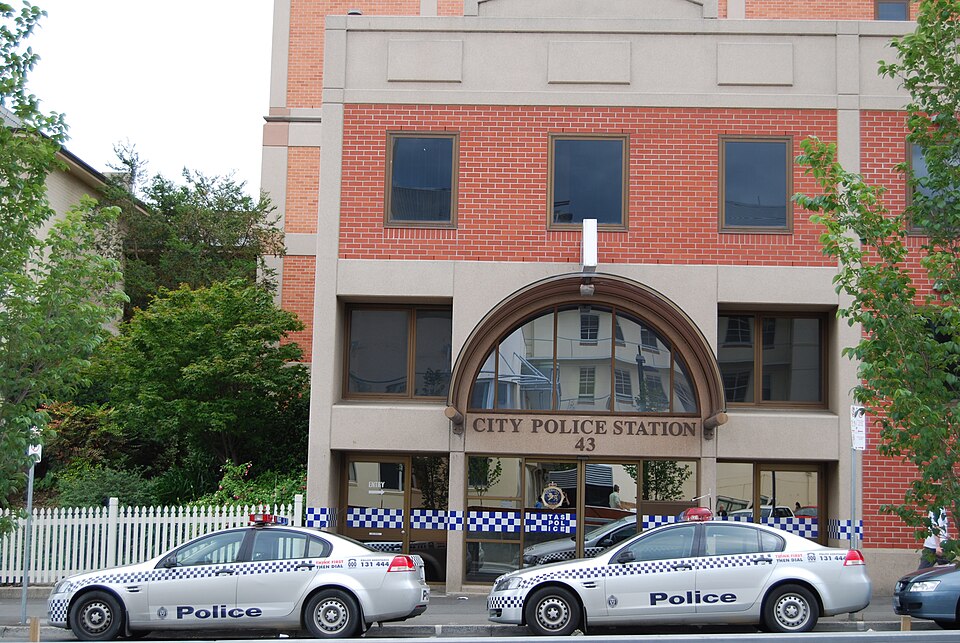
  • Tasmanian Demerit Points for Learners and P Platers

    Tasmanian Demerit Points for Learners and P Platers

    Photo: Canley, CC BY-SA 4.0, via Wikimedia Commons

    In Tasmania, a learner or provisional driver who collects 4 or more demerit points in 12 months is suspended for at least 3 months. A full licence holder gets 12 points over 3 years. Novice drivers also face extra penalties: P1 restart offences, disqualification for driving unaccompanied, and case management after a suspension. This page explains how it all works.

    Demerit point limits in Tasmania

    Licence Points Suspension or ineligibility Points stay active for
    Learner or provisional (P1 and P2) 4 to 15 3 months 12 months
    Learner or provisional (P1 and P2) 16 to 19 4 months 12 months
    Learner or provisional (P1 and P2) 20 or more 5 months 12 months
    Full licence 12 to 15 3 months 3 years
    Full licence 16 to 19 4 months 3 years
    Full licence 20 or more 5 months 3 years

    Unlicensed drivers fall under the same bands as learners: 4 or more points in 12 months makes you ineligible for a licence. Points count from the offence date, not the date you were convicted or paid.

    How demerit points work

    1. Everyone starts at zero.
    2. Certain offences carry demerit points. The number is printed on your Traffic Infringement Notice. You can look up offences on the Tasmania Police infringement look-up site.
    3. If you reach your limit you are suspended, or if unlicensed you can’t get a licence, for the period in the table.
    4. A suspension ends and your licence comes back automatically. A cancelled licence must be applied for again, and conditions may be added.

    To check your total, call Service Tasmania on 1300 13 55 13. The total only shows recorded points, not unpaid fines or matters still before the court. If you think points were given in error, contact Traffic Liaison Services at Tasmania Police on 6173 2963.

    The Period of Good Behaviour option, which lets you keep driving instead of serving a demerit suspension, is for full licence holders only. Learners and P platers serve the suspension.

    Penalties that only apply to novices

    Learner condition breaches

    Breach Consequence
    Driving without an appropriate supervisor Three-month disqualification and a fine
    Exceeding the 90 km/h learner speed cap Demerit points and a fine
    Not displaying L plates Demerit points and a fine
    Driving with any alcohol Court. The minimum penalty is losing your licence and a fine

    P1 restart offences

    These restart your 12-month P1 period:

    • not wearing a seatbelt
    • using a mobile phone while driving, including hands-free
    • speeding by 10 km/h or more
    • not displaying P plates
    • carrying more than one peer passenger without an exemption.

    Driving without a licence

    Up to 20 penalty units for a first offence and up to 40 for a later offence.

    Disqualification and what follows

    Offences that can lead to disqualification include a first offence with a BAC between 0.05 and 0.1, an unaccompanied learner infringement and speeding by 38 km/h or more, as well as court orders. After a disqualification you may have to start again as a non-novice learner.

    When you return after disqualification, suspension or ineligibility, you are assessed for novice case management. A case manager can require:

    • education courses or drug and alcohol counselling
    • medical reviews and monitoring of your driving
    • licence conditions, a longer L, P1 or P2 period, passenger restrictions or a night-time curfew
    • extra logbook hours before the P1 assessment.

    The hidden cost: losing the safer driver reward

    Any demerit points recorded during P1 or P2 mean no free three-year licence when you go full. See getting your full licence and the safer driver reward.

    What the Road Rules handbook says about enforcement

    Chapter 20 of the Tasmanian Road Rules handbook explains that an offence can lead to a traffic infringement notice or a court summons. Penalties include fines, demerit points, suspension or cancellation, and a conviction or sentence. Driving under the influence of alcohol or drugs is an offence on public roads and on private property. Learners and P platers must have no alcohol at all, and Tasmania Police can stop and test any driver they suspect, arrest without a warrant and impound the vehicle. More on testing: zero alcohol for learners and P platers.

    Common questions

    How many demerit points can a P plater have in Tasmania?

    Fewer than 4 within any 12 months. At 4 you are suspended for 3 months.

    How many demerit points do learners get in Tasmania?

    The same as P platers: 4 or more in 12 months means a suspension.

    Does Tasmania have double demerits?

    The Transport Services demerit points page does not mention double demerits. For how each state handles them, see double demerit points in Australia.

    Can a P plater apply for a good behaviour period?

    No. The Period of Good Behaviour is only for full licence holders.

    Does speeding by 5 km/h restart my P1?

    The restart offence is speeding by 10 km/h or more. Smaller speeding offences still carry a fine and demerit points.

    Do interstate offences count?

    The Tasmanian demerit page does not say. Check with Service Tasmania. For interstate driving, see driving interstate on L or P plates.

    Back to learning to drive in Tasmania. Related: Tasmanian P1 and P2 rules.

    Sources

    • Transport Services Tasmania, “Demerit points” (transport.tas.gov.au)
    • Transport Services Tasmania, “Novice penalties and case management” (transport.tas.gov.au)
    • Transport Services Tasmania, “Disqualifications, suspensions and cancellations” (transport.tas.gov.au)
    • Department of State Growth, “Progressing to your full licence” (platesplus.tas.gov.au)
    • Department of State Growth, “Tasmanian Road Rules” handbook, Version 2.1, section 20 (transport.tas.gov.au)
  • Getting Your Full Licence in Tasmania and the Safer Driver Reward

    Getting Your Full Licence in Tasmania and the Safer Driver Reward

    Photo: Anh Thu Le, Pexels

    In Tasmania you move from P2 to a full licence once you have held the P2 for the minimum period, which depends on your age: 2 years if you were under 23 when you got P2. If you complete P1 and P2 with no demerit points and no suspension-type offences, the safer driver reward gives you a free three-year full licence. This page sets out the P2 periods, who qualifies for the reward and what the licence would otherwise cost.

    How long before a full licence in Tasmania?

    Age when you got your P2 Minimum P2 period Example
    Under 23 2 years P2 at 18, full licence at 20 at the earliest
    23 or older but under 25 12 months or until you turn 25, whichever is longer P2 at 23 and 6 months, full licence at 25
    25 or older 12 months P2 at 30, full licence at 31

    Before P2 you need 12 continuous months on P1 (see Tasmanian P1 and P2 rules). A P1 restart offence resets that clock and delays everything after it.

    The safer driver reward

    The safer driver reward is for drivers and riders who get through P1 and P2 without an offence. It gives you a free three-year full licence. Plates Plus values it at up to $83.23. It replaced the old offence free reward, which people had to claim manually. The eligibility rules are the same.

    Who qualifies?

    You must have:

    • held a Tasmanian licence for the full P1 and P2 periods
    • completed both P1 and P2
    • had no demerit points recorded during P1 and P2
    • committed no offence during P1 and P2 that led to disqualification, suspension or cancellation
    • never received this or any other reward for another licence class.

    The last rule works both ways. If you got a motorcycle offence free reward, you can’t also claim the safer driver reward for your car licence, and the reverse.

    What one offence costs you

    A single demerit point recorded during your Ps, for example from a minor speeding fine, rules out the reward. You then pay for your first full licence at the standard rates below. See Tasmanian demerit points.

    Full licence fees in Tasmania (as of November 2026)

    Licence length Standard fee With safer driver reward
    1 year $40.68 $0.00
    2 years $66.16 $0.00
    3 years $91.64 $0.00
    4 years $117.12 $25.48
    5 years $140.64 $49.00

    Pensioner rates are lower. The fees page shows the current three-year standard fee as $91.64, while Plates Plus describes the reward as worth up to $83.23. Check the current figure with Transport Services before you renew.

    What changes when you get your full licence

    • No P plates and no 100 km/h cap.
    • The zero alcohol rule ends unless another category applies (for example heavy or public passenger vehicles, or a Z condition). For other drivers, a BAC over 0.05 is an offence.
    • Demerit threshold rises to 12 points in 3 years, and you can apply for a Period of Good Behaviour if you reach it.
    • After three years with an automatic-only condition, Service Tasmania can remove it without a manual assessment.
    • You can supervise a learner once you have held the full licence continuously for 12 months.
    • Heavy vehicle classes open up once you have held class C long enough, for example 12 months for LR or MR.

    Common questions

    Do I have to sit a test to get my full licence in Tasmania?

    No. There is no test between P2 and a full licence. You just need to finish the P2 period.

    How do I claim the safer driver reward?

    The reward replaced a scheme that required a manual application. Contact Service Tasmania on 1300 13 55 13 if your full licence is not issued as expected.

    I got a fine on my Ps but no demerit points. Am I still eligible?

    The test is no demerit points and no offence leading to disqualification, suspension or cancellation. Check how your offence was recorded with Service Tasmania.

    Can motorcycle riders get the reward?

    Yes, motorcycle riders can get the safer driver reward, but only one reward across all licence classes.

    What is the minimum age for a full licence in Tasmania?

    Taking each stage at the minimum (learner at 16, P1 at 17, P2 at 18, then 2 years on P2), the earliest is 20.

    Back to learning to drive in Tasmania. Compare P plate rules in every state.

    Sources

    • Department of State Growth, “Progressing to your full licence” (platesplus.tas.gov.au)
    • Department of State Growth, “Summary of novice car licensing pathway” (platesplus.tas.gov.au)
    • Department of State Growth, “General frequently asked questions” (platesplus.tas.gov.au)
    • Department of State Growth, “Supervisory drivers and learner vehicles” (platesplus.tas.gov.au)
    • Transport Services Tasmania, “Licensing and assessment fees” (transport.tas.gov.au)
    • Transport Services Tasmania, “Demerit points” (transport.tas.gov.au)
    • Transport Services Tasmania, “Disqualifications, suspensions and cancellations” (transport.tas.gov.au)
    • Transport Services Tasmania, “Licence conditions” and “Licence classes” (transport.tas.gov.au)
    • Department of State Growth, “Tasmanian Road Rules” handbook, Version 2.1 (transport.tas.gov.au)
  • Tasmania L1 and L2 Explained: What Changed in December 2020

    Tasmania L1 and L2 Explained: What Changed in December 2020

    Photo: Kat Smith, Pexels

    Until 1 December 2020, Tasmanian learners went through two stages, L1 and L2, with a separate L2 assessment between them. On that date the two stages were merged into one learner licence, and the changes brought new rules for hours, phones, speed, passengers and plates. This page explains what changed and which rules apply if you held an L1, L2, P1 or P2 licence on that date.

    What changed on 1 December 2020?

    • One learner period replaced L1 and L2.
    • 80 compulsory logbook hours, including 15 at night.
    • No hands-free phone use during the learner and P1 stages.
    • New maximum speeds: 90 km/h for learners and 100 km/h for P1.
    • A Hazard Perception Test before P1. It started on 7 March 2022.
    • Peer passenger restrictions for P1 drivers under 25.
    • Green P plates in the P2 stage.
    • A single licence card covering P1 and P2, and the safer driver reward for offence-free Ps.

    Why were L1 and L2 combined? The government dropped the L2 assessment in response to COVID-19 and then merged the two periods. Learners now buy one learner licence instead of two and make fewer visits to Service Tasmania. The minimum time on a learner licence did not change.

    Which rules apply to you?

    Licence held on 1 December 2020 Logbook hours Minimum learner time Hazard Perception Test Other new rules
    None (started after the change) 80, including 15 at night 12 continuous months Yes All current rules
    L1 80, including 15 at night 12 continuous months Yes All current learner and P rules
    L2 50 (unchanged) 9 continuous months (unchanged) No Phone ban, 90 and 100 km/h caps, no towing as a learner, P1 peer passenger limit, green P2 plates
    P1 Not applicable Not applicable No Total phone ban on P1, 100 km/h cap, green P2 plates, separate P2 card at a reduced fee
    P2 Not applicable Not applicable No None: no green plates required, posted limit, hands-free phone still allowed

    In every group, zero blood or breath alcohol still applies through the learner and provisional stages. Everyone who completes P1 and P2 without an offence may be eligible for the safer driver reward.

    If you held an L1 licence

    • Hours logged in either the L1 or L2 logbook are accepted.
    • You can sit the P1 assessment after holding the licence for 12 continuous months. To find your date, add nine months to the “earliest L2 test date” on your L1 card.
    • You must pass the HPT before booking the P1 assessment, unless you had an active booking made before 7 March 2022.
    • RYDA credit hours (5 hours) apply to L1 holders who did a course from 2020 onwards.

    If you held an L2 licence

    • You need 50 logbook hours and nine continuous months on the L2. Your supervisor signs the Supervisory Driver table in the middle of the L2 logbook.
    • You don’t sit the HPT.
    • Your P1 eligibility exemption threshold is 6 months, not 9, if you meet the exceptional circumstances criteria.
    • Once on P1 you follow the current P1 rules, including the peer passenger limit if you are under 25.

    Common questions

    Does Tasmania still have an L2 test?

    No. The L2 assessment was removed, and new learners hold a single learner licence.

    What happened to L1 and L2 in Tasmania?

    They were replaced by one novice learner licence on 1 December 2020. Existing holders kept a transition pathway, shown in the table above.

    I’m a former L2 holder. Do I need 80 hours?

    No. If you held an L2 on 1 December 2020, you need 50 hours and nine months.

    Does the handbook still mention L1 and L2?

    Yes. The 2022 Tasmanian Road Rules handbook says learners “(including L1 and L2 licences)” must not exceed 90 km/h, and its towing section refers to L1 and L2. Today the same rules apply to all learners. See the handbook study guide.

    Can former L1 or L2 holders use the logbook app?

    Yes. The Plates Plus logbook app is open to anyone with an active novice learner licence, including L1 and L2 licences held before the change.

    Back to learning to drive in Tasmania. Related: learner rules and logbook hours, the Hazard Perception Test and P1 and P2 rules.

    Sources

    • Department of State Growth, “How am I affected?” (platesplus.tas.gov.au)
    • Department of State Growth, “December 2020 licensing changes” (platesplus.tas.gov.au)
    • Department of State Growth, “General frequently asked questions” (platesplus.tas.gov.au)
    • Department of State Growth, “Getting your P1s” (platesplus.tas.gov.au)
    • Department of State Growth, “P1 eligibility exemption” (platesplus.tas.gov.au)
    • Department of State Growth, “Hazard Perception Test” and “Hazard perception test FAQs” (platesplus.tas.gov.au)
    • Department of State Growth, “Plates Plus logbook app” (platesplus.tas.gov.au)
    • Department of State Growth, “Tasmanian Road Rules” handbook, Version 2.1 (transport.tas.gov.au)
  • Tasmanian P1 and P2 Rules: Speed, Phones, Passengers and Towing

    Tasmanian P1 and P2 Rules: Speed, Phones, Passengers and Towing

    Photo: Canley, CC BY-SA 4.0, via Wikimedia Commons

    In Tasmania, P1 drivers display red P plates, are capped at 100 km/h, can’t use a phone at all and, if under 25, may carry only one peer passenger aged 16 to 21. P2 drivers display green P plates, can drive at the posted limit and can use a hands-free phone. Both must have zero alcohol. This page covers every P1 and P2 condition, the peer passenger exemptions, restart offences and when you move up.

    P1 and P2 rules compared

    Rule P1 (first stage) P2 (second stage)
    Plates Red on white, visible front and back Green on white, visible front and back
    Top speed 100 km/h, even where the limit is higher The posted speed limit
    Mobile phone No use at all, including hands-free and speaker Hands-free or speaker mode allowed
    Alcohol 0.00 BAC 0.00 BAC
    Peer passengers Under 25: one passenger aged 16 to 21, unless exempt No restriction
    Towing Allowed. A P plate must be visible on the back of the trailer if it hides yours Allowed, same plate rule
    Carry licence Always Always
    Minimum time 12 continuous months 12 months to 2 years, by age

    The P1 phone ban

    P1 drivers can’t use a mobile phone while driving, including while stopped but not parked. Hands-free and voice activation are banned too. Music or GPS played through the phone is allowed only if you set it up before you drive and don’t touch or look at the phone. Using a phone, even hands-free, is a P1 restart offence.

    On P2, the handbook rules for full and P2 drivers apply. To make or take a call, the phone must be in a commercially designed holder fixed to the car, or work without you touching it (for example Bluetooth or voice). Holding the phone, resting it on your body, texting or looking at messages is illegal for every driver.

    Tasmanian P1 peer passenger restrictions

    If you are under 25 and got your P1 from 1 December 2020, you can carry only one peer passenger aged 16 to 21 (inclusive), at any time of day, for your 12 months on P1.

    Who doesn’t count as a peer passenger?

    • anyone younger than 16, or 22 and older
    • your husband or wife, or a partner you live with
    • immediate family: siblings, step-siblings and half-siblings, a parent or guardian, or a child of a parent or guardian.

    Cousins are not immediate family, so they count.

    When can you carry more?

    • Employment: driving for work (paid or volunteer) or to and from work.
    • Education or training: school, university, TAFE, apprenticeships and other formal training, or travelling to and from them. School sport is not included.
    • Medical purposes: getting treatment for yourself or a passenger.
    • Undue hardship: exceptional circumstances that would cause hardship to your family or a passenger’s family.
    • Experienced driver: a full Australian licence holder in the front passenger seat who is willing to instruct you, and who has not been disqualified or suspended for demerit points in the last 12 months.
    • Emergency services: only while you are acting in that role.

    You don’t apply for an exemption, but you must be able to show police that you meet it. The optional Peer Passenger Exemption Form helps, ideally with a signed letter from the employer, school or person involved.

    Scenarios from the official factsheet

    Situation Allowed?
    18-year-old P1, driving two 18-year-old workmates straight to and from work Yes: employment exemption
    24-year-old P1, three friends aged 20, 20 and 21, going clothes shopping No
    21-year-old P1, 16-year-old brother and one 18-year-old friend to the beach Yes: the brother is immediate family
    19-year-old P1, two sisters plus two cousins aged 18 and 21 to the family shack No: both cousins count
    26-year-old P1 with cousins aged 16 and 18 Yes: the rule only applies under 25
    23-year-old paramedic on P1, off duty, three friends aged 22, 21 and 21 to the movies No: the exemption only applies on duty

    P1 restart offences

    Commit any of these on P1 and your 12-month P1 period starts again:

    • not wearing a seatbelt
    • using a mobile phone, including hands-free, while driving
    • speeding by 10 km/h or more
    • not displaying P plates
    • carrying more than one peer passenger without an exemption.

    Demerit points also count: 4 or more in 12 months suspends a provisional licence. See Tasmanian demerit points for learners and P platers.

    When will I get my P2 licence in Tasmania?

    After 12 continuous months on P1 with no restart offences, disqualifications or suspensions, you move to P2 automatically. You don’t need a new card. Your licence renews automatically while it is current. Put green plates on from your first P2 drive.

    How long do you stay on P2?

    Your age when you get P2 Minimum P2 period
    Under 23 2 years
    23 or older but under 25 12 months or until you turn 25, whichever is longer
    25 or older 12 months

    Then see getting your full licence and the safer driver reward.

    Common questions

    What is the P plate speed limit in Tasmania?

    100 km/h on P1, even where a higher limit applies. P2 drivers can drive at the posted limit.

    Can P1 drivers use Bluetooth in Tasmania?

    No. Hands-free and voice activation are banned on P1. Music or GPS set up before you leave is the only exception.

    Is there a night curfew for P platers in Tasmania?

    The standard P1 and P2 conditions listed by Plates Plus do not include a night curfew. Novice case management can add curfews for drivers returning after disqualification or suspension.

    Can P platers drive any car in Tasmania?

    The Plates Plus P1 and P2 restriction pages do not list a vehicle power ban. An automatic-only condition applies if you passed in an automatic.

    Do the rules change if I drive interstate?

    Some states have different rules. See driving interstate on L or P plates and P plate rules in every state.

    How much alcohol can a P plater have in Tasmania?

    None. Provisional and learner drivers must have zero alcohol. See zero alcohol for learners and P platers.

    Back to learning to drive in Tasmania.

    Sources

    • Department of State Growth, “P1 restrictions” (platesplus.tas.gov.au)
    • Department of State Growth, “P2 restrictions” (platesplus.tas.gov.au)
    • Department of State Growth, “When will I get my P2 licence?” (platesplus.tas.gov.au)
    • Department of State Growth, “Peer passenger restrictions factsheet”, November 2022 (platesplus.tas.gov.au)
    • Department of State Growth, “Peer passenger factsheet and exemption form” (platesplus.tas.gov.au)
    • Department of State Growth, “Mobile phone ban” (platesplus.tas.gov.au)
    • Department of State Growth, “Progressing to your full licence” (platesplus.tas.gov.au)
    • Transport Services Tasmania, “Novice penalties and case management” (transport.tas.gov.au)
    • Department of State Growth, “Tasmanian Road Rules” handbook, Version 2.1 (transport.tas.gov.au)
  • Tasmanian P1 Driving Assessment: Six Sections and Two Exercises

    Tasmanian P1 Driving Assessment: Six Sections and Two Exercises

    Photo: Wiki ian, CC BY-SA 3.0, via Wikimedia Commons

    The Tasmanian P1 practical driving assessment is the test that takes you from L plates to solo driving on red Ps. It runs for about 30 minutes on the road, in six sections, with an assessor and a camera in the car. Two of the sections are set exercises: “left something behind” and “visit a friend” (a reverse parallel park). This guide covers eligibility, booking, the car check, each section and what the assessor marks.

    Can you book the P1 assessment yet?

    Tick every box first:

    • You are at least 17.
    • You have held your learner licence for 12 continuous months (9 months for former L2 holders).
    • You have logged 80 hours including 15 at night (50 for former L2 holders), and your logbook declaration is signed or made in the app.
    • You have passed the Hazard Perception Test in the last 12 months, unless you are exempt. The booking system blocks you otherwise.

    Booking: government or authorised assessor

    • Government assessor: book online through Transport Services, or in person at Service Tasmania. You must book in person if you need an interpreter or are being assessed on King or Flinders Island.
    • Authorised P1 Driving Assessor: private assessors approved by the department, listed in a PDF on the Transport Services driving assessments page. Book with them directly. They may charge extra and may have earlier times. The department says southern Tasmania has high demand and longer waits.
    • You can’t be assessed by an authorised assessor who gave you instruction during your L2 licensing stage.
    • Fee: $108.93 including GST for a novice P1 assessment with a government assessor, as of November 2026.
    • Where: Hobart, Launceston, Burnie and Devonport, plus authorised assessor locations and rural sites such as Smithton, Queenstown, St Helens, Scottsdale, Sorell, Deloraine and others on the current locations list.

    Is your car suitable for the P1 assessment?

    If your car fails these checks, the assessment may not start:

    • registered and roadworthy, reasonably clean and tidy
    • a working handbrake between the front seats, where the assessor can reach it easily
    • a windscreen that is clean and not cracked or obscured within the arc of the wipers
    • working brake lights, indicators (left, right and side indicators, with no white light showing) and reverse lights
    • side and rear-view mirrors in good condition, and working wipers and demisters
    • no brake, red stability control, ABS or SRS (airbag) warning light on the dash, and no low fuel light with a low gauge
    • at least 1.5 mm of tread across the whole width of every tyre, and no flat tyres.

    Your booking confirmation includes a vehicle checklist. Go through it before the day and again on the morning. If you pass in an automatic, your licence will be automatic only.

    On the day: what to bring and the vehicle check

    1. Arrive at least 15 minutes early. Bring your learner licence, your logbook (or the app with the declaration, phone charged), L plates and your supervisor.
    2. The assessor does a vehicle check with you in the driver’s seat. You will be asked to start the car, work the brake lights, use the left and right indicators, and select reverse (without reversing).
    3. The assessor attaches a camera and gives a pre-brief. You get directions to turn or stop. Otherwise you follow signs and markings. The assessor will not ask you to do anything illegal or unsafe.

    The six sections of the Tasmanian P1 assessment

    Section type What happens
    Four driving sections Normal driving from point A to B on the assessor’s directions. One includes a merge or lane change on a road with a speed limit of at least 80 km/h
    Exercise 1: left something behind You drive off along the street. When told “you’ve left something behind”, find the first safe and legal place to turn around without going around the block. Drive back past the start, turn around a second time, and park in the same spot you started from
    Exercise 2: visit a friend The assessor points out a “friend’s car” parked on the other side of the road. Drive past it, choose the first safe and legal place to turn around (the assessor won’t prompt you), pull up alongside the target car and reverse parallel park into the space behind it. Sometimes the order is reversed

    Before each exercise you pull over and the assessor explains exactly what to do. The assessor notes your driving at the end of each section, mostly while stopped.

    What the assessor is looking for

    You are marked against seven criteria:

    • Look: mirror and head checks at the right times, especially when slowing, turning, changing lanes, merging, and leaving or returning to the kerb. Checks increase on complex tasks.
    • Signal: indicate whenever you turn or diverge, and for at least 5 seconds before moving off from a stationary position.
    • Flow: putting the pieces together smoothly. If you stall, restart and carry on without wasting time.
    • Movement: smooth use of accelerator, gears and brakes, and stopping in the right place.
    • Path: accurate steering, for example not swinging wide after a turn taken too fast.
    • Responsiveness: hazard awareness and leaving space “just in case” someone else makes a mistake.
    • Vehicle management: seat position, not riding the clutch, and noticing dash warnings, from the moment you get in.

    Results and feedback

    Back at the start, the assessor explains what you did well and what to work on, and tells you whether you passed. You may get a feedback form and a copy of your assessment sheet. If you don’t pass, you don’t need more logbook hours, but keep the app so you can show the declaration next time. If you pass, you get your P1 licence and the rules in Tasmanian P1 and P2 rules apply straight away.

    Common questions

    How long is the Tasmanian P1 test?

    The on-road part runs for around 30 minutes, plus the vehicle check, pre-brief and feedback.

    Is there a camera in the car?

    Yes. The assessor attaches a camera at the start and says a few things to it for the recording.

    Do I have to do a reverse parallel park?

    Yes. The “visit a friend” exercise ends with a reverse parallel park behind a target car. For general parking rules see parking rules in Australia.

    Can I do a U-turn in “left something behind”?

    You choose the first safe and legal way to turn around, without driving around the block. A U-turn is fine where it is legal and the road is wide enough. The handbook lists where U-turns are banned.

    Should I bring my supervisor?

    Yes. You are still a learner when you arrive, and the official brochure lists a supervisor among the things you may need. Transport Services also asks you to bring only your supervisory driver, as others will be turned away.

    Who can I ask about my assessment?

    The Driver Assessment Client Support Program on 6166 3171.

    Back to learning to drive in Tasmania. Brush up on roundabout rules and merging and changing lanes before the 80 km/h section.

    Sources

    • Department of State Growth, “About your driving assessment” brochure, English version December 2022 (transport.tas.gov.au)
    • Transport Services Tasmania, “Driving assessments” (transport.tas.gov.au)
    • Transport Services Tasmania, “About your driving assessment” (transport.tas.gov.au)
    • Transport Services Tasmania, “What are the criteria for car driving assessments” (transport.tas.gov.au)
    • Transport Services Tasmania, “Suitable vehicle guidelines” (transport.tas.gov.au)
    • Transport Services Tasmania, “Booking an assessment online (Government Assessor)” (transport.tas.gov.au)
    • Transport Services Tasmania, “Licensing and assessment fees” (transport.tas.gov.au)
    • Department of State Growth, “Getting your P1s” and “Logbook frequently asked questions” (platesplus.tas.gov.au)
  • Tasmania Hazard Perception Test: Who Needs It Before the P1

    Tasmania Hazard Perception Test: Who Needs It Before the P1

    Photo: Mark Direen, Pexels

    Since 7 March 2022, most Tasmanian learners have had to pass an online Hazard Perception Test (HPT) before they can book the P1 driving assessment. The test is free and you can take it on a phone, tablet or computer. You need 13 out of 25 clips correct. This page covers who must sit it, who is exempt, when you can start and how the clips are scored.

    Key facts

    • Cost: free. Failed attempts can be retried straight away, as many times as you like.
    • Format: 25 video clips. You need 13 correct to pass, and you must respond to all 25.
    • Time: 45 minutes maximum. Most people take about 20, plus 5 to 10 minutes for instructions and practice questions.
    • When: novice learners can start from three months before their earliest P1 test date.
    • Validity: a pass lasts 12 months. If you don’t pass the P1 assessment in that time, you sit the HPT again.
    • The booking system checks for a pass. You can’t book a P1 assessment until it records one.

    Who needs to pass the Tasmanian HPT?

    Anyone who must do a practical driving assessment before getting a Tasmanian licence, unless exempt. That includes:

    • novice learners (and former L1 holders)
    • non-novice learners (returning drivers whose full licence has been inactive for five years or more)
    • interstate learners transferring to Tasmania who can’t prove they passed an HPT in their old state in the last 12 months
    • overseas licence holders from non-recognised countries
    • overseas licence holders under 25 from experienced driver countries.

    The Registrar of Motor Vehicles can also ask other people to pass it.

    Who does not need the HPT?

    • L2 licence holders, under the December 2020 transition rules (see Tasmania L1 and L2 explained)
    • anyone who had an active practical assessment booking made before 7 March 2022
    • people transferring to a Tasmanian licence with dated evidence of an HPT pass in another Australian state or territory in the last 12 months (a booking confirmation is not enough)
    • people sitting an assessment to remove a licence condition, such as automatic only, or an occupational therapy driving assessment
    • anyone already holding a provisional or full licence.

    There is no HPT requirement for motorcycle or heavy vehicle licences.

    When can you sit the HPT in Tasmania?

    Your earliest test date is printed on your learner licence card. It is 12 continuous months after the licence was issued, with no suspensions. You can sit the HPT from three months before that date. You don’t need your 80 hours finished first.

    Non-novice learners and affected overseas licence holders can sit it straight after passing the driver knowledge test.

    How the Tasmanian HPT works

    1. Log in with your learner licence number and date of birth. If you don’t yet have a learner licence, use your client ID.
    2. Do the optional practice questions. They show how the test behaves on your device.
    3. Watch each clip. Click “take action” at the moment you judge it safe to act, or when you need to act to avoid a hazard.
    4. If no action can safely be taken, let the clip play out. Taking no action can be the right answer.
    5. Each clip involves one of four actions: overtake, move off, turn right or slow down.
    6. After all 25 clips you get your score and coaching statements, such as “keeping a safe distance behind a braking or slowing vehicle”, which show the types of situation you found hardest.

    You can’t review individual answers. The clips were developed by the University of Adelaide’s Centre for Automotive Safety Research with Austroads, based on the crashes that seriously injure or kill novice drivers.

    Tips from the official guidance

    • Use a desktop computer and mouse if you can, in a quiet room, with an up-to-date Chrome, Firefox or Edge browser.
    • Portrait mode works on a phone, but hazards are harder to see.
    • The test uses up to about 90 MB of data.
    • If you drop out, you can rejoin where you left off while the 45 minutes are still running.
    • Someone may explain the written situation text to you, but they can’t tell you when to act.
    • The best preparation is real driving. Talk through hazards with your supervisor on every drive.

    Common questions

    How many questions are on the Tasmania HPT?

    25 clips. You pass with 13 correct.

    Can I do the Tasmanian HPT at Service Tasmania?

    It is not set up on dedicated terminals like the knowledge test. Some Service Tasmania shops have public computers you can use, and you can also use libraries, community online access centres or schools outside class time.

    What happens after I pass?

    Your result is recorded on your client file automatically. You can then book your P1 assessment online, or at Service Tasmania for other assessment types.

    Is there a practice HPT?

    Yes, but only inside the real test once you have access. There is no separate standalone practice test.

    Why do I get an error when I try to log in?

    Novice learners can’t open the test until three months before their earliest test date. Check the date on your card and your login details.

    Does the HPT have sound?

    It plays traffic sounds, but they don’t help answer the clips, and questions are not read aloud.

    Back to learning to drive in Tasmania. Related: learner rules and logbook hours and the P1 driving assessment.

    Sources

    • Department of State Growth, “Hazard Perception Test” (platesplus.tas.gov.au)
    • Department of State Growth, “Hazard perception test FAQs” (platesplus.tas.gov.au)
    • Department of State Growth, “Summary of novice car licensing pathway” (platesplus.tas.gov.au)
    • Transport Services Tasmania, “Booking an assessment online (Government Assessor)” (transport.tas.gov.au)
    • Transport Services Tasmania, “Driving assessments” (transport.tas.gov.au)
  • Tasmanian Learner Rules and 80 Logbook Hours: 90 km/h and Credits

    Tasmanian Learner Rules and 80 Logbook Hours: 90 km/h and Credits

    Photo: Wiki ian, CC BY-SA 3.0, via Wikimedia Commons

    Tasmanian learners must stay under 90 km/h, keep a 0.00 BAC, never tow, never use a phone and always have a supervisor. Before the P1 assessment, they must also log 80 hours of supervised driving, including 15 at night. This guide is for learners and the parents or supervisors teaching them. It covers each restriction, how credit hours can shorten the 80, who can supervise and how the logbook and app work.

    Tasmanian learner licence restrictions

    On a novice learner licence you must:

    • display L plates that can be seen from the front and back of the car
    • drive no faster than 90 km/h, even where a higher limit applies (lower posted limits still apply)
    • have a blood alcohol content of 0.00
    • carry your licence
    • never tow another vehicle or a trailer
    • not use a mobile phone
    • obey all Tasmanian road rules
    • have a supervisory driver with you.

    The mobile phone ban in detail

    The ban covers hands-free and speaker mode, and it applies even when you are stopped at lights or in traffic. You can play music or follow GPS directions from a phone only if you set them up before you start driving and don’t touch or look at the phone while driving. Standalone GPS units are allowed.

    The 80 hour logbook requirement

    • 80 hours minimum, including 15 hours at night (any time from sunset to sunrise).
    • Hold your learner licence for at least 12 continuous months.
    • Your supervisory driver verifies the hours and signs the statutory declaration in the paper logbook, or you make the declaration in the app.
    • You must show the completed logbook or app declaration before you can start the P1 assessment.

    The department’s reasoning: research shows 80 to 120 hours of practice significantly cuts a learner’s crash risk once they drive solo. Plates Plus suggests leaving night driving until stage 3 of your learning.

    Credit hours: how to reduce the 80

    Credit What you get Limit
    RYDA (Rotary Youth Driver Awareness) program 5 logbook hours One-off. The course must be from 2020 onwards, and it only counts for learners who need 80 hours
    Lesson with a certified driving instructor Each 1 hour lesson counts as 2 hours Capped at 20 credited hours (10 hours of lessons). Further lessons count hour for hour

    RYDA is a one-day course for Year 10 students, run through participating schools. Ask your school whether it takes part.

    Worked example

    A learner who did RYDA in Year 10 (5 hours) and has 10 hours of lessons with an instructor (20 hours credited) has 25 hours, so they need 55 more supervised hours. At least 15 of the 80 must be at night.

    Who can be a supervisory driver in Tasmania?

    Your supervisor must:

    • hold a full Australian car licence (not a restricted licence)
    • have held that full licence continuously for the previous 12 months
    • give you driving instruction while you drive.

    The supervisor should also make sure you follow your conditions: L plates, the 90 km/h cap and zero alcohol. Driving without an appropriate supervisor means a three-month disqualification and a fine.

    If you have no supervisor or car and can’t afford lessons, the government-funded Learner Driver Mentor Program helps disadvantaged learners build their hours.

    Paper logbook or Plates Plus logbook app?

    Paper logbook Plates Plus logbook app
    Cost $7.60 at Service Tasmania (as of November 2026) Free on the Apple App Store and Google Play
    Who signs Supervisor signs each entry and the declaration Supervisor or instructor approves each trip in the app. They do not need the app themselves
    Night hours You record them Worked out automatically from GPS
    Credit hours Recorded by you RYDA and two-for-one lessons added automatically
    Trip length Not stated Maximum 4 hours per trip
    Coverage problems None Works offline, then syncs. Unsynced trips are lost if you log out or delete the app

    You can move hours from the paper logbook into the app. App tips:

    • Start “drive now” before you start the car, then put the phone away. Interacting with it while driving is illegal for learners.
    • Edit trip times before sign-off. After sign-off, delete the trip and add it again manually.
    • Make the in-app declaration once you finish your hours. You need an internet connection, and you can only make it once.
    • Make sure your phone is charged on test day. If you can’t show the declaration, the assessment won’t go ahead.

    Entering false information means the assessor will fail you. If you have already passed, your licence may be cancelled and you may be fined.

    What car can a Tasmanian learner drive?

    Any registered, roadworthy car, manual or automatic. Insurance is worth having in case of a crash. The car you use for the P1 assessment decides your licence: a pass in an automatic gives you an automatic-only licence. For the P1 car checklist, see the Tasmanian P1 driving assessment.

    Common questions

    How many hours do learners need in Tasmania?

    80 supervised hours, including 15 at night, over at least 12 continuous months. Former L2 holders from before December 2020 need 50 (see Tasmania L1 and L2 explained).

    What is the learner speed limit in Tasmania?

    90 km/h, or the posted limit if it is lower.

    Can a P plater supervise a learner?

    No. The supervisor needs a full Australian car licence held for the previous 12 months.

    Can learners tow a trailer in Tasmania?

    No. Learners must never tow another vehicle or a trailer. P1 and P2 drivers can tow. See towing on L or P plates.

    Can I log hours when driving interstate?

    Yes. The app works for Tasmanian learners driving in other states, but the local rules there still apply. See driving interstate on L or P plates.

    Do I need to finish my hours before the Hazard Perception Test?

    No. The HPT can be done from three months before your earliest test date. Your hours only need to be complete before the P1 assessment.

    Back to learning to drive in Tasmania. Next step: the Tasmania Hazard Perception Test.

    Sources

    • Department of State Growth, “Novice learner restrictions and credit hours” (platesplus.tas.gov.au)
    • Department of State Growth, “Mobile phone ban” (platesplus.tas.gov.au)
    • Department of State Growth, “Getting your P1s” (platesplus.tas.gov.au)
    • Department of State Growth, “Supervisory drivers and learner vehicles” (platesplus.tas.gov.au)
    • Department of State Growth, “Logbook frequently asked questions” (platesplus.tas.gov.au)
    • Department of State Growth, “General frequently asked questions” (platesplus.tas.gov.au)
    • Department of State Growth, “Learning to drive” (platesplus.tas.gov.au)
    • Transport Services Tasmania, “Novice penalties and case management” (transport.tas.gov.au)
    • Transport Services Tasmania, “Licensing and assessment fees” (transport.tas.gov.au)
  • Tasmanian Driver Knowledge Test and the Plates Plus Course

    Tasmanian Driver Knowledge Test and the Plates Plus Course

    Photo: Mark Direen, Pexels

    To get a learner licence in Tasmania you must pass the driver knowledge test. You can take it online at the end of the free Plates Plus course, or sit the standalone version at a Service Tasmania shop. This page is for pre-learners aged 15 and over. It covers the age rules, how the course works, the pass mark, what happens if you fail and what to bring when you collect your Ls.

    Key facts

    • You can start from 15 years and 11 months. The learner licence is issued from age 16.
    • The Plates Plus course takes about four to six hours, and you can do it in short sessions.
    • The online test has 30 questions. You need 27 correct to pass, and no question is compulsory.
    • Allow 30 to 40 minutes. You must finish the test in one sitting.
    • If you fail online, you wait 12 hours before the next attempt.
    • The course and test are free. You pay only the learner licence fee: $40.68 as of November 2026.
    • There is no practice test for the new car knowledge test.

    Two ways to take the Tasmanian driver knowledge test

    Plates Plus course and online test Standalone test at Service Tasmania
    Where Any phone, tablet or computer with internet Any Service Tasmania shop
    Course required first? Yes. You unlock the test by earning three keys No
    What to bring Client ID and date of birth to log in Evidence of identity
    If you fail Retry online after 12 hours Resit in a shop the next business day, or switch to the online course and test after 12 hours
    Interpreter You can do it with someone who translates for you A professional interpreter is free
    Pass rate Higher The department says standalone candidates are unlikely to pass

    The department recommends the online course for most people.

    How the Plates Plus course works

    1. Get a client ID. Apply online through the Plates Plus login page (sent within one to two business days) or visit a Service Tasmania shop with your evidence of identity.
    2. Log in with your client ID and date of birth. Your progress saves as you go, so you can stop and come back on any device.
    3. Start with “Your driving attitude”. After that you can do the other sections in any order.
    4. Earn the three keys by passing the quizzes, activities and the challenge in each section: Your driving attitude, Signs and rules, and Sharing the road.
    5. Sit the driver knowledge test once all three keys are unlocked.

    The course goes beyond the road rules. It covers the “fatal five” (speeding, not wearing a seatbelt, fatigue, distraction, and drink and drug driving) and uses 3D in-car scenes set in Tasmania. You have 12 months from enrolment to finish the course and pass the test. Enrolment opens at 15 years and 11 months, so you can be ready to collect your Ls on your 16th birthday.

    What is the pass mark for the Tasmanian knowledge test?

    You need at least 27 out of 30 on the Plates Plus driver knowledge test. Some questions have more than one correct answer. Each question has a hint telling you this, and you must select every correct answer to get the mark. After the test you get feedback on each question.

    The test must be done in one go. Don’t refresh the page or use the back button. If your device crashes, you can restart on another device and you will not be locked out, but you lose your progress.

    Is there a practice test?

    No. There is no practice version of the new car driver knowledge test. The Plates Plus course works as ongoing practice. To prepare for either test:

    • read the Tasmanian Road Rules handbook (see our handbook study guide)
    • watch the official learn to drive videos, which come in English and four other languages
    • look through the Example Driver Knowledge Questions PDF on the Transport Services knowledge test page.

    The practice test on the Transport Services site is for motorcycles, not cars.

    After you pass: collecting your learner licence

    Within 12 months of passing online, go to a Service Tasmania shop. If you sat the standalone test, staff check your eligibility on the spot. Then you:

    • show your evidence of identity
    • have your photo and signature taken
    • complete a form telling the Registrar of Motor Vehicles about any medical conditions that may affect your driving
    • take an eye test
    • pay the learner licence fee ($40.68 as of November 2026).

    If you pass before you turn 16, come back on or after your birthday. Then read the Tasmanian learner rules and 80 logbook hours before your first drive.

    Common questions

    How many questions are on the Tasmanian learner test?

    The Plates Plus driver knowledge test has 30 questions and you need 27 right. There are no compulsory questions.

    Can I do the knowledge test at home?

    Yes. The Plates Plus course and test work on most phones, tablets and computers. You need about 1.5 Mbps download speed, and the whole course downloads around 1.5 GB. Service Tasmania shops, libraries and schools have public computers.

    How long do I have to wait after failing?

    Online, 12 hours. At a Service Tasmania shop, you can resit the standalone test the next business day.

    Can I switch to the online course if I fail at Service Tasmania?

    Yes. The printout with your test ID also shows your client ID, which you use to log in to Plates Plus.

    Can someone help me with the course?

    The department encourages you to talk through road safety ideas with family while you do the course. Support staff will not give you test answers.

    Can I use Plates Plus for a motorcycle licence?

    No. It covers the car learner licence only.

    Back to the full pathway: learning to drive in Tasmania. To see how other states test learners, read learner licence rules compared.

    Sources

    • Department of State Growth, “Getting your learner licence” (platesplus.tas.gov.au)
    • Department of State Growth, “Course frequently asked questions” (platesplus.tas.gov.au)
    • Department of State Growth, “Plates Plus platform factsheet” (platesplus.tas.gov.au)
    • Transport Services Tasmania, “Driver knowledge test” (transport.tas.gov.au)
    • Transport Services Tasmania, “Licensing and assessment fees” (transport.tas.gov.au)
  • Learning to Drive in Tasmania: The Plates Plus Pathway Explained

    Learning to Drive in Tasmania: The Plates Plus Pathway Explained

    Photo: Kat Smith, Pexels

    Learning to drive in Tasmania follows the graduated licensing pathway that started on 1 December 2020: a single learner stage, a Hazard Perception Test, the P1 driving assessment, then red P1 and green P2 plates before a full licence. This guide is for new Tasmanian drivers and their parents. It sets out every stage, the minimum ages and times, the fees and where to find more detail.

    Key facts

    • You can start the Plates Plus course and driver knowledge test at 15 years and 11 months. Your learner licence is issued at 16.
    • Learners must hold the licence for at least 12 continuous months and log 80 supervised hours, including 15 at night.
    • Most learners must pass the online Hazard Perception Test before they can book the P1 driving assessment.
    • You must be at least 17 to sit the P1 practical driving assessment.
    • Zero alcohol (0.00 BAC) applies at every novice stage, and you must carry your licence whenever you drive.
    • The fastest route is learner at 16, P1 at 17, P2 at 18 and a full licence at 20.

    The Tasmanian licensing stages at a glance

    Stage Minimum entry Minimum time Plates Top speed Phone
    Pre-learner 15 years 11 months None None Cannot drive Not applicable
    Learner 16 years, knowledge test passed 12 continuous months, 80 hours logged L plates 90 km/h No use at all
    P1 17 years, HPT and P1 assessment passed 12 continuous months Red on white P plates 100 km/h No use at all
    P2 12 months on P1 without a restart offence 12 months to 2 years, depending on age Green on white P plates Posted limit Hands-free or speaker only
    Full P2 period completed None None Posted limit Hands-free or properly mounted only

    Step by step: from pre-learner to full licence in Tasmania

    1. Get a Plates Plus client ID. Apply online through the Plates Plus site (it arrives within one to two business days) or ask at a Service Tasmania shop, taking your evidence of identity.
    2. Pass the driver knowledge test. Either complete the free Plates Plus course and test online, or sit the standalone test at a Service Tasmania shop. See the Tasmanian driver knowledge test and Plates Plus course.
    3. Collect your learner licence at Service Tasmania. You show identity, have your photo taken, complete a medical declaration, take an eye test and pay the fee. You must be 16.
    4. Drive with a supervisor for at least 12 months. Log 80 hours including 15 at night, in the paper logbook or the Plates Plus logbook app. Credit hours are available. See Tasmanian learner rules and the 80 logbook hours.
    5. Pass the Hazard Perception Test. It is free and online, and opens three months before your earliest P1 test date. See the Tasmania Hazard Perception Test.
    6. Pass the P1 practical driving assessment. About 30 minutes on the road with two set exercises. See the Tasmanian P1 driving assessment.
    7. Drive solo on red P1 plates for 12 months. If you avoid restart offences, disqualification and suspension, you move to P2 automatically. Your licence card covers both stages.
    8. Drive on green P2 plates. Two years if you are under 23 when you get P2. See Tasmanian P1 and P2 rules.
    9. Move to your full licence. If your Ps are offence free, you get a free three-year licence through the safer driver reward. See getting your full licence in Tasmania.

    Licence classes and conditions that affect new Tasmanian drivers

    • Class C (car): any vehicle up to 4.5 tonnes gross vehicle mass that seats up to 12 adults including the driver. The minimum age for a class C licence is 17.
    • Heavy vehicle classes (LR, MR, HR, HC, MC): each needs a class C licence held for a set time first. Plates Plus covers car licensing only.
    • Automatic or manual: pass the P1 assessment in an automatic and your licence carries condition A (automatic vehicles only). Pass in a manual and you can drive both.
    • Removing condition A: Service Tasmania can remove it once it has been on your licence for at least three years. Before then you need to pass a driving assessment in a manual car.
    • Other conditions appear as codes on the back of your licence, for example S (visual aids required) or Z (no alcohol in body). They apply anywhere in Australia.

    How much does it cost to get a licence in Tasmania?

    Fees as of November 2026, from the Department of State Growth fee schedule:

    Item Standard fee
    Plates Plus course and driver knowledge test Free
    Learner licence (novice) $40.68
    Hazard Perception Test Free
    P1 driving assessment (novice, car) $108.93 including GST
    Provisional licence, P1 and P2 issue $68.12
    Full licence after offence-free Ps (safer driver reward, 3 years) $0.00
    Paper learner driver logbook $7.60
    Printed Tasmanian Road Rules handbook $6.90

    Authorised P1 Driving Assessors in the private sector can charge extra for tuition or car hire, so check before you book.

    What if you held an L1 or L2 before December 2020?

    People who already held an L1, L2, P1 or P2 licence on 1 December 2020 follow a transition pathway. For example, former L2 holders need 50 hours and nine months instead of 80 hours and 12 months, and do not sit the HPT. See Tasmania L1 and L2 explained.

    Rules, offences and study

    Common questions

    How old do you have to be to get your Ls in Tasmania?

    You can do the course and knowledge test from 15 years and 11 months, but the learner licence is only issued once you turn 16.

    How old do you have to be to get your Ps in Tasmania?

    At least 17, with 12 continuous months on your learner licence, 80 logged hours and (for most learners) a pass in the Hazard Perception Test.

    Can learners drive at 100 km/h in Tasmania?

    No. Learners must not exceed 90 km/h, even where the limit is higher. P1 drivers are capped at 100 km/h.

    Can you get your P1 early in Tasmania?

    Only in exceptional circumstances, such as losing a job or being unable to reach medical treatment or study. You must be 17, have held your learner licence for at least 9 months, have all 80 hours logged and have no other way of getting around, including public transport. You apply with the P1 eligibility exemption form.

    Do I need a new licence card for P2?

    No. Under the current system one card covers P1 and P2, and you move to P2 automatically after 12 clean months.

    Does Plates Plus cover motorcycles?

    No. Plates Plus is for car licences only. Motorcycle and heavy vehicle licensing is handled through Transport Services and external providers.

    Sources

    • Department of State Growth, “Plates Plus Tasmania: graduated licensing system for drivers” (platesplus.tas.gov.au)
    • Department of State Growth, “Getting your licence” (platesplus.tas.gov.au)
    • Department of State Growth, “Summary of novice car licensing pathway” (platesplus.tas.gov.au)
    • Department of State Growth, “P1 eligibility exemption” (platesplus.tas.gov.au)
    • Department of State Growth, “Course frequently asked questions” (platesplus.tas.gov.au)
    • Transport Services Tasmania, “Licence classes” (transport.tas.gov.au)
    • Transport Services Tasmania, “Licence conditions” (transport.tas.gov.au)
    • Transport Services Tasmania, “Licensing and assessment fees” (transport.tas.gov.au)