Category: All US states (national)

  • Road Rage and Aggressive Driving in the US: New Driver Guide

    Road Rage and Aggressive Driving in the US: New Driver Guide

    Photo: Raziella R, Pexels

    Aggressive driving and road rage are not the same thing. Kentucky’s driver manual puts it simply. Aggressive driving is deliberately driving in a way that endangers people or property, such as tailgating, cutting in or speeding. Those are mainly traffic offenses. Road rage is uncontrolled anger that leads to violence or threats of violence on the road, and it is a crime. If someone targets you, don’t engage. Avoid eye contact, give them room, and if they keep following you, drive to a police station or busy public place. Never drive home.

    Aggressive driving vs road rage

    Aggressive driving Road rage
    What it is A traffic offense or a combination of offenses that endangers others (Louisiana, Kentucky) Anger that turns into violence or threatened violence (Kentucky, Louisiana)
    Examples Speeding, following too closely, unsafe lane changes, not signaling, running stop signs and red lights Chasing another vehicle, forcing a car off the road, physical assault, using the vehicle or a weapon against someone
    How the law treats it Usually ticketed as the individual traffic offenses Treated as a criminal matter (Kentucky and Louisiana both call road rage criminal)

    NHTSA, the federal road safety agency, describes aggressive driving in similar terms: a driver committing a combination of moving violations in a way that endangers other people or property. How each state charges it varies. Not every state has a separate “aggressive driving” offense, so the charge may be speeding, reckless driving or assault, depending on what happened. Your state’s handbook and traffic code set the details.

    Dangerous driving behaviors to avoid

    Oregon’s manual has a whole section called “Dangerous Driving Behaviors”. Its point is that your mental and emotional state matters as much as your skills. It lists:

    • Distraction: in Oregon, drivers under 18 may not use a cell phone at all while driving, and drivers 18 and over must be hands-free.
    • Road rage: driving in an illegal, unsafe or threatening way, shouting and rude gestures.
    • Fatigue: yawning, nodding, heavy eyelids, drifting out of your lane. See drowsy driving.
    • Driving while ill or unable to hear well.
    • Impaired driving from alcohol, cannabis or medicines. See how alcohol affects your driving.

    Louisiana adds the moves that most often set off conflict: tailgating, speeding, running red lights and stop signs, cutting in front of trucks and frequent lane changes, especially in a truck’s blind spots.

    Your attitude behind the wheel

    Alabama’s manual has a section called “Your Personality Affects Your Driving”. It says home troubles, arguments, money worries, fear or over-confidence make you far more likely to crash. Anyone who has just had a violent argument, or is angry or grieving, needs time to cool off before driving. The manual says the way you drive shows whether you are a bully and a “lane-stealer”, or courteous and reliable.

    Practical habits from the Kentucky and Louisiana handbooks:

    • Give yourself extra time for the trip, so delays don’t wind you up (Kentucky).
    • If you’re angry or upset, take a short walk or let someone else drive. Kentucky: don’t drive until you have control of your emotions.
    • Expect other drivers to make mistakes, and don’t take them personally.
    • Remember you can’t control traffic, only how you react to it (Louisiana).
    • Driving is not a contest. If someone wants to go faster, move right and let them pass.

    What to do if another driver targets you

    1. Don’t respond. No gestures, no horn, no brake-checking. Louisiana says ignore gestures, don’t return them, and don’t use the horn to “punish” anyone.
    2. Avoid eye contact and give them plenty of room (Louisiana).
    3. Let them go. Don’t speed up or try to hold your lane position to block them. Oregon: don’t try to out-drive them.
    4. Don’t stop at the roadside to sort it out (Louisiana).
    5. If they keep following you, drive to a police station or a well-lit public place where there are witnesses, and call the police when you can do it safely (Kentucky, Louisiana). Don’t drive home.
    6. Report it. Louisiana says to contact law enforcement as soon as possible if you see aggressive driving. Note the plate, vehicle and location if you can do so safely.

    If police stop you afterward, or you’re pulled over for any reason, see pulled over as a new driver.

    Scenario: the tailgater

    You’re in the left lane at the limit and a car closes up behind you, flashing its lights. The handbook answer: signal, check your mirrors and blind spot, move right when it’s safe and let it pass. Don’t tap your brakes to “teach a lesson”. Louisiana lists sudden braking among the actions associated with road rage, and it is how rear-end crashes happen. Kentucky also says staying in the left lane on a limited-access highway is illegal there, so moving over is the law as well as the safe choice. More on keeping space in following distance and space cushion.

    Why it matters more for new drivers

    For teen drivers, an aggressive-driving ticket can bring points or other penalties, and under some states’ graduated licensing rules it can delay your next license stage. Check your own state’s rules. See getting a traffic ticket as a new driver and speed limits and the basic speed law. For state-by-state licensing, start with learning to drive in the USA.

    Sources

    • Kentucky State Police, “Kentucky Driver Manual” (updated July 2026), Emotions, Aggressive Driving and Road Rage (kentuckystatepolice.ky.gov)
    • Louisiana Office of Motor Vehicles, “Class D & E Driver’s Guide” (DPSMV 2052, R08/25), Aggressive Driving/Road Rage (public.powerdms.com)
    • Oregon DMV, “Oregon Driver Manual: Safe and Responsible Driving, Dangerous Driving Behaviors” (oregon.gov)
    • Alabama Law Enforcement Agency, “Alabama Driver Manual”, Your Personality Affects Your Driving (alea.gov)
    • National Highway Traffic Safety Administration, “Speeding and Aggressive Driving” materials (nhtsa.gov)
  • Driving Hand Signals in the US: Arm Signals, Horn and Lights

    Driving Hand Signals in the US: Arm Signals, Horn and Lights

    Photo: Mike Bird, Pexels

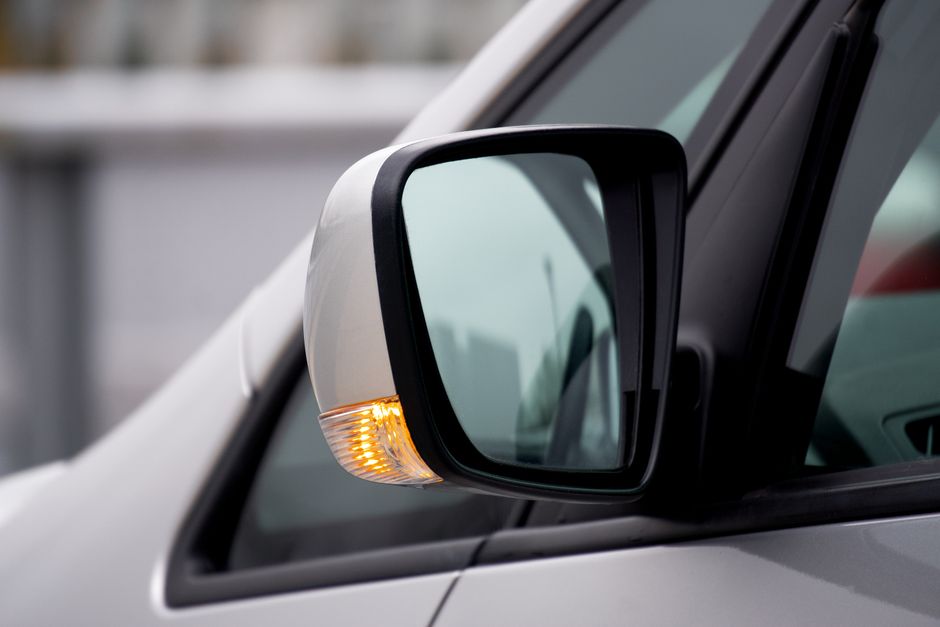
    There are three driving hand signals in the US, all given with your left arm out of the driver’s window: arm straight out for a left turn, arm bent up for a right turn and arm bent down to slow or stop. California, Louisiana, Alabama and Oregon all show them in their handbooks, so they can appear on those states’ permit tests. Most states require a signal at least 100 feet before a turn. But states don’t all treat arm signals the same way, so check your own state’s handbook.

    The three arm signals

    Signal Left arm position Means
    Left turn Straight out, level with the shoulder Turning or moving left
    Right turn Bent up at the elbow, hand pointing to the sky Turning or moving right
    Slow or stop Bent down at the elbow, hand pointing to the road Slowing down or stopping

    Memory trick: the arm points the way the car is going for left, and the right-turn signal is the only one where your hand goes up.

    Cyclists are different. California’s handbook says a bicyclist may signal a turn by holding an arm straight out and pointing in the direction they plan to turn, so a cyclist’s right arm straight out means a right turn. Watch for both versions. See sharing the road with motorcycles, bicycles and trucks.

    When are hand signals allowed or needed?

    This is where states differ. What state handbooks say:

    State Handbook rule on arm signals
    California You can signal with your signal lights or with hand-and-arm positions. Use arm signals if your signal lights stop working or bright sunlight makes them hard to see.
    Louisiana You can use either mechanical signal lights or the left arm.
    Alabama In daytime, hand and arm signals may be used in addition to signal lights, because bright sunlight can make flashing lights hard to see.
    Oregon Only in daylight, and only when you can clearly see people and vehicles 1,000 feet away. Use your signal lights at night or in poor visibility. Don’t use arm signals in a wide or long vehicle.
    Kentucky “Your vehicle must have mechanical signals. Hand signals cannot be used.”

    So in Kentucky you rely on your signal lights, while in California a failed signal light is a reason to use your arm. If you’re in another state, look for the signaling section of its driver handbook, and don’t assume another state’s rule applies.

    Will arm signals be on my permit test?

    Question banks change, so ask your state whether its test includes arm-signal questions. If your state’s handbook shows the three arm positions (as California, Louisiana, Alabama and Oregon do), treat them as fair game. Our US permit test by state guide and practice tests cover the test format.

    How far ahead must you signal?

    • 100 feet before a turn is the standard in the California, Louisiana, Alabama, Kentucky and Oregon handbooks. Oregon applies the same 100 feet to lane changes. Washington’s driver guide also uses 100 feet.
    • Freeway lane changes: California says signal at least five seconds before you change lanes on a freeway.
    • Faster roads: Louisiana suggests signaling earlier than 100 feet at higher speeds or in heavy traffic. At highway speed, 100 feet goes by in about a second.
    • Turning just after an intersection: California says wait until you’re almost through the intersection before signaling, so drivers don’t think you’re turning at the intersection itself.
    • Pulling away from or toward the curb: signal (California, Kentucky, Oregon).
    • Even with no one around: signal anyway. Kentucky’s point is that “the vehicle you do not see is the most dangerous.”

    Cancel your signal after the turn. Louisiana also says it is illegal to flash your turn signal to tell the driver behind it is safe to pass you.

    Other ways to communicate on the road

    Brake lights

    Your brake lights tell drivers behind that you’re slowing. Kentucky says to signal before you slow down where others may not expect it, such as turning off a road with no separate turn lane, or parking or turning just before an intersection. If you see a crash or hazard ahead, California says to warn traffic behind you by turning on your emergency flashers, tapping the brake pedal three or four times, or giving the slow/stop arm signal.

    Horn

    • A light tap is usually enough (Kentucky). Use it when a pedestrian or cyclist looks about to move into your lane, when a driver starts to turn into you as you pass, or when a driver hasn’t seen you.
    • Narrow mountain roads: California says sound your horn where you can’t see at least 200 feet ahead.
    • Don’t: honk near blind pedestrians (Kentucky) or near horses and riders (Oregon), or use the horn to “punish” another driver (Louisiana). An angry horn can start a conflict; see road rage and aggressive driving.

    Headlights and hazard lights

    Headlights make you visible as well as helping you see. Oregon lists headlights and hazard lights among the main ways to tell others where you are. Kentucky says to turn your headlights on whenever you have trouble seeing other vehicles, because they probably can’t see you either. Dimming rules are in night driving and high beams.

    Eye contact

    Louisiana’s guide says good communication and eye contact between drivers and bicyclists help prevent collisions, and Alabama tells pedestrians to make eye contact with a driver before crossing. California’s handbook says that a pedestrian who makes eye contact with you is ready to cross, so yield. A wave or nod can confirm who goes, but it is not a legal signal. Never wave a pedestrian across lanes where other traffic may not stop. See pedestrians and crosswalks.

    A signal is not the right of way

    Kentucky and Alabama both make the point: turning on a signal does not give you the right to move. Check mirrors and blind spot, then go only when it is safe. And don’t trust other drivers’ signals either. Oregon warns that a driver may signal one way and turn the other. More on this in lane changes and blind spots.

    For how licensing works in each state, start with learning to drive in the USA.

    Sources

    • California DMV, “California Driver’s Handbook, Section 5: An Introduction to Driving” and “Section 7: Laws and Rules of the Road” (dmv.ca.gov)
    • Louisiana Office of Motor Vehicles, “Class D & E Driver’s Guide” (DPSMV 2052, R08/25) (public.powerdms.com)
    • Alabama Law Enforcement Agency, “Alabama Driver Manual” (alea.gov)
    • Oregon DMV, “Oregon Driver Manual: Intersections and Turns” and “Safe and Responsible Driving” (oregon.gov)
    • Kentucky State Police, “Kentucky Driver Manual” (updated July 2026), Section Eight: Safe Driving Tips (kentuckystatepolice.ky.gov)
    • Washington State Department of Licensing, “Washington State Driver Guide” (dol.wa.gov)
  • Steering Wheel Hand Position and Seat Setup for US Learners

    Steering Wheel Hand Position and Seat Setup for US Learners

    Photo: Norma Mortenson, Pexels

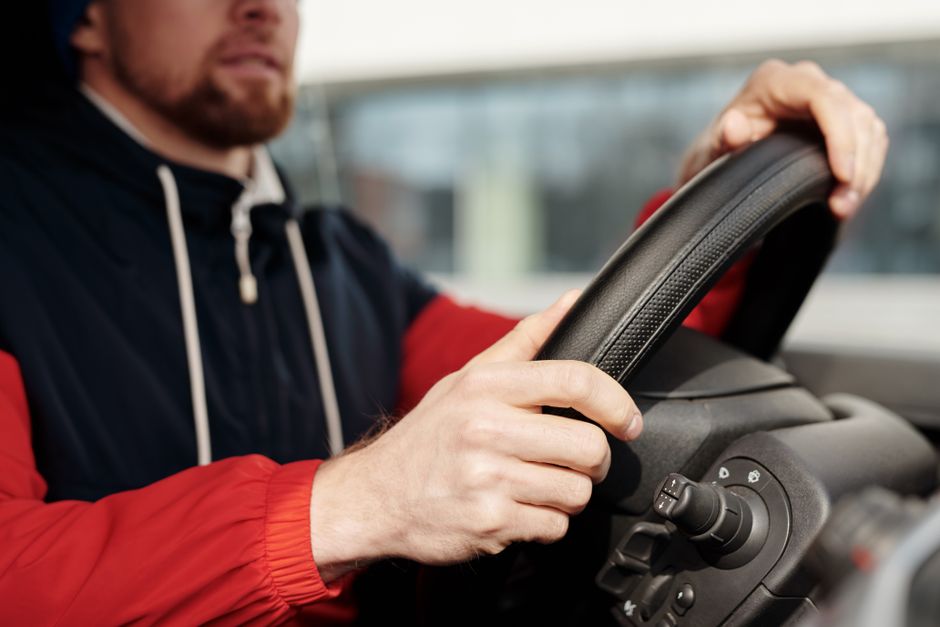
    Hold the steering wheel at 9 and 3 o’clock or 8 and 4 o’clock, not the old 10 and 2. That is what the California and Louisiana driver handbooks now teach, and Kentucky’s manual says 3 and 9. The reason is the air bag in the wheel hub: hands high on the wheel, or arms crossed over it, are in the path of the bag when it fires. Before you get to the hands, though, US handbooks want the seat, head restraint, mirrors and seat belt set up first. Here is the routine, in order.

    Pre-drive routine: the order to set up your car

    1. Seat upright, back against the seat. Kentucky’s manual says slouching reduces how well the seat belt and air bags protect you, and tells you not to recline the seat.
    2. Seat distance. Sit as far back as you can while still working the pedals and wheel fully, with at least 10 inches between your breastbone and the center of the steering wheel (California, Kentucky and Louisiana all use the 10-inch figure). California says to contact your dealer or the vehicle maker if you can’t sit 10 inches back and still control the car.
    3. Steering wheel height and tilt. Kentucky: the top of the wheel should be no higher than the top of your shoulders and below chin level. Louisiana: if the wheel tilts, angle it toward your chest, not your head.
    4. Head restraint. It should touch the back of your head and sit no lower than the level of your ears (Kentucky). Its job is to limit whiplash.
    5. Inside mirror. Frame the whole rear window. Kentucky calls it your primary mirror for looking behind.
    6. Side mirrors. See the method below.
    7. Seat belt. Lap belt snug and low across your hips; shoulder belt across your chest, never under your arm or behind your back.
    8. Clear view. Clean windows and mirrors, nothing hanging from the mirror. Kentucky says decals that block your view are unlawful.

    Do this before you start the engine, every time. On a road test the examiner sees it before you move, so it is your first impression. Our road test day checklist covers the rest of the pre-drive checks.

    How to set your side mirrors to cut blind spots

    Kentucky’s manual gives a method that many instructors use:

    • Left mirror: rest your head against the closed driver’s window, then set the mirror so you can barely see the rear edge of your own car.
    • Right mirror: lean right until your head is roughly above the center console, then set the mirror so you can barely see the right side of your car.

    Sitting normally, you will no longer see your own car in the side mirrors. Kentucky says this adds 12 to 16 degrees of view on each side. It shrinks blind spots but doesn’t remove them, so you still turn your head before every lane change. See lane changes and blind spots.

    9 and 3 vs 8 and 4: which hand position is right?

    Both are accepted. The handbooks put it like this:

    Handbook What it says about hand position
    California (Section 5) Push-pull steering starts at 9 and 3 or 8 and 4. Hand-over-hand starts at 8 and 4. Keep both hands on the wheel whenever possible.
    Louisiana Recommended positions are 9 and 3 or 8 and 4. The 10 and 2 position “is not recommended” in cars with air bags.
    Kentucky Hands on the outside of the wheel at 3 and 9, thumbs up along the face of the wheel, fingers rather than palms. Never grip it from the inside.
    Oklahoma Still teaches the left hand between 9:00 and 10:30 and the right hand between 2:00 and 4:00, so not every handbook has moved fully to 9 and 3.

    Pick the one that feels steady in your car and stick with it. Both keep your hands and arms out of the air bag’s path.

    Why 10 and 2 is out

    Louisiana’s guide explains that a driver’s air bag comes out at 150 to 200 mph. With hands at the top of the wheel, the bag can throw your hands into your face or break a wrist or forearm. Kentucky’s manual says the whole deployment takes about 1/20th of a second, so there is no time to move your hands. That is also why handbooks warn against reaching across the hub while steering.

    Push-pull vs hand-over-hand steering

    Hand-to-hand (push-pull)

    This is the method Louisiana calls preferred for normal driving forward, above about 10 to 15 mph.

    1. Start at 9 and 3 or 8 and 4.
    2. To turn right, push the wheel up with your left hand while your right hand slides up.
    3. Your right hand grips and pulls down; your left hand slides back toward its starting point.
    4. Repeat as needed, then reverse the movement to straighten up.

    Your hands never cross over the middle of the wheel, which keeps your arms clear of the air bag.

    Hand-over-hand

    California and Louisiana both say to use this at low speeds: turning at intersections, parking and (California adds) recovering from a skid. Start at 8 and 4, reach across the wheel with one hand to grasp the far side, let go with the other hand, then reach across the arm still holding the wheel and pull. Practice it slowly in a parking lot before you need it in a tight turn. It matters on the three-point turn and in parking.

    One-hand steering: the only two times

    • Backing up while turned in your seat: one hand at 12 o’clock (California, Kentucky and Louisiana). See backing up on the road test.
    • Briefly using a control such as the wipers or lights. Keep the other hand at its normal position.

    Controlling the vehicle smoothly

    • Grip: firm but gentle (Kentucky). A death grip makes your steering jerky.
    • Accelerate gradually, with the heel of your right foot on the floor and the top of your foot on the pedal (Kentucky).
    • Brake early with steady pressure, after checking your mirrors.
    • Look where you want to go. Louisiana’s cornering advice: your eyes steer the car, so look as far through the bend as you can.
    • In an emergency swerve, steer less than you think. Louisiana says modern cars need only 45 to 90 degrees of steering to get back on the road after drifting off it, and warns that more than 180 degrees often causes a loss of traction. More in vehicle emergencies.

    Quick checklist

    • Seat upright, 10 inches from the wheel, pedals reachable
    • Wheel below chin, tilted toward the chest
    • Head restraint at the back of the head, not below ear level
    • Inside mirror frames the rear window; side mirrors set wide
    • Belt low and snug, shoulder strap across the chest
    • Hands at 9 and 3 or 8 and 4, thumbs along the rim

    Rules on licensing and testing differ by state. Start with learning to drive in the USA, and see seat belt and child car seat laws and driver assistance features for the rest of the in-car setup.

    Sources

    • California DMV, “California Driver’s Handbook, Section 5: An Introduction to Driving” (dmv.ca.gov)
    • California DMV, “California Driver’s Handbook, Section 8: Safe Driving (Continued)” (dmv.ca.gov)
    • Louisiana Office of Motor Vehicles, “Class D & E Driver’s Guide” (DPSMV 2052, R08/25) (public.powerdms.com)
    • Kentucky State Police, “Kentucky Driver Manual” (updated July 2026), Section Four: Before You Drive and Section Five: Basic Driving (kentuckystatepolice.ky.gov)
    • Service Oklahoma, “Oklahoma Driver Manual” (updated 11/24/25) (oklahoma.gov)
  • Can I Drive With My Permit in Another State? US Rules Explained

    Can I Drive With My Permit in Another State? US Rules Explained

    Photo: Oregon Department of Transportation, CC BY 2.0, via Wikimedia Commons

    Can you drive with your learner’s permit in another state? Sometimes. It depends on two sets of rules: your home state’s (is the permit valid outside the state?) and the host state’s (does it accept out-of-state permits, and at what age?). There is no national rule. New York, for example, accepts out-of-state permits only from drivers aged 16 or older, who must follow both states’ restrictions. This FAQ explains what to check before a road trip or a family move.

    Key facts

    • No federal rule covers permits across state lines. Each host state decides.
    • New York: out-of-state permit holders may drive if they are 16 or older and the permit is valid outside the issuing state.
    • New York: under 16, you cannot drive there even with an out-of-state license.
    • You follow the stricter mix: your home state’s permit rules plus the host state’s.
    • Moving for good is different. You usually need a permit from your new state, though permit time may carry over.

    Three questions to answer before you drive

    1. Does my home state allow its permit to be used out of state? Read your permit rules or ask your DMV. New York only accepts permits that are valid outside the issuing state.
    2. Does the host state accept out-of-state permits, and from what age? Look for a “visitors” or “nonresidents” page on that state’s DMV site.
    3. Which restrictions apply? Plan to follow both. That covers who supervises you (age and license), hours you can drive, passengers and phone use.

    Worked example: a 16-year-old from another state driving in New York

    Question New York’s answer
    Can I drive on my out-of-state permit? Yes, if you are 16 or older and your permit is valid outside your home state
    Whose rules apply? Your home state’s restrictions and New York’s permit restrictions
    I am under 18. Anything else? You must also follow New York’s Graduated License Law restrictions
    I am 15 with a permit. You cannot drive in New York. Drivers must be at least 16, even with an out-of-state license
    Can I swap my permit for a New York one? No. New York does not exchange out-of-state permits

    New York’s rules for its own permit holders, such as who may supervise you (a driver aged 21 or older), are in the New York Driver’s Manual. Read them before you cross the state line.

    Do my practice hours count in another state?

    Practice hours count toward your home state’s log only if your home state accepts them. Check your state’s log form or ask your DMV before counting out-of-state hours. Hours and log rules by state: supervised driving hours by state.

    Moving to a new state with a permit

    • You normally apply for a permit in your new state. New York, for example, will not exchange an out-of-state permit.
    • Time already served may count. California counts an instruction permit from another state toward its 6-month holding period before the drive test. Oregon also counts an out-of-state permit toward its 6-month requirement.
    • Expect to take the new state’s knowledge test. Compare them in US permit test by state.

    Full guide: moving to a new state. Teen rules by state: US graduated driver licensing compared.

    Common questions

    Can I drive with my permit in another state on vacation?

    Only if both your home state and the host state allow it. Check both DMV sites before the trip.

    Can I drive in New York with a permit from New Jersey or Pennsylvania?

    New York allows it if you are 16 or older and the permit is valid outside the state that issued it. Follow both states’ restrictions.

    Who can supervise me out of state?

    Meet the stricter of the two states’ supervisor rules on age and license.

    What if I get a ticket while driving on my permit in another state?

    It can be reported to your home state, which may act on it. See points systems and license suspensions.

    Does my car insurance cover me in another state?

    Check with your insurer before you go, and make sure you are listed as a permit driver. See car insurance for new drivers.

    I live near a state line. Can I take my road test in the next state?

    Expect to test in the state where you live. New York, for example, says you should only apply for its license if you become a New York resident.

    State permit guides: California instruction permit, Georgia instructional permit at 15, Illinois instruction permit at 15. All states: learning to drive in the USA.

    Sources

    • New York State DMV, “Driving in New York State” (dmv.ny.gov)
    • New York State DMV, “New York State Driver’s Manual” (dmv.ny.gov)
    • California DMV, “California Driver’s Handbook: Getting an Instruction Permit and Driver’s License” (dmv.ca.gov)
    • Oregon DMV, “Oregon Driver Manual: Other Important Information” (oregon.gov)
  • How Do Points on Your License Work? US Points and Suspensions

    How Do Points on Your License Work? US Points and Suspensions

    Photo: Kindel Media, Pexels

    In many US states, a moving violation conviction puts points on your driving record. Too many points within a set time leads to a warning, a course, higher insurance or a license suspension. Not every state uses points. Oregon, for example, tracks the convictions themselves through its Driver Improvement Program. Thresholds are much lower for teen and provisional drivers. This explainer shows how points work, with real thresholds from California, New York and Pennsylvania.

    Key facts

    • Each state runs its own system, with its own point values, time windows and penalties.
    • Points come from convictions (or guilty pleas), not just from being stopped.
    • Teen and provisional drivers face suspension at much lower levels. Pennsylvania suspends under-18 drivers at six points.
    • Points usually drop off over time, or you can remove some with an approved course in some states.
    • The Driver License Compact lets member states share conviction records, so an out-of-state ticket can still matter at home.

    How do points on your license work?

    1. You are convicted of a violation, such as speeding or running a red light.
    2. The court reports it to your state’s DMV, which adds the points set for that violation. New York counts points from the date you commit the violation, not the date you are convicted.
    3. Points stay “live” for a set period, then stop counting. In California, convictions stay on your record for 36 months or longer, depending on the type.
    4. Reach a threshold and the DMV acts: a warning letter, a test or course, a fee, probation or a suspension.

    Thresholds in three states

    State Adult threshold What happens
    California 4 points in 12 months, 6 in 24 months or 8 in 36 months Treated as a negligent driver: probation, suspension or revocation, with a right to a hearing
    New York 11 or more points within 24 months (as worded in the Driver’s Manual) Notice by mail that your license will be suspended
    New York 6 or more points within 18 months Driver Responsibility Assessment, paid over three years
    Pennsylvania 6 or more points, first time Written Special Point Examination or Driver Improvement School
    Pennsylvania 6 or more points, second or later time Departmental hearing and Driver Improvement School; possible on-road exam or suspension of up to 15 days (up to 30 days for a third or later time)

    Point values per violation differ by state. One example: New York adds 5 points for a cell phone, portable electronic device or texting conviction.

    Teen and provisional drivers: lower limits

    • Pennsylvania: under-18 drivers are suspended for six or more points or one conviction for driving 26 mph or more over the limit. The first suspension is 90 days, later ones 120 days.
    • California provisional license: two at-fault collisions or convictions (or one of each) means you cannot drive for 30 days unless a licensed adult aged 25 or older rides with you. Three means a six-month suspension and one year of probation. Turning 18 does not end restrictions already in place.
    • New York: a cell phone or texting conviction on a junior permit or license brings a suspension. See hands-free and texting laws.

    Alcohol is handled separately, usually with automatic suspensions. See zero tolerance laws for drivers under 21 and implied consent and DUI.

    How to get points taken off

    State Option Effect
    California Traffic violator school for a one-point violation, if the judge allows The citation is not reported to your insurer (it stays on your record); once in any 18-month period
    New York Point and Insurance Reduction Program (PIRP) course Reduces points and cuts your insurance premium by 10%
    Pennsylvania Passing the Special Point Examination, or Driver Improvement School Removes 2 points (exam) or 4 points (school)
    Pennsylvania 12 months in a row with no violations 3 points removed

    What about a ticket in another state?

    Most states belong to the Driver License Compact. PennDOT lists 45 states plus DC as members. It works on two ideas:

    • One driver license: you hold a license from one state only.
    • One driver record: your home state keeps your complete record and decides your driving eligibility.

    How your home state treats an out-of-state conviction depends on its own law. Two examples:

    • Pennsylvania: certain offenses in a member state are treated as if they happened in Pennsylvania. Points are not added for point offenses from other member states, and minor offenses such as speeding do not appear on a non-commercial Pennsylvania record, though they are still reported.
    • New York: out-of-state traffic convictions, except from Canada, are not added to your New York point record.

    No points does not mean no consequences. Pennsylvania, for example, applies its own sanctions to serious offenses from member states, with a minimum one-year suspension for serious non-DUI offenses.

    State points guides

    All US topics: learning to drive in the USA.

    Common questions

    How long do points stay on your license?

    It depends on the state and the violation. In California, convictions stay on the record for 36 months or longer. Pennsylvania removes 3 points for every 12 months without a violation.

    Do points raise my insurance?

    Often, yes. California’s traffic violator school exists partly to keep a one-point ticket from being reported to your insurer. See car insurance for new drivers.

    Can I get points on a learner’s permit?

    Yes, permit holders can be convicted like any driver, and teen thresholds are lower. Check your state’s teen rules.

    Does every state use points?

    No. Oregon, for example, uses a Driver Improvement Program based on the number of traffic convictions.

    Will a speeding ticket from a road trip count?

    It is reported to your home state if both states are Compact members. Whether points are added depends on your home state’s law. New York and Pennsylvania do not add points for most out-of-state convictions.

    What happens if I move states with points?

    Your record follows you. See moving to a new state.

    Sources

    • California DMV, “California Driver’s Handbook: Laws and Rules of the Road (Continued)” (dmv.ca.gov)
    • New York State DMV, “Driver license points and penalties” (dmv.ny.gov)
    • New York State DMV, “New York State Driver’s Manual” (dmv.ny.gov)
    • Pennsylvania DMV (PennDOT), “Pennsylvania’s Point System” (pa.gov)
    • Pennsylvania DMV (PennDOT), “Driver License Compact FAQs” (pa.gov)
    • Oregon DMV, “Oregon Driver Manual: Other Important Information” (oregon.gov)
  • Why Do People Fail Their Driving Test? Common US Road Test Fails

    Why Do People Fail Their Driving Test? Common US Road Test Fails

    Photo: Noel Aph, Pexels

    Most people who fail a US driving test fail for one of three reasons. They commit a single serious error, such as a rolling stop, speeding or a missed blind-spot check. They pile up too many smaller mistakes. Or the test never starts because of a paperwork or car problem. Each state writes its own rules, so this guide uses California’s published list of critical driving errors and New York’s test-day rules as examples, then links to state guides.

    Errors that fail you on the spot (California’s list)

    California publishes the “critical driving errors” that end in a fail. Other states publish their own lists, but this shows the kind of error that fails a test. In plain terms:

    Critical error What it looks like
    Examiner has to step in Any action that needs the examiner to intervene physically or verbally. Also three attempts to back the car.
    Hitting something Touching a car, object, cyclist, pedestrian or animal that could have been avoided. Driving over the curb or onto the sidewalk.
    Rolling a stop Going faster than a brisk walking speed (4 mph) through a stop sign, a flashing red light or a right turn on red.
    Ignoring signals Not stopping and waiting at a red light or red ramp meter; stopping for no reason at a green light.
    Ignoring safety vehicles or staff Passing a school bus with flashing red lights; not pulling over for an emergency vehicle; disobeying police, firefighters or other safety personnel.
    Dangerous maneuvers Making another driver or a pedestrian take evasive action; blocking an intersection; stopping in a freeway merge lane.
    Missing observation checks Not checking mirrors or over your shoulder when changing lanes, merging, backing, turning right across a bike lane or pulling away from the curb.
    Speed 10 mph over the limit, or 10 mph under when conditions do not call for it; too fast or too slow for safety.
    Not using equipment No wipers, defroster or headlights when the weather or darkness calls for them.
    Lane errors Driving more than 200 feet in a bike lane or center turn lane; going straight from a turn lane; turning from the wrong lane; driving in the oncoming lane.
    Stalling Stalling in an intersection, or three times because of poor clutch or gear use.

    Full California detail: California drive test critical driving errors.

    The small mistakes that add up

    Even without a critical error, scored mistakes can sink a test. California’s scoring criteria show what examiners check every time:

    • Lane changes: signal before, cancel after, wait for a proper gap, finish in the center of the lane.
    • Stops: a full stop with no creeping or rolling back, about half a car length behind the car in front.
    • Speed control: at or under the limit, and slower for hazards.
    • Scanning: turning your head to look for cars, bikes and pedestrians at intersections.

    Practice these until they are automatic. Head checks need to be big enough for the examiner to see.

    Failing before you start: test-day problems

    Some tests end before you leave the parking lot. Using New York’s and California’s rules as examples:

    Paperwork

    • New York: bring your physical photo learner permit and the original 5-hour pre-licensing certificate (MV-278); copies are not accepted. Under 18s also need a signed MV-262 at each test.
    • Arriving late can mean the examiner cannot test you (New York).

    The car

    • New York: valid registration, insurance and inspection, working order, permanent plates (in-transit permits are not allowed), and a clean passenger seat belt for the examiner.
    • California: tires with at least 1/32-inch tread and no donut spare, a horn audible from 200 feet, and no driver assistance technology such as automated parallel parking. If the car fails the check, the test is rescheduled.
    • Oregon: working signals, brake lights, horn, seat belts and mirrors, tires that are not bald, and traction tires or chains if the weather requires them.

    Who comes with you

    • New York: if you drive yourself to the test, your supervising driver must be over 21 and show a physical license (mobile ID is not accepted).
    • California prohibits recording devices during the drive test. New York allows no passengers other than the accompanying driver, and Oregon allows only you and the examiner in the car.

    If you fail: how soon can you retake?

    State Wait before retest
    California (minors) 14 days, not counting the day you failed
    New York At least 14 days; extra fees after the first two failed tests
    Oregon Next business day

    Other states set their own waiting periods and retest fees. Check before you rebook.

    State road test guides

    Which states test parallel parking: US road test by state. All US topics: learning to drive in the USA.

    Common questions

    What is the most common reason people fail the driving test?

    States rarely publish rankings. The errors examiners list as automatic fails, such as rolling stops, missed blind-spot checks and speed errors, are the ones to drill.

    Is a rolling stop an automatic fail?

    In California, yes: going faster than 4 mph through a stop sign is a critical error. Come to a complete stop every time.

    Can you fail for driving too slowly?

    Yes. California fails driving 10 mph under the limit when conditions do not call for it.

    Does hitting the curb fail you?

    Driving over the curb is a critical error in California. Check your state’s score sheet for how it treats curb contact while parking.

    Can I use my backup camera?

    Rules vary. California does not allow driver assistance technology such as automated parallel parking. Ask your DMV what is allowed.

    How can I avoid failing?

    Book practice in the test area, use your state’s score sheet as a checklist, and check your paperwork and car the day before.

    Sources

    • California DMV, “Driving Performance Evaluation (DPE) Scoring Criteria” (dmv.ca.gov)
    • California DMV, “California Driver’s Handbook: The Testing Process” (dmv.ca.gov)
    • New York State DMV, “Schedule and take a road test” (dmv.ny.gov)
    • New York State DMV, “New York State Driver’s Manual” (dmv.ny.gov)
    • Oregon DMV, “Oregon Driver Manual: Testing” (oregon.gov)
  • Parking on a Hill, Hydrants and Curb Colors: US Parking Rules

    Parking on a Hill, Hydrants and Curb Colors: US Parking Rules

    Photo: Raphael Loquellano, Pexels

    When parking on a hill, turn your front wheels so the car would roll into the curb, or off the road, if the brakes failed. Downhill, turn the wheels toward the curb. Uphill with a curb, turn them away from it. With no curb, turn them toward the edge of the road. This guide covers hill parking, distances from hydrants and crosswalks, and curb colors, using the California, New York and Oregon handbooks. Distances differ between states, so learn your own state’s numbers for the permit test.

    Parking on a hill: which way to turn your wheels

    Situation Turn front wheels Why
    Downhill, with a curb Toward the curb (right) The car rolls into the curb
    Uphill, with a curb Away from the curb (left), then let the car roll back a few inches until the tire gently touches the curb The back of the front tire rests against the curb
    Uphill or downhill, no curb To the right, toward the edge of the road The car rolls away from the center of the road
    Sloping driveway So the car will not roll into the street Keeps it off the road

    This is California’s guidance. In every case, also set the parking brake and leave the car in park. New York says the same in short form: put the vehicle in park (or first gear in a manual) and turn the wheels toward the curb or side of the road so the car will not head into traffic.

    Memory tip: “Up, up and away”: uphill with a curb, wheels away from it. Every other case, wheels toward the curb or road edge.

    How far from a fire hydrant can you park?

    It depends on the state. That is why permit tests ask it.

    Do not park within California New York Oregon
    Fire hydrant 15 feet 15 feet 10 feet
    Crosswalk 20 feet (15 feet if it has a curb extension) 20 feet of a crosswalk at an intersection 20 feet of a crosswalk at an intersection
    Traffic light, stop or yield sign Not listed in the section checked 30 feet 50 feet, if your car hides the sign or signal
    Railroad crossing Not listed in the section checked 50 feet 50 feet of the nearest rail
    Fire station driveway 15 feet Not listed in the section checked 15 feet on the same side, 75 feet on the opposite side
    Disabled access ramp 3 feet Not listed in the section checked Not listed in the section checked

    New York allows a car within 15 feet of a hydrant only if a licensed driver stays in it to move it in an emergency. Never park in the crosswalk itself.

    What do curb colors mean?

    California uses a full colored-curb system. Other states and cities may use paint differently or not at all, so read the local signs and your own handbook.

    Color California meaning
    White Stop only long enough to pick up or drop off passengers
    Green Park for a limited time (posted on a sign or painted on the curb)
    Yellow Stop to load or unload passengers or freight, for no longer than the posted time
    Red No stopping, standing or parking (buses may stop in red zones marked for buses)
    Blue Parking for a disabled person, or someone driving them, with a placard or special license plate

    Disabled parking abuse is expensive. Oregon, for example, says fines begin at $165 and go up to $1,000.

    Parallel parking in five steps

    1. Find a space at least three feet longer than your car. Signal.
    2. Stop about two feet from the car ahead, with your rear bumper level with the front of the space.
    3. Check your mirror and over your shoulder for traffic, bikes and pedestrians.
    4. Back in at about a 45-degree angle.
    5. When your rear wheel is within 18 inches of the curb, start turning the wheel away from the curb to straighten up. Pull forward and back if you need to.

    Those are California’s steps. Oregon requires you to park parallel to and no more than 12 inches from the curb. Not every state tests parallel parking: see US road test by state.

    Leaving a parked car

    • Engine off, parking brake on, key out (Oregon’s checklist for an unattended car).
    • Check mirrors and look back for bikes before you open your door.
    • When pulling out, signal, check your blind spot and yield to traffic.

    State parking guides

    Common questions

    Which way do you turn your wheels when parking uphill without a curb?

    To the right, toward the edge of the road, so the car rolls away from traffic if the brakes fail.

    Do you need the parking brake on a flat street?

    Using it every time is a good habit, and on a hill it is part of the handbook routine.

    How close to the curb do you have to park?

    Oregon says no more than 12 inches. Check your state’s figure.

    What does a red curb mean?

    In California, no stopping, standing or parking.

    Can I park in front of a hydrant if I stay in the car?

    In New York, only if a licensed driver stays in the car to move it in an emergency. Do not assume other states allow it.

    Is parallel parking on every road test?

    No. It depends on the state. See the road test comparison.

    All US topics: learning to drive in the USA.

    Sources

    • California DMV, “California Driver’s Handbook: Navigating the Roads (Continued)” (dmv.ca.gov)
    • New York State DMV, “New York State Driver’s Manual” (dmv.ny.gov)
    • Oregon DMV, “Oregon Driver Manual: Parking and Stopping” (oregon.gov)
  • Basic Speed Law and US Speed Limits: What New Drivers Must Know

    Basic Speed Law and US Speed Limits: What New Drivers Must Know

    Photo: Mohan Nannapaneni, Pexels

    The basic speed law means you must never drive faster than is safe for the conditions, even when you are under the posted limit. Every US state sets its own speed limits, so numbers differ, but the idea is the same everywhere. This explainer covers the basic speed rule, default limits where no sign is posted, school and work zones, and driving too slowly, using the California, New York and Oregon handbooks as worked examples.

    Key facts

    • The posted limit is a maximum for good conditions, not a target.
    • You can be ticketed for going too fast for conditions even below the limit (New York and Oregon handbooks say so directly).
    • Default limits apply where no sign is posted, and they vary by state. New York: 55 mph. California and Oregon: 25 mph in residential districts.
    • Work zone fines double in New York, and in California when workers are present.
    • On the California drive test, driving 10 mph over or under the limit without reason is a critical error (automatic fail).

    What is the basic speed law?

    Oregon’s manual states it as the “basic rule”: you must drive at a speed that is reasonable and cautious for existing conditions. Two consequences follow:

    • It does not let you go over the limit. Oregon says the basic rule does not allow you to drive over the speed limit, even if conditions seem perfect.
    • It can make the safe speed lower than the sign. Rain, fog, ice, heavy traffic, pedestrians or a sharp curve can all make the posted speed too fast. New York warns you can be ticketed for a speed that is not reasonable for conditions, even below the limit.

    The wording differs by state. Your state handbook’s speed section is what the permit test uses.

    Speed limits when no sign is posted: three states compared

    Where California New York Oregon
    Alleys 15 mph Not covered 15 mph
    Blind intersection 15 mph Not covered Not covered
    Business district 25 mph New York City: 25 mph unless posted 20 mph
    Residential district 25 mph New York City: 25 mph unless posted 25 mph
    School zone 25 mph within 500 feet of a school while children are outside or crossing (some zones as low as 15 mph) Follow posted signs 20 mph within a school speed zone
    Other roads with no posted limit 65 mph maximum on most highways; 55 mph on two-lane undivided highways and when towing 55 mph 55 mph
    Interstates As posted As posted Limits vary (the manual gives no figure)

    These defaults apply unless a sign says otherwise. Cities can set different limits by ordinance. Check your own state’s handbook for its numbers.

    Default limits in some other states

    • Texas: 30 mph in an urban district, 15 mph in an alley, 70 mph on numbered highways outside urban districts and 60 mph on other rural roads (Transportation Code 545.352).
    • Indiana: 70 mph on rural interstates (65 for heavy trucks), 60 on rural divided state highways, 55 on urban interstates, undivided state highways and county roads, 30 in urban residential areas and 15 in alleys. Work zones are at least 10 mph below.
    • Missouri: 75 mph on rural interstates and freeways, 65 on rural expressways, 60 on urban interstates and other non-urban roads, 55 on lettered roads and 25 in cities, with a 40 mph interstate minimum.
    • North Carolina: for offenses from December 1, 2026, 25 mph on unpaved roads and roads without a marked center line (S.L. 2026-46).

    California’s railroad crossing rule

    California sets 15 mph within 100 feet of a railroad crossing when you cannot see the tracks for 400 feet in both directions. Faster driving is allowed where gates, a warning signal or a flagger controls the crossing. More in railroad crossings.

    Work zones and school zones

    • Work zones: New York says ticket fines double when you speed in work zones. California doubles fines in highway construction or maintenance zones when workers are present, and says work zone fines can reach $1,000 or more.
    • School zones: lower limits usually apply only at set times or when children are present. Read the sign. Watch for school buses too: see school bus stopping laws.

    Work zone penalties differ by state. Check the exact rule in your state’s handbook.

    Can you get a ticket for driving too slowly?

    Yes, if you block normal traffic. California says you may be cited if you drive faster or slower than the speed limit, while still slowing for heavy traffic or bad weather. Oregon says that when you drive slower than the normal flow, you must use the right lane or keep as close as possible to the right edge, unless you are about to turn left, and pull off at a safe spot to let a line of traffic pass.

    Speed on your road test

    Examiners watch speed closely. California’s drive test criteria list as critical errors:

    • driving 10 mph over the limit, or 10 mph under when conditions do not call for it
    • driving too fast or too slow for safety

    More reasons in common reasons people fail the US driving test.

    Common questions

    Is it legal to go 5 mph over the speed limit?

    No. Any speed over the limit is a violation. Oregon’s manual is clear that the basic rule never allows you to exceed the limit.

    What is the speed limit if there is no sign?

    It depends on the state and the type of road. New York sets 55 mph where no limit is posted, and 25 mph in New York City. California and Oregon use 25 mph in residential districts.

    Can I get a speeding ticket below the speed limit?

    Yes, under the basic speed law, if your speed was unsafe for the conditions.

    What is a safe speed in rain or snow?

    California suggests 5 to 10 mph slower on wet roads, half speed on packed snow and no more than 5 mph on ice. See driving in snow, fog and rain.

    Do speeding tickets add points?

    In states that use points, a speeding conviction usually adds them. See points systems and license suspensions, and for Georgia’s extra fee, the Georgia Super Speeder law.

    How fast can I go on the freeway?

    As posted. Freeway limits vary by state and stretch of road. See freeway driving for new drivers.

    All US topics: learning to drive in the USA.

    Sources

    • California DMV, “California Driver’s Handbook: Laws and Rules of the Road (Continued)” (dmv.ca.gov)
    • California DMV, “California Driver’s Handbook: Safe Driving” (dmv.ca.gov)
    • California DMV, “Driving Performance Evaluation (DPE) Scoring Criteria” (dmv.ca.gov)
    • New York State DMV, “New York State Driver’s Manual” (dmv.ny.gov)
    • Oregon DMV, “Oregon Driver Manual 2026-2027: Lane Travel, Speed Regulations” (oregon.gov)
    • Texas Legislature, “Transportation Code section 545.352” (statutes.capitol.texas.gov)
    • Indiana BMV, “Indiana Driver’s Manual” (in.gov)
    • Missouri DOR, “Missouri Driver Guide” (dor.mo.gov)
    • North Carolina General Assembly, Session Law 2026-46 (ncleg.gov)
  • Transfer Your Driver’s License to Another State: Moving Guide

    Transfer Your Driver’s License to Another State: Moving Guide

    Photo: Oregon Department of Transportation, CC BY 2.0, via Wikimedia Commons

    When you move to a new state and become a resident, you must transfer your driver’s license to that state. The deadline and the tests depend on the state you move to. New York, for example, gives you 30 days and only asks for a vision test. California asks out-of-state drivers to pass its knowledge test. This guide shows what to expect and what to check before you go to the DMV.

    Key facts

    • The deadline is set by your new state. New York: within 30 days of becoming a resident.
    • You can hold only one license. The Driver License Compact, which PennDOT lists as covering 45 states plus DC, is built on “one license, one record”: you surrender your old license when you get a new one.
    • Tests vary. New York: vision test only. California: vision exam plus knowledge test(s).
    • Teens: permit time from your old state may count toward the new state’s holding period (California and Oregon say it does).
    • Register and insure your car in the new state too. New York will not accept out-of-state insurance for a New York-registered vehicle.

    How long do you have to transfer your license after moving?

    There is no national deadline. Each state sets its own, and they differ. New York requires you to exchange within 30 days of becoming a resident and treats living in the state for 90 days as presumptive evidence of residency. Check your new state’s DMV page for “new residents” and note the start date: it usually runs from when you become a resident, not from when your old license expires.

    What the DMV usually asks for

    1. Your current license. It is surrendered when you get the new one. New York only exchanges a license that has your photo, is valid or expired by less than 24 months, and was issued at least 6 months before you apply.
    2. Identity, Social Security and residency documents. Bring proof of your new address; check how many documents your state wants. If you want a REAL ID, see the REAL ID document checklist.
    3. A vision test. New York accepts a vision test at the DMV or a completed Eye Test Report (MV-619).
    4. Tests, if your new state requires them. California requires knowledge test(s) for out-of-state license holders, with three attempts to pass each one. Neither New York nor California lists a road test for a valid license from another US state, but check your new state.
    5. The fee. Check the current figure on your new state’s DMV fee page.

    Two states compared

    New York California
    Deadline 30 days after becoming a resident Check dmv.ca.gov
    Tests Vision test Vision exam and knowledge test(s)
    Also needed Surrender old license, pay fee Application, photo, thumbprint scan

    When you cannot simply exchange

    New York lists licenses it will not exchange:

    • Suspended or revoked licenses.
    • Hardship or employment-only licenses.
    • Licenses marked “non-renewable” or “non-transferable”.
    • Lost or stolen licenses. Get a replacement or a letter from your old state first.

    Under the Driver License Compact, your record follows you between member states, so an open suspension in your old state can block a new license. See points systems and license suspensions.

    Moving with a learner’s permit or a teen license

    • New York will not exchange an out-of-state permit for a New York permit. You apply for a New York permit.
    • California counts an instruction permit from another state toward its 6-month permit requirement before the drive test.
    • Oregon also counts an out-of-state permit toward its 6-month permit requirement.
    • Your new state’s teen rules (curfews, passenger limits) apply once you hold its license. Compare them in US graduated driver licensing compared.

    Only visiting another state on a permit? See driving with a learner’s permit in another state.

    Do not forget the car

    • Register the vehicle in the new state and get insurance that meets its rules. See car insurance for new drivers.
    • Leaving New York: surrender your New York plates and registration before you cancel your New York insurance. If you cancel first, New York warns your coverage lapses and DMV may suspend your registration and possibly your license.

    State-by-state transfer guides

    Coming from another country? See driving in the US on a foreign license. All states: learning to drive in the USA.

    Common questions

    Do I have to retake the driving test when I move states?

    Usually not if your license is valid, but some states test knowledge (California does) and an expired license can trigger more tests. Check your new state’s rules.

    Can I keep my old license as well?

    No. The Driver License Compact’s “one driver license” rule means you surrender the old card when you apply.

    I am a college student living in another state. Do I need to switch?

    It depends on whether that state treats you as a resident. Read the residency definition on its DMV site; some states treat students differently.

    Do my points or tickets transfer?

    Your driving record follows you between Driver License Compact states, though each state decides how to treat out-of-state convictions.

    What if my license expired before I moved?

    New York exchanges licenses expired by less than 24 months. Other states set their own limits, and some ask for tests.

    Sources

    • New York State DMV, “Exchange an out-of-state driver license” (dmv.ny.gov)
    • New York State DMV, “Moving to or from New York State” (dmv.ny.gov)
    • New York State DMV, “Driving in New York State” (dmv.ny.gov)
    • California DMV, “Driver’s Licenses” and “California Driver’s Handbook: Getting an Instruction Permit and Driver’s License” (dmv.ca.gov)
    • Oregon DMV, “Oregon Driver Manual: Other Important Information” (oregon.gov)
    • Pennsylvania DMV (PennDOT), “Driver License Compact FAQs” (pa.gov)
  • Can You Drive in the US With a Foreign License? Visit and Swap

    Can You Drive in the US With a Foreign License? Visit and Swap

    Photo: OregonDOT, CC BY 2.0, via Wikimedia Commons

    Yes, as a visitor you can usually drive in the US on a valid license from your home country. Once you become a resident, you normally need a license from the state you live in. Each state sets its own rules, so this guide uses New York and California, whose rules were checked on their official DMV sites, to show how it works. It covers visiting, International Driving Permits, and swapping a foreign license for a state one.

    Key facts

    • There is no single national US driver’s license. States issue licenses, and each state decides how to treat a foreign one.
    • New York: a valid license from any nation lets a visitor drive. You only apply for a New York license if you become a resident.
    • New York says an International Driving Permit (IDP) is not required but is helpful.
    • Getting a state license on a foreign license usually means taking tests. New York requires a written test, a 5-hour pre-licensing course and a road test. California requires its knowledge test(s) and a driving test.
    • Some states have agreements with particular countries that waive some tests. These are state by state. Check your state’s DMV.

    Can you drive in the US with a foreign license as a visitor?

    In most cases, yes, as long as the license is valid. New York DMV puts it plainly: if you have a driver license from any nation, you do not need a New York license to drive there. Other states have their own wording and limits, so read the visitor or nonresident page on the DMV site of each state you plan to drive in.

    What you still need, in any state:

    Do you need an International Driving Permit in the US?

    An IDP is a translation of your license in several languages. It is not a license on its own, so always carry it with your real license.

    • New York: not required, but helpful, because an officer who cannot read your license can read the IDP.
    • If your license is not in English: New York asks you to bring an IDP or a certified translation to the road test if you apply for a New York license. The translation must be certified by a consulate, the US Department of State or another official government agency.
    • Other states: rental companies and some states may expect an IDP or translation for non-English licenses. Check before you travel.

    If you want one, arrange your IDP before you travel.

    When you become a resident: swapping a foreign license for a state license

    Living in a state normally means you need that state’s license. The process for a foreign license is usually stricter than for a license from another US state.

    Step New York California
    Direct exchange? Only licenses from another US state or territory, a federal district or a Canadian province can be exchanged directly Foreign license holders follow the out-of-state process plus a driving test
    Knowledge test Written test required Knowledge test(s) required, with three attempts to pass each one
    Course 5-hour pre-licensing course Check with the DMV
    Road test Required Required
    Getting to the test Bring your foreign license; you hand it to the examiner when you pass An accompanying driver is required to and from the drive test

    California also issues driver’s licenses to residents regardless of immigration status. In other states, the documents you need depend on your status. See REAL ID and your first US driver’s license for the document checklist.

    How to prepare

    1. Find your state’s page for applicants licensed in another country. Check whether your country has a test waiver agreement with that state.
    2. Gather proof of identity, lawful status, Social Security number (if you have one) and address.
    3. Study the state handbook. US rules differ from many countries’. See the US permit test by state comparison.
    4. Book the road test, arrange a test car and, where needed, a licensed driver to bring you.

    State guides for foreign license holders

    Moving between US states instead? See moving to a new state.

    Common questions

    How long can I drive in the US on my foreign license?

    It depends on the state and on whether you are a visitor or a resident. Residents generally need a state license once they settle. Check the visitor rules on your state’s DMV site.

    Can I drive in the US with a UK license?

    As a visitor, usually yes. To live there, you will normally apply for a state license and take that state’s tests unless it has a specific waiver for UK licenses.

    Is an International Driving Permit a license?

    No. It is a translation. Carry it with your original license.

    Do I have to give up my foreign license?

    In New York, yes: you give it to the road test examiner when you pass, and the local office destroys it. Other states have their own rules.

    Can I learn to drive in the US if I have a foreign license?

    Yes. In New York, a valid foreign license lets you drive on a New York learner permit without a supervising driver. Without one, you need a supervisor aged 21 or older.

    Do I need a US car insurance policy?

    Each state sets its own insurance rules, and they apply to you as soon as you drive a car you own or register there. Rental companies offer coverage, but check what is included.

    Sources

    • New York State DMV, “Driving in New York State” (dmv.ny.gov)
    • New York State DMV, “Resources for non-US citizens” (dmv.ny.gov)
    • New York State DMV, “Exchange an out-of-state driver license” (dmv.ny.gov)
    • California DMV, “Driver’s Licenses” (dmv.ca.gov)
    • California DMV, “California Driver’s Handbook: The California Driver’s License” (dmv.ca.gov)