Category: Ohio

  • Ohio TIPIC Permit Rules: Who Can Supervise You

    Ohio TIPIC Permit Rules: Who Can Supervise You

    Photo: formulanone, CC BY-SA 2.0, via Wikimedia Commons

    Ohio’s learner permit is the Temporary Instruction Permit Identification Card, or TIPIC. This guide is for teens who have one (or are about to) and the adults who will ride with them. It covers who can supervise a 15 1/2 year old, what the BMV 2438 in loco parentis affidavit does, and what a parent signs up for when cosigning.

    Key facts

    • A TIPIC lets you drive only with a qualifying supervisor in the car.
    • From 15 1/2 to 16, a responsible adult aged 21 or older who acts in loco parentis can supervise if the parent completes notarized form BMV 2438.
    • A parent, guardian or custodian cosigns the minor’s permit application, and that cosigner takes on legal liability.
    • Supervisors log hours on the BMV 5791 Fifty Hour Affidavit.

    Who can supervise an Ohio TIPIC holder aged 15 1/2 to 16?

    A parent, guardian or custodian can. Form BMV 2438, the “Eligible Adult In Loco Parentis Affidavit”, adds one more option for this age band: a responsible adult 21 or older who acts in loco parentis, meaning they take on parental responsibilities when the parent, guardian or custodian is absent.

    To use that option, the parent (or guardian or custodian) who cosigned the permit fills in BMV 2438 with the adult’s:

    • name and street address
    • date of birth
    • driver license number
    • relationship to the minor

    The parent then signs it in front of a notary. Keep the notarized form in the car when that adult supervises.

    Under 16, Ohio’s official teen materials also allow a licensed driving instructor in the passenger seat.

    Who can supervise once you turn 16?

    From 16, any licensed driver over 21 can sit in the passenger seat. There is one time limit: under 18, you may not drive on a TIPIC from midnight to 6 a.m. unless a parent, guardian or custodian is with you. Ohio’s teen guidance also accepts a licensed adult 21 or older named on a notarized BMV 2438 for those hours. Plan your 10 night hours for the evening, before midnight.

    What a parent agrees to by cosigning

    BMV 2438 spells out what cosigning a minor’s permit or license means under Ohio Revised Code section 4507.07:

    • Shared liability. The cosigner can be held jointly and severally liable for the minor’s negligence or willful and wanton misconduct while driving.
    • How to avoid it. No liability is imputed to the cosigner if the minor has proof of financial responsibility. Through an insurance policy or bond, that means at least $25,000 for injury or death of one person, $50,000 for injury or death of two or more people, and $25,000 for damage to property, per accident.
    • Way out. The cosigner can surrender the minor’s permit or license to the BMV at any time and ask for it to be canceled.

    Talk to your insurer before the first drive. See car insurance for new drivers.

    Checklist before the first drive on a TIPIC

    1. Permit on you, and the supervisor holds a valid license.
    2. If the supervisor is an in loco parentis adult and you are under 16, the notarized BMV 2438 is in the car.
    3. Insurance confirmed for the learner in that vehicle.
    4. Phone stored away. See hands-free and texting laws.
    5. Log open (paper BMV 5791 or the RoadReady Ohio app).

    How long do you hold the TIPIC?

    Under 18, at least six months before you can test for a probationary license, and you must be at least 16. Count six months on from the TIPIC issue date when you book. Applicants 18 to 20 do not have the six-month wait. The GDL comparison by state puts Ohio alongside other states.

    Common questions

    Can my older brother supervise me on an Ohio TIPIC?

    Under 16, only if he is 21 or older, acts in loco parentis and your parent completes a notarized BMV 2438 naming him. Otherwise a parent, guardian or custodian should ride with you.

    Does BMV 2438 need to be notarized?

    Yes. The parent signs it in front of a notary public.

    Who fills in BMV 2438, the parent or the supervising adult?

    The parent, guardian or custodian who cosigned the permit. It names the supervising adult and gives their details.

    Can a parent cancel a teen’s permit in Ohio?

    Yes. A cosigner can surrender the minor’s permit or license to the BMV and ask for it to be canceled.

    Can I drive in another state on my Ohio TIPIC?

    That depends on the other state’s rules. See driving with a permit in another state.

    Back to the full Ohio learner driver guide.

    Sources

    • Ohio Department of Public Safety, Bureau of Motor Vehicles, “Eligible Adult In Loco Parentis Affidavit (BMV 2438, 7/18)” (dam.assets.ohio.gov)
    • Ohio Department of Public Safety, Bureau of Motor Vehicles, “Fifty Hour Affidavit (BMV 5791, 9/25)” (dam.assets.ohio.gov)
  • Ohio Probationary License Rules for Teen Drivers

    Ohio Probationary License Rules for Teen Drivers

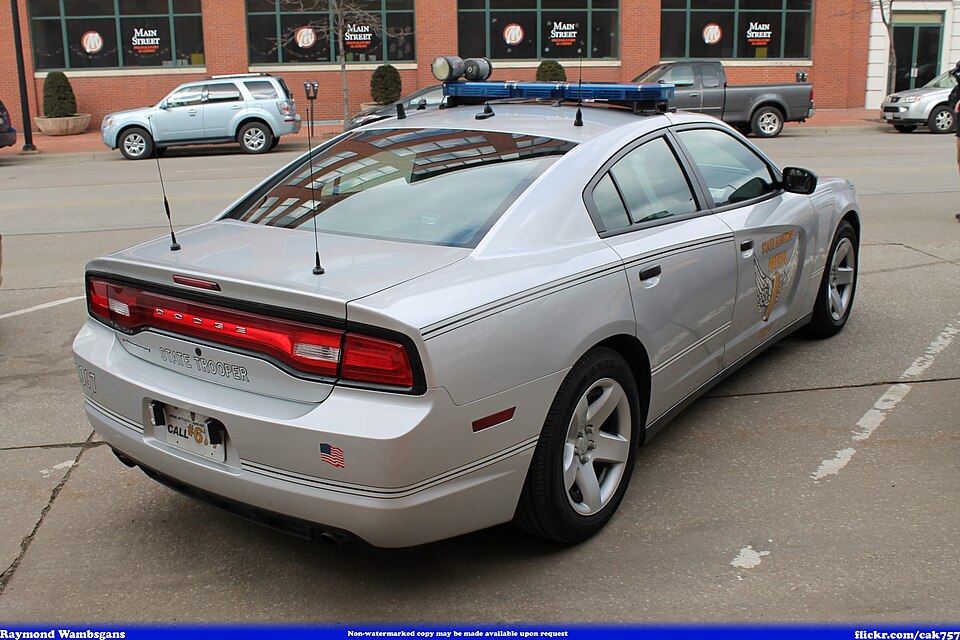
    Photo: Raymond Wambsgans, CC BY-SA 2.0, via Wikimedia Commons

    Ohio teens who pass the road test before 18 get a probationary driver license with restrictions on when they can drive, who they can carry and phone use. This explainer is for those teens and their parents: what the restrictions cover, where to check the exact hours, and what a parent who cosigned the license can do.

    Key facts

    • The probationary license is the middle stage of Ohio’s graduated system, between the Temporary Instruction Permit Identification Card (TIPIC) and an unrestricted license.
    • Restrictions cover night driving hours, non-family passengers and electronic devices. Some ease once you have held the license for a set time.
    • First 12 months: no driving midnight to 6 a.m. and at most one non-family passenger, unless a parent or guardian is with you. After 12 months, until 18: no driving 1 a.m. to 5 a.m.
    • Exceptions to the night limit cover driving to or from work, a school event or a religious event, if you carry written documentation.
    • The parent who cosigned can surrender the license to the BMV and ask for it to be canceled.

    What are the Ohio probationary license restrictions?

    Restriction What it covers Where to check the exact rule
    Night driving First 12 months: midnight to 6 a.m. After 12 months, until 18: 1 a.m. to 5 a.m. Allowed if a parent or guardian is with you or an exception applies. R.C. 4507.071; Digest Section 1
    Passengers First 12 months: no more than one person who is not a family member, unless a parent, guardian or custodian is in the car. Never more people than seat belts. R.C. 4507.071; Digest Section 1
    Electronic devices Under 18s may not use electronic wireless devices while driving, hands-free included Ohio hands-free law for new drivers
    Seat belts Ohio seat belt rules apply to you and your passengers seat belt laws

    These limits are set by Ohio Revised Code 4507.071 and enforced by police.

    Tickets in your first months

    A traffic conviction in your first six months on the probationary license can mean you must drive with a parent or guardian for six months or until you turn 17. Using a phone or other wireless device while driving under 18 brings a $150 fine and a 60-day suspension; with a previous adjudication for the same offense, $300 and one year.

    Night driving exceptions: what to carry

    If you drive during restricted hours for an allowed reason, carry proof. Good practice:

    • a signed note or schedule from your employer, school or religious organization, showing the times
    • keep it in the car, not on your phone (you can’t use your phone while driving)
    • for work, the BMV has an employer form (BMV 2825) you can use as the documentation
    • only work, school events and religious events qualify; a friend’s party does not

    Phones, GPS and Bluetooth for Ohio drivers under 18

    For drivers under 18 the device rule is stricter than for adults: hands-free calls are not a way around it. Set your route before you move, put the phone out of reach and let a passenger handle music and directions. See hands-free and texting laws by state.

    Breaking the rules: why it matters more for new drivers

    Violations on a probationary license can bring extra penalties and delay your move to a full license. Alcohol rules for under 21s are much stricter too. See zero tolerance laws for drivers under 21, the Ohio OVI and suspension guide and how points work.

    For parents: what cosigning means

    Ohio form BMV 2438 explains the cosigner’s position under Ohio Revised Code section 4507.07:

    • The cosigner can be held jointly and severally liable for the minor’s negligence or willful and wanton misconduct while driving.
    • No liability is imputed if the minor carries proof of financial responsibility: an insurance policy or bond of at least $25,000 for injury or death of one person, $50,000 for two or more people, and $25,000 for property damage, per accident.
    • The cosigner can surrender the minor’s license to the BMV at any time and ask for it to be canceled.

    Many families agree house rules on top of the law: no friends in the car for the first months, check-in texts on arrival, earlier curfews. See car insurance for new drivers.

    Common questions

    What time is curfew for a 16 year old in Ohio?

    In the first 12 months, you may not drive from midnight to 6 a.m. without a parent or guardian. After 12 months, the window shrinks to 1 a.m. to 5 a.m. until you turn 18. Compare other states in the GDL comparison.

    Can I drive my siblings on an Ohio probationary license?

    Yes. In the first 12 months the limit is one person who is not a family member, so family members do not use up that place. You still need a seat belt for everyone.

    Can I use Bluetooth or GPS at 17 in Ohio?

    Not by handling a device. Under 18s may not use electronic wireless devices while driving, including hands-free. Set navigation before you set off.

    Can I drive home from work after the night curfew?

    Yes, if you carry written documentation from your employer, such as form BMV 2825, showing your schedule.

    When do the probationary restrictions end?

    The midnight and passenger limits ease after 12 months, and the 1 a.m. to 5 a.m. limit and the device ban end at 18.

    Can my parent take my license away?

    Yes. The cosigner can surrender it to the BMV and ask for cancellation.

    Back to the full Ohio learner driver guide.

    Sources

    • Ohio Department of Public Safety, Bureau of Motor Vehicles, “Eligible Adult In Loco Parentis Affidavit (BMV 2438, 7/18)” (dam.assets.ohio.gov)
  • Ohio Driving Test: What to Bring, Vehicle Check and Scoring

    Ohio Driving Test: What to Bring, Vehicle Check and Scoring

    Photo: Raymond Wambsgans, CC BY-SA 2.0, via Wikimedia Commons

    This guide is for Ohio learners booking the BMV road test: what to bring, how to get your car ready, what the on-road drive involves and how scoring works. The Ohio road test has two parts, driving and maneuverability, and you need to pass both to move on to a license.

    Key facts

    • The Ohio BMV road test covers driving and maneuverability. The maneuverability test is a cone course; the driving part is on public roads.
    • Each part is scored separately: lose more than 25 points in either part and you fail. Dangerous actions fail you outright. Section 11 of the Digest of Ohio Motor Vehicle Laws (Taking the Driving Test) has the details.
    • Applicants under 21 need their notarized Fifty Hour Affidavit (BMV 5791) showing at least 50 hours, 10 of them at night.
    • Check driver training requirements first. See Ohio driver training for under 21s.

    What to bring to the Ohio driving test

    • Your Temporary Instruction Permit Identification Card (TIPIC)
    • Notarized BMV 5791, if you are under 21
    • Your driver training completion certificate, if training applies to you
    • A licensed driver to bring you there, since you only hold a permit
    • A road-legal car with current registration and proof of insurance
    • Glasses or contacts if your permit says you need them

    Check the exam station’s current list when you book; the Digest’s Section 11 is the reference.

    Getting your car ready: the pre-test check

    Your car has to be safe and legal to test in, so expect it to be checked. Run through this the day before:

    Check What “ready” looks like
    Turn signals (front and rear) All four work on both sides
    Brake lights All light up; have someone stand behind the car
    Headlights Low and high beams work
    Horn Sounds clearly
    Wipers and washer Clear the windshield
    Doors Front doors open from inside and outside
    Tires No visible damage; good tread and pressure
    Windshield and mirrors No cracks blocking your view; mirrors adjusted
    Dashboard No warning lights

    Self-parking and other driver-assist features: ask the exam station whether they must be switched off. Expect to show you can control the car yourself.

    What happens on the on-road drive

    The examiner gives directions as you go. Expect a mix of:

    • pulling away and stopping smoothly
    • left and right turns at intersections, including stop signs and signals
    • lane changes with mirror and blind-spot checks
    • keeping to the speed limit and adjusting for conditions
    • right of way at intersections and crosswalks

    Brush up on four-way stops, crosswalks and speed rules.

    What the examiner looks for

    • Observation: mirrors before every signal, slowing or stopping; head checks before lane changes.
    • Control: smooth steering, braking and acceleration; full stops behind the line.
    • Positioning: correct lane, correct turning path, safe gap behind other vehicles.
    • Judgment: yielding when required, not hesitating when you have right of way.
    • Obeying the law: speed, signs, signals and markings every time.

    The errors that sink most US road tests are listed in common reasons people fail.

    If you fail the Ohio driving test

    You can retest from the second calendar day after a failed attempt. Adults who fail may need a short adult training course before testing again. See Ohio abbreviated adult driver training.

    After you pass

    You apply for your license at a BMV deputy registrar. Teens under 18 start on a probationary license with restrictions.

    Common questions

    How long is the Ohio driving test?

    Times vary by station and traffic. Allow extra time at the station for paperwork and the vehicle check.

    Which part comes first, driving or maneuverability?

    The order can vary. Prepare for both, and treat each as a separate pass.

    Can I use a rental car for the Ohio road test?

    Check the rental agreement allows a permit holder to drive and that you can show registration and insurance for the car.

    Can my driving school car be used?

    Many learners use a familiar car. Ask your school, and check the car passes the pre-test checks above.

    Do I need an appointment?

    Check the Ohio BMV’s current scheduling rules for your exam station.

    Back to the full Ohio learner driver guide.

    Sources

    • Ohio Department of Public Safety, Bureau of Motor Vehicles, “Request for Statement of Physician (BMV 2310, 11/23)” (dam.assets.ohio.gov)
    • Ohio Department of Public Safety, Bureau of Motor Vehicles, “Fifty Hour Affidavit (BMV 5791, 9/25)” (dam.assets.ohio.gov)
  • Ohio Maneuverability Test: How the Cone Course Works

    Ohio Maneuverability Test: How the Cone Course Works

    Photo: Roseohioresident, CC BY-SA 4.0, via Wikimedia Commons

    The Ohio maneuverability test is the cone course part of the Ohio road test. The BMV’s road test covers both driving and maneuverability, and you have to pass both. This guide is for Ohio learners preparing for the cones: how the maneuver works, how to practice it at home and the mistakes that cost points.

    Key facts

    • The Ohio road test has two parts, driving and maneuverability, and the maneuverability part is a low-speed cone exercise rather than a drive on public roads.
    • Layout: four cones form a box 9 feet wide and 20 feet long. A fifth point cone sits 20 feet past the far end of the box, in the middle. Section 11 of the Digest of Ohio Motor Vehicle Laws has the diagram.
    • Scoring: 26 or more points lost fails this part. Running over or knocking down a cone is an immediate fail.
    • Most US states test parking or turnarounds instead. The road test by state comparison shows how Ohio differs.

    How the Ohio maneuverability test works

    In outline, you drive forward through a box of cones, steer to one side of a single cone placed beyond the box and stop, then reverse back through the box and stop in the starting position. The examiner tells you which side to pass. Everything is done slowly and under control, using mirrors and looking over your shoulder.

    Points lost, from the Ohio Traffic Safety Office’s description of the course:

    Error Points
    Stopping to check your progress 2 each time
    Asking to start over 2
    Bumping a cone 10 each time
    Misjudging the stopping point 5 each time
    Not stopping parallel to the course 5 each time
    Running over or knocking down a cone Immediate fail

    Each leg is meant to be one continuous motion.

    Step by step: driving the cone course

    1. Line up. Start straight and centered in front of the box. A crooked start makes everything after it harder.
    2. Creep forward. Use the brake to control speed, not the gas. Keep the car centered between the side cones.
    3. Steer around the point cone. Go to the side the examiner names. Begin turning once your front wheels are past the end of the box.
    4. Stop. Straighten up parallel to the course and stop when your rear bumper is level with the point cone.
    5. Reverse. Turn to look through the rear window, check your mirrors and back up slowly, steering back into the box.
    6. Finish. Back through the box and stop when your front bumper is level with the first two cones, straight and parallel.

    How to practice the maneuverability test at home

    • Use soft cones or empty plastic bottles in an empty parking lot, laid out as a 9 by 20 foot box with the point cone 20 feet beyond it. Measure; guessing the size defeats the point.
    • Practice in the car you will test in. Every car turns and reverses differently.
    • Find reference points: where the side cones line up with your mirrors or a spot on the hood when you are centered.
    • Do sets of five full runs, passing alternately on the left and right.
    • Have your supervisor stand outside and tell you how close you are to each cone.
    • Practice in different light, including after dark if your test might be late in the day.

    Cone practice counts toward your logged hours. Record it on the Ohio 50-hour affidavit.

    Mistakes that cost points

    Mistake How to avoid it
    Bumping or knocking over a cone Slow down; use reference points; correct early with small steering inputs
    Stopping repeatedly to check Practice until one smooth run is normal
    Stopping too short or too far Learn where the stop line sits relative to your seat
    Finishing crooked Straighten the wheel early when reversing into the box
    Reversing using only the backup camera Look over your shoulder and use mirrors. Driver-assist features may not be allowed, so check with the exam station

    Common questions

    Is parallel parking on the Ohio driving test?

    Ohio uses the cone maneuverability test. See which states require parallel parking.

    What happens if I hit a cone on the Ohio maneuverability test?

    Bumping a cone costs 10 points. Running over or knocking one down fails you on the spot.

    Can I stop during the maneuverability test?

    Stopping to check your position usually costs points. Practice until you can do the course in one smooth run.

    Can I use my backup camera?

    Ask the exam station before test day. Expect to be judged on looking behind you and using mirrors.

    What if I fail the maneuverability part?

    You will need to retest. Adults who fail may need a short adult course first. See Ohio abbreviated adult driver training.

    Related: the Ohio driving test (on-road part) and common reasons people fail. Back to the full Ohio learner driver guide.

    Sources

    • Ohio Department of Public Safety, Bureau of Motor Vehicles, “Request for Statement of Physician (BMV 2310, 11/23)” (dam.assets.ohio.gov)
    • Ohio Department of Public Safety, Bureau of Motor Vehicles, “Fifty Hour Affidavit (BMV 5791, 9/25)” (dam.assets.ohio.gov)
  • Ohio Bioptic License Rules: Two Examiners and the Night Test

    Ohio Bioptic License Rules: Two Examiners and the Night Test

    Photo: Dougtone, CC BY-SA 2.0, via Wikimedia Commons

    Ohio lets you qualify for a driver’s license with a bioptic telescope under Ohio Administrative Code rule 4501:1-1-33 if you can’t meet the standard vision rules without one. Unlike many states, Ohio measures your acuity through the device and your visual field with the device in place, and both must meet the standards in rule 4501:1-1-20. You then take a comprehensive driving exam run by at least two BMV examiners. Your license starts as daytime only, and you can move to night driving after night training and a night exam.

    Ohio bioptic rules at a glance

    Topic Rule 4501:1-1-33
    Who it is for People who try but fail to qualify under the standard vision rule (4501:1-1-20)
    What a bioptic is A two-focus optical system with a small telescope mounted in a spectacle lens
    Vision standard Acuity measured through the device, and visual fields measured with it in place, must meet rule 4501:1-1-20
    Licenses not available Commercial, motorcycle and motorized bicycle
    Driving exam A comprehensive exam by at least two BMV examiners, over designated routes covering varied traffic
    Starting restriction Daytime driving
    Rule effective date 1 November 2022

    The exact acuity and field figures are set in rule 4501:1-1-20. Ask the BMV for the current figures before you apply.

    Training and the temporary permit

    The rule requires training at a certified driving training and evaluation program before night driving. Ask the BMV whether training or a special temporary permit is needed before your first daytime exam. Learners also follow the usual Ohio steps, including a temporary instruction permit and the road test: see learning to drive in Ohio.

    Removing the daytime restriction: the night test

    To drive at night, you must:

    1. meet the vision standards for unrestricted hours with the device
    2. complete night driving training at a certified driving training and evaluation program, unless you already hold another state’s license that allows night driving with the device
    3. pass a comprehensive night driving exam, run by at least two BMV examiners between at least half an hour after sundown and half an hour before sunrise

    What if I fail the night test?

    You keep your daytime privileges. They are not revoked unless a physician, examiner or the registrar documents that you can’t drive safely in daylight with the device.

    How Ohio is different from other states

    Most states that allow bioptics say the telescope can’t be used to pass the vision screening: California and Pennsylvania are examples. Ohio instead measures you through the device, then tests your driving closely with two examiners. Compare Pennsylvania, Michigan, Indiana and Kentucky, or every state in bioptic driving laws by state. The ordinary Ohio vision rules are in the Midwest vision guide.

    Ask your low vision specialist whether a bioptic suits your eyes. This guide covers licensing rules only.

    All medical and disability topics: the US guide to driving with a medical condition or disability.

    Want to practise the eyesight check? Our sister site Driving Eyesight Test has a free US letter chart on drivingeyesighttest.com. It is a practice screen, not an eye test.

    Sources

    • Ohio Laws and Administrative Rules, “Rule 4501:1-1-33”, effective 1 November 2022 (codes.ohio.gov)
    • Ohio Department of Public Safety, “Notice of Public Hearing” for the 4501:1-1 rules (bmv.ohio.gov)
  • Ohio Permit Documents Checklist: What to Bring to the BMV

    Ohio Permit Documents Checklist: What to Bring to the BMV

    Photo: formulanone, CC BY-SA 2.0, via Wikimedia Commons

    To get an Ohio temporary instruction permit (TIPIC), you prove five things at a deputy registrar license agency: your full legal name, date of birth, legal presence in the US, Social Security number and Ohio street address. One document can cover several of these. This checklist uses the BMV’s own acceptable documents lists, for the standard card and for the compliant (REAL ID) card, so you arrive with the right papers the first time.

    Key facts (as of November 2026)

    • Five elements to prove: name, date of birth, legal presence, SSN, Ohio street address.
    • Standard permit or license: one proof of Ohio address.
    • Compliant (REAL ID) card: two proofs of Ohio address, from different sources.
    • Under 18: a parent or guardian can sign form BMV 2336 to vouch for your address.
    • You sign the application (BMV 5745) in front of the deputy registrar employee.

    Before you go: the order of steps

    1. Pass the knowledge test online through BMV Online Services, or in person at a BMV Driver Exam Station (vision screening is done in person).
    2. Go to a deputy registrar license agency with the documents below.
    3. Complete and sign BMV 5745, pay the fee and receive your TIPIC.

    Fees and booking: Ohio license costs and test booking.

    The Ohio permit documents checklist

    1. Name, date of birth and legal presence (usually one document)

    Any one of these proves all three for a US citizen:

    • Birth certificate: original or certified copy issued by a US state, territory or possession
    • US passport or passport card, valid and unexpired
    • Consular Report of Birth Abroad (FS-240, DS-1350 or FS-545)
    • Certificate of Naturalization (N-550 or N-570)
    • Certificate of Citizenship (N-560 or N-561)

    Permanent residents can use a valid, unexpired Permanent Resident Card (I-551). Other non-citizens need USCIS documents showing their dates of legal presence. The compliant card has stricter rules for these (see the REAL ID section below).

    2. Social Security number

    • Social Security card (a metal card is not accepted)
    • W-2 showing your full SSN, for the current or last tax year, not handwritten
    • 1099 showing your full SSN, same rules
    • Pay stub with your name and full SSN, same rules
    • Standard card only: Medicare card, military discharge papers or a school record or transcript showing your full SSN

    Most teens use the Social Security card. If you were never eligible for an SSN, BMV 5745 has a box for form BMV 2161 (not SS eligible). Ask the deputy registrar what you need. Visa holders: a US license on a student visa.

    3. Ohio street address

    Each document must show your name and Ohio street address. A P.O. box is not accepted. Common choices:

    • Utility bill (electric, gas, phone, water, cable and so on) issued in the last 12 months
    • Bank, checking, savings, investment or online bank statement from the last 12 months
    • Credit card statement from the last 12 months
    • Paycheck stub from the last 12 months
    • School record or transcript
    • Letter from a college or university, signed by an official
    • Renter, homeowner, life or auto insurance policy or card, current
    • Ohio vehicle title or registration
    • Federal or Ohio tax return filing for the current or last year, with proof of filing
    • Ohio BMV postcards or correspondence
    • Selective Service registration card

    4. Proof of a name change (if your name doesn’t match)

    • Original or certified marriage certificate or license
    • Certified divorce, dissolution or annulment decree
    • Certified court-ordered name change

    Under 18? What a teen needs on top

    • Proof of address in a parent’s name. Most teens have no bills of their own. A parent or guardian can sign BMV 2336 “Proof of Ohio Residency, Certified Statement” in front of a BMV official. For a compliant card, the parent must also show their own identity, two proofs of the same Ohio address and proof that they are your parent or guardian. You still need one more address document from a different source, such as a school record.
    • A parent or guardian to sign. A parent or guardian signs as the cosigner for a minor’s permit and takes on legal responsibility for your driving. If an adult who is not your parent will take that role, use BMV 2438 (eligible adult in loco parentis), signed in front of a notary.
    • Age. You can apply for a TIPIC from 15 and a half.

    You don’t need a driver training certificate or the 50-hour affidavit for the permit. Those come later, at the license stage: see Ohio driver training for under 21s and the 50-hour affidavit. Who can supervise your practice: Ohio TIPIC rules.

    Standard or compliant (REAL ID) permit in Ohio?

    Standard card Compliant card (REAL ID)
    Proof of Ohio address 1 document 2 documents from different sources
    Non-citizens on a foreign passport USCIS documents showing legal presence dates Passport with valid visa and I-94, plus a supplemental USCIS document verifiable through SAVE
    Extra SSN options Medicare card, military discharge papers, school record with SSN Card, W-2, 1099 or pay stub only
    Who it suits Anyone who will fly with a passport anyway Anyone who wants to use their license to board domestic flights

    Two utility bills from two different companies count as two separate sources. More on the federal rule: REAL ID and your first license.

    Common reasons Ohio applications get held up

    • A photocopy of a birth certificate instead of the original or a certified copy.
    • A hospital “keepsake” certificate instead of the government-issued record.
    • A handwritten pay stub or W-2.
    • Address proof older than 12 months, or showing a P.O. box.
    • Two address proofs from the same company, when applying for a compliant card.
    • A name on the birth certificate that differs from the name on other documents, with no link document.

    Common questions

    Do I need my Social Security card to get an Ohio permit?

    Not necessarily. A W-2, 1099 or pay stub showing your full SSN also works, as long as it is typed and from the current or last tax year.

    Can my parent’s utility bill prove my address?

    Through BMV 2336. Your parent signs the certified statement in front of a BMV official and shows their own address proof. Check the BMV 2424 or 2430 list for what else to bring.

    Is a school ID enough?

    No. A student ID is only a supplemental document in limited situations. Use a birth certificate or passport.

    Can I use a phone screenshot of a bank statement?

    The BMV list accepts online bank statements. Bring a printed copy to be safe, since the agency may need to scan or keep it.

    I moved to Ohio with an out-of-state permit. Same list?

    Yes for identity, SSN and address. Ask the deputy registrar how your out-of-state permit time is treated. See moving to Ohio.

    Do I need a compliant card to drive?

    No. A standard permit or license lets you drive. The difference is only about using it as federal ID, for example at airport security.

    Main guide: learning to drive in Ohio. Other states: first permit documents by state.

    Sources

    • Ohio BMV, “BMV 2424 Acceptable Documents List, Standard DL-ID Card” (rev. 5/25) (dam.assets.ohio.gov)
    • Ohio BMV, “BMV 2430 Acceptable Documents List, Compliant DL-ID Card” (rev. 5/25) (dam.assets.ohio.gov)
    • Ohio BMV, “BMV 5745 Application Information for Standard / Compliant Ohio Driver License or ID Card” (rev. 12/25) (dam.assets.ohio.gov)
    • Ohio BMV, “BMV 2438 Eligible Adult In Loco Parentis Affidavit” (rev. 7/18) (dam.assets.ohio.gov)
    • Ohio Traffic Safety Office, “Curriculum Resource Sheet” (rev. 10/24) (dam.assets.ohio.gov)
    • Ohio BMV, “BMV Online Services” (bmvonline.dps.ohio.gov)
  • Ohio Driver’s License Cost and How to Book BMV Tests

    Ohio Driver’s License Cost and How to Book BMV Tests

    Photo: Chris F, Pexels

    In Ohio you book your driving test online through BMV Online Services, and you can take the permit knowledge test either online or in person at a BMV Driver Exam Station. You pay for the permit and the license separately, at a deputy registrar license agency. This guide covers what each step costs, where to book, and what happens if you fail or need to change a test.

    Key facts (as of November 2026)

    • Temporary permit (TIPIC): listed by the BMV at $26.50, deputy registrar fee included.
    • You buy the TIPIC and later the license at a deputy registrar license agency, not at the exam station.
    • Knowledge test: online through BMV Online Services, or in person at a Driver Exam Station.
    • Driving test: book an in-person “Operator Driving Test” through BMV Online Services.
    • The skills test has two parts, driving and maneuverability, and is given in English only.

    Who does what in Ohio

    Ohio splits licensing between two kinds of office, and mixing them up costs learners a wasted trip.

    Office What you do there
    BMV Driver Exam Station Vision screening, the in-person knowledge test, and the driving and maneuverability test
    Deputy registrar license agency Buy your temporary permit (TIPIC) after passing the knowledge test, and later get your license and pay its fee
    BMV Online Services Online knowledge test and booking the driving test

    The Ohio Department of Public Safety’s local office finder lists both types of office by county. Tick the “Driver Exam Station” box for testing and the “Deputy Registrar License Agency” box for buying permits and licenses.

    How much does an Ohio permit and license cost?

    Item Fee Notes
    Temporary instruction permit (TIPIC) $26.50 BMV fee page figure, deputy registrar fee included
    Probationary or first license, under 21 about $23.75 to $27.50 Set by age band. You pay when you hand in your TIPIC at a deputy registrar.
    First license, 21 and older $27.50 (4-year) or $54.00 (8-year) BMV fee page figures
    Knowledge and driving tests No separate state fee found Ask your exam station if anything is due on the day
    Driver training (under 21) Set by each driving school Not a state fee
    Abbreviated adult course (21+ after a failed test) Set by each driving school Not a state fee

    These figures come from the BMV’s published fee list. Ohio’s statute sets lower base amounts, and deputy registrars add their own service fee, so the total at the counter is what counts. Check the current figure with the Ohio BMV or your deputy registrar before you go.

    Step 1: book or take the Ohio knowledge test

    The knowledge test has 40 multiple-choice questions on Ohio traffic laws and signs. You have two ways to take it.

    Option A: online

    • Go to BMV Online Services and choose “Online Knowledge Testing” for the Operator Temporary Permit.
    • BMV material limits online attempts. The figure published by the BMV is two attempts in six months, at least 24 hours apart. Check the current rule on the site before you start.
    • Full guide: taking the Ohio permit test online.

    Option B: in person

    • Take it at a BMV Driver Exam Station. Vision screening happens there too.
    • Tests are offered in English, Arabic, Chinese, French, Haitian Creole, Japanese, Russian, Somali and Spanish. You can ask for an interpreter for other languages.
    • Exam stations set their own appointment or walk-in rules for the knowledge test. Check your station’s page before you travel.

    Pass, then go to a deputy registrar to buy the TIPIC. Bring your documents: see the Ohio permit documents checklist. Test prep: Ohio BMV knowledge test and the Ohio permit practice test.

    Step 2: how to book the Ohio driving test

    1. Check you are eligible. Under 18, that means holding your TIPIC for at least six months, finishing driver training and completing the 50-hour affidavit (BMV 5791). At 18 to 20 you still need driver training and the 50-hour affidavit, which R.C. 4507.21 requires for all applicants under 21. See Ohio driver training for under 21s and the 50-hour affidavit guide.
    2. Go to BMV Online Services and choose “Schedule a Driving or Skills Test”, then “Operator Driving Test”. You may be asked to sign in with an OHID account.
    3. Pick a Driver Exam Station and time slot. Many stations take in-car tests by appointment only.
    4. Bring your TIPIC and the car you will test in. Check your booking confirmation for the station’s vehicle and paperwork rules before test day.

    The skills test has two parts: on-road driving and the maneuverability cone course. It is given in English only, and translators are not allowed. What each part involves: Ohio driving test and Ohio maneuverability test.

    Changing or canceling an Ohio driving test

    Manage the booking through the same BMV Online Services scheduler you used to book it. Ask the BMV about any cancellation deadline or no-show penalty. Cancel as early as you can so the slot goes to someone else, and call the BMV on 844-644-6268 (Monday to Friday, 8 a.m. to 5 p.m.) if the scheduler won’t let you change it.

    If you fail: retest rules in Ohio

    Situation What happens
    Fail the knowledge test in person BMV material says wait at least 24 hours. The Digest of Ohio Motor Vehicle Laws says once per day.
    Fail the knowledge test online The online attempt limit applies (see Step 1). You can still test in person.
    Under 21, fail the driving or maneuverability part Rebook through BMV Online Services. BMV material refers to a short wait (two days) between attempts. Confirm when you rebook.
    21 or older, fail either part Complete the abbreviated adult driver training course before retesting: 4 hours of coursework plus 4 hours behind the wheel with an instructor, or 24 hours of practice with a licensed driver shown on a notarized affidavit

    Adult course details: Ohio abbreviated adult driver training. Waits in other states: retake waiting periods by state.

    Do driving schools give the Ohio road test?

    Driving schools in Ohio teach the 24-hour course, the 8 hours of behind-the-wheel training and the adult abbreviated course. The BMV describes the driving and maneuverability test as taken at a BMV Driver Exam Station. If a school offers you a “test”, ask whether it is a practice run or an official BMV skills test.

    After you pass

    Take your passed test record and TIPIC to a deputy registrar license agency. You hand in the TIPIC, pay the license fee and receive your license. Under 18, it is a probationary license: Ohio probationary license rules.

    Common questions

    Is the Ohio driving test free?

    Check with the BMV for any separate test fee. You pay at the deputy registrar for the TIPIC and then the license.

    Can I walk in for the Ohio road test?

    Plan on an appointment. You book the in-car test through BMV Online Services, and many exam stations say in-car tests are by appointment only.

    Where do I buy my Ohio permit after passing the test online?

    At a deputy registrar license agency. Bring your documents, because the agency checks your identity, Social Security number and Ohio address before issuing the TIPIC.

    Why does the deputy registrar charge more than the state fee?

    Deputy registrars add a service fee to the state amount. The $26.50 TIPIC figure on the BMV fee list already includes it.

    Can I take the Ohio driving test in another language?

    No. The skills test is given only in English, and translators are not allowed. The knowledge test is available in nine languages.

    Does a failed road test cost extra in Ohio?

    Ask the BMV whether a retest fee applies. If you are 21 or older, though, you must pay a driving school for the abbreviated course before you can retest.

    Main guide: learning to drive in Ohio. Compare states: US license costs by state and how to book a DMV test appointment.

    Sources

    • Ohio BMV, “BMV Online Services” and “Other Services” (bmvonline.dps.ohio.gov)
    • Ohio Traffic Safety Office, “Curriculum Resource Sheet” (rev. 10/24) (dam.assets.ohio.gov)
    • Ohio BMV, “BMV 5745 Application Information for Standard / Compliant Ohio Driver License or ID Card” (rev. 12/25) (dam.assets.ohio.gov)
    • Ohio BMV, “Documents & Fees” (bmv.ohio.gov), search-result extract only
    • Ohio BMV, “Driver License & ID Cards” (bmv.ohio.gov), search-result extract only
    • Ohio Department of Public Safety, “Digest of Ohio Motor Vehicle Laws” (publicsafety.ohio.gov), search-result extract only
    • Ohio Revised Code, Section 4507.23 (codes.ohio.gov), search-result extract only