
Author: Get Driving Test Ready

  • Learner Driver Insurance: What You Need for Practice and on Test Day (GB)

    Learner Driver Insurance: What You Need for Practice and on Test Day (GB)

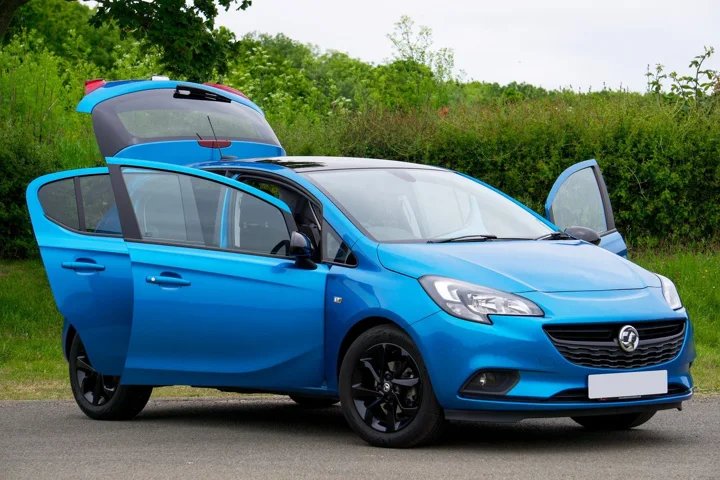
    Photo: Mike Bird / Pexels. Illustrative photograph.

    Insurance touches your driving test at three points: every hour of private practice, the car you sit the test in, and the moment you pass and want to drive home. In Great Britain you must be insured every time you drive as a learner, including practice with family or friends. You either take out your own learner policy or get added to the car owner’s policy as a learner. This guide shows what you need at each stage so nothing stops you on test day, and why putting a parent down as the main driver (“fronting”) is illegal.

    The rules in brief

    • Motor insurance is a legal requirement on UK roads. Third party cover is the legal minimum.
    • Driving without insurance can mean an unlimited fine, a driving ban and up to 8 penalty points. Points on a provisional licence follow you onto your full licence.
    • Practising in your own car: you need your own learner insurance. Your supervisor is usually covered too.
    • Practising in someone else’s car: their policy must cover you as a learner, or you need your own policy.
    • Some insurers require your supervisor to be older than 25, even though the legal minimum is over 21.
    • The day you pass, your learner cover must be updated or replaced with a full-licence policy before you drive alone.

    Stage 1: cover for practice between lessons

    Private practice is where most learners build the extra hours that get them to test standard. Pick the option that matches the car you will practise in.

    Option How it works Good for Watch out for
    Separate learner policy on a family car You buy cover in your own name to practise in someone else’s car. Learners who want practice without touching a parent’s policy. Check that it covers the exact car and the supervisor’s age.
    Added to the owner’s policy as a learner The car owner asks their insurer to add you as a learner driver. Regular practice in one household car. Ask how a claim would affect the owner’s policy.
    Learner policy on your own car You insure your own car as a learner. Your supervisor is usually covered. Learners who will keep the car after passing. Needs updating to a full-licence policy as soon as you pass.

    Before you buy, check which car or cars it covers (is it named by registration?), the age and licence history the supervisor must have, whether cover ends automatically when you pass, the excess, and that the insurer or broker is genuine. See ghost brokers and fake car insurance.

    Stage 2: the car you take the test in

    Most learners take the test in their instructor’s car, which is used for paid lessons; ask your instructor to confirm the cover if you are unsure. If you plan to use your own or a family car instead, it must be insured for you as a learner on the day. Turning up in a car that is not suitable gets the test cancelled and the fee lost, so confirm the insurance well before your date.

    Stage 3: the drive home after you pass

    A learner policy is for supervised driving. GOV.UK says you can drive as soon as you pass, but only with an insurance policy that allows you to drive without supervision. The Motor Insurers’ Bureau (MIB) warns that driving after passing without updating or replacing learner cover leaves you uninsured. Sort your new policy before test day so you can drive home legally.

    New driver premiums are high. See why insurance costs so much after passing for legal ways to bring it down, such as a telematics (black box) policy or Pass Plus training, which GOV.UK says may help you get a discount.

    Fronting: a shortcut that can cost you your licence

    Fronting is when someone more experienced, often a parent, is named as the main driver of a car that a young or new driver mainly uses, to get a cheaper premium. The MIB states that fronting is illegal. The possible consequences:

    • the car being seized or crushed
    • a driving ban and an unlimited fine
    • the policy being cancelled and claims refused
    • being added to the Insurance Fraud Register, which can make future insurance very hard to get

    The legal way: the person who mainly drives the car is the main driver. A parent who genuinely uses the car can be added as a named driver.

    Test-ready insurance checklist

    • Every car you practise in covers you as a learner.
    • Your supervisor meets both the legal rule and your insurer’s own age rule.
    • The test car is confirmed as insured for you.
    • A full-licence policy is lined up to start the moment you pass.

    Common questions

    Do I need insurance for lessons and the test in my instructor’s car?

    The car you drive must be insured for you. For lessons or a test in your instructor’s car, check with the instructor that their cover includes you.

    Does my supervisor need their own insurance?

    If you have your own learner policy on your own car, your supervisor is usually covered. Check the policy wording.

    Can I practise on my parent’s policy without telling the insurer?

    No. The policy must cover you as a learner. Driving uninsured can mean an unlimited fine, a ban and up to 8 points.

    Why do some insurers want a supervisor over 25?

    It is an insurer’s own condition, not the law. The legal rule is that your supervisor is over 21 and has held a full licence for that type of car for 3 years.

    Can I buy short-term learner insurance for the weeks before my test?

    Check what insurers offer for the length of time you need. Compare the car covered, supervisor rules and excess, not just the price.

    Is Northern Ireland different?

    You still need learner cover, but the learning rules differ under GDL. See the Northern Ireland guide.

    Looking for lessons or an instructor? Our sister site Compare Driving Instructors covers lesson prices and choosing an instructor.

    Related: supervising a learner driver, your first year after passing, cost of learning to drive in GB. Back to the full guide to learning to drive in Great Britain.

    Sources

    • GOV.UK, “Vehicle insurance” (gov.uk)
    • GOV.UK, “Driving lessons and learning to drive: practising with family or friends” (gov.uk)
    • GOV.UK, “Book your driving test” (gov.uk)
    • GOV.UK, “Pass Plus” (gov.uk)
    • Motor Insurers’ Bureau, “Supporting you with insurance as a new or young driver” (mib.org.uk)
  • Driving Test Cancellations: Find an Earlier Test Legally (GB)

    Driving Test Cancellations: Find an Earlier Test Legally (GB)

    Photo: Andrea Piacquadio / Pexels. Illustrative photograph.

    The only legal way to get an earlier driving test in Great Britain is to check the official GOV.UK booking service yourself and grab a cancellation when one appears. Since 2026 the rules are much tighter: only you can book or change your car test, you get 2 changes per booking, and you can only move to one of the 3 test centres nearest your booked one. This guide shows how to search efficiently, what the 2026 limits mean, and why resellers and “cancellation finder” apps can cost you your test.

    Key facts (as of November 2026)

    • Learner only: since 12 May 2026, only you can book, change, cancel or swap your car driving test. Your instructor cannot do it for you.
    • 2 changes: since 31 March 2026, you can make 2 changes to a booking. A swap with another learner counts as one. Changing date and centre together counts as one.
    • Nearby centres: since 9 June 2026, you can only move your test to one of the 3 centres nearest to where it is booked, or back to the centre you first booked.
    • No scanning tools: since 12 May 2026, using unofficial services that scan the booking service for appointments is banned.
    • No waiting list: DVSA does not run one.

    When do new driving tests and cancellations appear?

    • New appointments are released 24 weeks ahead, every Monday at 6am.
    • Cancellations appear whenever another learner changes or cancels, at any time of the week.
    • The online service is open from 6am to 11:40pm.

    How to look for an earlier test, step by step

    1. Book a test first, even if the date is late. You can only change an existing booking.
    2. Have your details ready: your driving licence number and your driving test reference number (or theory test pass certificate number).
    3. Check the official service yourself at different times of day. Early on Monday mornings is when new dates are added.
    4. Look at all 4 options you are allowed: your booked centre and the 3 nearest to it.
    5. Spend a change only when the slot is genuinely better. After 2 changes, the only option is to cancel and rebook, which could put you further back.
    6. Check the cost: moving to an evening, weekend or bank holiday slot means paying the difference; moving to a weekday gets you the difference back.

    Changes, notice and refunds

    Rule What it means
    2 changes per booking Use them carefully. Swaps count too.
    10 full working days’ notice Needed to change or cancel a car test without losing the fee. Sundays and public holidays do not count.
    DVSA changes your test If DVSA moves your test (for example for bad weather), your changes reset to 2. Since 19 June 2026 you can use them online.
    Misuse of the service DVSA can suspend your online access, so you can only manage the test by phone, or cancel the booking.

    Full detail on the 2026 rules is in driving test booking rules 2026.

    Why resellers and bots put your test at risk

    Paid “cancellation finder” apps, booking services and people selling test slots on social media are exactly what the 2026 rules target. Using them can lead DVSA to suspend your online access or cancel your booking, and you would lose the fee and your place.

    Warning signs of a reseller:

    • They offer a guaranteed earlier date for a fee.
    • They ask for your licence number and booking reference so they can book or move the test for you.
    • They sell or “swap” tests through social media groups or messaging apps.

    How to report a driving test reseller

    DVSA has an online form for reporting people, social media accounts, websites and apps that sell car test appointments, use bots to search the booking service, book tests for other people, or use someone’s details without permission.

    • Include website addresses, usernames or links to accounts or groups, app names and screenshots if you have them.
    • Your name and contact details are optional and kept confidential.
    • Only report what you already know. DVSA says not to contact sellers or join groups just to gather evidence.
    • You will not usually get a reply about your report.

    Before you move your test earlier: are you ready?

    An earlier date only helps if you are ready to pass. If you fail, you pay again and the next test must be at least 10 working days away. Check yourself honestly against how to tell you are ready, and run a full mock test first.

    Common questions

    Can my driving instructor find me a cancellation?

    No. Since 12 May 2026, only the learner can book, change, cancel or swap a car driving test.

    Are cancellation checker apps illegal?

    Using unofficial services that scan the DVSA booking service is banned under the booking rules, and DVSA can act against your booking if you use one.

    Can I swap my test with someone else?

    Yes, but only you can arrange it, and it uses one of your 2 changes.

    Can I move my test to any centre in the country?

    Not since 9 June 2026. You can only move to one of the 3 centres nearest your booked centre, or back to the one you first booked.

    What if I use up both changes?

    You would need to cancel and rebook. Give 10 full working days’ notice to get the fee back.

    Is there a waiting list for earlier tests?

    No. You have to check the service yourself.

    Back to the full guide to learning to drive in Great Britain.

    Sources

    • GOV.UK, “Changes to driving test booking rules in 2026” (gov.uk)
    • GOV.UK, “Change your driving test appointment” (gov.uk)
    • DVSA, “Report driving test resellers, cancellation finders or booking services” (gov.uk)
    • GOV.UK, “Driving test faults and your result” (gov.uk)
  • Failed the Irish Driving Test? Reapplying, Appeals and Your Permit

    Failed the Irish Driving Test? Reapplying, Appeals and Your Permit

    Photo: Miruna Daiana / Pexels. Illustrative photograph.

    Failed the Irish driving test? You can reapply straight away through MyRoadSafety, but the RSA says you cannot schedule a new test for three weeks after a fail. This guide covers what your result sheet means, what a fail does to your learner permit under the rules in force from 1 November 2026, when a District Court appeal is possible, and how to fix the faults before your next attempt.

    Key facts

    • Reapply: online through MyRoadSafety. The test fee is €85 (as of November 2026).
    • Wait: the RSA says you cannot schedule a test for three weeks after a fail. After that, you get an emailed invitation when you reach your place in the queue.
    • Your permit: a test you sat and failed still counts for renewing to a third or fourth permit. Keep the fail certificate.
    • Appeal: only on the grounds that the test was not properly conducted, to a judge of the District Court where you live.
    • Driving in the meantime: you can keep practising on a valid learner permit, accompanied and with L plates.

    Reading your result

    Your tester gives you a statement of the test outcome, and the RSA also sends a certificate showing that you failed. Keep that certificate safe: the RSA says you may need it to renew your learner permit.

    The result depends only on Grade 2 and Grade 3 faults. Under the RSA marking guidelines you fail with any of these:

    Fail trigger What it usually looks like
    1 Grade 3 fault Something dangerous or a total disregard of a traffic control, such as a red light
    4 Grade 2 faults on one line Repeated serious mirror faults when changing lane
    6 or more Grade 2 faults under one heading Serious position faults spread across turning, stopping and following
    9 or more Grade 2 faults in total Serious faults scattered across the whole drive

    Grade 1 faults do not count towards the result, but a habit marked Grade 1 today can be a Grade 2 on another day. Full detail: Irish driving test marking.

    How do you reapply after failing the Irish driving test?

    1. Sit down with your ADI and the result statement within a few days, while you still remember each situation.
    2. Reapply on MyRoadSafety and pay the €85 fee. The RSA says you do not need to contact it once you have reapplied.
    3. Wait for the invitation email. The RSA says customer care cannot offer short notice or cancellation tests, so phoning will not move you up.
    4. When the invitation arrives, book a date that leaves time for the practice in your fix plan. See booking the Irish driving test for reschedule rules.

    What does a fail mean for your learner permit?

    From 1 November 2026 you can only get a third or fourth learner permit in a category if you have actually sat a driving test in that category in the previous 2 years. A failed test counts: sitting it is what matters, not passing. A booked or cancelled test does not count.

    Permit you hold now What a fail means
    First permit Nothing changes at renewal. Keep testing.
    Second permit The failed test lets you renew to a third permit, as long as it was sat within the previous 2 years.
    Third permit The failed test lets you get a fourth permit, but that one lasts 1 year only.
    Fourth permit No fifth permit unless you were medically restricted. If it expires before you pass, you start again: theory test, new first permit, all 12 EDT lessons, the six month rule, then the test.

    If you are on a third or fourth permit, apply again quickly. Waiting times vary and the RSA says it cannot make exceptions. More: Irish learner permit rules from November 2026.

    Can you appeal a failed driving test in Ireland?

    Yes, but only on narrow grounds. Section 33(6) of the Road Traffic Act 1961 lets a person aggrieved by a test decision appeal to a judge of the District Court for the area where they ordinarily live. The judge can either refuse the appeal or, if satisfied that the test was not properly conducted, direct that you get a further test. The judge’s decision is final.

    • What an appeal can cover: how the test was run, for example if the route, the instructions or the tester’s conduct were improper.
    • What it cannot do: regrade your driving or turn a fail into a pass.
    • Complaint first: the RSA also runs its own appeals and complaints process if you are unhappy with how your test was conducted.
    • Time limit: the Act itself sets no deadline. Ask the District Court office or a solicitor about the current time limit before you rely on it, and act quickly.

    For most learners, a free complaint plus a retest is faster and cheaper than court.

    A fix plan for the next attempt

    What your sheet shows What to practise
    Grade 2 marks for observation at junctions or roundabouts A fixed look sequence on approach, said out loud with your ADI, on the junctions near your test centre
    Mirror faults when changing lane Mirror, signal, mirror again, check the blind spot, then move. Repeat on dual carriageways until it is automatic.
    Progress or hesitancy Judging gaps at busy junctions and roundabouts; moving off promptly once it is safe
    Position faults Lane position on approach to turns and at the stop position
    A Grade 3 fault Treat it as a pattern, not bad luck. Recreate the situation with your ADI and practise it several times.
    Pre-test questions or technical checks Rules of the Road questions, hand signals and the bonnet checks, which are free marks

    A mock test with your ADI on test centre routes shows whether the fixes hold under pressure. The RSA’s most common fail reasons are in common reasons for failing the Irish driving test. If nerves played a part, see test nerves.

    Common questions

    How long do you have to wait to resit the driving test in Ireland?

    The RSA says you cannot schedule a test for three weeks after a fail. In practice the wait depends on the queue, because you book only when your invitation arrives.

    Do I pay the full fee again?

    Yes. Each application costs €85 (as of November 2026). See the cost of learning to drive in Ireland.

    Do I have to redo EDT after failing?

    No. Completed EDT lessons stay on your record. You only repeat all 12 if you have to restart the learning process, for example after your fourth permit runs out.

    Can I drive home alone after failing?

    No. You are still a learner: you need an accompanying driver who has held a full licence for 2 years, and L plates. See accompanying a learner driver.

    Does the six month rule start again?

    No. The six month rule applies to your first learner permit, so once you have met it a fail does not reset it. It applies again only if you restart from a new first permit.

    Will the District Court give me a pass?

    No. The most it can do is direct that you get a further test, and only if it is satisfied the test was not properly conducted.

    Back to learning to drive in Ireland. Related: the Irish driving test explained.

    Sources

    • Road Safety Authority, “Repeating your test” (rsa.ie)
    • Road Safety Authority, “Test outcome: I want to appeal or make a complaint” (rsa.ie)
    • Road Safety Authority, “Multiple learner permits” (rsa.ie)
    • Road Safety Authority, “RSA driver tester marking guidelines” (rsa.ie)
    • Road Safety Authority, “How to apply for a driving test” (rsa.ie)
    • Law Reform Commission, “Road Traffic Act 1961, section 33 (revised)” (revisedacts.lawreform.ie)
  • Cost of Learning to Drive in Ireland 2026: Every Fee Listed

    Cost of Learning to Drive in Ireland 2026: Every Fee Listed

    Photo: ANTONI SHKRABA production / Pexels. Illustrative photograph.

    The fixed fees for learning to drive a car in Ireland add up to €240 as of November 2026: €45 for the theory test, €45 for the learner permit, €85 for the driving test and €65 for your first full licence. On top of that you pay for 12 Essential Driver Training (EDT) lessons, insurance and any extra lessons, and none of those have a set price. This guide lists every fee in the Republic of Ireland, what a resit costs, and how to budget.

    Every official fee in Ireland (as of November 2026)

    Step Fee Notes
    Driver theory test (car, BW) €45 40 questions, pass mark 35. Certificate valid 2 years. You must be at least 15 on the test date.
    Learner permit €45 Up from €35 on 1 January 2025.
    Essential Driver Training Set by each instructor 12 one-hour lessons with an RSA Approved Driving Instructor (ADI).
    Driving test (category B) €85 Same fee for categories A, A1, A2, AM, B, BE and W.
    First full driving licence €65 Up from €55 on 1 January 2025.

    The costs with no fixed price

    EDT lessons

    The RSA does not set EDT prices. Each ADI is self-employed and sets their own fee, so compare a few. The RSA notes that paying for more than one lesson at a time makes it harder to switch instructor or change lessons mid-course. Only lessons with a currently approved ADI count towards EDT, and you cannot be scheduled for your test until your ADI has recorded all 12. See Essential Driver Training explained.

    Extra lessons and test car

    You may want lessons beyond EDT, such as a pre-test lesson, and you may use the instructor’s car for the test. Agree the price and what is included in advance. If you use your own car, it must meet the test car rules, including tax, NCT where needed and insurance. See your car for the Irish driving test.

    Insurance

    You must be insured to drive as a learner, whether on your own policy or named on a family car’s policy. See learner driver insurance in Ireland.

    Work out your own total

    1. Fixed fees: €45 + €45 + €85 + €65 = €240.
    2. EDT: your ADI’s price per lesson × 12.
    3. Extra lessons: your ADI’s price × the extra lessons you expect.
    4. Insurance: learner cover for the months until your test.
    5. Car costs: fuel, and tax and NCT if you use your own car.
    6. Buffer: one theory resit (€45) and one driving test resit (€85) to be safe.

    What a resit or a change costs

    Situation Cost
    Failed the theory test €45 to book again. There is no limit on attempts; theorytest.ie advises waiting at least 3 business days.
    Theory test rescheduled or cancelled 7 or more calendar days before Free
    Theory test rescheduled within 6 days of the test Admin fee of 50% of the test fee. No rescheduling on the day.
    Theory test missed, or arriving without the right ID Fee lost
    Failed the driving test €85 to apply again

    Next steps after a fail are in failed the Irish driving test: what next.

    Ways to keep costs down

    • Pass the theory test first time: revise the official question topics. See the Irish driver theory test.
    • Practise between EDT lessons with an accompanying driver who has held a full licence for at least 2 years, so you need fewer extra paid lessons.
    • Pay per lesson rather than in big blocks, so you can change instructor if needed.
    • Give 7 days’ notice to change a theory test free.
    • Only sit the driving test when ready. A fail means €85 again plus more lessons and waiting.

    Common questions

    How much is the learner permit in Ireland?

    €45 for a car learner permit, as of November 2026. It went up from €35 on 1 January 2025.

    How much is the driving test in Ireland?

    €85 for a car (category B), as of November 2026.

    Is EDT included in the test fee?

    No. You pay your ADI directly for the 12 EDT lessons, at the price they set.

    Can I skip EDT to save money?

    No. Car learners must complete EDT before they can sit the driving test. Some foreign licence holders can do a reduced course; check with the RSA.

    Is it cheaper in Northern Ireland?

    Northern Ireland has its own DVA fees and rules. See cost of learning to drive in Northern Ireland.

    Back to the full guide to learning to drive in Ireland. See also how to get a learner permit.

    Sources

    • Theory Test Service, “Driver Theory Test: Car or Bike” (theorytest.ie)
    • Theory Test Service, “FAQs” (theorytest.ie)
    • Road Safety Authority, “Fee adjustments for RSA services to take effect from January 1st” (rsa.ie)
    • National Driver Licence Service, “Fee increases to take effect from 01 January 2025” (ndls.ie)
    • Road Safety Authority, “About the driving test in Ireland” (rsa.ie)
    • Road Safety Authority, “Car driving lessons (EDT)” (rsa.ie)
    • Citizens Information, “Steps to learning to drive” (citizensinformation.ie)
  • Failed Your Driving Test in GB? Feedback, Rebooking and Appeals

    Failed Your Driving Test in GB? Feedback, Rebooking and Appeals

    Photo: Sinitta Leunen / Pexels. Illustrative photograph.

    If you fail your driving test in Great Britain, you can book another one straight away, but the new date must be at least 10 working days away and you pay the full fee again (£62 weekdays or £75 evenings, weekends and bank holidays, as of November 2026). The result itself cannot be changed, even on appeal. This guide covers what happens at the end of the test, how to rebook, when a complaint or appeal is worth it, and how to turn the faults into a plan.

    Key facts

    • You fail with 16 or more driving faults, or any serious or dangerous fault.
    • The examiner tells you what faults you made at the end of the test.
    • Your retest must be at least 10 working days away. The rule is still 10 working days as of November 2026.
    • Your theory test pass still counts, as long as it is within its 2 years.
    • A complaint or appeal can win a refund or free retest, never a pass.

    Straight after the test: get the details

    When the examiner tells you the result, they go through the faults you made. Listen for three things and write them down before you leave:

    1. Each serious or dangerous fault, and where on the route it happened.
    2. Any driving fault that came up more than once. Repeated driving faults can become a serious fault.
    3. The skill area for each fault, such as observation at junctions, use of mirrors or response to signs.

    Then talk it through with your instructor while it is fresh. Our guide to driving, serious and dangerous faults explains how each fault type is judged.

    How to rebook your driving test

    1. Go to the GOV.UK driving test booking service. Since 12 May 2026 you must book it yourself; your instructor cannot book it for you.
    2. Have your driving licence number and theory test pass certificate number ready.
    3. Choose a date at least 10 working days away. Monday to Saturday count as working days.
    4. Pay the fee again: £62 weekdays, £75 evenings, weekends and bank holidays.
    5. Check your theory pass will still be valid on the new date. If it runs out, you must pass the theory test again first.

    Want a date sooner than the first one offered? Check for cancellations yourself. See how to find an earlier test legally.

    Can you appeal a failed driving test?

    Only on a narrow ground: you must be able to show the examiner did not follow the law when carrying out your test. Disagreeing with the examiner’s judgement about your driving is not enough.

    Step What happens Possible outcome
    1. Complain to DVSA Explain how the test was not carried out properly. If DVSA agrees: possible refund or free retest. The result stands.
    2. Appeal to a court If DVSA disagrees, you may be able to appeal to a court. Get legal advice on which court handles it where you live. If you win: possible refund or free retest. The result still stands.

    Time limits: within 6 months of your test in England and Wales, or 21 days in Scotland. You might have to pay significant legal costs if the appeal fails, so for most people rebooking is quicker and cheaper.

    If your test was cancelled or stopped by DVSA, different rules apply. See when a driving test is cancelled or goes wrong.

    Build a fix plan before the retest

    Fault you got What to do in your next lessons
    Serious fault in one place (for example a missed mirror check before turning) Drill that exact situation on several different roads until it is automatic.
    Same driving fault many times Treat it as a habit problem. Ask your instructor to call it out every time.
    Manoeuvre fault Practise the manoeuvre in new places, not just the one you know.
    Nerves caused mistakes Do full mock tests on unfamiliar routes, with your instructor silent.

    Run at least one full mock before the retest. Our guide to running a mock driving test shows how, and the top reasons people fail covers the usual weak spots.

    Common questions

    How soon can I retake my driving test after failing?

    The earliest new date is 10 working days after your test. How soon you actually get a slot depends on availability at your chosen centre.

    Do I have to retake the theory test after failing the practical?

    No, unless your theory pass certificate expires before your next practical test. It lasts 2 years from the date you passed.

    Can I get my money back if I fail?

    No. A refund or free retest is only possible if DVSA, or a court, finds the test was not carried out according to the law.

    Is the 10 working day rule changing to 28 days?

    A longer gap has been reported in the press, but GOV.UK still says at least 10 working days as of November 2026.

    Will failing affect my insurance?

    Failing does not change your learner status. If you have a learner policy, check its end date covers you until the retest.

    Back to the full guide to learning to drive in Great Britain.

    Sources

    • GOV.UK, “Driving test faults and your result” (gov.uk)
    • GOV.UK, “Book your driving test” (gov.uk)
    • GOV.UK, “Driving test: cost” (gov.uk)
    • GOV.UK, “Change your driving test appointment” (gov.uk)
    • GOV.UK, “Changes to driving test booking rules in 2026” (gov.uk)
    • GOV.UK, “Theory test: pass mark and result” (gov.uk)
  • Driving Test Costs in Great Britain 2026: Every Fee From Provisional to Pass

    Driving Test Costs in Great Britain 2026: Every Fee From Provisional to Pass

    Photo: Mike Bird / Pexels. Illustrative photograph.

    Getting from provisional licence to a pass in Great Britain costs at least £119 in official fees as of November 2026: a £34 provisional licence, a £23 theory test and a £62 weekday practical test. The fastest way to blow that budget is a failed test, a lost fee or a wasted booking. This guide covers every test-related fee for learners in England, Scotland and Wales, what a resit really costs, and how to protect the money you have paid for each test.

    The fees on your route to the test (as of November 2026)

    Stage Fee What to know
    First provisional licence £34 online, £43 by post Apply from 15 years 9 months. Post uses form D1.
    Car theory test £23 Same price every day. The pass lasts 2 years, so you must pass the practical inside that window.
    Car practical test £62 weekdays, £75 evenings, weekends and bank holidays Book it yourself on GOV.UK.
    Extended test (disqualified drivers) £124 weekdays, £150 evenings, weekends and bank holidays Only for disqualified drivers who must take it.
    Pass Plus (optional, after the test) Set by the instructor At least 6 hours of training after you pass.

    The real cost of not passing first time

    Most of the avoidable spend sits here. A fail does not just cost the fee again; it costs the wait and the extra practice in between.

    Situation Cost Waiting rule
    Failed theory test £23 again Wait at least 3 working days. You retake both parts.
    Failed practical test £62 to £75 again New date at least 10 working days away.
    Theory test changed with under 3 full working days’ notice Pay again Refunds only for set reasons, such as illness with proof.
    Practical test changed or cancelled with under 10 full working days’ notice Fee lost Monday to Saturday count as working days.
    Turning up without the right documents or a suitable car Fee lost The test is cancelled.

    If it does go wrong, see failed your driving test: what next.

    Protect your test fee: a pre-booking checklist

    • Are you actually ready? Pass a full mock test under the 15-driving-fault limit with no serious faults before you book. See how many lessons before you’re ready to pass.
    • Is your theory pass still valid on the date you are booking? It lasts 2 years.
    • Do you know the notice rules? Under 10 full working days to change a practical test means losing the fee.
    • Is the car sorted? If you use your instructor’s car, ask what they charge for the test and any lesson beforehand. A car that is not suitable means a cancelled test.
    • Do you have your documents ready for the day? Missing documents also cancel the test.

    The costs with no fixed price

    Lessons: GOV.UK states that instructors set their own prices, with no minimum or maximum. Anyone you pay must be an approved driving instructor (green badge) or a trainee instructor (pink badge).

    Learner insurance: you must be insured for every hour of private practice. If you practise in your own car you need your own learner policy. In someone else’s car, either their policy covers you as a learner or you take out your own. Prices depend on the insurer. See learner driver insurance for practice and test day.

    Revision for the theory test: GOV.UK has a free practice theory test. The official DVSA books, apps and theory test kit cost extra; prices are set by the sellers.

    Build a test budget in five lines

    1. Official fees: £34 + £23 + £62 = £119 (online provisional, weekday test).
    2. Training: the hours you need to reach test standard, at your instructor’s rate.
    3. Insurance: learner cover for the weeks you practise privately.
    4. Test day: car hire for the test and any warm-up lesson.
    5. Buffer: one theory resit (£23) and one practical resit (£62 to £75) if you want to be safe.

    Legal ways to spend less on the tests

    • Apply online for your provisional licence: £9 cheaper than by post.
    • Take a weekday test: £13 cheaper than evenings, weekends or bank holidays. Moving to a weekday slot later gets you the difference back.
    • Use free practice: the GOV.UK practice theory test, plus supervised practice with family or friends (they must not be paid).
    • Never use test resellers or bots. They break DVSA rules and your booking can be cancelled. See how to find an earlier test legally.

    Common questions

    How much does a driving test cost in 2026?

    £62 on weekdays or £75 on evenings, weekends and bank holidays in Great Britain, as of November 2026.

    Do I pay for my full licence after passing?

    The examiner can send your licence to be upgraded on the day if you hand over your provisional. Otherwise you must apply within 2 years of passing. Check GOV.UK for any fee that applies to your case.

    Is the test cheaper in an automatic?

    The official fees are the same. You may reach test standard in fewer hours, but your licence will only cover automatic cars.

    Does Northern Ireland cost the same?

    No. Northern Ireland has its own DVA fees and rules. See cost of learning to drive in Northern Ireland.

    Can I get help with the cost of getting test-ready?

    Some disabled learners on the Motability Scheme can get grants for lessons. See learning to drive with a disability in GB.

    Looking for lessons or an instructor? Our sister site Compare Driving Instructors covers lesson prices and choosing an instructor.

    Back to the full guide to learning to drive in Great Britain.

    Sources

    • GOV.UK, “Apply for your first provisional driving licence” (gov.uk)
    • GOV.UK, “Driving test: cost” (gov.uk)
    • GOV.UK, “Theory test: revision and practice” (gov.uk)
    • GOV.UK, “Theory test: pass mark and result” (gov.uk)
    • GOV.UK, “Change your theory test appointment” (gov.uk)
    • GOV.UK, “Change your driving test appointment” (gov.uk)
    • GOV.UK, “Driving test faults and your result” (gov.uk)
    • GOV.UK, “Driving lessons and learning to drive” (gov.uk)
    • GOV.UK, “Pass Plus” (gov.uk)
    • Motability Foundation, “Driving lessons grant” (motabilityfoundation.org.uk)
  • How Many Driving Lessons Before You’re Ready to Pass? (GB)

    How Many Driving Lessons Before You’re Ready to Pass? (GB)

    Photo: Adrien Olichon / Pexels. Illustrative photograph.

    The question that matters is not how many lessons you have had, but whether you can drive a full test route to the pass standard. In Great Britain there is no legal minimum number of driving lessons: GOV.UK says there is no minimum number of lessons you must have or hours you must practise, and what you need depends on how quickly you learn. This guide is for learners in England, Scotland and Wales (and the parents backing them) who want to know when they are genuinely ready to book and pass.

    What the test asks for, not a lesson count

    • No minimum: no set number of lessons or practice hours is required in Great Britain (as of November 2026).
    • The pass mark: no more than 15 driving faults and no serious or dangerous faults.
    • What gets tested: the manoeuvres, emergency stop, independent driving and the show me, tell me questions.
    • Who can teach you: anyone you pay must be an approved driving instructor (ADI, green windscreen badge) or a trainee instructor (pink badge). A family member or friend can supervise free practice if they are over 21 and have held a full licence for that type of car for 3 years.
    • A minimum learning period is not law. The government consulted on one in 2026; check GOV.UK for the outcome.

    Five signs you are ready to pass

    Run through these honestly before you book. If any one is a “not yet”, that is where your next hours should go.

    1. You can drive a full, test-length route with no help or prompts from your instructor.
    2. You are scoring well under 15 driving faults on mock tests, with no serious faults, more than once.
    3. You can do each manoeuvre safely, first time, in different places.
    4. You make safe decisions on unfamiliar roads, including when you go the wrong way.
    5. Your instructor agrees you are ready, not just “nearly there”.

    The quickest way to test points 1 and 2 is a proper mock. See how to run a mock driving test and how driving test faults are marked.

    The “45 hours plus 22 hours” figure

    You will often see “about 45 hours of lessons plus 22 hours of private practice” quoted as a DVSA average. Treat it as rough background, not a personal target or a promise of how many lessons you will need. Some learners reach test standard in far fewer hours and some need more. The only standard that counts is the one on test day.

    What speeds up or slows down your route to test standard

    Factor Effect on readiness
    Private practice Supervised practice between lessons lets you repeat test skills until they are automatic. Learners with no access to a car usually need more paid hours to get there.
    Manual or automatic An automatic removes clutch and gear work, so there is less to go wrong on test. If you pass in an automatic, you can only drive automatics on your full licence.
    How often you drive Regular sessions build on each other. Long gaps mean time spent relearning.
    Where you practise You need experience of the roads you will meet on test: busy junctions, roundabouts, faster roads, dual carriageways.
    Confidence and nerves Some learners handle the car well but need extra hours to make decisions calmly in traffic, which is exactly what the examiner watches for.

    Plan your hours backwards from test day

    1. Get an early benchmark. After a few lessons, ask your ADI for an honest view of how far you are from test standard.
    2. Add private practice once your instructor says you are safe to practise basic skills with a supervisor. Make sure the car is insured for you as a learner.
    3. Keep a fault log of what you covered and what still goes wrong. Each entry is a likely test fault until it disappears.
    4. Cover every test element, not just the parts you enjoy: manoeuvres, emergency stop, independent driving and show me, tell me.
    5. Plan motorway experience with your instructor. Learners can only drive on a motorway with an ADI in a car with dual controls, never with family or friends.

    Why booking too early costs you

    If you fail, you pay again and must choose a date at least 10 working days away. Booking before you can pass the five checks above usually adds time rather than saving it.

    Could a minimum learning period change this?

    The Department for Transport consulted on introducing a minimum learning period for learner drivers from 7 January to 11 May 2026. It proposed a minimum time between passing the theory test and taking the practical test, and asked for views on a minimum number of supervised practice hours. Nothing changes unless and until a new rule is made, so check GOV.UK for the government response. Details are in our guide to the minimum learning period consultation.

    Common questions

    Is there a minimum number of lessons before the driving test in the UK?

    Not in Great Britain. You can take the test whenever you have passed the theory test and feel ready. Northern Ireland is different: from 1 October 2026 learners there follow Graduated Driver Licensing with a mandatory learning period.

    Can I get test-ready practising only with my parents?

    Yes, if your supervisor meets the rules (over 21, full licence for 3 years) and you are insured. Many learners still use an ADI, because instructors know the test standard and you cannot practise on motorways without one.

    Are intensive courses a shortcut to the test?

    They pack lessons into days or weeks rather than months, usually ending in a test. They suit some learners. See intensive driving courses in GB.

    Do automatic learners reach test standard sooner?

    Often, because there is less to control. The trade-off is an automatic-only licence. Compare the two in automatic or manual: which to learn.

    What will it cost to get to test day?

    That depends on your hours and how many attempts you need. Our cost of learning to drive in GB guide lists every official fee.

    Looking for lessons or an instructor? Our sister site Compare Driving Instructors covers lesson prices and choosing an instructor.

    Back to the full guide to learning to drive in Great Britain.

    Sources

    • GOV.UK, “Driving lessons and learning to drive: taking driving lessons” (gov.uk)
    • GOV.UK, “Driving lessons and learning to drive: practising with family or friends” (gov.uk)
    • GOV.UK, “Driving test faults and your result” (gov.uk)
    • GOV.UK, “Book your driving test” (gov.uk)
    • Department for Transport, “Introducing a minimum learning period for learner drivers” (gov.uk)
  • Extra Support for the Car Theory and Driving Tests: Reading Difficulties, Deafness, Disability and Learning Difficulties (DVSA)

    Extra Support for the Car Theory and Driving Tests: Reading Difficulties, Deafness, Disability and Learning Difficulties (DVSA)

    GOV.UK’s guide to the car theory test and its guide to the car driving test each carry a page for candidates with a reading difficulty, disability, health condition or learning difficulty. This article sets the two pages side by side as they stood on 31 October 2026. They describe tests run by the Driver and Vehicle Standards Agency (DVSA); Northern Ireland arrangements are not covered here. For some of the theory test support, GOV.UK says DVSA decides what is needed.

    When does the need have to be mentioned?

    At booking. The theory test page says candidates should say when booking if they have a reading difficulty, a disability or a health condition. The driving test page gives the same instruction and adds learning difficulties to the list.

    The driving test page also sets out what does not change: a candidate still has to drive to the same standard to pass, although the examiner can make adjustments for the candidate’s situation.

    Reading difficulties: how the theory test can change

    The first option needs no paperwork. A candidate can ask to hear the test through headphones when booking, in English or Welsh, and can listen to the questions and possible answers as many times as needed.

    Other support needs proof of the reading difficulty. GOV.UK says candidates are told how to send it when booking, and that it can be an email, letter or report from:

    • a teacher or other educational professional
    • a doctor or medical professional
    • an occupational therapist
    • an online dyslexia screening product

    The support on offer is extra time, someone to read what is on the screen and record answers, or someone to reword the questions. The page says that if DVSA agrees extra support is needed, it will select the best type for the candidate when the test is booked and say what to do next. Extra time applies to the multiple-choice part of the test. Rewording has limits: the member of staff cannot change the technical language, but can change the order of the sentence and other non-technical words and phrases, and the candidate still has to answer every question personally.

    Reading difficulties and the practical test

    The driving test page deals with reading in one respect. At the eyesight check at the start of the test, a candidate with reading difficulties can write down the number plate instead of reading it out loud. The page does not describe other changes for reading difficulties.

    Deaf or hard of hearing: both tests

    For the theory test, GOV.UK says a candidate who is deaf or hard of hearing can take it in British Sign Language (BSL), with a BSL video appearing on screen next to the questions and answers. A candidate can instead take a BSL interpreter, ask for a lip speaker or arrange a hearing loop. DVSA must be told when booking, and the page says there is no extra fee for the interpreter or the lip speaker.

    For the driving test, the page says the examiner will use written notes at the start to explain what will happen, and will face a candidate who lip reads. Directions are usually given as hand signals, explained before the test starts. A candidate can bring a BSL interpreter aged at least 16, and the candidate’s driving instructor can fill that role. The candidate arranges the interpreter and pays any fees, and can claim the cost back after the test.

    Other disabilities and health conditions

    For anything not covered above, the theory test page says to contact DVSA to discuss the disability or health condition before booking. The driving test page says a candidate with a disability gets time with the examiner after the start to talk about the disability and any adaptations fitted to the car, and that the examiner might agree to more time for instructions and directions.

    A related age rule appears on the theory test booking page. The theory test can be taken from a candidate’s 17th birthday, or from the 16th birthday for a candidate who gets, or has applied for, the higher weekly rate of the mobility part of Personal Independence Payment (PIP).

    Learning difficulties and the independent driving section

    The driving test page says the examiner will make adjustments for the independent driving part of the test if a candidate has learning difficulties. It gives one example: the examiner might ask whether the candidate would prefer to follow traffic signs instead of directions from a sat nav. The guide to the car driving test explains how that section normally works, and the theory test numbers guide covers the test format.

    The bottom line

    GOV.UK’s two pages agree on the key step: say so at booking. They offer headphones, extra time, a reader or rewording on the theory test for reading difficulties, BSL options on both tests, and adjustments by the examiner on the driving test, which is still marked to the same standard. The proof and support details can change, so the current GOV.UK pages and DVSA are the places to confirm them before booking.

    Sources

    • Theory test: cars, If you have a reading difficulty, disability or health condition, GOV.UK (DVSA), page undated, read 31 October 2026 (gov.uk)
    • Theory test: cars, Booking your test, GOV.UK (DVSA), page undated, read 31 October 2026 (gov.uk)
    • Driving test: cars, If you have a disability, health condition or learning difficulty, GOV.UK (DVSA), page undated, read 31 October 2026 (gov.uk)
  • Driving in Rain, Ice, Fog, Wind and Heat: Which Highway Code Weather Rules Are Legal Requirements?

    Driving in Rain, Ice, Fog, Wind and Heat: Which Highway Code Weather Rules Are Legal Requirements?

    Bad weather is where The Highway Code stops giving short orders and starts giving judgement calls. Only a few of its weather rules are written as legal requirements. This article reads the Highway Code section on adverse weather (rules 226 to 237) and the general rules on speed and stopping distances, all read on 28 October 2026. The Code applies to England, Scotland and Wales, and nothing here covers Northern Ireland.

    How to tell a legal rule from advice

    The Code’s introduction explains its wording. Rules that use the words MUST or MUST NOT are legal requirements, and breaking them is a criminal offence for which a driver may be fined, given penalty points or disqualified. Failing to follow the other rules will not, in itself, cause a prosecution, but the Code says it may be used in evidence in court proceedings under the Traffic Acts to establish liability. That includes rules that use advisory wording such as “should” or “do not”.

    The weather rules that carry a MUST

    • Rule 226, headlights: a driver MUST use headlights when visibility is seriously reduced, generally when unable to see for more than 100 metres (328 feet). Front or rear fog lights may also be used, but MUST be switched off when visibility improves.
    • Rule 229, clear windows and lights: before setting off in icy or snowy weather, a driver MUST be able to see, so all snow and ice must be cleared from all windows, and lights must be clean with number plates clearly visible and legible.
    • Rule 236, fog lights: a driver MUST NOT use front or rear fog lights unless visibility is seriously reduced, because they dazzle other road users and can obscure brake lights.

    Rain: space matters more than anything else

    Raindrops on a car windscreen with blurred red and white traffic lights beyond
    Raindrops on a windscreen with blurred traffic lights. Credit: Nothing Ahead / Pexels.

    Rule 227 says that in wet weather stopping distances will be at least double those needed on dry roads, because tyres have less grip. It advises keeping well back from the vehicle in front. It also says that if the steering becomes unresponsive, water is probably preventing the tyres from gripping, and the answer is to ease off the accelerator and slow down gradually. It warns that rain and spray from other vehicles can make it hard to see and be seen, and that spilt diesel makes the surface very slippery.

    The general rule on following distance, rule 126, asks for at least a two-second gap on high-speed roads and in tunnels where visibility is reduced, with the gap at least doubled on wet roads and up to ten times greater on icy roads. Rule 125 adds that the speed limit is the absolute maximum, not a safe speed whatever the conditions, and that drivers should reduce speed when weather conditions make it safer to do so.

    Ice and snow: first decide whether to go

    A snow-covered road with tyre tracks curving through frost-covered trees
    A snow-covered road curving through frosted trees. Credit: Mohan Nannapaneni / Pexels.

    Rule 228 tells drivers in winter to check the local forecast for warnings of icy or snowy weather, and not to drive in those conditions unless the journey is essential. If it is, it says to take great care, allow more time, and carry an emergency kit that it lists as including de-icer, an ice scraper, a torch, warm clothing, jump leads, a shovel, a warm drink and emergency food.

    Rule 229 turns that into a pre-journey routine. Beyond the legal duty to clear the windows, lights and number plates, it advises making sure the mirrors are clear and the windows are demisted thoroughly, removing any snow that might fall off into the path of other road users, and checking that the planned route is clear of delays and that no further snow or severe weather is forecast. A small cleared patch on the windscreen is not enough. For a learner, a lesson or practice drive can usually be rearranged, so a booking on the calendar is not a reason to set off in conditions you have not driven in before.

    Once on the road, rule 230 says stopping distances can be ten times greater than on dry roads. Rule 231 asks for slow driving in as high a gear as possible, with gentle acceleration and braking, particular slowness on bends, and a gentle test of grip in a safe place. It notes that on ice, tyres make virtually no noise. Rule 119 covers skids: release the brake pedal fully or ease off the accelerator, then steer in the direction of the skid.

    Fog: seeing is not stopping

    A winding road with white lane markings disappearing into thick fog between tall trees
    A winding road disappearing into thick fog. Credit: Atlantic Ambience / Pexels.

    Rule 234 says to check mirrors and slow down before entering fog, and to expect a bank of fog or drifting patches where a sign warns of fog even if the road ahead is clear. Under rule 235, a driver should be able to pull up well within the distance that can be seen clearly. The rule warns that rear lights can give a false sense of security, and advises not accelerating away from a vehicle that is too close behind.

    Wind and heat

    Two pine trees bent sideways by the wind on a grassy coastal dune
    Two pine trees bent by the wind on a coastal dune. Credit: Marian Florinel Condruz / Pexels.

    Rule 232 says high-sided vehicles are most affected by windy weather, but strong gusts can also blow a car, cyclist, motorcyclist or horse rider off course, notably on open stretches exposed to crosswinds, at bridges or at gaps in hedges. Rule 233 says that in very windy weather a vehicle may be affected by turbulence created by large vehicles, and that motorcyclists are particularly affected, so drivers should keep well back from a motorcyclist who is overtaking a high-sided vehicle. In practice, that means looking ahead for the exposed places rule 232 names, such as a bridge or a gap in a hedge, and not choosing that spot to pass a cyclist or horse rider, who may be pushed off course by a gust. In hot weather, rule 237 advises keeping the vehicle well ventilated to avoid drowsiness, notes that the road surface may soften or turn slippery if it rains after a dry spell, and says to slow down and, if necessary, stop if dazzled by bright sunlight.

    What the weather rules leave open

    None of the weather rules read for this article gives a speed in miles per hour. They use measures such as 100 metres of visibility or a doubled gap, and leave the rest to the driver’s judgement.

    The bottom line

    In the Highway Code’s adverse weather section, the legal requirements concern headlights in seriously reduced visibility (rule 226), clear windows, lights and number plates in snow and ice (rule 229), and fog lights (rule 236). Everything else is written as advice, and the Code says that advice may still be used in evidence if a collision case reaches court.

    Sources

    • The Highway Code: Driving in adverse weather conditions (226 to 237), GOV.UK, read 28 October 2026 (gov.uk)
    • The Highway Code: General rules, techniques and advice for all drivers and riders (103 to 158), GOV.UK, read 28 October 2026 (gov.uk)
    • The Highway Code: Introduction, GOV.UK, read 28 October 2026 (gov.uk)
  • The Car Driving Test in Great Britain and Northern Ireland: Driving Time, Reversing, Faults and Test Cars

    The Car Driving Test in Great Britain and Northern Ireland: Driving Time, Reversing, Faults and Test Cars

    Is the car driving test described the same way everywhere? Not in the details. GOV.UK’s “Driving test: cars” guide, which refers to the Driver and Vehicle Standards Agency (DVSA), sets out one version, and the nidirect page “About the practical test for cars” describes the test run by the Driver & Vehicle Agency (DVA) in Northern Ireland. Both were read on 27 October 2026 and are set side by side here; rules can change.

    The two descriptions in one table

    Point Great Britain: DVSA (GOV.UK guide) Northern Ireland: DVA (nidirect)
    Driving time Around 35 minutes About 40 minutes of driving
    Independent driving 20 to 35 minutes, following a sat nav, traffic signs or both; the examiner sets up the sat nav Following traffic signs, a series of directions shown on a diagram, or both; a sat nav cannot be used
    Reversing One of: parallel park, park in a bay, or pull up on the right and reverse for around 2 car lengths One of: reversing around a corner, turning in the road, or reverse parking on the road or in a bay
    Pass mark No more than 15 driving faults and no serious or dangerous faults Up to 15 driving faults (16 or more fails); one serious or dangerous fault fails

    Northern Ireland changes from 1 April 2027: nidirect’s Graduated Driver Licensing page says three changes are coming to the DVA test from that date: the independent driving section will be extended to approximately 20 minutes, sat nav use will be introduced, and the ‘show me, tell me’ questions will be asked and answered on the move. It says the overall standard for passing will stay the same. The Northern Ireland column above describes the test before 1 April 2027.

    The eyesight check and the safety questions

    Both pages put the eyesight check first. On GOV.UK, the candidate reads a number plate from 20 metres for a new-style plate or 20.5 metres for an old-style plate, and failing it ends the test. nidirect describes a plate with letters and figures 79mm high and 57mm wide read at 20.5 metres, or at 20 metres if the characters are 50mm wide. It adds that a candidate who cannot read the plate is asked to read a second one, and the distance is measured out on a third before the test stops.

    Two vehicle safety questions follow on both pages. GOV.UK says the ‘tell me’ question comes at the start, before driving, and the ‘show me’ question comes while driving. nidirect says a wrong answer to one or both questions earns one driving fault. The GOV.UK page read for this article does not say how a wrong answer is marked.

    What counts as a fault

    GOV.UK names three kinds. A dangerous fault involves actual danger to the candidate, the examiner, the public or property. A serious fault is something potentially dangerous. A driving fault is not potentially dangerous, but GOV.UK says repeating the same one could make it a serious fault. A mistake does not automatically end the test: GOV.UK says the examiner will only stop it if they think the driving is a danger to other road users, and nidirect likewise says the test is stopped if the examiner considers the candidate a danger to other road users.

    After a pass, GOV.UK says the examiner explains any faults and gives a pass certificate. After a fail, a new test must be booked and paid for, on a date at least 10 working days away.

    Using your own car

    These are selected requirements, not complete eligibility checklists. For the DVSA test, GOV.UK also says the car must be taxed, roadworthy and insured for a driving test (check with the insurance company). Check the complete official requirements before attending. The two pages list different requirements. GOV.UK says a car must have no warning lights showing safety issues, an extra interior mirror, a passenger seatbelt and head restraint (slip-on types are not allowed), L-plates front and rear (‘L’ or ‘D’ plates in Wales), and the ability to reach at least 62mph. It also needs a current MOT if it is over 3 years old, and it must be smoke-free. Some features cannot be used during the test, including self-parking, Tesla autopilot and the candidate’s own sat nav. A named list of cars cannot be used because they do not give the examiner all-round vision.

    nidirect lists a car with four wheels, a maximum authorised mass not above 3,500 kilograms, a speed capability of at least 100km/h (62.5mph), a front passenger head restraint, an interior mirror (a mirror on the visor is not acceptable), rear seats and seat belts, and no load. It also says a valid MOT certificate must be brought to the test centre. Both pages warn that a car which does not meet the rules means a cancelled test.

    What to bring

    • GOV.UK: the car and a UK driving licence; a passport and paper licence if there is no photocard; proof of a name change if the name changed after booking. A theory certificate is needed only if the theory test was taken in Northern Ireland.
    • nidirect: a valid MOT certificate, the right theory test pass certificate or confirmation (if needed), the appointment letter, and both parts of the photocard licence. The page says the test may not take place and the fee may be lost if these are missing.

    Weather, observers and appeals

    On bad weather, see our guide to a cancelled or troubled driving test. nidirect says DVA does not conduct tests in adverse weather, a cancelled test is rebooked automatically at no further cost, and compensation is not payable.

    On observers, GOV.UK says they must be over 16, follow the observer rules and take no part in the test. nidirect says an Approved Driving Instructor, parent or friend can sit in and listen to the feedback.

    For appeals, GOV.UK says a test result cannot be changed, but a candidate who proves the examiner did not follow the law may get a refund or a free retest. The court deadline is 6 months from the test in England and Wales and 21 days in Scotland. The GOV.UK page read gives no deadline for Northern Ireland, and nidirect’s test page does not cover appeals.

    The bottom line

    The two official descriptions agree on a 15-fault limit and on a stop for a danger to others, but differ on driving time, the reversing choices, the use of a sat nav and the documents to bring. The nidirect page is the one that describes the DVA test in Northern Ireland. For the theory side, see the theory test in numbers.

    Sources

    • Driving test: cars, What happens during the test (gov.uk)
    • Driving test: cars, Driving test faults and your result (gov.uk)
    • Driving test: cars, What to take to your test (gov.uk)
    • Driving test: cars, Using your own car for your test (gov.uk)
    • About the practical test for cars (nidirect.gov.uk)
    • Driving eyesight requirements (nidirect.gov.uk)
    • Minimum requirements for test vehicles (nidirect.gov.uk)
    • Reporting for your practical test (nidirect.gov.uk)
    • Independent driving (nidirect.gov.uk)
    • What Graduated Driver Licensing means for learner drivers (nidirect.gov.uk)