
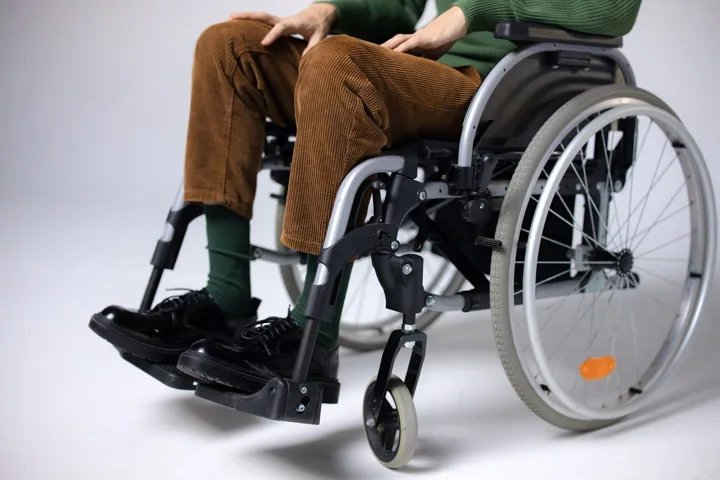
Photo: cottonbro studio / Pexels. Illustrative photograph.
Disabled learners in Great Britain take the same theory and practical tests as everyone else and pass to the same standard, but DVSA can change how the test is run to suit you. Some disabled learners can also take the car test at 16 rather than 17. This guide is about getting to test day ready: the age rules, the steps to sort before you book, the adjustments you can ask for, and taking the test in an adapted car. It is for learners in England, Scotland and Wales and the parents or carers helping them.
Key facts
- Same pass standard: you drive to the same standard to pass, but DVSA can make adjustments.
- Age 16: in England and Wales you can learn and take the car test at 16 if you get the mobility part of PIP at the higher rate (other routes apply in Scotland; see below).
- Tell DVLA about any medical condition that can affect your driving. Not doing so can mean a fine of up to £1,000.
- Tell DVSA when you book if you have a disability, health condition or learning difficulty.
When can you take the test?
| Where you live | You can learn and take the test at 16 if you get |
|---|---|
| England and Wales | The mobility part of Personal Independence Payment (PIP) at the higher rate; or the higher rate mobility component of Disability Living Allowance (DLA) for children and you have applied for PIP (you must have been getting DLA before you turned 16). |
| Scotland | The higher rate mobility component of Child Disability Payment (received before 16); the higher rate mobility component of DLA for children while waiting to move to Child Disability Payment; the enhanced rate mobility part of Adult Disability Payment; or the higher rate mobility part of PIP while waiting to move to Adult Disability Payment. |
This is as listed by GOV.UK in November 2026. Otherwise the usual minimum age for a car is 17. You can apply for a provisional licence from 15 years 9 months.
What the examiner can adjust on the practical test
- You can talk to the examiner about your disability and car adaptations at the start.
- The examiner may give you more time for instructions and directions.
- If you are deaf or hard of hearing, the examiner uses written notes, faces you for lip reading and gives directions by hand signals explained beforehand.
- You can bring a British Sign Language interpreter aged 16 or over (your instructor can do this). You arrange and pay, then claim the cost back.
- With a learning difficulty, the examiner can adjust independent driving, for example following traffic signs instead of a sat nav.
- With a reading difficulty, you can write down the number plate in the eyesight check.
Theory test support, such as extra time and voiceover, is covered in extra support for the theory and driving tests and theory test languages and support in GB.
Before you book: three things to sort
1. Report your condition to DVLA
Some medical conditions must be reported to DVLA because they can affect driving. Car licence holders can check and report a condition online on GOV.UK. Do this before you start learning, so nothing holds up your licence or test. The full process is in fitness to drive and telling DVLA.
2. Get a driving assessment if you are unsure what you need
A driving assessment helps work out whether you can drive and which adaptations or vehicle type suit you. Driving Mobility runs a network of accredited assessment centres across the UK. Knowing your controls early means you practise in the same set-up you will be tested in. Check how to book, any referral needed and the cost with Driving Mobility or your local centre.
3. Decide on manual or automatic
If you learn and pass in an automatic, your full licence will cover automatic cars only. See automatic or manual.
Taking the test in your own adapted car
You can, if it meets the test car rules, such as being taxed, insured for a test, roadworthy and fitted with an extra interior mirror for the examiner. Tell the examiner about the adaptations at the start. A car that fails these rules means the test does not go ahead, so check it well before your date.
Practising until you are test-ready
Paid teaching must come from an approved driving instructor (ADI) or trainee instructor; ask whether they have an adapted car or can teach in yours. Family or friends can supervise private practice if they are over 21 and have held a full licence for 3 years. The car must be insured for you as a learner. Before booking, check you can drive a full test-length route with your adaptations without prompts.
Motability help with getting to test standard
The Motability Scheme lets people who receive a qualifying mobility allowance lease a car, including adapted ones. Check eligibility directly with Motability. The Motability Foundation’s driving lessons grant (as of November 2026):
| Requirement or detail | What the Foundation says |
|---|---|
| Who | Disabled people on the Motability Scheme, or an appointee for a Scheme customer such as a disabled child aged 16 or over. |
| You must | Have a Scheme vehicle (or one due within 4 months), hold a provisional licence and have passed the theory test. |
| Means test | You get a means-tested benefit such as Universal Credit. Full-time students under 25 may qualify through a parent or guardian’s benefit. |
| What it pays for | Up to 40 hours of lessons for first-time learners, arranged through the AA Driving School. Lessons should be completed within 12 months. |
| Not covered | Theory or practical test fees, lessons for family or carers, Pass Plus and refresher training. |
Common questions
Do I have to tell DVLA about my disability before my test?
Only if it is a condition that can affect your driving. Use the GOV.UK condition checker. Failing to report a relevant condition can mean a fine of up to £1,000.
Is the pass mark lower with adjustments?
No. Adjustments change how the test is delivered, not the standard you must reach.
I am not on Motability. Is there other help?
Check what your local council or disability charities offer, and ask your assessment centre.
Can I take the test at 16 if I get the standard rate of PIP mobility?
GOV.UK lists the higher rate only. With other awards, the normal age of 17 applies.
Looking for lessons or an instructor? Our sister site Compare Driving Instructors covers lesson prices and choosing an instructor.
Back to the full guide to learning to drive in Great Britain. See also the cost of learning to drive in GB.
Sources
- GOV.UK, “Vehicles you can drive: car, age 16” (gov.uk)
- GOV.UK, “Health conditions and driving” (gov.uk)
- GOV.UK, “Driving test: if you have a disability, health condition or learning difficulty” (gov.uk)
- GOV.UK, “Driving test: using your own car” (gov.uk)
- GOV.UK, “Driving lessons and learning to drive” (gov.uk)
- GOV.UK, “Apply for your first provisional driving licence” (gov.uk)
- Motability Foundation, “Driving lessons grant” (motabilityfoundation.org.uk)
- Driving Mobility, “Driving Mobility” (drivingmobility.org.uk)