Category: Australia

  • Learner Test in Other Languages: Every Australian State

    Learner Test in Other Languages: Every Australian State

    Photo: Thennicke, CC BY-SA 4.0, via Wikimedia Commons

    You can sit the learner knowledge test in a language other than English in most Australian states, but how depends on where you live. NSW offers the test in 9 languages online and 10 in person. Victoria offers 13 other languages in person. Queensland, Tasmania and the NT provide interpreters, and WA has an oral test with an accredited translator. This checklist sets out each state’s options as of November 2026, plus help for people who find reading hard.

    Key facts

    • Online learner courses are mostly English only. For another language you usually have to book the test in person.
    • NSW and Victoria publish fixed language lists. In other states, ask for an interpreter or an oral test when you book.
    • Interpreters are free in NSW, Victoria, Queensland (driving tests) and Tasmania (in-shop knowledge test). In the NT, non-residents may pay a fee to the interpreting service.
    • If you need an interpreter, book it well ahead. Queensland asks for at least one week’s notice for driving tests.

    Learner test languages by state

    State Test in other languages Interpreter or oral test
    NSW DKT online: English, Simplified Chinese, Traditional Chinese, Arabic, Spanish, Vietnamese, Korean, Thai, Farsi. In person: English, Greek, Turkish, Croatian, Serbian, Arabic, Simplified Chinese, Korean, Spanish, Vietnamese Free interpreter or Auslan, in person only. Assistant reader available in person
    VIC Online test: English only. In person: Albanian, Arabic, Cambodian, Chinese (Mandarin), Macedonian, Persian, Russian, Serbian, Sinhalese, Somali, Spanish, Turkish, Vietnamese Free interpreter if your language is not listed; Auslan on request
    QLD Ask TMR which languages the written test is offered in If you cannot complete PrepL online, TMR can arrange an interpreter or staff member to help with the written road rules test at a licence office
    WA Ask the Department of Transport and Major Infrastructure which languages are offered Oral test for people who have trouble reading or using computers, which can be done in another language with a NAATI translator. One attempt a day; not every centre offers it
    SA Not stated in the handbook Ask Service SA (13 10 84) when you book
    TAS Online Plates Plus course in English; learn-to-drive videos in English and four other languages Online: someone may translate for you. In-shop test: a professional interpreter is free
    ACT Check with Access Canberra Ask Access Canberra when you book
    NT Ask the MVR which languages are offered Verbal (spoken) test or interpreter at some MVR offices, through the Interpreting and Translating Service NT. Non-residents may have to pay the interpreter fee

    NSW: online or in person?

    • The online DKT is in 9 languages, and you can enrol from 15 years and 11 months.
    • You must book the in-person DKT if you need an interpreter, Auslan, an assistant reader, or a language only offered in person, such as Greek or Turkish. The in-person test is for people aged 16 or over.
    • Fees differ. Online, you pay one test fee however many times you retake. In person, you pay each attempt.
    • The Road User Handbook comes in English and 8 community languages: Arabic, Chinese Simplified, Chinese Traditional, Farsi, Korean, Spanish, Thai and Vietnamese.

    Full details: NSW Driver Knowledge Test.

    Victoria: in person for other languages

    The online Learner Permit Test course is English only. To sit it in another language, book the in-person test at a VicRoads Customer Service Centre. If you fail in person, VicRoads says you can still get a free first attempt by then enrolling online. Translated editions of the Road to Solo Driving handbook are listed on the Transport Victoria handbooks page. See VicRoads learner permit test.

    Hazard perception tests in other languages

    State HPT language support
    NSW 10 languages with audio. Free interpreter for others (call 13 22 13). Staff can read and explain questions if you arrange it before booking
    VIC The handbook says the HPT is available in some languages; check the list with VicRoads
    Other states No language list published; ask when you book
    NT No HPT in the NT licensing path

    Compare formats in hazard perception tests in every state.

    Interpreters for the driving test

    • Queensland: interpreters are free through TMR but not at every location. Book at least one week before the test. If you bring your own, they must be NAATI accredited.
    • Tasmania: you must book the P1 driving assessment in person if you need an interpreter.
    • Other states: ask when you book. Allow extra time to arrange it.

    If English is your second language: how to prepare

    1. Read the official handbook in your language where one exists (NSW has 8 community-language editions; Victoria lists translated editions).
    2. Also read the English edition, so you know terms like “give way”, “dividing line” and “demerit points”. Our Australian driving terms glossary explains them.
    3. Learn the signs by shape and colour. They are the same whatever language you test in.
    4. Book the in-person or interpreted test early, because places can be limited.
    5. Bring identity documents in English, or with an approved translation. See proof of identity for a learner licence.

    Help if you find reading difficult

    • NSW: an assistant reader is available for the in-person DKT.
    • WA: an oral test is available for people who have trouble reading or using computers.
    • NT: a verbal test is available at some MVR offices. Talk to MVR before booking if you have a physical or mental impairment.

    More support options are in learning to drive with a disability in Australia.

    Common questions

    Can I take the NSW DKT in Chinese?

    Yes. Simplified and Traditional Chinese are offered online, and Simplified Chinese in person.

    Is the VicRoads learner test available in Arabic?

    Yes, in person. The online version is English only.

    Can a friend or family member translate for me?

    In Tasmania, someone can translate for you during the online course. For tests, most states use professional interpreters. Queensland requires a NAATI-accredited interpreter if you arrange your own for a driving test. Queensland also warns of serious penalties if someone else completes PrepL for you.

    Do interpreters cost money?

    Interpreters are free in NSW and Victoria, for Queensland driving tests and for the Tasmanian in-shop test. In the NT, non-residents may be charged by the interpreting service.

    Is the hazard perception test in other languages?

    In NSW it is in 10 languages with audio. Victoria offers some languages. Elsewhere, ask when you book.

    I hold an overseas licence. Do I still need the knowledge test?

    It depends on your country and state. See driving in Australia on an overseas licence.

    Related guides

    Sources

    • NSW Government, “Driver Knowledge Test” (nsw.gov.au)
    • NSW Government, “Hazard Perception Test” and “Road User Handbook” (nsw.gov.au)
    • VicRoads, “Learner permit test” (vicroads.vic.gov.au)
    • Department of Transport and Planning, “Road to Solo Driving” handbook (transport.vic.gov.au)
    • Queensland Government, “Transferring to a Queensland licence” and “Practical driving tests” (qld.gov.au)
    • Department of Transport and Major Infrastructure WA, “Computerised theory test” (transport.wa.gov.au)
    • Department of State Growth, “Driver knowledge test” (platesplus.tas.gov.au)
    • Northern Territory Government, “Get your driver licence” (nt.gov.au)
    • Government of South Australia, “The Driver’s Handbook” (mylicence.sa.gov.au)
  • U-Turns in Victoria: Where You Can’t and Who Gives Way

    U-Turns in Victoria: Where You Can’t and Who Gives Way

    Photo: Bidgee, CC BY 3.0, via Wikimedia Commons

    In Victoria you can make a U-turn at traffic lights unless a No U-turn sign is there. That is the opposite of NSW, Queensland and every other state and territory. Wherever you turn, you must give way to all vehicles and pedestrians. This guide is for Victorian learners and P platers. It covers where U-turns are banned, who gives way, where to start the turn and how to signal, based on the Road Safety Road Rules 2017 and the Road to Solo Driving handbook.

    Key facts

    • Traffic lights: a U-turn is allowed unless there is a No U-turn sign at the intersection (rule 40).
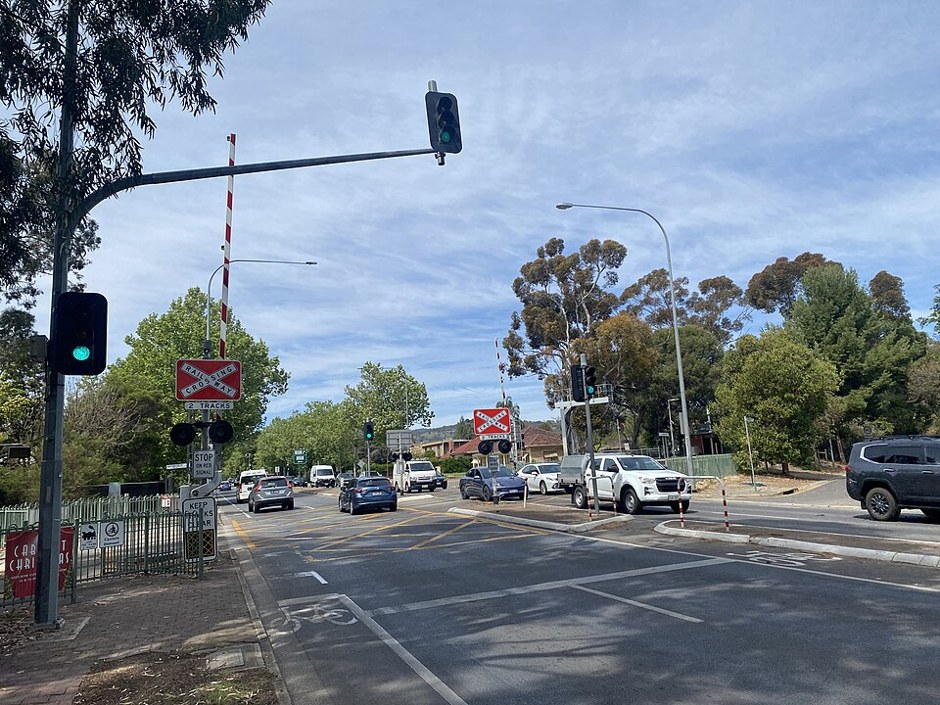
    • Children’s, pedestrian and level crossings: no U-turn, with or without lights, unless a U-turn Permitted sign is there (rule 43).
    • Dividing lines: never U-turn across a single continuous line, a continuous line to the left of a broken line, or double continuous lines.
    • No Right Turn sign: it also bans U-turns, unless a U-turn Permitted sign is there too.
    • Give way: to all vehicles and pedestrians. The only exception is a driver coming out of a driveway, car park or other road-related area. They must give way to you.

    Can you do a U-turn at traffic lights in Victoria?

    Yes, unless a No U-turn sign is at the intersection. Rule 40 of the Victorian Road Safety Road Rules 2017 only bans a U-turn at lights where that sign is shown. You still need a safe gap and a clear view, and you must obey the signals for your lane.

    Every other Australian jurisdiction works the other way round. In NSW, Queensland, WA, SA, Tasmania, the ACT and the NT, a U-turn at traffic lights is banned unless a U-turn Permitted sign is shown. If you drive interstate, assume no U-turn at lights. See turning and indicating rules in Australia for the state-by-state picture.

    Victoria does need a U-turn Permitted sign at three kinds of crossing, whether or not they have lights:

    • children’s crossings
    • pedestrian crossings
    • level crossings.

    Where a road meets a car park or other road-related area at traffic lights, a No U-turn sign there bans the U-turn (rule 43A).

    Where U-turns are banned in Victoria

    Situation Rule
    No U-turn sign at an intersection (with or without lights) Banned at that intersection
    No U-turn sign at a break in a median strip Banned at that break
    No U-turn sign along a road (not at an intersection) Banned from the sign to the next intersection, or to the end of the road at a T-intersection or dead end
    No Right Turn sign No right turn and no U-turn, unless a U-turn Permitted sign is also there
    Single continuous dividing line Banned
    Continuous line on your side of a broken line Banned
    Double continuous lines Banned
    Children’s, pedestrian or level crossing Banned unless a U-turn Permitted sign is shown
    No clear view of approaching traffic, or you would unreasonably obstruct traffic You must not begin the U-turn (rule 37)

    A broken dividing line, or a broken line on your side of a continuous line, lets you U-turn if it is safe and the road ahead is clear. At an intersection without lights, a U-turn is allowed unless a No U-turn sign is there, even if the lane arrows say turn right.

    Who gives way during a U-turn?

    You do. Rule 38 says a driver making a U-turn must give way to all vehicles and pedestrians. This includes:

    • oncoming traffic and traffic coming up behind you
    • a car turning out of a side street, even when it faces a Stop or Give Way sign. Drivers at those signs do not have to give way to a vehicle making a U-turn.
    • a car turning left from a slip lane into the road you are turning into
    • pedestrians crossing anywhere on your path, and bicycle riders.

    The one exception: a driver entering the road from a driveway, car park or other land beside the road must give way to you.

    Scenario

    You stop in the right lane of a two-lane road to U-turn. A car is waiting at a Give Way sign in a side street on the far side, ready to turn left into the lane you want. Legally, you give way to it. Wait until it has gone and the whole path is clear. If the gap never comes, drive on and turn around somewhere easier.

    Where to start a U-turn

    • Road with a median strip or dividing line, at an intersection: start from the marked lane nearest the median or dividing line (rule 42). On a divided road this means the right lane.
    • Any other intersection: start from the left of the centre of the road.
    • Road with no median: the handbook advises starting from the left side of the road. Watch for traffic coming from behind you.

    Signalling for a U-turn

    A U-turn is a change of direction to the right, so you must give a right signal for long enough to warn other drivers and pedestrians. If you start the U-turn from a parked position at the side of the road, the right signal must be on for at least 5 seconds before you move off. Turn the signal off once the turn is finished.

    How to do a U-turn: step by step

    1. Check for signs and the line markings in the centre of the road.
    2. Check that the road is wide enough to turn in one go. If not, use a three-point turn or drive around the block.
    3. Position in the correct lane, or at the left of the road where there is no median.
    4. Signal right for a reasonable time.
    5. Check your mirrors and do a head check over your right shoulder.
    6. Wait until you have a clear view both ways and a gap for the whole turn, including pedestrians.
    7. Turn smoothly, then straighten up in the correct lane and cancel the signal.

    When someone else is U-turning

    • You may overtake on the left of a vehicle that is U-turning from the centre of the road with its right indicator on.
    • You may drive in a bus lane for up to 100 metres to get past a vehicle U-turning from the centre of the road.
    • If you are coming out of a driveway or car park, the U-turning driver has priority over you.

    Common questions

    Is a U-turn at traffic lights legal in Victoria?

    Yes, unless a No U-turn sign is there. This is unique to Victoria: elsewhere in Australia you need a U-turn Permitted sign.

    Can I U-turn across double white lines?

    No. You must not cross double continuous lines, a single continuous line or a continuous line on your side to make a U-turn.

    Does a No Right Turn sign mean no U-turn?

    Yes. A No Right Turn sign bans U-turns too, unless a U-turn Permitted sign is also shown.

    Do I have to give way to a car at a Stop sign when I U-turn?

    Yes. A U-turning driver gives way to all vehicles, and the driver at the Stop sign does not have to give way to you.

    Can I U-turn at a pedestrian crossing?

    Only if a U-turn Permitted sign is there. The same applies at children’s crossings and level crossings.

    How far does a No U-turn sign apply?

    A sign along a road applies until the next intersection, or to the end of the road if it ends at a T-intersection or dead end. A sign at an intersection or median break applies there only.

    Related guides

    Sources

    • Victorian Government, “Road Safety Road Rules 2017, version 027, rules 37 to 43A, 48, 91 and 132” (legislation.vic.gov.au)
    • Department of Transport and Planning, “Road to Solo Driving” handbook, U-turns, giving way and dividing lines (transport.vic.gov.au)
    • Queensland Government, “Transport Operations (Road Use Management, Road Rules) Regulation 2009, section 40” (legislation.qld.gov.au)
    • Transport for NSW, “Road User Handbook”, U-turns and three-point turns (nsw.gov.au)
  • L and P Plater Phone Rules in Every Australian State

    L and P Plater Phone Rules in Every Australian State

    Photo: Calistemon, CC BY-SA 4.0, via Wikimedia Commons

    Mobile phone rules for L and P platers in Australia range from a total ban on L, P1 and P2 in NSW and the ACT to WA, where learners and P platers follow the same phone rules as every other driver. This checklist compares the learner, P1 and P2 phone rules in all eight states and territories as of November 2026. It covers maps, music, CarPlay and the passenger loudspeaker rule.

    Key facts

    • Total ban on L, P1 and P2: NSW, the ACT, the NT and Victoria. In Victoria, navigation and audio set up before you drive are allowed, but you must not touch the device or use voice commands.
    • Total ban on L and P1, general rules on P2: SA and Tasmania.
    • Queensland: a total ban for learners and P1 drivers under 25, and their passengers must not use a phone on loudspeaker.
    • WA: no L or P-specific ban. The general rules apply: calls only with the phone in a fixed mount or touch-free, and no texting.
    • No state lets any driver hold a phone to text, email or video message while driving.

    Phone rules by state and licence stage

    State Learner P1 (red) P2 (green)
    NSW No use at all, even stopped No use at all No use at all
    VIC No touching, no voice commands; navigation or audio set up before driving only Same Same
    QLD Under 25: no use at all; passengers no loudspeaker. 25+: general rules Under 25: same as learners. 25+: general rules General rules
    WA General rules General rules General rules
    SA No function at all, including GPS No function at all, including GPS General rules
    TAS No use, including hands-free; music or GPS set up before driving only Same as learners Hands-free or commercial holder allowed
    ACT Full ban; no-touch audio and mounted GPS only Same Same
    NT No function at all, including maps, hands-free and loudspeaker Same (one P stage) Not applicable

    Maps, music and CarPlay

    State Phone maps on L or P1 Music from the phone on L or P1
    NSW No. A separate GPS unit or the car’s built-in navigation is allowed No, not even through Bluetooth
    VIC Yes, if set up before driving and not touched Yes, if set up before driving
    QLD (under 25) No, even mounted and hands-free No
    WA Yes, in a fixed mount, without touching the phone General rules apply
    SA No, even mounted No phone function at all
    TAS Yes, if set up before driving Yes, if set up before driving
    ACT Mounted GPS only, with no interaction at all Yes, if not held and no interaction, including by voice
    NT No No

    Apple CarPlay and Android Auto run off your phone, so the same limits apply. In NSW, SA, the NT and for Queensland under-25s, assume they are off limits on L and P1. Victoria allows navigation and audio set up before driving, with simple changes made through the car’s inbuilt screen, but no messaging or voice-command calls.

    What “driving” includes

    Phone rules apply while the car is moving and while it is stopped but not parked: at traffic lights, in a queue or in stop-start traffic. NSW, Queensland, Tasmania and the ACT say this directly. To use your phone, pull over and park legally. Do not stop in an emergency lane.

    Narrow exceptions

    • Showing a digital licence to police: allowed in NSW, Queensland and SA (SA when stopped in a road-related area).
    • Paying at a drive-through or car park while stopped: allowed in Queensland and SA.
    • A phone in a pocket or pouch that you cannot operate: allowed in Queensland.

    Penalties

    State Penalty for an illegal phone offence (L or P)
    NSW Fine and 5 demerit points (10 in double demerit periods)
    VIC 4 demerit points (VicRoads Rules for P drivers brochure); check the current fine
    ACT Messaging, social media or apps: 4 points and $632. Other use, such as a call: 3 points and $514
    QLD, WA, SA, TAS, NT Fines and demerit points apply; check the current figures with your transport department

    Novice demerit limits are low. In the ACT one messaging offence reaches the 4-point limit and suspends an L or P licence. In Victoria, a phone offence plus almost any other offence can cost you your licence. See demerit limits for L and P platers compared.

    Detection cameras

    Mobile phone detection cameras operate in NSW, where they check for illegal phone use anywhere and at any time, and in Victoria, which also runs seatbelt detection cameras. Other states may also use them, so check with your transport department. On L or P plates, a camera fine also brings demerit points.

    On your driving test

    Touching a phone or smart watch fails the NT practical test. Answering or using a phone is a fail item in the NSW Driving Test. Switch it off and put it out of reach before the examiner gets in.

    Supervisors and passengers

    • A supervisor sitting beside you is not driving. But in Queensland, passengers in a car driven by a learner or P1 driver under 25 must not use a phone on loudspeaker.
    • Handing navigation to your supervisor is the official advice in Queensland and SA. In Victoria it is illegal to have a video display running where the driver can see it, even while stopped but not parked.

    Practical setup before every drive

    1. Phone on silent or Do Not Disturb (driving mode).
    2. Out of reach: glovebox, bag or back seat.
    3. Route and music set before you start, only where your state allows it.
    4. Your supervisor or a passenger handles navigation changes.

    Common questions

    Can P platers use Bluetooth for calls?

    Not in NSW, Victoria, the ACT or the NT, on either P stage. Not on P1 in SA, in Tasmania, or in Queensland if you are under 25. Yes on P2 in SA, Tasmania and Queensland, and on all P plates in WA, under the general rules.

    Can I use Google Maps on my Ls?

    In Victoria and Tasmania, yes, if it is set up before you drive and you do not touch it. In WA, yes, in a fixed mount without touching it. Not in NSW, SA, the NT or, for under-25s, Queensland. In the ACT, a mounted GPS is allowed only with no interaction.

    Can I touch my phone at a red light?

    No, in every state. Stopped at lights still counts as driving.

    Do the rules change when I move interstate on my Ps?

    Yes. You follow the rules of the state you are driving in. See driving interstate on L or P plates.

    Can I use my phone to log logbook hours?

    Start the trip in the app before you move off, then put the phone away. Tasmania and WA both say to set the app running while parked.

    Does a smart watch count?

    Yes. Victoria bans touching wearable devices, the ACT ban covers wearables, and touching a smart watch fails the NT test.

    State guides: NSW phone and screen rules, Victoria phone and device rules, Queensland P1 and P2 rules, SA P1 rules, Tasmanian P1 and P2 rules, ACT learner and P plate rules, NT P plate rules and WA red P plate rules. All P rules side by side: P plate rules compared.

    Sources

    • NSW Government, “Mobile phones, digital screens and GPS” (nsw.gov.au)
    • Transport for NSW, “Road User Handbook” (nsw.gov.au)
    • Transport Victoria, “Learner and probationary driver road rules” (transport.vic.gov.au)
    • VicRoads, “Rules for P drivers” brochure (vicroads.vic.gov.au)
    • Queensland Government, “Transport Operations (Road Use Management: Road Rules) Regulation 2009” (legislation.qld.gov.au)
    • Department of Transport and Main Roads, “Your keys to driving in Queensland” (publications.qld.gov.au)
    • Department of Transport and Major Infrastructure WA, “Drive Safe” handbook, section 1.7 Mobile Phones (transport.wa.gov.au)
    • Government of South Australia, “The Driver’s Handbook (MR200, February 2026)” (mylicence.sa.gov.au)
    • Department of State Growth, “Mobile phone ban” (platesplus.tas.gov.au)
    • City Services, “Learner and provisional driver safety” and “Safe plates frequently asked questions” (cityservices.act.gov.au)
    • Access Canberra, “ACT Road Rules Handbook” (accesscanberra.act.gov.au)
    • Northern Territory Government, “NT Road Users’ Handbook” (nt.gov.au)
    • Motor Vehicle Registry, “A guide to the Driving Test”, 2nd Edition, April 2026 (nt.gov.au)
  • Car Insurance for Learners and P Platers in Australia

    Car Insurance for Learners and P Platers in Australia

    Photo: Zigzig20s, CC BY-SA 3.0, via Wikimedia Commons

    Every registered car in Australia carries compulsory third party (CTP) insurance, but CTP only covers injuries to people. It does not pay for damage to cars or property. This guide explains how CTP works in each state and territory, the other types of car insurance, and what learners, P platers and their parents should check before a new driver gets behind the wheel. It covers general principles only, not any insurer’s products or prices.

    Key facts

    • CTP is compulsory everywhere and is tied to the car’s registration, not to the driver.
    • In NSW you buy CTP (a Green Slip) separately before you register. In the other states and territories it is included in or paid with registration.
    • CTP never covers damage to your car, another car or property. For that you need private insurance.
    • Premiums depend on things like your age, driving record and where you live. New drivers usually pay more.
    • A higher excess lowers the premium, but you must be able to pay it if you claim.

    How CTP works in each state

    State How you get CTP Scheme notes
    NSW Buy a Green Slip from one of the licensed CTP insurers before you register Regulated by the State Insurance Regulatory Authority (SIRA). Injured people can claim regardless of fault, subject to exceptions
    VIC Through registration Transport Accident Commission (TAC) no-fault scheme
    QLD Paid with registration to TMR; you choose from the licensed CTP insurers Overseen by the Motor Accident Insurance Commission (MAIC). Fault-based. A change of insurer applies from your next renewal
    WA Applies to all vehicles when licensed Run by the Insurance Commission of WA. Covers injury and death caused to others, plus care and support for catastrophic injuries
    SA A component of the registration fee CTP (Bodily) Insurance plus the Lifetime Support Scheme
    TAS Through registration Motor Accidents Insurance Board (MAIB). Claims can be made regardless of fault where a Tasmanian-registered vehicle is involved
    ACT Through registration ACT Motor Accident Injuries Scheme, no-fault
    NT Paid at the same time as registration No-fault scheme administered by the Motor Accidents Compensation Commission

    What CTP will not do

    • Pay for damage to your car, another car or property (all states).
    • Protect you fully if you break the rules. In WA, the Insurance Commission can pursue a driver for compensation costs if they drove without the right licence, under the influence, or in an unsafe car. In the NT, benefits can be cut, for example by 25 per cent for not wearing a seatbelt, or to nothing for driving with an expired, cancelled or suspended licence.

    The private insurance options

    Type Covers other people’s cars and property Covers your car
    Third party property damage Yes No
    Third party property, fire and theft Yes Only if stolen or damaged by fire
    Comprehensive Yes Yes, even if you caused the crash; also theft, fire and weather

    For a new driver, third party property cover is the minimum worth having. One at-fault crash into a newer car can cost far more than a year’s premium. Comprehensive cover makes sense if you could not afford to repair or replace your own car.

    Learners: whose insurance covers you?

    A learner usually drives the family car or a supervisor’s car, so it is that car’s policy that matters. Before the first drive:

    1. Read the policy wording for how it treats learner drivers and drivers under a set age.
    2. Tell the insurer a learner will be driving. Ask whether they need to be listed and whether an extra excess applies.
    3. Check the excess. Many policies charge an extra excess for young or inexperienced drivers. Know the total you would pay before you claim.
    4. Use a registered car. Without registration there is no CTP, and that is a serious offence.

    Driving lessons in an instructor’s car fall under the driving school’s arrangements. Ask the school if you are unsure.

    P platers: your own car or a parent’s policy?

    Driving a parent’s car

    • Ask the insurer to list you as a driver, and give accurate details of who drives the car most.
    • Expect the premium or the excess to change while a P plater is listed.
    • Do not list a parent as the main driver of a car you mostly drive. Wrong details can put a claim at risk.

    Your own car

    Legal ways to lower the premium

    • Choose a safer, cheaper car. Insurers price on the car as well as the driver.
    • Pick a higher excess you can genuinely afford.
    • Cut add-ons you will not use.
    • Build a clean record. Premiums depend on driving history, and offences on your Ps also cost demerit points. See demerit limits for L and P platers.
    • Review the policy every year instead of letting it roll over.

    After a crash

    Stop, help anyone injured, exchange details and report where required. Injury crashes must be reported in every state, and in WA you report injury crashes through the online crash reporting facility. Then contact your insurer, and the CTP insurer or scheme if anyone was hurt. Full steps: what to do after a crash in Australia.

    Common questions

    Is CTP enough for a P plater?

    It covers injuries to other people, which is the biggest risk. It does not cover cars or property, so a crash into another car could leave you paying for repairs yourself.

    Do learners need their own insurance?

    Usually not. The car’s owner holds the policy. Check that the policy covers a learner and what excess applies.

    What is a young driver excess?

    An extra amount some policies charge on top of the standard excess when the driver at the time of a claim is under a set age or inexperienced. The amount and age vary by policy.

    Does my CTP cover me interstate?

    CTP is attached to the car’s registration and is required for interstate-registered cars too. Claims after an interstate crash depend on the schemes involved, so contact the scheme in the state where the car is registered.

    Can my parent put the car in their name and list me as an occasional driver?

    Only if that is true. If you are the main driver, say so. Inaccurate details can lead to a refused claim.

    Where can I compare policies fairly?

    ASIC’s Moneysmart website explains the types of cover and what to check. Read each insurer’s product disclosure statement before you buy.

    Sources

    • ASIC Moneysmart, “Car insurance”, “Choosing car insurance” and “How to save money on car insurance” (moneysmart.gov.au)
    • State Insurance Regulatory Authority, “How to buy a Green Slip” and “Interstate (non-NSW) crashes and CTP insurance claims” (sira.nsw.gov.au)
    • Motor Accident Insurance Commission, “What is CTP insurance?” and “Buying CTP insurance” (maic.qld.gov.au)
    • Department of Transport and Major Infrastructure WA, “Drive Safe” handbook, section 4.1 Motor injury insurance (transport.wa.gov.au)
    • Government of South Australia, “The Driver’s Handbook (MR200, February 2026)” (mylicence.sa.gov.au)
    • Northern Territory Government, “NT Road Users’ Handbook”, Fifth Edition (nt.gov.au)
    • Transport Accident Commission (tac.vic.gov.au)
  • Learning to Drive Over 25 in Australia: Rules by State

    Learning to Drive Over 25 in Australia: Rules by State

    Photo: Philip Mallis, CC BY-SA 4.0, via Wikimedia Commons

    If you start learning to drive at 25 or older in Australia, most states shorten or drop the rules built for teenagers: fewer or no logbook hours, a shorter minimum time on your Ls, and in some states no red P stage. This guide compares the 25-plus rules in every state and territory as of November 2026. It also covers how adult learners can plan lessons around work.

    Key facts

    • No logbook at 25+: NSW, Queensland and WA. Victoria drops it from 21.
    • Reduced logbook: the ACT (50 hours instead of 100).
    • Logbook at any age: SA keeps its 75 hours. Tasmania lists 80 hours; check with Transport Tasmania whether any age-based reduction applies.
    • Shorter time on Ls: no minimum in NSW, 3 months in Victoria and 6 months in the ACT and SA.
    • Skip red Ps: Queensland, Victoria (from 21) and the ACT start you on green P2.
    • You still pass every test in every state: knowledge test, HPT where it exists, and the practical test.

    25-plus rules by state

    State Minimum time on Ls Logbook hours First P stage Minimum P period
    NSW None None P1 P1 12 months, then P2 24 months
    VIC 3 months (6 months at 21 to 24) None from 21 P2 3 years on P2
    QLD 1 year None P2 1 year on P2
    WA 6 months before the PDA None (logging strongly recommended) Red P Check with DTMI
    SA 6 months 75, including 15 at night P1 P1 1 year, then P2
    TAS 12 continuous months 80, including 15 at night P1 P1 12 months, then P2 12 months
    ACT 6 months 50, including 5 at night P2 3 years on P2
    NT 6 months Not compulsory P 1 year (2 years if under 25)

    Your age band is usually set when your learner licence is issued (ACT) or when you apply for your Ps (Victoria and Queensland). If you are close to a birthday, check which date your state uses before you apply.

    Fastest route to a full licence at 25+

    State Earliest full licence after getting your Ls
    NT About 18 months (6 months on Ls, 1 year on Ps)
    QLD About 2 years (1 year on Ls, 1 year on P2)
    TAS About 3 years (12 months on Ls, 12 on P1, 12 on P2)
    NSW About 3 years (no learner minimum, 12 months P1, 24 months P2)
    VIC About 3 years 3 months (3 months on Ls, 3 years on P2)
    ACT About 3 years 6 months (6 months on Ls, 3 years on P2)

    These are minimums, worked out from the official periods. Any suspension or failed test pushes them back. WA and SA are left out. If you are 25 or older, check your P period with the Department of Transport and Major Infrastructure (WA) or Service SA.

    Rules that still apply at any age

    • Zero alcohol on L and P plates in every state.
    • A supervisor beside you whenever you drive on Ls.
    • Speed caps for learners where your state has them, such as 90 km/h in NSW, 100 km/h in WA and SA, and 80 km/h in the NT.
    • Phone rules on Ls: NSW, Victoria, SA, Tasmania, the ACT and the NT ban learners from phone use whatever their age. Queensland’s total ban covers learners under 25 only. See phone rules for L and P platers.
    • Night and passenger limits: most P plate peer-passenger and curfew rules apply to under-25s only. WA’s red P limits apply to all new drivers.

    Why there are no crash courses in Australia

    Minimum learner periods mean you cannot go from no licence to Ps in a week, as some UK intensive courses promise. Even with no logbook, Queensland makes you hold your Ls for a year and the ACT and SA for 6 months. NSW is the exception for over-25s: no minimum time on Ls. You still have to pass the DKT, the HPT and the Driving Test.

    Planning lessons as an adult learner

    1. Get your Ls first and start the clock. The minimum period runs while you book lessons and practise.
    2. Book a block of early lessons with an instructor. Adults without a family supervisor often learn faster with professional basics first, then practice with a friend who holds a full licence.
    3. Log hours even when you do not have to. WA strongly recommends it for 25+ learners, and a log shows you where your gaps are, such as night or wet driving.
    4. Practise the test manoeuvres early. Reverse parallel parking and three-point turns appear in most tests. See practical driving tests compared.
    5. Treat nerves as a skill gap. Drive the same routes until they feel routine, then add busier roads, night and rain one at a time.
    6. Choose an instructor carefully. Ask how they structure lessons for adults and whether they know your local test routes.

    Common questions

    Do I need logbook hours if I am over 25?

    Not in NSW, Queensland or WA. Victoria drops them from age 21. The ACT needs 50 hours (5 at night). SA needs 75 hours at any age, and Tasmania lists 80 hours.

    Can I skip my red Ps if I am over 25?

    Yes in Queensland and the ACT, where you start on P2. Victoria starts you on P2 from age 21. NSW, SA and Tasmania still start you on P1.

    Can I do the NSW hazard perception test straight away at 25?

    Yes. The 10-month wait only applies if you are under 25. At 25 or older you can sit the HPT as soon as you have your Ls.

    Is it harder to learn to drive as an adult?

    Not officially. Adults often have less time to practise and less access to a supervisor, which is why fewer required hours do not mean you should do fewer. Book the practical test only when you can drive safely without help.

    I have an overseas licence. Do I count as a new learner?

    Usually not. You may be able to convert it, with or without tests. See driving in Australia on an overseas licence.

    Does being over 25 make my licence cheaper?

    Sometimes. Skipping a stage can mean one fewer licence fee: in the NT the provisional licence is $40 for 1 year at 25+, instead of $61 for 2 years. See the cost of getting a licence.

    State guides: NSW log book, learning to drive in Victoria, Queensland logbook, WA learner rules, SA 75 hour logbook, Tasmanian learner rules, ACT logbook hours and NT learner rules. All states side by side: learner licence rules compared.

    Sources

    • NSW Government, “Using your Learner Driver Log Book” and “Hazard Perception Test” (nsw.gov.au)
    • VicRoads, “How to get your Ps” (vicroads.vic.gov.au)
    • Department of Transport and Planning, “Road to Solo Driving” handbook (transport.vic.gov.au)
    • Queensland Government, “Learner logbook” (qld.gov.au)
    • Queensland Government, “Transport Operations (Road Use Management: Driver Licensing) Regulation 2021” (legislation.qld.gov.au)
    • Department of Transport and Major Infrastructure WA, “Learn to drive and log hours” and “Drive Safe” handbook (transport.wa.gov.au)
    • Government of South Australia, “The Driver’s Handbook (MR200, February 2026)” (mylicence.sa.gov.au)
    • Department of State Growth, “Summary of novice car licensing pathway” (platesplus.tas.gov.au)
    • Access Canberra, “Get your provisional driver licence” (accesscanberra.act.gov.au)
    • Northern Territory Government, “Get your driver licence” and “Driver and rider licence fees” (nt.gov.au)
  • Driving in Australia on an Overseas Licence: State Rules

    Driving in Australia on an Overseas Licence: State Rules

    Photo: Ric Taylor, Pexels

    You can drive in Australia on a current overseas licence, but how long it stays valid depends on your visa and which state you live in. Permanent residents usually have 3 months to switch to a local licence. Temporary visa holders face rules that range from 6 months in NSW and Victoria to “while your licence stays valid” in WA and Tasmania. This guide compares the rules for visitors, international students, workers and new residents in all eight jurisdictions as of November 2026.

    Key facts

    • Carry your overseas licence whenever you drive. If it is not in English, carry an English translation or an International Driving Permit too.
    • Permanent residents and returning citizens: 3 months in NSW, QLD, WA (from the visa grant), SA and the NT.
    • Temporary visa holders: 6 months in NSW (if you arrived on or after 1 July 2023). Victoria requires anyone living there more than 6 months to convert.
    • Licences from recognised countries can be converted to a car licence without the knowledge and driving tests. Others must pass them.
    • Overseas learner permits are not recognised in WA and cannot be converted in SA.
    • Once you hold an Australian licence, you can no longer drive in Australia on your overseas one.

    How long you can drive on an overseas licence

    State Visitors and temporary visa holders Permanent residents and citizens
    NSW Temporary visa, arrived on or after 1 July 2023: up to 6 months. Tourists and short-term visitors: up to 6 months while a temporary visitor Up to 3 months from arrival
    VIC Fine for short stays. Living in Victoria more than 6 months: convert, counted from the day you begin living there Same 6-month rule
    QLD The 3-month clock starts only once you live in Queensland on a permanent or special category visa; check your situation with TMR 3 months after taking up residence with a permanent visa, or from the visa grant if later
    WA As long as the licence remains valid 3 months of usual residence after the permanent visa is granted
    SA Not stated in the handbook; check with Service SA Within 3 months of becoming an SA resident
    TAS Visitors and temporary visa holders can drive while the licence is current Must get a Tasmanian licence. Official pages give both 3 and 6 months; confirm with Service Tasmania
    ACT Check with Access Canberra Check with Access Canberra
    NT In the NT more than 3 months and want to keep driving: apply for an NT licence Same 3-month guidance

    Rules for temporary visa holders have changed in several states since 2019. Check your state page before relying on any time limit, especially if you plan to stay longer than 3 months.

    What you must carry

    • Your current overseas licence, for the vehicle class you are driving.
    • An English translation or International Driving Permit if the licence is not in English. NSW, Victoria and the NT state this directly. WA needs an approved translation.
    • WA accepts translations from NAATI-certified translators, tertiary-qualified translators and the Department of Home Affairs Free Translating Service. Queensland asks for a NAATI-accredited translation when you convert.

    Follow the local road rules and any conditions on your licence. An expired or disqualified overseas licence gives you no right to drive.

    Converting to an Australian licence

    Recognised countries

    Each state keeps a list of countries with similar licensing standards. Queensland uses the Austroads list, which includes the United Kingdom, Canada and Singapore. A current car licence from a recognised country can be converted without the knowledge test or practical test. In Queensland it must have been held within the last 5 years. In Victoria, at least 18 years old is a general requirement.

    Non-recognised countries

    • NSW: pass the DKT and the Driving Test. China and, from 1 February 2026, Hong Kong are non-recognised.
    • Queensland: pass the road rules test and the practical test. The old experienced-driver category has been removed.
    • SA: pass a theory test, Hazard Perception Test and practical driving test.
    • Tasmania: a practical driving assessment. Licence holders from non-recognised countries, and under-25s from experienced-driver countries, also sit the HPT.
    • Victoria: depending on your age, experience and country, you may need the learner permit test, HPT and drive test. Use the VicRoads conversion checker.

    Steps that apply almost everywhere

    1. Check whether your country is recognised in your state.
    2. Gather proof of identity, proof of your local address, your visa details and your original overseas licence.
    3. Get an approved English translation if your licence is not in English.
    4. Book or visit the licensing centre, pass an eyesight check and pay the fee.
    5. Sit any tests required, then drive on the local licence only.

    State-by-state notes

    • NSW: your right to drive on an overseas licence is withdrawn once you have lived in NSW for 6 months without transferring. See moving to NSW.
    • Victoria: the 6-month period does not restart if you leave and come back. See moving to Victoria.
    • Queensland: you can sit the practical test on your overseas licence. If you fail, your authority to drive on it is withdrawn. See moving to Queensland.
    • WA: an overseas learner permit is not recognised, so you cannot drive on it in WA. See moving to WA.
    • SA: conversion is mostly limited to car and motorbike classes, and learner permits cannot be converted. A recognised-country licence holder can act as a qualified supervising driver if they meet the criteria.
    • Tasmania: extensions to the conversion period are at the Registrar’s discretion. Apply before the period runs out.
    • NT: if you live in the NT and have not transferred your licence, the handbook warns you may be excluded from insurance or have benefits reduced.

    Learning to drive on an overseas learner permit

    Generally you cannot. WA does not recognise overseas learner permits, and SA will not convert them. In NSW you must pass the DKT to get a NSW learner licence. Until you do, any learning on an overseas permit must follow NSW learner conditions: a supervisor with a full Australian licence, zero alcohol, L plates, and no phone use. The simplest route is to sit your state’s learner test. See learner knowledge tests compared.

    Common questions

    Do I need an International Driving Permit in Australia?

    Only if your licence is not in English. Then carry an IDP or an approved English translation with your licence.

    I am an international student. Do I need an Australian licence?

    It depends on your state. In WA and Tasmania you can keep driving on a valid overseas licence as a temporary visa holder. In NSW the limit is 6 months for students who arrived from 1 July 2023. In Victoria you must convert if you live there more than 6 months.

    Can I drive on my overseas licence if I move between states?

    Each state applies its own rule from when you take up residence there. Check the rule in your new state when you move.

    Is my UK licence recognised?

    Yes. The UK is a recognised country in NSW and Queensland, so a current UK car licence usually converts without tests. Confirm with your state.

    Do I need to do the hazard perception test?

    Only in some cases: for example, licences from non-recognised countries in SA and Tasmania, and some Victorian conversions.

    What happens if I drive after my time limit?

    You are treated as driving unlicensed, which can bring penalties and affect insurance. Convert before the deadline.

    Sources

    • Transport for NSW, “Road User Handbook” (nsw.gov.au)
    • NSW Government, “Moving your overseas licence” and “Visiting from overseas or interstate” (nsw.gov.au)
    • VicRoads, “Driving with your overseas licence” and “Convert overseas licence” (vicroads.vic.gov.au)
    • Queensland Government, “Transport Operations (Road Use Management: Driver Licensing) Regulation 2021” (legislation.qld.gov.au)
    • Department of Transport and Main Roads, “Enrol in PrepL” (service.transport.qld.gov.au)
    • Department of Transport and Major Infrastructure WA, “Drive Safe: A handbook for Western Australian road users”, Appendix 2 (transport.wa.gov.au)
    • Government of South Australia, “The Driver’s Handbook (MR200, February 2026)” (mylicence.sa.gov.au)
    • Transport Services Tasmania, “Driving in Tasmania on an interstate or overseas licence” and “Converting an overseas licence” (transport.tas.gov.au)
    • Department of State Growth, “Hazard Perception Test” (platesplus.tas.gov.au)
    • Northern Territory Government, “NT Road Users’ Handbook”, Fifth Edition (nt.gov.au)
    • Access Canberra (accesscanberra.act.gov.au)
  • Cost of Getting a Licence in Australia: Fees in Every State

    Cost of Getting a Licence in Australia: Fees in Every State

    Photo: Chris.sherlock2, CC BY-SA 4.0, via Wikimedia Commons

    Getting your licence in Australia costs anywhere from about $75 in official fees in Victoria to more than $400 in NSW, before lessons. This guide lists the official test and licence fees in every state and territory as of November 2026. It adds up the minimum for a learner under 25 who passes each test first time, and shows the free schemes and credits that cut the bill.

    Key facts

    • Victoria is the cheapest in official fees. Under the Motorist Package your learner permit, P1 and P2 are free to issue, and the first online Learner Permit Test and HPT attempts are free.
    • Tasmania’s Plates Plus course, knowledge test and HPT are all free. An offence-free P period earns a free 3-year full licence.
    • In the NT, the $110 DriveSafe NT enrolment covers your theory test, licence and test fees, plus $500 in lesson vouchers.
    • Retakes are where costs climb: every failed practical test means paying the fee again.
    • Lessons are the biggest variable cost. Instructors set their own prices, so compare a few schools.

    Official fees by state (as of November 2026)

    NSW (from 1 July 2026)

    Item Fee
    Driver Knowledge Test $58 (online, unlimited attempts; or per in-person attempt)
    Learner licence $32
    Hazard Perception Test $58 each attempt
    Driving Test $72 each attempt
    P1 licence $74
    P2 licence $115

    Minimum for an under-25 who passes first time: $409 (DKT, Ls, HPT, Driving Test, P1 and P2). The Safer Drivers Course costs $140 and gives 20 bonus log book hours. Details: NSW licence and test fees 2026.

    Victoria

    Item Fee
    Learner Permit Test online, first attempt Free
    Learner Permit Test in person $28.70 plus $22.10 appointment fee
    Learner permit, P1 and P2 issue Free
    Hazard Perception Test online, first attempt Free (further attempts charged)
    Drive test $53.20 plus $22.10 appointment fee ($75.30)

    Minimum if you pass everything online first time: $75.30. Details: VicRoads Ls and Ps fees 2026.

    Queensland (from 1 July 2026)

    Item Fee
    PrepL or written road rules test $29.70
    Learner licence (3 years) $80.15
    Hazard perception test $42.70
    Practical driving test $69.40 each attempt
    Provisional licence, 1 / 3 / 5 years $94.65 / $163.25 / $212.00

    Minimum with a 1-year provisional licence: $316.60. Details: Queensland licence test fees.

    Western Australia

    Item Fee
    Computerised Theory Test $22.40 (resit $19.20)
    Learner’s permit application, including your first PDA $150.80
    Hazard Perception Test $29.90 (resit $24.10)
    PDA resit $120.50
    Printed logbook (optional; Learn&Log app is free) $10.70

    Tests and permit if you pass first time: $203.10, plus the provisional licence fee you pay after the PDA. Check that figure with DTMI. Details: WA licence test fees.

    South Australia

    Item Fee
    myLs course and theory test (once only) $44
    Learner’s permit (2 years) $78
    Hazard Perception Test Listed at $37 (online: one fee, repeat attempts free)
    VORT Set by the VORT instructor
    P1 provisional licence Check the current fee on sa.gov.au

    The SA fee schedule page had not been updated recently when checked. Confirm every SA figure on the sa.gov.au driver’s licence and permit fees page before you pay.

    Tasmania

    Item Fee
    Plates Plus course and knowledge test Free
    Learner licence $40.68
    Hazard Perception Test Free
    P1 driving assessment (government assessor) $108.93 including GST
    Provisional licence (P1 and P2 issue) $68.12
    Full licence after offence-free Ps (3 years) $0.00 under the safer driver reward

    Minimum: $217.73. Details: learning to drive in Tasmania.

    ACT (as at 1 July 2026)

    Item Fee
    Pre-Learner Licence Course Set by the provider; several community providers charge no fee
    Learner licence $65.50
    Hazard Perception Test First attempt free; $30.00 after (from 1 July 2026)
    One-off practical driving assessment $133.90 (or CBT&A lesson fees)
    Provisional licence (3 years) $165.90

    Minimum with a free course and the one-off assessment: $365.30. Details: learning to drive in the ACT.

    Northern Territory

    Item Fee
    Theory test $20 each attempt
    Learner licence (2 years) $29
    Practical test Set by each authorised examiner
    Provisional licence, under 25 (2 years) / 25 and over (1 year) $61 / $40
    DriveSafe NT enrolment (covers the above) $110

    Without DriveSafe: $110 plus the examiner’s fee for an under-25. Details: DriveSafe NT.

    Minimum official cost compared

    State Minimum official fees, pass first time (under 25)
    VIC $75.30
    NT $110 via DriveSafe NT (covers tests and licences), or $110 plus examiner fee without it
    WA $203.10 plus provisional licence fee
    TAS $217.73
    QLD $316.60
    ACT $365.30 (free course, one-off assessment)
    NSW $409
    SA $122 for myLs and permit, plus HPT, VORT and P1 fees (check sa.gov.au)

    These totals are official fees only. They leave out lessons, fuel, the car and insurance. See car insurance for learners and P platers.

    Lessons: the cost you control

    Lesson prices are not set by government, so no official figure exists. How to keep them down:

    • Use supervised practice for the volume, and lessons for the gaps. Book lessons for things a parent finds hard to teach, such as reverse parallel parking or test-route roads.
    • Claim lesson credits. NSW counts 1 hour with an instructor as 3 log book hours, up to 20 bonus hours. The ACT counts instructor lessons 3 for 1, up to 10 hours. Tasmania also credits instructor time.
    • Take the official safer-driver courses. NSW’s Safer Drivers Course gives 20 hours ($140, with 1,000 free places a year for eligible learners). The ACT Safer Driver Course gives 20 hours.
    • Pick CBT&A only if you want structured lessons. In SA and the ACT it replaces one test with a course of paid lessons (at least 7 in the ACT).

    Ways to cut the official bill

    • Do the knowledge test online where one fee covers unlimited attempts: NSW DKT online, SA myLs, Queensland PrepL within 12 months, and Tasmania (free).
    • Do the HPT online in SA (one fee, repeated attempts), Victoria (first attempt free) and the ACT (first attempt free).
    • Skip the WA theory test fee with a Keys4Life certificate from the last 2 years.
    • Do not rush the practical test. One fail adds $72 in NSW, $75.30 in VIC, $69.40 in QLD, $120.50 in WA or $133.90 in the ACT.
    • Change bookings early. Late changes or no-shows lose the fee. Give 24 hours’ notice in VIC, 48 hours in NSW, WA and the ACT, and 2 working days in QLD.
    • Stay offence-free on your Ps. Tasmania gives a free 3-year full licence. WA gives a free 1-year renewal. Victoria’s Free Licence Scheme may give a free 3-year licence.
    • Ask about concessions and support programs: NSW’s Driver Licensing Access Program, ACT community course providers and DriveSafe NT.

    Common questions

    What is the cheapest state to get a licence in?

    By official fees, Victoria: $75.30 if you pass everything online first time. The NT’s DriveSafe program is also very cheap and includes lesson vouchers.

    Why is NSW so much more expensive?

    NSW charges for every stage separately, including the HPT ($58) and two provisional licences ($74 and $115).

    Do I pay again if I fail?

    Yes. Every practical test retake costs the full test fee, and most states charge for HPT and knowledge test retakes taken in person.

    Is the logbook free?

    Mostly. The NSW, WA and Tasmanian logbook apps are free. Printed books cost extra, for example $10.70 in WA and $7.60 in Tasmania.

    Are fees the same for over-25s?

    Mostly, but over-25s often skip stages. In the NT the provisional licence is $40 for 1 year instead of $61 for 2. See learning to drive over 25.

    When do fees go up?

    Most states index fees on 1 July. The NSW, Queensland and ACT figures here took effect on 1 July 2026.

    Sources

    • NSW Government, “Licence and test fees” (nsw.gov.au)
    • NSW Government, “Using your Learner Driver Log Book” and “Safer Drivers Course” (nsw.gov.au)
    • VicRoads, “Ls and Ps fees” (vicroads.vic.gov.au)
    • Queensland Government, “Licence fees” (qld.gov.au)
    • Department of Transport and Major Infrastructure WA, “Take the Computerised Theory Test (CTT)”, “Hazard Perception Test (HPT)” and “Pass your PDA” (transport.wa.gov.au)
    • SA.GOV.AU, “Complete the myLs course online” and “Find driver’s licence and permit fees” (sa.gov.au)
    • Transport Services Tasmania, “Licensing and assessment fees” (transport.tas.gov.au)
    • Department of State Growth, “Getting your learner licence” (platesplus.tas.gov.au)
    • Access Canberra, “Driver licence fees” (accesscanberra.act.gov.au)
    • City Services, “Learner and provisional driver safety” (cityservices.act.gov.au)
    • Northern Territory Government, “Driver and rider licence fees” (nt.gov.au)
    • DriveSafe NT, “Everything you need to know about DriveSafe” (drivesafe.nt.gov.au)
    • ACT Government, “Road Transport (General) (Driver Licence and Related Fees) Determination 2026 (No 1)”, DI2026-44, Schedule 1 item 18 (legislation.act.gov.au)
  • Failed Your Driving Test in Australia? Retest Rules by State

    Failed Your Driving Test in Australia? Retest Rules by State

    Photo: Zigzig20s, CC BY-SA 3.0, via Wikimedia Commons

    Failed your driving test in Australia? You can rebook in every state and territory. How long you wait, what you pay again and whether your hazard perception pass is still valid all depend on where you live. This guide gives the official waiting periods for all eight jurisdictions as of November 2026, then a plan for using the gap well.

    Key facts

    • Shortest wait: the next day in Queensland (first fail) and the NT. Two days (48 hours) in the ACT for the one-off assessment.
    • Seven days in NSW and WA. At least 13 clear days for SA’s VORT.
    • You pay the test fee again in every state.
    • No extra logbook hours are needed after a fail in NSW or Tasmania.
    • On an interstate or overseas licence in Queensland, a fail withdraws your right to drive on that licence.

    Retest waiting periods by state

    State Earliest retest Fee again (Nov 2026)
    NSW At least 7 days after the failed test $72
    VIC Check with VicRoads when you rebook $53.20 test plus $22.10 appointment fee
    QLD 1st fail: next day. 2nd fail: 8th day. 3rd and later: 29th day $69.40
    WA At least 7 days before booking another PDA $120.50
    SA (VORT) At least 13 clear days (an older page says 14), or switch to CBT&A Set by the VORT instructor
    TAS Check with Transport Tasmania when you rebook $108.93 (government assessor)
    ACT (one-off) 48 hours $133.90
    NT The next day Set by the examiner

    Is my hazard perception pass still valid?

    State HPT validity What it means for a retest
    NSW 15 months Pass the Driving Test inside 15 months or resit the HPT
    QLD Pass once No resit needed
    WA 5 years No resit needed for most learners
    TAS 12 months Pass the P1 assessment inside 12 months or resit the HPT
    ACT Does not expire No resit needed
    VIC 12 months Pass the drive test inside 12 months of the HPT pass or resit the HPT
    SA Check with Service SA Ask before you rebook

    More on each state’s HPT: hazard perception tests compared.

    State notes

    NSW

    You get general comments, not a lesson. Rebook at the counter or online. You do not need more log book hours. If you think the test was unfair, contact the test centre manager. Guide: NSW Driving Test.

    Victoria

    Test and appointment fees apply to each booking. One trap: if you turn up under 21 without proof of 120 hours (20 at night), you cannot sit the test, your fees are forfeited and you must wait at least six weeks. Guide: VicRoads drive test fails.

    Queensland

    The cooling-off period grows with each fail, so a third fail pushes you about four weeks out. Interstate and overseas licence holders who fail lose their authority to drive on that licence and need a supervisor. Guide: Q-Safe re-sit rules.

    Western Australia

    The assessor explains where you fell short. Keep logging trips in Learn&Log until you get your licence. Guide: WA Practical Driving Assessment.

    South Australia

    After a failed VORT you can retest after the waiting period, or move to CBT&A and have each task signed off by an instructor. Guide: VORT or CBT&A.

    Tasmania

    The assessor explains what to work on, and you may get a feedback form and a copy of your assessment sheet. Keep the logbook app so you can show the declaration next time. Guide: Tasmanian P1 driving assessment.

    ACT

    The examiner emails a report showing where you were “not yet competent”. Access Canberra warns that more than 50 per cent of people fail their driving test. Guide: CBT&A or the one-off assessment.

    Northern Territory

    You get a test sheet showing where to improve. The official guide suggests waiting a few days to practise, even though you can retest the next day. Guide: NT practical driving test.

    What to fix before you rebook

    1. Read your feedback sheet the same day. Write down every item marked against you while you remember the moment.
    2. Sort errors into two groups. Fail items (speeding, failing to give way, crossing a stop line, an examiner stepping in) need to disappear completely. Score items (late signals, missed head checks) need consistency.
    3. Practise the exact situations. If you missed head checks on lane changes, do 20 lane changes on your next drive with your supervisor watching only for that.
    4. Book one lesson focused on the errors. An instructor who knows the local test routes can drive you through similar roads.
    5. Do a mock test. Your supervisor stays silent except for directions, as the examiner would.
    6. Do not rebook for the earliest possible slot unless the error was a one-off. A rushed retest costs another fee.

    The mistakes that most often end tests

    • Speed: missing a speed change, a school zone or roadworks. This is the ACT’s top listed mistake and a fail item in NSW, WA and the NT.
    • Blind spots: no head check before changing lanes or merging. In the NT, 3 or more missed observation checks is a fail.
    • Stop and give way lines: rolling over the line, or not stopping completely.
    • Hesitation: refusing a clearly safe gap can fail you in NSW and the NT.
    • Manoeuvres: touching or mounting the kerb, or going outside the tolerance (for example, more than 1 metre from the kerb in the NT).

    See also practical driving tests in every state compared and the driving test day checklist.

    Common questions

    Do I have to pay again after failing?

    Yes, in every state. NSW, VIC, QLD, WA, TAS and the ACT charge the published test fee each time. In SA and the NT you pay the instructor or examiner again.

    Is there a limit on how many times I can fail?

    Queensland makes you wait longer after each repeated fail. For any limit in your state, check with your licensing agency.

    Do I need more logbook hours after failing?

    Not in NSW or Tasmania, which say so directly. Elsewhere your logged hours still count. Keep logging anyway: it builds the skills you were marked down on.

    Can I drive myself home after failing?

    No. You are still a learner and need a supervisor. NSW says the person who comes with you must drive the car away if you fail.

    Can I appeal a fail?

    NSW says to contact the manager of the test centre if you think the test was unfair. Other states handle complaints through the transport department. A complaint does not usually change the result, so rebook as well.

    What if my learner licence expires while I am rebooking?

    Renew it before you retest. In the NT, a test taken while your licence is expired is not valid. In Queensland, the HPT also needs a current licence.

    Sources

    • Transport for NSW, “Guide to the Driving Test” (nsw.gov.au)
    • NSW Government, “Hazard Perception Test” and “Licence and test fees” (nsw.gov.au)
    • Transport Victoria, “Drive test for a Victorian driver’s licence” (transport.vic.gov.au)
    • Department of Transport and Planning, “Road to Solo Driving” handbook (transport.vic.gov.au)
    • Queensland Government, “Practical driving tests” and “Licence fees” (qld.gov.au)
    • Queensland Government, “Transport Operations (Road Use Management: Driver Licensing) Regulation 2021” (legislation.qld.gov.au)
    • Department of Transport and Major Infrastructure WA, “Pass your PDA” (transport.wa.gov.au)
    • Government of South Australia, “The Driver’s Handbook (MR200, February 2026)” (mylicence.sa.gov.au)
    • Transport Services Tasmania, “About your driving assessment” and “Licensing and assessment fees” (transport.tas.gov.au)
    • Department of State Growth, “Hazard perception test FAQs” (platesplus.tas.gov.au)
    • Access Canberra, “One off practical driving assessment” (accesscanberra.act.gov.au)
    • Safe Plates Testing, “Hazard Perception Test” (safeplatestesting.act.gov.au)
    • Motor Vehicle Registry, “A guide to the Driving Test”, 2nd Edition, April 2026 (nt.gov.au)
    • VicRoads, “Hazard Perception Test” (vicroads.vic.gov.au)
  • Driving Test Australia: Every State Compared

    Driving Test Australia: Every State Compared

    Photo: Luke Stewart, CC BY 4.0, via Wikimedia Commons

    The practical driving test is the last hurdle before your Ps in every Australian state and territory. Its length, manoeuvres, scoring and car rules all differ. This checklist compares the on-road test in all eight jurisdictions as of November 2026, so you can prepare for the test you will actually sit and pick a car that will be accepted on the day.

    Key facts

    • A 90 per cent score with no fail items is the pass standard in NSW and the NT, and for SA’s VORT.
    • SA and the ACT let you choose between a one-off test and competency-based training and assessment (CBT&A) with an instructor.
    • Victoria, WA and Tasmania need a car with a centrally mounted handbrake the examiner can reach. Victoria bans electronic and foot park brakes for solo tests. The ACT accepts an electric park brake if it is centre-mounted and reachable.
    • In NSW, AEB and traction control must stay on. In the NT, cruise control, lane centring and other listed driver aids are banned during the test.
    • Minimum age is 17 in NSW, Queensland, WA, SA, Tasmania and the ACT, and 18 in Victoria.

    Practical driving tests at a glance

    State Test Length How you pass Fee (Nov 2026)
    NSW Driving Test with a Service NSW testing officer Set course of 25 zones At least 90 per cent, no fail items $72
    VIC Drive test: pre-drive check plus two stages About 30 minutes of driving (10 then 20) Pass stage one to reach stage two; no critical or termination errors $53.20 plus $22.10 appointment fee
    QLD Q-Safe practical driving test No more than 35 minutes of driving Examiner assessment, including two manoeuvres $69.40
    WA Practical Driving Assessment (PDA) 35 to 50 minutes Seven assessment items; any automatic fail item ends it First PDA included in the $150.80 permit fee; resit $120.50
    SA VORT (one test) or CBT&A (30 tasks) Check with Service SA VORT: 90 per cent combined, no road law breach Set by the instructor
    TAS P1 driving assessment About 30 minutes on the road Marked on seven criteria across six sections $108.93 (government assessor)
    ACT CBT&A (23 competencies) or one-off assessment One drive (one-off) Competent in every area One-off: $133.90 booking fee
    NT Practical test with an authorised examiner About 40 minutes, recorded At least 90 per cent, no fail items Set by each examiner

    Eligibility before you can book

    State Minimum age Time on Ls (under 25) Also needed
    NSW 17 12 months 120 logged hours (20 at night) if under 25; HPT pass within 15 months
    VIC 18 12 months if under 21 120 hours (20 at night) if under 21; HPT pass
    QLD 17 1 year HPT pass; TMR-approved logbook (100 hours) if under 25
    WA 17 6 months HPT pass; 50 logged hours (5 at night) if under 25
    SA 17 for P1 12 months (6 if 25 or over) 75 logged hours (15 at night); HPT pass needed before P1 issue, but it can be taken after the practical
    TAS 17 12 continuous months 80 logged hours (15 at night); HPT pass in the last 12 months
    ACT 17 12 months (6 if 25 or over) 100 logged hours (10 at night) if under 25 at L issue; HPT pass
    NT 16 years 6 months (16 plus 6 months on Ls) 6 months continuous Test at the location nearest where you live

    Manoeuvres by state

    State What you may be asked to do
    NSW Some of: kerbside stop, hill start, 3-point turn, parking manoeuvre
    VIC A low-speed manoeuvre in stage one, such as a reverse parallel park or a three-point turn
    QLD Two set manoeuvres, at least one with reversing. Reverse parking must finish within 45 cm of the kerb using no more than 2 reverse movements and 1 forward movement
    WA Two exercises, each with two low-speed manoeuvres drawn from a set of ten (including driveway turnarounds, U-turns, reverse parallel parking and angle parking)
    SA (VORT) Five slow-speed manoeuvres: parallel park, angle park, moving off, U-turn and 3-point turn, worth 2 marks each
    TAS “Left something behind” (turn around twice and park where you started) and “visit a friend” (turn around and reverse parallel park), plus a merge or lane change on an 80 km/h+ road
    ACT Competencies include hill starts, reversing, right angle parking, reverse parallel parking, U-turns and 3-point turns
    NT Three compulsory: reverse parallel park, three-point turn, and a kerbside stop or hill start

    Car rules that can stop your test

    In every state you bring a registered, roadworthy car, and the examiner checks it first. A failed car check usually costs you the fee. State-specific points:

    • NSW: no dashcam or device that can record the test. Park assist off for reversing. AEB and traction control stay on.
    • VIC: for a solo test the car needs a centrally mounted handbrake the officer can reach, and a speed display they can see. An instructor’s dual-control car is the exception.
    • QLD: you need the registered operator’s permission to use the car. You may use a reversing camera, but you must still look around.
    • WA: a centrally mounted park brake that holds on a slope. At least 1.5 mm tyre tread. No dash warning lights, including low fuel. No cars under recall or with Takata airbags. Remove the L plates.
    • TAS: a handbrake between the front seats, at least 1.5 mm tread, and no brake, ABS, SRS or red stability warning lights.
    • ACT: a centre-mounted park brake (electric or manual) within the examiner’s reach, at least a quarter tank of fuel, and L plates front and back.
    • NT: lane centring, adaptive speed assistance, cruise control, active parking assistance and “autopilot” features must not be used.

    Pass in an automatic and your licence is restricted to automatics in NSW (on P1), Victoria (during your P period), Queensland, WA, Tasmania, the ACT and the NT (first 12 months of Ps). See automatic licence conditions in each state.

    What examiners look for everywhere

    The score sheets use different names, but they check the same skills:

    • Observation: mirrors and head checks before every lane change, merge, turn, and move off or back to the kerb.
    • Gaps and following distance: 3 seconds in NSW and the NT; at least 2 seconds in Queensland’s Q-Safe.
    • Speed: speeding is a fail item in NSW, WA and the NT, and a road law breach ends SA’s VORT.
    • Stop lines: stop fully, within 1 metre of the line and not over it (NSW and NT). Rolling over the line is one of the ACT’s most common mistakes.
    • Signals: at least 5 seconds before leaving the kerb (NSW, NT and Tasmania).
    • Not hesitating: turning down a clearly safe gap can fail you in NSW and the NT.

    Detailed guides by state

    Before the test, check the driving test day checklist. If it goes wrong, see failed your driving test: rebooking by state.

    Common questions

    Which state has the longest driving test?

    WA’s PDA, at 35 to 50 minutes. The NT test runs about 40 minutes, and Queensland, Victoria and Tasmania are about 30 to 35 minutes of driving.

    Can my parent sit in the car during the test?

    Generally no. Victoria allows only an instructor with a dual-control car. In the NT, only you, the examiner and sometimes a compliance officer are in the car. In NSW it is you and the officer, and sometimes a monitoring officer.

    Can I use a car with a reversing camera?

    Yes, in every state that addresses it. But you must still use your mirrors and look around. Relying on the camera alone counts against you.

    Is CBT&A easier than a one-off test?

    The skills are the same. CBT&A in SA and the ACT spreads assessment over lessons with an instructor, which suits nervous learners but costs more in lesson fees.

    Do I need my supervisor on test day?

    Yes. You are still a learner when you arrive. NSW says the person who comes with you must drive the car away if you fail, and Tasmania lists the supervisor among the things to bring.

    What is the most common reason for failing?

    States do not publish fail statistics by item. The ACT lists the commonest mistakes as speed, missing blind-spot checks and rolling over stop or give way lines.

    Sources

    • Transport for NSW, “Guide to the Driving Test” (nsw.gov.au)
    • NSW Government, “Licence and test fees” (nsw.gov.au)
    • Transport Victoria, “Drive test for a Victorian driver’s licence” (transport.vic.gov.au)
    • VicRoads, “Ls and Ps fees” (vicroads.vic.gov.au)
    • Department of Transport and Planning, “Road to Solo Driving” handbook (transport.vic.gov.au)
    • Queensland Government, “Practical driving tests” and “Licence fees” (qld.gov.au)
    • Department of Transport and Main Roads, “Your keys to driving in Queensland” (publications.qld.gov.au)
    • Department of Transport and Major Infrastructure WA, “Pass your PDA” and “Drive Safe” handbook (transport.wa.gov.au)
    • Government of South Australia, “The Driver’s Handbook (MR200, February 2026)” (mylicence.sa.gov.au)
    • My Licence, “The Driving Companion: Vehicle On Road Test (VORT)” (mylicence.sa.gov.au)
    • Transport Services Tasmania, “About your driving assessment” and “Licensing and assessment fees” (transport.tas.gov.au)
    • Access Canberra, “One off practical driving assessment” and “Driver licence fees” (accesscanberra.act.gov.au)
    • Motor Vehicle Registry, “A guide to the Driving Test”, 2nd Edition, April 2026 (nt.gov.au)
    • Government of South Australia, “Applying for a provisional licence” (sa.gov.au)
  • Hazard Perception Test Australia: Every State Compared

    Hazard Perception Test Australia: Every State Compared

    Photo: RegionVisitor90, CC0, via Wikimedia Commons

    Seven of Australia’s eight states and territories make learners pass a Hazard Perception Test (HPT) on the way from L plates to P plates. The Northern Territory is the exception. In most of them you pass the HPT before the practical test, but South Australia lets you take it before or after the practical, as long as you pass it before your P1 licence is issued. When you can sit it, where, what it costs and how long a pass lasts all differ. This comparison sets out each state’s rules as of November 2026, for learners planning their timeline and parents booking tests.

    Key facts

    • You must pass the HPT before your practical driving test in NSW, VIC, QLD, WA, TAS and the ACT. In SA you need it before P1 issue, and it can come before or after the practical.
    • The NT licensing path has no HPT step.
    • Online from home: Queensland (online, with an offline version during Indigenous Driver Licensing Unit community visits), Tasmania, the ACT, SA (optional) and Victoria (online first attempt). NSW and WA test at service centres.
    • Free attempts: Tasmania (always), the ACT (first attempt) and Victoria (first online attempt).
    • A pass is valid for 15 months in NSW, 12 months in Victoria and Tasmania, and 5 years in WA. In the ACT it does not expire.

    Hazard perception tests at a glance

    State When you can sit it Where Format Fee (Nov 2026) Pass valid for
    NSW Under 25: after 10 months on Ls. 25 or older: any time on Ls Service centre 2 practice clips, then 15 test clips $58 per attempt 15 months
    VIC From 17 years 11 months, with a current Victorian learner permit Online, or a Customer Service Centre 25 scenarios in up to 45 minutes First online attempt free; $22.10 for each further online attempt 12 months: pass the drive test within 12 months or resit
    QLD After at least 6 months on a car learner licence Online; offline version during Indigenous Driver Licensing Unit community visits 3D computer-generated clips $42.70 You only need to pass once
    WA Age 16 years 6 months AND 6 months on your permit Service centre or regional agent Moving traffic scenes; click to act $29.90; resit $24.10 5 years
    SA While you hold a current learner’s permit Online (mySAGOV) or a Service SA centre Video of real traffic One online subscription covers 12 months of attempts; in centre you pay each time Check with Service SA
    TAS From 3 months before your earliest P1 test date Online 25 clips, 13 to pass, 45 minutes Free 12 months
    ACT After 3 months on your Ls Online 25 videos of about 15 seconds First attempt free; $30.00 after (from 1 July 2026) Does not expire
    NT No HPT n/a n/a n/a n/a

    State-by-state details

    NSW

    • Touch the screen when you would slow down, turn, overtake or cross. If acting would be unsafe, do not touch.
    • The test is built on the five crash types behind most NSW casualty crashes. It assesses safe following distance, gap selection and hazard spotting.
    • Study the official Hazard Perception Handbook. Transport for NSW says third-party practice sites are not the same as the real test.
    • Cheating means a 6-week wait before you can resit.

    Guide: NSW Hazard Perception Test.

    Victoria

    • You must answer all 25 scenarios within 45 minutes, or the attempt counts as unsuccessful.
    • Online, you get up to two attempts a day. Your access lasts 12 months from registration.
    • Retake fee: $22.10 for each further online attempt on the VicRoads fees page. In person, the test and appointment fees total $44.00.

    Guide: Victoria Hazard Perception Test.

    Queensland

    • Enrol through TMR’s online service. If you did PrepL, use the same login.
    • You have up to 12 months to use the test once you have paid.
    • The booking system will not let you book Q-Safe until you pass.

    Guide: Queensland hazard perception test.

    Western Australia

    • You need both conditions. A DTMI news article says “or”, but the official HPT pages and the Drive Safe handbook require age 16 years 6 months and 6 months on your permit.
    • Tests must start before 3.45pm, Monday to Friday. No appointment is needed at metro centres.
    • Live more than 100 km from an HPT centre? You can apply for an exemption (Form E19).

    Guide: WA Hazard Perception Test.

    South Australia

    • The test is built around the four most common crash types for SA provisional drivers: rear-end, right angle, right turn and run-off-road.
    • Online is cheaper if you might need a second go. SA.GOV.AU listed the HPT at $37; check the current fee before you pay.

    Guide: SA Hazard Perception Test.

    Tasmania

    • Required for most learners since 7 March 2022. L2 holders under the transition rules are exempt.
    • Each clip involves one of four actions: overtake, move off, turn right or slow down. Taking no action can be the right answer.
    • Failed attempts can be retried straight away. You get coaching statements at the end.

    Guide: Tasmania Hazard Perception Test.

    ACT

    • Required for anyone whose learner licence was issued or renewed after 1 January 2020.
    • Lockouts: a first fail locks you out for 24 hours and a second fail for 3 days. You pay for each attempt after the first.
    • The test times out after 10 minutes of inactivity, and a time-out counts as a fail.

    Guide: ACT Hazard Perception Test.

    Worked example: earliest HPT date for a 16-year-old

    Say you get your Ls on your 16th birthday, are under 25, and want the earliest legal HPT date.

    State Earliest HPT
    NSW 16 years 10 months (10 months on Ls)
    VIC 17 years 11 months
    QLD 16 years 6 months (6 months on Ls)
    WA 16 years 6 months (both conditions met together)
    TAS 16 years 9 months (3 months before the earliest P1 date at 12 months on Ls)
    ACT 16 years 3 months (3 months on Ls). ACT Ls are available from 15 years 9 months, so it can be earlier

    SA is left out. Check with Service SA how long you must hold your learner’s permit before the HPT.

    Sitting early only helps if your pass is still valid when you take the driving test. In NSW, Victoria and Tasmania a pass expires, so time it against your planned test date.

    How to prepare in any state

    • Do the official practice test for your state first. NSW, VIC, WA, SA and the ACT all offer one or an official handbook.
    • Commentary drive: say out loud what you see and what might happen next on every logbook drive.
    • Practise right turns across traffic and pulling out at busy intersections. Gap selection runs through every state’s test.
    • Keep at least a 3-second following gap. NSW and SA both teach this.
    • Use a computer and mouse if the test is online. Tasmania, the ACT and WA all say a larger screen helps.

    Next step after the HPT: practical driving tests in every state compared. Earlier step: learner knowledge tests compared.

    Common questions

    Does the NT have a hazard perception test?

    No. In the Northern Territory you go from the knowledge test and 6 months on your learner licence straight to the practical test. See the NT practical driving test.

    Can I use an HPT pass from another state?

    Tasmania accepts dated evidence of an HPT pass from another Australian state or territory in the last 12 months when you transfer. A booking confirmation is not enough. For other states, ask the transport department before you book.

    What happens if my HPT pass expires before my driving test?

    In NSW (after 15 months), Victoria and Tasmania (after 12 months) you must pass the HPT again before you can take the practical test.

    Can someone help me during the HPT?

    No. In WA an interpreter can help only during the introduction and practice. In Tasmania someone may explain the written situation text, but they cannot tell you when to act.

    Is the HPT harder than the knowledge test?

    It tests judgement rather than rule recall. Real driving experience is the best preparation, which is why most states only let you sit it after months on your Ls.

    Sources

    • NSW Government, “Hazard Perception Test” and “Licence and test fees” (nsw.gov.au)
    • Transport for NSW, “Hazard Perception Handbook” (nsw.gov.au)
    • VicRoads, “Hazard Perception Test” and “Ls and Ps fees” (vicroads.vic.gov.au)
    • Queensland Government, “Car hazard perception test” and “Licence fees” (qld.gov.au)
    • Department of Transport and Main Roads, “Enrol in hazard perception test” (service.transport.qld.gov.au)
    • Department of Transport and Major Infrastructure WA, “Hazard Perception Test (HPT)” and “Drive Safe” handbook (transport.wa.gov.au)
    • Government of South Australia, “The Driver’s Handbook (MR200, February 2026)” (mylicence.sa.gov.au)
    • SA.GOV.AU, “Find driver’s licence and permit fees” (sa.gov.au)
    • Department of State Growth, “Hazard Perception Test” and “Hazard perception test FAQs” (platesplus.tas.gov.au)
    • Safe Plates Testing, “Hazard Perception Test” (safeplatestesting.act.gov.au)
    • Access Canberra, “Get your provisional driver licence” (accesscanberra.act.gov.au)
    • Northern Territory Government, “Get your driver licence” (nt.gov.au)
    • ACT Government, “Road Transport (General) (Driver Licence and Related Fees) Determination 2026 (No 1)”, DI2026-44, Schedule 1 item 18 (legislation.act.gov.au)
    • Queensland Government, “Car hazard perception test” (qld.gov.au)
    • VicRoads, “Hazard Perception Test” (vicroads.vic.gov.au)
    • VicRoads, “Ls and Ps fees” (vicroads.vic.gov.au)
    • Government of South Australia, “Applying for a provisional licence” (sa.gov.au)