
Category: Northwest Territories

  • NWT Impaired Driving, Interlock and Demerits for GDL Drivers

    NWT Impaired Driving, Interlock and Demerits for GDL Drivers

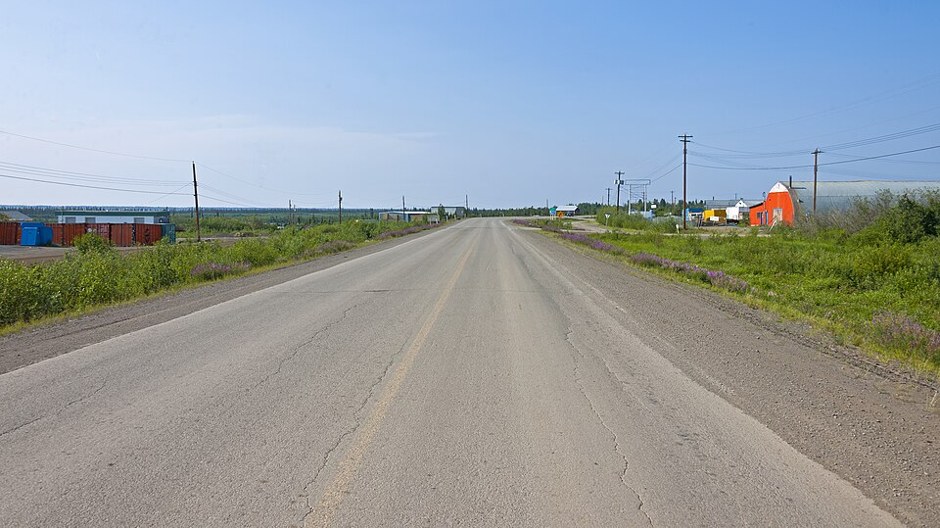
    Photo: Daniel Case, CC BY-SA 3.0, via Wikimedia Commons

    In the Northwest Territories, GDL drivers and anyone under 22 must have zero alcohol and zero drugs. Any amount means an automatic 30-day suspension. A GDL driver who reaches 6 demerit points is suspended for a month and spends an extra month in their stage. This page sets out the NWT impaired driving penalties, the ignition interlock program and both demerit systems, for new drivers and their parents.

    Key facts

    • Zero tolerance: Class 7 and 5P drivers, drivers under 22 and certain commercial drivers.
    • Any driver at .05 or more: 24-hour suspension, rising to 30 days for repeat offences.
    • Any driver charged at .08 or more, or refusing a breath or blood demand: automatic 90-day suspension.
    • Criminal Code conviction: at least one year without a licence.
    • GDL demerits: 6 points means a 1-month suspension; 12 means 3 months; 15 means 6 months.
    • Phone at the wheel: $322 fine ($644 in school and construction zones) and 3 demerits.

    NWT alcohol and drug limits by driver

    Driver or reading What happens
    GDL driver or under 22, any alcohol or drugs Licence suspended automatically for 30 days
    Any driver, .05 or more 24-hour suspension; 30 days for repeat offences
    Any driver charged at .08 or more, or refusing a sample Automatic 90-day Administrative Licence Suspension, on top of any court prohibition
    Fatigued driving (reasonable grounds) 24-hour roadside suspension

    An Administrative Licence Suspension (ALS) is issued by police on behalf of the Registrar. No conviction is needed. Fully licensed NWT drivers get a 7-day temporary permit before a 90-day ALS starts, but GDL drivers do not.

    Impaired driving covers cars, trucks, boats, snowmobiles and off-road vehicles, by alcohol, drugs or both. Medical cannabis users follow the same laws. Cannabis in a vehicle must be in its original sealed package or a closed container that nobody in the vehicle can reach.

    Alcohol facts from the NWT manual

    • Coffee does not sober you up. Only time removes alcohol from your body.
    • Alcohol slows your thinking and reaction time while giving you false confidence, so you may feel you are driving better when you are not.
    • Mixing alcohol with other drugs can cause a serious reaction and make you unfit to drive.
    • Plan ahead: leave the car at home, pick a designated driver who drinks nothing, or take a taxi, stay the night or call someone to pick you up.

    Penalties after a Criminal Code conviction in the NWT

    On top of what the court orders, the territory disqualifies you under the Motor Vehicles Act:

    Convictions within 10 years NWT disqualification
    First 1 year
    Second 3 years
    Third 5 years
    Fourth or more Indefinite, at least 5 years
    Impaired driving causing death (even a first offence) Indefinite, at least 5 years

    The NWT suspension runs at the same time as a court prohibition, so the longer one decides when you can drive. A Criminal Code conviction stays on your record for at least 10 years and can affect travel abroad. Before getting your licence back, expect conditions such as a driver assessment, a driver improvement program, alcohol awareness and treatment programs, and a reinstatement fee.

    The Canada-wide picture is in impaired driving in Canada for new drivers.

    How the NWT ignition interlock program works

    If you are convicted of impaired driving under the Criminal Code, you may be eligible for the NWT Alcohol Ignition Interlock Program. Being approved and having a device installed can shorten your driving prohibition. To start the vehicle, you blow into the handset:

    Breath reading (mg of alcohol per 100 ml of blood) Result
    Below 20 Pass: vehicle starts
    20 to 29 Warn: vehicle starts, but a warn violation is recorded
    30 or more Fail: vehicle will not start, and a fail violation is recorded

    Driving while suspended

    Driving under an ALS, a suspension or a disqualification can bring 5 demerit points, a 30-day vehicle seizure, and charges under the Motor Vehicles Act or the Criminal Code with fines of at least $345. Jail terms are common. The vehicle is impounded even if you don’t own it, and the registered owner pays the towing and storage.

    NWT demerit points for GDL drivers

    Points Suspension Extra time in your stage
    6 or more 1 month 1 month
    12 or more 3 months 3 months
    15 or more 6 months 6 months

    Each suspension also needs a reinstatement fee. Points stay on your record for 24 months. Because you need 12 suspension-free months on Class 5P before upgrading, a suspension also delays your full licence.

    NWT demerit points for fully licensed drivers

    • 8 points: warning letter. No restrictions.
    • 12 points: letter requiring an interview. Miss it and your licence is suspended until the interview is held.
    • 15 points within two years: 1-month suspension and a reinstatement fee. Your licence comes back with 7 points.
    • After three or more demerit suspensions: each further 15 points can mean a suspension of more than one month and up to 24 months, set by the Registrar. You can appeal this in writing to the Registrar.
    • Driver improvement course: once every two years, an approved course removes half your points, or all of them if you have 5 or fewer. It is not offered by the territorial government.

    To appeal the length of a suspension, get an appeal package from a Driver and Vehicle office within 45 days of the notice.

    Separately, the Registrar can suspend any driver for reasons such as a poor driving record, failure to pay a judgment or medical grounds, and can order a written or practical exam before you drive again.

    Distracted driving in the NWT

    Holding, operating or touching a cellphone, data device, audio or video player or handheld GPS while driving is illegal. Expect a $322 fine ($644 in school and construction zones) and 3 demerit points. A second, third or fourth offence within two years also brings a licence suspension. For a GDL driver, two phone tickets add up to 6 points and a suspension.

    Common questions

    I’m 21 with a full licence. Can I have one drink and drive?

    No. Drivers under 22 in the NWT must have no alcohol or drugs, whatever licence they hold.

    Does a GDL driver get a temporary permit after a 90-day suspension?

    No. The 7-day temporary permit applies only to fully licensed NWT drivers.

    How long do demerit points last in the NWT?

    24 months from when the Registrar becomes aware of the offence.

    Can a GDL driver take a course to remove points?

    The manual describes the driver improvement course under the rules for fully licensed drivers. Ask Driver Services whether it applies to a GDL record.

    Is cannabis treated differently from alcohol?

    No. Novice drivers and drivers under 22 must have no drugs in their system, and impaired driving by drug is a Criminal Code offence.

    Can I appeal a demerit suspension?

    Only if the points were assigned in error, according to the manual. Driver Services lets you appeal the length of a suspension within 45 days.

    Back to the full guide: Learning to drive in the Northwest Territories. See also NWT learner and probationary rules and Canadian graduated licensing compared.

    Sources

    • Government of the Northwest Territories, Department of Infrastructure, “Driver’s Manual: A guide to safely operate cars and light trucks”, Chapters 7 and 9 (idmv.inf.gov.nt.ca)
    • Government of the Northwest Territories, “Demerit points and suspensions” (idmv.inf.gov.nt.ca)
    • Government of the Northwest Territories, “Ignition Interlock Program” (idmv.inf.gov.nt.ca)
    • Government of the Northwest Territories, Department of Infrastructure, “Impaired Driving” (inf.gov.nt.ca)
    • Government of the Northwest Territories, Department of Infrastructure, “Distracted Driving” (inf.gov.nt.ca)
  • Driving NWT Ice Roads, Gravel Highways and Northern Winters

    Driving NWT Ice Roads, Gravel Highways and Northern Winters

    Photo: Daniel Case, CC BY-SA 3.0, via Wikimedia Commons

    NWT winter and ice roads are temporary routes built over frozen lakes, rivers and overland trails. They are typically open from December through April and have their own posted speed and weight limits. Driving too fast can set up waves under the ice. This guide is for new NWT drivers and their supervisors, and covers ice roads, gravel highways, bison, log-haul trucks and the survival kit the territory recommends.

    Key facts

    • About 1,400 km of winter and ice roads are built each year, linking nine remote communities.
    • Typical season: December through April. Opening and closing dates depend on weather and ice.
    • Obey posted speed and load limits; they protect the ice.
    • Never drive on a closed winter road.
    • Check DriveNWT (the territory’s highway conditions map) before every trip.
    • Headlights on at all times is the law in the NWT.

    Ice road rules every NWT driver should know

    Why ice road speed limits matter

    The Department of Infrastructure says moving too fast can create waves under the ice that cause cracks or even failures. The risk is highest near shorelines, where ice is weaker. Posted limits also spread weight evenly. Heavy vehicles should keep extra space between each other.

    Load limits

    Different sections have different posted weight limits. Check them, especially if you are towing or carrying a heavy load.

    Cracks and changing ice

    Ice cracks naturally under vehicle weight and with temperature swings. Crews repair cracks and monitor thickness, but spring and sudden warm spells can change ice quality quickly. Expect rougher surfaces later in the season.

    Visibility on open lakes

    High winds and drifting snow can wipe out visibility on lake crossings and exposed areas, and make it easy to lose the route. Slow down when visibility drops.

    Closures happen with little notice

    Roads close for weather or ice strength, sometimes suddenly. Near the end of the season, some winter roads and ice crossings shut with little or no notice. Driving on a closed road is never allowed.

    Trip planning checklist for NWT winter roads

    1. Check DriveNWT for road status, closures, ice crossings and weight restrictions.
    2. Tell someone your route and arrival time. Check in when you arrive.
    3. Leave early and plan for delays of hours or even days (weather, breakdowns, overflow).
    4. Fill up and carry extra fuel. Fuel and food are limited along the route.
    5. Carry a LADD 1 radio, or travel with someone who has one. Cell coverage is limited or missing on parts of NWT highways.
    6. Pack a lunch and a survival kit (below).
    7. Expect longer emergency response times.

    What goes in an NWT winter survival kit?

    The Department of Infrastructure recommends:

    • Two-way radio or satellite phone
    • Ice scraper, snow brush, shovel and axe
    • Sand, cat litter or another traction aid
    • Tow rope and booster cables
    • Flares, warning lights or reflective triangles
    • Gas line antifreeze
    • Flashlight or headlamp with spare batteries
    • First aid kit and fire extinguisher
    • Tool kit and duct tape
    • Spare tire (inflated) and a jerry can of fuel
    • Extra clothing and footwear, insulated gloves and hats
    • A winter-rated sleeping bag (rated to minus 20 degrees Celsius or colder)
    • Non-perishable food and water
    • Candles, a small tin can, a lighter and matches

    Sharing winter roads with big trucks

    Winter resupply puts many large commercial vehicles on the road. Give them room and time on hills and bridges. Watch for narrow sections, yield to oncoming traffic, and expect clouds of snow dust from passing vehicles.

    For log-haul trucks, the NWT manual says:

    • Keep at least four seconds behind them.
    • Pull as far right as you can when one approaches, especially on gravel.
    • Never pass one that is turning: the overhang at the back can be up to 9 metres, and a turning truck can block every lane.

    Off-highway vehicles: the NWT manual warns that off-highway vehicles, such as ATVs and snowmobiles, may be running close to the highway and may cross it. When you see one, slow down, give it space and be ready to stop.

    Driving NWT gravel highways

    • Slow down when passing or meeting vehicles to cut dust and flying stones.
    • Close the windows and use the vent fan to keep dust out.
    • Carry a good spare tire, or two.
    • Know where fuel and repair shops are along your route and when they are open.
    • On wet or gravel roads you can spray other windshields with water, mud or gravel. Slow down and keep washer fluid topped up.

    Bison on NWT highways

    Most bison collisions happen on Highways 3 and 5; bison also use Highway 7. The highest risk on Highway 3 is from about kilometre 21 near Fort Providence to kilometre 70. August through November, from dusk to dawn, is the most dangerous time, because there is less daylight and no snow yet to show the animals against the road.

    • Drive Highways 3, 5 and 7 in daylight if you can.
    • Use high beams whenever possible.
    • Flash your hazard lights to warn drivers behind you when you see wildlife.
    • Do not swerve. Stop and wait if needed. Where there is one bison, there are often more.
    • If you hit one, do not approach it. Move to the shoulder, use your hazards, and get a Wildlife Officer called.

    More on wildlife across Canada: moose, deer and caribou.

    Snowplows, black ice and cold-weather habits

    • Stay well back from snowplows. They have flashing amber lights and pull over regularly to let traffic pass.
    • Keep at least half a tank of fuel so fuel lines don’t freeze.
    • Check tire pressure often; it drops in the cold.
    • Bridges, overpasses, shaded areas and intersections ice up first. Shiny black asphalt may be black ice.
    • No cruise control on poor roads.
    • If stranded, stay with the vehicle, run the engine only enough to keep warm, and crack a window to prevent carbon monoxide build-up.
    • Use your low beams within 150 m of a vehicle ahead and within 300 m of an oncoming one. Headlights are required whenever you can’t see clearly for 150 m.

    General winter skills: winter driving in Canada for new drivers. Passing plows and roadside crews: slow down, move over.

    Common questions

    What is the speed limit on NWT ice roads?

    It varies by road and crossing and is posted. Follow the signs; they are set to protect the ice structure.

    Can a learner drive on an NWT ice road?

    The GDL rules do not ban it, but every learner rule still applies: supervisor beside you, no other passengers and no driving 11 p.m. to 6 a.m. Long winter road trips often run into the curfew, so plan accordingly.

    When do NWT winter roads open?

    Typically December through April, but each road depends on weather and ice. Check DriveNWT for current status.

    Do I need a radio on NWT winter roads?

    The Department of Infrastructure recommends a LADD 1 radio, or travelling with someone who has one, because cell coverage is limited.

    When are bison collisions most likely?

    August through November, from dusk until dawn, especially on Highway 3 between Fort Providence and Yellowknife.

    Do I have to keep my headlights on in daylight?

    Yes. The Department of Infrastructure says keeping headlights on at all times is the law in the NWT.

    Back to the full guide: Learning to drive in the Northwest Territories.

    Sources

    • Government of the Northwest Territories, Department of Infrastructure, “Winter Driving” (inf.gov.nt.ca)
    • Government of the Northwest Territories, Department of Infrastructure, “NWT Winter Road Safety” fact sheet (inf.gov.nt.ca)
    • Government of the Northwest Territories, Department of Infrastructure, “Driving Safety” (inf.gov.nt.ca)
    • Government of the Northwest Territories, Department of Infrastructure, “Bison Safety” (inf.gov.nt.ca)
    • Government of the Northwest Territories, Department of Infrastructure, “Highway Conditions Map: DriveNWT” (inf.gov.nt.ca)
    • Government of the Northwest Territories, Department of Infrastructure, “Driver’s Manual: A guide to safely operate cars and light trucks”, Chapters 6 and 8 (idmv.inf.gov.nt.ca)
  • NWT Driver’s Manual Study Guide: Signs, Intersections, Lanes

    NWT Driver’s Manual Study Guide: Signs, Intersections, Lanes

    Photo: Alan Sim, CC BY-SA 3.0, via Wikimedia Commons

    This checklist pulls the testable facts from Chapters 2 to 8 of the NWT Driver’s Manual: signs, signals, pavement markings, parking, intersections, lane driving, emergencies and sharing the road. Use it to revise for the NWT knowledge test, which has 20 questions on rules and 20 on signs. Unless a sign says otherwise, the NWT speed limit is 90 km/h on a primary highway outside a settlement and 50 km/h inside one.

    NWT speed limits unless otherwise posted

    Where Limit
    Primary highway outside a settlement or municipality 90 km/h
    Highway within a settlement or municipality 50 km/h
    School zone (when signed with a speed tab) Generally 30 km/h, 24 hours a day, 7 days a week unless times are posted
    Playground zone (when signed with a speed tab) Generally 30 km/h, 24/7 unless times are posted
    Construction zone Posted limit at all times; speeding fines doubled when workers are present

    Municipal bylaws can set different school and playground zone hours. A speed limit is a maximum for ideal conditions: any speed unsafe for the conditions is illegal. You cannot pass a vehicle going the same way in a school or playground zone while it is in effect.

    Sign shapes and colours to memorize

    Shape or colour Meaning
    Red octagon Stop
    Red triangle with white border Yield
    Red circle with slash Prohibited
    Green circle Permitted
    White rectangle Regulatory
    Fluorescent yellow-green pentagon School area
    Yellow diamond Warning
    Orange diamond Construction warning
    Green rectangle Direction
    Brown or blue square Roadside facilities
    Black rectangle One way

    A police officer’s directions override any sign or signal. The slow-moving vehicle sign marks farm, machinery or construction vehicles built for under 40 km/h: slow down when you see it.

    Traffic signals checklist

    • Steady red: stop at the stop line or crosswalk. Right turn allowed after a full stop unless a sign forbids it. Left turn from a one-way onto a one-way also allowed after a full stop.
    • Steady amber: stop unless you cannot do so safely.
    • Steady green: go, but turning traffic yields to pedestrians and vehicles already in the intersection.
    • Flashing green arrow: turn in the arrow’s direction, even with a red light, yielding to anyone in the intersection.
    • Flashing red: treat as a stop sign.
    • Flashing amber: proceed with caution. With a school or pedestrian sign, slow to the posted speed.
    • Red X over a lane: do not enter or stay in that lane. Downward green arrow: lane open.
    • Vertical signals: red top, amber middle, green bottom. Horizontal: red left, green right.
    • Pedestrian signals: “walk” lets pedestrians start crossing; “wait” or “don’t walk” means they must not start. Anyone who began crossing legally may finish, so turning drivers still yield to them. If the pedestrian signal beside your green light changes from “walk” to “don’t walk”, expect your light to turn amber soon.

    Pavement markings checklist

    • Yellow lines separate opposite directions; the yellow line should be on your left.
    • White lines separate traffic going the same way.
    • Broken yellow: passing allowed when safe. Solid yellow (rural): no passing. Solid plus broken: only the side with the broken line may pass.
    • Broken white: lane changes allowed. Solid white: no lane changes.
    • Diamonds: reserved lane. “X”: railway crossing ahead. Painted island: never drive over it.

    Parking rules and distances (Chapter 3)

    Rule Distance
    Wheels from curb when parked No more than 30 cm
    No parking in front of a stop sign, yield sign or traffic light at the roadside Within 5 m
    No parking near a fire hydrant Within 3 m
    No parking before a marked crosswalk (near side) Within 6 m
    Parked outside an urban area Must be visible for 60 m both ways

    Hill parking: facing uphill with a curb, turn the wheels left; uphill without a curb or facing downhill, turn them right. Always set the park brake. Leaving a vehicle unattended with the engine running and doors unlocked is illegal in the NWT.

    Stopping distances on dry pavement

    Speed Total stopping distance
    30 km/h 18 m
    50 km/h 37 m
    80 km/h 76 m
    100 km/h 108 m
    110 km/h 126 m

    The manual bases these on about 3/4 of a second to perceive a hazard and 3/4 of a second to react, before braking starts.

    Intersections and right-of-way (Chapter 4)

    • With no stop line or crosswalk, stop within 3 metres of the intersecting road.
    • Four-way stop: first to stop goes first; if two arrive together, the vehicle on the right goes first.
    • Uncontrolled intersection: yield to the vehicle on your right. Parking lots count as uncontrolled unless signed.
    • Traffic circle: entering traffic yields to traffic already in the circle, and the vehicle on the right yields to the vehicle on the left. Use the right lane for the first exit, the left lane for the second exit or beyond, and signal right to leave.
    • Never pass a vehicle stopped for a pedestrian at a crosswalk.
    • Be in the correct turning lane at least 15 metres before the intersection.
    • Waiting to turn left: keep the wheels straight so a rear-end hit doesn’t push you into oncoming traffic.
    • No left turn on red from a two-way road into a one-way road.
    • Added lane (free flow) sign: the two roads converge with a lane added, so no stop, yield or merge is needed. Still check for traffic in the new lane.
    • U-turns in urban areas are banned between intersections, at traffic lights, at alley intersections and where signed. Outside urban areas they are banned on curves and near hill crests.
    • Signal when leaving the curb, turning, changing lanes and stopping.

    Lane driving (Chapter 5)

    • Keep right on any road wide enough, and drive in the centre of your lane.
    • Do not drive on the shoulder, even to let someone pass. It is for emergency parking.
    • Lane change order: check it is allowed, mirrors, shoulder check, signal, then move.
    • Passing is illegal when oncoming vehicles are too close, with a solid yellow line on your side outside urban areas, in no-passing zones, in active school and playground zones, and past a vehicle stopped at a crosswalk.
    • You may not exceed the speed limit while passing.
    • Merging: do not stop at the end of the acceleration lane; match traffic speed and move over after the solid white line.
    • Missed your exit? Carry on to the next one. Never back up on a highway.
    • Weave zone: where an entrance and exit sit close together, entering traffic speeds up while exiting traffic slows, and both cross paths. Control your speed, time your lane change and give the other stream room.
    • Curves: slow down before the curve, stay in your lane, accelerate slightly once in it, and never pass or cut the corner. Hills: take care near the crest and keep to the right of your lane in case an oncoming car has drifted over.
    • Coasting downhill in neutral or with the clutch in is illegal.

    Emergencies and sharing the road (Chapters 6 to 8)

    Topic The rule
    Following distance At least 2 seconds in normal conditions, more when weather or roads are poor
    Headlights Required at night and whenever you cannot see clearly for 150 m. Low beams within 150 m behind a vehicle and 300 m of an oncoming one
    Collisions Stay at the scene, help and exchange licence, registration and insurance details. Report to police if total damage is over $2,000, or at once if you hit a traffic control device, railway signal, parking meter or other public property. Leave your details on an unattended vehicle you damage
    Approaching emergency vehicle Move clear of any intersection, pull to the right edge (nearest curb on a one-way street) and stop until it passes. Never follow within 150 m
    Emergency flashing lights ahead Slow to half the posted limit, change lanes if needed and pull right. Stop to let the emergency vehicle pass and follow any directions
    School buses Flashing amber: get ready to stop. Flashing red on an undivided road: stop before you reach the bus, from either direction. On a median-divided highway, traffic behind must stop; traffic from the front may go
    Pedestrians Stop before the crosswalk once someone has entered it, far enough back for other lanes to see them. Never pass a vehicle when approaching a crosswalk
    Cyclists and motorcycles A cyclist counts as a vehicle by law. Check for cyclists before you turn right or open a door. A motorcycle needs its whole lane, so never drive alongside one in it
    Railway crossings Stop 5 to 15 m from the nearest rail at a stop sign, and no closer than 5 m at flashing lights. Never go around a gate or change gears on the tracks. If you stall, get everyone out and away from the track. Treat light rail crossings the same way: never drive around a gate, even after a train has passed
    Children and passengers The driver is responsible for restraining every passenger under 15. A child under 6 weighing up to 18 kg must be in a child safety seat. Nobody may ride in an open pickup box, with very limited exceptions, or in a towed house trailer
    Careless driving Driving without due care or reasonable consideration for others is an offence. So is straddling two lanes, unless conditions make one lane impractical

    For what to do if something fails on the vehicle, see car emergencies in Canada.

    Defensive driving and funerals (Chapters 7 and 8)

    Chapter 7 opens with one rule: never assume other drivers will drive carefully. Driving defensively means avoiding collisions caused by other people’s mistakes. Scan about 12 to 15 seconds ahead in town (one to one and a half blocks) and about 25 seconds ahead on rural roads, and check mirrors and blind spots regularly. For the full method, see see-think-do and IPDE and eye lead time.

    Funeral processions: you may not cut into or break through a funeral procession, a military procession or an authorized parade. Drivers inside a procession, with headlights on and following closely, may continue through a stop sign or red light when safe, unless they are the lead vehicle.

    Common questions

    What is the default speed limit on NWT highways?

    90 km/h on a primary highway outside a settlement or municipality, unless signs say otherwise.

    Can you turn right on a red light in the NWT?

    Yes, after a full stop, unless a sign prohibits it. Yield to pedestrians and cross traffic.

    Who goes first at an NWT traffic circle?

    Traffic already in the circle. Entering traffic yields.

    How close to a fire hydrant can I park?

    No closer than 3 metres.

    Are school zones in effect at night?

    Unless times are posted, yes: the school zone limit applies 24 hours a day, 7 days a week.

    Is the manual the only thing I need to study?

    Driver Services says the test is based on the NWT Basic Driver’s Manual. Flash cards are also sold at Driver and Vehicle offices.

    Back to the full guide: Learning to drive in the Northwest Territories. Next: NWT knowledge test and road test, school bus stopping rules and driving NWT ice roads and gravel highways.

    Sources

    • Government of the Northwest Territories, Department of Infrastructure, “Driver’s Manual: A guide to safely operate cars and light trucks”, Chapters 2 to 8 (idmv.inf.gov.nt.ca)
    • Government of the Northwest Territories, “Book, cancel, or rebook a written or practical examination” (idmv.inf.gov.nt.ca)
    • Government of the Northwest Territories, “Driver manuals” (idmv.inf.gov.nt.ca)
  • NWT Knowledge Test and Road Test: Questions, Fees, What to Expect

    NWT Knowledge Test and Road Test: Questions, Fees, What to Expect

    Photo: CambridgeBayWeather, CC BY-SA 4.0, via Wikimedia Commons

    The NWT knowledge test for a Class 7 learner’s licence is two 20-question multiple-choice tests, one on road rules and one on road signs. You can miss no more than four questions on each, and you have 30 minutes. The Class 5 road test lasts at least 45 minutes in a car you provide. This page covers booking, fees, what the examiner checks and the common reasons people fail.

    Key facts

    • Knowledge test: 20 rules questions plus 20 signs questions, 30 minutes.
    • Pass mark: at least 16 out of 20 on each part (no more than four wrong per part).
    • Written exam fee, Class 7 (signs test included): $47. Road test fee, Class 5: $47 (as of November 2026).
    • Road test: at least 45 minutes, only you and the examiner in the car, one attempt per day.
    • Both tests must be booked and paid in advance, online or at a Driver and Vehicle office.

    How many questions are on the NWT knowledge test?

    Forty in total, split into two separate tests:

    Part Questions Most you can get wrong
    Road rules 20 multiple-choice 4
    Road signs 20 multiple-choice 4

    Questions come from the NWT Driver’s Manual and cover safe driving practices, driving laws and road signs. If you fail, you must schedule and pay for a new test.

    Before the knowledge test

    1. Book and pay online or at a Driver and Vehicle office.
    2. Bring valid photo ID, proof of NWT residency and proof of legal name and date of birth.
    3. Bring glasses or contact lenses if you wear them. A vision screening comes first. If you do not meet the standard, you will be asked for a Report of Visual Functions from a vision specialist.

    Study tips by chapter are in the NWT Driver’s Manual study guide.

    When can you take the NWT road test?

    For the Class 5 road test you must be at least 16 and have completed the 12-month learner stage. On the day, give the examiner your booking receipt and your valid Class 7 licence, and wear your corrective lenses if you need them.

    Vehicle requirements for the NWT road test

    You supply a two-axle vehicle (not a motorcycle). The examiner checks it first and will refuse to start the test if it is not mechanically safe. A vehicle that must display a dangerous goods placard cannot be used. The vehicle needs:

    • Valid licence plate, registration and insurance
    • Working headlights, brake lights and signal lights
    • Horn and speedometer
    • Brakes and park brake
    • Unobstructed windshield and working wipers
    • Safe tires
    • Working driver and passenger doors
    • Seats and seatbelts
    • Exhaust system and muffler
    • Mirrors
    • Enough fuel for the test

    If the vehicle has air brakes, you need an air brake “Q” endorsement or must pass the air brake practical as well.

    What the examiner looks for

    • Finding and using the vehicle controls
    • Smooth, controlled driving
    • Turn signals and hand signals
    • Left and right turns
    • Correct use of lanes
    • Reversing
    • Right-of-way judgement with vehicles and pedestrians
    • Speed management
    • Parallel, hill and angle parking
    • Obeying signs and signals
    • Good driving habits overall

    You will only be asked to do everyday driving tasks, and nothing unsafe or illegal. No passengers or pets are allowed. The only exception is a government official observing the examiner.

    Why people fail the NWT road test

    The manual lists these, among others:

    • Lack of skill and control
    • Being unable to perform a manoeuvre
    • Difficulty obeying traffic laws
    • Too many errors
    • A traffic violation
    • An unsafe action

    The test is also stopped if you do not finish within the time allowed. Afterwards the examiner goes through your errors and how to fix them. If you fail, book another appointment when you are ready. You can take only one practical exam per day.

    Practice checklist for the last month

    • Shoulder check before every lane change, pull-out and turn. Mirrors alone are not enough.
    • Full stops at stop signs, at the stop line or within 3 metres of the cross road if there is no line.
    • Parallel park finishing no more than 30 cm from the curb.
    • Hill park: wheels left facing uphill with a curb, wheels right facing uphill without a curb and facing downhill.
    • Be in your turning lane at least 15 metres before the intersection.
    • Keep to 30 km/h in school and playground zones unless posted otherwise.

    Common questions

    What is the pass mark for the NWT learner’s test?

    You can miss up to four questions on each 20-question part, so you need at least 16 on rules and 16 on signs.

    How long is the NWT written test?

    30 minutes for both parts.

    Can I use my own car for the road test?

    Yes. You must provide the vehicle, and it must meet the equipment list above.

    Can my parent ride along on the road test?

    No. Only you and the examiner are allowed in the vehicle.

    How soon can I retake a failed road test?

    Not on the same day. You can take one practical exam per day. Book again and pay the fee again.

    Is there a separate road test to go from Class 5P to full Class 5?

    No. After 12 suspension-free months on 5P and at age 17, you upgrade in person at a Driver and Vehicle office.

    Back to the full guide: Learning to drive in the Northwest Territories. See also NWT learner and probationary rules.

    Sources

    • Government of the Northwest Territories, “Book, cancel, or rebook a written or practical examination” (idmv.inf.gov.nt.ca)
    • Government of the Northwest Territories, Department of Infrastructure, “Driver’s Manual: A guide to safely operate cars and light trucks”, Chapters 1, 3 and 4 (idmv.inf.gov.nt.ca)
    • Government of the Northwest Territories, “Get a driver’s licence for the first time” (idmv.inf.gov.nt.ca)
  • NWT Learner and Probationary Rules: Curfew, Passengers, Zero BAC

    NWT Learner and Probationary Rules: Curfew, Passengers, Zero BAC

    Photo: CambridgeBayWeather, CC BY-SA 4.0, via Wikimedia Commons

    NWT learners (Class 7) cannot drive between 11 p.m. and 6 a.m., cannot carry anyone except their supervisor, and must have zero blood alcohol. Probationary drivers (Class 5P) can drive alone at any hour but may carry only one front-seat passenger and no more passengers than seatbelts. Both stages face a suspension at 6 demerit points. Here is each rule, and what happens if you break it.

    Class 7 and Class 5P rules side by side

    Rule Learner (Class 7) Probationary (Class 5P)
    Minimum age 15 16
    Minimum time in stage 1 year 12 months, suspension-free
    Supervisor Always, beside you Not required
    Night driving Not allowed 11 p.m. to 6 a.m. No curfew
    Passengers Only the supervisor One in the front seat; total no more than seatbelts
    Blood alcohol Zero (you and your supervisor) Zero
    Demerit limit 6 points triggers suspension 6 points triggers suspension
    Commercial classes (1 to 4) No No
    Can supervise a learner No No

    NWT learner rules (Class 7) explained

    Your supervisor

    You must always drive with a fully licensed driver who has at least 24 months of experience on a full Class 5. Time they held a GDL licence does not count, so a Class 5P holder cannot supervise you. The manual’s learning table sets 19 as the minimum supervisor age for Class 5 learners.

    The 11 p.m. curfew

    No driving between 11 p.m. and 6 a.m., even with your supervisor. The manual and the Driver Services page list no exceptions.

    No passengers

    Nobody rides along except your supervisor. That includes family members and friends in the back seat.

    Zero alcohol for two people

    Both you and your supervisor must have a blood alcohol concentration of zero whenever the vehicle is moving.

    NWT probationary rules (Class 5P) explained

    • Passengers: one passenger in the front seat, and never more passengers than working seatbelts.
    • Alcohol: zero. This also applies to any driver under 22, whatever their licence.
    • No upgrades to commercial classes (1, 2, 3 or 4) while on 5P.
    • No supervising a learner.
    • Suspensions cost you time. A demerit suspension adds 1, 3 or 6 extra months to your stage, and Driver Services requires 12 months on 5P without a suspension before you can upgrade.

    What happens if you break a GDL rule in the NWT?

    What happens Result for a GDL driver
    Any alcohol in your system Licence suspended automatically for 30 days
    6 or more demerit points Suspended for 1 month, reinstatement fee, and 1 extra month in your stage
    12 or more demerit points Suspended for 3 months, fee, and 3 extra months in your stage
    15 or more demerit points Suspended for 6 months, fee, and 6 extra months in your stage
    Impaired driving conviction Licence suspended

    Demerit points stay on your record for 24 months. Using a phone at the wheel alone costs 3 points. Details: NWT impaired driving, ignition interlock and demerits.

    Scenario: can a learner drive a friend home at 10:30 p.m.?

    No. Even though it is before 11 p.m., a Class 7 learner cannot carry anyone except the supervisor. If the drive would run past 11 p.m., it breaks the curfew too. A Class 5P driver could make the trip alone with the friend in the front seat.

    Common questions

    Can a learner drive after 11 p.m. if a parent is in the car?

    No. The 11 p.m. to 6 a.m. ban applies with or without a supervisor.

    Can my older sibling on a 5P licence supervise me?

    No. Probationary drivers cannot be accompanying drivers, and the supervisor needs 24 months on a full Class 5.

    Is there a curfew on a Class 5P in the NWT?

    No. The NWT probationary stage has passenger and alcohol limits but no night-driving restriction.

    Does the zero-alcohol rule end when I get my full Class 5?

    Only if you are 22 or older. Drivers under 22 must have zero alcohol whatever their licence.

    Can I take friends in the back seat on a 5P?

    Yes, as long as each person has a seatbelt. The manual limits the front seat to one passenger and the whole car to no more passengers than seatbelts. It sets no separate back-seat limit.

    Do motorcycle learners have the same rules?

    Yes for the curfew and supervision. The supervisor needs 24 months on a full Class 6 and must ride with you or follow you.

    Back to the full guide: Learning to drive in the Northwest Territories. Compare other provinces in Canadian graduated licensing compared, and get ready for the test with the NWT knowledge test and road test.

    Sources

    • Government of the Northwest Territories, Department of Infrastructure, “Driver’s Manual: A guide to safely operate cars and light trucks”, Chapters 1 and 9 (idmv.inf.gov.nt.ca)
    • Government of the Northwest Territories, “Get a driver’s licence for the first time” (idmv.inf.gov.nt.ca)
    • Government of the Northwest Territories, “Demerit points and suspensions” (idmv.inf.gov.nt.ca)
    • Government of the Northwest Territories, Department of Infrastructure, “Impaired Driving” (inf.gov.nt.ca)
    • Government of the Northwest Territories, Department of Infrastructure, “Distracted Driving” (inf.gov.nt.ca)
  • How to Get a Driver’s Licence in the NWT: Learner to Class 5

    How to Get a Driver’s Licence in the NWT: Learner to Class 5

    Photo: Alan Sim, CC BY-SA 3.0, via Wikimedia Commons

    In the Northwest Territories you can get a Class 7 learner’s licence at 15, move to a Class 5P probationary licence at 16 after a year as a learner and a road test, and upgrade to a full Class 5 at 17 at the earliest. The whole Graduated Driver Licensing (GDL) program takes at least two years. This guide is for new NWT drivers and their parents: every step, what it costs and where to go.

    Key facts

    • Minimum age for a learner’s licence (Class 7): 15.
    • Learner stage: at least one year, always with a supervisor, no driving 11 p.m. to 6 a.m., no other passengers.
    • Probationary stage (Class 5P): at least 12 months suspension-free, from age 16.
    • Full Class 5: from age 17, with fewer than 6 demerit points. The upgrade is not automatic.
    • Zero alcohol for every GDL driver and every driver under 22.
    • Study book: the NWT Driver’s Manual (free PDF from Driver Services).

    The three GDL stages at a glance

    Stage Licence Minimum age Minimum time How you move on
    1. Learner Class 7 15 1 year Pass the NWT Class 5 road test
    2. Probationary Class 5P 16 12 months, suspension-free Apply in person at a Driver and Vehicle office
    3. Full Class 5 17 None Fewer than 6 demerit points

    Full stage-by-stage conditions are in NWT learner and probationary rules.

    How to get your NWT learner’s licence, step by step

    1. Study the NWT Driver’s Manual. The written test comes from it. The PDF is free on the Driver Services site; printed copies and flash cards cost $11.55 each at Driver and Vehicle offices (as of November 2026).
    2. Go to a Driver and Vehicle office in person. First licences are in-person only. Bring the completed application form, proof of legal name and date of birth with acceptable photo ID (for example a birth certificate or passport), and proof that you live in the NWT (such as a utility bill or lease).
    3. Book and pay for the written exam. You can book online or at an office. It must be booked and paid in advance.
    4. Pass a vision screening and the knowledge test. The test has two parts: 20 questions on road rules and 20 on road signs. See NWT knowledge test and road test.
    5. Receive your Class 7. Your year of supervised practice starts now.

    What does an NWT driver’s licence cost?

    Fees listed by Driver Services, as of November 2026:

    Item Fee
    Written exam, Class 6 or 7 (signs test included) $47
    Road test (practical exam), Class 5 or 6 $47
    New licence, 1 year $46
    New licence, 3 years $84
    New licence, 5 years $110
    Replacement licence (lost, damaged or stolen) $33

    A fee applies to each attempt, including retests. Seniors 60 and over pay less. The Driver Services pages also show a second, lower set of figures, so confirm the amount before booking.

    Who can supervise a learner in the NWT?

    Your supervisor must hold a full (non-probationary) licence for the class you are learning, with at least 24 months of full Class 5 experience. Time they spent on a GDL licence does not count. The manual’s learning table sets 19 as the minimum age for a Class 5 supervisor. They sit with you every time you drive and must have zero blood alcohol while you are driving.

    The road test and the move to Class 5P

    You can take the Class 5 road test once you are 16 and have held your Class 7 for 12 months. You provide the car. The test lasts at least 45 minutes and you can take only one road test a day. Pass, and you get a Class 5P probationary licence.

    Getting your full Class 5

    After 12 months on Class 5P without a suspension, and once you are 17, you can upgrade to a full Class 5. Driver Services says this does not happen automatically: you must visit a Driver and Vehicle office. A demerit suspension during GDL adds time to your stage (see NWT impaired driving and demerits).

    A Class 5 covers two-axle vehicles other than a motorcycle, bus, taxi or ambulance, towing up to a towed gross weight of 4,500 kg, recreational vehicles and mopeds. It does not cover carrying passengers for hire, or vehicles with air brakes unless you have an air brake endorsement.

    Learning to ride a motorcycle in the NWT

    Motorcycle learners follow the same GDL path: Class 7 at 15, no riding 11 p.m. to 6 a.m., and a supervisor with at least 24 months on a full Class 6 who rides with you or follows in another vehicle. Class 6P is the probationary stage and must be held 12 months before a full Class 6.

    Moving to the NWT with a licence

    New residents can drive on a valid licence from elsewhere for up to 30 days, then must switch to an NWT licence and surrender the old one. Licences from other Canadian provinces and territories and from US states are accepted for the same class without testing. Germany (Class 5) and the Isle of Man (Classes 5 and 6) are also accepted without tests. Others must pass the knowledge test and road test. Canadians from elsewhere who stay in the NWT for more than 90 days must get an NWT licence, unless they are students at an NWT school. You can only hold one valid licence, and only NWT residents can get one. Non-resident visitors can use an International Driving Permit with their home licence: tourists for up to 90 days, and other non-residents for up to 12 months or until it expires. More detail: exchanging a licence in Canada.

    Registering and insuring a vehicle in the NWT

    Vehicles and trailers must be registered before use on the road, and driving uninsured is illegal. The minimum is $200,000 in third-party liability, and you must show your pink insurance card when registering and when an officer asks. When buying, have the seller sign the back of the registration and get a bill of sale. You can move your plate to a newly bought vehicle, but you must transfer the registration within 14 days.

    Study and safety guides for NWT learners

    Common questions

    Can I get my licence at 15 in the NWT?

    You can get a Class 7 learner’s licence at 15. You cannot drive alone until you have a Class 5P, which needs you to be 16 and to have held the Class 7 for a year.

    Do I need driver training to get a licence?

    The NWT manual recommends professional driver training but does not list it as a requirement. Ask Driver Services whether it shortens any stage before you rely on one.

    Can I apply for my first licence online?

    No. A first licence is in-person only at a Driver and Vehicle office. You can book and rebook exams online.

    Does my Class 5P turn into a full licence automatically?

    No. After 12 suspension-free months you must visit a Driver and Vehicle office to upgrade.

    I’m 18. Do I still go through GDL?

    Yes. The NWT stages apply to every new driver regardless of age. You still need a year as a learner and a year on 5P.

    How long is an NWT licence valid?

    You can buy a 1, 3 or 5-year licence. A renewal notice is sent 45 days before expiry, but renewing on time is your responsibility. Class 5, 6 and 7 holders need a medical exam at 75, at 80 and every 2 years after that. Your licence can carry conditions such as corrective lenses, a restricted driving area or daylight driving only; the codes are explained on the back. By law you must report a name or address change right away.

    Sources

    • Government of the Northwest Territories, Department of Infrastructure, “Driver’s Manual: A guide to safely operate cars and light trucks”, revised August 2022 (idmv.inf.gov.nt.ca)
    • Government of the Northwest Territories, “Get a driver’s licence for the first time” (idmv.inf.gov.nt.ca)
    • Government of the Northwest Territories, “Book, cancel, or rebook a written or practical examination” (idmv.inf.gov.nt.ca)
    • Government of the Northwest Territories, “Driver manuals” (idmv.inf.gov.nt.ca)
    • Government of the Northwest Territories, “Transfer a licence to the NWT” (idmv.inf.gov.nt.ca)
    • Government of the Northwest Territories, “Information for foreign nationals” (idmv.inf.gov.nt.ca)