Category: All US states (national)

  • How Toll Roads Work in the US: E-ZPass, Pay-by-Plate, Express Lanes

    How Toll Roads Work in the US: E-ZPass, Pay-by-Plate, Express Lanes

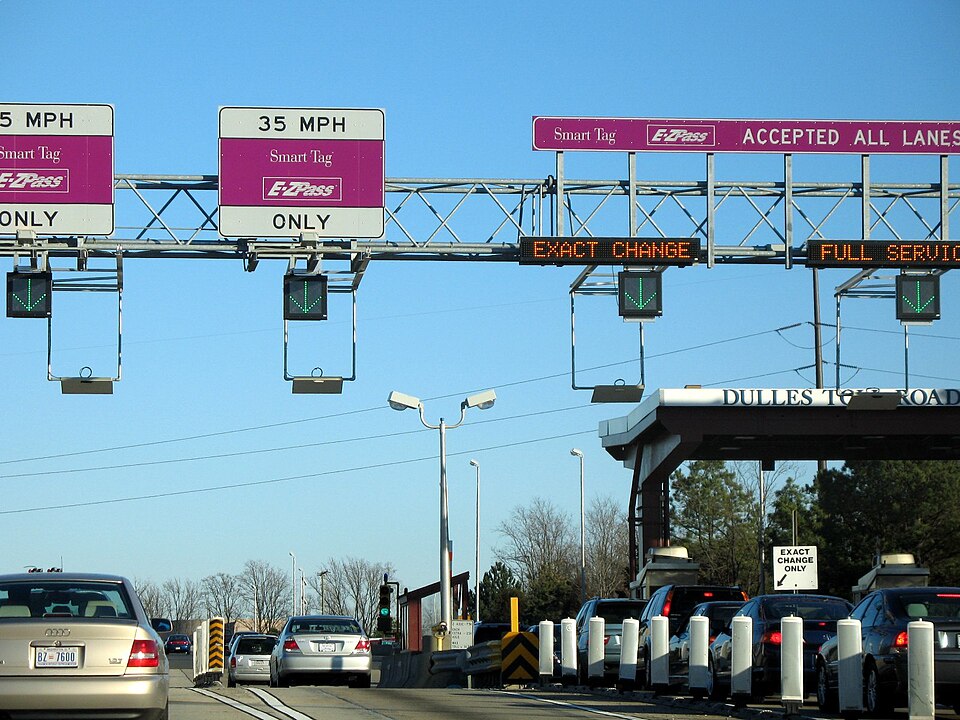
    Photo: MPD01605, Public domain, via Wikimedia Commons

    Most US toll roads charge you electronically as you drive under an overhead gantry, without stopping. You pay with a windshield transponder such as E-ZPass, or by a bill mailed to the car’s registered owner after a camera reads the plate. This guide is for new US drivers and families. It explains transponders, pay-by-plate, express and HOT lanes, and the rental car trap.

    Key facts

    • Transponder: a small tag linked to a prepaid account. Tolls are deducted as you pass a reader.
    • E-ZPass: the E-ZPass Group says its member toll agencies stretch across 20 states, with over 64 million devices in use (as of November 2026).
    • Pay-by-plate (toll-by-mail): cameras photograph the plate and the toll agency bills the registered owner. Expect to pay more than transponder users in many systems.
    • Express and HOT lanes: FHWA describes high-occupancy toll (HOT) lanes as carpool lanes that solo drivers can use by paying a toll. The price often changes with traffic.
    • Learner permits: toll roads have no special learner rule of their own. Your state’s permit and teen license limits still apply.

    How do toll roads work?

    There are three common setups. You may meet all three in one trip.

    Type How you pay What to watch for
    All-electronic (cashless) toll road Transponder, or a bill by mail to the plate owner No booths and no cash. Do not stop or reverse at a gantry
    Toll plaza with lanes Transponder lanes, plus cash or card lanes where they still exist Signs above each lane show what it accepts. Choose early and avoid last-second lane changes
    Express, managed or HOT lanes Transponder, with free or discounted travel for carpools in some systems The posted price can change during the day. Rules on carpools differ by lane

    Transponders: E-ZPass and regional tags

    Each region runs its own toll account system. E-ZPass is the largest, covering member agencies in 20 states. Other systems include FasTrak in California, and state systems in places such as Texas and Florida. Some tags work across several systems and some do not, so check the toll agency’s coverage map before a long trip.

    Setting one up

    1. Open an account with your local toll agency online or by phone.
    2. Register every car you will use and keep the plate numbers up to date.
    3. Mount the tag where the instructions say, usually high on the windshield.
    4. Set up auto top-up so the balance does not run out.
    5. When you sell a car or change plates, update the account straight away.

    Parents adding a teen: the account belongs to whoever opened it, and tolls and any violations follow the plate. Make sure the car your teen drives is on the account.

    Pay-by-plate and toll-by-mail

    No transponder? Most cashless roads still let you through. A camera reads the plate and the toll agency mails a bill to the registered owner. Rules vary, but several things are common:

    • The plate rate is often higher than the transponder rate.
    • Unpaid bills can add late fees and further penalties, which each state and toll agency sets.
    • If you have just moved, update your address with the DMV or the bill may go to your old home.

    Some agencies also let you pay a trip online soon after driving it. Check the toll agency’s own site, and be wary of text messages asking you to pay unpaid tolls through a link. Go to the agency’s website directly instead.

    Express lanes and HOT lanes explained

    FHWA describes HOT lanes as HOV (carpool) lanes that also let vehicles without enough people pay a toll to use them. Under FHWA’s congestion pricing guidance, carpools, transit buses and emergency vehicles may ride free or at a reduced rate. Toll rates can be fixed by time of day or set dynamically, rising when traffic is heavy so the lane keeps moving. FHWA notes that communities use different names, such as Express Lanes, but the basic operation is the same.

    Switchable tags for carpools

    Some systems use a switchable transponder where you declare how many people are in the car. In the San Francisco Bay Area, the FasTrak Flex tag has positions for 1, 2 and 3+ occupants:

    • Set it before you start the trip.
    • Solo drivers pay the full toll on every Bay Area express lane.
    • Two-person discounts vary by lane, and 3+ ride free on the Bay Area express lanes.
    • FasTrak says the California Highway Patrol checks occupancy visually, and a carpool citation can exceed $400.

    Other regions have different rules. Read the signs at each lane entrance. Carpool lane basics, including when you may enter or leave, are in HOV and carpool lanes explained.

    Driving through a toll gantry: what to do

    • Keep your speed steady. Electronic gantries read at traffic speed. Follow any posted limit.
    • Never stop, reverse or cut across lanes because you think you are in the wrong one. The toll will be billed by plate.
    • At plazas, pick your lane early using the overhead signs, and watch for cars changing lanes.
    • Merging back after a plaza works like any freeway merge. See freeway driving for new drivers.

    Rental cars and borrowed cars

    This is where new drivers get surprised.

    • Many rental companies bill you for tolls you drive, often adding their own daily or per-toll service fee. Read the toll section of the rental agreement before you leave the lot.
    • If you bring your own transponder, check whether the rental agreement allows it and add the rental plate to your account for the dates you have it. Remove it when you return the car.
    • In a borrowed car, any toll bill goes to the owner. Agree up front who pays.

    Moving states? Your toll account may still work, but you need to update the plates and address once you re-register the car. See moving to a new state.

    Common questions

    Can I drive on a toll road with a learner permit?

    Toll roads do not have their own permit rules. Your state’s permit supervision rules apply, and some teen license limits, such as curfews, apply on any road.

    What happens if I drive through a toll without a transponder?

    On a cashless road, the camera reads your plate and a bill goes to the registered owner. Pay it on time to avoid extra fees.

    Does E-ZPass work in every state?

    No. The E-ZPass Group says its members cover 20 states. Check coverage before traveling elsewhere.

    Are express lanes worth it for a new driver?

    They can be calmer than packed general lanes, but entry and exit points are limited. Know your exit before you enter.

    Can I use the carpool lane with my parent in the car?

    If the lane’s minimum is two people, a learner and supervisor usually count as two. Check the occupancy rule on the signs and, for a tolled lane, set any switchable tag correctly.

    I got a text saying I owe tolls. Is it real?

    It might not be. Do not click the link. Log in to your toll account or contact the toll agency directly.

    Back to the main guide: learning to drive in the USA.

    Sources

    • E-ZPass Group, “E-ZPass Group home page” (e-zpassgroup.org)
    • Federal Highway Administration, Office of Operations, “High Occupancy Vehicle (HOV) Lanes” (ops.fhwa.dot.gov)
    • Federal Highway Administration, Office of Operations, “HOT Lanes Marketing Toolkit: HOT Lanes, Cool Facts” (ops.fhwa.dot.gov)
    • Federal Highway Administration, Office of Operations, “Congestion Pricing: A Primer” (ops.fhwa.dot.gov)
    • Bay Area FasTrak, “What are the switch positions on a FasTrak Flex and FasTrak CAV toll tag for?” and “Using your FasTrak Flex Toll Tag FAQs” (bayareafastrak.org)
  • What to Do If a Deer Runs in Front of Your Car (US)

    What to Do If a Deer Runs in Front of Your Car (US)

    Photo: David Kanigan, Pexels

    If a deer runs in front of your car, brake firmly, steer straight and stay in your lane. Do not swerve. US state driver manuals and DMVs give this same core advice, because swerving can put you into oncoming traffic, a tree or a ditch. This guide is for new US drivers. It covers when animal crashes peak, how to lower the risk, and what to do and report after hitting an animal.

    Key facts

    • Do: brake firmly and steer straight. Don’t: swerve. (New York DMV; Maine Driver’s License Manual.)
    • Deer dominate: a Federal Highway Administration (FHWA) report to Congress says the vast majority of recorded US animal crashes involve deer.
    • Peak season: fall, especially October and November, with a smaller spring peak in May and June (FHWA, 2008).
    • Peak times: around dawn and dusk. FHWA gives roughly 5 to 8 a.m. and 4 p.m. to midnight.
    • Scale: FHWA estimated 1 to 2 million wildlife-vehicle collisions a year. That estimate dates from 2008, so treat it as a rough guide.

    What to do if a deer runs in front of your car

    1. Brake firmly. Keep your foot down. Modern anti-lock brakes let you brake hard and still steer.
    2. Steer straight. Keep the car in your lane. The New York DMV warns that swerving can cause a collision with another vehicle, a tree, a pole or another object.
    3. Sound the horn if there is time. It may move the animal along.
    4. If a crash cannot be avoided, keep braking in a straight line. The Maine manual adds a technique for large animals like moose: let up on the brake just before impact, so the front of the car rises slightly, and duck down to protect yourself from glass.
    5. Expect more. Deer often travel in groups. If one crosses, slow down and watch for the next.

    Why swerving is the bigger danger

    The car is built to protect you in a frontal impact. A sudden swerve at speed can make you lose control, cross the center line or leave the road. For a deer-sized animal, a controlled straight-line stop is the safer choice for you and other drivers. Moose are a special case because of their height. See avoiding moose and deer collisions in Maine and driving in Alaska’s moose country.

    When are animal crashes most likely?

    Factor Higher risk Why
    Season October and November, then May and June Deer breeding season in the fall means more movement. The Maine manual says moose crashes peak in May and June.
    Time of day Dawn and dusk into the night Deer and other large animals are most active then, and visibility is poor.
    Location Rural two-lane roads, wooded edges, near fields and water Animals cross between feeding and cover areas.
    Signs Deer or wildlife crossing signs States place them where crashes are a known problem.

    How to reduce the risk

    • Slow down at night on rural roads, so you can stop within the distance your headlights show.
    • Use high beams when there is no oncoming traffic or car ahead. The Maine manual says high beams let you see twice as far as low beams.
    • Scan the road edges, not only the lane ahead. Deer eyes often reflect your headlights. Moose eyes usually sit above the beam.
    • Take crossing signs seriously, especially in fall at dusk.
    • Wear your seat belt. It is your main protection if you do hit something.

    More on rural roads and night technique: rural two-lane roads and night driving and high beams.

    What to do after hitting a deer or other animal

    1. Pull over safely if the car can be driven. Turn on your hazard lights.
    2. Stay in or near the car. Do not approach the animal. An injured deer can kick, and a moose can attack.
    3. Call the police or the local emergency number if the animal or debris blocks the road, anyone is hurt, or the car cannot be driven. The California Driver Handbook says to call the nearest humane society or law enforcement if you kill or injure an animal, and not to try to move an injured animal.
    4. Take photos of the car, the scene and the road for your insurer.
    5. Check the car before driving on. Look for leaks, broken lights and a damaged hood latch.
    6. Report the crash if your state requires it. See below.

    Do you have to report hitting a deer?

    It depends on your state and the damage. Reporting rules are set by each state and usually turn on injuries and the cost of the damage, not on what you hit. One example: in California, every driver must file a Form SR 1 with the DMV within 10 days if a collision caused more than $1,000 in property damage or anyone was injured or killed. Other states use different thresholds and forms, so check your state’s driver manual. The general steps after any crash are in what to do after a car crash in the US.

    Can you keep the deer? Some states allow it with a permit from the wildlife agency, and others do not. Never take an animal without checking with the state wildlife agency or the officer at the scene.

    Common questions

    Should I swerve to avoid a deer?

    No. Brake firmly and stay in your lane. Swerving is what turns many animal crashes into serious ones.

    Do deer whistles work?

    None of the official sources used here recommends them. Rely on speed, scanning and high beams instead.

    Is hitting a deer covered by insurance?

    It depends on your policy. Insurers often handle an animal strike under a different part of the policy from a crash with another car, and the minimum insurance most states require may not pay for damage to your own car. Check your policy, and call your insurer after the crash.

    What time of year should I be most careful?

    Fall, especially October and November, around dawn and dusk.

    What if a deer is standing in the road?

    Slow down or stop, use your horn, and wait for it to move. Do not try to drive around a large animal, and do not get out.

    Can animal crashes come up on the permit test?

    Yes, in some states. Maine’s manual includes moose and deer in its practice questions, for example. Read the animal section of your state manual.

    Back to the main guide: learning to drive in the USA.

    Sources

    • Federal Highway Administration, “Wildlife-Vehicle Collision Reduction Study: Report to Congress”, Chapter 2, FHWA-HRT-08-034, August 2008 (fhwa.dot.gov)
    • New York State DMV, “DMV and DEC warn drivers to be aware deer and moose more active during fall” (dmv.ny.gov)
    • Maine Bureau of Motor Vehicles, “Maine Driver’s License Manual”, Section 11 (maine.gov)
    • California DMV, “California Driver’s Handbook, Section 10: Financial Responsibility, Insurance Requirements, and Collisions” (dmv.ca.gov)
  • Drowsy Driving: Warning Signs and Why Teens Are at Risk (US)

    Drowsy Driving: Warning Signs and Why Teens Are at Risk (US)

    Photo: Sinitta Leunen, Pexels

    Drowsy driving means driving while too tired to stay fully alert, and it can end in a crash even if you never fully fall asleep. This guide is for US teens, new drivers and the parents who supervise them. It covers the warning signs, the times of day when drowsy crashes peak, why young drivers are more exposed, and the few things that actually help.

    Key facts

    • NHTSA reports 644 deaths in drowsy-driving-related crashes in 2024. It also says the true number is hard to pin down, because drowsiness often leaves no clear evidence after a crash.
    • NHTSA says drowsy crashes happen most often between midnight and 6 a.m., or in the late afternoon.
    • NHTSA lists drivers aged 17 to 23, and people who sleep less than six hours a night, among those at higher risk.
    • In a CDC survey of 19 states and DC, 4.2% of adult drivers said they had fallen asleep while driving at least once in the previous 30 days.
    • CDC says turning up the radio or opening a window has not been shown to keep drivers awake.

    What are the warning signs of drowsy driving?

    The CDC lists these signs. If you notice any of them, treat it as a signal to stop driving, not to push on.

    • Frequent yawning or blinking
    • Not remembering the last few miles you drove
    • Missing your exit
    • Drifting out of your lane
    • Hitting a rumble strip on the shoulder or center line

    Other things to watch for in yourself: heavy eyelids, nodding, wandering thoughts, or speeding up and slowing down without meaning to. A supervising parent may spot these before the learner does.

    Why are teens at higher risk?

    NHTSA says many teens do not get enough sleep at a time of life when their biological need for sleep goes up. Add early school starts, late homework, sports, part-time jobs and phones in bed, and many teens drive on short sleep without realizing it.

    Inexperience makes it worse. A tired new driver has less spare attention to start with, so the drop in reaction time hits harder. This is one reason most states limit late-night driving for teen license holders. See the curfew hours in US graduated driver licensing compared.

    What is highway hypnosis?

    The Alabama Driver Manual describes highway hypnosis as drowsiness or a loss of awareness brought on by monotony: wind noise, tires on the pavement and the steady hum of the engine on a long, unchanging expressway. To stay alert, keep your eyes moving between different parts of the road, near and far, left and right, and read the highway signs. Alabama also suggests a break every 100 miles or two hours, a nap before a long trip, and pulling off at the first rest stop once you feel drowsy, rather than trying to fight it or relying on stay-awake pills.

    When do drowsy crashes happen?

    Risk factor What NHTSA and CDC say What it means for you
    Time of day Most common between midnight and 6 a.m., or in the late afternoon The drive home after a late party and the drive after school or practice are both high risk
    Short sleep Under six hours a night raises risk One bad night counts, not only a pattern
    Crash type Often a single driver, with no passengers, running off the road at speed with no sign of braking The driver never reacted, which is why these crashes are so serious
    Rural roads Listed by NHTSA among higher-risk situations Long, dark, unchanging roads make it easier to drift off
    Alcohol and medicines CDC advises avoiding alcohol before driving Even a small amount adds to tiredness. Check medicine labels for drowsiness warnings

    What actually helps (and what does not)

    Before you drive

    • Sleep. CDC’s first advice is to get enough sleep before driving. Nothing else replaces it.
    • Plan around the risky hours. If you have a choice, avoid long drives between midnight and 6 a.m.
    • Share long drives. Swap drivers before anyone is struggling. A permit holder can only take a turn with a qualified supervisor awake beside them.
    • Get sleep problems checked. CDC advises treatment for sleep disorders. If you are tired all the time even after a full night, talk to a doctor.

    If you feel sleepy while driving

    1. Take the next safe exit, rest area or parking lot. Do not stop on the shoulder unless it is an emergency.
    2. Rest until you are no longer drowsy. CDC says getting off the road and resting is the only safe option.
    3. Call a parent or friend for a ride if you cannot rest safely.

    What does not work

    • Loud music
    • Opening the window
    • Telling yourself you are nearly home

    CDC says the radio and window tricks have not been found effective.

    Scenario: the drive home after a late shift

    You finish work at 11 p.m. after school and practice. You were up at 6 a.m., and the drive home is 25 minutes on a dark highway. Ten minutes in, you notice you cannot remember the last exit. That is a warning sign. Pull into the next lit gas station or parking lot, lock the doors and call home. Many families agree a “no questions asked” pickup rule for exactly this. You can build it into a parent-teen driving agreement.

    For parents supervising practice drives

    • Do not schedule practice when your teen is clearly exhausted, even if you are short on hours.
    • Plan night practice for soon after dark rather than close to midnight. Check how your state defines night hours for the log.
    • Stay alert yourself. A drowsy supervisor cannot take control in time.
    • Talk through the warning signs so your teen recognizes them when driving alone.

    More on planning sessions: teaching your teen to drive. Night technique, including headlights and glare, is in night driving in the US.

    Common questions

    Is drowsy driving illegal?

    Laws differ by state. Even where tiredness is not named as an offense, a driver who falls asleep and crashes can still face charges under the state’s general traffic laws, and insurance consequences. Check your state’s driver manual for its rules.

    Is drowsy driving as dangerous as drunk driving?

    Both slow your reactions and judgment. Drowsy crashes often involve no braking at all, which makes them severe. Treat serious tiredness as seriously as alcohol: do not drive.

    Does coffee or an energy drink fix it?

    Nothing replaces sleep. If you are already showing warning signs, stop driving and rest instead of relying on a drink.

    What is microsleep?

    A brief lapse, often only seconds, when your brain drifts off, sometimes without you noticing. At highway speed the car keeps going a long way with nobody steering.

    Will rumble strips wake me up?

    They are designed to alert drifting drivers, and CDC lists hitting one as a warning sign. If it happens to you, get off the road at the next safe place.

    Are teens allowed to drive late at night?

    It depends on your state and license stage. Most states limit late-night driving for new teen drivers, with exceptions such as work or school.

    Back to the main guide: learning to drive in the USA.

    Sources

    • National Highway Traffic Safety Administration, “Drowsy Driving: Avoid Falling Asleep Behind the Wheel” (nhtsa.gov)
    • National Highway Traffic Safety Administration, “Teen Safe Driving: How Teens Can Be Safer Drivers” (nhtsa.gov)
    • Alabama Law Enforcement Agency, “Alabama Driver Manual” (November 2024), Chapter 4: Highway Hypnosis and Fatigue (alea.gov)
    • Centers for Disease Control and Prevention, “Drowsy Driving: 19 States and the District of Columbia, 2009 to 2010”, Morbidity and Mortality Weekly Report (cdc.gov)
  • Parent-Taught Driver’s Ed: Which US States Allow It

    Parent-Taught Driver’s Ed: Which US States Allow It

    Photo: Kampus Production, Pexels

    Parent-taught driver education lets a parent or guardian teach the course a teen would otherwise take at a school. Only a handful of US states have a formal program for it, and each works differently. This guide compares Texas, Iowa, Oklahoma, Idaho and Connecticut, and explains the states where parents end up doing most of the teaching anyway.

    Key facts

    • Full parent-taught programs: Texas (TDLR) and Iowa (Iowa DOT). Oklahoma lists a certified parent-taught course as one approved driver education option.
    • Partial programs: Idaho lets parents teach the in-car part only, and only in rural districts or districts with no driver ed. Connecticut allows home training, with an 8-hour course still taken at a school.
    • Parent-run alternatives: Georgia’s Parent/Teen Driving Guide can replace the instructor hours under Joshua’s Law. Nebraska lets teens log 50 supervised hours instead of taking a driver safety course.
    • Everywhere else: if your state does not require driver education for your age, a parent already does the practical teaching through the supervised-hours log.

    Which states allow parent-taught driver’s ed?

    State What the parent can teach Who can use it Main rule to know
    Texas The whole course: 24 classroom hours, plus 7 hours in-car observation, 7 hours behind-the-wheel instruction and 30 hours practice (10 at night) Teens; TDLR also lists it for 18 to 24 year olds Apply to TDLR first ($20 per student, as of November 2026) and buy a course from a provider with the parent-taught endorsement
    Iowa The whole course, including 30 hours of street or highway driving (3 at night) Students 14 to 20 in the teaching parent’s custody Course must be on the Iowa DOT approved list; the student must pass an Iowa DOT driving test
    Oklahoma A Service Oklahoma-certified parent-taught course is one approved driver education route Teens who want a learner permit at 15 A parent-taught course cannot waive the written permit test
    Idaho The in-car part only: 6 hours behind the wheel and 6 hours observation. The 30 classroom hours come from an approved online course Students in a rural district or a district with no driver ed course The school district must confirm eligibility first
    Connecticut 22 hours of classroom-type study and 40 hours of practice driving 16 and 17 year olds with a qualified home trainer The 8-hour Safe Driving Practices course must be taken at a school, and the permit hold rises to 180 days

    Texas parent-taught driver education (PTDE)

    Texas has the best-known program, run by the Texas Department of Licensing and Regulation (TDLR). The parent, guardian or an approved designee teaches the full course. TDLR says the in-car phase totals 44 hours.

    • Check that you and your teen are eligible, then apply to TDLR for authorization before you start teaching.
    • Buy the curriculum from a licensed provider with the parent-taught endorsement.
    • Your teen applies for the learner license at DPS once enough classroom hours are done.
    • Under 18s must hold the learner license for at least six months before the provisional license.

    The paperwork at each stage is in Texas parent-taught driver education step by step.

    Iowa parent-taught driver education

    Under Iowa Code section 321.178A, a parent, guardian or legal custodian can teach driver education using an Iowa DOT approved course.

    • The teaching parent needs a valid license that allows unaccompanied driving and a clear driving record for the previous two years.
    • The course includes 30 hours of street or highway driving, 3 of them at night.
    • 20 of those 30 hours can count toward the 20 supervised hours needed for the intermediate license.
    • Unlike most school-course students, a parent-taught student has to pass the Iowa DOT driving test.

    Details: Iowa parent-taught driver education explained.

    Oklahoma parent-taught driver education

    Service Oklahoma lets teens get a learner permit at 15 if they are enrolled in approved driver education, and a certified parent-taught course is one of the approved options. Two points catch families out:

    • A school driver ed certificate can waive the written test. A parent-taught course cannot, so the teen takes the written test like everyone else.
    • Parent-taught students under 16 bring the Parent-Taught Affidavit approval number and proof that the course was bought.

    The rest of the process is in learning to drive in Oklahoma.

    Idaho parent-led on-road training

    Idaho’s Parent-Student On-Road Driver Training program (Idaho Code 49-307) is narrower. It is only for students who live in a rural school district or a district that does not offer driver education.

    • The teen takes 30 classroom hours through an approved online course.
    • A preapproved parent or guardian gives 6 hours behind the wheel and 6 hours of in-car observation, logged on the official log.
    • The teen then completes the usual Supervised Instruction Permit period: 50 hours over at least 6 months, 10 at night.

    Eligibility and the checklist: Idaho parent-led on-road driver training.

    Connecticut home training

    Connecticut does not call it parent-taught, but the effect is similar. A qualified trainer, usually a parent, grandparent or guardian, supervises 22 hours of classroom-type study and 40 hours of practice. The teen still takes the 8-hour Safe Driving Practices course at a school, and one parent must attend the 2-hour parent class. Home-trained teens wait 180 days from the permit before the road test, compared with 120 days on the school route. See Connecticut home training and the 2-hour parent class.

    States with a parent-run alternative

    • Georgia: Joshua’s Law pairs a 30-hour classroom or online course with in-car training. The free DDS Parent/Teen Driving Guide can replace the 6 instructor hours.
    • Nebraska: for the provisional permit, a teen either completes a DMV-approved driver safety course or logs 50 supervised hours (10 at night) on the DMV’s 50-hour certification form.

    What if my state is not on the list?

    Many states only require driver education for younger teens, or not at all. If your teen is not required to take a course, there is nothing to replace. You teach through the supervised driving hours your state sets, and the road test checks the result. If a course is required and your state has no parent-taught option, a home-made course will not count. Only state-approved courses are accepted.

    Is parent-taught right for your family?

    • Time: TDLR tells Texas parents to plan for at least 7 weeks of daily instruction. Other states are similar once the logged hours are counted.
    • Your record: Texas, Iowa, Idaho and Connecticut all check the teaching adult’s driving record. A recent suspension or a crash conviction can rule you out.
    • Paperwork: logs, affidavits and certificates must be on the state’s forms. A missing log can mean repeating hours.
    • Testing: in Iowa and Oklahoma, parent-taught students sit tests that school students may be excused from.

    Common questions

    Can I teach my teen driver’s ed if we homeschool?

    Homeschooling and parent-taught driver education are separate. Your state has to allow parent-taught driver ed for it to count. Iowa, Texas and Oklahoma do. In Idaho, homeschoolers qualify only through the district they live in.

    Can a grandparent be the instructor?

    In Texas, yes, if a parent, guardian or judge designates them and they meet the same rules. Connecticut lists grandparents as qualified trainers. Iowa limits teaching to a parent, guardian or legal custodian.

    Do insurance discounts apply to parent-taught courses?

    That is up to each insurer. Ask before you choose a course if the discount matters to you.

    Can I switch from parent-taught to a driving school partway?

    Texas offers a hybrid route, where a school does the classroom part and transfers the hours to the parent. For other changes, ask the state agency before you switch so the completed hours are not lost.

    Does parent-taught driver ed waive the road test?

    Not in Iowa, where parent-taught students must pass the Iowa DOT driving test. In Texas, teens take the driving test at DPS or with an approved third-party tester.

    Is online driver’s ed the same as parent-taught?

    No. Online courses come from licensed schools. Parent-taught means the parent is the instructor of record. Idaho combines the two: an online classroom course with parent-led driving.

    Back to the main guide: learning to drive in the USA.

    Sources

    • Texas Department of Licensing and Regulation, “Parent Taught Driver Education” (tdlr.texas.gov)
    • Texas Department of Licensing and Regulation, “Getting Started with Parent-Taught Driver Education” and “How to Become a Parent-Taught Driver Education Instructor” (tdlr.texas.gov)
    • Texas Department of Licensing and Regulation, “Hybrid Parent-Taught Driver Education” (tdlr.texas.gov)
    • Iowa Legislature, “Iowa Code 2026, Section 321.178A: Driver education, teaching parent” and “Section 321.180B: Graduated driver’s licenses” (legis.iowa.gov)
    • Iowa Department of Transportation, “Teach Driver’s Education to my Child” (iowadot.gov)
    • Service Oklahoma, “Learner Permit” and “Written Knowledge Test” (oklahoma.gov)
    • Idaho Transportation Department, “Parent-Student On-Road Driver’s Training” (itd.idaho.gov)
    • Idaho Department of Education, “Idaho Code 49-307 Parent-Student On-Road Driver Training FAQ” (sde.idaho.gov)
    • Connecticut Department of Motor Vehicles, “Driving school requirements for teenagers in CT” and “State of Connecticut Driver’s Manual” (portal.ct.gov)
    • Georgia Department of Driver Services, “Joshua’s Law Requirements” and “40-Hour Parent/Teen Driving Guide 2024-2025” (dds.georgia.gov)
    • Nebraska DMV, “50 Hour Certification” form (dmv.nebraska.gov)
  • DMV Terms Explained: US Driving Glossary in Plain English

    DMV Terms Explained: US Driving Glossary in Plain English

    Photo: RDNE Stock project, Pexels

    DMV terms can be confusing because every US state names its permits, licenses and offices differently. This plain-English glossary explains the words learners and parents meet most: permit, provisional license, GDL, sponsor, implied consent, SR-22, points, plus state-specific names such as JOL, TIPIC, POP and Class CP. Each entry names the state it comes from, because a term in one state may mean nothing in the next. Checked November 2026.

    Who runs licensing in your state?

    There is no national driver’s license. Each state and DC runs its own system, and the agency is not always called the DMV.

    Name Stands for State
    DMV Department of Motor Vehicles (the general term, and the actual name in California and many other states) Many
    DPS Department of Public Safety (driver licenses) Texas
    FLHSMV Florida Highway Safety and Motor Vehicles Florida
    DDS Department of Driver Services Georgia
    BMV Bureau of Motor Vehicles Ohio
    MVA Motor Vehicle Administration Maryland
    RMV Registry of Motor Vehicles Massachusetts
    MVC Motor Vehicle Commission New Jersey
    PennDOT Pennsylvania Department of Transportation Pennsylvania
    NCDMV North Carolina Division of Motor Vehicles North Carolina

    In some states, county offices (such as Florida’s tax collectors or Ohio’s deputy registrars) handle licensing on the state’s behalf.

    Licensing stages: permit to full license

    GDL (graduated driver licensing)

    The three-stage system every state uses for new young drivers: a learner’s permit, then an intermediate (provisional) license with limits, then a full license. NHTSA says all 50 states and DC use it. Compare the rules in US graduated driver licensing compared.

    Permit (learner’s permit, instruction permit)

    The first stage. You may drive only with a qualified supervising driver beside you. California calls it a learner’s permit or instruction permit; under 18s get a provisional instruction permit.

    Learner license / learner’s license

    The permit stage in Texas (“learner license”) and Florida (“learner’s driver license”). Despite the name, it is still a supervised permit.

    Provisional or intermediate license

    The middle stage. You can drive alone, but with limits such as a night curfew and passenger limits. California and Texas call it a provisional license; Arkansas uses “intermediate license”.

    Full or unrestricted license

    The final stage, without GDL limits. The class letter differs: Class C in California, Texas and Georgia; Class E in Florida; Class O in Nebraska.

    Hardship license

    A restricted license some states issue to minors with a proven need to drive, for example for work or family reasons. Texas calls it a minor’s restricted driver license.

    State-specific license names

    Term State What it is
    Class CP Georgia Instructional permit, from 15
    Class D Georgia Provisional license, from 16, until you upgrade to Class C at 18
    TIPIC Ohio Temporary Instruction Permit Identification Card, the permit, from 15 and a half
    JOL Massachusetts Junior Operator License, for drivers aged 16 and a half to 18
    LPE Nebraska School Learner’s Permit, from 14
    SCP Nebraska School Permit, for driving to and from school
    LPD Nebraska Learner’s permit, from 15
    POP Nebraska Provisional Operator’s Permit, the license for 16 and 17 year olds
    Level 1, 2, 3 North Carolina Limited learner permit, limited provisional license, full provisional license
    AB 60 license California A license for residents who can’t prove lawful presence. It can’t be a REAL ID.

    More: Georgia Class CP and Class D, Ohio TIPIC, Massachusetts JOL, Nebraska POP, North Carolina levels and licenses regardless of immigration status.

    People in the car

    Supervising driver

    The licensed adult who must sit beside a permit holder. The minimum age varies: California allows a parent, guardian, licensed driver 25 or older or a certified instructor; Florida requires a licensed driver 21 or older in the front passenger seat.

    Sponsor

    Used in some states for the adult responsible for a learner. In Delaware, the parent or guardian who sponsors a teen’s graduated license. In Massachusetts, the licensed adult (21 or older, licensed at least a year) who must come to the road test. See Delaware GDL rules.

    Examiner

    The official, or approved third-party tester, who gives your road test.

    Tests and courses

    Knowledge test (written test, permit test)

    The multiple-choice test on the handbook, signs and laws. Pass marks vary: California’s is 80%. See US permit test by state.

    Road test (skills test, drive test, behind-the-wheel test)

    The practical driving test. California calls its scored drive test the DPE (Driving Performance Evaluation). See US road test by state.

    Third-party tester (TPA)

    An approved driving school or business that gives the test for the state. Florida calls them third party administrators (TPAs).

    Driver’s ed (driver education) and driver training

    Classroom or online lessons (education) and in-car lessons (training). California treats them as separate requirements.

    State course names

    • ITTD / ITAD (Texas): Impact Texas Teen Drivers and Impact Texas Adult Drivers, free video courses taken before the road test. See ITTD explained.
    • VOE (Texas): Verification of Enrollment and Attendance, the school form under 18s bring for a learner license.
    • TLSAE (Florida): Traffic Law and Substance Abuse Education course, now for applicants 18 and over. See the Florida TLSAE course.
    • ADAP (Georgia): Alcohol and Drug Awareness Program for teens.

    Laws and penalties

    Implied consent

    By driving, you agree to a breath, blood or urine test if police suspect you of DUI. California says refusing leads to suspension or revocation of your license. See implied consent and DUI.

    DUI / DWI / OUI

    Driving under the influence, driving while intoxicated, operating under the influence. Different states use different names for the same offense.

    Zero tolerance

    Laws setting a very low alcohol limit for drivers under 21. See zero tolerance laws.

    Points

    Marks added to your driving record for traffic convictions. Too many in a set period can lead to suspension, and some states act sooner for teens on provisional licenses. See points systems and suspensions.

    Moving violation

    A traffic offense committed while the car is moving, such as speeding or an illegal U-turn. These usually carry points.

    Suspension and revocation

    A suspension takes your driving privilege away for a set time. A revocation cancels it, and you must reapply.

    Restriction and endorsement

    A restriction limits how you may drive (for example, corrective lenses). An endorsement adds permission (for example, a motorcycle). See license restriction codes.

    Insurance and paperwork

    Financial responsibility

    Proof that you can pay for damage you cause, usually liability insurance. See minimum car insurance by state.

    SR-22

    A certificate your insurer files with the state to prove you carry insurance, usually after a suspension or serious offense. California calls it the California Insurance Proof Certificate (SR 22).

    SR 1

    In California, the collision report each driver must file with the DMV after certain crashes. Other states have their own forms.

    No-fault (PIP)

    States where your own personal injury protection pays your injury costs first, whatever caused the crash. Florida and Hawaii are examples. See car insurance for new drivers.

    REAL ID

    A license that meets federal ID rules for domestic flights and secure federal buildings. California marks it with a golden bear and star. You don’t need one to drive. See REAL ID and your first license.

    Title and registration

    The title proves ownership of a car. The registration lets it be driven on public roads. See your first car: title, registration and inspection.

    Reciprocity

    An arrangement that lets you swap a license from another state or country without retaking some tests. See foreign license reciprocity.

    Road words

    Common questions

    What is the difference between a permit and a license?

    A permit lets you drive only with a qualified supervising driver. A license lets you drive alone, though a provisional license still has limits.

    Is a provisional license the same as an intermediate license?

    Yes, broadly. Both are the middle GDL stage. States just use different names, and the limits differ.

    What does GDL stand for?

    Graduated driver licensing: permit, then provisional license, then full license.

    What is an SR-22 and do new drivers need one?

    It is proof of insurance your insurer files with the state, usually required after a suspension. Most new drivers never need one.

    Why is my state’s permit called something else?

    Each state writes its own laws. A TIPIC in Ohio, a Class CP in Georgia and a learner license in Texas are all the permit stage.

    Where do I find my state’s terms?

    In your state’s driver handbook. State guides are linked from learning to drive in the USA.

    Sources

    • National Highway Traffic Safety Administration, “Countermeasures That Work: Graduated Driver Licensing” (nhtsa.gov)
    • California DMV, “California Driver’s Handbook”, “Learner’s Permits” and “What Is REAL ID?” (dmv.ca.gov)
    • Texas Department of Public Safety, “37 Texas Administrative Code Chapter 15, Driver License Rules” (text via law.cornell.edu)
    • Texas Legislature, “Transportation Code Chapter 521” (tcss.legis.texas.gov)
    • Florida Legislature, “Florida Statutes ss. 322.095, 322.1615 and 322.56” (leg.state.fl.us)
    • Georgia Department of Driver Services, “Section 6: Teen Driving Laws”, Georgia Driver’s Manual (dds.georgia.gov)
    • Ohio Bureau of Motor Vehicles, “Application Information for Standard and Compliant Ohio Driver License or ID Card (BMV 5745)” (dam.assets.ohio.gov)
    • Massachusetts Registry of Motor Vehicles, “Junior Operator License (JOL) requirements” (mass.gov)
    • Nebraska DMV, “Provisional Operator’s Permit (POP)” and “Driver’s License (Class O)” (dmv.nebraska.gov)
    • North Carolina Department of Administration, “Teen Drivers” (doa.nc.gov)
    • Delaware Division of Motor Vehicles, “Graduated Driver License” (dmv.de.gov)
    • Texas Department of Licensing and Regulation, “Verification of Enrollment and Attendance” (tdlr.texas.gov)
  • How to Register a Car: Title, Registration and Inspection (US)

    How to Register a Car: Title, Registration and Inspection (US)

    Photo: Oregon Department of Transportation, CC BY 2.0, via Wikimedia Commons

    To register a car in the US, you insure it, transfer the title into your name, pass any inspection your state requires, and register it with your state DMV or county office, usually within a set number of days of buying it. The steps are the same in every state, but the deadlines, fees and inspection rules are not. This guide walks a new driver (or parent) through buying a first car, with real examples from California, Texas, Florida, Pennsylvania and Hawaii, as of November 2026.

    Key facts

    • Title: the legal proof of who owns the car. The seller signs it over; you apply for a new one in your name.
    • Deadlines to transfer after a sale: California 10 days; Texas 30 days; Florida 30 days (a $20 late fee applies after that).
    • Seller’s duty in California: file a Notice of Transfer and Release of Liability within 5 days.
    • Inspections vary: Pennsylvania and Hawaii require yearly safety inspections; California requires smog checks; Texas ended its general safety inspection for most noncommercial vehicles from January 1, 2025, and charges an annual $7.50 replacement fee instead, with emissions tests still required in some counties.
    • Insurance comes first. You need proof of insurance to register, and to drive the car home.

    The order to do things in

    1. Check the car and its paperwork before you pay. The seller’s name should be on the title. If there is a lienholder (a bank still owed money), the lien must be released.
    2. Arrange insurance from the day you take the car. See minimum car insurance by state.
    3. Get the signed title (and a bill of sale if your state uses one) and any smog or inspection certificate the seller must provide.
    4. Apply to transfer the title and registration at your DMV or county office, by the state deadline, and pay the fees and any sales or use tax.
    5. Get your plates and registration sticker, and keep the registration card and insurance card in the car.
    6. Book any inspection your state requires, and put the renewal dates in your calendar.

    Title transfer: what the buyer and seller each do

    State Buyer Seller Where
    California Report the change of ownership within 10 days. Bring the signed California Certificate of Title and a smog certification if required. Fees vary by transfer type (use the DMV fee calculator). File a Notice of Transfer and Release of Liability within 5 days. Give the buyer a valid smog certification. DMV office or by mail
    Texas File the title with the county tax assessor-collector within 30 days of the sale date (Transportation Code 501.145). This also transfers the registration. Sign the title over to the buyer. County tax assessor-collector
    Florida Apply for the new title within 30 days of delivery. A $20 fee is added for filing late (Florida Statutes 319.23). Sign the title over to the buyer. County tax collector or license office

    If you buy from a licensed dealer, the dealer often handles the title and registration paperwork for you. Ask what they file and when your plates or registration will arrive.

    Lost title? In California, the owner files an Application for Replacement or Transfer of Title (REG 227) first. Other states have their own form.

    Which states require a vehicle inspection?

    There is no national rule. Inspection programs fall into three types, and some states use more than one:

    Type Examples (checked November 2026)
    Yearly safety inspection Pennsylvania (private passenger vehicles, once a year); Hawaii (at least once a year, and you can’t register without a current certificate)
    Emissions (smog) testing California smog checks at registration and renewal in listed counties, and on most sales; Pennsylvania emissions tests in designated counties, done with the safety inspection; Texas emissions tests in certain counties
    No general safety inspection for private cars Texas, for most noncommercial vehicles since January 1, 2025, when a $7.50 annual inspection program replacement fee was added to registration

    Many other states fall into one of these groups. Check your state DMV’s vehicle pages before you buy (state guides are linked from learning to drive in the USA), because a car that fails inspection can’t be registered in states that require one.

    California smog check details

    • Exempt: gasoline vehicles 1975 or older, diesel vehicles 1997 or older (or over 14,000 pounds), electric vehicles, and gasoline vehicles less than eight model years old (which pay a smog abatement fee instead).
    • Selling: the seller must give the buyer a valid smog certification. If the car is less than four years old, no inspection is needed and the buyer pays a smog transfer fee.

    Hawaii

    Hawaii links insurance, inspection and registration in a chain: you need a Hawaii insurance card to pass the safety inspection, and a current inspection certificate to register. See Hawaii vehicle safety inspection and no-fault insurance.

    Insurance before you drive

    States generally require liability insurance (or another form of financial responsibility), and many ask for proof when you register. Insure the car before you drive it home. If you are a teen on a parent’s policy, the car and you as a driver both need to be on it. See car insurance for new drivers and adding a teen driver to your insurance.

    Registration and plates

    • Who registers it: a state DMV (California) or a county office (Texas county tax assessor-collectors, Florida tax collectors, Hawaii counties).
    • What you pay: registration fees, often local fees, and sales or use tax on the purchase. Check your state’s fee calculator or county office.
    • Renewal: usually yearly. Some states only renew after the inspection or smog check is done.
    • Moving states: you’ll need to register in your new state within its deadline. See moving to a new state and, for Texas, moving to Texas.

    Using your car for the road test

    If you plan to take your road test in your new car, it must be registered and insured (and inspected, where required) on test day. Bring the documents. See which car you can use for the road test and the road test day checklist.

    First car checklist

    • Title in the seller’s name, signed over to you, with any lien released
    • Bill of sale with price, date, VIN and both signatures
    • Smog or inspection certificate, if your state requires the seller to provide one
    • Insurance card for the car
    • Your driver’s license or ID
    • Payment for title, registration, tax and local fees
    • Calendar reminders for registration renewal and inspection

    Common questions

    Can I drive a car home right after buying it?

    Only if it is insured and your state allows it on the seller’s plates or a temporary permit. Rules on plates staying with the car or the seller differ. Ask your DMV or county office before you collect the car.

    How long do I have to register a car after buying it?

    It depends on the state: 10 days in California, 30 days in Texas and Florida. Missing the deadline usually means a late fee, such as Florida’s $20.

    Does Texas still have car inspections?

    Since January 1, 2025, most noncommercial vehicles no longer need the general safety inspection. Owners pay a $7.50 inspection program replacement fee with registration. Emissions tests still apply in some counties. Check the Texas DMV or DPS for your county.

    Can a teen own and register a car?

    Rules on minors owning or registering vehicles vary by state. Many families keep the car in a parent’s name. Check your state DMV.

    What is the difference between a title and a registration?

    The title shows who owns the car. The registration lets you drive it on public roads and must be renewed, usually yearly.

    Do electric cars need a smog check?

    In California, no. Electric vehicles are exempt from smog inspections.

    Sources

    • California DMV, “Title Transfers and Changes” and “Smog Inspections” (dmv.ca.gov)
    • Texas Legislature, “Transportation Code Section 501.145” and “Chapter 548, Section 548.510” (tcss.legis.texas.gov)
    • Florida Legislature, “Florida Statutes s. 319.23, Application for, and issuance of, certificate of title” (leg.state.fl.us)
    • Pennsylvania Department of Transportation, “PUB 45, Vehicle Equipment and Inspection Regulations” and “Chapter 177, Emission Inspection Program” (pa.gov)
    • Hawaii Department of Transportation, “Hawaii Driver’s Manual” and “Updates to motor vehicle safety inspection fees for 2025” (hidot.hawaii.gov)
  • How to Change Lanes Safely: Blind Spots and City Traffic (US)

    How to Change Lanes Safely: Blind Spots and City Traffic (US)

    Photo: Chris F, Pexels

    To change lanes safely in the US: signal, check your mirrors, look over your shoulder into your blind spot, make sure the gap is big enough, then move smoothly into the center of the new lane without slowing down. This guide is for learners practicing in city traffic and preparing for the road test. It covers the mirror-signal-shoulder routine, what blind-spot monitors can and can’t do, when you must not cross a solid line, and the lane-change mistakes examiners mark most.

    Key facts

    • California’s routine: signal, mirrors, check traffic behind and beside you, look over your shoulder, check blind spots, make sure there is space. You don’t need to slow down first.
    • Texas law: stay within a single lane and move out of it only when it can be done safely; use your signal to change lanes.
    • Never change lanes across double solid white lines, and don’t cross solid lines when merging or exiting (California).
    • Blind-spot monitors may be used on the California drive test, but they don’t replace a head check.
    • On California’s drive test, not checking mirrors and over your shoulder before a lane change is listed as a dangerous maneuver.

    How to change lanes, step by step

    This sequence follows the California Driver’s Handbook, with the head-check detail from Pennsylvania’s manual.

    1. Decide early. Last-minute lane changes increase the risk of a crash. If you miss your lane or turn, keep going and turn around legally later.
    2. Check your mirrors (rearview, then the side mirror on the side you are moving to) to see what is behind and beside you.
    3. Signal. Give other drivers time to see it before you move.
    4. Look over your shoulder in the direction you plan to move. Turn only your head, not your body or the steering wheel, so the car doesn’t drift.
    5. Check the gap. There must be enough space in the next lane for your car, with room in front and behind. Look ahead in the new lane too.
    6. Move smoothly into the center of the new lane, keeping your speed. California says it is not necessary to slow down before a lane change.
    7. Cancel the signal and settle back to a safe following distance. See following distance and space cushion.

    Crossing several lanes? Do them one at a time, signaling and checking your blind spot for each lane.

    Where are your blind spots?

    Every vehicle has blind spots: areas you can’t see in your mirrors or looking straight ahead. For most cars they are at the sides, slightly behind the driver. Pennsylvania calls them the left-rear and right-rear areas and says to always check them by turning your head before changing lanes.

    California lists when to check them. Before you:

    • change lanes or merge
    • turn at an intersection, especially across a bike lane
    • back up, leave a parking space or parallel park
    • pull out from the curb
    • open your car door

    Motorcycles and bicycles fit easily into a blind spot, so look for them specifically. See sharing the road with motorcycles, bicycles and trucks. And don’t sit in someone else’s blind spot: California says avoid driving directly alongside other vehicles.

    Blind-spot monitors and lane-keeping systems

    A blind-spot warning light is an aid. It can’t tell you whether the gap is big enough for you, so treat it as a second check after your own head turn, never instead of it.

    On the road test, rules differ by state. California allows backup cameras and blind spot monitors on the drive test, but says they are not a replacement for a visual check of your mirrors and blind spots. It does not allow advanced driver assistance features such as lane departure systems or adaptive cruise control during the test. For each state’s rule, see backup cameras and parking assist on the road test.

    When you must not cross a line

    Marking Can you change lanes across it?
    Broken white line Yes, when safe. It separates lanes going the same way.
    Single solid white line California says don’t cross solid lines when merging or exiting, and enter a turn lane at its opening rather than across a solid line.
    Double solid white lines Never (California). Often used to separate an HOV lane: see HOV and carpool lanes.
    Double solid yellow lines No passing over them. They separate traffic going opposite ways.

    For the full system of lines, see US pavement markings.

    Lane changes in city traffic

    • Choose your lane early. California: use the left lane to pass or turn left and the right lane to enter or exit traffic or pull to the curb.
    • Stay in one lane as much as possible. Don’t weave.
    • Don’t change lanes in an intersection. Once you start through, keep going in your lane.
    • Bike lanes: in California you may enter a bike lane within 200 feet of a right turn, after checking for cyclists in your blind spot.
    • Buses and parked cars: expect doors to open and buses to pull out. Leave space rather than squeezing past.
    • Signal timing: Texas law requires a signal to change lanes, and for turns at least 100 feet before. Signal long enough for drivers to react.

    Common road-test faults

    Fault How to fix it
    No head check, or a head check the examiner can’t see Turn your head clearly every time. In California this can count as a critical error.
    Signal on and moving at the same moment Signal, check, then move.
    Forgetting to cancel the signal Check the dashboard once you are settled in the new lane.
    Slowing down before changing lanes Keep pace with traffic. California says you don’t need to slow down.
    Cutting in too close in front Wait for a gap with space in front and behind.
    Drifting while looking over your shoulder Turn your head, not your shoulders or the wheel.
    Crossing a solid line to reach a turn lane Enter turn lanes at the opening. California: don’t cross any solid line.

    For your own state’s handbook rules, start from learning to drive in the USA. More road test advice: common reasons people fail the driving test and freeway driving for new drivers.

    Common questions

    What is the correct order: mirror, signal, shoulder?

    California lists signal, mirrors, traffic behind and beside you, over-the-shoulder look and blind-spot check. Checking your mirrors first tells you whether the move is possible before you signal. Either way, the head check comes last, just before you move.

    How long should you signal before changing lanes?

    Long enough for others to react. Texas requires a signal for lane changes and at least 100 feet before a turn. California asks for a signal five seconds (about 400 feet) before a freeway exit.

    Is it illegal to change lanes without signaling?

    In states such as Texas, yes: the law requires a signal to change lanes. Check your state code for the exact rule.

    Can I rely on my blind-spot monitor on the road test?

    No. California allows it but says it doesn’t replace your mirror and blind-spot checks. Some states require driver assistance features to be off. See the state-by-state guide linked above.

    Can you change lanes in an intersection?

    California’s advice is that once you start moving through an intersection, you keep going. Pick your lane before the intersection and stay in it until you are through.

    Should you slow down to change lanes?

    No. California says it is not necessary to slow down before a lane change. Match the speed of the lane you are moving into.

    Sources

    • California DMV, “California Driver’s Handbook: Navigating the Roads”, “Safe Driving” and “The Testing Process” (dmv.ca.gov)
    • California DMV, “Driving Performance Evaluation score sheet” (dmv.ca.gov)
    • Pennsylvania Department of Transportation, “Pennsylvania Driver’s Manual: Managing Space” and “Turning, Merging, and Passing” (pa.gov)
    • Texas Legislature, “Transportation Code Sections 545.060 and 545.104” (tcss.legis.texas.gov)
  • Following Distance: The 3-Second Rule, Space Cushion and Scanning

    Following Distance: The 3-Second Rule, Space Cushion and Scanning

    Photo: Marius-Laurentiu Butan, Pexels

    How many seconds of following distance do you need? US state handbooks give a minimum of 3 to 4 seconds on a dry road: California teaches the three-second rule, Pennsylvania a 4-second rule, and Florida’s road test looks for 4 seconds. You add more time in rain, snow, fog and other bad conditions. This guide shows how to count the gap, when to stretch it, how far ahead to scan and how to keep an escape route, for learners and the parents who supervise them.

    Key facts

    • California: three seconds of space to the vehicle ahead; scan at least 10 seconds ahead.
    • Pennsylvania: 4 seconds on dry pavement; keep at least 8 feet of space on one side as an escape path, or leave more space in front.
    • Florida road test: the examiner checks for a following distance of about 4 seconds.
    • Texas: the law requires an “assured clear distance” that lets you stop safely. The Texas handbook (DL-7) adds 2 seconds at 30 mph or less and 4 seconds above 30 mph.
    • Bad weather: every handbook checked says increase the gap. None of them give a single extra figure.

    How to count the gap (the seconds rule)

    1. Pick a fixed marker ahead: a sign, pole, shadow or road marking.
    2. When the rear bumper of the vehicle ahead passes it, start counting: “one thousand one, one thousand two, one thousand three, one thousand four”.
    3. If your front bumper reaches the marker before you finish your count, you are too close. Ease off the gas and count again.

    Pennsylvania’s manual uses exactly this method and says that reaching the marker in less than four seconds means you are following too closely. Seconds work better than car lengths because the gap automatically grows with your speed.

    What does each state handbook say?

    State Following distance Scanning or space advice
    California Three seconds of space; use the three-second rule to avoid tailgating Scan the road at least 10 seconds ahead; don’t stay in another driver’s blind spot
    Pennsylvania 4 seconds on dry pavement Keep a space cushion on all sides; 8 feet to one side as an escape path
    Florida About 4 seconds, checked on the driving skills test See the Florida handbook
    Texas An “assured clear distance” so you can stop without hitting the vehicle ahead or swerving into another (Transportation Code 545.062) Handbook guidance: 2 seconds at 30 mph or less, 4 seconds above 30 mph (DL-7)

    If your state isn’t listed, its handbook will give its own figure. The safest habit is to use the higher number you find and add time whenever conditions are worse than a dry, clear road. State guides are linked from learning to drive in the USA.

    When to add more time

    Pennsylvania’s manual lists when to allow a longer following distance than usual. California adds a few more. Together they cover:

    • Wet, slippery or unpaved roads. California says allow more space in rain, snow or mud, and increase following distance in fog or smoke.
    • Ice and packed snow. See driving in snow, fog and rain.
    • A tailgater behind you. The extra space in front lets you brake gently.
    • Following trucks, buses, vans or cars towing trailers, whose drivers can’t see you and may slow suddenly, or that block your view ahead.
    • Following school buses, taxis, buses and hazardous-materials trucks, which must stop at railroad crossings.
    • Approaching slow vehicles, including bicycles.
    • Following motorcycles, especially on metal bridge gratings, railroad tracks or gravel (California).
    • Driving downhill, or stopped on an uphill where the vehicle ahead may roll back.
    • Driving at night, when you see less. See night driving.

    No handbook checked gives a fixed number of extra seconds. California’s rule of thumb for poor visibility is that you should always be able to stop within the space you can see ahead.

    Scanning ahead: how far should you look?

    California tells drivers to keep their eyes moving and scan at least 10 seconds ahead, so the faster you go, the further ahead you look. Other handbooks may use a different figure, so use your state’s number for the test.

    What to look for while you scan:

    • Brake lights two or three cars ahead, not just the car in front.
    • Traffic signals that have been green a long time.
    • Pedestrians, cyclists, parked cars with someone inside, and cars waiting to pull out of driveways.
    • Lane closures and work zones. See work zones.

    Check your mirrors every few seconds too, so you always know what is behind and beside you.

    Space cushion and escape routes

    Pennsylvania divides the space around your car into six areas: ahead, both sides, the two rear corners (your blind spots) and directly behind. Its advice for each:

    • Ahead: 4 seconds or more.
    • Sides: avoid driving alongside other vehicles on multi-lane roads. They block your view and close your escape route, and you are probably in their blind spot. Keep space from parked cars, where doors can open.
    • Escape path: if you don’t have at least 8 feet of space on at least one side, increase your following distance.
    • Behind: keep a steady speed and signal early. If someone tailgates, move right if you can.
    • Rear corners: these are blind spots. Turn your head to check them before changing lanes. See lane changes and blind spots.

    Where there are hazards on both sides, such as parked cars on the right and oncoming traffic on the left, Pennsylvania says to slow down and steer a middle course between them.

    Choose between hazards. California’s handbook says to deal with hazards one at a time, and to give the most space to whichever is more dangerous. Its example: an oncoming car on your left and a cyclist ahead on your right. Slow down, let the car pass first, then move left to give the cyclist at least 3 feet.

    Someone cuts in or tailgates you

    • A car merges in front too closely. California: take your foot off the accelerator to rebuild the gap. Don’t brake hard unless you have to.
    • A tailgater behind you. California: keep your course and speed, then merge right when safe and let them pass. Pennsylvania: if there is no right lane, wait until the road ahead is clear and tap your brakes gently to slow down gradually.

    Following distance on the road test

    Examiners watch your gap the whole drive, including when you stop behind another car. Florida lists following distance as a skill on its test. Too close behind another vehicle is an easy, repeated mark to lose, so count your seconds out loud during practice drives until it becomes automatic. See common reasons people fail the driving test.

    Common questions

    Is it the 2-second, 3-second or 4-second rule?

    US handbooks checked use 3 seconds (California) or 4 seconds (Pennsylvania, and Florida’s road test). Use your own state’s figure for the knowledge test. On the road, more is safer.

    How many car lengths should you leave?

    The handbooks checked use seconds, not car lengths, because the right distance depends on your speed. Counting seconds handles that for you.

    How much following distance in rain?

    More than on a dry road. California and Pennsylvania both say to increase the gap on wet roads but don’t give a fixed number.

    Is tailgating illegal?

    Yes. State laws ban following too closely. Texas law, for example, requires a distance that lets you stop safely without hitting the vehicle ahead, and the Texas handbook suggests 2 seconds at 30 mph or less and 4 seconds above that.

    How far ahead should you scan?

    California says at least 10 seconds ahead. Check your state’s handbook for its figure.

    What is a space cushion?

    Open space around your car on all sides, so you have time and room to react if someone makes a mistake. Pennsylvania calls the side space your escape path.

    Sources

    • California DMV, “California Driver’s Handbook: Safe Driving” and “Navigating the Roads” (dmv.ca.gov)
    • Pennsylvania Department of Transportation, “Pennsylvania Driver’s Manual: Managing Space” (pa.gov)
    • Florida Highway Safety and Motor Vehicles, “Florida Class E Driver License Handbook” (flhsmv.gov)
    • Texas Legislature, “Transportation Code Section 545.062, Following distance” (tcss.legis.texas.gov)
  • Center Turn Lane Rules: How to Use a Two-Way Left-Turn Lane

    Center Turn Lane Rules: How to Use a Two-Way Left-Turn Lane

    Photo: Michael Rivera, CC BY 4.0, via Wikimedia Commons

    A center two-way left-turn lane is the shared lane in the middle of a road, marked with a solid line on the outside and a broken line on the inside, that drivers going either way use only to turn left. Center turn lane rules are simple: enter it close to your turn, don’t drive along it, and never use it to pass. Some states also set a maximum distance, such as 200 feet in California and 300 feet in Washington. This guide covers entering, how far you may travel and pulling out of a driveway into it, as of November 2026.

    Key facts

    • Markings: a solid yellow line on the outer edge and a broken yellow line on the inner edge, on both sides, often with white arrows pointing in opposite directions (federal MUTCD standard).
    • Use: left turns (and in California, U-turns) by traffic from both directions. It is not a travel lane or passing lane.
    • Distance limits: California 200 feet; Washington 300 feet. Many states set no figure but say don’t enter too soon.
    • Biggest danger: a driver coming the other way in the same lane.

    How do you recognize a two-way left-turn lane?

    The federal Manual on Uniform Traffic Control Devices (MUTCD), which sets the standard for road markings across the US, describes it this way: each side of the lane has a normal broken yellow line and a normal solid yellow line, with the broken line toward the center lane and the solid line toward the traffic lane. Pairs of white arrows, one pointing each way, are used near the start of the lane, and signs may also mark it.

    The quick test: solid on your side, broken on the inside, means you may cross into it to turn left. Don’t confuse it with a painted median or double solid yellow lines, which you must not drive in. For the full line system, see US pavement markings.

    How far can you drive in a center turn lane?

    State Rule Source
    California You may only drive for 200 feet in the center left turn lane. Enter it within 200 feet of the turn. California Driver’s Handbook
    Washington No vehicle may travel further than 300 feet within the lane. Signal at least 100 feet before the turn. No passing in it. RCW 46.61.290
    Pennsylvania No distance stated. Don’t enter too soon: the longer you drive in it, the more likely you are to meet someone head-on. Pennsylvania Driver’s Manual
    Texas On a three-lane, two-way road, you may use the center lane only to pass when it is clear, to prepare for a left turn, or where signs or markings assign it to your direction. Transportation Code 545.060

    Texas’s rule covers three-lane roads in general, not only marked turn lanes. Where the lane is marked as a two-way left-turn lane, the markings control its use. If your state isn’t listed, check the turning section of your handbook (state guides are linked from learning to drive in the USA). If no figure is given, treat a short distance, such as the 200 feet California uses, as a safe habit.

    Entering the center turn lane: step by step

    1. Signal left early. Pennsylvania says at least 3 to 4 seconds before you enter the lane.
    2. Check mirrors and your left blind spot. California tells you to look over your shoulder before moving in.
    3. Look ahead along the lane for drivers coming toward you in the same lane, and for drivers pulling out of driveways on your left.
    4. Move in completely. Don’t leave the back of your car sticking out into the travel lane.
    5. Slow and stop if needed, opposite the driveway or street you want, keeping your wheels straight while you wait.
    6. Turn only when the gap is big enough in oncoming traffic, and the driveway or crosswalk you are turning across is clear of pedestrians.

    Pulling out of a driveway into the center lane

    Pennsylvania’s manual allows drivers turning left out of a cross street or driveway to use the center lane to finish the turn before merging into traffic. Washington’s law also describes the lane as for vehicles turning left from or into the roadway. If you do this:

    1. Wait for a gap in the traffic coming from your left.
    2. Check the center lane in both directions. Drivers already in it, preparing to turn, have it before you.
    3. Pull fully into the center lane and stop if you need to.
    4. Signal right, check your mirrors and blind spot, then merge into the travel lane when there is a gap. Don’t ride along the center lane looking for one.

    If traffic is heavy or your state’s handbook doesn’t mention this move, it is safer to wait for a gap in both directions and turn straight into the travel lane.

    What you must not do

    • Use it to pass or overtake. California and Washington both say so, and Pennsylvania calls it a turning lane only.
    • Drive along it to skip a line of traffic, or as a merge lane for a long stretch.
    • Enter it far from your turn.
    • Turn left from the travel lane next to it. Washington’s law says that where a center turn lane is provided, no vehicle may turn left from any other lane.

    Scenario: two drivers, one lane

    You move into the center lane to turn left into a gas station. A car ahead, coming the other way, has also moved into the center lane to turn into a store on its left. You are now pointed at each other. The rule from every handbook checked is the same: watch for oncoming drivers in the lane before you enter, enter close to your turn, and stop if you have to. The shorter the time you spend in the lane, the less likely this is.

    Common questions

    Can you drive in the center turn lane to merge into traffic?

    Briefly, after turning out of a driveway or cross street, some states allow it (Pennsylvania’s manual describes it). Don’t drive along the lane as a merge lane. California limits any driving in it to 200 feet and Washington to 300 feet.

    How far before a turn can you enter the center turn lane?

    California says within 200 feet of the turn. Washington limits travel in the lane to 300 feet. Other states just say not too soon.

    Can you pass a car using the center turn lane?

    No. California calls it “not a regular traffic lane or passing lane”, and Washington’s law bans overtaking in it.

    Can you make a U-turn from the center turn lane?

    California’s handbook says the center left turn lane can be used to prepare for a U-turn. You still need a legal place to finish it. See U-turn rules.

    Who has the right of way in a center turn lane?

    California says to respect the right of way of any vehicle, bicyclist or motorcyclist already in the lane, and always yield to pedestrians. When you turn across oncoming traffic, you yield to it. See left-turn yield rules.

    Is the center turn lane on the road test?

    Examiners can route you along roads with one. They watch for a signal, a blind-spot check, entering close to the turn and entering fully. A pass in the center lane would be an illegal maneuver.

    Sources

    • Federal Highway Administration, “Manual on Uniform Traffic Control Devices, Part 3: Markings, Section 3B” (mutcd.fhwa.dot.gov)
    • California DMV, “California Driver’s Handbook: Navigating the Roads” (dmv.ca.gov)
    • Washington State Legislature, “RCW 46.61.290, Required position and method of turning” (app.leg.wa.gov)
    • Pennsylvania Department of Transportation, “Pennsylvania Driver’s Manual: Turning, Merging, and Passing” (pa.gov)
    • Texas Legislature, “Transportation Code Section 545.060” (tcss.legis.texas.gov)
  • Are U-Turns Legal? US U-Turn Rules and Where They Are Banned

    Are U-Turns Legal? US U-Turn Rules and Where They Are Banned

    Photo: MarkBuckawicki, CC0, via Wikimedia Commons

    Are U-turns legal in the US? Usually yes, where no sign bans them and you can see and be seen by other traffic, but each state sets its own limits. This guide is for learner and new drivers. It explains the places where U-turns are commonly banned (business districts, curves, hilltops, railroad crossings, one-way streets) and shows how California, Pennsylvania, Texas and Florida word their rules, as of November 2026.

    Key facts

    • No state allows a U-turn where a NO U-TURN sign is posted.
    • Most limits are about visibility: you must be able to see oncoming traffic, and it must be able to see you, from a set distance.
    • California: 200 feet of clear view in each direction, and no U-turns in business districts except at intersections or divider openings.
    • Pennsylvania: traffic from all directions should be at least 500 feet away, and no U-turns on curves or near a hill crest.
    • Texas: no turning around near a curve or hill crest unless approaching drivers can see you within 500 feet.
    • Florida: legal only if it is safe, doesn’t interfere with other traffic and isn’t banned by a sign.

    Where U-turns are banned in most states

    The wording varies, but these places come up again and again in state handbooks and traffic codes:

    • Where a NO U-TURN sign is posted. This applies at intersections too, even on a green light.
    • On curves and near the top of a hill. Drivers coming the other way can’t see you in time.
    • At or on a railroad crossing. See railroad crossings.
    • On one-way streets. You would end up facing the wrong way.
    • Across a median, curb or painted barrier. On a divided highway, turn only at an opening provided for it.
    • Where you can’t see far enough in both directions.

    If you miss a turn, the California handbook’s advice works everywhere: keep driving until you can safely and legally turn around. On a freeway, that means taking the next exit. See freeway driving for new drivers.

    California U-turn rules

    The California Driver’s Handbook gives the most detailed list of any state checked. To make a U-turn, signal and use the left turn lane or far-left lane.

    You may make a U-turn Never make a U-turn
    Across a double yellow line Where a NO U-TURN sign is posted
    In a residential district, if no vehicles are approaching within 200 feet At or on a railroad crossing
    At an intersection on a green light or green arrow, unless a sign bans it On a divided highway by crossing a divider, curb, strip of land or two sets of double yellow lines
    On a divided highway, through an opening in the center divider When you can’t see clearly for 200 feet in each direction
    On a one-way street
    In front of a fire station, or using a fire station driveway to turn around
    In business districts, except at an intersection or a divider opening

    A business district is the part of a city or town where most offices and businesses are. A center left turn lane can also be used to prepare for a U-turn in California. See center two-way left-turn lanes.

    Pennsylvania, Texas and Florida compared

    State What the rule says Distance in the rule
    Pennsylvania Allowed only if it doesn’t endanger other traffic. Not allowed on curves or when approaching or near the crest of a hill, or where a NO U-TURN sign is posted. Drivers from all directions at least 500 feet away and able to see you clearly
    Texas You may not turn to go the opposite way when approaching a curve or hill crest if drivers coming from either direction can’t see you within 500 feet (Transportation Code 545.102). 500 feet, near curves and crests
    Florida Turning to go the opposite way is allowed only if it can be done safely, without interfering with other traffic, and isn’t banned by posted signs (Florida Statutes 316.1515). A violation is a moving violation. None stated

    Cities can add their own bans with signs, so the sign at the spot always wins. For other states, check the turning section of your state handbook. State guides are linked from learning to drive in the USA.

    How to make a safe U-turn, step by step

    1. Pick a legal spot. No sign against it, straight road, clear view both ways, not a business block mid-street (in California), not near a hill or curve.
    2. Signal left early and move into the left turn lane or the lane closest to the center.
    3. Stop or slow and check oncoming traffic, cross traffic, pedestrians and cyclists. Check your mirrors for anyone coming up behind.
    4. Turn the wheel fully and go around in one smooth movement, at walking pace.
    5. Finish in the correct lane going the other way, usually the lane nearest the center or the right lane if the road is narrow, then build up speed.

    If the road is too narrow to turn in one go, a U-turn isn’t the right move. Use a three-point turn instead, or drive on to a place where you can turn around. See three-point turns and turnabouts.

    Scenario: can you U-turn here?

    • A quiet residential street in California, no cars within 200 feet, no sign. Yes.
    • A shopping street downtown, mid-block, in California. No. Business districts allow U-turns only at an intersection or divider opening.
    • A green light at a big intersection with no sign. In California, yes. Watch for right-turning drivers coming from the cross street, who may also think they have the gap. If a sign bans it, no.
    • Just before the top of a hill on a country road in Pennsylvania or Texas. No. Oncoming drivers can’t see you in time.
    • Across the double yellow lines to turn around. In California the handbook allows a U-turn across a single set of double yellow lines, but never across two sets spaced two or more feet apart (a barrier). Check your own state.

    U-turns on the road test

    Examiners may ask you to turn around, but many states test a three-point turn or another turnabout instead of a U-turn. Either way, they score the same things: signaling, full observation before and during the turn, smooth control, and not choosing an illegal or unsafe place. An illegal U-turn in front of an examiner is the kind of dangerous or illegal maneuver that can end a test. See US road test by state and common reasons people fail the driving test.

    Common questions

    Is a U-turn at a traffic light legal?

    Often yes. California allows it on a green light or green arrow unless a NO U-TURN sign is posted. Other states may treat signal-controlled intersections differently or post signs, so look for a sign before you go.

    Can you make a U-turn on a double yellow line?

    In California, yes, across a single set of double yellow lines. Not across two sets of double yellow lines two or more feet apart, which count as a barrier. Rules differ elsewhere.

    Are U-turns illegal in a business district?

    In California, yes, except at an intersection or through an opening in a divided highway. Some other states have similar rules or use signs. Check your state handbook.

    How far must you be able to see before a U-turn?

    California says 200 feet in each direction. Pennsylvania says oncoming drivers should be at least 500 feet away and able to see you. Texas uses 500 feet near curves and hilltops.

    Can I U-turn in a center turn lane?

    California allows the center left turn lane to be used to prepare for a U-turn. You still need a legal, clear place to finish the turn.

    What is the penalty for an illegal U-turn?

    It is usually a moving violation, which may add points to your record. Florida’s law classes it as a moving violation. For how points work, see points systems and license suspensions.

    Sources

    • California DMV, “California Driver’s Handbook: Navigating the Roads” (dmv.ca.gov)
    • Pennsylvania Department of Transportation, “Pennsylvania Driver’s Manual: Turning, Merging, and Passing” (pa.gov)
    • Texas Legislature, “Transportation Code Chapter 545, Section 545.102” (tcss.legis.texas.gov)
    • Florida Legislature, “Florida Statutes s. 316.1515, Limitations on turning around” (leg.state.fl.us)