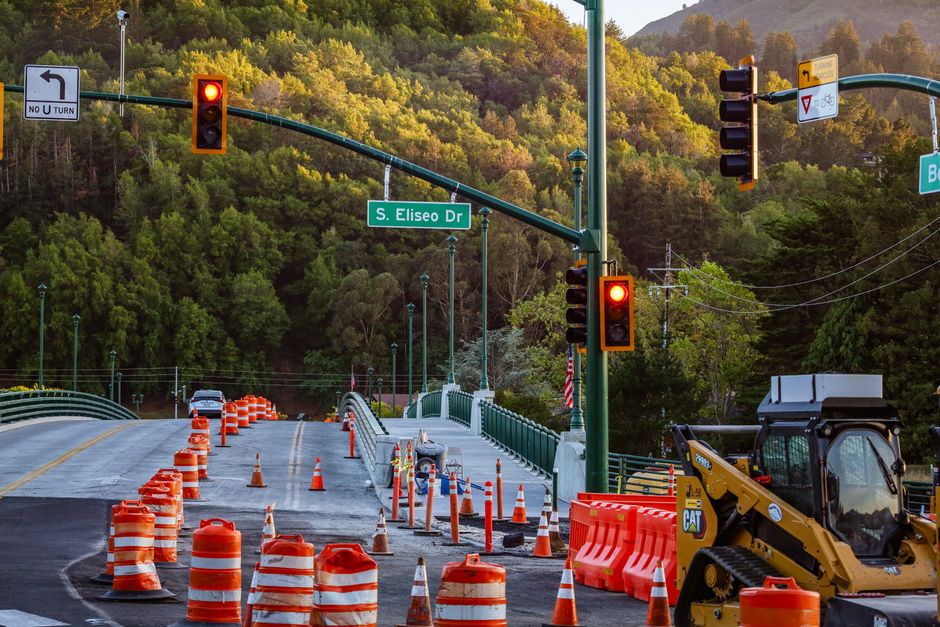
Category: All US states (national)

  • How to Pass on a Two-Lane Road: US Rural Driving Rules

    How to Pass on a Two-Lane Road: US Rural Driving Rules

    Photo: Max Andrey, Pexels

    To pass on a two-lane road, you need a broken yellow line on your side, a long clear view of oncoming traffic and enough room to get back into your lane well before any hill, curve, intersection or bridge. Pennsylvania says that at 45 mph you need about a quarter mile of clear road. This guide is for new US drivers and permit test takers. It covers the official passing rules and distances, no-passing zones, being passed, farm equipment and the slow-moving vehicle sign, gravel roads and rural road edges.

    Key facts

    • Read the center line. A broken yellow line on your side means you may pass when safe; a solid yellow line on your side means you may not.
    • No passing within 100 feet of an intersection, railroad crossing, bridge or tunnel in California, Pennsylvania, Alaska and Idaho, or when a hill or curve hides oncoming traffic.
    • How much road you need: about 1/4 mile at 45 mph (Pennsylvania). California says a hill or curve should be at least 1/3 mile ahead.
    • Return when you see the passed car’s headlights in your rearview mirror (Pennsylvania).
    • Orange triangle on the back: a slow-moving vehicle, designed for 25 mph or less.

    How to pass on a two-lane road, step by step

    1. Stay well back from the vehicle ahead so you can see past it (Alaska). Don’t swing across the center line just to look.
    2. Check the markings and signs. You need a broken yellow line on your side and no NO PASSING ZONE sign.
    3. Look far ahead for oncoming traffic, hills, curves, intersections, driveways and anything that could put a car in the passing lane (Pennsylvania, California).
    4. Check your mirrors and blind spot; someone may already be passing you (Pennsylvania, Idaho).
    5. Signal left early.
    6. Move out and accelerate. Pennsylvania says you need to be going about 10 mph faster than the vehicle you are passing.
    7. Pass without lingering. Idaho says to complete the pass before you come within 200 feet of oncoming traffic, and before a no-passing zone starts.
    8. Signal right once you can see the passed vehicle in your rearview mirror. Pennsylvania says to wait until you can see both of its headlights.
    9. Return to your lane and cancel the signal. Keep your speed; don’t cut in and slow down.

    Alaska’s manual also says to sound your horn to warn the driver ahead that you intend to pass.

    If you start to pass and it doesn’t look right

    Idaho says that if you start to pass but decide you can’t make it, pull back and wait for another opening. Brake gently, drop back behind the vehicle and signal back in.

    When you may not pass

    Situation Rule
    Solid yellow line on your side of the center line No passing (California, Alaska)
    Double solid yellow lines No passing in either direction (California)
    Approaching a hill or curve where you can’t see oncoming traffic No passing (California, Pennsylvania, Alaska, Idaho)
    Within 100 feet of an intersection or railroad crossing No passing (California, Pennsylvania, Alaska, Idaho, unless a sign or signal allows it)
    Within 100 feet of a bridge, tunnel or viaduct No passing (California, Pennsylvania; Alaska for posted narrow bridges; Idaho when the view is blocked)
    At crossroads and driveways No passing (California)
    School bus stopped with red lights and stop arm No passing (Alaska, Idaho). See school bus stopping laws.
    A vehicle ahead stopped at a crosswalk for a pedestrian No passing (Idaho)
    Passing would mean leaving the pavement Never (California, Idaho)
    A center turn lane Not for passing (Alaska, California)

    Alaska adds that the end of a no-passing zone doesn’t mean it is safe to pass, only that you can see further ahead. Line meanings are explained in US pavement markings.

    Passing on the right on a two-lane road

    Only when the driver ahead is turning left and you can pass safely without leaving the paved road (California, Idaho). Pennsylvania says you must stay on the berm or shoulder in that case. Never pass on the left when a driver is signaling a left turn (California).

    Speed while passing: the Idaho exception

    Most states give no extra speed for passing. Idaho does: in a passenger car, motorcycle or pickup that isn’t towing, you may go up to 15 mph over the limit to pass a vehicle traveling below the limit on a two-lane road posted at 55 mph or more. It doesn’t apply in work zones, and you must slow back to the limit as soon as practicable.

    Being passed

    • Don’t speed up. Alaska says it is unlawful to increase your speed while being passed.
    • Keep your lane and speed (California), or move to the right side of your lane to give the passing driver room and a better view (Idaho).
    • Help if a pass goes wrong. Alabama says that if a passing car can still complete the pass, slow down to let it in; if it must drop back, speed up to leave room behind you. If a crash is almost certain and the shoulder is good, move onto the shoulder.

    Turnouts and letting traffic pass

    • California: on a two-lane road where passing is unsafe, you must use a turnout to let traffic by when you are driving slowly and five or more vehicles are behind you.
    • Idaho: a vehicle going slower than normal traffic and delaying three or more vehicles in a rural area or on a two-lane highway must turn off where safe to let them pass.

    Farm equipment and slow-moving vehicles

    The slow-moving vehicle (SMV) emblem is an orange triangle with a red border, carried by vehicles designed to travel at 25 mph or less: tractors and other farm equipment, horse-drawn vehicles and some road maintenance vehicles.

    • By day, the orange center can be seen from more than one-fifth of a mile; at night, the red border reflects in your headlights (Alaska).
    • Slow down early. You close on a 25 mph vehicle very fast from 55 mph.
    • Stay a safe distance back and don’t honk to pass (Pennsylvania), which can frighten horses.
    • Watch for wide loads and sudden turns into fields and driveways, and pass only where it is legal and you can see far ahead.
    • Idaho limits most slow-moving vehicles to daylight hours, but farm equipment on non-interstate highways may travel at other times with flashing lights visible for 500 feet.

    Gravel and dirt roads

    • Expect the change. Alabama’s handbook shows a warning sign for road surfaces changing to gravel or dirt.
    • Lower speed limits may apply. Alabama’s statutory limit on an unpaved road is 35 mph, against 45 mph on county paved roads and 55 mph elsewhere, unless posted otherwise.
    • Adjust to the surface. California’s basic speed law says your speed must depend on the road surface, including graveled roads.
    • Practical tips (general guidance, not from a handbook): brake earlier and more gently, steer smoothly, leave extra distance for dust and flying stones, and slow down before curves rather than in them.

    Road edges and drop-offs

    Pennsylvania notes that drop-offs, where the shoulder is lower than the pavement, are common on rural roads. If your wheels go off, ease off the gas, don’t brake hard or jerk the wheel, slow right down, then steer back gently. Full steps: vehicle emergencies.

    More rural road hazards

    • Speed limits: California’s maximum on a two-lane undivided highway is 55 mph unless posted otherwise.
    • Cyclists: take one hazard at a time. With an oncoming car and a cyclist ahead, slow down, let the car pass, then move left to pass the cyclist with plenty of room: at least three feet in California, at least four feet in Pennsylvania’s example.
    • Animals: see deer and animal collisions.
    • Railroad crossings without gates are common in the country. See railroad crossings.
    • Night: passing at night is the most dangerous kind, because oncoming cars seem further away than they are (Pennsylvania). See night driving and high beams.
    • Trucks: see sharing the road with trucks.

    Permit test practice: passing and rural roads

    These are unofficial practice questions, written for this guide.

    1. On a two-lane road, a solid yellow line is on your side and a broken yellow line is on the other side. Can you pass? A) Yes, if the road looks clear B) No C) Only on the right D) Only if the other driver waves you by. Answer: B. A solid yellow line on your side means no passing (handbook: pavement markings).
    2. In many states, you may not pass within how many feet of an intersection or railroad crossing? A) 50 B) 100 C) 200 D) 500. Answer: B. 100 feet (handbook: passing).
    3. When is it safe to return to your lane after passing? A) As soon as your front bumper clears the car B) When you can see the car’s headlights in your rearview mirror C) After counting to two D) When the other driver flashes their lights. Answer: B. (Pennsylvania manual: passing).
    4. A vehicle with an orange triangle on its back is usually designed to travel at: A) 15 mph or less B) 25 mph or less C) 35 mph or less D) 45 mph or less. Answer: B. (handbook: slow-moving vehicles).
    5. Another car is passing you. You should: A) Speed up B) Keep your speed or slow slightly and stay in your lane C) Move toward the center line D) Brake hard. Answer: B. Increasing speed while being passed is unlawful in Alaska (handbook: being passed).
    6. Why is passing at night especially dangerous? A) Passing is banned at night B) Oncoming headlights make cars seem further away than they are C) Center lines aren’t visible D) Speed limits are higher. Answer: B. (Pennsylvania manual: passing on a two-lane road).

    More practice: US permit practice tests.

    Common questions

    How do you pass on a two-lane road?

    Check for a broken yellow line on your side and a long clear view, check mirrors and blind spot, signal, accelerate to about 10 mph faster than the vehicle, pass, and return once you can see its headlights in your mirror.

    How far ahead must the road be clear?

    Pennsylvania says about 1/4 mile at 45 mph; California says a hill or curve should be at least 1/3 mile ahead. Idaho says to finish the pass before you come within 200 feet of oncoming traffic.

    Can you speed to pass?

    In most states, no: the limit still applies. Idaho allows up to 15 mph over in limited cases on two-lane roads posted at 55 mph or more.

    Can you pass a tractor on a double yellow line?

    Not by these handbooks’ rules: double solid yellow lines mean no passing. Wait for a passing zone, or for the driver to pull over when safe.

    Should I honk before passing?

    Alaska’s manual says to sound your horn to warn the driver ahead. Pennsylvania says not to honk to pass farm tractors and horse-drawn vehicles. Use the horn lightly, and never near horses.

    What does the end of a no-passing zone mean?

    Only that you can see further ahead. Alaska says it doesn’t mean it is safe to pass. Check for yourself.

    Back to learning to drive in the USA. Related: speed limits and the basic speed law and work zone rules.

    Sources

    • California DMV, “California Driver’s Handbook: Section 6, Navigating the Roads; Section 7, Laws and Rules of the Road (Continued); Section 8, Safe Driving (Continued)” (dmv.ca.gov)
    • Pennsylvania Department of Transportation, “Pennsylvania Driver’s Manual” PUB 95, Chapter 3: Turning, Merging and Passing; Reactions to Slow Moving Traffic (pa.gov)
    • Alaska Division of Motor Vehicles, “Alaska Driver Manual” (Rev. 10/2025), Passing and Slow Moving Vehicles (dmv.alaska.gov)
    • Idaho Transportation Department, “Idaho Driver’s Manual” (July 2026), Passing and Slow-Moving Vehicle (itd.idaho.gov)
    • Alabama Law Enforcement Agency, “Alabama Driver Manual” (November 2024), speed limits, warning signs and driving emergencies (alea.gov)
  • What to Do if Your Brakes Fail, a Tire Blows and More

    What to Do if Your Brakes Fail, a Tire Blows and More

    Photo: John Joshua Mejia, Pexels

    If your brakes fail, pump the pedal, use the parking brake gently, shift to a lower gear and steer toward a safe place to stop. Every US driver handbook gives step-by-step actions like these for the common car emergencies, and the permit test asks about them. This guide collects the official steps from the California, Pennsylvania, Alabama, Alaska and Idaho handbooks for a tire blowout, brake failure, a stuck accelerator, running off the pavement, stalling on railroad tracks and more.

    Key facts

    • Tire blowout: grip the wheel, don’t brake hard, ease off the gas, steer straight, then slow down and pull off.
    • Brake failure: pump the brake, apply the parking brake gently, shift down, look for a safe escape route.
    • Stuck accelerator: shift to neutral, brake, steer to safety, then turn off the engine.
    • Wheels off the pavement: ease off the gas, don’t jerk the wheel, slow down, then steer back gently.
    • Stalled on tracks with a train coming: get out and move away from the tracks toward the train, at an angle, then call 911.

    Tire blowout: what to do

    California’s handbook gives the steps recommended by the National Highway Traffic Safety Administration:

    1. Hold the steering wheel with both hands.
    2. Keep your speed if that is possible and safe.
    3. Gradually release the accelerator.
    4. Correct the steering as needed to stabilize the car.
    5. Look and steer where you want to go.
    6. Once the car is stable, keep slowing down and pull off the road where and when it is safe.

    Why not brake? Pennsylvania says braking after a blowout will cause you to skid and lose control. Idaho says not to brake until you have complete control, then brake gently.

    How a blowout feels

    • Front tire: the steering wheel vibrates and the car pulls suddenly to one side (Pennsylvania).
    • Rear tire: one corner drops and the back of the car wobbles side to side (Pennsylvania).
    • Warning signs: a thumping noise can come first. Alabama says under-inflation is one of the most common reasons for blowouts, so check tire pressure regularly.

    Pennsylvania adds that you can ride on the flat as long as you need to reach a safe place, and that the car must be fully off the road before you change the tire. Losing a wheel is handled the same way (Alabama).

    What to do if your brakes fail

    Newer cars: brake warning light or a soft pedal

    Pennsylvania explains that newer cars have a split braking system, so total failure is unlikely. If the brake warning light comes on, you may have braking on two wheels. The pedal goes down further and you must push harder, and stopping takes longer. Pull over or go to the nearest service station, and shift to a lower gear to help slow down.

    If the pedal sinks to the floor

    1. Pump the brake pedal quickly several times to build pressure (Pennsylvania, Alabama).
    2. Shift to a lower gear so the engine slows the car.
    3. Use the parking brake gently. Alabama says to apply it gently so you don’t lock the wheels and skid. Pennsylvania says to hold the release so you can let it off if the rear wheels lock.
    4. Steer for a safe place: an open area, or an uphill road (Pennsylvania).
    5. Last resort: turn the ignition off, but never to LOCK, which locks the steering (Pennsylvania). You lose power steering and power brake assist when the engine is off (Alabama).
    6. Once stopped, call for help. Pennsylvania says not to drive the car.

    Alaska’s manual also lists rubbing the tires against a curb as a way to slow down.

    Wet brakes

    After driving through deep water, Alaska says to test the brakes lightly, because they may pull to one side or not hold. Dry them by driving slowly in low gear while pressing the brake lightly.

    Stuck accelerator: what to do

    Pennsylvania’s steps:

    1. Keep your eyes on the road. You can tap the pedal a few times or try to lift it with your toe, but don’t reach down with your hand.
    2. If it stays stuck, shift to neutral immediately and brake. The engine will race, but power is removed from the wheels.
    3. Concentrate on steering and pull off the road once you are at a safe speed.
    4. Stop, turn off the engine and turn on your hazard flashers.

    If you must stop quickly, Pennsylvania says to turn the ignition to OFF (not LOCK) and brake, expecting heavier steering and braking. Check your owner’s manual now for how to shut off a push-button engine while moving, so you know before you need it.

    If your wheels drift off the pavement

    A drop-off at the road edge is common on rural roads and during resurfacing. Pennsylvania’s recovery steps:

    1. Ease off the gas. Don’t brake suddenly; if you must brake, do it gradually.
    2. Grip the wheel firmly and steer parallel to the road, straddling the edge with two wheels on and two off.
    3. Slow to a very low speed: less than 25 mph, preferably closer to 10 mph.
    4. Check traffic behind you and signal.
    5. Gently steer back onto the pavement, then straighten as soon as the wheels are back on.
    6. Speed up to the traffic flow once you are fully in control.

    California and Idaho give the same message: don’t pull the wheel hard, because you can shoot across into oncoming traffic.

    Skids and emergency braking

    • With anti-lock brakes (ABS): press firmly and keep pressing. Don’t pump. Noise and pedal pulsing are normal (Pennsylvania).
    • Without ABS: press and release repeatedly to avoid locking the wheels (Pennsylvania).
    • In a skid: look and steer where you want to go, and don’t brake. Pennsylvania says if the rear slides left, steer left; if it slides right, steer right, and be ready to correct again.
    • Steering vs braking: above 25 mph it is usually better to steer around a hazard than to brake, if you have room (Pennsylvania).

    Weather skids and hydroplaning are covered in driving in snow, fog and rain.

    Stalled on railroad tracks

    California’s handbook:

    • Train coming or warning lights flashing: get out immediately. Move away from the tracks at an angle, toward the direction the train is coming from, so you aren’t hit by debris. Then call 911.
    • No train and no lights: get out, call the number on the crossing post or metal control box, give the crossing number if posted, say a vehicle is on the tracks, then call 911.

    More in railroad crossings.

    Other emergencies

    Emergency Official advice
    Car coming at you in your lane Sound your horn, slow down and move right. Don’t swerve left: the other driver may correct back into you (Pennsylvania, Idaho, Alabama). If a crash can’t be avoided, brake firmly; every mph you lose reduces the impact (Pennsylvania).
    Steering failure Ease off the gas and don’t brake hard or shift; brake very gently as the car slows (Alabama).
    Headlight failure at night Try the parking lights and turn signals; slow down and keep on the pavement until you can pull off safely (Alabama).
    Wiper failure or hood flies up Slow down, look out of the side window and move off the road (Alabama).
    Overheating Watch the temperature gauge, avoid long high-speed runs and turn off the A/C in extreme heat (California). If steam appears, pull off and turn the engine off; don’t open the radiator cap (Alabama).
    Smoke or fire Get off the road and turn off the ignition (Alabama), then get everyone out and well away from the car and call 911.
    Flooded road Turn around. Pennsylvania says 6 inches of water can make some cars lose control or stall, 12 inches of moving water can float many cars, and 2 feet moves most SUVs and pickups.
    Breakdown on a freeway Pull onto the right shoulder, get out on the side away from traffic if you must, call for help (511 or a call box in California) and stay buckled in the car unless it is safer to stand well away (California).

    Carbon monoxide in the car

    Carbon monoxide comes out of the exhaust pipe and has no smell, so you cannot tell it is there. Alabama notes it is most likely in winter, when windows are shut and engines are left running to warm up.

    • Warning signs: sudden tiredness or drowsiness, yawning, dizziness or lightheadedness, headache, nausea and ringing in the ears (California, Alabama). Pennsylvania adds confusion, a racing heart and irregular breathing.
    • Common causes: a leaking exhaust or muffler, a tailpipe blocked by snow or ice, idling with every window closed, and running the engine in a garage with the door shut or only partly open.
    • Prevention: have the exhaust checked regularly, clear snow from the tailpipe before starting, open a window a little when stuck in traffic, never warm the car up in a closed garage, and remember to switch off a keyless car parked in an attached garage. Pennsylvania suggests a battery-powered CO detector in the car.
    • If you suspect it: get out of the car at once, get to fresh air and call 911 or seek emergency medical help (Pennsylvania). Have the exhaust inspected before driving it again (California).

    If the car breaks down: making yourself visible

    • Get all four wheels off the traveled road if you can (Alaska).
    • Turn on hazard flashers; if you have none, use the turn signals (California).
    • Set out flares or warning triangles if you carry them. Alabama suggests placing them 100 to 500 feet behind the car.
    • Raise the hood to show you need help (Pennsylvania, Alaska).

    Keep a basic kit: spare tire, jack and lug wrench, flashlight, reflective triangles and gloves. Pennsylvania’s manual includes a 10-step tire change guide; follow your owner’s manual for jack points and lug nut torque.

    Permit test practice: emergencies

    These are unofficial practice questions, written for this guide.

    1. A front tire blows out at highway speed. What should you do first? A) Brake hard B) Hold the wheel firmly and gradually release the gas C) Steer onto the shoulder at once D) Shift to neutral. Answer: B. Braking or a sudden change of speed can cost you control (handbook: tire blowout).
    2. Your accelerator sticks and tapping it doesn’t help. What next? A) Reach down and pull it up B) Turn the key to LOCK C) Shift to neutral and brake D) Pump the brakes. Answer: C. Neutral takes power from the wheels (handbook: stuck accelerator).
    3. Your right wheels drop off the pavement edge. What should you do? A) Jerk the wheel left B) Brake hard C) Ease off the gas, slow down, then steer back gently D) Speed up. Answer: C. A sharp turn can send you into oncoming traffic (handbook: driving off the pavement).
    4. Your car with ABS needs an emergency stop. How do you brake? A) Pump the pedal B) Press firmly and hold C) Use the parking brake D) Brake lightly. Answer: B. Don’t pump ABS brakes (handbook: sudden braking).
    5. Your car stalls on the tracks and a train is coming. What do you do? A) Try to restart B) Push the car off C) Get out and move away at an angle toward the train D) Stay inside with your belt on. Answer: C. Moving toward the train’s direction keeps you clear of debris (handbook: railroad tracks).
    6. Your brake pedal sinks to the floor. What should you try first? A) Turn off the engine B) Pump the brake pedal C) Shift to park D) Jump out. Answer: B. Pumping can build pressure; then use the parking brake gently and shift down (handbook: brake failure).

    More practice: US permit practice tests.

    Common questions

    Should you slam on the brakes when a tire blows?

    No. Pennsylvania says braking after a blowout will cause a skid. Hold the wheel, ease off the gas, steer straight and brake gently only once the car is under control.

    What do you do if your brakes go out?

    Pump the pedal, shift to a lower gear, use the parking brake gently, and steer for a safe place such as an open area or an uphill road. Turn the engine off only as a last resort, never to LOCK.

    Can I turn off the engine while moving?

    Only as a last resort, and never to the LOCK position, which locks the steering. You lose power steering and power brakes, so steering and braking take more effort.

    Is it better to swerve or brake?

    Pennsylvania says that above 25 mph it is usually better to steer around a hazard than to brake, if you have good steering control and space.

    What should I do after a crash?

    See what to do after a car crash in the US.

    Are emergencies tested on the road test?

    Not as live events, but some states test a quick stop, and emergency questions appear on permit tests. See US permit test by state.

    Back to learning to drive in the USA. Related: freeway driving for new drivers and rural roads and passing.

    Sources

    • California DMV, “California Driver’s Handbook: Section 8, Safe Driving (Continued)” (dmv.ca.gov)
    • Pennsylvania Department of Transportation, “Pennsylvania Driver’s Manual” PUB 95, Chapter 3: Dealing with Driving Emergencies, and Chapter 6: Carbon Monoxide Poisoning (pa.gov)
    • Alabama Law Enforcement Agency, “Alabama Driver Manual” (November 2024), Chapter 7: Adjusting to Driving Conditions, including Carbon Monoxide (alea.gov)
    • Alaska Division of Motor Vehicles, “Alaska Driver Manual” (Rev. 10/2025), Emergencies (dmv.alaska.gov)
    • Idaho Transportation Department, “Idaho Driver’s Manual” (July 2026), Tire Blowouts and Running off the Road (itd.idaho.gov)
  • Work Zone Driving Rules in the US: Flaggers, Fines and Cameras

    Work Zone Driving Rules in the US: Flaggers, Fines and Cameras

    Photo: Robert So, Pexels

    In a US work zone you must obey the posted work zone speed limit, follow flaggers and orange signs, merge where the signs tell you, and expect bigger penalties: many states double fines when workers are present, and some use speed cameras. This guide is for new drivers and permit test takers. It explains the signs, flaggers and merging, plus state fines, cameras and the work zone courses some states now require before a permit or license.

    Key facts

    • Orange means work zone. Work zone signs use the warning sign shapes, but in orange with black lettering.
    • Flaggers’ signals are binding. Pennsylvania says a flagger’s authority overrides conventional traffic control devices.
    • Fines often double. California, Arkansas, Oklahoma, Massachusetts, Kentucky and Pennsylvania all publish higher or doubled work zone fines, usually when workers are present.
    • Speed cameras: Pennsylvania’s cameras ticket drivers going 11 mph or more over the work zone limit. PennDOT lists Maryland, Indiana, Washington and Illinois as other states with programs.
    • Rear-end crashes are the classic work zone crash. Pennsylvania tells drivers to double their following distance.

    Why work zones matter

    Federal Highway Administration figures, based on national crash data, show that in 2022:

    • 891 people died in work zone traffic crashes
    • 742 of them were drivers and passengers, and 145 were people on foot or bicycles
    • speeding was a factor in 34% of fatal work zone crashes, and rear-end collisions in 21%
    • 94 highway workers died at road construction sites

    Most of the people killed are drivers and passengers, not workers.

    Work zone signs and devices

    What you see What to do
    ROAD WORK AHEAD (orange diamond) Slow down and start scanning for workers, equipment and lane changes. Pennsylvania says warning signs or message boards may start at least 200 feet before the work zone.
    LANE CLOSED AHEAD, RIGHT LANE CLOSED 1000 FT Plan your merge early and signal
    FLAGGER AHEAD Be ready to stop for a person with a STOP/SLOW paddle or red flag
    Flashing arrow panel A lane closes in the arrow’s direction; begin merging well before it. A caution display without an arrow means work next to the travel lane.
    Cones, drums, barrels, tubes Stay inside the path they mark. Don’t cross them.
    LANE SHIFT Stay in your lane as it moves sideways
    ACTIVE WORK ZONE WHEN FLASHING (Pennsylvania) Workers are on or next to the road; higher penalties apply
    ROAD CLOSED / ROAD CLOSED TO THRU TRAFFIC Don’t enter, or enter only if you have business inside the closed section (Idaho)
    END ROAD WORK Return to the normal limit once you pass it

    The full sign system is in US road signs by shape and color.

    Flaggers: what the paddle and flag mean

    • STOP paddle or red flag held out: stop. Oklahoma says stop in your lane and don’t move until the flagger signals you to go.
    • SLOW paddle: proceed slowly and carefully.
    • Flagger’s word beats the signal. In Pennsylvania, flaggers’ authority overrides conventional traffic control devices.
    • Flaggers can report you. Pennsylvania highway workers have forms to report speeding or unsafe drivers to police, who may issue a ticket.

    How to drive through a work zone

    California and Pennsylvania give the clearest checklists:

    1. Slow down to the posted work zone limit, and lower if the lanes are narrow or rough.
    2. Leave extra space. Pennsylvania says to double your following distance, because rear-end crashes are the most common work zone crash.
    3. Turn off cruise control (Pennsylvania).
    4. Merge as soon as it is safe without crossing the cones or drums (California), and change lanes as soon as you see a lane-closed message (Pennsylvania).
    5. Stay in your lane. Pennsylvania says not to cross a solid white line in a work zone.
    6. Expect sudden slowing and watch for drivers changing lanes late.
    7. Watch for bicycles if lanes are narrow or the shoulder is closed (California).
    8. Put the phone away. Several states ban hand-held phones in work zones (see below).
    9. Keep moving. Don’t slow to watch the work or stop to ask workers for directions (Pennsylvania).
    10. Don’t pass a moving operation, such as line painting or mowing with a shadow vehicle behind it, unless directed (Pennsylvania).

    Early merge or zipper merge?

    Follow the signs. California’s handbook says to merge as soon as it is safe. Some states post zipper merge signs in heavy traffic, telling drivers to use both lanes to the merge point and take turns. See freeway driving for new drivers.

    Headlights in work zones

    Pennsylvania requires headlights on in every posted work zone, day or night, not just active ones. Daytime running lights alone don’t count, and a driver stopped for another violation in a work zone without headlights pays an extra $25.

    Night work

    California notes that highway construction can take place at night, so slow down in construction zones after dark. See night driving and headlights.

    Work zone fines and penalties by state

    State Published work zone rule
    California Fines for violations in a work zone can be $1,000 or more; fines double in highway construction or maintenance zones when workers are present, and in Safety Enhanced-Double Fine Zones. Assaulting a highway worker: up to $2,000 and up to one year in jail.
    Pennsylvania Fines double for certain violations in active work zones, including speeding; certain violations bring a license suspension.
    Arkansas Fines double for any moving violation when workers are present; speed cameras are used in Interstate work zones.
    Oklahoma Speeding fines double in construction and maintenance zones when workers or equipment are present; disobeying work zone signs or markings is a misdemeanor with a $100 to $1,000 fine, up to 30 days in jail, or both.
    Connecticut Work zone violation fines up to $1,000, and doubled distracted-driving fines.
    New York Speeding fines double in work zones.
    Massachusetts Fines double in a posted work zone.
    Kentucky Fines can double where posted and a worker is present.
    Idaho Speeding fines are increased in work zones where signs say so. The rule letting you exceed the limit by up to 15 mph to pass on some two-lane roads does not apply in work zones.

    Other states have their own rules, so check your state handbook. How tickets affect a new license is covered in getting a traffic ticket as a new driver.

    Work zone speed cameras

    Pennsylvania’s program is the best documented:

    • Cameras on vehicles or other mounts record drivers going 11 mph or more over the posted work zone limit.
    • They run only in work zones with workers present (workers may be behind barriers and out of sight), with two “Active Speed Limit Photo Enforced” signs in advance.
    • Enforcement began on March 9, 2020.
    • Penalties go to the registered owner: a written warning for the first violation, $75 for the second and $150 for the third and later ones.
    • These are civil penalties: no points and no effect on your driving record.
    • Your cruise control setting is no defense; the driver must watch the speed.

    PennDOT lists Maryland, Indiana, Washington and Illinois as states that also have work zone camera programs, and the FHWA has published a case study of New York State’s program. Arkansas uses cameras in Interstate work zones. Rules and fines differ in each state.

    Phones in work zones

    • Florida: no hand-held phone use in active work zones, when workers are present or operating equipment on or right next to the road. See Florida phone laws.
    • Arkansas: no hand-held phone use in highway work zones for any driver. See Arkansas phone rules.
    • Connecticut: distracted-driving fines double in work zones.

    The national picture: hands-free and texting laws.

    States that require a work zone course for new drivers

    State Course and when it’s needed
    Connecticut Free online Work Zone Safety Course before the learner’s permit test, from January 1, 2026. See the Connecticut permit test guide.
    Oklahoma Free online Work Zone Safe course before the drive test if you are under 18. See the Oklahoma Work Zone Safe course.
    North Carolina Work Zone Safety Course before the driver education completion certificate (since December 1, 2025). See North Carolina driver ed.
    Washington Online course on work zone and first responder safety for anyone under 25 applying for a first license, since May 1, 2026. See Washington driver training rules.
    Minnesota Driver education must cover work zone safety from July 1, 2026, and the permit test adds work zone topics from January 1, 2027. See the Minnesota permit test guide.

    Work zones and emergency vehicles

    Move over laws protect road crews too. California requires drivers to move over and slow down for road work vehicles as well as emergency vehicles. Pennsylvania requires you to move to a lane not next to an emergency scene, police stop or tow truck, or slow to at least 20 mph below the posted limit if you can’t. See move over laws in the US.

    Permit test practice: work zones

    These are unofficial practice questions, written for this guide.

    1. What color are work zone warning signs? A) Yellow B) Orange C) Green D) White. Answer: B. Work zone signs are orange with black lettering (handbook: work zone signs).
    2. A flagger holds up a STOP paddle, but your traffic light is green. What do you do? A) Go, the light controls traffic B) Slow down and go C) Stop and wait for the flagger’s signal D) Sound your horn. Answer: C. Flaggers’ authority overrides conventional traffic control devices (Pennsylvania manual: work zones).
    3. What is the most common crash type in work zones? A) Head-on B) Rear-end C) Rollover D) Side-swipe with a parked car. Answer: B. That is why you should double your following distance (Pennsylvania manual).
    4. A sign says RIGHT LANE CLOSED 1000 FT. When should you merge? A) At the cones B) As soon as it is safe C) Only when a worker waves you over D) Never; stay in your lane. Answer: B. Merge as soon as it is safe without crossing cones (California handbook), unless signs direct a zipper merge.
    5. In many states, fines in a work zone with workers present are: A) The same as elsewhere B) Halved C) Doubled D) Waived for first offenses. Answer: C. California, Arkansas, Oklahoma and others double fines when workers are present.

    More practice: US permit practice tests.

    Common questions

    Do work zone speed limits apply when no one is working?

    A posted regulatory speed limit applies whenever it is posted. Many higher penalties apply only when workers are present: California doubles fines then, and Pennsylvania’s cameras run only with workers present.

    Are fines really doubled in work zones?

    In many states, yes, usually when workers are present or where signs say so. California, Pennsylvania, Arkansas, Oklahoma, New York, Massachusetts and Kentucky publish doubled fines.

    Do work zone camera tickets give points?

    Not in Pennsylvania: camera violations are civil, with no points and no effect on your driving record. A ticket from a police officer in a work zone is different and can bring points.

    Should I merge early or at the end of the lane?

    Follow the signs. With no zipper merge signs, merge as soon as it is safe, as California’s handbook says.

    Can I use my phone in a work zone?

    Not hand-held in Florida’s active work zones or Arkansas’s highway work zones, and many states ban hand-held use everywhere. Teen drivers in many states can’t use a phone at all.

    Do I need headlights in a work zone?

    In Pennsylvania, yes, in every posted work zone. Elsewhere it’s a good habit that helps workers see you.

    Back to learning to drive in the USA. Related: speed limits and the basic speed law.

    Sources

    • Federal Highway Administration, “FHWA Work Zone Facts and Statistics” (ops.fhwa.dot.gov)
    • Federal Highway Administration, Work Zone Management Program news: case studies of Pennsylvania’s and New York State’s work zone speed safety camera programs (ops.fhwa.dot.gov)
    • Pennsylvania Department of Transportation, “Pennsylvania Driver’s Manual” PUB 95, Chapters 2 and 3 (pa.gov)
    • Pennsylvania Work Zone Speed Safety Cameras, “About” and “FAQs” (workzonecameras.penndot.gov)
    • California DMV, “California Driver’s Handbook: Section 7, Laws and Rules of the Road (Continued); Section 8, Safe Driving” (dmv.ca.gov)
    • Idaho Transportation Department, “Idaho Driver’s Manual” (July 2026), Work Zone Signs and Passing (itd.idaho.gov)
    • Service Oklahoma, “Teen Driving” (oklahoma.gov)
    • Service Oklahoma, “Intermediate License” (oklahoma.gov)
    • Arkansas State Police, “Arkansas Driver License Study Guide, Volume 1, Edition 10”, Distracted Driving and Work Zone sections (October 2026) (media.ark.org/dps)
    • Arkansas Department of Public Safety, “April Is Distracted Driving Prevention Month” (dps.arkansas.gov)
    • Connecticut Department of Motor Vehicles, “State of Connecticut Driver’s Manual” (revised March 2023) (portal.ct.gov)
    • Connecticut Department of Motor Vehicles, “Get a learner’s permit” (portal.ct.gov)
    • Connecticut Department of Motor Vehicles, “Take the knowledge and vision tests” (portal.ct.gov)
    • California DMV, “California Driver’s Handbook: Laws and Rules of the Road (Continued)” (dmv.ca.gov)
    • California DMV, “California Driver’s Handbook: Safe Driving” (dmv.ca.gov)
    • Massachusetts Registry of Motor Vehicles, Merit Rating Board, “Safe Driver Insurance Plan (SDIP)” (mass.gov)
    • Massachusetts Registry of Motor Vehicles, Merit Rating Board, “Surchargeable incidents” (mass.gov)
    • Kentucky State Police, “Kentucky Driver Manual” (updated July 2026) (kentuckystatepolice.ky.gov)
    • Kentucky State Police, “Driver Testing” (kentuckystatepolice.ky.gov)
    • Florida Legislature, “Florida Statutes s. 316.305, Wireless communications devices; prohibition” (leg.state.fl.us)
    • Florida Legislature, “Florida Statutes s. 316.306, School and work zones; prohibition on the use of a wireless communications device in a handheld manner” (leg.state.fl.us)
    • North Carolina Department of Public Instruction, “Driver Education” (dpi.nc.gov)
    • North Carolina Department of Public Instruction, “Driver and Traffic Safety Education Program Administrative Policies & Procedures Manual”, revised November 1, 2026 (linked from dpi.nc.gov)
    • Washington State Legislature, “RCW 46.20.1191 Driver training education course, motorcycle safety education course, driver work zone and first responder safety, exemption, waiver, report, safe driving course” (app.leg.wa.gov)
    • Washington State Legislature, “RCW 46.20.100 Persons under 18” (app.leg.wa.gov)
    • Minnesota Legislature, Office of the Revisor of Statutes, “Minnesota Statutes 2026, section 171.05 Instruction permit” (revisor.mn.gov)
    • Minnesota Legislature, Office of the Revisor of Statutes, “Minnesota Statutes 2026, section 171.13 Examination” (revisor.mn.gov)
  • Ticket With a Permit or New License? Options and Consequences

    Ticket With a Permit or New License? Options and Consequences

    Photo: Kindel Media, Pexels

    If you get a ticket with a learner permit or a new provisional license, the fine is usually the smallest part of it. A conviction can add points, delay your next license stage, extend teen restrictions or bring a suspension, and it can raise your family’s insurance. This guide is for US teens, new drivers and their parents. It covers your options (pay, contest, traffic school) and what tickets mean under each state’s new-driver rules.

    Key facts

    • Never ignore a ticket. Not answering a citation can lead to suspension; Pennsylvania and Alabama both list it.
    • Signing the ticket is not admitting guilt. Alabama’s manual says so, and adds that refusing to sign can lead to arrest.
    • Points and penalties follow the conviction, not the ticket. Michigan, for example, adds points when you are convicted.
    • New drivers face extra rules. Examples: New Mexico adds 30 days to your permit for each conviction; New York suspends a junior license for 60 days after one serious violation; Pennsylvania suspends drivers under 18 at 6 points.
    • Traffic school or a driver improvement course can keep a point off your record in some states, or may be required.

    What to do at the traffic stop

    • Pull over safely, stay in the car, keep your hands visible.
    • Hand over your permit or license, registration and proof of insurance when asked.
    • Don’t argue. Pennsylvania’s manual says that if you disagree with the citation you are entitled to a court hearing, and arguing at the scene is not in your interest.
    • Sign the ticket if asked. In Alabama, signing is not an admission of guilt.
    • If you hold a permit, the officer will also check you had a qualified supervisor with you. A missing supervisor is a GDL violation in itself.

    Full stop steps: pulled over by police as a new driver.

    Your options after a ticket

    1. Read the ticket. It gives the violation, the court or agency, the response deadline and how to respond. Put the deadline in your phone.
    2. Tell your parent or guardian if you are under 18. A court may ask a parent to attend with a minor (the notice will say), and the insurance policy is usually theirs.
    3. Check what a conviction would mean for your license stage, using the table below and your state guide.
    4. Choose:
      • Pay: fastest, but usually ends the case as a conviction on your record. Read the instructions on the ticket to see exactly what paying means where you are.
      • Contest: you have the right to a hearing. You can present your side, and the court decides.
      • Ask about traffic school, a driver improvement course or a deferral: where offered, these can keep the point off your record or reduce the impact.
    5. Respond before the deadline. Late or no response can bring extra fees and suspension.
    6. Keep every receipt and court paper. You may need proof when you apply for your next license stage.

    Traffic school and driver improvement courses

    State Course and what it does
    California A judge may offer Traffic Violator School for a one-point violation, once in any 18-month period. See California points and Traffic Violator School.
    Nebraska Drivers under 21 with 6 or more points in 12 months must complete a driver improvement course. With fewer than 12 points, a DMV-approved course of at least 4 hours takes off 2 points, once every 5 years.
    Pennsylvania At 6 points, PennDOT starts corrective action: first a written special point exam or Driver Improvement School.
    New Jersey Probationary drivers with two or more moving violations totaling 4 or more points must complete the Probationary Driver Program.
    Maine See the Maine points system and Driving Dynamics course.

    Eligibility rules are strict, and a permit or provisional holder is not always eligible. Ask the court or DMV before you pay.

    What happens if you get a ticket with a permit or provisional license?

    These are the new-driver penalties published by each state, as of November 2026. Each state also has its general points system on top.

    State What a ticket can mean for a new driver
    New Mexico Each traffic conviction on the permit adds 30 days. You need 90 days with no conviction, and no pending citation, before you apply for the provisional or full license.
    Nebraska To get the provisional permit (POP) you need fewer than 3 points in the previous 6 months; to move to a full Class O license, fewer than 3 points in the previous 12 months.
    California In the first 12 months of a provisional license, two at-fault collisions, two convictions, or one of each means 30 days of driving only with a licensed adult aged 25 or older.
    New York Junior permit or license: 60-day suspension for one serious violation (3 or more points) or two others. Phone or texting: 120-day suspension. Adults who pass the road test at 18 or older have a 6-month probation with similar rules.
    Pennsylvania Under 18: 90-day suspension at 6 points, or for driving 26 mph or more over the limit.
    Illinois Under 21: two moving violation convictions in 24 months means at least a one-month suspension, and court supervision is limited. A conviction in the first year of licensing extends the passenger limit by 6 months.
    Maryland A conviction or probation before judgment restarts the 18-month provisional period. Under 18 with 5 or more points in 12 months: 6-month suspension the first time.
    Connecticut Ages 16 and 17: suspension for breaking a teen restriction, phone use, speeding 20 mph or more over, reckless driving or racing, plus a $175 restoration fee each time.
    Wisconsin On a probationary license, demerit points double for the second and later moving violations.
    New Jersey Breaking GDL restrictions can bring a $100 fine or suspension; two or more violations totaling 4 or more points require the Probationary Driver Program.
    Virginia For a second or later violation of provisional rules, a court may suspend driving privileges for up to 6 months.
    Florida A stricter 6-point rule applies to drivers aged 15 to 17.
    Texas A minor’s hardship license is suspended after two or more moving violation convictions within 12 months.

    Your state’s full rules are in its GDL post; the comparison is in US graduated driver licensing compared.

    Worked example: New Mexico

    A 15-year-old with a New Mexico permit gets a speeding conviction 4 months into the 6-month permit period. The conviction adds 30 days, so the earliest provisional license date moves back a month. The teen also needs 90 clean days before applying, so the application must wait until 90 days after the conviction if that date is later.

    How points work for new drivers

    • Points go on your record when you are convicted, and stay for a set time (2 years in Michigan, at least 36 months for California convictions).
    • Adult thresholds are higher than teen ones. California treats an adult as a negligent driver at 4 points in 12 months, 6 in 24 or 8 in 36; Florida can suspend at 12 points in 12 months.
    • Points from other states can count. California adds out-of-state convictions to your record.

    More: points systems and license suspensions in the US.

    Will a ticket raise our insurance?

    Often, yes. Insurers check the DMV record, and the California Department of Insurance says most order the state’s official record of accidents and violations. In California, a good driver discount needs no more than one point on the record. North Carolina adds insurance points under its Safe Driver Incentive Plan; a conviction for passing a stopped school bus is 4 insurance points. See adding a teen driver to your car insurance.

    Tickets that are more serious than speeding

    Common questions

    What happens if you get a ticket with a learner permit?

    You face the normal fine and points, and often a GDL penalty too: a longer permit period (New Mexico adds 30 days per conviction), a delayed license (Nebraska, New Mexico), or a suspension (New York junior permits).

    Should I just pay the ticket?

    Check first what a conviction would do to your license stage and insurance. If the cost is high, ask the court about traffic school or a hearing before you pay.

    Does my parent have to come to court?

    It depends on the state and court. The ticket or court notice says whether a parent must attend for a minor.

    Can I still take my road test with a pending ticket?

    Some states block it. New Mexico requires no pending citation when you apply for the next license stage. Ask your DMV before you book.

    I got a ticket in another state. Does it count at home?

    Usually. Most states share convictions; California, for example, adds out-of-state convictions to your record.

    What if I can’t pay on time?

    Contact the court before the deadline and ask about payment plans or extensions. Missing the deadline can lead to suspension.

    Back to learning to drive in the USA.

    Sources

    • Pennsylvania Department of Transportation, “Pennsylvania Driver’s Manual” PUB 95, Chapter 4: Driving Record Information (pa.gov)
    • Alabama Law Enforcement Agency, “Alabama Driver Manual” (November 2024) (alea.gov)
    • California Department of Insurance, “Automobile Insurance Information Guide” (insurance.ca.gov)
    • New Mexico Motor Vehicle Division, “Chapter 4: Provisional Driver’s License” (mvd.newmexico.gov)
    • New Mexico Motor Vehicle Division, “Chapter 3: Instructional Permit” (mvd.newmexico.gov)
    • Nebraska DMV, “Provisional Operator’s Permit (POP)” (dmv.nebraska.gov)
    • Nebraska DMV, “Driver’s License (Class O)” (dmv.nebraska.gov)
    • California DMV, “Section 2: Getting an Instruction Permit and Driver’s License” (dmv.ca.gov)
    • California DMV, “Section 7: Laws and Rules of the Road (Continued)” (dmv.ca.gov)
    • California DMV, “Section 7: Laws and Rules of the Road (Continued)” California Driver’s Handbook (dmv.ca.gov)
    • California DMV, “Section 10: Financial Responsibility, Insurance Requirements, and Collisions” California Driver’s Handbook (dmv.ca.gov)
    • New York State DMV, “New York State Driver’s Manual, Chapter 2: How to Keep Your License” (dmv.ny.gov)
    • New York State DMV, “The New York State Driver Point System” (dmv.ny.gov)
    • PennDOT, “Pennsylvania Driver’s Manual, PUB 95 (4-21)” (pa.gov)
    • PennDOT, “The Pennsylvania Point System” fact sheet, March 2024 (pa.gov)
    • Illinois Secretary of State, “Graduated Driver’s License” (ilsos.gov)
    • Illinois Secretary of State, “Key points for newly licensed 16-17 years old” fact sheet (ilsos.gov)
    • Maryland General Assembly, “Transportation Article §16-111” (mgaleg.maryland.gov)
    • Maryland General Assembly, “Transportation Article §16-113” (mgaleg.maryland.gov)
    • Connecticut Department of Motor Vehicles, “State of Connecticut Driver’s Manual” (revised March 2023) (portal.ct.gov)
    • Connecticut Department of Motor Vehicles, “Reinstate your CT driver’s license after a suspension” (portal.ct.gov)
    • Wisconsin DMV, “Differences: Instruction permit, probationary license and regular license” (wisconsindot.gov)
    • Wisconsin DMV, “Graduated Driver License (GDL) and teen driving requirements FAQs” (wisconsindot.gov)
    • New Jersey Motor Vehicle Commission, “First Driver License/ID: Age 16” (nj.gov)
    • New Jersey Motor Vehicle Commission, “First Driver License/ID” (nj.gov)
    • Virginia General Assembly, “Code of Virginia 46.2-334.01: Licenses issued to persons less than 18 years old subject to certain restrictions” (law.lis.virginia.gov)
    • Virginia General Assembly, “Code of Virginia 46.2-334: Conditions and requirements for licensure of persons under 18” (law.lis.virginia.gov)
    • Florida Legislature, “Florida Statutes s. 322.27, Authority of department to suspend or revoke driver license or identification card” (leg.state.fl.us)
    • Florida Legislature, “Florida Statutes s. 322.161, High-risk drivers; restricted licenses” (leg.state.fl.us)
    • Texas Legislature, “Transportation Code Chapter 545, Operation and Movement of Vehicles”, section 545.424 (statutes.capitol.texas.gov)
    • Texas Legislature, “Transportation Code Chapter 521, Driver’s Licenses and Certificates”, sections 521.204, 521.222 and 521.223 (statutes.capitol.texas.gov)
    • Michigan Department of State, “What Every Driver Must Know”, October 2025, Chapter 2: Your Driving Record (michigan.gov)
    • Michigan Department of State, “Point System” and “How does the Michigan penalty point system work?” (michigan.gov)
    • North Carolina Department of Insurance, “Safe Driver Incentive Plan (Insurance Points)” (ncdoi.gov)
    • North Carolina Department of Insurance, “FAQs About Auto Insurance” (ncdoi.gov)
  • Straight-Line Backing on the US Road Test: How to Pass

    Straight-Line Backing on the US Road Test: How to Pass

    Photo: Matheus Bertelli, Pexels

    Straight-line backing on a US road test means reversing slowly in a straight line, usually about 50 feet or a few car lengths, while turning your head to look through the rear window. Examiners score where you look, your speed, how straight you stay and how many corrections you need. This guide is for permit holders preparing for the test, and covers the technique, the camera rules, each state’s distance and the errors that fail you.

    Key facts

    • Look back, not just at the screen. California says to turn your head over your right shoulder and look through the back windshield, because mirrors and cameras may not show every hazard.
    • Typical distances: about 50 feet in Alabama, Delaware, Florida, Georgia, Illinois and Massachusetts; 100 feet in South Carolina; in California, three vehicle lengths while staying within 3 feet of the curb.
    • Go slowly and smoothly. Georgia sets no more than 10 mph; most states just say slow and controlled.
    • Corrections count. California allows no more than one correction, and three attempts at backing is a critical driving error.
    • Some tests back into a space instead, such as Minnesota’s 90-degree backing or Indiana’s backing out of a parking space.

    How to back up in a straight line, step by step

    This method combines California’s test steps with the backing advice in the Idaho and Pennsylvania manuals.

    1. Pull to the curb. Check traffic, signal, pull up parallel and close to the curb, then cancel the signal. California scores the signal on and off.
    2. Check behind the car. Pennsylvania and Idaho both say to check behind the vehicle before you get in, because children and small objects are hard to see from the driver’s seat. On test day, look around the car again before you shift.
    3. Get into position. Foot on the brake, shift to reverse. Idaho’s manual says to put your right arm on the back of the passenger seat and look over your shoulder directly through the rear window.
    4. Check both blind spots and mirrors for cars, bikes and people, then look back through the rear window.
    5. Ease off the brake. Let the car creep at idle speed. Cover the brake rather than pressing the gas.
    6. Keep the wheel almost still. Use small movements. To move the back of the car right, turn the top of the wheel slightly right.
    7. Glance forward and to the sides now and then, because the front of the car can swing.
    8. Keep looking back until you stop completely. Idaho says to continue looking back until you come to a complete stop.
    9. Stop where the examiner asks, shift to park or drive as instructed, then check traffic and signal before pulling away.

    Hand position while backing

    For straight-line backing, many drivers hold the top of the wheel with the left hand and place the right arm on the passenger seat, as Idaho describes. Texas’s DL-60 test standard expects both hands on the wheel except when backing. If you aren’t comfortable twisting, ask your examiner beforehand how they want you to look back; the head turn and rear window check are what is scored.

    Can you use the backup camera or mirrors?

    Usually as a check, not as your only view:

    • California: backup cameras may be used, but are not a replacement for a visual check of mirrors and blind spots. Its scoring criteria say cameras and self-parking cannot solely be used.
    • Florida: backing is about 50 feet without relying on mirrors or a camera; the backing item says to look to the rear.
    • Pennsylvania: “Do not depend on your mirrors or sensors alone.”
    • Kentucky: a backup camera is allowed, but you still check mirrors and look over your shoulder.
    • Indiana and New Jersey: installed cameras and sensors are allowed.

    All the state rules are in backup cameras and parking assist on the road test. The safe plan everywhere: turn your head and look through the rear window, and use the camera only as an extra glance.

    How far do you back up? Rules by state

    State Backing task (as published)
    Alabama About 50 feet, slowly and straight, head turned to look through the rear window
    California Pull to the curb, back 3 vehicle lengths within 3 feet of the curb, no more than 1 correction
    Delaware Back 50 feet, looking over your shoulder, slowly and straight
    Florida About 50 feet at a slow speed, looking to the rear, without relying on mirrors or a camera
    Georgia About 50 feet in a straight line, no more than 10 mph, looking behind you
    Illinois About 50 feet, slowly, straight and smooth
    Massachusetts Back up about 50 feet
    North Carolina Reverse in a straight line at a slow, controlled speed, looking over your shoulder through the rear window
    South Carolina Straight-line backing for 100 feet
    Texas Backing in a straight line is one of the DL-60 test maneuvers
    New Jersey Driving in reverse, backing in a straight line while looking over your shoulder
    Maine Straight-line backing; back slowly and as little as possible
    Minnesota May include a 90-degree backing maneuver (reversing into a space at a right angle)
    Indiana Backing out of a parking space is always tested
    Ohio Reverse back through a box of cones on the maneuverability test

    Which maneuvers each state tests is compared in US road test by state.

    What the examiner scores

    California publishes the most detailed criteria for backing. They make a good checklist for any state:

    Scored item What the examiner wants
    Traffic check You look ahead, behind and over the correct shoulder before entering, while backing and before exiting
    Signal Signal on before pulling up to the curb and before pulling away; cancel it afterward
    Speed Pull to and away from the curb at a safe speed; back at a smooth, safe speed
    Position Straight for 3 vehicle lengths, within 3 feet of the curb
    Corrections No more than 1

    Errors that fail the test outright

    California lists these as critical driving errors:

    • making 3 attempts to back the vehicle
    • not looking in your mirrors or over your shoulder when backing
    • hitting another vehicle, object, cyclist, pedestrian or animal that could have been avoided
    • driving over the curb or onto the sidewalk
    • any action that makes the examiner intervene

    Other states fail similar mistakes. Indiana lists backing over a curb. See common reasons people fail the US driving test.

    Backing into a parking space

    Some tests, and plenty of real parking lots, ask you to reverse into a bay. Minnesota’s test can include a 90-degree backing maneuver. A simple method (general technique, not an official state method):

    1. Drive past the space until your rear bumper is a little beyond the far side of the bay, about 3 to 4 feet out from the parked cars.
    2. Signal, check all around, shift to reverse.
    3. Look over your shoulder and turn the wheel fully toward the space as you creep back.
    4. Use both side mirrors to see the lines on each side.
    5. When the car is straight in the bay, straighten the wheel and back slowly to the end of the space.
    6. If you are crooked, pull forward and try again before you touch a line or a car. Fewer corrections score better.

    Backing out of a parking space

    Indiana always tests this. Check behind the car before you get in, look over both shoulders, creep out slowly and keep checking both ways. Illinois says to stop before entering the sidewalk, street or highway when you back out.

    Where backing is not allowed

    • Freeways: Idaho prohibits backing on freeways, expressways and other controlled-access highways, including the shoulder. If you miss your exit, go on to the next one.
    • Ramps: Mississippi says never stop, back up or turn around on a ramp.
    • Anywhere unsafe: Idaho allows backing elsewhere only when it can be done safely without interfering with other traffic.
    • On a steep narrow road where two cars can’t pass, California says the vehicle facing downhill should back up, because it has more control.

    Practice plan for straight-line backing

    1. Empty lot, week 1: back along a painted line for 50 feet. Count corrections and aim for zero.
    2. Add the curb: pull to a curb and back 3 car lengths staying within 3 feet. Have your supervisor check the gap at the end.
    3. Camera off: cover the screen and practice using the rear window and mirrors only.
    4. Distraction check: ask your supervisor to say when a “pedestrian” appears; stop at once.
    5. Test-day run: do the whole sequence (traffic check, signal, pull to curb, back, stop, signal, pull away) with no coaching.

    Pair this with parallel parking and three-point turns, which use the same reverse control. For a session plan, see teaching your teen to drive.

    Common questions

    How far do you back up on the driving test?

    It depends on the state: about 50 feet in Alabama, Delaware, Florida, Georgia, Illinois and Massachusetts, 100 feet in South Carolina, and 3 vehicle lengths in California.

    Do you look over your right or left shoulder when backing?

    For straight backing, over your right shoulder through the rear window, which California’s criteria specify. Also check the left side and both mirrors before and during the move.

    Can I use my backup camera on the road test?

    In many states, yes, but only as an extra check. California and Pennsylvania say not to rely on it alone; Florida doesn’t let you rely on it for backing.

    What happens if I hit the curb while backing?

    In California, driving over the curb or onto the sidewalk is a critical error and fails the test. A light touch may still cost points. Stop, pull forward and correct before you mount it.

    How many corrections are allowed?

    California allows no more than one correction, and three attempts is a fail. Elsewhere, ask the examiner, and aim for none.

    How fast should I back up?

    Walking pace. Georgia sets a maximum of 10 mph, but examiners everywhere expect slow, smooth control, usually at idle with your foot covering the brake.

    Back to learning to drive in the USA, or see the road test day checklist.

    Sources

    • California DMV, “Driving Performance Evaluation (DPE) Scoring Criteria” (dmv.ca.gov)
    • California DMV, “California Driver’s Handbook: Section 3, The Testing Process; Section 6, Navigating the Roads (Continued); Section 7, Laws and Rules of the Road” (dmv.ca.gov)
    • Idaho Transportation Department, “Idaho Driver’s Manual” (July 2026), Backing (itd.idaho.gov)
    • Pennsylvania Department of Transportation, “Pennsylvania Driver’s Manual” PUB 95, Chapter 3 (pa.gov)
    • Alabama Law Enforcement Agency, “Alabama Driver Manual” (November 2024) (alea.gov)
    • Alabama Law Enforcement Agency, “Road Test Study Guide” (alea.gov)
    • Georgia Department of Driver Services, “Section 3: Testing Information” and “Section 3 Continued”, Georgia Driver’s Manual (dds.georgia.gov)
    • Georgia Department of Driver Services, “Steps to Parallel Parking” and “Backing Up”, Section 5, Georgia Driver’s Manual (dds.georgia.gov)
    • Florida Department of Highway Safety and Motor Vehicles, “Class E Knowledge Exam & Driving Skills Test” (flhsmv.gov)
    • Florida Department of Highway Safety and Motor Vehicles, “General Information” (flhsmv.gov)
    • Delaware Division of Motor Vehicles, “Rules of the Road Test and Road Test” (dmv.de.gov)
    • Delaware Division of Motor Vehicles, “Delaware Driver Manual (July 2026)” (dmv.de.gov)
    • Illinois Secretary of State, “2026 Illinois Rules of the Road” DSD A 112 (ilsos.gov)
    • Illinois Secretary of State, “Illinois Rules of the Road Workbook” DSD DS 9 (ilsos.gov)
    • Massachusetts Registry of Motor Vehicles, “Massachusetts Driver’s Manual (Class D), revised April 2026” (mass.gov)
    • Massachusetts Registry of Motor Vehicles, “Schedule your road test” (mass.gov)
    • North Carolina Office of Administrative Hearings, “19A NCAC 03B .0201 Driver’s License Examination and Online Renewal” (reports.oah.state.nc.us)
    • South Carolina Department of Motor Vehicles, “Regular License Testing” (dmv.sc.gov)
    • South Carolina Department of Motor Vehicles, “Schedule a Road Test” (dmv.sc.gov)
    • Texas Department of Public Safety, “How to Prepare for a Drive Test: Safety Tips (DL-60)” (dps.texas.gov)
    • Texas Department of Public Safety, “Section 2: Scheduling a Road Test” (dps.texas.gov)
    • New Jersey Motor Vehicle Commission, “Basic Road Test” (nj.gov)
    • New Jersey Motor Vehicle Commission, “New Jersey Driver Manual 2026” (nj.gov)
    • Maine Department of the Secretary of State, Bureau of Motor Vehicles, “Maine Driver’s License Manual” Rev 11/23, Appendix A and Sections 1, 2, 5 and 7 (www1.maine.gov)
    • Maine Bureau of Motor Vehicles, “Drivers License Exam” (maine.gov)
    • Minnesota Legislature, Office of the Revisor of Statutes, “Minnesota Statutes 2026, section 171.13 Examination” (revisor.mn.gov)
    • Minnesota Legislature, Office of the Revisor of Statutes, “Minnesota Statutes 2026, sections 171.04, 171.05 and 171.055” (revisor.mn.gov)
    • Indiana Bureau of Motor Vehicles, “Driving (Skills) Test” (in.gov/bmv)
    • Indiana Bureau of Motor Vehicles, “Skills Test Route” (in.gov/bmv)
    • Kentucky State Police, “Kentucky Driver Manual” (updated July 2026), Section One: Road (Skills) Test (kentuckystatepolice.ky.gov)
    • Kentucky State Police, “Driver Testing” FAQs (kentuckystatepolice.ky.gov)
    • Ohio Department of Public Safety, Bureau of Motor Vehicles, “Fifty Hour Affidavit (BMV 5791, 9/25)” (dam.assets.ohio.gov)
    • Mississippi Department of Public Safety, “Driver’s License Manual” (revised December 2024) (driverservicebureau.dps.ms.gov)
    • Mississippi Department of Public Safety, Driver Service Bureau, “Regular Learner’s Permit” (driverservicebureau.dps.ms.gov)
  • Is Online Driver’s Ed Legit? Online vs Classroom by State

    Is Online Driver’s Ed Legit? Online vs Classroom by State

    Photo: Kampus Production, Pexels

    Online driver’s ed is legit in many US states, but only when the course is on your state’s approved list and only for the parts the state lets you do online. Behind-the-wheel hours are always done in a real car. A few states, such as Rhode Island, don’t accept online driver education at all. This guide shows how to check a course, what each large state accepts, the parent-taught options, and what to ask about cost before you pay.

    Key facts

    • Approval is everything. A course only counts if your state’s licensing agency (DMV, TDLR, SOS or similar) approves or licenses the provider. A cheap course from an unlisted website can leave you with a certificate the DMV rejects.
    • Online usually means the classroom part only. Most states that require driver ed also require professional behind-the-wheel hours, commonly 6.
    • Rules differ by age. Many states require driver ed only under 18. Texas requires it for everyone under 25. Ohio now requires driver training for ages 18 to 20.
    • Parent-taught routes exist in some states, including Texas, Iowa, Oklahoma and, for the in-car part, Idaho. Georgia lets a parent use a state guide in place of instructor hours.
    • Some states require no course for a teen license, but driver ed can still shorten waits, waive a test or cut insurance costs.

    Is online driver’s ed legit? How to check a course

    1. Find your state’s official list. Use the licensing agency’s own website, not a search ad. Examples: the California DMV licenses driving schools; the Texas Department of Licensing and Regulation (TDLR) licenses Texas schools; the Ohio Traffic Safety Office lists licensed Ohio schools; the Iowa DOT publishes approved parent-taught courses; FLHSMV approves Florida’s drug and alcohol course providers.
    2. Match the name exactly. Check the business name and license number on the course site against the state list.
    3. Check what the course covers. Is it the classroom part only, or does it include the behind-the-wheel hours your state requires?
    4. Check the age limits. New York’s 5-hour pre-licensing course, for example, can be taken fully online only at 18 or older. Under 18, it must be in a classroom or a live virtual classroom.
    5. Ask how completion reaches the DMV. Some providers report it electronically; others give you a paper certificate you must bring.
    6. Keep the original certificate. You may need it for the permit, the road test, the license and your insurer.

    Online vs classroom: which suits you?

    Question Online classroom In-person classroom
    Schedule Self-paced, but some states cap hours per day Fixed class times
    Accepted in your state? Only if the state allows online delivery and the provider is approved for it Accepted if the school is licensed or approved
    Behind-the-wheel hours Usually bought separately from a driving school Often bundled with the course
    Questions By email or chat Ask the instructor in class
    Best for Self-motivated students with busy schedules Students who learn better with a teacher and classmates

    Michigan shows why the format rules matter: Segment 1 classroom time is capped at 2 hours a day over at least 3 weeks, so the course can’t be finished in a few days whatever the format.

    What driver’s ed looks like in selected states

    As of November 2026. Each row links to our full state guide.

    State Required course Online classroom allowed?
    California Under 17½: driver education (30 hours classroom) plus driver training (6 hours behind the wheel with a professional instructor) Yes, “30 hours of classroom or equivalent online study” from a licensed provider
    Texas Everyone under 25; teen course includes 24 classroom hours, in-car instruction and 30 hours of practice (10 at night) Yes, through TDLR-licensed schools (the classroom phase, at least 24 hours, can be online or in person)
    Florida Under 18: an FLHSMV-approved driver education course (DETS, about 6 hours) before the learner’s license. 18 and over, never licensed: the 4-hour TLSAE drug and alcohol course Yes, classroom or online from an approved provider, for both courses
    New York 5-hour pre-licensing course before the road test (or a 48-hour high school or college driver ed program) Live virtual from 16; fully online only at 18 or older
    Georgia Joshua’s Law: 30 hours classroom plus 6 hours behind the wheel, or the DDS Parent/Teen Driving Guide in place of the 6 instructor hours Yes, the 30 hours can be classroom or online
    Illinois Under 18: at least 30 classroom hours and 6 hours behind the wheel; ages 18 to 20: a 6-hour adult course Adult course: online if the provider is SOS-certified for online delivery
    Ohio Under 21: classroom plus behind-the-wheel lessons with a licensed school Depends on the school; confirm the online provider is approved
    Michigan Segment 1: at least 24 classroom hours, 6 behind the wheel, 4 observation, and a state exam (70% to pass); then Segment 2 Ask the approved provider; the daily classroom cap applies
    North Carolina Under 18: 30 classroom hours and 6 hours behind the wheel, plus a Work Zone Safety Course Ask your school district or approved provider
    Maryland All first-time drivers: 30 classroom hours and 6 hours behind the wheel at one MVA-approved school Check with the MVA-approved school; you can’t do the classroom part in another state
    Massachusetts Under 18: 30 classroom hours, 12 behind the wheel, 6 observing Ask the RMV-licensed school
    New Hampshire Under 18: 30 classroom hours, 10 behind the wheel, 6 observing Partly: state law allows some classroom hours online, up to a limit
    Rhode Island 33-hour classroom course before the permit (no driving lessons included) No, online driver education is not accepted
    Wisconsin Under 18: 30 classroom hours, 6 behind the wheel, 6 observing Ask the DMV-licensed school or program
    Virginia Under 18: at least 36 classroom periods and 14 in-car periods, each at least 50 minutes Check DMV-approved programs
    Washington Under 18: traffic safety education from a school district or approved private school State law encourages DOL-certified self-paced online parts for the classroom
    Delaware 30 classroom hours, 7 behind the wheel, 7 observing (the Blue Certificate) Ask the approved provider
    Kentucky Permit issued under 18: a 4-hour approved course before the full license Yes: free options (including by Zoom) and a low-cost online course
    Louisiana 14-hour pre-licensing course (6 classroom + 8 behind the wheel) or the full 38-hour course Ask the OMV-approved school

    Not listed? Check your state’s page from learning to drive in the USA. Requirements also change: Mississippi, for example, makes driver ed mandatory from July 1, 2027. See Mississippi’s driver ed requirement.

    Behind-the-wheel hours: what to expect

    Online classroom never replaces in-car training where a state requires it. Common requirements:

    • 6 hours with a professional instructor: California, Georgia (or the Parent/Teen Driving Guide), Illinois, Maryland, North Carolina, Wisconsin; Colorado under 16½.
    • More than 6: Delaware 7, New Hampshire 10, Massachusetts 12.
    • Observation hours (riding while another student drives) are part of the course in Michigan, Delaware, Massachusetts, New Hampshire and Wisconsin.

    Lesson hours from a school usually count toward your supervised practice log only if your state says so. Colorado, for example, lets the 6 behind-the-wheel hours count toward the 50 logged hours. See supervised driving hours by state.

    Parent-taught driver’s ed

    A few states let a parent deliver some or all of the course using an approved curriculum:

    State How it works
    Texas Parent-taught driver education through TDLR: 24 classroom hours, 7 hours in-car observation, 7 hours behind-the-wheel instruction and 30 hours of practice; a $20 TDLR authorization fee per student (as of November 2026). See the Texas parent-taught steps.
    Iowa The parent teaches an Iowa DOT-approved course, with 30 hours of street or highway driving (3 at night). See Iowa parent-taught driver ed.
    Oklahoma A Service Oklahoma-certified parent-taught course is one approved option. A school course certificate can waive the written test; a parent-taught course cannot.
    Idaho A qualifying parent teaches the in-car part; the teen takes the 30 classroom hours through a state-approved online course. See Idaho parent-led on-road training.
    Georgia The DDS Parent/Teen Driving Guide can replace the 6 instructor hours, paired with a 30-hour classroom or online course.
    Nebraska Not parent-taught as such: for the provisional permit you either complete a DMV-approved driver safety course or log 50 supervised hours (10 at night) on the 50-hour certification form. See the Nebraska 50-hour form.

    Full comparison: parent-taught driver education states compared.

    What does driver’s ed cost?

    Driving schools set their own prices, so compare local quotes. A few official numbers:

    • Texas: the parent-taught authorization fee is $20 per student, paid to TDLR. The curriculum is bought separately.
    • Kentucky: the required 4-hour course has free options.
    • Wisconsin: a state grant program pays classroom and behind-the-wheel tuition for eligible teens, directly to the school.

    Questions to ask before you pay

    • Is the price for classroom only, or classroom plus the required behind-the-wheel hours?
    • Are there extra fees for the certificate, a replacement certificate, fuel or pickup?
    • Can the school also give the road test, or rent its car for the test? See road test car rules.
    • How soon can behind-the-wheel lessons be booked? Maryland notes slots can fill up.
    • What is the refund policy if the course isn’t finished?

    Do you need driver’s ed at 18 or older?

    Usually not, with important exceptions. Texas requires a course for everyone under 25; Ohio requires driver training for ages 18 to 20; Illinois requires a 6-hour course for ages 18 to 20; Maryland requires its course for all first-time applicants; New York requires the 5-hour course for every new driver. See learning to drive as an adult.

    Common questions

    Is online driver’s ed accepted by the DMV?

    Only if your state allows online delivery and the provider is approved for it. Check the provider on your licensing agency’s official list before you pay.

    Can I take driver’s ed from another state?

    Sometimes. Wisconsin accepts another state’s certificate if the course included classroom and behind-the-wheel instruction. North Carolina gives credit only if the program met its 30 + 6 hour minimum. Maryland doesn’t let you do the classroom part in another state and the driving in Maryland.

    Does driver’s ed replace the supervised hours log?

    No, in most states the log is separate. Some states reduce the hours or let lesson time count; check your state’s rule.

    Does driver’s ed lower car insurance?

    Many insurers offer a driver training discount. See adding a teen driver to your car insurance.

    Can driver’s ed waive the road test?

    In a few states. Examples include Virginia and Kansas; the rules and conditions are in each state guide.

    How do I know if a driving school is licensed?

    Search the state list by name, and ask to see the license. Massachusetts, for example, suggests asking a school to show its RMV license certificate.

    Planning practice at home too? See teaching your teen to drive.

    Sources

    • California DMV, “Driver Training Schools” (dmv.ca.gov)
    • California DMV, “Instruction and Learner’s Permits” (dmv.ca.gov)
    • Colorado Division of Motor Vehicles, “Get Your Colorado Permit and Driver License (Under 21)” (dmv.colorado.gov)
    • Colorado Division of Motor Vehicles, “HB24-1021: Motor Vehicle Minor Driver Education” (dmv.colorado.gov)
    • Community College of Rhode Island, “Driver Education Student/Parent Agreement” (ccri.edu)
    • Community College of Rhode Island, “Rhode Island Driver Education & Traffic Safety” (ccri.edu)
    • Delaware Department of Education, “14 DE Admin. Code 540 Driver Education” (regulations.delaware.gov)
    • Delaware Division of Motor Vehicles, “Delaware Driver Manual (July 2026)” (dmv.de.gov)
    • Florida Legislature, “Florida Statutes s. 322.095, Traffic law and substance abuse education program for driver license applicants” (leg.state.fl.us)
    • Florida Legislature, “Florida Statutes s. 322.1615, Learner’s driver license” (leg.state.fl.us), as amended by SB 994 (chapter 2025-104, Laws of Florida)
    • Georgia Department of Driver Services, “Georgia Driver’s Manual” online edition, Sections 1 to 11 (dds.georgia.gov)
    • Georgia Department of Driver Services, “Get a Learners Permit (Class CP)” (dds.georgia.gov)
    • Idaho Transportation Department, “Idaho’s Parent-Student On-Road Driver’s Training Program” checklist (Rev. 9/26) (itd.idaho.gov)
    • Idaho Transportation Department, “Parent-Student On-Road Driver’s Training” (itd.idaho.gov)
    • Illinois Secretary of State, “Adult Driver Education FAQs” (ilsos.gov)
    • Illinois Secretary of State, “Adult Driver Education” (ilsos.gov)
    • Illinois Secretary of State, “Instruction Permit Requirements” (ilsos.gov)
    • Illinois State Board of Education, “Driver Education Frequently Asked Questions” (isbe.net)
    • Iowa Legislature, “Iowa Code 2026, Section 321.178: Driver education” (legis.iowa.gov)
    • Iowa Legislature, “Iowa Code 2026, Section 321.178A: Driver education, teaching parent” (legis.iowa.gov)
    • Kentucky State Police, “Kentucky Driver Manual” (updated July 2026), Section One: Driver Education Training and Full Licensure (kentuckystatepolice.ky.gov)
    • Kentucky Transportation Cabinet, “Graduated Driver Licensing Program” (drive.ky.gov)
    • Louisiana Office of Motor Vehicles, “Lagniappe Information and Expectations” (expresslane.la.gov)
    • Louisiana Office of Motor Vehicles, “Student/Parent Information” (expresslane.la.gov)
    • Maryland General Assembly, “Transportation Article §16-103” (mgaleg.maryland.gov)
    • Maryland General Assembly, “Transportation Article §16-105” (mgaleg.maryland.gov)
    • Massachusetts Registry of Motor Vehicles, “Junior Operator License (JOL) requirements” (mass.gov)
    • Massachusetts Registry of Motor Vehicles, “Massachusetts Driver’s Manual (Class D), revised April 2026” (mass.gov)
    • Michigan Legislature, “MCL 256.657 Driver Education Provider and Instructor Act” (legislature.mi.gov)
    • Michigan Legislature, “MCL 257.310e Graduated licensing” (legislature.mi.gov)
    • Nebraska DMV, “50 Hour Certification” form (dmv.nebraska.gov)
    • Nebraska DMV, “The Parent’s Supervised Driving Program” (dmv.nebraska.gov)
    • New Hampshire Division of Motor Vehicles, “Driver Education Frequently Asked Questions” (dmv.nh.gov)
    • New Hampshire Division of Motor Vehicles, “Driver Education” (dmv.nh.gov)
    • New York State DMV, “Online Pre-Licensing Course Providers” (dmv.ny.gov)
    • New York State DMV, “The Driver Pre-Licensing Course” (dmv.ny.gov)
    • North Carolina Department of Public Instruction, “Driver Education” (dpi.nc.gov)
    • North Carolina Department of Public Instruction, “Driver and Traffic Safety Education Program Administrative Policies & Procedures Manual”, revised November 1, 2026 (linked from dpi.nc.gov)
    • Ohio Department of Public Safety, Bureau of Motor Vehicles, “Fifty Hour Affidavit (BMV 5791, 9/25)” (dam.assets.ohio.gov)
    • Texas Department of Licensing and Regulation, “Getting Started with Parent-Taught Driver Education” (tdlr.texas.gov)
    • Texas Administrative Code, Title 16, section 84.600 (sos.state.tx.us)
    • Texas Department of Licensing and Regulation, “How to Become a Parent-Taught Driver Education Instructor” (tdlr.texas.gov)
    • Virginia General Assembly, “Code of Virginia 46.2-334: Conditions and requirements for licensure of persons under 18” (law.lis.virginia.gov)
    • Virginia General Assembly, “Code of Virginia 46.2-335: Learner’s permits; fees; certification required” (law.lis.virginia.gov)
    • Washington State Legislature, “RCW 46.20.100 Persons under 18” (app.leg.wa.gov)
    • Washington State Legislature, “RCW 46.20.1191 Driver training education course, motorcycle safety education course, driver work zone and first responder safety, exemption, waiver, report, safe driving course” (app.leg.wa.gov)
    • Wisconsin DMV, “Driver Education Grant Program” (wisconsindot.gov)
    • Wisconsin DMV, “Graduated Driver License (GDL) and teen driving requirements FAQs” (wisconsindot.gov)
    • Service Oklahoma, “Oklahoma Driver Manual” (updated 11/24/25) (oklahoma.gov)
  • Minimum Car Insurance by State: 2026 Liability Limits Table

    Minimum Car Insurance by State: 2026 Liability Limits Table

    Photo: Vlad Deep, Pexels

    Every US state sets its own minimum car insurance, and most write it as three numbers such as 25/50/25: bodily injury liability per person, bodily injury per crash, and property damage per crash, in thousands of dollars. The lowest minimums in the table below are Pennsylvania’s 15/30/5 and Louisiana’s 15/30/25. The highest include Alaska, Maine and Virginia at 50/100 for injuries and North Carolina at 50/100/50. This guide gives the liability minimum for all 50 states and DC as of November 2026, plus the no-fault (PIP) and uninsured motorist cover some states add.

    Key facts

    • Liability cover pays other people when you are at fault. It does not repair your own car.
    • 25/50/25 is the most common minimum, but many states differ, and several raised their limits in 2025 and 2026 (Virginia, North Carolina, Hawaii, New Jersey).
    • No-fault states also require personal injury protection (PIP), which pays your own medical costs whoever caused the crash. Examples: Delaware, Florida, Hawaii, Kansas, Michigan, Minnesota, New York, North Dakota and Oregon.
    • Some states require uninsured motorist cover too, for example DC, Minnesota, New York, North Carolina, North Dakota, Oregon, South Carolina and Wisconsin.
    • Minimums are a legal floor, not advice. A serious crash can cost far more, and you pay the rest.

    How to read 25/50/25

    Using a 25/50/25 policy as the example:

    • 25: up to $25,000 for injuries to any one person you hurt
    • 50: up to $50,000 in total for everyone injured in one crash
    • 25: up to $25,000 for damage to other people’s property (cars, fences, signs)

    South Dakota’s Division of Insurance explains the numbers the same way. A “single limit” policy (such as Kentucky’s $60,000 or Rhode Island’s $75,000 option) gives one total for injuries and property together.

    Worked example

    You hold Pennsylvania’s minimum of $15,000 / $30,000 / $5,000 and cause a crash that injures two people ($22,000 and $14,000 in claims) and damages a $9,000 car.

    • Injured person 1: the policy pays $15,000, the per-person cap. $7,000 is left over.
    • Injured person 2: the policy pays $14,000. The injury total of $29,000 stays under the $30,000 per-crash cap.
    • The car: the policy pays $5,000. $4,000 is left over.
    • You could be personally liable for the remaining $11,000.

    Minimum car insurance by state (as of November 2026)

    Bodily injury is per person / per crash. Each state name links to our guide for that state. Where a row says “Check”, confirm the current figure with that state’s insurance department before you buy. “None listed” means no extra required cover is listed here, so ask your insurer or the state insurance department about any other required cover.

    State Bodily injury liability Property damage liability Other required cover
    Alabama $25,000 / $50,000 $25,000 None listed
    Alaska $50,000 / $100,000 $25,000 None listed
    Arizona $25,000 / $50,000 $15,000 Applies to policies issued or renewed since July 1, 2020
    Arkansas Check with the Arkansas Insurance Department Check None listed
    California $30,000 / $60,000 $15,000 None listed
    Colorado $25,000 / $50,000 $15,000 None listed
    Connecticut $25,000 / $50,000 $25,000 None listed
    Delaware $25,000 / $50,000 $10,000 PIP $15,000 per person / $30,000 per crash
    District of Columbia $25,000 / $50,000 $10,000 Uninsured motorist $25,000 / $50,000, plus $5,000 uninsured motorist property damage ($200 deductible)
    Florida Not required for most drivers $10,000 PIP $10,000. Bodily injury cover becomes mandatory after some offenses, such as a DUI
    Georgia $25,000 / $50,000 $25,000 None listed
    Hawaii $40,000 / $80,000 $20,000 PIP $10,000. New limits apply to policies new or renewed from January 1, 2026
    Idaho $25,000 / $50,000 $15,000 None listed
    Illinois $25,000 / $50,000 $20,000 None listed
    Indiana $25,000 / $50,000 $25,000 Uninsured and underinsured motorist cover must be included unless you reject it in writing
    Iowa $20,000 / $40,000 $15,000 None listed
    Kansas $25,000 / $50,000 $25,000 Personal injury protection required
    Kentucky $25,000 / $50,000 $25,000 Or a $60,000 single limit
    Louisiana $15,000 / $30,000 $25,000 None listed
    Maine $50,000 / $100,000 $25,000 Medical payments $2,000
    Maryland $30,000 / $60,000 $15,000 None listed
    Massachusetts $25,000 / $50,000 $30,000 None listed
    Michigan $50,000 / $100,000 minimum you can choose (default $250,000 / $500,000) $10,000 (for crashes in other states) No-fault: PIP and $1 million property protection insurance
    Minnesota $30,000 / $60,000 $10,000 No-fault benefits $40,000 per person ($20,000 medical, $20,000 other losses); uninsured and underinsured motorist $25,000 / $50,000 each
    Mississippi $25,000 / $50,000 $25,000 None listed
    Missouri $25,000 / $50,000 $25,000 Uninsured motorist bodily injury $25,000 per person / $50,000 per crash
    Montana $25,000 / $50,000 $20,000 None listed
    Nebraska $25,000 / $50,000 $25,000 None listed
    Nevada $25,000 / $50,000 $20,000 None listed
    New Hampshire $25,000 / $50,000 (if you buy a policy) $25,000 Check with the New Hampshire Insurance Department whether you must carry a policy
    New Jersey $35,000 / $70,000 (Standard Policy) $25,000 From January 1, 2026; the separate Basic Policy has its own limits
    New Mexico $25,000 / $50,000 $10,000 None listed
    New York $25,000 / $50,000 injury ($50,000 / $100,000 death) $10,000 No-fault up to $50,000 per person; uninsured motorist cover required
    North Carolina $50,000 / $100,000 $50,000 From July 1, 2025; uninsured and underinsured motorist cover included
    North Dakota $25,000 / $50,000 $25,000 No-fault $30,000 per person; uninsured and underinsured motorist $25,000 / $50,000
    Ohio $25,000 / $50,000 $25,000 None listed
    Oklahoma $25,000 / $50,000 $25,000 None listed
    Oregon $25,000 / $50,000 $20,000 PIP $15,000 per person; uninsured motorist $25,000 / $50,000
    Pennsylvania $15,000 / $30,000 $5,000 Medical benefits $5,000
    Rhode Island $25,000 / $50,000 $25,000 Or a $75,000 single limit
    South Carolina $25,000 / $50,000 $25,000 Uninsured motorist $25,000 / $50,000 / $25,000
    South Dakota $25,000 / $50,000 $25,000 None listed
    Tennessee $25,000 / $50,000 $25,000 None listed
    Texas $30,000 / $60,000 $25,000 None listed
    Utah Check with the Utah Insurance Department Check Personal injury protection (PIP) also required (Utah Driver Handbook)
    Vermont $25,000 / $50,000 $10,000 None listed
    Virginia $50,000 / $100,000 $25,000 Policies effective on or after January 1, 2025
    Washington $25,000 / $50,000 $10,000 None listed
    West Virginia $25,000 / $50,000 $25,000 None listed
    Wisconsin $25,000 / $50,000 $10,000 Uninsured motorist $25,000 / $50,000
    Wyoming $25,000 / $50,000 $20,000 None listed

    Minimums change. Before you buy or renew, confirm the current limits with your state insurance department, and check the effective date: new limits often apply only to policies issued or renewed after a set date.

    Which states raised their minimums recently?

    State Change Applies to
    Virginia To $50,000 / $100,000 / $25,000 Policies effective on or after January 1, 2025
    North Carolina From $30,000 / $60,000 / $25,000 to $50,000 / $100,000 / $50,000, with underinsured motorist cover included New or renewed policies from July 1, 2025
    Hawaii To $40,000 / $80,000 / $20,000, with $10,000 PIP Policies new or renewed from January 1, 2026
    New Jersey Standard Policy from $25,000 / $50,000 to $35,000 / $70,000 (property damage stays $25,000) New and renewal policies from January 1, 2026

    What is a no-fault (PIP) state?

    In a no-fault state, your own personal injury protection pays your medical bills and some lost income after a crash, whoever caused it. Lawsuits against the other driver are limited unless the injury passes a threshold. Required PIP amounts differ a lot:

    • Florida: $10,000 PIP plus $10,000 property damage liability. See Florida no-fault insurance.
    • Hawaii: $10,000 PIP. See Hawaii safety inspection and no-fault insurance.
    • Michigan: PIP with several medical limit choices, plus $1 million property protection insurance for damage your car does to other people’s property in Michigan. See Michigan no-fault insurance for new drivers.
    • Minnesota: $40,000 basic economic loss benefits ($20,000 medical, $20,000 income and other losses).
    • New York: no-fault up to $50,000 per person. See New York insurance and crash reporting.
    • North Dakota: $30,000 basic no-fault per person.
    • Delaware, Kansas and Oregon also require PIP (Delaware $15,000 per person and $30,000 per crash; Oregon $15,000 per person).
    • Pennsylvania requires $5,000 of medical benefits cover.

    New Jersey has two policy types, Standard and Basic, with different cover. See New Jersey Basic vs Standard insurance.

    What is uninsured motorist cover?

    Uninsured motorist (UM) cover pays for your injuries when the at-fault driver has no insurance. Underinsured motorist (UIM) cover pays when their insurance is too low to cover your loss. Where a state requires it, the minimum often matches the liability limits, for example $25,000 / $50,000 in Minnesota, North Dakota, Oregon and Wisconsin. In Indiana, insurers must include UM and UIM cover in each new policy unless you reject it in writing.

    Is the state minimum enough?

    For most families, no. State regulators, including Maine’s and Missouri’s, caution that the minimums may not fully protect your assets. Points to weigh:

    • A newer car can cost more to replace than a $10,000 or $15,000 property damage limit.
    • Medical bills after a serious crash can pass a $25,000 per-person limit.
    • Anything above your limits can be claimed from you personally.
    • Ask for quotes at several limit levels so you can see what the extra cover costs.
    • Minimums don’t include collision or theft cover for your own car, which a lender may require.

    What happens if you drive without insurance?

    Penalties are set by each state and can include fines, license and registration suspension and, in some states, jail. Examples from our state guides:

    Insurance and your road test

    Road test sites ask for proof of insurance on the car you test in. Bring the current insurance card for that exact car. If you test in a rental, many states require your name on the rental agreement. See road test car rules.

    Common questions

    What does 30/60/25 mean?

    $30,000 for injuries to one person, $60,000 for all injuries in one crash and $25,000 for property damage. It is Texas’s minimum.

    Which state has the lowest minimum car insurance?

    Of the limits in this table, Pennsylvania’s $15,000 / $30,000 / $5,000 is the lowest. Florida doesn’t require bodily injury liability for most drivers but does require $10,000 PIP and $10,000 property damage liability.

    Does minimum insurance cover my own car?

    No. Liability pays for damage and injuries you cause to others. Repairs to your own car need collision cover, and theft or weather damage needs separate cover.

    I’m moving states. Which minimum applies?

    Your new state’s, once you register the car there. Tell your insurer before you move. See moving to a new state.

    Do teen drivers need more than the minimum?

    The legal minimum is the same at any age, but the household’s risk goes up with a new driver. See adding a teen driver to your car insurance.

    What is SR-22?

    A certificate an insurer files to prove you carry insurance, often required after a serious violation or an uninsured crash. See car insurance for new drivers.

    Back to learning to drive in the USA.

    Sources

    • California Department of Insurance, “Automobile Insurance Information Guide” (insurance.ca.gov)
    • California DMV, “California Driver’s Handbook: Section 10, Financial Responsibility, Insurance Requirements, and Collisions” (dmv.ca.gov)
    • Georgia Office of Commissioner of Insurance, “Auto” (oci.georgia.gov)
    • Iowa Insurance Division, “Auto Insurance” (iid.iowa.gov)
    • Kansas Statutes, “K.S.A. 40-3107” (ksrevisor.gov)
    • Maine Revised Statutes, “Title 29-A, §1605” (legislature.maine.gov)
    • Maine Bureau of Insurance, “Insurance Required by Law” (maine.gov)
    • Maryland Code, “Transportation §17-103” (mgaleg.maryland.gov)
    • Minnesota Statutes, “65B.44 and 65B.49” (revisor.mn.gov)
    • North Carolina Department of Insurance, “Changes to the Rating of Automobile Insurance Policies, Effective July 1, 2025” and “Automobile insurance: What’s covered and what isn’t” (ncdoi.gov)
    • North Dakota Insurance Department, “Auto” (insurance.nd.gov)
    • New Jersey Department of Banking and Insurance, “Bulletin No. 25-06: Auto Insurance Coverage Limits Pursuant to P.L.2022, c.87” (nj.gov)
    • Pennsylvania Insurance Department, “Auto Insurance” (pa.gov)
    • Washington State Legislature, “RCW 46.29.090” (app.leg.wa.gov)
    • Wyoming Legislature, “Wyoming Statutes Title 31” (wyoleg.gov)
    • Oregon Driver and Motor Vehicle Services, “Insurance Requirements” (oregon.gov)
    • DC Department of Motor Vehicles, “Vehicle Insurance” (dmv.dc.gov)
    • Louisiana Department of Insurance, “Consumer’s Guide to Auto Insurance” (ldi.la.gov)
    • South Dakota Division of Insurance, “Automobile Insurance” (dlr.sd.gov)
    • Illinois Secretary of State, “Mandatory Vehicle Insurance” (ilsos.gov)
    • Indiana Department of Insurance, “Auto Insurance Facts” (in.gov)
    • Michigan Department of Insurance and Financial Services, “Frequently Asked Questions” (michigan.gov)
    • Missouri Department of Commerce and Insurance, “Consumer Guide to Auto Insurance” (insurance.mo.gov), and Missouri DOR, “Missouri Driver Guide” (dor.mo.gov)
    • Utah Driver License Division, “Utah Driver Handbook” (2026) (dld.utah.gov)
    • Nebraska Department of Insurance, “Auto Insurance Guidebook” (doi.nebraska.gov)
    • New Hampshire Insurance Department, “Automobile Insurance Consumer Guide” (nh.gov)
    • New Mexico Motor Vehicle Division, “What automobile insurance am I required to have in New Mexico?” (mvd.newmexico.gov)
    • Rhode Island General Laws, “§31-32-24 Motor vehicle liability policy defined” (rilegislature.gov)
    • South Carolina Department of Insurance, “FAQs: Auto Insurance” (doi.sc.gov)
    • Tennessee Department of Revenue, “Financial Responsibility Law” (tn.gov)
    • Wisconsin Office of the Commissioner of Insurance, “Frequently Asked Questions: Automobile Insurance” (oci.wi.gov)
    • Figures for Alabama, Alaska, Arizona, Colorado, Connecticut, Delaware, Florida, Hawaii, Idaho, Kentucky, Massachusetts, Mississippi, Montana, Nevada, New York, Ohio, Oklahoma, Texas, Vermont, Virginia and West Virginia: the official DMV, insurance department and statute pages cited in each linked state guide (checked November 2026)
  • Adding a Teen Driver to Car Insurance: When, Cost and Discounts

    Adding a Teen Driver to Car Insurance: When, Cost and Discounts

    Photo: Ron Lach, Pexels

    Adding a teen driver to your car insurance usually means calling your insurer twice: once when your teen gets a learner permit, and again when they pass the road test. Whether a permit holder must be listed, and how much the premium rises, depends on your insurer and your state. This guide is for US parents. It covers timing, what drives the price, and the discounts state insurance departments tell families to ask about.

    Key facts

    • Tell your insurer at the permit stage, even if it doesn’t charge you yet. The Texas Department of Insurance (TDI) warns that if you don’t report a student driver and your teen crashes, the insurer could deny the claim, void the policy or refuse to renew it.
    • Adding a teen to your policy is usually cheaper than buying them a separate policy, according to TDI.
    • Common discounts: good student (often a B average or 3.0 GPA), driver education or driver training, and telematics (an app or plug-in device that tracks driving).
    • Your state sets the minimum cover; your insurer sets the price. See minimum car insurance by state.
    • The teen’s driving record now affects your premium. Tickets and at-fault crashes count against the household policy.

    Do you need to add your teen when they get a learner permit?

    It depends on the insurer. Many policies cover a permit holder who drives a household car with a licensed adult, sometimes at no extra charge until the teen is licensed. Others want the teen listed from day one. No state rule makes this uniform, so call the insurer before the first practice drive.

    What official sources say:

    • Texas: TDI says you aren’t legally required to insure a permit holder, but you should still tell your insurance company. Not reporting a student driver can lead to a denied claim, a voided policy or a non-renewal.
    • California: the Department of Insurance tells drivers to let their agent, broker or company know when there are new drivers in the household, and to read the policy before letting others drive, because some drivers can be excluded.
    • California parents also carry the financial risk: the California DMV handbook says parents or guardians take on financial responsibility for drivers under 18 and pay for damages if the teen is in a collision.

    Questions to ask at the permit stage

    1. Is a permit holder covered on our policy when driving with a licensed adult?
    2. Do you need the teen listed now, or only once licensed?
    3. Is there any charge while the teen holds a permit?
    4. Does coverage apply when the teen practices in a relative’s car, or only in our cars?
    5. What will the premium be once the teen is licensed, and which discounts apply?

    Get the answers in writing or note the date, name and reference of the call.

    When you must list your teen

    Once your teen holds a provisional or full license and lives with you, expect your insurer to require them on the policy. Insurers ask for every driver in the household. The California Department of Insurance says an application asks for the names, ages and license numbers of all household drivers, and their driving records, and that most insurers order the DMV’s official record of accidents and violations.

    Plan for these moments:

    Stage What to do
    Learner permit issued Call the insurer, confirm permit-stage cover, ask about discounts you can earn now (driver ed, grades)
    Road test booked Check the test car’s insurance card is current and the policy covers the teen. Some states turn you away otherwise. Oklahoma, for example, asks for proof of insurance that doesn’t exclude you as a driver.
    License issued Add the teen as a listed driver, choose which car they are rated on, send proof of discounts
    Each renewal Send new report cards, re-check telematics scores, shop around
    Teen moves out or to college Ask how the insurer handles a student living away from home

    The test-day paperwork is covered in which car you can use for the road test.

    Why adding a teen raises the premium

    Insurers price on risk, and new drivers have no record yet. Each insurer uses its own formula, so ask several insurers for quotes. The California Department of Insurance lists what insurers ask about when deciding whether to insure you and for how much:

    • how each car is used (commuting, business, family trips)
    • miles driven per year
    • year, make and model of every household car, and what you paid
    • how long each person has been driving
    • ages and license details of every household driver
    • each driver’s accidents, claims and moving violations

    That list shows the levers you control: which car the teen drives, how far they drive, and their record.

    Ways to keep the increase down

    • Rate the teen on the cheapest car to insure. Ask the insurer to quote each car in the household.
    • Raise deductibles on collision and theft cover if you can afford the out-of-pocket cost. The California Department of Insurance says a higher deductible usually lowers the premium.
    • Drop physical damage cover on an old, low-value car, another option the California department lists. Liability cover is still required.
    • Ask for a multi-car discount if you insure several cars together.
    • Get several quotes. California’s regulator says costs vary between companies, even in the same area.
    • Keep the record clean. In North Carolina, for example, insurance points under the Safe Driver Incentive Plan raise premiums; passing a stopped school bus is 4 insurance points. See North Carolina license and insurance points.

    Discounts to ask about for teen drivers

    Discount names and amounts vary by company. These are the ones state insurance departments point families to:

    Discount Typical requirement Who mentions it
    Good student Usually a B average (3.0 GPA) or better; send a report card or transcript South Carolina Department of Insurance
    Driver training / driver education Completion certificate from an approved course New York Department of Financial Services; Indiana Department of Insurance
    Telematics / usage-based Teen drives with an insurer app or device that records speed, braking and time of day New York DFS; Texas Department of Insurance
    Multi-car Several household cars on one policy California Department of Insurance
    Good driver (later) California: licensed at least 3 years in a row with no more than 1 point; rates must be at least 20% lower than for non-good drivers California Department of Insurance

    Telematics: worth it for a teen?

    TDI says you will usually get a discount if your teen’s driving is tracked by an app or device, provided they drive safely. Before signing up, ask:

    • Can the score raise the premium, or only lower it?
    • What counts against the driver: hard braking, speed, phone handling, late-night trips?
    • Can parents see trip reports?
    • How long is the monitoring period?

    Many families use the reports as a coaching tool alongside a written parent-teen driving agreement.

    Driver ed can pay twice

    A state-approved course is often required for a teen license anyway, and the certificate can also earn an insurance discount. Keep the original certificate and send a copy to your insurer. See choosing driver’s ed for what your state accepts.

    Separate policy or parent’s policy?

    TDI says a separate policy for a young driver usually costs more than adding them to a parent’s policy. A separate policy can make sense when:

    • the teen owns and registers their own car
    • parents want to keep their own record apart from the teen’s claims
    • the teen lives in a different household

    Whichever you choose, the car must meet the state minimum. In Ohio, for example, the teen GDL rules say liability is not imputed to the parent who signed for the license if the minor carries their own proof of financial responsibility of at least $25,000 / $50,000 / $25,000. See Ohio probationary license rules.

    Excluding a teen from the policy

    Some insurers let you name a household member as an excluded driver. The California Department of Insurance warns that the policy will not cover accidents when an excluded driver is driving. If your teen is excluded, they must not drive your cars at all, including for practice. Some road test sites also turn away a car whose policy excludes the applicant.

    What happens to the premium after a ticket or crash

    Insurers check the DMV record at renewal. A moving violation or at-fault crash on the teen’s record can raise the household premium for years and can cost you a good-driver discount. The license effects (points, GDL extensions, suspensions) are covered in getting a traffic ticket as a teen or new driver.

    Common questions

    Is my teen covered on my policy while learning with a permit?

    Often, yes, but it is insurer-dependent. Call before the first drive and ask whether permit holders are covered when driving with a licensed adult, and whether the teen must be listed now.

    Can I wait to add my teen until after the road test?

    Only if your insurer confirms it covers permit holders without listing them. Once your teen is licensed and lives with you, expect to list them. Hiding a household driver can lead to a denied claim.

    How much does adding a teen driver cost?

    No state publishes a typical figure, because each insurer prices differently. Get quotes from several companies with the teen rated on each household car, and ask for every discount listed above.

    What grades does a good student discount need?

    Usually a B average or 3.0 GPA, according to the South Carolina Department of Insurance. Your insurer sets the exact rule and the proof it accepts.

    Does driver’s ed lower insurance?

    Many insurers offer a driver training discount for completing driver education, according to New York’s Department of Financial Services. Ask your insurer which courses qualify.

    Should my teen get their own policy?

    Usually not. TDI says a separate policy for a young driver is typically more expensive than adding them to a parent’s policy. It can make sense if the teen owns the car or lives elsewhere.

    Where do I complain about an insurer?

    Your state insurance department handles complaints and licenses the companies that can sell in your state.

    Back to learning to drive in the USA. For coverage types and SR-22, see car insurance for new drivers. For practice planning, see teaching your teen to drive.

    Sources

    • California Department of Insurance, “Automobile Insurance Information Guide” (insurance.ca.gov)
    • California DMV, “California Driver’s Handbook: Section 10, Financial Responsibility, Insurance Requirements, and Collisions” (dmv.ca.gov)
    • Texas Department of Insurance, “Adding a teen driver to your insurance policy?” and “Ask for discounts to lower your auto insurance premium” (tdi.texas.gov)
    • South Carolina Department of Insurance, “Teen Drivers, Insurance and Safety” (doi.sc.gov)
    • New York State Department of Financial Services, “Auto Insurance Discounts” (dfs.ny.gov)
    • Indiana Department of Insurance, “Consumer Alert: teen drivers” (in.gov)
    • Service Oklahoma, “Oklahoma Driver Manual” (oklahoma.gov)
    • Ohio Department of Public Safety, Bureau of Motor Vehicles, “Eligible Adult In Loco Parentis Affidavit (BMV 2438)” (dam.assets.ohio.gov)
    • North Carolina Department of Insurance, “Safe Driver Incentive Plan (Insurance Points)” (ncdoi.gov)
  • Parent-Teen Driving Agreement: What to Include (Free Template)

    Parent-Teen Driving Agreement: What to Include (Free Template)

    Photo: Breno Cardoso, Pexels

    A parent-teen driving agreement is a written set of house rules for a new driver: who can ride along, when the teen can drive, phones, seat belts, alcohol, what happens if a rule is broken, and who pays for what. Several state DMVs publish one, including Connecticut, Alabama, California, Illinois and Massachusetts. None is legally required, but signing one turns your state’s teen driving law into a clear family plan. Below is what to include, how the official versions work, and a free template you can copy.

    Key facts

    • When to sign: Connecticut’s agreement says to sign when your teen gets a learner’s permit and review it again when they get a license.
    • Your rules can be stricter than the law, but never looser. Start from your state’s teen license rules on passengers, curfew and phones.
    • Official versions come from the Connecticut DMV (Teen-Parent Driver Agreement), Alabama (sample contract in the driver manual), the California DMV (Parent-Teen Driving Contract), the Illinois Secretary of State (Parent-Teen Driving Contract) and the Massachusetts RMV (Driver Parent/Guardian Contract).
    • It works both ways. Connecticut’s version includes promises from the parent too.

    What to include in a parent-teen driving contract

    Section What to decide Connecticut’s wording as a model
    Supervision Who supervises practice, and when the teen may drive A supervising adult decides day by day whether it is safe; the teen asks permission every time
    Seat belts Belts for everyone, every trip The teen wears a belt and makes sure every passenger, of any age, wears one
    Phones and devices No texting or calls; where the phone goes Texting or talking on a phone, even hands-free, is illegal for Connecticut teen drivers
    Curfew Latest driving time, and exceptions No driving 11 p.m. to 5 a.m. except for school, a job, a medical or religious reason
    Passengers Who can ride, and when that expands First six months: only a supervising adult. Next six months: add immediate family. No friends until licensed for one year
    Alcohol, drugs and tiredness Zero tolerance Never drive under the influence of alcohol or drugs, or without enough rest
    Speed and road rules Obey limits and adjust to conditions Obey speed limits, signals and the rules of the road
    Consequences What happens when a rule is broken Driving privileges suspended for a set number of days (filled in by the family)
    Costs Insurance, gas and maintenance Costs of insurance, gas and maintenance divided as agreed
    End date When you review or end the agreement In effect until a date the family sets

    Alabama’s sample contract covers similar ground: passenger limits set by parents, no phone use, no alcohol, and checking in on location.

    Start from your state’s teen driving law

    Every state has graduated driver licensing rules for teens. Your agreement should include them, then add family rules on top. Check:

    Rules for your state: US graduated driver licensing compared.

    Free parent-teen driving agreement template

    Copy this into a document, fill in the blanks, and sign it together. Replace anything in brackets with your own rule. Check that nothing is looser than your state law.

    Part 1: The teen driver agrees to

    1. Ask first. I will get permission every time I take the car, and tell you where I am going, who is with me and when I will be back.
    2. Seat belts. I will wear my seat belt and won’t move the car until every passenger has buckled up.
    3. Phone. My phone goes [on silent in the glove box / in do-not-disturb mode] before I start the car. I won’t text, call, scroll or film while driving. If I need the phone, I will park first.
    4. Passengers. For the first [__] months I will carry only [family / a supervising adult]. After that, no more than [__] friends, and only with permission.
    5. Curfew. I won’t drive after [__ p.m.] or before [__ a.m.], earlier than the law if we agree, except for [work / school events] agreed in advance.
    6. Alcohol and drugs. I will never drive after drinking alcohol or using drugs, and never ride with a driver who has.
    7. Tired, upset or ill. I won’t drive when I am too tired, upset or unwell to concentrate.
    8. Speed and rules. I will obey speed limits and traffic laws and slow down for weather and traffic.
    9. Weather. I won’t drive in [snow / ice / heavy rain / fog] until we have practiced it together.
    10. Tickets and crashes. I will tell you immediately about any ticket, crash or damage, however small.
    11. Car care. I will keep the car clean, report warning lights, and fill the tank when it reaches [__].

    Part 2: The parent agrees to

    1. Drive the way I expect you to: belt on, no phone, within the speed limit, never after drinking.
    2. Keep supervising practice and help you build experience, including at night and in bad weather.
    3. Pick you up at any time, from anywhere, with no argument on the spot, if you or your driver can’t drive safely. (Connecticut’s agreement says a call asking for a ride doesn’t count as breaking the agreement.)
    4. Explain any rule change and review this agreement with you.

    Part 3: Consequences

    If the teen Then
    Is late home without calling No driving for [__] days
    Uses the phone while driving No driving for [__] days
    Carries passengers not allowed No driving for [__] days
    Gets a ticket Pays the fine and [__], and loses the car for [__]
    Drives after alcohol or drugs Loses driving privileges until [__]

    Agree the consequences before anything goes wrong, and apply them calmly. A ticket can also affect your teen’s license under state law: see getting a traffic ticket as a new driver and points systems and license suspensions.

    Part 4: Costs

    Cost Teen pays Parent pays
    Insurance [__] [__]
    Gas [__] [__]
    Maintenance and repairs [__] [__]
    Tickets and fines [__] [__]
    Damage from a crash [__] [__]

    Insurance is usually the biggest cost: see adding a teen driver to your car insurance.

    Part 5: Earning more freedom

    Milestone New privilege
    [__] months with no rule breaks [Later curfew within the law]
    [__] months, and the state passenger limit ends [One friend as a passenger]
    Practiced freeway and night driving together [Solo freeway trips]

    Part 6: Signatures

    Teen: ______________ Date: ______

    Parent or guardian: ______________ Date: ______

    Review date: ______

    How to make the agreement work

    • Write it together, so both of you know exactly what each rule means.
    • Sign at the permit stage and review at licensing, as Connecticut suggests. Then review every few months.
    • Keep it visible: on the fridge, or as a photo on both phones.
    • Tie freedom to experience, not just age. Use the milestones in Part 5.
    • Plan the practice too. A session-by-session plan for the supervised hours is in teaching your teen to drive, and hour minimums are in supervised driving hours by state.

    Common questions

    Is a parent-teen driving agreement legally binding?

    No. It is a family agreement. The law that binds your teen is your state’s licensing law. Connecticut says its agreement is optional.

    When should we sign it?

    When your teen gets a learner’s permit, then review it when they get a license, as Connecticut recommends. Update it as restrictions end.

    Where can I get an official version?

    Connecticut’s Teen-Parent Driver Agreement is in its driver’s manual, and Alabama’s sample contract is at the end of its manual. California, Illinois and Massachusetts also publish contracts on their DMV sites. State guides: Connecticut, Alabama and California.

    Should the rules be stricter than the law?

    They can be. The law sets the minimum. Starting tighter and relaxing rules as your teen builds experience gives them something to earn.

    What is a fair consequence for breaking the agreement?

    Connecticut’s model is a set number of days without driving privileges. Pick numbers before anything happens, and make the most serious breaks, such as driving after alcohol, lead to the longest loss.

    Does the agreement help with insurance?

    The agreement itself isn’t an insurance document. Ask your insurer about any teen driver discounts it offers.

    More for parents: learning to drive in the USA.

    Sources

    • Connecticut DMV, “Connecticut Driver’s Manual: Teen-Parent Driver Agreement” (portal.ct.gov)
    • Alabama Law Enforcement Agency, “Alabama Driver Manual: Parent Teen Driving Agreement” (alea.gov)
    • California DMV, “Parent-Teen Driving Contract” (dmv.ca.gov)
    • Illinois Secretary of State, “Parent-Teen Driving Contract” (ilsos.gov)
    • Massachusetts RMV, “Driver Parent/Guardian Contract” (mass.gov)
  • Driver’s Licenses Regardless of Immigration Status: US States

    Driver’s Licenses Regardless of Immigration Status: US States

    Photo: Corey Coyle, CC BY 3.0, via Wikimedia Commons

    Nineteen states and the District of Columbia have laws that let residents get a driver’s license without proving lawful presence in the US, according to the National Conference of State Legislatures (NCSL). These licenses let you drive legally in the state that issued them, but they are not REAL ID cards, so they can’t be used to board a domestic flight or enter secure federal buildings. You still pass the same knowledge and road tests as everyone else. This guide lists the states, explains what the cards allow, and covers the documents states usually accept, as of November 2026.

    Key facts

    • 19 states plus DC (NCSL): California, Colorado, Connecticut, Delaware, Hawaii, Illinois, Maryland, Massachusetts, Minnesota, Nevada, New Jersey, New Mexico, New York, Oregon, Rhode Island, Utah, Vermont, Virginia and Washington.
    • Same tests: vision, knowledge and road tests, and the same teen rules.
    • Not federal ID: the cards are not REAL ID compliant and are often marked to show it.
    • No Social Security number needed: states accept other documents, such as a foreign passport or consular ID, plus proof of in-state residency.
    • Laws change. Utah lawmakers considered ending its card in 2026 (see below). Check the state agency before you apply.

    Which states give driver’s licenses regardless of immigration status?

    NCSL lists 19 states and DC that issue a license when an applicant provides certain documentation, without proof of lawful presence. Each state names and designs its card differently.

    State What the card is called or how it works Notes
    California AB 60 driver’s license For people unable to provide proof of legal presence who can prove identity and California residency. Knowledge test in more than 40 languages, plus a drive test. Ages 15 to 17 and a half must complete driver education
    Colorado Standard (non-REAL ID) license, permit or ID under the Colorado Road and Community Safety Act (SB 13-251) For residents who are not lawfully present, or only temporarily lawfully present. Signed CO-RCSA affidavit (form DR 2212). Marked not valid for federal identification, voting or public benefit purposes. Permit $23, license $36 (as of November 2026)
    Connecticut Drive Only license For people 16 and older who can’t establish legal presence or don’t have a Social Security number. Starts with a drive-only learner’s permit. Not valid for federal identification or for voting
    Delaware Driving Privilege Card (DPC) Fingerprinting with the State Bureau of Identification, proof of two years of Delaware tax filing, the DMV tests, and a road exam after at least 10 days on the DPC permit (confirm the wait with the DMV; the July 2026 Delaware Driver Manual says 30 days for Class D road exams). Marked “Driving Privilege Only” and “Not Valid for Identification”. Valid only for driving in Delaware
    District of Columbia Limited Purpose driver license For residents who can’t provide a Social Security number, including those who can’t establish legal presence. Not usable as federal identification. Valid 8 years
    Hawaii Check with the state Check with your county’s driver licensing office
    Illinois Standard license marked “Federal Limits Apply” Since July 1, 2024, people who used to get the Temporary Visitor Driver’s License (TVDL) apply for a standard four-year license instead
    Maryland Check with the state Check the card type and documents with the MVA
    Massachusetts Standard Class D or M license under the Work and Family Mobility Act (since July 2023) No proof of lawful presence needed. Not REAL ID. See the Massachusetts guide below
    Minnesota Standard license, permit or ID (Driver’s License for All, since October 1, 2023) Issued regardless of immigration status. REAL ID and enhanced cards still need legal presence or citizenship
    Nevada Driver Authorization Card (DAC) No Social Security number needed. Valid 4 years. Not valid for federal or state identification. Information used to get a DAC is not released or used to determine legal presence or immigration status
    New Jersey Standard license No proof of lawful presence needed. SSN, ITIN, or a notarized affidavit if you have neither. Not REAL ID and not a CDL. See the New Jersey guide below
    New Mexico Standard license or ID If you can’t provide proof of lawful status, you may apply only for the Standard license or ID. One proof of identity and age plus two proofs of New Mexico residency. Marked not for federal purposes. Check documents with the MVD
    New York Standard license under the Green Light law (Driver’s License Access and Privacy Act) No proof of lawful presence for standard non-commercial licenses. Affidavit if you were never issued an SSN. Not REAL ID or Enhanced. See the New York guide below
    Oregon Check with the state Check the card type and documents with Oregon DMV
    Rhode Island Driver privilege card or permit State law says these cards are not valid identification for official federal purposes or state voting
    Utah Driving privilege card A 2026 bill (H.B. 287) proposed to stop issuing the card from May 6, 2026, but did not pass (filed as not passed, 6 March 2026). Check current guidance with the Utah Driver License Division
    Vermont Driver’s Privilege Card (DPC) Doesn’t require proof of lawful status or US citizenship. Not REAL ID compliant: can’t be used to board aircraft, enter federal facilities or cross a land border
    Virginia Driver Privilege Card For residents with reported Virginia-source income, or claimed as a dependent on a Virginia tax return, in the past 12 months. $50 for the first card and each renewal (as of November 2026). First-time applicants take the DMV road skills test
    Washington Standard license or ID No SSN: sworn affidavit (WAC 308-104-014). Not an Enhanced license or CDL. Check documents with the Department of Licensing, and see the Washington guide below

    Where a row says “check with the state”, the state is on the NCSL list, so ask its licensing agency for the card details. Fees and documents change, so always confirm with the state agency.

    What these licenses allow, and what they don’t

    • Allowed: driving legally in the issuing state, in the vehicle classes on the card.
    • Not allowed: boarding a domestic flight or entering secure federal facilities, because the cards are not REAL ID (Vermont, Virginia).
    • Not allowed: use as federal identification (Connecticut, DC, Rhode Island and others).
    • Not allowed: voting (Connecticut and Rhode Island say so explicitly).
    • Sometimes not allowed: use as state identification. Nevada’s DAC is not valid for state identification, and Delaware’s DPC is marked “Not Valid for Identification”.

    Driving in other states

    Be careful. Delaware’s DPC is for driving within Delaware only. Florida law goes further: under Florida Statutes section 322.033, a license from a class that another state issues only to people who can’t prove lawful presence is invalid in Florida, and driving on one counts as driving without a license. Check the rules of every state you plan to drive in.

    Documents states usually accept

    Each state publishes its own list. Common categories:

    • Identity and date of birth: a valid foreign passport, a consular ID card, or for Mexico the electoral card (Credencial para Votar). Nevada’s DAC list also includes a foreign birth certificate and a license or ID from another US state.
    • In-state residency: usually two documents with your address, such as utility bills, bank records or a lease. Delaware wants them postmarked within 60 days.
    • Tax filing: Delaware requires proof you filed Delaware taxes for the previous two years. Virginia requires Virginia-source income or dependent status in the past 12 months.
    • Fingerprints: Delaware requires State Bureau of Identification fingerprinting first.
    • Translations: Nevada requires full typed translations from a DMV-approved translator for documents not in English.

    Bring originals or certified copies. California sends applicants without the correct documents to a Secondary Review.

    Teens and new drivers

    The licensing steps for teens are the same: permit, supervised hours, driver ed where required, and the road test. California requires driver education for AB 60 applicants aged 15 to 17 and a half. Delaware’s DPC permit holders practice with a licensed driver over 21. Rules by state: US graduated driver licensing compared.

    State guides

    Common questions

    Can I get a driver’s license without a Social Security number?

    Yes, in the states listed above. Elsewhere, states usually ask for a Social Security number, or proof that you aren’t eligible for one along with lawful status documents. Students on visas: see getting a US driver’s license on an F-1 or J-1 visa.

    Will the DMV share my information with immigration authorities?

    States set their own privacy rules. Nevada says information used to get a DAC will not be released or used to determine legal presence or immigration status. Read your state’s privacy statement before you apply.

    Can I fly with one of these licenses?

    No. They are not REAL ID compliant. Use a passport or another document TSA accepts. See REAL ID and your first US driver’s license.

    Are the tests different?

    No. You take the same vision, knowledge and road tests. California offers the knowledge test in more than 40 languages. See permit tests in Spanish and other languages.

    Can I drive in another state with this license?

    Sometimes not. Delaware’s card is for driving in Delaware only, and Florida treats these licenses from other states as invalid. Check before any trip.

    I have lawful status. Should I get one of these cards?

    No. If you can prove lawful presence, apply for a standard or REAL ID license. Delaware, for example, says applicants with lawful presence must apply for a standard license instead.

    Start your state’s route at learning to drive in the USA. Costs: driver’s license costs by state.

    Sources

    • National Conference of State Legislatures, “States Offering Driver’s Licenses to Immigrants” (ncsl.org)
    • California DMV, “Assembly Bill (AB) 60 Driver Licenses” (dmv.ca.gov)
    • Connecticut DMV, “Drive Only License Program” (portal.ct.gov)
    • Delaware DMV, “Driving Privilege Card” and “Delaware Driver Manual” (dmv.de.gov)
    • DC DMV, “Limited Purpose Driver License” (dmv.dc.gov)
    • Illinois Secretary of State, “Temporary Visitor Driver’s License” (ilsos.gov)
    • Nevada DMV, “Nevada Driver’s Handbook (DMV 700, March 2024)” (dmv.nv.gov)
    • Colorado DMV, “Standard Licenses and IDs” (dmv.colorado.gov)
    • Massachusetts RMV, “Driver’s Manual” (rev. April 2026) (mass.gov)
    • Minnesota DVS, “Minnesota Driver’s Manual” (June 2026) (dps.mn.gov)
    • New Jersey MVC, “New Jersey Driver Manual” (2026) (nj.gov/mvc)
    • New Mexico MVD, “Driver’s License” (mvd.newmexico.gov)
    • New York State Senate, S1747B (2019), Driver’s License Access and Privacy Act (nysenate.gov)
    • Washington Administrative Code 308-104-014 (app.leg.wa.gov)
    • Rhode Island General Assembly, “Chapter 31-10.4: Driver Privilege Cards and Permits” (rilegislature.gov)
    • Utah Legislature, “H.B. 287 Immigrant Driving Amendments (2026 General Session)” (le.utah.gov)
    • Vermont DMV, “What is a Driver’s Privilege Card?” and “License Comparisons” (dmv.vermont.gov)
    • Virginia DMV, “Driver Privilege Card” and “FAQs for Schools Training Driver Privilege Card Applicants” (dmv.virginia.gov)
    • Florida Legislature, “Florida Statutes s. 322.033, Invalid out-of-state driver licenses” (leg.state.fl.us)