
Traffic lights look simple until you are the one deciding whether to stop on amber, or whether a green filter arrow lets you go while the main light is red. This guide explains the full light sequence, filter arrows, signal-controlled crossings, level crossing lights and lane control signals, with the Highway Code rules behind each one and eight practice questions to finish.
Last reviewed: September 2026. Checked against the Highway Code and GOV.UK.
The traffic light sequence


UK traffic lights have red at the top, amber in the middle and green at the bottom, and run in this order: red, red and amber together, green, amber, then red again. The Highway Code’s Light signals section explains each one:








| Light | What it means |
|---|---|
| Red | Stop. Wait behind the stop line on the carriageway. |
| Red and amber | Also means stop. Do not pass through or start until green shows. |
| Green | You may go on if the way is clear. Take special care if you are turning left or right, and give way to pedestrians who are crossing. |
| Amber | Stop at the stop line. You may go on only if the amber appears after you have crossed the stop line, or you are so close to it that pulling up might cause a collision. |
What the rules say at junctions
- You MUST stop behind the white stop line unless the light is green (rule 175).
- You MUST NOT move forward over the white line when the red light is showing. Only go forward on green if there is room for you to clear the junction safely, or you are taking up a position to turn right (rule 176).
- If the lights are not working, treat the junction as an unmarked junction and proceed with great care (rule 176).
- When turning on green, give way to pedestrians crossing or waiting to cross the road you are turning into. If they have started to cross, they have priority (rule 170 and rule H2, part of the 2022 update).
Amber: stop or go?
Amber means stop. You only continue if you are already over the line or too close to stop safely. Avoid the dilemma by anticipating: if a green light has been showing for a while as you approach, be ready for it to change.
Secondary signals
Know Your Traffic Signs explains that most junctions have duplicate “secondary” signals on the far side. If the primary signal is not working, you must obey the secondary signal as if it were the primary one.
Green arrows and filter lanes
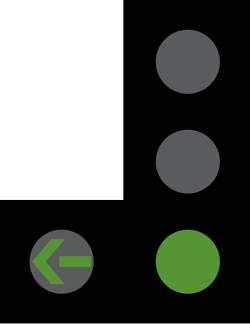

- A green arrow may be shown in addition to the full green, or with red, to allow movement in one direction. If the way is clear you may go, but only in the direction of the arrow, whatever other lights are showing.
- A green filter arrow marks a filter lane. Do not enter that lane unless you want to go in the direction of the arrow (rule 177).
- A right-turn green arrow showing with the full green means turning right should be easier, but Know Your Traffic Signs says you should still check that opposing traffic has stopped. If the full green is replaced by an ahead or left arrow, you must wait for the right-turn arrow before turning right.
Advanced stop lines for cyclists
At some junctions there are two stop lines with a box for cyclists between them. You MUST stop at the first white line if the lights are amber or red. If you have already crossed it when the signal goes red, stop as soon as possible and you MUST stop at the second line (rule 178). When green shows, give cyclists time and space to move off.


Some junctions also have signals just for cyclists. Red, amber and green have the same meanings as at other traffic signals.
Signal-controlled pedestrian crossings
- Pelican crossings: a flashing amber light follows the red. You MUST stop when the red light shows. When the amber is flashing you MUST give way to any pedestrians on the crossing, and if there are none you may go on with caution (rule 196).
- Puffin, toucan and equestrian crossings: there is no flashing amber phase. The light sequence for traffic is the same as ordinary traffic lights (rule 199).
- At all crossings, give way to anyone still crossing after your signal has changed to green (rule 198).

Flashing red lights: level crossings and more
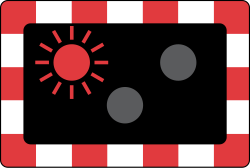

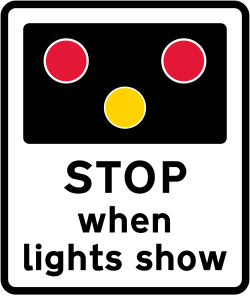

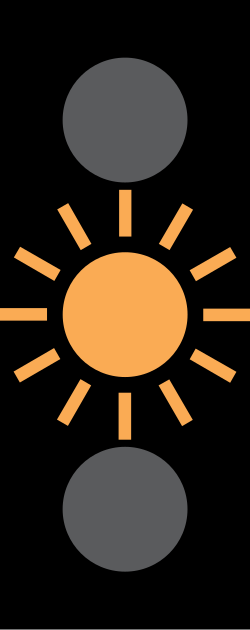
Alternately flashing red lights mean you MUST stop. The Highway Code notes they are used at level crossings, lifting bridges, airfields and fire stations. At level crossings (rule 293):
- A steady amber light comes on first, then the twin red lights flash, and an alarm sounds for pedestrians.
- You MUST always obey the flashing red stop lights, and you MUST stop behind the white line.
- If you have already crossed the white line when the amber comes on, keep going.
- If a train passes and the red lights keep flashing, you MUST wait, because another train will be passing soon.
Lane control signals
On some roads, signals above each lane show which lanes are open. The Highway Code explains that a green arrow means the lane is available to traffic facing the sign, red crosses mean the lane is closed, and a white diagonal arrow means change lanes in the direction shown. Motorway signals work in a similar way and are covered in our motorway signs guide.
Signals learners often confuse
- Red and amber vs amber alone: both mean stop. Red and amber comes before green; amber alone comes before red.
- Pelican vs puffin: only pelican crossings have a flashing amber phase.
- Green arrow with a red light: you may go in the direction of the arrow if the way is clear, even though the main light is red.
Practice questions
These practice questions are written by Get Driving Test Ready to help you revise. They are not official DVSA questions.
Q1. Which light comes straight after red in the UK traffic light sequence?
A) Green
B) Red and amber together
C) Flashing amber
D) Amber alone
Answer: B. The sequence is red, red and amber, green, amber, then red. Red and amber together also means stop. (Highway Code: light signals controlling traffic)
Practise this on the road: At traffic lights, name each light change aloud and be ready to move only on green.
Q2. The light changes to amber when you are too close to the stop line to pull up safely. What should you do?
A) Brake hard to stop at all costs
B) Stop past the line and wait
C) Continue with care
D) Reverse behind the line
Answer: C. You may go on at amber only if you have already crossed the stop line or are so close that pulling up might cause a collision. (Highway Code rule 175)
Practise this on the road: Approaching lights, pick a point where you would no longer stop on amber and check your speed.
Q3. The main light is red but a green arrow pointing left is also lit. What may you do?
A) Turn left if the way is clear
B) Go in any direction if the way is clear
C) Nothing, you must wait for full green
D) Turn right only
Answer: A. If the way is clear you may go, but only in the direction shown by the green arrow, whatever other lights are showing. (Highway Code: light signals controlling traffic)
Practise this on the road: At junctions with filter arrows, check which arrow is lit and which lane it applies to.
Q4. You are at a pelican crossing and the amber light is flashing. A pedestrian is still on the crossing. What must you do?
A) Sound your horn
B) Flash your headlights to hurry them
C) Drive on because your light is not red
D) Give way to the pedestrian
Answer: D. When the amber light is flashing you MUST give way to any pedestrians on the crossing. (Highway Code rule 196)
Practise this on the road: At pelican crossings, watch for flashing amber and check the crossing is empty before moving off.
Q5. Which crossings do NOT have a flashing amber phase for traffic?
A) Puffin, toucan and equestrian crossings
B) Pelican crossings
C) All signal-controlled crossings
D) None of them
Answer: A. Puffin, toucan and equestrian crossings have no flashing amber phase; their light sequence is the same as at traffic lights. (Highway Code rule 199)
Practise this on the road: Note which crossings on your usual routes are pelican, puffin or toucan crossings.
Q6. At a level crossing a train has just passed, but the red lights are still flashing. What does this mean?
A) The lights are faulty, so you can go
B) Another train will be passing soon, so you MUST wait
C) You should phone the signal operator
D) You may cross if you drive quickly
Answer: B. You MUST wait if a train goes by and the red lights continue to flash, because another train will be passing soon. (Highway Code rule 293)
Practise this on the road: At level crossings, stop at the white line when the lights flash and wait until they stop.
Q7. The traffic lights at a junction are not working. How should you treat the junction?
A) As an unmarked junction, proceeding with great care
B) As if you have priority
C) As if the lights were green
D) As a box junction
Answer: A. If the traffic lights are not working, treat the situation as you would an unmarked junction and proceed with great care. (Highway Code rule 176)
Practise this on the road: If you meet lights that are out of order, slow right down and treat everyone as having equal priority.
Q8. The lights are green and you are turning left. A pedestrian has started to cross the road you are turning into. What should you do?
A) Carry on, because green gives you priority
B) Sound your horn
C) Give way to the pedestrian
D) Turn quickly before they reach the middle
Answer: C. Green means go only if the way is clear. Give way to pedestrians crossing a road you are turning into; if they have started to cross, they have priority. (Highway Code rule H2; Highway Code rule 170)
Practise this on the road: When turning left at lights, check the road you are entering for people crossing before you turn.
Next steps
Head back to the road signs hub, read the matching road markings guide for stop lines and box junctions, and practise with the rules of the road topic and the vulnerable road users topic.