
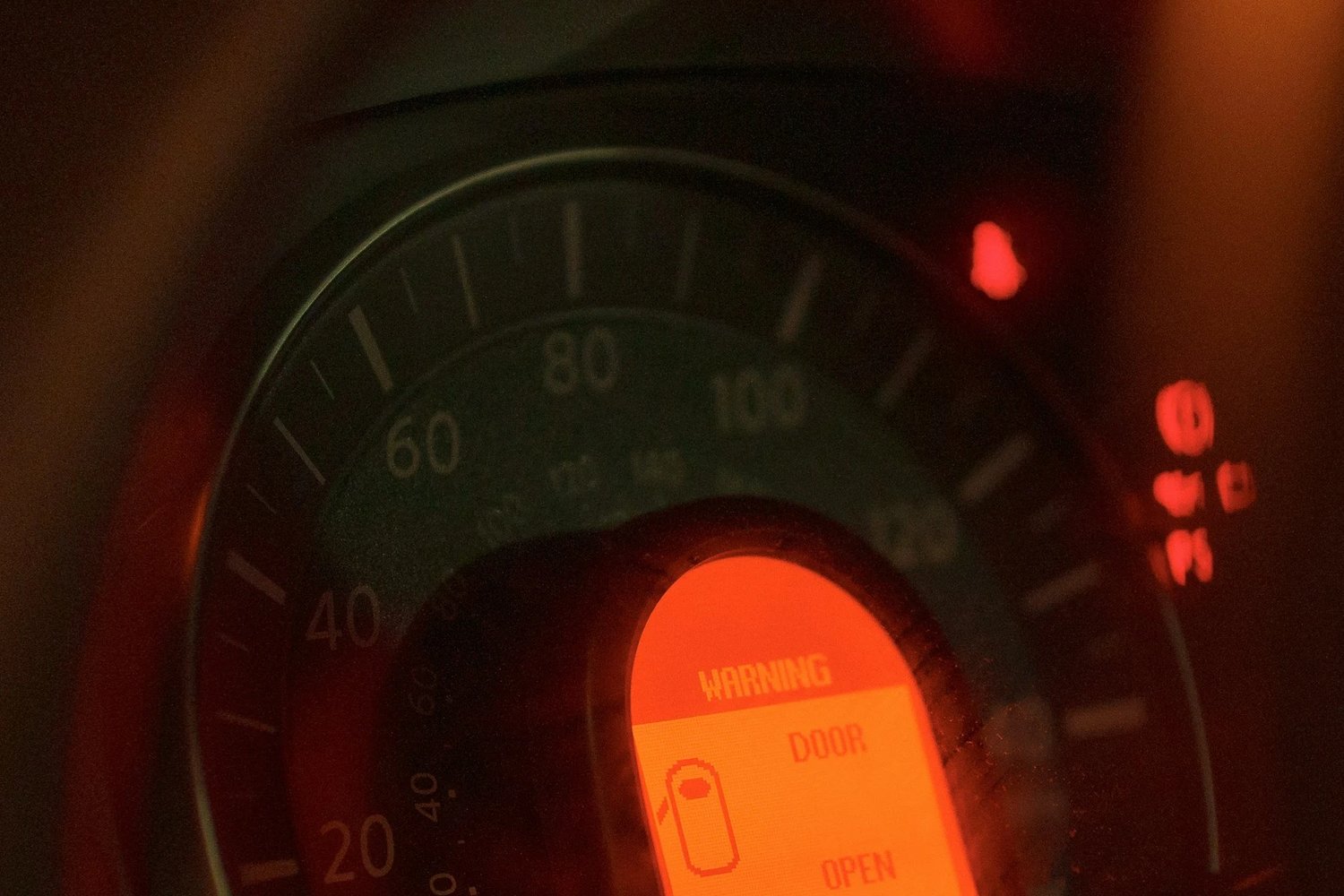
Photo: Andrew Thongkham / Unsplash. Illustrative photograph.
If a dashboard warning light comes on while you are driving in Great Britain, the Highway Code says stop and investigate: warning signs can indicate a dangerous fault developing. This guide is for learners and new drivers. It covers what to do about warning lights, overheating, strange smells and a car fire, based on Annex 6 of the Highway Code and your vehicle handbook.
Key facts
- Know what every warning display in your car means. Annex 6 says you should.
- Warning lights should go out once the engine starts, apart from the handbrake light. If one stays on or comes on while driving, stop and investigate.
- Overheating: let the engine cool naturally before removing the coolant filler cap.
- Fire: get everyone out quickly and call the fire service on 999. Do not open the bonnet.
A warning light has come on: what should you do?
- Keep control. A warning light is not a reason to brake hard or swerve. Check mirrors and keep driving smoothly while you find somewhere safe.
- Judge how urgent it is. Your handbook says which lights mean stop now and which mean get it checked soon. Many cars show red for urgent warnings and amber for faults to check, but the handbook for your car is what counts.
- Stop somewhere safe. A car park, side road or lay-by, not a live lane. On a motorway, leave at the next exit or services if you can. If you cannot, see what to do if your car breaks down and smart motorways and emergency areas.
- Look it up. Check the symbol in the handbook and note any other symptoms: noises, smells, how the brakes or steering feel.
- Get help if needed. Call your breakdown provider or a garage and describe the exact symbol and symptoms.
A light that goes out after you restart has not necessarily been fixed. Note it and get the car checked.
Warning signs that do not need a light
Annex 6 lists problems you should act on even without a dashboard warning:
| Symptom | What the Highway Code says |
|---|---|
| Car pulls to one side when braking | Most likely a brake fault or incorrectly inflated tyres. Get a garage or mechanic to check it straight away. |
| Car keeps bouncing after you push down on the front or rear | Shock absorbers are probably worn and need replacing. |
| Smell of burning rubber, petrol or an electrical fault | Investigate immediately. |
What to do if your engine overheats
- Stop somewhere safe and switch off as your handbook advises.
- Let the engine cool naturally. Annex 6 says not to remove the coolant filler cap until it has. A hot system is under pressure and can spray scalding coolant or steam.
- Top up only with the fluid your handbook specifies, once cool.
- If the temperature rises again, do not keep driving and topping up. Get it checked.
What to do if your car catches fire
- Stop as soon as it is safe and switch off the engine.
- Get everyone out of the car quickly and well away from it, and away from traffic.
- Call 999 and ask for the fire service. Tell them where you are and, if relevant, that the car is electric or hybrid.
- Do not go back for belongings.
- Do not try to put out a fire in the engine compartment. Annex 6 warns that opening the bonnet will make the fire flare.
At the petrol station
- Do not overfill, and check the fuel cap is secure and undamaged.
- Report any spilled fuel to the attendant straight away.
- Never smoke or use a mobile phone on the forecourt, because of the fire and explosion risk.
Learn your car before it goes wrong
Spend five minutes with the handbook and the practice car parked: switch the ignition on and see which lights appear, then start the engine and check they go out. Electric and hybrid cars may be ready to drive with no engine sound, so learn how your car shows that it is on. This also helps with the show me, tell me questions on the driving test.
Common questions
Can I keep driving with a warning light on?
The Highway Code says stop and investigate if a warning light comes on while driving. Whether the car can then be driven to a garage depends on the fault, so check the handbook or ask a mechanic.
Why does every light come on when I start the car?
Many cars run a bulb check at start-up. The lights should go out once the engine starts, except the handbrake light while it is on.
Should I carry a fire extinguisher?
The Highway Code does not require one. Whatever you carry, do not open the bonnet on an engine fire.
Is it safe to open the bonnet when steam comes out?
Wait for the engine to cool. Never open the coolant cap while hot.
Where can I learn more about basic checks?
See basic car maintenance for new drivers and the safety and your vehicle theory topic.
Related: before you drive checks and skids, aquaplaning and ABS. Back to learning to drive in Great Britain.
Sources
- Department for Transport, “The Highway Code: Annex 6, vehicle maintenance, safety and security” (gov.uk)