
Author: Get Driving Test Ready

  • Newfoundland Demerit Points for Novice Drivers: the 6-Point Limit

    Newfoundland Demerit Points for Novice Drivers: the 6-Point Limit

    Photo: Ycleymans, CC BY-SA 4.0, via Wikimedia Commons

    Novice drivers in Newfoundland and Labrador (Class 5I and 5II) get a warning letter at 3 demerit points and a licence suspension at 6 points within one year, half the 12-point limit for fully licensed drivers. A suspension also sends you back to the start of your GDL level. This explainer covers the limits, the point values for common offences, and how a points reduction course can remove up to 4 points.

    Key facts

    • Novice limit: 6 points within one year. Warning letter at 3.
    • Full licence limit: 12 points within two years (warnings at 6 and 9).
    • Points come off your record automatically two years after the conviction date.
    • Points reduction course: removes up to 4 points, once every five years, if you have not yet hit the suspension level.
    • Points from offences anywhere in Canada are added to your Newfoundland and Labrador record.

    Novice vs full licence demerit limits

    Novice (Class 5I, 5II, 6I, 6II) Full licence
    Warning letter 3 points 6 points, then 9 points
    Suspension 6 points within 1 year 12 points within 2 years
    After suspension Restart your GDL level Reinstatement

    How many points for common offences in Newfoundland and Labrador?

    Point values are set in the Schedule of the Highway Traffic Demerit Point System Regulations. A selection:

    Offence Points
    Speeding 11 to 20 km/h over 2
    Speeding 21 to 30 km/h over 3
    Speeding 31 to 50 km/h over 4
    Speeding 51 km/h or more over 6 (plus a 7-day licence suspension)
    Holding or using a hand-held phone or device 4
    Driving without due care and attention 4
    Passing a stopped school bus 6
    Racing 6 (plus a 7-day licence suspension)
    Stunting 6 (plus a 7-day licence suspension)
    Contravening a novice or accompanying driver restriction 3
    Not displaying the novice driver sign 3
    Not leaving the required 1 m or 1.5 m when passing a cyclist or pedestrian (handbook) 2
    Failure to stop at a stop sign 2
    Following too closely 2
    Driver not wearing a seatbelt 2

    Check the full, current Schedule on the House of Assembly legislation site before relying on any single value.

    Worked example

    A Level II driver is caught using a hand-held phone (4 points), then three months later is ticketed for 15 km/h over (2 points). That is 6 points within a year: licence suspended, and the driver must restart Level II. One ticket for passing a school bus or going 51 km/h over reaches 6 on its own.

    Suspension lengths for novice drivers

    The Motor Registration GDL page lists novice suspensions for demerit points as:

    Suspension Length
    1st 2 months
    2nd 4 months
    3rd 6 months

    The general demerit page and the regulations give 2 months for a first suspension and 4 months for later ones, with the regulations setting these as minimum periods. Confirm the period that applies to you with the Driver Records Section.

    Driving while suspended adds a further 4 months the first time and 9 months for later offences within five years.

    Getting your licence back after a novice suspension

    1. Serve the full suspension. Motor Registration cannot return a licence early under any circumstances.
    2. Complete a Responsible Drivers Workshop (the suspended driver’s course). You can do it during the suspension or just before reinstatement.
    3. Apply to the Registrar for reinstatement and pay the reinstatement fee ($200 under the fees policy dated 21 December 2023).
    4. Restart the level of licence you held. Time already served at that level does not count: the Driver Regulations say the reinstated licence is reissued as if you were starting that level for the first time, so your new end date runs from the reissue date.

    The Registrar may set additional requirements. If you already passed a test or an approved course, the Registrar can choose not to make you repeat it before reinstatement, but that is a discretion, not a right.

    Points reduction course

    • Who: a novice driver with some points but fewer than 6 (or a full licence holder under 12).
    • When: take it when you receive your warning letter.
    • Effect: up to 4 points removed.
    • Limit: once every five years.
    • Where: some approved driving schools are certified to deliver it. Contact the school directly.
    • Cost: paid by the driver.

    Check your points

    You can check your accumulated demerit points online through MyGovNL. Convictions and suspensions stay on your driving record for 10 years and appear on your driver’s abstract, even after the points themselves expire.

    Common questions

    How many demerit points can a novice driver have in Newfoundland?

    Six within one year triggers a suspension. You get a warning letter at 3.

    Do points from another province count?

    Yes. Convictions in any other Canadian jurisdiction add the appropriate points to your record.

    Can I get a ticket without being stopped?

    Yes. Motor Registration notes you can get a ticket, and points, without being stopped by a police officer.

    Do my novice points carry over to my full licence?

    Yes. The regulations carry points earned as a novice forward onto your record as a non-novice driver.

    Does impaired driving give demerit points?

    Novice drivers over 0% BAC face an immediate roadside suspension instead. See novice rules and impaired driving in Canada.

    Back to learning to drive in Newfoundland and Labrador. Related: school bus stopping rules across Canada.

    Sources

    • Government of Newfoundland and Labrador, Motor Registration Division, “Graduated Driver Licencing Program” (gov.nl.ca)
    • Government of Newfoundland and Labrador, Motor Registration Division, “Demerit Point System” (gov.nl.ca)
    • House of Assembly Newfoundland and Labrador, “Highway Traffic Demerit Point System Regulations”, CNLR 753/96 (assembly.nl.ca)
    • House of Assembly Newfoundland and Labrador, “Highway Traffic Driver Regulations, 1999”, NLR 110/98 (assembly.nl.ca)
    • Government of Newfoundland and Labrador, “Driver’s Handbook” (gov.nl.ca)
    • Government of Newfoundland and Labrador, Motor Registration Division, “Approved Driving Schools” (gov.nl.ca)
    • Department of Digital Government and Service NL, Motor Registration fees policy, 21 December 2023 (gov.nl.ca)
  • Newfoundland Road Test and the Driver Education Credit

    Newfoundland Road Test and the Driver Education Credit

    Photo: Ycleymans, CC BY-SA 4.0, via Wikimedia Commons

    In Newfoundland and Labrador you can book the Class 5 road test after 12 months as a Level I learner, or after 8 months if you complete an approved driver education program. The test takes about 30 minutes, costs $78 under the current fees policy, and must be paid at least 24 hours ahead. This guide covers booking, what to bring, what the examiner checks and how the driver education credit works.

    Key facts

    • Eligible after 12 months at Class 5I, or 8 months with approved driver education (a 4-month credit).
    • Fee: $78 for Class 5 (Motor Registration fees policy dated 21 December 2023; check the current figure before booking).
    • Pay at least 24 hours before your appointment, online at MyGovNL or at a Motor Registration office or Government Service Centre.
    • Length: about 30 minutes, including a vehicle check and a parking test.
    • A passed road test result is valid for 12 months.

    How the driver education credit works

    If you successfully complete an approved Driver Education Program, the minimum time at Level I drops from 12 months to 8. The handbook recommends enrolling once you become a Level I driver. The course must be with a school approved by Government Services to deliver the Graduated Driver Licencing Program; Motor Registration publishes the list of approved schools and their areas on gov.nl.ca. Only the schools in its Table A are approved to deliver the program; Table B lists commercial driver training schools, and a few extra paid lessons are not the same as completing the approved course.

    Without driver education With approved driver education
    Earliest road test after getting Class 5I 12 months 8 months
    Earliest full Class 5 (12 months at Level II) 24 months 20 months
    Proof needed at the road test None Proof of completion of the approved course

    Driver education has another benefit at Level I: the handbook allows a parent or guardian to be present when you are enrolled in a driver education program and driving with a licensed instructor. Course fees are set by the schools; contact them directly.

    How to book the Newfoundland and Labrador road test

    1. Wait until you meet the 12 month (or 8 month) minimum.
    2. Book an appointment online through the Motor Registration appointment system, before your Class 5I licence expires.
    3. Pay the road test fee at least 24 hours in advance. Delays in processing your receipt can get the appointment cancelled.
    4. Arrive 15 minutes early.

    What to bring on test day

    • Receipt showing you paid for the road test
    • Valid Class 5I driver’s licence
    • Valid insurance policy
    • Valid registration certificate for the test vehicle (Motor Registration’s road test page accepts a copy). It must be for the car you are testing in, so bring the right one if you borrow a vehicle.
    • Your NOVICE DRIVER sign, displayed on the test vehicle
    • Proof of completion of an approved driver training course, if you are using the 8 month route

    You supply the vehicle. Its mechanical condition is checked before the drive, so test the lights, signals, horn and brakes the day before. The handbook lists what is checked: licence plate, lights, horn, rear-view mirror, wipers, muffler, brakes, tires, windshield, window glass and steering. No test is given in an unsafe vehicle.

    What the examiner checks

    The test covers the examiner’s pre-test instructions, a vehicle inspection, a parking test, the on-road drive and a summary of your results. You must show you can drive safely without supervision while interacting with other road users, and you will be asked to identify and operate the vehicle’s controls. The examiner assesses:

    • handling: steering, braking and speed control
    • choosing the proper lane for turns
    • observing and obeying speed zones
    • right of way at intersections and during lane changes
    • intersections with and without signs and signals
    • parking

    The parking test

    You can set up pylons to practise using the handbook’s dimensions: a parallel space about 7.3 m long and 1.98 m wide, and an angle space about 2.74 m wide and 4.5 m deep. Signal during every parking move. The examiner may ask you to do angle parking from the left or the right, so practise both.

    • Parallel: find a gap about one and a half times your car length. Stop beside the front car with your back bumpers lined up. Reverse slowly, wheel sharply right, to about 45 degrees to the curb. When your front bumper clears the car ahead, turn sharply left and keep backing. Finish with equal space front and rear, within 30 cm of the curb.
    • 90-degree space: back in, then drive out.
    • 60-degree space: drive in, then back out.

    Common reasons for failing

    The handbook lists these:

    • going over the maximum number of points for errors
    • exceeding the speed limit or driving too fast for conditions
    • not stopping completely at a stop sign, or before turning right on a red light
    • failing to yield at an intersection or during a lane change
    • obstructing traffic by driving too slowly or stopping unnecessarily
    • any unsafe behaviour that makes the examiner stop the test

    Practice checklist for the last month

    • Full stops behind the line at every stop sign, and before every right turn on red.
    • Shoulder check on every lane change and before pulling away from the curb.
    • Know the speed limit on every road you drive, and watch for changes.
    • Practise parking until it is routine.
    • Drive at the speed of traffic where safe; hesitation counts too.

    After you pass

    A clerk processes your passed road test receipt and you pay the licence fee. Your licence is not issued until this step is done. You become a Class 5II novice for 12 months. Read the Level II rules.

    Common questions

    How long is the road test in Newfoundland?

    About 30 minutes, including instructions, the vehicle check, parking and the drive.

    Can I take the road test after 8 months?

    Only if you have completed an approved driver education program and bring proof of completion.

    What happens if I fail?

    The test ends with a summary of your results. You will need to book and pay for another test; check the waiting period with your local Motor Registration office.

    Can I use a rental or a friend’s car?

    You need valid insurance and a valid registration certificate for the vehicle, and it must pass the mechanical check. Make sure the insurance covers you driving it.

    What if I pass but do not get my licence straight away?

    A passed road test result is valid for 12 months, so complete the licence step within that time.

    Back to the full path: learning to drive in Newfoundland and Labrador. Also useful: the written test and winter driving for new drivers.

    Sources

    • Government of Newfoundland and Labrador, Motor Registration Division, “Licence Application Process” (gov.nl.ca)
    • Government of Newfoundland and Labrador, Motor Registration Division, “Graduated Driver Licencing Program” (gov.nl.ca)
    • Government of Newfoundland and Labrador, Motor Registration Division, “Approved Driving Schools” (gov.nl.ca)
    • Government of Newfoundland and Labrador, Motor Registration Division, “Road Tests” (gov.nl.ca)
    • Government of Newfoundland and Labrador, “Driver’s Handbook” (gov.nl.ca)
    • Department of Digital Government and Service NL, Motor Registration fees policy, 21 December 2023 (gov.nl.ca)
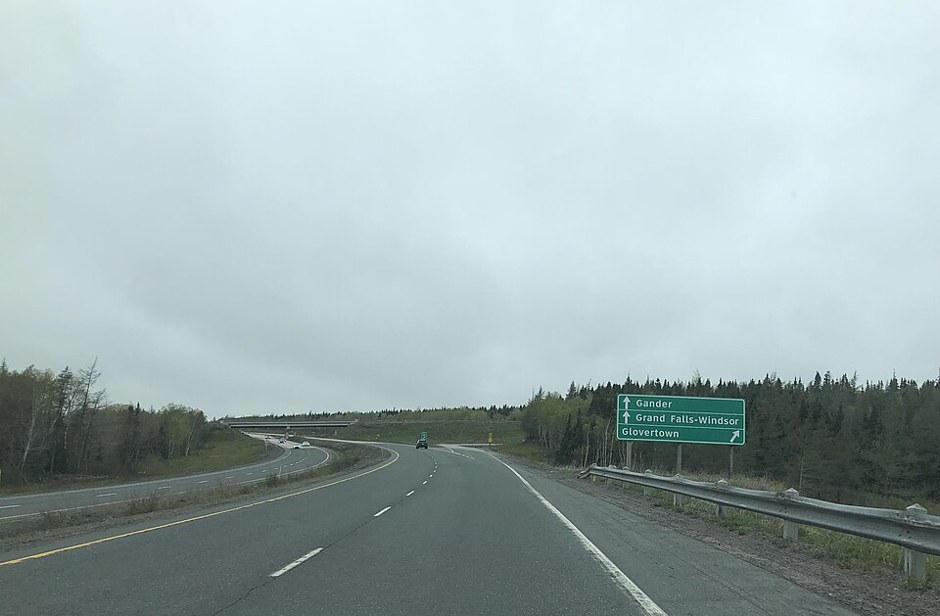
  • Newfoundland Novice Rules: Passengers, Curfew, NOVICE DRIVER Sign

    Newfoundland Novice Rules: Passengers, Curfew, NOVICE DRIVER Sign

    Photo: Ycleymans, CC BY-SA 4.0, via Wikimedia Commons

    Novice driver rules in Newfoundland and Labrador come in two levels. Level I learners (Class 5I) need a supervisor with 4 years’ Class 5 experience, carry no other passengers, may not drive from midnight to 5 a.m., and must display a NOVICE DRIVER sign. Level II drivers (Class 5II) drive alone but have a midnight to 5 a.m. limit and a seatbelt passenger cap. Both levels require 0% blood alcohol. This page sets out each rule for learners and the parents supervising them.

    Level I and Level II rules side by side

    Rule Level I (Class 5I learner) Level II (Class 5II novice)
    Minimum time 12 months (8 with approved driver education) 12 months
    Supervising driver Always. At least 4 years as a Class 5 driver, in the front seat beside you Only between midnight and 5 a.m.
    Your BAC 0% 0%
    Supervisor’s BAC 0% 0% (when one is required)
    Passengers None except the accompanying driver No more than the number of seatbelts
    Midnight to 5 a.m. No driving at all Only with a 4-year licensed driver, or with a work exemption
    NOVICE DRIVER sign Required Not required (the sign is for learners only)
    Commercial upgrade Not eligible Only after holding a valid Class 05 for at least one year

    Who can supervise a Level I learner?

    The accompanying driver must:

    • hold, and have held for at least 4 years, a full Class 5 licence or the equivalent licence from another province or country (time on a learner or novice licence does not count toward the 4 years)
    • have 0% blood alcohol content, not just be under the legal limit
    • sit in the front seat, beside the learner

    A parent who drinks one beer at dinner cannot supervise that evening.

    No passengers: what it really means

    At Level I the only other person in the vehicle can be your accompanying driver. No friends, no siblings in the back. The one exception in the handbook: a parent or guardian may be present if you are enrolled in a driver education program and are with a licensed instructor. The Driver Regulations allow one or more parents or guardians in the car during a lesson with an authorized driving instructor; it does not cover informal practice with family.

    At Level II you can carry passengers, but only as many as there are seatbelts. As the driver, you are responsible for making sure passengers under 16 are properly restrained.

    The midnight to 5 a.m. curfew

    • Level I: you may not drive between midnight and 5 a.m., even with a supervisor.
    • Level II: you may drive in those hours only with an accompanying driver who has at least 4 years’ experience and 0% BAC.
    • Work exemption (Level II): you can drive alone in those hours for work. Keep confirmation of your work schedule, signed by your employer, in the vehicle and show it to a police officer on request.

    The NOVICE DRIVER sign rules

    • Lettering at least 5 cm high.
    • Black lettering on a white background.
    • Displayed in a conspicuous place on the rear of the vehicle.
    • Acceptable spots in the handbook: the lower left corner of the rear window directly behind the driver (recommended, as it blocks the least vision), the trunk, or the rear bumper.
    • Display it only when a learner is driving. Take it down when a fully licensed driver takes the wheel.

    Not displaying the sign is a demerit point offence: 3 points under the Highway Traffic Demerit Point System Regulations.

    Making your own sign

    The rules set the wording, size and colours, not a product. A sign printed or lettered with NOVICE DRIVER in black capitals at least 5 cm tall on white meets the stated specification. Check it is readable from behind and does not block your rear view.

    Zero alcohol for novices

    If a novice driver (Level I or II) is over 0% BAC, police suspend the licence immediately at the roadside.

    Offence Suspension
    1st 2 months
    2nd 4 months
    3rd 6 months

    You must also complete an Alcohol Education Program, apply to the Registrar for reinstatement, and restart your level from the beginning. The Registrar may also require an alcohol dependency evaluation or treatment. Criminal Code penalties can apply on top: see impaired driving in Canada for new drivers.

    Zero does not end with Level II. The handbook and the Highway Traffic Act keep drivers under 22 at zero blood alcohol even after they leave the novice levels. Drivers 22 or older on a full licence face a roadside suspension at 50 mg or more: 7 days for a first time, 14 days for a second and two months for a third within 24 months. At 80 mg or more, the vehicle is impounded, the licence is suspended for 7 days, and a further 90-day suspension follows. A Criminal Code impaired conviction means 12 months for a first offence, plus at least 12 months on an ignition interlock.

    Police can also use a saliva test strip to check for THC, methamphetamine and MDMA. Refusing to give a sample is an offence under both provincial and federal law.

    Breaking a GDL restriction

    Contravening a restriction on a novice or accompanying driver carries 3 demerit points under the Highway Traffic Demerit Point System Regulations. With a novice limit of 6 points in one year, two restriction tickets can mean a suspension and a restart. Details: demerit points for novice drivers.

    Common questions

    Can a learner in Newfoundland drive with friends in the car?

    No. At Level I the only permitted passenger is the accompanying driver.

    Can my older brother supervise me?

    Only if he has at least 4 years’ experience as a full Class 5 driver, has 0% BAC and sits in the front seat.

    What time can a Level II driver drive alone?

    Any time except midnight to 5 a.m., unless you have a work exemption.

    Do I need a novice sign at Level II?

    The handbook says the sign should be displayed only when the vehicle is driven by a driver with a learner’s permit, so no.

    Can I drink a small amount as a Level II driver?

    No. Novice drivers at both levels must have 0% BAC.

    Does the curfew apply to adult learners?

    Yes. The program and its restrictions apply to all new drivers regardless of age.

    For the full licensing path, start at learning to drive in Newfoundland and Labrador. To compare curfews in other provinces, see Canadian graduated licensing compared.

    Sources

    • Government of Newfoundland and Labrador, Motor Registration Division, “Graduated Driver Licencing Program” (gov.nl.ca)
    • Government of Newfoundland and Labrador, “Driver’s Handbook” (gov.nl.ca)
    • House of Assembly Newfoundland and Labrador, “Highway Traffic Demerit Point System Regulations”, CNLR 753/96 (assembly.nl.ca)
    • House of Assembly Newfoundland and Labrador, “Highway Traffic Driver Regulations, 1999”, NLR 110/98 (assembly.nl.ca)
  • Newfoundland and Labrador Written Test: the 85% Pass Mark

    Newfoundland and Labrador Written Test: the 85% Pass Mark

    Photo: Ycleymans, CC BY-SA 4.0, via Wikimedia Commons

    The Newfoundland and Labrador learner’s written test is a multiple choice test on rules of the road, safe driving practices and road sign recognition, and you need 85 per cent to pass. You can take the Class 5 test online through MyGovNL, then visit a Motor Registration office for your vision test and photo before you can drive. This page is for anyone 16 or older about to take the Class 5 Level I test in Newfoundland and Labrador.

    Key facts

    • Pass mark: 85 per cent.
    • Format: multiple choice.
    • Topics: rules of the road, safe driving practices, road sign recognition, based on the Driver’s Handbook and the Highway Traffic Act and Regulations.
    • Where: online in English through MyGovNL, or at a Motor Registration office.
    • Passed result valid for six months.
    • Minimum age 16; under 19 needs parent or guardian consent.

    What does 85 per cent mean in practice?

    You can miss very few questions. Check the current question count with Motor Registration if you want to know exactly how many you can get wrong. Prepare to know the whole handbook, not just most of it.

    How to take the test online through MyGovNL

    1. Register for a MyGovNL account. Use a photo ID issued by Motor Registration, or if you do not have one, sign up with your email and MCP card.
    2. Take the Class 5 Level I test online (English only).
    3. If you pass, book an appointment at a Motor Registration office or Government Service Centre.
    4. At the appointment your result is validated, you take a vision test, you are photographed, your identity documents are checked and you pay the learner’s permit fee.

    Your learner’s permit is not valid until you complete step 4, so do not drive before then.

    Taking the test in French, Ukrainian or with help

    • French and Ukrainian versions of the Class 5 written test are offered at all Motor Registration office locations. Book an appointment online.
    • If you need help with reading or writing during the test, contact the office in advance and schedule an appointment.
    • Interpreters for other languages must be approved by the Registrar, and you pay any interpreter costs.

    What the test covers

    Handbook chapter What to know cold
    Licensing and Registration GDL Level I and II rules: 4-year supervisor, no passengers, midnight to 5 a.m. ban, NOVICE DRIVER sign, 0% BAC
    Road Safety Stopping distance, distracted and impaired driving, demerit points, collisions, animals on the road
    Traffic Signs and Pavement Markings Sign shapes and colours, warning signs (including the moose crossing sign), lane markings
    Rules of the Road Right of way, intersections, roundabouts, turns, speed, school buses, emergency vehicles

    The handbook also has motorcycle and commercial chapters, which are not needed for the Class 5 test.

    Sign shapes worth memorizing

    • Octagon: stop.
    • Inverted triangle: yield right of way.
    • Pentagon: school zone or school crossing.
    • Crossbuck: railway crossing.
    • Vertical rectangle or square: regulation.
    • Horizontal rectangle: directions and distances.

    Numbers that come up

    • Learner supervisor: at least 4 years as a Class 5 driver.
    • NOVICE DRIVER sign lettering: at least 5 cm, black on white.
    • Novice demerit limit: 6 points in one year; warning letter at 3.
    • Full licence demerit limit: 12 points in two years.
    • Speeding 51 km/h or more over the limit: 7-day licence suspension.
    • Report a collision to police if anyone is injured or killed, or damage is $2,000 or more.
    • At 60 km/h an alert driver travels about 12 m while reacting and another 20 m braking.

    A study plan that works

    1. Read the four Class 5 chapters of the handbook once, start to finish.
    2. Reread the GDL pages and the sign chapter. These are pure memory and easy marks.
    3. Write down every number from the handbook (distances, points, times, BAC) on one sheet.
    4. Get someone to quiz you on scenarios: who goes first at a four-way stop, what to do when a school bus has its lights flashing.
    5. Book the test only when you would score well above 85 per cent.

    After you pass

    You become a Class 5I (Level I) learner. The licence is valid for two years. You need at least 12 months at this level (8 with approved driver education) before the road test. Read the Level I and Level II rules before your first drive, and see the full path in learning to drive in Newfoundland and Labrador. Two handbook topics worth extra study: demerit points for novice drivers and moose on Newfoundland roads. When you are ready for the next step, see the road test guide.

    Common questions

    What is the pass mark for the Newfoundland learner’s test?

    85 per cent.

    Can I do the Newfoundland written test online?

    Yes, the Class 5 Level I test is available online in English through MyGovNL. You still need an in-person appointment for the vision test, photo and ID check.

    How long is a passed written test valid?

    Six months. Complete the vision test and permit appointment within that time.

    How much does the written test cost?

    The fees policy lists $60 for a Class 5I licence, paid at the appointment. A separate written test fee is not shown on the Motor Registration pages; check the current figure with Motor Registration before booking.

    What if I fail?

    Check the waiting period between attempts with Motor Registration. Contact your local Motor Registration office for retest rules.

    Do I need a parent with me?

    If you are under 19 and applying for the first time, a parent or legal guardian must sign consent on the application, and the handbook says they must come with you to the Motor Registration office. The signature is not needed if you can show you are married or self-supporting.

    Sources

    • Government of Newfoundland and Labrador, Motor Registration Division, “Licence Application Process” (gov.nl.ca)
    • Government of Newfoundland and Labrador, Motor Registration Division, “Graduated Driver Licencing Program” (gov.nl.ca)
    • Government of Newfoundland and Labrador, “Driver’s Handbook” (gov.nl.ca)
    • Government of Newfoundland and Labrador, Motor Registration Division, “Demerit Point System” (gov.nl.ca)
    • Department of Digital Government and Service NL, Motor Registration fees policy, 21 December 2023 (gov.nl.ca)
  • How to Get a Driver’s Licence in Newfoundland and Labrador

    How to Get a Driver’s Licence in Newfoundland and Labrador

    Photo: Ycleymans, CC BY-SA 4.0, via Wikimedia Commons

    To get a driver’s licence in Newfoundland and Labrador, every new driver, at any age, goes through the Graduated Driver Licensing Program: pass a written and vision test for a Class 5 Level I (learner) licence at 16 or older, hold it at least 12 months (8 with an approved driver education course), pass a road test, then spend 12 months at Level II before a full Class 5. This guide is for new drivers and parents in Newfoundland and Labrador and sets out each step, the rules at each level, and what it costs.

    Key facts

    • Minimum age: 16. Under 19 needs a parent or guardian’s consent.
    • Written test pass mark: 85 per cent. You can take the Class 5 test online through MyGovNL.
    • Level I (Class 5I): at least 12 months, cut to 8 with an approved driver education program.
    • Level II (Class 5II): 12 months.
    • Zero blood alcohol at both levels.
    • Fees (Motor Registration fees policy dated 21 December 2023, the policy linked from gov.nl.ca as of November 2026): Class 5I licence $60, Class 5 road test $78.

    The Newfoundland and Labrador GDL path at a glance

    Stage How you get there Minimum time Main restrictions
    Level I: Class 5I (learner) Age 16+, written test, vision test 12 months (8 with approved driver education) Supervisor with 4+ years as a Class 5 driver, no other passengers, no driving midnight to 5 a.m., NOVICE DRIVER sign, 0% BAC
    Level II: Class 5II (novice) Pass the road test 12 months Midnight to 5 a.m. only with a 4-year licensed driver (work exemption), passengers limited to seatbelts, 0% BAC
    Full Class 5 12 months at Level II None Standard rules

    The program has applied to all new drivers regardless of age, and covers both Class 5 (passenger vehicles and light trucks) and Class 6 (motorcycle). You are a “novice” for the whole of Level I and Level II.

    Step 1: Study the Driver’s Handbook

    Motor Registration Division publishes the Newfoundland and Labrador Driver’s Handbook as a free PDF on gov.nl.ca. The written test is based on it and on the Highway Traffic Act and Regulations. Focus on the licensing chapter, road safety, traffic signs and pavement markings, and rules of the road.

    Step 2: Pass the written test

    • Multiple choice questions on rules of the road, safe driving practices and road sign recognition.
    • Pass mark: 85 per cent.
    • Take it online in English through MyGovNL, or at a Motor Registration office. French and Ukrainian versions are offered at offices by appointment.
    • A passed result is valid for six months.

    Full details: Newfoundland and Labrador written test.

    Step 3: Vision test, photo and ID check

    After passing the written test, book an appointment at a Motor Registration office. You may not drive until you have attended it. At the appointment:

    1. Your written test result is validated.
    2. You take a vision test.
    3. You are photographed.
    4. Your original identity documents are checked: proof of age, identity and, if applicable, legal presence in Canada. Photocopies are not accepted unless certified.
    5. If you are under 19, a parent or legal guardian signs consent on the application. They can withdraw consent in writing until you turn 19, and your driving privileges are then suspended.
    6. You pay the Class 5I fee and leave with a temporary permit. The card arrives by mail.

    What ID to bring

    Motor Registration needs at least two documents that together prove your full legal name, date of birth, legal presence in Canada and a photo. Examples from the handbook include a government-issued birth certificate or Canadian passport plus a secondary document such as a Social Insurance card, MCP card or a Newfoundland and Labrador school photo ID. A driver’s licence or ID card from another Canadian jurisdiction is not accepted on its own as proof of identity. You also need proof of address showing your full name, such as a utility bill no older than two months, a bank statement, or a residential lease signed by both landlord and tenant. If you have no document to prove your photo or address, a Guarantor Declaration is used instead: for a minor, a parent or guardian signs it; adults complete one too. Check the full list on the Motor Registration “Identification Documentation” page before you go.

    Step 4: Drive as a Level I learner

    The Class 5I licence is valid for two years. While you hold it you must:

    • Drive only with an accompanying driver who has at least 4 years’ experience as a Class 5 driver, sitting in the front seat beside you, with 0% BAC.
    • Have 0% BAC yourself.
    • Carry no other passengers.
    • Not drive between midnight and 5 a.m.
    • Display a NOVICE DRIVER sign on the rear of the vehicle.

    Every rule explained, with the sign specification: Newfoundland and Labrador novice rules.

    Step 5: Consider an approved driver education course

    Completing an approved driver education program at a school approved by Motor Registration cuts the Level I wait from 12 months to 8. Motor Registration lists the approved schools by area on gov.nl.ca: the schools in its Table A are the ones approved to deliver the graduated licensing program, while Table B lists commercial driver training schools. Check that your course is a Table A program and ask how completion is documented. See road test and driver education credit.

    Step 6: Pass the road test

    • Book once you have 12 months at Level I (8 with driver education).
    • Pay the fee ($78 for Class 5 as of the current fees policy) at least 24 hours before the test.
    • Bring the payment receipt, your valid Class 5I licence, valid insurance and the vehicle’s registration.
    • The test takes about 30 minutes and includes a vehicle check, a parking test and an on-road drive.

    After passing, a clerk processes your licence and you pay the licence fee. A passed road test result is valid for 12 months.

    Step 7: Level II, then a full licence

    As a Class 5II novice you can drive alone, but for 12 months you must keep 0% BAC, carry no more passengers than there are seatbelts, and drive between midnight and 5 a.m. only with an accompanying driver who has 4 years’ experience and 0% BAC (unless you have a work exemption). After 12 months at Level II you move to a full Class 5. A Class 5II driver cannot upgrade to a commercial class until they have held a valid Class 05 licence for at least one year.

    What happens if you break novice rules

    • Any alcohol (over 0% BAC): immediate roadside suspension.
    • Demerit points: a warning letter at 3 points; suspension at 6 points within one year.
    • After any suspension you must apply to the Registrar for reinstatement and restart the level you were on.

    See demerit points for novice drivers.

    Costs to get a Newfoundland and Labrador licence

    Item Fee
    Class 5I learner licence (valid 2 years) $60
    Class 5 road test $78
    Class 5 or 5II licence (valid 5 years) $125 ($115 if renewed online)
    Licence reinstatement after suspension $200

    Figures are from the Motor Registration fees policy dated 21 December 2023. Check the current figure with Motor Registration before booking. There is no refund on a Class 5I licence.

    Moving to Newfoundland and Labrador with a licence

    • From another Canadian province or territory: use your licence for the first 90 days, then exchange it. A Class 5 is accepted without testing.
    • From the United States: exchange without written, vision or road tests if you are 17, your licence is valid (or expired no more than five years) and you have the required ID.
    • From a country with an agreement: the handbook lists Class 5 exchange for Germany, Austria, Switzerland, the United Kingdom, the Republic of Korea, Ukraine and Denmark, and Class 5 and 6 exchange for France, the Isle of Man, Northern Ireland, Ireland, Japan, Taiwan and Belgium. Exchanges are done at a Motor Registration office. Confirm the current list before you apply.
    • From a country without a reciprocal agreement: you may get partial GDL exemption and go straight to written, vision and road tests.
    • Time you spent licensed in another province, territory or country can be credited against the Level I or Level II minimum, but only at the Registrar’s discretion. Have your driving record assessed before you plan your test dates.

    More: exchanging a foreign or out of province licence in Canada.

    Keeping your licence and vehicle legal

    • Registration and insurance: every vehicle must be registered and insured, and both documents stay in the vehicle for police to see. A registered owner convicted of driving without insurance is suspended for three months, pays a $200 reinstatement fee and any fines, and the vehicle may be impounded. Registration runs for 12 months and can be renewed online.
    • Buying or selling privately: tell Motor Registration within 10 days. A motor vehicle inspection certificate is also required.
    • Moving or changing your name: tell Motor Registration within 10 days.
    • Lost, stolen or unreadable licence: replace it right away ($25 in the handbook). Report a stolen one to police first.
    • Renewal: licences last five years and expire on your birthday. If yours has been expired under five years, you can renew without tests. Over five years, you take written, vision and road tests. At 10 years or more, you go through graduated licensing again.
    • Glasses or contacts: if you need them to drive, your licence carries restriction code 1.
    • Health: you must disclose any condition that could affect your driving, and medical professionals must report concerns to the Registrar. Class 5 drivers file medical reports at 75, at 80 and every two years after that.

    Driving hazards specific to Newfoundland and Labrador

    Moose are the big one. The handbook estimates the province is home to about 110,000 moose. Read moose on Newfoundland roads, plus the national guides on winter driving and impaired driving.

    Common questions

    How long does it take to get a full licence in Newfoundland and Labrador?

    At least 24 months: 12 at Level I and 12 at Level II. With approved driver education it is at least 20 months (8 plus 12).

    Can I get my learner’s licence at 15?

    No. You must be at least 16.

    Do adults have to go through graduated licensing?

    Yes. The program applies to all new drivers regardless of age.

    Can I drive straight after passing the online test?

    No. You must attend the in-person appointment for the vision test, photo and ID check first.

    What happens if my learner’s licence expires?

    You can renew it at a Motor Registration office. If it has been expired for more than 12 months, you must retake the written test.

    How does Newfoundland and Labrador compare with other provinces?

    See Canadian graduated licensing compared and learning to drive in Canada.

    Sources

    • Government of Newfoundland and Labrador, Motor Registration Division, “Graduated Driver Licencing Program” (gov.nl.ca)
    • Government of Newfoundland and Labrador, Motor Registration Division, “Licence Application Process” (gov.nl.ca)
    • Government of Newfoundland and Labrador, Motor Registration Division, “Identification Documentation” (gov.nl.ca)
    • Government of Newfoundland and Labrador, Motor Registration Division, “Approved Driving Schools” (gov.nl.ca)
    • Government of Newfoundland and Labrador, “Driver’s Handbook” (gov.nl.ca)
    • Department of Digital Government and Service NL, Motor Registration fees policy, 21 December 2023 (gov.nl.ca)
    • House of Assembly Newfoundland and Labrador, “Highway Traffic Driver Regulations, 1999”, NLR 110/98 (assembly.nl.ca)
  • New Brunswick Driver’s Handbook Study Guide: Rules and Moose

    New Brunswick Driver’s Handbook Study Guide: Rules and Moose

    Photo: Quintin Soloviev, CC BY 4.0, via Wikimedia Commons

    The New Brunswick Driver’s Handbook is the official study source for the Class 7 knowledge test. It comes in nine parts, and a new car driver needs Parts 1 and 3 to 7. This checklist goes through what to learn from each part, the numbers worth memorizing, and how to drive in moose country.

    The nine parts of the New Brunswick Driver’s Handbook

    Part Title Study it for the Class 7 test?
    1 Licensing of Drivers Yes
    2 Registration of Vehicles Skim
    3 Equipment Yes
    4 Traffic on the Highway: Rules of the Road Yes, in depth
    5 Safe Driving Yes, in depth
    6 Traffic on the Highway: Sharing the Road Yes
    7 Traffic Signs Yes, for the sign test
    8 What Every Motorcyclist Must Know Only for a motorcycle licence
    9 Information for Commercial Vehicle Drivers Only for a commercial licence

    The handbook also includes the Parental Consent Form needed by applicants under 18.

    Part 1 checklist: licensing

    • Level 1: minimum 12 months (8 with driver training), accompanying driver with Class 5 or higher and 3 years’ experience in the front seat, no other passengers, no driving midnight to 5 a.m.
    • Level 2: up to 3 passengers (one in front); under 21, midnight to 5 a.m. limits unless accompanied or exempt.
    • Class 5 after 24 months combined, at least 12 in Level 2.
    • Zero alcohol and drugs; breach means a one-year suspension and a restart.

    Full detail: Level 1 and Level 2 rules and demerits and zero tolerance penalties.

    Part 3 checklist: equipment

    • Lights: your vehicle’s lights must be on at night and whenever there is not enough light to see people and vehicles clearly at 150 metres. Do not wait for full darkness, and do not assume a lit dashboard means your rear lights are on.
    • Mirror: the Motor Vehicle Act requires a mirror placed and adjusted to show the road at least 60 metres behind you.
    • Seatbelts: not wearing one carries 2 demerit points.
    • Studded tires: the handbook allows them from October 15 to April 30. The province’s winter driving page gives May 1 as the end date, so take them off by April 30 to be safe.

    Part 4 checklist: rules of the road

    • Speed limits: 50 km/h in any urban district, 80 km/h elsewhere, unless a sign shows a different limit.
    • School zones (Motor Vehicle Act, section 140.1): the reduced limit applies from 7:30 a.m. to 4 p.m. on days a nearby school is in session. It is 30 km/h in a municipality (city, town or village) and 50 km/h in a rural community, regional municipality or rural district, unless the posted school zone sign shows a different limit. Signs mark where the zone starts and ends.
    • Traffic lights: steady amber means red is coming, so do not enter unless you are too close to stop. At a steady red, stop fully at the stop line, crosswalk or edge of the intersection; you may then turn right with care, yielding to pedestrians and traffic, unless a sign bans it. A flashing red works like a stop sign. On green you may go or turn, but yield to anyone lawfully in the intersection.
    • Who goes first: yield to a vehicle already in the intersection. If two vehicles enter from different roads at about the same time, the driver on the left yields to the driver on the right. Coming out of a driveway or private road, yield to pedestrians. A stop sign needs a full stop at the stop line or nearest crosswalk; a yield sign means slow down and give way.
    • Keeping right and passing: do not drive on the left within 30 metres of an intersection or railway crossing. A solid single yellow line means no passing; a broken yellow line allows it only when conditions are right. Passing on the right is an offence except in listed cases, such as overtaking a vehicle turning left or on a one-way street, and you cannot use the shoulder to get past.
    • Signalling and blind spots (section 4.8): signal before you turn or change lanes, and check your blind spot. When a turn signal is needed, the Motor Vehicle Act requires it continuously for at least the last 30 metres before the turn. The signal tells others your plan; it does not create a gap for you.
    • U-turns: not allowed on a curve, near the crest of a hill where a driver approaching from either direction could not see you within 150 metres, or where a sign prohibits them. Missed your turn? Carry on and use a lawful route back.
    • Right-of-way (section 4.11): who yields at intersections and to pedestrians.
    • Parking: parallel to and within 50 centimetres of the curb or shoulder edge. Do not park within 5 metres of the curb point opposite a fire hydrant, or within 10 metres of a fire station driveway (25 metres on the opposite side of the street).

    Part 4 situations worth practising

    • School buses: when you meet or come up behind a stopped school bus with its red lights flashing, stop at least 5 metres from it. Do not move until the bus starts moving again or the red lights stop, and then still check for children crossing.
    • Railway crossings: when the crossing signal is warning of a train, or a stop sign is posted at the crossing, stop between 5 and 15 metres from the nearest rail. Never drive around a lowered gate. If traffic is queuing beyond the tracks, wait until there is room for your whole car on the far side before you cross.
    • Stopped emergency and service vehicles: passing on the same side of the road as a stopped emergency vehicle with flashing red lights, or a tow truck, utility vehicle or contracted road maintenance vehicle with flashing amber lights, slow to half the posted limit (50 km/h where the limit is 100). On a road with two or more lanes in your direction, move out of the lane next to it if you can do so safely. The province lists a fine of $292.50 and 3 demerit points for failing to slow down and move over.
    • Roundabouts: pick your lane from the signs and arrows before you arrive, yield to traffic already circulating, and signal right before your exit. Do not change lanes inside a multi-lane roundabout, and give large vehicles room.
    • Two-way left-turn lanes: the shared centre lane is for vehicles from either direction getting ready to turn left. Enter it only close to your turn, after signalling and checking your blind spot, and never use it to pass a queue.

    Part 5 checklist: safe driving

    • Following distance: pick a fixed point; when the vehicle ahead passes it, count “one thousand and one, one thousand and two.” If you reach the point before you finish, you are too close. That applies at any speed in good conditions. In poor conditions, slow down and count longer.
    • Alternative rule: about one car length for every 20 km/h of speed.
    • Tailgating is a common cause of collisions. Leave enough room to stop in an emergency.
    • Phones: using a hand-held device while driving is illegal and texting is never allowed. Calls must be hands-free, apart from calling 911 in an emergency. The province lists a $340.50 fine and 5 points.

    Driving in moose country

    New Brunswick’s highway safety guidance focuses on moose because they are so hard to see:

    • Most moose crashes happen between dusk and dawn.
    • A moose’s coat is dark and its eyes do not glow in headlights, so it is harder to spot than a deer at night.
    • Scan both sides of the road, and slow down where animal crossing signs are posted.
    • If an animal appears, brake firmly and try not to swerve.
    • Do not get out of your vehicle to approach an animal.

    More on wildlife across Canada: Moose, deer and caribou on Canadian roads.

    Part 6 checklist: sharing the road

    Part 6 covers sharing the road with other road users. Read it in the New Brunswick wording before your test.

    Passing cyclists: pass a bicycle going your way only when there is enough room to do it safely, leaving at least one metre between your vehicle and the cyclist. The province lists a fine of $172.50 and 3 demerit points for breaking this rule. One metre is the minimum: on a narrow bridge or with oncoming traffic, stay behind until there is real space.

    The Canada-wide guides help with the situations learners find hardest:

    If you are in a collision

    • Stop, help anyone who is hurt and call 911 if there is danger or injury.
    • If anyone is injured or killed, or the total property damage looks like $2,000 or more, the driver must notify police immediately by the quickest means available: the local police force inside its area, or the RCMP elsewhere. Older handbook editions show $1,000; the current Motor Vehicle Act uses $2,000. If you cannot judge the repair cost, call police and follow their instructions.
    • If you damage only roadside property such as a fence or sign, take reasonable steps to find and notify the owner or the person in charge of it.

    How other provinces compare: Collision reporting rules by province. More on level crossings: Railway crossings for new drivers in Canada.

    Part 7 checklist: traffic signs

    • Regulatory signs: tell you the law, such as stop, yield and speed limits.
    • Warning signs: hazards ahead, including animal crossings.
    • Construction signs.
    • Railway crossing signs.
    • Guide and information signs.

    Learn each sign group by shape and colour first, then by meaning. Then take the sign test: New Brunswick written and sign tests.

    Common questions

    Where do I get the New Brunswick Driver’s Handbook?

    The Government of New Brunswick publishes it free online as separate PDFs for each part, in English and French.

    Which parts do I need for the learner’s test?

    Parts 1 and 3 to 7. Parts 8 and 9 are for motorcycle and commercial licences.

    What is the default speed limit in New Brunswick?

    50 km/h in urban districts and 80 km/h elsewhere, unless posted otherwise.

    What is the school zone speed limit in New Brunswick?

    30 km/h in a city, town or village, and 50 km/h in a rural community, regional municipality or rural district, from 7:30 a.m. to 4 p.m. on school days, unless the sign shows another limit.

    What following distance does the New Brunswick handbook recommend?

    At least two seconds in good conditions, more in poor conditions, or about one car length per 20 km/h.

    Why are moose so dangerous at night?

    They are dark and their eyes do not reflect headlights the way a deer’s do, so you see them late.

    Back to the main guide: Learning to drive in New Brunswick.

    Sources

    • Government of New Brunswick, “New Brunswick Driver’s Handbook” table of contents and Parts 1, 4, 5 and 7 (gnb.ca)
    • Government of New Brunswick, “Avoiding highway collisions with wildlife” (gnb.ca)
    • Government of New Brunswick, “Graduated drivers’ licences” (gnb.ca)
    • Government of New Brunswick, Motor Vehicle Act, RSNB 1973, c M-17, section 140.1 (laws.gnb.ca)
    • Government of New Brunswick, Motor Vehicle Act, RSNB 1973, c M-17, sections 129, 130, 149, 162, 168.1, 182, 188, 193 and 207 (laws.gnb.ca)
    • Government of New Brunswick, “Passing emergency and service vehicles” (gnb.ca)
    • Government of New Brunswick, “Sharing the road safely for cyclists and drivers” (gnb.ca)
    • Government of New Brunswick, “Driver distraction” and “Winter driving safety” (gnb.ca)
    • Government of New Brunswick, Motor Vehicle Act, RSNB 1973, c M-17, sections 117, 119, 122, 165 and 167 (laws.gnb.ca)
  • New Brunswick Demerit Points and Zero Tolerance for New Drivers

    New Brunswick Demerit Points and Zero Tolerance for New Drivers

    Photo: Mikmaq, CC BY 3.0, via Wikimedia Commons

    New drivers in New Brunswick face two main ways to lose their progress: any alcohol or drug use while driving on a graduated licence brings a one-year suspension and a restart, and losing all your points brings a three-month suspension and a restart. On top of that, the province’s tougher roadside impaired driving penalties have applied to all drivers since 1 January 2025. This page sets out what each penalty means for a Level 1 or Level 2 driver.

    Penalties for New Brunswick graduated drivers

    What happens Penalty Effect on your graduated licence
    Any alcohol or drug use while driving (zero tolerance breach) One-year suspension and a mandatory seven-day vehicle impoundment Back to the start, with no credit for a road test or driver training course already passed
    Losing all your points Three-month suspension Back to the start, with no credit for a road test or course already passed

    How zero tolerance works in New Brunswick

    While you hold a graduated licence (Level 1 or Level 2), your blood alcohol concentration must be zero and you must not drive after using drugs. The Motor Vehicle Act sets the novice alcohol limit at zero milligrams of alcohol in 100 millilitres of blood. One drink is enough to breach it.

    What a zero tolerance breach costs you, worked through

    A Level 2 driver, 20 months into the 24-month graduated period, is caught after one beer:

    • the car is impounded for seven days,
    • the licence is suspended for one year, and
    • after the suspension, the driver starts again at the beginning of the graduated period, with the earlier road test and any driver training course no longer counted.

    How New Brunswick demerit points work

    • Points are added for traffic offences and stay on your record for two years.
    • For a fully licensed driver, reaching 10 points brings a three-month suspension.
    • Criminal Code offences involving a vehicle carry 10 points.
    • Speeding 25 km/h or more over the limit carries 5 points.
    • Not wearing a seatbelt carries 2 points.
    • Using a hand-held device while driving: the province lists a $340.50 fine and 5 points.

    For graduated drivers, the Motor Vehicle Act says that losing all your points means a three-month suspension and a return to the start of the graduated period. Check with Service New Brunswick how many points a graduated licence holder can lose before that happens.

    Roadside impaired driving penalties since 1 January 2025

    These apply to every driver in New Brunswick. A graduated driver also faces the zero tolerance penalties above.

    Situation Roadside penalty
    Blood alcohol 0.05% to 0.08%, or a failed sobriety test Seven-day licence suspension; vehicle impounded for three to seven days depending on how many offences you have had in five years
    Blood alcohol 0.08% or more, or refusing a breath test Three-month suspension, licence surrendered on the spot, 12-month mandatory ignition interlock, impaired driver re-education course, other fines and fees; vehicle impounded for 30 or 60 days depending on suspensions in the past 10 years

    The roadside (administrative) route is not used when the driver causes serious bodily harm or death, or has a passenger under 16 in the vehicle. See Impaired driving in Canada for new drivers for the Criminal Code side.

    Common questions

    Can a New Brunswick Level 2 driver have one drink?

    No. The limit is zero for the whole graduated period, Level 1 and Level 2.

    Does zero tolerance cover cannabis?

    Yes. Graduated drivers must not drive after drug use, and the current Motor Vehicle Act adds a drug condition for novice drivers.

    How long do demerit points last in New Brunswick?

    Two years.

    If I am suspended, do I lose my road test pass?

    Yes, for a zero tolerance breach or for losing all your points. You restart the graduated period with no credit for a road test or course already passed.

    Does a driver training course still count after a restart?

    No. The province says no credit is given for a previously passed course.

    Does zero tolerance end at Class 5 or at 21?

    The graduated-licence zero tolerance applies while you hold a Level 1 or Level 2 licence, whatever your age. Moving to Class 5 does not by itself end the zero-alcohol rule if you are still under 21: the Motor Vehicle Act (section 91(1.01)) attaches a restriction to a licence issued to a driver under 21 that bars driving with any alcohol in the blood.

    Related: Learning to drive in New Brunswick, Level 1 and Level 2 rules, Canadian graduated licensing compared.

    Sources

    • Government of New Brunswick, “Graduated drivers’ licences” (gnb.ca)
    • Government of New Brunswick, “Impaired driving” (gnb.ca)
    • Government of New Brunswick, “Licence Suspension” (gnb.ca)
    • Government of New Brunswick, Motor Vehicle Act, RSNB 1973, c M-17, consolidation of 1 January 2025 (laws.gnb.ca)
    • New Brunswick Insurance Board, “2024 annual report” (gnb.ca)
    • Government of New Brunswick, “Driver distraction” (gnb.ca)
  • New Brunswick Road Test: Booking, Fees and What to Bring

    New Brunswick Road Test: Booking, Fees and What to Bring

    Photo: Mikmaq, CC BY 3.0, via Wikimedia Commons

    The New Brunswick road test moves you from a Class 7 Level 1 learner’s licence to Level 2. You can book it once you have held Level 1 for 12 months (8 with a recognized driver training course) and passed your knowledge and vision tests. Book online through Service New Brunswick or call 1-888-762-8600. The fee is $25 plus HST per attempt (as of November 2026).

    Key facts

    • Eligible after 12 months in Level 1, or 8 months with recognized driver training.
    • Booked online through Service New Brunswick’s driver examination booking service or through TeleServices on 1-888-762-8600.
    • Held in person at a Service New Brunswick office.
    • Available in English or French.
    • Fee: $25 plus HST for each attempt (Class 7 or 5), as of November 2026.
    • Pass it and you move to Level 2. There is no second road test for Class 5.

    How to book the New Brunswick road test

    1. Check your date: at least 12 months since your Level 1 licence was issued, or 8 months with a recognized driver training course certificate.
    2. Hold your issued Level 1 licence and complete the remaining eligibility requirements. A six-month deadline for completing an initial licence/exchange transaction is not a rule requiring an ordinary licensed learner to retake knowledge and vision tests merely because the 12-month practice period has passed.
    3. Book online with Service New Brunswick or phone TeleServices on 1-888-762-8600.
    4. Choose English or French for the test.
    5. Pay the fee. Keep your payment receipt: you bring it on test day.

    Test day checklist

    • Your Level 1 licence.
    • Your payment receipt.
    • A road-worthy vehicle.
    • The vehicle’s valid, signed registration.
    • Valid insurance proof for that vehicle; the digital version is accepted.
    • A driving-school certificate where applicable.
    • An accompanying driver with at least three years of experience and a valid Class 5 or equivalent licence. You may drive there under your Level 1 supervision conditions, or arrange for that driver to bring you; plan a lawful journey home as well.
    • Glasses or contacts if you needed them for the vision screening.

    Bring physical copies of the required documents, except insurance proof, which may be digital. The digital-insurance exception does not permit phone photographs instead of the other physical documents. Check that any digital insurance can be displayed on the day.

    What to practise before the test

    Practise the skills the New Brunswick Driver’s Handbook teaches:

    • Observation: mirror and blind-spot checks (handbook section 4.8) before lane changes and turns.
    • Signalling: signal early before turns and lane changes.
    • Right-of-way: the yielding rules in Part 4 of the handbook (section 4.11).
    • Speed: 50 km/h in urban districts and 80 km/h elsewhere unless signs show otherwise, and slower when conditions call for it.
    • Following distance: at least a two-second gap in good conditions, more in rain, snow or darkness.
    • Parking: when parked at a curb, your vehicle must be parallel to and within 50 centimetres of the curb or shoulder edge.

    The New Brunswick handbook study guide covers these in more detail.

    If you fail

    Book another appointment and pay the fee again ($25 plus HST as of November 2026). You stay on Level 1 rules until you pass.

    Coming from another country?

    If you hold a foreign licence and have not exchanged it yet, Service New Brunswick asks you to arrive at least 45 minutes early on test day to process the exchange and pay the licence fee as well as the road test fee. See Exchanging a foreign or out of province licence in Canada.

    Common questions

    How soon can I take the road test in New Brunswick?

    After 12 months on Level 1, or 8 months if you completed a recognized driver training course.

    How much is the New Brunswick road test?

    $25 plus HST per attempt for Class 7 or 5, as of November 2026. Check the current fee with Service New Brunswick before booking.

    Can I take the road test in French?

    Yes. You can choose English or French.

    Can I use a driving school car?

    Any vehicle must be road-worthy with valid registration and insurance. Ask your driving school whether its car is available for tests.

    Is there a road test to get Class 5?

    No. After 24 months combined in Level 1 and Level 2, with at least 12 in Level 2, you apply for Class 5.

    Related: Learning to drive in New Brunswick, Level 1 and Level 2 rules, written and sign tests.

    Sources

    • Government of New Brunswick, “Driver licence testing” (gnb.ca)
    • Government of New Brunswick, “Graduated drivers’ licences” (gnb.ca)
    • Service New Brunswick, “Driver Examinations” and “Driver Examination On-Line Booking Service” (snb.ca)
    • Service New Brunswick, “SNB road test appointment: clients possessing a foreign country licence” (snb.ca)
    • Department of Justice and Public Safety, Motor Vehicle Branch, “Driver licence requirements” (gnb.ca)
    • Government of New Brunswick, “New Brunswick Driver’s Handbook”, Parts 4 and 5 (gnb.ca)
    • Government of New Brunswick, Motor Vehicle Act, RSNB 1973, c M-17 (laws.gnb.ca)
  • New Brunswick Level 1 and Level 2 Rules: Passengers and Night

    New Brunswick Level 1 and Level 2 Rules: Passengers and Night

    Photo: Hayden Soloviev, CC BY 4.0, via Wikimedia Commons

    In New Brunswick, a Level 1 driver must always have an accompanying driver with a Class 5 or higher licence and at least three years’ experience in the front seat, carries no other passengers and cannot drive between midnight and 5 a.m. A Level 2 driver can drive alone with up to three passengers, and if under 21, cannot drive between midnight and 5 a.m. unless accompanied or exempt. Both levels require zero alcohol and zero drugs. This page compares the two levels side by side.

    Level 1 vs Level 2 in New Brunswick

    Rule Level 1 (learner) Level 2 (novice)
    Drive alone? No Yes
    Accompanying driver Always. Class 5 or higher, 3+ years’ experience, in the front passenger seat Only needed for night driving if you are under 21 and not exempt
    Passengers None besides the accompanying driver Up to 3, with only one in the front seat
    Midnight to 5 a.m. No driving Under 21: only with a qualified accompanying driver and no additional passengers, or under the applicable education/employment or Registrar exemption
    Alcohol and drugs Zero Zero
    Minimum time 12 months, or 8 with driver training 12 months, plus the balance of the 24-month period
    How you leave it Pass the road test Apply for Class 5 (no road test)

    Who can be my accompanying driver in Level 1?

    Someone who:

    • holds a Class 5 or higher licence,
    • has at least three years of driving experience, and
    • sits in the front passenger seat the whole time you drive.

    Nobody else can ride along. A parent in the front and a sibling in the back breaks the Level 1 passenger rule.

    Level 2 passenger limit

    No more than three passengers, and only one of them in the front. This applies to every Level 2 driver, whatever their age.

    Level 2 night driving: who is exempt?

    For an under-21 Level 2 driver using the supervised midnight-to-5 a.m. route, the accompanying driver must sit beside the driver in an ordinary passenger car, hold a valid non-learner licence for that vehicle type and meet the three-year licence requirement. No additional passenger is permitted on this route (Motor Vehicle Act, section 84(5)(a) and (5.3)). The ordinary daytime maximum of three passengers does not carry into it.

    The midnight to 5 a.m. limit at Level 2 only applies if you are under 21. If you are under 21, you can still drive in those hours when:

    • a licensed driver (Class 5 or higher) with at least three years’ experience is with you,
    • you are driving for work or education (this exemption is automatic), or
    • the specific immediate-health-or-safety-threat defence in section 84(5.4) applies. This is a defence to the specified conditions, not an unrestricted emergency-travel permission.

    For any other purpose, you apply in writing to the Registrar of Motor Vehicles.

    Scenario

    Maya is 18, on Level 2, and finishes a shift at 12:30 a.m. She can drive home: travel for employment is covered. Driving friends home from a party at 1 a.m. is not permitted merely because a qualified supervisor is in the car: the supervised night route does not allow additional passengers. Arrange another lawful way home.

    Zero tolerance at both levels

    While you hold a graduated licence your blood alcohol must be zero and you must not drive after drug use. A breach means:

    • a one-year suspension,
    • a return to the beginning of the graduated period with no credit for a road test or driver training course already passed, and
    • a mandatory seven-day vehicle impoundment.

    Points and other penalties: New Brunswick demerits and zero tolerance penalties. How other provinces compare: Canadian graduated licensing compared.

    Common questions

    Can a Level 1 driver in New Brunswick drive with friends?

    No. The only person allowed in the car is the accompanying driver.

    Does the accompanying driver need 3 or 4 years of experience?

    In New Brunswick it is three years, with a Class 5 or higher licence. Other provinces set different numbers, so check if you learned elsewhere.

    I am 22 and on Level 2. Can I drive at 2 a.m.?

    Yes. The Level 2 night restriction applies to drivers under 21. Zero tolerance and the three-passenger limit still apply.

    Can I drive at night on Level 1 if my supervisor is with me?

    No. Level 1 drivers cannot drive between midnight and 5 a.m.

    Do I need special permission to drive to school at night on Level 2?

    No. The work and education exemption is automatic. Other reasons need a written application to the Registrar of Motor Vehicles.

    When can I move from Level 1 to Level 2?

    After 12 months (8 with a recognized driver training course) and a road test pass. See the New Brunswick road test.

    Full step-by-step guide: Learning to drive in New Brunswick.

    Sources

    • Government of New Brunswick, “Graduated drivers’ licences” (gnb.ca)
    • Government of New Brunswick, “Impaired driving” (gnb.ca)
    • Government of New Brunswick, Motor Vehicle Act, RSNB 1973, c M-17 (laws.gnb.ca)
    • Government of New Brunswick, “New Brunswick Driver’s Handbook” (gnb.ca)
  • New Brunswick Learner Test: Written and Sign Tests Explained

    New Brunswick Learner Test: Written and Sign Tests Explained

    Photo: Quintin Soloviev, CC BY 4.0, via Wikimedia Commons

    To get a Class 7 Level 1 learner’s licence in New Brunswick you pass a vision screening and the written, basic and sign tests. The knowledge test can be done online or in person at Service New Brunswick, and you only need to do one of the two. Here is what is tested, what it costs and what happens if you fail.

    Key facts

    • Tests for a Class 7 learner’s licence: vision screening, written (rules of the road), basic and sign tests.
    • Vision standard: 20/40 in the better eye.
    • Online or in person, your choice.
    • First written attempt $25, rewrite $15 (as of November 2026).
    • After a fail: wait 1 day, then 1 week; after a third fail you test in person at a Service New Brunswick Driver Examiner office.
    • Results are valid for 6 months.

    What is on the New Brunswick learner’s test?

    Service New Brunswick lists two knowledge exams for a passenger vehicle learner:

    • Road sign recognition. Regulatory, warning, construction, railway crossing, guide and information signs, as set out in Part 7 of the New Brunswick Driver’s Handbook.
    • Rules of the road (non-commercial knowledge). Based on the New Brunswick Driver’s Handbook, which the province names as the study resource for the test.

    Confirm the number of questions and the pass mark with Service New Brunswick before your test.

    Online or in person: which should you choose?

    • Online: through Service New Brunswick’s online knowledge test.
    • In person: book online or call TeleServices on 1-888-762-8600 for a test at your local Service New Brunswick centre.

    You do not need to pass both formats. Pick one. After three fails, in person is the only option.

    If you fail the written test

    1. First fail: wait one day before trying again.
    2. Second fail: wait one week before the third try.
    3. Third fail: book an in-person test at a Service New Brunswick Driver Examiner office.

    Each rewrite costs $15 (as of November 2026; check the current figure with Service New Brunswick).

    Bring this when you go in

    • One proof of identification and two proofs of residency (check the current list).
    • Parental Consent Form if you are under 18, signed by a parent or guardian with legal custody and witnessed by a non-relative.
    • Glasses or contact lenses if you need them for the 20/40 vision standard.
    • Payment for the test fee.

    How to prepare in two weeks

    • Days 1 to 4: read Part 1 (licensing) and Part 4 (rules of the road) of the handbook. Note speed limits, right-of-way and signalling.
    • Days 5 to 7: Part 7 (traffic signs). Learn shapes and colours first, then the meaning of each sign.
    • Days 8 to 10: Parts 5 and 6 (safe driving, sharing the road), including following distance and wildlife.
    • Days 11 to 14: retest yourself on anything with a number in it: limits, distances, suspension lengths.

    Use the New Brunswick handbook study guide for a part-by-part checklist.

    Common questions

    Can I do the New Brunswick learner’s test online?

    Yes. Service New Brunswick lets you take the Class 7 knowledge test online or in person.

    Is the test available in French?

    New Brunswick is officially bilingual and the handbook is published in English and French. Confirm the language options for the knowledge test with Service New Brunswick when you book.

    How many questions are on the New Brunswick learner’s test?

    Ask Service New Brunswick for the number of questions and the pass mark.

    How long is a pass valid?

    Six months. Get your licence issued within that time or you may need to redo the written and vision tests.

    Can I drive straight after passing?

    Only under Level 1 rules once your licence is issued: a qualified accompanying driver in the front seat, no other passengers and no driving midnight to 5 a.m. See Level 1 and Level 2 rules.

    Back to the full guide: Learning to drive in New Brunswick. Next step: the New Brunswick road test.

    Sources

    • Government of New Brunswick, “Driver licence testing” (gnb.ca)
    • Government of New Brunswick, “Graduated drivers’ licences” (gnb.ca)
    • Government of New Brunswick, “Driver’s licences” (gnb.ca)
    • Government of New Brunswick, “New Brunswick Driver’s Handbook” (gnb.ca)
    • Department of Justice and Public Safety, Motor Vehicle Branch, “Driver licence requirements” (gnb.ca)