Author: Get Driving Test Ready

  • Illinois GDL Rules: Teen Passenger Limits and Night Hours

    Illinois GDL Rules: Teen Passenger Limits and Night Hours

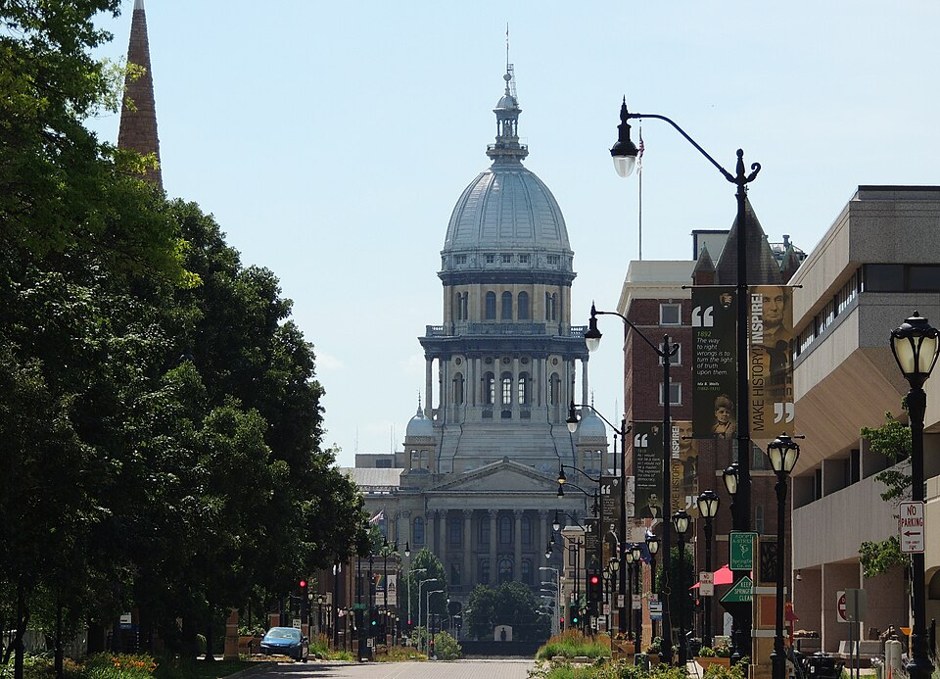
    Photo: formulanone, CC BY-SA 2.0, via Wikimedia Commons

    Illinois Graduated Driver Licensing (GDL) has three phases: the permit phase (from 15), the initial licensing phase (16 and 17) and the full licensing phase (18 to 20). New teen drivers may carry only one passenger under 20 for the first 12 months, and must be off the road from 10 p.m. on weeknights and 11 p.m. on weekends. This explainer is for Illinois teens and parents who want the exact rules and what happens after a ticket.

    Illinois GDL at a glance

    Rule Permit phase (15 to 17) Initial licensing phase (16 to 17) Full licensing phase (18 to 20)
    Supervision Parent or licensed adult 21+ at all times Can drive alone Can drive alone
    Night limits Sun to Thu 10 p.m. to 6 a.m.; Fri and Sat 11 p.m. to 6 a.m. Same hours None, unless extended
    Passengers One in the front seat (your supervisor); back seat no more than its seat belts One under 20 for the first 12 months or until 18 (family exempt); after that, one in the front seat and back seat no more than its seat belts None, unless extended
    Phone No cell phone use while driving under 19, except emergencies Same Same until 19, then adult rules

    Permit phase: before your first Illinois license

    • Get a permit at 15 if you are enrolled in approved driver education, or will start within 30 days.
    • A parent or legal guardian must consent.
    • Hold the permit for at least 9 consecutive months, with no driving infractions, underage alcohol convictions or court supervisions in that time. It is valid for 24 months.
    • Carry only one front-seat passenger, who is your supervisor, and no more back-seat passengers than there are seat belts. Everyone buckles up.
    • Complete 50 hours of practice, including 10 at night, with a parent or licensed adult 21 or older. The SOS says these hours are in addition to driver ed lessons. Track them with the Illinois 50-hour driving log.

    More detail: getting an Illinois instruction permit at 15.

    How many passengers can a 16-year-old drive in Illinois?

    One passenger under 20. For the first 12 months of licensing, or until you turn 18 if that comes sooner, you may carry only one person under age 20. Siblings, stepsiblings, your children and your stepchildren are exempt. Passengers 20 or older don’t count toward the limit. Once that period ends, you are limited to one passenger in the front seat and no more in the back than there are seat belts.

    One or two? Some sources say two. The Secretary of State’s current GDL page and the 2026 Rules of the Road both say one person under 20. An older SOS FAQ page refers to a 6-month limit; that predates the change to 12 months.

    Worked example

    You are 16 and passed your road test 5 months ago. You can drive your 14-year-old brother and one school friend aged 17 to practice. You cannot also pick up a second friend aged 18.

    Illinois teen night driving hours

    • Sunday through Thursday: no driving 10 p.m. to 6 a.m.
    • Friday and Saturday: no driving 11 p.m. to 6 a.m.
    • These apply in both the permit and initial licensing phases.
    • Exceptions under state law cover driving with an adult, to and from work, school or a church event, and emergencies.
    • Local curfews may differ from the state rule.

    What happens if you get a ticket on an Illinois GDL license?

    • Passenger limit extended: a moving violation in the first 12 months adds a 6-month extension to the one-passenger rule.
    • Moving to full licensing: you need a conviction-free record for the 6 months before your 18th birthday. A traffic conviction in the initial licensing phase can extend restrictions beyond 18.
    • Unresolved tickets: Illinois law (625 ILCS 5/6-107(i)) says no graduated license is issued to an applicant under 18 who has a traffic citation with no court disposition at the time of application. The SOS GDL page says the same. Clear any ticket first.
    • Night limit violations: under 18, driving during restricted hours in the permit or initial licensing phase can bring a suspension.
    • Serious crash: under 18 and charged over a crash that caused serious injury or death, you may be denied a license or renewal, even if alcohol played no part.
    • Court and suspension: see Illinois traffic tickets, court supervision and suspension.

    Phones and alcohol rules for Illinois teens

    What parents can do

    • Consent: a driver of 16 or 17 needs a parent or guardian’s written consent. The parent or guardian who gave it can cancel the license at any time, for any reason, until 18. The license stays canceled until that person consents again or the teen turns 18, and the teen must then reapply, retake any required exams and pay the fees.
    • Driving record: a parent or guardian of a permit or GDL holder under 18 can view the record free at ilsos.gov with an SOS-issued PIN.
    • Completion check: students under 21 with a valid permit, and their parents, can check on the SOS website whether driver education has been added to the record.
    • Guide and contract: the SOS publishes a Parent-Teen Driving Guide and a voluntary Parent-Teen Driving Contract. See parent-teen driving agreements.

    Common questions

    Do siblings count toward the Illinois passenger limit?

    No. Siblings, stepsiblings, children and stepchildren are exempt.

    When do Illinois GDL restrictions end?

    At 18, if you have kept a conviction-free record for the 6 months before your birthday. Otherwise they can be extended.

    Can I drive to work after 10 p.m. at 16?

    Driving to and from work is one of the exceptions to the state nighttime limit. Check your local curfew too.

    Can I use GPS on my phone as a teen driver?

    The under-19 ban covers using a cell phone while driving. Set the route before you move, and see the phone ban post for what counts.

    How does Illinois compare with other states?

    See GDL laws by state. Main guide: learning to drive in Illinois.

    Sources

    • Illinois Secretary of State, “Graduated Driver’s License” (ilsos.gov)
    • Illinois Secretary of State, “Graduated Driver Licensing Program” DSD A 132 (ilsos.gov)
    • Illinois Secretary of State, “2026 Illinois Rules of the Road” (DSD A 112, July 2026), Chapter 3 (ilsos.gov)
    • Illinois Secretary of State, “Drivers Frequently Asked Questions” (ilsos.gov)
    • Illinois General Assembly, “625 ILCS 5/6-107 Graduated license”, subsection (i) (ilga.gov)
    • Illinois State Board of Education, “Driver Education Frequently Asked Questions” (isbe.net)
  • Illinois Driver’s Ed Requirements for Under 18s

    Illinois Driver’s Ed Requirements for Under 18s

    Photo: Asher Heimermann, CC BY 3.0, via Wikimedia Commons

    Everyone under 18 in Illinois must pass an approved driver education course to get a driver’s license. The course is at least 30 clock hours in the classroom and 6 clock hours behind the wheel with a certified instructor. This guide is for Illinois teens and parents choosing a course: who must offer it, who is eligible, and how it ties into your permit.

    Key facts

    • Required: for all license applicants under 18.
    • Classroom: at least 30 clock hours.
    • Behind the wheel: at least 6 clock hours on public roads in a dual-control car, taught by a certified driver education instructor.
    • Observation: at least 1 hour watching from the back seat for every hour behind the wheel (6 hours in total).
    • Permit: issued no more than 30 days before you start the course.

    What does Illinois driver’s ed include?

    Part Minimum Notes
    Classroom 30 clock hours Covers Illinois Vehicle Code rules from the Rules of the Road, plus work zones, emergency situations and railroad crossings
    Behind the wheel 6 clock hours Dual-control car on public roads; simulators and range courses do not count
    Observation 1 hour per behind-the-wheel hour Riding in the back seat while another student drives

    The 6 hours cannot be cut short with an early proficiency exam. Simulators and range time can still be used for extra practice.

    High school vs commercial driving school in Illinois

    • High school: every public school district with grades 9 to 12 must offer driver education. It must give eligible students a course within 12 months of applying. Districts must also open the course to students at nonpublic schools in the district, including home-schooled students. The school or parent must tell the district by April 1 for the next school year.
    • Commercial driving school: an SOS-approved commercial driver training school course also meets the requirement. These schools use the SOS form “Driver Training School Application for Teen License” for their students.
    • Fees: districts may charge a reasonable fee for driver ed, capped by the School Code, but must waive it for a student who is unable to pay.

    Who is eligible for high school driver ed in Illinois?

    • You must be enrolled in high school.
    • You must have passing grades in at least eight courses in the previous two semesters. Freshmen can count the last semester of eighth grade.
    • The superintendent or chief school administrator can waive the grades rule if it is in your best interest.
    • You can start the classroom part before 15 if you will be able to finish the whole course within 12 months.

    If you leave high school before finishing

    A student under 18 who drops out cannot have driver ed completion added to their record unless one of these applies: the instructor has written proof of enrollment in a GED or alternative program; the student has a GED; the student passed at least eight courses in the two semesters before leaving; or a parent or guardian and the regional superintendent consent in writing. The local superintendent or chief school administrator may waive conditions in the student’s best interest.

    How driver ed connects to your Illinois permit and license

    1. Enroll, then apply for your instruction permit no more than 30 days before the course starts.
    2. Complete the course while you log your 50 practice hours. Those are extra to driver ed hours.
    3. Your high school reports completion to the Secretary of State, and it must show on your driving record before a license is issued. You or a parent can check with your permit number on the SOS website. The Illinois State Board of Education can also verify completion.
    4. Take the road test at 16 or older after 9 months on the permit. With a combined A or B in high school driver ed, you may qualify for the Cooperative Driver Testing Program instead of an SOS driving exam.

    Common questions

    Is driver’s ed required in Illinois?

    Yes, for a license under 18. It is not a state graduation requirement, though some districts require the classroom part locally.

    Can I do Illinois driver’s ed online?

    For under 18s, the ISBE guidance describes classroom instruction and in-car lessons with a certified instructor. Ask your school or a licensed commercial school whether any part can be done online.

    What if I wait until 18?

    From 18 to 20, with no driver ed, you take the 6-hour adult driver education course instead.

    Can a school refuse me driver ed for unpaid fees?

    The School Code says the driver ed fee must be waived for a student who is unable to pay, and bars punishing students whose families cannot pay required fees.

    Where do I go next?

    See the Illinois GDL rules or the main guide, learning to drive in Illinois.

    Sources

    • Illinois Secretary of State, “2026 Illinois Rules of the Road” (DSD A 112, July 2026), Chapter 3 (ilsos.gov)
    • Illinois State Board of Education, “Driver Education Frequently Asked Questions” (isbe.net)
    • Illinois Secretary of State, “Instruction Permit Requirements” (ilsos.gov)
    • Illinois Secretary of State, “Driver Training School Application for Teen License” DSD CDTS 83 (ilsos.gov)
    • Illinois Secretary of State, “Graduated Driver’s License” (ilsos.gov)
  • Illinois Bioptic Driving: 2.2x and 3x Telescopes and Night Permits

    Illinois Bioptic Driving: 2.2x and 3x Telescopes and Night Permits

    Photo: Sean O'Bryan, Pexels

    Illinois lets you drive with a bioptic (telescopic lens) arrangement if you see 20/100 or better through the carrier lenses and 20/40 or better through the telescope. The telescope can be no stronger than 2.2x standard or 3.0x wide angle. You start with a Class D license restricted to daylight hours, and you can apply for night driving after 12 months. You must also have owned the lenses for at least 60 days before you apply, and send a vision specialist report every year.

    Illinois telescopic lens requirements

    Requirement Illinois rule
    Carrier lens acuity 20/100 or better
    Acuity through the telescope 20/40 or better
    Peripheral vision 140 degrees with both eyes, or 70 degrees temporal and 35 degrees nasal with one eye
    Maximum telescope power 3.0x wide angle or 2.2x standard
    How long you must have the lenses At least 60 days before your application date
    License class Class D only
    Hours Daylight only at first
    Ongoing A Vision Specialist Report every year

    The standard Illinois vision line for everyone else is 20/40, with or without corrective lenses, and acuity from 20/41 to 20/70 is limited to daylight driving. Telescopic users fall under these separate rules, with additional vision testing.

    How to get a bioptic license in Illinois

    1. Get fitted. A low vision specialist prescribes and fits the telescopic arrangement. Keep proof of the date: you need it for 60 days before applying.
    2. Vision Specialist Report. Your eye doctor completes the Secretary of State’s Vision Specialist Report with your acuity through the carrier and the telescope, and your fields.
    3. Apply at a driver services facility. You take the usual Illinois tests for your age, wearing the bioptic for driving.
    4. Daylight-only Class D license. If you qualify, your license is restricted to daylight hours.

    Teens also follow the usual Illinois graduated licensing steps: see learning to drive in Illinois.

    Getting night driving privileges

    Night driving is not automatic. For first-time applicants, Illinois rules require all of the following:

    • a valid Class D license with the proper restrictions, used for daylight driving for 12 months (or a telescopic nighttime training permit held for 6 months)
    • no at-fault crashes during nighttime hours in the 12 months before you apply
    • a road test passed during nighttime hours
    • a vision specialist report saying you are safe to drive at night with the lens arrangement

    Night privileges come as a special restricted license. The rule wording has been amended over time, so confirm the current version with the Secretary of State before you apply.

    Things that catch people out

    • The 60-day rule: apply too early and you will be turned away.
    • The annual report: missing your yearly Vision Specialist Report can put your license at risk. Put the date in your calendar.
    • Telescope power: a stronger telescope than 3.0x wide angle or 2.2x standard doesn’t meet the rule, even if it gives you better acuity.

    Ask your low vision specialist which arrangement suits your eyes. This guide covers licensing only.

    How Illinois compares

    Illinois caps telescope power in its rules, as Indiana (4x) and Massachusetts (3x) do. Compare every state in bioptic driving laws by state, or see nearby rules in the Midwest vision guide and the Indiana bioptic program. Training with a driver rehabilitation specialist is covered in learning to drive with a disability.

    All medical and disability topics: the US guide to driving with a medical condition or disability.

    Want to practise the eyesight check? Our sister site Driving Eyesight Test has a free US letter chart on drivingeyesighttest.com. It is a practice screen, not an eye test.

    Sources

    • Illinois Secretary of State, “Medical and Vision Conditions” (ilsos.gov)
    • Illinois Secretary of State, “Vision Specialist Report” (ilsos.gov)
    • Illinois Secretary of State, “2026 Illinois Rules of the Road” (DSD A 112, July 2026), Chapter 2 (ilsos.gov)
    • Illinois General Assembly, Joint Committee on Administrative Rules, “Illinois Administrative Code Title 92 Part 1030” (ilga.gov)
  • Illinois 6-Hour Adult Driver’s Ed Course for Ages 18 to 20

    Illinois 6-Hour Adult Driver’s Ed Course for Ages 18 to 20

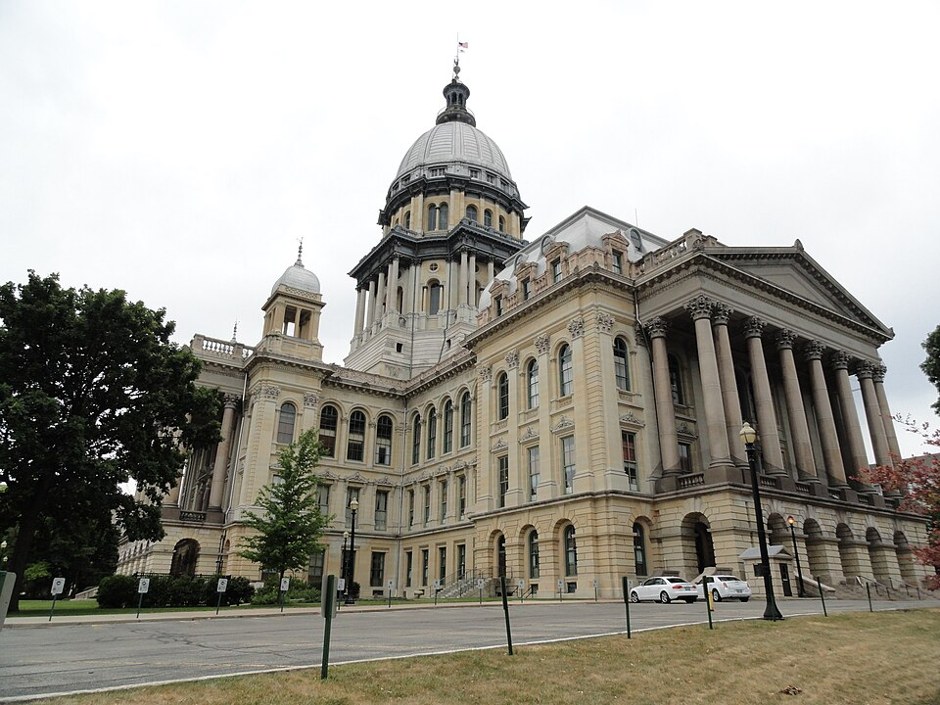
    Photo: formulanone, CC BY-SA 2.0, via Wikimedia Commons

    If you are 18, 19 or 20, applying for your first Illinois driver’s license, and have never taken driver education, you must complete a 6-hour Adult Driver Education Course before the Secretary of State will issue your license. You don’t need it for the instruction permit. This guide is for Illinois adults under 21 working out whether the rule applies and how to complete it.

    Do I need the Illinois adult driver ed course? Quick check

    You must take the course only if all three are true:

    1. You are 18, 19 or 20.
    2. You are applying for an Illinois driver’s license for the first time.
    3. You have never taken any driver education course, in high school or at a commercial driving school.
    Your situation Adult course needed?
    19, never took driver ed, first license Yes
    18, passed high school driver ed (certified transcript) No
    20, moving to Illinois with an out-of-state license No: out-of-state movers don’t need proof of the course
    21 or older No (rule covers 18 to 20 only). If you are driving for the first time, the SOS suggests a driving school for adults

    How the Illinois 6-hour course works

    • Length: six hours.
    • Providers: only providers certified by the Secretary of State. A certificate from a provider not on the SOS list is not accepted.
    • Format: classroom or online, depending on what the provider is certified for.
    • Final test: the provider gives a written test at the end. This does not replace the state’s vision, written and road tests.
    • No driving: the course has no behind-the-wheel part. The SOS encourages at least 50 hours of practice, including 10 at night.
    • Certificate: you get a certificate of completion when you pass.

    Steps to a first Illinois license at 18 to 20

    1. Get an instruction permit by passing the vision and written test. The certificate is not needed for this step.
    2. Complete the 6-hour course with a certified provider from the SOS list.
    3. Practice driving. Aim for 50 hours, 10 at night, with a licensed adult.
    4. Bring the certificate when you apply for the license, then pass the road test.
    5. Pay the license fee: $5 for ages 18 to 20 (as of November 2026).

    Common questions

    Can I do the Illinois adult driver ed course online?

    Yes, if the provider is certified by the SOS for online delivery. Check the provider is on the SOS list before paying.

    Do I need the course for my permit?

    No. You need the certificate only when you apply for the driver’s license.

    I took driver ed in another state. Do I still need it?

    The SOS exemption covers completed high school driver education with a certified transcript, and says applicants moving from out of state are not required to show proof of the adult course. If you took a course elsewhere but never got licensed, ask the SOS whether your course counts.

    Are the GDL limits the same at 18?

    No. Passenger and nighttime GDL limits apply to under 18s, unless a conviction has extended them, and the phone ban runs until 19. See Illinois GDL rules.

    What about zero tolerance?

    Until 21, zero tolerance alcohol rules still apply: zero tolerance laws for drivers under 21. Main guide: learning to drive in Illinois.

    Sources

    • Illinois Secretary of State, “Adult Driver Education” (ilsos.gov)
    • Illinois Secretary of State, “Adult Driver Education FAQs” (ilsos.gov)
    • Illinois Secretary of State, “Fees” (ilsos.gov)
    • Illinois Secretary of State, “2026 Illinois Rules of the Road” (DSD A 112, July 2026), Chapters 1, 2 and 3 (ilsos.gov)
  • Illinois 50-Hour Driving Log: Teen Practice Checklist

    Illinois 50-Hour Driving Log: Teen Practice Checklist

    Photo: Alec Adriano, Pexels

    Illinois teens under 18 must log at least 50 hours of supervised practice driving, including 10 hours at night, before getting a license. A parent, legal guardian or responsible adult certifies the hours when you apply. This checklist is for Illinois families: who can supervise, what counts, how to sign off and a plan to fit 50 hours into the 9-month permit period.

    Key facts

    • Total: 50 hours minimum.
    • Night: at least 10 of the 50 hours.
    • Supervisor: a parent, legal guardian or responsible adult 21 or older with a valid license and at least one year of driving experience, in the front passenger seat.
    • Extra to driver ed: the hours are in addition to any time behind the wheel with a driving instructor.
    • Sign-off: certified by a parent, guardian or responsible adult when you apply for the license (625 ILCS 5/6-107).

    Who can supervise Illinois practice driving?

    • A parent or legal guardian with a valid license, or
    • Any responsible adult 21 or older with a valid driver’s license.

    The 2026 Rules of the Road also says your supervisor needs at least one year of driving experience and must sit in the front passenger seat beside you.

    The supervisor should be sober, alert and not using a phone. You are learning from them.

    How the Illinois 50-hour certification works

    1. Download the official 50-hour practice log from the Secretary of State website, or use the log in the GDL Parent-Teen Driving Guide (DSD A 217).
    2. Record each drive as you go: date, times, whether it was day or night, and what you practiced.
    3. When you apply for your license, bring the completed log with the proper signature.
    4. Your parent or guardian gives consent in one of two ways:
      • comes with you to the DMV facility and signs there, or
      • completes a notarized Affidavit/Consent for Minor to Drive form. This form includes the certification that you have done 50 hours, including 10 at night.

    Illinois 50-hour practice plan

    A 9-month permit period is about 39 weeks, so roughly 1.5 hours a week covers 50 hours with time to spare. Work from easy to hard:

    Stage Where Skills
    1 Empty parking lot Starting, stopping, steering, mirrors, backing straight
    2 Quiet residential streets Stop signs, turns, four-way stops, turnabouts, hill parking
    3 Busier roads Signals, lane changes, right on red, pedestrians
    4 Expressways Merging and exits
    5 Night, rain and snow The 10 night hours, plus bad-weather driving

    Finish by rehearsing the skills on the Illinois road test: backing about 50 feet, the turnabout, and parking and starting on a hill, uphill and downhill.

    Illinois driving log checklist

    • Total hours add up to 50 or more
    • At least 10 hours marked as night
    • Every entry has a supervisor who meets the rules
    • Night drives planned around the Illinois GDL nighttime limits and their exceptions
    • Log signed, or a notarized affidavit ready
    • Permit held at least 9 months

    Common questions

    Do driver ed hours count toward the 50 in Illinois?

    No. The SOS says the 50 hours are in addition to behind-the-wheel time with a driving instructor.

    Does the Illinois SOS check the log?

    You must bring a log with the proper signature for a teen applicant, and your parent or guardian certifies the hours. Keep it accurate; it is a legal certification.

    Can I use an app instead of the paper log?

    The SOS asks for the 50-hour driving log with the proper signature. If you track hours in an app, copy them onto the official log before your visit.

    What counts as night driving?

    Log drives after dark and record the time of each. If you are unsure about a drive near dusk, check with the Secretary of State.

    Do I need the 50 hours if I am 18?

    The legal requirement is for applicants under 18. Adult course applicants are encouraged, not required, to do 50 hours. Compare states in supervised driving hours by state. Main guide: learning to drive in Illinois.

    Sources

    • Illinois Secretary of State, “2026 Illinois Rules of the Road” (DSD A 112, July 2026), Chapter 3 (ilsos.gov)
    • Illinois Secretary of State, “Illinois GDL Parent-Teen Driving Guide” DSD A 217 (ilsos.gov)
    • Illinois Secretary of State, “Graduated Driver’s License” (ilsos.gov)
    • Illinois General Assembly, 625 ILCS 5/6-107, Graduated license (ilga.gov)
    • Illinois State Board of Education, “Driver Education Frequently Asked Questions” (isbe.net)
    • Illinois Secretary of State, “Adult Driver Education FAQs” (ilsos.gov)
  • Illinois Instruction Permit at 15: Requirements and Rules

    Illinois Instruction Permit at 15: Requirements and Rules

    Photo: Meagan Davis, CC BY-SA 3.0, via Wikimedia Commons

    In Illinois you can get an instruction permit at 15 if you are enrolled in an approved driver education course, or will start one within 30 days. You need a parent or guardian’s consent, a passed vision screening and written test, and the $20 fee. This guide is for Illinois teens and parents getting ready for the permit visit.

    Key facts

    • Minimum age: 15, tied to driver education enrollment.
    • Valid for: 24 months (two years) if you are under 18.
    • Minimum hold: 9 consecutive months before a license, if you are 15 to 17.
    • Fee: $20 for an original Class D permit (as of November 2026).
    • Tests: vision screening and written exam. The results stay valid until the permit expires.

    Who can get an Illinois instruction permit at 15?

    You must be 15 to 17 and enrolled in an approved driver education course, or be within 30 days of starting it. A permit is not issued more than 30 days before your course begins. Your certified driver ed instructor signs the application, and either you or the instructor can submit it to the Secretary of State.

    Driver ed options and requirements: Illinois driver education requirements for under 18s.

    What if I am 17 and 3 months or older?

    The SOS says you may apply for a permit without taking driver education from 17 and 3 months. Under 18, you still need driver education to get a license. From 18, first-time applicants with no driver ed take the 6-hour adult course.

    Illinois permit checklist

    1. Driver ed paperwork signed by your instructor.
    2. Parent or legal guardian consent.
    3. Identity documents from the SOS acceptable documents checklist. First-time applicants apply in person at a DMV facility.
    4. Glasses or contacts if you need them. The vision standard is 20/40.
    5. $20 fee.
    6. Study for the written test. See the Illinois permit test guide.

    If you want a REAL ID-compliant card later, see REAL ID and your first license.

    Illinois instruction permit rules

    • Drive only with your driver ed instructor, or a parent, guardian or responsible adult 21 or older with a valid license and at least one year of driving experience, sitting in the front passenger seat beside you.
    • One front-seat passenger only (your supervisor), and no more back-seat passengers than seat belts.
    • No driving Sunday to Thursday 10 p.m. to 6 a.m., or Friday and Saturday 11 p.m. to 6 a.m.
    • No cell phone use while driving under 19, except emergencies.
    • Log at least 50 hours, 10 of them at night: Illinois 50-hour driving log.
    • Avoid tickets: during the 9 months you must have no infractions, underage alcohol convictions or court supervisions. Violations can delay your license and extend restrictions. See Illinois GDL rules.

    Illinois instruction permit timeline

    When What happens
    Up to 30 days before driver ed starts Apply for the permit
    Months 1 to 9 Driver ed (30 classroom + 6 behind-the-wheel hours) and 50 practice hours
    After 9 months and age 16 Take the road test
    24 months Permit expires

    Common questions

    How long is an Illinois permit good for?

    Two years (24 months) if you are under 18.

    Can I get my permit at 15 without driver’s ed?

    No. Under 17 and 3 months, you must be enrolled in an approved course or start within 30 days.

    Do I have to pay again for my license?

    No. The 2026 Rules of the Road says there is no additional fee if you get your license before your permit expires.

    Can I drive with my friend’s older brother?

    Only if he is 21 or older, holds a valid license and has at least one year of driving experience. He must sit in the front passenger seat beside you.

    Can I drive in another state on my Illinois permit?

    It depends on that state’s law: driving with a permit in another state. Main guide: learning to drive in Illinois.

    Sources

    • Illinois Secretary of State, “Instruction Permit Requirements” (ilsos.gov)
    • Illinois Secretary of State, “Graduated Driver’s License” (ilsos.gov)
    • Illinois Secretary of State, “Fees” (ilsos.gov)
    • Illinois Secretary of State, “2026 Illinois Rules of the Road” (DSD A 112, July 2026), Chapters 2 and 3 (ilsos.gov)
    • Illinois State Board of Education, “Driver Education Frequently Asked Questions” (isbe.net)
  • NI Night-Time Passenger Rule: What It Means After Your Test and in the First 6 Months

    NI Night-Time Passenger Rule: What It Means After Your Test and in the First 6 Months

    Photo: Valdemars Magone / Unsplash. Illustrative photograph.

    Passing your test under Northern Ireland’s Graduated Driver Licensing (GDL) scheme starts a 6-month clock. During it, a new driver aged under 24 can carry no more than one passenger aged 14 to 20 between 11 pm and 6 am. Immediate family don’t count, and the limit is lifted if a front-seat passenger is 21 or over and has held a full licence for 3 years. This page explains what the rule means for your test date and your first months on the road, and answers the questions new NI drivers and parents ask most.

    The rule at a glance

    • Who: newly qualified GDL car drivers aged under 24. Not motorcyclists.
    • When: 11 pm to 6 am.
    • How long: the first 6 months after passing the practical test, while you display the blue R on white plate.
    • The limit: no more than 1 passenger aged 14 to 20.
    • Exempt: immediate family members, or when a front-seat passenger aged 21+ has held a full licence for 3 years.
    • Penalty: up to £1,000 fine and 3 penalty points (Department for Infrastructure).

    Will the rule apply after your test?

    Answer these in order. If any answer is “no”, the rule does not apply to that trip.

    1. Did you pass your car test under GDL? (Generally, your provisional entitlement started on or after 1 October 2026, or you passed on or after 1 April 2027.)
    2. Are you under 24?
    3. Are you within 6 months of passing?
    4. Is it between 11 pm and 6 am?
    5. Will you have 2 or more passengers aged 14 to 20 who are not immediate family?
    6. Is there no front-seat passenger aged 21+ with a full licence held for 3 years?

    Six “yes” answers means you would be breaking the rule.

    Scenarios for your first 6 months: allowed or not?

    Situation (driver aged 18, passed 2 months ago) Allowed? Why
    Driving two friends aged 17 home at 11.30 pm No Two passengers aged 14 to 20 during restricted hours
    Driving one friend aged 17 home at 11.30 pm Yes Only one passenger in the 14 to 20 range
    Driving three friends aged 17 at 9 pm Yes Outside 11 pm to 6 am
    Driving your brother (16) and sister (19) home at midnight Yes Immediate family are exempt
    Three friends aged 18 at 1 am, with your aunt (45, licence for 25 years) in the front Yes Front-seat passenger is 21+ with a full licence held for 3 years
    Same as above, but your 22-year-old friend who passed last year is in the front No Front passenger hasn’t held a full licence for 3 years
    Two friends aged 21 at midnight Yes The limit only counts passengers aged 14 to 20

    These examples apply the wording on nidirect and DfI pages. They are not official rulings.

    Who counts as immediate family?

    Neither nidirect nor the Department for Infrastructure’s GDL FAQs define “immediate family”. Brothers and sisters are the obvious case. For cousins, step-siblings, half-siblings or in-laws, get an answer from DVA before you rely on it. DVA has an online enquiry service, and that is the safest way to check a situation like this.

    Breaking the rule: how it threatens your new licence

    DfI says breaching the passenger restriction can bring a fine of up to £1,000 and 3 penalty points. You are in your 2-year probation period, so 6 or more points means your licence can be revoked. Two offences like this would get you there, and you would be back to retaking your tests.

    Preparing for it before test day

    GDL is aimed at young drivers aged 17 to 23. Late-night driving with friends of a similar age is the situation the scheme targets. The blue R on white plate exists partly so police can spot drivers in the restricted 6 months. While you are still learning, get supervised night driving logged so darkness is not new when the restriction lifts, and agree lift arrangements with friends before you pass rather than on the night.

    Common questions

    Does the rule apply if I’m 24 or older?

    No. It applies to drivers under 24. You still display R plates for 2 years.

    Do passengers under 14 count?

    No. The limit is on passengers aged 14 to 20. Younger children and adults aged 21 or over are not limited by this rule, though every passenger still needs a seat belt or the right child seat.

    Does it matter where the 21+ passenger sits?

    Yes. The exemption is for a front-seat passenger aged 21 or over who has held a full licence for 3 years.

    What if I set off at 10.30 pm and get home at 11.15 pm?

    The rule covers 11 pm to 6 am, so the part of the trip after 11 pm counts. Plan drop-offs so you are down to one passenger aged 14 to 20 by 11 pm.

    Does it apply to motorcyclists?

    No. DfI says the passenger restriction applies to drivers only.

    Does it apply if I passed before GDL started?

    No. If you passed under the old rules (including pre-GDL learners who pass before 1 April 2027), you have the amber R plate and 45 mph limit instead. See the NI transition rules.

    Looking for lessons or an instructor? Our sister site Compare Driving Instructors covers lesson prices and choosing an instructor.

    Related: NI R plates explained, carrying passengers after passing, what changed on 1 October 2026. Main guide: Learning to drive in Northern Ireland.

    Sources

    • DVA, “Graduated Driver Licensing for newly qualified drivers” (nidirect.gov.uk)
    • Department for Infrastructure, “Graduated Driver Licensing FAQs” (infrastructure-ni.gov.uk)
    • DVA, “What Graduated Driver Licensing means for learner drivers” (nidirect.gov.uk)
    • DVA, “Create or access your Graduated Driver Licensing Account” (nidirect.gov.uk)
  • NI GDL Transition: Pass by 31 March 2027 or Switch? What It Means for Your Test and First Two Years

    NI GDL Transition: Pass by 31 March 2027 or Switch? What It Means for Your Test and First Two Years

    Photo: Phil Evenden / Pexels. Illustrative photograph.

    If your Northern Ireland car provisional entitlement started before 1 October 2026, the date you pass your practical test now decides which rules you live with afterwards. You can still book and pass under the old system until 31 March 2027; pass in that window and you get the amber R plate and 45 mph limit for 1 year. From 1 April 2027 everyone, including you, must complete the GDL Programme of Training and Logbook before booking, and the test itself changes. This guide explains what the new rules mean for your test and the first two years, so pre-GDL learners can decide whether to race the deadline or switch to GDL.

    The dates that matter for your test

    Date What happens
    1 October 2026 GDL starts. It is mandatory for anyone whose car provisional entitlement began on or after this date.
    1 October 2026 to 31 March 2027 Transition window. Pre-GDL learners can test under the current rules.
    31 March 2027 Last day to pass under the old system.
    1 April 2027 All learners must complete the Programme of Training and Logbook before booking. The test itself also changes.

    Two routes: what each means after you pass

    Pass by 31 March 2027 (old system) Pass on or after 1 April 2027 (GDL)
    Before booking Theory test pass Theory test pass, plus all mandatory modules and final sign-off in the GDL Logbook
    R plate Amber R for 1 year Blue R on white for 6 months, then white R on blue for 18 months
    Speed limit after passing 45 mph for 1 year No GDL speed limit
    Passenger rule Not under GDL If under 24: night-time passenger limit for 6 months
    App cost None £17 GDL account

    The amber R plate rule exists because, in DVA’s words, your training and test will not have included driving above 45 mph.

    Booking for the deadline, and what happens if you fail

    If you fail and your retest falls on or after 1 April 2027, you must be enrolled in GDL. That means completing the logbook before you can book the retest. Practical tests can be hard to get at short notice, so if you are aiming for March 2027, book early and leave time for a second attempt.

    • DVA releases car test appointments 3 months ahead, on the first working day of each month. See booking the DVA practical test.
    • Appointments for late March 2027 should appear on the first working day of January 2027 if that pattern holds.

    Does the 6-month minimum learning period delay your test?

    The Mandatory Minimum Learning Period (MMLP) counts 6 months from the first date of your car provisional entitlement. If your entitlement started before 1 October 2026, you will already have passed 6 months by 1 April 2027. The practical extra work if you switch to GDL is the Programme of Training and Logbook.

    Which test will you sit? Changes from 1 April 2027

    nidirect says that from 1 April 2027 the NI car test changes:

    • a longer independent driving section of about 20 minutes
    • sat nav use
    • “show me, tell me” questions asked on the move

    The pass standard stays the same. Until then, the current DVA test has about 40 minutes of driving, one reversing exercise (reversing around a corner, turning in the road, or reverse parking) and an emergency stop. If there is a chance your test or a retest lands on or after 1 April 2027, practise following a sat nav and answering show me, tell me questions while driving now, so the newer format is not a surprise.

    Race the deadline or switch? A readiness decision

    • Race it if you are close to test standard now (comfortably under 15 driving faults on practice drives, with no serious faults) and can get a slot by March 2027. Downside: 45 mph for a year, which rules out normal motorway and dual carriageway speeds.
    • Switch if you are not yet ready. You avoid the 45 mph limit, but you need the logbook done first, and if you are under 24 the night-time passenger limit applies for 6 months.

    DVA’s guidance also covers pre-GDL learners who choose to complete GDL: if they pass before 1 April 2027, they still get the amber R plate and current restrictions.

    Common questions

    I got my provisional in September 2026. Am I on GDL?

    Not automatically. Your entitlement began before 1 October 2026, so you can test under the old rules until 31 March 2027. If you pass on or after 1 April 2027, GDL applies.

    I passed before 1 October 2026. Does anything change for me?

    No. Keep the amber R plate and current restrictions until your restricted period ends.

    Can I still drive above 45 mph as a learner before my test?

    No, not if your provisional licence was granted before 1 October 2026. The transitional provisions in Schedule 1 to the Road Traffic (Amendment) Act (Northern Ireland) 2016 keep the old 45 mph learner limit for you, and starting a GDL logbook does not remove it. Your licence date decides the rule, not logbook enrolment. The nidirect new drivers page also still tells provisional drivers to keep to 45 mph. Schedule 1 paragraph 16 keeps that learner limit for six months, from 1 October 2026 to 31 March 2027, so keep to 45 mph on L plates until then, and check with DVA if your situation is unusual. From 1 April 2027 the learner limit ends and normal speed limits apply. If you pass before 1 April 2027, the separate 12-month R plate restrictions start when you pass (Schedule 1 paragraph 18). Motorways are also off limits until 1 April 2027 for this group: the ADI motorway exception does not apply to a category B provisional licence that was in force before 1 October 2026 until that date. The 2020 Highway Code for Northern Ireland sets 45 mph for cars showing L plates. nidirect now says the limit for L-plated vehicles is subject to legislative change and points to the GDL page for the rules for your licence.

    I’m on Carer’s Allowance. Is that different?

    Learners who can prove they get Carer’s Allowance are exempt from the MMLP but must still finish the Programme of Training and Logbook. If your entitlement began after 1 October 2026 and you are MMLP-exempt, you may train at higher speeds, and if you pass before 31 March 2027 the GDL plates apply.

    Can I start the GDL logbook now, just in case?

    DVA’s guidance allows pre-GDL learners to choose GDL. Starting the logbook early protects you if you miss the deadline. See the GDL logbook app.

    I have a GB provisional licence. Can I test in NI before the deadline?

    No. From 1 October 2026, GB provisional licence holders cannot book or take car theory or practical tests in Northern Ireland. You need a Northern Ireland provisional licence.

    Looking for lessons or an instructor? Our sister site Compare Driving Instructors covers lesson prices and choosing an instructor.

    Related: NI R plates explained, what changed on 1 October 2026, the 6 month plan and 15 modules. Main guide: Learning to drive in Northern Ireland.

    Sources

    • DVA, “What Graduated Driver Licensing means for learner drivers” (nidirect.gov.uk)
    • DVA, “Graduated Driver Licensing for newly qualified drivers” (nidirect.gov.uk)
    • Department for Infrastructure, “Graduated Driver Licensing FAQs” (infrastructure-ni.gov.uk)
    • DVA, “About the practical test for cars” (nidirect.gov.uk)
    • DVA, “A guide to booking your practical driving test” (nidirect.gov.uk)
    • DVA, “Motor vehicle documentation, learner and newly qualified driver requirements” (nidirect.gov.uk)
    • Department for Infrastructure, “The Official Highway Code for Northern Ireland”, twentieth impression 2020 (nidirect.gov.uk)
    • Department for Infrastructure, “The Highway Code for Northern Ireland”, current online edition updated for GDL, September and October 2026 (nidirect.gov.uk)
    • Department for Infrastructure, The Motorways Traffic (Amendment) Regulations (Northern Ireland) 2026, SR 2026/143, regulation 4 (new regulation 11(2) and 11(3)) (legislation.gov.uk)
    • Road Traffic (Amendment) Act (Northern Ireland) 2016, Schedule 1 paragraphs 16 and 18 (transitional provisions) (legislation.gov.uk)

  • GDL Module 15: Motorway Driving Before or After Your NI Test

    GDL Module 15: Motorway Driving Before or After Your NI Test

    Photo: Adrien Olichon / Pexels. Illustrative photograph.

    The NI driving test does not use motorways, but under Graduated Driver Licensing (GDL) you can drive on one alone the day you pass, within the speed limit and at a speed that suits the conditions. Module 15 of the GDL Programme of Training is the motorway module. It is the one optional module, it does not count towards the sign-off you need to book your test, and as a learner you can only do it with an Approved Driving Instructor (ADI). This guide explains what the new rules mean for your test and your first two years: whether to do Module 15 before or after the test, what it covers, and which motorway rules you need to know anyway for the theory test.

    Module 15 and your test: key facts

    • 15 modules in total: Modules 1 to 14 are mandatory; Module 15 (motorway driving) is optional.
    • Learners on motorways: only with an ADI. Rule 253 of the NI Highway Code says provisional car licence holders must not use motorways unless accompanied by an approved driving instructor. If your provisional licence was in force before 1 October 2026, you cannot use this ADI exception until 1 April 2027.
    • Module content: two parts, motorway signs and signals, and driving on a motorway.
    • After you pass: you can drive on motorways without supervision, and you can still do Module 15 with an ADI or a supervising driver.
    • Speed: the NI motorway limit for cars is 70 mph (112 km/h). GDL removes the old 45 mph limit for learners and newly qualified drivers.

    Who can take you on a motorway, before and after the test

    As a learner, only an ADI. Who is in the passenger seat decides it:

    Who is with you Motorway allowed as a learner?
    Approved Driving Instructor (ADI) Yes
    Parent, relative or other supervising driver No
    Nobody (after you pass) Yes, no supervision needed

    Only DVA approved instructors (or trainee licence holders) can charge for driving lessons in NI.

    What Module 15 covers (and the theory test will too)

    nidirect lists two parts. The NI Highway Code sets the rules you practise in each. Even if you skip the module, these rules are fair game in the theory test.

    Motorway signs and signals

    • Motorway signals, including a speed shown in a red ring, which is mandatory (Rule 261).
    • Lower temporary or permanent limits, such as at road works, which you must also obey.
    • Sign meanings in detail: motorway signs and signals.

    Driving on a motorway

    • Joining (Rule 259): give priority to traffic already on the motorway, match your speed to fit into the left lane, and do not cross solid white lines.
    • Lane discipline (Rule 264): drive in the left lane when the road ahead is clear and move back left after overtaking.
    • Speed (Rule 261): no more than 70 mph, or a lower signed or vehicle limit.
    • Hard shoulder: emergencies only, or when directed by police or signs.
    • Right hand lane (Rule 265): on three or more lanes, not for vehicles towing a trailer or certain heavy vehicles.

    Module sign off follows the normal logbook process: how GDL logbook sign off works.

    Before or after your test?

    The practical test does not use motorways, and the module is optional, so you can pass without it. Reasons to do it as a learner anyway:

    • Once you pass, you can go straight onto a motorway alone. A first motorway drive with an instructor beside you is the safer way to learn joining and lane changes at 70 mph.
    • Under GDL there is no 45 mph limit after you pass, so from day one you choose a safe speed up to the motorway limit yourself.

    If you skip it before the test, you can still book a motorway lesson after passing.

    Started learning before 1 October 2026? Your test date matters

    If your provisional licence was in force before 1 October 2026, you cannot take motorway lessons as a learner until 1 April 2027, even with an ADI. Learners on the pre-GDL route who pass by 31 March 2027 keep the old restrictions after passing: an amber R plate and a 45 mph limit for 12 months, so a motorway drive after passing stays at 45 mph. Older nidirect pages also still describe a 45 mph limit for any car showing L plates. Check with DVA or your ADI what limit applies to your licence before a motorway lesson. See the NI transition rules.

    Common questions

    Can my parent take me on the motorway in Northern Ireland?

    No. A learner can only drive on a motorway with an ADI, and learners whose provisional licence was in force before 1 October 2026 must wait until 1 April 2027 even for that.

    Is Module 15 compulsory?

    No. It is the only optional module. Modules 1 to 14 are mandatory.

    Can I do Module 15 after I pass my test?

    Yes, with an ADI or a supervising driver. You do not need supervision on motorways after passing, but the module is still available.

    Is the motorway on the NI driving test?

    No. Motorway rules can still come up in the theory test.

    Does the car need dual controls for a motorway lesson?

    The NI rules require an ADI but do not mention dual controls. Your instructor’s car will normally have them; ask your ADI.

    What speed can I drive on the motorway after passing?

    Under GDL, up to the posted limit, 70 mph for cars unless signs show lower. Transition route drivers who pass before 1 April 2027 are limited to 45 mph for 12 months.

    Looking for lessons or an instructor? Our sister site Compare Driving Instructors covers lesson prices and choosing an instructor.

    Related: NI R plates explained, the GDL 6 month plan and 15 modules, your first motorway drive and learners and motorways. Back to the main guide: Learning to Drive in Northern Ireland.

    Sources

    • nidirect, “Cat B car Programme of Training modules” (nidirect.gov.uk)
    • nidirect, “Motorways (253 to 273)”, The Highway Code for Northern Ireland (nidirect.gov.uk)
    • nidirect, “What Graduated Driver Licensing means for learner drivers” (nidirect.gov.uk)
    • nidirect, “Minimum ages and rules for learner drivers and riders” (nidirect.gov.uk)
    • nidirect, “Find driving or motorcycle instructors” (nidirect.gov.uk)
    • Department for Infrastructure, “Graduated Driver Licensing” FAQs (infrastructure-ni.gov.uk)
    • Department for Infrastructure, The Motorways Traffic (Amendment) Regulations (Northern Ireland) 2026, SR 2026/143, regulation 4 (new regulation 11(2) and 11(3)) (legislation.gov.uk)
  • Learning to Drive in Northern Ireland: From Provisional Licence to Passing Your Test Under GDL

    Learning to Drive in Northern Ireland: From Provisional Licence to Passing Your Test Under GDL

    Photo: Andras Stefuca / Pexels. Illustrative photograph.

    The road to passing your driving test in Northern Ireland changed on 1 October 2026, when Graduated Driver Licensing (GDL) began. If your provisional entitlement started on or after that date, you cannot sit the practical test until you have learned for at least six months and had a 14 module Programme of Training signed off in a logbook. Then you pass the theory and practical tests with the Driver and Vehicle Agency (DVA) and display R plates for two years. This guide takes NI learners and their parents through every stage in order, from provisional licence to test day and the first two years, with the current DVA fees and the transition rules for anyone who started before October 2026.

    Learning in England, Scotland or Wales? The rules are different there. Read Learning to Drive in Great Britain instead.

    Key facts: getting to your NI driving test

    • You can apply for a car provisional licence up to two months before your 17th birthday. You cannot drive until it takes effect.
    • A first provisional licence costs £62.50. The car theory test costs £23. The practical test costs £65 on weekdays and £95 for evenings and weekends (DVA fees as of November 2026).
    • Under GDL there is a Mandatory Minimum Learning Period (MMLP) of six months from the start of your first car provisional entitlement.
    • You must complete 14 mandatory training modules, each signed off in the logbook by a supervising driver or an approved driving instructor (ADI). Module 15, motorway driving, is optional and only with an ADI (with a later start date for some pre-October 2026 learners).
    • After passing, GDL drivers display an R plate for two years. Drivers under 24 have a night-time passenger limit for the first six months.
    • Learners who held a provisional licence before 1 October 2026 can still pass under the old rules until 31 March 2027.

    Does GDL apply to your test?

    Use this check before anything else, because the answer decides which rules you follow and when you can be tested.

    Your situation Which rules apply
    Your car provisional entitlement started on or after 1 October 2026 GDL: six month MMLP, Programme of Training and logbook, two-year R plates, passenger rule
    You held a car provisional licence before 1 October 2026 and pass before 1 April 2027 The previous system: amber R plate and a 45 mph limit for one year after passing
    You held a provisional licence before 1 October 2026 but have not passed by 1 April 2027 GDL. Anyone taking the test on or after 1 April 2027 must be enrolled in GDL
    You hold a GB provisional licence From 1 October 2026 you cannot book or take a car test in NI. You need an NI provisional licence

    The transition has its own guide: Started learning before 1 October 2026? The NI transition rules. For a summary of what changed on launch day, see GDL in Northern Ireland: what changed on 1 October 2026.

    Why Northern Ireland brought in GDL

    nidirect states that in 2024, drivers aged 17 to 23 were responsible for 24% of all fatal or serious injury collisions in Northern Ireland while holding only 8% of driving licences. GDL is designed to give new drivers more time and more varied experience before they drive on their own.

    Stage 1: Your NI provisional licence

    When and how to apply

    nidirect says you can apply for a car provisional licence up to two months before your 17th birthday, but you must not drive until it comes into effect. You can apply online for a first provisional licence (the faster option) or by post using form DL1, available from main Post Office branches. The fee is £62.50 (as of November 2026).

    • Online applications need a nidirect account with verified identity, an uploaded signature and a nominated certifier for your photo.
    • The DVA aims to process a licence within 10 working days of receiving a complete application, but tells you to allow at least six weeks for it to arrive.

    Read provisional licence rules in GB and NI for how the two systems compare.

    Eyesight

    On the practical test, the DVA examiner asks you to read a standard number plate from 20.5 metres (20 metres for plates with narrower characters). Practise with our number plate eyesight check and see driving eyesight rules.

    Stage 2: Practising towards the test with a supervisor and an ADI

    The rules for every car learner in NI

    • A valid NI provisional licence.
    • A roadworthy car that is taxed and insured for you.
    • A supervising driver for ordinary practice who is at least 21 and has held a full car licence for at least three years. DVA’s general learner rules say that licence can be from NI, GB or an EU country.
    • Signing GDL records is a separate question. DVA’s guidance for parents and supervising drivers describes a GDL supervising driver as at least 21 with a full NI licence held for at least three years; an ADI can also sign. Someone who may sit beside you for practice does not automatically qualify to sign your logbook, so check before they sign.
    • L plates on the front and back of the car, easily seen, and removed when a learner is not driving.
    • No motorway driving except with an ADI, and not at all before 1 April 2027 if your provisional licence was in force before 1 October 2026 (see Module 15 below).

    What about the 45 mph limit for learners?

    This is the point most learners are confused about. The nidirect GDL learner page says GDL “removes the 45mph speed restriction” for learner and newly qualified drivers. That applies to learners whose provisional entitlement began on or after 1 October 2026. Older nidirect pages that limit every L-plated car to 45 mph describe the old rule. If your provisional licence was granted before 1 October 2026, Schedule 1 paragraph 16 of the Road Traffic (Amendment) Act (Northern Ireland) 2016 keeps the old 45 mph learner limit for you for six months, from 1 October 2026 to 31 March 2027. Starting a GDL logbook or modules does not end it early. From 1 April 2027 that learner limit no longer applies, though normal speed limits still do. Passing is a separate question: if you pass before 1 April 2027 on the transition route, Schedule 1 paragraph 18 keeps the old new-driver restrictions for 12 months after you pass, including the amber R plate and the 45 mph limit.

    The six-month Mandatory Minimum Learning Period: your earliest test date

    Under GDL, the earliest you can take your car practical test is six months after your first car provisional entitlement starts. nidirect’s example: if your entitlement starts on 1 October 2026, you can take the test on or after 1 April 2027. Learners who can show they are entitled to Carer’s Allowance are exempt from the MMLP, but they must still complete the Programme of Training and logbook.

    Our NI GDL six-month plan shows how to spread the modules across that time.

    Stage 3: The Programme of Training and logbook

    The car Programme of Training has 14 mandatory modules plus one optional module. The modules map closely onto what the examiner checks, so treat each sign-off as a step towards test standard, not just paperwork.

    Module Title
    1 The driver
    2 The vehicle
    3 The law
    4 Risk and hazard awareness
    5 Controls and checks
    6 Driving on the road
    7 Road sharing
    8 Vulnerable and other road users
    9 Speed awareness
    10 Manoeuvring your vehicle
    11 Driving in adverse weather
    12 Night-time driving
    13 Driver distraction and in-car technology
    14 Eco-safe driving and the environment
    15 (optional) Motorway driving, with an ADI only

    How sign-off works

    1. Create a GDL account online or in the GDL mobile app. nidirect lists the account fee as £17 (as of November 2026).
    2. Work through each module with your supervising driver, your ADI or both.
    3. After each mandatory module, the supervisor or ADI signs it off in the logbook.
    4. When all mandatory modules are done, a supervising driver or ADI gives the final sign-off. You need this before you can take the practical test.

    Step-by-step help is in the GDL logbook app: how module sign-off works.

    Module 15: motorway lessons

    From 1 October 2026 a category B learner may drive on a motorway in NI only with an ADI. If your provisional licence was in force before 1 October 2026, that ADI exception does not apply to you until 1 April 2027, so even an ADI cannot take you on a motorway before then. A parent or other supervising driver can never take a learner on a motorway. Module 15 is optional. Once you pass, you can drive on motorways without supervision, and you can still do Module 15 afterwards with an ADI or a supervising driver. See GDL Module 15: motorway lessons.

    Stage 4: The DVA theory test

    The car theory test in Northern Ireland costs £23 (as of November 2026). nidirect says the earliest you can take it is normally your 17th birthday, when your provisional licence becomes valid.

    Part Format Pass mark
    Multiple choice 50 questions in about 57 minutes (extra time available for reading difficulties) 43 out of 50
    Hazard perception Video clips after a short tutorial clip 44 out of 75

    You must pass both parts in the same sitting. If you fail, you can rebook the next day but must wait three clear working days before sitting it again. Your certificate lasts two years from the pass date, with no exceptions. The theory test format matches the one used in Great Britain, so our guides apply: the theory test guide, how hazard perception works and free practice questions.

    The Highway Code for Northern Ireland

    NI has its own Highway Code, published on nidirect. Its sections follow the same rule numbers as the GB version for most topics, from Rules for pedestrians (1 to 35) to Road works, level crossings and tramways (288 to 307). The NI sections on nidirect were updated for GDL in September and October 2026, but they still do not include the GB changes of 29 January 2022 that added the hierarchy of road users (Rules H1 to H3). NI also has its own rules on parking near junctions, reporting collisions and roundabout lanes, plus a clock face roundabout appendix. Read Northern Ireland Highway Code vs Great Britain before you revise from a GB book or website.

    For sign shapes, colours and meanings, see our UK road signs guide, and check any NI-specific differences in the NI Highway Code.

    Stage 5: Booking and passing the DVA practical test

    Booking

    • The DVA releases car test appointments three months ahead, on the first working day of each month, at all test centres.
    • Book online, or by phone from 9am to 5pm, Monday to Friday. Have your provisional licence and theory test certificate ready.
    • Fees as of November 2026: £65 on weekdays, £95 for evenings and weekends. The extended test for disqualified drivers costs £130 (weekday).
    • Under GDL you also need the final logbook sign-off and to have served the six-month MMLP.

    More on slots, centres and fees: booking the DVA practical driving test.

    Before you book: a readiness check

    • Your six-month MMLP has been served (unless you are exempt) and the final logbook sign-off is done.
    • Your theory certificate will still be valid on the test date; it lasts two years from the pass date.
    • You can read a number plate at the required distance.
    • You can drive a full test-length route on your own decisions, with no prompts from your supervisor or ADI.
    • You can do each reversing exercise and an emergency stop safely, and answer show me, tell me questions.
    • Practice drives are coming in well under 15 driving faults, with no serious or dangerous faults.

    What happens on the test now

    1. Eyesight check first. If you cannot read the plate, the test does not continue.
    2. Two vehicle safety questions: one “show me” and one “tell me”. Getting one or both wrong is one driving fault. See show me, tell me questions.
    3. About 40 minutes of driving, including a section of independent driving following traffic signs, directions or both.
    4. One reversing exercise, chosen from reversing around a corner, turning in the road, or reverse parking (on the road or into a bay), plus an emergency stop.

    You pass with up to 15 driving faults. Sixteen or more, or one serious or dangerous fault, is a fail. Our GB and NI driving test guide compares the two tests.

    What changes on the test from 1 April 2027

    nidirect says that from 1 April 2027 the independent driving section extends to about 20 minutes, sat nav use is introduced, and show me, tell me questions are asked on the move. The pass standard does not change.

    Stage 6: After you pass: the first two years under GDL

    R plates for two years

    Period after passing Plate What it shows
    First 6 months Blue R on a white background The age-related passenger and night-time restrictions apply
    Next 18 months White R on a blue background You are still in the two-year new driver period

    R plates must meet the same specification and visibility rules as L plates, and must be removed or covered when someone else drives. Learners who passed under the old system display an amber R plate instead. Full detail: Northern Ireland R plates explained.

    The night-time passenger rule

    For the first six months after passing, a GDL driver under 24 may carry no more than one passenger aged 14 to 20 between 11pm and 6am. It does not apply to immediate family members, or when a front-seat passenger aged 21 or over who has held a full licence for at least three years is with you. Read who counts as family and other exemptions.

    No speed restriction under GDL

    GDL drivers have no speed restriction after passing. The 45 mph limit for one year applies only to learners who pass under the previous system before 1 April 2027.

    Six points in two years

    Under the Road Traffic (New Drivers) (Northern Ireland) Order 1998, you lose your licence if you reach six or more penalty points within two years of passing your first test. Valid points from before you passed still count. To get your licence back you reapply for a provisional licence and pass both tests again. Exchanging your provisional for a full licence after passing is free.

    Driving across the border

    Many NI drivers cross into the Republic of Ireland, where speed limits are in km/h and learner rules differ. See driving across the border.

    Alcohol

    The drink-drive limit in Northern Ireland is 35 micrograms of alcohol per 100 ml of breath, 80 mg per 100 ml of blood or 107 mg per 100 ml of urine, the same as England and Wales. The safest choice for any new driver is not to drink at all before driving. Compare all UK limits in drink and drug driving limits.

    Worked example: a GDL learner from provisional to test pass

    • Two months before turning 17: apply online for an NI provisional licence (£62.50) and set up a GDL account.
    • 17th birthday (say 1 November 2026): the provisional entitlement starts, and so does the six-month MMLP. Book the theory test.
    • November to April: work through Modules 1 to 14 with an ADI and a supervising parent, getting each signed off. Run a full practice test before booking.
    • Early in that period: pass the theory test (£23).
    • 1 May 2027 or later: with the final sign-off done, take the practical test. It now includes about 20 minutes of independent driving and sat nav.
    • Pass: blue R on white for six months with the passenger rule, then white R on blue for 18 months.

    Common questions

    Does GDL apply if I got my provisional licence before October 2026?

    Not if you pass before 1 April 2027. You can finish under the previous rules. If you take your test on or after 1 April 2027, you must be enrolled in GDL.

    Can my parent sign off my logbook?

    Yes, if they meet DVA’s GDL supervising driver description: at least 21, with a full NI licence held for at least three years. An ADI can also sign off modules and give the final sign-off, and you can use one or both. A parent with a GB or EU licence may still supervise ordinary practice, but should check with DVA before signing any GDL record.

    Can I drive on the motorway as a learner in Northern Ireland?

    Only with an approved driving instructor, as part of the optional Module 15. A parent or other supervising driver cannot take you on a motorway while you are learning. If your provisional licence was in force before 1 October 2026, you cannot have motorway lessons at all until 1 April 2027, even with an ADI.

    Can I take the practical test sooner than six months?

    Not under GDL, unless you can show you are entitled to Carer’s Allowance. The six months run from the start of your first car provisional entitlement.

    Can I use a GB provisional licence to take my test in NI?

    No. Since 1 October 2026, holders of a GB provisional licence cannot book or take a car test in Northern Ireland. You need an NI provisional licence.

    How much does the driving test cost in Northern Ireland?

    As of November 2026 the DVA charges £65 for a weekday car test and £95 for an evening or weekend test. The theory test is £23.

    Do I still have a 45 mph limit after passing?

    Not under GDL. Only learners who pass under the previous system before 1 April 2027 have the 45 mph limit and amber R plate for a year.

    Looking for lessons or an instructor? Our sister site Compare Driving Instructors covers lesson prices and choosing an instructor.

    Sources

    • nidirect, “Graduated Driver Licensing” (nidirect.gov.uk)
    • nidirect, “What Graduated Driver Licensing means for learner drivers” (nidirect.gov.uk)
    • nidirect, “Graduated Driver Licensing: newly qualified drivers” (nidirect.gov.uk)
    • nidirect, “The Programme of Training and Logbook” (nidirect.gov.uk)
    • nidirect, “Cat B (car) Programme of Training modules” (nidirect.gov.uk)
    • nidirect, “Guidance for parents and supervising drivers” (nidirect.gov.uk)
    • nidirect, “Why Graduated Driver Licensing has been introduced in NI” (nidirect.gov.uk)
    • nidirect, “Minimum ages and rules for learner drivers and riders” (nidirect.gov.uk)
    • nidirect, “Motor vehicle documentation, learner and newly qualified driver requirements” (nidirect.gov.uk)
    • nidirect, “Applying for a provisional driving licence” and “The cost of a driving licence” (nidirect.gov.uk)
    • nidirect, “Driving test fees” (nidirect.gov.uk)
    • nidirect, “Taking the theory test” (nidirect.gov.uk)
    • nidirect, “A guide to booking your practical driving test” (nidirect.gov.uk)
    • nidirect, “About the practical test for cars” (nidirect.gov.uk)
    • nidirect, “Driving eyesight requirements” (nidirect.gov.uk)
    • nidirect, “New drivers” (nidirect.gov.uk)
    • nidirect, “The Highway Code” (nidirect.gov.uk)
    • GOV.UK, “The drink drive limit” (gov.uk)
    • Department for Infrastructure, The Motorways Traffic (Amendment) Regulations (Northern Ireland) 2026, SR 2026/143, regulation 4 (new regulation 11(2) and 11(3)) (legislation.gov.uk)
    • Road Traffic (Amendment) Act (Northern Ireland) 2016, Schedule 1 paragraphs 16 and 18 (transitional provisions) (legislation.gov.uk)