Category: United Kingdom

  • Skids, Aquaplaning and ABS: What the Highway Code Says (GB)

    Skids, Aquaplaning and ABS: What the Highway Code Says (GB)

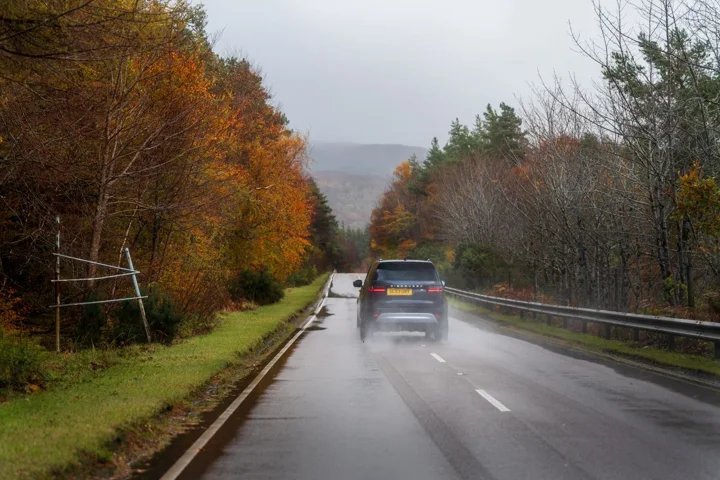
    Photo: Michał Robak / Pexels. Illustrative photograph.

    Skids, aquaplaning and ABS emergency stops are three different loss-of-grip problems, and the Highway Code for Great Britain gives a different response to each. A skid: remove the cause and steer into it. Aquaplaning: ease off and slow gradually. An ABS emergency stop: brake firmly and keep the pressure on. This guide is for learners and new drivers who want to know which is which, and how to avoid all three.

    Quick answer: which response fits which problem?

    Situation What it feels like Highway Code response
    Skid The car slides, often the rear stepping out after harsh braking, acceleration or steering Remove the cause: release the brake fully or ease off the accelerator. Steer in the direction of the skid (rule 119).
    Aquaplaning in surface water The steering suddenly feels light or unresponsive Ease off the accelerator and slow down gradually (rule 227). No sudden braking or steering.
    Emergency stop with ABS Hard braking, pulsing or noise through the brake pedal Follow the vehicle handbook. In an emergency, apply the footbrake firmly and do not release it until you have slowed to the speed you want (rule 120).
    Brakes after deep water Brakes feel weaker than normal Test them at the first safe opportunity with gentle pressure. If they are not fully effective, apply light pressure while driving slowly to dry them (rule 121).

    Do not mix these up. “Release the brake” is skid advice. It is not what to do in an ABS emergency stop.

    What causes a skid?

    Rule 119 says skidding is usually caused by braking, accelerating or steering too harshly, or by driving too fast for the conditions. That makes a skid mostly preventable:

    • Brake early and lightly, then more firmly as you begin to stop, easing off just before the car comes to rest (rule 117).
    • Slow down before a bend, not in it.
    • Avoid sudden actions on icy roads, which rule 231 says could cause loss of control.
    • Do not coast in neutral or with the clutch down. Rule 122 says it removes engine braking and affects steering, especially on bends. See coasting and downhill control.

    Steering into a skid

    If the rear of the car slides to the right, steer smoothly to the right. If it slides left, steer left. At the same time, take away whatever started it: come off the brake fully or ease off the accelerator. Overcorrecting with big, fast steering inputs can start a second slide the other way.

    What is aquaplaning and what should you do?

    Aquaplaning happens when water builds up between the tyres and the road so the tyres lose grip. Rule 227 says that if the steering becomes unresponsive, it probably means water is preventing the tyres from gripping the road. The response:

    1. Ease off the accelerator.
    2. Hold the steering straight and steady.
    3. Let the car slow gradually until the tyres grip again.
    4. Do not brake hard or steer sharply while the tyres are not gripping.

    Prevention is speed and tyres. Slow down in heavy rain, watch for standing water and spray, and keep tyres correctly inflated with good tread. See basic car maintenance.

    How does ABS work in an emergency stop?

    ABS (anti-lock brakes) stops the wheels locking under heavy braking, so you can still steer. Rule 120 says to follow your vehicle handbook, but in an emergency apply the footbrake firmly and do not release the pressure until you have slowed to the speed you want. It adds a warning: ABS should keep steering control, but do not assume a car with ABS will stop in a shorter distance.

    Without ABS, rule 118 says brake immediately but try not to brake so harshly that the wheels lock, because locked wheels can lead to loss of control. Most learners drive cars with ABS, but check your practice car’s handbook.

    How much further do you need to stop on wet or icy roads?

    Surface Highway Code guidance
    Dry At least a two second gap to the vehicle in front
    Wet Stopping distances at least double; double the gap (rules 126 and 227)
    Ice or snow Stopping distances can be up to ten times greater (rules 126 and 230)

    Driving on ice and snow (rules 230 and 231)

    • Drive with care even on treated roads, and expect conditions to change over short distances.
    • Drive slowly in as high a gear as possible, and accelerate and brake very gently.
    • Brake progressively on the straight before a bend, then steer smoothly round it.
    • To check your grip, brake gently somewhere safe. Unresponsive steering, or tyres that go almost silent, can mean ice.
    • Take care overtaking vehicles spreading salt or de-icer. Do not overtake a snowplough unless the lane you will use has been cleared.
    • Listen to travel bulletins and read the variable message signs for weather and traffic ahead.

    Rule 237 adds a hot weather risk: rain after a dry spell can make roads slippery. More in stopping distances explained.

    Scenario: heavy rain on a dual carriageway

    Spray cuts your view and water is pooling in lane one. Ease off early, double your gap and stay out of the deepest water. If the steering goes light, ease off the accelerator and wait for grip to come back. If a queue then appears suddenly ahead, that is a different problem: brake firmly and keep the pressure on, as rule 120 says for ABS. Different problems, different responses.

    Common questions

    Should I pump the brakes in a skid?

    The Highway Code does not say to pump the brakes. For a skid caused by braking, it says release the brake pedal fully. In a car with ABS, the system does the work: brake firmly and hold it.

    Does ABS mean I can brake later?

    No. Rule 120 says not to assume a car with ABS will stop in a shorter distance.

    Can I practise skids on the road?

    No. Never try to cause a skid or aquaplane on a public road. Learn what the ABS feels like from your instructor, and treat the rest as theory.

    Is aquaplaning on the theory test?

    Wet roads, stopping distances and skids are covered under safety margins and vehicle handling.

    What should I do after driving through a flood?

    Test the brakes gently at the first safe opportunity (rule 121). Better still, avoid deep water you cannot see the bottom of.

    Related: Highway Code weather rules and driver assistance systems. Back to learning to drive in Great Britain.

    Sources

    • Department for Transport, “The Highway Code: General rules, techniques and advice for all drivers and riders (103 to 158)” (gov.uk)
    • Department for Transport, “The Highway Code: Driving in adverse weather conditions (226 to 237)” (gov.uk)
  • Taking Your Driving Test With a Disability in GB: Adjustments, Age 16 and Adapted Cars

    Taking Your Driving Test With a Disability in GB: Adjustments, Age 16 and Adapted Cars

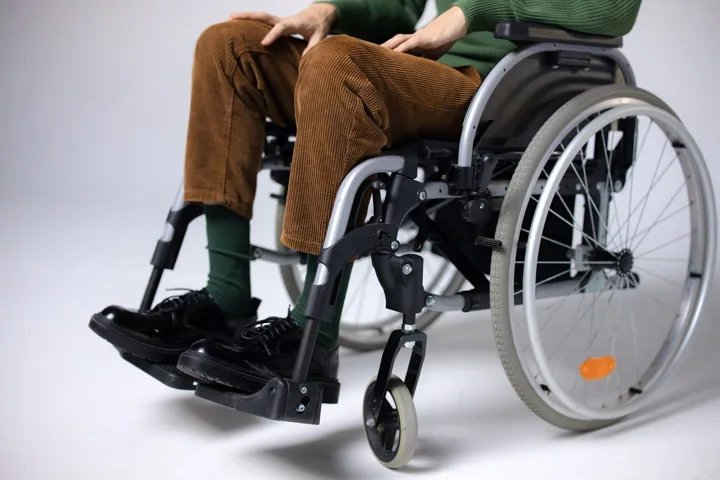
    Photo: cottonbro studio / Pexels. Illustrative photograph.

    Disabled learners in Great Britain take the same theory and practical tests as everyone else and pass to the same standard, but DVSA can change how the test is run to suit you. Some disabled learners can also take the car test at 16 rather than 17. This guide is about getting to test day ready: the age rules, the steps to sort before you book, the adjustments you can ask for, and taking the test in an adapted car. It is for learners in England, Scotland and Wales and the parents or carers helping them.

    Key facts

    • Same pass standard: you drive to the same standard to pass, but DVSA can make adjustments.
    • Age 16: in England and Wales you can learn and take the car test at 16 if you get the mobility part of PIP at the higher rate (other routes apply in Scotland; see below).
    • Tell DVLA about any medical condition that can affect your driving. Not doing so can mean a fine of up to £1,000.
    • Tell DVSA when you book if you have a disability, health condition or learning difficulty.

    When can you take the test?

    Where you live You can learn and take the test at 16 if you get
    England and Wales The mobility part of Personal Independence Payment (PIP) at the higher rate; or the higher rate mobility component of Disability Living Allowance (DLA) for children and you have applied for PIP (you must have been getting DLA before you turned 16).
    Scotland The higher rate mobility component of Child Disability Payment (received before 16); the higher rate mobility component of DLA for children while waiting to move to Child Disability Payment; the enhanced rate mobility part of Adult Disability Payment; or the higher rate mobility part of PIP while waiting to move to Adult Disability Payment.

    This is as listed by GOV.UK in November 2026. Otherwise the usual minimum age for a car is 17. You can apply for a provisional licence from 15 years 9 months.

    What the examiner can adjust on the practical test

    • You can talk to the examiner about your disability and car adaptations at the start.
    • The examiner may give you more time for instructions and directions.
    • If you are deaf or hard of hearing, the examiner uses written notes, faces you for lip reading and gives directions by hand signals explained beforehand.
    • You can bring a British Sign Language interpreter aged 16 or over (your instructor can do this). You arrange and pay, then claim the cost back.
    • With a learning difficulty, the examiner can adjust independent driving, for example following traffic signs instead of a sat nav.
    • With a reading difficulty, you can write down the number plate in the eyesight check.

    Theory test support, such as extra time and voiceover, is covered in extra support for the theory and driving tests and theory test languages and support in GB.

    Before you book: three things to sort

    1. Report your condition to DVLA

    Some medical conditions must be reported to DVLA because they can affect driving. Car licence holders can check and report a condition online on GOV.UK. Do this before you start learning, so nothing holds up your licence or test. The full process is in fitness to drive and telling DVLA.

    2. Get a driving assessment if you are unsure what you need

    A driving assessment helps work out whether you can drive and which adaptations or vehicle type suit you. Driving Mobility runs a network of accredited assessment centres across the UK. Knowing your controls early means you practise in the same set-up you will be tested in. Check how to book, any referral needed and the cost with Driving Mobility or your local centre.

    3. Decide on manual or automatic

    If you learn and pass in an automatic, your full licence will cover automatic cars only. See automatic or manual.

    Taking the test in your own adapted car

    You can, if it meets the test car rules, such as being taxed, insured for a test, roadworthy and fitted with an extra interior mirror for the examiner. Tell the examiner about the adaptations at the start. A car that fails these rules means the test does not go ahead, so check it well before your date.

    Practising until you are test-ready

    Paid teaching must come from an approved driving instructor (ADI) or trainee instructor; ask whether they have an adapted car or can teach in yours. Family or friends can supervise private practice if they are over 21 and have held a full licence for 3 years. The car must be insured for you as a learner. Before booking, check you can drive a full test-length route with your adaptations without prompts.

    Motability help with getting to test standard

    The Motability Scheme lets people who receive a qualifying mobility allowance lease a car, including adapted ones. Check eligibility directly with Motability. The Motability Foundation’s driving lessons grant (as of November 2026):

    Requirement or detail What the Foundation says
    Who Disabled people on the Motability Scheme, or an appointee for a Scheme customer such as a disabled child aged 16 or over.
    You must Have a Scheme vehicle (or one due within 4 months), hold a provisional licence and have passed the theory test.
    Means test You get a means-tested benefit such as Universal Credit. Full-time students under 25 may qualify through a parent or guardian’s benefit.
    What it pays for Up to 40 hours of lessons for first-time learners, arranged through the AA Driving School. Lessons should be completed within 12 months.
    Not covered Theory or practical test fees, lessons for family or carers, Pass Plus and refresher training.

    Common questions

    Do I have to tell DVLA about my disability before my test?

    Only if it is a condition that can affect your driving. Use the GOV.UK condition checker. Failing to report a relevant condition can mean a fine of up to £1,000.

    Is the pass mark lower with adjustments?

    No. Adjustments change how the test is delivered, not the standard you must reach.

    I am not on Motability. Is there other help?

    Check what your local council or disability charities offer, and ask your assessment centre.

    Can I take the test at 16 if I get the standard rate of PIP mobility?

    GOV.UK lists the higher rate only. With other awards, the normal age of 17 applies.

    Looking for lessons or an instructor? Our sister site Compare Driving Instructors covers lesson prices and choosing an instructor.

    Back to the full guide to learning to drive in Great Britain. See also the cost of learning to drive in GB.

    Sources

    • GOV.UK, “Vehicles you can drive: car, age 16” (gov.uk)
    • GOV.UK, “Health conditions and driving” (gov.uk)
    • GOV.UK, “Driving test: if you have a disability, health condition or learning difficulty” (gov.uk)
    • GOV.UK, “Driving test: using your own car” (gov.uk)
    • GOV.UK, “Driving lessons and learning to drive” (gov.uk)
    • GOV.UK, “Apply for your first provisional driving licence” (gov.uk)
    • Motability Foundation, “Driving lessons grant” (motabilityfoundation.org.uk)
    • Driving Mobility, “Driving Mobility” (drivingmobility.org.uk)
  • Foreign Licences in GB: When to Exchange or Take the Driving Test

    Foreign Licences in GB: When to Exchange or Take the Driving Test

    Photo: Yelena from Pexels / Pexels. Illustrative photograph.

    If you have moved to Great Britain with a foreign licence, the first question is whether you need to sit the GB driving tests at all. If you passed in the EU or EEA, or in one of 23 “designated” countries and territories, you can usually exchange your licence without a test. From anywhere else, you can usually drive a car on your licence for up to 12 months after becoming resident; to keep driving on your own after that, you need to pass the GB theory and practical tests. Some groups have different limits, so check your own case with the GOV.UK checker. This guide helps new residents of England, Scotland and Wales work out which side they fall on and, if it is the test, how to be ready in time. Northern Ireland has its own process through the DVA.

    Exchange or test? Check your route

    Where you passed your test Driving on your licence Do you need the GB tests?
    EU or EEA You can drive until you are 70, or for 3 years if you were 67 or over when you became resident. No. You can exchange, no test needed.
    A designated country or territory (list below) Usually up to 12 months after becoming resident. No. You can exchange up to 5 years after becoming resident, if the licence has not expired.
    Anywhere else Usually up to 12 months after becoming resident. Yes. Get a provisional licence and pass the theory and practical tests.

    Exceptions exist. For example, Ukrainian licence holders living here on a Ukraine visa scheme can drive for between 36 and 78 months after becoming resident, depending on their permission, though the 5-year exchange deadline still applies (GOV.UK, as of November 2026).

    The rules above are the usual position for car licences held by residents, as shown by the GOV.UK licence exchange checker (as of November 2026). Visitors and students should run the GOV.UK “drive in GB on a non-GB licence” checker, because the answers differ.

    GOV.UK lists these designated countries and territories as having exchange agreements with Great Britain:

    • Andorra, Australia, Barbados, British Virgin Islands, Canada, Cayman Islands
    • Falkland Islands, Faroe Islands, Gibraltar, Hong Kong, Japan, Monaco
    • New Zealand, Republic of Korea, Republic of Moldova, Republic of North Macedonia
    • Singapore, South Africa, Switzerland, Taiwan, Ukraine, United Arab Emirates, Zimbabwe

    Jersey, Guernsey and the Isle of Man have a separate route in the checker. Lists can change, so run the GOV.UK checker before you apply.

    If you must take the test: plan inside your 12 months

    For most people the 12 months is the limit for driving on your own with your foreign licence. Work back from it, leaving room for a possible retest. If it runs out before you pass, you can still drive on a valid GB provisional licence, but only as a learner: L plates, a supervisor aged 21 or over who has held a full licence for 3 years, and no motorways unless you are with an approved driving instructor in a dual-control car.

    1. Straight away: apply for a provisional licence. You must have permission to live in Great Britain for at least 185 days.
    2. Next: revise for and pass the car theory test (£23). The Highway Code and GB road signs are where experienced overseas drivers most often trip up.
    3. Once the theory is passed: book the practical test (£62 weekdays, £75 evenings, weekends and bank holidays). Waiting times vary by centre, so book early.
    4. Before test day: run a full mock test. Faults are marked to the GB standard: no more than 15 driving faults and no serious or dangerous faults.
    5. Leave a buffer: after a fail, the next practical test must be at least 10 working days away.

    Where experienced overseas drivers lose marks

    Years of driving elsewhere helps with car control, but the GB test checks GB habits. Common gaps include roundabout lane discipline and priority, mirror-signal-manoeuvre routines, speed limits shown only by street lighting, and the specific manoeuvres and show me, tell me questions. A few sessions with an approved driving instructor to learn the local rules and test routine usually pays off. See learning to drive in the UK as an international student or new resident and the cost of learning to drive in GB.

    If you can exchange: step by step

    1. Check you are eligible with the GOV.UK exchange checker.
    2. Get form D1 from a Post Office that offers DVLA services.
    3. Send the form, the £43 fee (as of November 2026) and the documents asked for, including your licence, to the address on the form.
    4. Include proof you passed in a manual car if the form asks for it. Designated-country licences can usually be exchanged for a GB licence covering manual cars.
    5. Wait for your licence: usually about 3 weeks for EU/EEA licences and 3 to 4 weeks for designated-country licences. It can take longer if you have told DVLA about a medical condition.

    Common questions

    Can I drive in the UK on my foreign licence while I prepare for the test?

    As a resident with a car licence from outside the EU/EEA, usually for up to 12 months after becoming resident (some groups, such as Ukraine visa scheme holders, get longer). EU/EEA licence holders can usually drive until age 70.

    I have been here more than 12 months. Can I still exchange?

    If you passed in a designated country, you can exchange up to 5 years after becoming resident, as long as the licence has not expired. Unless an exception applies to you, such as the Ukraine visa scheme rules, you must not drive on it after the first 12 months until you have exchanged.

    My country is not on the list. What now?

    You cannot exchange. Apply for a provisional licence and aim to pass both tests within your 12 months. After that you can only drive under learner conditions until you pass.

    Should I take the GB test in a manual or automatic?

    A designated-country licence can usually be exchanged for one that covers manual cars, but you may need proof you passed in a manual. If you pass a GB test in an automatic, your licence is automatic only. See automatic licence restrictions.

    Do the new driver points rules apply to me?

    GOV.UK says the New Drivers Act rules can also apply if you exchange a foreign licence. See the New Drivers Act and check your case with DVLA.

    I live in Northern Ireland. Is it the same?

    No. Northern Ireland has a different exchange process through the DVA on nidirect.

    Looking for lessons or an instructor? Our sister site Compare Driving Instructors covers lesson prices and choosing an instructor.

    Back to the full guide to learning to drive in Great Britain.

    Sources

    • GOV.UK, “Exchange a foreign driving licence” (gov.uk)
    • GOV.UK, “Exchange a non-GB driving licence” checker outcomes for EU/EEA, designated and other countries (gov.uk)
    • GOV.UK, “Driving in Great Britain on a non-GB licence” (gov.uk)
    • GOV.UK, “Driving in Great Britain: Ukrainian driving licence exchange” (gov.uk)
    • GOV.UK, “The Highway Code, Annex 3: motor vehicle documentation and learner driver requirements” (gov.uk)
    • GOV.UK, “Apply for your first provisional driving licence” (gov.uk)
    • GOV.UK, “Driving test: cost” (gov.uk)
    • GOV.UK, “Penalty points (endorsements): new drivers” (gov.uk)
  • Just Passed in Great Britain: Your First Year as a New Driver

    Just Passed in Great Britain: Your First Year as a New Driver

    Photo: Antoni Shkraba / Pexels. Illustrative photograph.

    Passed your driving test in Great Britain? You can drive alone straight away, as long as your insurance covers you without supervision. You do not have to wait for your full licence to arrive. This guide covers the licence paperwork, P plates, the New Drivers Act rule that 6 points in 2 years cancels your licence, and the first-year habits the Highway Code’s safety code for new drivers recommends.

    Your first-day checklist

    1. Licence: decide whether the examiner sends your licence off automatically (you hand over your provisional), or you apply yourself.
    2. Insurance: switch from learner cover to a policy that lets you drive unsupervised before you drive away.
    3. L plates: take them off when the car is not being driven by a learner.
    4. P plates: optional. Put them on if they help you.
    5. Points: remember the 2-year New Drivers Act period starts from the day you pass.

    Getting your full licence

    At the end of the test the examiner gives you a pass certificate and asks whether you want your full licence sent to you automatically. If you say yes, you hand over your provisional licence.

    • If you do not use the automatic option, you must apply for your full licence within 2 years of passing.
    • If your full licence has not arrived 3 weeks after you applied, contact DVLA.
    • You can drive in the meantime. You do not need to wait for the new licence.

    Do you have to display P plates in Great Britain?

    No. Green P plates are voluntary in Great Britain, and you can leave them on for as long as you like. Northern Ireland is different: new drivers there must display R plates. See Northern Ireland R plates explained.

    The New Drivers Act: 6 points in 2 years

    Rule What it means for you
    6 or more points within 2 years of passing Your licence is cancelled (revoked).
    Points from your provisional licence Unexpired points carry over and count towards the 6.
    After revocation Apply and pay for a new provisional licence, then pass the theory and practical tests again.

    Two common offences can do it on their own. Holding and using a phone while driving can mean 6 points and a £200 fine, which for a new driver also means losing your licence, as explained in mobile phones and the law. The minimum speeding penalty is a £100 fine and 3 points, so two speeding offences reach 6. More detail: the New Drivers Act explained.

    Motorways, night driving and passengers

    Motorways

    As a learner you could only drive on a motorway with an approved driving instructor in a dual-control car. Once you pass, you can use motorways alone. Plan your first trip using your first motorway drive after passing.

    Night driving

    The Highway Code’s safety code for new drivers advises avoiding driving between midnight and 6am unless it is really necessary. See driving at night as a new driver.

    Passengers

    You are responsible for your passengers’ safety. Do not let them distract you or push you into taking risks. See carrying passengers for the first time.

    The safety code for new drivers (Highway Code Annex 8)

    • Avoid driving between midnight and 6am unless it is really necessary.
    • Do not show off or compete with other drivers.
    • Do not drive after drinking alcohol or taking drugs, and check whether any medicine affects your driving.
    • Make sure everyone in the car wears a seat belt.
    • Keep your speed down, especially on bends.
    • Build up experience before driving a high-powered or sporty car.
    • Consider further training such as Pass Plus, which takes at least 6 hours and may help lower your insurance cost.

    Common questions

    Can I drive home alone straight after passing?

    Yes, if your insurance covers you to drive without supervision. Your learner policy does not.

    How long do I have to claim my full licence?

    If you did not have it sent automatically, apply within 2 years of passing.

    Can I supervise a learner after I pass?

    Not yet. A supervisor must be over 21 and have held a full licence for that type of car for 3 years. See supervising a learner driver.

    Is my insurance going to be expensive?

    New driver premiums are high. See why insurance costs so much after passing, and never use fronting (a parent as main driver of your car), which is illegal.

    Do the 6 points rules apply if I passed abroad?

    GOV.UK says the new driver rules can also apply after exchanging a foreign licence. Check your own case with DVLA.

    Back to the full guide to learning to drive in Great Britain.

    Sources

    • GOV.UK, “Driving test faults and your result” (gov.uk)
    • GOV.UK, “Book your driving test” (gov.uk)
    • GOV.UK, “Using L and P plates” (gov.uk)
    • GOV.UK, “Penalty points (endorsements): new drivers” (gov.uk)
    • GOV.UK, “Driving lessons and learning to drive: practising with family or friends” (gov.uk)
    • Department for Transport, “The Highway Code: Annex 8, safety code for new drivers” (gov.uk)
    • GOV.UK, “Pass Plus” (gov.uk)
    • GOV.UK, “Using mobile phones when driving: the law” (gov.uk)
    • GOV.UK, “Speeding penalties” (gov.uk)
  • Learner Driver Insurance: What You Need for Practice and on Test Day (GB)

    Learner Driver Insurance: What You Need for Practice and on Test Day (GB)

    Photo: Mike Bird / Pexels. Illustrative photograph.

    Insurance touches your driving test at three points: every hour of private practice, the car you sit the test in, and the moment you pass and want to drive home. In Great Britain you must be insured every time you drive as a learner, including practice with family or friends. You either take out your own learner policy or get added to the car owner’s policy as a learner. This guide shows what you need at each stage so nothing stops you on test day, and why putting a parent down as the main driver (“fronting”) is illegal.

    The rules in brief

    • Motor insurance is a legal requirement on UK roads. Third party cover is the legal minimum.
    • Driving without insurance can mean an unlimited fine, a driving ban and up to 8 penalty points. Points on a provisional licence follow you onto your full licence.
    • Practising in your own car: you need your own learner insurance. Your supervisor is usually covered too.
    • Practising in someone else’s car: their policy must cover you as a learner, or you need your own policy.
    • Some insurers require your supervisor to be older than 25, even though the legal minimum is over 21.
    • The day you pass, your learner cover must be updated or replaced with a full-licence policy before you drive alone.

    Stage 1: cover for practice between lessons

    Private practice is where most learners build the extra hours that get them to test standard. Pick the option that matches the car you will practise in.

    Option How it works Good for Watch out for
    Separate learner policy on a family car You buy cover in your own name to practise in someone else’s car. Learners who want practice without touching a parent’s policy. Check that it covers the exact car and the supervisor’s age.
    Added to the owner’s policy as a learner The car owner asks their insurer to add you as a learner driver. Regular practice in one household car. Ask how a claim would affect the owner’s policy.
    Learner policy on your own car You insure your own car as a learner. Your supervisor is usually covered. Learners who will keep the car after passing. Needs updating to a full-licence policy as soon as you pass.

    Before you buy, check which car or cars it covers (is it named by registration?), the age and licence history the supervisor must have, whether cover ends automatically when you pass, the excess, and that the insurer or broker is genuine. See ghost brokers and fake car insurance.

    Stage 2: the car you take the test in

    Most learners take the test in their instructor’s car, which is used for paid lessons; ask your instructor to confirm the cover if you are unsure. If you plan to use your own or a family car instead, it must be insured for you as a learner on the day. Turning up in a car that is not suitable gets the test cancelled and the fee lost, so confirm the insurance well before your date.

    Stage 3: the drive home after you pass

    A learner policy is for supervised driving. GOV.UK says you can drive as soon as you pass, but only with an insurance policy that allows you to drive without supervision. The Motor Insurers’ Bureau (MIB) warns that driving after passing without updating or replacing learner cover leaves you uninsured. Sort your new policy before test day so you can drive home legally.

    New driver premiums are high. See why insurance costs so much after passing for legal ways to bring it down, such as a telematics (black box) policy or Pass Plus training, which GOV.UK says may help you get a discount.

    Fronting: a shortcut that can cost you your licence

    Fronting is when someone more experienced, often a parent, is named as the main driver of a car that a young or new driver mainly uses, to get a cheaper premium. The MIB states that fronting is illegal. The possible consequences:

    • the car being seized or crushed
    • a driving ban and an unlimited fine
    • the policy being cancelled and claims refused
    • being added to the Insurance Fraud Register, which can make future insurance very hard to get

    The legal way: the person who mainly drives the car is the main driver. A parent who genuinely uses the car can be added as a named driver.

    Test-ready insurance checklist

    • Every car you practise in covers you as a learner.
    • Your supervisor meets both the legal rule and your insurer’s own age rule.
    • The test car is confirmed as insured for you.
    • A full-licence policy is lined up to start the moment you pass.

    Common questions

    Do I need insurance for lessons and the test in my instructor’s car?

    The car you drive must be insured for you. For lessons or a test in your instructor’s car, check with the instructor that their cover includes you.

    Does my supervisor need their own insurance?

    If you have your own learner policy on your own car, your supervisor is usually covered. Check the policy wording.

    Can I practise on my parent’s policy without telling the insurer?

    No. The policy must cover you as a learner. Driving uninsured can mean an unlimited fine, a ban and up to 8 points.

    Why do some insurers want a supervisor over 25?

    It is an insurer’s own condition, not the law. The legal rule is that your supervisor is over 21 and has held a full licence for that type of car for 3 years.

    Can I buy short-term learner insurance for the weeks before my test?

    Check what insurers offer for the length of time you need. Compare the car covered, supervisor rules and excess, not just the price.

    Is Northern Ireland different?

    You still need learner cover, but the learning rules differ under GDL. See the Northern Ireland guide.

    Looking for lessons or an instructor? Our sister site Compare Driving Instructors covers lesson prices and choosing an instructor.

    Related: supervising a learner driver, your first year after passing, cost of learning to drive in GB. Back to the full guide to learning to drive in Great Britain.

    Sources

    • GOV.UK, “Vehicle insurance” (gov.uk)
    • GOV.UK, “Driving lessons and learning to drive: practising with family or friends” (gov.uk)
    • GOV.UK, “Book your driving test” (gov.uk)
    • GOV.UK, “Pass Plus” (gov.uk)
    • Motor Insurers’ Bureau, “Supporting you with insurance as a new or young driver” (mib.org.uk)
  • Driving Test Cancellations: Find an Earlier Test Legally (GB)

    Driving Test Cancellations: Find an Earlier Test Legally (GB)

    Photo: Andrea Piacquadio / Pexels. Illustrative photograph.

    The only legal way to get an earlier driving test in Great Britain is to check the official GOV.UK booking service yourself and grab a cancellation when one appears. Since 2026 the rules are much tighter: only you can book or change your car test, you get 2 changes per booking, and you can only move to one of the 3 test centres nearest your booked one. This guide shows how to search efficiently, what the 2026 limits mean, and why resellers and “cancellation finder” apps can cost you your test.

    Key facts (as of November 2026)

    • Learner only: since 12 May 2026, only you can book, change, cancel or swap your car driving test. Your instructor cannot do it for you.
    • 2 changes: since 31 March 2026, you can make 2 changes to a booking. A swap with another learner counts as one. Changing date and centre together counts as one.
    • Nearby centres: since 9 June 2026, you can only move your test to one of the 3 centres nearest to where it is booked, or back to the centre you first booked.
    • No scanning tools: since 12 May 2026, using unofficial services that scan the booking service for appointments is banned.
    • No waiting list: DVSA does not run one.

    When do new driving tests and cancellations appear?

    • New appointments are released 24 weeks ahead, every Monday at 6am.
    • Cancellations appear whenever another learner changes or cancels, at any time of the week.
    • The online service is open from 6am to 11:40pm.

    How to look for an earlier test, step by step

    1. Book a test first, even if the date is late. You can only change an existing booking.
    2. Have your details ready: your driving licence number and your driving test reference number (or theory test pass certificate number).
    3. Check the official service yourself at different times of day. Early on Monday mornings is when new dates are added.
    4. Look at all 4 options you are allowed: your booked centre and the 3 nearest to it.
    5. Spend a change only when the slot is genuinely better. After 2 changes, the only option is to cancel and rebook, which could put you further back.
    6. Check the cost: moving to an evening, weekend or bank holiday slot means paying the difference; moving to a weekday gets you the difference back.

    Changes, notice and refunds

    Rule What it means
    2 changes per booking Use them carefully. Swaps count too.
    10 full working days’ notice Needed to change or cancel a car test without losing the fee. Sundays and public holidays do not count.
    DVSA changes your test If DVSA moves your test (for example for bad weather), your changes reset to 2. Since 19 June 2026 you can use them online.
    Misuse of the service DVSA can suspend your online access, so you can only manage the test by phone, or cancel the booking.

    Full detail on the 2026 rules is in driving test booking rules 2026.

    Why resellers and bots put your test at risk

    Paid “cancellation finder” apps, booking services and people selling test slots on social media are exactly what the 2026 rules target. Using them can lead DVSA to suspend your online access or cancel your booking, and you would lose the fee and your place.

    Warning signs of a reseller:

    • They offer a guaranteed earlier date for a fee.
    • They ask for your licence number and booking reference so they can book or move the test for you.
    • They sell or “swap” tests through social media groups or messaging apps.

    How to report a driving test reseller

    DVSA has an online form for reporting people, social media accounts, websites and apps that sell car test appointments, use bots to search the booking service, book tests for other people, or use someone’s details without permission.

    • Include website addresses, usernames or links to accounts or groups, app names and screenshots if you have them.
    • Your name and contact details are optional and kept confidential.
    • Only report what you already know. DVSA says not to contact sellers or join groups just to gather evidence.
    • You will not usually get a reply about your report.

    Before you move your test earlier: are you ready?

    An earlier date only helps if you are ready to pass. If you fail, you pay again and the next test must be at least 10 working days away. Check yourself honestly against how to tell you are ready, and run a full mock test first.

    Common questions

    Can my driving instructor find me a cancellation?

    No. Since 12 May 2026, only the learner can book, change, cancel or swap a car driving test.

    Are cancellation checker apps illegal?

    Using unofficial services that scan the DVSA booking service is banned under the booking rules, and DVSA can act against your booking if you use one.

    Can I swap my test with someone else?

    Yes, but only you can arrange it, and it uses one of your 2 changes.

    Can I move my test to any centre in the country?

    Not since 9 June 2026. You can only move to one of the 3 centres nearest your booked centre, or back to the one you first booked.

    What if I use up both changes?

    You would need to cancel and rebook. Give 10 full working days’ notice to get the fee back.

    Is there a waiting list for earlier tests?

    No. You have to check the service yourself.

    Back to the full guide to learning to drive in Great Britain.

    Sources

    • GOV.UK, “Changes to driving test booking rules in 2026” (gov.uk)
    • GOV.UK, “Change your driving test appointment” (gov.uk)
    • DVSA, “Report driving test resellers, cancellation finders or booking services” (gov.uk)
    • GOV.UK, “Driving test faults and your result” (gov.uk)
  • Failed Your Driving Test in GB? Feedback, Rebooking and Appeals

    Failed Your Driving Test in GB? Feedback, Rebooking and Appeals

    Photo: Sinitta Leunen / Pexels. Illustrative photograph.

    If you fail your driving test in Great Britain, you can book another one straight away, but the new date must be at least 10 working days away and you pay the full fee again (£62 weekdays or £75 evenings, weekends and bank holidays, as of November 2026). The result itself cannot be changed, even on appeal. This guide covers what happens at the end of the test, how to rebook, when a complaint or appeal is worth it, and how to turn the faults into a plan.

    Key facts

    • You fail with 16 or more driving faults, or any serious or dangerous fault.
    • The examiner tells you what faults you made at the end of the test.
    • Your retest must be at least 10 working days away. The rule is still 10 working days as of November 2026.
    • Your theory test pass still counts, as long as it is within its 2 years.
    • A complaint or appeal can win a refund or free retest, never a pass.

    Straight after the test: get the details

    When the examiner tells you the result, they go through the faults you made. Listen for three things and write them down before you leave:

    1. Each serious or dangerous fault, and where on the route it happened.
    2. Any driving fault that came up more than once. Repeated driving faults can become a serious fault.
    3. The skill area for each fault, such as observation at junctions, use of mirrors or response to signs.

    Then talk it through with your instructor while it is fresh. Our guide to driving, serious and dangerous faults explains how each fault type is judged.

    How to rebook your driving test

    1. Go to the GOV.UK driving test booking service. Since 12 May 2026 you must book it yourself; your instructor cannot book it for you.
    2. Have your driving licence number and theory test pass certificate number ready.
    3. Choose a date at least 10 working days away. Monday to Saturday count as working days.
    4. Pay the fee again: £62 weekdays, £75 evenings, weekends and bank holidays.
    5. Check your theory pass will still be valid on the new date. If it runs out, you must pass the theory test again first.

    Want a date sooner than the first one offered? Check for cancellations yourself. See how to find an earlier test legally.

    Can you appeal a failed driving test?

    Only on a narrow ground: you must be able to show the examiner did not follow the law when carrying out your test. Disagreeing with the examiner’s judgement about your driving is not enough.

    Step What happens Possible outcome
    1. Complain to DVSA Explain how the test was not carried out properly. If DVSA agrees: possible refund or free retest. The result stands.
    2. Appeal to a court If DVSA disagrees, you may be able to appeal to a court. Get legal advice on which court handles it where you live. If you win: possible refund or free retest. The result still stands.

    Time limits: within 6 months of your test in England and Wales, or 21 days in Scotland. You might have to pay significant legal costs if the appeal fails, so for most people rebooking is quicker and cheaper.

    If your test was cancelled or stopped by DVSA, different rules apply. See when a driving test is cancelled or goes wrong.

    Build a fix plan before the retest

    Fault you got What to do in your next lessons
    Serious fault in one place (for example a missed mirror check before turning) Drill that exact situation on several different roads until it is automatic.
    Same driving fault many times Treat it as a habit problem. Ask your instructor to call it out every time.
    Manoeuvre fault Practise the manoeuvre in new places, not just the one you know.
    Nerves caused mistakes Do full mock tests on unfamiliar routes, with your instructor silent.

    Run at least one full mock before the retest. Our guide to running a mock driving test shows how, and the top reasons people fail covers the usual weak spots.

    Common questions

    How soon can I retake my driving test after failing?

    The earliest new date is 10 working days after your test. How soon you actually get a slot depends on availability at your chosen centre.

    Do I have to retake the theory test after failing the practical?

    No, unless your theory pass certificate expires before your next practical test. It lasts 2 years from the date you passed.

    Can I get my money back if I fail?

    No. A refund or free retest is only possible if DVSA, or a court, finds the test was not carried out according to the law.

    Is the 10 working day rule changing to 28 days?

    A longer gap has been reported in the press, but GOV.UK still says at least 10 working days as of November 2026.

    Will failing affect my insurance?

    Failing does not change your learner status. If you have a learner policy, check its end date covers you until the retest.

    Back to the full guide to learning to drive in Great Britain.

    Sources

    • GOV.UK, “Driving test faults and your result” (gov.uk)
    • GOV.UK, “Book your driving test” (gov.uk)
    • GOV.UK, “Driving test: cost” (gov.uk)
    • GOV.UK, “Change your driving test appointment” (gov.uk)
    • GOV.UK, “Changes to driving test booking rules in 2026” (gov.uk)
    • GOV.UK, “Theory test: pass mark and result” (gov.uk)
  • Driving Test Costs in Great Britain 2026: Every Fee From Provisional to Pass

    Driving Test Costs in Great Britain 2026: Every Fee From Provisional to Pass

    Photo: Mike Bird / Pexels. Illustrative photograph.

    Getting from provisional licence to a pass in Great Britain costs at least £119 in official fees as of November 2026: a £34 provisional licence, a £23 theory test and a £62 weekday practical test. The fastest way to blow that budget is a failed test, a lost fee or a wasted booking. This guide covers every test-related fee for learners in England, Scotland and Wales, what a resit really costs, and how to protect the money you have paid for each test.

    The fees on your route to the test (as of November 2026)

    Stage Fee What to know
    First provisional licence £34 online, £43 by post Apply from 15 years 9 months. Post uses form D1.
    Car theory test £23 Same price every day. The pass lasts 2 years, so you must pass the practical inside that window.
    Car practical test £62 weekdays, £75 evenings, weekends and bank holidays Book it yourself on GOV.UK.
    Extended test (disqualified drivers) £124 weekdays, £150 evenings, weekends and bank holidays Only for disqualified drivers who must take it.
    Pass Plus (optional, after the test) Set by the instructor At least 6 hours of training after you pass.

    The real cost of not passing first time

    Most of the avoidable spend sits here. A fail does not just cost the fee again; it costs the wait and the extra practice in between.

    Situation Cost Waiting rule
    Failed theory test £23 again Wait at least 3 working days. You retake both parts.
    Failed practical test £62 to £75 again New date at least 10 working days away.
    Theory test changed with under 3 full working days’ notice Pay again Refunds only for set reasons, such as illness with proof.
    Practical test changed or cancelled with under 10 full working days’ notice Fee lost Monday to Saturday count as working days.
    Turning up without the right documents or a suitable car Fee lost The test is cancelled.

    If it does go wrong, see failed your driving test: what next.

    Protect your test fee: a pre-booking checklist

    • Are you actually ready? Pass a full mock test under the 15-driving-fault limit with no serious faults before you book. See how many lessons before you’re ready to pass.
    • Is your theory pass still valid on the date you are booking? It lasts 2 years.
    • Do you know the notice rules? Under 10 full working days to change a practical test means losing the fee.
    • Is the car sorted? If you use your instructor’s car, ask what they charge for the test and any lesson beforehand. A car that is not suitable means a cancelled test.
    • Do you have your documents ready for the day? Missing documents also cancel the test.

    The costs with no fixed price

    Lessons: GOV.UK states that instructors set their own prices, with no minimum or maximum. Anyone you pay must be an approved driving instructor (green badge) or a trainee instructor (pink badge).

    Learner insurance: you must be insured for every hour of private practice. If you practise in your own car you need your own learner policy. In someone else’s car, either their policy covers you as a learner or you take out your own. Prices depend on the insurer. See learner driver insurance for practice and test day.

    Revision for the theory test: GOV.UK has a free practice theory test. The official DVSA books, apps and theory test kit cost extra; prices are set by the sellers.

    Build a test budget in five lines

    1. Official fees: £34 + £23 + £62 = £119 (online provisional, weekday test).
    2. Training: the hours you need to reach test standard, at your instructor’s rate.
    3. Insurance: learner cover for the weeks you practise privately.
    4. Test day: car hire for the test and any warm-up lesson.
    5. Buffer: one theory resit (£23) and one practical resit (£62 to £75) if you want to be safe.

    Legal ways to spend less on the tests

    • Apply online for your provisional licence: £9 cheaper than by post.
    • Take a weekday test: £13 cheaper than evenings, weekends or bank holidays. Moving to a weekday slot later gets you the difference back.
    • Use free practice: the GOV.UK practice theory test, plus supervised practice with family or friends (they must not be paid).
    • Never use test resellers or bots. They break DVSA rules and your booking can be cancelled. See how to find an earlier test legally.

    Common questions

    How much does a driving test cost in 2026?

    £62 on weekdays or £75 on evenings, weekends and bank holidays in Great Britain, as of November 2026.

    Do I pay for my full licence after passing?

    The examiner can send your licence to be upgraded on the day if you hand over your provisional. Otherwise you must apply within 2 years of passing. Check GOV.UK for any fee that applies to your case.

    Is the test cheaper in an automatic?

    The official fees are the same. You may reach test standard in fewer hours, but your licence will only cover automatic cars.

    Does Northern Ireland cost the same?

    No. Northern Ireland has its own DVA fees and rules. See cost of learning to drive in Northern Ireland.

    Can I get help with the cost of getting test-ready?

    Some disabled learners on the Motability Scheme can get grants for lessons. See learning to drive with a disability in GB.

    Looking for lessons or an instructor? Our sister site Compare Driving Instructors covers lesson prices and choosing an instructor.

    Back to the full guide to learning to drive in Great Britain.

    Sources

    • GOV.UK, “Apply for your first provisional driving licence” (gov.uk)
    • GOV.UK, “Driving test: cost” (gov.uk)
    • GOV.UK, “Theory test: revision and practice” (gov.uk)
    • GOV.UK, “Theory test: pass mark and result” (gov.uk)
    • GOV.UK, “Change your theory test appointment” (gov.uk)
    • GOV.UK, “Change your driving test appointment” (gov.uk)
    • GOV.UK, “Driving test faults and your result” (gov.uk)
    • GOV.UK, “Driving lessons and learning to drive” (gov.uk)
    • GOV.UK, “Pass Plus” (gov.uk)
    • Motability Foundation, “Driving lessons grant” (motabilityfoundation.org.uk)
  • How Many Driving Lessons Before You’re Ready to Pass? (GB)

    How Many Driving Lessons Before You’re Ready to Pass? (GB)

    Photo: Adrien Olichon / Pexels. Illustrative photograph.

    The question that matters is not how many lessons you have had, but whether you can drive a full test route to the pass standard. In Great Britain there is no legal minimum number of driving lessons: GOV.UK says there is no minimum number of lessons you must have or hours you must practise, and what you need depends on how quickly you learn. This guide is for learners in England, Scotland and Wales (and the parents backing them) who want to know when they are genuinely ready to book and pass.

    What the test asks for, not a lesson count

    • No minimum: no set number of lessons or practice hours is required in Great Britain (as of November 2026).
    • The pass mark: no more than 15 driving faults and no serious or dangerous faults.
    • What gets tested: the manoeuvres, emergency stop, independent driving and the show me, tell me questions.
    • Who can teach you: anyone you pay must be an approved driving instructor (ADI, green windscreen badge) or a trainee instructor (pink badge). A family member or friend can supervise free practice if they are over 21 and have held a full licence for that type of car for 3 years.
    • A minimum learning period is not law. The government consulted on one in 2026; check GOV.UK for the outcome.

    Five signs you are ready to pass

    Run through these honestly before you book. If any one is a “not yet”, that is where your next hours should go.

    1. You can drive a full, test-length route with no help or prompts from your instructor.
    2. You are scoring well under 15 driving faults on mock tests, with no serious faults, more than once.
    3. You can do each manoeuvre safely, first time, in different places.
    4. You make safe decisions on unfamiliar roads, including when you go the wrong way.
    5. Your instructor agrees you are ready, not just “nearly there”.

    The quickest way to test points 1 and 2 is a proper mock. See how to run a mock driving test and how driving test faults are marked.

    The “45 hours plus 22 hours” figure

    You will often see “about 45 hours of lessons plus 22 hours of private practice” quoted as a DVSA average. Treat it as rough background, not a personal target or a promise of how many lessons you will need. Some learners reach test standard in far fewer hours and some need more. The only standard that counts is the one on test day.

    What speeds up or slows down your route to test standard

    Factor Effect on readiness
    Private practice Supervised practice between lessons lets you repeat test skills until they are automatic. Learners with no access to a car usually need more paid hours to get there.
    Manual or automatic An automatic removes clutch and gear work, so there is less to go wrong on test. If you pass in an automatic, you can only drive automatics on your full licence.
    How often you drive Regular sessions build on each other. Long gaps mean time spent relearning.
    Where you practise You need experience of the roads you will meet on test: busy junctions, roundabouts, faster roads, dual carriageways.
    Confidence and nerves Some learners handle the car well but need extra hours to make decisions calmly in traffic, which is exactly what the examiner watches for.

    Plan your hours backwards from test day

    1. Get an early benchmark. After a few lessons, ask your ADI for an honest view of how far you are from test standard.
    2. Add private practice once your instructor says you are safe to practise basic skills with a supervisor. Make sure the car is insured for you as a learner.
    3. Keep a fault log of what you covered and what still goes wrong. Each entry is a likely test fault until it disappears.
    4. Cover every test element, not just the parts you enjoy: manoeuvres, emergency stop, independent driving and show me, tell me.
    5. Plan motorway experience with your instructor. Learners can only drive on a motorway with an ADI in a car with dual controls, never with family or friends.

    Why booking too early costs you

    If you fail, you pay again and must choose a date at least 10 working days away. Booking before you can pass the five checks above usually adds time rather than saving it.

    Could a minimum learning period change this?

    The Department for Transport consulted on introducing a minimum learning period for learner drivers from 7 January to 11 May 2026. It proposed a minimum time between passing the theory test and taking the practical test, and asked for views on a minimum number of supervised practice hours. Nothing changes unless and until a new rule is made, so check GOV.UK for the government response. Details are in our guide to the minimum learning period consultation.

    Common questions

    Is there a minimum number of lessons before the driving test in the UK?

    Not in Great Britain. You can take the test whenever you have passed the theory test and feel ready. Northern Ireland is different: from 1 October 2026 learners there follow Graduated Driver Licensing with a mandatory learning period.

    Can I get test-ready practising only with my parents?

    Yes, if your supervisor meets the rules (over 21, full licence for 3 years) and you are insured. Many learners still use an ADI, because instructors know the test standard and you cannot practise on motorways without one.

    Are intensive courses a shortcut to the test?

    They pack lessons into days or weeks rather than months, usually ending in a test. They suit some learners. See intensive driving courses in GB.

    Do automatic learners reach test standard sooner?

    Often, because there is less to control. The trade-off is an automatic-only licence. Compare the two in automatic or manual: which to learn.

    What will it cost to get to test day?

    That depends on your hours and how many attempts you need. Our cost of learning to drive in GB guide lists every official fee.

    Looking for lessons or an instructor? Our sister site Compare Driving Instructors covers lesson prices and choosing an instructor.

    Back to the full guide to learning to drive in Great Britain.

    Sources

    • GOV.UK, “Driving lessons and learning to drive: taking driving lessons” (gov.uk)
    • GOV.UK, “Driving lessons and learning to drive: practising with family or friends” (gov.uk)
    • GOV.UK, “Driving test faults and your result” (gov.uk)
    • GOV.UK, “Book your driving test” (gov.uk)
    • Department for Transport, “Introducing a minimum learning period for learner drivers” (gov.uk)