Author: Get Driving Test Ready

  • North Carolina License Costs and How to Book DMV Tests

    North Carolina License Costs and How to Book DMV Tests

    Photo: DiscoA340, CC BY-SA 4.0, via Wikimedia Commons

    North Carolina charges a flat fee for a learner permit and a per-year fee for the driver license itself. Tests are taken at an NCDMV driver license office, where an appointment is strongly advised. Since 2026, many road tests can also be taken at a certified driver education school. Here is what each step costs in North Carolina, how to book, and what changed in 2026.

    Key facts (as of November 2026)

    • Learner permit: $25.50 in NCDMV’s 2024 fee schedule (confirm the Level 1 figure when you book).
    • Class C driver license: $6.50 for each year the license is valid.
    • Book an NCDMV office visit online or by phone at 919-715-7000. Walk-ins are accepted but wait times are unknown.
    • Road tests at certified driver education schools: open to teens, and to adults since March 16, 2026. Each school sets its own price.
    • The Driving Eligibility Certificate was scrapped from October 1, 2026, so it is no longer something to pay for or collect.

    How much does a North Carolina permit and license cost?

    Item Fee Notes
    Learner permit $25.50 Figure in NCDMV’s 2024 fee notice. The DPI driver education manual still quotes $21.50 for a teen’s permit, so confirm which applies to a Level 1 limited learner permit.
    Class C driver license $6.50 per year of validity Raised from $5.50 per year in 2024
    Driver education (public school program) Up to $65 Districts may charge up to this cap and must offer a hardship reduction or waiver
    Road test at a certified driver education school Set by the school Prices on the NCDMV school list vary widely
    Road test at NCDMV No separate fee found Check when you book

    Fees change. North Carolina adjusts DMV fees periodically for inflation, so check the current figure on NCDMV’s “Licenses & Fees” page before you go. Other states compared: US license costs by state.

    Working out the license cost

    Because the license fee is charged per year, the total depends on how long your license lasts. Multiply $6.50 by the number of years printed on the license term the examiner gives you. A Level 2 or Level 3 provisional license follows its own rules for length, so ask at the counter.

    Booking the permit visit (knowledge, signs and vision tests)

    1. Teens: finish the approved driver education course first. Adults 18 and older don’t need it.
    2. Book a driver license office appointment online through NCDMV, or call 919-715-7000. NCDMV also takes walk-ins, but it warns that wait times are unknown.
    3. Bring your documents and the fee. See the North Carolina permit documents checklist.
    4. Take the vision, traffic sign and knowledge tests. The pass mark is 80%, with an audio option. On signs, you must identify 9 of 12.
    5. You get a 20-day temporary paper certificate. The permit itself is mailed from a central location in a plain envelope.

    Prepare with the North Carolina permit practice test.

    How to book the North Carolina road test

    Option A: at an NCDMV driver license office

    • Book through the NCDMV appointment system or by phone, as above.
    • Teens: you must be at least 16, have held your Level 1 permit for 9 months, and meet the record and log rules. See North Carolina graduated license levels.

    Option B: at a certified driver education school

    • Teens could already take the Level 2 road test at a certified school.
    • From March 16, 2026, NCDMV extended this to adults seeking a first Class C license.
    • You book directly with the school, which sets its own price.
    • You can still choose to test at an NCDMV office instead.

    What the examiner checks: North Carolina road test.

    Changing or canceling an NCDMV appointment

    Use the same NCDMV appointment system to change or cancel, or call 919-715-7000. Ask NCDMV about any late-cancellation penalty. For a school road test, the school’s own cancellation terms apply, so ask before you pay.

    If you fail a North Carolina test

    Ask NCDMV about any retest wait or retest fee for the knowledge, sign or road tests. Ask the examiner before you leave when you can retest, and whether the attempt can be at a school. Rules elsewhere: retake waiting periods by state.

    Common questions

    How much is a learner’s permit in North Carolina?

    NCDMV’s 2024 fee schedule lists $25.50 for a learner permit. The state’s driver education manual still tells teens to bring $21.50, so check the current Level 1 figure with NCDMV before your visit.

    Do I still need a Driving Eligibility Certificate?

    No. It was eliminated from October 1, 2026 under S.L. 2026-46. See what changed.

    Can I walk in to an NCDMV office?

    Yes, walk-ins are accepted, but NCDMV advises booking because wait times for walk-ins are unknown.

    Is a road test at a driving school cheaper or faster?

    It can be faster to book, but schools set their own prices, and some charge much more than others. Compare a few schools on the NCDMV list before booking.

    Why is the driver ed course so cheap in North Carolina?

    Public school units run it with state funding, and state law caps what they can charge students at $65, with a hardship waiver.

    Do adults need driver ed before the road test?

    No. Driver education is required only before 18. See getting a North Carolina license at 18 or over.

    Main guide: learning to drive in North Carolina. Booking tips for any state: how to book a DMV test appointment.

    Sources

    • NC Department of Public Instruction, “Driver Education Administrative Policies & Procedures Manual” (revised November 1, 2026) (dpi.nc.gov)
    • NC Office of Administrative Hearings, 19A NCAC 03B .0201 (reports.oah.state.nc.us)
    • NC Department of Administration, Division of Non-Public Education, “Teen Drivers” (doa.nc.gov)
    • NCDMV, “Licenses & Fees” (ncdot.gov), search-result extract only
    • NCDOT, 2024 DMV fee adjustment notice (ncdot.gov), search-result extract only
    • NCDOT, “NCDMV Expands Private Road Testing to Adult Drivers Beginning March 16” (ncdot.gov), search-result extract only
    • NCDMV, “Get a Level 1 Limited Learner Permit” (ncdot.gov), search-result extract only
  • Ohio Permit Documents Checklist: What to Bring to the BMV

    Ohio Permit Documents Checklist: What to Bring to the BMV

    Photo: formulanone, CC BY-SA 2.0, via Wikimedia Commons

    To get an Ohio temporary instruction permit (TIPIC), you prove five things at a deputy registrar license agency: your full legal name, date of birth, legal presence in the US, Social Security number and Ohio street address. One document can cover several of these. This checklist uses the BMV’s own acceptable documents lists, for the standard card and for the compliant (REAL ID) card, so you arrive with the right papers the first time.

    Key facts (as of November 2026)

    • Five elements to prove: name, date of birth, legal presence, SSN, Ohio street address.
    • Standard permit or license: one proof of Ohio address.
    • Compliant (REAL ID) card: two proofs of Ohio address, from different sources.
    • Under 18: a parent or guardian can sign form BMV 2336 to vouch for your address.
    • You sign the application (BMV 5745) in front of the deputy registrar employee.

    Before you go: the order of steps

    1. Pass the knowledge test online through BMV Online Services, or in person at a BMV Driver Exam Station (vision screening is done in person).
    2. Go to a deputy registrar license agency with the documents below.
    3. Complete and sign BMV 5745, pay the fee and receive your TIPIC.

    Fees and booking: Ohio license costs and test booking.

    The Ohio permit documents checklist

    1. Name, date of birth and legal presence (usually one document)

    Any one of these proves all three for a US citizen:

    • Birth certificate: original or certified copy issued by a US state, territory or possession
    • US passport or passport card, valid and unexpired
    • Consular Report of Birth Abroad (FS-240, DS-1350 or FS-545)
    • Certificate of Naturalization (N-550 or N-570)
    • Certificate of Citizenship (N-560 or N-561)

    Permanent residents can use a valid, unexpired Permanent Resident Card (I-551). Other non-citizens need USCIS documents showing their dates of legal presence. The compliant card has stricter rules for these (see the REAL ID section below).

    2. Social Security number

    • Social Security card (a metal card is not accepted)
    • W-2 showing your full SSN, for the current or last tax year, not handwritten
    • 1099 showing your full SSN, same rules
    • Pay stub with your name and full SSN, same rules
    • Standard card only: Medicare card, military discharge papers or a school record or transcript showing your full SSN

    Most teens use the Social Security card. If you were never eligible for an SSN, BMV 5745 has a box for form BMV 2161 (not SS eligible). Ask the deputy registrar what you need. Visa holders: a US license on a student visa.

    3. Ohio street address

    Each document must show your name and Ohio street address. A P.O. box is not accepted. Common choices:

    • Utility bill (electric, gas, phone, water, cable and so on) issued in the last 12 months
    • Bank, checking, savings, investment or online bank statement from the last 12 months
    • Credit card statement from the last 12 months
    • Paycheck stub from the last 12 months
    • School record or transcript
    • Letter from a college or university, signed by an official
    • Renter, homeowner, life or auto insurance policy or card, current
    • Ohio vehicle title or registration
    • Federal or Ohio tax return filing for the current or last year, with proof of filing
    • Ohio BMV postcards or correspondence
    • Selective Service registration card

    4. Proof of a name change (if your name doesn’t match)

    • Original or certified marriage certificate or license
    • Certified divorce, dissolution or annulment decree
    • Certified court-ordered name change

    Under 18? What a teen needs on top

    • Proof of address in a parent’s name. Most teens have no bills of their own. A parent or guardian can sign BMV 2336 “Proof of Ohio Residency, Certified Statement” in front of a BMV official. For a compliant card, the parent must also show their own identity, two proofs of the same Ohio address and proof that they are your parent or guardian. You still need one more address document from a different source, such as a school record.
    • A parent or guardian to sign. A parent or guardian signs as the cosigner for a minor’s permit and takes on legal responsibility for your driving. If an adult who is not your parent will take that role, use BMV 2438 (eligible adult in loco parentis), signed in front of a notary.
    • Age. You can apply for a TIPIC from 15 and a half.

    You don’t need a driver training certificate or the 50-hour affidavit for the permit. Those come later, at the license stage: see Ohio driver training for under 21s and the 50-hour affidavit. Who can supervise your practice: Ohio TIPIC rules.

    Standard or compliant (REAL ID) permit in Ohio?

    Standard card Compliant card (REAL ID)
    Proof of Ohio address 1 document 2 documents from different sources
    Non-citizens on a foreign passport USCIS documents showing legal presence dates Passport with valid visa and I-94, plus a supplemental USCIS document verifiable through SAVE
    Extra SSN options Medicare card, military discharge papers, school record with SSN Card, W-2, 1099 or pay stub only
    Who it suits Anyone who will fly with a passport anyway Anyone who wants to use their license to board domestic flights

    Two utility bills from two different companies count as two separate sources. More on the federal rule: REAL ID and your first license.

    Common reasons Ohio applications get held up

    • A photocopy of a birth certificate instead of the original or a certified copy.
    • A hospital “keepsake” certificate instead of the government-issued record.
    • A handwritten pay stub or W-2.
    • Address proof older than 12 months, or showing a P.O. box.
    • Two address proofs from the same company, when applying for a compliant card.
    • A name on the birth certificate that differs from the name on other documents, with no link document.

    Common questions

    Do I need my Social Security card to get an Ohio permit?

    Not necessarily. A W-2, 1099 or pay stub showing your full SSN also works, as long as it is typed and from the current or last tax year.

    Can my parent’s utility bill prove my address?

    Through BMV 2336. Your parent signs the certified statement in front of a BMV official and shows their own address proof. Check the BMV 2424 or 2430 list for what else to bring.

    Is a school ID enough?

    No. A student ID is only a supplemental document in limited situations. Use a birth certificate or passport.

    Can I use a phone screenshot of a bank statement?

    The BMV list accepts online bank statements. Bring a printed copy to be safe, since the agency may need to scan or keep it.

    I moved to Ohio with an out-of-state permit. Same list?

    Yes for identity, SSN and address. Ask the deputy registrar how your out-of-state permit time is treated. See moving to Ohio.

    Do I need a compliant card to drive?

    No. A standard permit or license lets you drive. The difference is only about using it as federal ID, for example at airport security.

    Main guide: learning to drive in Ohio. Other states: first permit documents by state.

    Sources

    • Ohio BMV, “BMV 2424 Acceptable Documents List, Standard DL-ID Card” (rev. 5/25) (dam.assets.ohio.gov)
    • Ohio BMV, “BMV 2430 Acceptable Documents List, Compliant DL-ID Card” (rev. 5/25) (dam.assets.ohio.gov)
    • Ohio BMV, “BMV 5745 Application Information for Standard / Compliant Ohio Driver License or ID Card” (rev. 12/25) (dam.assets.ohio.gov)
    • Ohio BMV, “BMV 2438 Eligible Adult In Loco Parentis Affidavit” (rev. 7/18) (dam.assets.ohio.gov)
    • Ohio Traffic Safety Office, “Curriculum Resource Sheet” (rev. 10/24) (dam.assets.ohio.gov)
    • Ohio BMV, “BMV Online Services” (bmvonline.dps.ohio.gov)
  • Ohio Driver’s License Cost and How to Book BMV Tests

    Ohio Driver’s License Cost and How to Book BMV Tests

    Photo: Chris F, Pexels

    In Ohio you book your driving test online through BMV Online Services, and you can take the permit knowledge test either online or in person at a BMV Driver Exam Station. You pay for the permit and the license separately, at a deputy registrar license agency. This guide covers what each step costs, where to book, and what happens if you fail or need to change a test.

    Key facts (as of November 2026)

    • Temporary permit (TIPIC): listed by the BMV at $26.50, deputy registrar fee included.
    • You buy the TIPIC and later the license at a deputy registrar license agency, not at the exam station.
    • Knowledge test: online through BMV Online Services, or in person at a Driver Exam Station.
    • Driving test: book an in-person “Operator Driving Test” through BMV Online Services.
    • The skills test has two parts, driving and maneuverability, and is given in English only.

    Who does what in Ohio

    Ohio splits licensing between two kinds of office, and mixing them up costs learners a wasted trip.

    Office What you do there
    BMV Driver Exam Station Vision screening, the in-person knowledge test, and the driving and maneuverability test
    Deputy registrar license agency Buy your temporary permit (TIPIC) after passing the knowledge test, and later get your license and pay its fee
    BMV Online Services Online knowledge test and booking the driving test

    The Ohio Department of Public Safety’s local office finder lists both types of office by county. Tick the “Driver Exam Station” box for testing and the “Deputy Registrar License Agency” box for buying permits and licenses.

    How much does an Ohio permit and license cost?

    Item Fee Notes
    Temporary instruction permit (TIPIC) $26.50 BMV fee page figure, deputy registrar fee included
    Probationary or first license, under 21 about $23.75 to $27.50 Set by age band. You pay when you hand in your TIPIC at a deputy registrar.
    First license, 21 and older $27.50 (4-year) or $54.00 (8-year) BMV fee page figures
    Knowledge and driving tests No separate state fee found Ask your exam station if anything is due on the day
    Driver training (under 21) Set by each driving school Not a state fee
    Abbreviated adult course (21+ after a failed test) Set by each driving school Not a state fee

    These figures come from the BMV’s published fee list. Ohio’s statute sets lower base amounts, and deputy registrars add their own service fee, so the total at the counter is what counts. Check the current figure with the Ohio BMV or your deputy registrar before you go.

    Step 1: book or take the Ohio knowledge test

    The knowledge test has 40 multiple-choice questions on Ohio traffic laws and signs. You have two ways to take it.

    Option A: online

    • Go to BMV Online Services and choose “Online Knowledge Testing” for the Operator Temporary Permit.
    • BMV material limits online attempts. The figure published by the BMV is two attempts in six months, at least 24 hours apart. Check the current rule on the site before you start.
    • Full guide: taking the Ohio permit test online.

    Option B: in person

    • Take it at a BMV Driver Exam Station. Vision screening happens there too.
    • Tests are offered in English, Arabic, Chinese, French, Haitian Creole, Japanese, Russian, Somali and Spanish. You can ask for an interpreter for other languages.
    • Exam stations set their own appointment or walk-in rules for the knowledge test. Check your station’s page before you travel.

    Pass, then go to a deputy registrar to buy the TIPIC. Bring your documents: see the Ohio permit documents checklist. Test prep: Ohio BMV knowledge test and the Ohio permit practice test.

    Step 2: how to book the Ohio driving test

    1. Check you are eligible. Under 18, that means holding your TIPIC for at least six months, finishing driver training and completing the 50-hour affidavit (BMV 5791). At 18 to 20 you still need driver training and the 50-hour affidavit, which R.C. 4507.21 requires for all applicants under 21. See Ohio driver training for under 21s and the 50-hour affidavit guide.
    2. Go to BMV Online Services and choose “Schedule a Driving or Skills Test”, then “Operator Driving Test”. You may be asked to sign in with an OHID account.
    3. Pick a Driver Exam Station and time slot. Many stations take in-car tests by appointment only.
    4. Bring your TIPIC and the car you will test in. Check your booking confirmation for the station’s vehicle and paperwork rules before test day.

    The skills test has two parts: on-road driving and the maneuverability cone course. It is given in English only, and translators are not allowed. What each part involves: Ohio driving test and Ohio maneuverability test.

    Changing or canceling an Ohio driving test

    Manage the booking through the same BMV Online Services scheduler you used to book it. Ask the BMV about any cancellation deadline or no-show penalty. Cancel as early as you can so the slot goes to someone else, and call the BMV on 844-644-6268 (Monday to Friday, 8 a.m. to 5 p.m.) if the scheduler won’t let you change it.

    If you fail: retest rules in Ohio

    Situation What happens
    Fail the knowledge test in person BMV material says wait at least 24 hours. The Digest of Ohio Motor Vehicle Laws says once per day.
    Fail the knowledge test online The online attempt limit applies (see Step 1). You can still test in person.
    Under 21, fail the driving or maneuverability part Rebook through BMV Online Services. BMV material refers to a short wait (two days) between attempts. Confirm when you rebook.
    21 or older, fail either part Complete the abbreviated adult driver training course before retesting: 4 hours of coursework plus 4 hours behind the wheel with an instructor, or 24 hours of practice with a licensed driver shown on a notarized affidavit

    Adult course details: Ohio abbreviated adult driver training. Waits in other states: retake waiting periods by state.

    Do driving schools give the Ohio road test?

    Driving schools in Ohio teach the 24-hour course, the 8 hours of behind-the-wheel training and the adult abbreviated course. The BMV describes the driving and maneuverability test as taken at a BMV Driver Exam Station. If a school offers you a “test”, ask whether it is a practice run or an official BMV skills test.

    After you pass

    Take your passed test record and TIPIC to a deputy registrar license agency. You hand in the TIPIC, pay the license fee and receive your license. Under 18, it is a probationary license: Ohio probationary license rules.

    Common questions

    Is the Ohio driving test free?

    Check with the BMV for any separate test fee. You pay at the deputy registrar for the TIPIC and then the license.

    Can I walk in for the Ohio road test?

    Plan on an appointment. You book the in-car test through BMV Online Services, and many exam stations say in-car tests are by appointment only.

    Where do I buy my Ohio permit after passing the test online?

    At a deputy registrar license agency. Bring your documents, because the agency checks your identity, Social Security number and Ohio address before issuing the TIPIC.

    Why does the deputy registrar charge more than the state fee?

    Deputy registrars add a service fee to the state amount. The $26.50 TIPIC figure on the BMV fee list already includes it.

    Can I take the Ohio driving test in another language?

    No. The skills test is given only in English, and translators are not allowed. The knowledge test is available in nine languages.

    Does a failed road test cost extra in Ohio?

    Ask the BMV whether a retest fee applies. If you are 21 or older, though, you must pay a driving school for the abbreviated course before you can retest.

    Main guide: learning to drive in Ohio. Compare states: US license costs by state and how to book a DMV test appointment.

    Sources

    • Ohio BMV, “BMV Online Services” and “Other Services” (bmvonline.dps.ohio.gov)
    • Ohio Traffic Safety Office, “Curriculum Resource Sheet” (rev. 10/24) (dam.assets.ohio.gov)
    • Ohio BMV, “BMV 5745 Application Information for Standard / Compliant Ohio Driver License or ID Card” (rev. 12/25) (dam.assets.ohio.gov)
    • Ohio BMV, “Documents & Fees” (bmv.ohio.gov), search-result extract only
    • Ohio BMV, “Driver License & ID Cards” (bmv.ohio.gov), search-result extract only

    • Ohio Department of Public Safety, “Digest of Ohio Motor Vehicle Laws” (publicsafety.ohio.gov), search-result extract only
    • Ohio Revised Code, Section 4507.23 (codes.ohio.gov), search-result extract only
  • Pennsylvania Learner Permit Documents Checklist: What to Bring

    Pennsylvania Learner Permit Documents Checklist: What to Bring

    Photo: Dough4872, CC BY-SA 4.0, via Wikimedia Commons

    For a Pennsylvania learner’s permit you bring the Non-Commercial Learner’s Permit Application (DL-180), signed off by your health care provider. You also need original proof of date of birth and identity, your signed Social Security card and the $45.50 fee. Under 18, add the Parent or Guardian Consent Form (DL-180TD). 18 and older, add two proofs of Pennsylvania residency. This checklist is for Pennsylvania teens, parents and adult first-timers.

    The Pennsylvania permit checklist

    Bring Who needs it Watch out for
    DL-180, front completed by you Everyone Don’t mail it. Bring it to the center.
    DL-180 back (physical) completed by your health care provider Everyone No earlier than six months before your 16th birthday. Every field filled in.
    DL-180TD Parent or Guardian Consent Form Under 18 Signed in front of a notary if the signer can’t come with you
    Proof of date of birth and identity Everyone Originals only. Accepted documents are listed on the back of the DL-180.
    Social Security card Everyone Must be signed
    Two proofs of residency 18 and older See the list below
    Glasses or contacts If you wear them Vision is screened at the center if your provider didn’t test it
    Payment: $45.50 Everyone Card, check or money order. No cash at Driver License Centers.

    The DL-180 physical: timing matters

    Your health care provider completes the back of the DL-180. PennDOT won’t accept it if it was completed more than six months before your 16th birthday. Plan the appointment for the months just before you turn 16. If the examiner can’t tell whether the information meets medical standards, your permit may be delayed and you may need more exams. A condition that seriously affects driving may mean a dual-control permit and lessons with a certified instructor. More: Pennsylvania learner’s permit and the DL-180 physical.

    How long the physical lasts: one year before the permit is issued, then three years after. That matters if you need to renew the permit later.

    The DL-180TD consent form (under 18)

    • Who signs: a parent, guardian, person in loco parentis, or a spouse who is 18 or older.
    • If the signer comes with you, they sign at the center.
    • If they can’t come, they sign in front of a notary.
    • The signer needs proper identification. If their last name differs from yours, bring proof of the relationship, such as a birth certificate showing the parent’s name.

    Proof of date of birth and identity

    PennDOT lists the accepted documents on the back of the DL-180. They must be originals, because photocopies aren’t accepted. A U.S. passport works, and PennDOT accepts both the passport book and the passport card. For most U.S.-born teens the simplest choice is a birth certificate with a raised seal, issued by a government vital records office. A hospital or souvenir certificate doesn’t count.

    No birth certificate? Order one from the vital records office in your birth state. PennDOT warns that some states take up to six months, so start early. If you were born in Pennsylvania, the Department of Health’s standard certificate, including the “short form”, is fine. PennDOT names VitalChek as the only authorized vendor for online orders.

    Social Security card

    Bring your Social Security card. PennDOT says it must be signed, so sign it before you go if you haven’t. Lost it? You can request a free replacement from the Social Security Administration. Allow time for it to arrive.

    Proof of residency (18 and older: bring 2)

    PennDOT’s learner’s permit page lists:

    • Current utility bills (water, gas, electric, cable and so on)
    • W-2 form
    • Tax records
    • Current weapons permit (U.S. citizens only)
    • Lease agreements
    • Mortgage documents

    Planning on a REAL ID? The document set

    REAL ID is optional in Pennsylvania. You don’t need it to drive. You do need it, or another federally accepted ID such as a passport, to board domestic flights and enter certain federal facilities. PennDOT charges a one-time $30 REAL ID fee on top of the standard fee. Ask at the center whether you can get it with your first permit or license, or later. The document set:

    1. One proof of identity and lawful status: U.S. birth certificate with a raised seal, valid U.S. passport or passport card, Certificate of U.S. Citizenship, Consular Report of Birth Abroad, Certificate of Naturalization, unexpired employment authorization card, valid green card, or certain foreign passports with a visa and I-94.
    2. One proof of Social Security number in your current legal name with all 9 digits: Social Security card, W-2, SSA-1099, non-SSA-1099 or pay stub.
    3. Two proofs of Pennsylvania residency on paper, not electronic: for example a utility bill, auto insurance card, PA vehicle registration, W-2 or pay stub, tax records, lease or mortgage, or any mail that has gone through the U.S. Postal Service.
    4. Proof of legal name change, if your name has changed.

    All REAL ID documents must be originals or certified copies. Non-citizens without a Social Security number bring an original SSA ineligibility letter. REAL IDs issued at regular Driver License Centers are mailed within 15 business days. Same-Day REAL ID Centers issue them on the spot. More: REAL ID and your first license.

    Then take the knowledge test

    With your documents checked, you take the 18-question knowledge test (15 correct to pass). No appointment is needed. Pass, and you get a learner’s permit valid for one year. Prepare with the Pennsylvania permit practice test and PA permit test guide. Fees and booking: Pennsylvania license fees and test booking.

    Common questions

    Can I bring a photocopy of my birth certificate?

    No. PennDOT requires originals for date of birth and identity.

    Does my Social Security card really have to be signed?

    Yes. PennDOT’s permit page says the card must be signed.

    When can I get the DL-180 physical done?

    No earlier than six months before your 16th birthday.

    Do I need proof of residency if I’m 16?

    PennDOT’s permit page asks for two residency proofs from applicants over 18. For a REAL ID, PennDOT asks every applicant for two residency proofs.

    Can my older sibling sign the DL-180TD?

    Only if they are your legal guardian or stand in loco parentis. Otherwise a parent or guardian signs. Spouses 18 or older can also sign.

    I’m moving to Pennsylvania. Same list?

    Different rules apply if you already hold a license. See moving to Pennsylvania.

    Full journey: learning to drive in Pennsylvania. Compare states: US first permit documents checklist.

    Sources

    • PennDOT Driver and Vehicle Services, “Get a Learner’s Permit” (pa.gov)
    • PennDOT Driver and Vehicle Services, “REAL ID Document Requirements” (pa.gov)
    • PennDOT Driver and Vehicle Services, “REAL ID in Pennsylvania” and “REAL ID Frequently Asked Questions” (pa.gov)
    • PennDOT Driver and Vehicle Services, “Driver’s Test Scheduling Frequently Asked Questions” (pa.gov)
    • PennDOT Driver and Vehicle Services, “Payments and Fees” (pa.gov)
    • PennDOT, “Non-Commercial Learner’s Permit Application (DL-180)” (pa.gov)
  • Pennsylvania License Fees and How to Book PennDOT Tests

    Pennsylvania License Fees and How to Book PennDOT Tests

    Photo: K, Pexels

    In Pennsylvania one fee, $45.50, covers your initial learner’s permit and your first four-year driver’s license. You pay it when you apply for the permit. Knowledge tests need no appointment. Road tests do: book online through PennDOT’s Online Driver’s Test Scheduling Service or by phone, or book directly with a certified third-party tester. This guide covers PennDOT’s fees, payment rules, booking, retests and permit extensions.

    Key facts (as of November 2026)

    • Initial permit and four-year license: $45.50.
    • Extending or replacing a Class C permit: $6.
    • REAL ID: optional, one-time $30 on top of the standard fee.
    • Knowledge test: walk in, one attempt per day.
    • Road test: appointment only, no same-day booking, 3 tries per permit.
    • Driver License Centers take cards, checks and money orders, but no cash.

    PennDOT fees for new drivers

    Item Fee
    Initial permit and four-year license $45.50
    Initial permit and two-year license (age 65+) $33.50
    Adding, extending or replacing a Class A, B or C permit $6.00
    Initial motorcycle permit and four-year license $57.50
    Initial Class M permit, initial permit and four-year license $63.50
    Out-of-state new driver, four-year license $39.50
    Four-year license renewal $39.50
    Duplicate or replacement license $42.50
    REAL ID (one-time) $30.00 plus the standard fee
    Change of address No fee

    PennDOT’s fees page lists no separate knowledge test or road test fee for a Class C license at a Driver License Center. Third-party road testers charge their own “market-driven” fee.

    What a teen typically pays PennDOT

    • $45.50 at the permit stage. That’s the permit plus the first license.
    • $6 if the permit has to be extended or replaced before you pass.
    • $30 more if you choose REAL ID.

    Driver education and third-party test fees are separate and set by the provider.

    How to pay

    • Driver License Centers: debit or credit card, check or money order. No cash.
    • Riverfront Office Center customer counter: card, check, money order or cash.
    • A returned check costs $62 or more.

    The knowledge test: no booking needed

    PennDOT doesn’t take appointments for the knowledge test. Go to any Driver License Center with your completed DL-180 (physical filled in), your DL-180TD consent form if you’re under 18, your identity documents and the fee. The test has 18 questions and you need 15 right. You can take it once a day, so a fail means coming back the next business day. Checklist: Pennsylvania permit documents checklist. Test guide: PA permit test with 18 questions.

    How to book a Pennsylvania road test

    When you’re eligible

    • Under 18: at least six months after your permit was issued, with 65 hours of supervised driving certified on the DL-180C. PennDOT’s scheduling FAQ says the 6 hours of behind-the-wheel driving from a driver education course can count toward the 65.
    • 18 and older: once you hold a valid permit.

    Ways to book

    Route How Notes
    PennDOT Driver License Center Online Driver’s Test Scheduling Service, or the PennDOT call center Any center that offers your test type
    Third-party tester Contact the business directly Same test, PennDOT-certified examiners, own fee. See third-party road testing.
    High school (End-of-Course Skills Program) Through a participating school Classroom and skills parts of certified driver ed done, plus 65 hours (10 at night, 5 in bad weather)

    Phone numbers: PennDOT’s test scheduling FAQ gives 1-717-412-5300 (hearing impaired callers dial 711). The online manual’s testing page lists 1-800-423-5542. Either should reach PennDOT. Use the online service if you can.

    Booking rules

    • You can’t book a road test for the same day.
    • You can’t book online with a permit that isn’t valid.
    • Road tests are given on the road, not on a closed course.

    Retakes and permit limits

    Rule Detail
    Maximum road tests 3 per permit
    Wait after a fail, 18 and older At least 1 day
    Wait after a fail, under 18 7 days
    Permit renewal You can keep renewing while your physical is valid
    Physical (DL-180) validity 1 year before the permit is issued, 3 years after

    Used all three tries, or the permit is running out? Extend or replace it for $6. Compare other states: retake waiting periods by state.

    What to bring on road test day

    • Your valid learner’s permit.
    • Under 18: DL-180C and DL-180TD. See the 65-hour log guide.
    • The original insurance card for the car.
    • The original registration card. A valid temporary registration (pink slip) is fine, but a bill of sale isn’t.
    • Your accompanying driver’s valid license. PUB 95 says that driver must be a licensed driver 21 or older, or your parent, guardian, person in loco parentis or spouse who is 18 or older and licensed.

    Photocopies aren’t accepted. Rental cars are only allowed if the agreement doesn’t forbid road tests or permit drivers, and many do. Foreign license holders with an International Driving Permit don’t need an accompanying driver. The test itself: PA road test vehicle check, controls and fail reasons and the parallel parking test.

    Common questions

    How much is a learner’s permit in PA?

    $45.50, which also covers your first four-year license. There’s no second license fee when you pass.

    Is the PennDOT road test free?

    PennDOT lists no separate road test fee at its Driver License Centers. Third-party testers charge their own fee.

    Can I pay cash at a Driver License Center?

    No. Bring a card, check or money order.

    Do I need an appointment for the permit test?

    No. Walk in to a Driver License Center.

    Can I book my road test right after getting my permit?

    You can book ahead, but under 18 the test date must be at least six months after the permit was issued, and your 65 hours must be done.

    Does my parent have to be in the front seat during practice?

    No. PUB 95 allows any licensed driver 21 or older, or a licensed parent, guardian, person in loco parentis or spouse who is 18 or older. Whoever it is sits in the front seat.

    Main guide: learning to drive in Pennsylvania. Compare: US license costs by state and how to book a DMV test appointment.

    Sources

    • PennDOT Driver and Vehicle Services, “Payments and Fees” (pa.gov)
    • PennDOT Driver and Vehicle Services, “Driver’s Test Scheduling Frequently Asked Questions” (pa.gov)
    • PennDOT Driver and Vehicle Services, “Get a Learner’s Permit” (pa.gov)
    • PennDOT Driver and Vehicle Services, “REAL ID Frequently Asked Questions” (pa.gov)
    • PennDOT, “Pennsylvania Driver’s Manual”, online edition, Testing (pa.gov)
    • PennDOT, “Third-Party Non-Commercial Driver’s License Skills Testing Services” (pa.gov)
  • Georgia Learner Permit Documents Checklist: What to Bring

    Georgia Learner Permit Documents Checklist: What to Bring

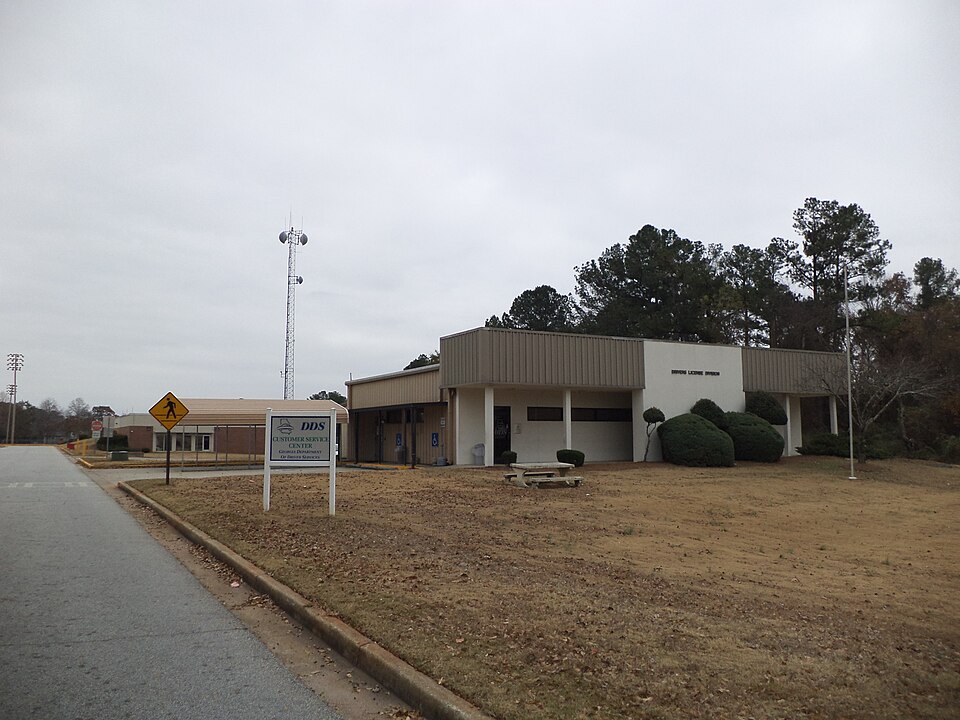
    Photo: Michael Rivera, CC BY-SA 3.0, via Wikimedia Commons

    For a Georgia Class CP learner’s permit you need one proof of identity, two proofs of Georgia residency, your full Social Security number on the online form and, under 18, proof of school enrollment and a responsible adult to sign. Every Georgia license and permit is built on REAL ID documents, so there’s one list for everyone. This checklist covers exactly which documents DDS accepts and the small rules that get people turned away.

    Quick checklist

    • Online License/ID/Permit Form submitted (within the last 60 days)
    • 1 proof of identity (original or certified)
    • Full Social Security number entered on the online form, plus proof if it fails to verify
    • 2 proofs of Georgia residency, from different sources
    • Name change documents, if your name differs from your identity document
    • Under 18: 1 proof of school enrollment
    • Under 18: a parent, guardian, responsible adult or authorized instructor, with proof of relationship
    • Any out-of-state license, permit or ID to surrender
    • Glasses or contacts, and $10

    Before anything: the online form

    DDS requires the online License/ID/Permit Form before you visit a Customer Service Center. Your full Social Security number goes on it. Your information is kept for 60 days. After that you must submit it again.

    Proof of identity (bring 1)

    U.S. citizens bring one of these:

    • U.S. birth certificate or amended birth certificate: original or certified copy, with a raised seal, issued by a Bureau of Vital Statistics or State Board of Health. U.S. territories and the District of Columbia count.
    • Unexpired U.S. passport or passport card.
    • Consular Report of Birth Abroad (FS-240, FS-545 or DS-1350).
    • Certificate of Naturalization (N-550, N-570), certified copy.
    • Certificate of Citizenship (N-560, N-561), certified copy.

    Minors may use a passport. If proof of guardianship is needed, DDS asks for a certified birth certificate or court documents.

    Social Security number

    You type your full number on the online form, and DDS checks it electronically. You only need a paper proof if the check fails. Then DDS accepts, among others:

    • Social Security card (original or copy)
    • SSA printout with your name and full number
    • W-2, 1099, SSA-1099 or pay stub showing your name and full number
    • Federal or state tax return with your name and full number (this also works for dependents, which helps teens)
    • Medicare or Medicaid card with your full number

    You can cross out account numbers and money figures, as long as your name and number stay readable. If none of these fix the problem, DDS sends you to the Social Security Administration.

    Proof of Georgia residency (bring 2)

    The two documents must come from separate sources or separate accounts and show your name and current home address. P.O. boxes don’t count. Accepted categories:

    Category Examples Date rule
    Household Mortgage, signed lease, deed, property tax bill, homeowners insurance Current or previous calendar year
    Rental Rental contract or rent receipt (including dorms) Within 6 months
    Government Social Security or benefits documents, tax return or refund check, voter registration card, USPS change of address confirmation, jury summons, DDS correspondence Current or previous calendar year
    Financial Bank, credit union, investment, credit card or loan statement Within 6 months
    Utility Water, gas, electricity, cable, internet, phone or garbage bill Within 6 months
    Motor vehicle Registration, title, insurance policy or card Current year or within 6 months
    Employer Pay stub, W-2, letter on company letterhead Current or previous calendar year
    School Transcript or record for the current or prior school year, report card, student loan papers, form DS-1 Current or prior school year
    Medical Health insurance statement, explanation of benefits, medical bill Current or previous calendar year

    Tip for teens: a school record is on the residency list, so a 15-year-old with no bills can often use a report card or form DS-1 plus one more document in their own name, such as a bank statement. A letter on letterhead from a shelter or similar facility, dated within 6 months, counts as stand-alone proof.

    Proof of school enrollment (under 18, bring 1)

    • A notarized Certificate of School Enrollment form (DDS-1) from your most recent school
    • A transcript (doesn’t need to be certified)
    • Your most recent progress or grade report
    • A current school ID card, or another valid school-issued document
    • Home-schooled: a Certificate of Enrollment or a Declaration of Intent to Utilize a Home Study Program filed with the Georgia Department of Education
    • Not in school: high school diploma, GED, special diploma, certificate of completion, or proof of enrollment in a GED program or college

    The adult who signs (under 18)

    A parent or guardian, a responsible adult or an authorized driver training instructor must come with you and sign the form. They must bring paperwork showing their relationship to you. The signer can ask DDS to revoke your permit at any time before you turn 18.

    Name changes

    If your identity document shows a different name from your current legal name, bring certified documents showing every change. That can be a court order, adoption decree, marriage certificate or divorce decree stating the change, or a U.S. passport in the new name.

    Non-U.S. citizens

    Bring one identity document and, where required, one lawful status document from DDS’s table. Common pairs:

    Identity document Lawful status document
    Unexpired foreign passport with U.S. visa (F-1, F-2, M-1, M-2, J-1, J-2) I-20 or DS-2019, plus a valid I-94 or I-797A
    Unexpired foreign passport with U.S. visa (A, B, E, H, I, L, O, P, Q, R or S) Valid I-94 or I-797A
    I-551 (green card) Not required
    I-766 with category C08 or temporary protected status Not required

    DDS doesn’t accept translated documents, and it issues the license in the name exactly as it appears on your original immigration documents. Bring original immigration documents for every service. See also getting a US license on a student visa.

    Rules that trip people up

    • All documents must show your first and last name.
    • All documents must be in English.
    • Out-of-state license, permit or ID: you surrender it. If it was lost or stolen, bring a driving record (MVR) from that state dated within the last 60 days. The other state can fax it to DDS.
    • Residency documents must be from two different sources.

    At the center

    Show your documents, pass the vision exam, pass the Road Signs and Road Rules knowledge exams, have your photo taken and pay $10. Fees and booking: Georgia license fees and test booking. Practice first: Georgia permit practice test.

    Common questions

    Do I need my Social Security card?

    Not usually. You enter your full number on the online form. Bring the card or another listed proof in case it fails to verify.

    Can my parent’s utility bill prove my address?

    The residency documents must show your name. Use documents in your own name, such as a school record and a bank statement. Ask DDS what applies if you have none.

    Does the school enrollment form have to be notarized?

    The DDS-1 form does. A transcript, grade report or school ID card doesn’t need notarizing.

    Can I bring photocopies?

    Identity documents must be originals or certified copies. A Social Security card can be an original or a copy.

    Will my Georgia permit be a REAL ID?

    Georgia licenses and IDs issued after 2012 are REAL ID-compliant and carry a star. Only one physical card (license or ID) can have the star. More: REAL ID and your first license.

    Who counts as a “responsible adult”?

    DDS’s examples include a stepparent, a social worker who has worked with you, a homeless shelter employee where you live, or a certified instructor with notarized authorization.

    More: Georgia instructional permit at 15 (rules once you have it), moving to Georgia, and the full learning to drive in Georgia guide. Other states: US first permit documents checklist.

    Sources

    • Georgia Department of Driver Services, “Learners Permit” (dds.georgia.gov)
    • Georgia Department of Driver Services, “REAL ID” and “Acceptable REAL ID Documents” (dds.georgia.gov)
    • Georgia Department of Driver Services, “Fees and Terms” (dds.georgia.gov)
    • Georgia Department of Driver Services, “Section 2: Obtaining a License, Permit or Identification Card”, Georgia Driver’s Manual (dds.georgia.gov)
  • Georgia DDS Fees and How to Book Your Road Test

    Georgia DDS Fees and How to Book Your Road Test

    Photo: Alan han, Pexels

    Georgia’s licensing fees are low: $10 for a Class CP learner’s permit, $10 for a Class D provisional license and $32 for a full Class C license. The catch is that the permit fee is charged again every time you sit the knowledge exam. Knowledge exams are walk-in. Road tests are by appointment only, booked through DDS Online Services after you submit the online License/ID/Permit Form. This page is for Georgia teens, parents and first-time adult drivers.

    Georgia DDS fees for new drivers (as of November 2026)

    Item Fee Valid for
    Learner’s permit (Class CP) $10, paid before the test, and again before every attempt 2 years
    Provisional license (Class D, ages 16 and 17) $10 5 years
    Regular license (Class C, 18 and older) $32 8 years
    Replacement or duplicate license, permit or ID $10 Original expiration date
    Driving history report (MVR), 3-year $7 N/A
    Driving history report (MVR), 7-year or lifetime $9 N/A

    DDS lists no separate fee for a non-commercial road test. You pay the license fee for the class you’re getting. Every Georgia license issued after 2012 is REAL ID-compliant, so there is no REAL ID surcharge. DDS noted on its fees page that MVR prices changed from July 1, 2026. Check the live figure if you need a report.

    Failing costs money at the knowledge stage

    The $10 permit fee is not refunded if you fail any part of the test, and you pay it again before each new attempt. Three tries cost $30. That’s why practicing before you go pays off: try the Georgia permit practice test and read the Georgia DDS permit test guide.

    Driver education is the big cost

    For a Class D under Joshua’s Law, you need an approved 30-hour driver education course plus 6 hours of behind-the-wheel training (or the Parent Teen Driving Guide). DDS says certified courses generally start at around $250. Online classroom courses cost less. See Georgia Joshua’s Law explained.

    How to pay at DDS

    • Customer Service Centers: cash, credit cards, debit cards, Apple Pay and Google Pay.
    • DDS Online Services and the DDS 2 GO app: credit or debit cards only (Visa, MasterCard, Discover, American Express).
    • Some eligible transactions done online get a $5 discount.

    Booking the Georgia knowledge exam

    1. Submit the online License/ID/Permit Form. DDS requires it before any center visit. It stays on file for 60 days, so don’t submit it months early.
    2. Gather your documents: Georgia permit documents checklist.
    3. Walk in to a Customer Service Center. Start at least 30 minutes before closing, because the knowledge exam isn’t started after that.

    How to book a Georgia road test

    Road tests are appointment only. DDS doesn’t take walk-ins or offer same-day appointments.

    1. Submit the online License/ID/Permit Form (if it’s more than 60 days since your last one).
    2. Use DDS’s “Schedule or Modify Appointment” tool to book an automobile road test.
    3. Keep your appointment number and the email you used. You need both to change or cancel.

    Who can book

    Applicant Main requirements
    Teen (under 18) All Class D requirements: permit held 1 year and 1 day, driver education, ADAP, 40 hours supervised driving (6 at night), school enrollment proof. See Class CP and Class D rules.
    18 and older A valid Georgia learner’s permit, a signed affidavit of 40 hours supervised driving including 6 at night, and a passed knowledge exam

    Drivers with a suspended license can’t test.

    Virtual or traditional?

    DDS offers non-commercial road tests virtually: you drive with a licensed adult 21 or older in the car, using a dual-facing camera and a hands-free device. Read Georgia virtual road test explained.

    Testing at a driving school

    Some DDS-certified full-service driving schools can give the road test, but only to students who did their 30 and 6 course there. The school sets its own price. See taking your Georgia road test at a driving school.

    Changing or canceling your appointment

    • Change or cancel online with your appointment number and email.
    • The center may reschedule you itself if you don’t meet the requirements or it finds duplicate bookings.
    • Testing can be suspended for bad weather, equipment failure or other things outside DDS’s control.
    • The 72-hour notice rule on DDS’s road test page is for commercial (CDL) tests, not car tests.

    What to bring to the road test

    • A licensed driver 21 or older. Only you and that driver may be in the car, with no other children or pets.
    • A paper copy of the vehicle registration and a current insurance card.
    • Rental car: your name must be on the rental agreement.
    • Temporary tags or bought within 30 days: the bill of sale.
    • A car that passes the DDS safety inspection before the test.

    What’s scored: Georgia road test guide.

    If you fail the road test

    Attempt Wait before retest
    First fail Next day
    Later fails 7 days
    Fail because of a crash or traffic violation 30 days

    Book the retest through the same appointment tool. Remember: no same-day appointments. Other states compared: retake waiting periods by state.

    Other DDS rules once you hold a permit or license

    • Moving house: update your address with DDS within 60 days, online or at a center. Mail from DDS is not forwarded.
    • Name change: done in person within 60 days, with a certified marriage document or court order.
    • Lost or stolen card: order a replacement online or at a center. A new card number needs a police report showing the card was stolen.
    • Away at college or on military duty: some out-of-state students and service members can renew by mail, but that route does not give a REAL ID.
    • Voter registration: your application details go to the Secretary of State for voter registration unless you tick the opt-out box. DDS does not register you itself.
    • Selective Service: DDS asks men aged 18 whether they have registered and reports the answer.
    • Optional extras: you can join the organ donor registry and make small voluntary donations when you apply.

    Common questions

    How much does it cost to get a license in Georgia at 16?

    DDS fees are $10 for the permit (per knowledge exam attempt) and $10 for the Class D. Driver education is extra.

    Is there a fee for the Georgia road test?

    DDS’s fee table lists no separate non-commercial road test fee. The $50 road test fee on DDS pages is for commercial (CDL) tests.

    Can I walk in for a road test in Georgia?

    No. Road tests need an appointment, and same-day appointments aren’t offered.

    Can I pay by check?

    DDS’s fees page lists cash, cards, Apple Pay and Google Pay at centers. Checks and money orders aren’t on the list.

    Do I pay again when my Class D turns into a Class C at 18?

    Upgrading to a Class C carries the Class C fee of $32 for 8 years. Confirm the exact charge for your upgrade with DDS.

    Can I book the road test before my permit is a year old?

    You can book through the tool, but you must meet the 1 year and 1 day rule on test day, or DDS can reschedule you.

    Main guide: learning to drive in Georgia. Compare states: US license costs by state and how to book a DMV test appointment.

    Sources

    • Georgia Department of Driver Services, “Fees and Terms” (dds.georgia.gov)
    • Georgia Department of Driver Services, “Road Test” (dds.georgia.gov)
    • Georgia Department of Driver Services, “Learners Permit” (dds.georgia.gov)
    • Georgia Department of Driver Services, “REAL ID” (dds.georgia.gov)
    • Georgia Department of Driver Services, “Test and Exams Information” (dds.georgia.gov)
    • Georgia Department of Driver Services, “Joshua’s Law Requirements” (dds.georgia.gov)
  • New York Learner Permit Documents Checklist: What to Bring

    New York Learner Permit Documents Checklist: What to Bring

    Photo: J. Passepartout, CC BY-SA 4.0, via Wikimedia Commons

    To get a New York learner permit, you bring a completed MV-44 application plus proofs of identity, date of birth and New York residence. The identity proofs work on a points system: they must add up to at least 6 points, with at least one signed document. This checklist is for first-time applicants and parents, and explains the point system, the under-21 parent statement and the Standard, Enhanced and REAL ID choice.

    The New York permit checklist

    1. Form MV-44, Application for Permit, Driver License or Non-Driver ID Card, filled in.
    2. Proofs of name worth 6 points or more, from the list on form ID-44, including at least one signed document.
    3. Proof of date of birth.
    4. Proof of New York residence.
    5. Proof of Social Security number, or the alternative described below.
    6. Under 21 using a parent’s statement: form MV-45, with the parent or guardian present.
    7. Glasses or contacts for the vision test.
    8. The fee, $64.25 to $102.50 depending on age and where you live. See New York license fees.

    Bring originals. Before you go, the DMV’s online Document Guide and pre-screening tool will tell you which proofs fit your situation.

    How the New York 6-point ID system works

    Each identity document has a point value on form ID-44 (“How to Apply for a New York Learner Permit, Driver License or Non-Driver ID”). Your documents must total 6 points or more. Some examples from ID-44:

    Document Points
    Current New York photo driver license, permit or non-driver ID (or one expired less than 2 years) 6
    U.S. passport or passport card 4
    Original U.S. Social Security card 2

    A first-time teen applicant usually has no New York photo ID, so most combine documents. Point values and the full list change from time to time, so check the current ID-44 before you go. Some documents, such as a birth certificate, mainly prove date of birth. Check how many name points ID-44 gives them, and don’t count on them to reach 6 by themselves.

    Example combination for a 16-year-old

    • U.S. passport (4 points) + Social Security card (2 points) = 6 points, with the passport also proving date of birth.
    • Plus a proof of residence.

    No passport? Ask about the parent’s statement route below.

    Under 21: the parent’s Statement of Identity (MV-45)

    If you’re under 21 and can’t reach 6 points alone, a parent or guardian can vouch for you on a Statement of Identity (MV-45). The parent or guardian must come with you and sign it in front of DMV staff. They need their own proof of identity, so check ID-44 for what they must bring.

    Social Security number

    If you have a Social Security number, bring proof of it. New York also issues standard (not REAL ID) permits and licenses to applicants who have never been issued a Social Security number, under the state’s Green Light law. Ask the DMV, or use its pre-screening tool, to see what you sign or bring instead. Details: New York Green Light law and licenses regardless of immigration status. International students should also read getting a US license on a student visa.

    Standard, Enhanced or REAL ID permit?

    Type What it does Extra cost
    Standard Driving. Not accepted as federal ID for domestic flights from May 7, 2025. None
    REAL ID Driving, plus domestic flights and federal facilities. Needs stricter proofs. Check the DMV fee page
    Enhanced REAL ID uses plus some border crossings. Needs stricter proofs. $30

    Your permit can be Standard, Enhanced or REAL ID depending on the proofs you bring. Choosing at the permit stage saves an extra trip later. More on REAL ID: REAL ID and your first license.

    Applying online first if you’re under 18

    The DMV’s pre-screening tool lists the documents you need and gives under-18s the option to take the permit test online. You then visit an office to show documents and finish the permit. Wait 3 business days after an online pass before visiting. Go earlier and you must retake the test in the office. More: New York DMV permit test.

    Common questions

    Can I use a photocopy?

    Plan on originals. The DMV checks documents in person, and its road test rules say copies aren’t accepted for the MV-278. Treat every proof the same way.

    What counts as a “signed” document?

    One that carries your signature, such as a signed passport or Social Security card. At least one of your 6-point proofs must be signed.

    Do both parents need to come?

    No. One parent or guardian signs the MV-45 if you use it, and that person must come with you.

    I’m 17 and moved from another state. Which list do I use?

    The same ID-44 list, plus your out-of-state documents. See moving to New York.

    Can I get a permit without a Social Security number?

    A standard permit, yes, if you have never been issued one. A REAL ID or Enhanced permit needs the federal-level proofs.

    How long does the office visit take?

    It varies by office. Arrive with every document ready, the MV-44 filled in and your glasses, and complete the online steps first.

    After the permit: New York learner permit rules. Full journey: learning to drive in New York. Compare states: US first permit documents checklist.

    Sources

    • New York State DMV, “ID-44: How to Apply for a New York Learner Permit, Driver License or Non-Driver ID” (dmv.ny.gov)
    • New York State DMV, “New York State Driver’s Manual (MV-21), Chapter 1: Driver Licenses” (dmv.ny.gov)
    • New York State DMV, “Prepare For and Take Your Permit Test” (dmv.ny.gov)
    • New York State DMV, “Driver License and Learner Permit Fees and Refunds” (dmv.ny.gov)
  • New York Driver’s License Fees and How to Book DMV Tests

    New York Driver’s License Fees and How to Book DMV Tests

    Photo: J. Passepartout, CC BY-SA 4.0, via Wikimedia Commons

    In New York you pay one fee when you apply for your learner permit. It covers the permit, the written test and your first license. The amount depends on your age and on whether you live in the Metropolitan Commuter Transportation District (MCTD). Road tests are booked online through the DMV’s Road Test Scheduling System or by phone at 1-518-402-2100. This guide sets out the fees, the booking steps and what happens if you need to cancel or retake.

    Key facts (as of November 2026)

    • Class D or DJ total: $64.25 to $102.50, depending on age and MCTD.
    • No separate written test or first road test fee. It’s in the total.
    • Enhanced license or permit: $30 extra.
    • Book the road test online or by phone. The earliest date is usually 3 to 5 weeks out.
    • Fail the road test and you wait at least 14 days. After two fails you pay additional fees.

    How much is a New York learner permit and driver license?

    Totals for a Class D (operator) or Class DJ (junior) license. They include the application, license class and document fees. Inside the MCTD you also pay the MCTD fee.

    Age when you apply Outside MCTD Inside MCTD
    16 to 16 and a half $80.00 $90.00
    16 and a half to 17 $76.75 $85.75
    17 to 17 and a half $92.50 $102.50
    17 and a half to 18 $89.25 $98.25
    18 to 18 and a half $80.00 $90.00
    18 and a half to 21 $76.75 to $80.00 $85.75 to $90.00
    21 and older $64.25 to $67.50 $73.25 to $77.50

    The MCTD covers the five New York City boroughs plus Dutchess, Nassau, Orange, Putnam, Rockland, Suffolk and Westchester counties. An Enhanced permit or license costs $30 more. Check the DMV’s “Driver License and Learner Permit Fees and Refunds” page on the day you apply, because the DMV calculates the exact total.

    Other costs to budget for

    • 5-hour Pre-Licensing Course: priced by each driving school or online provider. The DMV doesn’t set a fee. See the pre-licensing course guide.
    • Driver education (optional): high school or college programs set their own charges.
    • Extra road tests: additional fees apply after you fail your first two road tests. Ask the DMV for the amount when you rebook.

    Step 1: the permit test (no appointment booking system needed for the test itself)

    1. Complete the Application for Permit, Driver License or Non-Driver ID Card (MV-44).
    2. Gather your proofs of identity, age and residence. See the New York permit documents checklist.
    3. Under 18: use the DMV’s pre-screening tool, which offers an online permit test. After you pass, book an office visit to finish the permit. The DMV needs 3 business days to review an online result. Visit an office within those 3 days and you must retake the test there.
    4. At the office, pay the fee, take the vision test and, if you didn’t test online, the 20-question written test.

    Students at least 15 and 11 months old can take the written test early at a participating high school through the Online Knowledge Test Application (OKTA) program. Test details: New York DMV permit test and the New York permit practice test.

    Step 2: how to book a New York road test

    Before you can book

    • A valid New York learner permit.
    • Under 18: at least six months since the permit was issued.
    • A completed course: an original Pre-Licensing Course Certificate (MV-278), a Student Certificate of Completion (MV-285) on file, or an online course completion reported to the DMV.
    • At least one unused road test on your record.
    • The ZIP code where you want to test. It doesn’t have to be your own county.

    Booking

    • Online through the DMV’s Road Test Scheduling System, or by phone at 1-518-402-2100.
    • The DMV says the earliest date is usually 3 to 5 weeks out. In summer and school breaks it can be up to 10 weeks.
    • There are no waiting lists, and tests are almost always on weekdays.

    Book early in your six-month wait if you’re under 18. Choose the earliest date on or after the day you become eligible.

    Changing, canceling and bad weather

    • Manage your appointment through the same Road Test Scheduling System you used to book. Check its current rules for how late you can change.
    • Bad weather can cancel road tests. Check the DMV’s road test cancellations page before you leave home.
    • Arrive up to 15 minutes early. If you’re late, the examiner may not test you.

    Test day: what to bring

    • Your physical photo learner permit. Mobile ID is not accepted.
    • Your original MV-278 (no copies).
    • Under 18: a completed, signed MV-262 supervised driving certification. See the MV-262 guide.
    • An accompanying licensed driver: over 21 if you drive to the site, over 18 if they drive you.
    • A registered, insured and inspected car with permanent plates. For a rental, bring the agreement and written permission to use it for the road test.

    What the examiner marks: the New York road test and how it’s scored.

    If you fail: retest rules and cost

    Situation Rule
    Failed a road test Wait at least 14 days before the next test
    Failed two road tests You must pay additional fees for more tests
    Permit expires before your next test Get a new permit first
    Failed the written test Ask your office.

    For other states’ waits, see retake waiting periods by state.

    After you pass

    An interim license is available online. The photo license arrives by mail in about two weeks. Under 18, you start on a junior license: New York junior license rules.

    Common questions

    Is the New York road test free?

    Your first road tests are covered by the fee you paid at the permit stage. Additional fees apply after two failed road tests.

    Why is my fee higher than my friend’s?

    Age at application and MCTD residence both change the total. A Long Island 17-year-old pays more than an upstate 21-year-old.

    Can I test anywhere in New York?

    Yes. You choose a test site by ZIP code, and it doesn’t have to be in your county.

    Can a driving school give me the road test instead of the DMV?

    The DMV describes road tests given by DMV license examiners. Driving schools teach the 5-hour course and lessons, and some offer cars for the test.

    Do I pay again to get the photo license after passing?

    No new license fee for your first license. It was included in the permit-stage total.

    Can I book a road test the week I get my permit?

    If you’re 18 or older and already have your MV-278, nothing in the booking rules above stops you, though the earliest open date is usually weeks away. Under 18, the test date must be at least six months after your permit was issued.

    Main guide: learning to drive in New York. Compare states: US license costs by state and how to book a DMV test appointment.

    Sources

    • New York State DMV, “Driver License and Learner Permit Fees and Refunds” (dmv.ny.gov)
    • New York State DMV, “Prepare For and Take Your Permit Test” (dmv.ny.gov)
    • New York State DMV, “Schedule and Take a Road Test” (dmv.ny.gov)
    • New York State DMV, “Road Test Results” (dmv.ny.gov)
    • New York State DMV, “The Driver Pre-Licensing Course” (dmv.ny.gov)
    • New York State DMV, “New York State Driver’s Manual (MV-21), Chapter 1: Driver Licenses” (dmv.ny.gov)
  • Florida Learner Permit Documents Checklist: What to Bring

    Florida Learner Permit Documents Checklist: What to Bring

    Photo: DanTD, CC BY-SA 4.0, via Wikimedia Commons

    This checklist is for Florida teens (and their parents) heading to a driver license office or tax collector for a learner’s license. You need proof of identity, proof of your Social Security number, proof of your residential address and, under 18, a signed parental consent form. You also need a completed driver education course and a passed knowledge exam. Missing any one of these usually means a second trip.

    Key facts (as of November 2026)

    • Minimum age for a Florida learner’s license: 15.
    • Identity: one primary document, such as a certified U.S. birth certificate or a valid U.S. passport.
    • Also bring proof of your Social Security number and proof of your residential address.
    • Under 18: Parental Consent Form (HSMV 71142), signed in front of the examiner or notarized.
    • Before you go: an approved driver education course and the Class E knowledge exam.
    • Minors must also meet Florida’s school attendance requirement.

    The Florida learner’s license document checklist

    Print this or copy it to your phone and tick items off the night before.

    Item What counts Notes
    1. Proof of identity Certified U.S. birth certificate, valid U.S. passport or passport card, Consular Report of Birth Abroad, naturalization certificate, green card, employment authorization card, or accepted proof of nonimmigrant classification Originals or certified copies. A hospital birth record is not a certified birth certificate.
    2. Proof of Social Security number A document FLHSMV accepts as proof of your number. Florida law also allows a military ID card. The name should match your identity document.
    3. Proof of residential address Documents such as a home utility bill, cable bill or home telephone bill FLHSMV pages differ on whether you need one or two. Bring two to be safe.
    4. Parental Consent Form (HSMV 71142) Signed by a parent or legal guardian Under 18 only. Sign in front of the examiner, or get it notarized if the parent can’t come.
    5. Driver education completion An FLHSMV-approved course that meets the state’s driver education standard Required for the learner’s license. See Florida’s driver education and TLSAE rules.
    6. Knowledge exam result Class E knowledge exam passed at an office or online Online under 18: also bring the Parent/Guardian Online Test Proctoring Form (HSMV 71144).
    7. Glasses or contacts If you wear them You take a vision and hearing exam at the office.
    8. Payment Card or cash, depending on the office See Florida license costs.

    Proof of identity: which documents Florida accepts

    Florida law (section 322.08 of the Florida Statutes) sets the list. For a U.S. citizen, the usual choices are:

    • a certified copy of a U.S. birth certificate
    • a valid, unexpired U.S. passport or passport card
    • a Consular Report of Birth Abroad from the U.S. Department of State
    • a naturalization certificate from the U.S. Department of Homeland Security

    Non-citizens can use an unexpired green card, an unexpired employment authorization card, or proof of nonimmigrant classification. That proof can be a foreign passport with an unexpired I-94 or a federal stamp authorizing presence, or certain immigration court and USCIS notices. A license or permit issued on an employment authorization card or nonimmigrant documents lasts no longer than that document, or one year.

    Under 18, the statute specifically asks for a certified U.S. birth certificate, a valid U.S. passport, a green card, an employment authorization card, or proof of nonimmigrant classification with the application.

    Name doesn’t match?

    If your current name differs from the name on your birth certificate, bring the legal document that links the two, such as a court order. Check FLHSMV’s “What to Bring” tool for the exact list before you go.

    Proof of address when bills aren’t in your name

    Most 15-year-olds have no bills of their own. FLHSMV’s Certification of Address form (HSMV 71120) is for this case. The person whose address it is, usually a parent, certifies that you live there. They must bring one household document showing the address in their name, such as a deed, lease or property tax bill, plus one supporting document.

    Parental consent: who can sign

    • A parent or legal guardian signs the Parental Consent Form (HSMV 71142).
    • They sign in front of a driver license examiner, or before a notary if they can’t come with you.
    • A stepparent can sign only after legally adopting you.
    • If there is no parent or guardian, Florida law lets another responsible adult sign. That adult takes on the legal obligations.

    The person who signs is jointly liable for damage caused by your negligent or willful driving until you turn 18. That is Florida law (s. 322.09), not just a form detail.

    School attendance: the requirement people forget

    Under section 322.091, Florida will not issue a learner’s license to a minor who isn’t meeting school attendance rules. You qualify if you are enrolled in a public school, private school or home education program and meeting attendance requirements. You also qualify if you have a diploma, an equivalency diploma or a certificate of completion, or if you’re in an equivalency study course. Schools report noncompliance to FLHSMV, and a license can be suspended for it later.

    Driver education and the knowledge exam come first

    Since July 1, 2025, a Florida learner’s license needs a completed, FLHSMV-approved driver education course. The course must meet the Department of Education’s driver education classroom standard (course 1900300). Adults 18 and older take the TLSAE course instead. You also need to pass the Class E knowledge exam. Under 18s can take it online through an approved provider. See:

    Is a Florida learner’s license a REAL ID?

    Florida’s identity list is built around the federal REAL ID Act, and the statute names it directly. Florida does not run a separate document track that you opt into the way some states do. The documents above are what you need. If you plan to fly on your Florida card later, confirm with FLHSMV that your card carries the REAL ID star. Background: REAL ID and your first license.

    Common questions

    Can I use a photocopy of my birth certificate?

    No. Florida asks for a certified copy. If you only have a photocopy or a hospital certificate, order a certified copy from the vital records office in the state where you were born.

    Do both parents need to sign?

    No. One parent or legal guardian signs the HSMV 71142.

    My parent can’t come with me. What now?

    Have the consent form signed in front of a notary and bring the notarized original.

    How many proofs of address do I need?

    FLHSMV’s handbook says two. One FLHSMV exam page lists one. Bring two to avoid being turned away.

    Do I need my Social Security card itself?

    Florida requires proof of your Social Security number “satisfactory to the department”. Your card is the simplest proof. Check the What to Bring tool for other documents FLHSMV accepts.

    I’m moving to Florida with an out-of-state permit. Same list?

    Mostly, plus your out-of-state documents. See moving to Florida.

    Next steps: the rules once you hold the permit are in Florida learner’s license rules. For the full journey, see learning to drive in Florida. To compare states, see the US first permit documents checklist.

    Sources

    • Florida Legislature, “Florida Statutes s. 322.08, Application for license” (leg.state.fl.us)
    • Florida Legislature, “Florida Statutes s. 322.09, Application of minors” (leg.state.fl.us)
    • Florida Legislature, “Florida Statutes s. 322.091, Attendance requirements” (leg.state.fl.us)
    • Florida Legislature, “Florida Statutes s. 322.1615, Learner’s driver license” (leg.state.fl.us)
    • Florida Department of Highway Safety and Motor Vehicles, “Required Forms for Teens” (flhsmv.gov)
    • Florida Department of Highway Safety and Motor Vehicles, “Driver License Exams” (flhsmv.gov)
    • Florida Department of Highway Safety and Motor Vehicles, “Certification of Address, HSMV 71120” (flhsmv.gov)