Category: Australia

  • Moving to NSW: Transferring an Interstate or Overseas Licence

    Moving to NSW: Transferring an Interstate or Overseas Licence

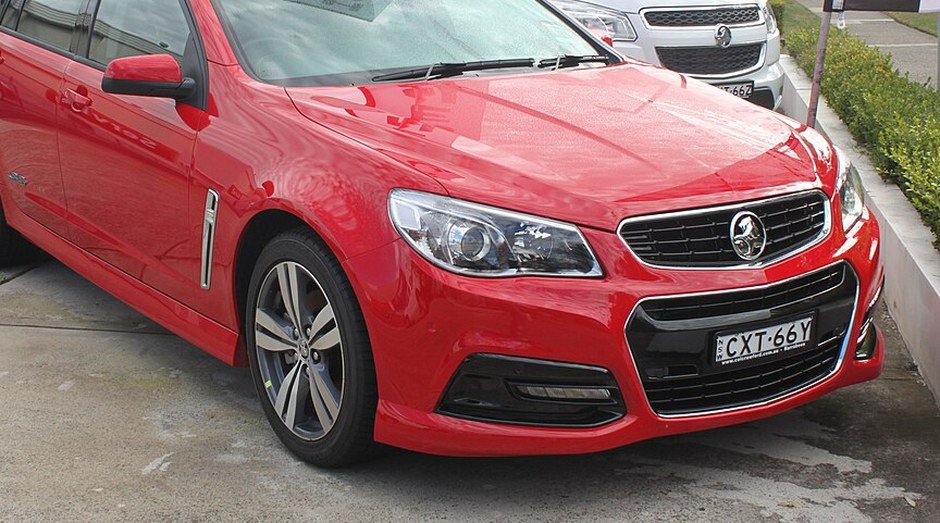
    Photo: Bidgee, CC BY-SA 3.0, via Wikimedia Commons

    If you move to NSW from another Australian state or territory, or from New Zealand, you must get a NSW licence within 3 months. Australian citizens and permanent residents with an overseas licence also have 3 months. Temporary visa holders who arrived on or after 1 July 2023 have 6 months. This guide covers who needs to transfer, which NSW licence stage you get, whether you must sit the tests, and what to bring to a service centre.

    How long can you drive in NSW on your current licence?

    You are Drive on your current licence for Then
    Moving from another Australian state or territory Up to 3 months Get a NSW licence within the 3 months
    A New Zealand licence holder (permanent or temporary resident) Up to 3 months Get a NSW licence within the 3 months
    An Australian permanent resident with an overseas licence Up to 3 months from arrival Get a NSW licence within the 3 months
    An Australian citizen returning with an overseas licence Up to 3 months from arrival Get a NSW licence within the 3 months
    On a temporary visa, arrived on or after 1 July 2023, staying more than 6 months Up to 6 months Get a NSW licence within the 6 months
    A tourist or short-term visitor Up to 6 months while you remain a temporary visitor No NSW licence needed

    While you drive on an overseas licence, carry it with you. If it is not in English, also carry an English translation or an International Driving Permit.

    When a temporary visa holder loses the right to drive

    The Road User Handbook says your right to drive on an overseas licence is withdrawn if:

    • you have lived in NSW for 6 months or more without transferring
    • your licence is suspended or disqualified in Australia or another country
    • you go over the demerit point limit for your equivalent licence
    • you commit certain speeding, alcohol or drug driving offences.

    Which NSW licence will you get?

    NSW matches your experience to its licence stages. You must be at least 16 for a learner licence and 17 for a provisional licence.

    Licence you hold NSW equivalent
    Current learner licence Learner licence
    Held for less than 12 months Provisional P1
    Held for more than 12 months but less than 3 years Provisional P2
    Held for more than 3 years Full (unrestricted)

    Your time on P1 or P2 then follows the NSW rules: from P1 to P2 to a full NSW licence.

    Transferring an interstate licence to NSW

    1. Complete a Licence Application form.
    2. Gather your proof of identity.
    3. Check that your interstate licence shows its first issue date. If it does not, a service centre can get it from the other state (this can take several days), or you can get a letter from your old licensing authority confirming your details.
    4. Visit a service centre with your licence, form and ID. You will do an eyesight test and have your photo taken.
    5. Pay the licence fee. The NSW fees page lists an interstate licence transfer at $34 (from 1 July 2026). The interstate page also says NSW will match your existing expiry date for no fee, up to 10 years. Confirm the amount with Service NSW when you apply.
    6. Drive on the temporary paper licence until your card arrives by post.

    Your interstate licence is cancelled, because you can only hold one Australian licence at a time.

    Interstate learners

    You get a NSW learner licence. Transport for NSW says you may be able to sit the Hazard Perception Test and Driving Test without being issued a NSW learner licence first. Phone 13 22 13 to discuss your case. Test details: NSW Hazard Perception Test and NSW Driving Test.

    Expired interstate licence

    • Expired 5 years or less: you can get the NSW equivalent. Fees may apply.
    • Expired more than 5 years: you must sit the licence tests.

    Converting an overseas licence to NSW

    Do you need to sit the tests?

    You do not need the knowledge test or Driving Test for a NSW car (class C) licence if your licence comes from one of these recognised places, as of November 2026:

    • Austria, Belgium, Bosnia and Herzegovina, Canada (any state), Croatia, Denmark, Finland, France, Germany, Greece
    • Guernsey, Ireland, Isle of Man (licences issued since 1 April 1991), Italy, Japan, Jersey, Luxembourg
    • Malta (licences issued or renewed since 2 January 2004), Netherlands, New Zealand (not paper licences), Norway, Portugal
    • Singapore, Spain, Sweden, Switzerland, United Kingdom, United States of America (any state).

    To use the exemption, your licence must be current or expired within the last 5 years, and it must not be a learner licence.

    If your country is not on the list, you will need to pass the Driver Knowledge Test and the Driving Test. See NSW Driver Knowledge Test.

    Recent changes

    • From 1 February 2026, Hong Kong (SAR) was added to the non-recognised list. China is also non-recognised. All Chinese and Hong Kong licence holders must pass the DKT and the practical test.
    • From 1 February 2026, Experienced Driver Status from certain countries stopped operating in NSW.
    • Transport for NSW warns that buying a Hong Kong licence online is fraud and can be prosecuted under NSW law.

    When the exemption does not apply

    • Licences from an external territory of a listed country need the tests.
    • If you failed a driving test before 20 May 2002, you must retake and pass it.
    • Transport for NSW can still require a test if it is not satisfied your licence is valid.

    Held an Australian licence before?

    If you hold an overseas licence and your old Australian licence expired within the last 5 years (and can be verified), you do not need to sit the tests.

    Overseas learners

    You must pass a knowledge test to get a NSW learner licence. Until then, if you keep learning on your overseas learner licence, you must follow NSW learner conditions: a supervisor with a full Australian class C licence, zero alcohol, L plates front and back, no towing, and no mobile phone use at all, including hands-free.

    What to bring

    • a completed Licence Application form
    • proof of identity
    • proof of permanent residency (if you are a permanent resident)
    • English translations of any documents in another language.

    Submit your application in person at a service centre and complete any tests you need.

    Visiting on L or P plates from interstate or overseas

    A provisional driver from elsewhere must follow their own licence conditions (for example a night or passenger ban) plus the NSW road rules. Keep below both the posted limit and the speed limit that applies to your licence at home. Demerit points apply to offences in NSW. More: driving interstate on L or P plates.

    Medical conditions and older drivers

    • When you apply for a NSW licence, you must declare any medical condition or disability that could affect your driving, and pass an eyesight test.
    • Some conditions, such as epilepsy or cardiovascular conditions, need regular medical assessments.
    • If a disability has a serious effect on driving, you may need a driving test, and conditions can be added to your licence (for example, automatic only).
    • From age 75, car licence holders need a medical assessment every year.
    • From 85, an older driver assessment is also needed every 2 years, unless you choose a modified (local area) licence.

    Common questions

    I moved from Victoria on my green Ps. What do I get in NSW?

    It depends on how long you have held a licence. Less than 12 months converts to P1. More than 12 months but less than 3 years converts to P2. NSW P rules then apply, including the high performance car ban.

    Can I drive in NSW on my UK licence?

    Yes, for a limited time: 3 months if you are a citizen or permanent resident, or 6 months on a temporary visa. The UK is a recognised country, so you can usually convert without tests.

    Do I need an International Driving Permit in NSW?

    Only if your licence is not in English. Then you must carry an English translation or an International Driving Permit with your licence.

    Can I keep my overseas licence after I get a NSW one?

    Once you hold a NSW licence, your interstate or overseas licence is no longer valid for driving in Australia. You can only drive on one licence in Australia.

    I am 26 with a Chinese licence held for 5 years. What do I need to do?

    China is non-recognised, so you must pass the DKT and the Driving Test. With more than 3 years of experience, the equivalent licence is a full licence.

    Can my overseas licence be used to supervise a learner?

    No. NSW supervisors need a full Australian licence. See supervising a learner driver in NSW.

    Back to the main guide: learning to drive in NSW.

    Sources

    • Transport for NSW, “Road User Handbook” (nsw.gov.au)
    • NSW Government, “Moving your interstate or NZ licence” (nsw.gov.au)
    • NSW Government, “Interstate drivers and riders” (nsw.gov.au)
    • NSW Government, “Moving your overseas licence” (nsw.gov.au)
    • NSW Government, “Check your licence eligibility” (nsw.gov.au)
    • NSW Government, “Knowledge and driving test exemptions” (nsw.gov.au)
    • NSW Government, “Visiting from overseas or interstate” (nsw.gov.au)
    • NSW Government, “Learner and provisional licence holders” (nsw.gov.au)
    • NSW Government, “Your licence from age 70” (nsw.gov.au)
    • NSW Government, “Driver and rider licence fees” (nsw.gov.au)
  • NSW Transit Lanes, Bus Lanes, T-ways and Tram Lanes Explained

    NSW Transit Lanes, Bus Lanes, T-ways and Tram Lanes Explained

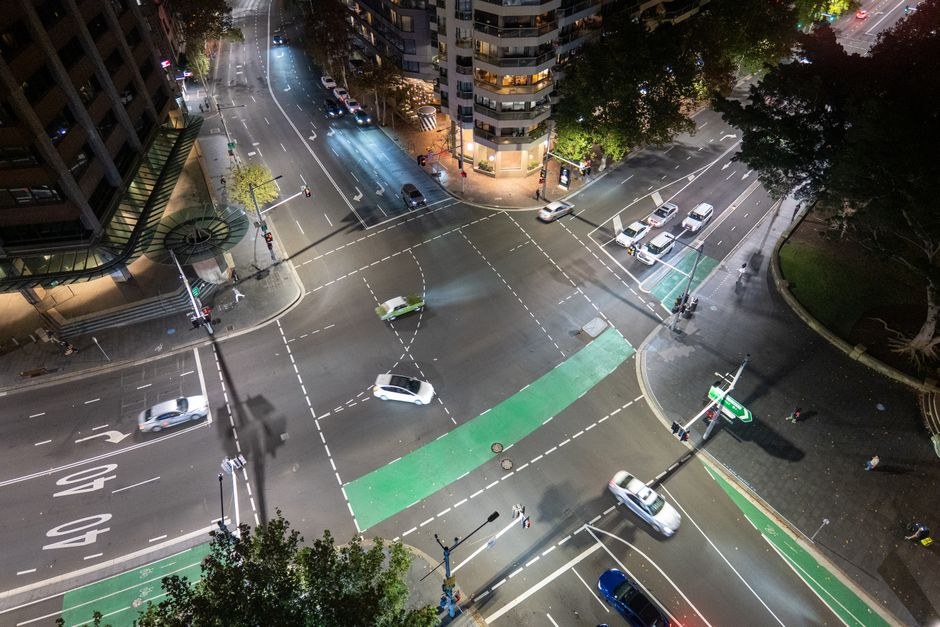
    Photo: Prefine, CC BY-SA 4.0, via Wikimedia Commons

    In NSW, a T2 transit lane needs at least two people in the car (driver included) and a T3 lane needs at least three, but only during the days and times on the sign. Other drivers can use a bus, transit or truck lane for up to 100 metres to enter or leave the road, overtake a car turning right or pull in from the side, and a bicycle or tram lane for up to 50 metres. You must not drive in a T-way or a bus only lane, and you may enter a tramway only to avoid an obstruction. This explainer covers every special lane in the NSW Road User Handbook, so learners and P platers know where they can and cannot drive.

    Quick reference: special lanes in NSW

    Lane Who can use it Other cars may enter
    Transit lane (T2) Vehicles with 2 or more people, during sign times Up to 100 m
    Transit lane (T3) Vehicles with 3 or more people, during sign times Up to 100 m
    Bus lane Buses, taxis, hire cars with HC plates, bicycles, motorcycles, some special purpose vehicles Up to 100 m
    Bus only lane Buses only No
    T-way Authorised buses and service vehicles No
    Truck lane Vehicles over 4.5 t GVM, bicycles, some special vehicles Up to 100 m
    Tram lane Trams, tram recovery vehicles, some buses Up to 50 m
    Tramway Trams, tram recovery vehicles, some buses, special purpose vehicles Only to avoid an obstruction
    Bicycle lane Bicycles Up to 50 m

    The short-distance allowance (100 m or 50 m) is only for three things:

    • entering or leaving the road
    • overtaking a vehicle that is turning right or making a U-turn
    • entering a lane from the side of the road.

    You can also drive in a bus, transit, truck, tram or bicycle lane to avoid an obstruction, or wherever a sign says you can.

    Transit lanes: T2 and T3 rules in NSW

    A transit lane sign shows a T2 or T3 symbol and the days and times it operates.

    • T2: two or more people in the vehicle, including the driver.
    • T3: three or more people in the vehicle, including the driver.
    • Outside the times on the sign, any vehicle can use the lane.
    • These vehicles can use a transit lane whatever the number of people on board: public buses and minibuses, taxis, hire cars with HC plates, motorcycles, bicycles, and emergency, special purpose and breakdown vehicles.

    Worked example: does a learner and supervisor count for T2?

    Yes. A learner driving with a supervisor is two people including the driver, so the car can use a T2 lane during its hours. It cannot use a T3 lane unless a third person is in the car.

    Bus lanes, bus only lanes and T-ways

    Bus lanes

    Bus lanes are for buses, but these can also use them:

    • taxis (not rideshare vehicles)
    • hire cars with HC number plates
    • bicycles and motorcycles
    • special purpose vehicles responding to an emergency under the direction of Transport for NSW.

    You must not stop in a bus lane. Only buses at a bus stop, and taxis or chauffeur-driven hire cars picking up or dropping off, may stop there.

    Bus only lanes

    Where the sign or road marking says “Bus only” or “Buses only”, only buses can drive in the lane. The 100 m allowance does not apply.

    T-ways

    T-way lanes are for authorised buses and service vehicles. You must not drive in a T-way.

    B signals

    Some traffic lights have a white “B” signal for buses in a bus lane. It lights up shortly before the normal lights change, and only buses can go. Do not move off on a B signal.

    Tram lanes, tramways and light rail

    NSW has light rail networks in Sydney, Parramatta and Newcastle. The Road User Handbook calls light rail vehicles trams.

    • Tramways are marked by a “Tramway” sign and two continuous yellow lines along the tracks, or by a structure such as a traffic island, refuge or bollards. You may only enter to avoid an obstruction, and only if you do not move into the path of an approaching tram or bus.
    • Tram lanes have a “Tram lane” sign. You can use one for up to 50 m for the three permitted reasons, to avoid an obstruction, or where a sign allows. You must never move into the path of a tram in a tram lane.
    • T signals: a white “T” light means only trams can go. Do not follow it.

    Truck lanes

    Truck lanes are for vehicles over 4.5 tonnes gross vehicle mass, plus bicycles, special purpose vehicles and Transport for NSW survey vehicles. Cars can use them for up to 100 m for the three permitted reasons. A “Trucks must use left lane” sign is different: trucks must keep left until a sign ends the rule, but every other vehicle can also use that lane.

    Bicycle lanes, bicycle paths and shared paths

    • Bicycle lanes start with a sign or a bicycle symbol and the word “Lane”, and end with “Lane end” or at an intersection. You can drive in one for up to 50 m for the permitted reasons. Check carefully for riders first.
    • Bicycle paths are separate from the road. Cars can only use one to enter or leave a road, or where a sign allows, and must give way to everyone on the path.
    • Shared paths are for bicycle riders and pedestrians only.

    More on riders: minimum passing distance for cyclists in each state.

    Slip lanes and median turning lanes

    Slip lanes

    A slip lane is a left-turn lane separated by a painted or raised island. If there is one, you must use it to turn left. In the slip lane you must give way to:

    • vehicles on the road you are turning into
    • oncoming vehicles turning right into that road
    • any vehicle or pedestrian in the slip lane.

    Do not stop in a slip lane unless a parking sign allows it.

    Median turning lanes

    A median turning lane runs down the middle of the road and is shared by traffic from both directions turning right into a side road or driveway. You can enter it even if an oncoming car is already there, but you must give way to that car, slowing or stopping if needed.

    Keep left and keep right signs

    These are regulatory signs, so you must obey them by law. Pass to the left of a “Keep left” sign and to the right of a “Keep right” sign.

    Common questions

    Can learner drivers use transit lanes in NSW?

    Yes, if the car has enough people. A learner plus supervisor meets the T2 rule. For T3 you need a third person.

    Can I use a bus lane to turn left?

    Yes, for up to 100 m to enter or leave the road, unless it is a bus only lane. Check signs, because some lanes have their own rules.

    Can Uber or other rideshare cars use bus lanes?

    No. The handbook allows taxis in bus lanes, but not rideshare vehicles.

    Do transit lane rules apply at weekends?

    Only if the sign says so. Each transit lane sign shows the days and times it operates. Outside those times, any vehicle can use the lane.

    What if a car breaks down in front of me in a bus lane?

    Any vehicle can drive in a bus, transit, truck, tram or bicycle lane to get around an obstruction.

    Can I stop in a bus lane to drop off a friend?

    No. Only buses at bus stops, and taxis or hire cars picking up or setting down passengers, can stop there.

    Related guides

    Sources

    • Transport for NSW, “Road User Handbook” (nsw.gov.au)
    • Transport for NSW, “Light rail” (transport.nsw.gov.au)
  • Supervising a Learner Driver in NSW: Who Can and the Rules

    Supervising a Learner Driver in NSW: Who Can and the Rules

    Photo: Mark Direen, Pexels

    To supervise a learner driver in NSW, you need a current full (unrestricted) Australian driver licence, a blood alcohol concentration under 0.05 and no drugs in your system, and you must sit in the seat next to the learner. P1, P2, learner and overseas licence holders cannot supervise. This guide is for parents, relatives and friends who plan to teach a NSW learner, and for learners checking who can sit beside them.

    Who can supervise a learner driver in NSW?

    Licence held Can supervise?
    Full (unrestricted) NSW licence Yes
    Full licence from another Australian state or territory Yes (it is a full Australian licence)
    Provisional P1 or P2 licence No
    Learner licence No
    Overseas licence, even a full one No

    If the supervisor does not hold a full Australian licence, both the supervisor and the learner can be fined.

    The Road User Handbook says the licence must be an “appropriate” full licence for the vehicle. If you are unsure whether yours qualifies, check with Service NSW on 13 22 13.

    The supervisor’s legal duties

    • Sit next to the learner. The supervisor must be in the front passenger seat, not the back.
    • Alcohol under 0.05. The learner must be at zero, but the supervisor’s limit is under 0.05.
    • No drugs. It is illegal to supervise with illegal drugs in your system or while under the influence of any drug, including prescription drugs.
    • Testing. Police can breath-test a supervisor involved in a crash, and test a supervisor who shows signs of drug use. If a supervisor goes to hospital after a crash, doctors can take blood and urine samples.
    • Same penalties as drivers. The severe alcohol and drug penalties for drivers also apply to supervisors.
    • Sign off the log book. The supervisor marks off the learner’s progress in the paper log book or log book app.

    What the learner must do while you supervise

    A supervisor should know the learner’s own rules, because you are the one who will notice if they slip:

    • never drive without the supervisor in the seat next to them (police can suspend a learner on the spot for this)
    • maximum 90 km/h, and lower posted limits always apply
    • zero alcohol
    • no mobile phone at all, including hands-free and loudspeaker, unless the car is parked
    • L plates on the front and back, or an L sign on the roof
    • no towing
    • passengers only in seats with seatbelts or suitable child restraints
    • in Sydney, no driving in Parramatta Park, Centennial Park or Moore Park.

    Full list: NSW learner, P1 and P2 restrictions.

    Logging hours as a supervisor

    Learners under 25 need at least 120 hours, including 20 hours at night, before the Driving Test. Every hour you supervise counts, and lessons with a licensed driving instructor count three for one. How to fill in and check the book: NSW learner log book guide.

    How to run a good practice session

    Transport for NSW suggests:

    1. Prepare yourself first. Reread the Road User Handbook, check your own habits (full stops, following distance, mirror and blind spot checks), and read the log book’s learning goals.
    2. Start easy. Quiet streets in daylight, short sessions, basic steering, accelerating and braking.
    3. Build up gradually. Move to busier roads and harder conditions only when the learner is ready. When you start night practice, use roads the learner knows well.
    4. Explain, show, then try. Discuss a new task, demonstrate it, then let the learner attempt it.
    5. Use commentary driving. Describe aloud what you see and what you are doing, then get the learner to do the same.
    6. Keep the car calm. No radio, phone calls or chatty passengers during practice. Reschedule if either of you is tired, upset or stressed.
    7. Coach, do not criticise. Praise what goes well. Talk mistakes through calmly and try again.
    8. Teach speed awareness. The faster the car goes, the harder it is to respond to hazards.

    Free help for NSW supervisors

    • Supervising Drivers: the fundamentals. A free online course of five modules, each about 15 to 20 minutes. It covers the log book goals, session planning and why on-road experience matters.
    • Free supervisor workshops are run around NSW. Phone 13 22 13 for sessions near you.

    Supervising other drivers

    Overseas learner licence holders

    A learner with an overseas learner licence can keep learning in NSW, but must be supervised at all times by someone with a full Australian (class C) licence. They must follow NSW learner conditions such as zero alcohol, L plates, no towing and no phone use, even if their home rules differ. See moving to NSW with an interstate or overseas licence.

    P platers who passed in an automatic

    A P1 or P2 driver who passed the Driving Test in an automatic can drive a manual only when supervised by someone with a full Australian licence.

    Common questions

    Can a P2 driver supervise a learner in NSW?

    No. P1 and P2 drivers must not supervise or instruct a learner, and both people can be fined.

    Can my parent supervise me on their UK or US licence?

    No. An overseas licence cannot be used to supervise in NSW, even if it is a full licence. Your parent would first need to convert it to a NSW licence. Some countries’ licences convert without tests.

    Can the supervisor have a drink before we go out?

    The supervisor’s legal limit is under 0.05, but any alcohol slows reactions. If you have been drinking, it is safer to skip the session.

    Can the supervisor sit in the back seat?

    No. The supervisor must sit in the seat next to the learner.

    Can the supervisor use their phone?

    The phone ban applies to the learner. Transport for NSW advises supervisors to avoid phones and other distractions during practice, because your attention is part of the learner’s safety.

    Can a supervisor take a learner on the motorway?

    Yes, as long as the learner keeps to 90 km/h or the lower posted limit. See learners on motorways and freeways.

    Back to the main guide: learning to drive in NSW.

    Sources

    • Transport for NSW, “Road User Handbook” (nsw.gov.au)
    • NSW Government, “Supervising a learner driver” (nsw.gov.au)
    • NSW Government, “Learner driver licence” (nsw.gov.au)
    • NSW Government, “Learner and provisional licence holders visiting NSW” (nsw.gov.au)
  • NSW P1 to P2 to Full Licence: Minimum Times and Suspensions

    NSW P1 to P2 to Full Licence: Minimum Times and Suspensions

    Photo: Chris.sherlock2, CC BY-SA 4.0, via Wikimedia Commons

    In NSW you must hold your red P1 licence for at least 12 months before moving to a green P2, and your P2 for at least 24 months before applying for a full licence. Suspensions push those dates back, and a P2 suspension adds an extra 6 months on top. This guide is for P platers and parents who want the exact timings, renewal rules and fees from 1 July 2026.

    NSW provisional licence timeline at a glance

    Stage Minimum time Licence valid for Fee (from 1 July 2026)
    P1 (red P) 12 months 18 months $74
    P2 (green P) 24 months 36 months $115
    Full (unrestricted, gold) No minimum 1, 3, 5 or 10 years $74 / $172 / $234 / $434

    The 10-year full licence is only for car (C) or rider (R) licence holders aged 21 to 44.

    If you are under 25, the full process from learner to full licence takes at least 4 years. If you are 25 or older, it takes at least 3 years, because there is no minimum learner period.

    Moving from P1 to P2

    1. Hold your P1 licence for at least 12 months.
    2. Apply for your P2 through Service NSW. Most P1 holders can do it online. No further test is needed.
    3. Swap your red P plates for green P plates.

    What a suspension or disqualification does on P1

    • Suspended: your 12 months is extended by the length of the suspension. A 3 month suspension means at least 15 months on P1.
    • Disqualified: you must reapply for a P1 licence when the disqualification ends. The 12 month P1 period starts again from zero.

    P1 drivers have a 4 demerit point limit, and the Road User Handbook warns that any speeding offence takes a learner or P1 driver over that limit. Details: NSW demerit points for learners and P platers.

    Moving from P2 to a full licence

    1. Hold your P2 licence for at least 24 months.
    2. Apply for your full licence through Service NSW (online for most drivers). No further test is needed.
    3. Choose a 1, 3 or 5 year licence, or 10 years if you are aged 21 to 44.

    The extra 6 months for P2 suspensions

    If your P2 licence is suspended, your 24 months is extended by the length of the suspension plus 6 months. The handbook says this applies for every suspension for unsafe driving behaviour.

    Example Minimum time on P2
    No suspension 24 months
    One 3 month suspension 24 + 3 + 6 = 33 months
    Disqualified Reapply for P2 after the disqualification. The 24 months restarts.

    P2 drivers have a 7 demerit point limit over a 3 year period. Going over it means a 3 month suspension, which then triggers the extra 6 months above.

    Renewing a P1 or P2 that is about to expire

    A P1 lasts 18 months and a P2 lasts 36 months. If you have not graduated by then, for example because of a suspension, renew it.

    • No knowledge or driving test is needed to renew.
    • You may need an eyesight test or a medical report.
    • Pay the provisional licence fee again: $74 for P1, $115 for P2 (as of 1 July 2026).
    • There is no maximum time limit on the P stages. You can renew as many times as you need.
    • Most holders can renew online.

    What changes at each step

    Rule P1 P2 Full
    Maximum speed 90 km/h 100 km/h Posted limit
    Alcohol Zero Zero Under 0.05
    Late-night passengers (under 25, 11pm to 5am) One passenger under 21 No limit No limit
    Towing Up to 250 kg unladen trailer Full licence towing rules Full licence towing rules
    High performance cars Banned Banned Allowed
    Demerit limit (3 years) 4 7 13
    Supervise a learner No No Yes
    Learn LR or MR trucks No Yes, from the start of P2 Yes
    Learn HR trucks No After 1 year on P2 Yes

    Full restriction details: NSW learner, P1 and P2 restrictions and banned high performance cars for NSW P platers.

    Common questions

    Do I have to sit another test to get my green Ps in NSW?

    No. Once you have held your P1 for 12 months, you apply for your P2. The same applies to going from P2 to full after 24 months.

    Does my P2 time start when I become eligible or when I apply?

    The handbook counts the minimum period from when you have held the licence. Your P2 time starts when you get your P2. Applying late means a later full licence date.

    What happens if my P1 expires before I move to P2?

    Renew it for another 18 months by paying the P1 fee. No test is needed, but you may need an eyesight test or medical report.

    Can I skip P2 if I am over 25?

    No. The minimum times on P1 and P2 apply at any age. Only the learner minimum and log book hours depend on being under 25.

    After a disqualification, can I carry passengers?

    If you return to driving after a disqualification, you can carry only one passenger at a time for 12 months.

    Can I get a 10 year licence straight off my P2?

    Yes, if you are aged 21 to 44 when you apply. Otherwise choose 1, 3 or 5 years.

    Back to the main guide: learning to drive in NSW. Compare other states: P plate rules in every Australian state.

    Sources

    • Transport for NSW, “Road User Handbook” (nsw.gov.au)
    • NSW Government, “Driver and rider licence fees” (nsw.gov.au)
    • NSW Government, “Renew learner, P1 and P2 licences” (nsw.gov.au)
  • Banned Cars for NSW P Platers: The 130 kW per Tonne Rule

    Banned Cars for NSW P Platers: The 130 kW per Tonne Rule

    Photo: Jeremy from Sydney, CC BY 2.0, via Wikimedia Commons

    In NSW, P1 and P2 drivers must not drive a high performance (prohibited) vehicle. A car is prohibited if its power to tare mass ratio is more than 130 kilowatts per tonne, if its engine has had a significant modification, or if Transport for NSW has listed it as high risk for novice drivers. Learners are not covered by the ban. This guide explains how the ratio works, how to check a car before you buy or borrow it, and when an exemption is possible.

    Key facts

    • Applies to: every NSW P1 (red P) and P2 (green P) licence holder, even when driving interstate.
    • Does not apply to: learner drivers. You can learn in a high performance car with a supervisor.
    • Three ways a car becomes prohibited: power to tare mass ratio (PMR) over 130 kW/t, a significant engine modification, or a place on the Transport for NSW list.
    • Check any car with the P1 and P2 vehicle search on nsw.gov.au.
    • Exemption letter fee: $41 (from 1 July 2026). Granted only for genuine work purposes or exceptional circumstances.

    What counts as a high performance car for NSW P platers?

    The ban comes from clause 36(2) of the Road Transport (Driver Licensing) Regulation 2017. It defines three types of high performance vehicle.

    1. A power to tare mass ratio over 130 kW per tonne

    PMR is the car’s power divided by its tare mass (its empty mass as specified by the manufacturer). Transport for NSW sets the rules for each figure:

    • Power is in kilowatts, rounded to the nearest whole number.
      • Petrol or diesel cars: net engine power at the flywheel, as the manufacturer specifies.
      • Electric cars: the power the manufacturer specifies.
      • Hybrids: the combined maximum power of the engine and all electric motors in the drive system.
    • Mass is the manufacturer’s tare mass in tonnes, to three decimal places.
    • No rounding of the result. A car at 130.01 kW/t is prohibited.

    2. A significant engine modification

    Any engine modification that counts as a “significant modification” under the vehicle registration rules makes the car prohibited, whatever its PMR. These are modifications that must be certified under the Vehicle Safety Compliance Certification Scheme. Transport for NSW lists them in its Vehicle Standards Information 6 (Light Vehicle Modifications) publication. The Road User Handbook puts it simply: P1 and P2 drivers must not drive cars with modifications that increase engine performance.

    3. Cars on the Transport for NSW list

    Some cars accelerate harder than their PMR suggests. Transport for NSW lists these in its “Novice Driver: High performance vehicle restrictions” publication, and they are banned even if they are under 130 kW/t.

    Working out the PMR yourself

    Divide power (kW) by tare mass (tonnes). These two cars are made-up examples to show the maths:

    Example car Power Tare mass PMR P plater?
    Car A 150 kW 1.250 t 120.0 kW/t Allowed (unless modified or listed)
    Car B 200 kW 1.450 t 137.9 kW/t Prohibited

    Your own sums are only a guide. Transport for NSW uses the manufacturer’s figures supplied for the car’s identification plate approval. If those are missing or doubtful, it uses other reliable data sources or asks for more information. Always confirm with the official vehicle search.

    You cannot “fix” a prohibited car

    Transport for NSW will not accept a modification that adds mass or cuts power to change a car’s status. For example:

    • fitting a bull bar or tow bar does not let you claim a higher tare mass
    • detuning the engine does not let you claim a lower power figure.

    How to check a car before you buy or borrow it

    1. Use the P1 and P2 vehicle search on nsw.gov.au. Search by make and model.
    2. If the car is not listed or shows as “for review” (common for older, newly released or niche cars), phone Transport for NSW on 13 22 13.
    3. If you are unsure of the specifications, check the owner’s manual, or ask the manufacturer, dealer or a mechanic.
    4. Ask whether the engine has been modified. A modified engine can make an otherwise allowed model prohibited.

    Can you get an exemption?

    Only in limited cases. Transport for NSW grants exemptions only where a prohibited vehicle must be driven for genuine work purposes, or where exceptional circumstances apply.

    1. Complete the P1 and P2 passenger or vehicle exemption form.
    2. Take it to a service centre.
    3. Pay the exemption letter fee: $41 for the prohibited vehicle condition (as of 1 July 2026).
    4. If approved, carry the exemption letter every time you drive that vehicle.
    5. Tell Transport for NSW within 14 days if your circumstances change, including if you no longer need the exemption. A replacement letter costs $16 (as of 1 July 2026).

    What happens if you drive one anyway?

    Breaking a P licence condition means a fine, and you can also get demerit points or lose your licence. P1 drivers have a 4 point limit and P2 drivers a 7 point limit, so one offence can matter a lot. See NSW demerit points for learners and P platers. Insurance is also worth checking before you drive any modified or powerful car.

    Common questions

    Can I learn to drive in a prohibited car on my Ls?

    Yes. The Road User Handbook says there is no restriction on learning to drive in a high performance car. The ban starts the day you get your P1 licence.

    Does the ban still apply when I drive in another state?

    Yes. Transport for NSW says the restriction applies to all NSW P1 and P2 licence holders, even when driving interstate. See driving interstate on L or P plates.

    Are electric cars treated differently?

    The same 130 kW/t test applies. For an electric car, the power figure is the one the manufacturer specifies. Some electric cars produce a lot of power, so check every model in the vehicle search.

    My car is 129 kW/t. Is it definitely allowed?

    Not necessarily. It may still be prohibited if its engine has been modified, or if it is on the Transport for NSW high performance list. The vehicle search is the safest check.

    Is the rule the same once I get a full licence?

    No. The prohibited vehicle condition applies only to P1 and P2 licences. See from P1 to P2 to a full NSW licence.

    Can I drive a prohibited car for my job?

    Only with an approved exemption letter, which is granted for genuine work purposes or exceptional circumstances. You must carry the letter while driving.

    Related NSW guides

    Sources

    • Transport for NSW, “Road User Handbook” (nsw.gov.au)
    • NSW Government, “Prohibited vehicles for P plate drivers” (nsw.gov.au)
    • NSW Government, “Prohibited vehicle definitions” (nsw.gov.au)
    • NSW Government, “Driver and rider licence fees” (nsw.gov.au)
    • NSW Legislation, “Road Transport (Driver Licensing) Regulation 2017” (legislation.nsw.gov.au)
  • NSW Mobile Phone Rules for L and P Platers: What Is Allowed

    NSW Mobile Phone Rules for L and P Platers: What Is Allowed

    Photo: Simon_sees, CC BY 2.0, via Wikimedia Commons

    If you are on L, P1 or P2 plates in NSW, you must not use a mobile phone at all while driving. That includes calls, music, maps, Bluetooth hands-free and a phone in a holder, even when you are stopped at lights or stuck in traffic. This explainer covers what you can and cannot touch, the narrow exceptions, built-in screens and GPS, phone detection cameras and what a phone offence costs a new driver.

    What L and P platers can and cannot do with a phone

    Phone use while driving L, P1, P2 Full licence
    Holding the phone, or resting it on your body No No
    Calls via Bluetooth hands-free No Yes, without touching the phone
    Music or podcasts from the phone No Yes, hands-free or in a fixed holder
    Maps or navigation on the phone No Yes, in a commercially made holder fixed to the car
    Texting, email, social media, internet, photos, video calls No No
    Any of the above while stopped at lights or in traffic No Same rules as when moving
    Anything, when parked out of the line of traffic Yes Yes

    For L, P1 and P2 drivers, the ban covers phones that are handheld, in a holder, or used hands-free through Bluetooth. The ignition does not need to be off when you are properly parked.

    The only exceptions for L and P drivers

    • Showing your digital driver licence when a police officer asks.
    • Using wallet functions to pay or show a voucher, only while stationary in a car park, driveway or drive-through.

    If you use a digital licence, keep your phone charged and the screen uncracked.

    Digital screens and GPS

    The screen rule applies to all drivers. You must not drive with a screen on if you can see it, or if it could distract another driver, unless it is a driver’s aid that is built into the car or in a holder fixed to it. Driver’s aids include:

    • navigation devices such as a GPS unit
    • reversing screens
    • dispatch systems, CCTV security cameras and vehicle monitoring devices

    Passengers can watch screens, as long as you cannot see them from the driving position and they do not distract other drivers.

    Apple CarPlay and Android Auto: Transport for NSW does not address these by name. They run off your phone, and the L and P ban covers every function of the phone, hands-free included. Assume they are off limits and check with Transport for NSW if in doubt. A separate GPS unit or the car’s own built-in navigation is a driver’s aid, not a phone.

    Is the rule changing?

    A 2024 private member’s bill proposed letting P drivers aged 25 or older use a mounted phone only for navigation, and Transport for NSW reviewed options in 2025. As of November 2026 the official NSW rules page still lists maps and navigation as banned for L, P1 and P2 drivers, with no exception.

    Penalties and detection cameras

    • Mobile phone detection cameras check for illegal phone use anywhere, at any time.
    • An illegal phone offence brings a fine and 5 demerit points (10 in double demerit periods), according to Transport for NSW. Fines are higher in school zones; check the current amount with Transport for NSW.
    • Learners and P1 drivers have a 4-point limit, so one offence means a suspension of at least 3 months.
    • P2 drivers (7-point limit) are left with only 2 points to spare.
    • On the Driving Test, answering or using a phone is a fail item.

    See NSW demerit points for learners and P platers and double demerit points in Australia.

    Other distractions

    • Looking away for 2 seconds doubles your risk of a crash or near crash. At 50 km/h you travel 28 m in those 2 seconds.
    • Phone use while driving can increase the risk of a casualty crash fourfold, according to the handbook.
    • Passengers your own age raise crash risk for young drivers. Ask passengers to help spot hazards rather than distract you. P1 drivers under 25 have a late-night passenger limit; see NSW learner, P1 and P2 restrictions.

    Set up before you drive: a checklist

    • Phone on silent or Do Not Disturb, and out of reach.
    • Route checked, or a dedicated GPS unit or built-in navigation set before moving off.
    • Music from a source that is not your phone, such as the car radio or a USB stick in the car’s own system. Phone audio is banned on L or P plates even if you start it before moving off.
    • Learners logging hours: start the Roundtrip log book app while safely parked out of the line of traffic, then put the phone away. It records the drive in the background and does not need to be touched while you drive. Your supervisor may use the app during the drive only if it does not distract you or stop them guiding you.
    • If you think the log book app has stopped recording, leave the phone alone. Fix it or note the problem once you are parked out of the line of traffic.
    • Need to call or text? Park out of the line of traffic first.

    Overview of every stage: learning to drive in NSW. Interstate phone rules differ: P plate rules in every state compared.

    Common questions

    Can P platers use Google Maps in NSW?

    Not on your phone, even in a holder or with voice only. A separate GPS unit or the car’s built-in navigation, mounted or built in, is allowed for all drivers.

    Can I play music from my phone through Bluetooth on my green Ps?

    No. Music is one of the functions banned for L, P1 and P2 drivers, including through Bluetooth.

    Can I use my phone while stopped at a red light?

    No. The ban applies when you are stationary in traffic. You must be parked out of the line of traffic.

    Can my passenger use my phone to navigate for me?

    Yes, the passenger can use it. The rule stops you using it, and any screen must not be visible to you from the driving position. Your passenger or supervisor should read out directions early rather than hold the screen up for you to look at.

    Can I pay at a drive-through with my phone on my Ps?

    Yes, using wallet functions while the car is stationary in the drive-through.

    Do the phone rules apply to my supervisor?

    A supervisor with a full licence follows the full licence phone rules when driving. Supervisor duties while you drive are in supervising a learner driver in NSW.

    Sources

    • Transport for NSW, “Road User Handbook” (nsw.gov.au)
    • NSW Government, “Mobile phones, digital screens and GPS” (nsw.gov.au)
    • NSW Government, “Learner driver log book app” (nsw.gov.au)
    • Transport for NSW, “Mobile phones” (transport.nsw.gov.au)
    • Transport for NSW, “Summary report: Review of options to permit mobile phone navigation aids for novice drivers” (transport.nsw.gov.au)
    • Parliament of NSW, “Road Rules Amendment (Mobile Phones as Navigation Aids for Provisional Licence Holders) Bill 2024” (parliament.nsw.gov.au)
    • Transport for NSW, “A Guide to the Driving Test” (nsw.gov.au)
    • NSW Government, “Learner and provisional driver demerit points” (nsw.gov.au)
  • NSW Speed Limits for Learners and P Platers: Zones and Cameras

    NSW Speed Limits for Learners and P Platers: Zones and Cameras

    Photo: DraftSaturn15, CC BY 4.0, via Wikimedia Commons

    In NSW the default speed limit is 50 km/h in built-up areas and 100 km/h elsewhere, but learners and P1 drivers can never go above 90 km/h and P2 drivers above 100 km/h. Lower limits apply in school zones (40 km/h), shared zones (10 km/h), local traffic areas and high pedestrian activity areas. This explainer covers every NSW speed limit a new driver meets, how speed is enforced, and the stopping distances examiners expect you to keep.

    Your maximum speed by licence

    Licence Maximum speed
    Learner 90 km/h
    P1 (red P) 90 km/h
    P2 (green P) 100 km/h
    Full licence The posted limit

    Your cap applies even when the sign says 100 or 110 km/h. Below your cap, the posted limit applies.

    NSW speed limits you need to know

    Area Limit Notes
    Built-up area with no sign 50 km/h Areas with street lights and buildings less than 100 m apart
    Other roads with no sign, or after an end speed limit sign 100 km/h Your L or P cap still applies
    Local traffic area 40 km/h Signposted local streets
    High pedestrian activity area 30 or 40 km/h Busy CBD areas and shopping strips
    Shared zone 10 km/h Give way to every pedestrian, stopping if needed
    School zone 40 km/h (30 km/h at some schools) School days only, during the times shown on the sign
    School bus stop zone 40 km/h When the bus lights flash
    Passing a bus with “40 when lights flash” 40 km/h Any road, while its top lights flash, travelling in the same direction
    Passing a stopped emergency vehicle with flashing blue or red lights 40 km/h Where the limit is 80 km/h or less. Above 80 km/h, slow down safely and move over a lane if you can
    Passing a stopped tow truck or breakdown assistance vehicle with flashing lights 40 km/h Same rule: 40 km/h where the limit is 80 km/h or less, otherwise slow down and move over. Do not speed up until you are past everyone
    Roadworks As signed Signs mark the start and end of the works
    Variable speed limit signs As displayed Tunnels, motorways and bridges

    Advisory signs (yellow, usually under a warning sign for a curve or crest) are recommendations for average cars in good conditions, not legal limits. Go slower in poor conditions.

    NSW school zones

    • Standard times are 8am to 9:30am and 2:30pm to 4pm on school days.
    • Some schools have different times or a 30 km/h limit. The sign shows the times, so always read it.
    • School days are set by the NSW Department of Education. Zones do not operate on weekends, public holidays or public school holidays.
    • Every school has at least one set of flashing lights, and “dragon’s teeth” are painted on the road.
    • Speeding in a school zone carries higher fines and demerit points, and is a fail item on the Driving Test.

    Other states’ times: school zones in every Australian state. Emergency vehicle rules nationwide: emergency vehicles and slow down rules.

    Penalties for speeding on L or P plates

    • Any speeding offence on L or P gives at least 4 demerit points.
    • Learners and P1 drivers go over their 4-point limit and are suspended for at least 3 months.
    • More than 30 km/h over: police can take your licence on the spot (L, P1 and P2), plus a further suspension.
    • P2 drivers caught 30 km/h or more over must stay on P2 an extra 6 months each time.
    • Double demerits apply to speeding during holiday periods.

    Full detail: NSW demerit points for learners and P platers.

    Speed cameras in NSW

    1. Mobile speed cameras: moved around and can detect speeding anywhere, any time.
    2. Red-light speed cameras: catch red-light running and speeding across several lanes at high-risk intersections.
    3. Fixed speed cameras: in tunnels and crash hot spots.
    4. Average speed cameras: measure your average speed over a long distance.

    Radar detectors and jammers are illegal to have in your vehicle.

    Why a few km/h matters

    • Speeding is a factor in around 40% of NSW road deaths.
    • A pedestrian hit at 50 km/h is twice as likely to be killed as one hit at 40 km/h.
    • The Hazard Perception Handbook example: two cars at 60 and 65 km/h brake for a truck blocking the road. The first hits it at 5 km/h, the second at 32 km/h.

    Safe stopping distance and the 3-second gap

    NSW law requires you to stay far enough behind the vehicle in front to stop safely. Following too closely brings a fine and demerit points, and is a Driving Test fail item.

    • Good conditions: at least a 3-second gap.
    • Poor conditions (wet, icy, gravel or dirt roads, night): 4 seconds or more.
    • Higher speeds: the handbook suggests allowing at least 5 seconds.
    • Stopped in traffic: 1 to 2 car lengths from the car in front until cars stop behind you.

    How to count it: when the car ahead passes a pole or sign, count “one thousand and one, one thousand and two, one thousand and three”. If you reach the pole first, drop back.

    The 3 seconds come from reaction time (about 1.5 seconds for an alert driver, rising to about 2.5 at higher speeds) plus response time (at least 1.5 seconds to brake). Brake in two stages: light pressure first, then squeeze progressively.

    Your other L and P rules: NSW learner, P1 and P2 restrictions. Every stage from L plates to a full licence: learning to drive in NSW.

    Common questions

    Can learners drive on the motorway in NSW?

    Yes, at no more than 90 km/h. The only NSW location ban for learners is Parramatta Park, Centennial Park and Moore Park. See learners on motorways and freeways.

    Can I do 100 km/h on my green Ps on a 110 km/h motorway?

    Yes, 100 km/h is the P2 maximum. You cannot go faster even if the sign allows 110.

    What are NSW school zone times?

    Usually 8am to 9:30am and 2:30pm to 4pm on school days, but some schools differ. Follow the times on the sign.

    Is the speed limit 50 if there is no sign?

    In a built-up area, yes. Outside built-up areas the default is 100 km/h, but your L or P cap still applies.

    What happens if a P1 driver is caught speeding by a few km/h?

    At least 4 demerit points and a suspension of at least 3 months.

    Sources

    • Transport for NSW, “Road User Handbook” (nsw.gov.au)
    • Transport for NSW, “A Guide to the Driving Test” (nsw.gov.au)
    • Transport for NSW, “Hazard Perception Handbook” (nsw.gov.au)
    • NSW Government, “Speeding offences” (nsw.gov.au)
    • NSW Government, “Learner and provisional driver demerit points” (nsw.gov.au)
    • Transport for NSW, “School zones” (transport.nsw.gov.au)
  • NSW Demerit Points for L and P Platers: Limits and Suspensions

    NSW Demerit Points for L and P Platers: Limits and Suspensions

    Photo: Dushan Hanuska, CC BY-SA 2.0, via Wikimedia Commons

    In NSW, learners and P1 drivers can have 4 demerit points and P2 drivers 7 before their licence is suspended for 3 months. Because every speeding offence on Ls or red Ps carries at least 4 points, a single speeding or phone offence is enough to lose your licence. This explainer covers the limits, the offences that blow them in one go, double demerits, suspension and disqualification, and the heavier penalties for hooning and dangerous driving.

    NSW demerit point limits

    Licence Demerit point limit Suspension if you reach it
    Learner 4 3 months
    P1 (red) 4 3 months
    P2 (green) 7 3 months
    Full (unrestricted) 13 3 to 5 months, depending on points

    You start on zero. Points count over a 3-year period; Transport for NSW does not count offences older than 40 months towards a suspension. If you reach the limit, Transport either suspends your licence or refuses to renew it. The demerit suspension is on top of any other suspension for the offence itself.

    One offence, licence gone: L and P1

    With a limit of 4, these single offences are enough to suspend a learner or P1 licence:

    • Any speeding offence, however small. Learners and provisional drivers get at least 4 points for any speeding offence, and L and P1 drivers are suspended for at least 3 months.
    • Using a mobile phone illegally. The handbook says learner and P1 drivers will go over their limit and lose their licence. Transport for NSW gives the penalty as 5 points, 10 in double demerit periods.

    A P2 driver with 7 points to play with has more room, but a phone offence (5 points) leaves only 2, and one speeding offence on top ends in suspension.

    Immediate suspension on the spot

    Police can suspend and take your licence immediately for:

    • driving without a supervisor (learners)
    • driving more than 30 km/h over the limit (L, P1 and P2)
    • driving more than 45 km/h over the limit (all licences)
    • driving over the alcohol limit, which for L and P drivers is zero
    • hooning or street racing

    For L and P1 drivers, going more than 30 km/h over adds a further 3-month suspension, and more than 45 km/h over brings a 6-month suspension.

    What a suspension does to your licence timeline

    Licence Effect
    P1 Your minimum 12 months on P1 is extended by the length of the suspension
    P2 Your minimum 24 months on P2 is extended by the suspension plus an extra 6 months, for each suspension for unsafe driving. Each time a P2 driver is caught 30 km/h or more over the limit adds 6 months
    P1 or P2 disqualified by a court Your licence is cancelled. When you reapply, that P stage restarts from zero

    Provisional drivers who exceed their limit twice must pass the Driver Knowledge Test again. More on the stages: from P1 to P2 to a full NSW licence.

    Double demerits in NSW

    During holiday periods, these offences carry double points:

    • speeding
    • not wearing a seatbelt (you or your passengers)
    • not using an approved and suitable child car seat
    • illegal mobile phone use
    • motorcycle helmet offences

    School zone offences committed during a double demerit period are also doubled. For L and P1 drivers, the result is the same either way: suspension. For P2 drivers, doubling can turn one offence into a suspension. Dates and how other states differ: double demerit points in Australia.

    Suspension vs disqualification

    • Suspension: set by Transport for NSW or police. You must not drive until it ends. If police took your licence, apply for a replacement at a service centre before driving.
    • Disqualification: ordered by a court. Your licence is cancelled. After it ends you must reapply and may have to resit the DKT or Driving Test.

    Courts disqualify drivers convicted of, among other things: driving while suspended, drink or drug driving, driving more than 30 km/h over the limit, negligent or dangerous driving causing injury or death, hooning or street racing, and failing to stop after a crash where someone was hurt.

    Hooning, street racing and dangerous driving

    • Hooning: burnouts, donuts, racing and speed trials. Organising, taking part in, promoting or filming them is an offence. Penalties include large fines, demerit points, loss of licence, impoundment for up to 3 months (with storage fees) and prison. A second offence can lead to your car being sold.
    • Negligent driving: a fine and demerit points.
    • Dangerous driving, or negligent driving causing death or injury: large fines, loss of licence and prison.

    Other penalties to know

    • Fines: every offence has one. If you do not pay by the due date, your licence can be suspended. Not paying or setting up a plan within 6 months of that suspension can get your licence cancelled.
    • Vehicle impoundment: for more than 45 km/h over, repeat high-range drink driving, hooning, repeat unlicensed or disqualified driving, or driving to escape police.
    • Alcohol interlock: can be ordered after a drink-driving conviction, such as 0.08 or over, a repeat offence or refusing a test.
    • Driver education: exceed your limit twice in 5 years and you may have to do the Traffic Offender Intervention Program. Drink drivers may be sent to the Sober Driver Program.
    • Toll notices: use a toll road without a tag or pass and you must pay within 3 days, or a toll notice with admin fees follows.

    Appeals and checking your points

    You can appeal a demerit suspension within 28 days of receiving the notice; it is treated as received 4 days after posting. Check your points with Service NSW’s demerit point check. The NSW scheme that removes a point after 12 offence-free months applies to full licence holders only, not learners or P platers.

    Related: NSW learner, P1 and P2 restrictions, NSW speed limits for learners and P platers, NSW phone rules for L and P platers. Full journey: learning to drive in NSW.

    Common questions

    How many demerit points can a P1 driver have in NSW?

    Fewer than 4. Reach 4 and your licence is suspended for 3 months.

    How many demerit points can a P2 driver have?

    Fewer than 7. Reach 7 and you are suspended for 3 months, and your time on P2 is extended.

    Will I lose my red Ps for doing 5 km/h over?

    Yes. Any speeding offence on Ls or P1 carries at least 4 points and a suspension of at least 3 months.

    Do my demerit points reset when I move from P1 to P2?

    Transport for NSW counts points over a 3-year period, not by licence stage, so check your record with Service NSW before relying on a fresh start.

    Can learners and P platers get a demerit point back for good behaviour?

    No. The one-point reward for 12 offence-free months is for unrestricted licence holders only.

    Can I appeal a P plate suspension?

    Yes, within 28 days of the notice for a demerit point suspension.

    Sources

    • Transport for NSW, “Road User Handbook” (nsw.gov.au)
    • NSW Government, “How demerit points work” (nsw.gov.au)
    • NSW Government, “Learner and provisional driver demerit points” (nsw.gov.au)
    • NSW Government, “Speeding offences” (nsw.gov.au)
    • NSW Government, “Mobile phones, digital screens and GPS” (nsw.gov.au)
    • Transport for NSW, “Mobile phones” (transport.nsw.gov.au)
  • NSW Learner, P1 and P2 Restrictions: Every Rule by Stage

    NSW Learner, P1 and P2 Restrictions: Every Rule by Stage

    Photo: JustARandomEditor1, CC BY-SA 4.0, via Wikimedia Commons

    NSW learner, P1 and P2 drivers all have zero alcohol, a total mobile phone ban and a speed cap: 90 km/h for learners and P1, 100 km/h for P2. Other rules differ by stage, such as late-night passengers, towing, high-performance cars and where you can drive. This explainer sets out every restriction in the Road User Handbook by licence stage, so you know exactly what applies to you right now.

    Every NSW L, P1 and P2 restriction at a glance

    Restriction Learner P1 (red P) P2 (green P)
    Alcohol Zero BAC Zero BAC Zero BAC
    Maximum speed 90 km/h 90 km/h 100 km/h
    Mobile phone No use, even when stopped No use, even when stopped No use, even when stopped
    Passengers Only as many as seatbelts and suitable child seats Same, plus under 25: only one passenger under 21 from 11pm to 5am Only as many as seatbelts and suitable child seats
    After a disqualification Not applicable One passenger at a time for 12 months One passenger at a time for 12 months
    High-performance cars Allowed while learning Banned Banned
    Plates L plate front and back (or roof) Red P plate Green P plate
    Location Not in Parramatta Park, Centennial Park or Moore Park No restriction No restriction
    Supervisor Full Australian licence holder beside you Not needed (except manual if you passed in an auto) Not needed
    Supervising a learner Not allowed Not allowed Not allowed
    Towing Not allowed Light trailers up to 250 kg unladen, red P plate on the trailer Full licence towing rules, green P plate on the trailer
    Manual or auto Either Auto only if you passed in an auto, unless supervised in a manual Either
    Heavy vehicles Cannot drive or learn Cannot drive or learn Can learn LR and MR; HR after 1 year on P2
    Car-based motor tricycles Not allowed Not allowed Not allowed
    Demerit point limit 4 4 7

    These restrictions also apply when you drive in another state or territory. Breaking them brings a fine and can bring demerit points or loss of licence.

    Alcohol: zero means zero

    Learner, P1 and P2 drivers must have a blood alcohol concentration of zero: no alcohol in your system at all when you drive. Full licence holders have an under-0.05 limit. More in zero alcohol for learners and P platers.

    Speed caps

    Learners and P1 drivers must never exceed 90 km/h, and P2 drivers 100 km/h, even where signs show 100 or 110. Any speeding offence on Ls or P1 means at least 4 demerit points and at least a 3-month suspension. Details: NSW speed limits for learners and P platers.

    Mobile phones

    No phone use while driving on L, P1 or P2, including calls, music, maps, Bluetooth hands-free and phones in a holder, even when stopped at lights or in traffic. The only exceptions are showing your digital licence to police, and wallet functions while stationary in a car park, driveway or drive-through. When parked out of the line of traffic you can use your phone for anything. Full rules: NSW mobile phone and screen rules for L and P platers.

    The P1 late-night passenger rule

    If you are a P1 driver under 25, between 11pm and 5am you can carry only one passenger aged under 21. Passengers 21 and over do not count towards the limit. This rule does not apply on P2. Exemptions may be available, for example for work, family or volunteer needs; apply to Transport for NSW and show there is no alternative.

    High-performance cars

    P1 and P2 drivers must not drive cars with a power to mass ratio over 130 kilowatts per tonne, cars with significant engine modifications, or cars on Transport for NSW’s banned list. Learners can learn in a high-performance car with a supervisor. See banned high-performance cars for NSW P platers.

    Displaying L and P plates

    • Plates go on the outside of the car, front and back, or on the roof.
    • The whole letter must be visible.
    • Use a clip or holder so plates do not fall off.
    • When towing on Ps, put a plate on the back of the trailer too.

    Where learners cannot drive

    Learners must not drive in Parramatta Park, Centennial Park or Moore Park in Sydney. Nothing else in the handbook bans learners from roads such as motorways, as long as you keep to 90 km/h. See learners on motorways and freeways.

    Towing

    • Learner: no trailer or any other vehicle.
    • P1: light trailers up to 250 kg when empty, with a red P plate on the back of the trailer.
    • P2: normal full licence towing rules, with a green P plate on the trailer.

    Compare other states in towing on L or P plates in Australia.

    Manual or automatic

    Learners can learn in either. If you pass the Driving Test in a manual, you can drive both. Pass in an automatic, and on P1 you can drive a manual only with a supervisor holding a full Australian licence. On P2 the restriction ends.

    Trucks, heavy vehicles and motor tricycles

    • Learners and P1 drivers cannot drive or learn in vehicles needing another licence class.
    • P2 drivers can learn Light Rigid (LR) or Medium Rigid (MR) straight away, and Heavy Rigid (HR) after holding P2 for at least a year.
    • No L, P1 or P2 driver may drive a car-based motor tricycle.

    Moving up the stages: from P1 to P2 to a full NSW licence. The full journey: learning to drive in NSW.

    Common questions

    Does the NSW late-night passenger rule apply to green P platers?

    No. The one-passenger-under-21 rule between 11pm and 5am applies to P1 drivers under 25 only.

    Can I drive at 100 km/h on my red Ps?

    No. P1 drivers are capped at 90 km/h. The 100 km/h cap applies on P2.

    Can a P2 driver supervise a learner?

    No. A supervisor must hold a full (unrestricted) Australian licence. L, P1, P2 and overseas licence holders cannot supervise.

    Can I tow a box trailer on my red Ps?

    Yes, if the trailer weighs 250 kg or less when empty and you put a red P plate on its back.

    Do NSW P plate rules apply when I drive in Queensland or Victoria?

    Yes. Your NSW restrictions travel with you, and you must also follow the other state’s road rules. See driving interstate on L or P plates.

    Sources

    • Transport for NSW, “Road User Handbook” (nsw.gov.au)
    • Transport for NSW, “A Guide to the Driving Test” (nsw.gov.au)
    • NSW Government, “Mobile phones, digital screens and GPS” (nsw.gov.au)
    • NSW Government, “Learner and provisional driver demerit points” (nsw.gov.au)
    • NSW Government, “Provisional P1 licence” (nsw.gov.au)
    • NSW Legislation, “Road Transport (Driver Licensing) Regulation 2017” (legislation.nsw.gov.au)
  • NSW Learner Log Book: 120 Hours, 3 for 1 Lessons and the SDC

    NSW Learner Log Book: 120 Hours, 3 for 1 Lessons and the SDC

    Photo: Chris.sherlock2, CC BY-SA 4.0, via Wikimedia Commons

    If you are under 25, you must log at least 120 hours of supervised driving, including 20 hours at night, before the NSW Driving Test. Two official shortcuts reduce the real hours: 3 for 1 lessons with a driving instructor (up to 20 bonus hours) and the Safer Drivers Course (20 bonus hours). Use both and you need 70 hours of supervised driving plus 10 hours of lessons. This guide explains the rules, the maths and how to record hours on paper or in the Roundtrip app.

    Key facts

    • 120 hours total, at least 20 at night (sunset to sunrise), for learners under 25.
    • No log book needed if you are 25 or older.
    • 3 for 1: each hour with a NSW-licensed instructor logs as 3 hours, for up to 10 lesson hours (20 bonus hours).
    • Safer Drivers Course: 20 bonus hours, once only. $140, with 1,000 free places a year for eligible learners.
    • Roundtrip is the only log book app Transport for NSW accepts (since 29 June 2024).
    • App users: submit at least 48 hours before the Driving Test.

    How many log book hours do you really need?

    Your plan Instructor lessons Bonus hours Supervised hours still needed
    Supervisor only 0 0 120 (20 at night)
    10 hours of 3 for 1 lessons 10 20 90
    Safer Drivers Course only 0 20 100
    Both 10 40 70

    The 70-hour figure is the one Transport for NSW gives for a learner who does the Safer Drivers Course and 10 structured lessons. Bonus hours from night lessons count as day hours only, so plan to get your 20 night hours from real supervised driving.

    3 for 1 instructor lessons

    • Every 1 hour of structured lesson with a NSW-licensed driving instructor logs as 3 hours.
    • Only the first 10 lesson hours earn the bonus, giving a maximum of 20 bonus hours. You can have as many lessons as you like; they just stop earning extra.
    • Bonus hours from night lessons count as day hours only.
    • Interstate instructors without a NSW instructor licence do not qualify.
    • In the paper book, you and the instructor both record the bonus. In the app, enter the instructor and lesson details and it calculates the bonus.

    The Safer Drivers Course

    Item Detail
    Who can do it NSW learner licence holders under 25 with at least 50 logged hours, including at least 10 at night
    What counts towards the 50 Actual driving only; 3 for 1 bonus hours do not count
    Module 1 3-hour group discussion with other learners
    Module 2 2-hour in-car coaching session with a coach and another learner, taking turns to drive and observe
    Topics Speed management, gap selection, hazard awareness, safe following distances and staying safe when distracted
    Cost (as of November 2026) $140, paid to the provider
    Credit 20 log book hours, once only

    Free places: the NSW Government funds 1,000 free places a year. You must meet the normal criteria and also hold a Health Care Card or Pensioner Concession Card in your own name, be a current or former Driver Licensing Access Program participant, or be in or have left Out of Home Care. Apply with the concession form through your provider. Find a provider with Service NSW’s “Find a Safer Drivers Course provider” search, then book with them directly.

    Paper log book or app?

    Paper Learner Driver Log Book Roundtrip app
    How you get it Issued with your learner licence Download and link to your licence
    Bonus hours Recorded by you and the instructor Calculated automatically
    Before the test Bring it, completed and signed Submit at least 48 hours before
    If lost Records are lost. Replacement book $18 Stored in the app

    L2P stopped being accepted on 29 February 2024 and Licence Ready on 29 June 2024. Service NSW can move earlier hours from those apps to a paper book.

    What the log book must show at the Driving Test

    • At least 120 hours, including 20 at night.
    • The 20 learning goals.
    • The Declaration of Completion signed by a supervising driver.

    An incomplete or late-submitted log book is a reason to terminate the test. See the NSW Driving Test.

    Who does not need a log book

    • Learners aged 25 or older.
    • Anyone who previously held a NSW, interstate or overseas licence other than a learner licence.
    • Overseas licence holders issued a learner licence after failing one Driving Test.
    • Anyone specifically exempted by Transport for NSW.

    Interstate learner hours are recognised if you bring evidence when you apply for your NSW learner licence. See moving to NSW.

    Driver Licensing Access Program

    DLAP is a free NSW program for Aboriginal people and people from disadvantaged backgrounds who face extra challenges getting a licence, including logging hours. It can also be a route to a free Safer Drivers Course place.

    Getting good hours, not just hours

    • Plan practice with the official Practice drives weekly planner (on nsw.gov.au).
    • Mix road types, traffic levels, weather and times of day. Include freeways (see learners on motorways and freeways).
    • Spread your 20 night hours over many drives.
    • Work towards the skills the HPT and Driving Test check: following distance, gap selection and scanning. See the NSW Hazard Perception Test guide.

    Your supervisor’s duties are covered in supervising a learner driver in NSW. Full journey: learning to drive in NSW.

    Common questions

    What counts as night driving in the NSW log book?

    Driving between sunset and sunrise.

    Can I do more than 10 hours of lessons for the bonus?

    You can have as many lessons as you want, but only 10 lesson hours earn the 3 for 1 bonus (20 extra hours in total).

    Can I do the Safer Drivers Course twice for 40 hours?

    No. The 20 bonus hours count once only.

    What happens if I write false hours?

    False entries are rejected and you can be fined for each one. You can also be barred from the Driving Test for up to 6 weeks.

    Do I need to keep logging hours after failing the Driving Test?

    No. Your hours still count, though more practice is a good idea. Wait at least 7 days before the next test.

    I turn 25 before my test. Do I still need 120 hours?

    Transport for NSW says no logged hours are required if you are 25 or over. Check your situation with Service NSW on 13 22 13 before booking.

    Sources

    • NSW Government, “Using your Learner Driver Log Book” (nsw.gov.au)
    • NSW Government, “NSW Safer Drivers Course” (nsw.gov.au)
    • Transport for NSW, “Road User Handbook” (nsw.gov.au)
    • Transport for NSW, “A Guide to the Driving Test” (nsw.gov.au)
    • NSW Government, “Driving Test” (nsw.gov.au)