Author: Get Driving Test Ready

  • Bioptic Telescopes and Driving in the UK and Ireland

    Bioptic Telescopes and Driving in the UK and Ireland

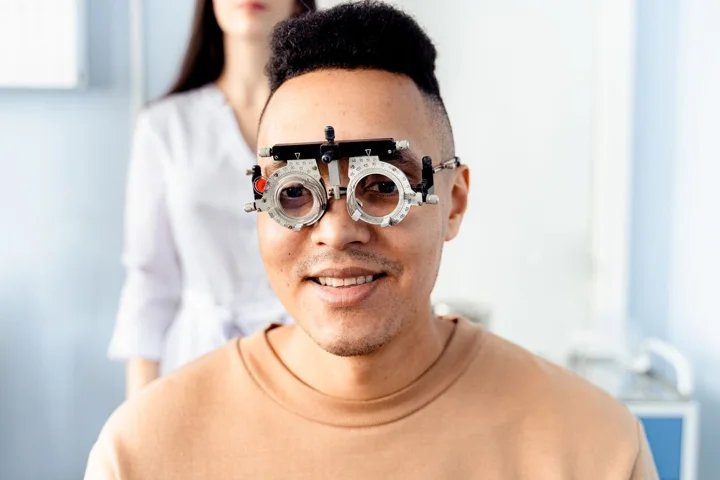
    Photo: Antoni Shkraba / Pexels. Illustrative photograph.

    No: bioptic telescopes are not accepted for driving in Great Britain or the Republic of Ireland. The DVLA states that “bioptic telescope devices are not accepted by DVLA for driving”, and Ireland’s medical fitness guidelines say the same of the NDLS. You must meet the eyesight standard with ordinary glasses or contact lenses if you need them. This differs from many US states, where bioptic driving is allowed under conditions.

    Where each part of the UK and Ireland stands

    Jurisdiction Position (as of November 2026) Source
    Great Britain Not accepted DVLA “Assessing fitness to drive”, visual disorders, updated 26 September 2025
    Northern Ireland No separate DVA statement found; ask the DVA Drivers Medical Section before relying on one nidirect
    Republic of Ireland Not accepted by the NDLS Slainte agus Tiomaint medical fitness to drive guidelines (2020 edition)

    Why the DVLA does not accept bioptics

    GOV.UK’s note “Bioptics: current GB driving standards” (published 22 September 2011) gives the main reason: bioptic devices can affect the field of vision so much that the visual field standard cannot be met. For a car licence that standard is at least 120 degrees across. The note says the Secretary of State’s Honorary Medical Advisory Panel’s main concern is road safety.

    The panel looked at the issue again in October 2022. Its minutes record that:

    • a bioptic is used for an average of about 2% of driving time, so the other 98% is driven with reduced visual acuity
    • using the device impinges on the binocular visual field
    • the position that bioptics are unacceptable for driving remains unchanged, and the topic will be reviewed in future

    What if a licence was issued to someone using a bioptic?

    The 2011 GOV.UK note warns that licences held by people relying on bioptics may be invalid, and that there could be serious insurance implications. If you meet the standard only through a bioptic, you do not meet it for GB driving, and you must not drive.

    The standard you must meet instead

    Where bioptic driving is allowed

    Many US states allow bioptic driving under conditions, such as extra training, daylight-only limits or regular eye checks, but the rules differ from state to state. See bioptic driving laws by state.

    If you have low vision

    • Ask your optometrist or eye clinic whether you meet the standard with ordinary glasses or lenses, and about low-vision services.
    • If you are registered blind (severely sight impaired), you qualify automatically for a Blue Badge in England for when you travel as a passenger: see Blue Badge for new drivers.
    • Rules can change after review. Check the current DVLA, DVA or NDLS position before making plans.

    Want to practise the eyesight check? Our sister site Driving Eyesight Test has a free 20-metre number plate practice for the UK and an Ireland eyesight report page on drivingeyesighttest.com. It is a practice screen, not an eye test.

    Back to the guides: Great Britain, Northern Ireland, Ireland.

    Sources

    • DVLA, “Visual disorders: assessing fitness to drive”, updated 26 September 2025 (gov.uk)
    • DVLA, “Bioptics: current GB driving standards”, published 22 September 2011 (gov.uk)
    • Secretary of State’s Honorary Medical Advisory Panel on Driving and Visual Disorders, minutes of 20 October 2022 (gov.uk)
    • National Office for Traffic Medicine and Road Safety Authority, “Slainte agus Tiomaint: Medical Fitness to Drive Guidelines”, 2020 edition (ndls.ie)
    • Department for Transport, “Can I get a Blue Badge?” (gov.uk)

  • Theory and Driving Test Support in Northern Ireland: DVA Help

    Theory and Driving Test Support in Northern Ireland: DVA Help

    Photo: Yan Krukau / Pexels. Illustrative photograph.

    In Northern Ireland the DVA can adjust both the theory and practical tests for a disability, health condition, reading difficulty or deafness, but you need to ask when you book. For the theory test you can get up to double time on the multiple-choice part (with evidence), an English voiceover, and British Sign Language at no extra fee. For the practical test, examiners can allow extra time, and you take the same test to the same standard as everyone else.

    Theory test support in Northern Ireland

    Support Who it is for How to get it
    Up to double time on the multiple-choice part Dyslexia or another reading difficulty Send proof of your reading difficulty to the theory test customer services section, online, by email or by post
    English voiceover Dyslexia or another reading difficulty Ask when you book
    BSL interpretation on screen, alongside the questions and answers Deaf, hearing loss or tinnitus Ask when you book; no extra fee
    Interpreter in the test centre (if you do not use BSL) Deaf, hearing loss or tinnitus Arrange through theory test customer services; no extra fee
    Test at home or at another centre Your local centre is not accessible to you Ask the DVA

    If you have a need not covered here, nidirect says to contact the DVA. Book the theory test only once the support you need has been agreed.

    Is Irish Sign Language available?

    nidirect’s theory test support page mentions British Sign Language only. If you use ISL, ask theory test customer services what they can arrange before you book.

    Voiceover in other languages

    Separately from disability support, nidirect lists voiceover in English and several other languages, including Arabic, Farsi, Polish, Portuguese, Turkish and Cantonese. For a language interpreter, you arrange a date with the interpretation agency and pay their fee. The test format and fee are in the DVA theory test in Northern Ireland.

    Practical driving test support in Northern Ireland

    When you book

    Let the DVA know if you are deaf, have hearing loss or tinnitus, are restricted in your movements, or have any physical disability. You can phone the practical test booking line and say you are calling about a “driving test for a candidate with a disability”. If you are deaf or have a speech difficulty, you can use the Relay UK service to call. Booking itself is explained in booking the DVA practical test.

    On the day

    • You take the same test as every other candidate.
    • You may be given extra time, so you can explain to the examiner how your adaptations work.
    • nidirect says examiners are specially trained to understand needs that can come from disabilities.

    Interpreters on the practical test

    nidirect’s practical test pages do not set out interpreter rules. Ask the DVA when you book whether you can bring a sign language interpreter and who pays.

    How Northern Ireland differs from GB

    Northern Ireland (DVA) Great Britain (DVSA)
    Who you ask DVA theory or practical booking teams DVSA, when you book
    Practical test BSL interpreter Not covered on nidirect; ask the DVA Allowed, aged 16 or over; you pay and claim back
    Theory test extra time Up to double time with evidence See the GB support guide

    The GB arrangements are in extra support for the theory and driving tests (DVSA).

    Help before the test

    Disability Action’s Mobility Centre offers driving advice and assessment in Northern Ireland, and nidirect suggests you may want to speak to a specialist instructor there. For the medical side, including telling the DVA about a condition, see the Northern Ireland medical conditions and disability guide.

    Related: deaf learner drivers, learning to drive in Northern Ireland.

    Sources

    • nidirect, “Taking the theory test if you have special requirements” (nidirect.gov.uk)
    • nidirect, “Learning to drive with a disability” (nidirect.gov.uk)
    • nidirect, “A guide to booking your practical driving test” (nidirect.gov.uk)
    • GOV.UK, “Driving test: if you have a disability, health condition or learning difficulty” (gov.uk)
  • Medical Conditions and Disability: Northern Ireland Driving Guide

    Medical Conditions and Disability: Northern Ireland Driving Guide

    Photo: Tima Miroshnichenko / Pexels. Illustrative photograph.

    In Northern Ireland you tell the Driver & Vehicle Agency (DVA), not the DVLA, about any condition or disability that may affect your driving, and you do it straight away. Learners declare it on the provisional licence application. The DVA then decides whether you can have a licence, whether it should be for a shorter period of 1, 2 or 3 years, or whether you need special controls fitted to your car.

    Key facts for Northern Ireland (as of November 2026)

    • Who to tell: DVA Drivers Medical Section in Coleraine.
    • Not reporting a relevant condition: a fine of up to £1,000 and 3 to 6 penalty points on conviction. Driving after failing to report carries the same penalty, and the court may disqualify you.
    • Driving after a false health declaration: a fine of up to £2,500 on conviction.
    • Decision time: the DVA aims to decide within 3 to 4 weeks if it has enough information; longer if it needs more.

    How to tell the DVA

    Your situation What to do
    Applying for your first provisional licence Answer the health questions on the application form or online application.
    Already hold a licence and a condition starts or gets worse Tell the DVA by phone or online (nidirect “Ask DVA”), or post a covering letter.
    Writing in Drivers Medical Section, DVA, Castlerock Road, Waterside, Coleraine, BT51 3TB. Give your full name, date of birth and driver number if you know it.

    Some conditions have their own nidirect form. For example, nidirect names Medical Form A1 ODL (neurological medical conditions) for autism, and has guides for ADHD, diabetes, heart conditions, stroke, visual standards, severe communication disorders and Tourette’s syndrome.

    What happens next

    1. The DVA sends you a medical questionnaire. You sign a consent so your doctor can release information.
    2. Your case is checked against the medical standards for driving. The DVA’s medical adviser may ask your doctor or consultant for details, arrange an examination, or ask for a driving assessment, eyesight test or driving test.
    3. The DVA decides. You may get a licence as normal, a licence for 1, 2 or 3 years so your health can be reviewed, or a licence that requires special controls. A licence is refused or revoked only if you cannot meet the legal medical standards.

    If you disagree with the decision

    You can appeal to a court of petty sessions for the district where you live, after notifying the Department. The appeal must be lodged with the Clerk of Petty Sessions within 3 months of the refusal or revocation letter. nidirect suggests speaking to your doctor first.

    Condition rules: where to look

    The DVA uses the medical standards for driving with its own medical advisers. Our Great Britain guides explain the condition-by-condition rules in plain language and are a useful starting point, but in Northern Ireland always check the nidirect guide for your condition and report to the DVA, not the DVLA.

    Drug-driving law works differently here: GOV.UK says the specified-limit offence that applies in Great Britain does not cover Northern Ireland, but you can still be arrested if you are unfit to drive. See drink and drug driving limits.

    Learning to drive with a disability in Northern Ireland

    • Age 16: nidirect says you can drive at 16 if you get Personal Independence Payment at the enhanced rate (mobility).
    • Assessment: Disability Action’s Mobility Centre is the only centre of its kind in Northern Ireland and offers advice and assessment on personal mobility.
    • Lesson costs: nidirect says Motability may be able to help with lesson costs if you are aged 16 to 24. Check eligibility with Motability.
    • Tests: tell the DVA about your needs when you book. Details in theory and driving test support in Northern Ireland.

    If you are given a short-period medical licence, check with the DVA how it interacts with your new-driver period and the Graduated Driver Licensing rules. The GDL rules are in what changed on 1 October 2026 and R plates explained.

    Blue Badge in Northern Ireland

    • Run by the Department for Infrastructure’s Blue Badge Unit through nidirect, not GOV.UK.
    • Fee: £10 (as of November 2026). A replacement for a lost, stolen or damaged badge is also £10.
    • Apply or renew online or by post. Online payment is by credit or debit card.
    • Badges are issued for up to 3 years, and you can reapply up to 8 weeks before yours runs out.

    Eligibility is set out in nidirect’s “Blue Badge eligibility criteria”. For how badges work in England, Scotland and Wales, see Blue Badge for new drivers in GB.

    Eyesight

    Every learner must be able to read a number plate from 20 metres. The DVLA does not accept bioptic telescopes in Great Britain, so ask the DVA directly before relying on one in Northern Ireland: see bioptic telescopes in the UK and Ireland. The 20-metre rule and the test-day check are in driving eyesight rules.

    Want to practise the eyesight check? Our sister site Driving Eyesight Test has a free 20-metre number plate practice on drivingeyesighttest.com. It is a practice screen, not an eye test.

    More Northern Ireland guides

    Sources

    • nidirect, “How to tell DVA about a medical condition” (nidirect.gov.uk)
    • nidirect, “When you tell DVA about a medical condition” (nidirect.gov.uk)
    • nidirect, “Autism and driving” (nidirect.gov.uk)
    • nidirect, “Learning to drive with a disability” (nidirect.gov.uk)
    • nidirect, “Blue Badge scheme” and “Apply for or renew a Blue Badge” (nidirect.gov.uk)
    • GOV.UK, “Drugs and driving: the law” (gov.uk)
  • Deaf Learner Drivers in GB: BSL, the Driving Test and DVLA Rules

    Deaf Learner Drivers in GB: BSL, the Driving Test and DVLA Rules

    Photo: Alessandro Avilés / Pexels. Illustrative photograph.

    Deaf people can learn to drive and get a car licence in Great Britain on the same terms as anyone else. There is no hearing standard for a car licence, and GOV.UK says you do not need to tell the DVLA if you are deaf. On the practical test, the examiner uses written notes and hand signals, and you can bring a British Sign Language (BSL) interpreter.

    Key facts (as of November 2026)

    • Car licence: no need to tell the DVLA that you are deaf.
    • Bus, coach or lorry licence: you must tell the DVLA.
    • Practical test: written notes, lip reading and hand-signal directions are available.
    • BSL interpreter: allowed, aged 16 or over; you arrange and pay, then claim the cost back.

    How the practical test works for deaf candidates

    When you book

    Say that you are deaf or hard of hearing when you book. GOV.UK asks candidates to mention a disability or health condition at booking so the examiner can prepare.

    At the start

    The examiner uses written notes to explain what will happen on the test. If you lip read, they will face you when they speak.

    On the drive

    Directions are usually given by hand signals. The examiner explains the signals before you set off, so agree what each one means and ask about anything unclear.

    With an interpreter

    • The interpreter must be at least 16.
    • Your driving instructor can be your interpreter.
    • You arrange the interpreter and pay any fee, then claim the cost back after the test.

    Check the current claim process with DVSA when you book.

    Practising for hand-signal directions

    • Ask your instructor to use the same style of hand signals in lessons that examiners use, so test day feels familiar.
    • Practise a short pre-agreed signal for “pull up on the left” and for the manoeuvres.
    • For independent driving, ask your instructor how you will follow sat nav or traffic signs with visual prompts.
    • Rely on your mirrors and observation for emergency vehicles. Watch for flashing blue lights and how traffic around you reacts.

    Finding an instructor

    Paid lessons must come from an approved driving instructor (ADI) or trainee instructor. When you contact instructors, ask whether they sign BSL, have taught deaf learners before, or are happy to work with an interpreter. An instructor who signs can also act as your interpreter on test day.

    The theory test

    You can take the theory test with BSL. The support available, and how to ask for it, is in theory test languages and support in GB and extra support for the theory and driving tests.

    Licence code 02

    Code 02 on a licence means “hearing/communication aid”. If it appears on yours, you must meet that condition when you drive. Deafness itself does not have to be reported for a car licence. See UK licence codes.

    Common questions

    Do I need a hearing test for a provisional licence?

    No. There is no hearing standard for a car licence in GB.

    Is the pass standard different?

    No. The way the test is delivered changes; the standard you drive to does not.

    I live in Northern Ireland.

    Tell the DVA about your needs when you book. See theory and driving test support in Northern Ireland.

    Back to the GB medical conditions and disability guide. Related: learning to drive with a disability, the practical driving test.

    Sources

    • GOV.UK, “Deafness and driving” (gov.uk)
    • DVLA, “Miscellaneous conditions: assessing fitness to drive”, updated 7 November 2025 (gov.uk)
    • GOV.UK, “Driving test: if you have a disability, health condition or learning difficulty” (gov.uk)
    • GOV.UK, “Driving licence codes” (gov.uk)
  • Sleep Apnoea, Narcolepsy and Tiredness in GB: When to Tell DVLA

    Sleep Apnoea, Narcolepsy and Tiredness in GB: When to Tell DVLA

    Photo: Irina Iriser / Pexels. Illustrative photograph.

    In Great Britain you must not drive if a sleep condition makes you excessively sleepy, until your symptoms are under control. You must tell the DVLA if you have confirmed moderate or severe obstructive sleep apnoea (OSA) with excessive sleepiness, or narcolepsy. For milder or suspected OSA, you tell the DVLA if your sleepiness cannot be controlled within 3 months.

    Sleep conditions and a car licence

    The DVLA rules for Group 1 (car) licences, as of November 2026:

    Condition Driving Tell the DVLA?
    Excessive sleepiness from any cause, including mild OSA or a medicine Do not drive until symptoms are satisfactorily controlled Yes, if control is not achieved within 3 months
    Suspected OSA, waiting for tests Do not drive if you have excessive sleepiness, until it is controlled Yes, if control is not achieved within 3 months
    Confirmed moderate or severe OSA with excessive sleepiness Do not drive Yes. A licence needs confirmation that the condition is controlled, sleepiness has improved and you keep to treatment, with a review at least every 3 years.
    Narcolepsy or cataplexy Do not drive Yes. A licence can be issued once symptoms have been satisfactorily controlled for at least 3 months.

    The DVLA grades OSA by the apnoea-hypopnoea index (AHI) from a sleep study: 15 to 29 is moderate and 30 or more is severe. Your sleep clinic will tell you which group you are in.

    How to report

    • Applying for your first provisional licence: declare the condition on the application.
    • Already hold a licence: report online through GOV.UK, or send form SL1 for sleep conditions. The address is on the form.
    • Penalty for not reporting a condition that affects your driving: a fine of up to £1,000, and possible prosecution if you have an accident.

    If you are unsure whether your sleepiness affects your driving, GOV.UK says to ask your doctor.

    Ordinary tiredness is different

    Feeling tired after a late night is not a notifiable condition, but it still matters on the road. Highway Code Rule 91 advises against starting a journey tired and recommends a break of at least 15 minutes every two hours. Those rules are covered in fitness to drive and tiredness. The DVLA rules above are about sleepiness from a medical condition or medicine that is likely to affect driving.

    Scenario: a learner waiting for a sleep study

    You are 18, your GP suspects sleep apnoea, and you often feel very drowsy in the afternoon. Under the DVLA rules you should not drive, lessons included, while you have excessive sleepiness. If treatment controls it, you can drive again. If it is not controlled within 3 months, you must tell the DVLA. If you do not feel excessively sleepy, ask your GP how the rules apply to you while you wait.

    Common questions

    Does using CPAP mean I can drive?

    For moderate or severe OSA, the DVLA needs medical confirmation that your condition is controlled, your sleepiness has improved and you are keeping to treatment. Ask your sleep clinic for the evidence the DVLA needs.

    Can medicines cause this?

    Yes. The DVLA rule on excessive sleepiness covers medicines as well as conditions. See prescription medicines and driving.

    Back to the GB medical conditions and disability guide. Related: heart conditions, fainting and stroke, mental health and driving, driving at night.

    Sources

    • DVLA, “Miscellaneous conditions: assessing fitness to drive” (excessive sleepiness), updated 7 November 2025 (gov.uk)
    • DVLA, “Neurological disorders: assessing fitness to drive” (narcolepsy), updated 7 November 2025 (gov.uk)
    • GOV.UK, “Sleep apnoea and driving” (gov.uk)
    • Department for Transport, “The Highway Code: Rules for drivers and motorcyclists (89 to 102)” (gov.uk)
  • Learning to Drive With Sight in One Eye or a Field Problem in GB

    Learning to Drive With Sight in One Eye or a Field Problem in GB

    Photo: Antoni Shkraba / Pexels. Illustrative photograph.

    You can learn to drive in Great Britain with sight in only one eye. You must meet the same standards as everyone else: the 20-metre number plate check, 6/12 acuity in your seeing eye, and the minimum visual field. Your doctor or optometrist must confirm you have adapted to the change before you drive, and you only need to tell the DVLA if you do not meet those standards.

    The standards you must meet (car licence)

    Standard What GOV.UK requires, as of November 2026
    Number plate Read a modern number plate in good daylight from 20 metres, with glasses or lenses if you need them.
    Acuity At least Snellen 6/12 (decimal 0.5) with both eyes open, or in the only eye if you have one.
    Visual field At least 120 degrees across, extending at least 50 degrees to each side, with no significant defect within 20 degrees above or below the centre.

    The DVLA usually checks the field with a binocular Esterman test. For the result to count as reliable, false-positive answers must be no more than 20%.

    Sight in one eye: step by step

    1. Do not drive straight after losing sight in one eye. The DVLA guidance says you may drive only once clinical advice confirms you have adapted.
    2. Ask your optometrist or eye doctor whether you meet the acuity and field standards with your seeing eye.
    3. If you meet them, you do not need to tell the DVLA about having one eye.
    4. If you do not, you must not drive and must tell the DVLA.

    Having some light perception in an eye does not count as being monocular for these rules. Your eye specialist can tell you which category you are in.

    Visual field problems and the exceptional-case route

    If you do not meet the field standard, you must not drive and must tell the DVLA. Some people whose licence was removed for a field defect can be considered as exceptional cases. The DVLA guidance says the defect must:

    • have been present for at least 12 months
    • come from a single event or a condition that is not progressive

    You also need sight in both eyes, no uncontrolled double vision, no problems with glare, contrast or low light, clinical confirmation that you have fully adapted, and a practical driving assessment. People with sight in one eye cannot use this route, and nor can people with progressive conditions such as glaucoma or retinitis pigmentosa.

    Other eye conditions learners ask about

    Condition Car licence rule
    Colour blindness May drive; no need to tell the DVLA.
    Night blindness Must not drive and must tell the DVLA. A licence may follow individual assessment if you meet the acuity and field standards.
    Nystagmus No need to tell the DVLA if you meet the standards. Any condition linked to it must meet its own rules.
    Double vision Must not drive and must tell the DVLA. Driving can resume once it is controlled, for example with glasses or a patch you wear while driving.
    Keratoconus or albinism No separate entry in the DVLA guidance. The acuity and field standards decide it. Ask your optometrist.

    If the DVLA needs an eye test

    The DVLA may send you for a test with its contracted optician, free of charge. You can use another optician if the test includes an Esterman field test, but you pay for it and the DVLA does not guarantee to accept it.

    Before you book lessons

    • Have an eye examination and ask directly: “Do I meet the DVLA standard for a car licence?”
    • Practise reading number plates from 20 metres with your glasses or lenses. The examiner checks this at the start of the practical test.
    • Ask your instructor to help you build head-check and mirror habits that suit your field of view.

    Want to practise the eyesight check? Our sister site Driving Eyesight Test has a free 20-metre number plate practice on drivingeyesighttest.com. It is a practice screen, not an eye test.

    Back to the GB medical conditions and disability guide. Related: driving eyesight rules and the 20-metre test, bioptic telescopes in the UK and Ireland, licence code 01, stroke and driving.

    Sources

    • DVLA, “Visual disorders: assessing fitness to drive”, updated 26 September 2025 (gov.uk)
    • GOV.UK, “Driving eyesight rules” (gov.uk)
  • UK Driving Licence Codes for Medical Conditions and Adapted Cars

    UK Driving Licence Codes for Medical Conditions and Adapted Cars

    Photo: Ivan S / Pexels. Illustrative photograph.

    Codes on a UK photocard licence show conditions on your driving. The ones most learners and new drivers meet are 01 for glasses or contact lenses, 02 for a hearing or communication aid, 10 to 43 for adapted car controls, and 78 for automatic only. If a code is on your licence, you must meet it every time you drive.

    Codes for eyesight, hearing and automatic cars

    Code Meaning on GOV.UK What it means in practice
    01 Eyesight correction, for example glasses or contact lenses Wear your glasses or lenses whenever you drive.
    02 Hearing/communication aid Use the aid shown when driving.
    78 Restricted to vehicles with automatic transmission You passed in an automatic and cannot drive a manual car.

    For more on code 78 and upgrading, see automatic licence restrictions.

    Codes for adapted cars (10 to 43)

    Code Meaning
    10 Modified transmission
    15 Modified clutch
    20 Modified braking systems
    25 Modified accelerator systems
    30 Combined braking and accelerator systems (licences issued before 28 November 2016)
    31 Pedal adaptations and pedal safeguards
    32 Combined service brake and accelerator systems
    33 Combined service brake, accelerator and steering systems
    35 Modified control layouts
    40 Modified steering
    42 Modified rear-view mirror(s)
    43 Modified driving seats

    Code 44, with sub-codes 44 (1) to 44 (12), covers modifications to motorbikes, such as an adapted hand grip or foot rest.

    Other codes you might see

    Code Meaning
    70 Exchange of licence
    71 Duplicate of licence
    79 Restricted to vehicles matching the specifications in brackets on your licence
    101 Not for hire or reward
    110 Limited to transporting persons with restricted mobility
    114 With any special controls required for safe driving
    115 Organ donor
    118 Start date is for earliest entitlement
    121 Restricted to conditions specified in the Secretary of State’s notice

    The full list, including bus, lorry, trailer and moped codes, is on GOV.UK (“Driving licence codes”), as of November 2026.

    How adapted-control codes end up on a licence

    One of the decisions the DVLA can make after you tell it about a medical condition or disability is that you need to adapt your car by fitting special controls. When that happens, your licence is limited to cars with those controls, and the codes show which ones. A driving assessment before you start lessons helps you learn in the set-up you will actually use: see learning to drive with a disability and limb differences, short stature and wheelchair users.

    Changing or removing a code

    • 01: if you no longer need glasses or lenses to meet the eyesight standard, contact the DVLA about your licence.
    • 78: pass a test in a manual car.
    • Adapted controls: if your needs change, tell the DVLA; it decides what your licence should show.

    Common questions

    Does code 01 apply to my provisional licence?

    Whatever the licence shows, you must meet the eyesight standard every time you drive, using glasses or lenses if you need them. See driving eyesight rules.

    Where do I find my codes?

    On the back of the photocard, next to each vehicle category, and on the GOV.UK “View or share your driving licence information” service.

    Back to the GB medical conditions and disability guide. Related: deaf learner drivers, Blue Badge for new drivers.

    Sources

    • GOV.UK, “Driving licence codes” (gov.uk)
    • GOV.UK, “Medical conditions, disabilities and driving: what DVLA will decide” (gov.uk)
    • GOV.UK, “Driving eyesight rules” (gov.uk)
  • Blue Badge for New Drivers in GB: Can Learners Use One?

    Blue Badge for New Drivers in GB: Can Learners Use One?

    Photo: Jan van der Wolf / Pexels. Illustrative photograph.

    A Blue Badge belongs to the disabled person, not to a car, so in Great Britain you can display your own badge whenever you are travelling in the vehicle, whether you are a passenger or the driver, including as a learner on a lesson. A badge costs up to £10 in England and £20 in Scotland, and is free in Wales (as of November 2026). It usually lasts up to 3 years.

    Who automatically qualifies in England

    You qualify automatically if you are aged 3 or over and at least one of these applies:

    • you get the higher rate of the mobility component of Disability Living Allowance (DLA)
    • you get Personal Independence Payment (PIP) with 8 points or more in the “moving around” activity
    • you get PIP with 10 points for descriptor E of “planning and following journeys”, because of overwhelming psychological distress
    • you are registered blind (severely sight impaired)
    • you get War Pensioners’ Mobility Supplement
    • you got an Armed Forces Compensation Scheme lump sum in tariff levels 1 to 8 and have a permanent and substantial disability

    A score of 12 in “planning and following journeys” does not qualify automatically on its own. Scotland and Wales publish their own eligibility guidance, so check the rules for where you live.

    Qualifying after an assessment, including non-visible conditions

    If you do not qualify automatically, your council can assess you. People with non-visible (hidden) conditions can apply. GOV.UK says you will be asked how your condition affects the journey between your vehicle and where you are going, for example:

    • struggling to plan or follow a journey
    • often becoming extremely anxious or fearful in public or open spaces

    How to apply

    1. Apply on GOV.UK (“Apply for or renew a Blue Badge”). Your local council deals with the application.
    2. Have ready: a recent digital photo of your head and shoulders, a photo or scan of proof of identity and address, proof of any benefits, and your National Insurance number if you have one.
    3. Pay the fee your council charges (England up to £10, Scotland £20, Wales free).
    4. Reapply before it runs out. If you are refused, your council should explain why.

    In Northern Ireland the scheme is run separately through nidirect: see the Northern Ireland guide.

    Using a Blue Badge as a learner or new driver

    Situation Can the badge be displayed?
    You hold the badge and are driving (on a lesson or after passing) Yes
    You hold the badge and a parent drives you Yes, while you are travelling in the car or being dropped off or collected
    A parent uses your badge to shop for you while you stay home No
    A family member holds a badge and you drive them Yes, while they are travelling with you
    You borrow a relative’s badge to park for free No: this is misuse

    Misuse is a criminal offence and could lead to a £1,000 fine and the badge being taken away. If an enforcement officer asks to see your badge, you must show it.

    Parking rules to know in England

    • Yellow lines: badge holders can park on single or double yellow lines for up to 3 hours, unless there is a ban on loading or unloading.
    • Parking clock: set it to the quarter hour you arrived, and display it with the badge.
    • Central London: the scheme does not fully apply in the City of Westminster, the City of London, the Royal Borough of Kensington and Chelsea, and part of Camden. These areas run their own concessions.
    • Private car parks: supermarkets, hospitals and shopping centres set their own rules.

    The parking rules in the Highway Code still apply: see where you must never park.

    Back to the GB medical conditions and disability guide. Related: learning to drive with a disability, limb differences and wheelchair users, licence codes for adapted cars.

    Sources

    • GOV.UK, “Apply for or renew a Blue Badge” (gov.uk)
    • Department for Transport, “Can I get a Blue Badge?” (gov.uk)

    • Department for Transport, “The Blue Badge scheme: rights and responsibilities in England”, updated 9 July 2020 (gov.uk)
  • Prescription Medicines and Medical Cannabis: GB Driving Rules

    Prescription Medicines and Medical Cannabis: GB Driving Rules

    Photo: Chokniti Khongchum / Pexels. Illustrative photograph.

    You can drive on prescribed medicine in Great Britain, even one on the drug-driving list, as long as it was prescribed for you, you take it as advised, and it does not make you unfit to drive. That is the statutory “medical defence”. It does not cover driving while impaired: if a medicine affects your driving, it is an offence whether or not it was prescribed.

    The two drug-driving offences

    Over a specified limit Unfit through drugs (impairment)
    What it means A listed drug in your blood above its legal limit, even if your driving seems fine Any drug, legal or illegal, making you unfit to drive
    Medical defence? Yes, for a drug taken as prescribed or advised No
    Where it applies England, Scotland and Wales England, Scotland and Wales

    GOV.UK says this law does not cover Northern Ireland, but you can still be arrested there if you are unfit to drive. Check the DVA and PSNI guidance if you are learning in Northern Ireland.

    Which prescription medicines are on the list?

    GOV.UK lists these medicines as covered by drug-driving law:

    • amphetamines, such as dexamfetamine (used for ADHD) and selegiline
    • clonazepam, diazepam, flunitrazepam, lorazepam, oxazepam and temazepam
    • methadone
    • morphine and other opiate or opioid drugs, such as codeine, tramadol and fentanyl

    Illegal drugs on the list, including cannabis (THC) and cocaine, have very low limits. The limit for THC is 2 micrograms per litre of blood and for amphetamine 250 micrograms per litre, in England and Wales as of November 2026. Police can use a roadside kit to screen for cannabis and cocaine.

    How the medical defence works

    The Department for Transport’s guidance says the defence generally applies if the drug was:

    1. lawfully prescribed, supplied or bought over the counter for a medical or dental purpose, and
    2. taken in line with the advice of the prescriber or supplier and the leaflet, as far as the leaflet matches that advice.

    Your prescriber’s advice for you can differ from the leaflet and still count. The guidance suggests carrying evidence that you were prescribed the medicine or bought it, and took it as instructed. You can choose what you show, so you do not have to reveal more than you want to.

    Prescribed medical cannabis

    GOV.UK’s drug-driving pages do not treat prescribed cannabis separately. The medical defence covers a drug that was lawfully prescribed and taken as advised, and the impairment offence still applies in every case. Ask your prescriber how the defence applies to your medicine and whether it can affect your driving. Cannabis that has not been prescribed for you has no defence at all.

    Over-the-counter medicines

    Codeine is on the list, and many other medicines that are not, such as some antihistamines and sleep aids, can still make you drowsy. A medicine does not need to be on the list for the impairment offence to apply.

    • Read the leaflet for warnings about drowsiness or driving.
    • Ask your pharmacist before driving on a new medicine.
    • Do not drive to a lesson or test if a medicine leaves you drowsy.

    Penalties for drug driving

    • a minimum 1-year driving ban
    • an unlimited fine
    • up to 6 months in prison
    • a criminal record
    • the conviction shows on your licence for 11 years

    A ban means you cannot drive at all for that period, including as a learner. Full limits and drink-drive rules are in drink and drug driving limits.

    Back to the GB medical conditions and disability guide. Related: ADHD, autism and dyslexia, anxiety, depression and mental health, fitness to drive and telling the DVLA.

    Sources

    • GOV.UK, “Drugs and driving: the law” (gov.uk)
    • Department for Transport, “Drug driving guidance for healthcare professionals” (gov.uk)
    • The Drug Driving (Specified Limits) (England and Wales) Regulations 2014, as amended 2015 (legislation.gov.uk)
    • DVLA, “Appendices: assessing fitness to drive”, updated 7 November 2025 (gov.uk)
  • Heart Conditions, Fainting and Stroke in GB: Car Licence Rules

    Heart Conditions, Fainting and Stroke in GB: Car Licence Rules

    Photo: CDC / Pexels. Illustrative photograph.

    Many heart conditions do not stop you learning to drive in Great Britain, and some do not need reporting at all. The car licence rules depend on whether the condition causes symptoms or loss of consciousness. A pacemaker or ICD must be reported. A single simple faint, not while driving, does not need reporting. After a stroke you must not drive for 1 month, and you only tell the DVLA if problems remain after that month.

    Fainting and blackouts: which ones count

    GOV.UK splits loss of consciousness into types. These are the car (Group 1) rules as of November 2026.

    What happened Tell the DVLA? Driving
    One simple faint with clear warning signs, not while driving No May drive
    One simple faint while driving No Do not drive for 1 month
    Two or more simple faints in 24 months, not while driving No May drive
    Two or more simple faints in 24 months, one while driving Yes Not for 3 months after the latest
    One unexplained blackout Yes Not for 6 months
    Two or more unexplained blackouts in 24 months Yes Licence revoked for 12 months after the latest
    Blackout with seizure signs (such as tongue biting or confusion afterwards) Yes 6 months, or 12 months if the risk of another is higher

    A “simple faint” here means reflex (vasovagal) syncope with a reliable warning, such as feeling hot or light-headed first. Whether your episode fits that description is for your doctor to say.

    Heart rhythm devices

    Situation Car licence rule
    Pacemaker fitted Tell the DVLA. Do not drive for 1 week.
    Pacemaker box change 1 week off driving; no need to tell the DVLA.
    ICD fitted as a precaution (no previous dangerous rhythm) Tell the DVLA. Do not drive for 1 month.
    ICD fitted after a dangerous rhythm (VT or VF) Tell the DVLA. Do not drive for 6 months.
    Appropriate ICD shock for VT or VF Tell the DVLA. Do not drive for 6 months after the shock.
    Arrhythmia that caused or could cause incapacity Do not drive for at least 4 weeks and until the cause is treated; the DVLA must be told.

    Conditions young people are often diagnosed with

    • Congenital heart disease: if you have no symptoms, you may drive and need not tell the DVLA. With symptoms such as palpitations or breathlessness, you must not drive and must tell the DVLA.
    • Hypertrophic cardiomyopathy: no need to tell the DVLA unless symptoms cause incapacity. After a faint linked to it, you must not drive and must tell the DVLA.
    • Brugada syndrome: without symptoms, no need to tell the DVLA. After an arrhythmia causing incapacity, a cardiac arrest or an unexplained blackout, you must not drive and must tell the DVLA.
    • Long QT syndrome: you must not drive, and must tell the DVLA, if you have a history of fainting or torsades de pointes, or a corrected QT above 500 ms. A specialist assessment comes before relicensing.

    Stroke and TIA

    • Stroke: do not drive for 1 month. You can start again after that if your doctor is satisfied with your recovery. Tell the DVLA only if there is still a problem, such as weakness or a vision change, after 1 month.
    • TIA (mini-stroke): do not drive for 1 month. No need to tell the DVLA. Each further TIA means another month off.

    A stroke can affect your visual field, which has its own standard. See sight in one eye or a visual field problem.

    Scenario

    You had a pacemaker fitted at 15 and are now applying for your provisional licence. Declare the pacemaker on the application. GOV.UK says you will need regular device checks with your specialist. The DVLA decides whether you can have a licence and for how long.

    Back to the GB medical conditions and disability guide. Related: epilepsy and learning to drive, fitness to drive and telling the DVLA, sleep apnoea and narcolepsy.

    Sources

    • DVLA, “Cardiovascular disorders: assessing fitness to drive”, updated 7 November 2025 (gov.uk)
    • DVLA, “Neurological disorders: assessing fitness to drive”, updated 7 November 2025 (gov.uk)
    • DVLA, “Appendices: assessing fitness to drive” (transient loss of consciousness), updated 7 November 2025 (gov.uk)